 NihontoWatchNihontoWatch
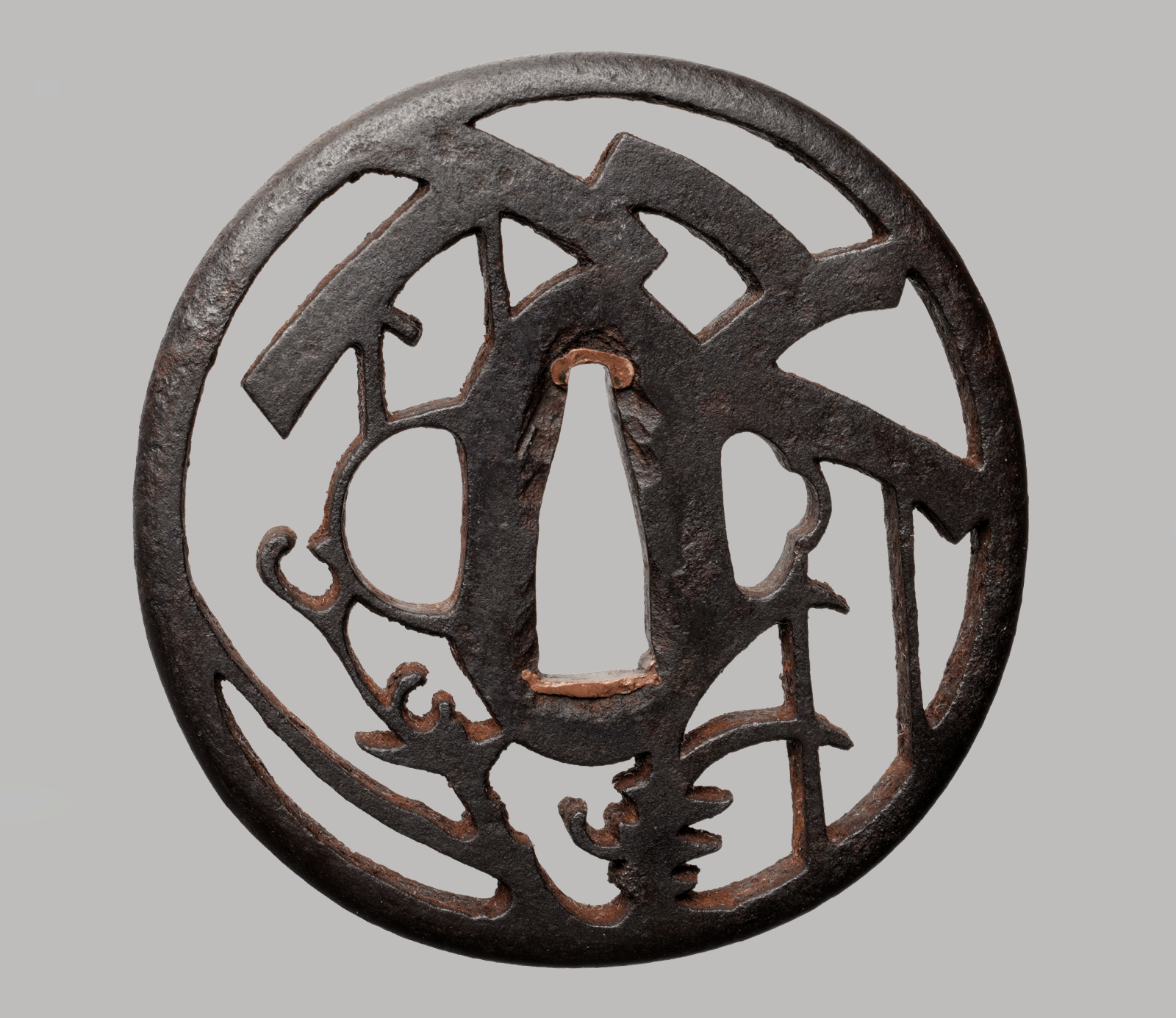
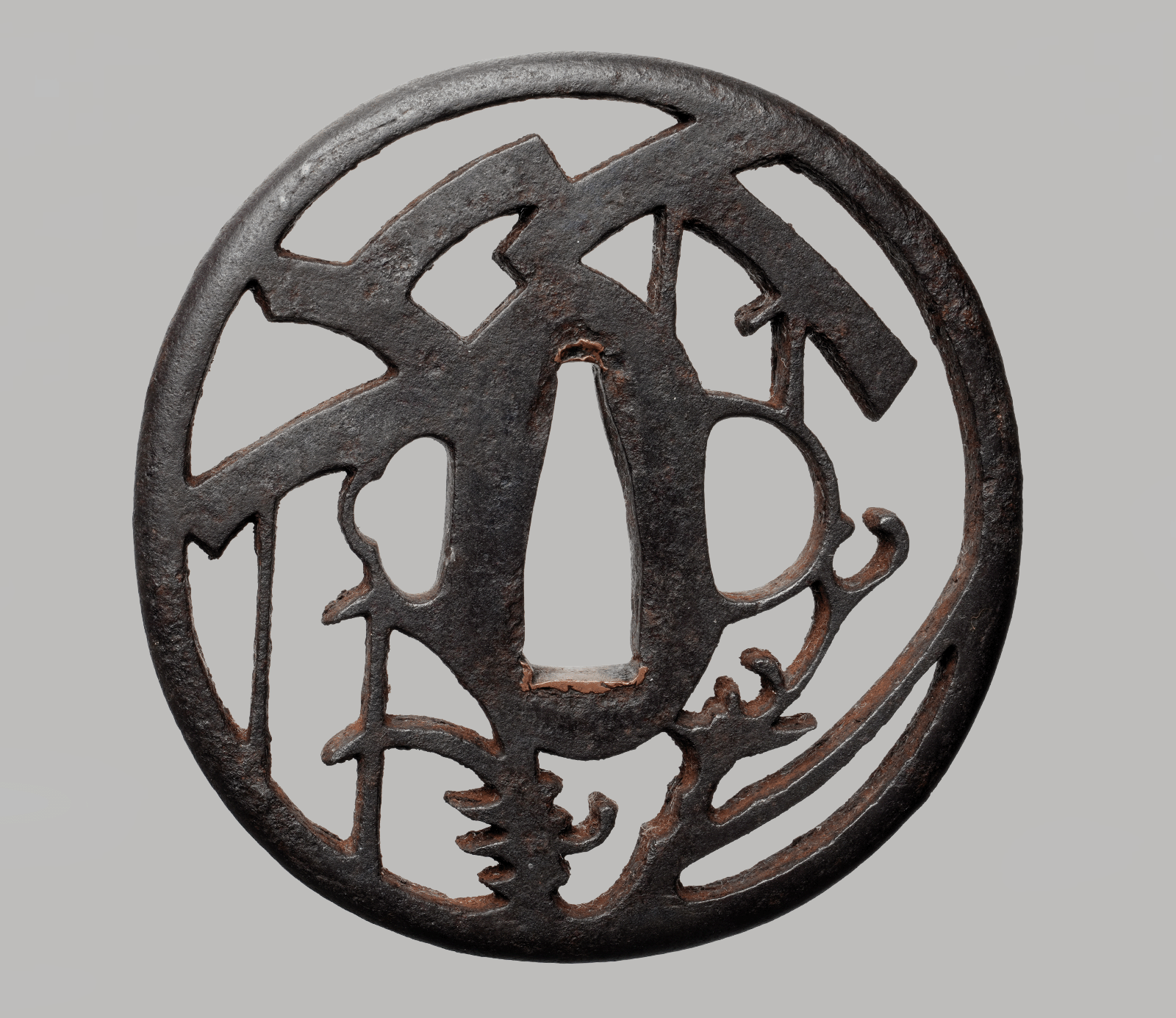
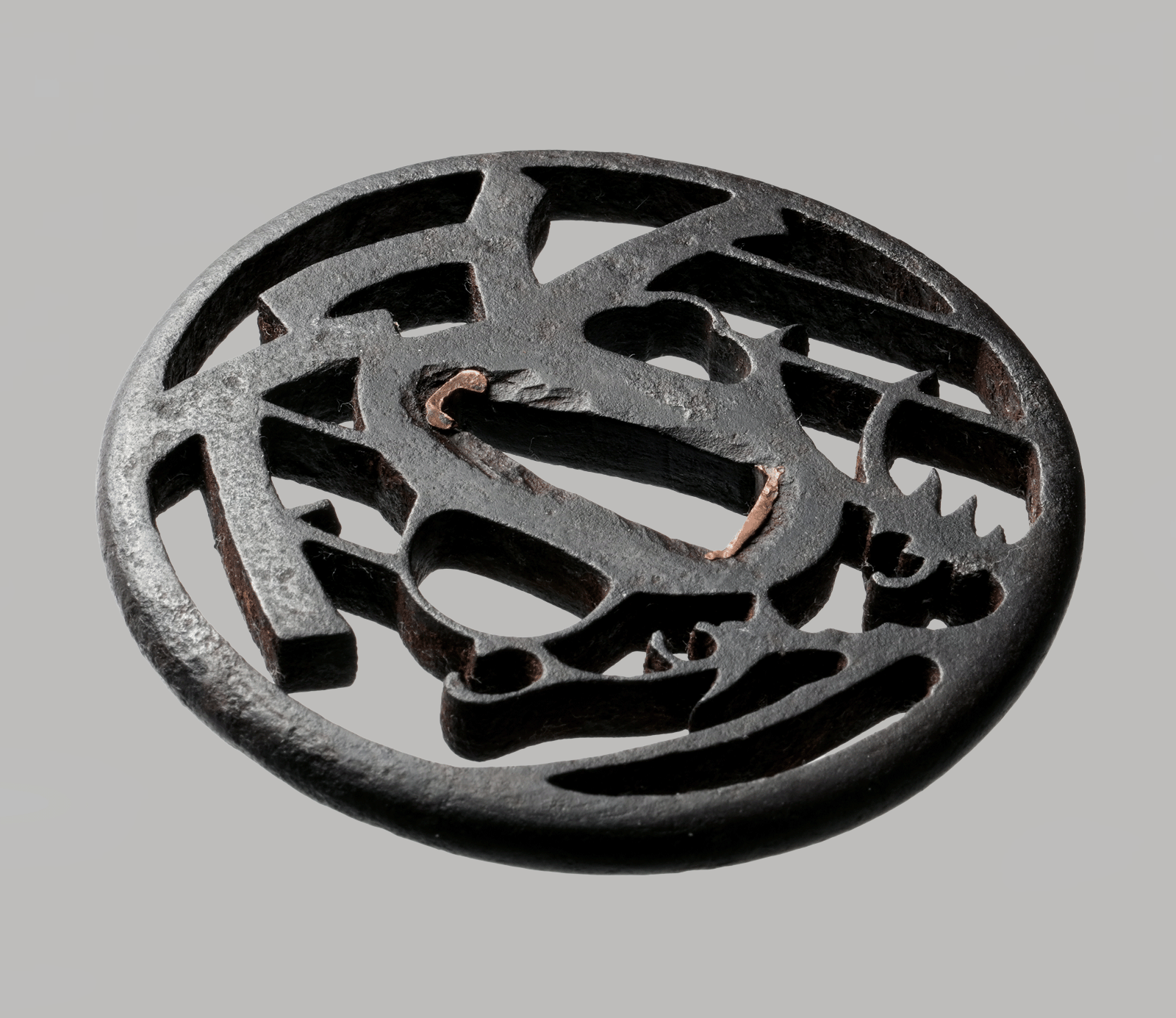
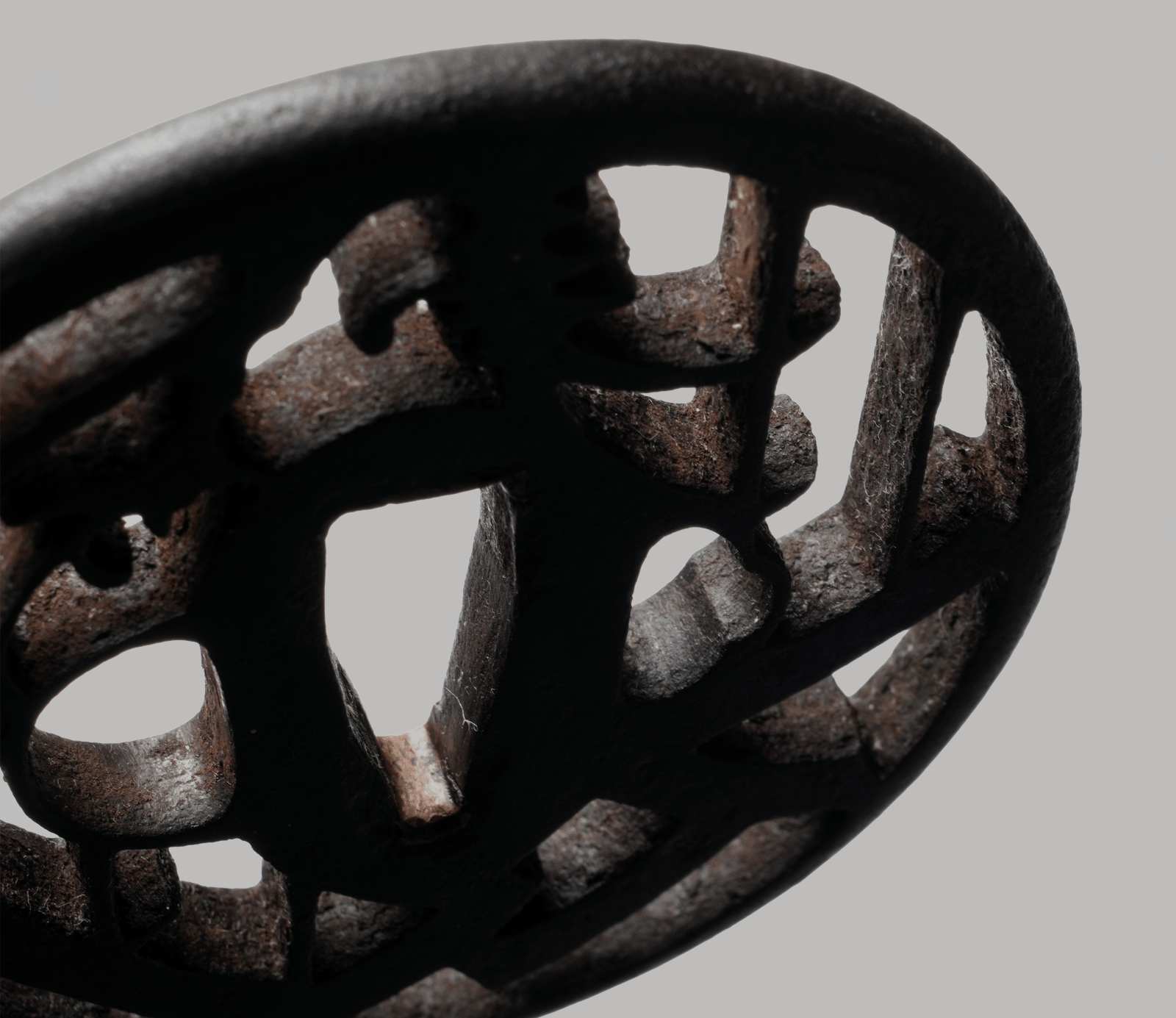
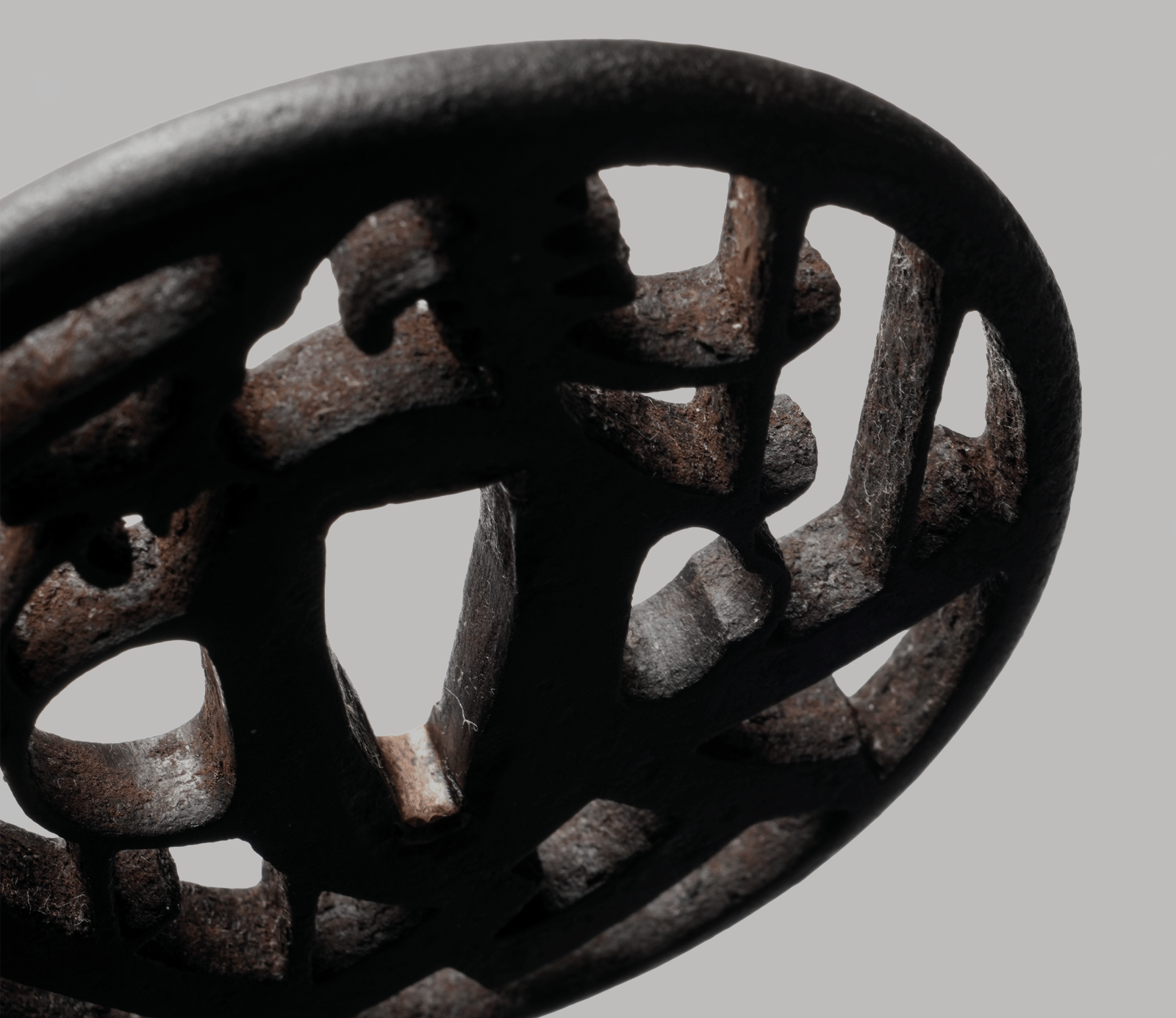
Tadamasa the second This powerful tsuba by Akasaka Tadamasa II is an outstanding example of mature mid-Edo Akasaka workmanship, distinguished by its large scale, exceptional thickness, and commanding weight (79.8 × 81.6 mm; up to 7.3 mm thick; 146.6 g). The iron plate is dense and resonant, with a deep, dark patina that speaks to both quality material and confident forging. The sukashi motif depicts Yatsuhashi (八つ橋)—the angular zig-zag planking traditionally associated with iris marshes—combined with lilies (kakitsubata) and possibly elements of Musashino grasses. This layered interpretation allows the design to function on several poetic levels: Yatsuhashi evokes classical literature and refined taste, while the vegetal forms introduce a natural rhythm that softens the geometry and anchors the composition in the landscape tradition so characteristic of Akasaka work. Compositionally, the piece is superbly balanced despite its visual complexity. The bold structural lines are counterweighted by finer, curling elements, creating tension and release across the plate. The seppa-dai is massive and assertive, while the mimi, thick and rounded, reinforces the impression of strength and permanence. Subtle hammer activity and decisive tagane work further underline the Owari roots that remain clearly perceptible in Tadamasa II’s output. Altogether, this tsuba represents Akasaka at its most authoritative: powerful, intellectual, and uncompromising. The scale and weight alone set it apart, but it is the assured synthesis of abstract structure and natural motif that confirms its attribution to Tadamasa the second, and marks it as a truly impressive and rare work within the school. Dimension 79,8 mm x 81,6 mm x 7,3 mm (Seppa) - 6,8 mm (Mimi), 146,6 g
NihontoWatch
忠正
Early Edo (d. 延宝五 1677)
在銘
鐔工 · 武蔵 · 1650-1677頃
現在1点販売中
赤坂派の二代忠正は、父の名と称を継いだ。説明は「赤坂忠正は、庄左衛門と称し同名で初二代いる」[[c:1]]とし、文政年間に子孫の忠時が幕府に提出した由緒書により、「初代忠正は明暦三年に歿し、二代忠正は延宝五年に歿したと記されている」[[c:2]]とする。古赤坂の上三代の常として、在銘作はない。
本工の名で記録される鐔は二枚である。一は撫角形の槌目地に竹・丁子・鯰を透した鉄鐔で、父子が並んで作鐔した頃の作と判じられ、「二代忠正が初代と共に作鐔していた頃の傑作と推考され、赤坂透鐔全体からみても極めて優れた鐔である」[[c:3]]とされる。二は薄に露と三日月の武蔵野を陰陽透に表した鐔で、説明は「本作は二代赤坂忠正と鑑せられる鐔で」[[c:4]]と明記し、無駄な肉置きをしない洗練された彫口を賞する。
両作は初・二代に共通する造込みの見処を備え、説明は「上部の尖った切羽台は赤坂初二代の特徴であり、小柄櫃孔にして笄櫃孔が小さいのも初二代の特徴である」[[c:5]]とする。ゆえにその手は父の手と並べて読まれ、説明が二代と鑑する作にのみ二代の名を与える。両作とも重要刀装具に指定されている。
忠正の位置づけを、日本刀全体および伝法・時代・時期ごとに示します。各区分(随一・屈指・有数・著名)は、NBTHK および文化庁による指定に加え、三作や名物帳などの歴史的栄誉を加味したものです。
各項目を選ぶと評価方法が表示されます。
鐔工 · Edo
時期区分: 古赤坂· 1624–1700
現在59点販売中
14-day return window in original/unused condition; antique items (swords, menuki, tsuba and similar) are expressly excluded from exchange; EU consumers retain a 14-day cancellation right; refunds within 10 business days of approval.