1800年前後、水心子正秀は著述をもって、鍛刀は古作の法に立ち返るべしと説いた。復古刀の運動である。最大の後継者直胤は、数百年絶えていた備前伝と相州伝を確信をもって再現した。
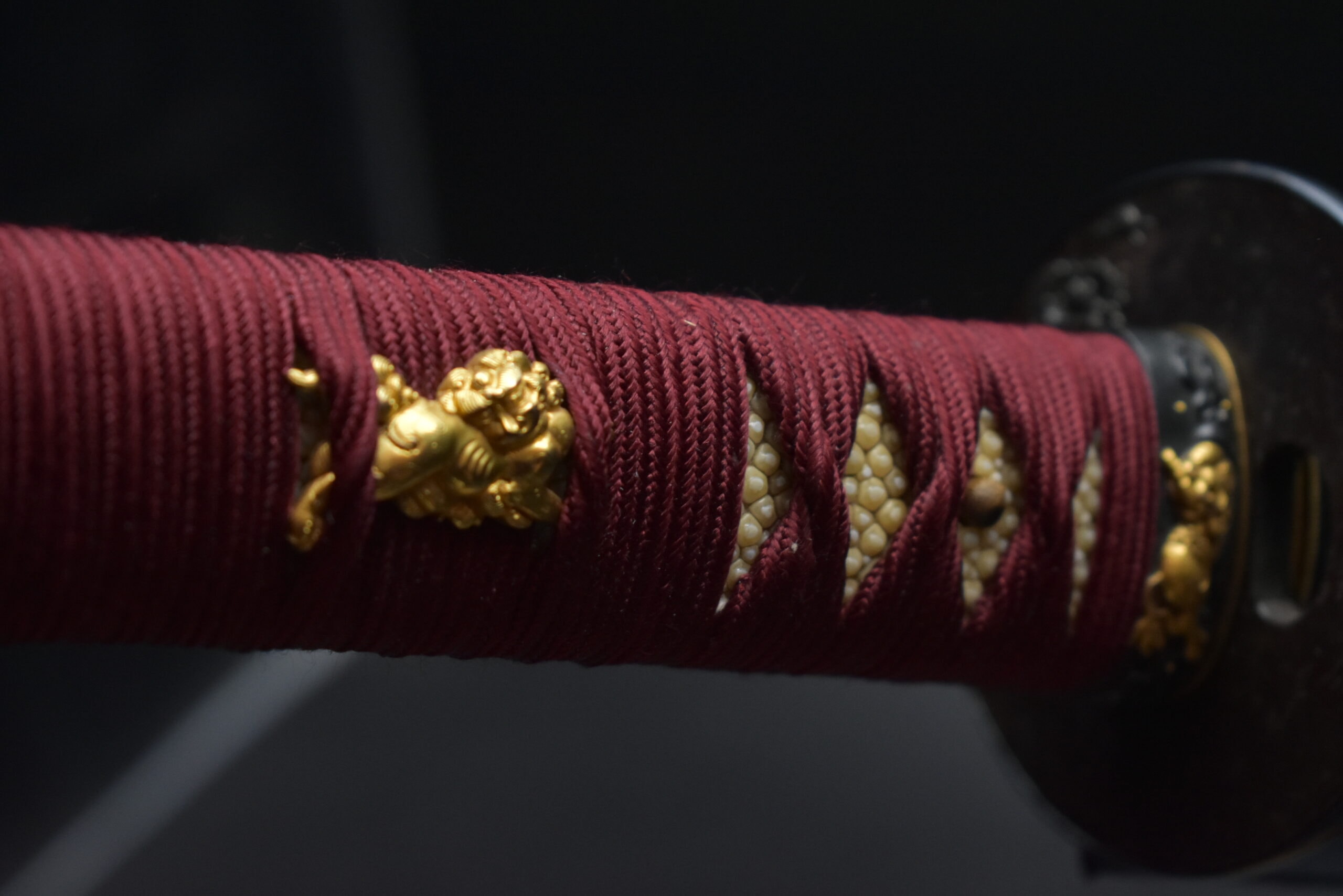
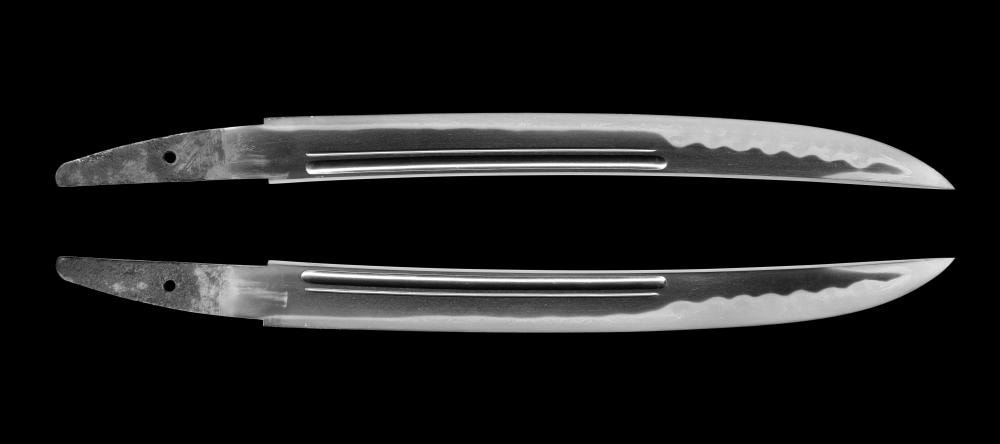
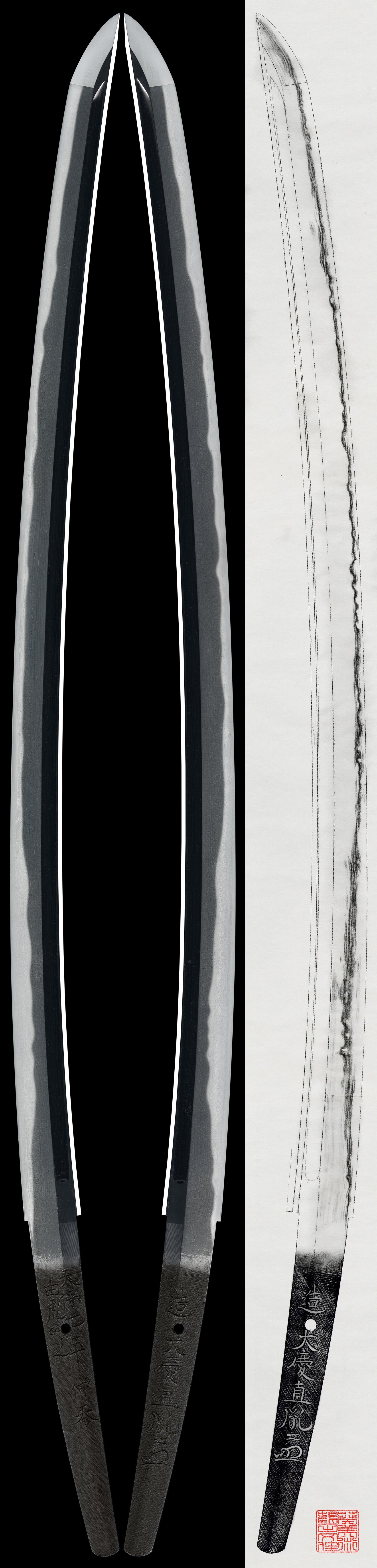
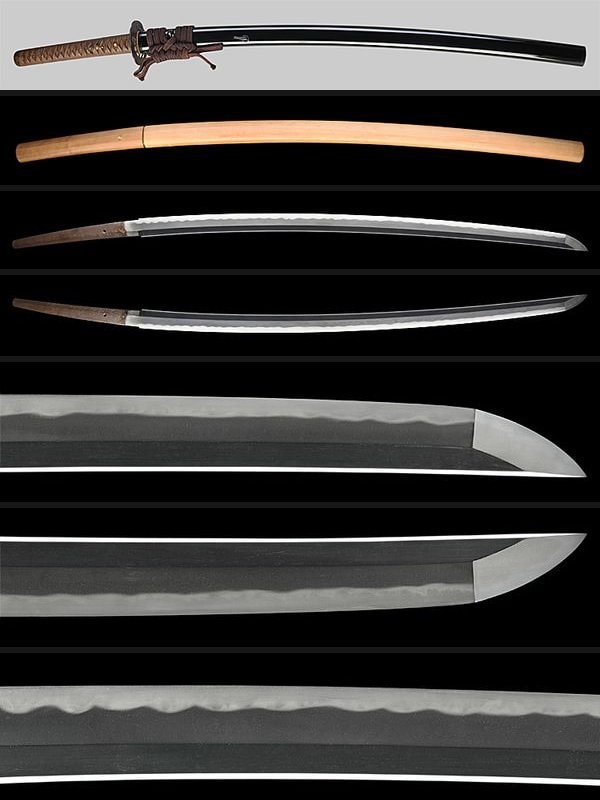
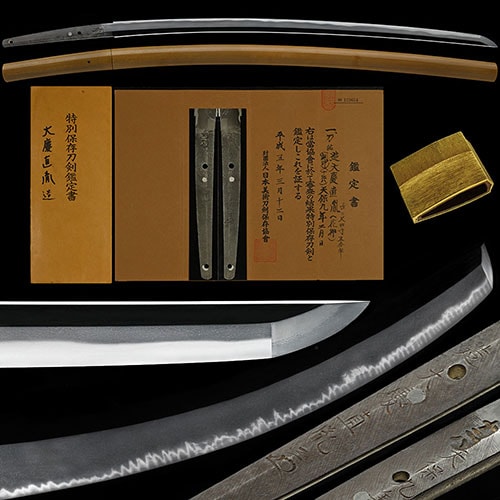
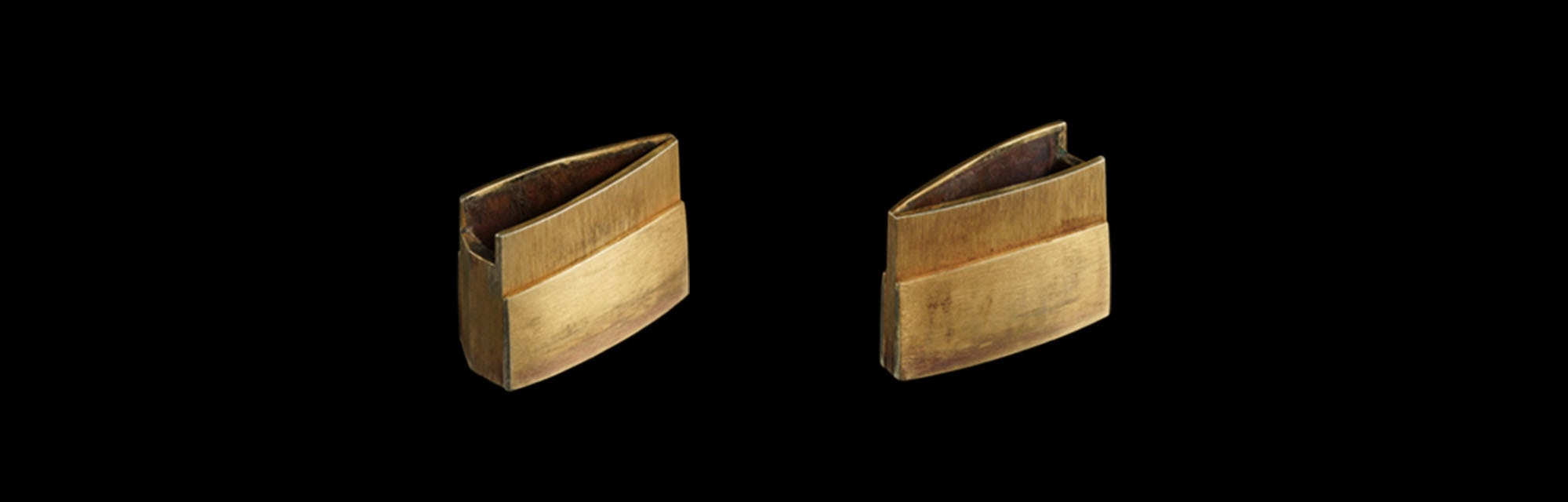
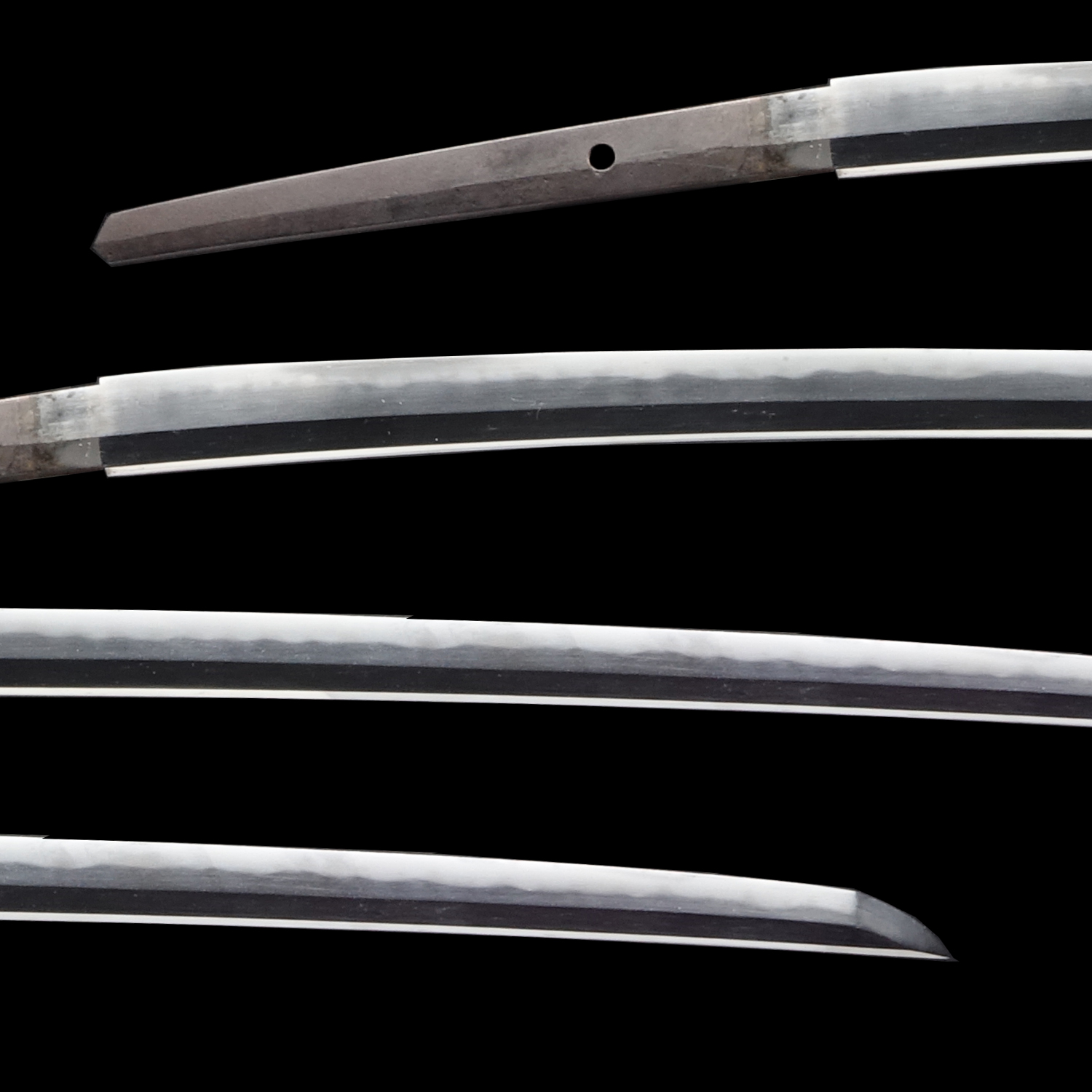
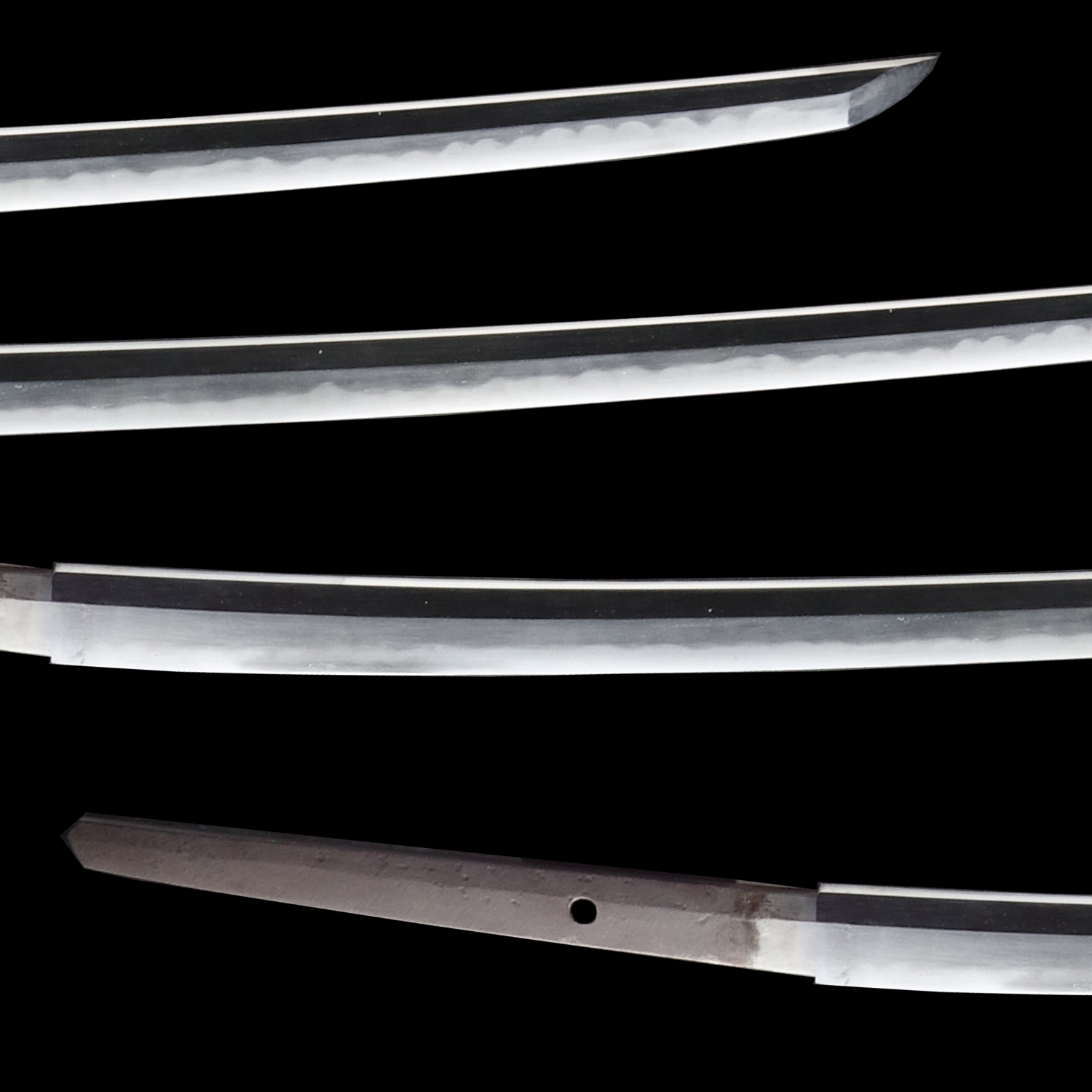
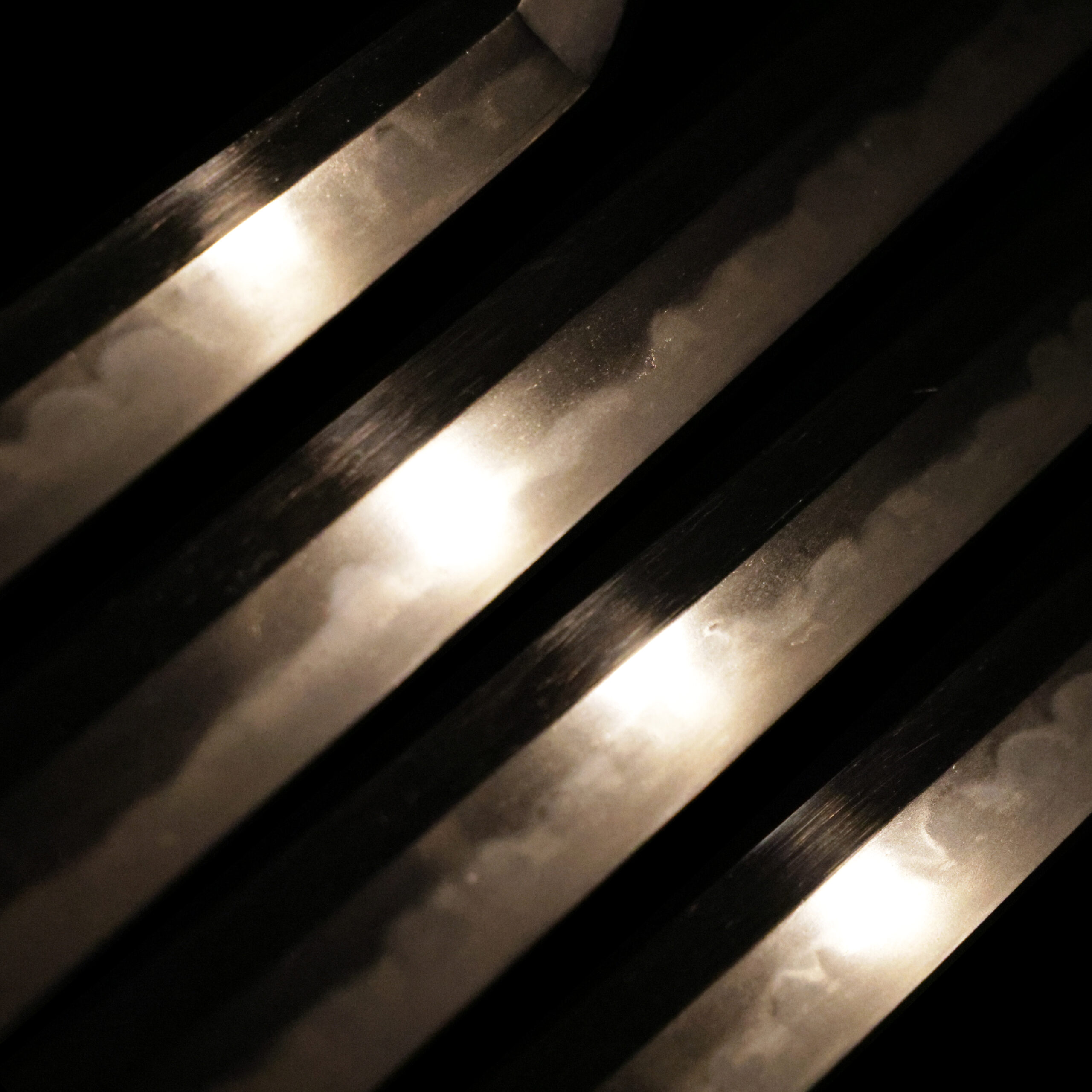
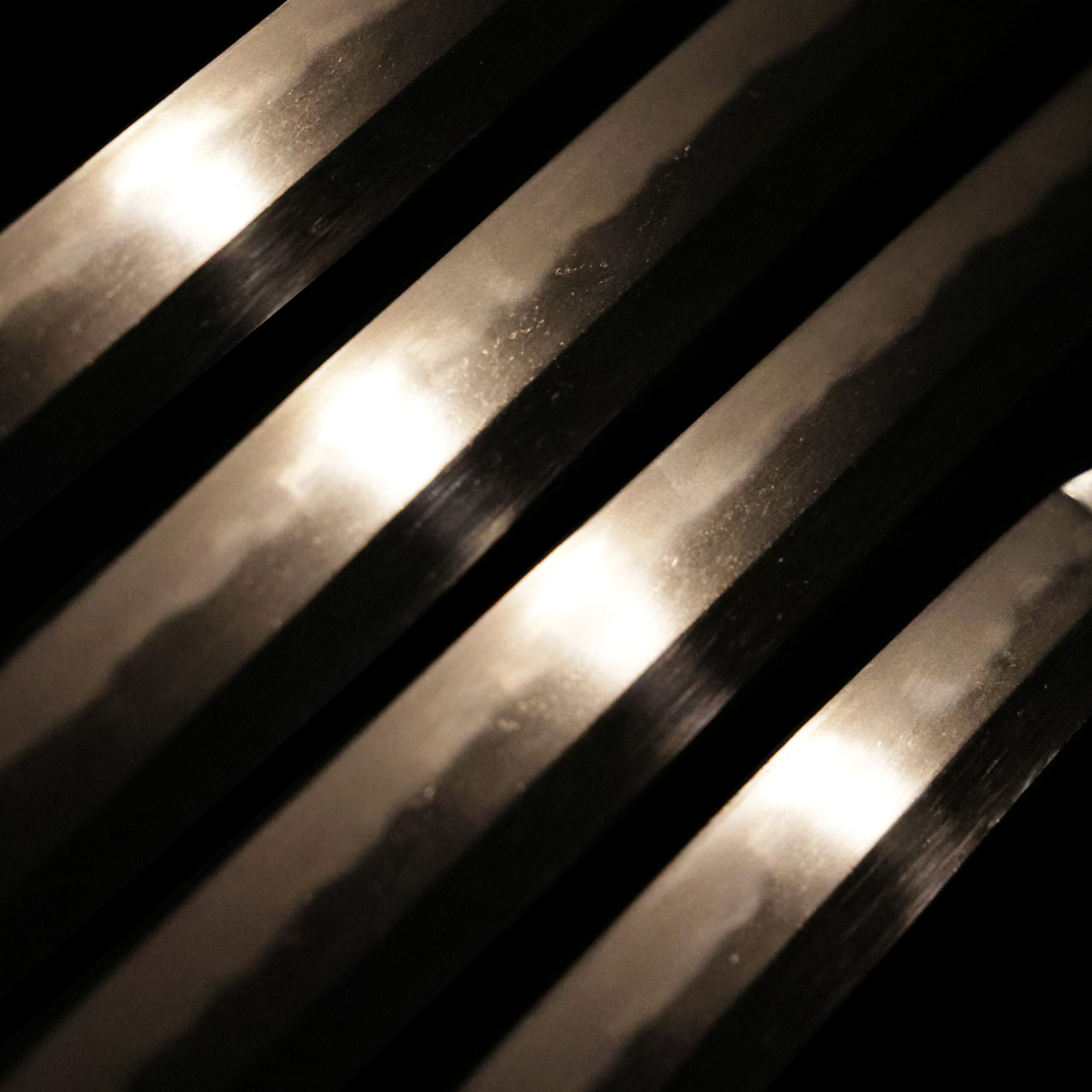
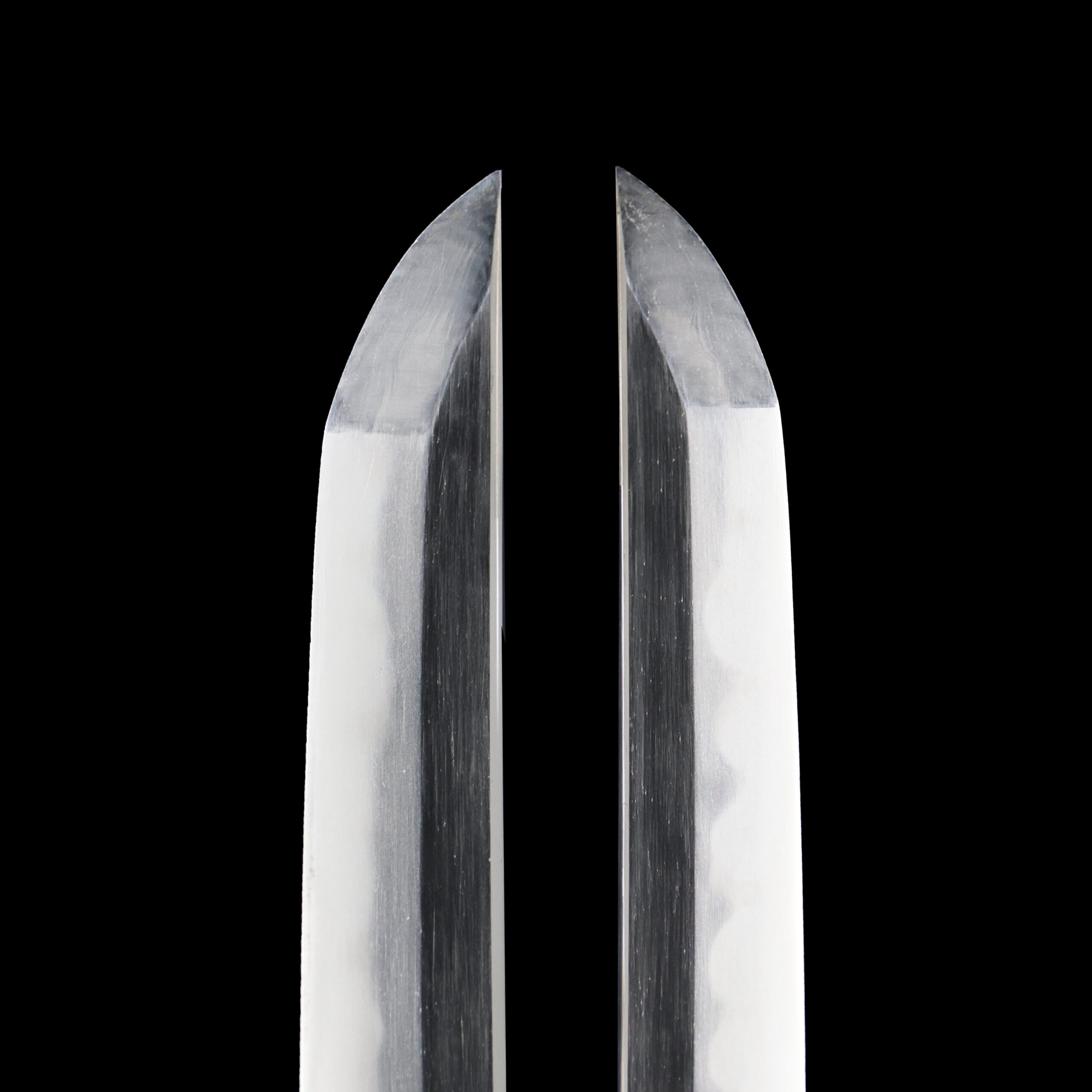
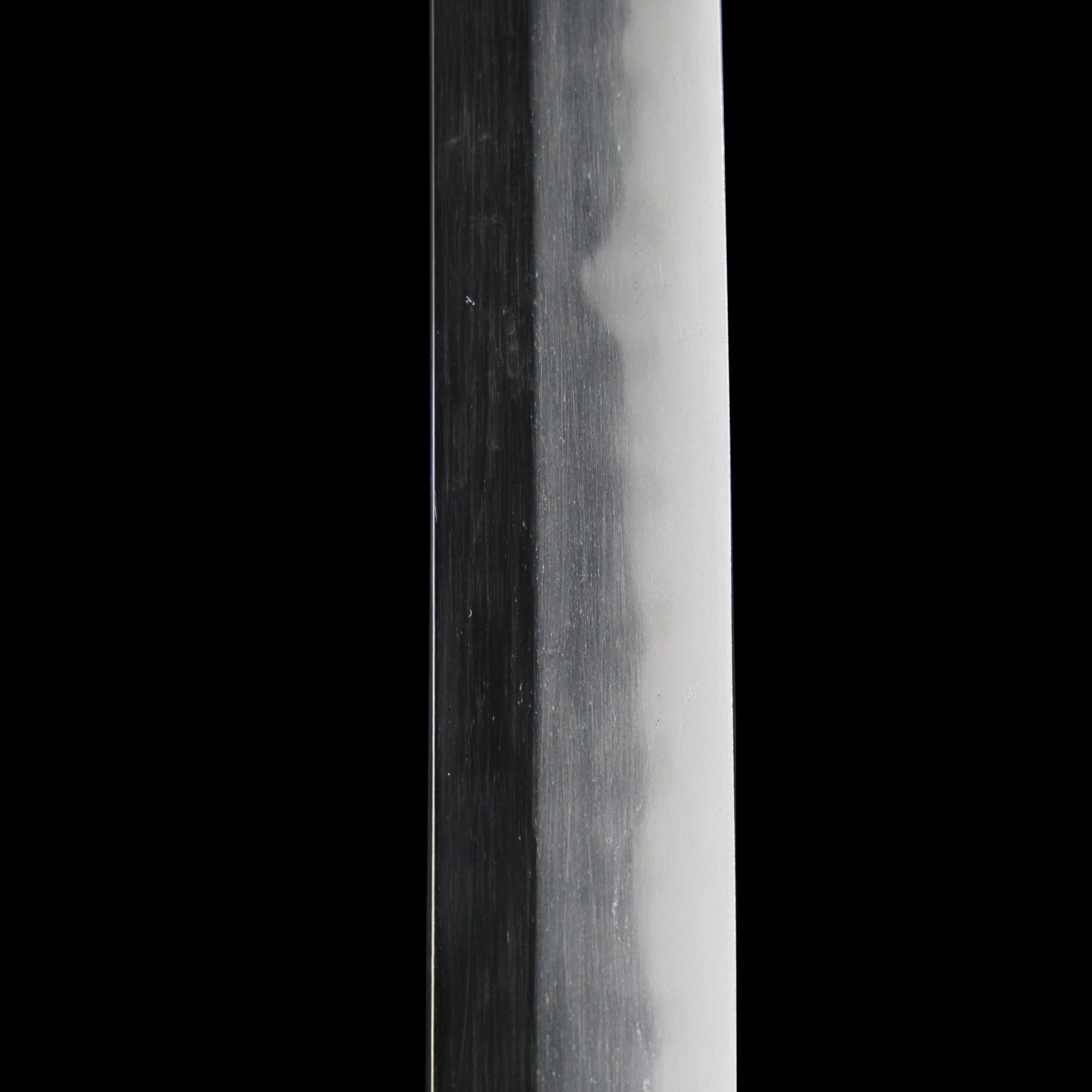
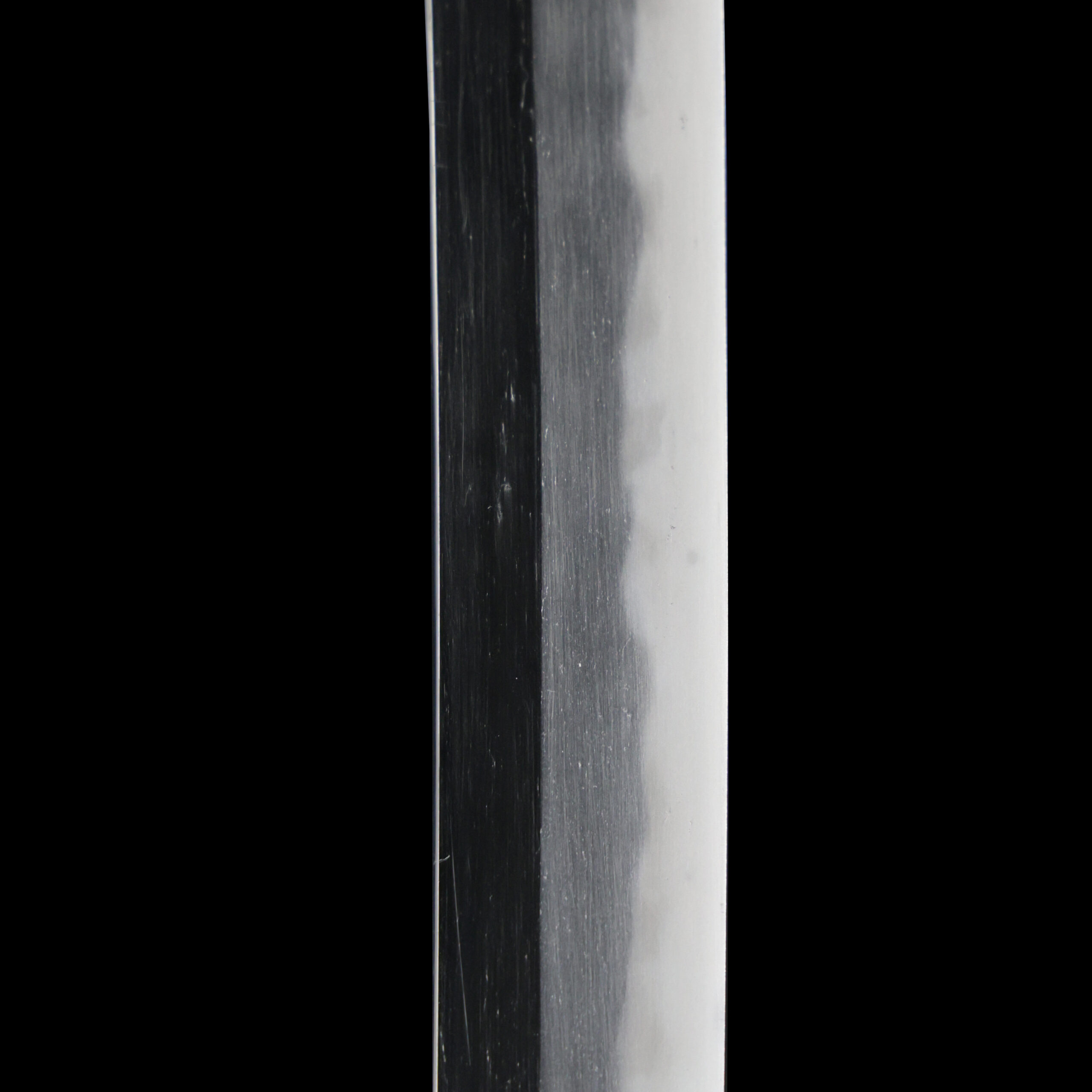
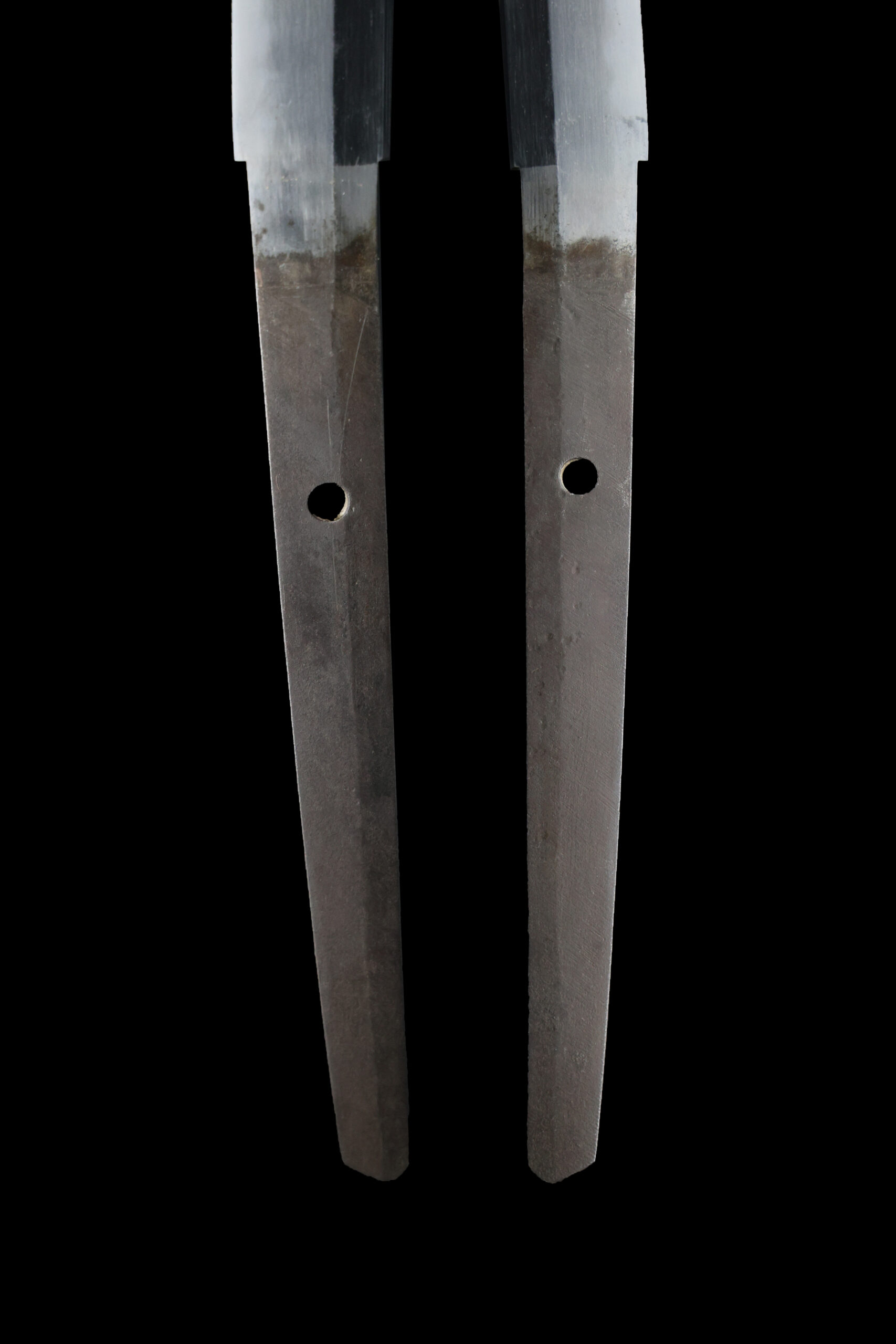
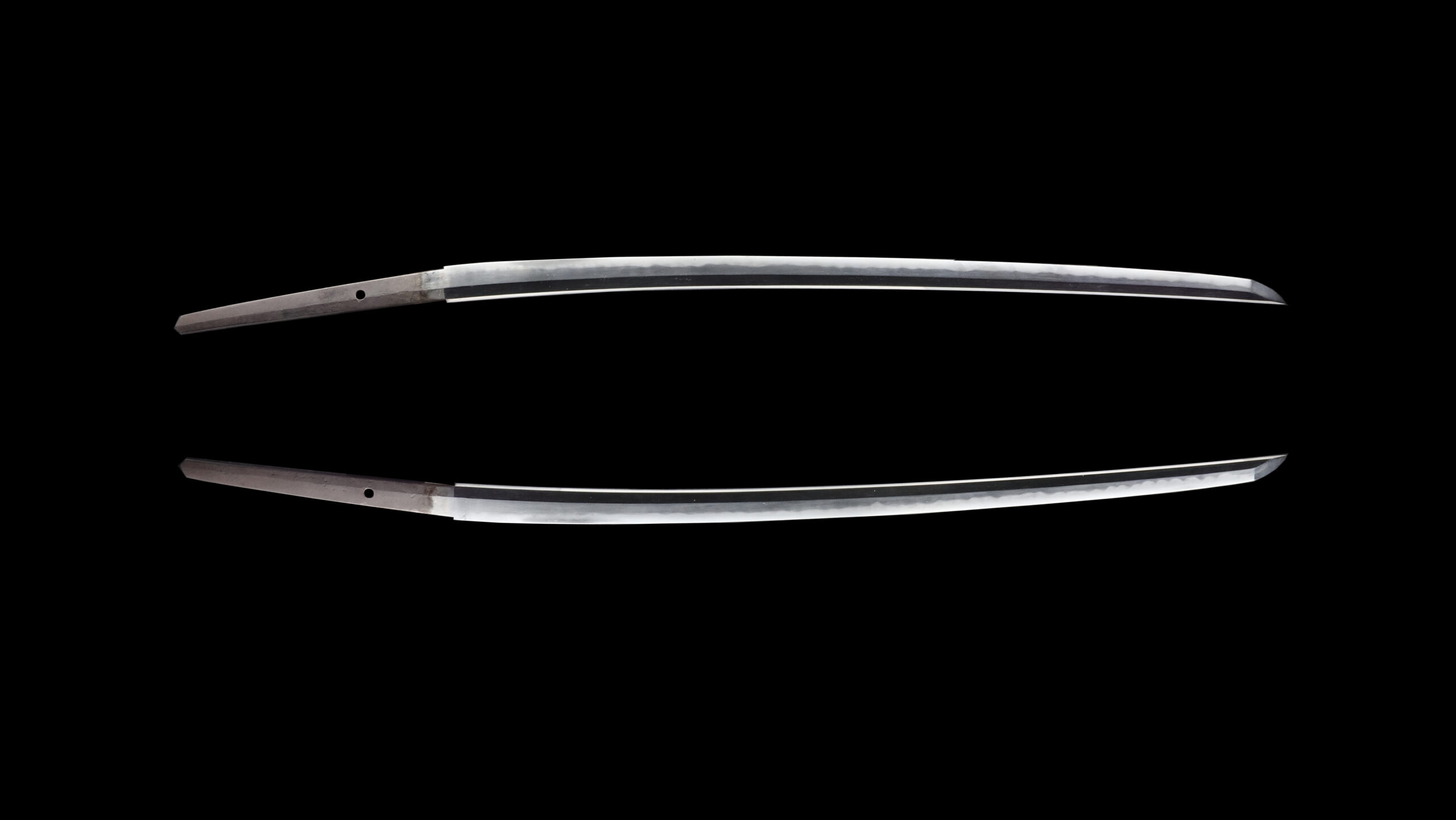
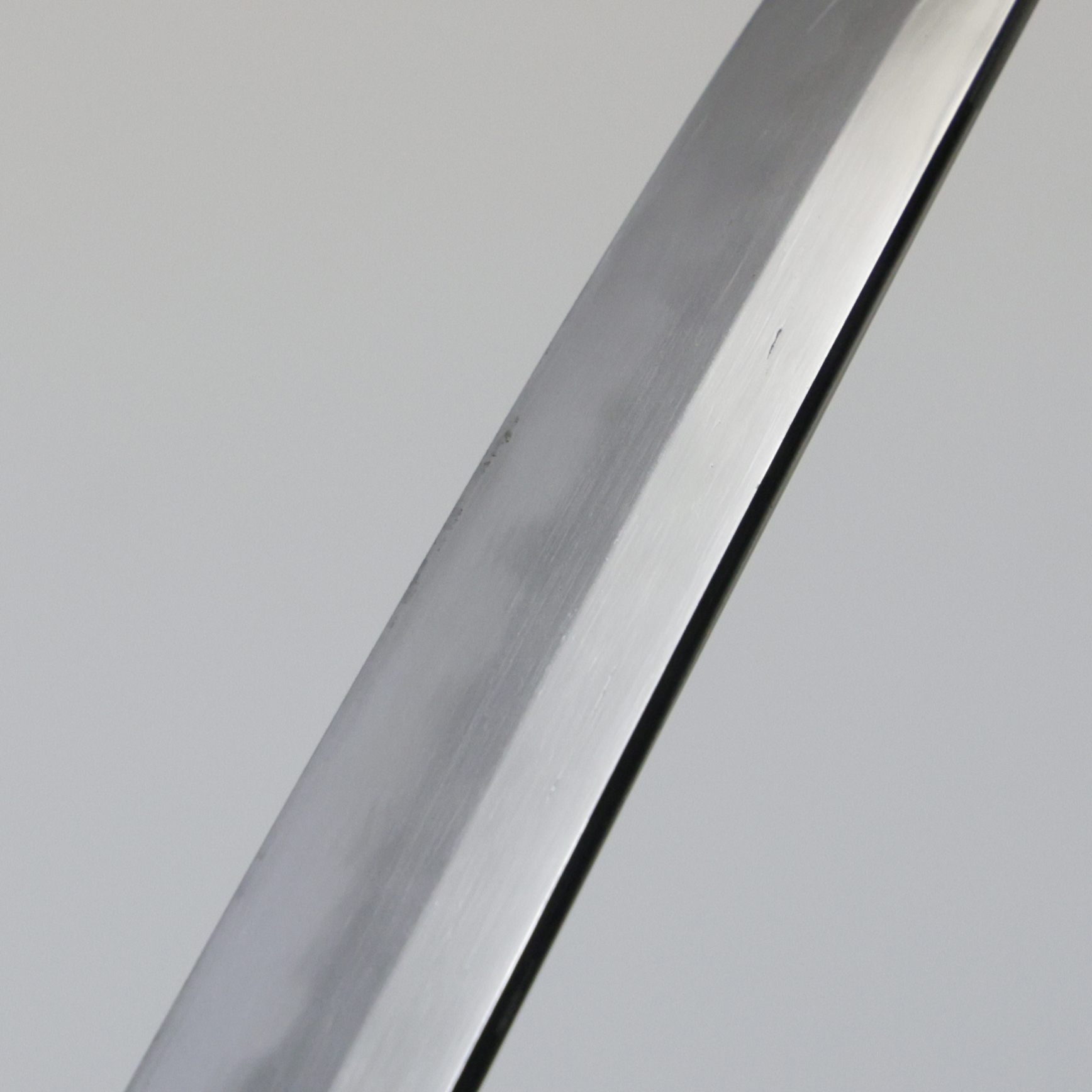
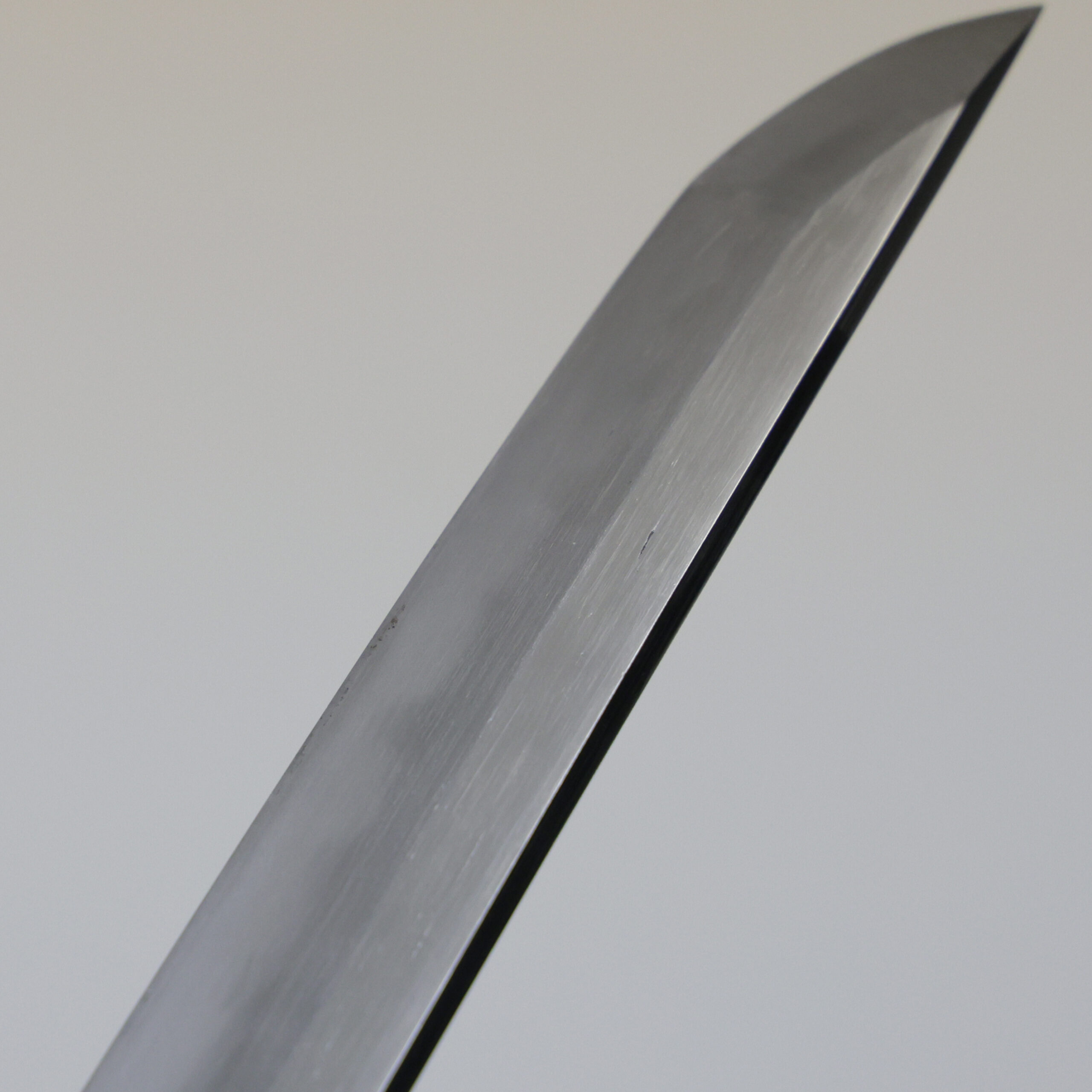
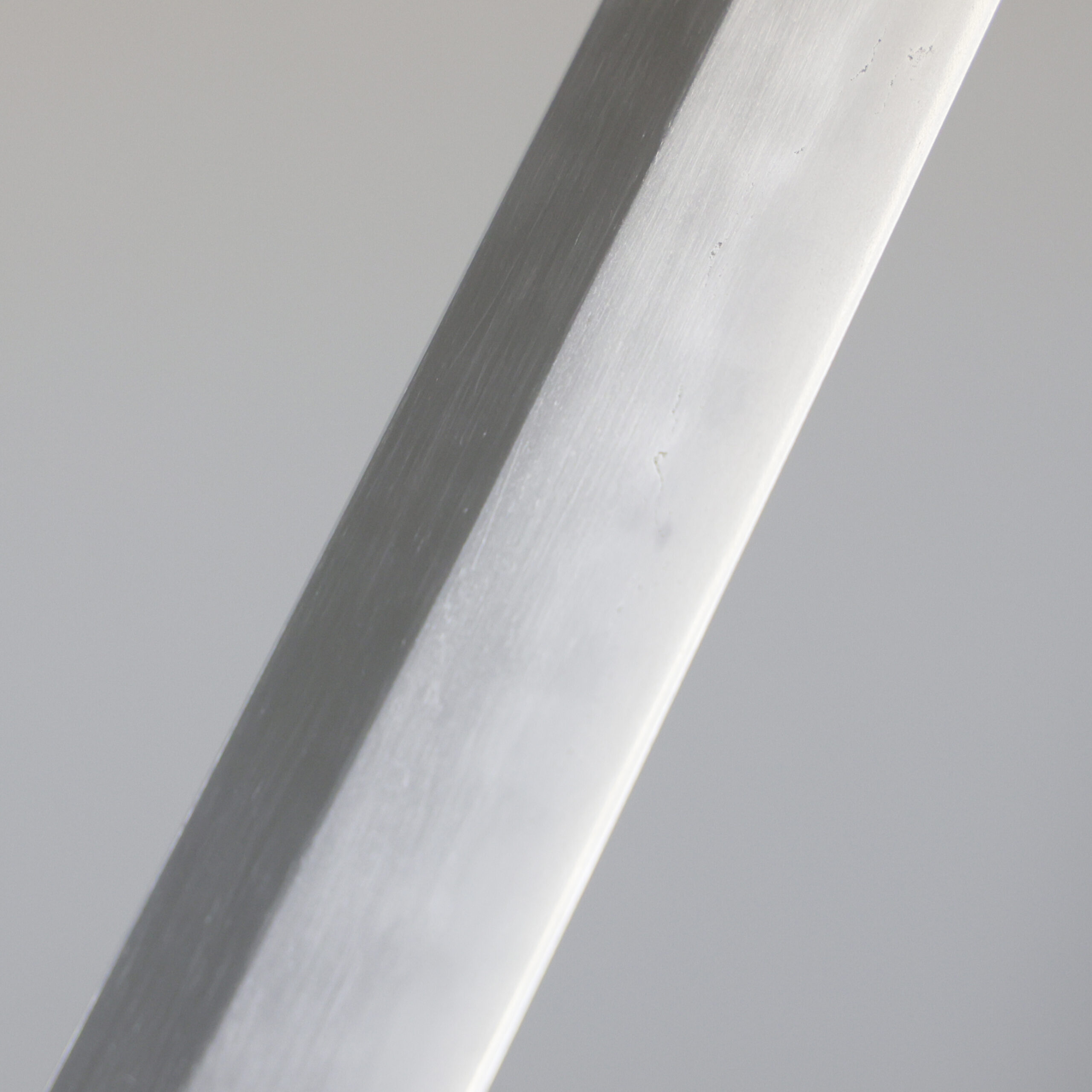
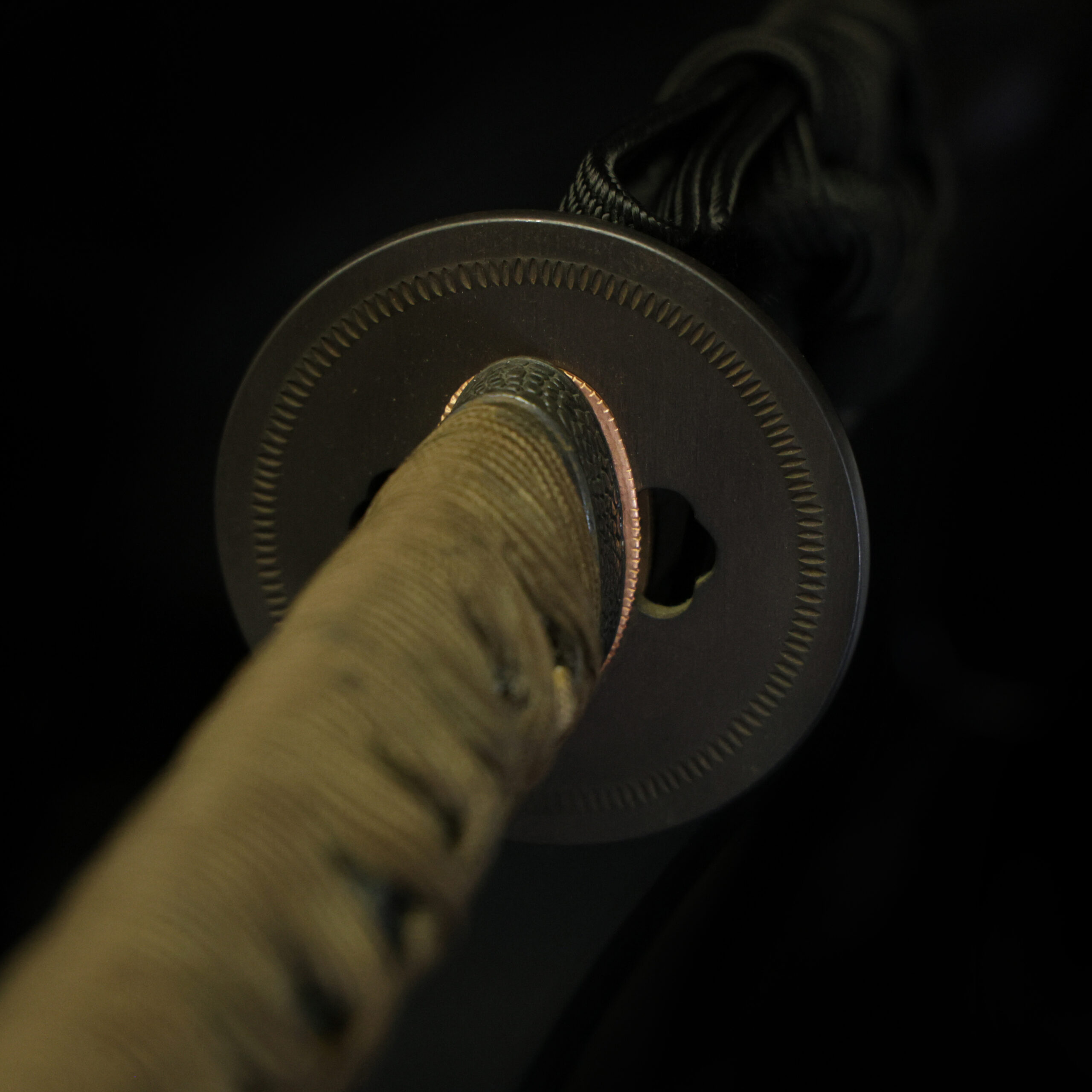
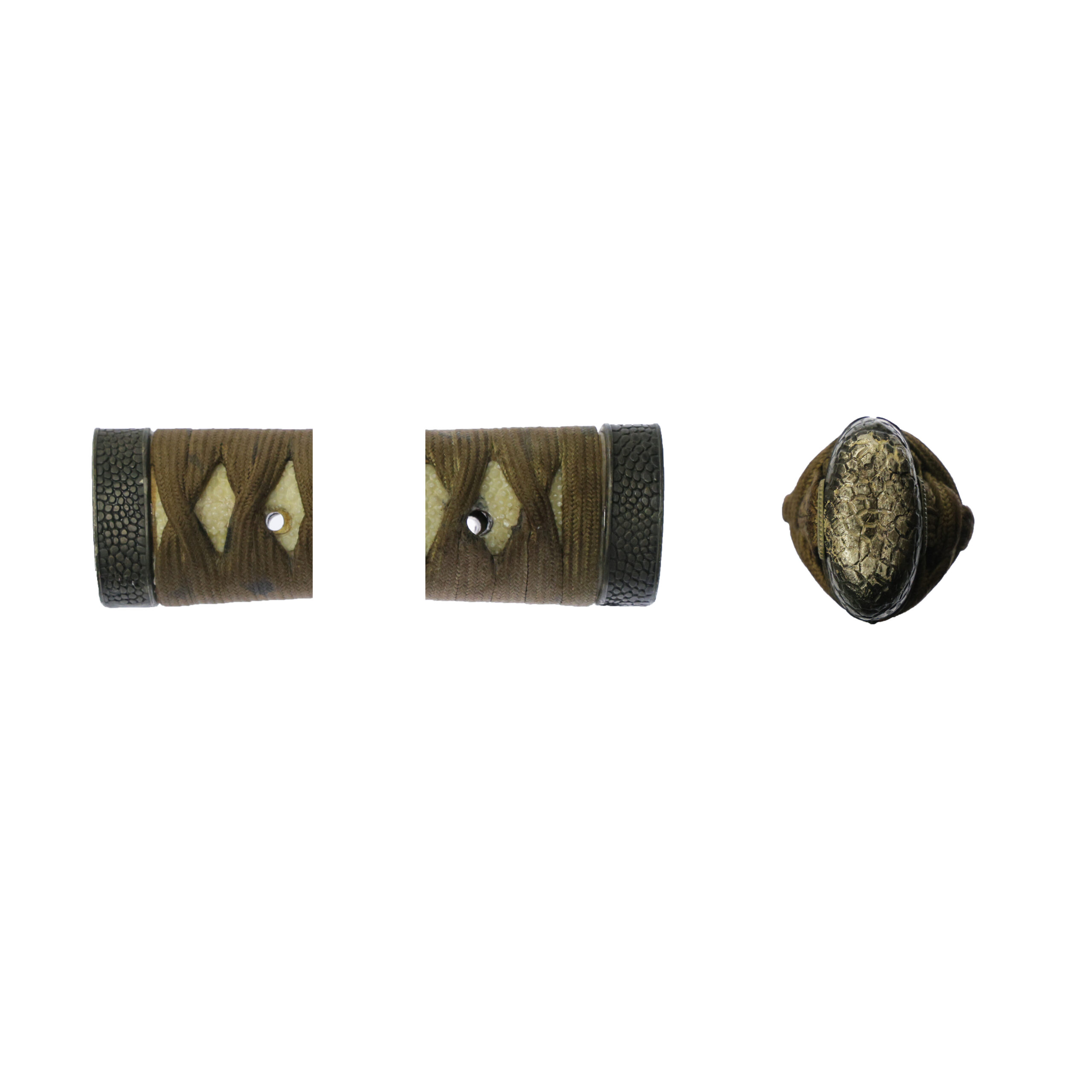
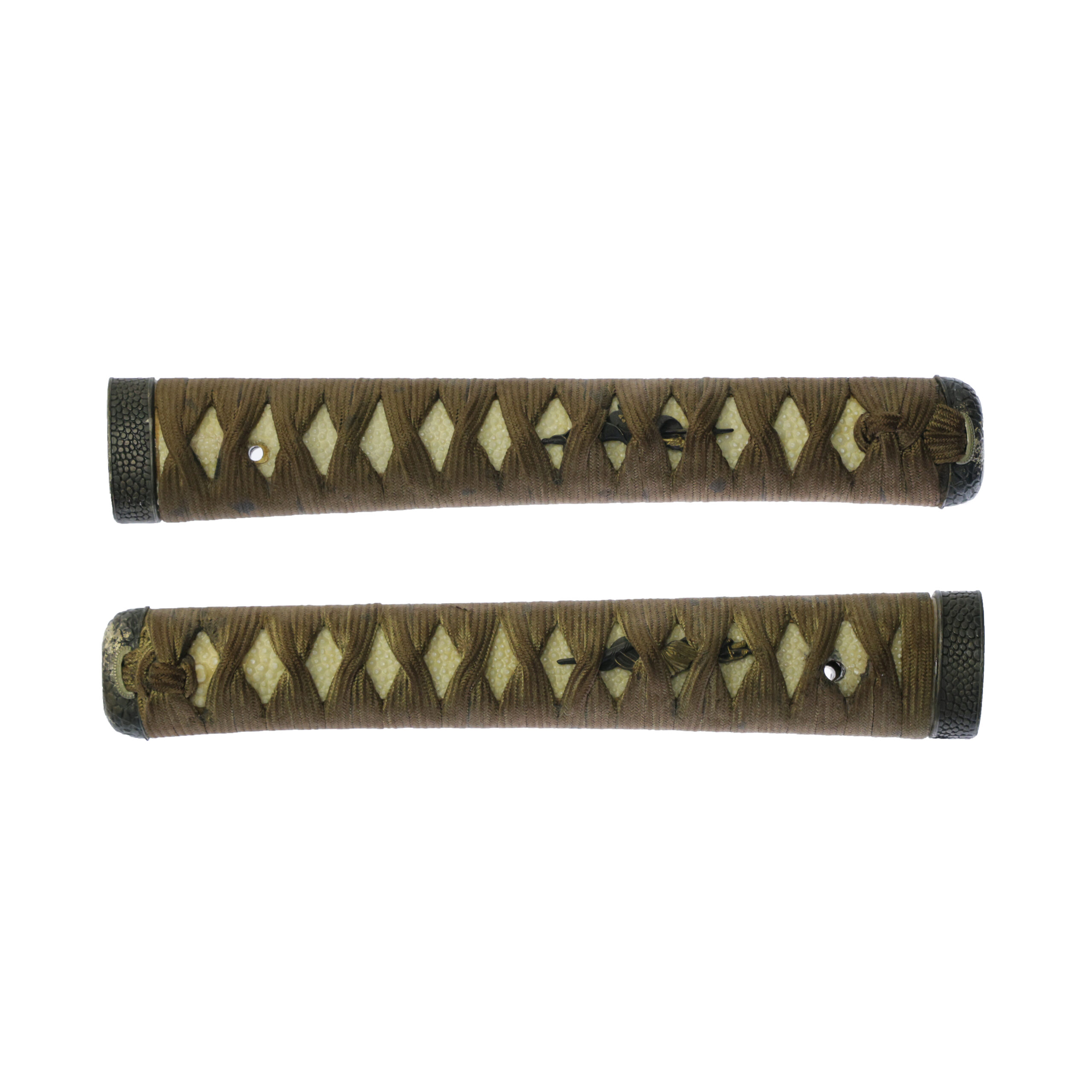
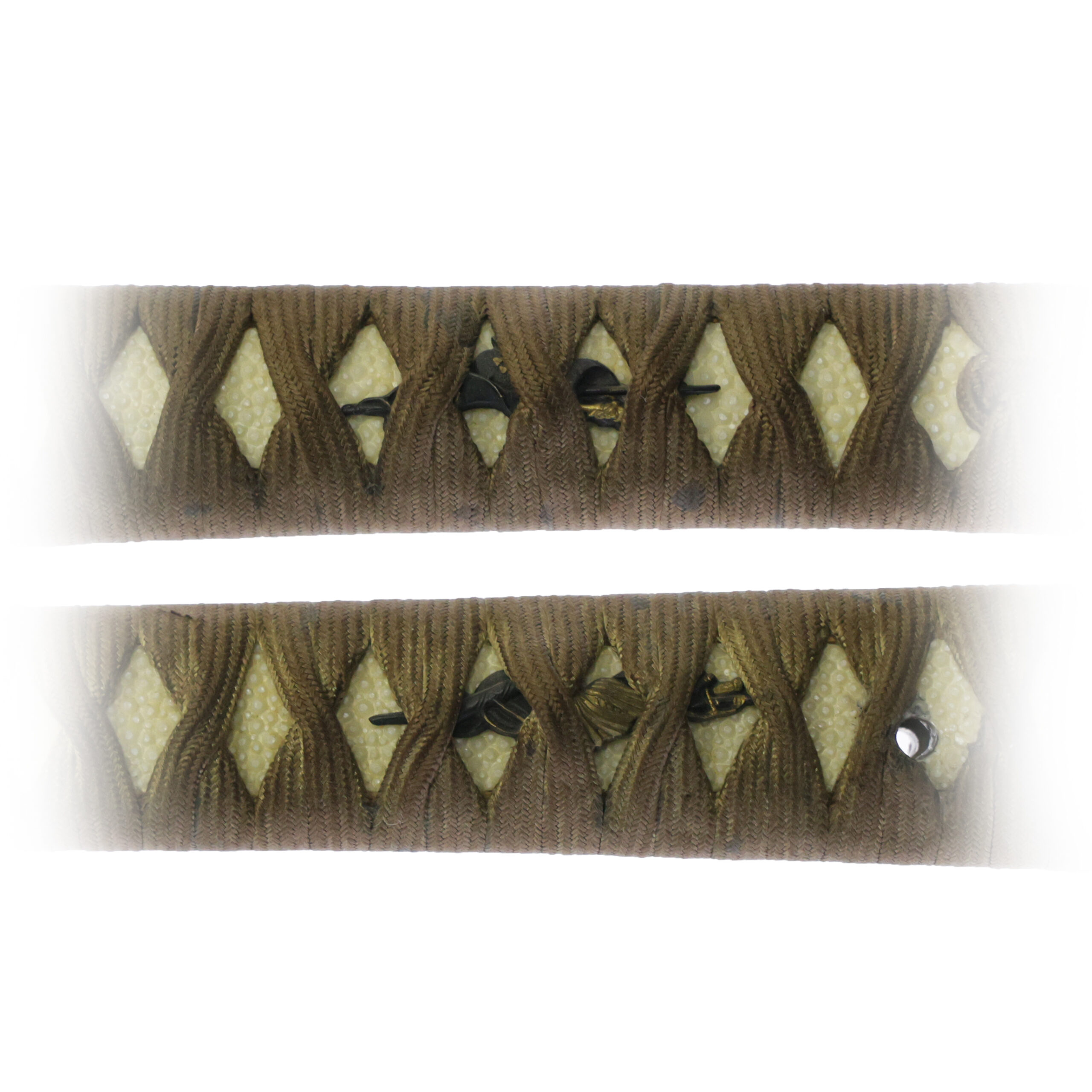
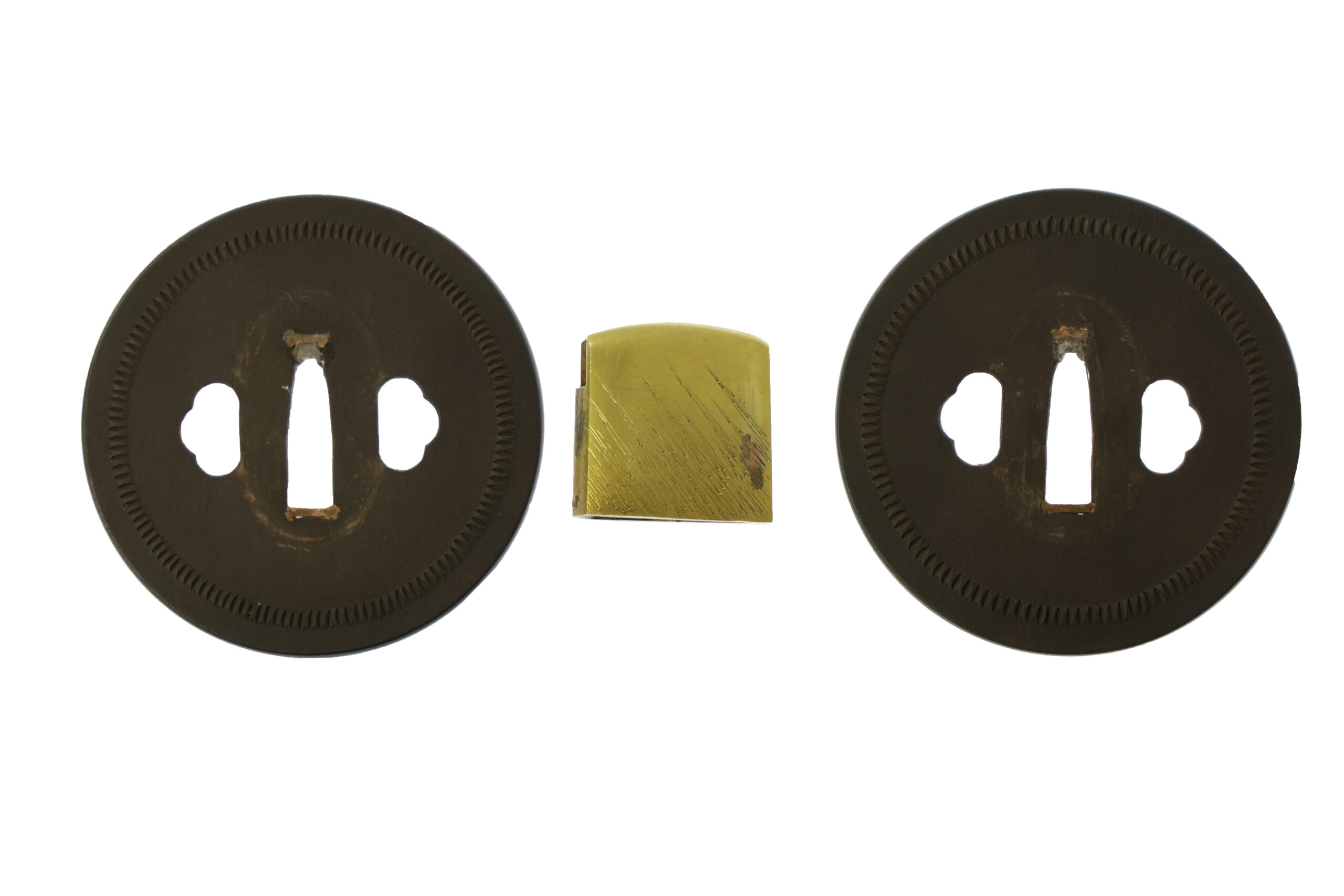
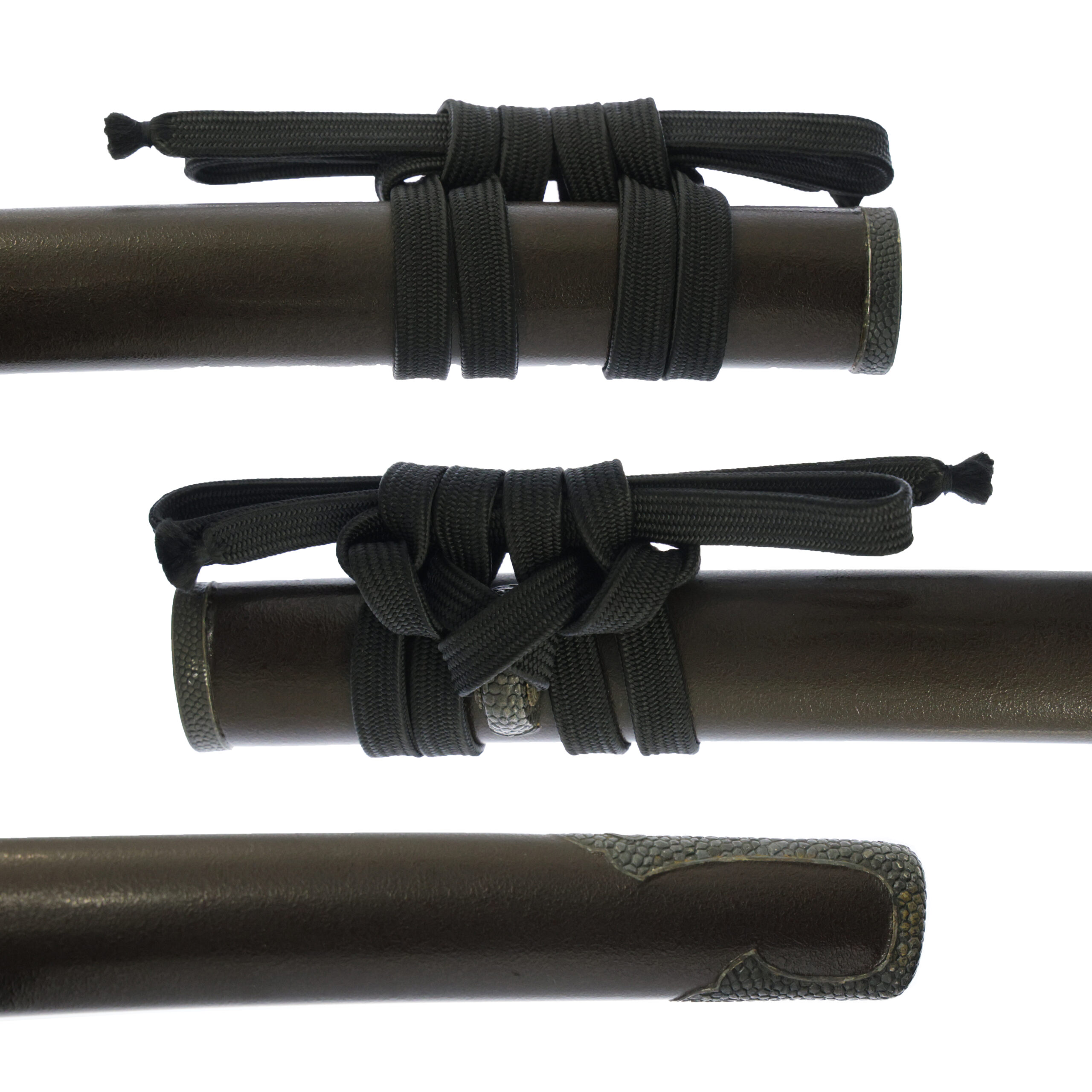
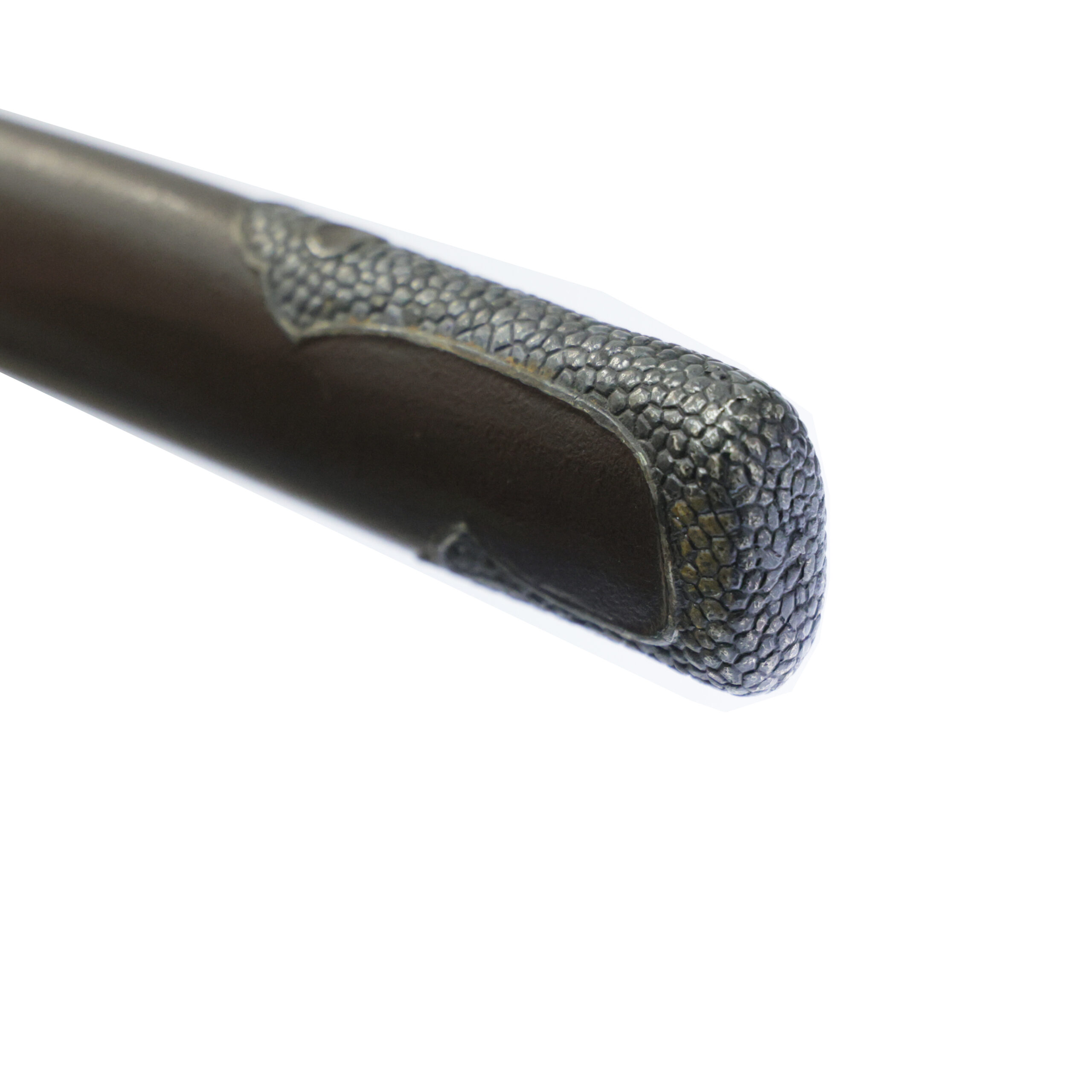
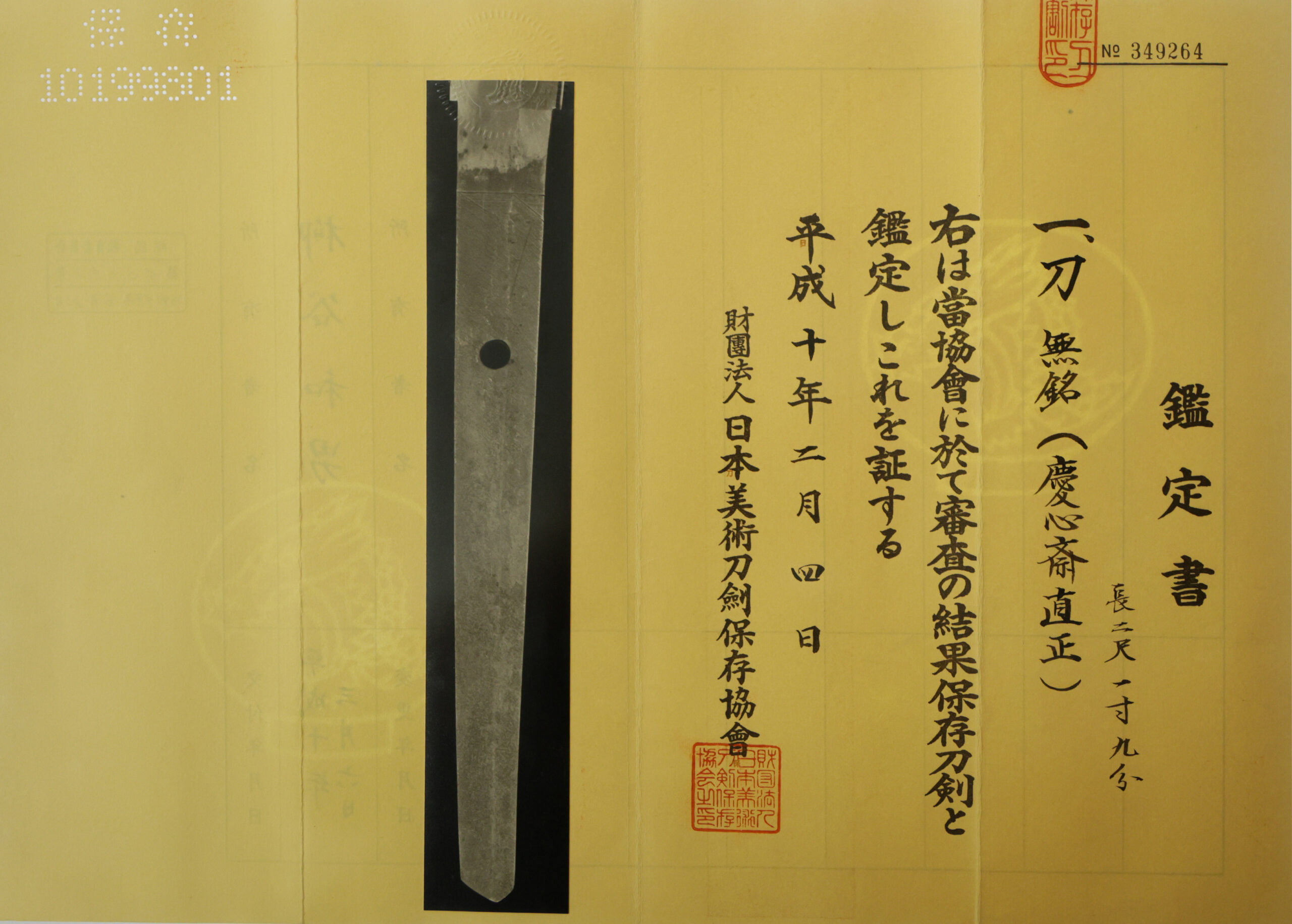
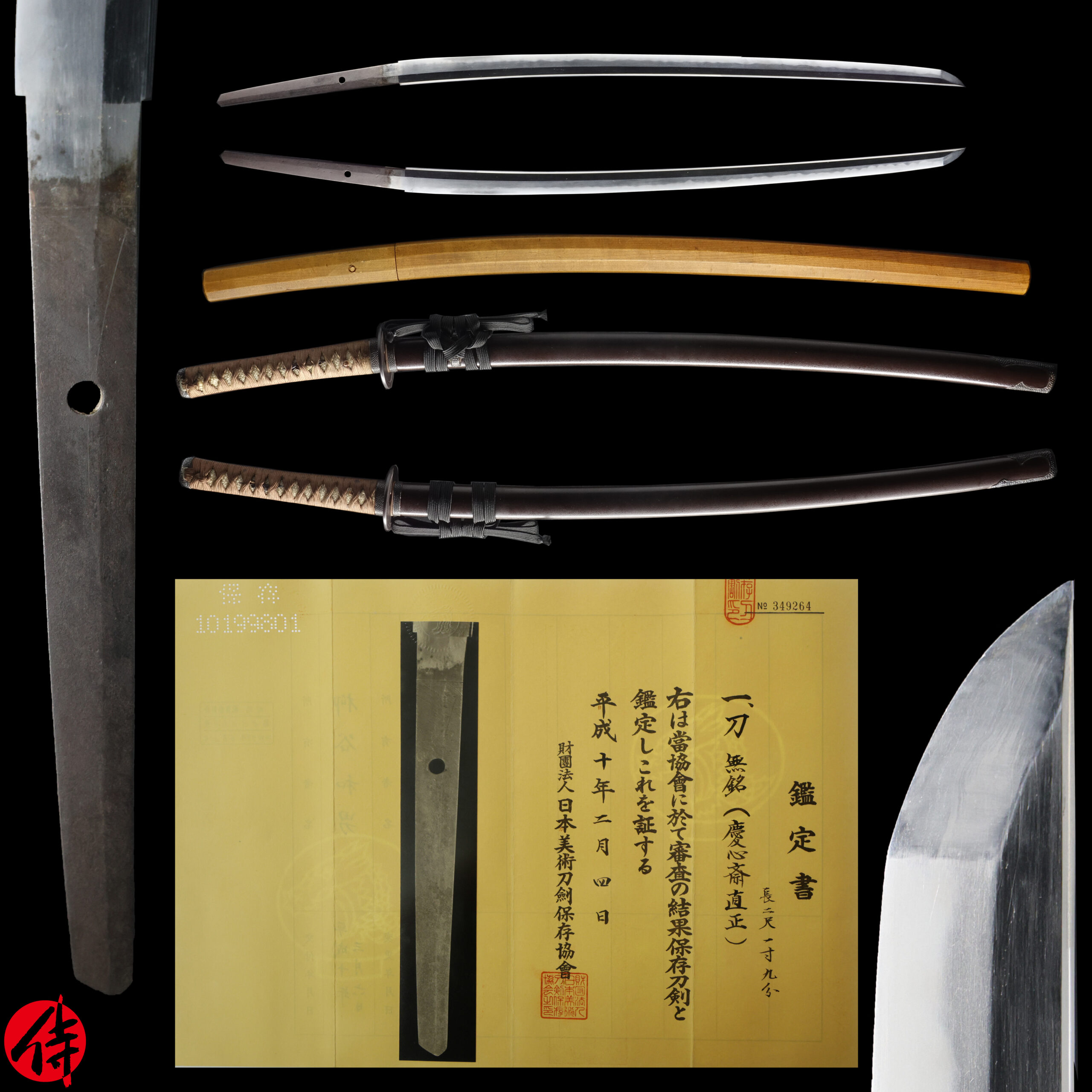
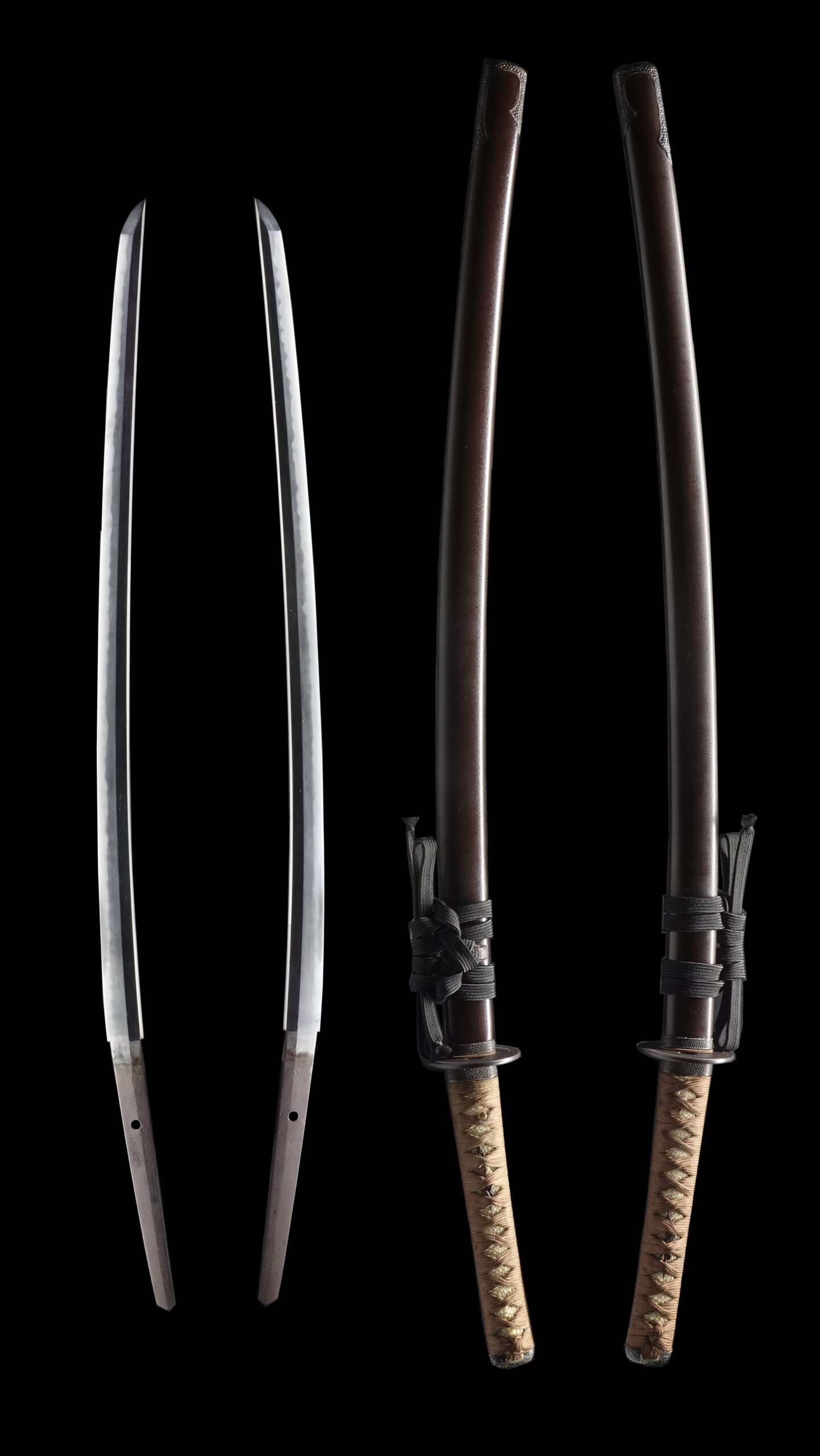
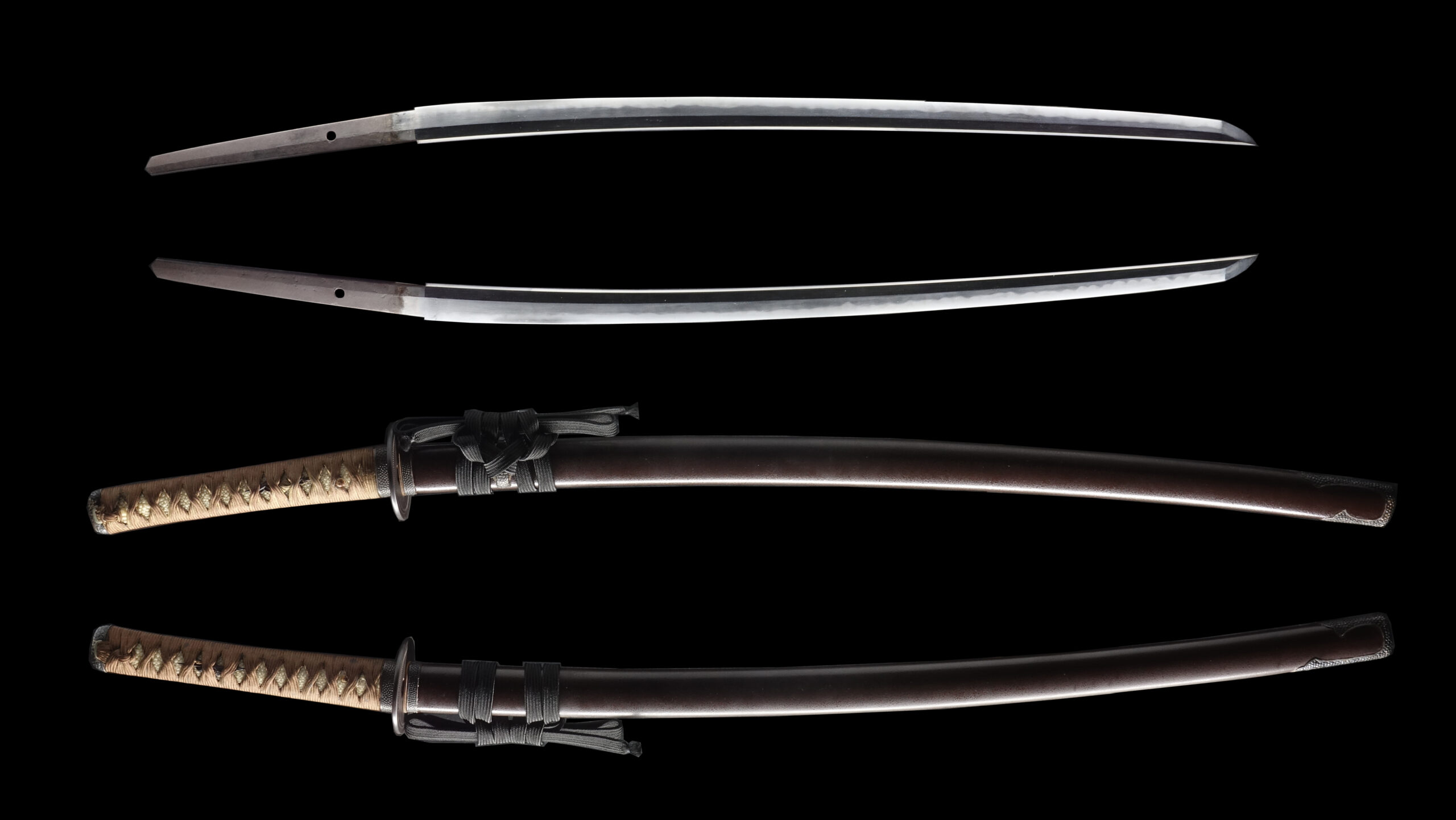
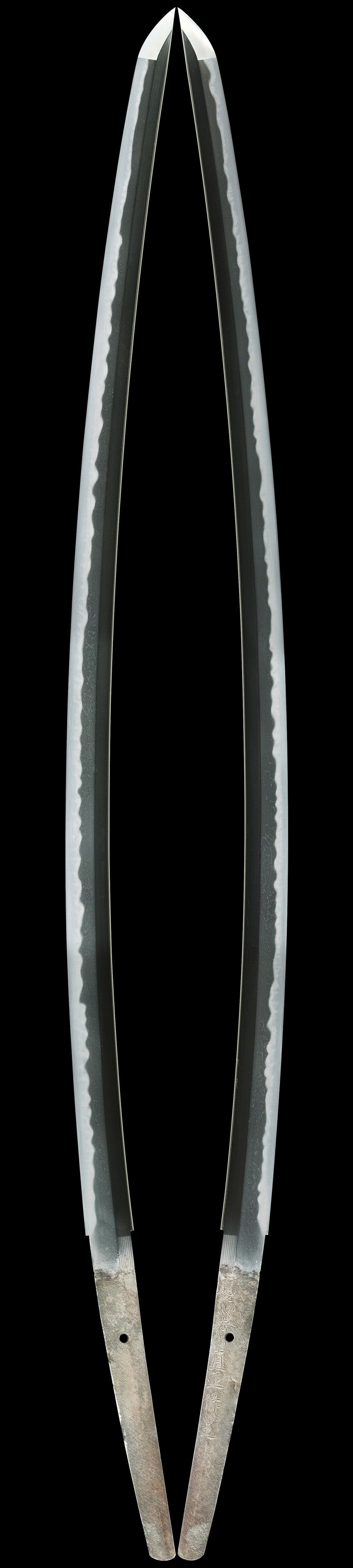
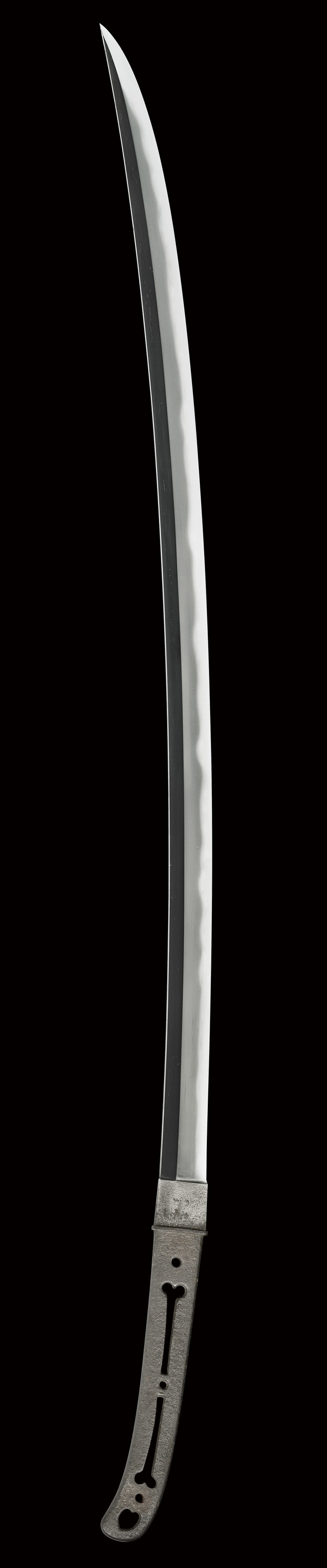
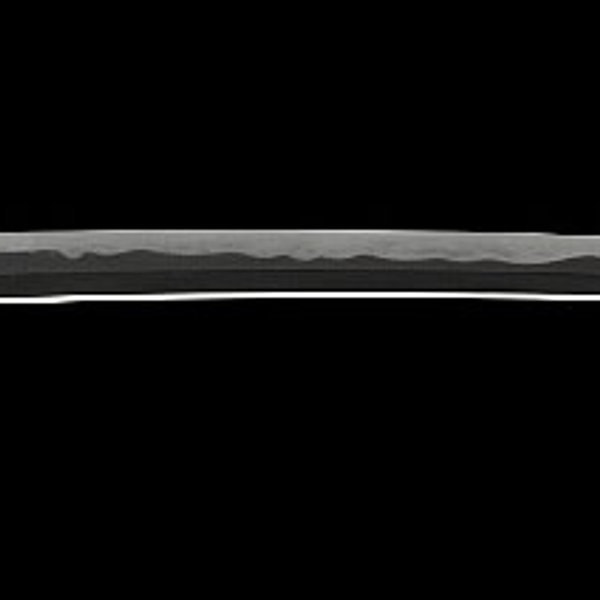
日本刀 慶心斎直正(極め) 保存刀剣鑑定書附 【解説】 本作は慶心斎直正(けいしんさい なおまさ)と極められた一振りです。 直正は陸奥国相馬中村藩(現在の福島県)の藩工で、幕末から明治初期にかけて活躍しました。新々刀期の巨匠、大慶直胤の門人であり、その技量は高く評価されています。嘉永年間(1848-1854)から明治初期にかけての作刀が確認されており、明治12年11月24日に没したと伝えられています。 時代背景 - 幕末 幕末(1853-1868)は江戸時代の終焉を告げる激動の時代です。ペリー提督率いる黒船の来航により日本は開国を余儀なくされ、西洋の技術や思想の流入は国家の在り方を大きく変える転換点となりました。 徳川幕府を支持する勢力と、近代化および王政復古を目指す勢力との間で政治的緊張が高まり、最終的に武家政治は終焉を迎えます。 この時代、侍にとって刀は単なる武器ではなく、自らのアイデンティティ、価値観、そして生き様を象徴する精神的な支柱でした。しかし、軍制の近代化や火器の普及に伴い、実戦における刀の役割は次第に失われていくこととなります。 本刀は、公益財団法人日本美術刀剣保存協会(NBTHK)により「保存刀剣」として鑑定されています。この鑑定書は、美術的価値が高く、保存状態の優れた真正の日本刀であることを証明するものです。 ※刀身にわずかな鍛え傷と切先に極小のこぼれがございます。詳細なコンディションについては、お気軽にお問い合わせください。 【刀身】 長さ(Nagasa):66.4 cm 反り(Sori):1.2 cm 刃文(Hamon):焼入れによって刃縁に現れる結晶構造。 地文(Jihada):鍛錬の過程で折り返し重ねられた鋼が表面に描き出す模様。 切先(Kissaki):刀身の先端部分。 茎(Nakago):柄に収まる持ち手にあたる部分。 日本の刀工は、柄内部での赤錆を防ぐために茎に黒錆を残します。この茎の朽ち込みや錆色は時の経過とともに形成され、専門家が製作年代を推定する際の重要な指標となります。 【外装】 拵(Koshirae):鞘、柄、鍔などで構成される日本刀の外装。 縁頭(Fuchi-Kashira):柄の両端を保護し装飾する一対の金具。 鞘(Saya):本品の鞘は梅花皮鮫皮研出鞘(かいらぎさめがわとぎだしざや)と見受けられます。独特の粒状の突起を持つカイラギザメの皮を鞘に巻き、漆を塗り重ねた後に表面を研ぎ出すことで、独特の紋様を浮かび上がらせる技法です。天然素材の質感と熟練の職人技が融合した逸品です。 柄・目貫(Tsuka / Menuki):柄は持ち手部分、目貫はその装飾です。 この目貫のモチーフは「馬具」と推察されます。特に、騎乗の際に用いる「鞍(くら)」と、足を支える「鐙(あぶみ)」が意匠化されています。 古来より馬は食料としてだけでなく、輸送や軍事の要として人間と深く関わってきました。
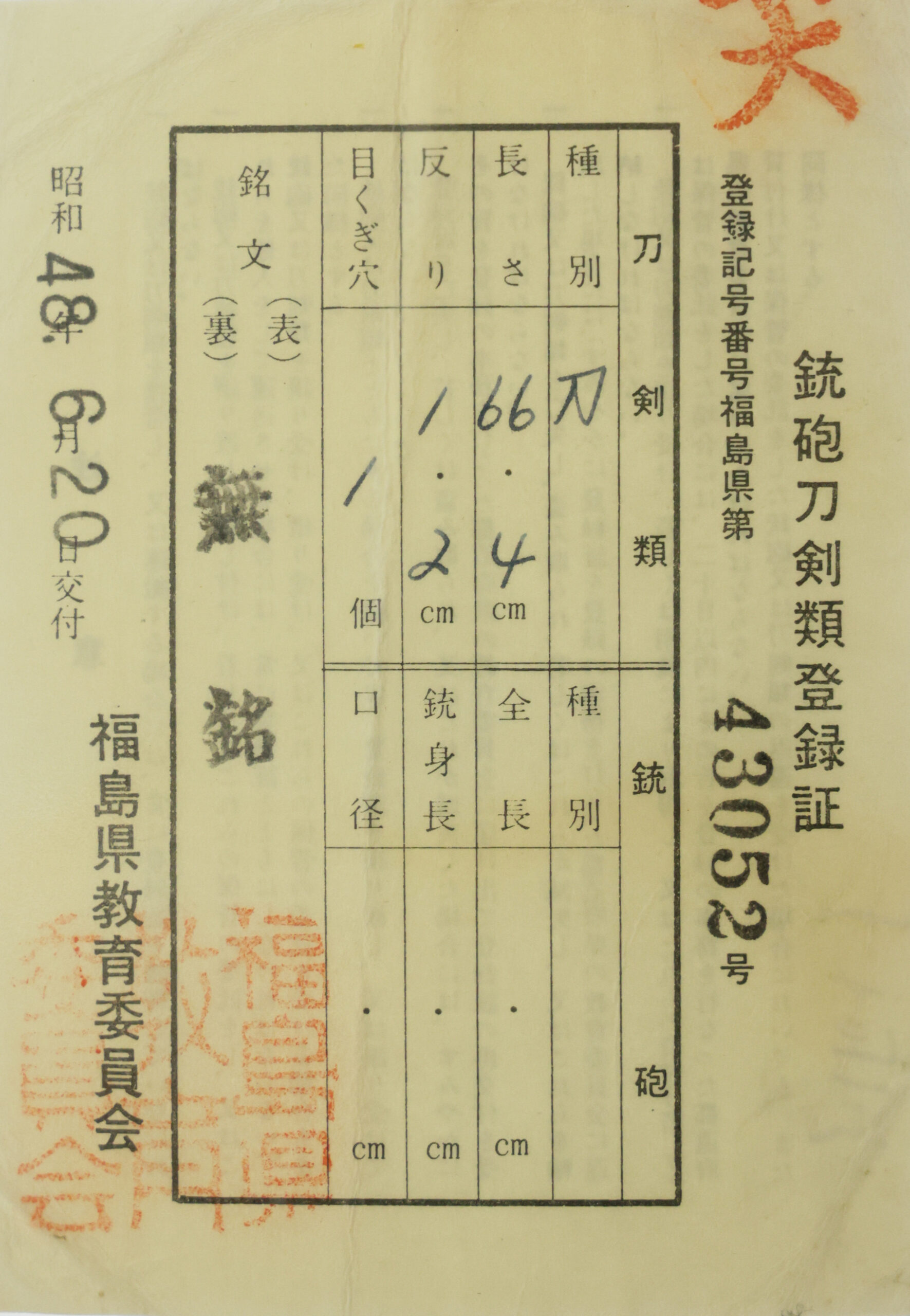
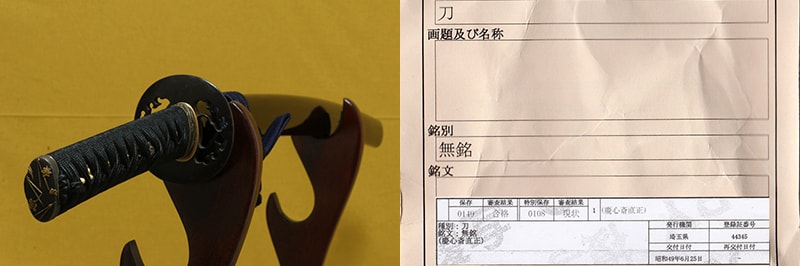
Certificate reading — 無銘(慶心斎直正)
 NihontoWatch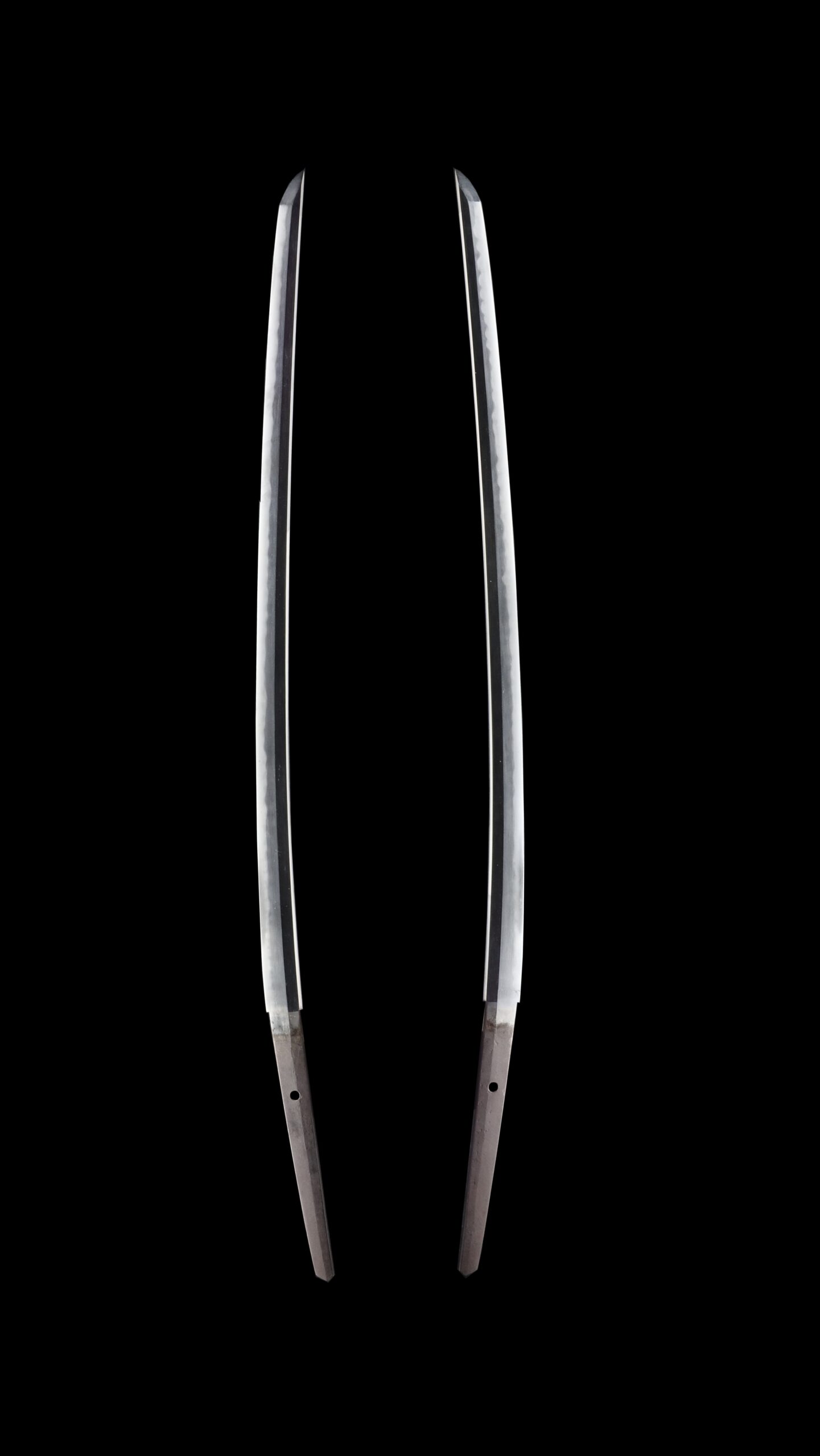
新々刀 · 陸奥 · 1864-1865頃
刀剣大鑑 上位95%
現在4点販売中
新々刀 · 武蔵
現在78点販売中
水心子正秀派は、十八世紀末から十九世紀初頭の江戸に興り、刀はすべて鎌倉の昔に復すべしとする復古刀運動を中核に据えた新々刀の一門である。開祖水心子正秀は、寛延三年に出羽国赤湯に川部儀八郎として生まれ[[c:1]]、武州下原の鍛冶吉英に学んだのち山形秋元家に仕え、のちに江戸浜町に移って約五十年に及ぶ作刀生活を送り、文政八年に七十六歳で歿した。彼は新々刀の祖と称され、古作の伝法を意図して甦らせることを唱えてその理論を世に広めたが、説明書は正秀自身の才のありかをむしろ壮年までの大坂写しに見いだす。この一門の物語で最も重きをなすのは、彼が江戸に糾合し育てた門人たちであろう。復古刀論を実地に示した第一の門人大慶直胤、二代正義細川守秀がその直下に立ち、さらに直胤の門から養子となった次郎太郎直勝、直胤の女婿と伝える水心子正次、正義の嫡子正守、米沢上杉家に仕えた長運斎綱俊、水戸藩工直江助政が連なって、出羽・江戸を中心に各藩へと広がった。 この一門を貫く共通の語法は、古刀各伝の意図的な復興にある。よく約んだ無地風に近い小板目に地沸を厚くつけ、その地の上に相州伝ののたれ・互の目、あるいは備前伝の丁子・互の目を焼くのが基調で、技術論的かつ教導的な性格がこれを支える。正秀の典型は津田助広に私淑した大坂写しの濤瀾乱れと井上真改風の広直刃にあり、地へこぼれる黒味がちの荒い沸が終始の手癖をなした。これに対して門人たちは古備前への遡りをいっそう深め、新々刀には本来失われた映りを意図して甦らせた。直胤はよくつんだ小板目に乱れ映りを鮮明に立て、後期長船の逆がかりを示す丁子乱れを焼いてこれを得意とし、説明書はその丁子乱れの巧みさを新々刀第一と評する。直勝は兼光に範をとった片落ち互の目を主体に、直胤よりも豪壮な姿と低く静かな焼きで古調を醸し、正次と正守はともに直胤・正義の二伝を忠実に承けて相州伝と備前伝を均しく再現し、綱俊は丁子に互の目を交えた備前伝を主調とした。一方で正秀みずからの備前伝・相州伝は終始焼刃が浅く荒い沸を交え、説明書はその技が門人直胤に及ばないと明記する。差異は資料の支持する範囲で明瞭で、直胤の備前・相州の両伝、直勝の長船写しに見る逆がかりと大杢目、助政の真改風直刃に偏した作域がそれぞれを分かつ。 鑑定の勘所は、まずこの意図的な映りと逆がかりに置かれる。明るい乱れ映りと角互の目を伴う逆がかりの丁子は、映りも逆がかりも持たぬ一般の新々刀から備前伝を分かち、相州伝は独特の渦巻肌と叢づき縞がかる沸の働きによって示される。位列としては正秀を上々作、直胤を最上作の在銘の大名跡とし、正義に次ぐ正守、綱俊、助政らがこれに続く。この一門は在銘・有年紀の作を数多く遺したため、その鑑定の問題は極めの難ではなくむしろ系統内の位置にあり、年ごとに変化する銘がその発展を正確に辿らせる。伝来は真田家伝来の大小や皇室に伝わった御太刀の副作、各藩工としての藩命作にうかがわれ、正秀が向き直らせた江戸の作刀は直胤を介して直勝・正次らへ受け継がれ、兼光・景光をねらった長船復古として幕末の十九世紀作刀に広く及んだ。 詳しく見る →
1800年前後、水心子正秀は著述をもって、鍛刀は古作の法に立ち返るべしと説いた。復古刀の運動である。最大の後継者直胤は、数百年絶えていた備前伝と相州伝を確信をもって再現した。
銘が正しい、または無銘でも年代・国・系統を確実に指摘できる、保存に値する真正の作と鑑定されたものです。
日本美術刀剣保存協会(NBTHK)は、1948年に設立され、文化庁の監督を受ける公益財団法人で、東京・刀剣博物館に本部を置きます。専門の審査員が出品作を直接審査し、美術的・歴史的価値に応じた鑑定書を発行します。NBTHKの鑑定書は、日本刀および刀装具の真正性を示す最も広く認知された基準です。
NBTHK公式サイトReturns/exchanges limited to defects caused by shipping (except willful misconduct or gross negligence by the company); customers must contact within 72 hours of receiving the product.
日本刀 慶心斎直正(極め) 保存刀剣鑑定書附 【解説】 本作は慶心斎直正(けいしんさい なおまさ)と極められた一振りです。 直正は陸奥国相馬中村藩(現在の福島県)の藩工で、幕末から明治初期にかけて活躍しました。新々刀期の巨匠、大慶直胤の門人であり、その技量は高く評価されています。嘉永年間(1848-1854)から明治初期にかけての作刀が確認されており、明治12年11月24日に没したと伝えられています。 時代背景 - 幕末 幕末(1853-1868)は江戸時代の終焉を告げる激動の時代です。ペリー提督率いる黒船の来航により日本は開国を余儀なくされ、西洋の技術や思想の流入は国家の在り方を大きく変える転換点となりました。 徳川幕府を支持する勢力と、近代化および王政復古を目指す勢力との間で政治的緊張が高まり、最終的に武家政治は終焉を迎えます。 この時代、侍にとって刀は単なる武器ではなく、自らのアイデンティティ、価値観、そして生き様を象徴する精神的な支柱でした。しかし、軍制の近代化や火器の普及に伴い、実戦における刀の役割は次第に失われていくこととなります。 本刀は、公益財団法人日本美術刀剣保存協会(NBTHK)により「保存刀剣」として鑑定されています。この鑑定書は、美術的価値が高く、保存状態の優れた真正の日本刀であることを証明するものです。 ※刀身にわずかな鍛え傷と切先に極小のこぼれがございます。詳細なコンディションについては、お気軽にお問い合わせください。 【刀身】 長さ(Nagasa):66.4 cm 反り(Sori):1.2 cm 刃文(Hamon):焼入れによって刃縁に現れる結晶構造。 地文(Jihada):鍛錬の過程で折り返し重ねられた鋼が表面に描き出す模様。 切先(Kissaki):刀身の先端部分。 茎(Nakago):柄に収まる持ち手にあたる部分。 日本の刀工は、柄内部での赤錆を防ぐために茎に黒錆を残します。この茎の朽ち込みや錆色は時の経過とともに形成され、専門家が製作年代を推定する際の重要な指標となります。 【外装】 拵(Koshirae):鞘、柄、鍔などで構成される日本刀の外装。 縁頭(Fuchi-Kashira):柄の両端を保護し装飾する一対の金具。 鞘(Saya):本品の鞘は梅花皮鮫皮研出鞘(かいらぎさめがわとぎだしざや)と見受けられます。独特の粒状の突起を持つカイラギザメの皮を鞘に巻き、漆を塗り重ねた後に表面を研ぎ出すことで、独特の紋様を浮かび上がらせる技法です。天然素材の質感と熟練の職人技が融合した逸品です。 柄・目貫(Tsuka / Menuki):柄は持ち手部分、目貫はその装飾です。 この目貫のモチーフは「馬具」と推察されます。特に、騎乗の際に用いる「鞍(くら)」と、足を支える「鐙(あぶみ)」が意匠化されています。 古来より馬は食料としてだけでなく、輸送や軍事の要として人間と深く関わってきました。
Certificate reading — 無銘(慶心斎直正)
NihontoWatch新々刀 · 陸奥 · 1864-1865頃
刀剣大鑑 上位95%
現在4点販売中
新々刀 · 武蔵
現在78点販売中
水心子正秀派は、十八世紀末から十九世紀初頭の江戸に興り、刀はすべて鎌倉の昔に復すべしとする復古刀運動を中核に据えた新々刀の一門である。開祖水心子正秀は、寛延三年に出羽国赤湯に川部儀八郎として生まれ[[c:1]]、武州下原の鍛冶吉英に学んだのち山形秋元家に仕え、のちに江戸浜町に移って約五十年に及ぶ作刀生活を送り、文政八年に七十六歳で歿した。彼は新々刀の祖と称され、古作の伝法を意図して甦らせることを唱えてその理論を世に広めたが、説明書は正秀自身の才のありかをむしろ壮年までの大坂写しに見いだす。この一門の物語で最も重きをなすのは、彼が江戸に糾合し育てた門人たちであろう。復古刀論を実地に示した第一の門人大慶直胤、二代正義細川守秀がその直下に立ち、さらに直胤の門から養子となった次郎太郎直勝、直胤の女婿と伝える水心子正次、正義の嫡子正守、米沢上杉家に仕えた長運斎綱俊、水戸藩工直江助政が連なって、出羽・江戸を中心に各藩へと広がった。 この一門を貫く共通の語法は、古刀各伝の意図的な復興にある。よく約んだ無地風に近い小板目に地沸を厚くつけ、その地の上に相州伝ののたれ・互の目、あるいは備前伝の丁子・互の目を焼くのが基調で、技術論的かつ教導的な性格がこれを支える。正秀の典型は津田助広に私淑した大坂写しの濤瀾乱れと井上真改風の広直刃にあり、地へこぼれる黒味がちの荒い沸が終始の手癖をなした。これに対して門人たちは古備前への遡りをいっそう深め、新々刀には本来失われた映りを意図して甦らせた。直胤はよくつんだ小板目に乱れ映りを鮮明に立て、後期長船の逆がかりを示す丁子乱れを焼いてこれを得意とし、説明書はその丁子乱れの巧みさを新々刀第一と評する。直勝は兼光に範をとった片落ち互の目を主体に、直胤よりも豪壮な姿と低く静かな焼きで古調を醸し、正次と正守はともに直胤・正義の二伝を忠実に承けて相州伝と備前伝を均しく再現し、綱俊は丁子に互の目を交えた備前伝を主調とした。一方で正秀みずからの備前伝・相州伝は終始焼刃が浅く荒い沸を交え、説明書はその技が門人直胤に及ばないと明記する。差異は資料の支持する範囲で明瞭で、直胤の備前・相州の両伝、直勝の長船写しに見る逆がかりと大杢目、助政の真改風直刃に偏した作域がそれぞれを分かつ。 鑑定の勘所は、まずこの意図的な映りと逆がかりに置かれる。明るい乱れ映りと角互の目を伴う逆がかりの丁子は、映りも逆がかりも持たぬ一般の新々刀から備前伝を分かち、相州伝は独特の渦巻肌と叢づき縞がかる沸の働きによって示される。位列としては正秀を上々作、直胤を最上作の在銘の大名跡とし、正義に次ぐ正守、綱俊、助政らがこれに続く。この一門は在銘・有年紀の作を数多く遺したため、その鑑定の問題は極めの難ではなくむしろ系統内の位置にあり、年ごとに変化する銘がその発展を正確に辿らせる。伝来は真田家伝来の大小や皇室に伝わった御太刀の副作、各藩工としての藩命作にうかがわれ、正秀が向き直らせた江戸の作刀は直胤を介して直勝・正次らへ受け継がれ、兼光・景光をねらった長船復古として幕末の十九世紀作刀に広く及んだ。 詳しく見る →
1800年前後、水心子正秀は著述をもって、鍛刀は古作の法に立ち返るべしと説いた。復古刀の運動である。最大の後継者直胤は、数百年絶えていた備前伝と相州伝を確信をもって再現した。
銘が正しい、または無銘でも年代・国・系統を確実に指摘できる、保存に値する真正の作と鑑定されたものです。
日本美術刀剣保存協会(NBTHK)は、1948年に設立され、文化庁の監督を受ける公益財団法人で、東京・刀剣博物館に本部を置きます。専門の審査員が出品作を直接審査し、美術的・歴史的価値に応じた鑑定書を発行します。NBTHKの鑑定書は、日本刀および刀装具の真正性を示す最も広く認知された基準です。
NBTHK公式サイトReturns/exchanges limited to defects caused by shipping (except willful misconduct or gross negligence by the company); customers must contact within 72 hours of receiving the product.


![Tanto - Hozon - by Suishinshi Masahide Naomasa - 短刀[景真斎直正][日本美術刀剣保存協会 保存刀剣]](/_next/image?url=https%3A%2F%2Fitbhfhyptogxcjbjfzwx.supabase.co%2Fstorage%2Fv1%2Fobject%2Fpublic%2Flisting-images%2Fworld-seiyudo%2FL32214%2F00.jpg&w=2560&q=90)