室町の長船は輸出産業であった。明との勘合貿易はおよそ十二万八千振の日本刀を海の彼方へ運び、国内では戦国の軍勢が買い手となった。注文主の俗名を銘に刻む注文打ちが、兵卒用の数打ち物と並んで鍛えられている。
 NihontoWatchNihontoWatch
This blade is attributed to Omiya Morikage (大宮盛景), a representative swordsmith of the Omiya school, which flourished during the mid to late Nanbokuchō period (mid–late 14th century). The maker’s name, Morikage lasted four generations from Enbun era (1356: Nanbokucho period)-Eikyo era (1435: Muromachi period). According to NBTHK’s appraisal, the attribution was given to late-gen Morikage, who was active slightly later than the Nanbokucho period (early Muromachi period). The Omiya school is traditionally believed to have been founded by Kunimori (国盛) in the late Kamakura period. According to historical accounts, Kunimori originally came from Yamashiro Province (present-day Kyoto) and later moved to Omiya village in Bizen Province (present-day Okayama), where he established his workshop. The school’s name “Omiya” is said to derive from the place called Inokuma Omiya (猪熊大宮) where Kunimori originally resided in Yamashirp province. However, since no signed works by Kunimori have been definitively identified, the first-gen Morikage is often regarded as the de facto founder and the most prominent master of the school. The Omiya school was active alongside the Osafune school—particularly the renowned swordsmith Kanemitsu (兼光). During this time, a distinctive forging style known as Sōden-Bizen (相伝備前) was developed. This technique combined the characteristics of the powerful Sōshū tradition with the refined beauty of the Bizen tradition. Swordsmiths of the Omiya school, including Morikage, were known to have mastered this advanced style. Blades produced in the Sōden-Bizen style were highly valued by samurai for their excellent balance of strength and elegance. Other notable smiths of the Omiya school include Moritsugu (盛次) and Morishige (盛重). It was common for members of this school to incorporate the character “Mori” (盛) in their names, reflecting their lineage and tradition. Jigane and Hamon (Steel Structure and Tempering line) Itame Komakani Tsumi Ohada Majiru (板目細かにつみ大肌交る) The jigane features a finely forged itame-hada, densely packed, with occasional areas of larger, more pronounced grain (ō-hada). Saka no Me ni Kogunome Choji Majiri Nie Yokutsu Tsuki Sunagashi Kinsuji Hairu (逆の目に小互の目丁子交り沸よくつき砂流し金筋入る) The hamon features a combination of reverse gunome with small ko-gunome and chōji elements, abundantly covered in nie, and enriched with dynamic activities such as sunagashi and kinsuji. Homare Kizu (誉疵) We see what appears to be a Homare Kizu (誉疵), which tells us that this blade was used in a battle. Homare means honorable, and Homare Kizu is considered a good blade characteristic that tells us its history. Appraisal This blade is appraised as a JUYO TOKEN (重要刀剣) issued by NBTHK (Nihon Bijutsu Touken Hozon Kyokai: 日本美術刀剣保存協会). JUYO is one rank higher than Tokubetsu Hozon. To be eligible for a Juyo Token, it needs to be appraised as a Tokubetsu Hozon Token first. It is extremely rare for an antique Japanese sword to be appraised as JUYO TOKEN, and it is highly desirable among Japanese sword collectors. *Please note that there are some minor signs of rust on the mune (back edge) of the blade. For more detailed information regarding its condition, please feel free to contact us. Fuchi-Kashira The design motif of this fuchi-kashira is the tachibana (橘). In ancient Japan, tachibana referred to a type of citrus fruit similar to a mandarin orange. According to the Kojiki (古事記), Japan’s oldest historical chronicle, the tachibana was believed to grow in Tokoyo no Kuni (常世の国), a mythical land of eternal life and immortality. Because of this association, the tachibana came to symbolize longevity and was thought to bring blessings such as long life and healthy children. This belief is reflected in Japanese customs—for example, a citrus fruit is traditionally placed on top of kagami mochi (鏡餅), a New Year’s decoration, as a symbol of prosperity and continuity. The tachibana motif has also been widely used in wedding garments and ceremonial textiles such as fukusa (袱紗), reflecting its auspicious meaning and its association with happiness, vitality, and the continuation of family lineage. Tsuka and Menuki The theme of the Menuki is the dragon (龍, Ryu). Initially, the dragon is an imaginary creature found in ancient Chinese traditions or myths. Furthermore, it is regarded as a symbolic beast of auspicious signs. Its body is likened to nine animals: antlers are deer, the head is a camel, eyes are demons, the neck is a snake, belly is Mizuchi (蛟, mythical animal in Japan which looks like a snake and have a horn and four legs), scales are fish, claws are falcons, palms are tigers, and ears are cows. It was thought that the dragon would reign at the top of all animals because of its odd-looking appearance. Also, in Japan, there is a belief that worships dragon as a water god and is called Ryujin Shinkou (竜神信仰). Since rice cultivation flourished in this country, water is always an essential resource. Therefore, the dragon motif has been familiar to Japanese people since a long time ago. Tsuba and Habaki The tsuba of this sword is decorated with a scattered cherry blossom motif (桜散らし, Sakura-chirashi), in which cherry blossoms are delicately dispersed across the design. For the Japanese people, cherry blossoms hold deep cultural significance. They symbolize the fleeting nature of life, beauty in impermanence, and the changing of the seasons. Because the blossoms bloom brilliantly yet fall quickly, they have long been associated with both renewal and transience. This motif was especially favored by samurai, who identified with these values and incorporated cherry blossom designs into their arms and armor. Saya This saya is finished in black lacquer, accented with scattered amber mottled patterns that create a rich sense of depth and luster. The surface retains a beautiful gloss and remains in excellent condition. Lacquer has been used throughout Asia since ancient times due to its outstanding waterproof properties. As Japanese sword blades are made of iron, moisture is their greatest enemy. To protect the blade from deterioration, craftsmen developed the technique of coating the scabbard with multiple layers of lacquer. By applying these layers, the saya is effectively sealed against not only humidity but also rain and snow. The complexity of this process required highly specialized skills, giving rise to professional lacquer artisans known as nushi (塗師). Authentication Paper They authenticated the blade on February 10th in the 42nd year of Showa (1967). They appraised it as JUYO TOKEN, the blade exceptionally worth preserving for Japanese society.

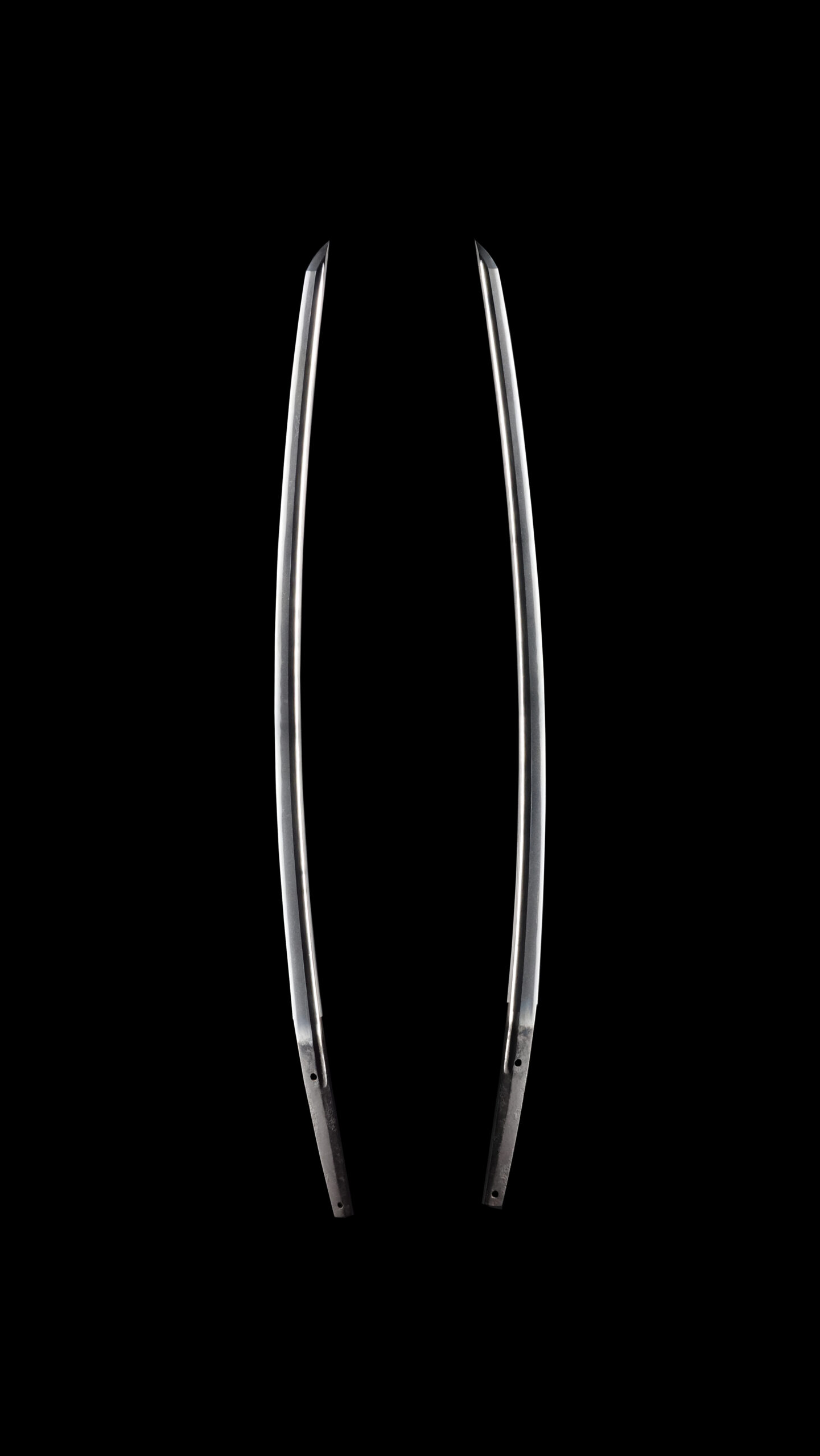
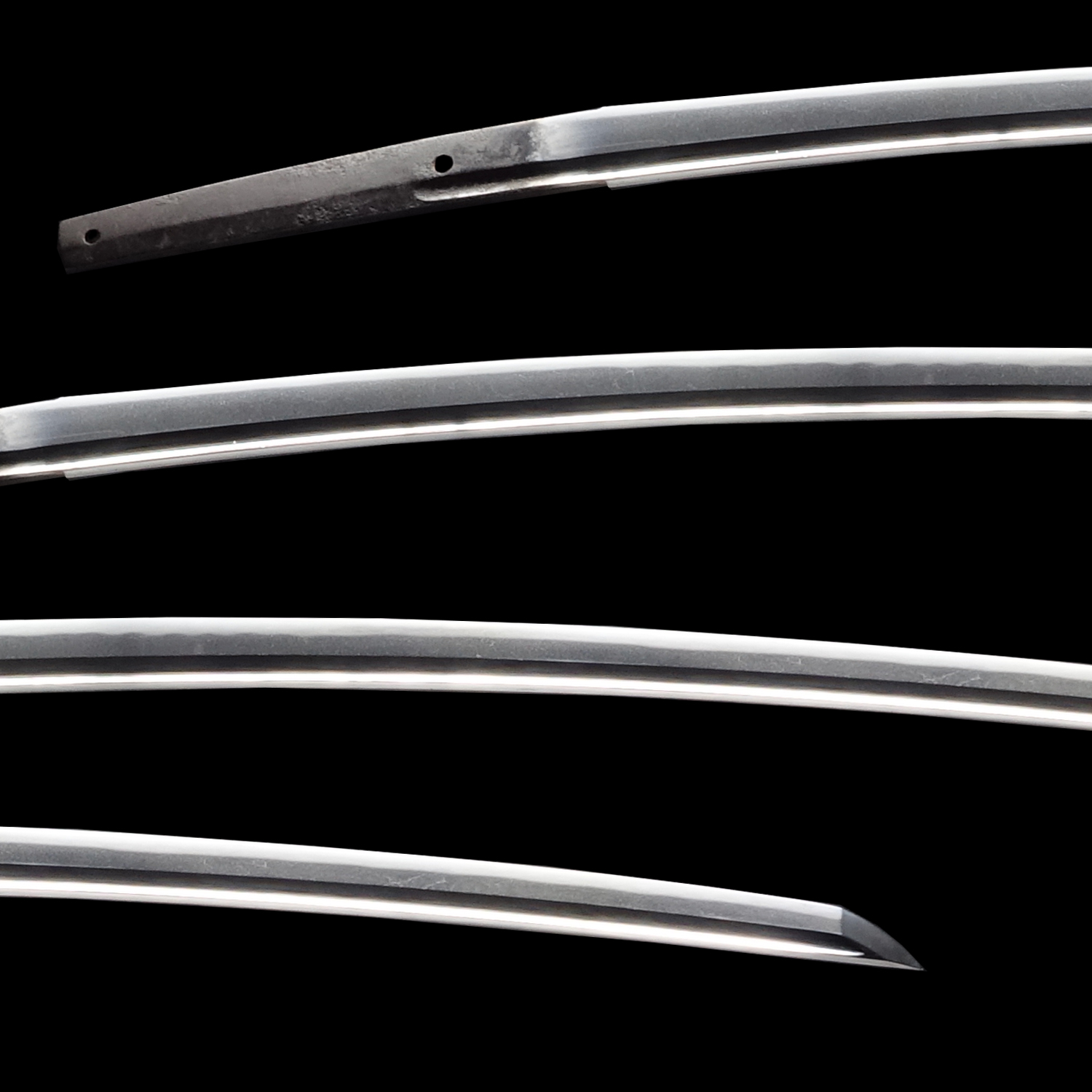
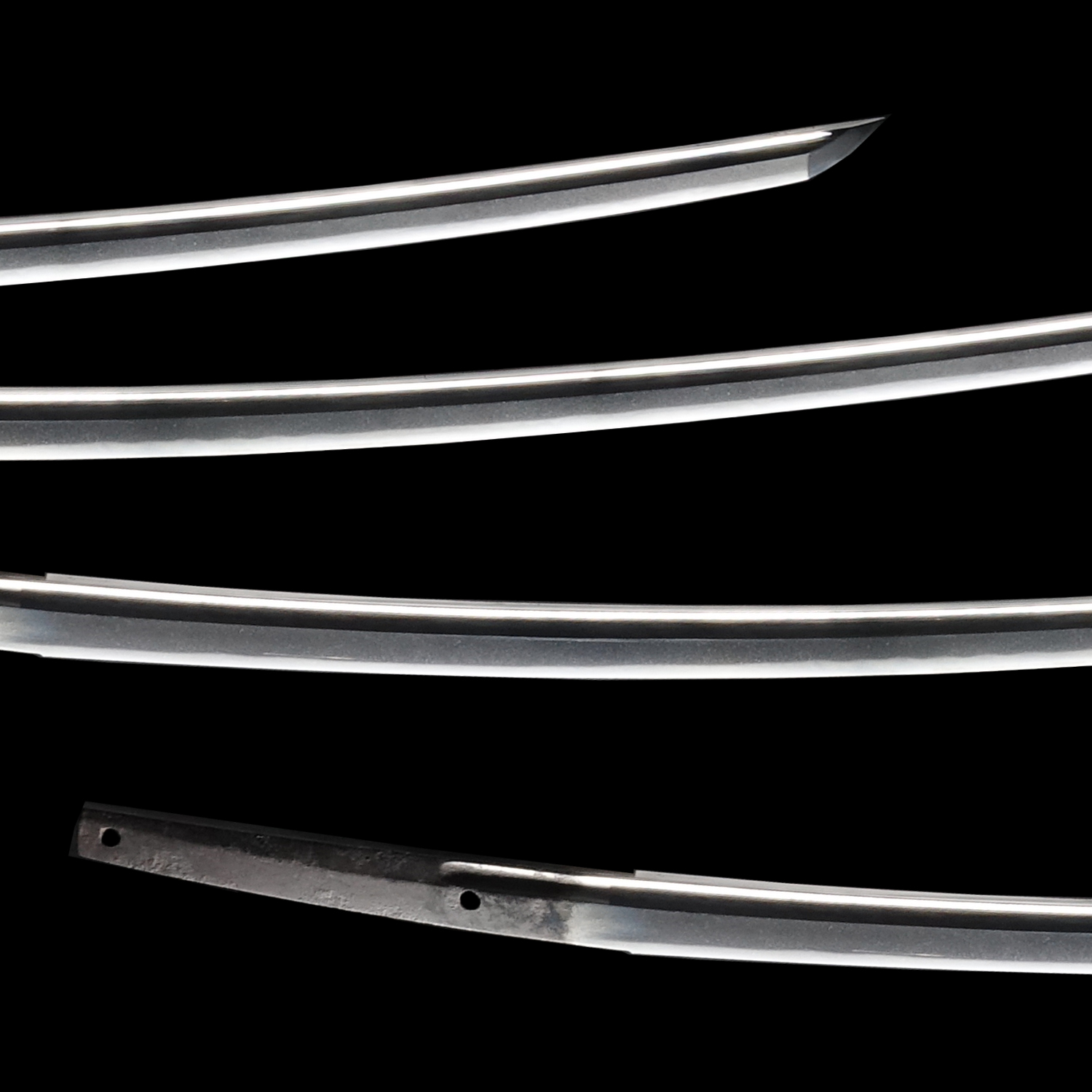
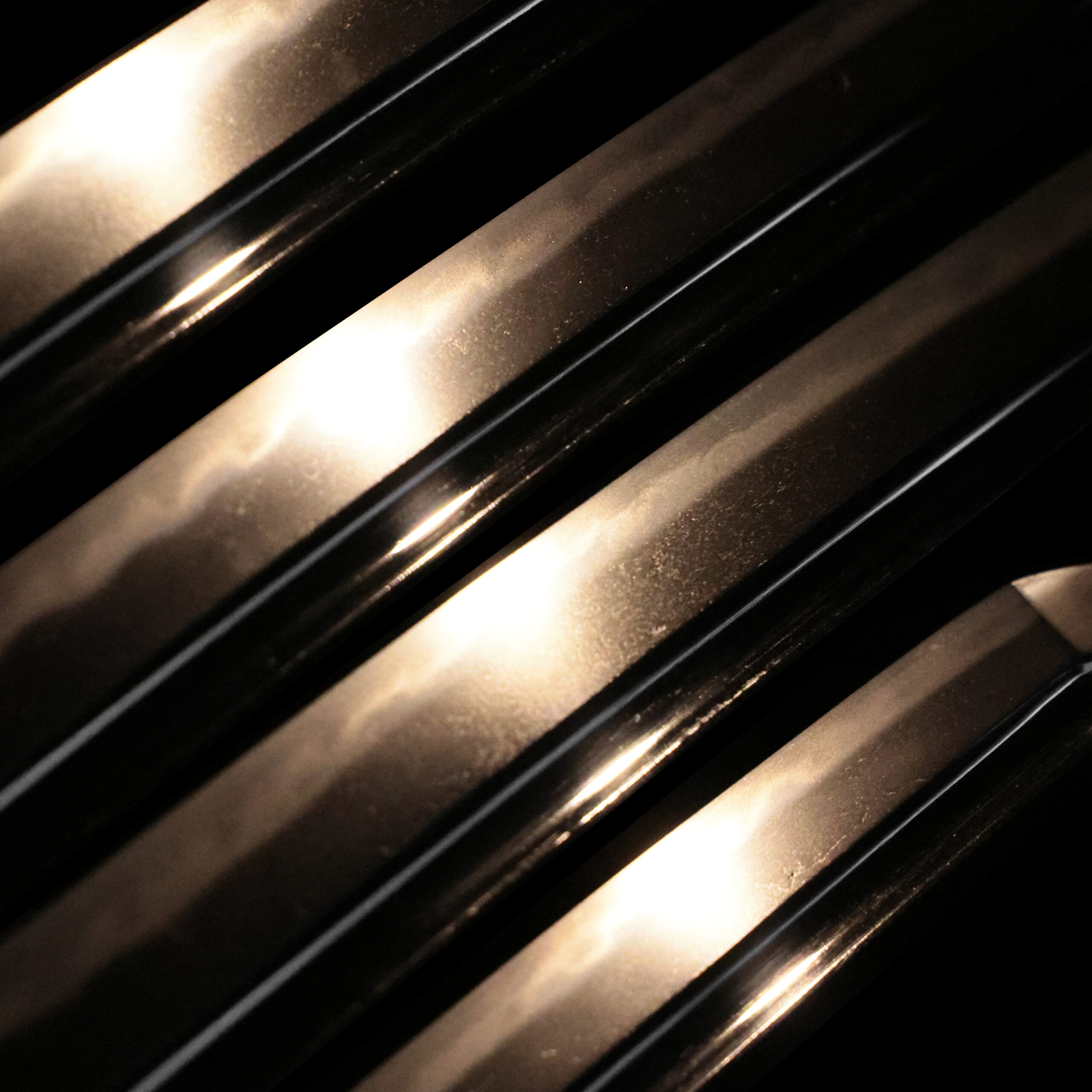
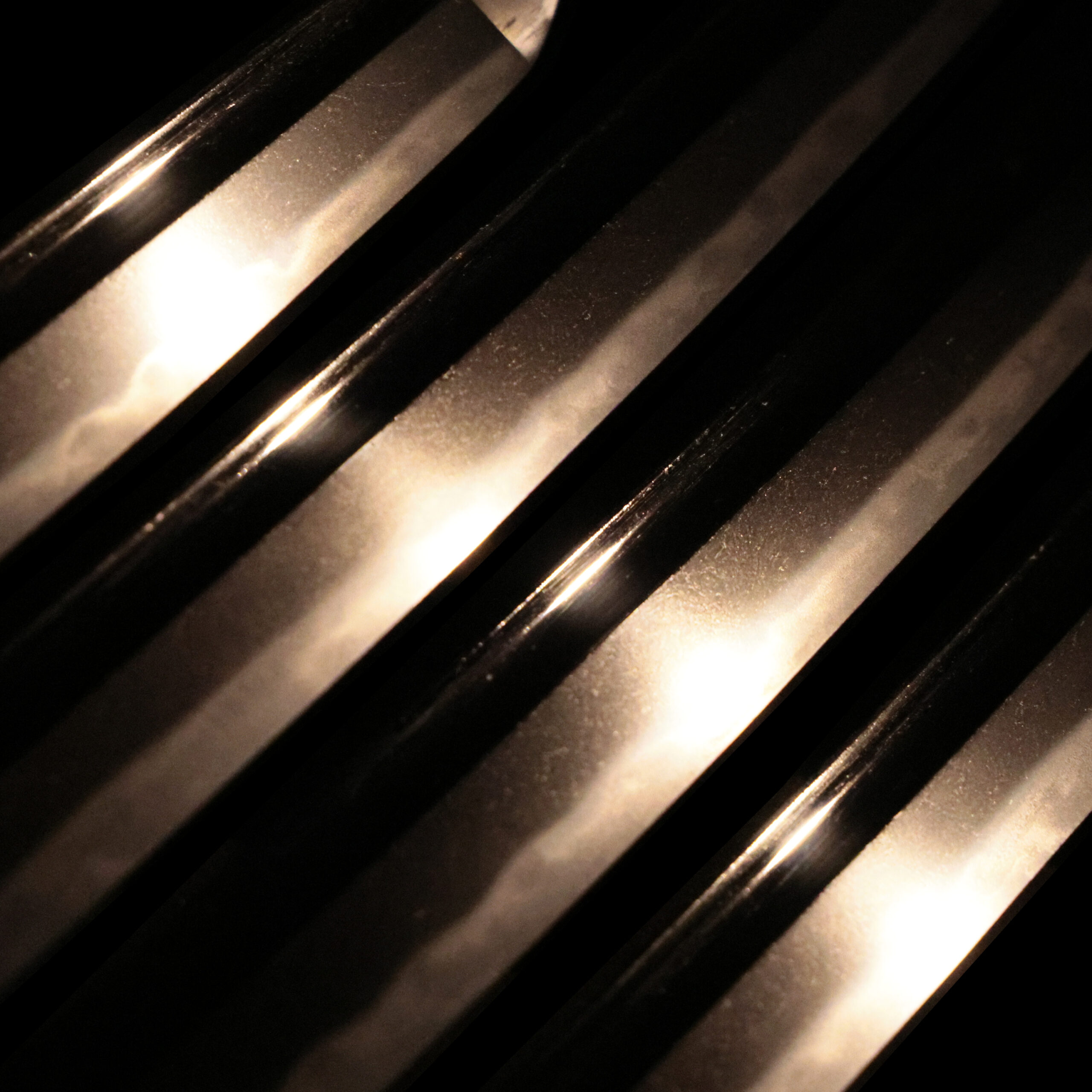
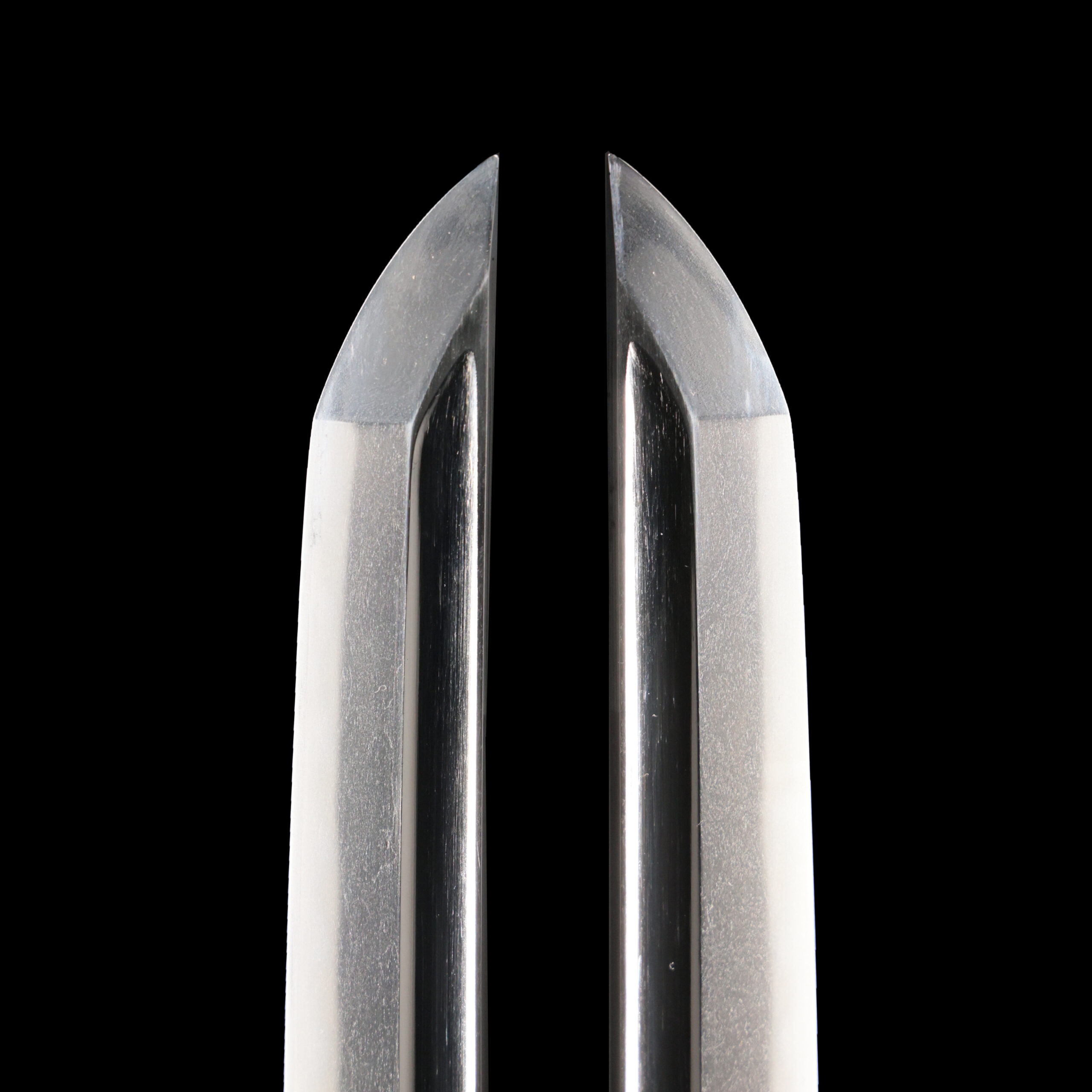
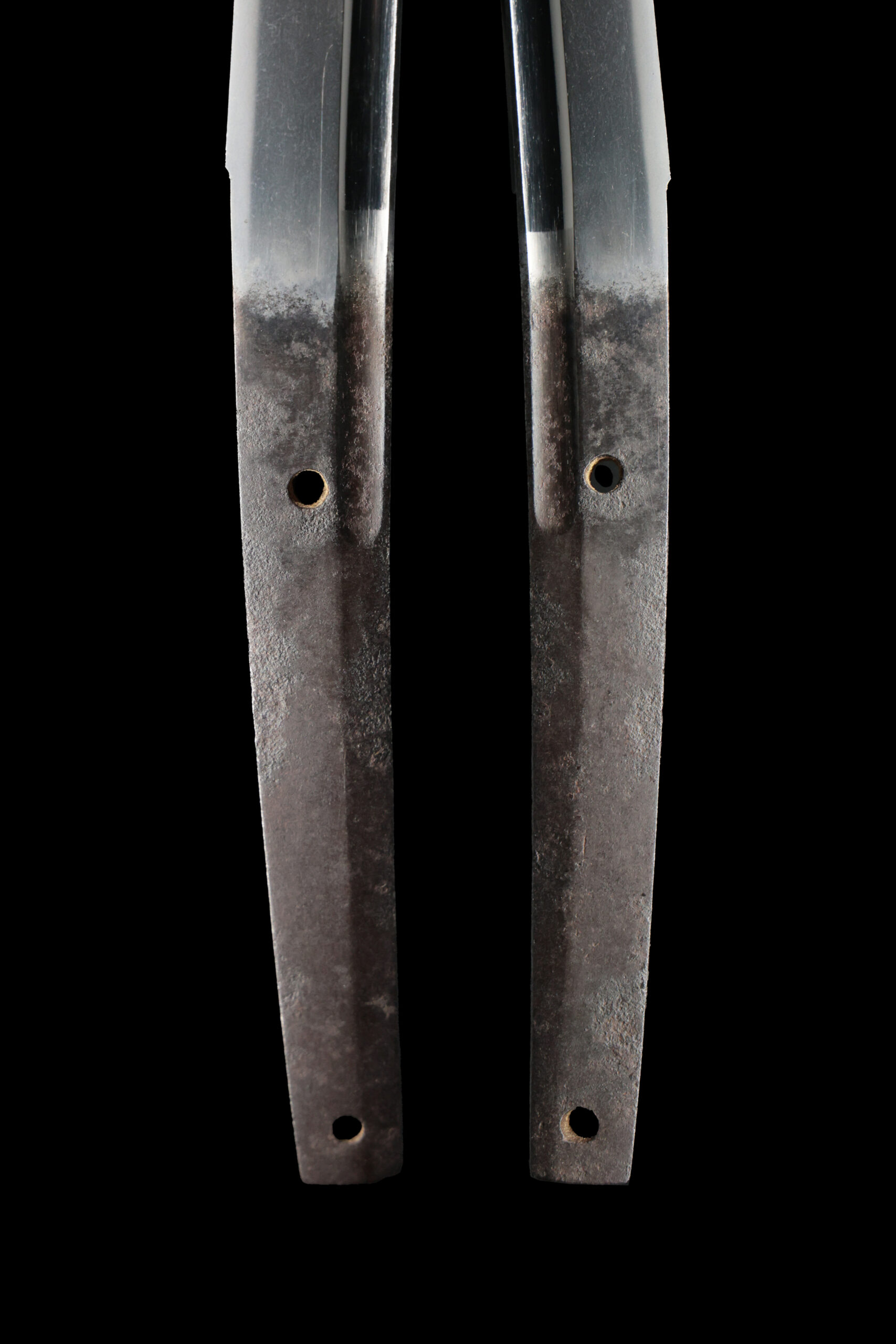
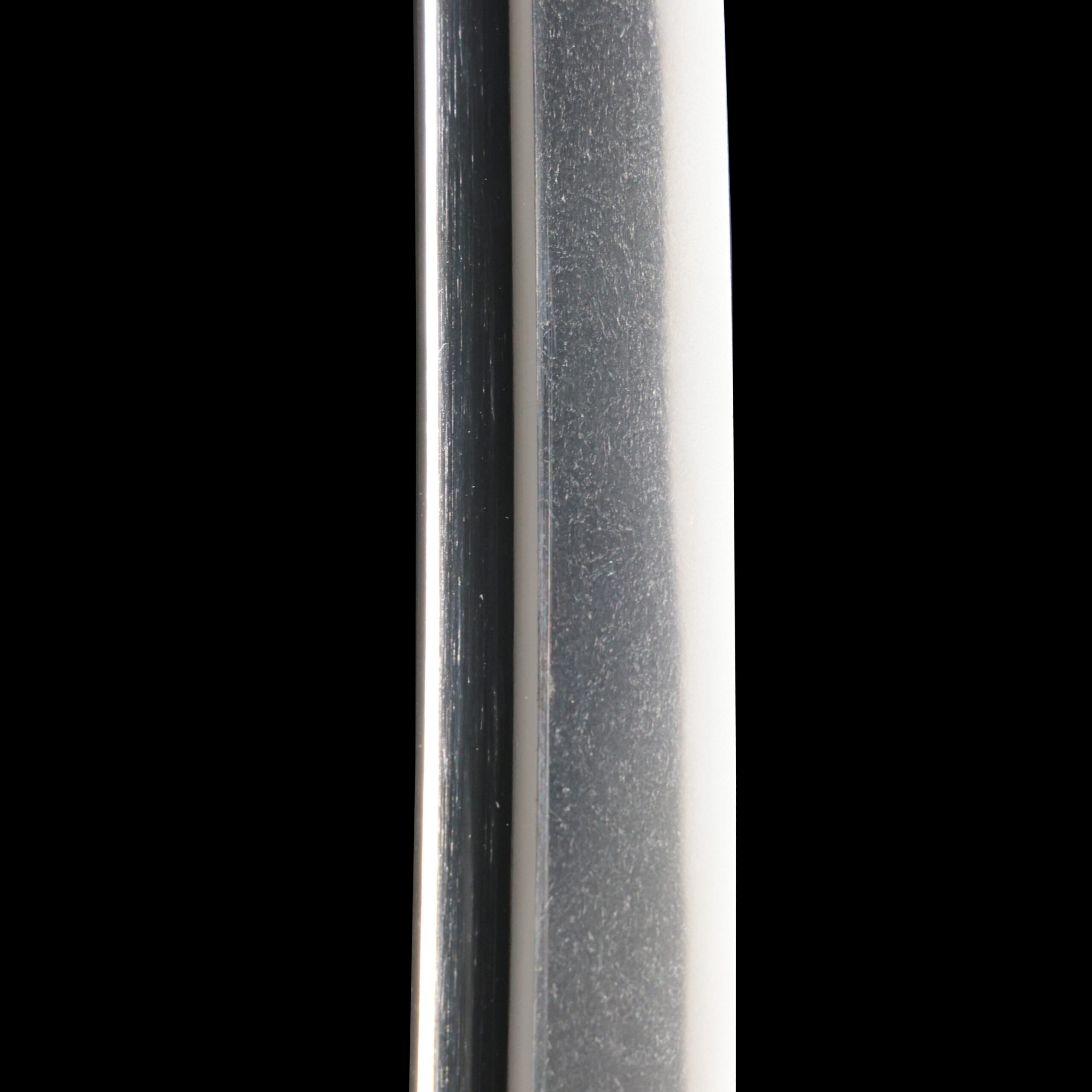
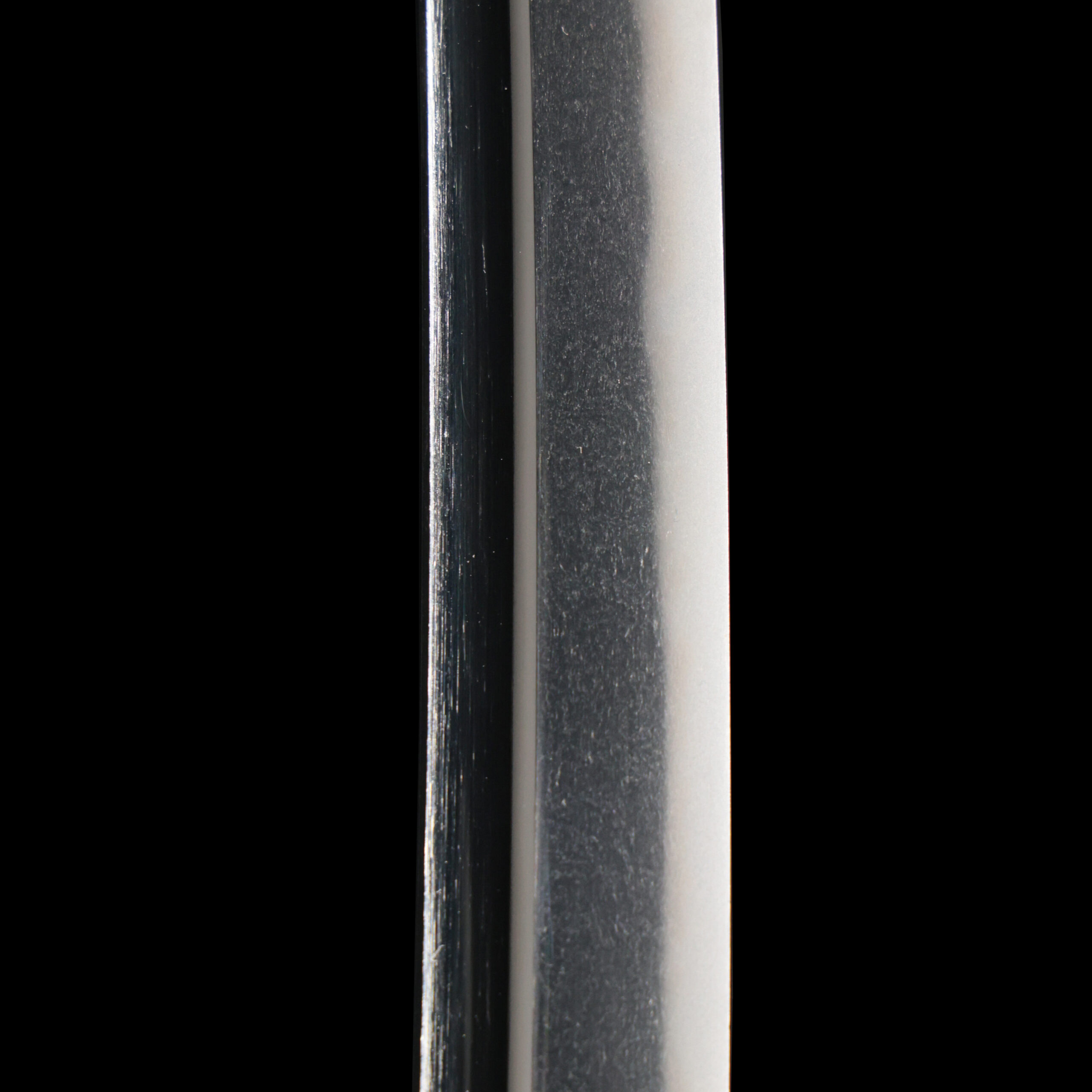
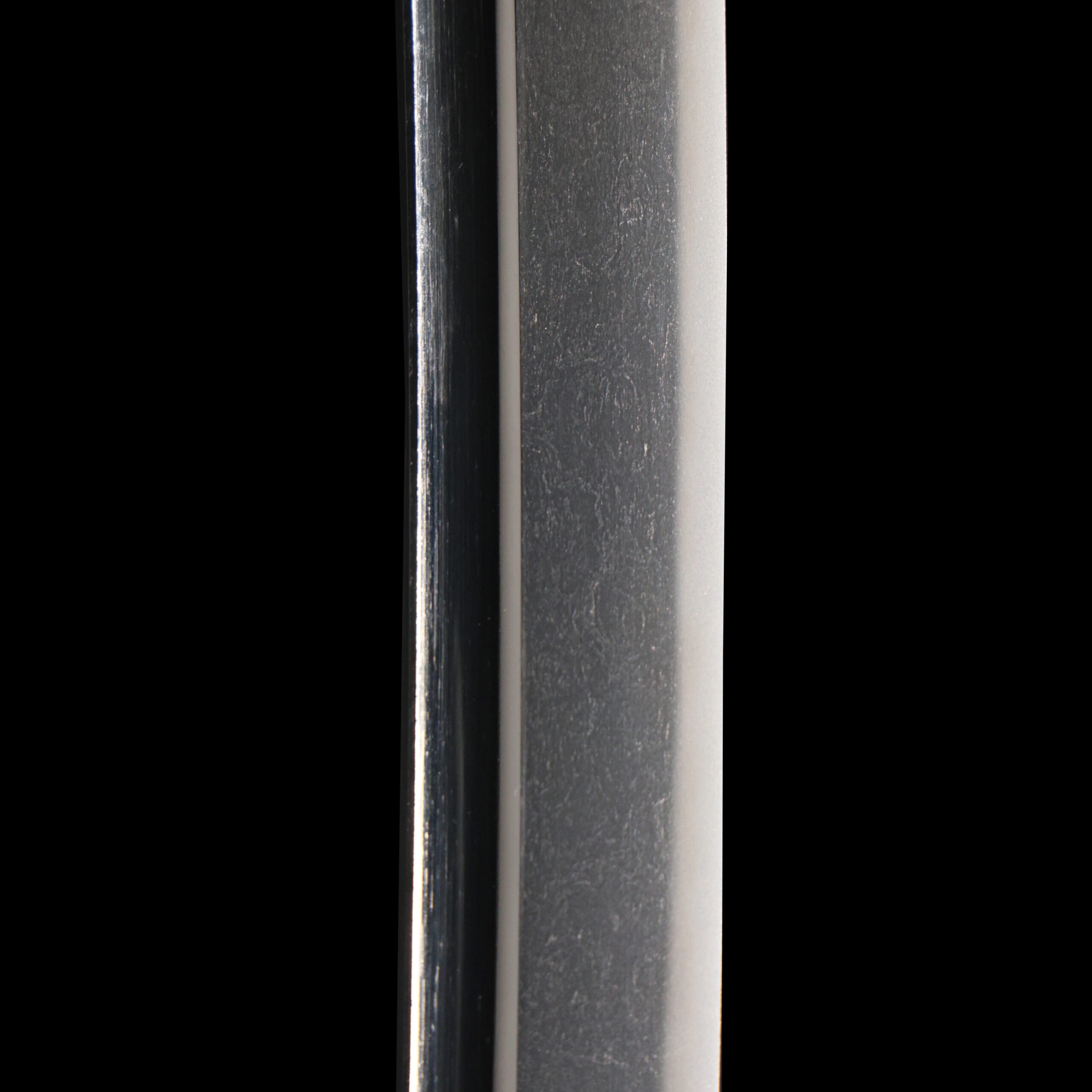
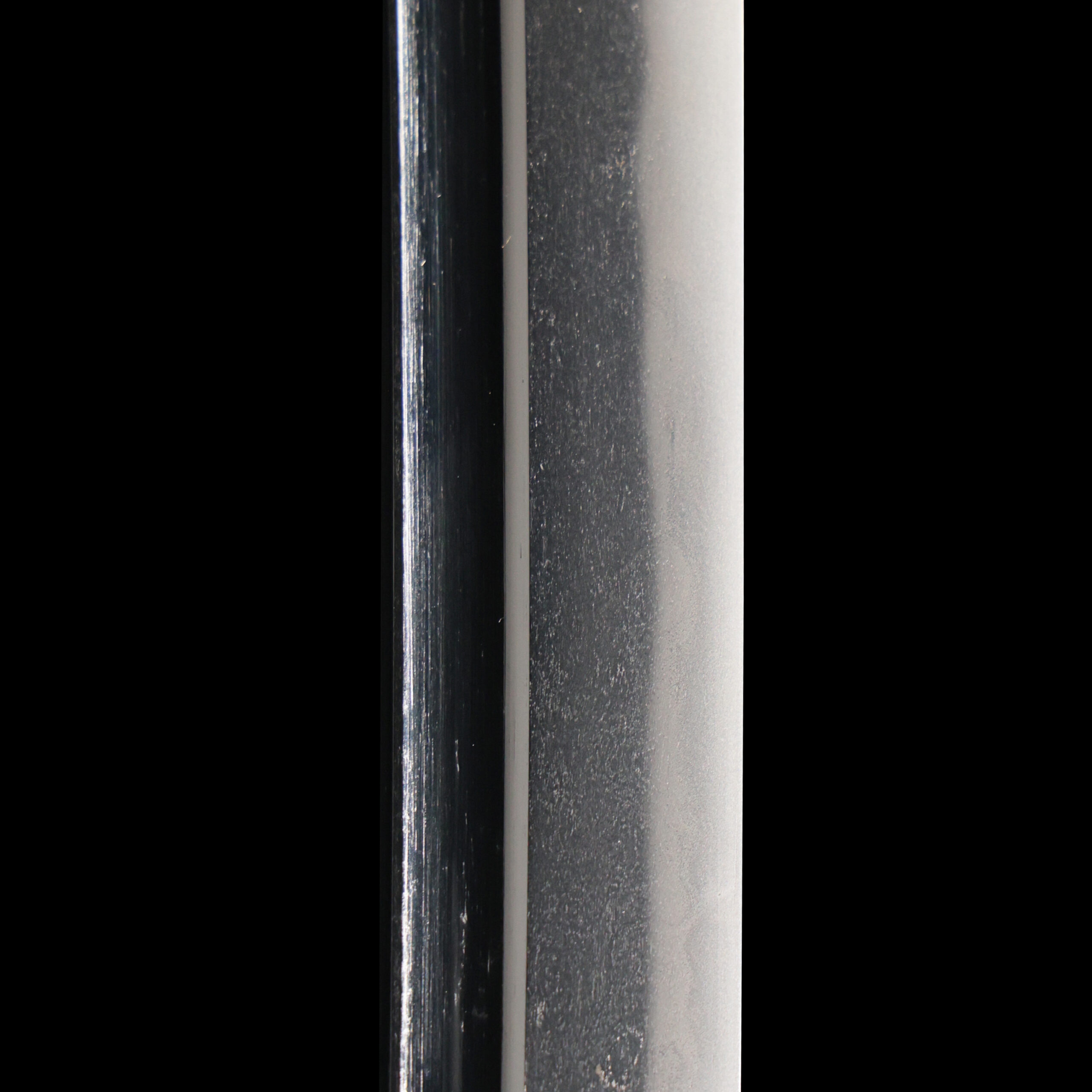
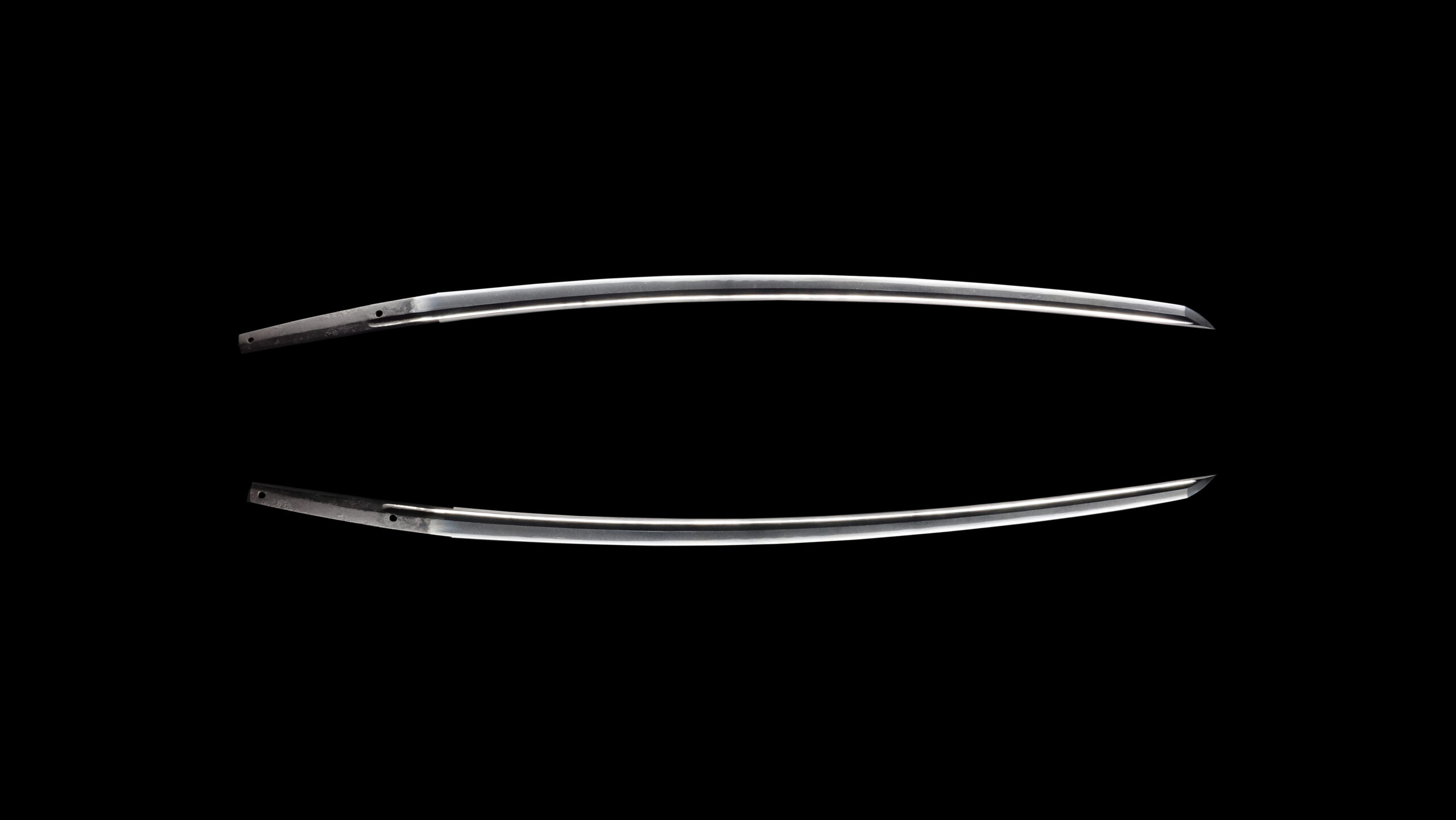
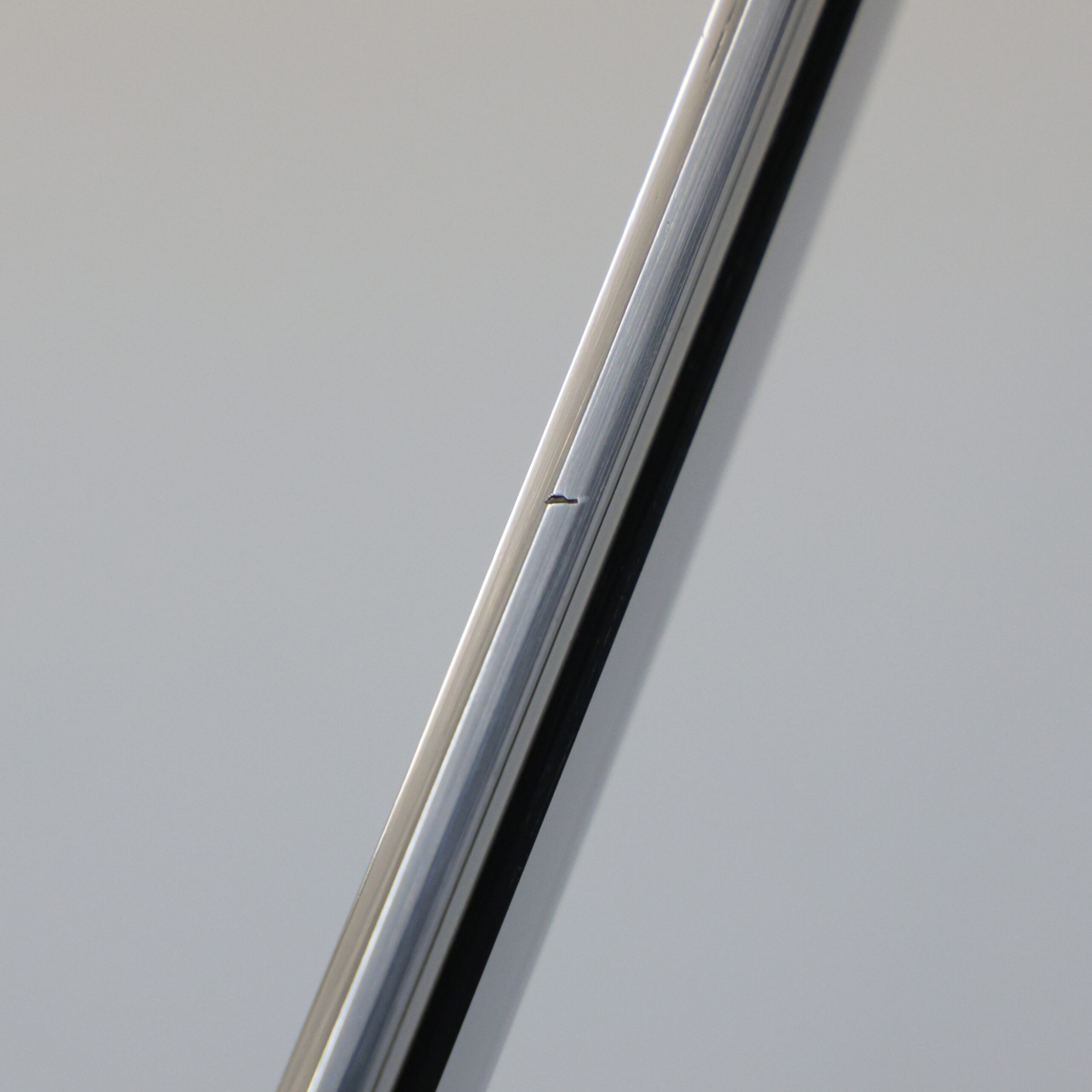
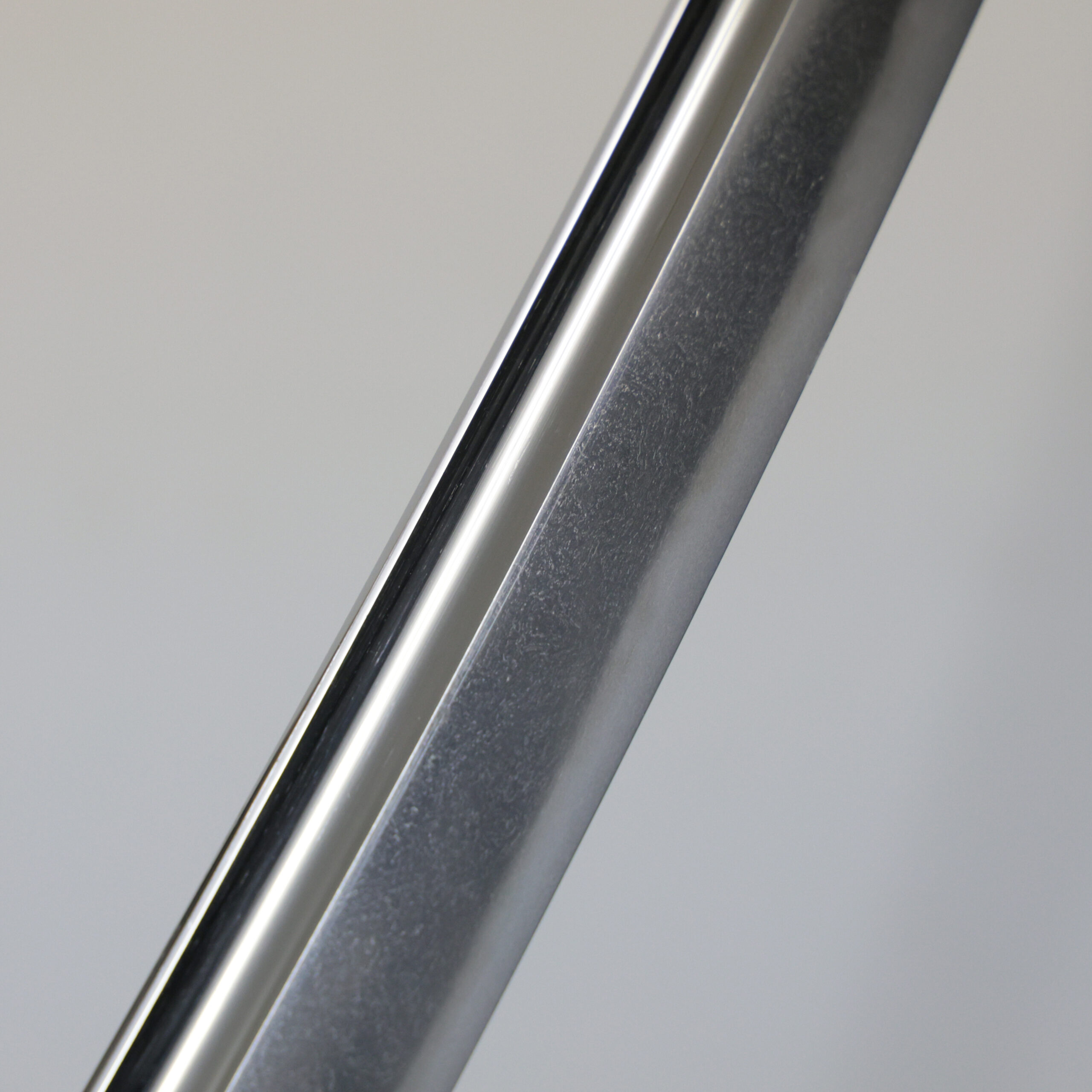
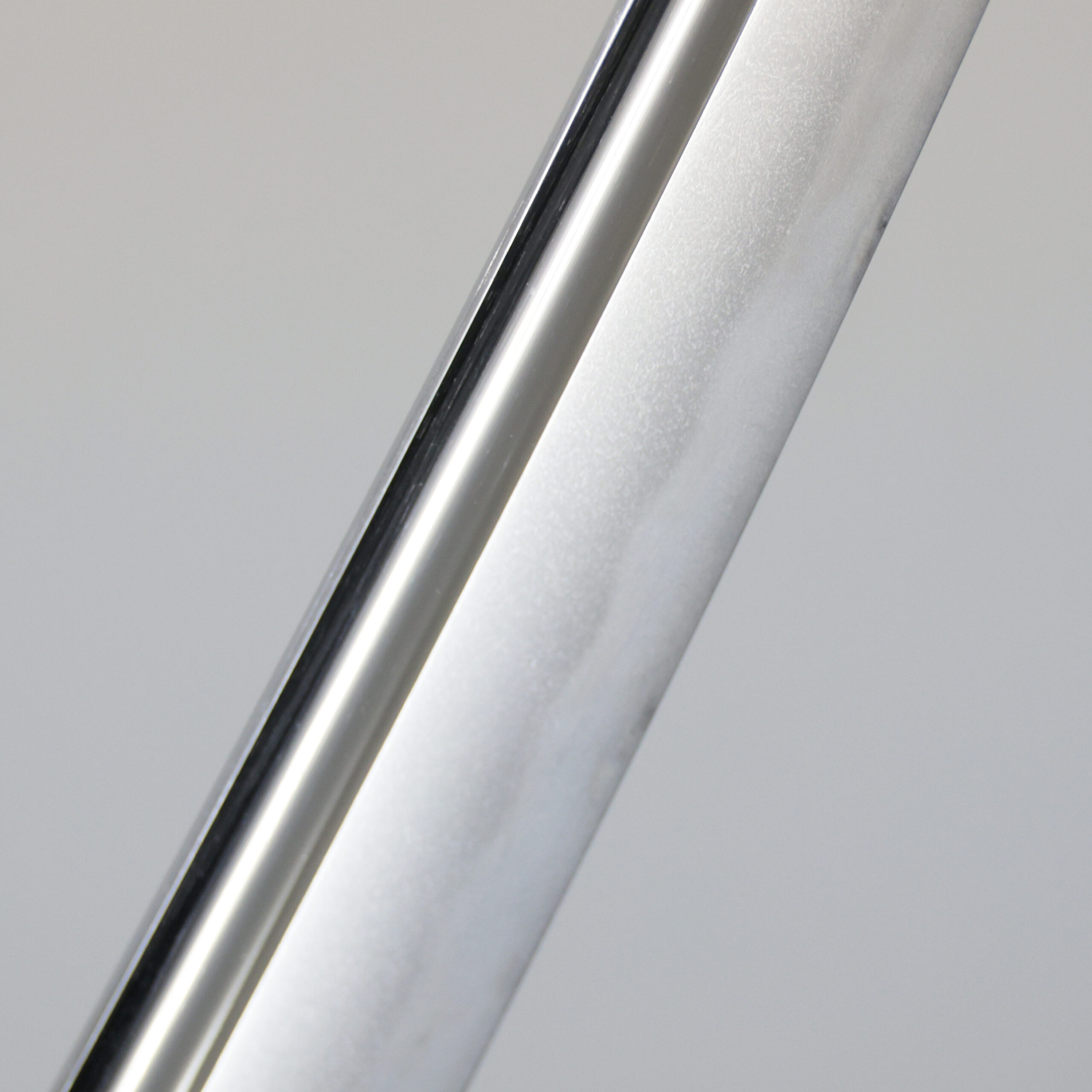
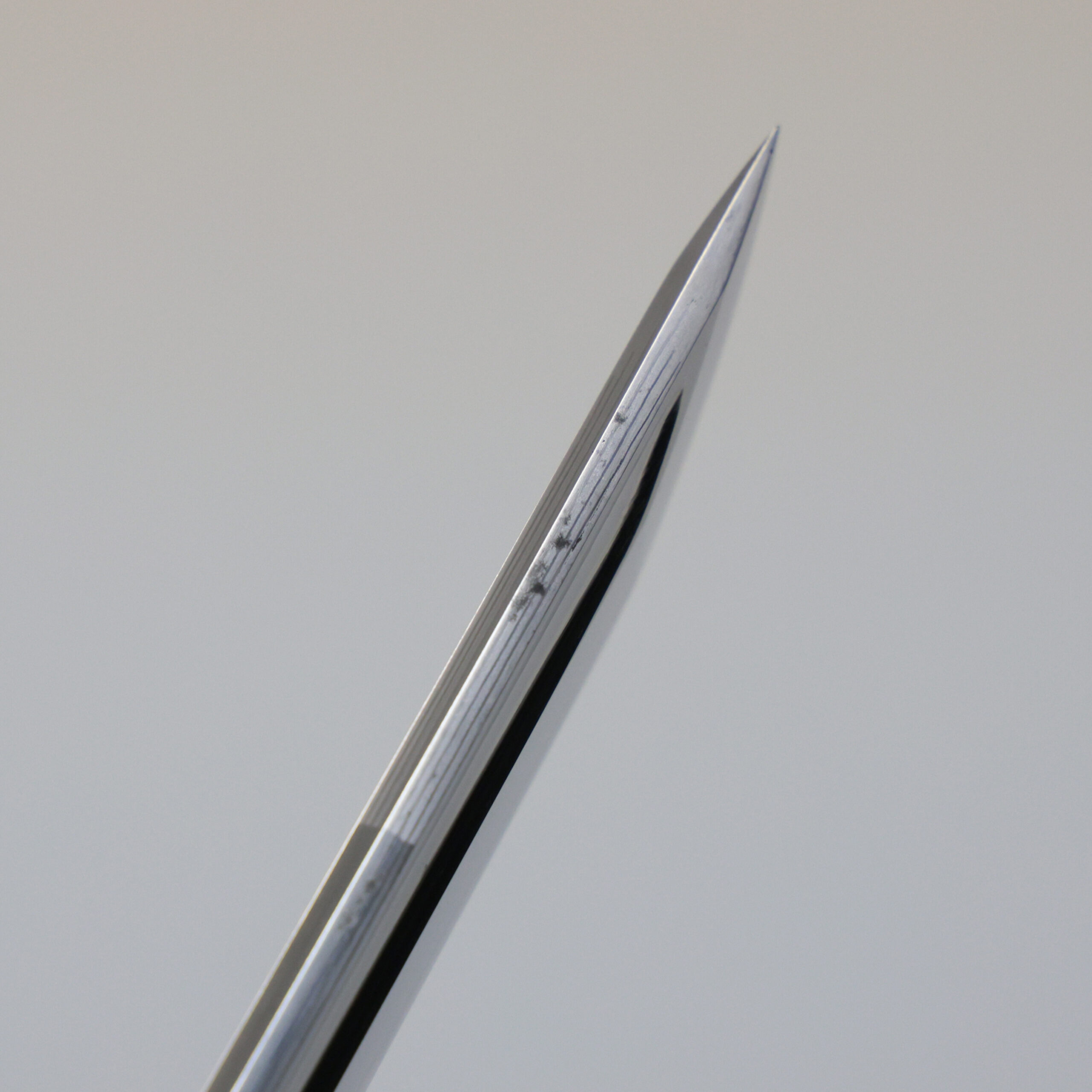
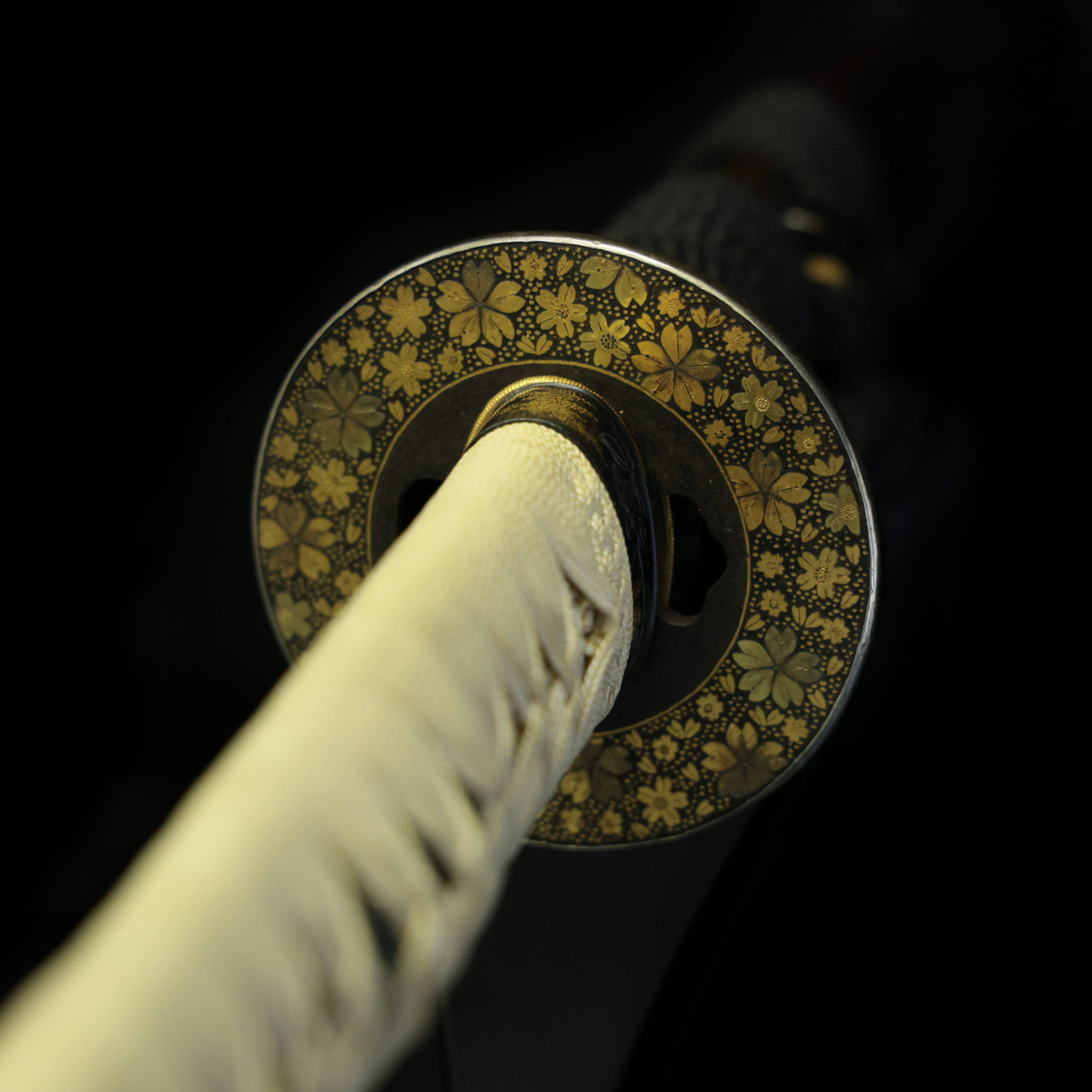
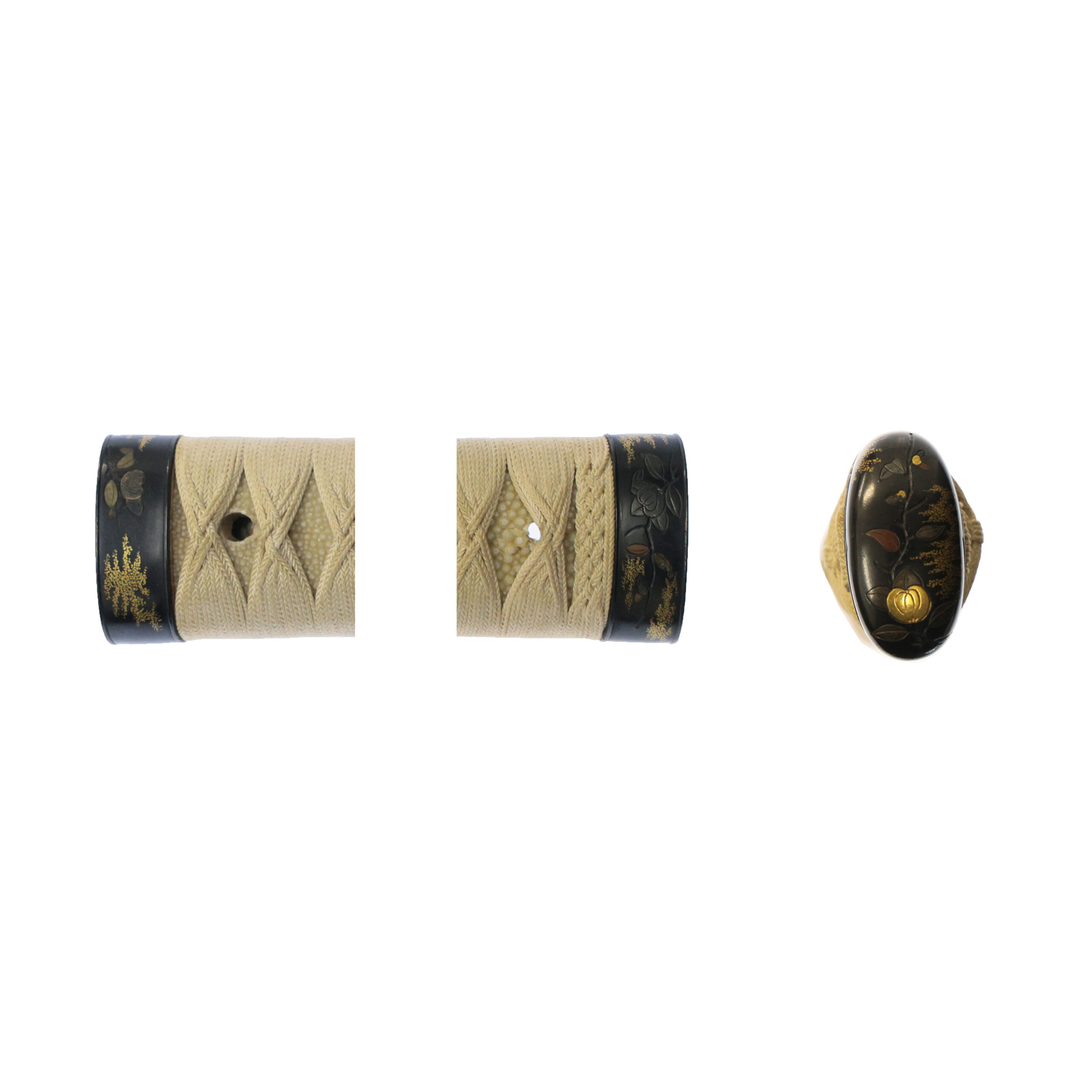
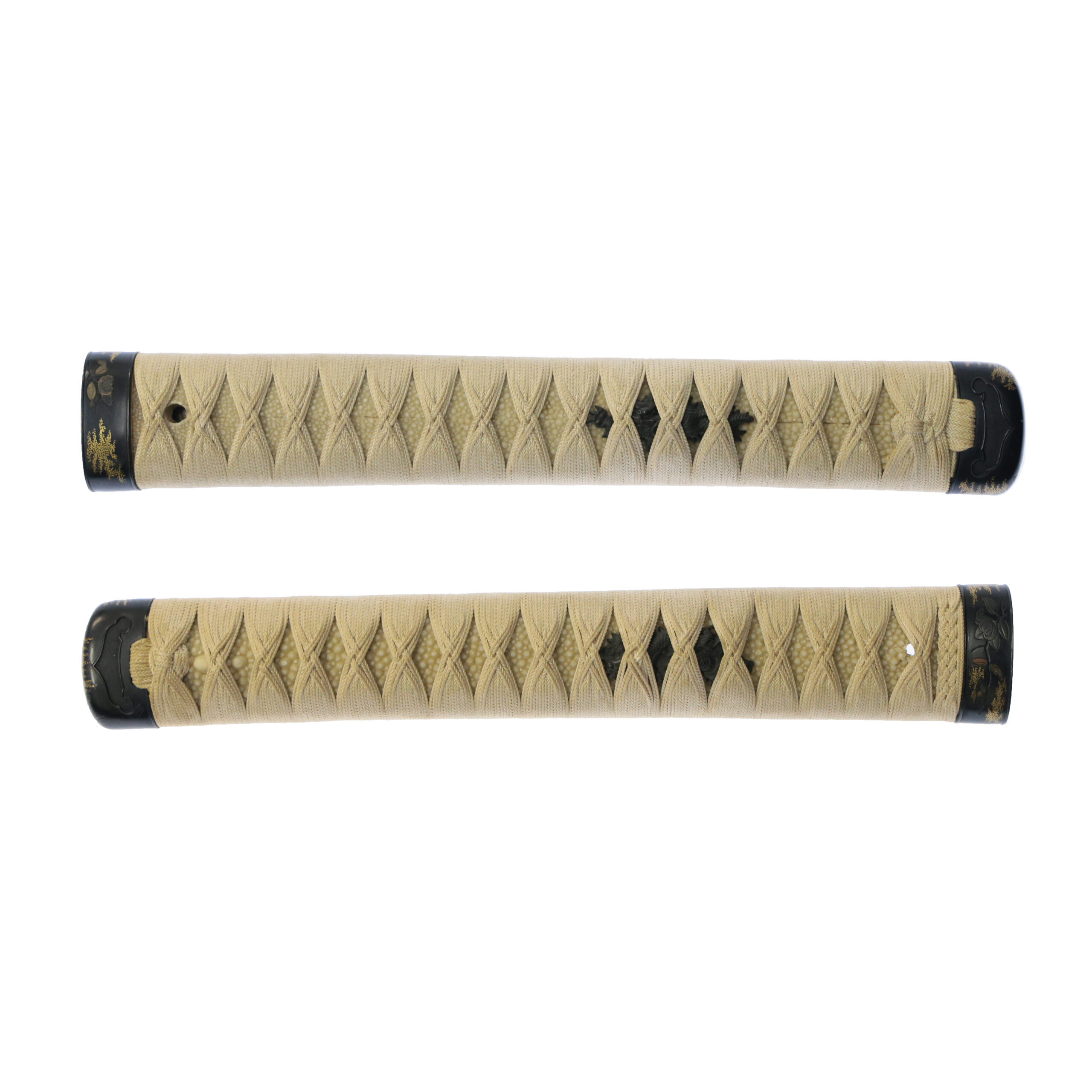
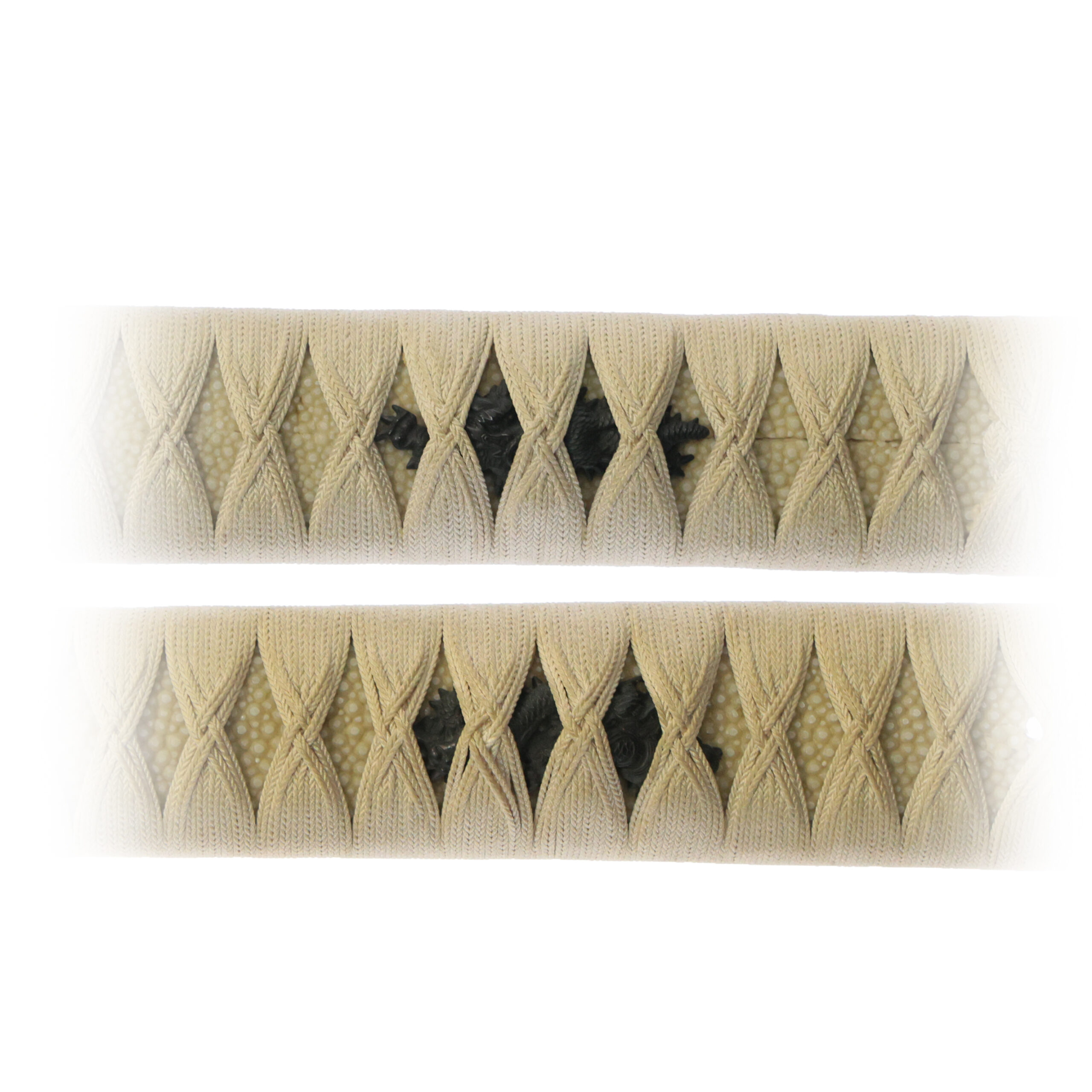
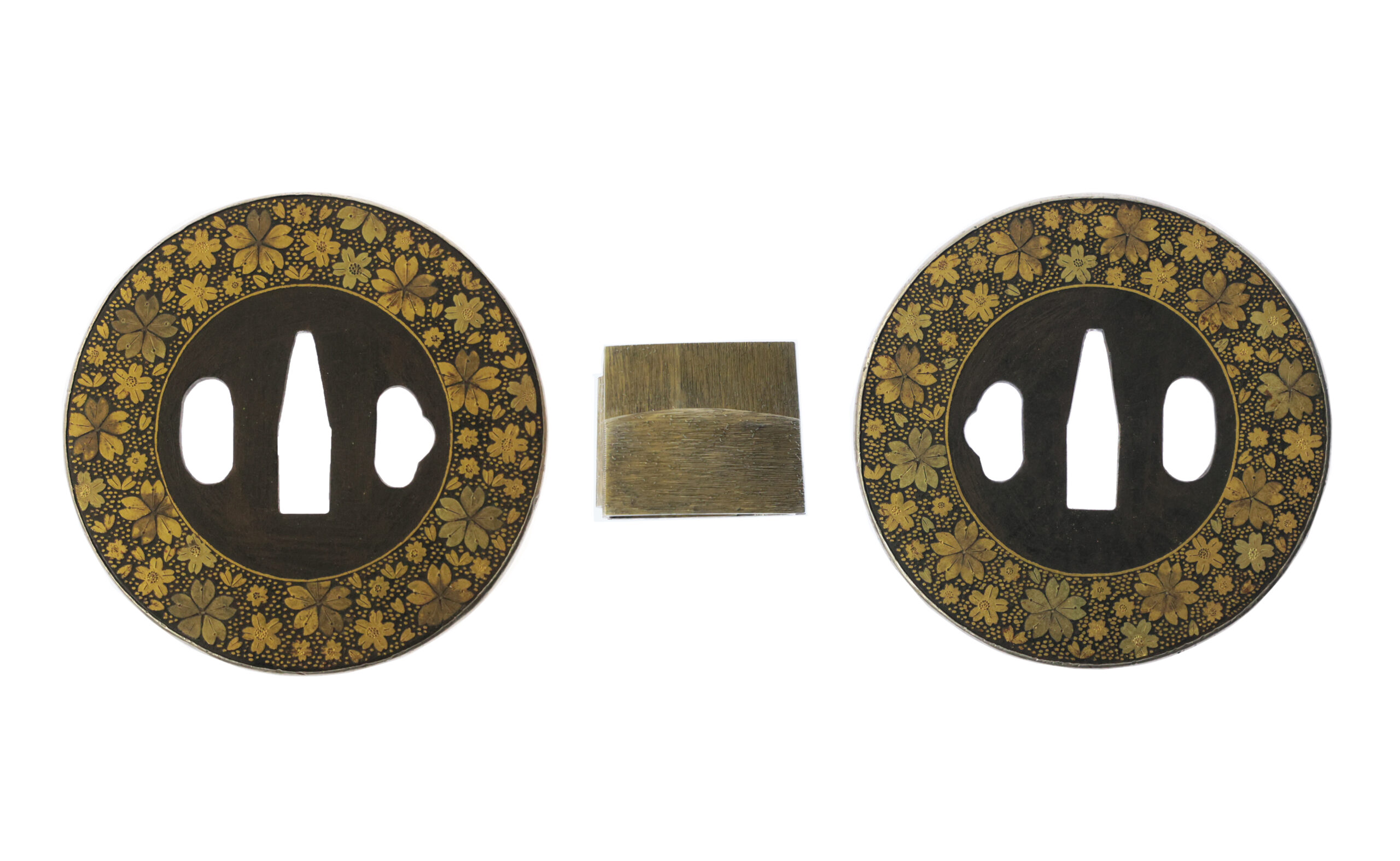
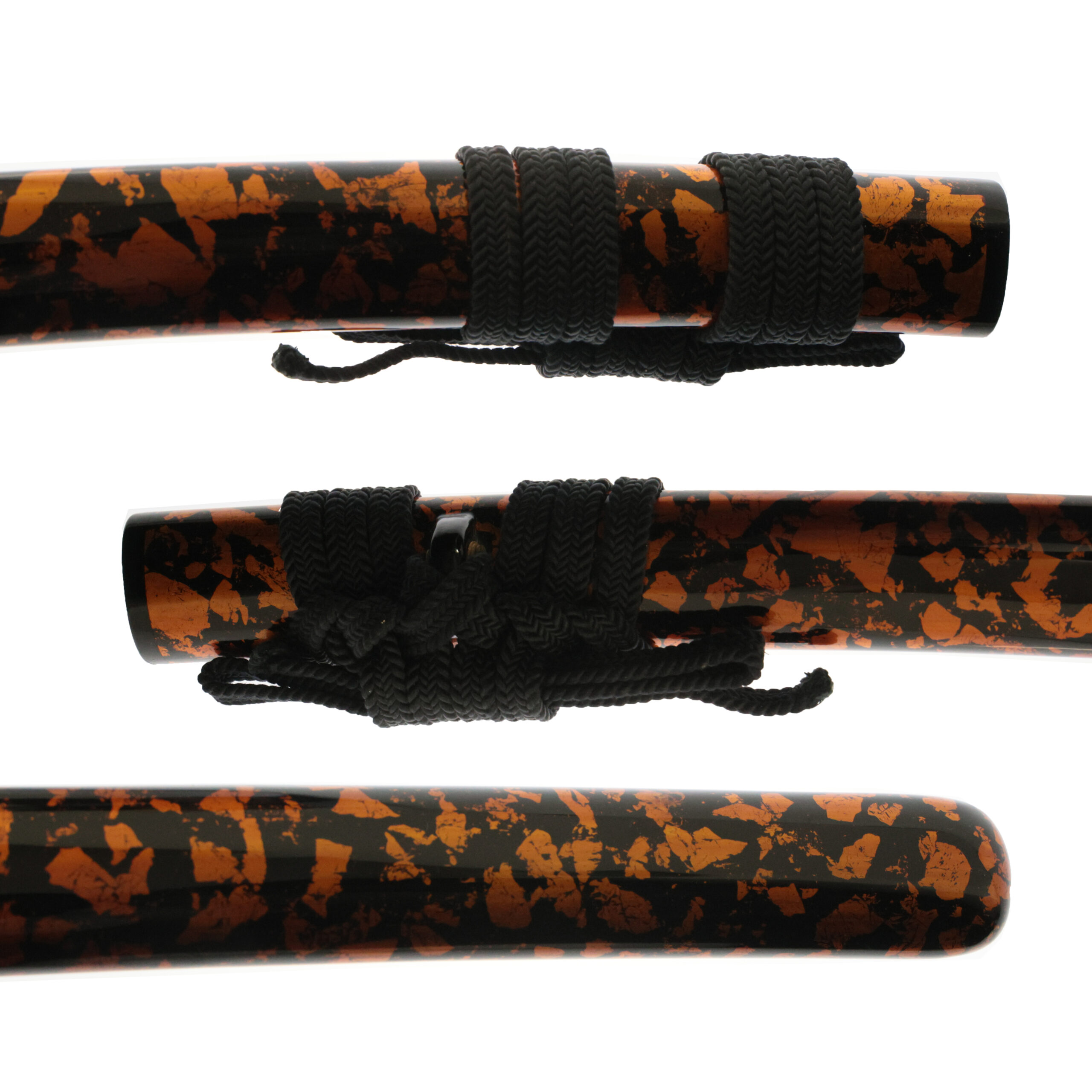
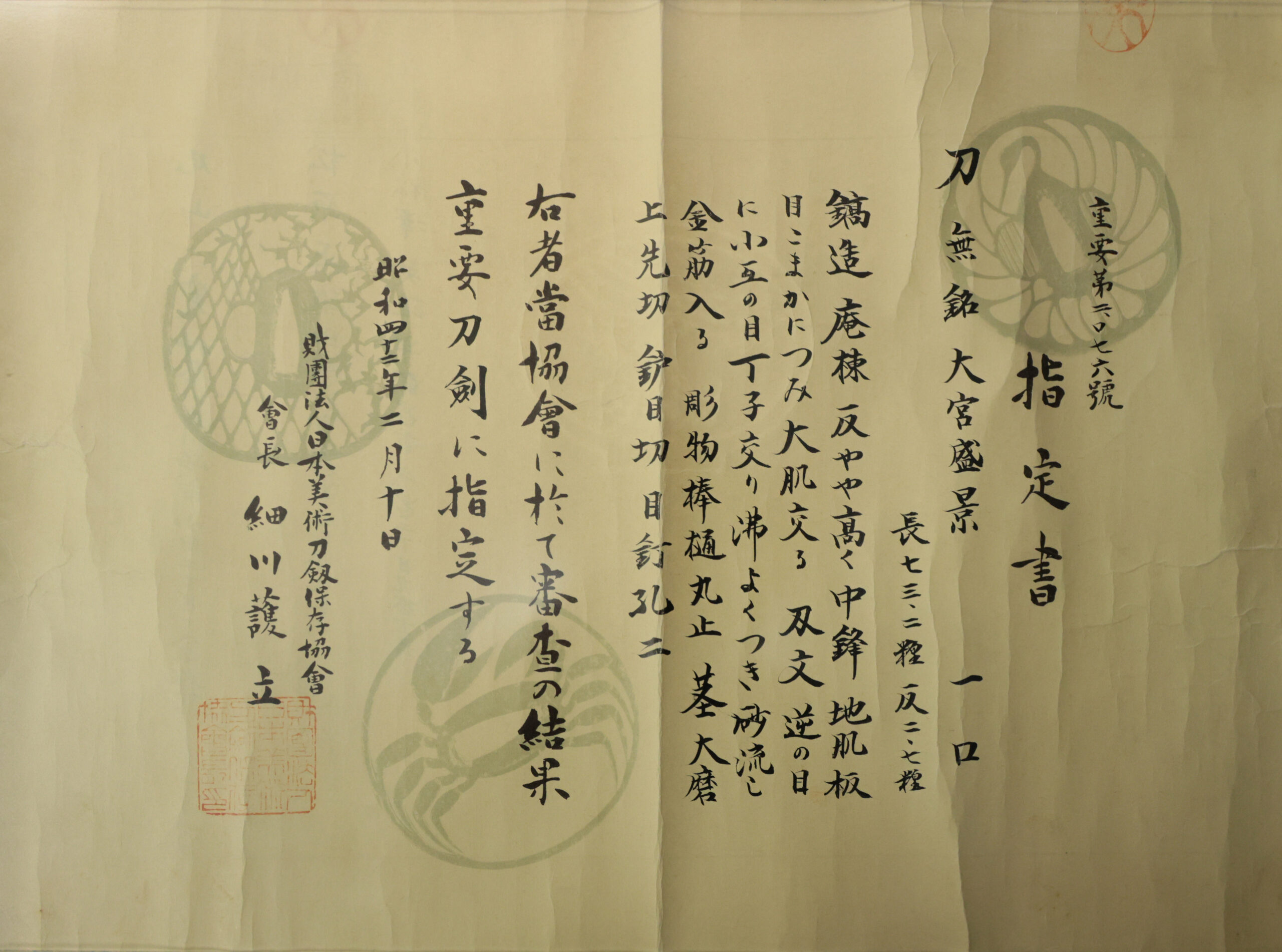
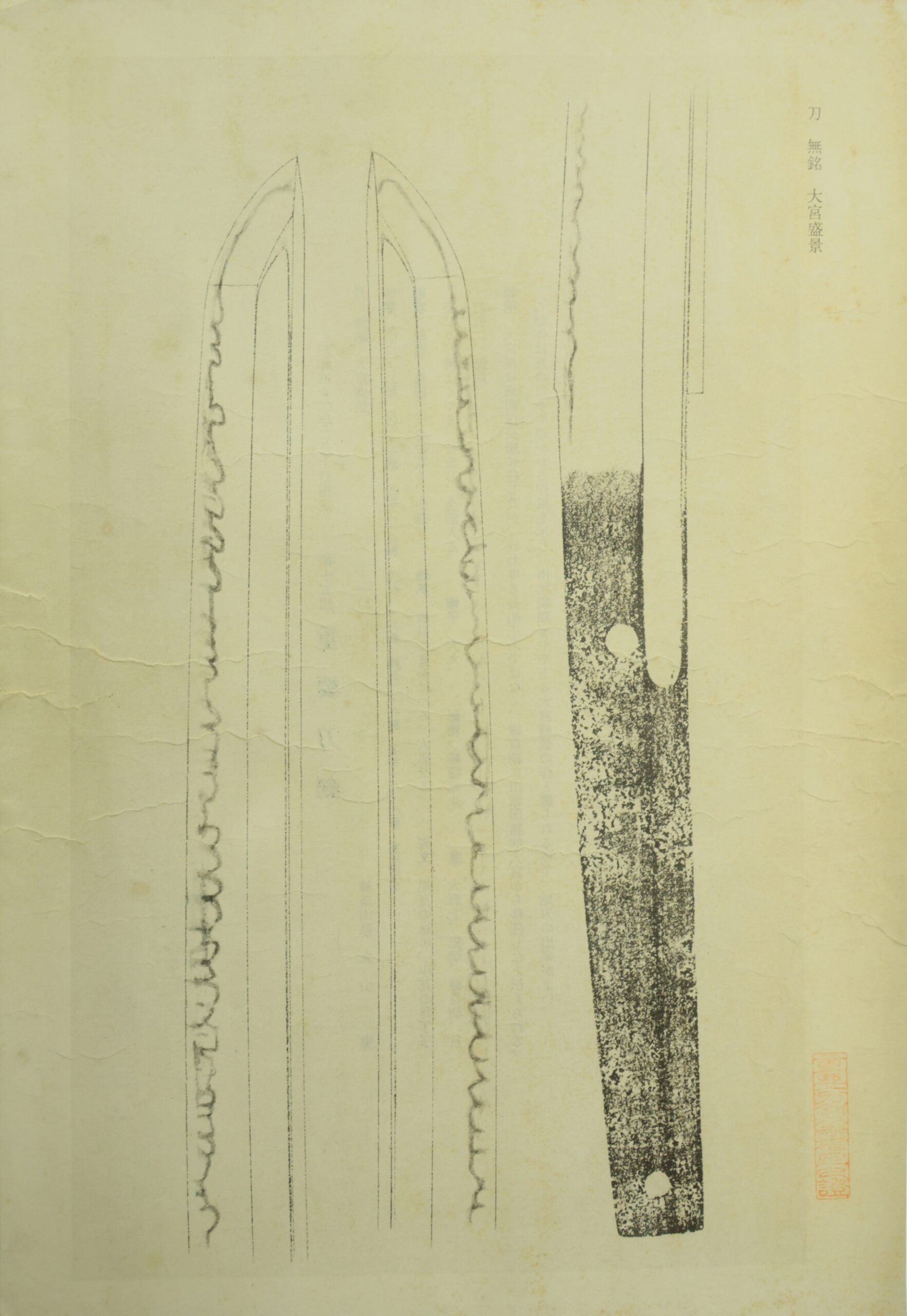
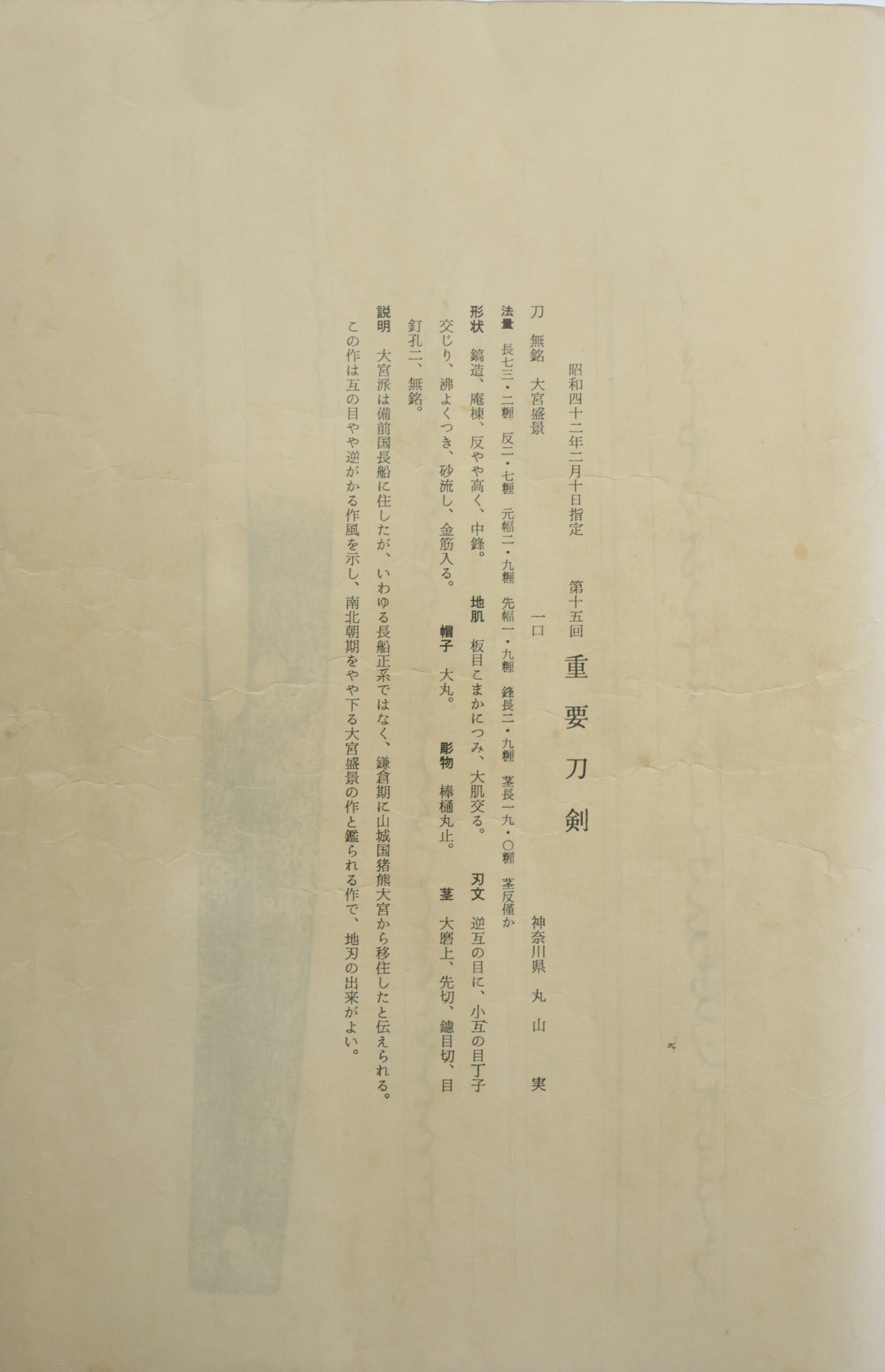
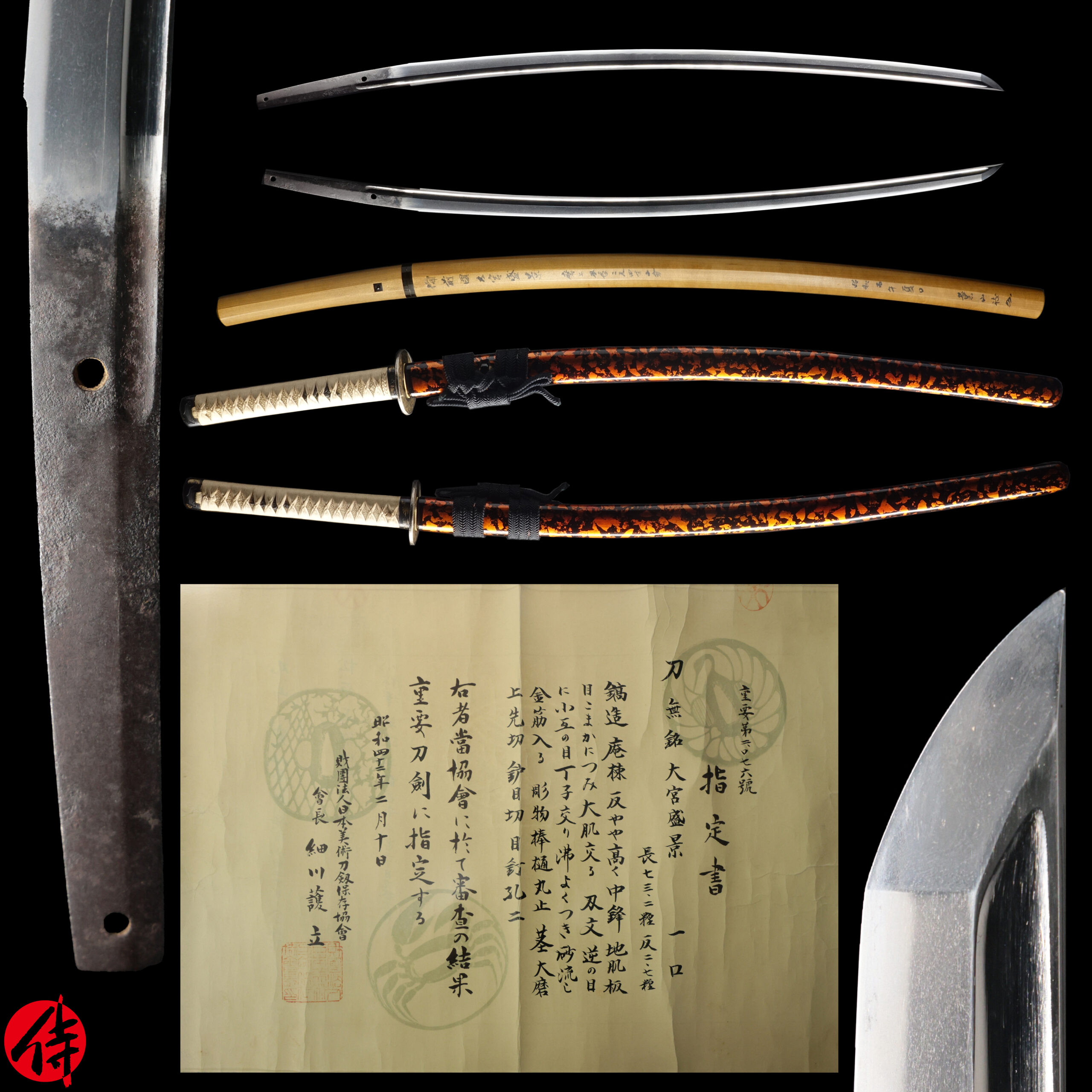
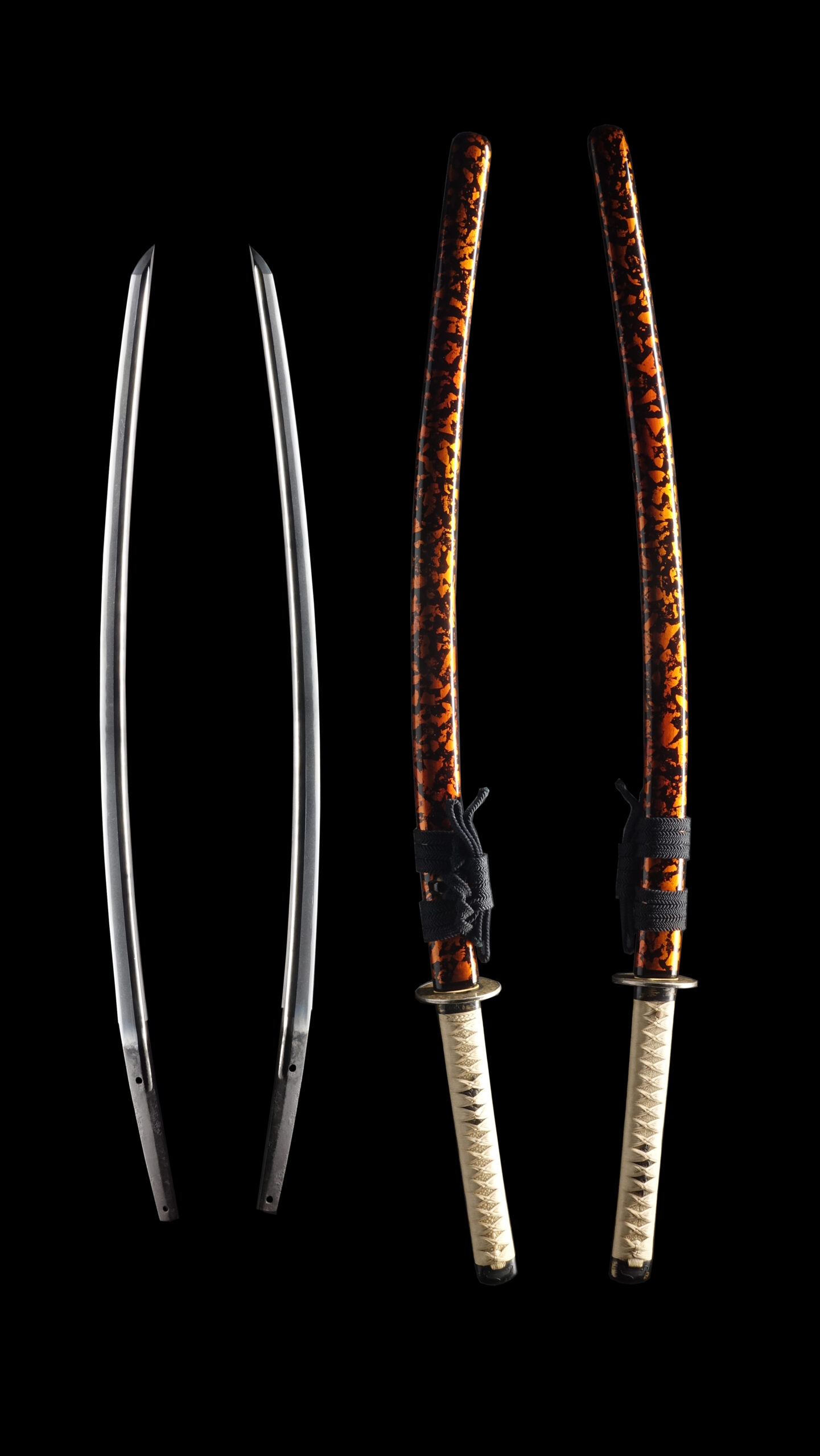
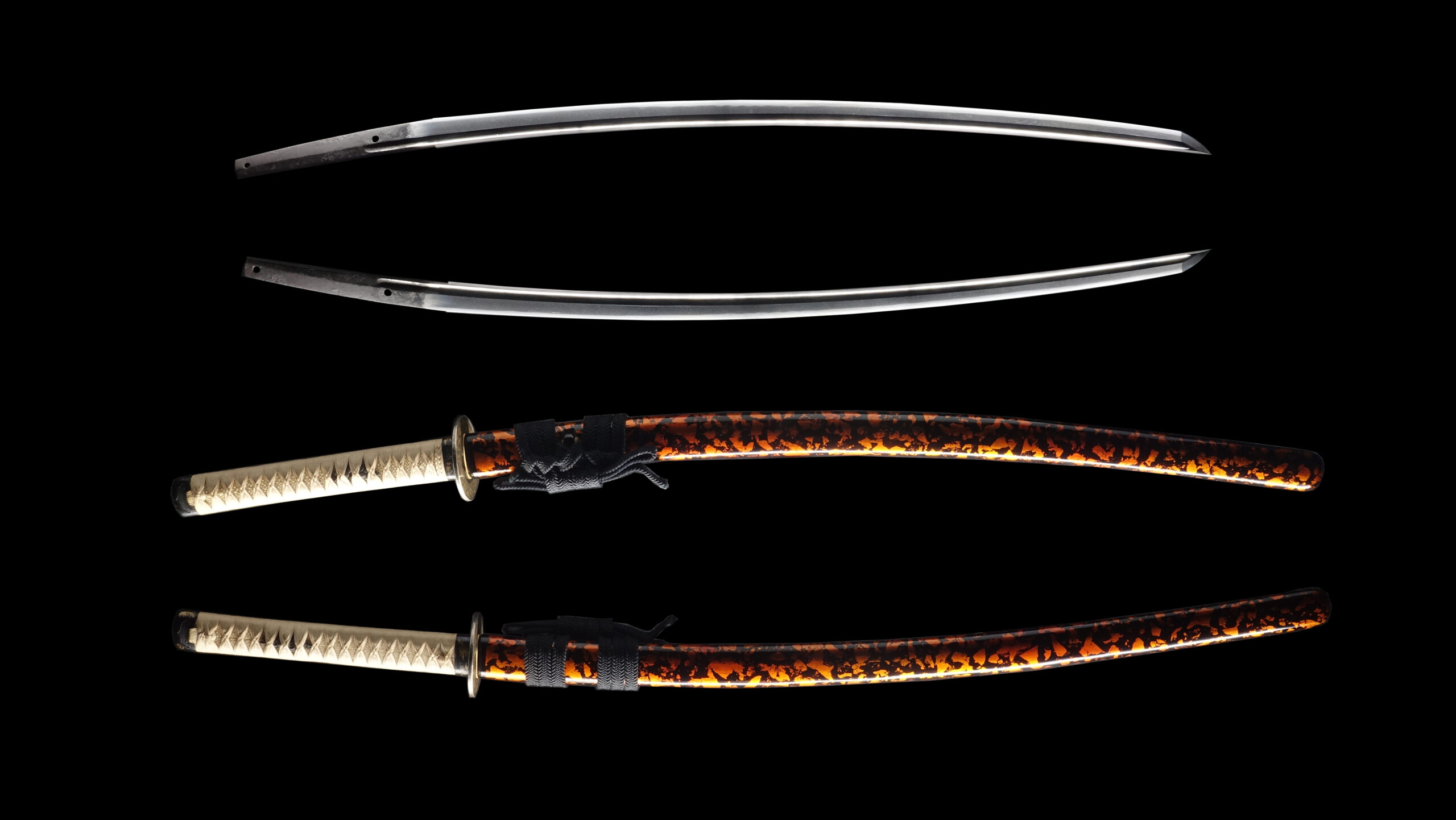
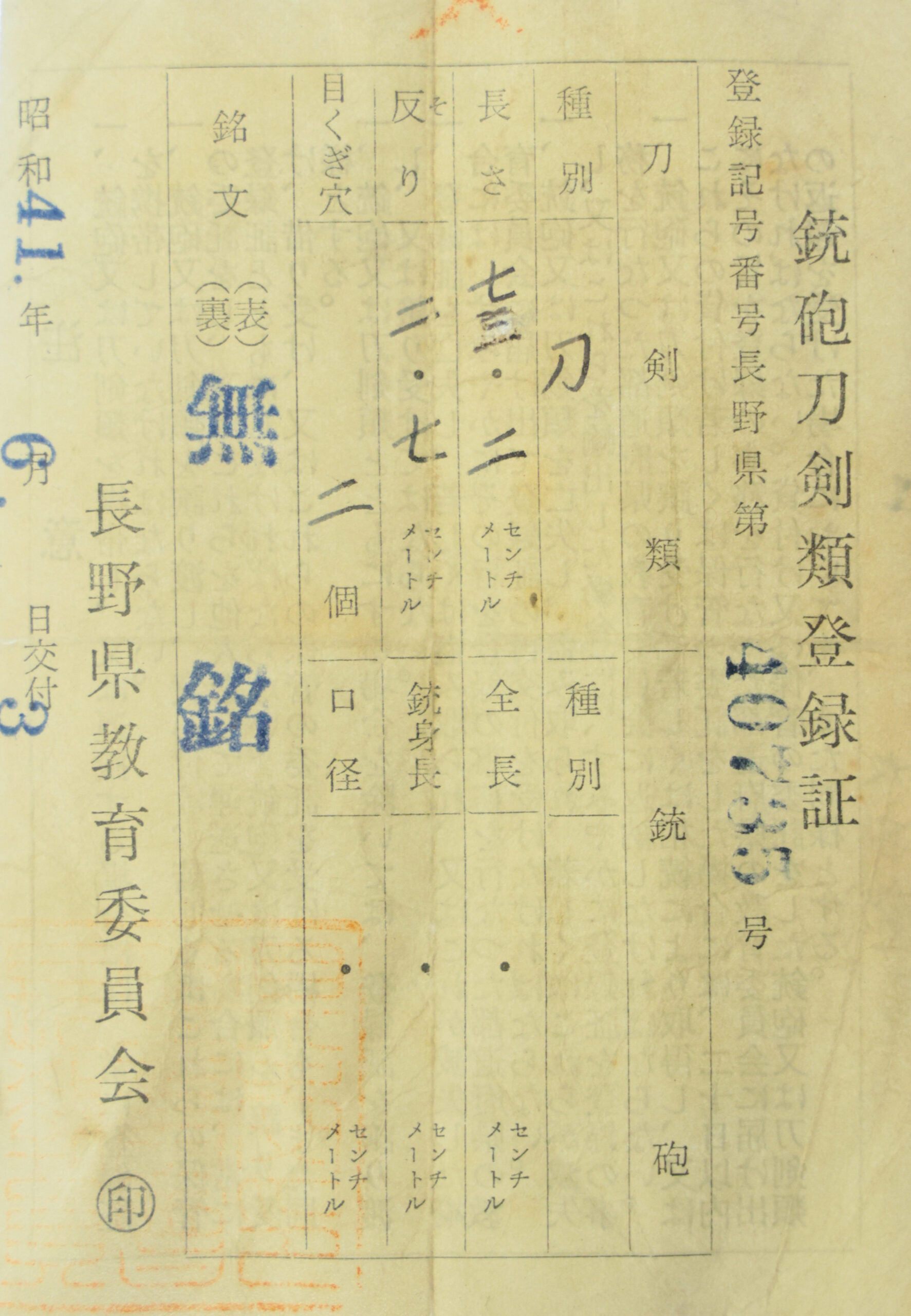
販売店の記載のまま
大宮派は備前国長船に住したが、いわゆる長船正系ではなく、鎌倉期に山城国猪熊大宮から移住したと伝えられる。 この作は互の目やや逆がかる作風を示し、南北朝期をやや下る大宮盛景の作と鑑られる作で、地刃の出来がよい。
備前伝 · 備前 · 1394-1428頃
刀剣大鑑 上位37%
盛景の位置づけを、日本刀全体および伝法・時代・時期ごとに示します。各区分(随一・屈指・有数・著名)は、NBTHK および文化庁による指定に加え、三作や名物帳などの歴史的栄誉を加味したものです。
各項目を選ぶと評価方法が表示されます。
備前伝 · 備前
現在6点販売中
大宮派は、備前国長船の地に働きながら、その出自を京都山城に持つ点において他の備前鍛冶と趣を異にする一派である。説明書はこの一門を、もと山城国猪熊大宮の住人であった遠祖国盛に遡らせ、これが鎌倉時代の文応の頃に備前へ移り住んだと伝える。すなわち京の大宮の血が備前の地に根を下ろし、山城の精美な地鉄と備前の華やかな丁子乱れとを併せ呑んだところに、この一派の本質がある。初期の国盛・助盛の作は稀有で、一門が最も栄えるのは南北朝時代に入ってからであり、応安・貞治・永和・嘉慶の各年にわたり「備州長船盛景」などと長銘を切った盛景がその中心に立つ。説明書は「南北朝時代の同派中では盛景が最も作品が多く上手でもある」[[c:1]]と端的に記し、盛重がこれに続いて南北朝から室町へと一派を伝えた。 この一派を貫く手は、長船本流の丁子そのものではなく、山城の地を帯びた相伝備前の刃である。地鉄は肌立ちごころの板目に杢を交え、処々肌の開いた地に地沸細かにつき、地景入り地斑を交えて、その上に備前の乱れ映りが在銘無銘いずれにも立つ。地刃ともに沸の強い点が、本派における相伝備前の証と判ぜられる。刃文は小のたれを基とし、これに互の目、角ばる刃、尖りごころの刃を交え、足・葉よく入り、匂を主調に小沸つき、刃中に細かく砂流し・金筋がかかる。匂口は同時代長船一流の明るく華やかな刃に対して、やや沈みごころに傾くところに一派の気質があらわれる。なかでも尖りごころの刃は作域を越えて繰り返し現れ、長船本流の丁子主調と大宮の手とを分かつ静かな看どころとなる。作域は広く、のたれを主調とするもの、丁子や互の目の交じる華やかな乱れ刃、角互の目を主調とするもの、さらに青江風の直刃にまで及び、説明書は永和二年紀の盛景の太刀を「正に青江や雲類を想わせる直刃の作柄」[[c:2]]と評してその多彩を示す。帽子は乱れ込んで尖りごころまたは小丸に返り掃きかけ、彫物は棒樋から二筋樋、最上手の梵字・三鈷剣に及ぶ。盛重に至っては大宮派の特色が薄れ、末備前の長船と異ならぬ作も見え、これは一派が次第に長船派へ併呑されていったことを示すと読まれている。 鑑定の勘所は、まず鮮明な乱れ映りで一門を備前と読み、次に長船嫡流との別を分かつことにある。明るい乱れ映りと沈みごころに丁子を交えた刃は、より広くおおどかな兼光の刃から本派を分かち、その近さの一方で長義一派の箱がかった大乱れとも異にする。とはいえ長義との近接は確かで、ある特別重要刀剣の刀の説明書は大宮派が兼光や長義に隠れがちであることを述べたうえで「作風は長義に似て並ぶ程である」[[c:3]]と記し、薙刀直しののたれが兼光ほどおおどかにならず裾野短く頭やや角ばる点をもって盛景の手を明示するとする。主要工の格は盛景を筆頭とし、藤代はこれを上々作に位置づけ、現存に最も時代の溯る鎌倉末期の在銘太刀は同名作と地刃を異にして資料的に頗る貴重とされる。なお近年、作風および逆鏨に切る銘字の共通性より、長銘の盛景はむしろ近景・義景に連なる長船傍系の工で、二字に太鏨大振りに銘を切る鍛冶こそが真の大宮鍛冶ではないかとする説が説明書に記され、一派の名そのものがなお研究に委ねられている。伝来は大名家のそれで、肥前鍋島家、上杉家、伊達家、松山藩久松松平家などに伝わり、一口は本間による御物台帳に所載される。在銘年紀の大宮盛景が世に出ることは時折に限られるが、現れればそれは、京の大宮の精美を備前の地に移し、相伝備前の第一線に身を置いたこの一派の手を、確かに伝える証である。 詳しく見る →
室町時代の備前
室町の長船は輸出産業であった。明との勘合貿易はおよそ十二万八千振の日本刀を海の彼方へ運び、国内では戦国の軍勢が買い手となった。注文主の俗名を銘に刻む注文打ちが、兵卒用の数打ち物と並んで鍛えられている。
特別保存刀剣の中から、特に出来が優れ、国認定の重要美術品に準ずると判断された名品です。年に一度の重要刀剣審査で選ばれます。
極めて選別的で、日本に登録された約250万口の刀剣のうち、重要刀剣に達したものは12,348口(約202口に1口)にすぎません。
日本美術刀剣保存協会(NBTHK)は、1948年に設立され、文化庁の監督を受ける公益財団法人で、東京・刀剣博物館に本部を置きます。専門の審査員が出品作を直接審査し、美術的・歴史的価値に応じた鑑定書を発行します。NBTHKの鑑定書は、日本刀および刀装具の真正性を示す最も広く認知された基準です。
NBTHK公式サイトReturns/exchanges limited to defects caused by shipping (except willful misconduct or gross negligence by the company); customers must contact within 72 hours of receiving the product.
大宮派は備前国長船に住したが、いわゆる長船正系ではなく、鎌倉期に山城国猪熊大宮から移住したと伝えられる。 この作は互の目やや逆がかる作風を示し、南北朝期をやや下る大宮盛景の作と鑑られる作で、地刃の出来がよい。