 NihontoWatchNihontoWatch
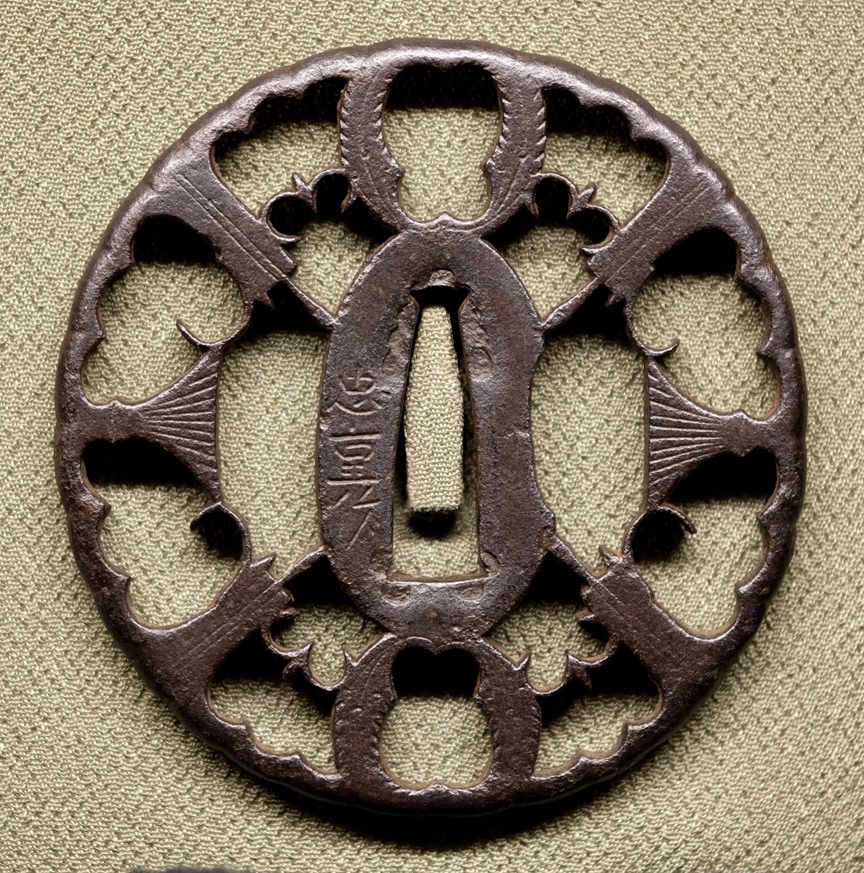
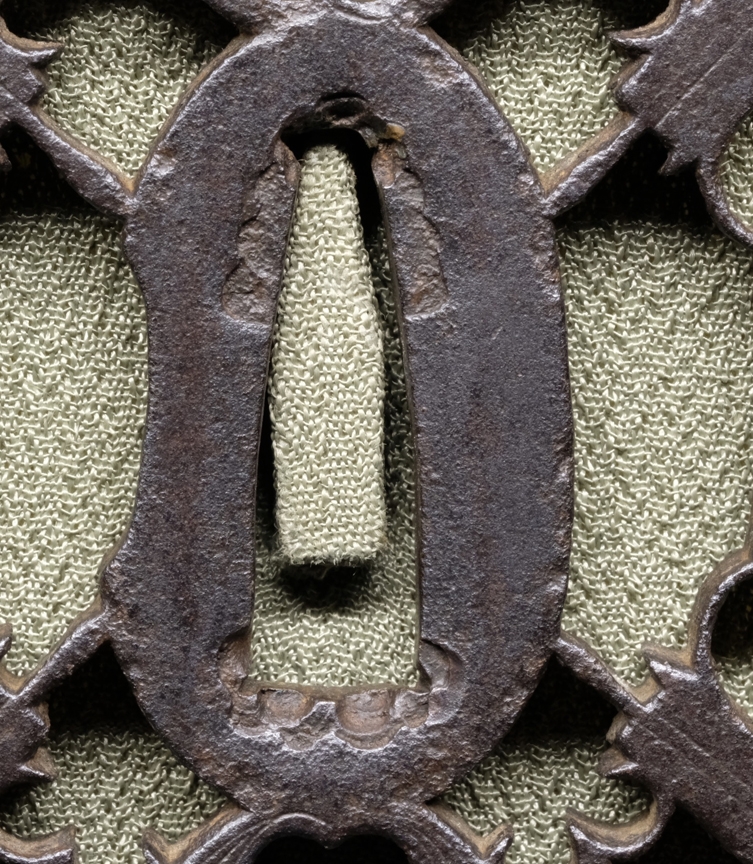
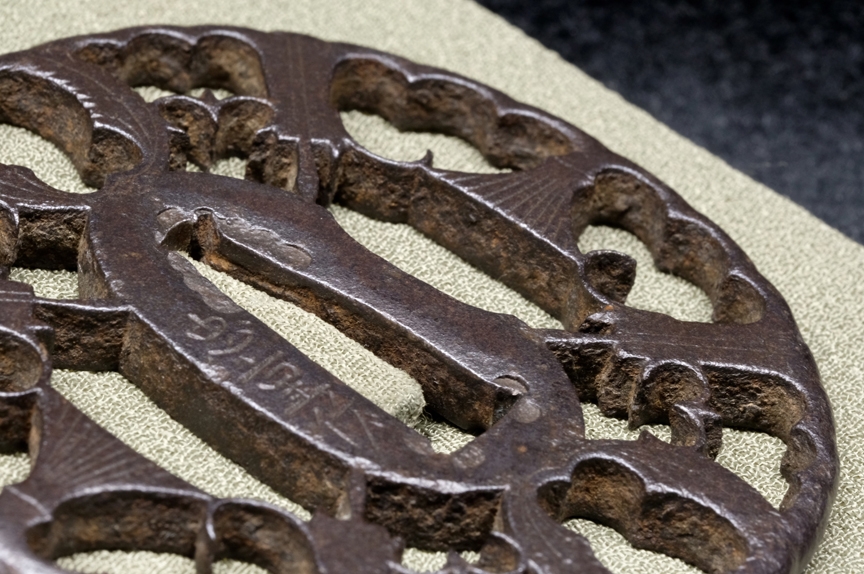
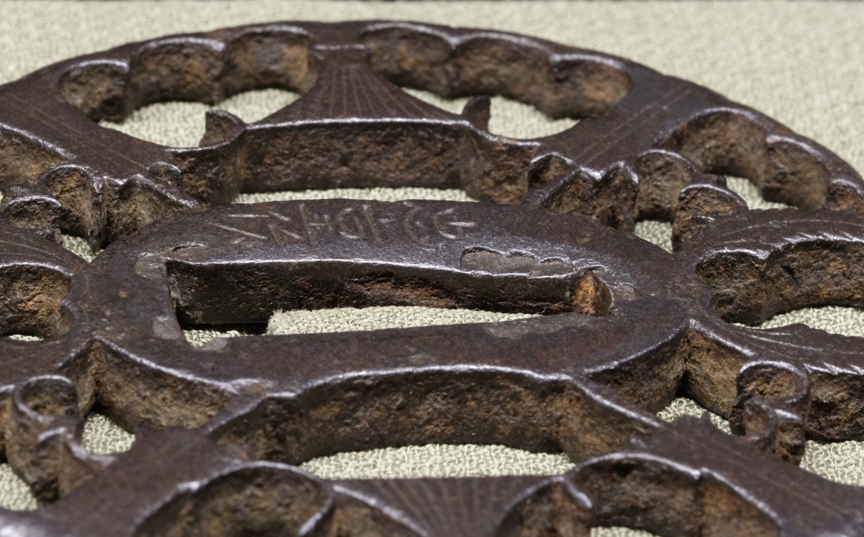
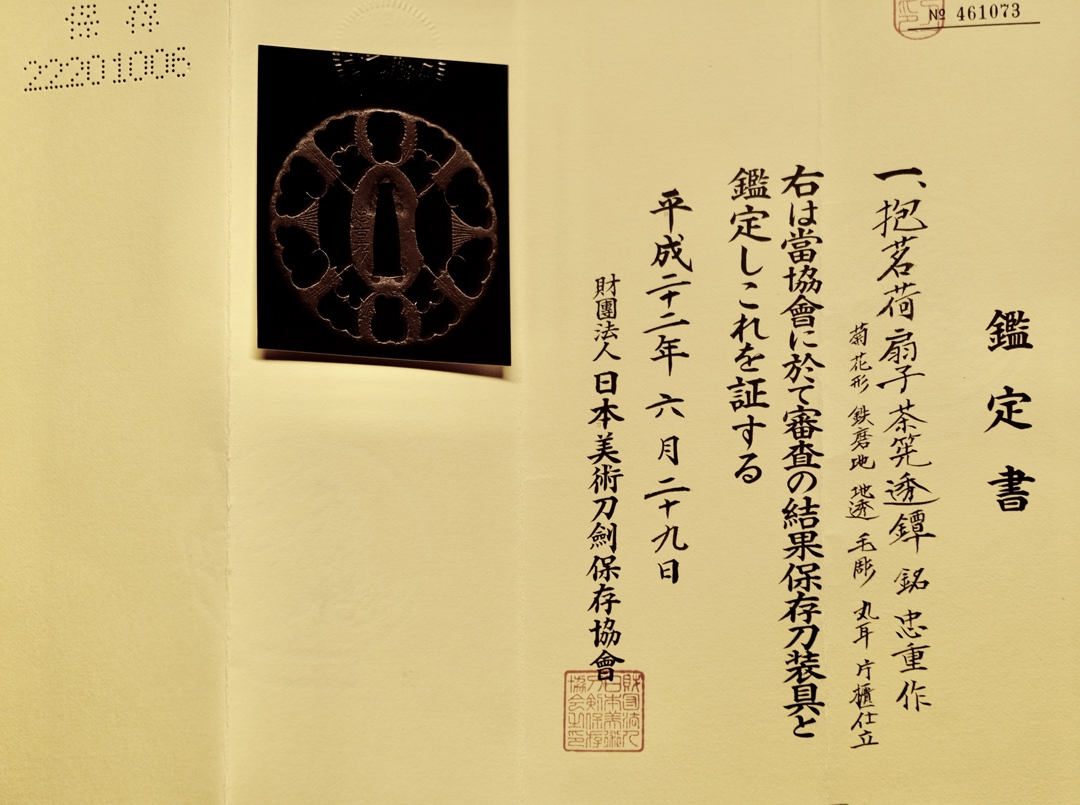
7.6cm x 7.4cm Signed Tadashige. NBTHK Hozon Motif is Kissho zukushi, assorted symbols of good fortune – ginger leaves, fans and tea whisks are interconnected by wild geese. The entire design is encircled by the rim which is in the form of a chrysanthemum. Akasaka Tadashige According to Kazutaro Torigoye in his book, Tsuba – An aesthetic Study (pp.134-135) “Excluding the three great masters of Akasaka school, Tadamasa I, Tadamasa II, and Tadatora, Tadashige is the only highly regarded person among many students of the Akasaka school.” Robert E. Haynes writes, “Among the students of the Akasaka school, the work of Tadashige should be noted. He was one of the later workers of the school but was superior in ability to all the other students. In fact, his work compares favorably with that of the first three generations. He was an innovator and reformer who hoped to raise the standards of the Akasaka school to its former prominence. Though he was the student of the first Tadatoki (4th Akasaka), he easily surpassed his teacher in ability. Unfortunately, only his work reached the heights he so diligently sought. His work may be easily identified because of its superior quality and in cases where it might be confused with the work of the first three generations, it will be younger in appearance than the work of his early masters. Also, he was the first of this school to use kuchibeni at the top and bottom of the nakago-ana, very much in the same style as those used by the Suruga school. This artist is one of the few late Edo age workers who successfully returned to the superior quality of the early artisans of his school and was able to equal their greatness”…. Tadashige (1730-1816) is said to be the brother of the second Tadatoki and the student of the first Tadatoki. He lived in Kyobashi and is reported to have been an artist at the court of the Daimyo at Tosa. Rated as Jo-ko.
NihontoWatch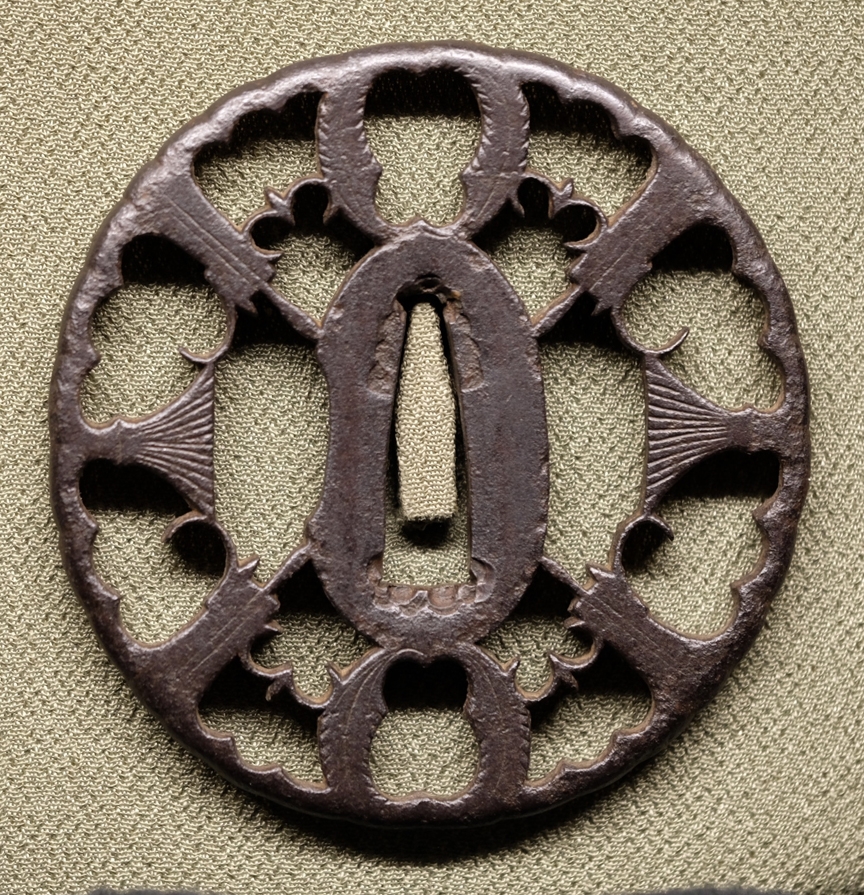
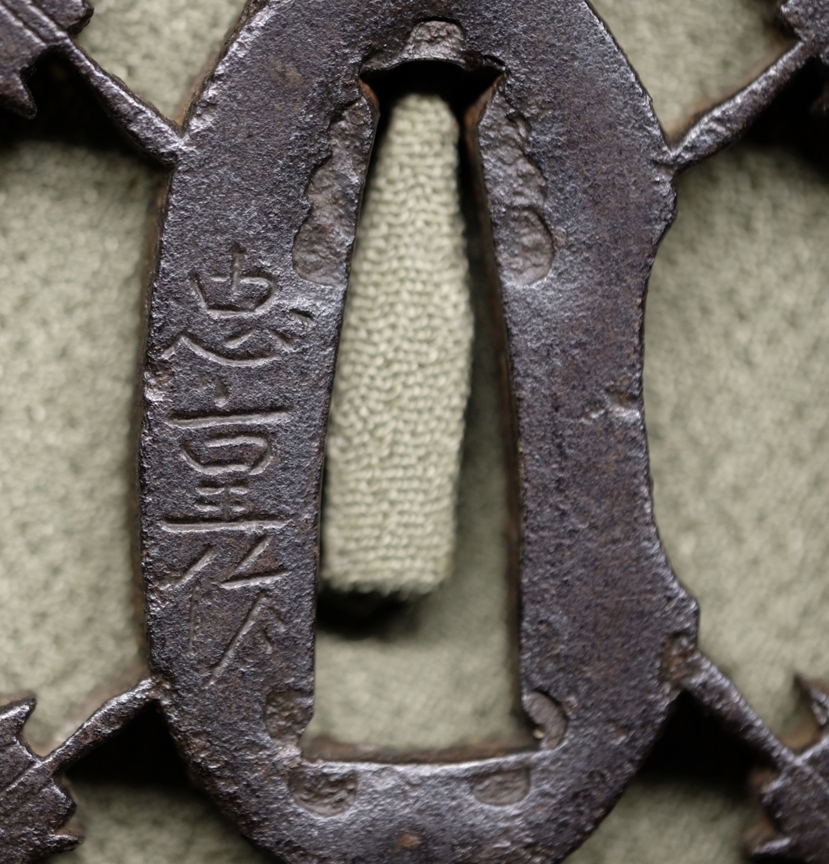
忠重
江戸(c. 1730-1816)
武蔵
在銘
保存 (NBTHK)
鐔工 · 武蔵 · 1730-1816頃
太右衛門忠重は赤坂派の在銘の名工である。説明書によれば、赤坂鐔は江戸時代の初頭に京都から江戸赤坂に移住し、以後幕末まで栄えた鉄透鐔の一派である。初代忠正、二代忠正、三代忠虎の所謂上三代の古赤坂は在銘作が確認されておらず、元禄頃の四代忠時に至って「武州住赤坂彦十郎忠時作」[[c:7]]銘をはじめとする在銘作があり、以後九代まで嫡流は忠時を名乗る。忠重はこの忠時の系の門人である。多くの説明は四代忠時に入門したとし、一書は五代忠時の門人とし、最も新しい説明は両者を整理して、四代忠時の晩年に入門したが事実上の師は五代忠時であるとする。長寿の人で、行年七十八才の銘があり、最後の作は行年八十四才と切る。説明書は「四代から九代にわたる赤坂鐔工中屈指の上手」[[c:1]]と称賛する。
その鐔は説明書が一派について記す赤坂の造込みを守る。鉄の鍛えには三枚合わせと称される合わせ鍛えのものが見られ、肉置きは中高となり、透かしの繋ぎが耳際で広くなって安定感があり、耳は丸耳となるのが通例である。技法は地透に毛彫で、鉄地に大振りで貫禄のある姿をとる。説明書は鉄味に筆を費やし、鍛えは上々で、錆色に艶があり、ある大小鐔では一種の艶ある錆色が冴えるとする。
説明書が忠重に特に見るのは意匠である。構図の斬新さは赤坂鐔の見どころの一つであるが、忠重は特に意匠が優れ、「尾形光琳の文様意匠を採り入れるなど進取の気性に富んでいる」[[c:2]]とする。同作中の代表作と称される老松図の大作透鐔は、大小二本の枝振りの老松を三階松風の意匠に配し、説明書はこれを「肥後鐔にも見られない忠重の独創」[[c:3]]とする。行年七十八才銘の大小鐔は、厳寒の中、青い月影のもとにかすかに香をただよわす梅樹を表し、説明書は「粋な透しを本領とした赤坂鐔の特色をよく示している」[[c:4]]とする。
画題は一派と同じく自然の風物や故事に取る。老松・梅月に並んで、鳥居に神鹿を配し「春日山」と銘に刻する鐔、窓に桐の鐔、黄蜀葵を画題とした鉄磨地の丸形の鐔があり、黄蜀葵のふっくらとした肉感に説明書は赤坂鐔工中でも白眉の技術を見る。大振りの作は造込み堂々として彫口するどい。肥後の勘四郎を手本としてさらに新味を加えた窓桐図鐔は耳際の肉をおとした肉置きで、説明書はこれを「耳際の肉をおとした肉置きは忠重の特色をよく示している」[[c:5]]とする。
銘そのものにも説明書が正面から扱う問題がある。窓桐図鐔は最後の行年八十四才の銘をもつが、「銘の書風から嫡男・忠好の代作代銘」[[c:6]]手と鑑せられる。それでも説明書はこれを忠重の本領をあらわした出色の作とし、晩年の行年銘の作は本人の手と工房の境に立つ。
収集の上では、忠重は重要刀装具の格に五枚が指定され、いずれも在銘で、それ以上の指定や伝来の記録はない。代表作とされる老松図、梅月図の大小、晩年の行年銘の作がそこに含まれる。大振りで独創的な透しの在銘の忠重は折に触れて現れる程度であり、記録の確かな一枚は江戸の鉄鐔を集める者にとって意図して探し当てる類の作である。
忠重の位置づけを、日本刀全体および伝法・時代・時期ごとに示します。各区分(随一・屈指・有数・著名)は、NBTHK および文化庁による指定に加え、三作や名物帳などの歴史的栄誉を加味したものです。
各項目を選ぶと評価方法が表示されます。
鐔工 · Edo
時期区分: 赤坂· 1688–1860
現在59点販売中
銘が正しい、または無銘でも年代・流派を指摘でき、美術工芸的価値が認められる、保存に値する真正の刀装具と鑑定されたものです。
日本美術刀剣保存協会(NBTHK)は、1948年に設立され、文化庁の監督を受ける公益財団法人で、東京・刀剣博物館に本部を置きます。専門の審査員が出品作を直接審査し、美術的・歴史的価値に応じた鑑定書を発行します。NBTHKの鑑定書は、日本刀および刀装具の真正性を示す最も広く認知された基準です。
NBTHK公式サイトAll swords sold for $5000 USD or less are considered final! Swords above the $5000 range may be returned for any reason within 48 hrs. Buyer will receive a full refund minus shipping/handling, insurance and or any fees incurred in shipping or sale.