NihontoWatch MonNihontoWatchBETA
MarketEncyclopedia
NihontoWatch Mon

NihontoWatchBETA

Market
Encyclopedia
Overview·Kantei·Designations·Work Types·Signatures·Lineage·School
OverviewKanteiDesignationsWork TypesSignaturesLineageSchool
  1. Schools
  2. Akasaka
  3. Akasaka
  4. Tadashige

Akasaka Tadashige

忠重

Jūyō
Vol. 51, No. 231 · Tsuba

Akasaka Tadashige

忠重

5 ranked works

ProvinceMusashiEraMid-late Edo (c. 1730–1816)PeriodEdoSchoolAkasakaTraditionIron-tsubaGenerationbranch founderTeacherTadatokiSpecialtiestsubaTypeTosogu MakerCodeAKS003
5Jūyō Tōken

Overview

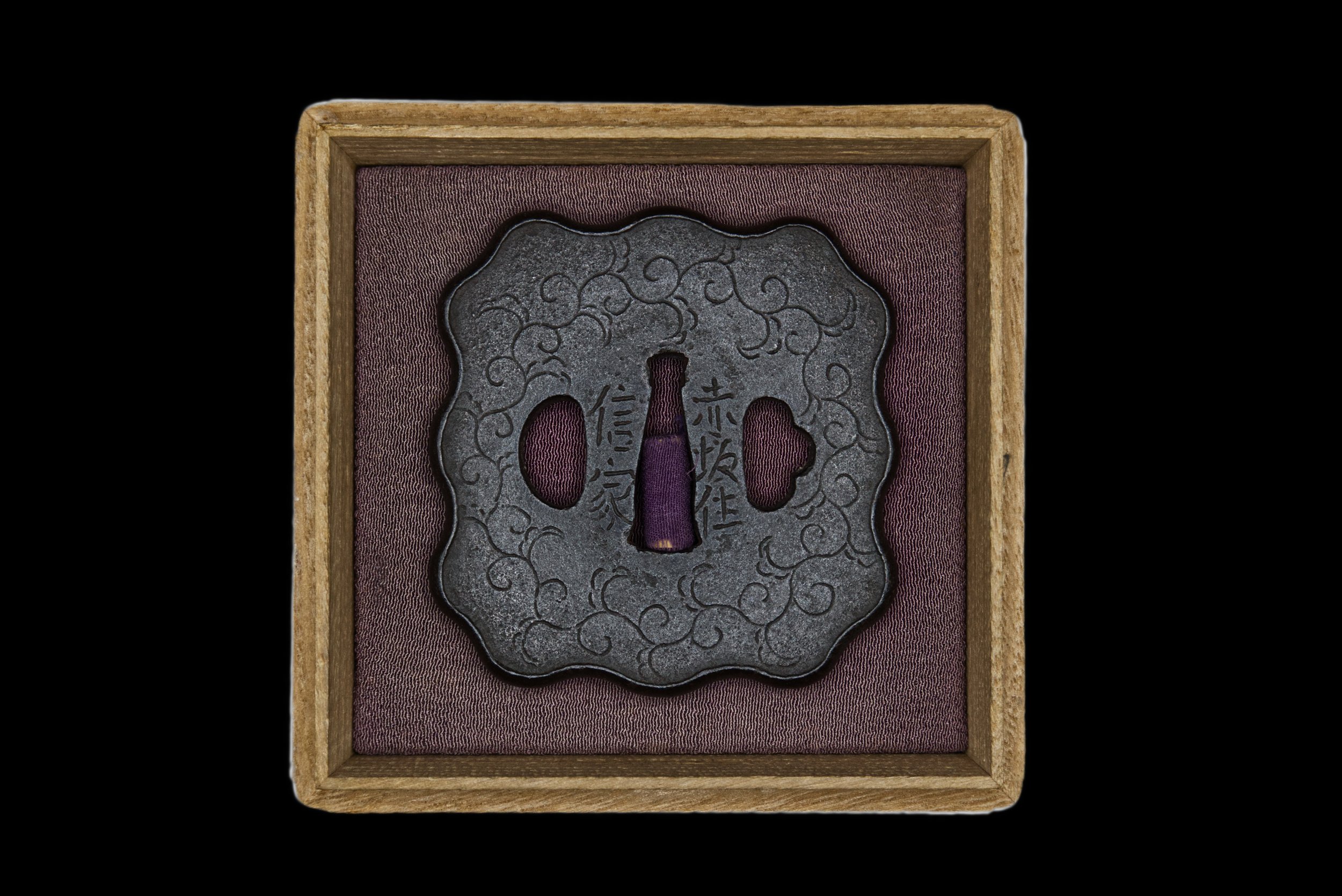
Tayuemon Tadashige (太右衛門忠重) was a tsubako of the Akasaka school, the lineage of makers who relocated from Kyoto to Akasaka in at the beginning of the period and flourished there until the end of the Tokugawa shogunate. Tadashige entered the workshop of the fourth-generation master Tadatoshi during the latter's final active years; in practical terms, however, his training was conducted under the fifth-generation Tadatoshi. He proved remarkably long-lived, with signed works from his later career bearing the inscription "made by Tadashige at the age of eighty-four," and his skill has been praised as among the most accomplished of the Akasaka masters active from the mid- period onward. His eldest son, (忠好), is known to have executed - works on his behalf in these advanced years.

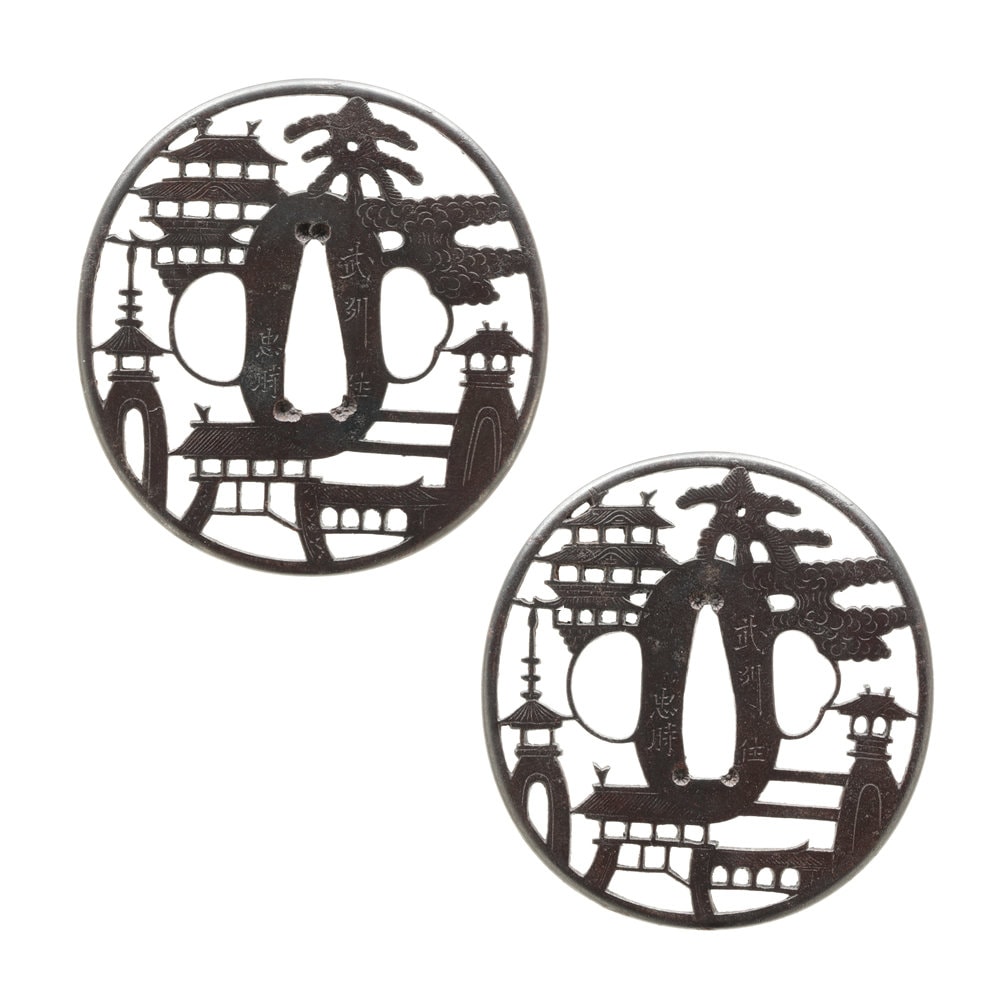
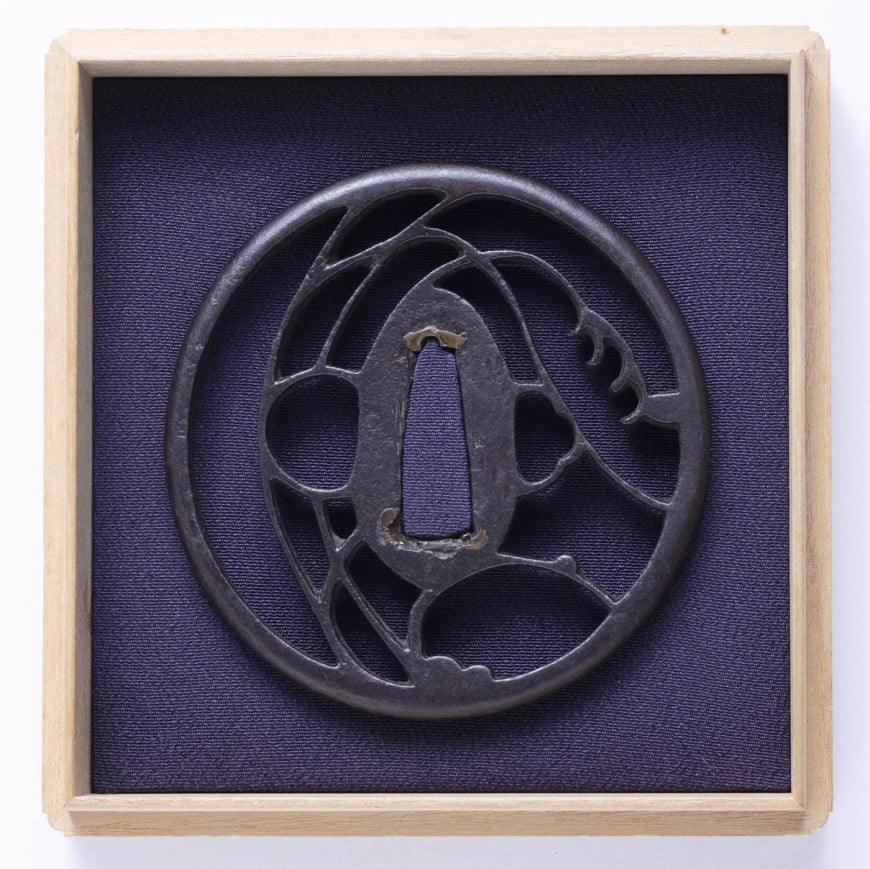
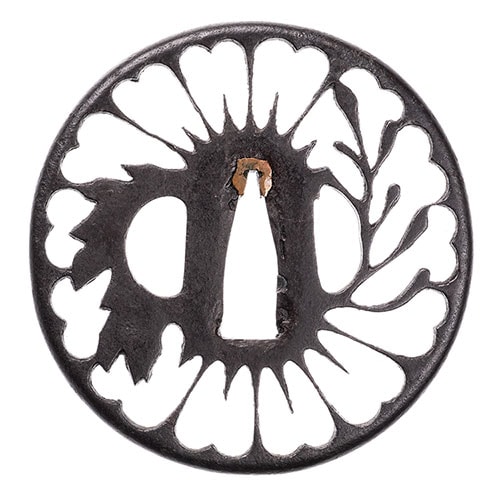
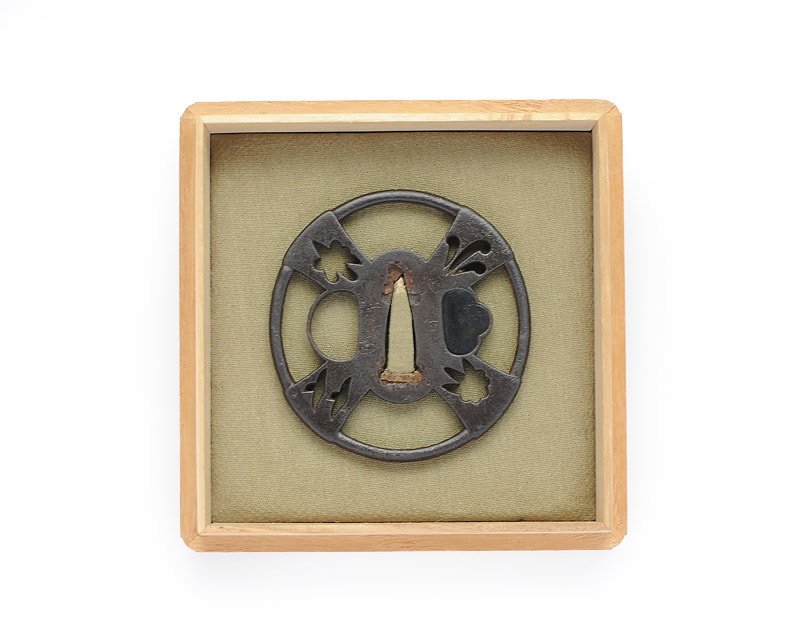
Tadashige's follow the established Akasaka constructional idiom — iron plates forged with the school's characteristic sanmai-awase (three-plate composite lamination), finished with a moderately raised at the center, broadening connecting webs near the rim for visual stability, and a customary rounded edge. Within this framework, his iron displays what the describes as "superb forging" and a patinated sabiiro "rich in character" with a "distinctive sheen" that appears "clear and fresh." His openwork () is distinguished by keen cutting edges and crisp, incisive carving, while fine-line engraving evokes atmosphere and scent in his naturalistic compositions — plum beneath blue moonlight, aged pine branches, sacred deer within shrine precincts.

The identifies Tadashige as outstanding in design even within a school celebrated for the novelty of its compositions, crediting him with a "progressive temperament" that led him to incorporate decorative pattern ideas associated with Ogata Korin. His inventions, such as the "three-tiered matsukaze" motif, are noted as having no precedent even among . Across the designated works, the evaluative language is remarkably consistent: "large in scale and dignified," "strikingly innovative," "exceptionally well-balanced and notably distinguished." Tadashige's achievement lies in his synthesis of Akasaka orthodoxy with an enterprising creative spirit, producing openwork of "pronounced dignity and distinction" that the regards as fully displaying "the characteristic strengths of Akasaka work, whose true specialty is a stylish and tasteful openwork aesthetic."

Kantei

3 descriptive axes: material (the Akasaka iron plate, the line's three-layer laminate forging worked to a hammered or polished iron ground, praised for its forging and patina) x technique (ground openwork finished sparely with hairline engraving, the rim a rounded maru-mimi, the openwork tie-bars broadened at the rim for stability, the modelling raised at the centre) x themes (natural scenery and allusive devices pierced through the iron: aged pine, plum and moon, the latticed paulownia, the Kasuga meadow with its sacred deer, the sunset-hibiscus). Because he keeps the shared Akasaka house idiom, the load-bearing separators the records give for THIS Tadashige are not the house ground but his design and modelling: the inventive taking-in of Ogata Korin's Rinpa patterns and a modelling that drops the flesh away at the rim, named his own characteristics. The corpus is thin (five guards), so these tells are few and one rests on a single setsumei, stated honestly below.

Tadashige, called Taemon, is a later signing-generation master of the Akasaka school of iron openwork , the line said in the records to have moved from Kyoto to the Akasaka district of at the start of the period and to have flourished there to the end of the bakufu. The first three generations, the old Akasaka, are all unsigned, and in- work begins only with the fourth generation Tadatoki around Genroku, after whom the legitimate line carried the name Tadatoki. The records place Tadashige as a pupil of this Tadatoki line: most say he entered under the fourth generation Tadatoki, one calls him a pupil of the fifth, and one reconciles the two by saying he entered in the fourth generation's old age but that his de-facto teacher was the fifth. He is praised as a leading hand, the foremost of the Akasaka workers from the fourth to the ninth generation and from the middle period on. A long-lived man, he age-dated his late guards, the records naming a signature aged seventy-eight and a last work aged eighty-four; the eighty-four-year piece is judged by its calligraphy a substitute-made, substitute-signed work by his eldest son . His art keeps the Akasaka iron openwork idiom while distinguishing itself by an inventive sense of design, the records singling out his taking-in of the Rinpa painter Ogata Korin's patterns and a modelling that drops the flesh away at the rim.

Diagnostic discriminators

two of the five setsumei single out Tadashige as especially fine in design and say he took in the patterns of the Rinpa painter Ogata Korin, a progressive spirit; the records present this as his own particular distinction within the Akasaka workers, absent (rate 0) from the inherited house repertoire and from the other iron-sukashi schools. It rests on two of the five guards here, so it is a genuine but lightly attested separator

one setsumei (the age-eighty-four guard) singles out a modelling that drops the flesh away at the rim as a feature that well shows Tadashige's character. It is a single-source tell on one of the five guards here, so it is flagged low-n and offered only as a supporting separator, not a securely established one

Material (the iron plate)

The Akasaka iron plate, the line's so-called three-layer laminate (sanmai-awase) forging worked to a hammered ground or a polished iron ground (tetsu-), the forging praised as fine and the patina given a glossy, lustrous quality; the construction is large and dignified, the modelling raised at the centre.

Technique

Ground openwork () finished sparely with hairline engraving () and no wasted relief; the rim worked to a rounded , the openwork tie-bars deliberately broadened where they meet the rim to give the plate stability, the carving sharp and the design large and bold.

Themes (devices in openwork)

Natural scenery and allusive devices pierced through the iron: the aged pine with its great and small boughs and the three-tier-pine pattern, plum and moon in deep cold, the latticed paulownia, the Kasuga meadow read by its and sacred deer, and the sunset-hibiscus, each worked as openwork and finished with hairline engraving. The stress an inventive, fresh sense of composition.

Natural scenery and allusive devicesless firmly established

Aged pine, plum and moon, paulownia and the Kasuga meadow, cut as openwork on the iron and finished with hairline engraving.

Full iconography

Signature chronology

Recorded signatures

Documentary note

His signature is the two characters Tadashige cut as Tadashige (忠重作), -less; the fuller forms add an age-date prefix (Gyonen shichijuhachi-sai / hachijuyon-sai Tadashige, aged seventy-eight / eighty-four) or a design-legend prefix (Kasugayama Tadashige, the carved Kasugayama naming the Kasuga-meadow subject). The records make the age-eighty-four signature his known last work and judge it, by its calligraphy, a substitute-made and substitute-signed piece by his eldest son , so an age-eighty-four guard is not securely his own hand. The records disagree on his teacher: most say he entered under the fourth generation Tadatoki, one calls him a pupil of the fifth, and one reconciles the two by saying he entered in the fourth generation's old age but that his real teacher was the fifth. The profile is scoped to his own signed work; the corpus is five guards.

Scholarship

The records repeatedly name freshness of composition a watchword of the Akasaka guard and say Tadashige was especially fine in design, full of a progressive spirit.

Designations

Kokuhō—
Jūyō Bunkazai—
Jūyō Bijutsuhin—
Gyobutsu—
Tokubetsu Jūyō—
Jūyō Tōken5

Elite Standing

0.03 across 5 designated works

Top 28% among makers

Work Types

Distribution across 5 ranked works

Tsuba
5100%

Signatures

Signature types across 5 ranked works

Currently Available

Lineage

TeacherTadatoki
Tadashige
Student
  1. 1.Tadanori忠則1 for sale

Akasaka School

Other artisans of the Akasaka school

  1. 1.Tadamasa忠正2 for sale7designated
  2. 2.Tadayoshi忠好1designated

Tadashige

Tadashige(忠重) was a maker of Japanese sword fittings (tōsōgu) of the Akasaka school in Musashi province, active during the Mid-late Edo (c. 1730-1816) period.

The work follows the Iron-tsuba tradition.

Designated works by Tadashige include 5 Jūyō.