説明
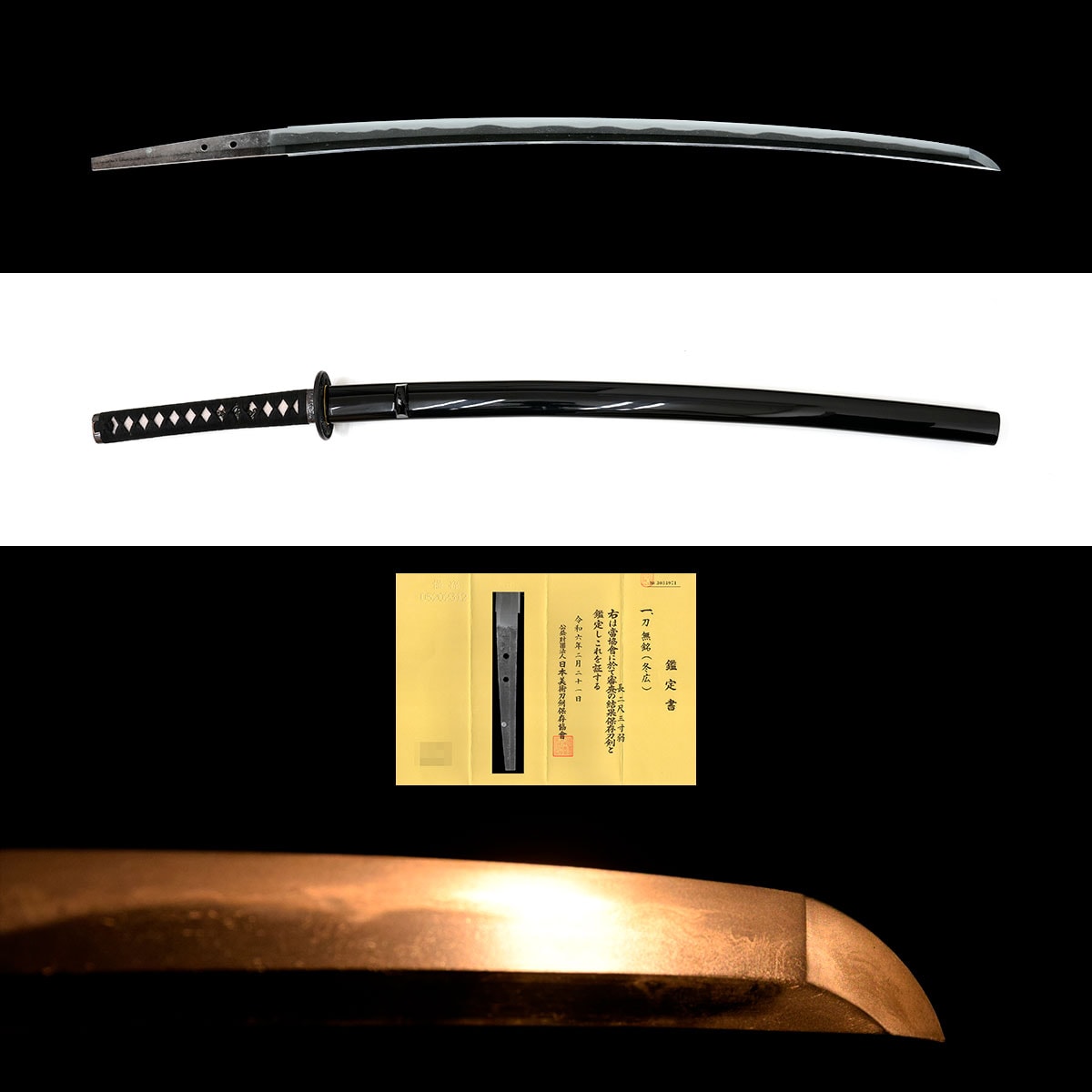
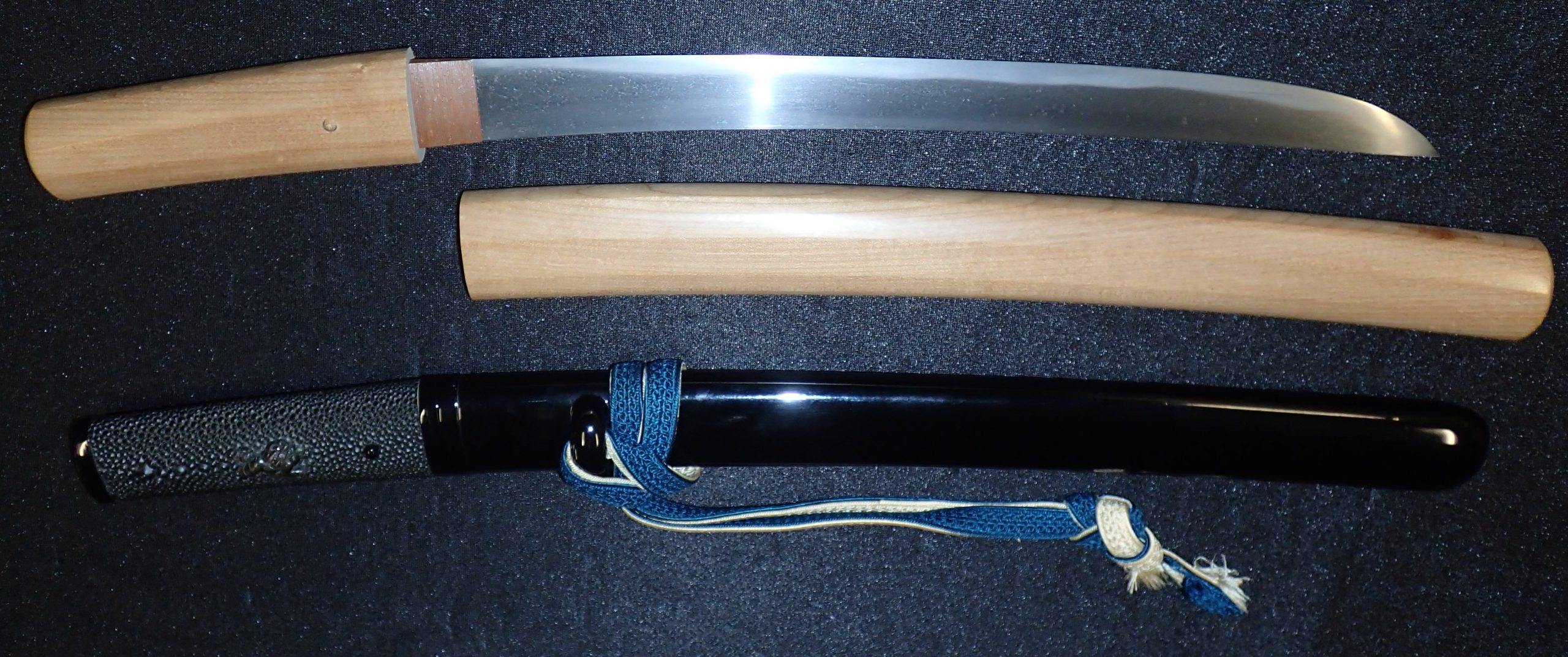
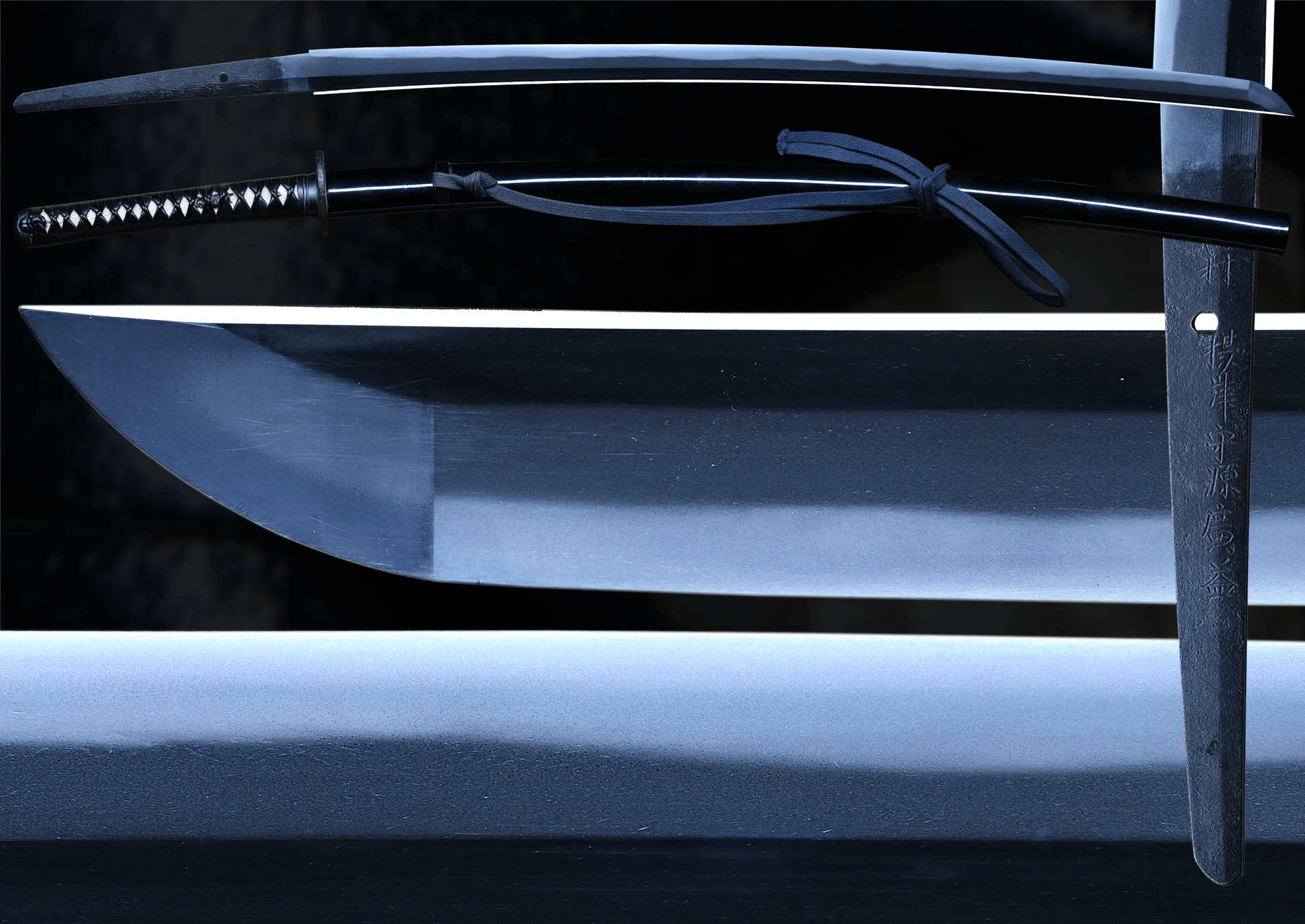
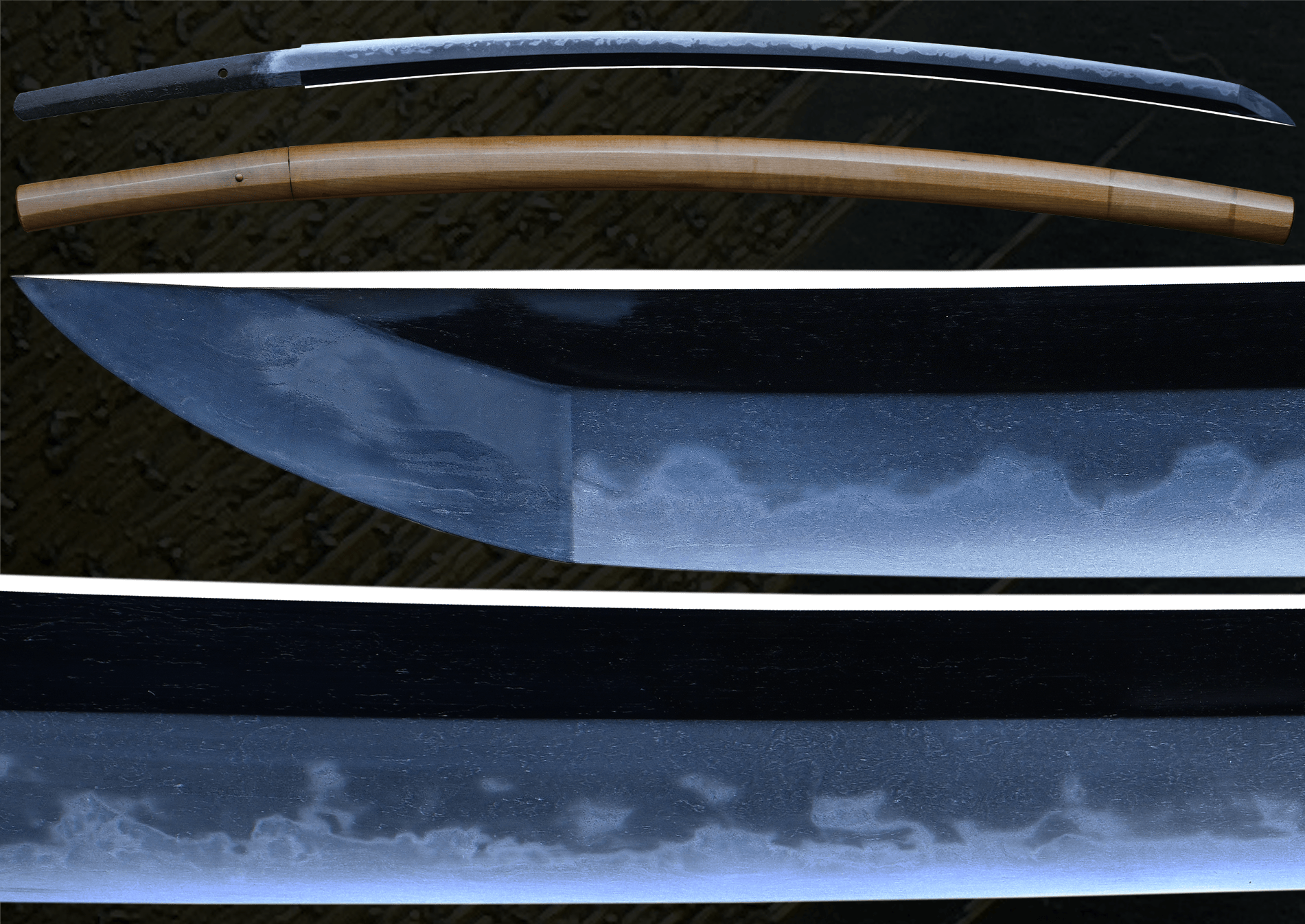
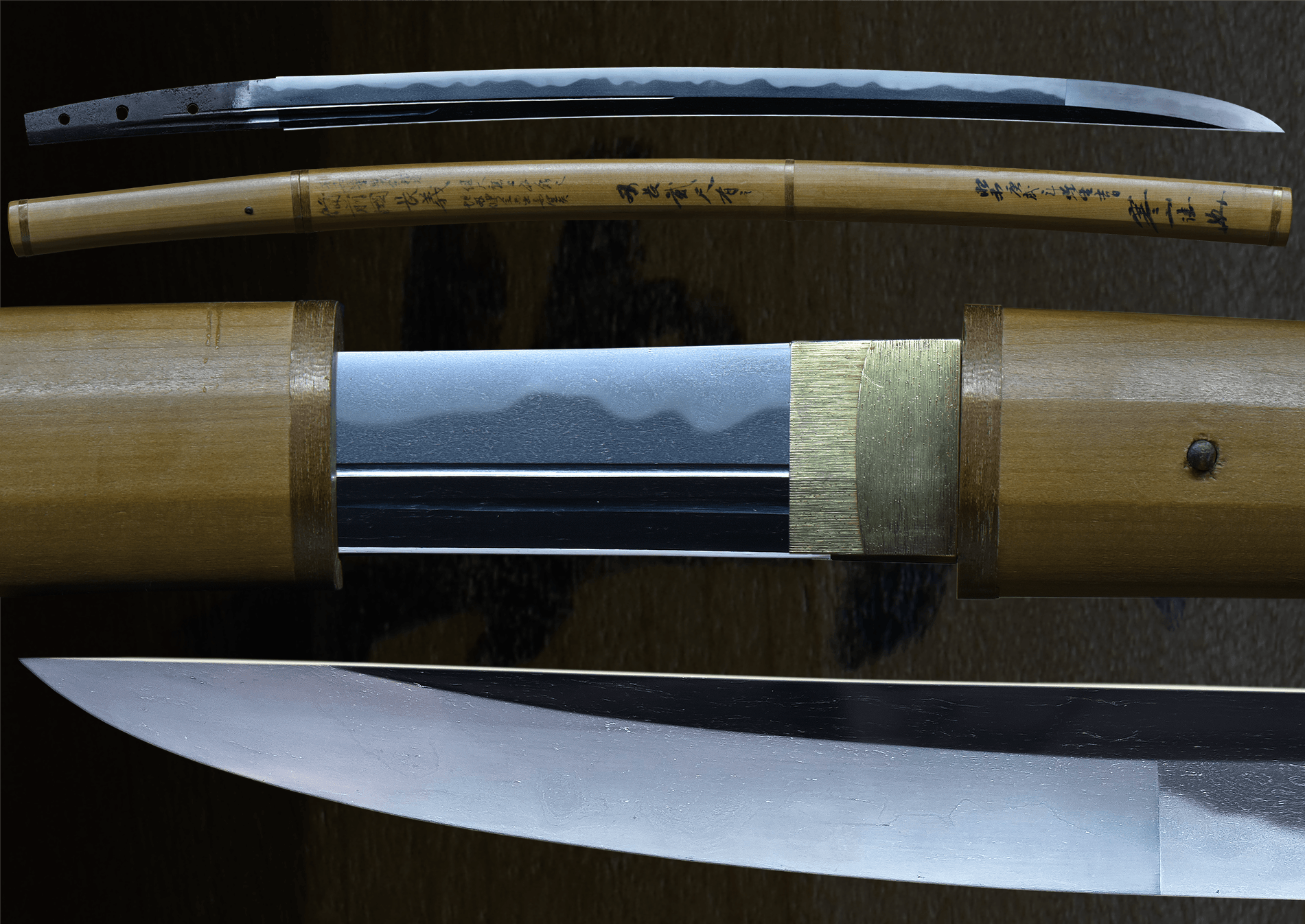
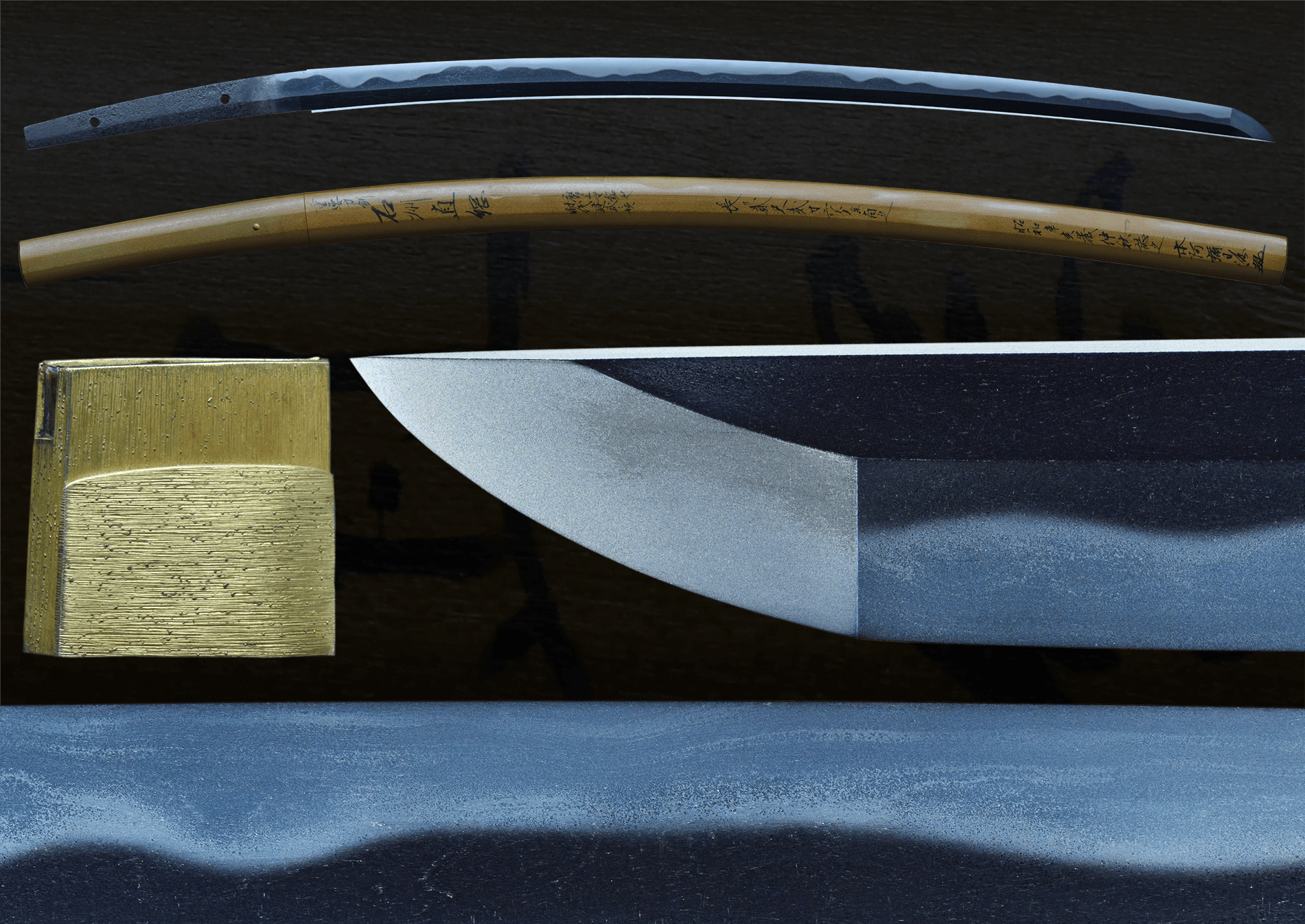
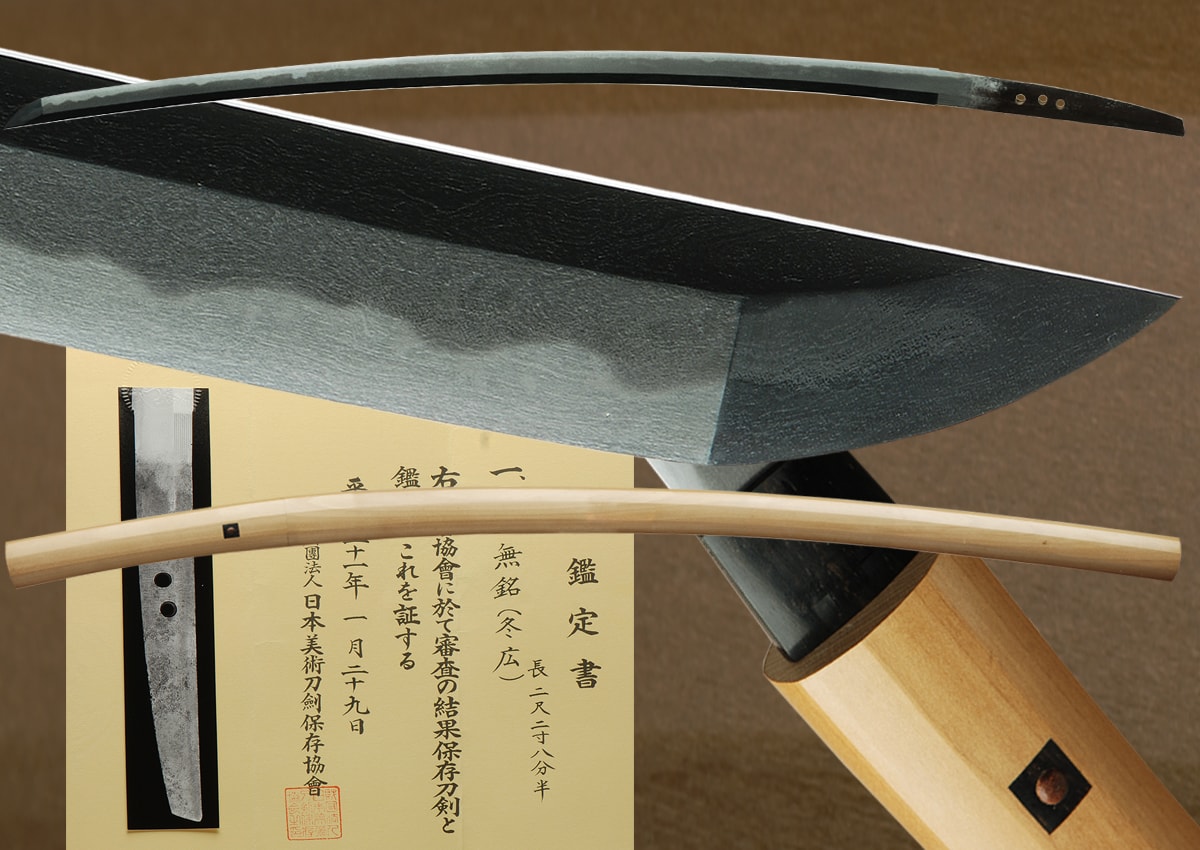
Katana Attributed to Fuyuhiro (Late Muromachi, ca. 1500s)Koto Period — Soshu Tradition InfluenceThis is a highly interestingkoto katanain the Soshu style, attributed toFuyuhiroof the late Muromachi period. The sword is in good polish, showing an impressive shape with a cutting edge over 27 inches. The blade remainsubuandmumei, a common feature of koto works where the artistry of the blade itself speaks louder than the presence of a mei.WorkmanshipThe hamon is a livelymidare-ba, based insuguhawithgunomeelements, and is filled with activity. It displays abundantnie, withsunagashiandkinsujirunning throughout, along with areas oftobiyaki. Thehadais well-forged, with a smooth, almost “milky” appearance, combiningitame-nagarewith some areas ofō-hadaand flowingmasame. Subtleji-nie,chikei, and profuseara-niefurther enrich the surface.The boshi is a boldhakikake, adding strength and character to the kissaki. The tang (nakago) remainsubuand is of an unusual shape, sometimes associated with Soshu-influenced schools, further supporting the attribution.Attribution to FuyuhiroThe workmanship strongly recalls theFuyuhiro line, particularly thethird generation, known for exuberant activity in the hamon. His works often displaymidare, notare-midare, and gunome-midare, with frequenttobiyaki, mune-yaki, and even hitatsurainko-nie. The hada known as “Fuyuhiro-hada” shows a flowing mixture ofmasame and itame, enriched withji-nie. This sword’s abundant hataraki and powerful Soshu flavor support the attribution to this important line of smiths.Condition & MountingPolish:Good, reveals hada and hamon activities clearly.Mounting:Inshirasaya with ebony inserts, fitted with anebony wooden habaki.ConclusionThis is abeautiful and dynamic Soshu-influenced katana, attributed toFuyuhiro of the late Muromachi era. Its energetic hamon, rich hada, and abundance of hataraki make it both a study piece and a highly desirable sword for any serious collector of koto-period works. With its size, quality, and striking activity, this blade stands as a fine representative of the Soshu tradition as interpreted by the Fuyuhiro line.
Mei:MumeiDate:koto (1500’s muromachi)Nagasa:27.1/8 inchesSori:24.0 mmWidth at the ha-machi:28.7 mmWidth at the yokote:19.7 mmThickness at the mune-machi:7.7 mmConstruction:Shinogi zukuriMune:IoriNakago:UbuKitae:Itame masameHamon:Midare GunomeBoshi:maruCondition:Good polish
Please note that the color of these images are not what the sword looks like in hand.High power lighting was used to bring out the details of this sword, making the hamon and hada more visible.
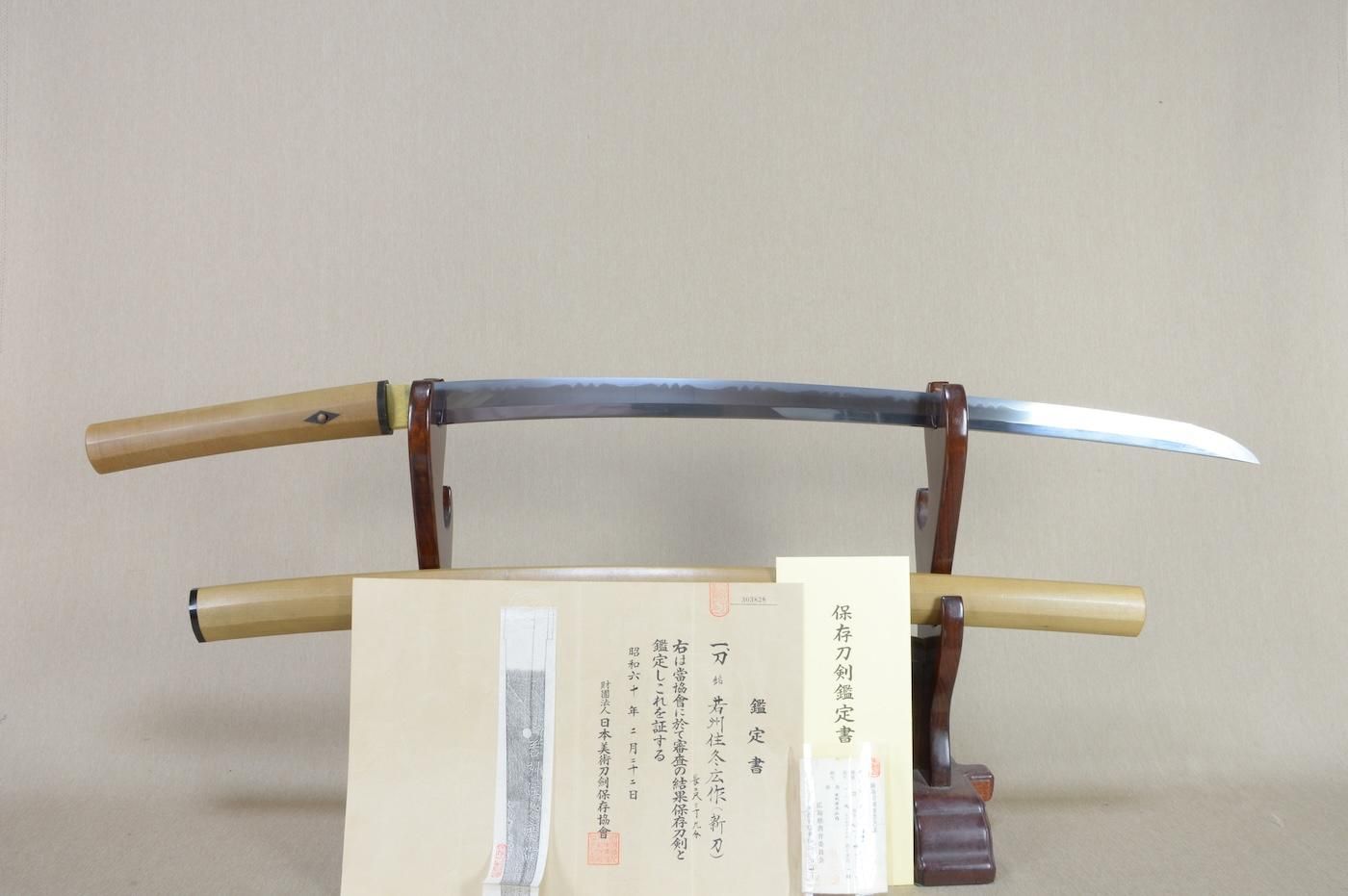
kantei-sho (鑑定書) No 381702 katana, mumei: Fuyuhiro (冬広)nagasa 2 shaku 2 sun 8 bu han Migi wa tô-kyôkai ni oite shinsa no kekka, hozon-tôken to kantei-shi kore o shô-suru.(右は當協會に於て審査の結果保存刀剣と鑑定しこれを証する)Heisei nijûichinen ichigatsu nijûkunichi (平成二十一年一月二十久日)zaidan-hôjin (財團法人): Nihon Bijutsu Tôken Hozon Kyôkai (日本美術刀劍保存協會)Appraisalkatana, unsigned: Fuyuhironagasa ~ 69.3 cm According to the result of the shinsa committee of our society we judged this work as authentic and designateit as hozon-tôken. January 29th 2009 [Foundation] NBTHK
FUYUHIRO school information:FUYU (冬)FUYUHIRO (冬広), 1st gen., Kōshō (康正, 1455-1457), Wakasa – “Jakushū-jū Fuyuhiro” (若州住冬広), “Fuyuhiro” (冬広), according to tradition the son of the 2nd gen. Sōshū Hirotsugu (広次) who had moved later in his career from Sagami to Obama (小浜) in Wakasa province, there he founded the quite successful Fuyuhiro school which gave rise to many smiths, he worked in an itame-nagare mixed with masame and ji-nie and the hada can either stand out or is finely forged, the hamon is a suguha or a notare mixed with gunome, tantō show mostly a hoso-suguha and a jihada that tends somewhat to ayasugi, chūjō-sakuFUYUHIRO (冬広), 2nd gen., Chōkyō (長享, 1487-1489), Wakasa – “Jakushū-jū Fuyuhiro saku” (若州住冬広作), “Fuyuhiro saku” (冬広作), “Hakushū-jū Fuyuhiro saku” (伯州住冬広作), he lived in Obama (小浜) in Wakasa province but worked also in Bizen and Hōki, there exists a date signature of the 13th year of Eishō (永正, 1516) in combination with the information made at the age of 53, this calculates his year of birth as Kyōtoku two (享徳, 1453), suguha, notare, gunome-midare, chū-sakuFUYUHIRO (冬広), 3rd gen., Daiei (大永, 1521-1528), Wakasa – “Fuyuhiro saku” (冬広作), “Jakushū-jū Fuyuhiro” (若州住冬広), “Kyū ́emon no Jō Fuyuhiro” (久右衛門尉冬広), first name Kyū ́emon (久右衛門), most of the today known Fuyuhiro works of this lineage go back to the hand of this generation, mostly a standing-out itame-nagare with masame and ji-nie, the hamon is a suguha, notare or gunome-midare in ko-nie-deki, whereas also works with tobiyaki and muneyaki can be found that tend to hitatsura, interpretations in midareba have a wide mihaba and plenty of nie, sometimes the yakiba is narrow and has a tight nioiguchi, his tang has a Sōshū-typical funagata-like shape, the tip of the tang is a pronounced ha- agari kurijiriFUYUHIRO (冬広), 4th gen., Eiroku (永禄, 1558-1570), Wakasa – “Jakushū-jū Fuyuh

![刀 無銘(冬広)保存刀剣鑑定書 Katana No signature (Fuyuhiro) [ NBTHK : Hozon ] 品番:KA080](/_next/image?url=https%3A%2F%2Fitbhfhyptogxcjbjfzwx.supabase.co%2Fstorage%2Fv1%2Fobject%2Fpublic%2Flisting-images%2Ftoyuukai%2FL398629%2F00.jpg&w=2560&q=90)