 NihontoWatchNihontoWatch
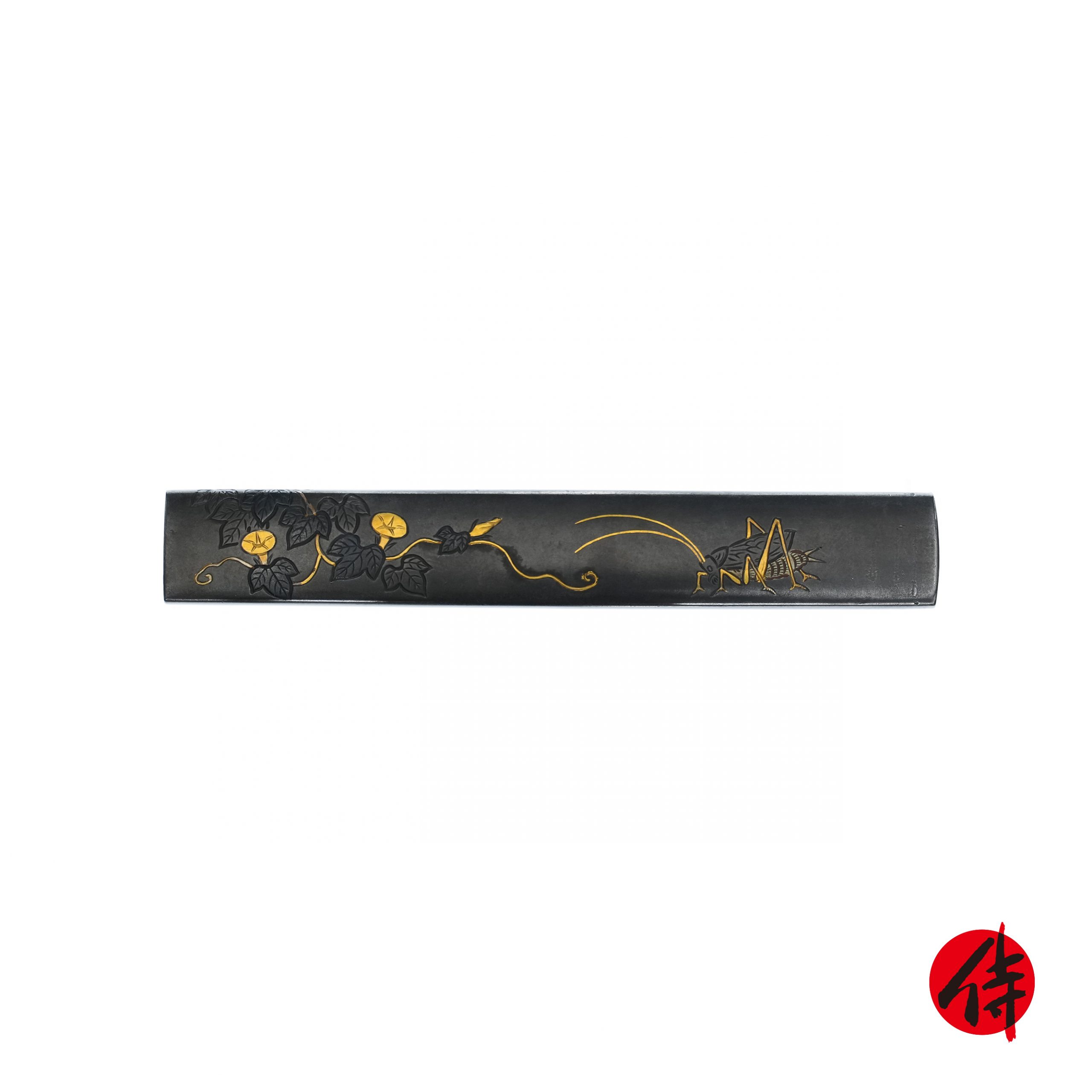
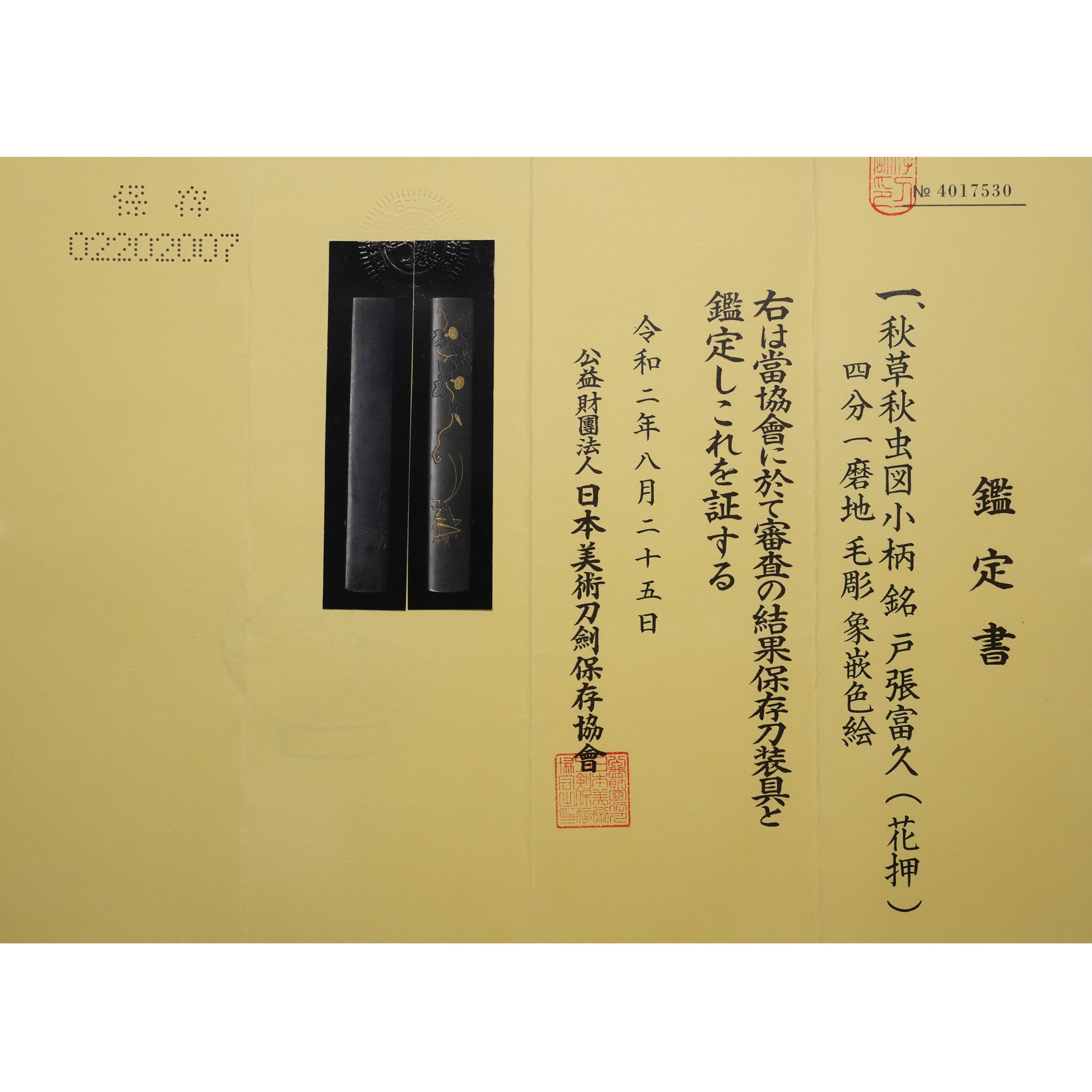
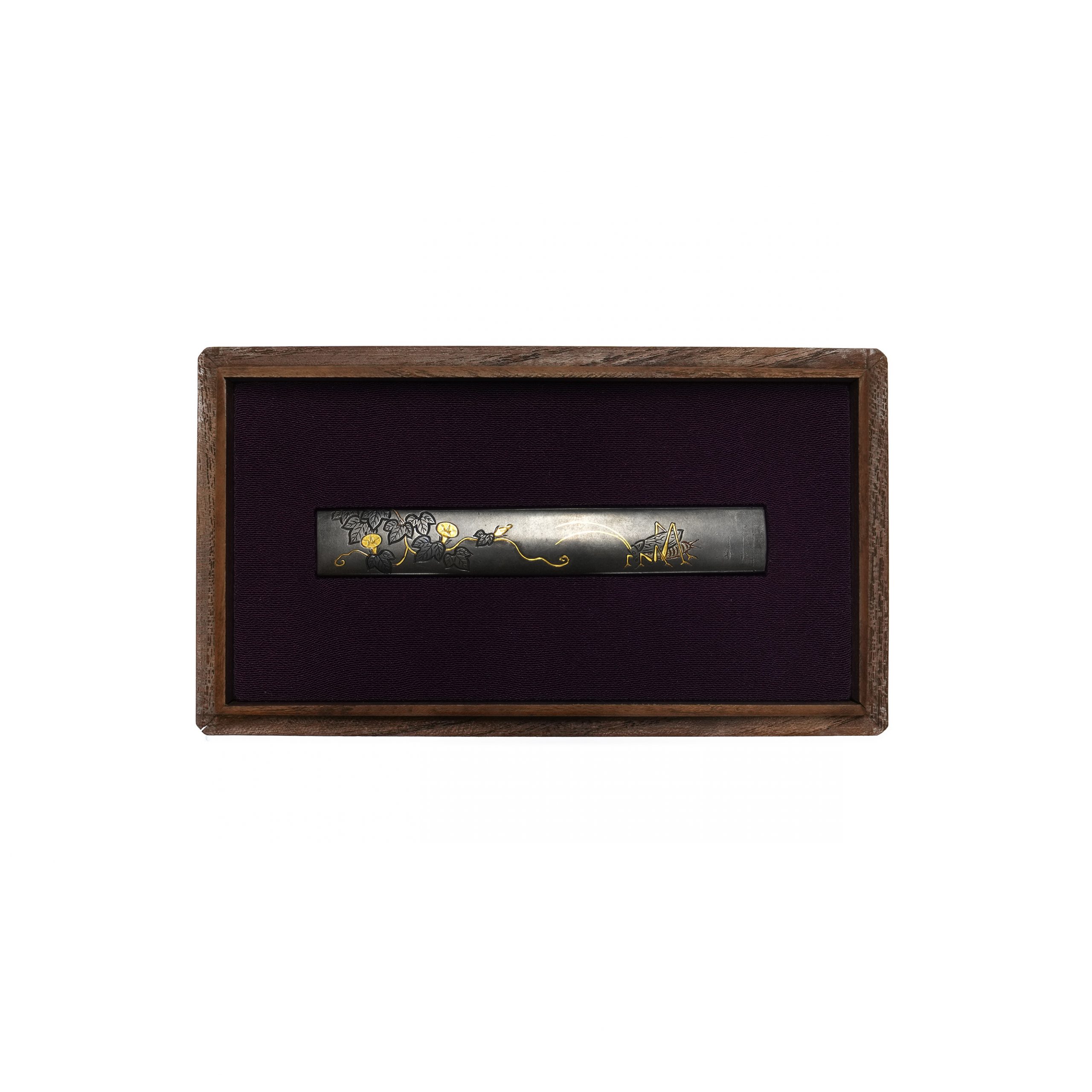
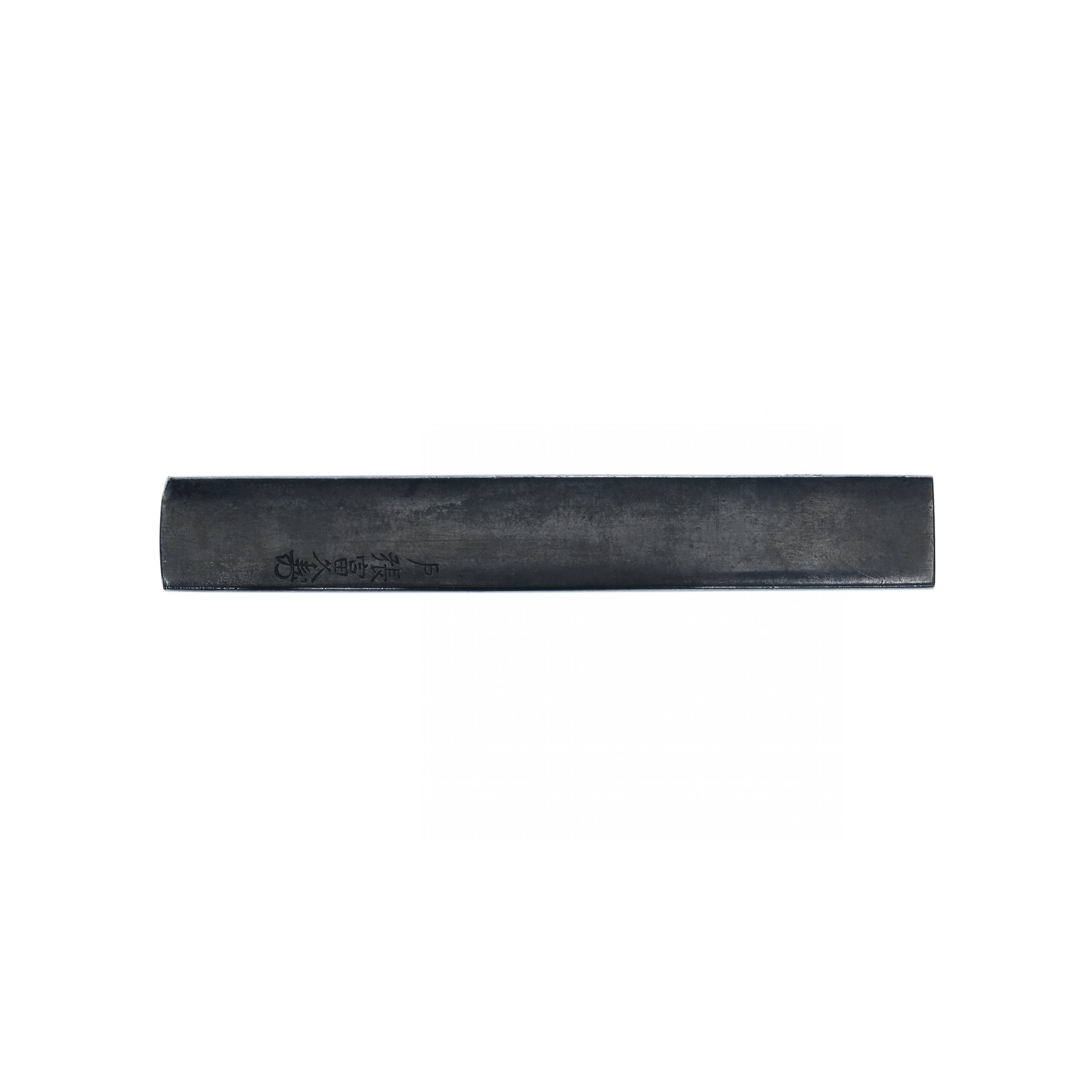
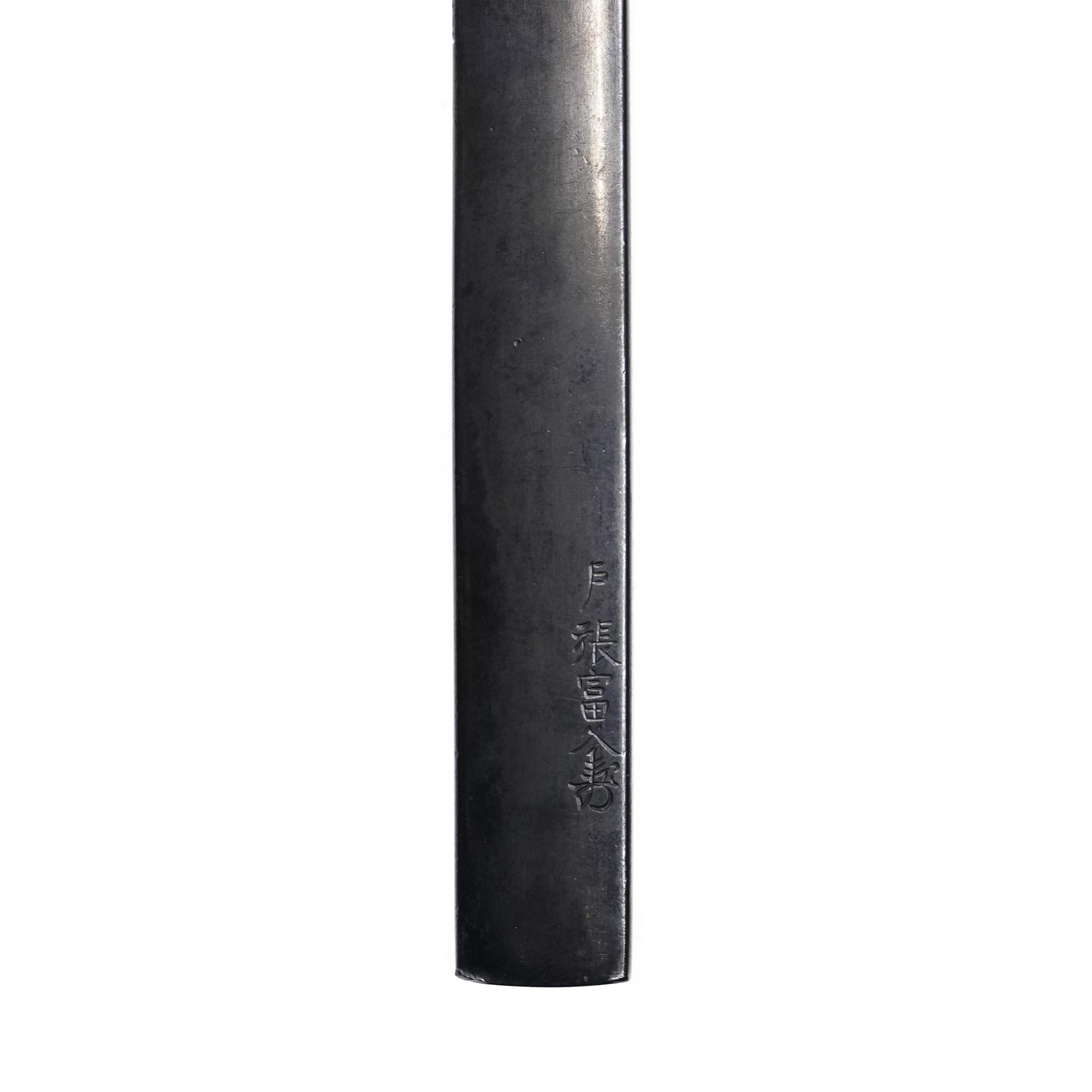
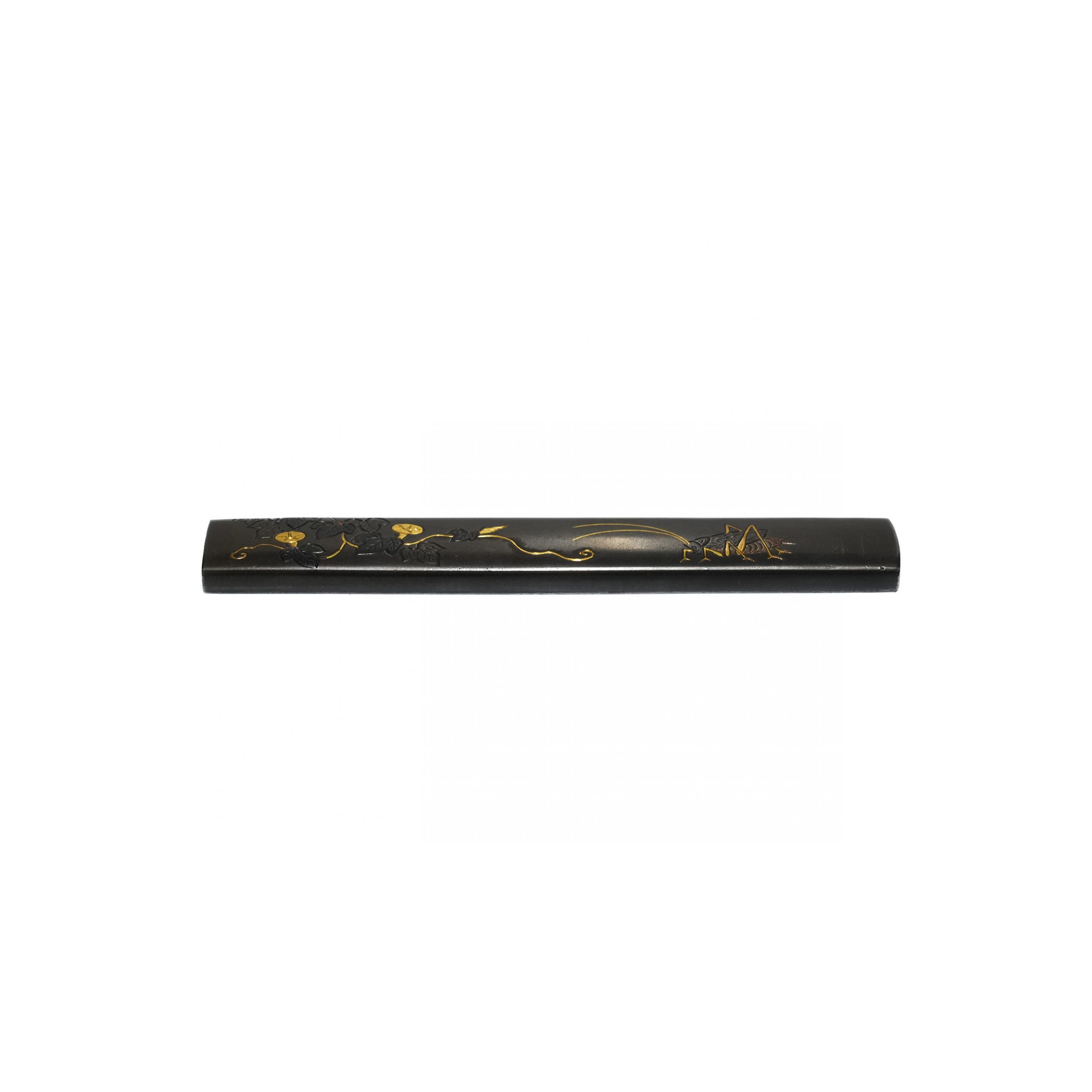
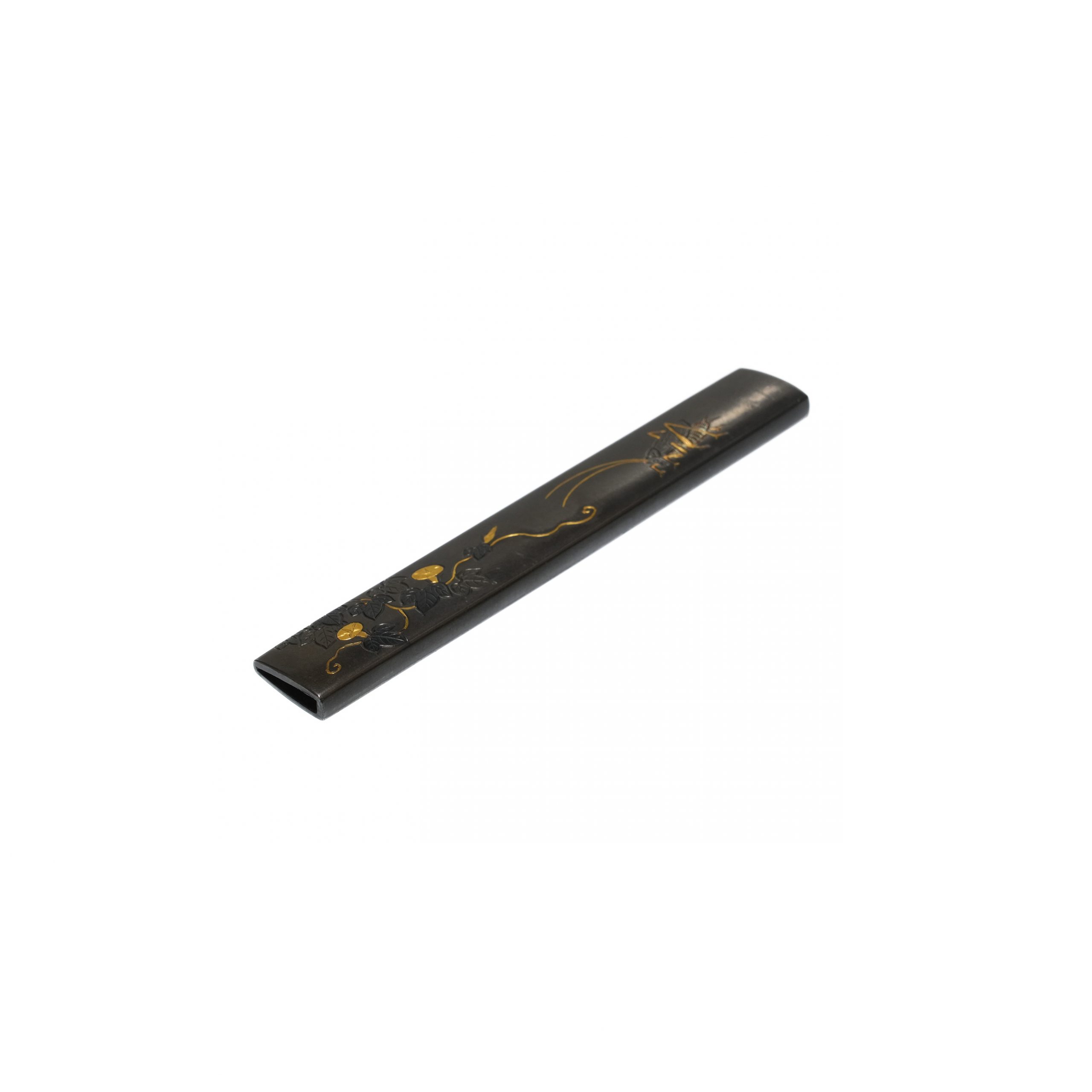
This Kozuka is made from the Shibuichi (四分一). It is an alloy of copper and silver. It contains about 25% silver (a quarter of copper), which is why this alloy was named Shibuichi (it means quarter in Japanese). It is also called the Oborogin (朧銀) because it has a beautiful silver-gray color. The Akikusa (秋草) means autumn plant, and the Akimushi (秋虫) means autumn insect in Japanese. Please look at the front of this Kozuka. You would find the Asagao (朝顔, morning glory) and the Batta (バッタ, grasshopper). In Japan, morning glory blooms in the summer; however, it is treated as a season word of fall. This is because of the difference between Japan’s old calendar and the new calendar. So, this Kozuka is decorated with motifs that symbolize autumn and gives you a sense of this season. The maker’s expert skill made this emotional work. According to the signature, this Kozuka’s maker is Tobari Tomihisa (戸張 富久, ?-1825). He was one of Goto Mitsutaka (後藤光孝, the 13th Goto Enjo)’s pupils. Later, he left the Goto school and became independent, and wielded his skills in his hometown. He interacted with Sakai Hōitsu (酒井抱一), who is known as famous Japanese painter of the Rinpa (琳派) school. A theory says that Tomihisa sometimes used Hōitsu’s sketches. Tomihisa enjoyed the Haiku (俳句, Japanese short poem) and appreciated refinement. You would feel as if this work reflects his personality. Authentication Paper They authenticated the Kozuka on Aug 25th in the second year of Reiwa (2020). They appraised it as Hozon Tousougu, the Kozuka worth preserving for Japanese society.
NihontoWatch
戸張富久
江戸
在銘
保存 (NBTHK)
販売店の記載のまま
(翻訳なし)
家彫 · 1670頃
現在5点販売中
戸張富久の位置づけを、日本刀全体および伝法・時代・時期ごとに示します。各区分(随一・屈指・有数・著名)は、NBTHK および文化庁による指定に加え、三作や名物帳などの歴史的栄誉を加味したものです。
各項目を選ぶと評価方法が表示されます。
家彫 · 山城
現在309点販売中
後藤派は、室町時代中期に初代祐乗が将軍足利義政に仕えて創始した彫金の宗家であり、「日本彫物の元祖」と仰がれ、「古今独歩の鏨師」と賞賛される祐乗を祖として十五代にわたり嫡流の技を継承した。祐乗の作品は東山御物として数多く取り上げられ、後世に名を残した名工は挙って後藤家の祐乗に範をとっている。四代光乗・五代徳乗は織田信長、次いで豊臣秀吉に仕え、大判・分銅・彫物の三役を担い、桃山時代の豪華美を格調高く表示した。幕末には一乗が「後藤家の掉尾を飾る名工」として家風を大成し、門下の荒木東明・中川一勝らが一派の技を継承した。 後藤派の作域は三所物・縁頭・鐔・揃金具と多岐にわたり、赤銅魚子地を基調とした高彫金色絵を家風の根幹とする。金紋裏哺金仕立の小柄笄、金無垢地容彫の目貫など、素材と技法の選択に一貫した格式が認められる。三代乗真は「大振りで力強く、量感の豊かな彫技」[[c:1]]を特徴とし、紋の肉取りが豊かで鏨使いが手強く、赤銅の色相も漆黒で麗わしい。桃山期の作には鋤出高彫に金・銀・素銅の象嵌色絵を駆使した豪華絢爛の大名道具が見られ、近世には四分一磨地や朧銀地に甲鋤毛彫・平象嵌を組み合わせた多彩な表現も展開された。龍・獅子・鶏・犀・鯰といった動物意匠から、松竹梅・桐紋・粟穂・四季草花に至るまで画題は広範であり、各代が武家好みの吉祥意匠を格調高く仕上げている。 後藤派に帰せられる作品には「気品があって格調が高く」[[c:2]]「力漲る」と評される一貫した品格が通底する。歴代の折紙制度によって初代祐乗以来の作が厳格に鑑定・伝承され、「家彫の誇りは確実に後代に伝わっている」[[c:3]]と繰り返し認められる。後藤流に熟達した門弟の作が「後藤家御家彫と見紛うまでの出来」[[c:4]]と称されることからも、その規範性の高さが窺える。日本金工史において、後藤派は赤銅魚子地高彫金色絵という技法体系を確立し、室町から明治に至る四百余年の間、彫金の最高規範として君臨した一門である。 詳しく見る →
銘が正しい、または無銘でも年代・流派を指摘でき、美術工芸的価値が認められる、保存に値する真正の刀装具と鑑定されたものです。
日本美術刀剣保存協会(NBTHK)は、1948年に設立され、文化庁の監督を受ける公益財団法人で、東京・刀剣博物館に本部を置きます。専門の審査員が出品作を直接審査し、美術的・歴史的価値に応じた鑑定書を発行します。NBTHKの鑑定書は、日本刀および刀装具の真正性を示す最も広く認知された基準です。
NBTHK公式サイトReturns/exchanges limited to defects caused by shipping (except willful misconduct or gross negligence by the company); customers must contact within 72 hours of receiving the product.