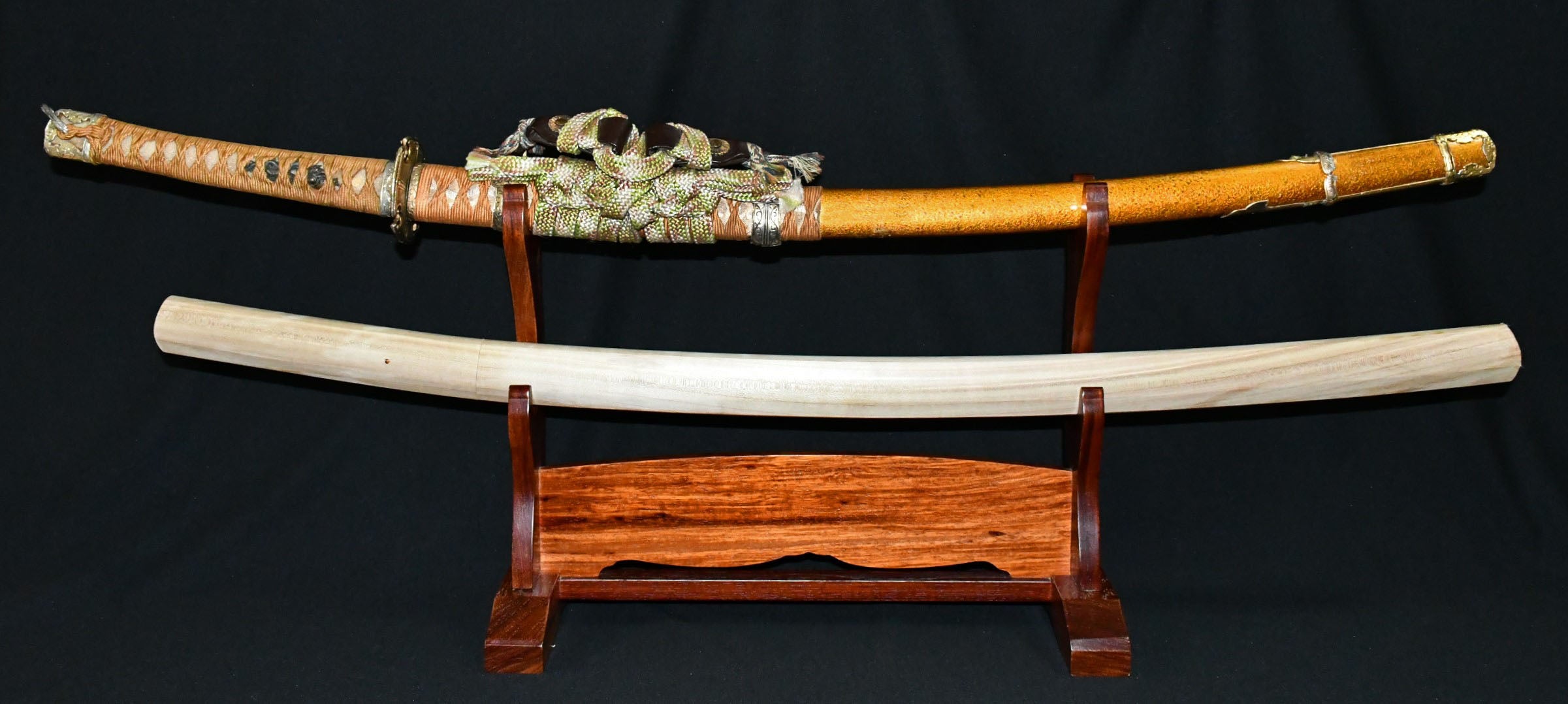
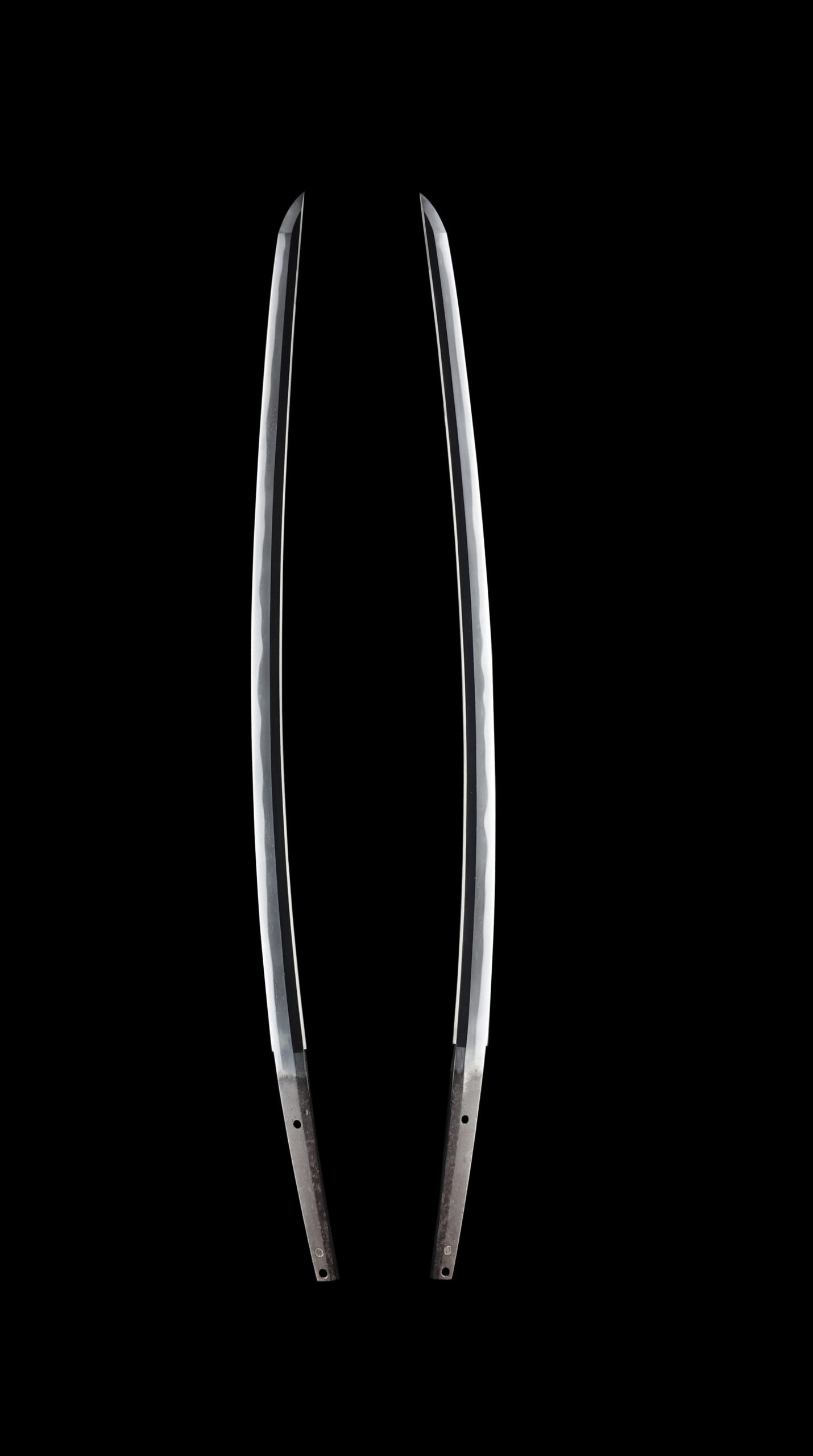
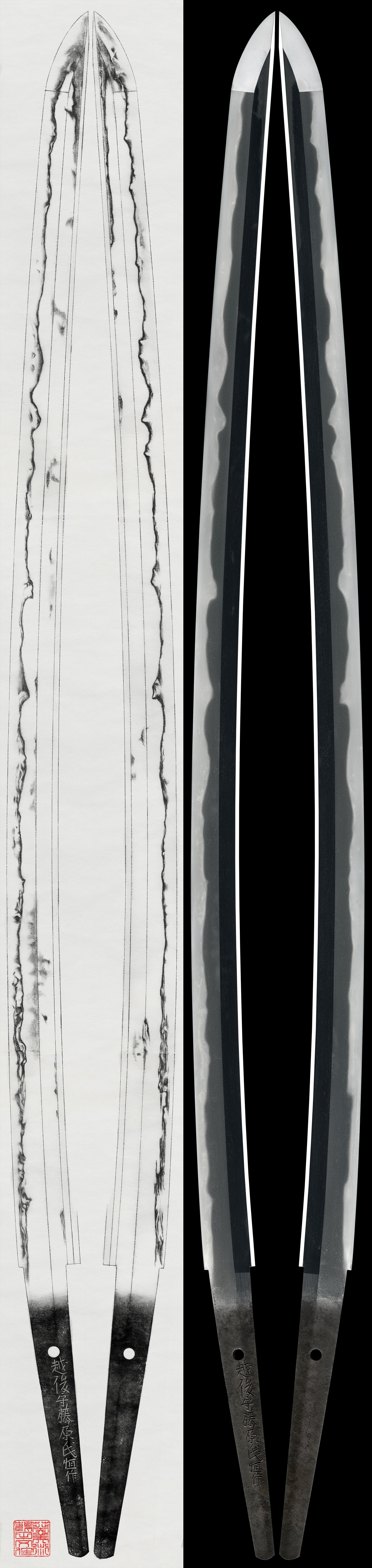
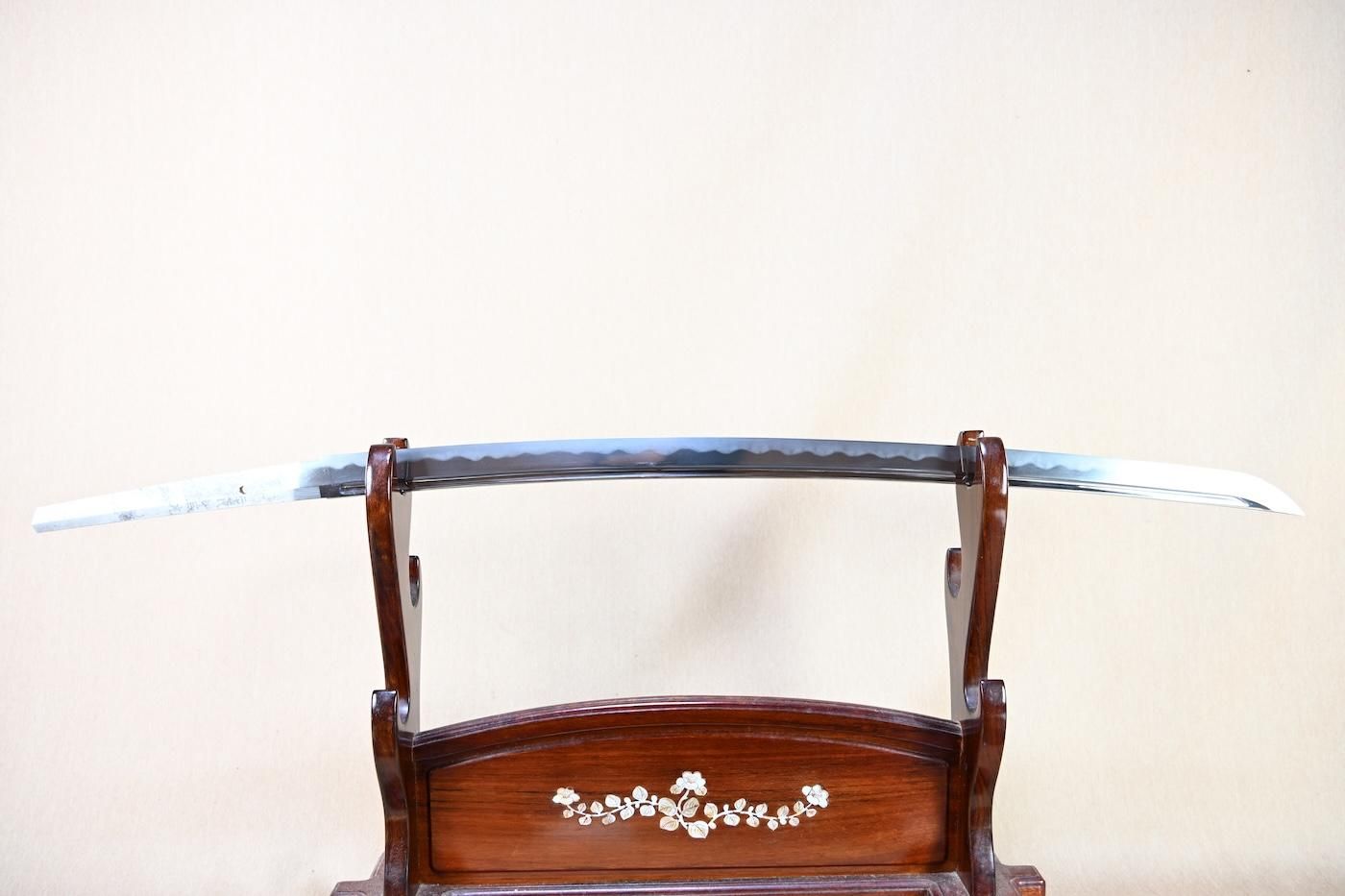
美濃伝は、伝えによれば移住者が開いた。大和手掻系の出と伝えられる兼氏が志津に住し、新しい相州風で鍛えて、後世の鑑定家にその最上作は誰よりも正宗に近いと言わしめている。
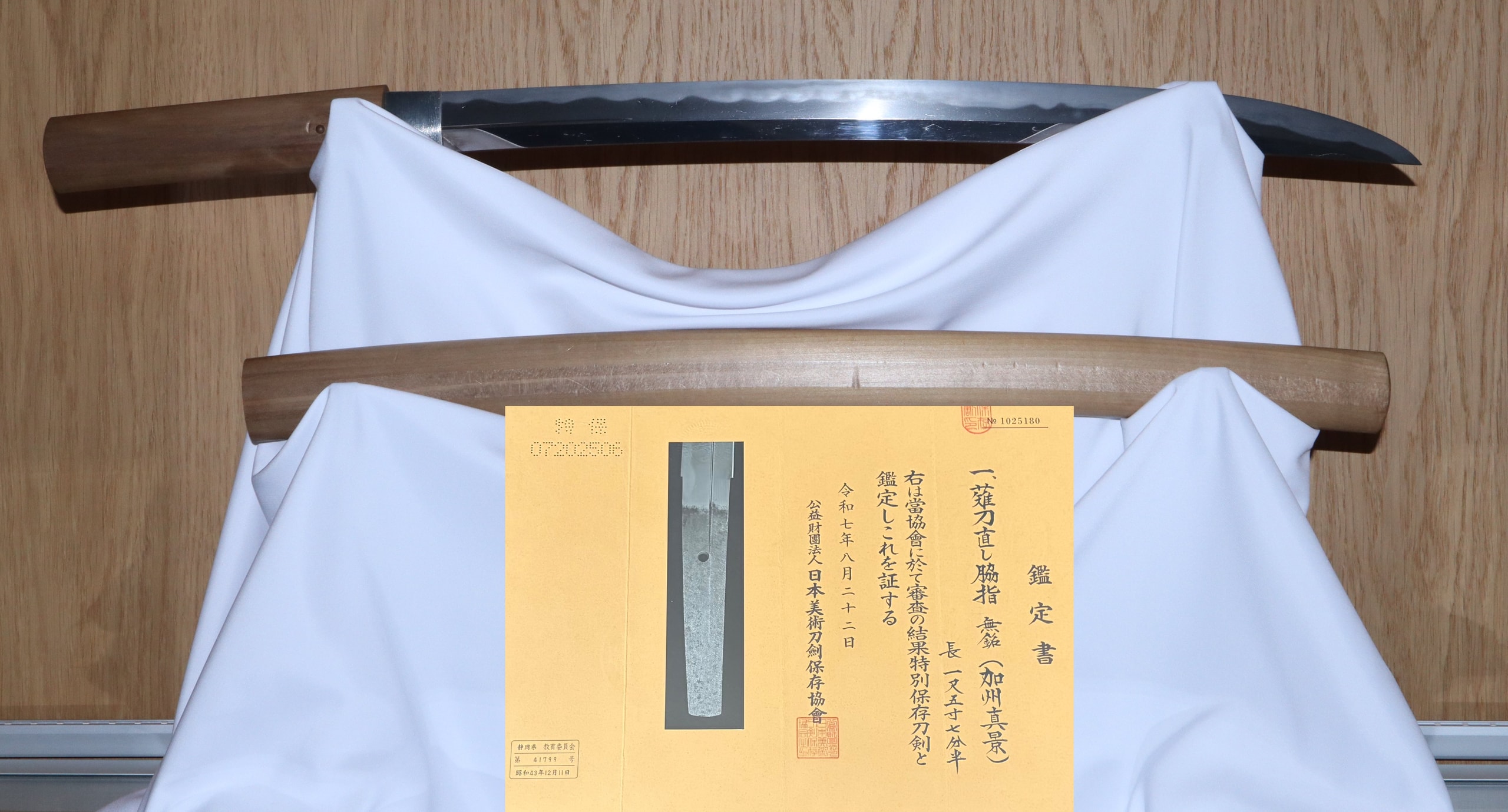
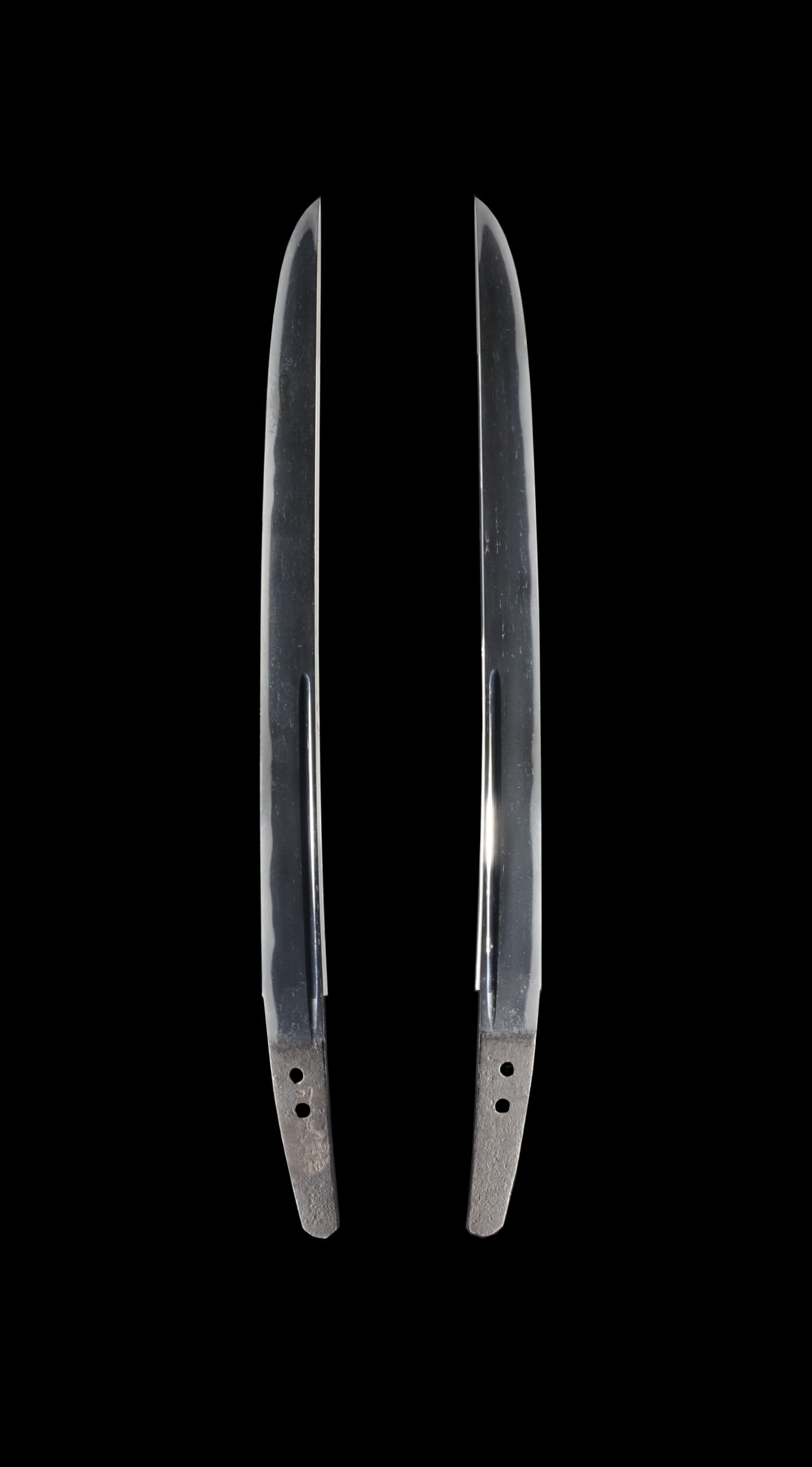
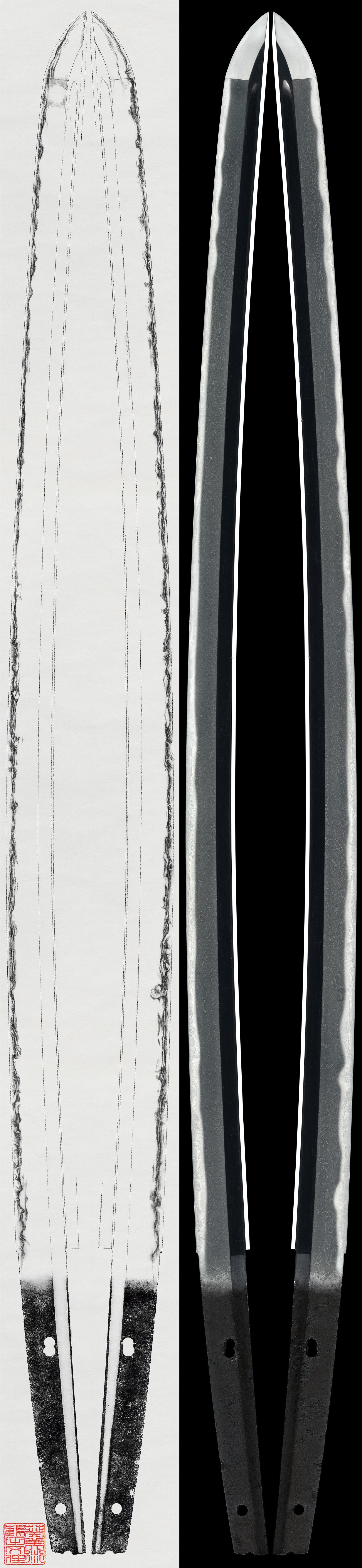
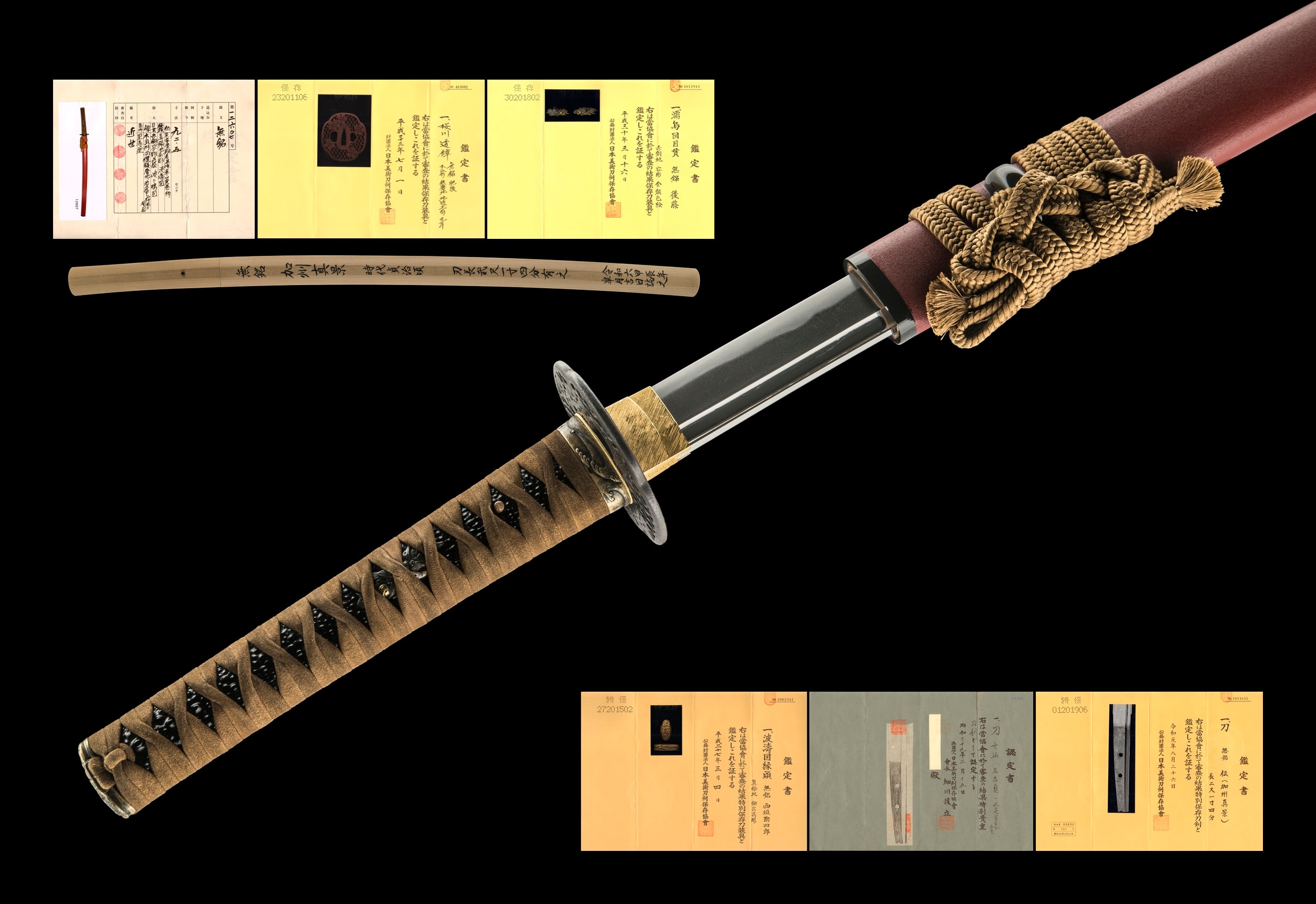
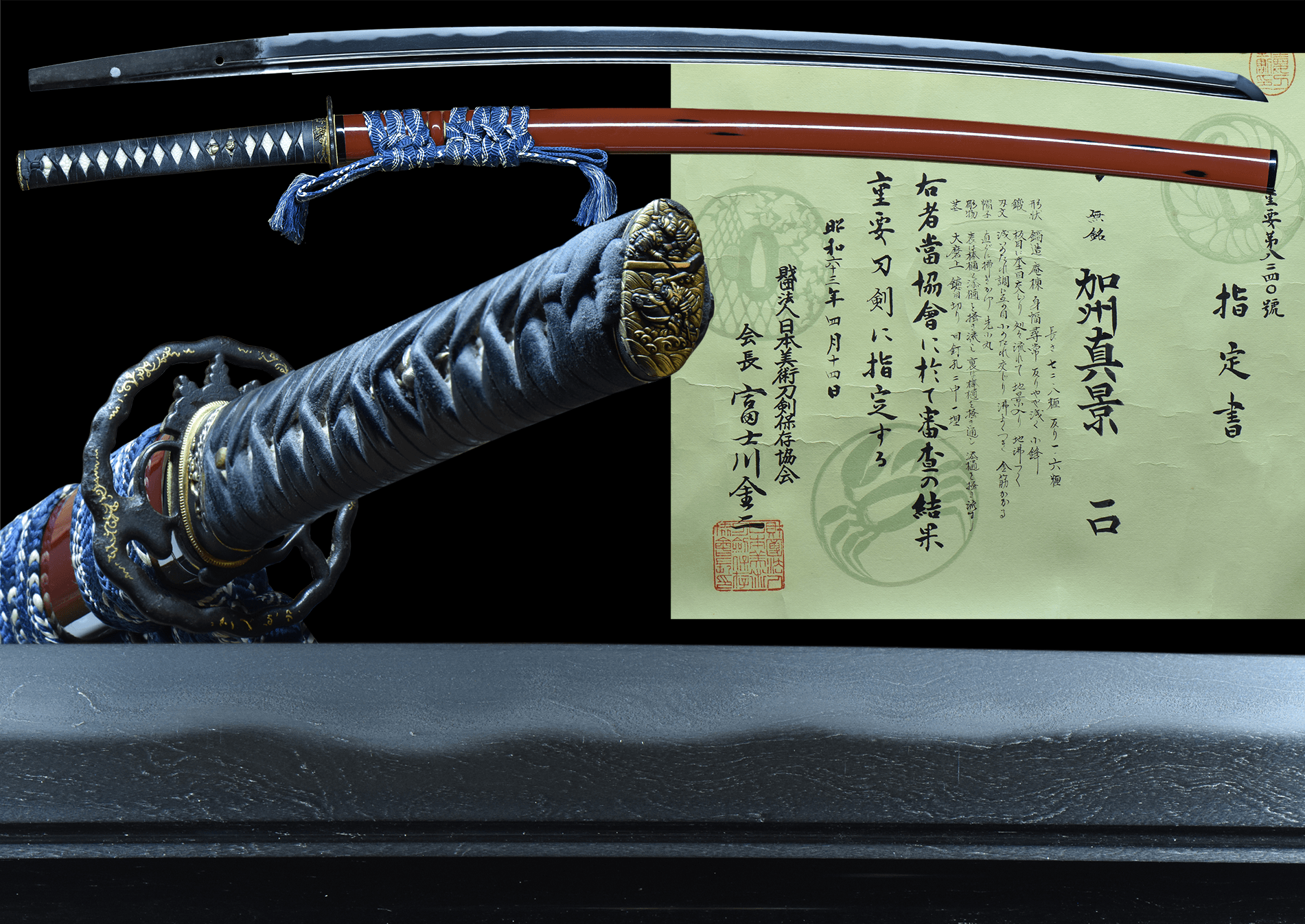
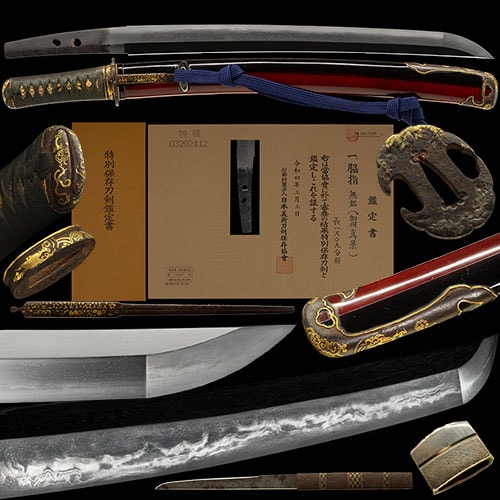
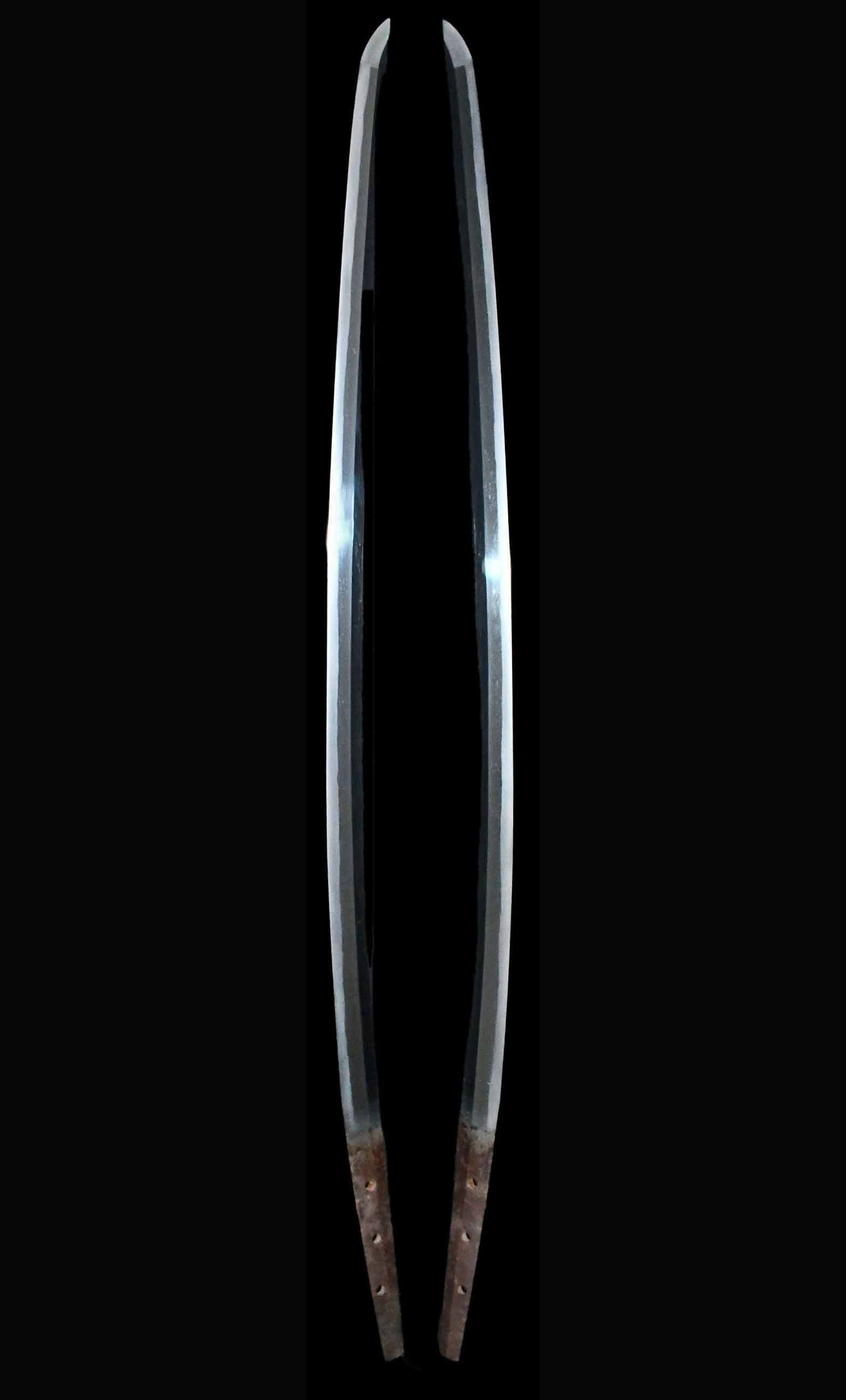
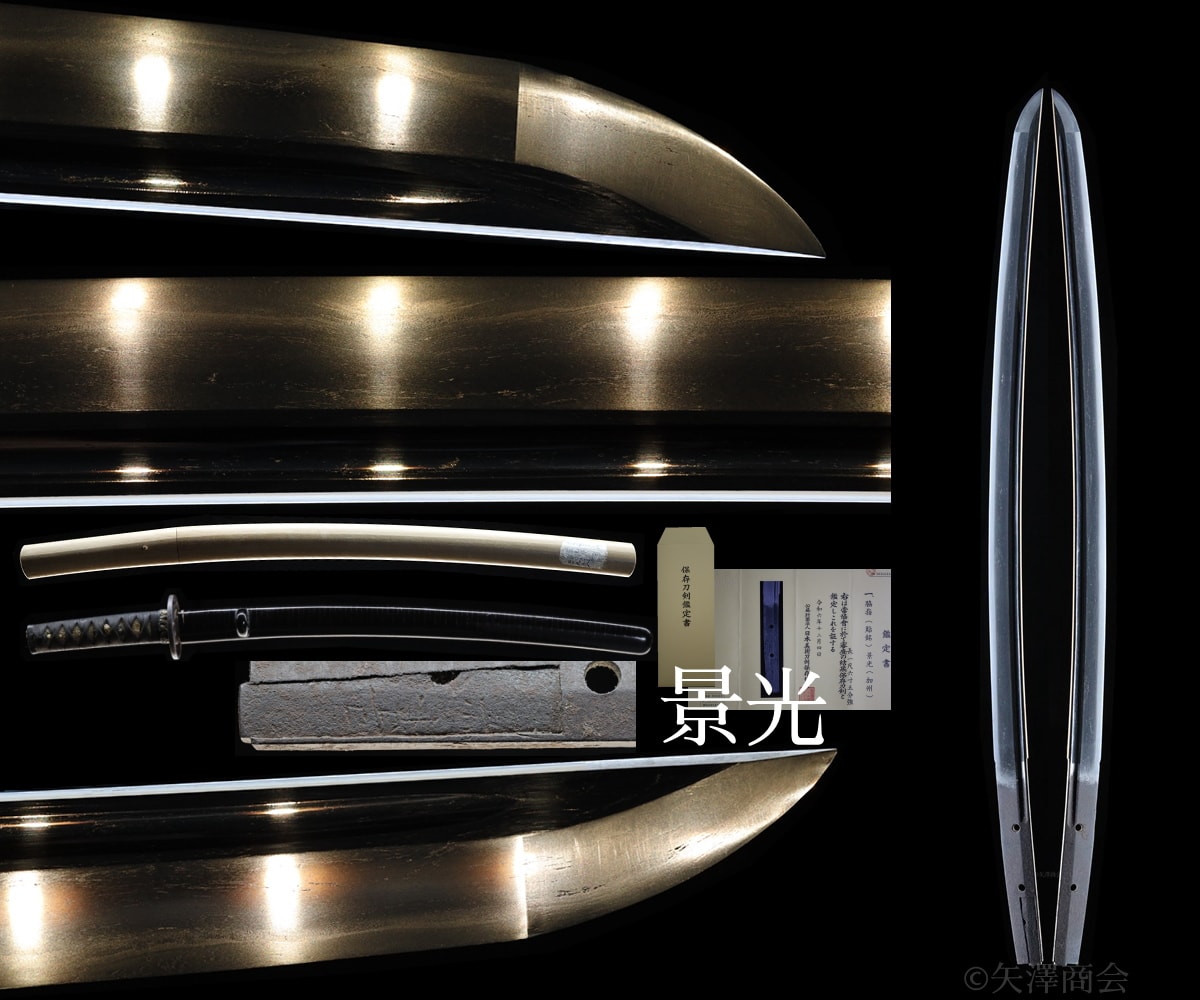
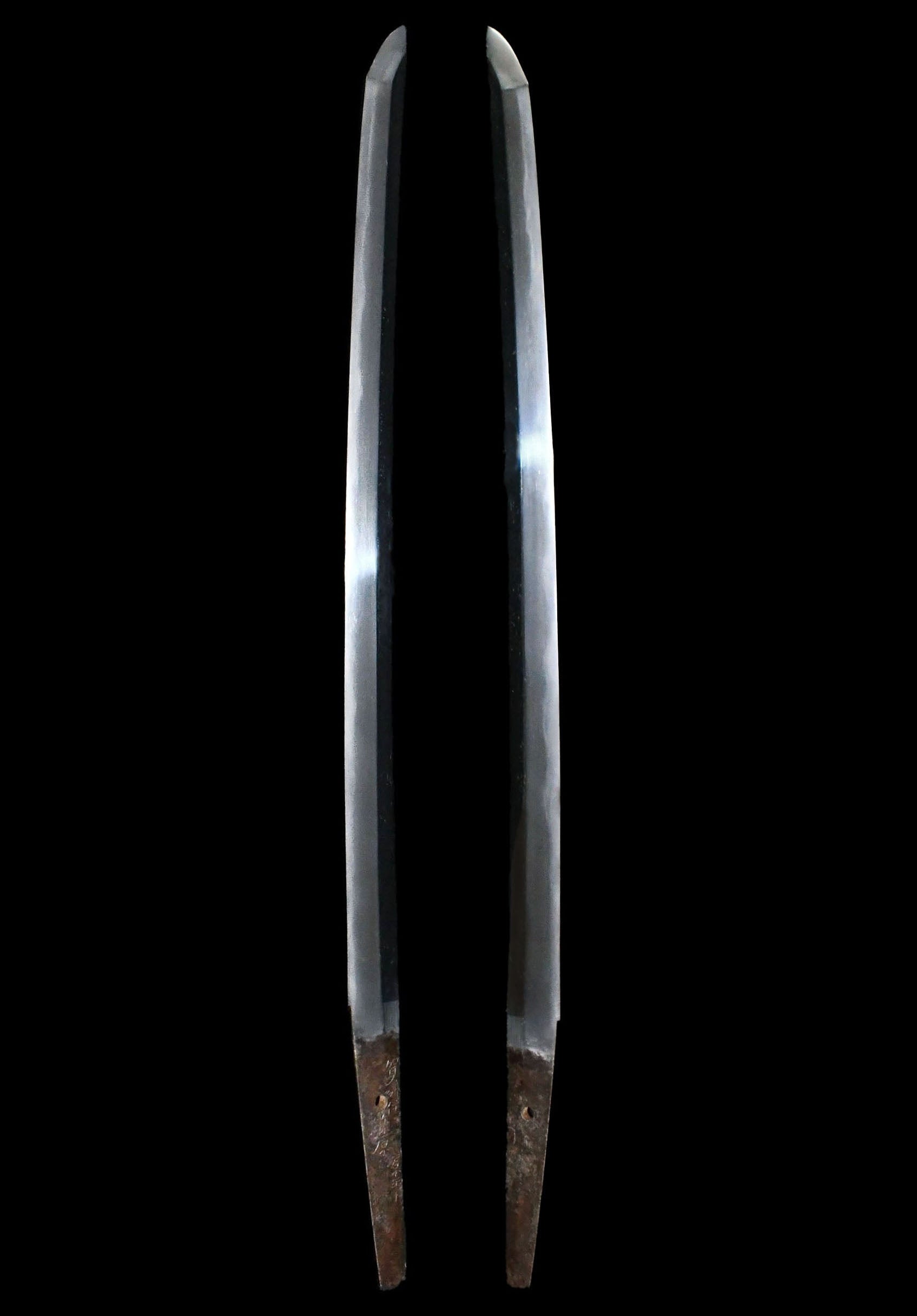
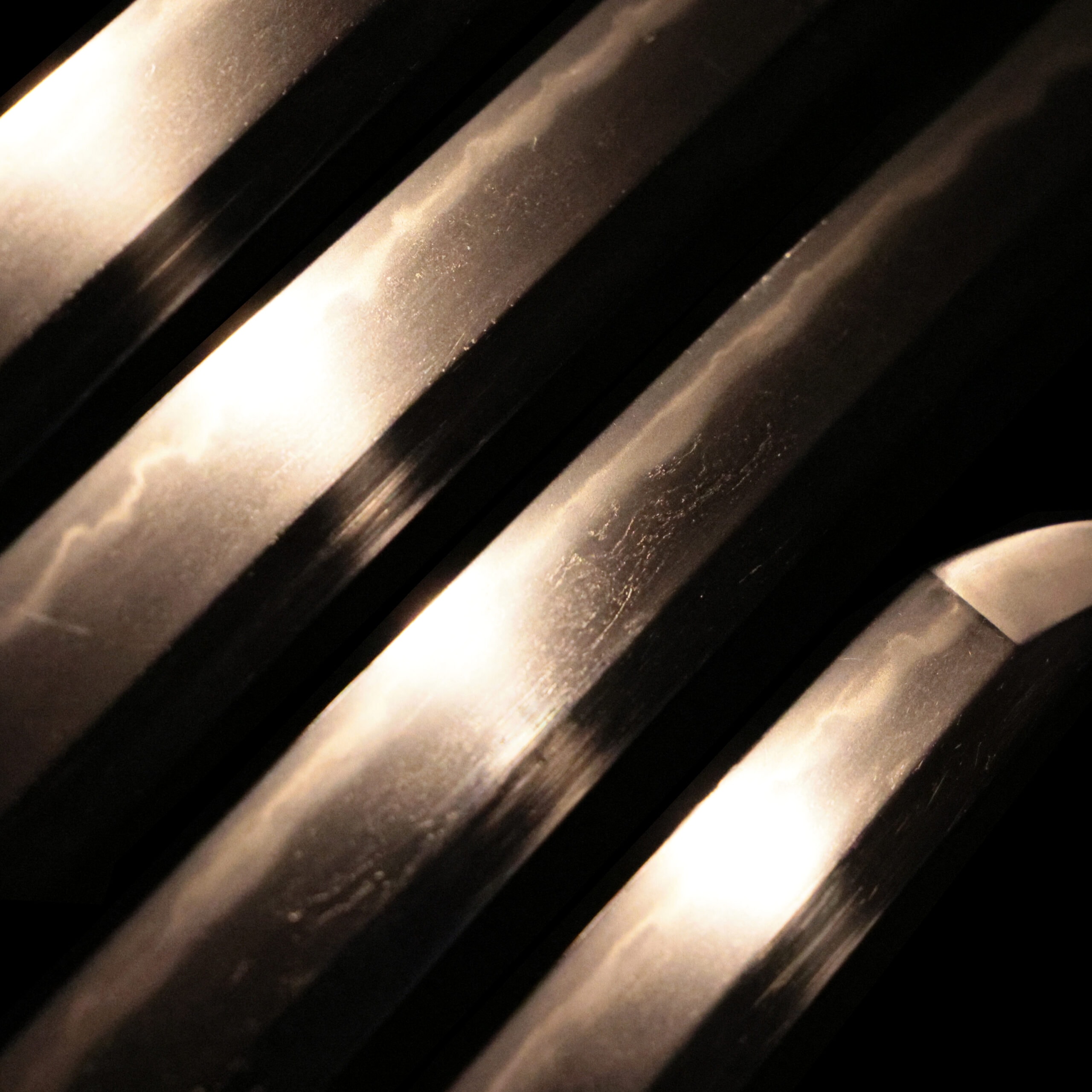
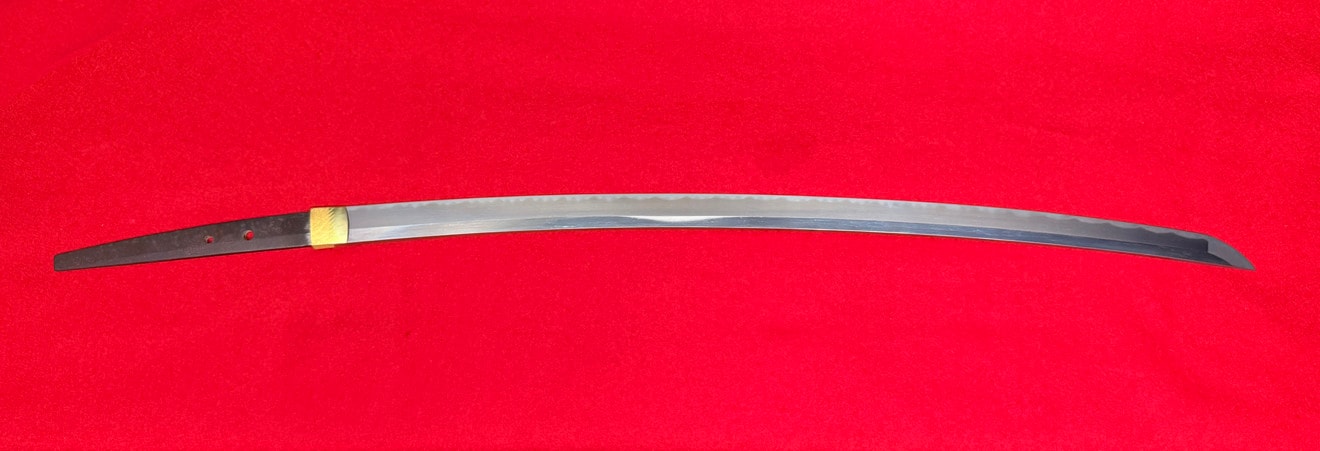
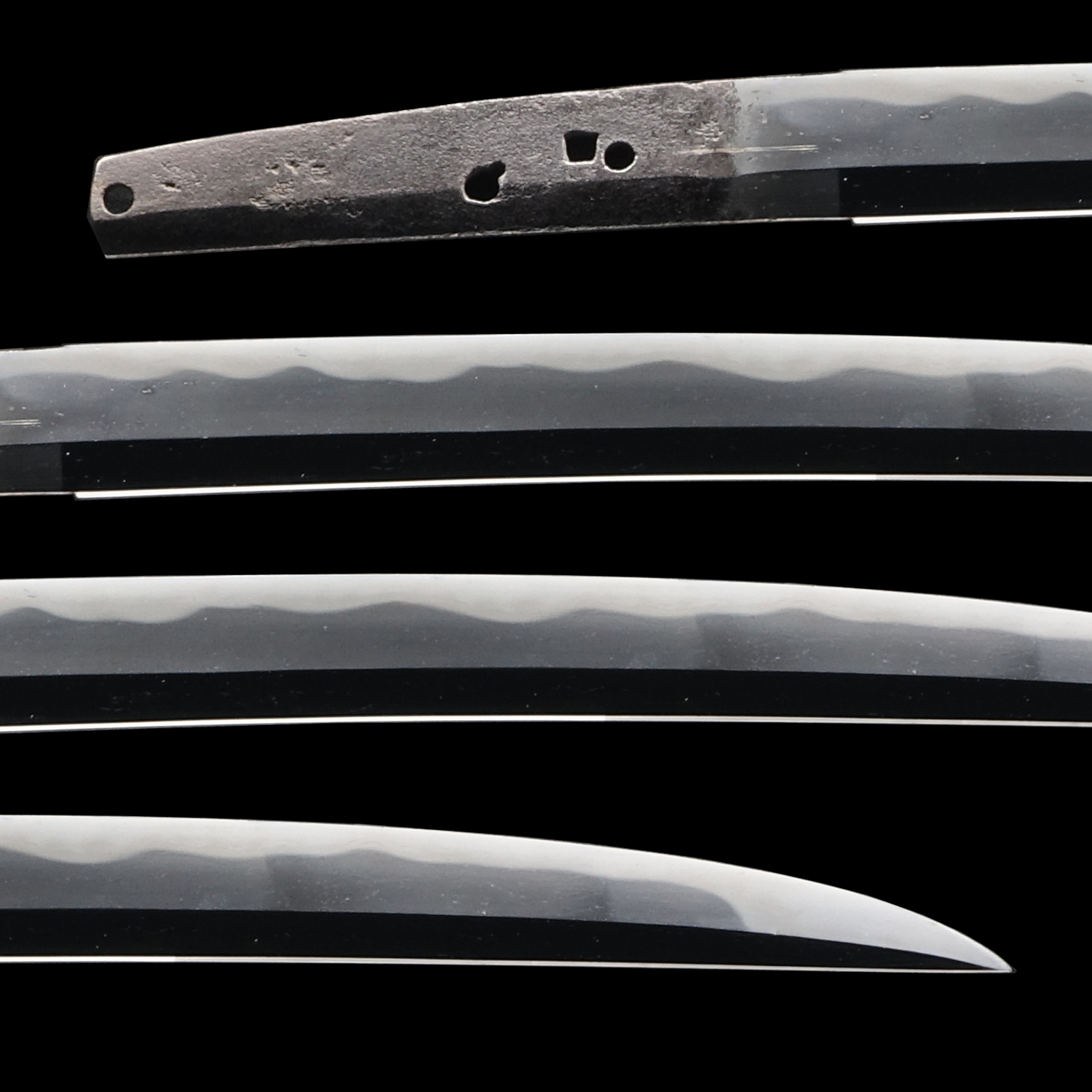
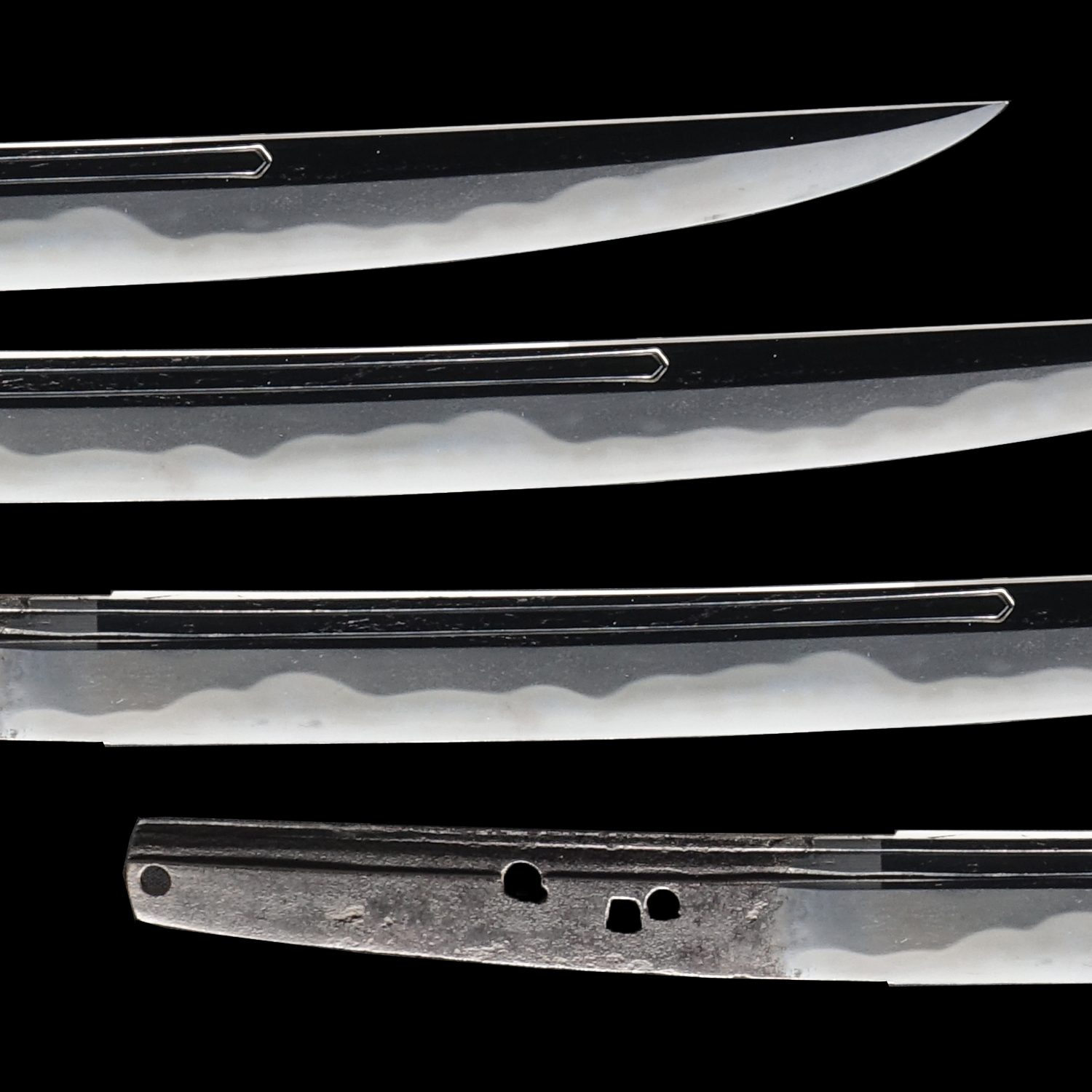
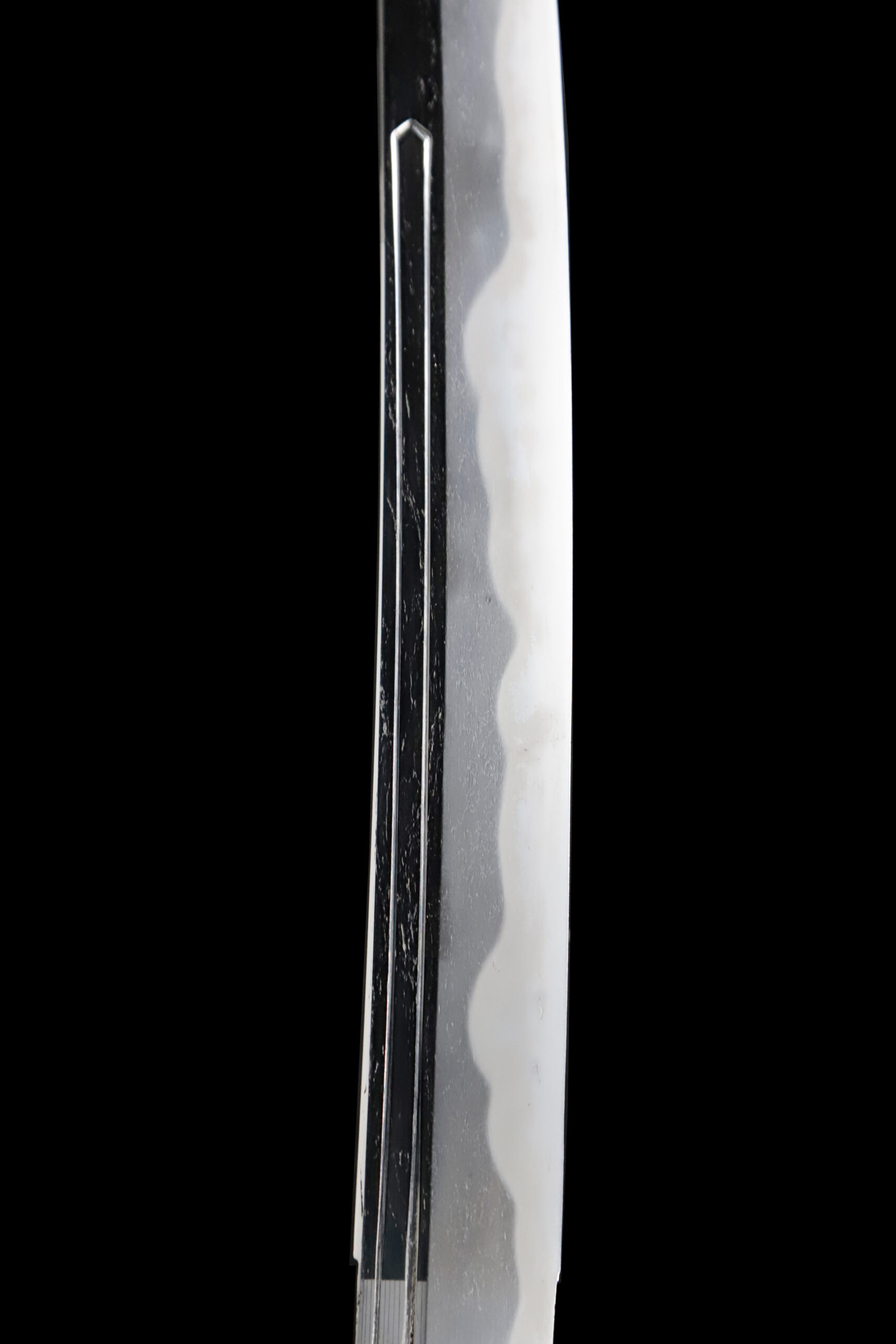
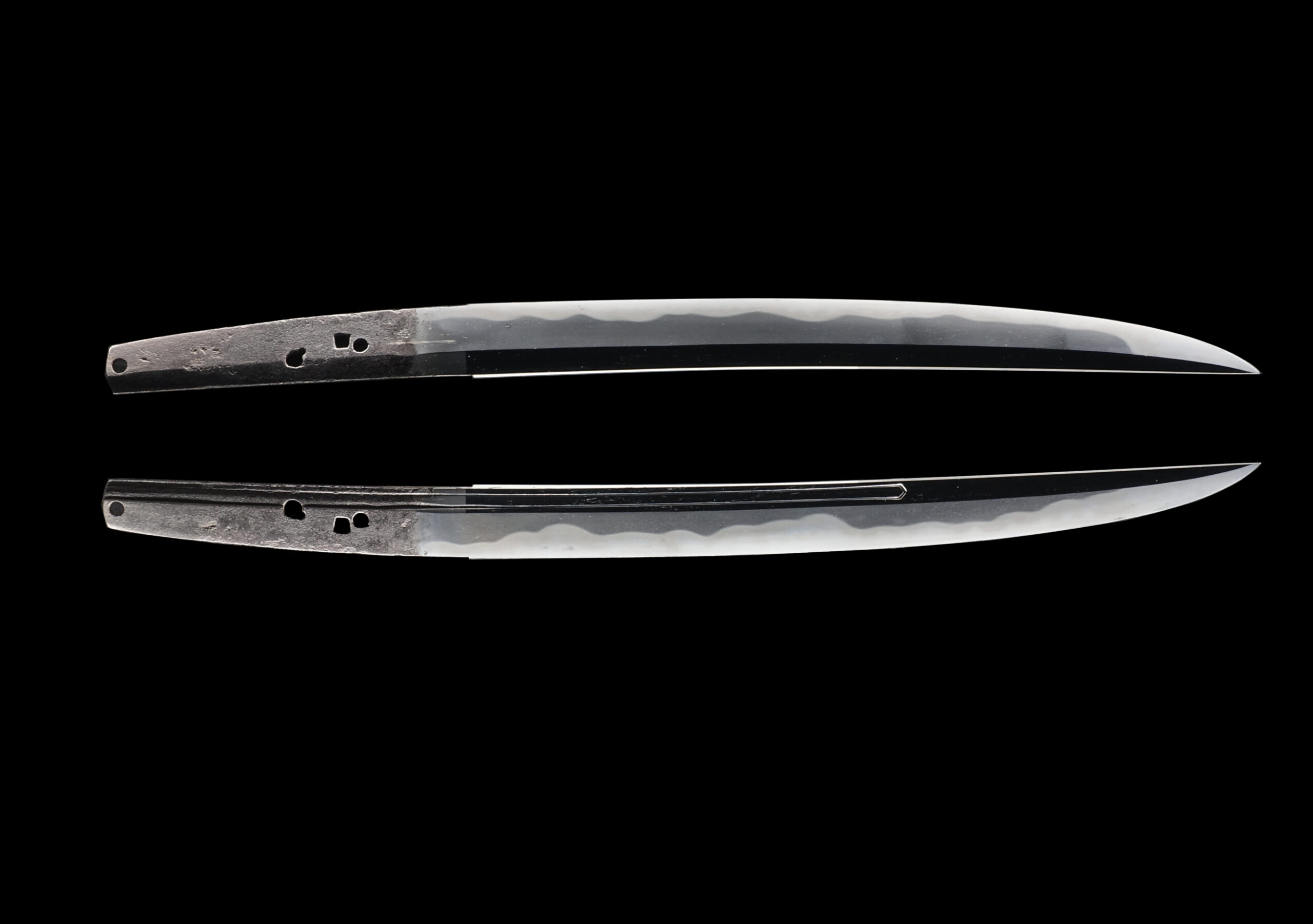
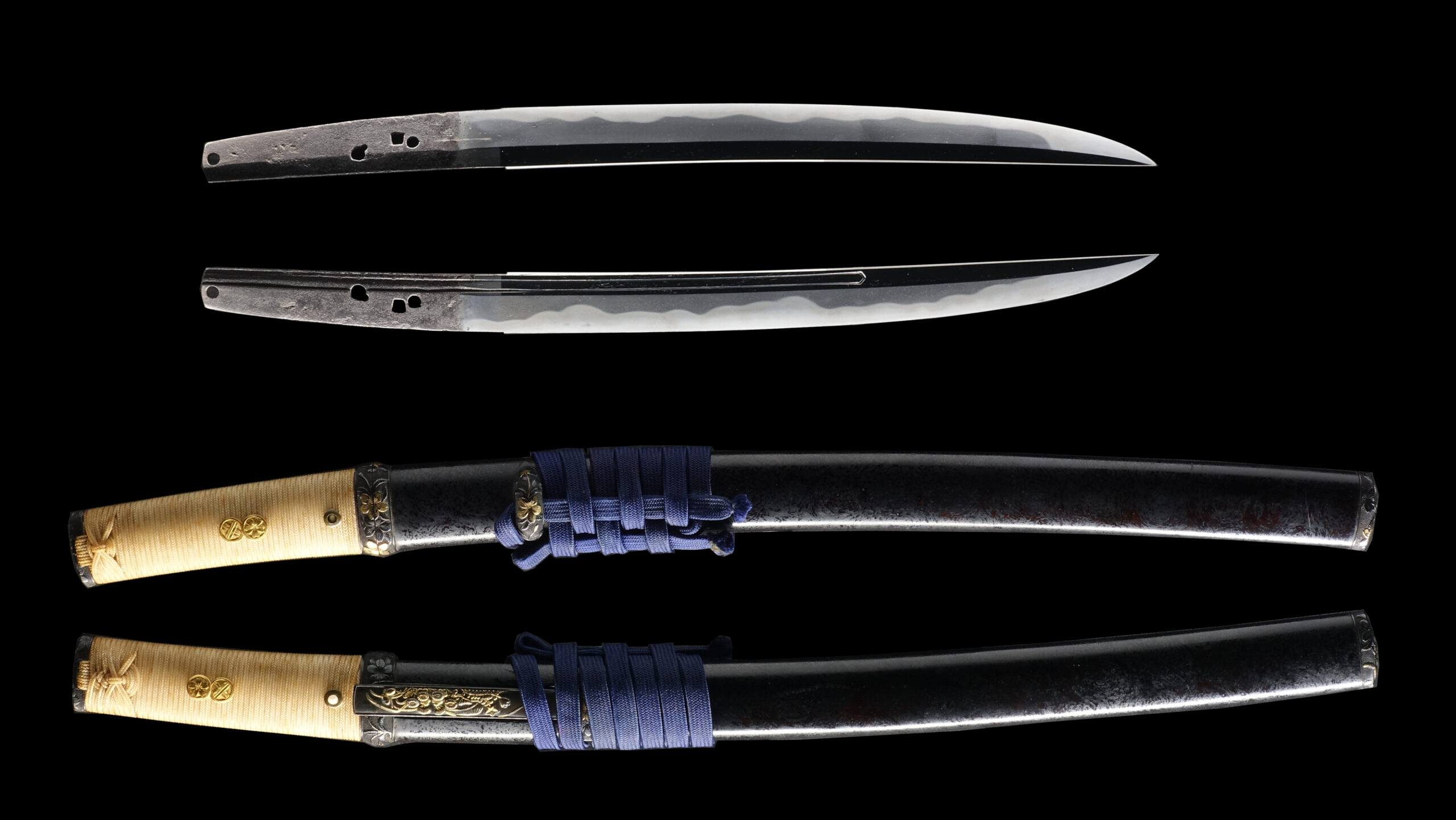
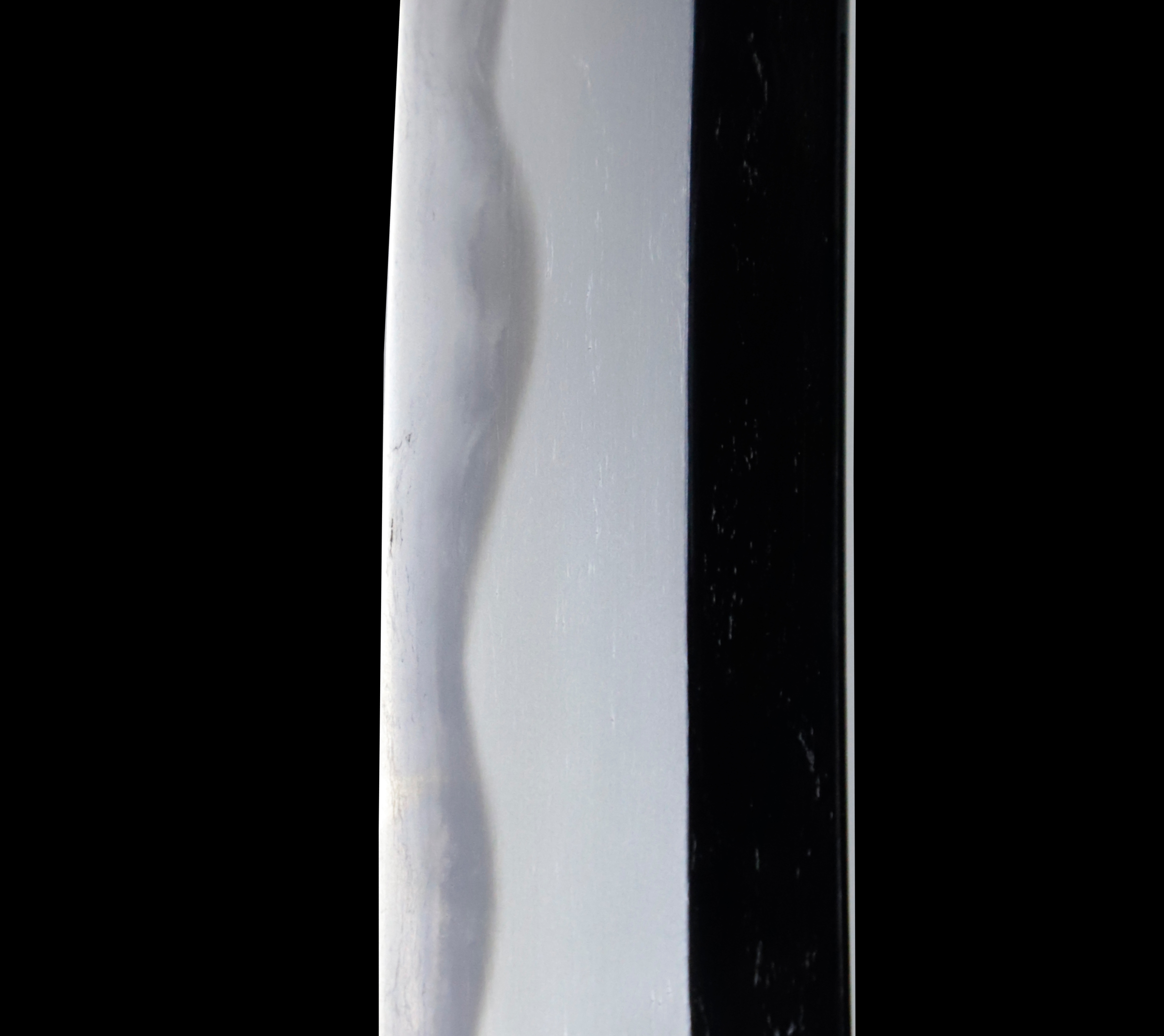
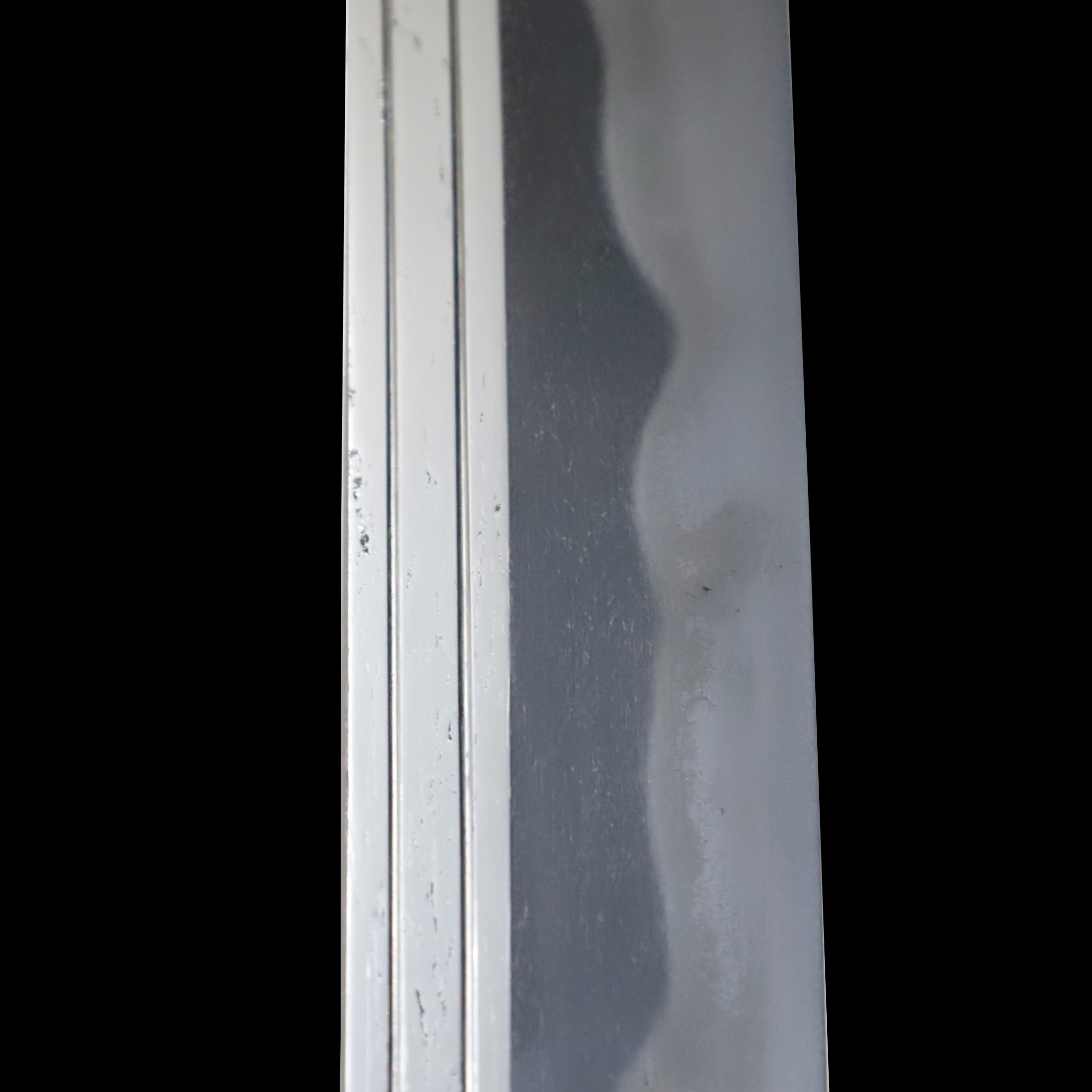
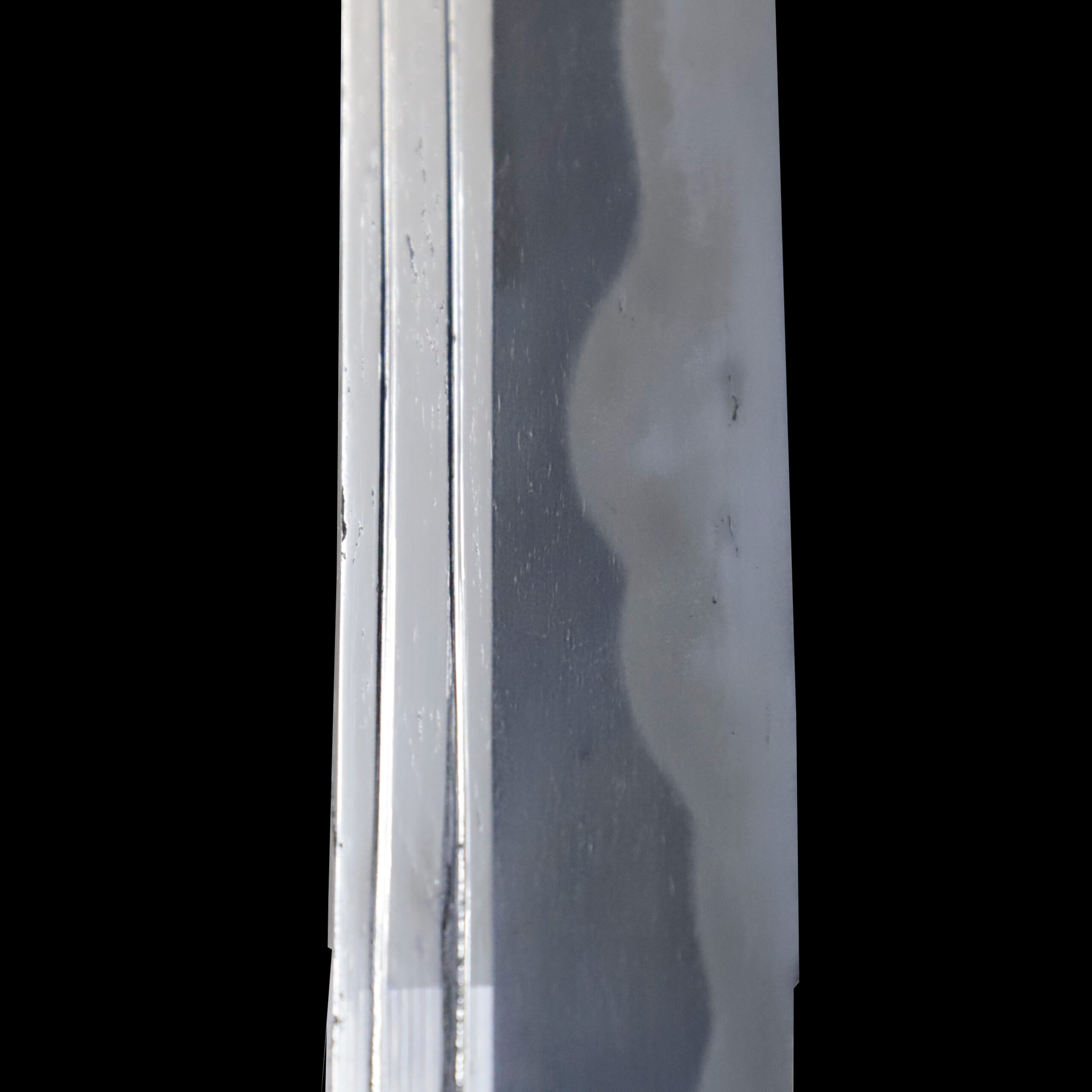
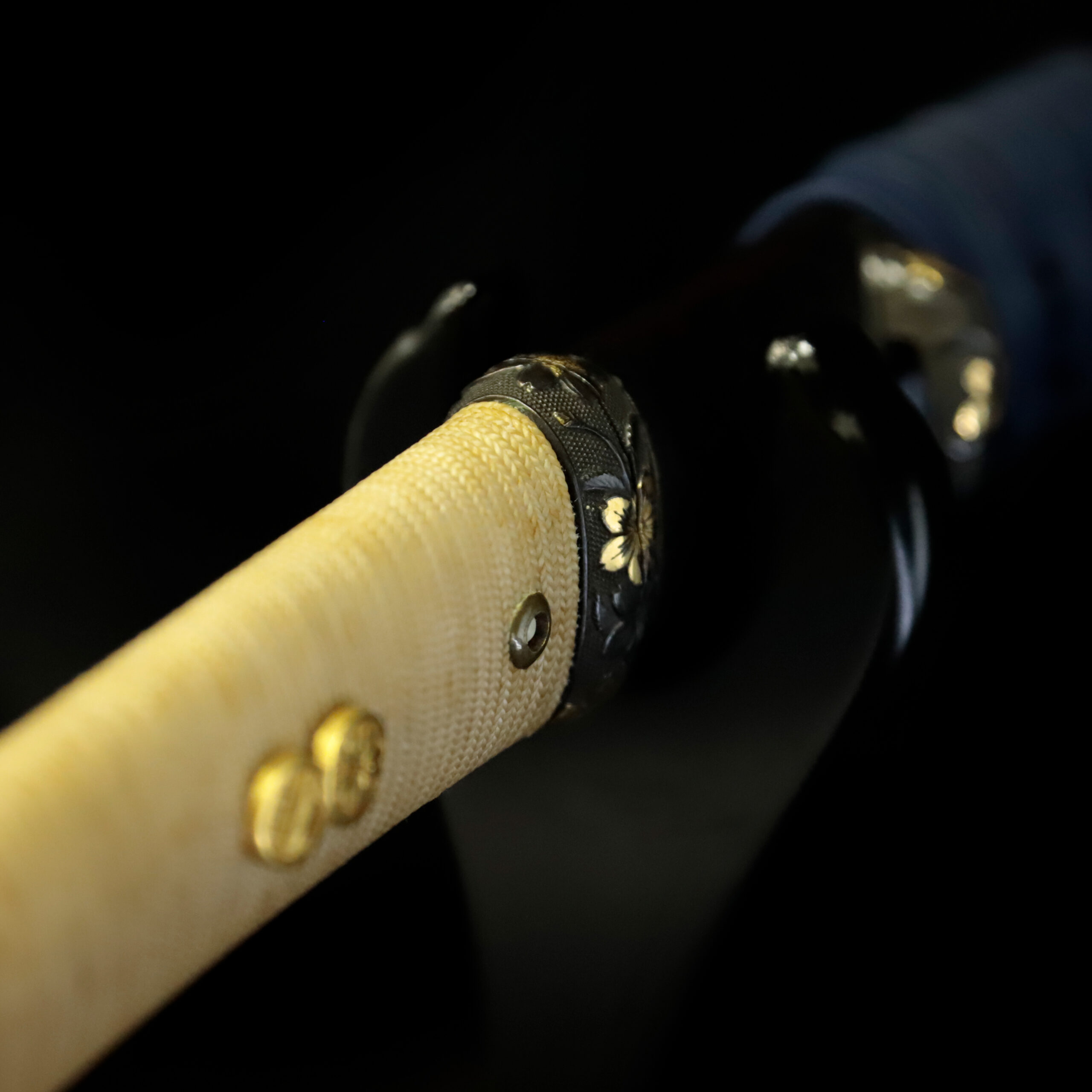
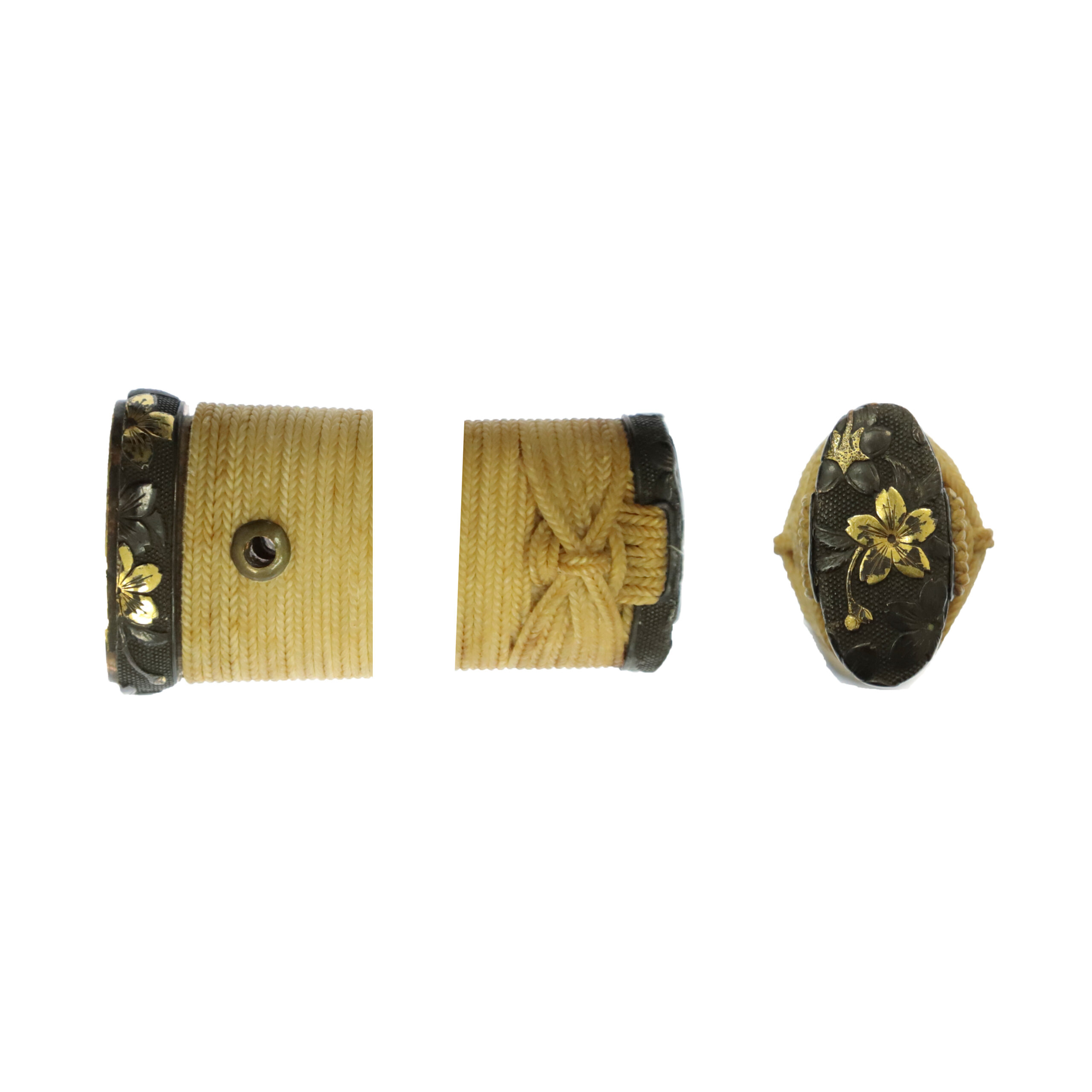
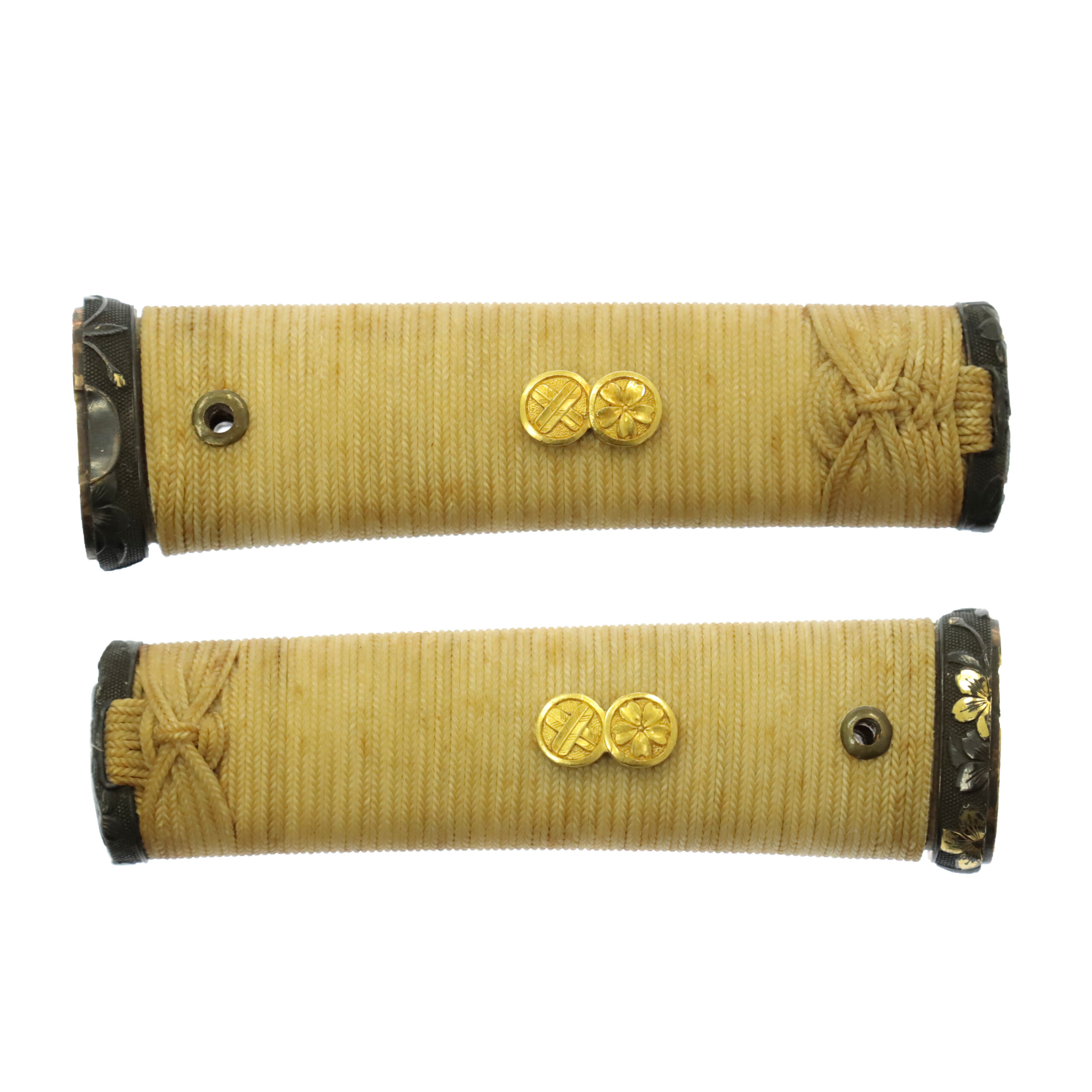
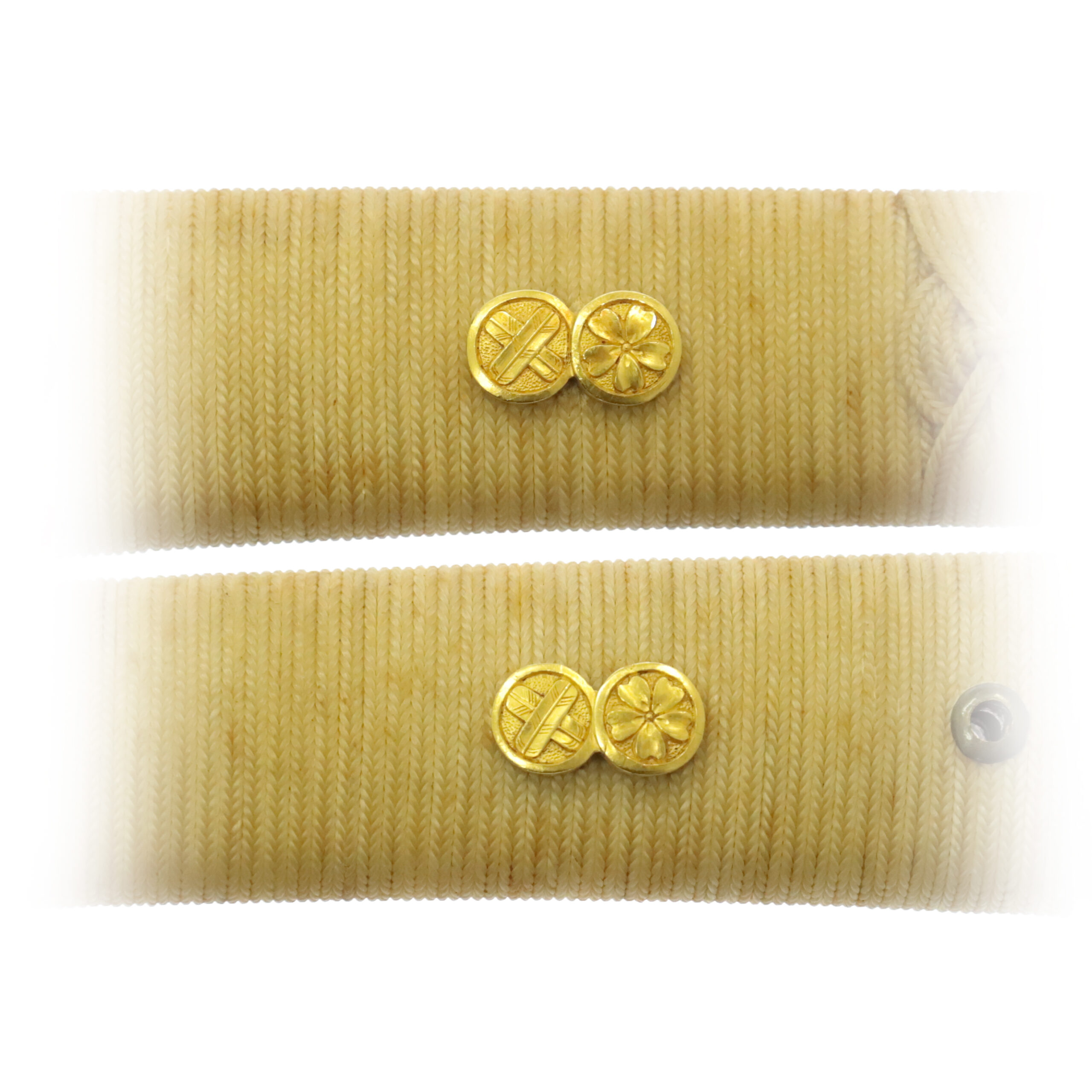
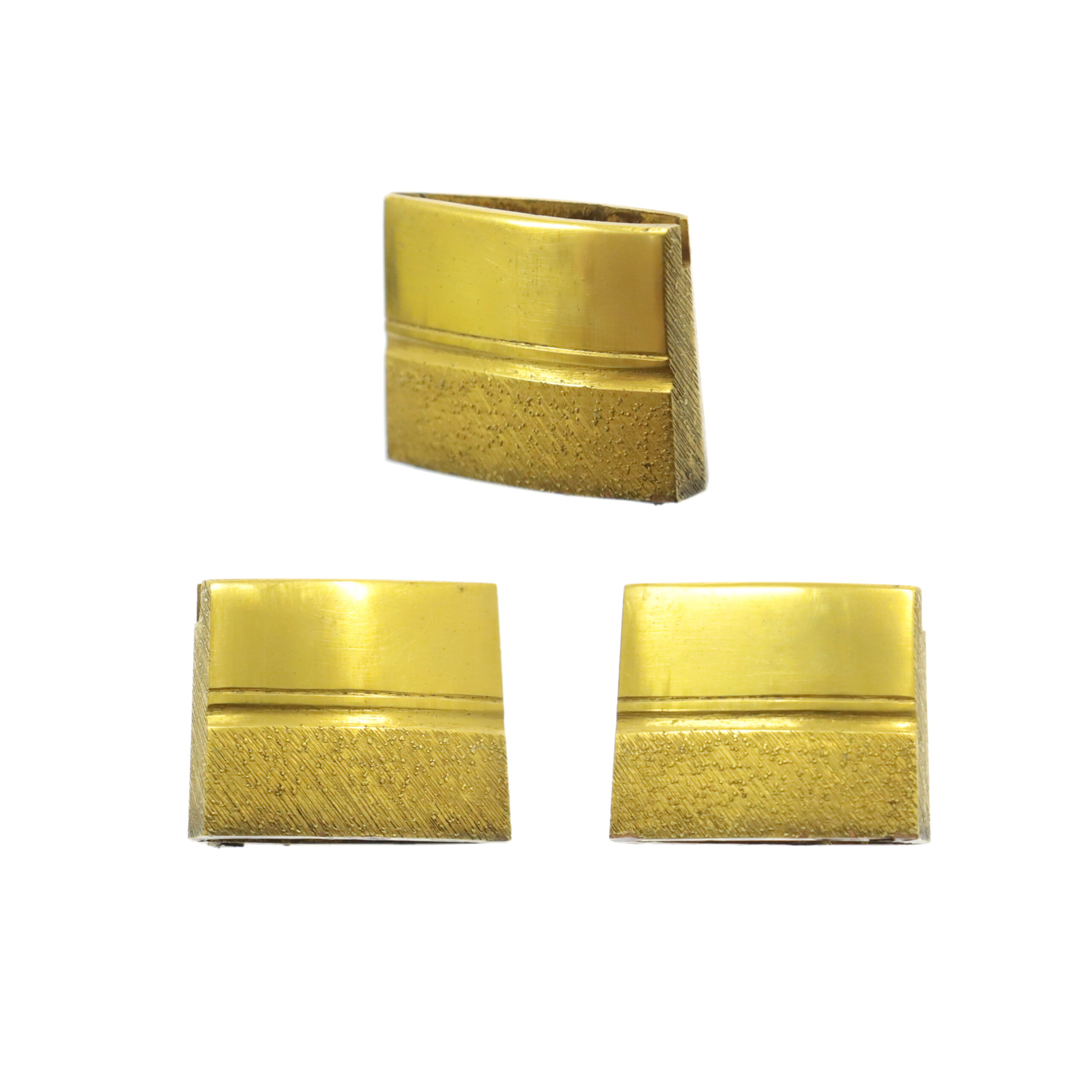
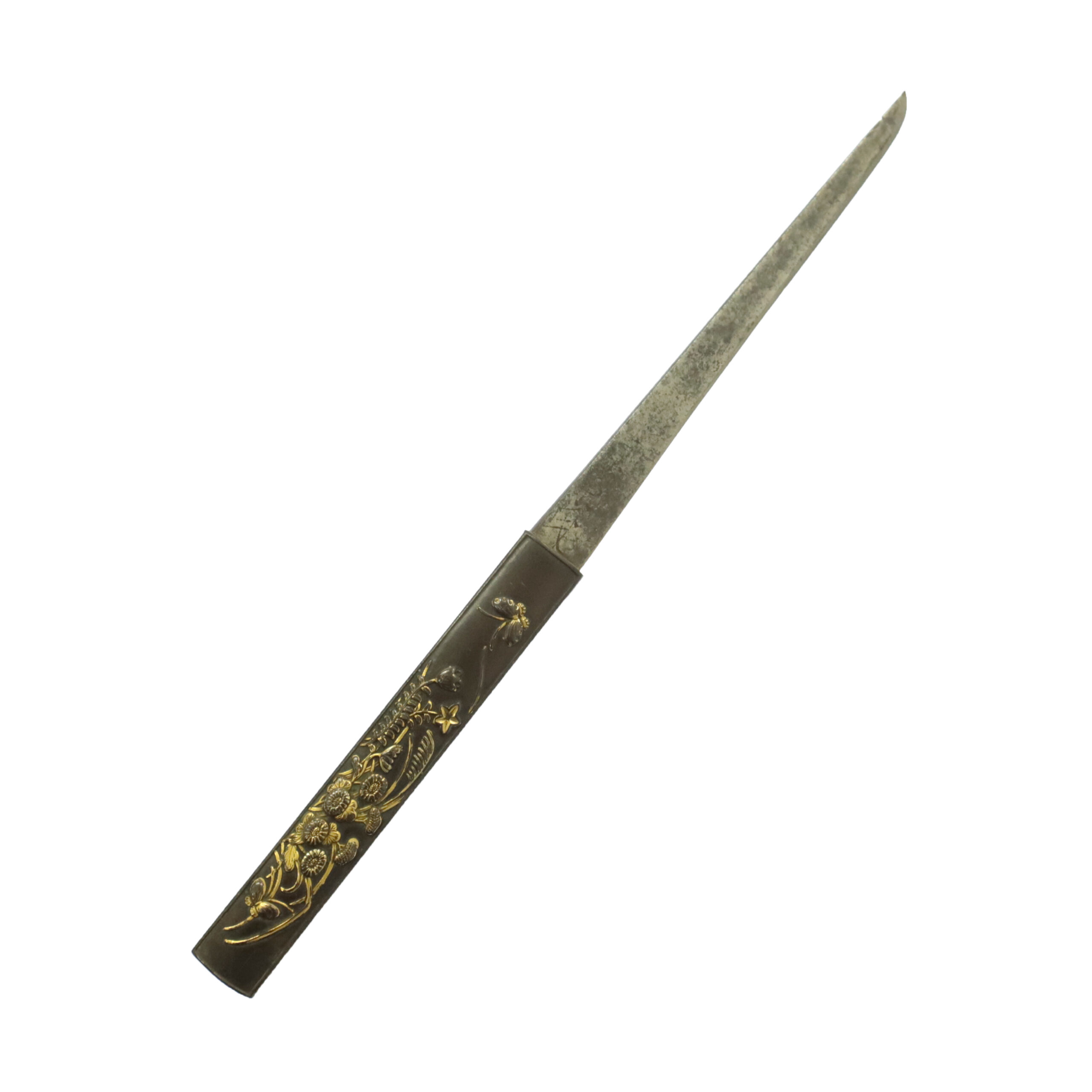
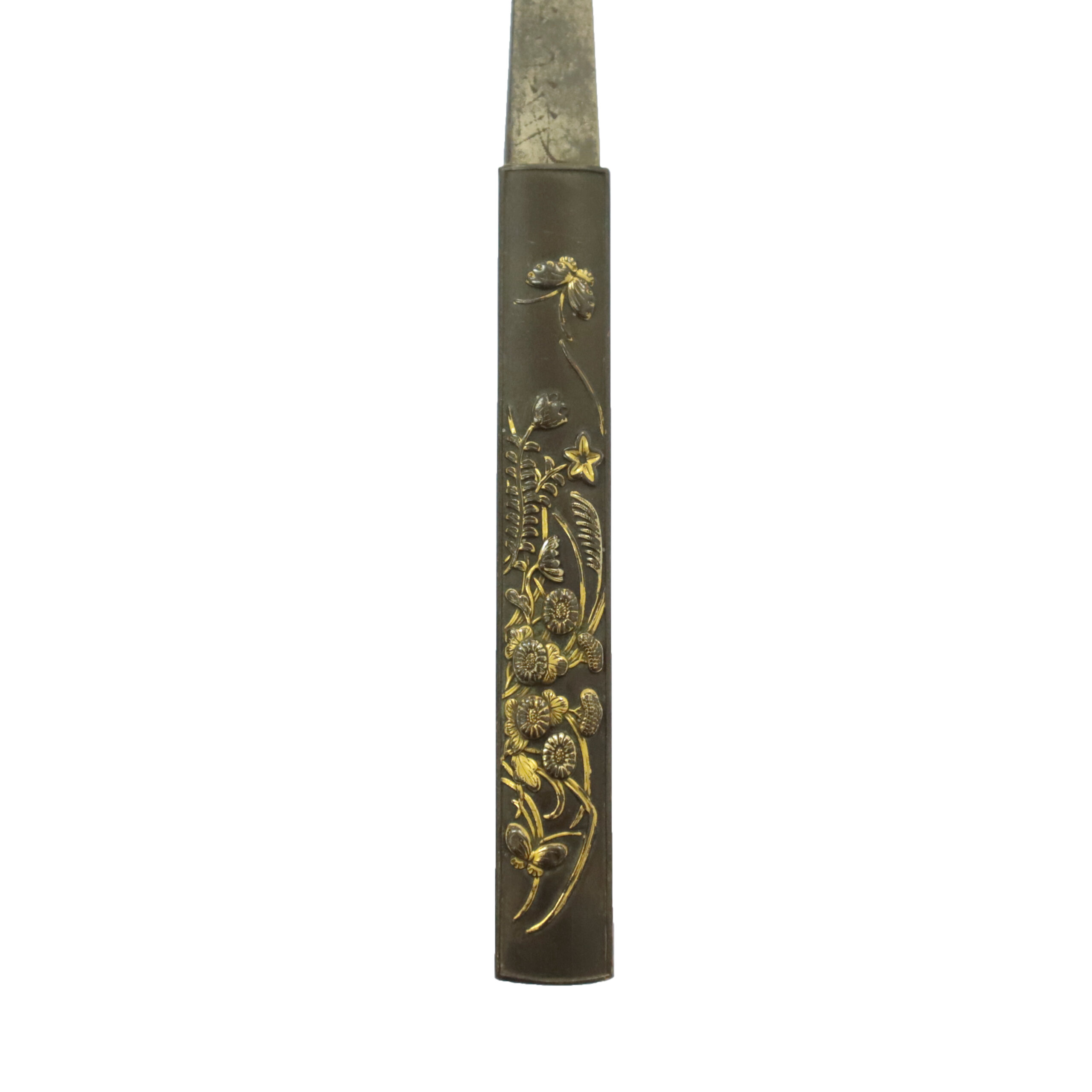
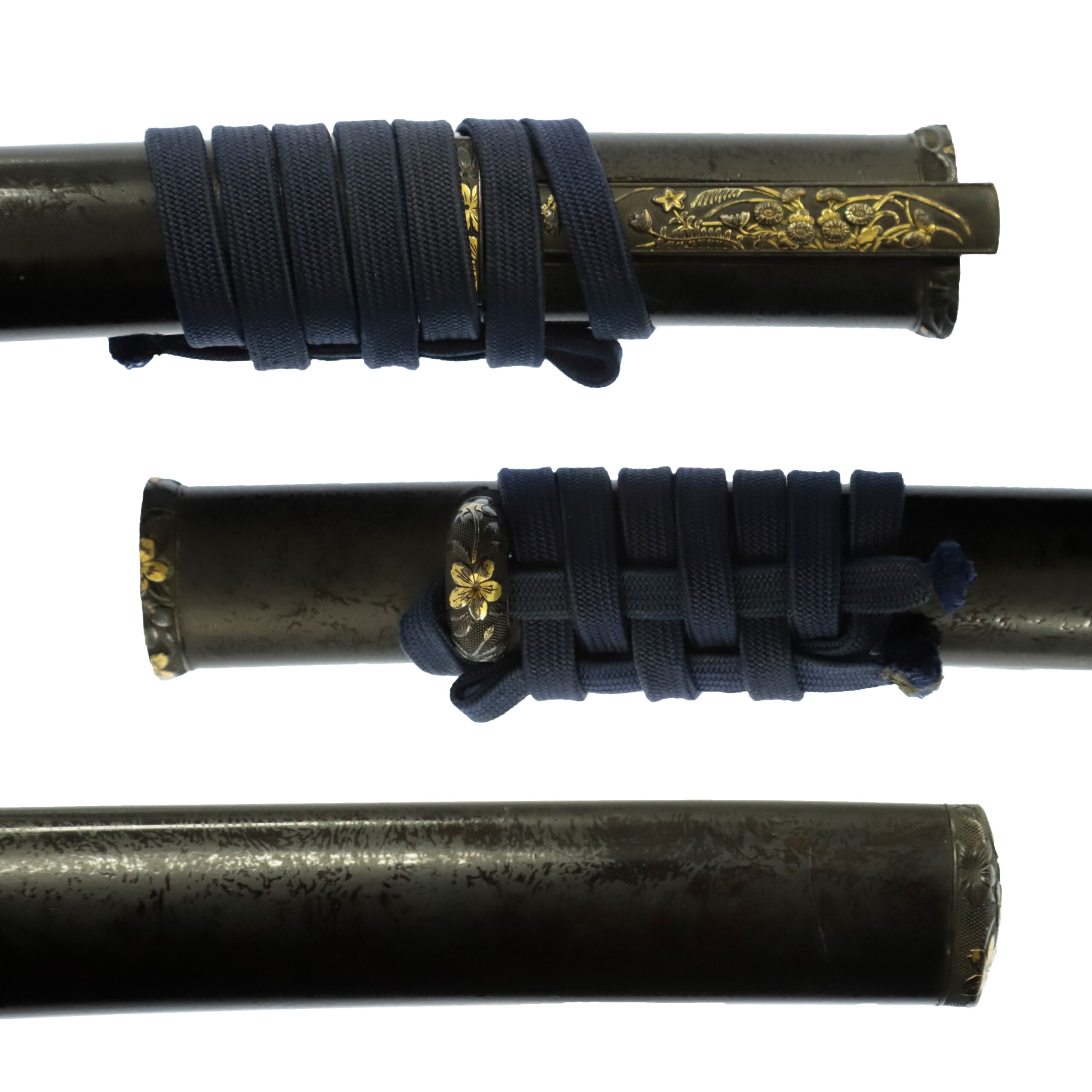
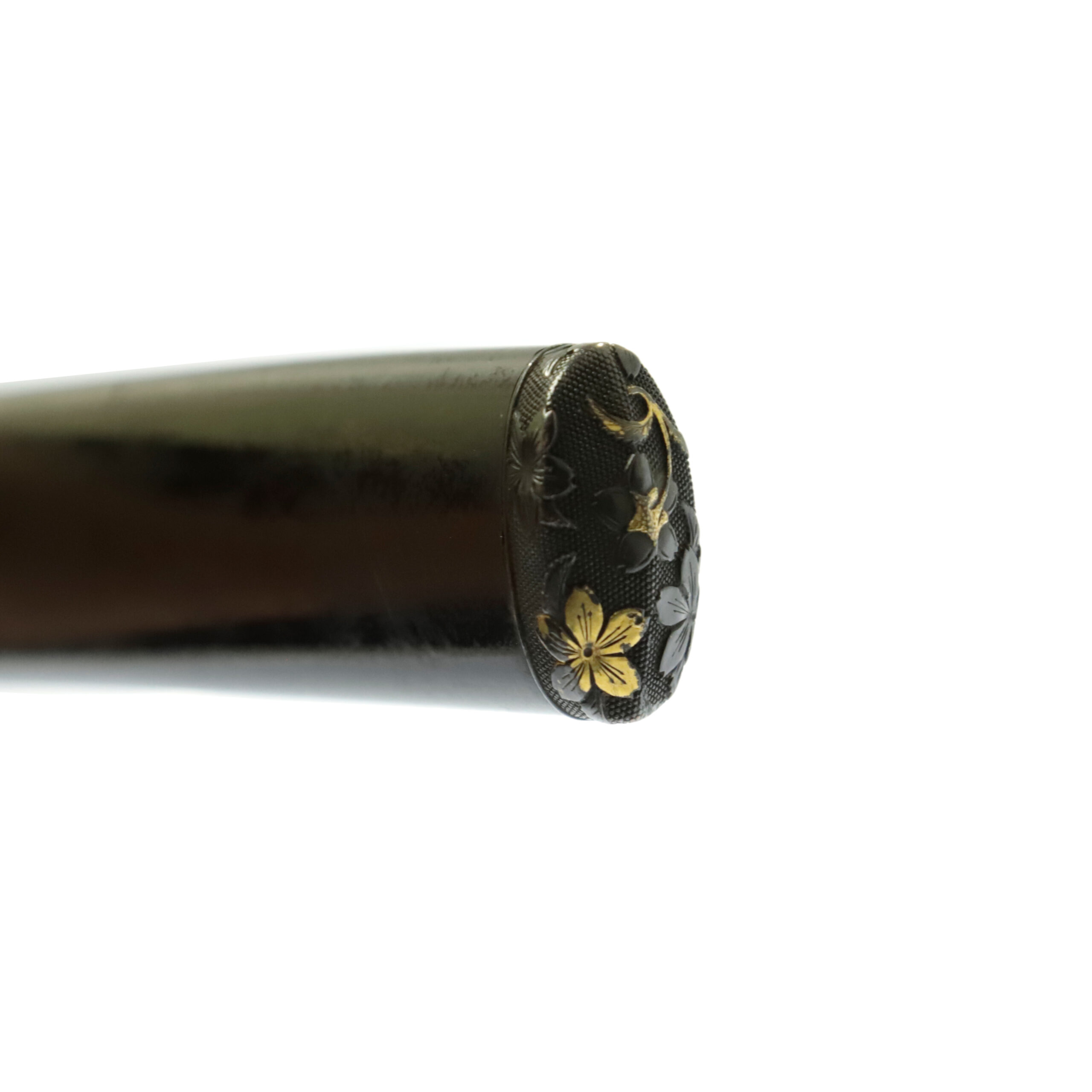
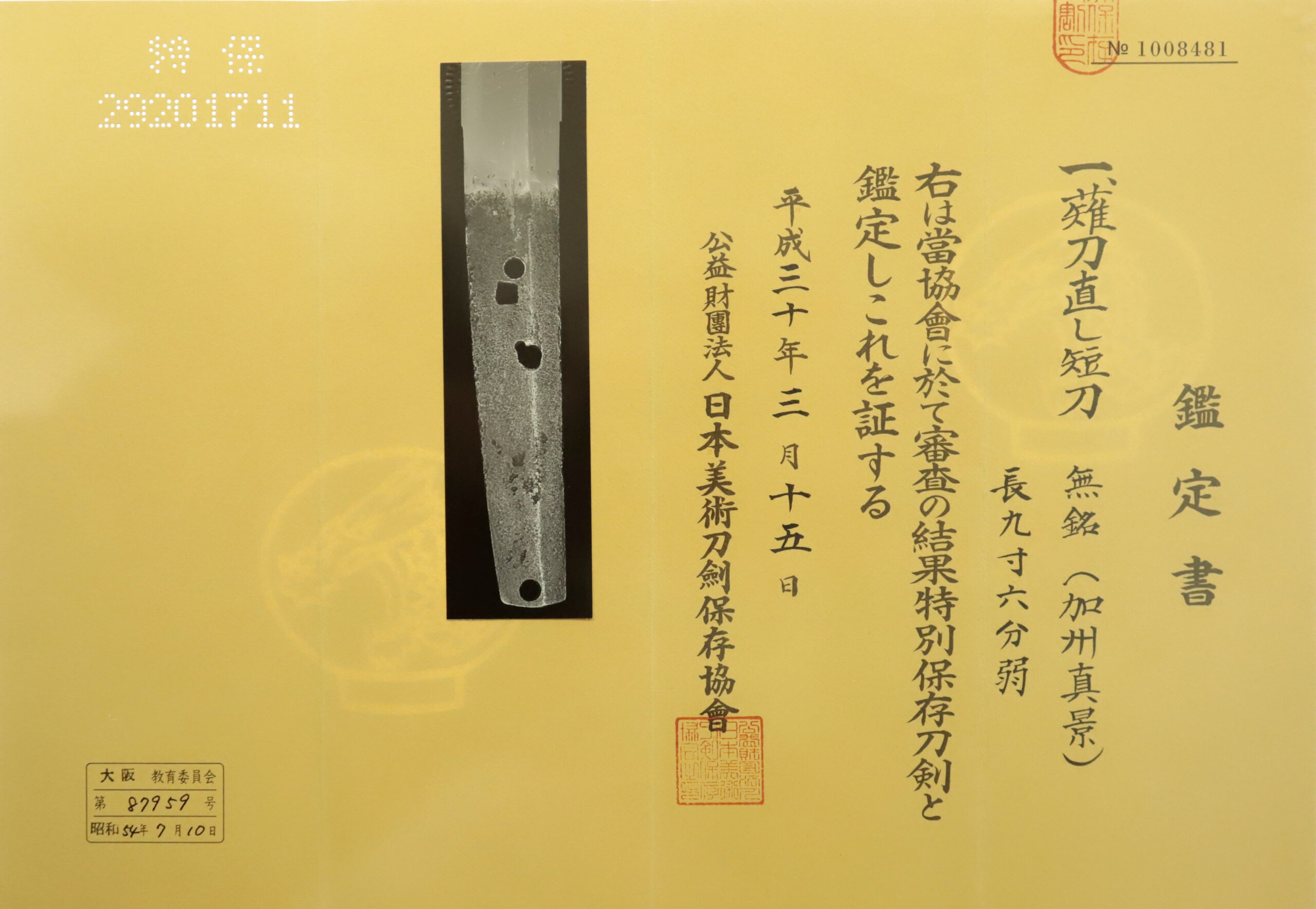
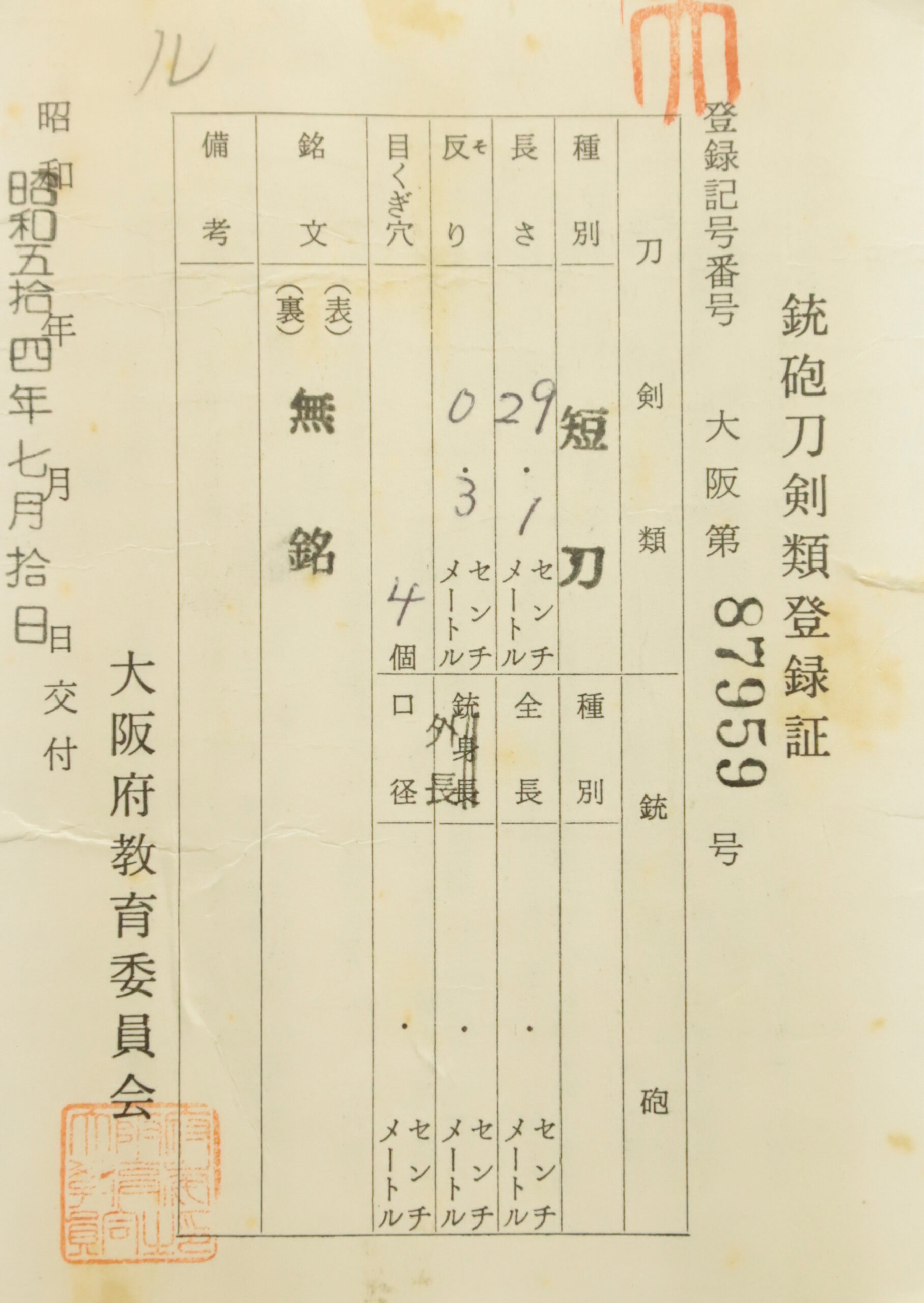
特別保存刀剣鑑定書付 加州真景(大磨上) 菖蒲造 短刀(薙刀直し) 【解説】 本作は、南北朝時代中期から後期(貞治・永和頃:1362-1375年)にかけて活躍した加州真景(かしゅうさねかげ)と極められた一口です。真景は、現在の石川県にあたる加賀国の鍛冶であり、越中の名工・則重の門人と伝えられています。 加賀国は古来より多くの名工を輩出した地ですが、その作刀の起源については諸説あるものの、この真景こそが加州鍛冶の祖であると言い伝えられています。 真景が活躍した南北朝時代は、朝廷が南北に分かれ戦乱が続いた激動の時代でした。多くの武士が戦場へ赴く中、真景もまた実戦に耐えうる質の高い刀剣の製作に心血を注いだことでしょう。 本作の造り込みは、横手筋のない「菖蒲造(しょうぶづくり)」となっており、流麗かつ鋭利な姿が目を引きます。 薙刀直し(なぎなたなおし) 本作は、元々は長大な「薙刀」であったものを、後に短刀の形へと仕立て直した「薙刀直し」と呼ばれる御刀です。日本美術刀剣保存協会(NBTHK)の鑑定においても、その出自が認められています。時代の変遷とともに武器の主力は変化しましたが、かつての銘刀が姿を変え、短刀として大切に受け継がれてきた歴史を感じさせます。 古くから愛刀家の間では「薙刀直しに鈍(なまくら)なし」という言葉があり、薙刀から直された刀剣には切れ味の鋭い名品が多いことで知られています。 彫物(ほりもの) 刀身の片面には「素剣(すけん)」の彫物が施されています。 これは不動明王が右手に持つ「三鈷柄剣(さんこづかけん)」を簡略化した意匠であり、密教における祈祷や瞑想、浄化の法具としての意味を持ちます。邪気を払い、持ち主を守護する厄除けの願いが込められた、精神性の高い彫物です。 本作は、日本美術刀剣保存協会(NBTHK)より「特別保存刀剣」の指定を受けています。保存状態が極めて良く、かつ美術的価値の高い真作であると公に認められた逸品です。 ※刀身にわずかな鍛え傷(きたえきず)が見受けられます。詳細なコンディションについては、お気軽にお問い合わせください。 【刀身】 長さ(Nagasa):29.1 cm 反り(Sori):0.3 cm 刃文(Hamon):(硬化処理によって刃先に現れる結晶構造) 地文(Jihada):(鍛錬の折り返しによって現れる鋼の模様) 切先(Kissaki):(刀身の先端部分) 茎(Nakago):(柄に収まる中心部分) ※茎に宿る黒錆は赤錆を防ぐ役割があり、その色調や状態は製作年代を特定する上で極めて重要な指標となります。 【拵】 拵(Koshirae):(鞘、柄、鍔などから成る外装) 縁頭(Fuchi-Kashira):(柄の両端を保護する一対の金具) この縁頭の意匠は「桜」です。 桜は日本の春を象徴する花として古来より愛されてきました。その意匠は単なる装飾に留まらず、日本人の美意識を象徴するものとして尊ばれています。
 NihontoWatch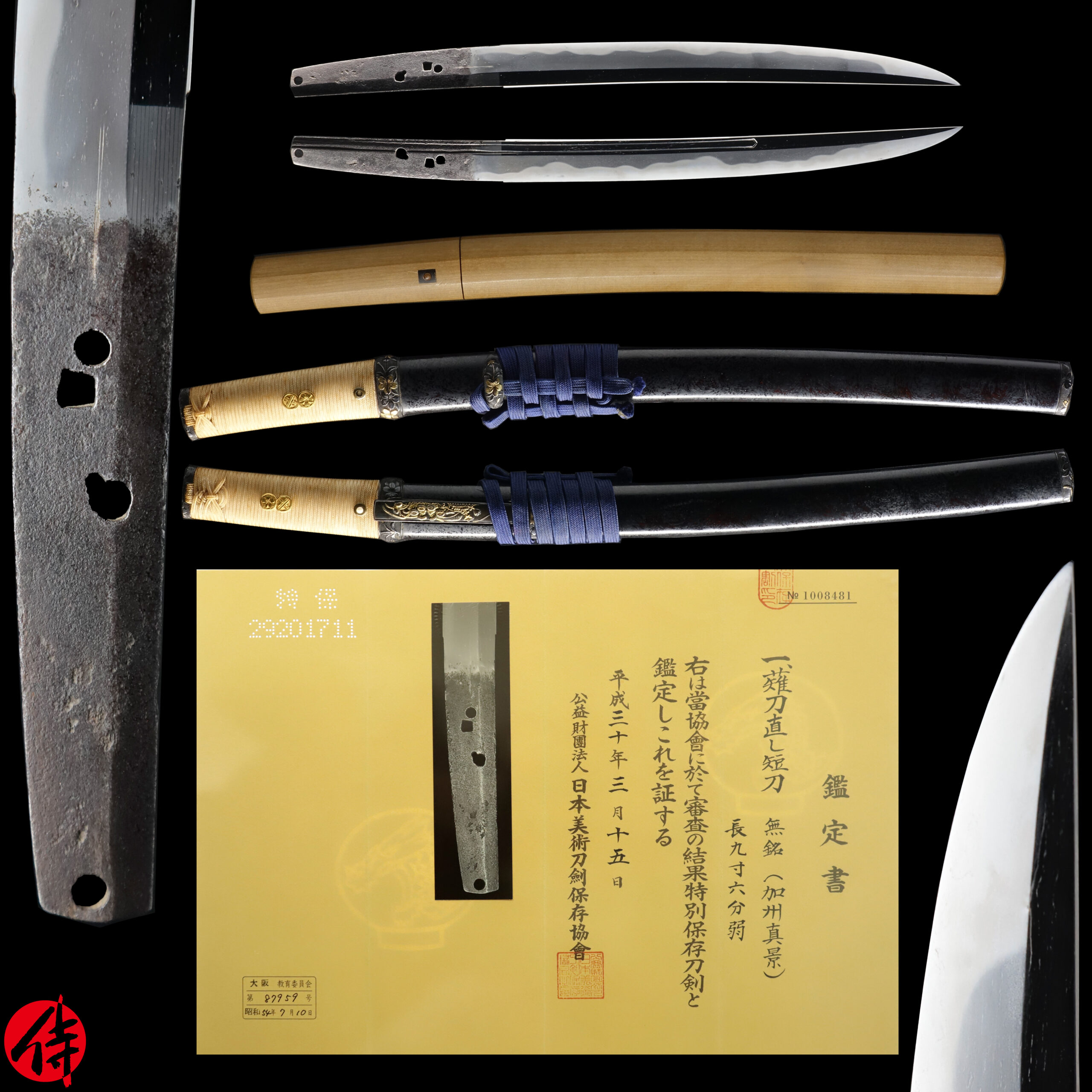
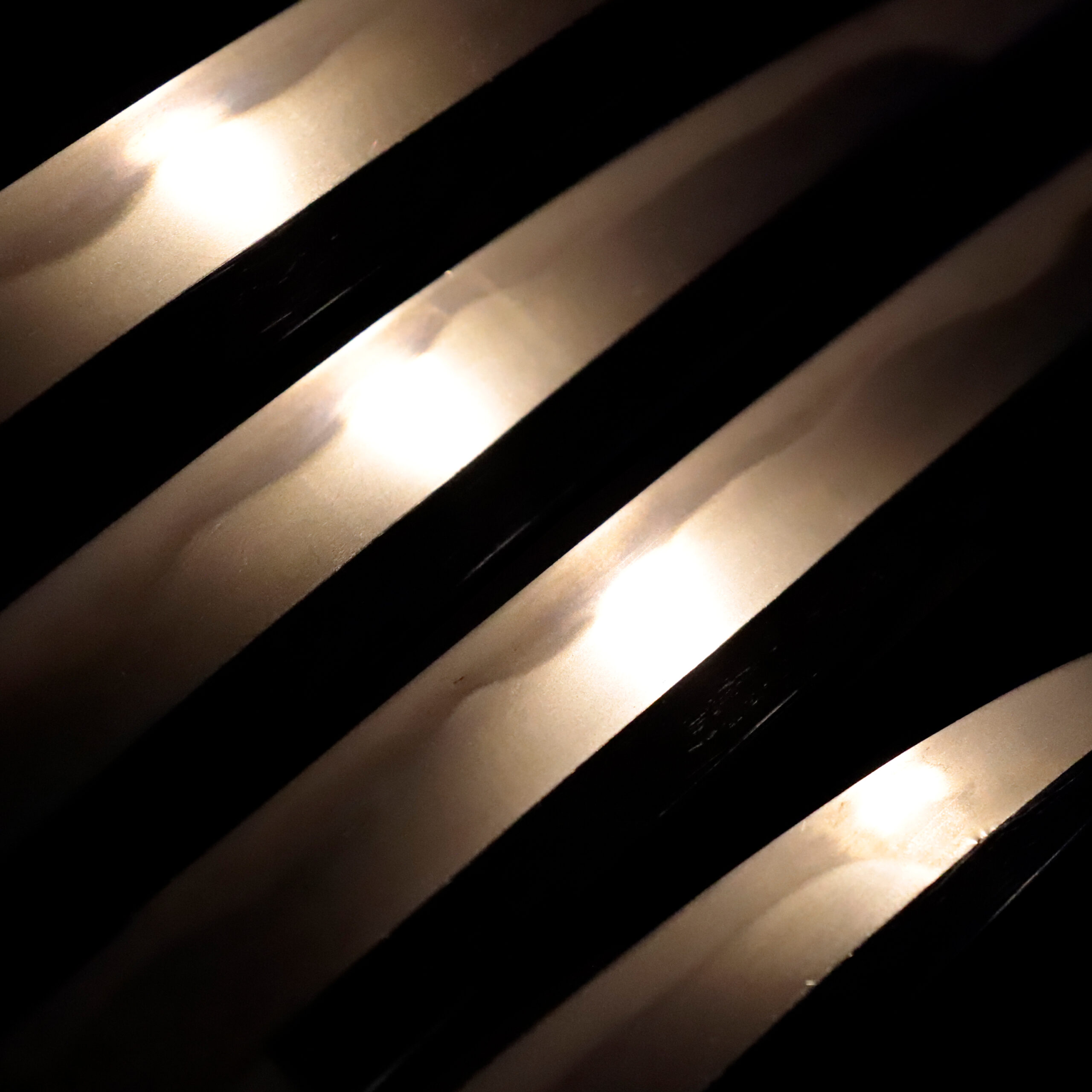
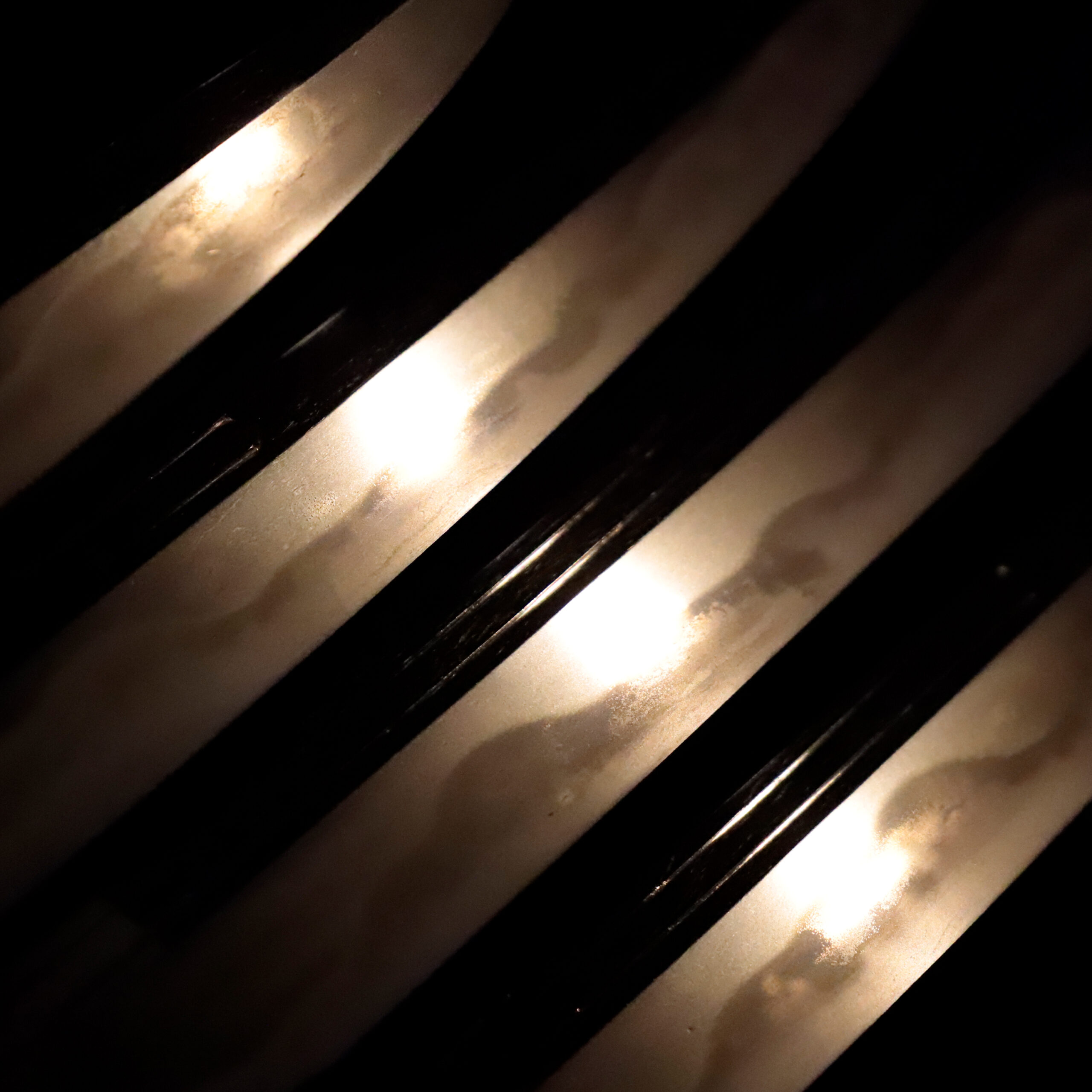
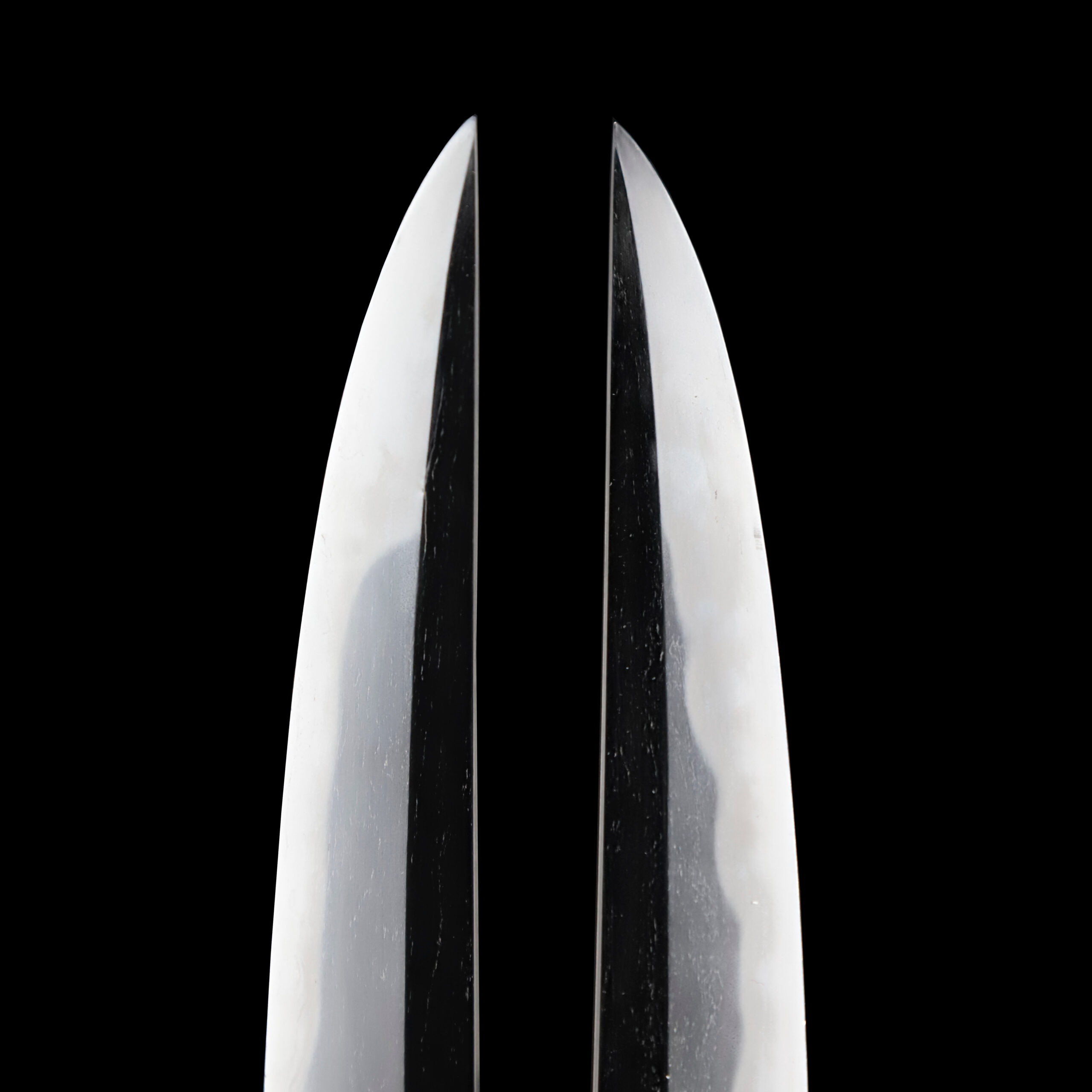
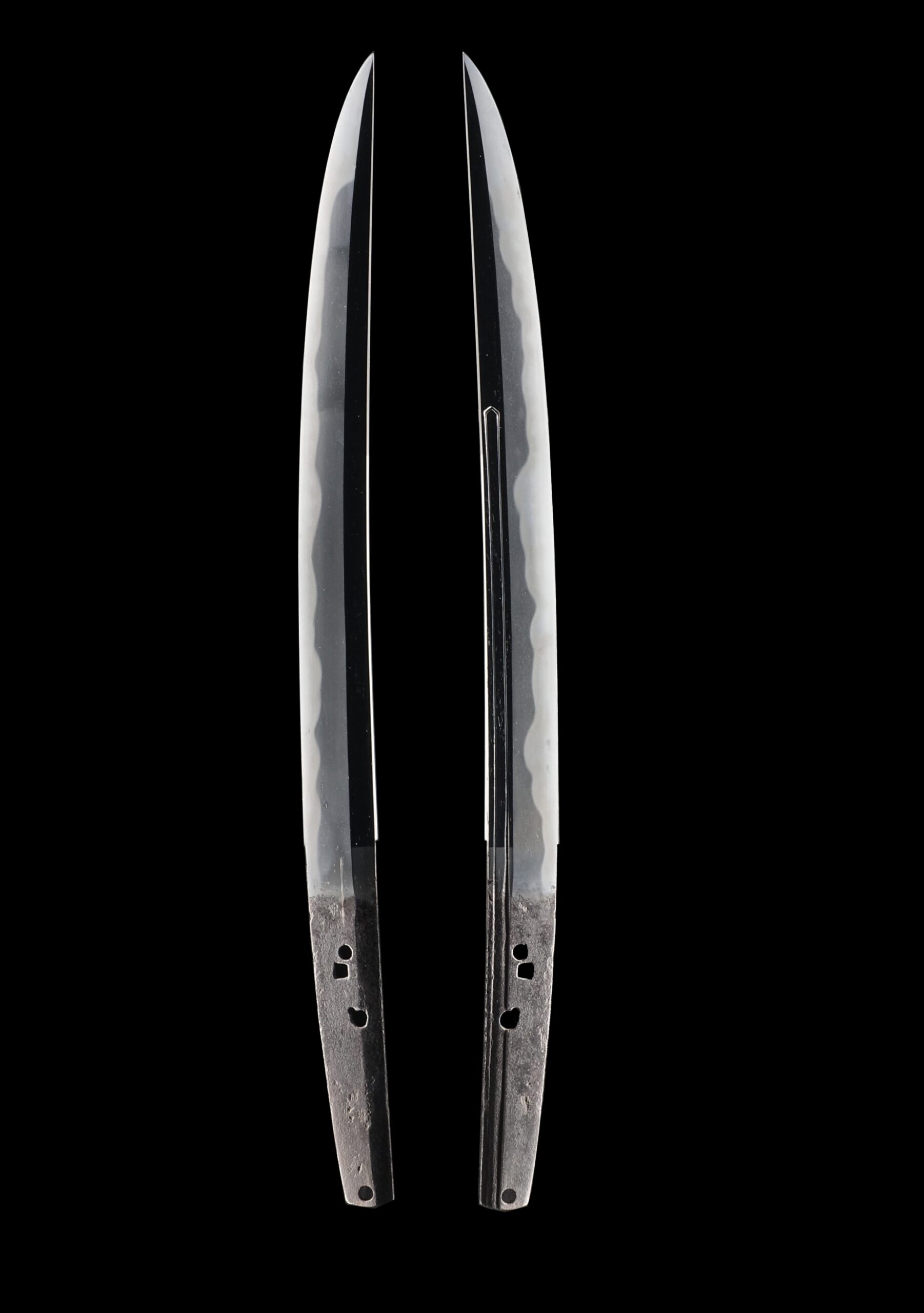
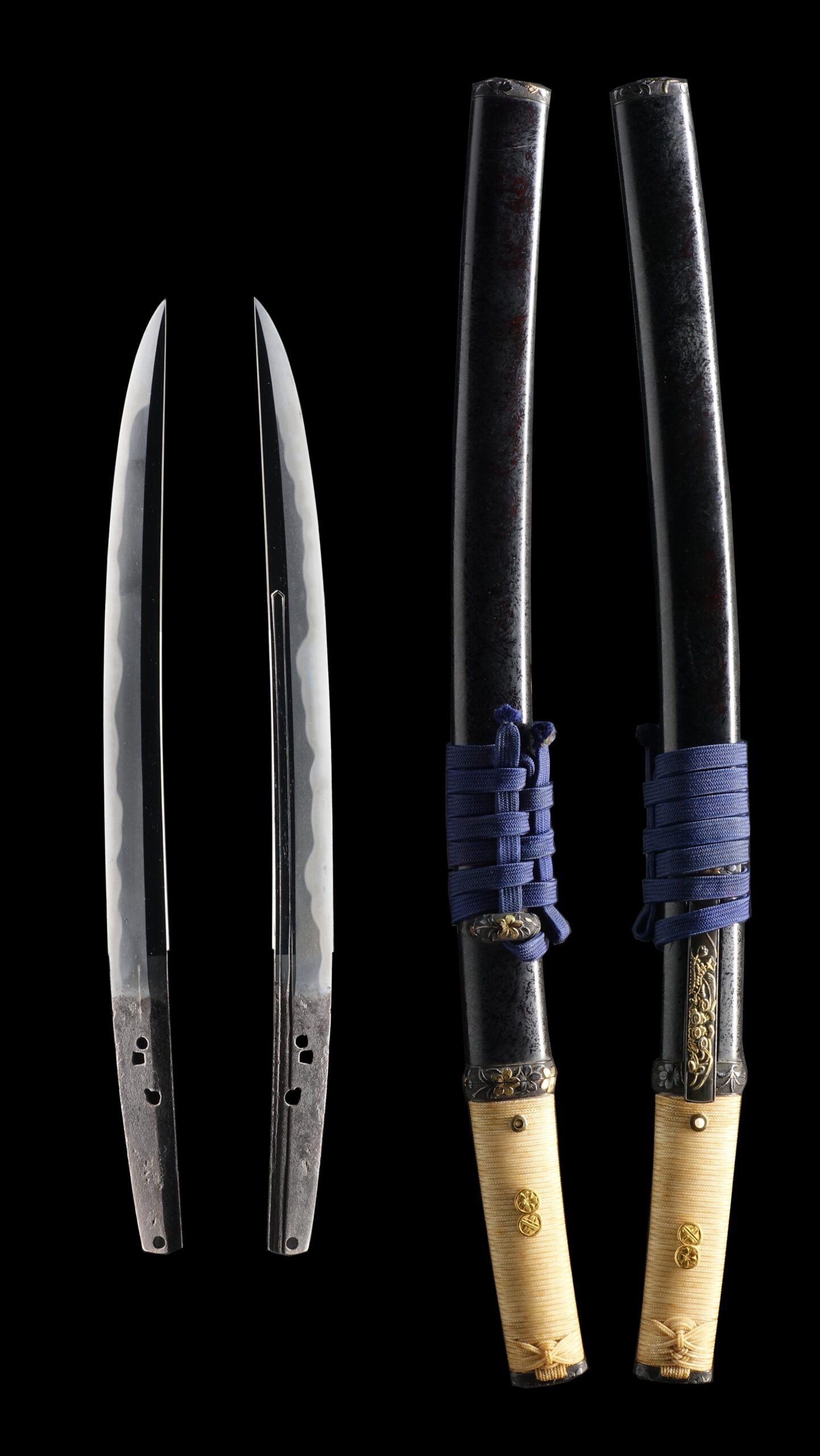
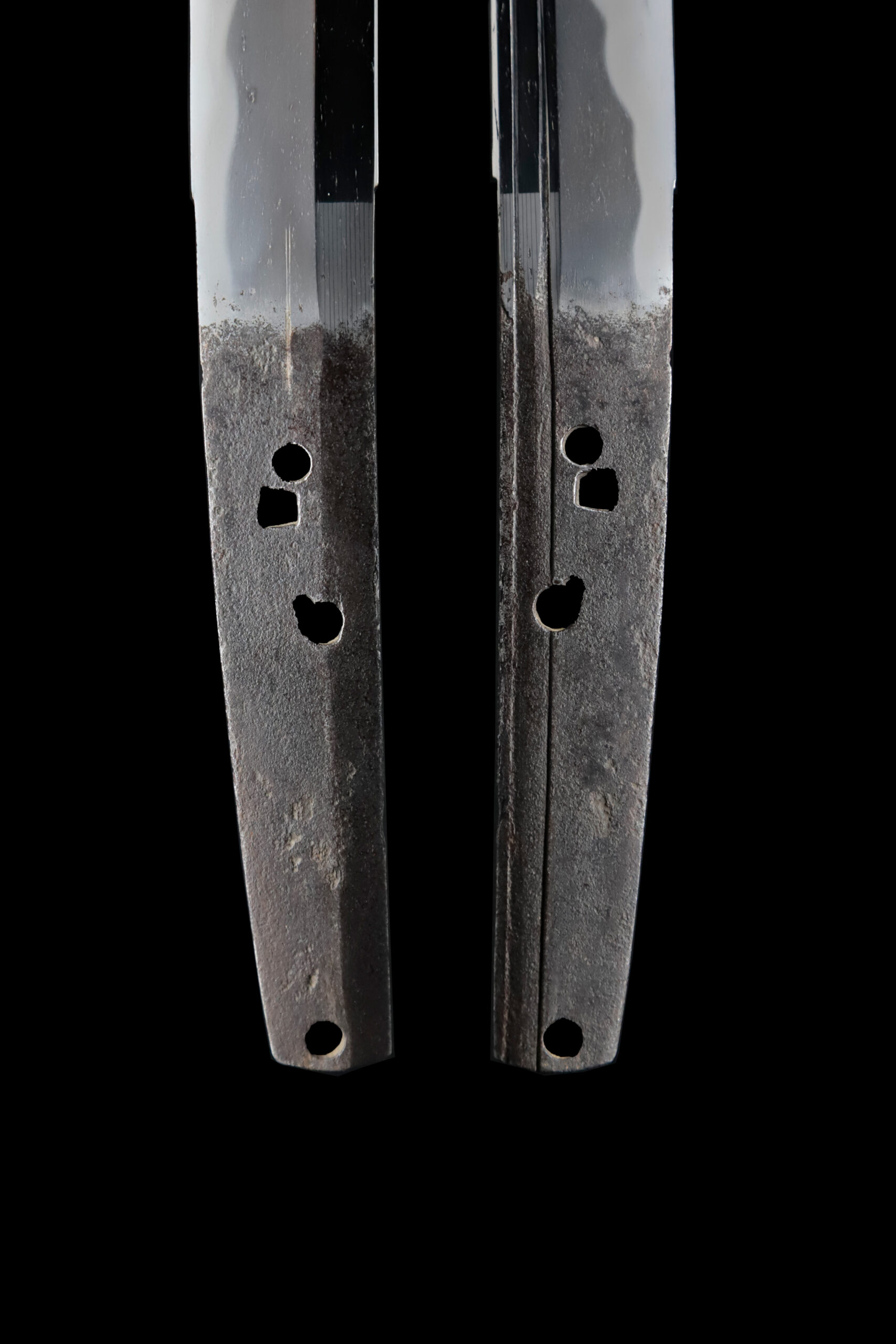
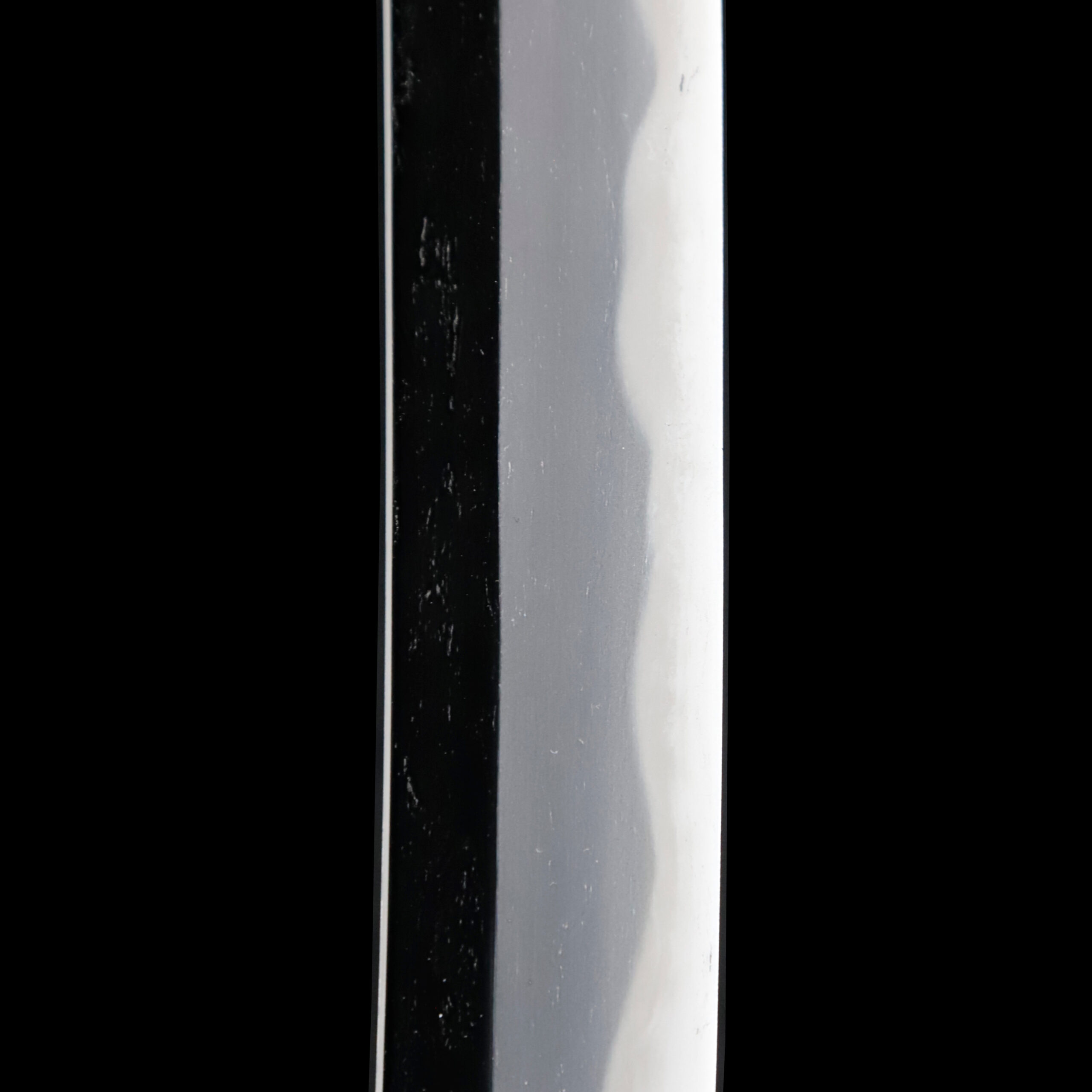
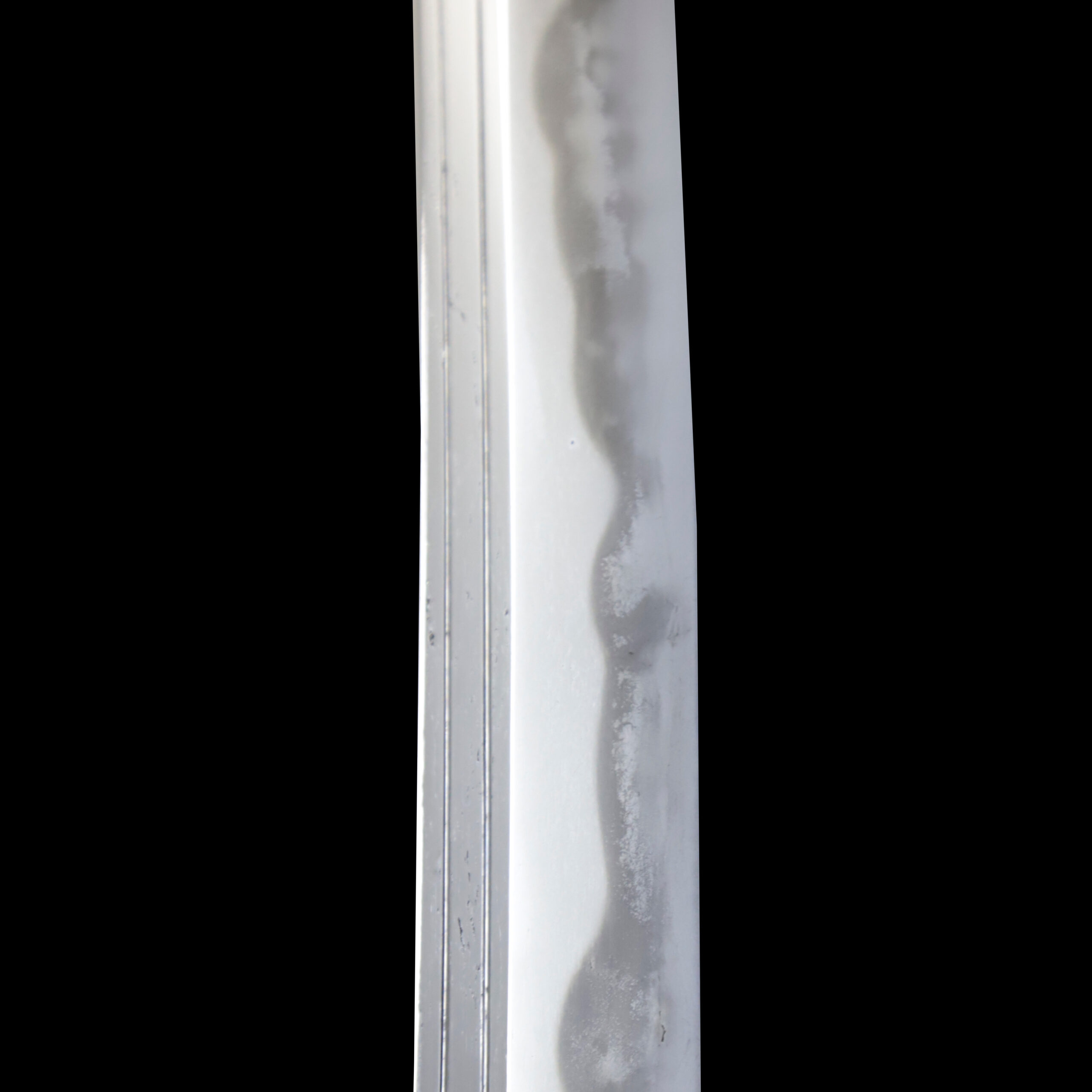
Kaga (Hokurikudo Soshu-den, the Norishige line) · 加賀 · 1362-1368頃
藤代 Jo-jo saku · 刀剣大鑑 上位11%
現在3点販売中
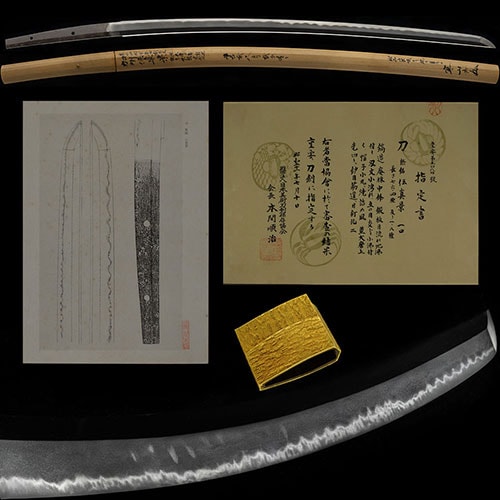
真景の銘で年紀のあるものはただ一口、それが本工について知られることのほとんどを定める。平造の短刀で、指表に藤原真景、指裏に貞治六年二月日、すなわち一三六七年と切り、重要文化財に指定されて、その在国と年代の双方を確かにする一作である。真景は南北朝期の加賀に働き、説明書は本工を越中則重の流れに数える。則重は相模より一、二代前に相州伝を北国へ運んだ工である。説明書は真景を則重の門人で後に加賀へ移ったと伝えるが、年代によって但し書きを付す。則重自身の年紀作は鎌倉末の正和・元応に収まるのに対し、真景は二代下る貞治を切る。その隔たりは直門とするには広すぎ、判者はこの繋がりを師弟の絆ではなく受け継がれた作風と読む。一、二代を隔てて則重の手を取り、それを一国の代表的な相伝の様とした工である。
その手は肌立つ板目に拠った沸出来である。板目に杢・大板目を交えた鍛えは、平らに伏すよりも肌が立ち、その上に地沸が厚く集まり、地景がよく入る。則重の流れを告げる鉄の暗線である。その地に、のたれに互の目を交えた刃を焼き、沸は強く深く、刃中には砂流しが長く、しばしば幾重にもかかり、金筋が破って入り、刃縁にほつれ、打のけ・湯走りを散らす。帽子は乱れ込んで頻りに掃きかけ、小丸に返るか焼詰めに延びる。説明書が繰り返し本工の見どころとするのはこの働きであり、ある大磨上の刀を「則重に直結する出来を示している」[[c:1]]と評する。
地鉄こそ本工の国を語る。地鉄は黒ずみ、肌目が白っぽく底色が黒ずんで、判者が幾度も北国の趣と名指す色を帯びる。それが本工をその手本から分かつ半歩である。その板目は則重ほど肌立たず、相州本国の作に対しては冴えを欠くとされ、ある刀について「相州本国の作に比してはどこか野趣が感じられる」[[c:2]]と記す。その野趣は彼らの語りにあって瑕ではなく指紋である。本工の作域を「いわゆる則重風を見せている」[[c:3]]とする同じ説明が、それを、大いなる伝統を受け継ぎ、その覇気を保ちながら冴えを失った田舎の手の作と置く。
記録には二つの様が通う。その大半は大磨上無銘の刀で、より長い南北朝の太刀を磨り上げた鎬造の刀、反り浅く、鋒は中鋒あるいは大鋒となり、地刃のみから本工に極められる。これに対して稀な在銘作が立つ。いずれも短刀と一口の脇指で、平造のやや寸延び、四字・五字の長銘を細鏨で切り、数口は宗教的な彫物を、茎元に梵字に素剣あるいは護摩箸を彫る。在銘の短刀の幾口かは、純然たる細直刃に小足の入る、より華やかな沸の作と並ぶ穏やかな様に焼かれる。判者は銘そのものから代を別つ。細鏨に貞治を年紀する初代と、太鏨で切られ初代につぐ上手とされ今は別項に記される二代藤原真景とで、一つの名はおそらく一代を越えて亘る。
真景を分かつのは、まさに説明書が彼と則重との間に測る距離である。肌立つ地、厚い地沸、地景、沸の深いのたれによって越中の本工に結ばれ、より黒い地鉄と北国の色、本国の作にはない野趣によってそこから離される。本工の重要文化財の短刀の説明はその均衡を明らかに引き、そこに「則重伝を継承した加州真景の特色」[[c:4]]、すなわち則重伝を継ぐ加州真景の特色を名指す。彼はその伝統の本源ではなくその地方における継承であり、則重の相伝が加賀の沸出来の様となった、その手である。
収集の観点では、真景は稀で輪郭の明らかな北国の名である。藤代の極めは上々作。国宝はなく、その記録は重要文化財一口、すなわち貞治六年の短刀と、重要刀剣の級を通り、そこには四十五口が多くの回次に亘って列なる。判者は、在銘作の現存が少ないゆえに、この年紀の短刀の資料的価値を頗る高いものとし、その作域を「野趣に富み、覇気に溢れる作域」[[c:5]]と評する。その作は、本工自身の国たる加賀の領主前田家に伝来し、年紀の短刀は前田利為の蔵に記録され、また中川家にも伝わる。在銘の真景は相伝を蒐める者が出会いを願うもののうちでも稀少な部類であり、無銘の刀は折にふれて世に現れ、年紀ある銘は極めて稀にしか現れない。則重の伝統が北国にいかに生き続けたかを語る証である。
真景の位置づけを、日本刀全体および伝統・時代・時期ごとに示します。各位(随一・屈指・有数・著名)は、NBTHK および文化庁による指定に加え、三作や名物帳などの歴史的栄誉を加味したものです。
各項目を選ぶと評価方法が表示されます。
在銘年紀作が示す、確実に活動していた年代
美濃伝 · 加賀
現在24点販売中
加賀象嵌は、江戸時代初期から享保期にかけて金沢を中心とする加賀国で発達した独特の平象嵌技法である。その起源は、加賀地方の鐙工が行っていた平象嵌を、鐔や刀装具に応用したことに始まるとされる。加賀藩の庇護のもと、献上品として制作された作例も多く、金沢の工芸文化の高い水準を示す技術として栄えた。室町期には鏡師と呼ばれる工人による山金地の鋳出鐔が見られ、これらが後の加賀象嵌の源流の一つとなったと考えられる。 加賀象嵌の技術的特徴は、赤銅、四分一、素銅などの磨地に、金・銀・銅など多種の色金を駆使した精緻な平象嵌にある。漆黒の赤銅磨地に色金を緻密に嵌め込む手法が主流だが、素銅地に明るい色調で景物を表した古調な作例も存在する。構図は絢爛にして巧みであり、秋草蝶図や鴛鴦図など、画面一杯に展開された図案文様化した表現が特徴的である。毛彫を併用し、内覆輪や埋金など細部にまで丁寧な仕上げが施され、未使用のまま伝世した保存状態の良い献上品級の作も少なくない。 鏡師系の作品は、真鍮地や山金地に鋤出高彫で大胆な文様を配し、格子形花文や菊花文など古雅な意匠を持つ。室町末期から桃山初期にかけての作風を示し、土手耳の構造や鋳出による立体的な表現が見られる。加賀象嵌と総称される一群には、こうした鏡師の流れを汲む古式な様相を呈するものから、江戸中期以降の洗練された平象嵌作品まで幅広い作域が含まれ、加賀国における刀装具制作の伝統の深さを物語っている。 詳しく見る →
南北朝時代の美濃
美濃伝は、伝えによれば移住者が開いた。大和手掻系の出と伝えられる兼氏が志津に住し、新しい相州風で鍛えて、後世の鑑定家にその最上作は誰よりも正宗に近いと言わしめている。
保存刀剣のうち、出来が一層優れ、保存状態も良好と認められたものです。再刃や、室町・江戸期の多くの無銘作は対象外となり、保存刀剣より高い基準が課されます。
日本美術刀剣保存協会(NBTHK)は、1948年に設立され、文化庁の監督を受ける公益財団法人で、東京・刀剣博物館に本部を置きます。専門の審査員が出品作を直接審査し、美術的・歴史的価値に応じた鑑定書を発行します。NBTHKの鑑定書は、日本刀および刀装具の真正性を示す最も広く認知された基準です。
NBTHK公式サイトReturns/exchanges limited to defects caused by shipping (except willful misconduct or gross negligence by the company); customers must contact within 72 hours of receiving the product.