説明
Antique Japanese Sword Tanto Attributed to Tsukushi Nobukuni with NBTHK
Hozon
Certificate
【Description】
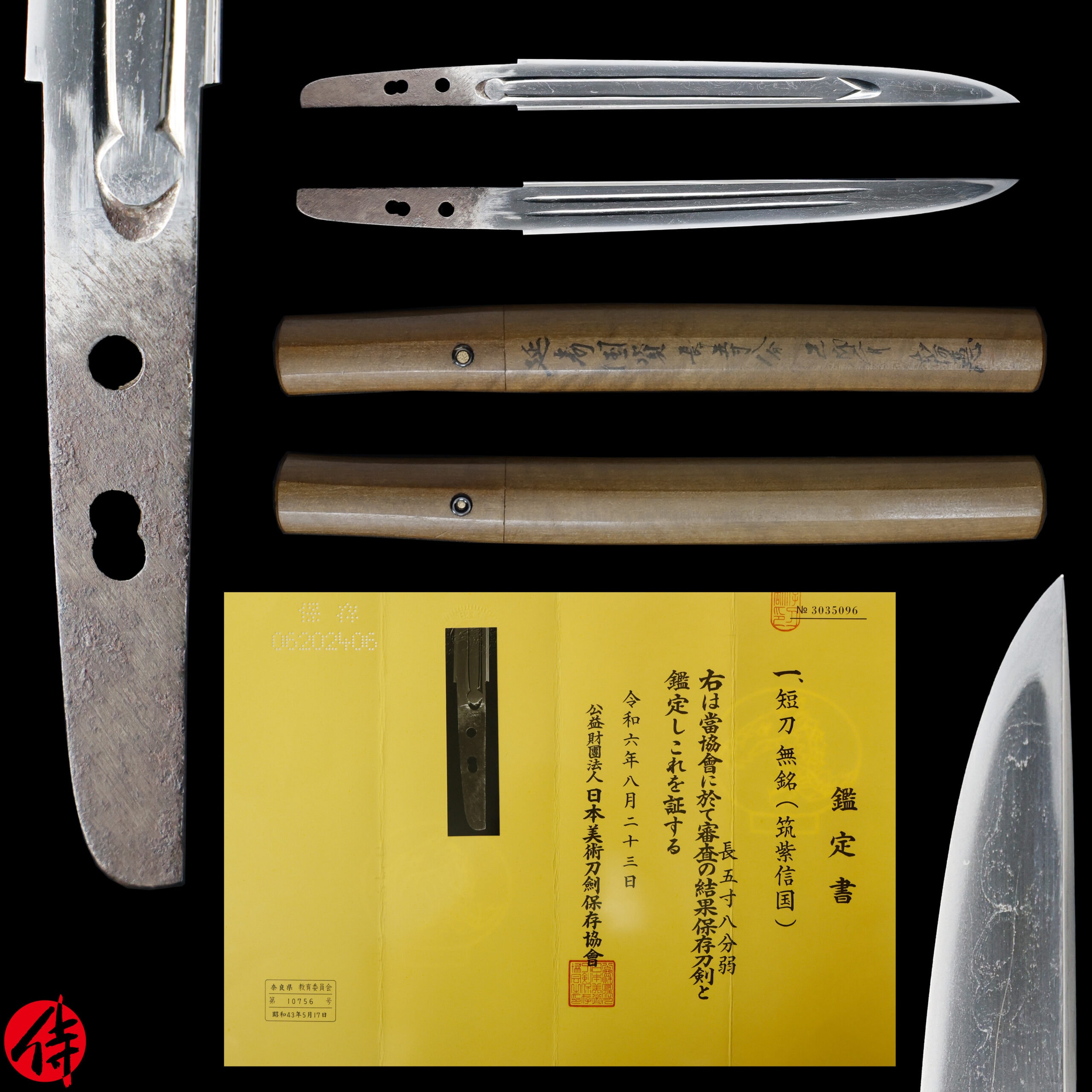
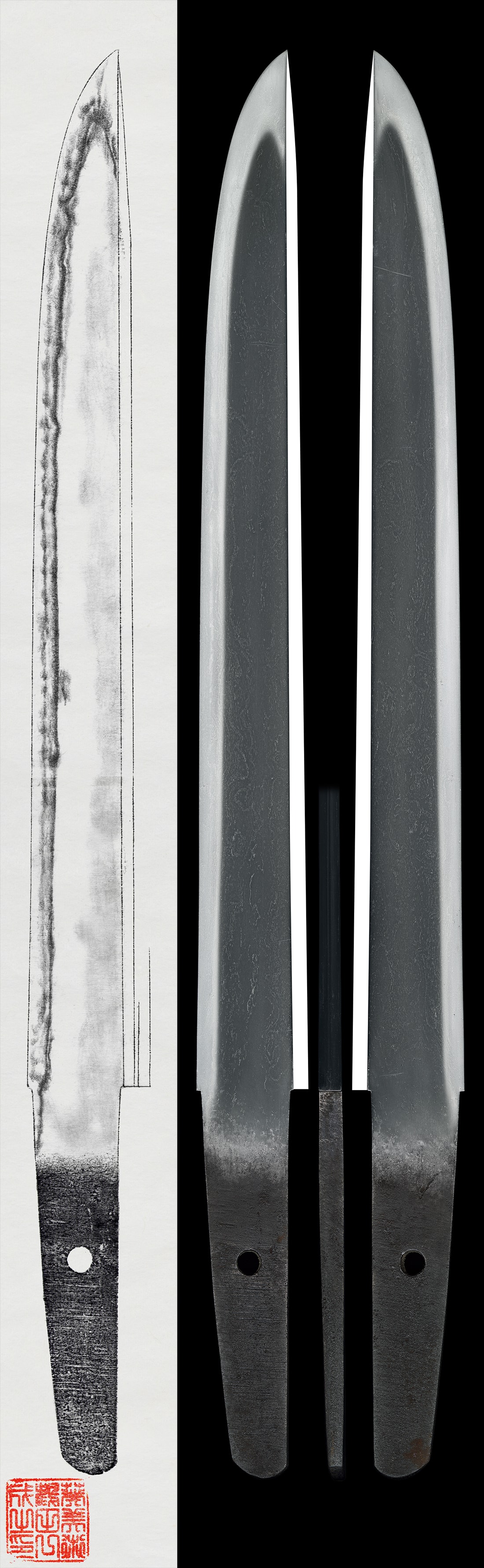
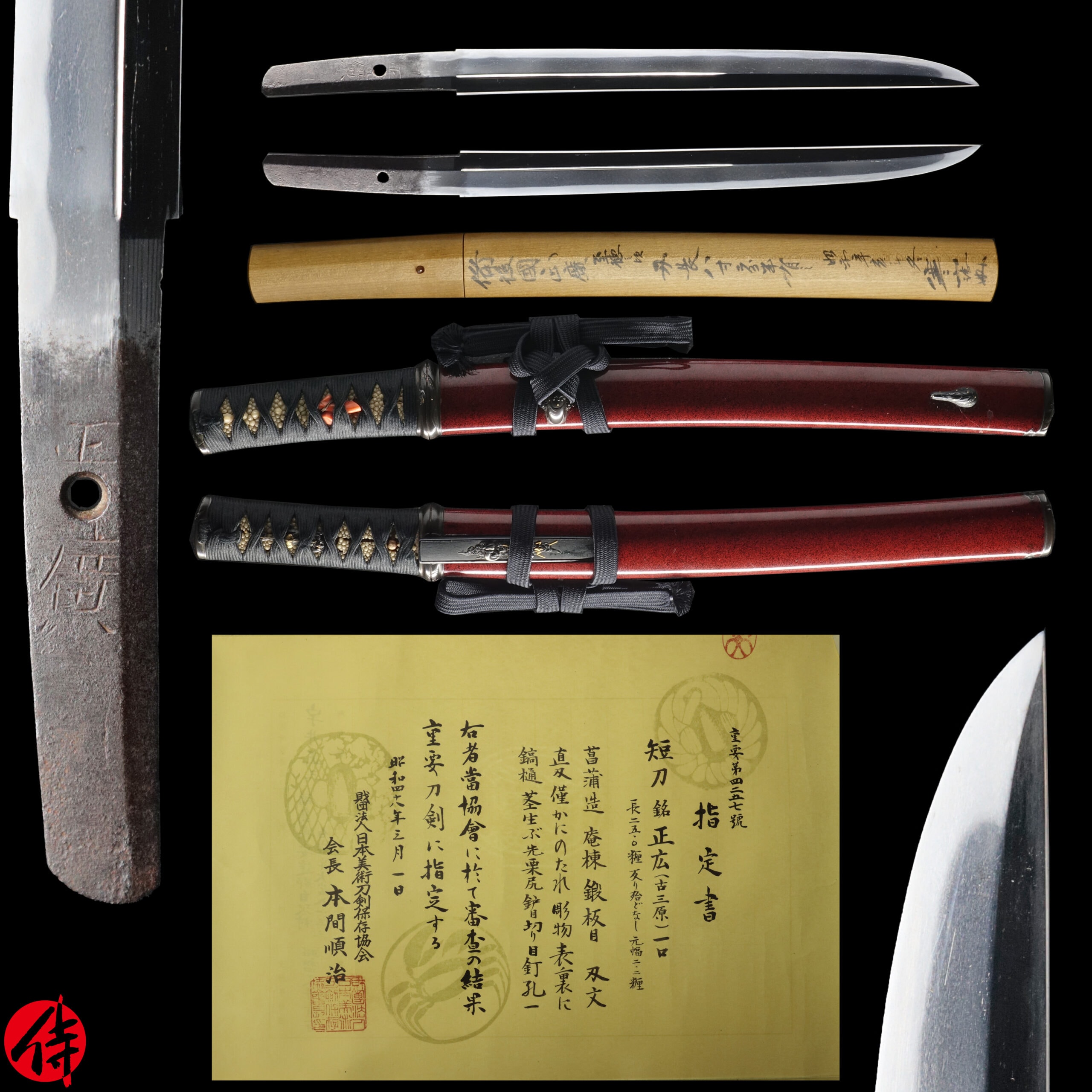
This blade is unsigned and attributed to Tsukushi Nobukuni (筑紫信国) during the Muromachi period.
Tsukushi Nobukuni refers to a group of swordsmiths who were active in Kyushu from the Nanbokuchō period through the late Muromachi period. The Nobukuni school originated around the Enbun era (1356), and until the Ōei era, they were based in Kyoto. From around the Eikyō era (circa 1440) to Keichō 7 (1602), they were active in Buzen Province. Starting around the Keichō era, they expanded their activities more broadly across Kyushu, including Chikuzen, Chikugo, Bungo, and Higo provinces. To distinguish these swordsmiths from the original Yamashiro-based Nobukuni lineage, they are collectively referred to as Tsukushi Nobukuni.
The Fondation of Nobukuni School
The Nobukuni school was initially founded by the first generation Nobukuni in Kyoto. The school stayed there for a few generations. However, the 4th generation Nobukuni SADAMITSU had to evacuate Kyoto city because the battle between the south emperor court and the north emperor court became severe. And as a result, Kyoto city was burnt(in the late 1300s). We called it the Nanbokucho war when the Japanese imperial court was separated into two.
Nobukuni SADAMITSU managed to escape and arrive at Usaha(Ohita prefecture)to serve the Ajimu clan. Nobukuni school prospered there from third to 11th generation. However, Toyotomi Hideyoshi, one of the three unifiers of Japan, destroyed the Ajimu clan during the late Azuchi Momoyama period (1582). And the 12th generation Nobukuni YOSHISADA moved to Chikuzen(Fukuoka prefecture), being invited by Kuroda Nagamasa, a famous feudal lord who served Toyotomi Hideyoshi (1602). It is said that the second-gen Yoshimasa also followed his father. Since then, Nobukuni school had been under the auspices of Kuroda clan for generations during the Edo period, and they exclusively forged for this clan.
Horimono (Engraving)
The blade of this Katana has beautiful engravings of Gomabashi (護摩箸) on both sides. Gomahashi is a horimono in the form of the ritual chopsticks used in both Shinto and Buddhist rites.
This blade is appraised as a
Hozon Touken
(保存刀剣) issued by NBTHK (Nihon Bijutsu Touken Hozon Kyokai: 日本美術刀剣保存協会). This authentication paper was only given to authentic Japanese swords, well preserved and high quality with artistic value.
*Please keep in mind that there are a few visisble Kitae Kizu on this blade. If you like to know the detailed condition, please feel free to contact us.
【Blade】
Cutting Edge Length (Nagasa)
:
17.5 cm (6.9 inches)
Curvature (Sori)
:
0 cm (0 inches)
Hamon
:
The crystalline structure which forms along the cutting edge of a blade as a result of the hardening process.
Jimon (Jihada)
:
Visible steel surface pattern created by folding and hammering during forging process.
Kissaki
:
Kissaki is the tip of the Japanese sword.
Nakago
:
Nakago is the tang of the Japanese sword.
Japanese swordsmiths left the black rust on the tang because it prevents red rust while the tang is in its handle. And the discoloration of the tang was created over time, and it is a great indicator for a Japanese sword specialist to estimate when the sword was forged.
Habaki
:
Habaki is the equipment to make the blade not touch its scabbard inside. It prevents the blade from getting rusty and chipped.
Authentication Paper
:
NBTHK Hozon Certificate for the blade (No.3035096)
NBTHK
,
also known as Nihon Bijutsu Touken Hozon Kyokai (the Society for the Preservation of the Japan Art Sword), is one of the oldest Japanese sword appraising organizations in modern-day Japan. They authenticated the blade on August 23rd in the 6th year of Reiwa (2024). They appraised it as Hozon Touken, the blade worth preserving for Japanese society. The purchaser will receive this original certificate as well. We can also translate what is written into English and make a
PDF file
for you