説明
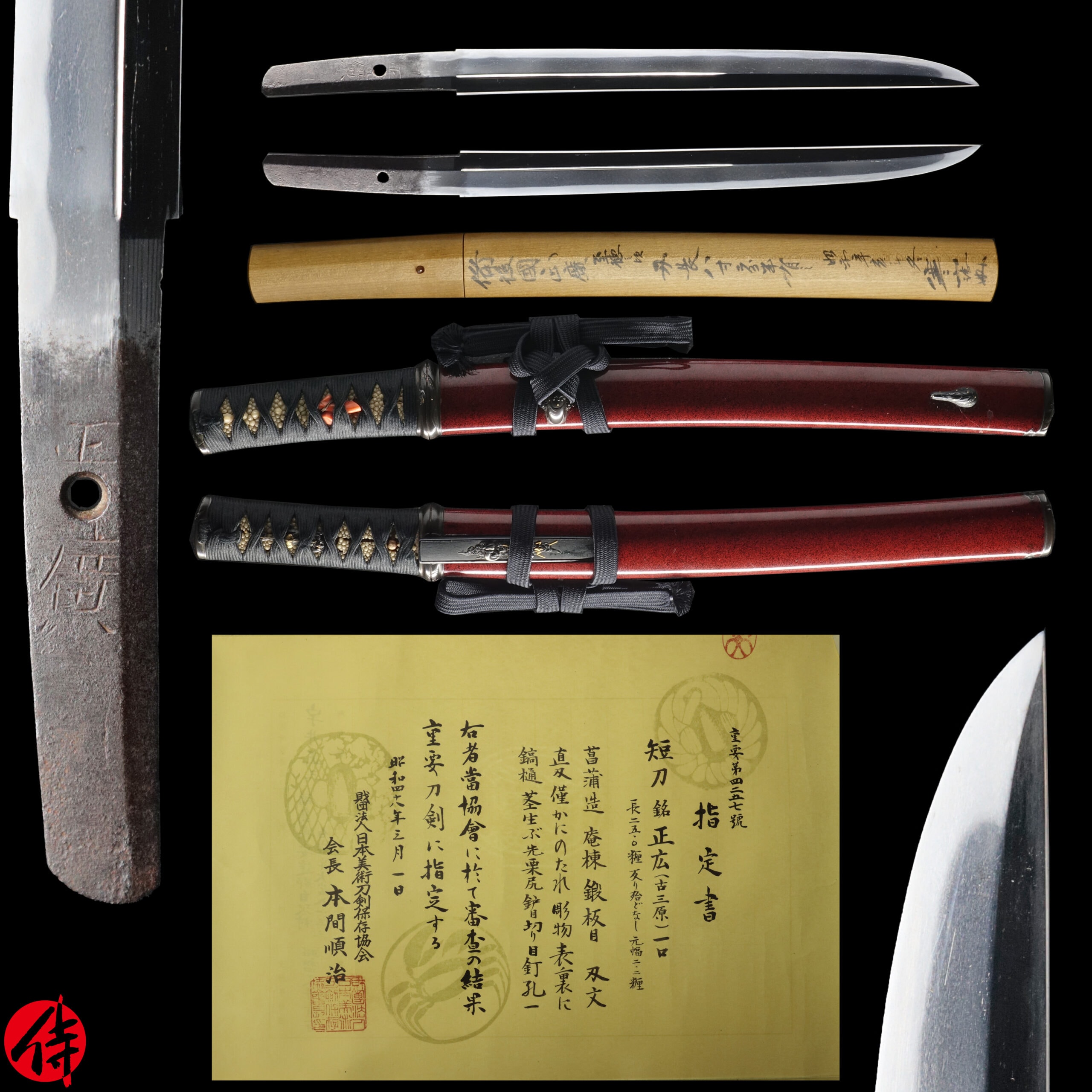
Antique Japanese Sword Tanto Attributed to Tsukushi Nobukuni with NBTHK
Hozon
Certificate
【Description】
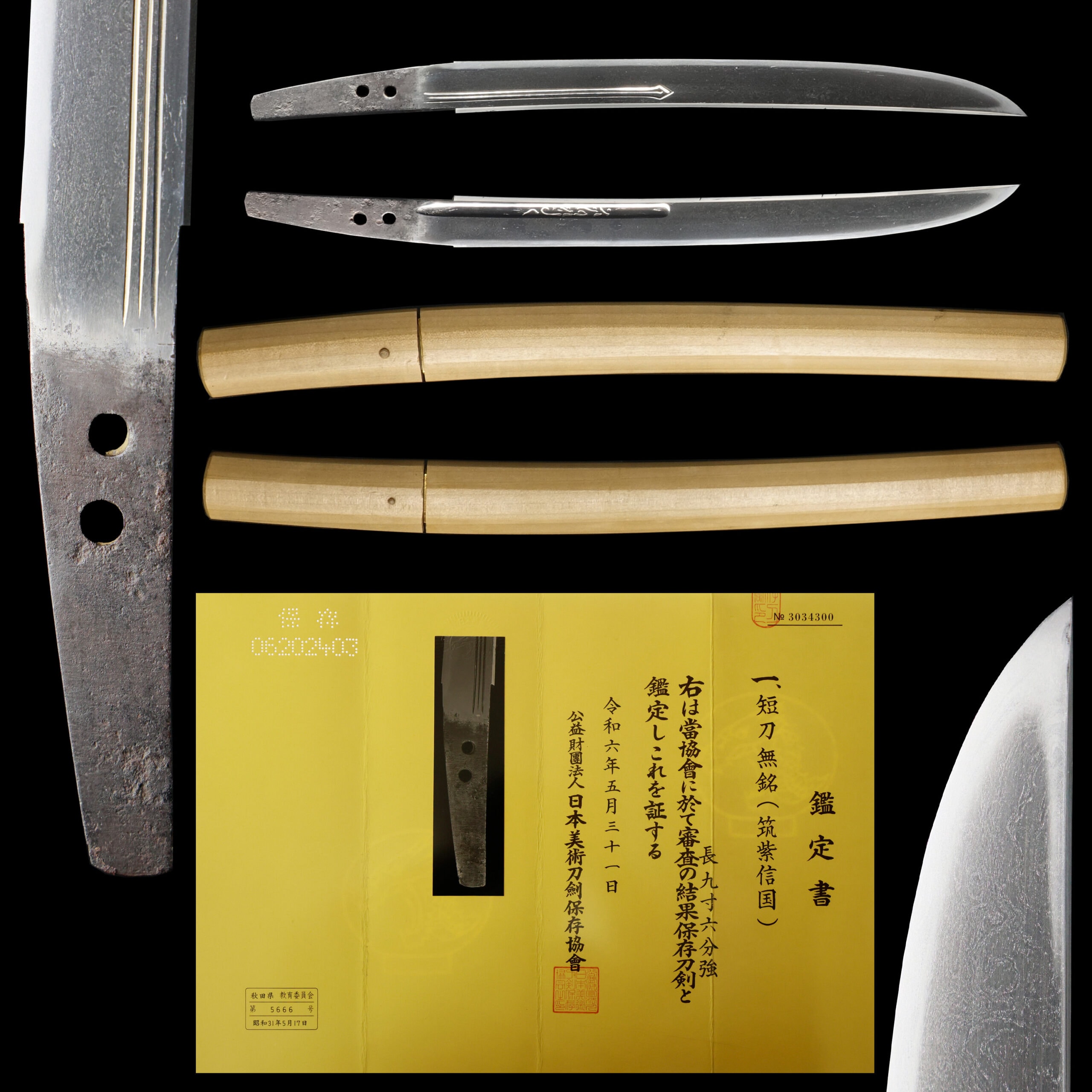
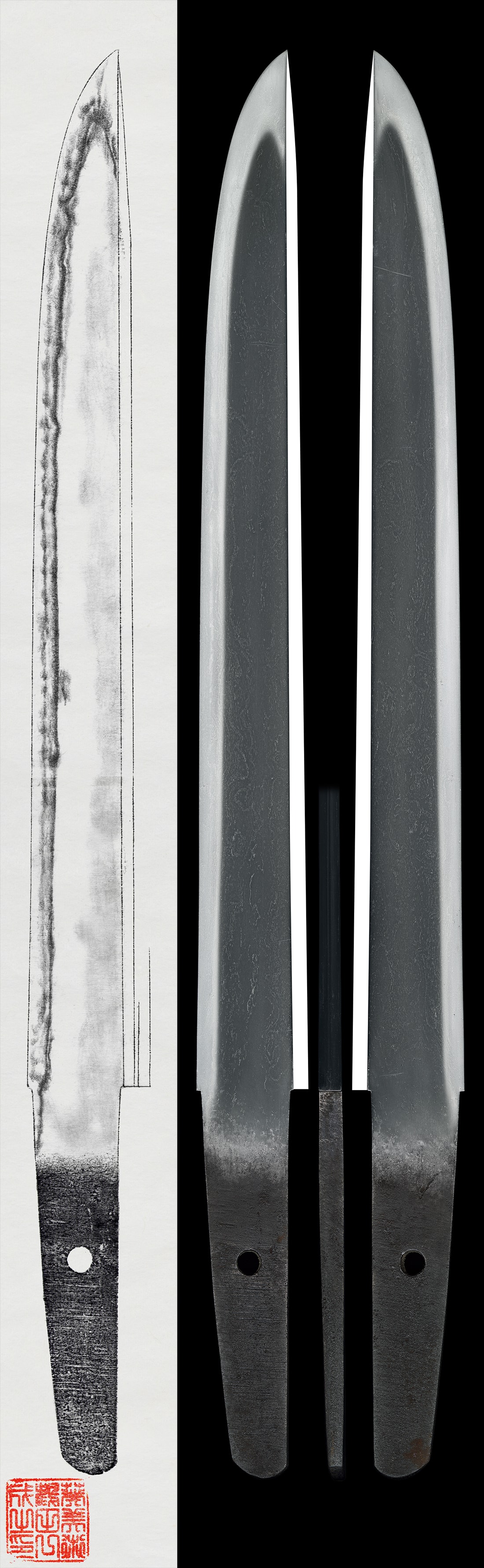
This blade is unsigned and attributed to Tsukushi Nobukuni (筑紫信国) during the Muromachi period.
Tsukushi Nobukuni refers to a group of swordsmiths who were active in Kyushu from the Nanbokuchō period through the late Muromachi period. The Nobukuni school originated around the Enbun era (1356), and until the Ōei era, they were based in Kyoto. From around the Eikyō era (circa 1440) to Keichō 7 (1602), they were active in Buzen Province. Starting around the Keichō era, they expanded their activities more broadly across Kyushu, including Chikuzen, Chikugo, Bungo, and Higo provinces. To distinguish these swordsmiths from the original Yamashiro-based Nobukuni lineage, they are collectively referred to as Tsukushi Nobukuni.
The Fondation of Nobukuni School
The Nobukuni school was initially founded by the first generation Nobukuni in Kyoto. The school stayed there for a few generations. However, the 4th generation Nobukuni SADAMITSU had to evacuate Kyoto city because the battle between the south emperor court and the north emperor court became severe. And as a result, Kyoto city was burnt(in the late 1300s). We called it the Nanbokucho war when the Japanese imperial court was separated into two.
Nobukuni SADAMITSU managed to escape and arrive at Usaha(Ohita prefecture)to serve the Ajimu clan. Nobukuni school prospered there from third to 11th generation. However, Toyotomi Hideyoshi, one of the three unifiers of Japan, destroyed the Ajimu clan during the late Azuchi Momoyama period (1582). And the 12th generation Nobukuni YOSHISADA moved to Chikuzen(Fukuoka prefecture), being invited by Kuroda Nagamasa, a famous feudal lord who served Toyotomi Hideyoshi (1602). It is said that the second-gen Yoshimasa also followed his father. Since then, Nobukuni school had been under the auspices of Kuroda clan for generations during the Edo period, and they exclusively forged for this clan.
Horimono (Engraving)
This blade has beautiful engravings on both sides. You would find the Horimono (彫り物, sculpture) of Bonji (梵字) on one side, and on Suken (素剣) on the other.
Bonji (梵字) is Sanscrit characters carved into the blade invoking Buddhist deities. Sword carvings often depict Fudo Myo-O (不動明王, acalanātha) or his incarnations, and there are also Sanskrit characters that represent this god. Among the various Buddhist Buddhas, Fudo Myo-O was deeply worshiped by Samurai warriors. According to a theory, this god is the incarnation of Dainichi Nyorai (大日如来, Mahāvairocana, the principal image of esoteric Buddhism). Perhaps the most common type of Sanskrit character carved on the blades is the character “Kahn (カーン)”, which means Fudo Myo-O. There is also a Sanskrit character called “Kanmarn (カンマーン),” which is combined with the word “Man.” There was once a trend that Samurai warriors incorporated motifs with religious meaning into their battle costumes, such as armor and helmets, and this sword carving was also a way to express their religious beliefs.
The Suken is a simplified design of the Sanko-Duka-Ken (三鈷柄剣), which is a sword that the Fudo Myo-O (不動明王: acalanātha, one of the objects of worship in Buddhism) brings. It is an esoteric Buddhist tool used for esoteric prayer, meditation, purification, and amulets. It is believed that this sword would exorcize evil spirits.
This blade is appraised as a
Hozon Touken
(保存刀剣) issued by NBTHK (Nihon Bijutsu Touken Hozon Kyokai: 日本美術刀剣保存協会). This authentication paper was only given to authentic Japanese swords, well preserved and high quality with artistic value.
*Please keep in mind that there are a few visisble Kitae Kizu on this blade. If you like to know the detailed condition, please feel free to contact us.
【Blade】
Cutting Edge Length (Nagasa)
:
29.3 cm (11.5 inches)
Curvature (Sori)
:
0.3 cm (0.12 inches)
Hamon
:
The crystalline structure which forms along the cutting edge of a blade as a result of the harden