NihontoWatch Mon

NihontoWatch

マーケット
事典
鑑定
NihontoWatch Mon

NihontoWatch

マーケット
事典
鑑定

説明

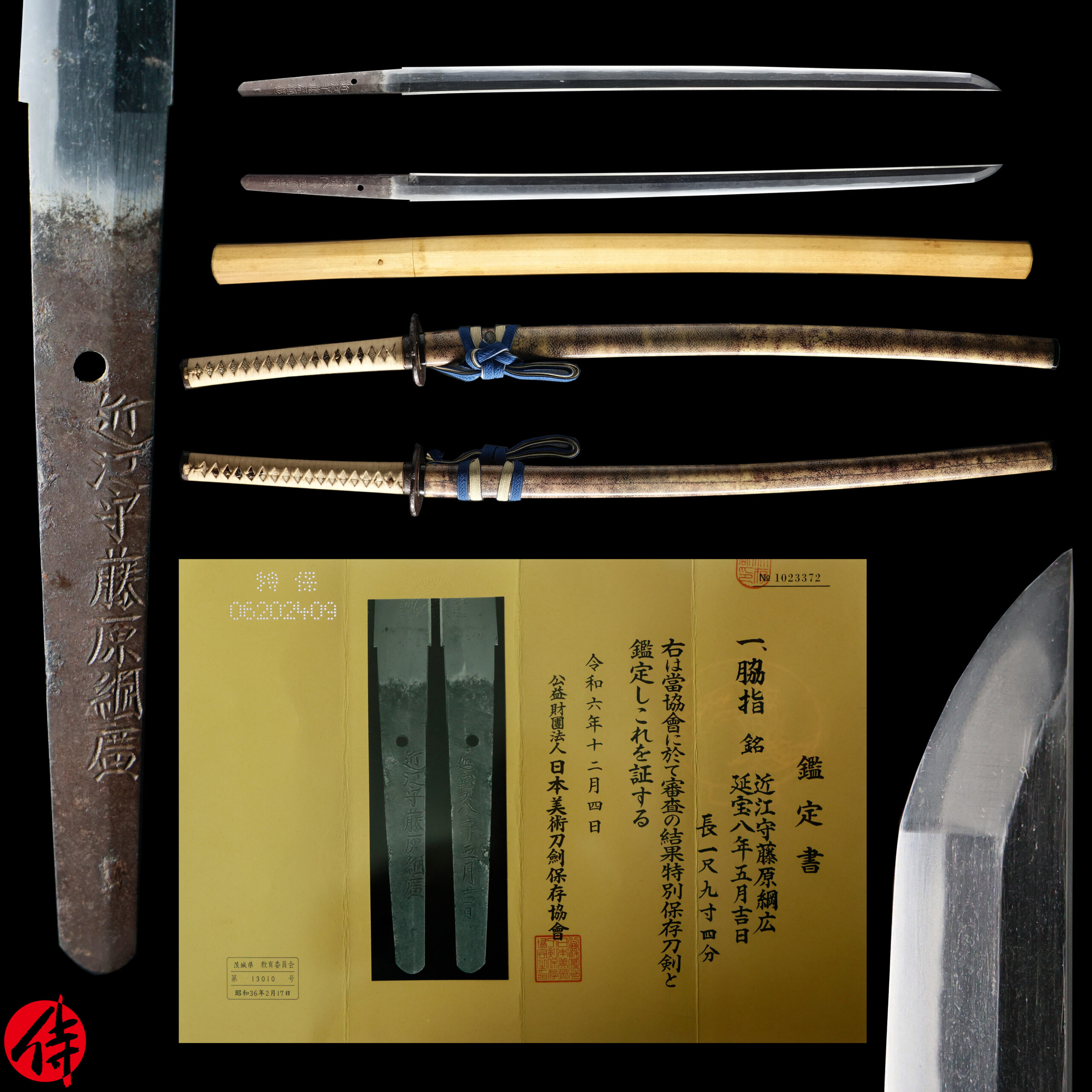
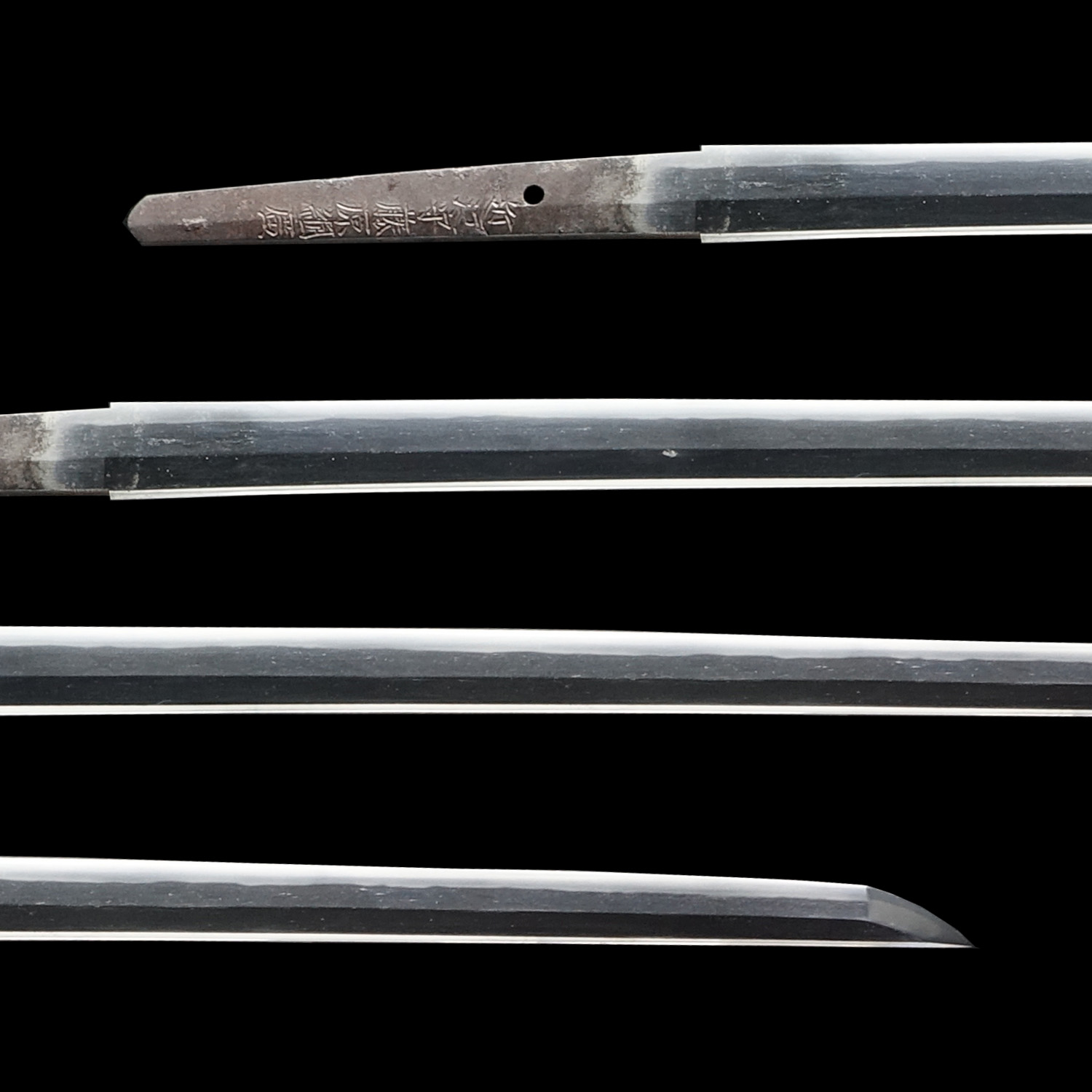
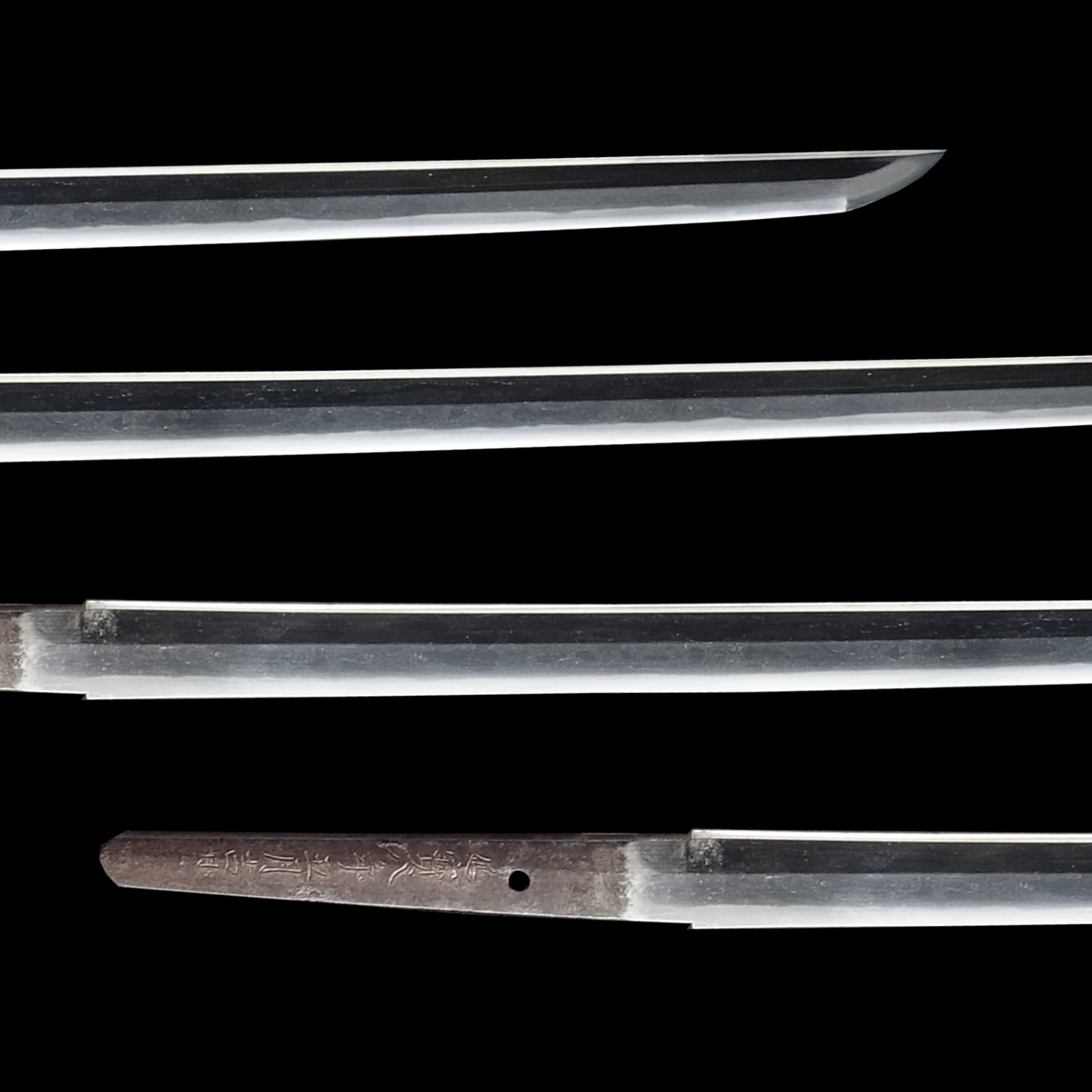
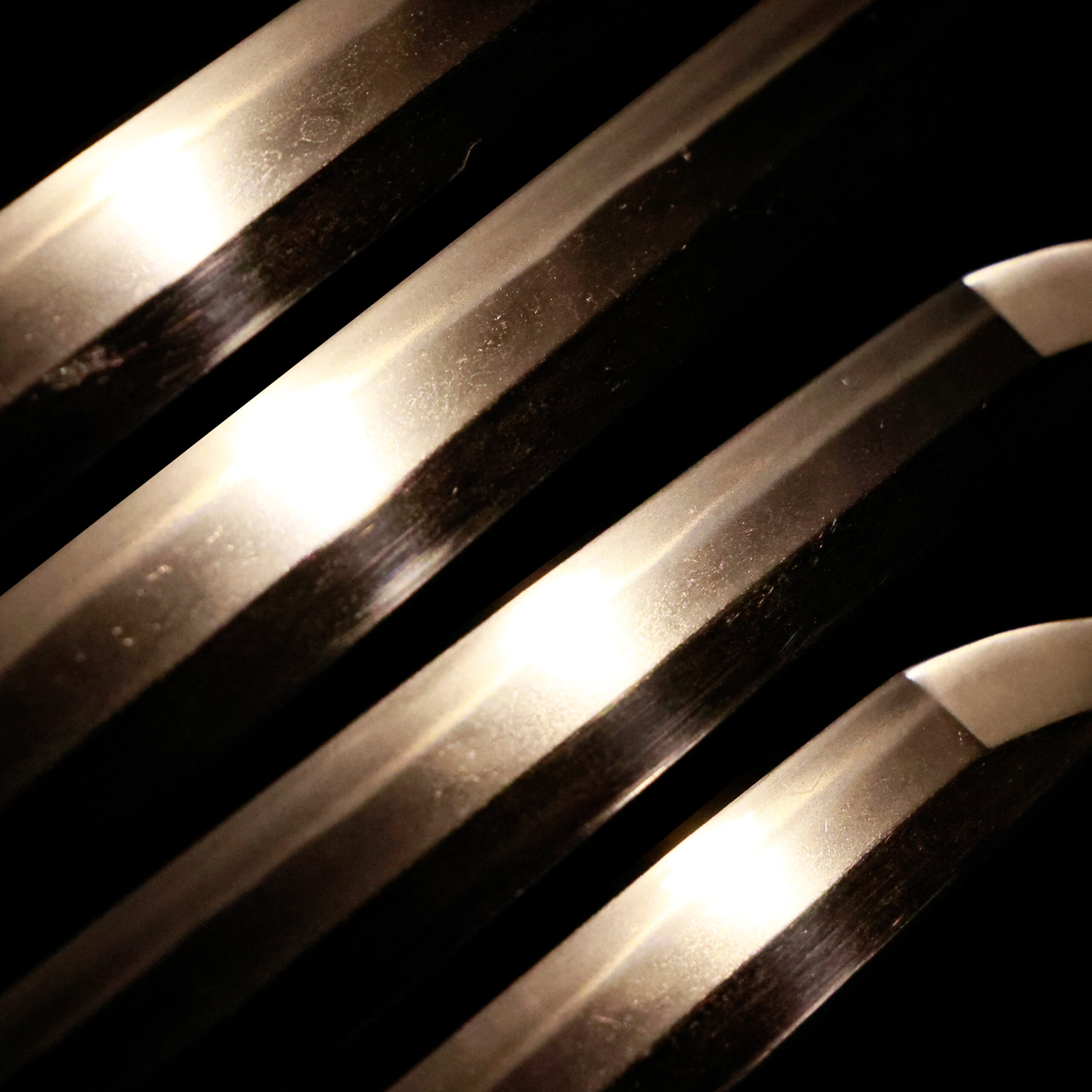
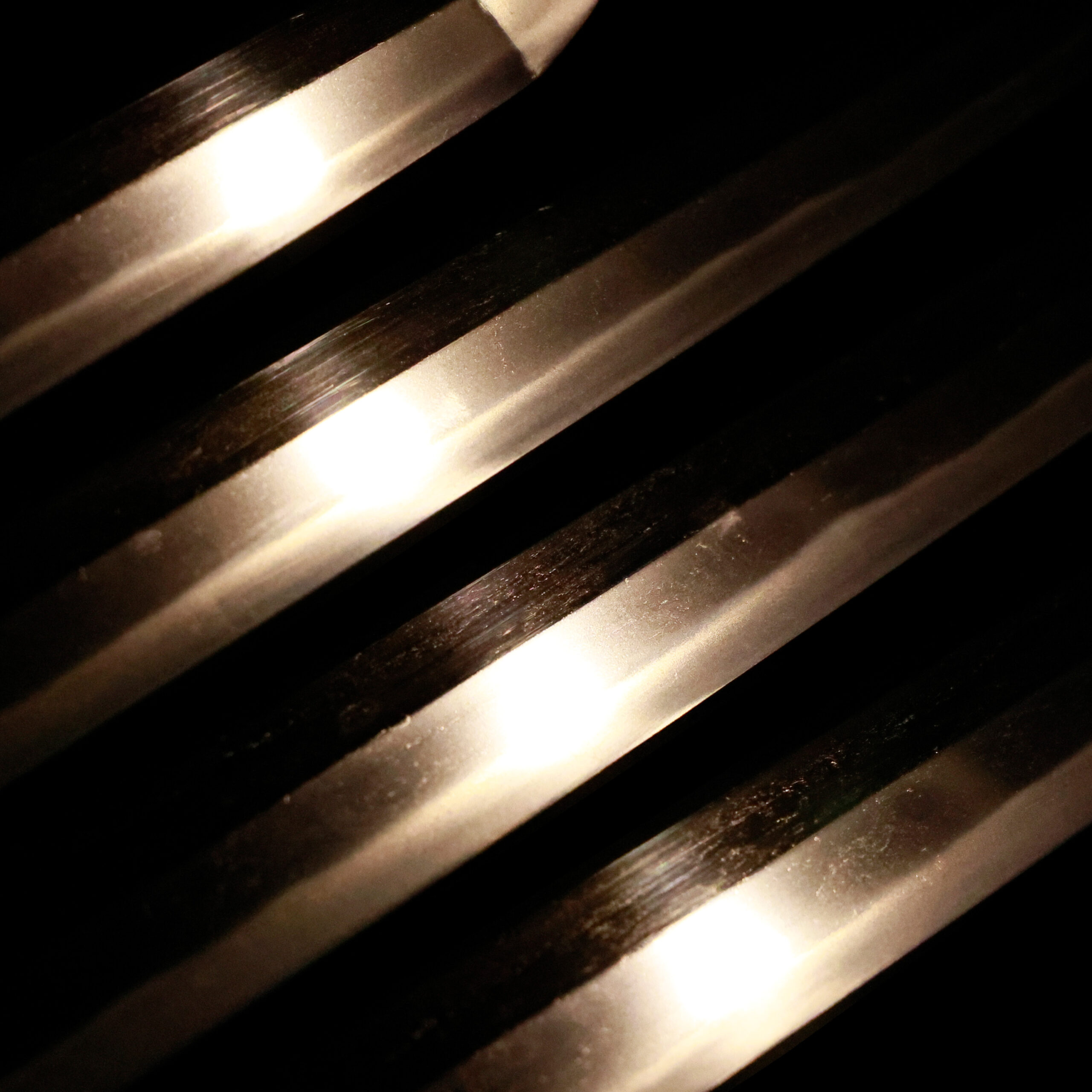
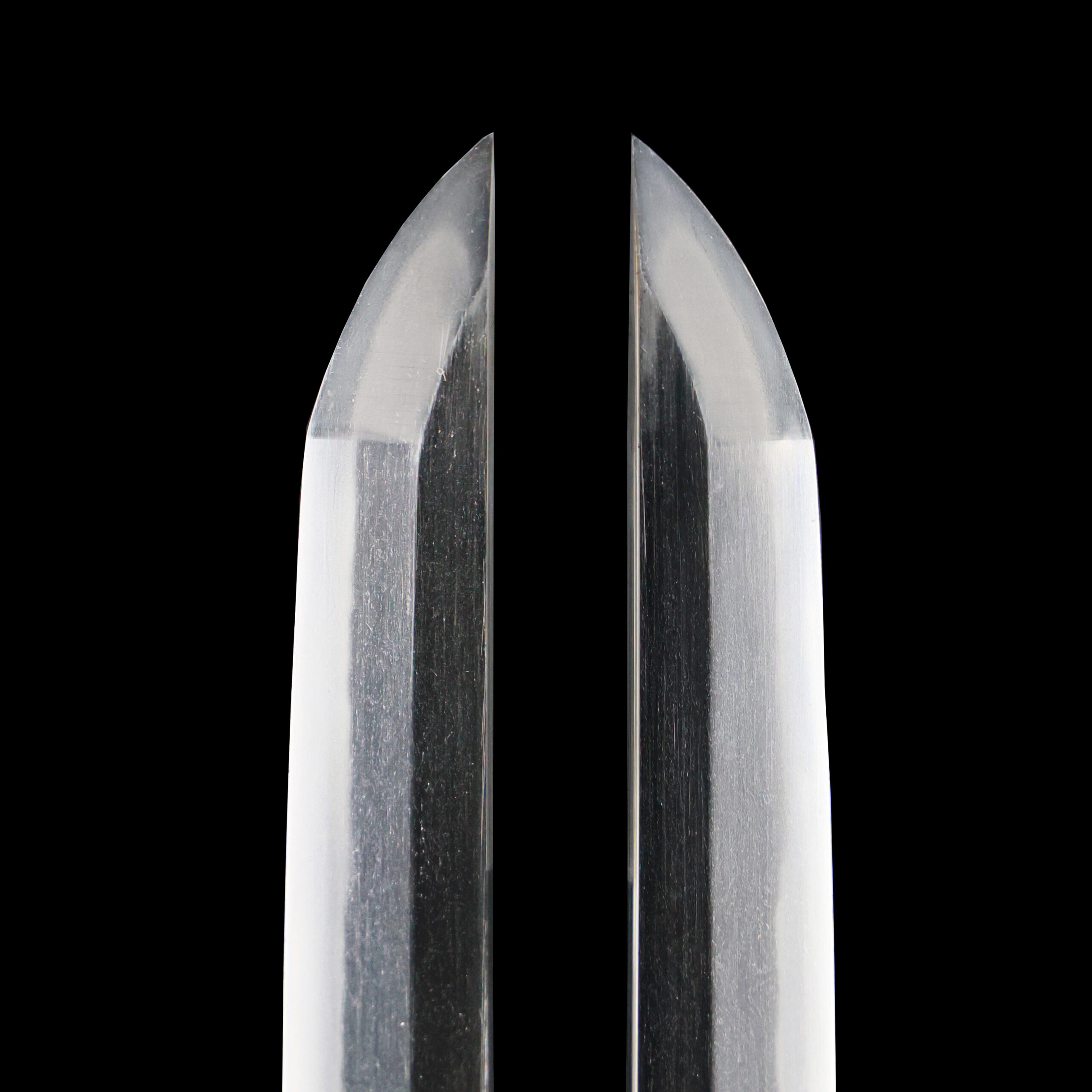
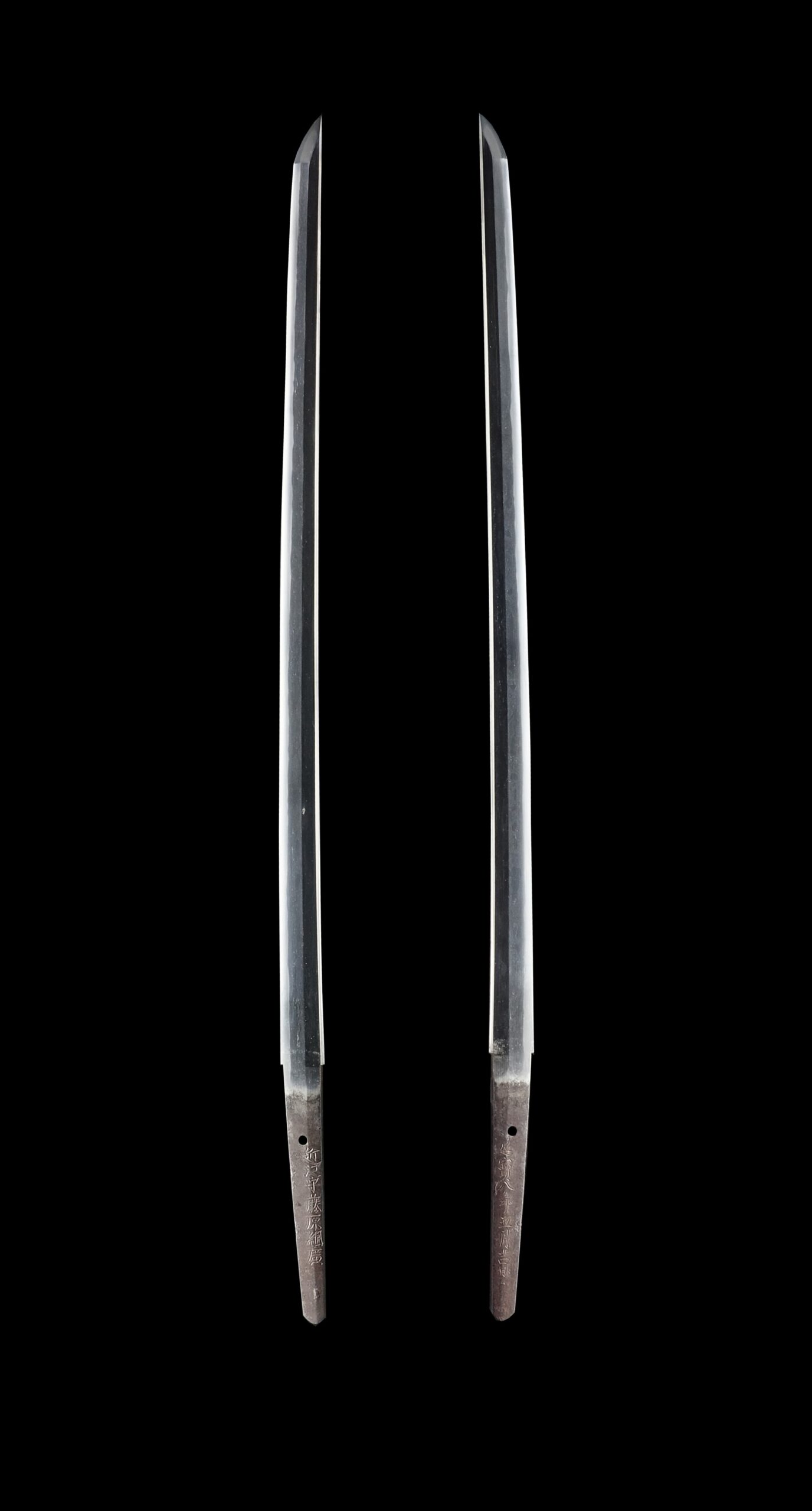
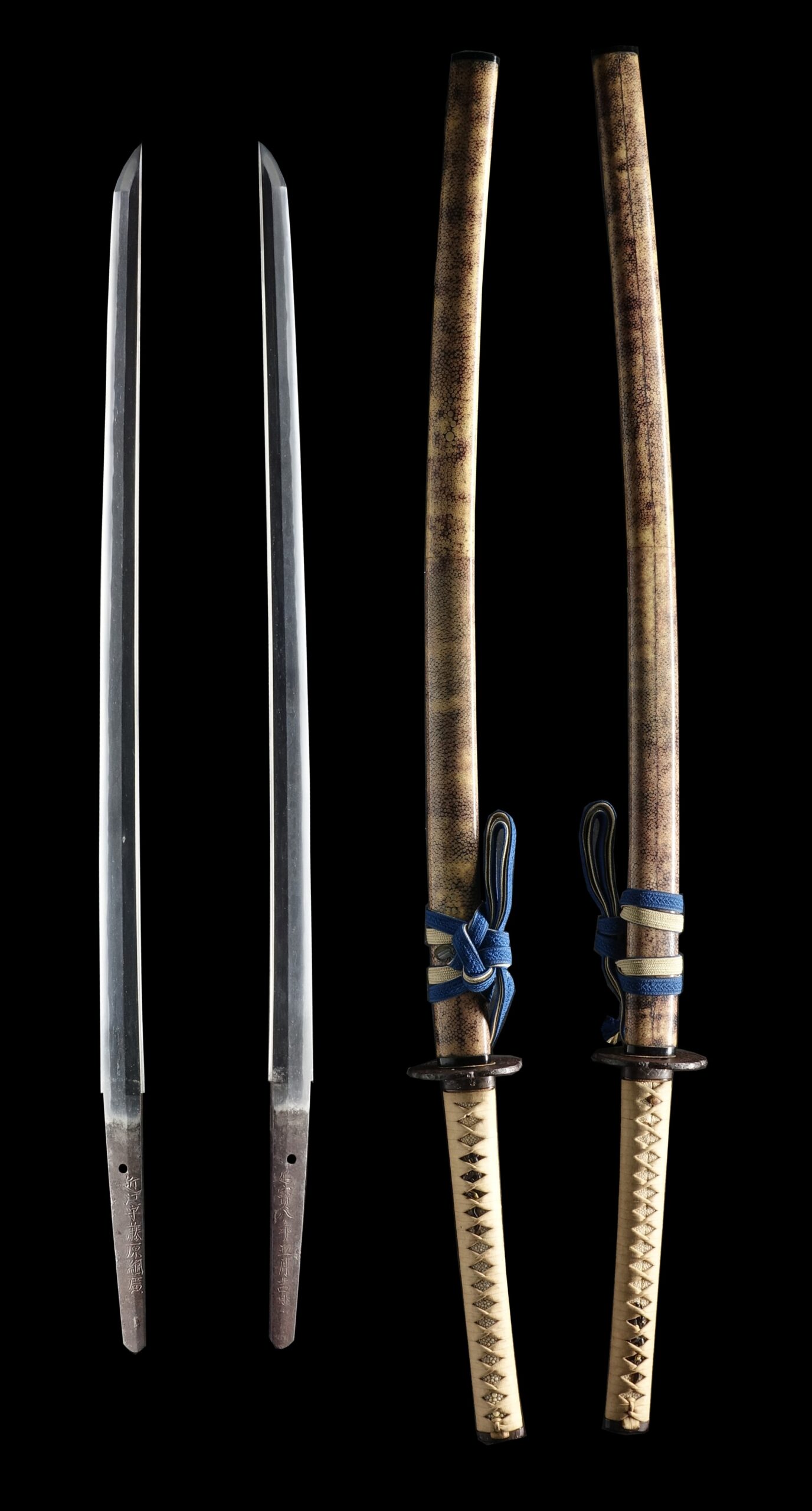
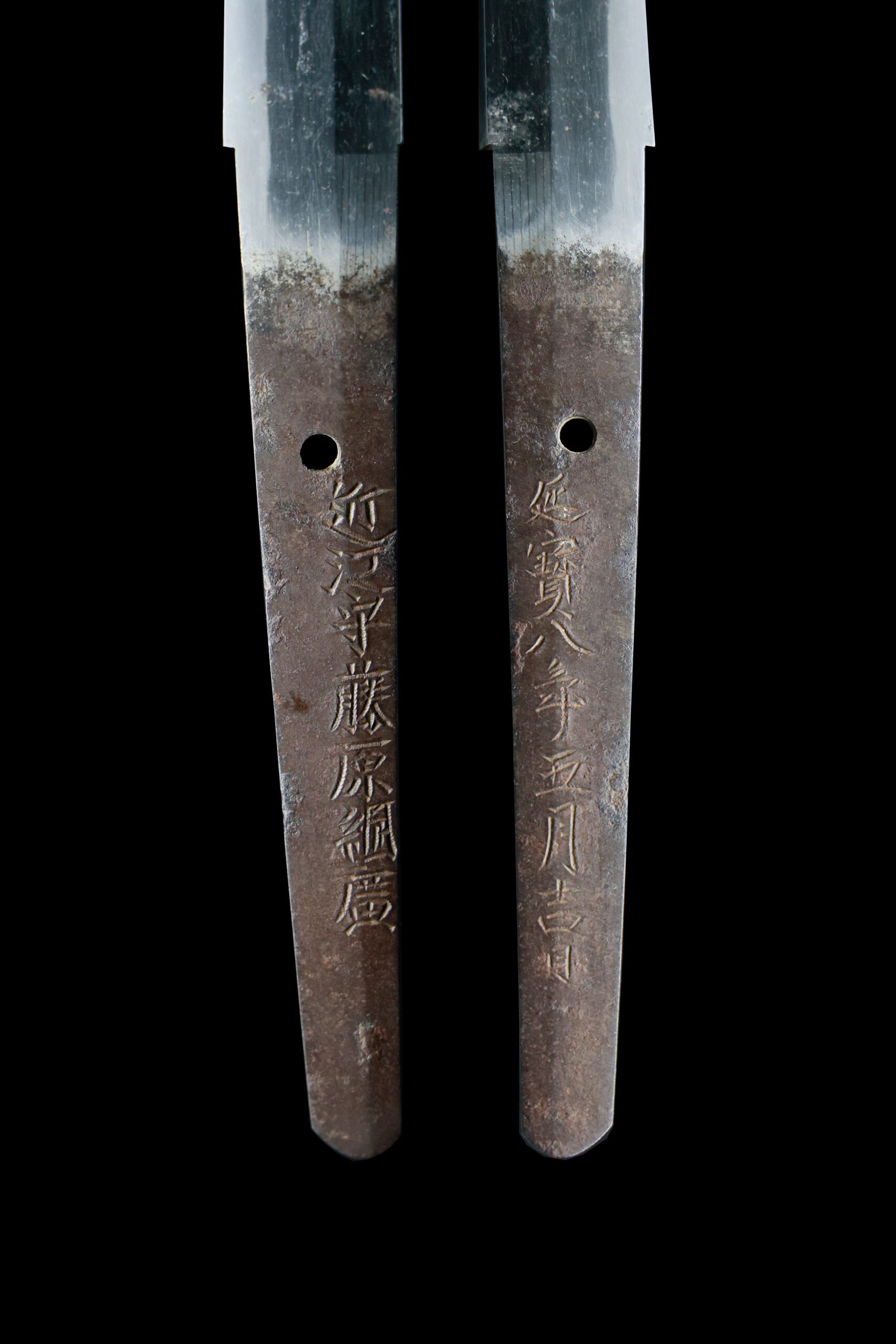
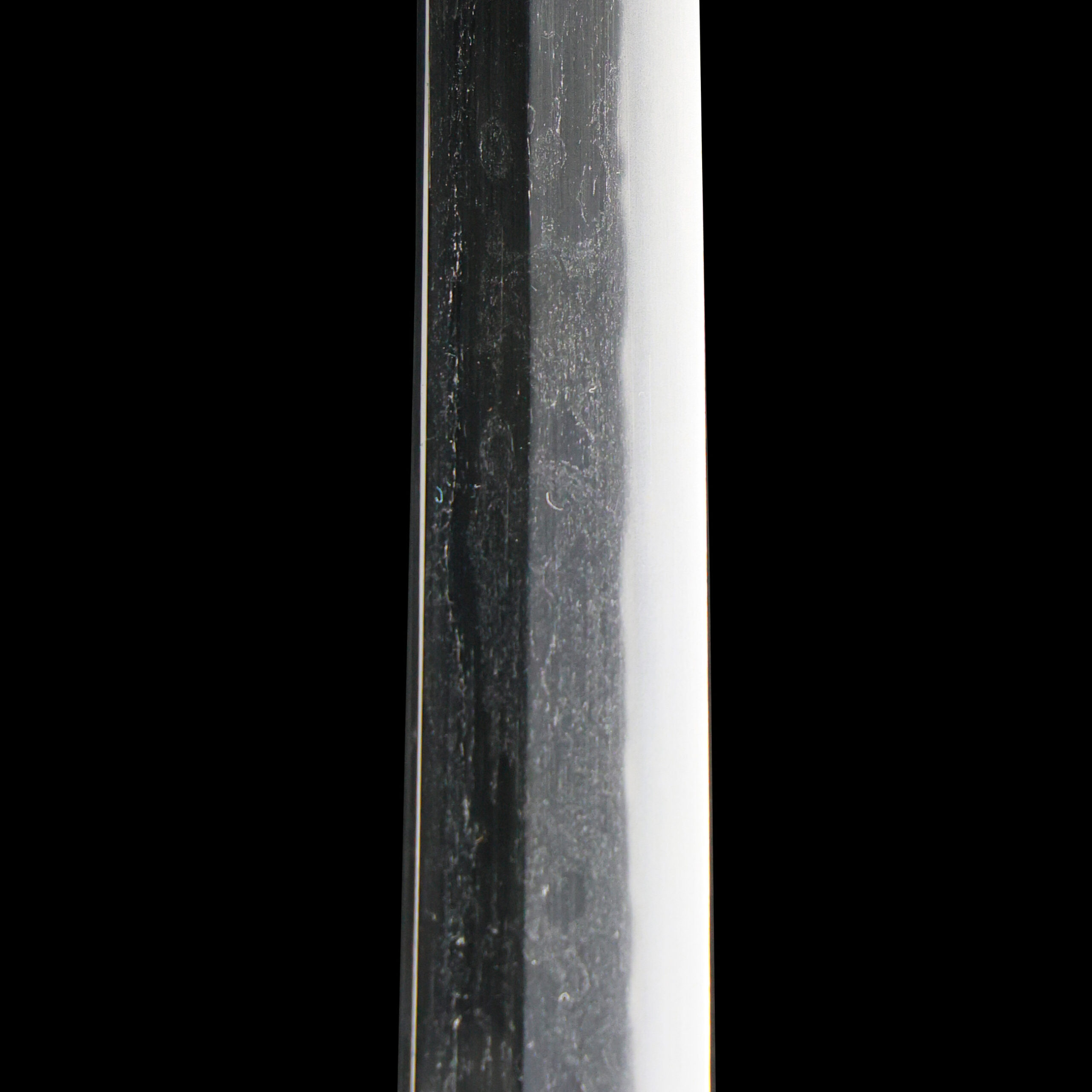
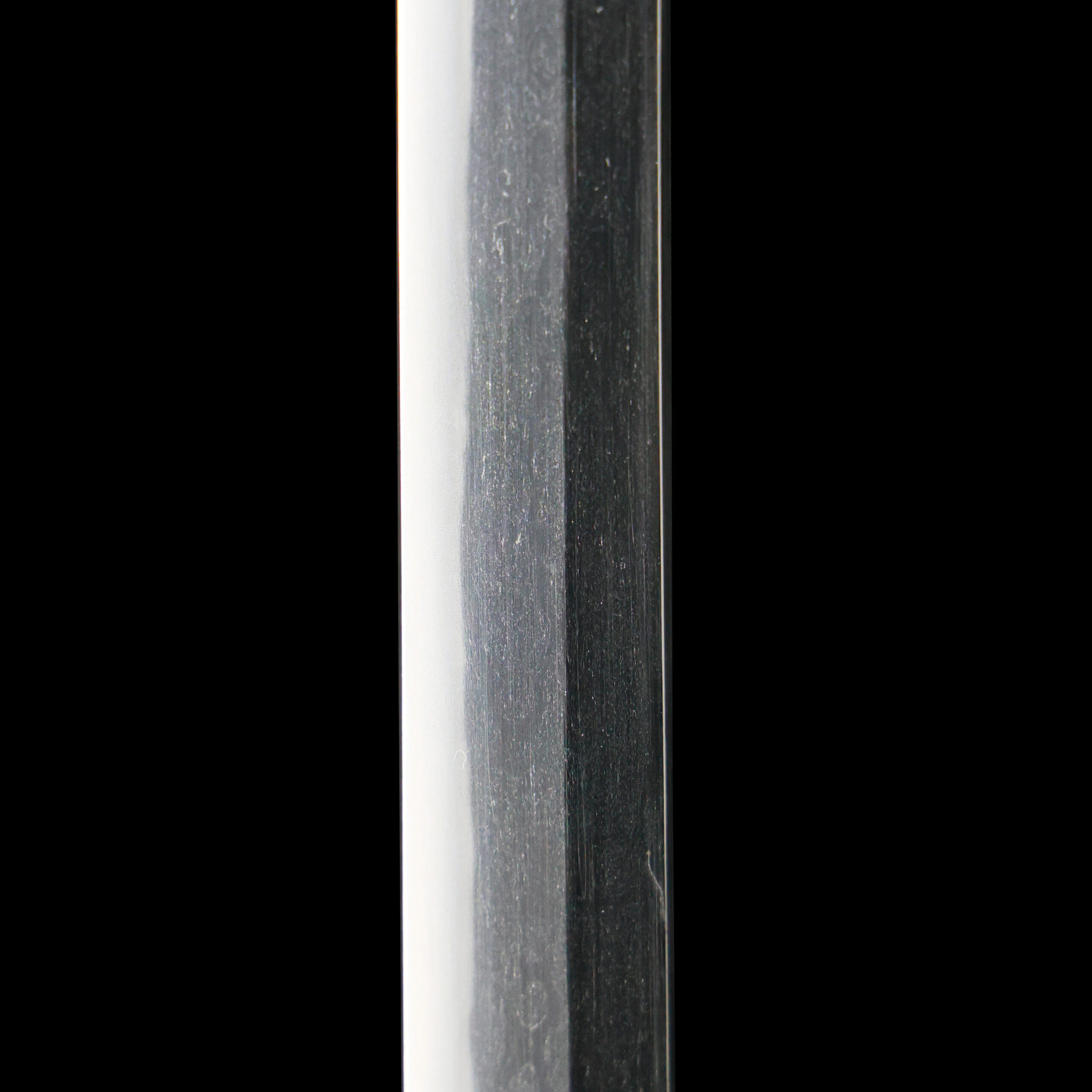
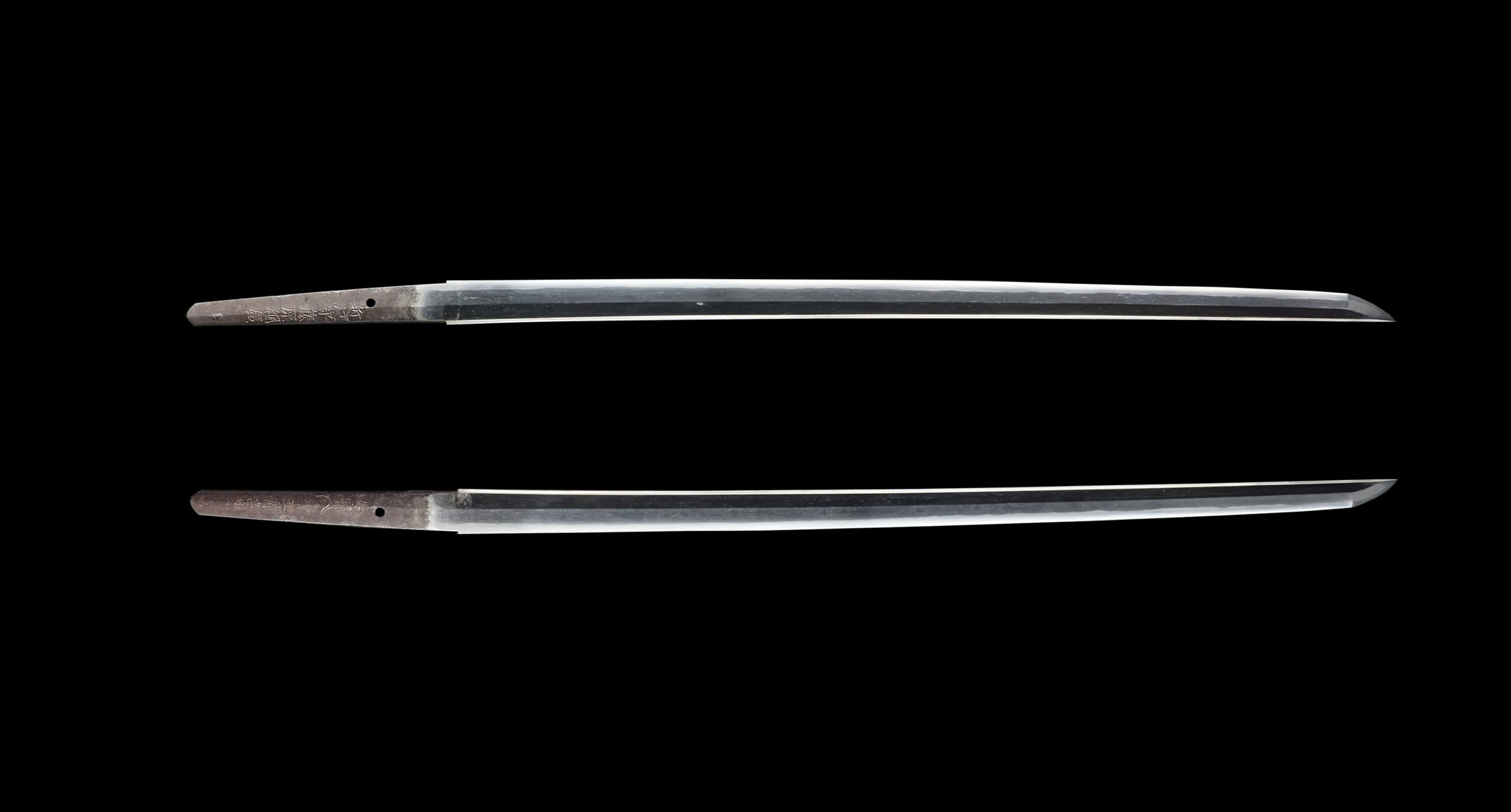
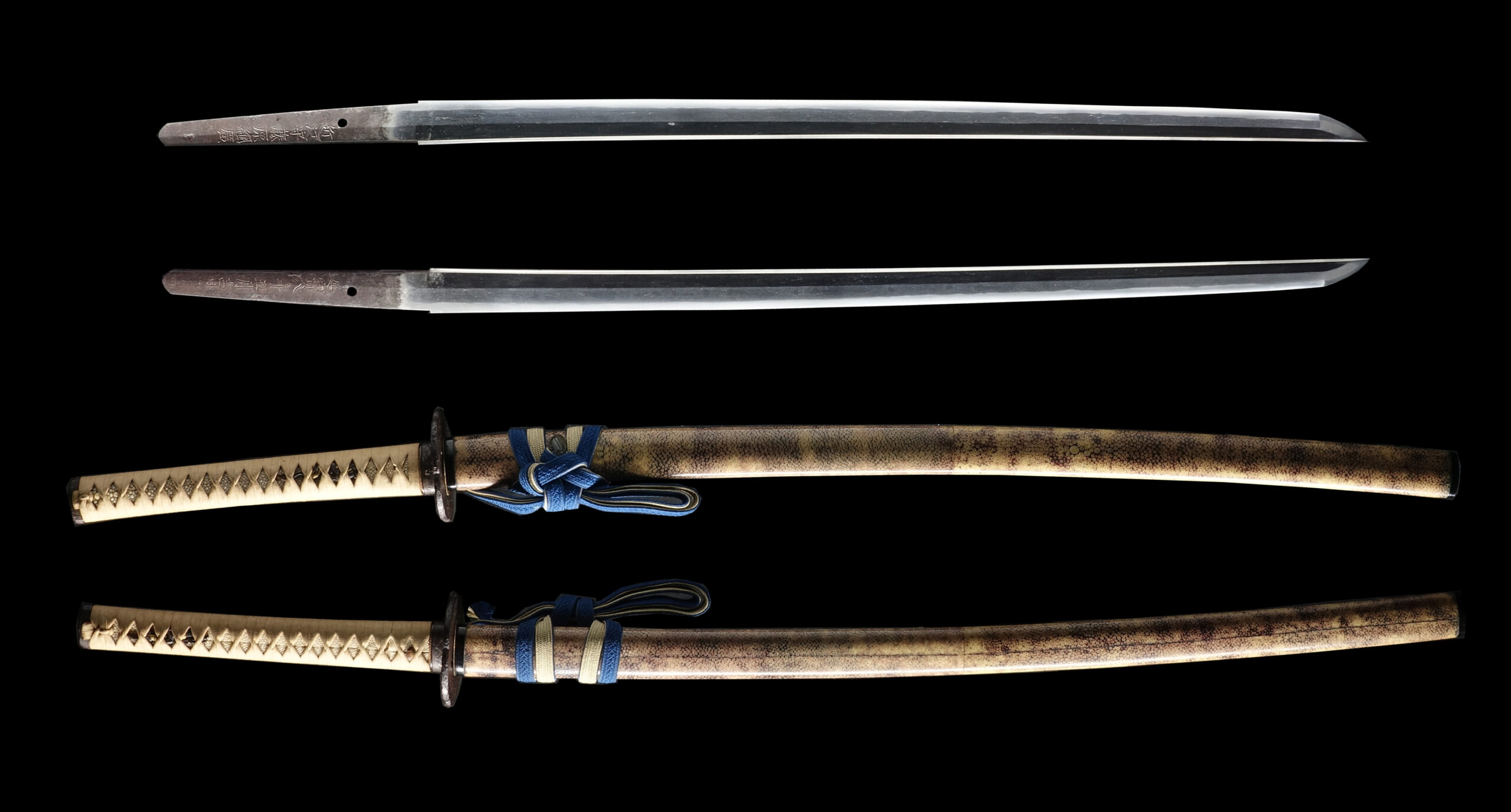
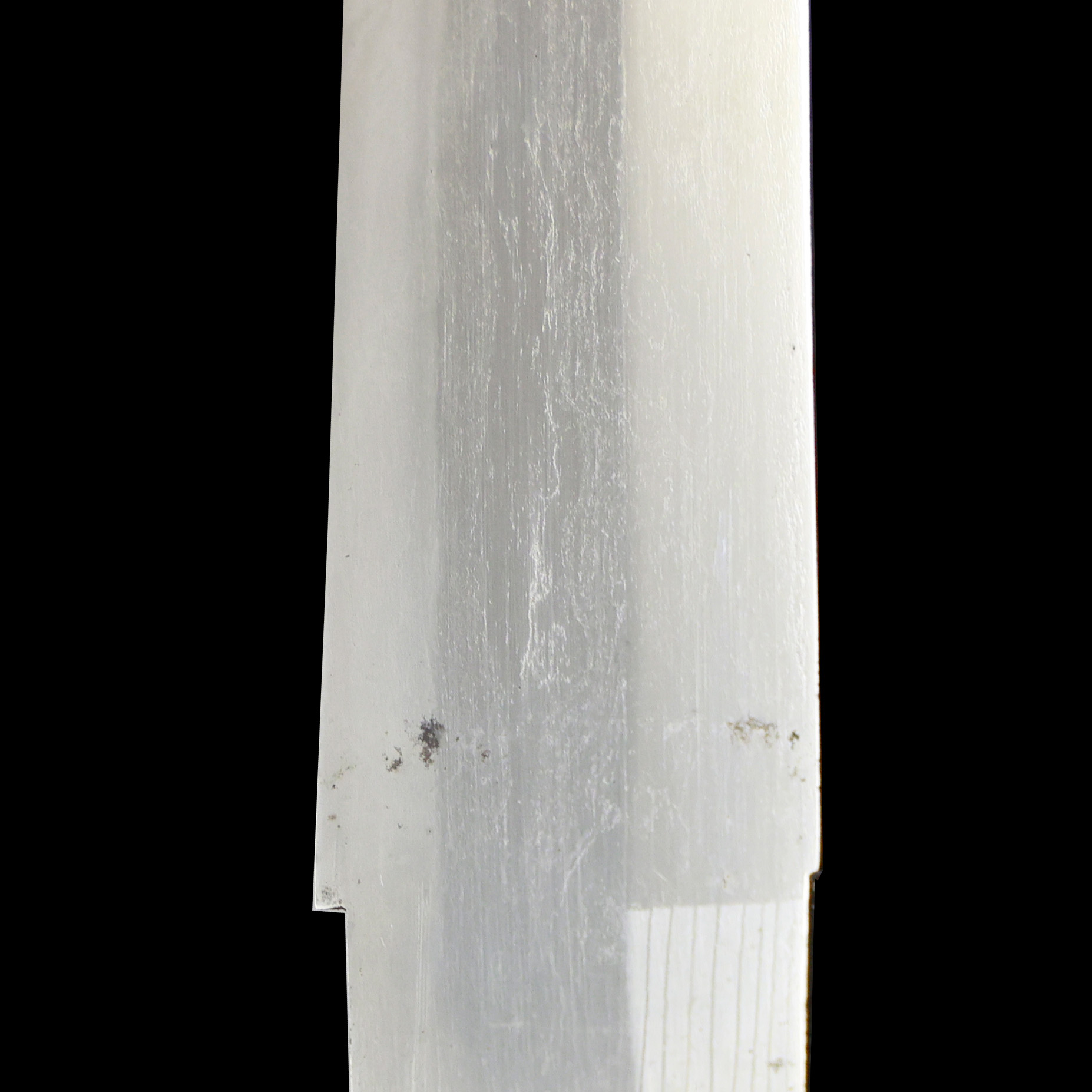
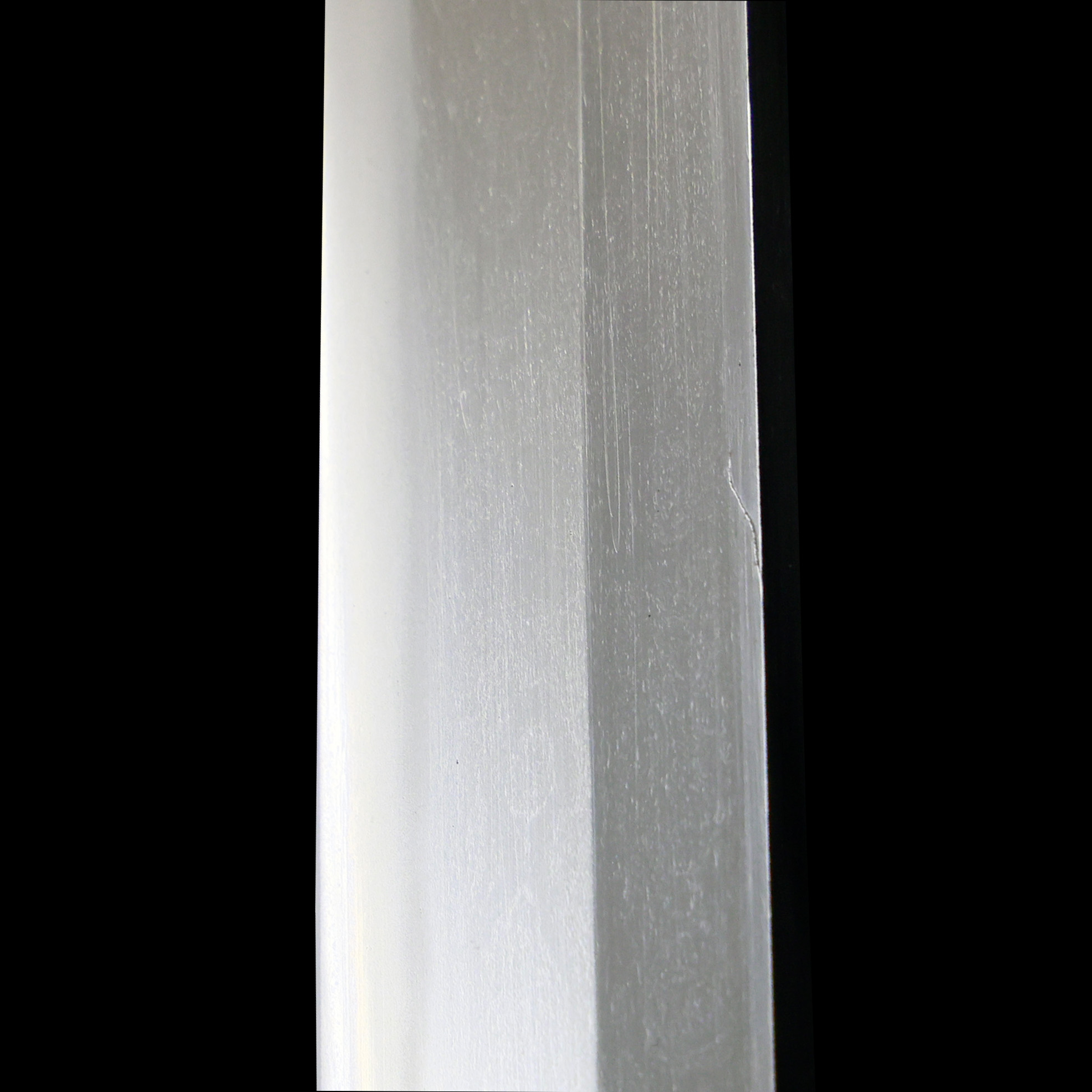
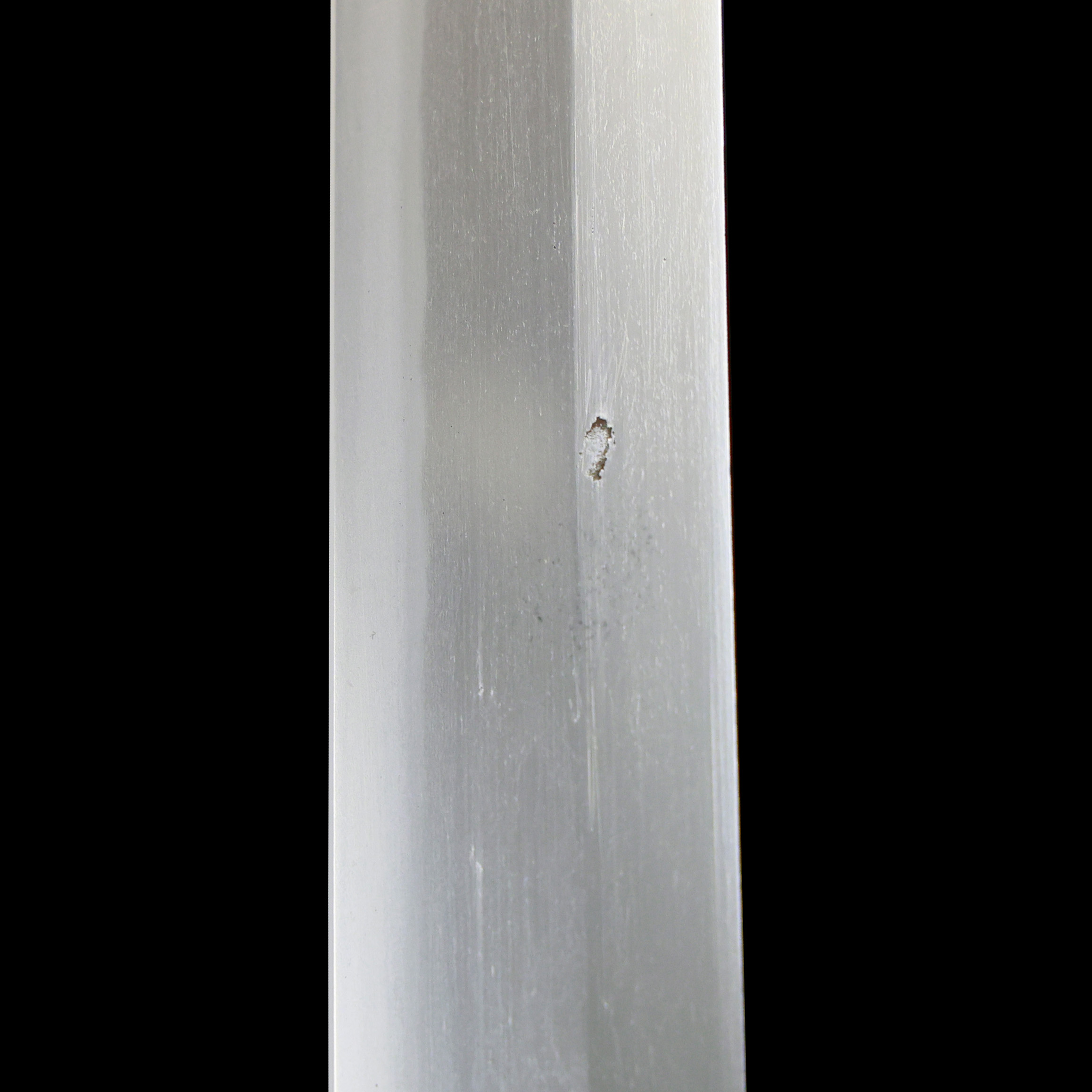
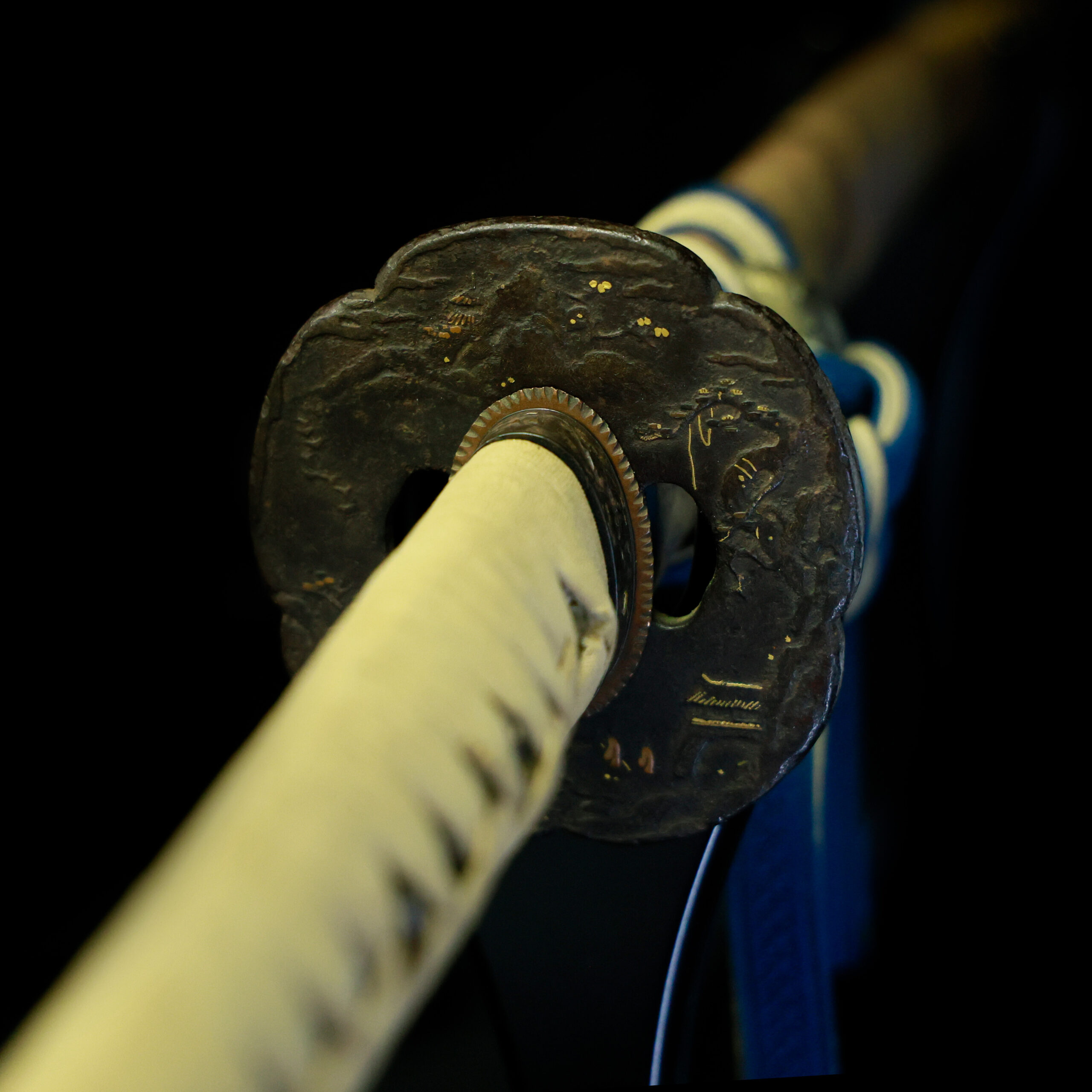
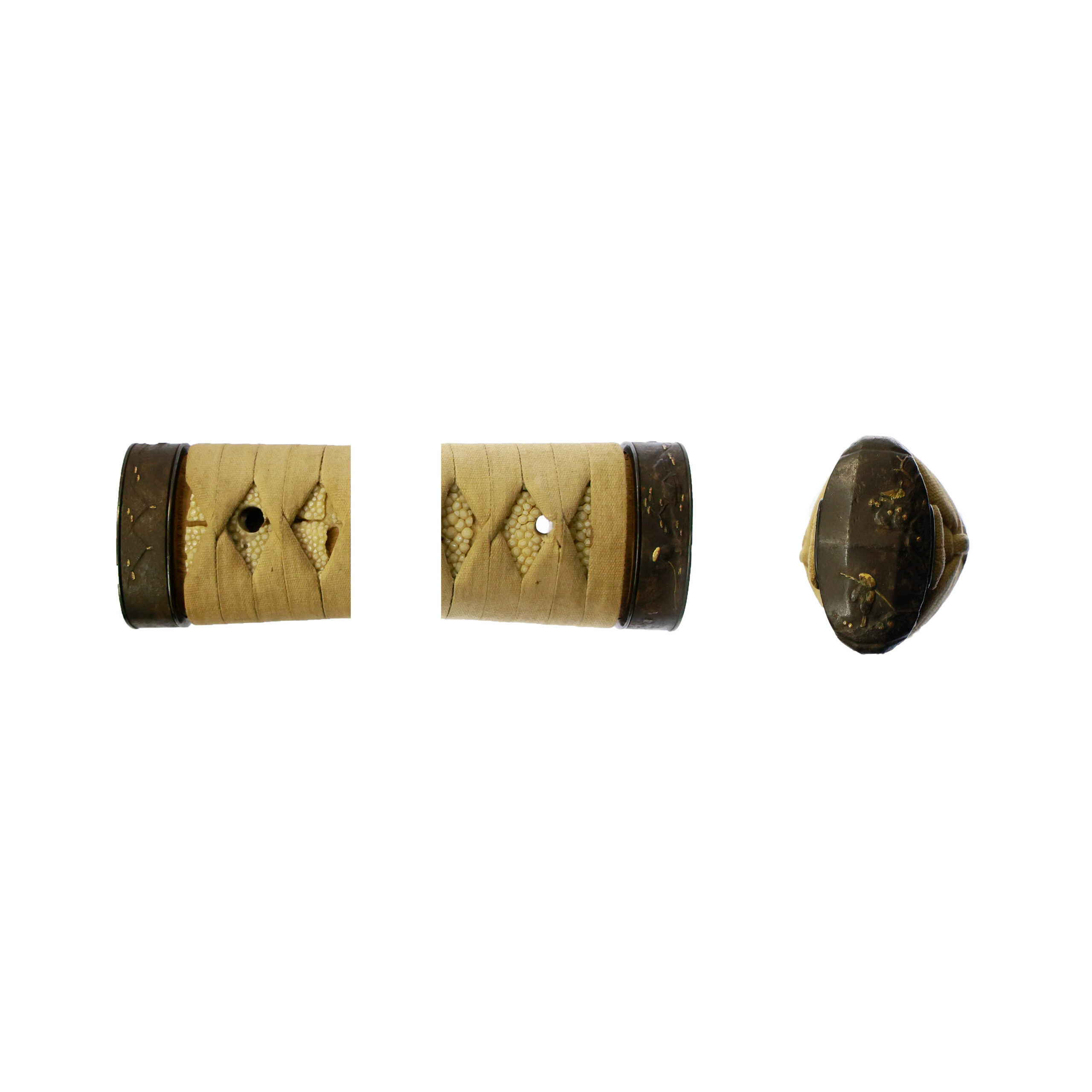
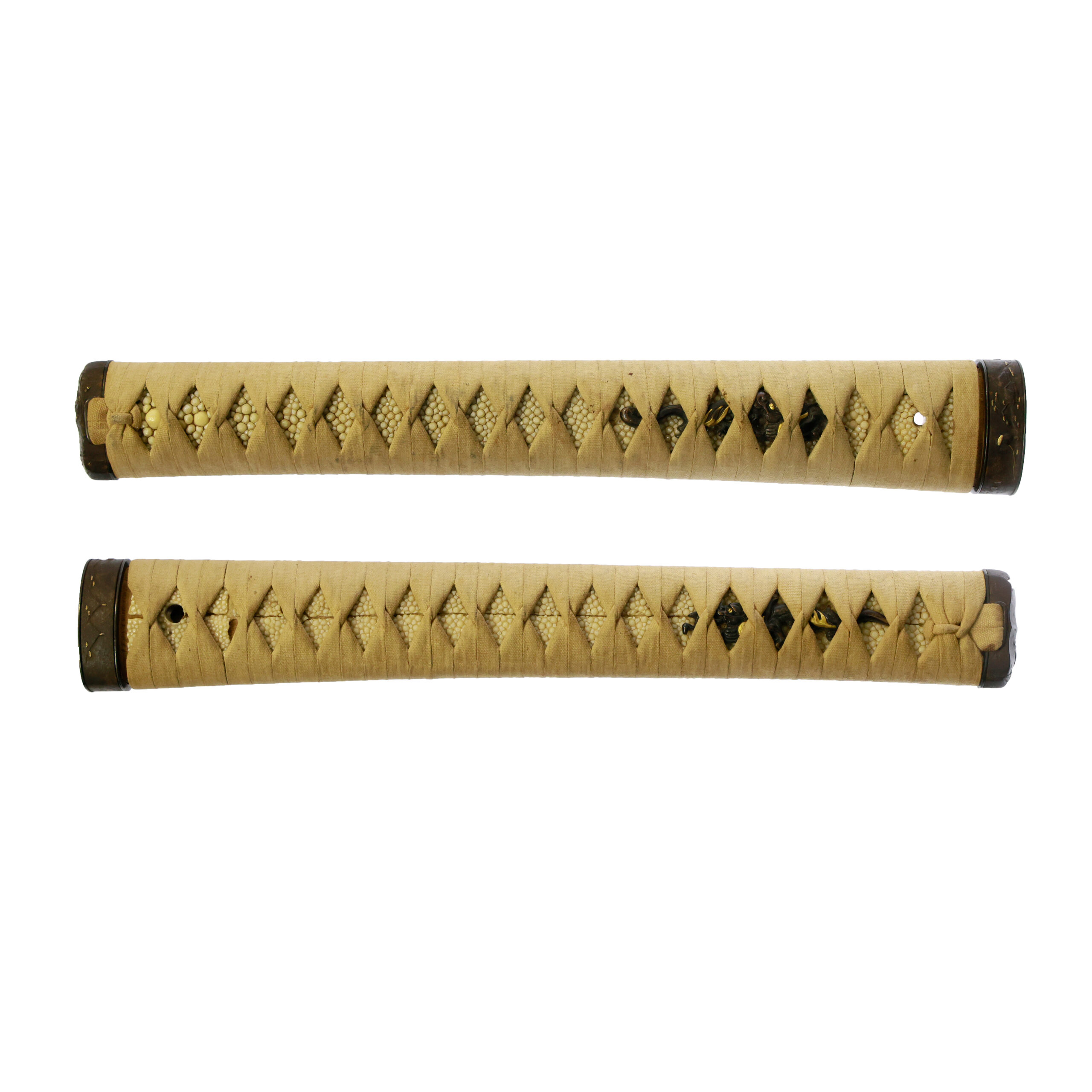
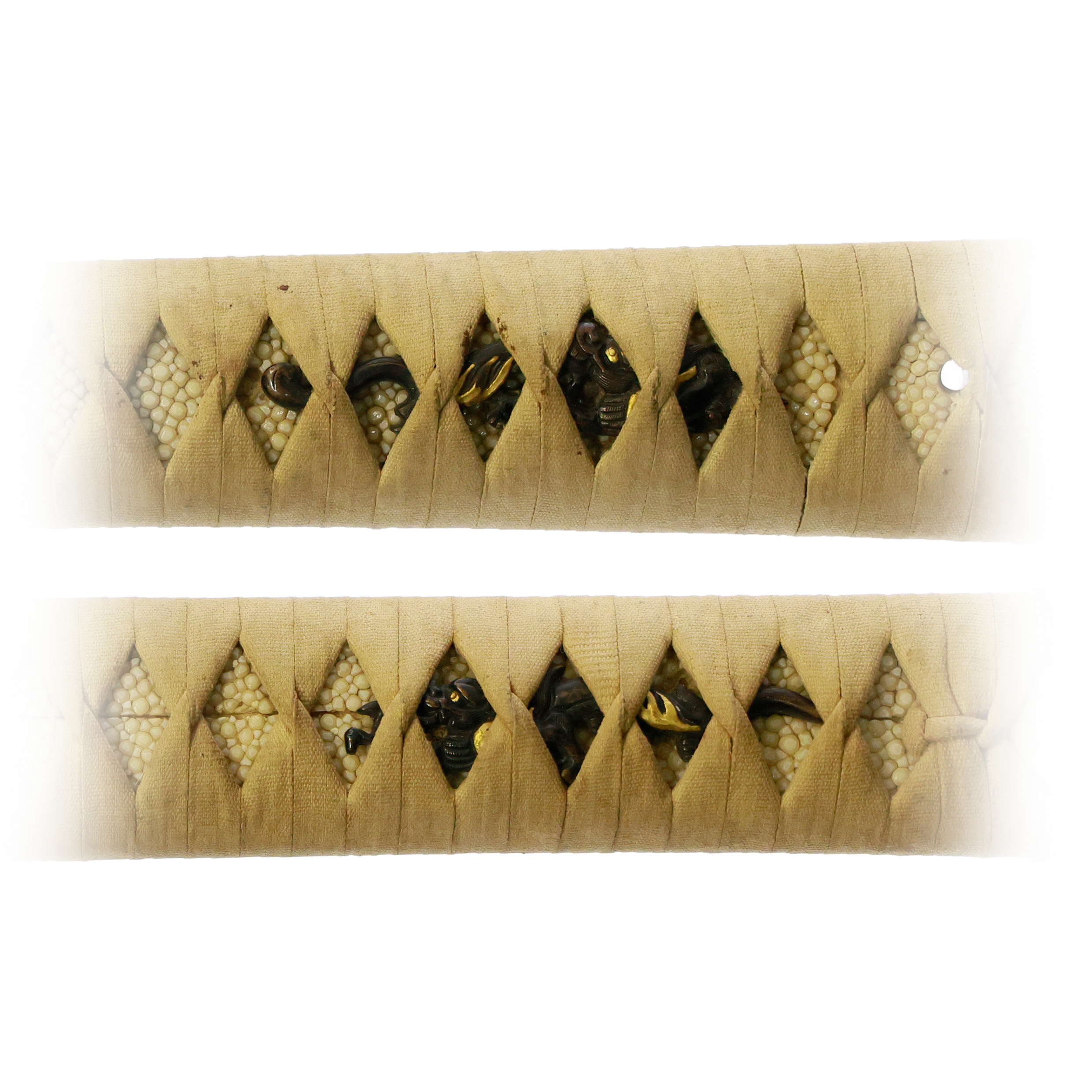
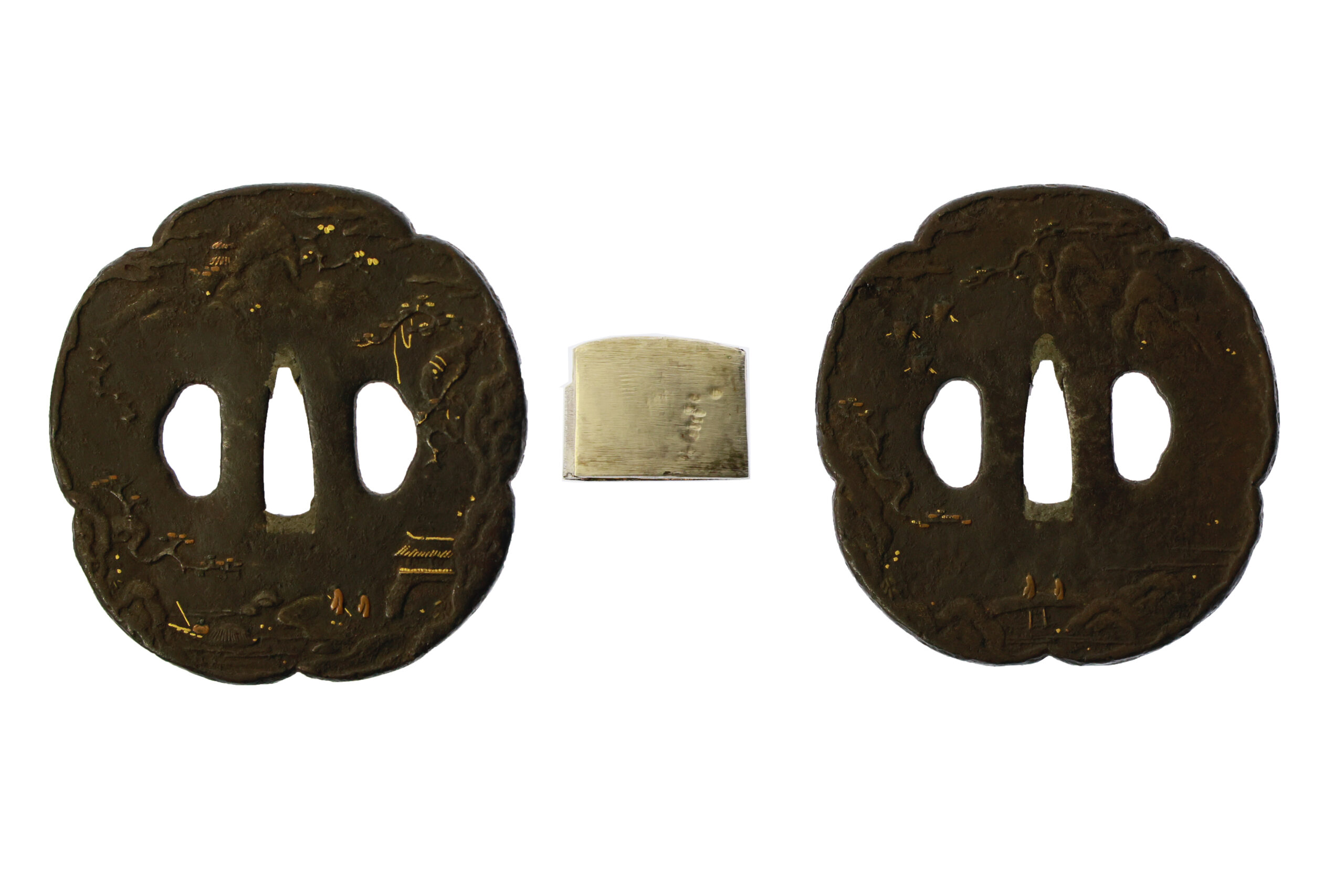
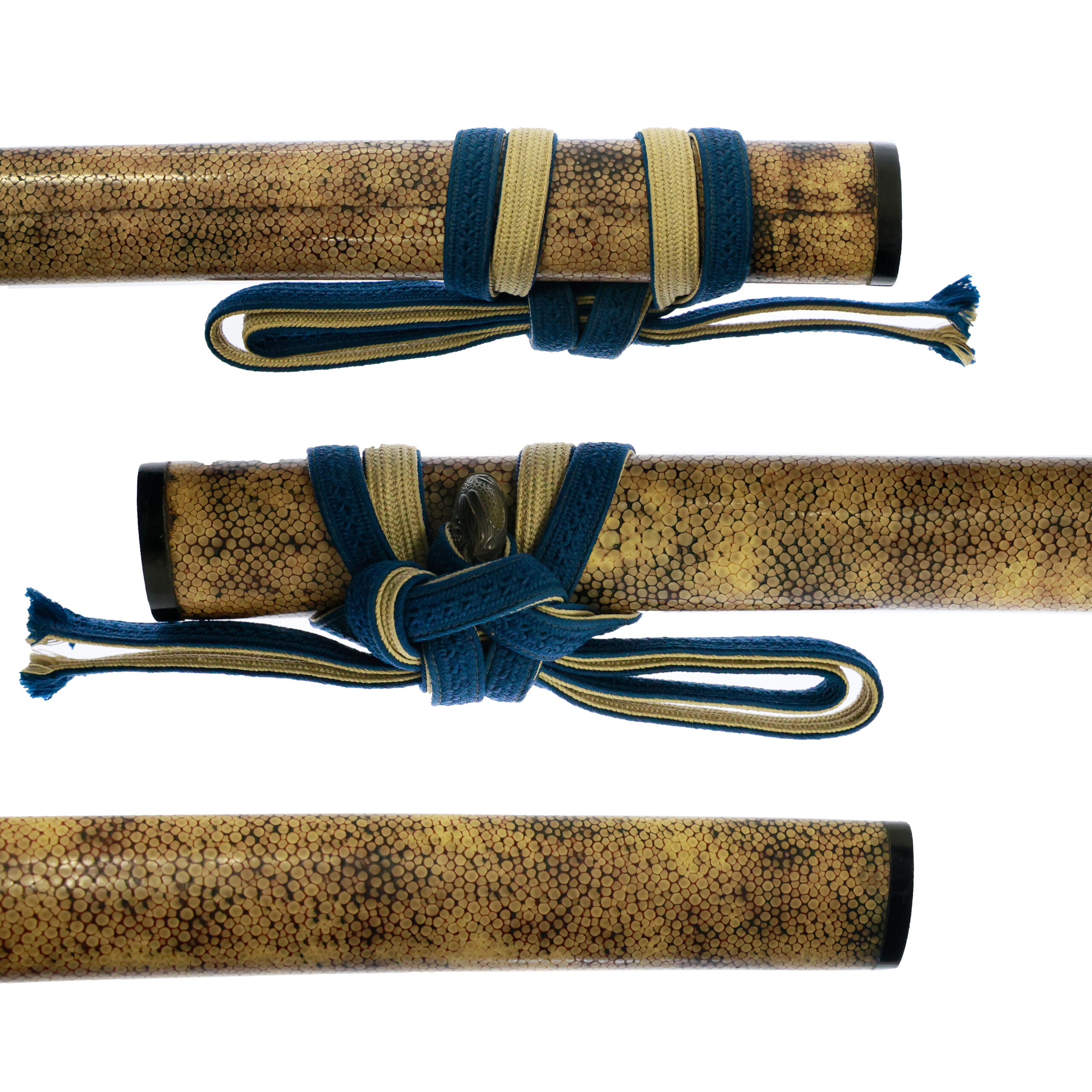
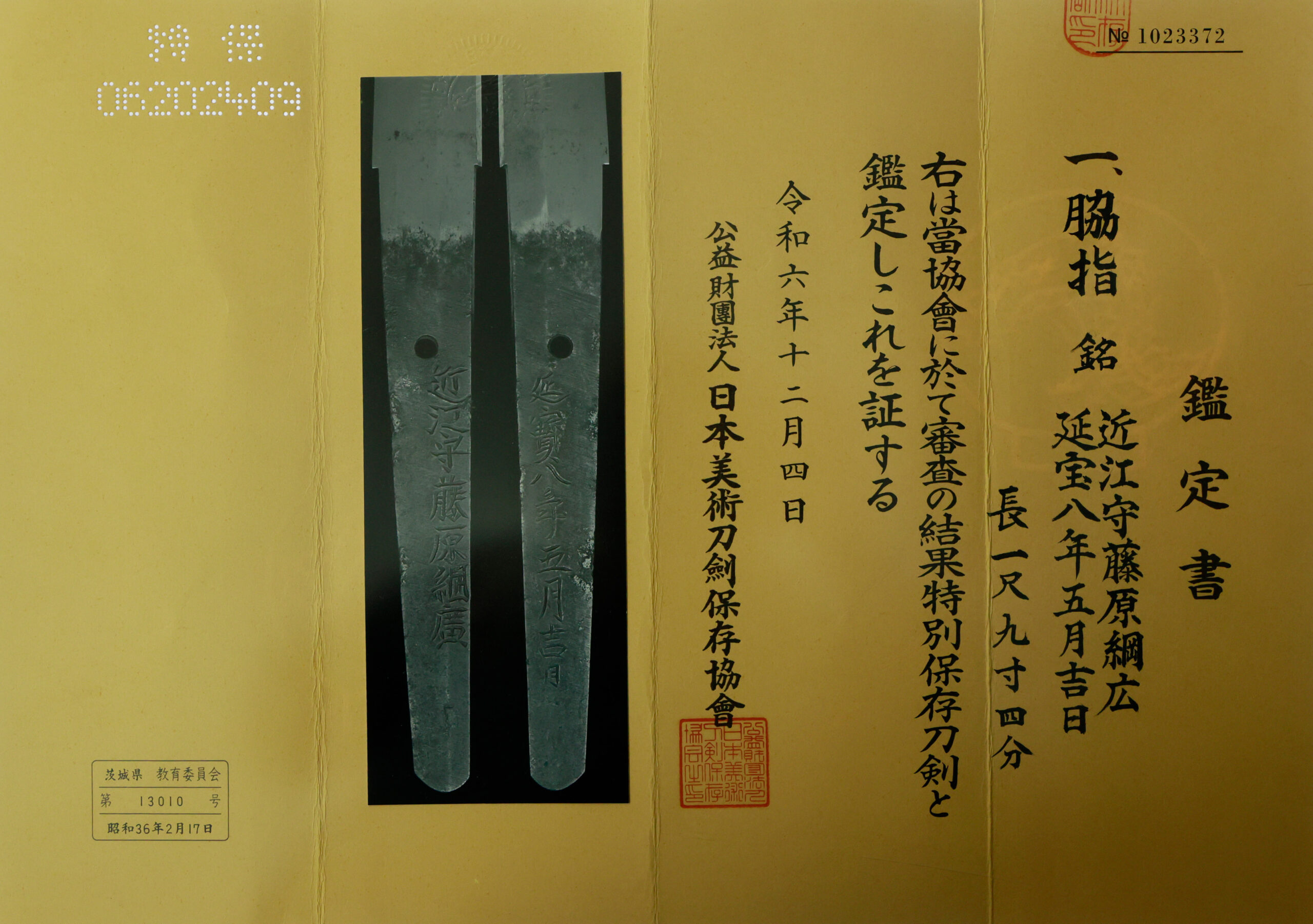
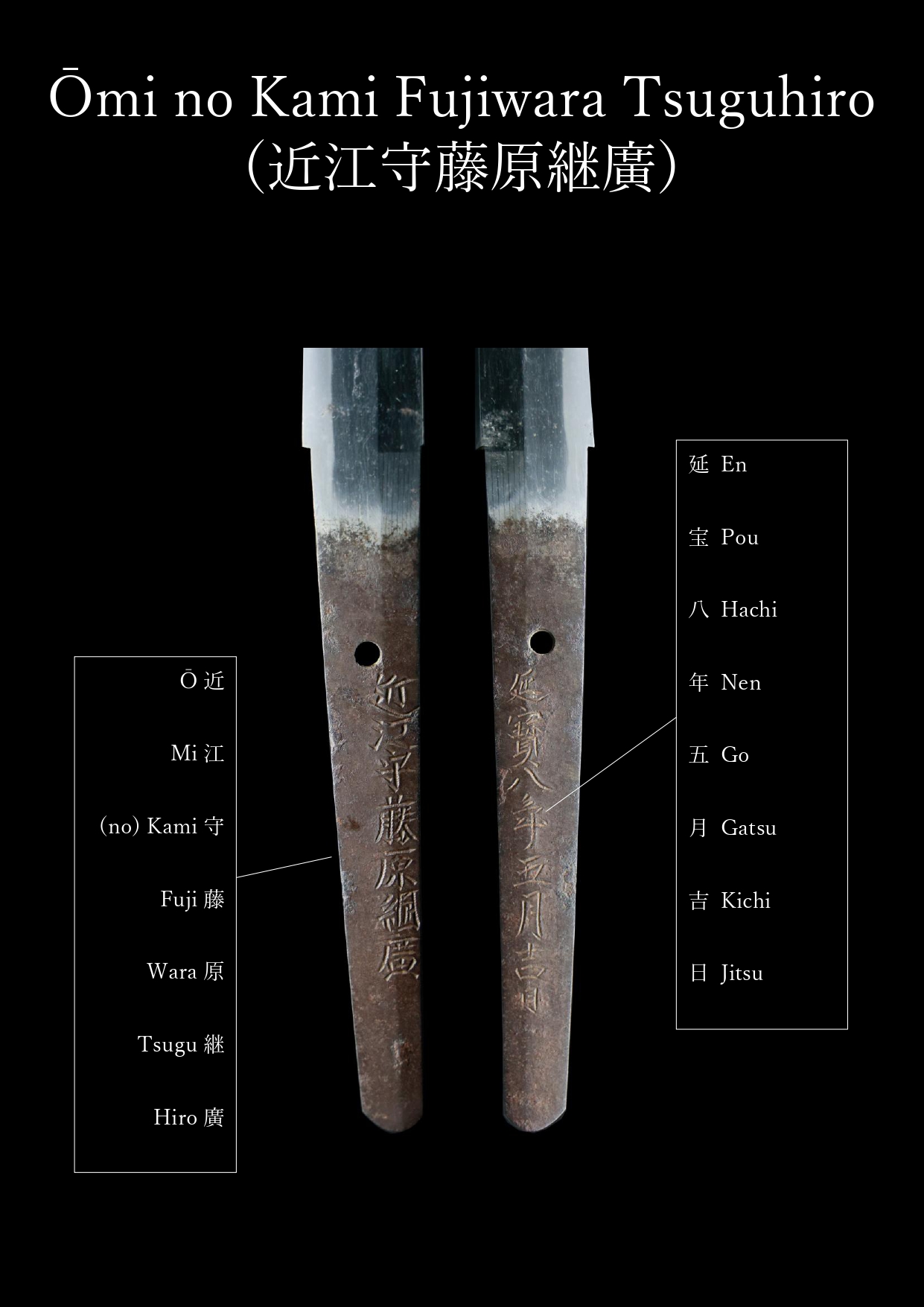
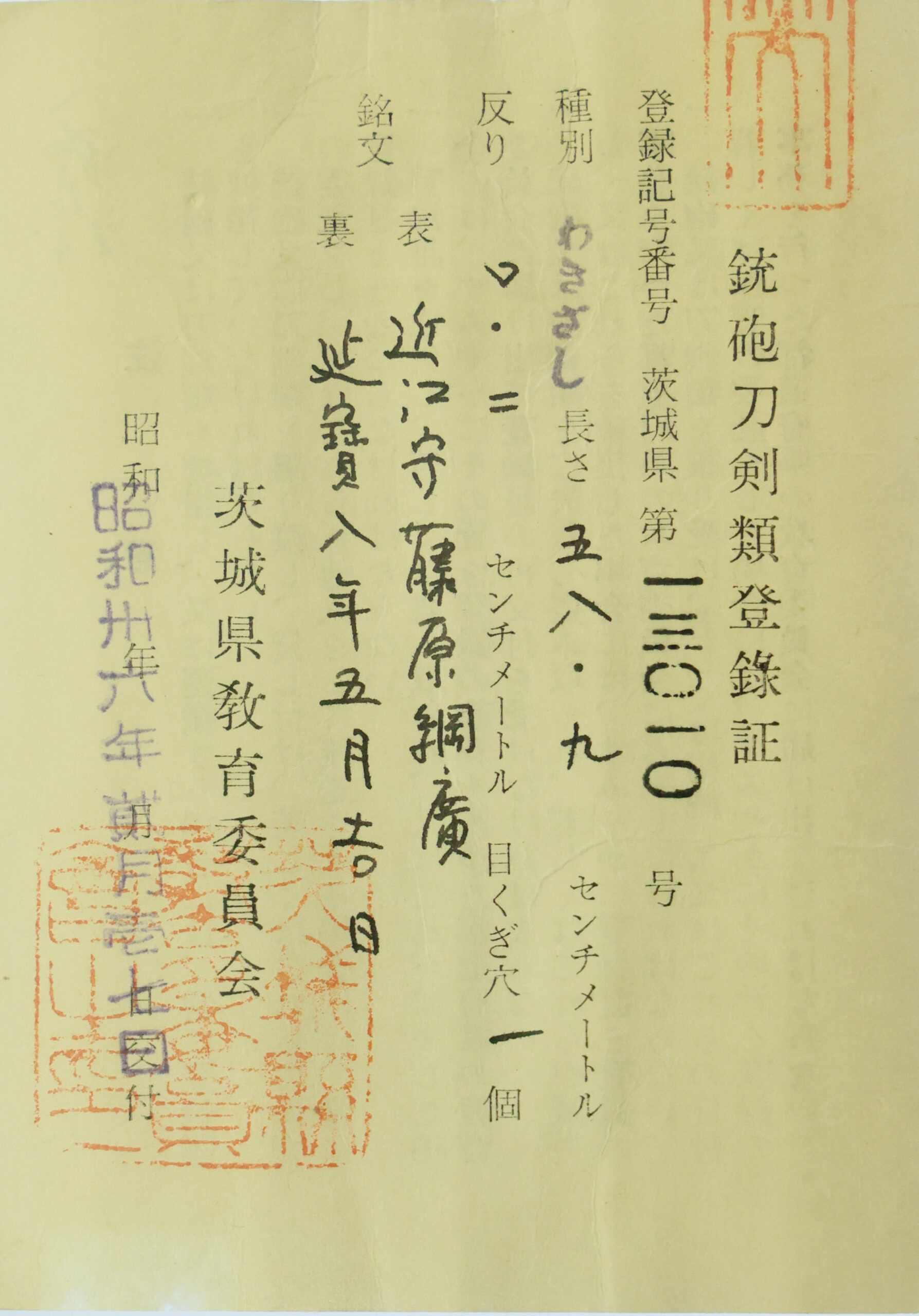
Antique Japanese Sword Wakizashi Signed by Omi no Kami Fujiwara Tsuguhiro with NBTHK Tokubetsu Hozon Certificate 【Description】 This blade was signed in May, the 8th year of Enpo era (延宝八年, 1680) by Omi no Kami Fujiwara Tsuguhiro (近江守藤原継広), who was a swordsmith of the Echizen Shimosaka school, especially active from around the Kanbun era (1661–1673). Though originally based in Echizen Province (modern-day Fukui Prefecture), he also worked in Edo (Tokyo) and Omi province (today’s Shiga prefecture), reflecting his broad appeal and high demand among samurai clientele. He was known as an apprentice of the third-gen Echizen Yasutsugu, who was the head of Ezhizen Shimosaka school. He received an honorable official title of Omi no Kami in his career. Kami is an honorable official title given by the imperial court for one’s excellent craftsmanship. Shimosaka school It is said that the first-gen Yasutsugu was the founder of the Echizen Shimoasaka school. He was born in Shimosaka town in Shiga prefecture at the end of the Muromachi period(Late 16 century ). He built his career there until the beginning of the Keicho era(1596). However, he moved to Echizen province due to the relocation of the lord he served. He eventually was noticed and supported by Matsudaira Hideyasu, the third son of Tokugawa Ieyasu, who was the founder of the Edo government. Hideysu was the feudal lord of Echizen province during the early Edo period. With the support of Hideyasu, the first-gen Yasutsugu was able to establish the Echizen Shimosaka school. And his school’s fame became nationwide. By Hideyasu’s recommendation, the first-gen Yasutsugu became Okakaekaji for the Tokugawa shogun family, meaning that he exclusively forged swords for the Shogun family. Yasutsu was acknowledged by the first and second Tokugawa Shoguns, Tokugawa Ieyasu, and Tokugawa Hidetada. The first-gen Yasutsugu received 康(YASU) from Tokugawa Ieyasu and changed his maker’s name. He was also allowed to inscribe the holly oak symbol(family crest of Tokugawa) on the tang. The school flourished during the Edo period and trained many skilled apprentices. Third-gen Yasutsugu, the master of Tsuguhiro, was a successor of the first-gen. It is appraised as a Tokubetsu Hozon Token (特別保存刀剣) issued by NBTHK (Nihon Bijutsu Touken Hozon Kyokai: 日本美術刀剣保存協会). This authentication paper was only given to authentic Japanese swords, especially well preserved and high quality with artistic value. *Please keep in mind that there are a couple of Kitae Kizu on this blade. If you like to know the detailed condition, please feel free to contact us. 【Blade】 Cutting Edge Length (Nagasa) : 58.9 cm (19.5 inches) Curvature (Sori) : 0.2 cm (0.07 inches) Hamon : The crystalline structure which forms along the cutting edge of a blade as a result of the hardening process. Jimon(Jihada) : visible steel surface pattern created by folding and hammering during forging process Kissaki : Kissaki is the tip of the Japanese sword. Nakago : Nakago is the tang of the Japanese sword. Japanese swordsmiths left the black rust on the tang because it prevents red rust while the tang is in its handle. And the discoloration of the tang was created over time, and it is a great indicator for a Japanese sword specialist to estimate when the sword was forged. Koshirae : Koshirae is the mounting of the Japanese sword. There are several parts that consist of Koshirae such as Saya (Scabbard), Tsuka (Handle), Tsuba (Handguard). Fuchi-Kashira : A pair of matching sword fittings that cover the upper and bottom parts of its sword hilt. This Fuchi-kashira features a sansui-ga (landscape painting) motif, within which a lone fisherman is depicted. In traditional East Asian landscape art, fishermen frequently appear as symbolic figures admired by scholars and literati. They represent various ideals: freedom from worldly constraints, as inspired by the ancient Chinese poem Fisherman’s Song (漁夫辞, Gyofu-shi); hidden talent or sage-like wisdom, drawing from

NihontoWatch MonNihontoWatch
MarketEncyclopediaKantei
刀剣›繼廣›Edo Wakizashi Signed by Omi no Kami Fujiwara Tsuguhiro | Samurai Museum Shop
脇差特別保存
繼廣

Edo Wakizashi Signed by Omi no Kami Fujiwara Tsuguhiro | Samurai Museum Shop

在銘 · Echizen Shimosaka · 寛文 · 長さ 58.9cm · 反り 0.2cm

売却済
繼廣 — 1 of 25
繼廣 — 2 of 25
繼廣 — 3 of 25
繼廣 — 4 of 25
繼廣 — 5 of 25
繼廣 — 6 of 25
繼廣 — 7 of 25
繼廣 — 8 of 25
繼廣 — 9 of 25
繼廣 — 10 of 25
繼廣 — 11 of 25
繼廣 — 12 of 25
繼廣 — 13 of 25
繼廣 — 14 of 25
繼廣 — 15 of 25
繼廣 — 16 of 25
繼廣 — 17 of 25
繼廣 — 18 of 25
繼廣 — 19 of 25
繼廣 — 20 of 25
繼廣 — 21 of 25
繼廣 — 22 of 25
繼廣 — 23 of 25
繼廣 — 24 of 25
繼廣 — 25 of 25
1 / 25
1 / 25
繼廣 — 1 of 25繼廣 — 2 of 25繼廣 — 3 of 25繼廣 — 4 of 25繼廣 — 5 of 25繼廣 — 6 of 25繼廣 — 7 of 25繼廣 — 8 of 25繼廣 — 9 of 25繼廣 — 10 of 25繼廣 — 11 of 25繼廣 — 12 of 25繼廣 — 13 of 25繼廣 — 14 of 25繼廣 — 15 of 25繼廣 — 16 of 25繼廣 — 17 of 25繼廣 — 18 of 25繼廣 — 19 of 25繼廣 — 20 of 25繼廣 — 21 of 25繼廣 — 22 of 25繼廣 — 23 of 25繼廣 — 24 of 25繼廣 — 25 of 25
法量・詳細
刀工
繼廣
種別
脇差
活動期
1661–1673年頃(Kanbun)
国
越前
銘
在銘
法量
長さ 58.9cm反り 0.2cm
説明

Antique Japanese Sword Wakizashi Signed by Omi no Kami Fujiwara Tsuguhiro with NBTHK Tokubetsu Hozon Certificate 【Description】 This blade was signed in May, the 8th year of Enpo era (延宝八年, 1680) by Omi no Kami Fujiwara Tsuguhiro (近江守藤原継広), who was a swordsmith of the Echizen Shimosaka school, especially active from around the Kanbun era (1661–1673). Though originally based in Echizen Province (modern-day Fukui Prefecture), he also worked in Edo (Tokyo) and Omi province (today’s Shiga prefecture), reflecting his broad appeal and high demand among samurai clientele. He was known as an apprentice of the third-gen Echizen Yasutsugu, who was the head of Ezhizen Shimosaka school. He received an honorable official title of Omi no Kami in his career. Kami is an honorable official title given by the imperial court for one’s excellent craftsmanship. Shimosaka school It is said that the first-gen Yasutsugu was the founder of the Echizen Shimoasaka school. He was born in Shimosaka town in Shiga prefecture at the end of the Muromachi period(Late 16 century ). He built his career there until the beginning of the Keicho era(1596). However, he moved to Echizen province due to the relocation of the lord he served. He eventually was noticed and supported by Matsudaira Hideyasu, the third son of Tokugawa Ieyasu, who was the founder of the Edo government. Hideysu was the feudal lord of Echizen province during the early Edo period. With the support of Hideyasu, the first-gen Yasutsugu was able to establish the Echizen Shimosaka school. And his school’s fame became nationwide. By Hideyasu’s recommendation, the first-gen Yasutsugu became Okakaekaji for the Tokugawa shogun family, meaning that he exclusively forged swords for the Shogun family. Yasutsu was acknowledged by the first and second Tokugawa Shoguns, Tokugawa Ieyasu, and Tokugawa Hidetada. The first-gen Yasutsugu received 康(YASU) from Tokugawa Ieyasu and changed his maker’s name. He was also allowed to inscribe the holly oak symbol(family crest of Tokugawa) on the tang. The school flourished during the Edo period and trained many skilled apprentices. Third-gen Yasutsugu, the master of Tsuguhiro, was a successor of the first-gen. It is appraised as a Tokubetsu Hozon Token (特別保存刀剣) issued by NBTHK (Nihon Bijutsu Touken Hozon Kyokai: 日本美術刀剣保存協会). This authentication paper was only given to authentic Japanese swords, especially well preserved and high quality with artistic value. *Please keep in mind that there are a couple of Kitae Kizu on this blade. If you like to know the detailed condition, please feel free to contact us. 【Blade】 Cutting Edge Length (Nagasa) : 58.9 cm (19.5 inches) Curvature (Sori) : 0.2 cm (0.07 inches) Hamon : The crystalline structure which forms along the cutting edge of a blade as a result of the hardening process. Jimon(Jihada) : visible steel surface pattern created by folding and hammering during forging process Kissaki : Kissaki is the tip of the Japanese sword. Nakago : Nakago is the tang of the Japanese sword. Japanese swordsmiths left the black rust on the tang because it prevents red rust while the tang is in its handle. And the discoloration of the tang was created over time, and it is a great indicator for a Japanese sword specialist to estimate when the sword was forged. Koshirae : Koshirae is the mounting of the Japanese sword. There are several parts that consist of Koshirae such as Saya (Scabbard), Tsuka (Handle), Tsuba (Handguard). Fuchi-Kashira : A pair of matching sword fittings that cover the upper and bottom parts of its sword hilt. This Fuchi-kashira features a sansui-ga (landscape painting) motif, within which a lone fisherman is depicted. In traditional East Asian landscape art, fishermen frequently appear as symbolic figures admired by scholars and literati. They represent various ideals: freedom from worldly constraints, as inspired by the ancient Chinese poem Fisherman’s Song (漁夫辞, Gyofu-shi); hidden talent or sage-like wisdom, drawing from

作者について

繼廣

越前 · 1661-1673頃

藤代 Chu-jo saku · 刀剣大鑑 上位60%

現在5点販売中

›
繼廣の作 5点が現在販売中→
繼廣 — 詳細

歴史的背景

二世紀半の泰平のあいだ、刀は武器である以上に武士の身分の標章であった。江戸の実証と大坂の華やぎのように都市ごとの作風が育ち、時代の末には需要も細っていく。

江戸時代 →

NBTHK鑑定書
Tokubetsu Hozon Tōken特別保存刀剣
Sword Especially Worthy of Preservation
›

保存刀剣のうち、出来が一層優れ、保存状態も良好と認められたものです。再刃や、室町・江戸期の多くの無銘作は対象外となり、保存刀剣より高い基準が課されます。

NBTHKについて›

日本美術刀剣保存協会(NBTHK)は、1948年に設立され、文化庁の監督を受ける公益財団法人で、東京・刀剣博物館に本部を置きます。専門の審査員が出品作を直接審査し、美術的・歴史的価値に応じた鑑定書を発行します。NBTHKの鑑定書は、日本刀および刀装具の真正性を示す最も広く認知された基準です。

NBTHK公式サイト→
販売店
サ
サムライミュージアム
🇯🇵日本から発送
›
✓認証販売店samuraimuseum.jp
✓海外発送可✓英語対応PayPalクレジットカード
返品ポリシー

Returns/exchanges limited to defects caused by shipping (except willful misconduct or gross negligence by the company); customers must contact within 72 hours of receiving the product.

サムライミュージアムの出品一覧を見る→販売店サイトでこの商品を見る→

繼廣の他の作

すべて見る →
葵美術
特別保存
Wakizashi - Tokuho - by Shimosaka Tsuguhiro - 脇差:以南蛮鉄近江守藤原継広 越前住下坂(特別保存刀剣)Wakizashi - Tokuho - by Shimosaka Tsuguhiro - 脇差:以南蛮鉄近江守藤原継広 越前住下坂(特別保存刀剣)

脇差

作繼廣
40cm·Kanbun (1661-1673)
¥480,000
刀心
特別保存
Wakizashi - Tokuho - by Shimosaka Tsuguhiro - 近江守藤原継広 越前住 3-731Wakizashi - Tokuho - by Shimosaka Tsuguhiro - 近江守藤原継広 越前住 3-731

脇差

作繼廣
53.62cm·新刀
¥330,000
刀心
保存
Katana - Hozon - by Shimosaka Tsuguhiro - 近江守藤原継広(2-1725)Katana - Hozon - by Shimosaka Tsuguhiro - 近江守藤原継広(2-1725)

刀

作繼廣
73.85cm·新刀
¥770,000
サムライミュージアム
特別保存
Katana - Tokuho - by Shimosaka Tsuguhiro - 日本刀 刀 銘 近江守藤原継広 NBTHK 特別保存刀剣鑑定書付Katana - Tokuho - by Shimosaka Tsuguhiro - 日本刀 刀 銘 近江守藤原継広 NBTHK 特別保存刀剣鑑定書付

刀

作繼廣
75.6cm·Genroku (1688-1704)
¥8,299
濃州堂
NTHK
Wakizashi - NTHK - by Shimosaka Tsuguhiro - 近江守藤原継広(廣)/46.6cmWakizashi - NTHK - by Shimosaka Tsuguhiro - 近江守藤原継広(廣)/46.6cm

脇差

作繼廣
46.6cm·Kanbun (1661-1673)
¥250,000

繼廣の売約済み

サムライ商会
保存
Katana - Hozon - by Shimosaka Tsuguhiro - 刀 無銘(近江守継広)(業物)Katana - Hozon - by Shimosaka Tsuguhiro - 刀 無銘(近江守継広)(業物)
売切れ

刀

作繼廣
70.3cm·Genroku (1688-1704)
売却済
葵美術
Katana - by Shimosaka Tsuguhiro - 無題Katana - by Shimosaka Tsuguhiro - 無題
売切れ

刀

作繼廣
67.3cm·新刀
売却済
Katana Sword
保存
Katana - Hozon - by Shimosaka Tsuguhiro - 日本刀 刀 銘 近江守藤原継広 NBTHK 保存刀剣鑑定書Katana - Hozon - by Shimosaka Tsuguhiro - 日本刀 刀 銘 近江守藤原継広 NBTHK 保存刀剣鑑定書
売切れ

刀

作繼廣
65cm·Kanbun (1661-1673)
売却済
Tokyo Nihonto
保存
Katana - Hozon - by Shimosaka Tsuguhiro - 日本刀 刀 銘 近江守藤原継広(保存刀剣鑑定書付)Katana - Hozon - by Shimosaka Tsuguhiro - 日本刀 刀 銘 近江守藤原継広(保存刀剣鑑定書付)
売切れ

刀

作繼廣
65cm·Kanbun (1661-1673)
売却済
Katana Sword
特別保存
Wakizashi - Tokuho - by Shimosaka Tsuguhiro - 日本刀 脇差 近江守藤原継広 NBTHK特別保存刀剣Wakizashi - Tokuho - by Shimosaka Tsuguhiro - 日本刀 脇差 近江守藤原継広 NBTHK特別保存刀剣
売切れ

脇差

作繼廣
53.2cm·Kanbun (1661-1673)
売却済
飯田高遠堂
特別保存
Katana - Tokuho - by Shimosaka Tsuguhiro - 新刀 鑑定書内容:財)日本美術刀剣保存協会 特別保存刀剣 銘文:近江守藤原継広 種別:拵付刀Katana - Tokuho - by Shimosaka Tsuguhiro - 新刀 鑑定書内容:財)日本美術刀剣保存協会 特別保存刀剣 銘文:近江守藤原継広 種別:拵付刀
売切れ

刀

作繼廣
68.78cm·新刀
売却済
Unique Japan
特別保存
Katana - Tokuho - by Shimosaka Tsuguhiro - 越前住下坂継広 試斬刀 刀Katana - Tokuho - by Shimosaka Tsuguhiro - 越前住下坂継広 試斬刀 刀
売切れ

刀

作繼廣
79.5cm·Kanbun (1661-1673)
売却済
Nihonto Antiques
Katana - by Shimosaka Tsuguhiro - 越前継広 (fss-777)Katana - by Shimosaka Tsuguhiro - 越前継広 (fss-777)
売切れ

刀

作繼廣
50cm·Kanbun (1661-1673)
売却済

Echizen Shimosaka派の作

刀剣杉田
特別保存
Tanto - Tokuho - by Shimosaka Yoshitane - 河内大掾藤原義植 越前住 (越前)(北陸道)Tanto - Tokuho - by Shimosaka Yoshitane - 河内大掾藤原義植 越前住 (越前)(北陸道)

短刀

作義植
29.5cm·Kanei (1624-1644)
¥550,000
サムライミュージアム
保存
Katana - Hozon - by Shimosaka Yasutsugu - 日本刀 刀 無銘(三代康継)日本美術刀剣保存協会 保存刀剣鑑定書附Katana - Hozon - by Shimosaka Yasutsugu - 日本刀 刀 無銘(三代康継)日本美術刀剣保存協会 保存刀剣鑑定書附

刀

作康繼
70.9cm·Kanbun (1661-1673)
¥4,527
刀剣小町
Wakizashi - by Kuniteru - 脇差 白鞘入りWakizashi - by Kuniteru - 脇差 白鞘入り

脇差

作Kuniteru
45cm·江戸
¥180,000

刀剣

  • 刀
  • 脇差
  • 短刀
  • 太刀
  • 薙刀
  • 槍

刀装具

  • 鍔
  • 縁頭
  • 小柄
  • 目貫

甲冑武具

  • 兜
  • 甲冑

鑑定別

  • 特重
  • 重要
  • 特別保存
  • 保存

リソース

  • 刀剣商一覧
  • 刀工一覧
  • 誌上鑑定
  • すべて見る
Nihontowatch© 2026
利用規約プライバシーCookie運営者情報

説明

Antique Japanese Sword Wakizashi Signed by Omi no Kami Fujiwara Tsuguhiro with NBTHK Tokubetsu Hozon Certificate 【Description】 This blade was signed in May, the 8th year of Enpo era (延宝八年, 1680) by Omi no Kami Fujiwara Tsuguhiro (近江守藤原継広), who was a swordsmith of the Echizen Shimosaka school, especially active from around the Kanbun era (1661–1673). Though originally based in Echizen Province (modern-day Fukui Prefecture), he also worked in Edo (Tokyo) and Omi province (today’s Shiga prefecture), reflecting his broad appeal and high demand among samurai clientele. He was known as an apprentice of the third-gen Echizen Yasutsugu, who was the head of Ezhizen Shimosaka school. He received an honorable official title of Omi no Kami in his career. Kami is an honorable official title given by the imperial court for one’s excellent craftsmanship. Shimosaka school It is said that the first-gen Yasutsugu was the founder of the Echizen Shimoasaka school. He was born in Shimosaka town in Shiga prefecture at the end of the Muromachi period(Late 16 century ). He built his career there until the beginning of the Keicho era(1596). However, he moved to Echizen province due to the relocation of the lord he served. He eventually was noticed and supported by Matsudaira Hideyasu, the third son of Tokugawa Ieyasu, who was the founder of the Edo government. Hideysu was the feudal lord of Echizen province during the early Edo period. With the support of Hideyasu, the first-gen Yasutsugu was able to establish the Echizen Shimosaka school. And his school’s fame became nationwide. By Hideyasu’s recommendation, the first-gen Yasutsugu became Okakaekaji for the Tokugawa shogun family, meaning that he exclusively forged swords for the Shogun family. Yasutsu was acknowledged by the first and second Tokugawa Shoguns, Tokugawa Ieyasu, and Tokugawa Hidetada. The first-gen Yasutsugu received 康(YASU) from Tokugawa Ieyasu and changed his maker’s name. He was also allowed to inscribe the holly oak symbol(family crest of Tokugawa) on the tang. The school flourished during the Edo period and trained many skilled apprentices. Third-gen Yasutsugu, the master of Tsuguhiro, was a successor of the first-gen. It is appraised as a Tokubetsu Hozon Token (特別保存刀剣) issued by NBTHK (Nihon Bijutsu Touken Hozon Kyokai: 日本美術刀剣保存協会). This authentication paper was only given to authentic Japanese swords, especially well preserved and high quality with artistic value. *Please keep in mind that there are a couple of Kitae Kizu on this blade. If you like to know the detailed condition, please feel free to contact us. 【Blade】 Cutting Edge Length (Nagasa) : 58.9 cm (19.5 inches) Curvature (Sori) : 0.2 cm (0.07 inches) Hamon : The crystalline structure which forms along the cutting edge of a blade as a result of the hardening process. Jimon(Jihada) : visible steel surface pattern created by folding and hammering during forging process Kissaki : Kissaki is the tip of the Japanese sword. Nakago : Nakago is the tang of the Japanese sword. Japanese swordsmiths left the black rust on the tang because it prevents red rust while the tang is in its handle. And the discoloration of the tang was created over time, and it is a great indicator for a Japanese sword specialist to estimate when the sword was forged. Koshirae : Koshirae is the mounting of the Japanese sword. There are several parts that consist of Koshirae such as Saya (Scabbard), Tsuka (Handle), Tsuba (Handguard). Fuchi-Kashira : A pair of matching sword fittings that cover the upper and bottom parts of its sword hilt. This Fuchi-kashira features a sansui-ga (landscape painting) motif, within which a lone fisherman is depicted. In traditional East Asian landscape art, fishermen frequently appear as symbolic figures admired by scholars and literati. They represent various ideals: freedom from worldly constraints, as inspired by the ancient Chinese poem Fisherman’s Song (漁夫辞, Gyofu-shi); hidden talent or sage-like wisdom, drawing from

NihontoWatch MonNihontoWatch
MarketEncyclopediaKantei
刀剣›繼廣›Edo Wakizashi Signed by Omi no Kami Fujiwara Tsuguhiro | Samurai Museum Shop
脇差特別保存
繼廣

Edo Wakizashi Signed by Omi no Kami Fujiwara Tsuguhiro | Samurai Museum Shop

在銘 · Echizen Shimosaka · 寛文 · 長さ 58.9cm · 反り 0.2cm

売却済
繼廣 — 1 of 25
繼廣 — 2 of 25
繼廣 — 3 of 25
繼廣 — 4 of 25
繼廣 — 5 of 25
繼廣 — 6 of 25
繼廣 — 7 of 25
繼廣 — 8 of 25
繼廣 — 9 of 25
繼廣 — 10 of 25
繼廣 — 11 of 25
繼廣 — 12 of 25
繼廣 — 13 of 25
繼廣 — 14 of 25
繼廣 — 15 of 25
繼廣 — 16 of 25
繼廣 — 17 of 25
繼廣 — 18 of 25
繼廣 — 19 of 25
繼廣 — 20 of 25
繼廣 — 21 of 25
繼廣 — 22 of 25
繼廣 — 23 of 25
繼廣 — 24 of 25
繼廣 — 25 of 25
1 / 25
1 / 25
繼廣 — 1 of 25繼廣 — 2 of 25繼廣 — 3 of 25繼廣 — 4 of 25繼廣 — 5 of 25繼廣 — 6 of 25繼廣 — 7 of 25繼廣 — 8 of 25繼廣 — 9 of 25繼廣 — 10 of 25繼廣 — 11 of 25繼廣 — 12 of 25繼廣 — 13 of 25繼廣 — 14 of 25繼廣 — 15 of 25繼廣 — 16 of 25繼廣 — 17 of 25繼廣 — 18 of 25繼廣 — 19 of 25繼廣 — 20 of 25繼廣 — 21 of 25繼廣 — 22 of 25繼廣 — 23 of 25繼廣 — 24 of 25繼廣 — 25 of 25
法量・詳細
刀工
繼廣
種別
脇差
活動期
1661–1673年頃(Kanbun)
国
越前
銘
在銘
法量
長さ 58.9cm反り 0.2cm
説明

Antique Japanese Sword Wakizashi Signed by Omi no Kami Fujiwara Tsuguhiro with NBTHK Tokubetsu Hozon Certificate 【Description】 This blade was signed in May, the 8th year of Enpo era (延宝八年, 1680) by Omi no Kami Fujiwara Tsuguhiro (近江守藤原継広), who was a swordsmith of the Echizen Shimosaka school, especially active from around the Kanbun era (1661–1673). Though originally based in Echizen Province (modern-day Fukui Prefecture), he also worked in Edo (Tokyo) and Omi province (today’s Shiga prefecture), reflecting his broad appeal and high demand among samurai clientele. He was known as an apprentice of the third-gen Echizen Yasutsugu, who was the head of Ezhizen Shimosaka school. He received an honorable official title of Omi no Kami in his career. Kami is an honorable official title given by the imperial court for one’s excellent craftsmanship. Shimosaka school It is said that the first-gen Yasutsugu was the founder of the Echizen Shimoasaka school. He was born in Shimosaka town in Shiga prefecture at the end of the Muromachi period(Late 16 century ). He built his career there until the beginning of the Keicho era(1596). However, he moved to Echizen province due to the relocation of the lord he served. He eventually was noticed and supported by Matsudaira Hideyasu, the third son of Tokugawa Ieyasu, who was the founder of the Edo government. Hideysu was the feudal lord of Echizen province during the early Edo period. With the support of Hideyasu, the first-gen Yasutsugu was able to establish the Echizen Shimosaka school. And his school’s fame became nationwide. By Hideyasu’s recommendation, the first-gen Yasutsugu became Okakaekaji for the Tokugawa shogun family, meaning that he exclusively forged swords for the Shogun family. Yasutsu was acknowledged by the first and second Tokugawa Shoguns, Tokugawa Ieyasu, and Tokugawa Hidetada. The first-gen Yasutsugu received 康(YASU) from Tokugawa Ieyasu and changed his maker’s name. He was also allowed to inscribe the holly oak symbol(family crest of Tokugawa) on the tang. The school flourished during the Edo period and trained many skilled apprentices. Third-gen Yasutsugu, the master of Tsuguhiro, was a successor of the first-gen. It is appraised as a Tokubetsu Hozon Token (特別保存刀剣) issued by NBTHK (Nihon Bijutsu Touken Hozon Kyokai: 日本美術刀剣保存協会). This authentication paper was only given to authentic Japanese swords, especially well preserved and high quality with artistic value. *Please keep in mind that there are a couple of Kitae Kizu on this blade. If you like to know the detailed condition, please feel free to contact us. 【Blade】 Cutting Edge Length (Nagasa) : 58.9 cm (19.5 inches) Curvature (Sori) : 0.2 cm (0.07 inches) Hamon : The crystalline structure which forms along the cutting edge of a blade as a result of the hardening process. Jimon(Jihada) : visible steel surface pattern created by folding and hammering during forging process Kissaki : Kissaki is the tip of the Japanese sword. Nakago : Nakago is the tang of the Japanese sword. Japanese swordsmiths left the black rust on the tang because it prevents red rust while the tang is in its handle. And the discoloration of the tang was created over time, and it is a great indicator for a Japanese sword specialist to estimate when the sword was forged. Koshirae : Koshirae is the mounting of the Japanese sword. There are several parts that consist of Koshirae such as Saya (Scabbard), Tsuka (Handle), Tsuba (Handguard). Fuchi-Kashira : A pair of matching sword fittings that cover the upper and bottom parts of its sword hilt. This Fuchi-kashira features a sansui-ga (landscape painting) motif, within which a lone fisherman is depicted. In traditional East Asian landscape art, fishermen frequently appear as symbolic figures admired by scholars and literati. They represent various ideals: freedom from worldly constraints, as inspired by the ancient Chinese poem Fisherman’s Song (漁夫辞, Gyofu-shi); hidden talent or sage-like wisdom, drawing from

作者について

繼廣

越前 · 1661-1673頃

藤代 Chu-jo saku · 刀剣大鑑 上位60%

現在5点販売中

›
繼廣の作 5点が現在販売中→
繼廣 — 詳細

歴史的背景

二世紀半の泰平のあいだ、刀は武器である以上に武士の身分の標章であった。江戸の実証と大坂の華やぎのように都市ごとの作風が育ち、時代の末には需要も細っていく。

江戸時代 →

NBTHK鑑定書
Tokubetsu Hozon Tōken特別保存刀剣
Sword Especially Worthy of Preservation
›

保存刀剣のうち、出来が一層優れ、保存状態も良好と認められたものです。再刃や、室町・江戸期の多くの無銘作は対象外となり、保存刀剣より高い基準が課されます。

NBTHKについて›

日本美術刀剣保存協会(NBTHK)は、1948年に設立され、文化庁の監督を受ける公益財団法人で、東京・刀剣博物館に本部を置きます。専門の審査員が出品作を直接審査し、美術的・歴史的価値に応じた鑑定書を発行します。NBTHKの鑑定書は、日本刀および刀装具の真正性を示す最も広く認知された基準です。

NBTHK公式サイト→
販売店
サ
サムライミュージアム
🇯🇵日本から発送
›
✓認証販売店samuraimuseum.jp
✓海外発送可✓英語対応PayPalクレジットカード
返品ポリシー

Returns/exchanges limited to defects caused by shipping (except willful misconduct or gross negligence by the company); customers must contact within 72 hours of receiving the product.

サムライミュージアムの出品一覧を見る→販売店サイトでこの商品を見る→

繼廣の他の作

すべて見る →
葵美術
特別保存
Wakizashi - Tokuho - by Shimosaka Tsuguhiro - 脇差:以南蛮鉄近江守藤原継広 越前住下坂(特別保存刀剣)Wakizashi - Tokuho - by Shimosaka Tsuguhiro - 脇差:以南蛮鉄近江守藤原継広 越前住下坂(特別保存刀剣)

脇差

作繼廣
40cm·Kanbun (1661-1673)
¥480,000
刀心
特別保存
Wakizashi - Tokuho - by Shimosaka Tsuguhiro - 近江守藤原継広 越前住 3-731Wakizashi - Tokuho - by Shimosaka Tsuguhiro - 近江守藤原継広 越前住 3-731

脇差

作繼廣
53.62cm·新刀
¥330,000
刀心
保存
Katana - Hozon - by Shimosaka Tsuguhiro - 近江守藤原継広(2-1725)Katana - Hozon - by Shimosaka Tsuguhiro - 近江守藤原継広(2-1725)

刀

作繼廣
73.85cm·新刀
¥770,000
サムライミュージアム
特別保存
Katana - Tokuho - by Shimosaka Tsuguhiro - 日本刀 刀 銘 近江守藤原継広 NBTHK 特別保存刀剣鑑定書付Katana - Tokuho - by Shimosaka Tsuguhiro - 日本刀 刀 銘 近江守藤原継広 NBTHK 特別保存刀剣鑑定書付

刀

作繼廣
75.6cm·Genroku (1688-1704)
¥8,299
濃州堂
NTHK
Wakizashi - NTHK - by Shimosaka Tsuguhiro - 近江守藤原継広(廣)/46.6cmWakizashi - NTHK - by Shimosaka Tsuguhiro - 近江守藤原継広(廣)/46.6cm

脇差

作繼廣
46.6cm·Kanbun (1661-1673)
¥250,000

繼廣の売約済み

サムライ商会
保存
Katana - Hozon - by Shimosaka Tsuguhiro - 刀 無銘(近江守継広)(業物)Katana - Hozon - by Shimosaka Tsuguhiro - 刀 無銘(近江守継広)(業物)
売切れ

刀

作繼廣
70.3cm·Genroku (1688-1704)
売却済
葵美術
Katana - by Shimosaka Tsuguhiro - 無題Katana - by Shimosaka Tsuguhiro - 無題
売切れ

刀

作繼廣
67.3cm·新刀
売却済
Katana Sword
保存
Katana - Hozon - by Shimosaka Tsuguhiro - 日本刀 刀 銘 近江守藤原継広 NBTHK 保存刀剣鑑定書Katana - Hozon - by Shimosaka Tsuguhiro - 日本刀 刀 銘 近江守藤原継広 NBTHK 保存刀剣鑑定書
売切れ

刀

作繼廣
65cm·Kanbun (1661-1673)
売却済
Tokyo Nihonto
保存
Katana - Hozon - by Shimosaka Tsuguhiro - 日本刀 刀 銘 近江守藤原継広(保存刀剣鑑定書付)Katana - Hozon - by Shimosaka Tsuguhiro - 日本刀 刀 銘 近江守藤原継広(保存刀剣鑑定書付)
売切れ

刀

作繼廣
65cm·Kanbun (1661-1673)
売却済
Katana Sword
特別保存
Wakizashi - Tokuho - by Shimosaka Tsuguhiro - 日本刀 脇差 近江守藤原継広 NBTHK特別保存刀剣Wakizashi - Tokuho - by Shimosaka Tsuguhiro - 日本刀 脇差 近江守藤原継広 NBTHK特別保存刀剣
売切れ

脇差

作繼廣
53.2cm·Kanbun (1661-1673)
売却済
飯田高遠堂
特別保存
Katana - Tokuho - by Shimosaka Tsuguhiro - 新刀 鑑定書内容:財)日本美術刀剣保存協会 特別保存刀剣 銘文:近江守藤原継広 種別:拵付刀Katana - Tokuho - by Shimosaka Tsuguhiro - 新刀 鑑定書内容:財)日本美術刀剣保存協会 特別保存刀剣 銘文:近江守藤原継広 種別:拵付刀
売切れ

刀

作繼廣
68.78cm·新刀
売却済
Unique Japan
特別保存
Katana - Tokuho - by Shimosaka Tsuguhiro - 越前住下坂継広 試斬刀 刀Katana - Tokuho - by Shimosaka Tsuguhiro - 越前住下坂継広 試斬刀 刀
売切れ

刀

作繼廣
79.5cm·Kanbun (1661-1673)
売却済
Nihonto Antiques
Katana - by Shimosaka Tsuguhiro - 越前継広 (fss-777)Katana - by Shimosaka Tsuguhiro - 越前継広 (fss-777)
売切れ

刀

作繼廣
50cm·Kanbun (1661-1673)
売却済

Echizen Shimosaka派の作

刀剣杉田
特別保存
Tanto - Tokuho - by Shimosaka Yoshitane - 河内大掾藤原義植 越前住 (越前)(北陸道)Tanto - Tokuho - by Shimosaka Yoshitane - 河内大掾藤原義植 越前住 (越前)(北陸道)

短刀

作義植
29.5cm·Kanei (1624-1644)
¥550,000
サムライミュージアム
保存
Katana - Hozon - by Shimosaka Yasutsugu - 日本刀 刀 無銘(三代康継)日本美術刀剣保存協会 保存刀剣鑑定書附Katana - Hozon - by Shimosaka Yasutsugu - 日本刀 刀 無銘(三代康継)日本美術刀剣保存協会 保存刀剣鑑定書附

刀

作康繼
70.9cm·Kanbun (1661-1673)
¥4,527
刀剣小町
Wakizashi - by Kuniteru - 脇差 白鞘入りWakizashi - by Kuniteru - 脇差 白鞘入り

脇差

作Kuniteru
45cm·江戸
¥180,000

刀剣

  • 刀
  • 脇差
  • 短刀
  • 太刀
  • 薙刀
  • 槍

刀装具

  • 鍔
  • 縁頭
  • 小柄
  • 目貫

甲冑武具

  • 兜
  • 甲冑

鑑定別

  • 特重
  • 重要
  • 特別保存
  • 保存

リソース

  • 刀剣商一覧
  • 刀工一覧
  • 誌上鑑定
  • すべて見る
Nihontowatch© 2026
利用規約プライバシーCookie運営者情報
NihontoWatch Mon

NihontoWatch

マーケット
事典
鑑定
NihontoWatch Mon

NihontoWatch

マーケット
事典
鑑定