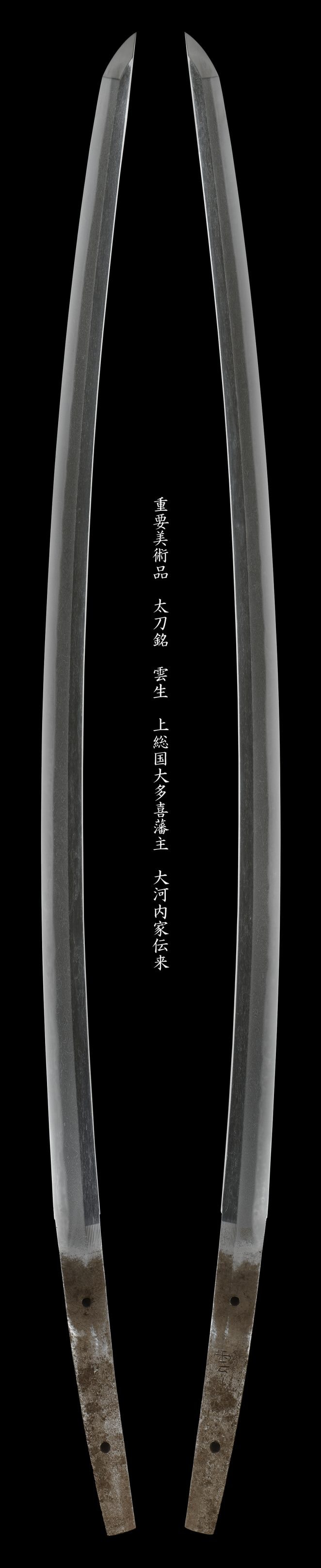
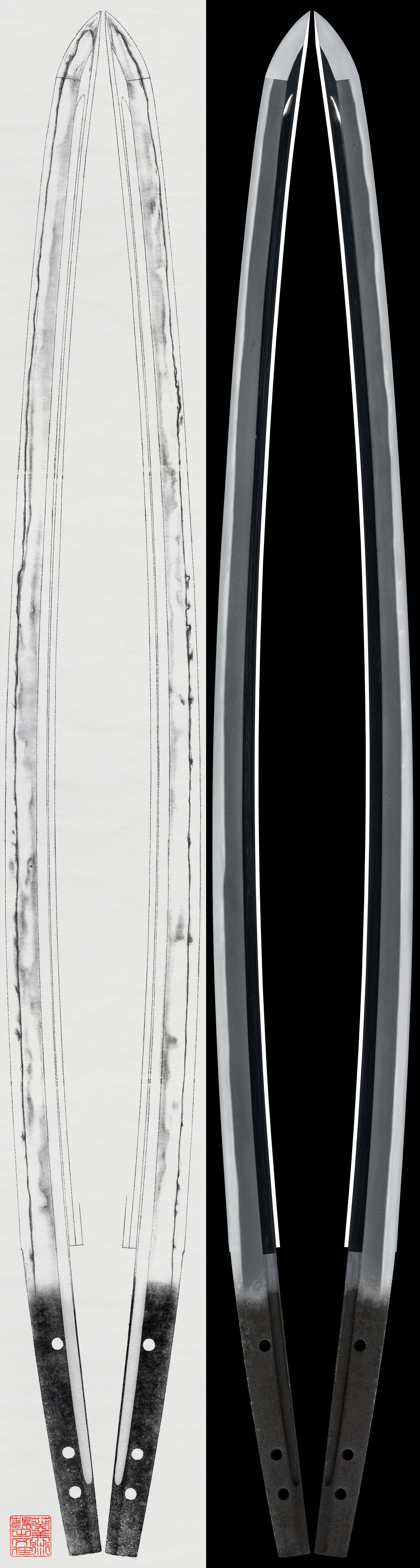
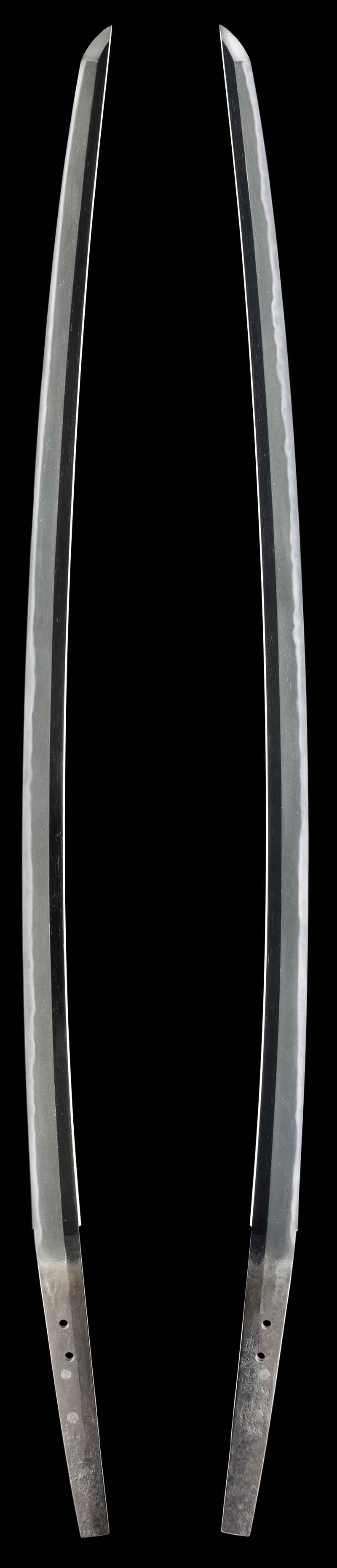
国内の戦乱と海外への貿易が、室町の備前を国内随一の刀剣産地にした。応仁の乱以後は戦国の需要が一世紀続き、遣明船は数万振の単位で刀を運んでいる。
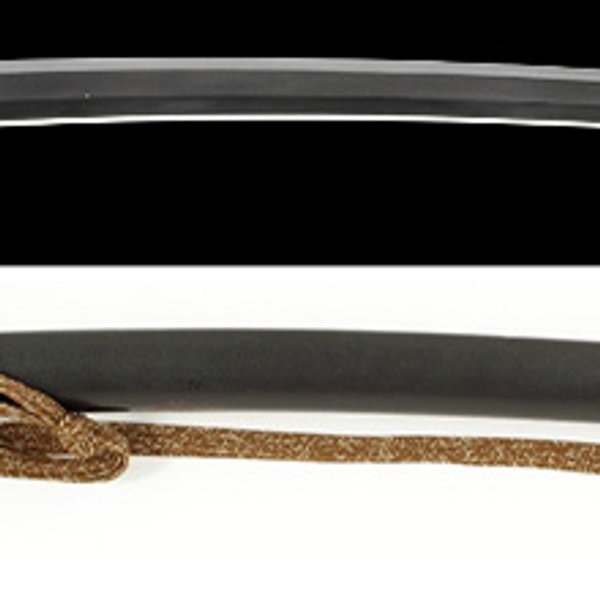
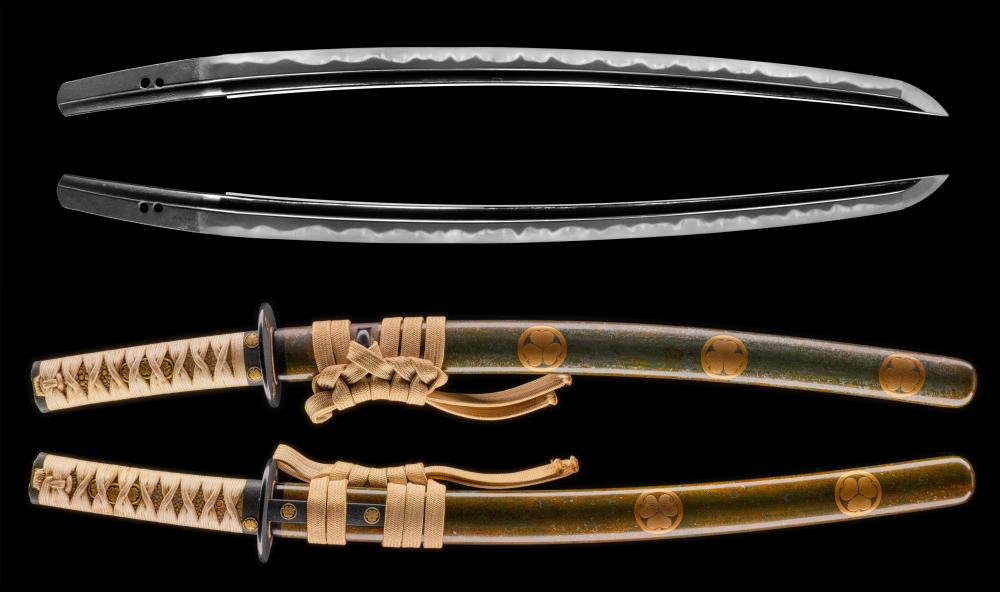
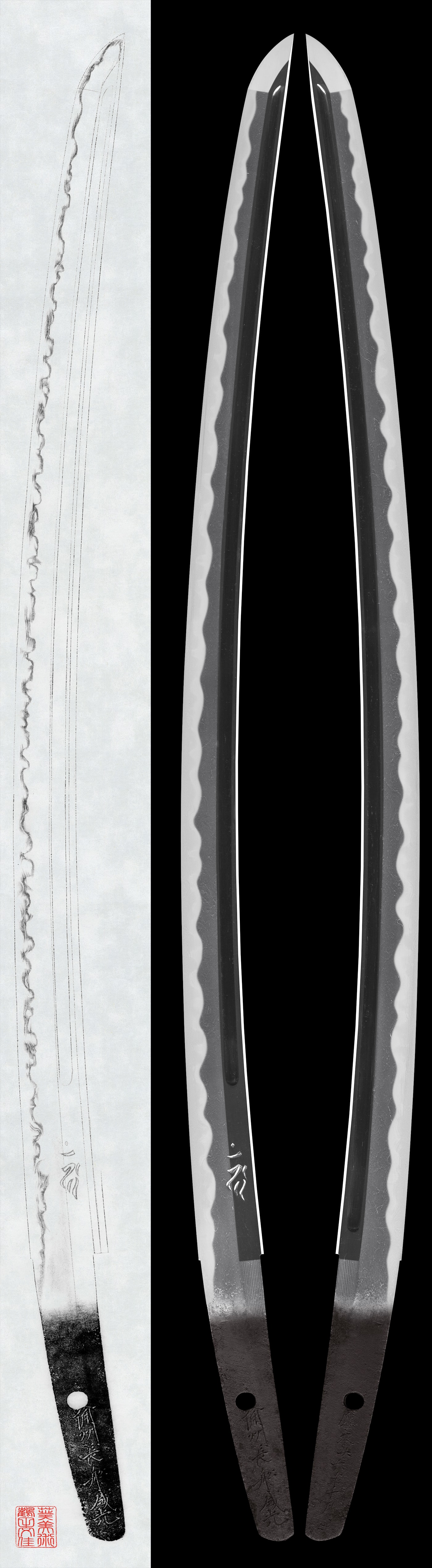
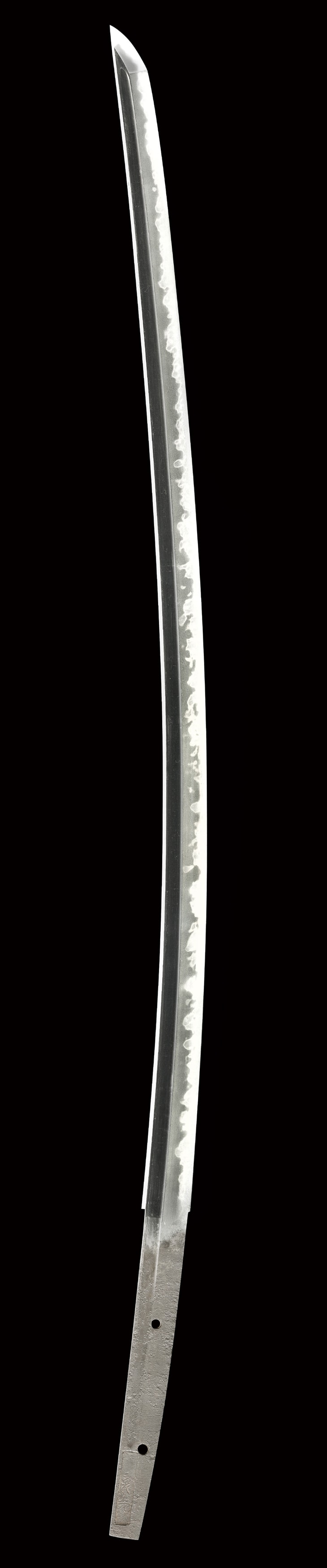
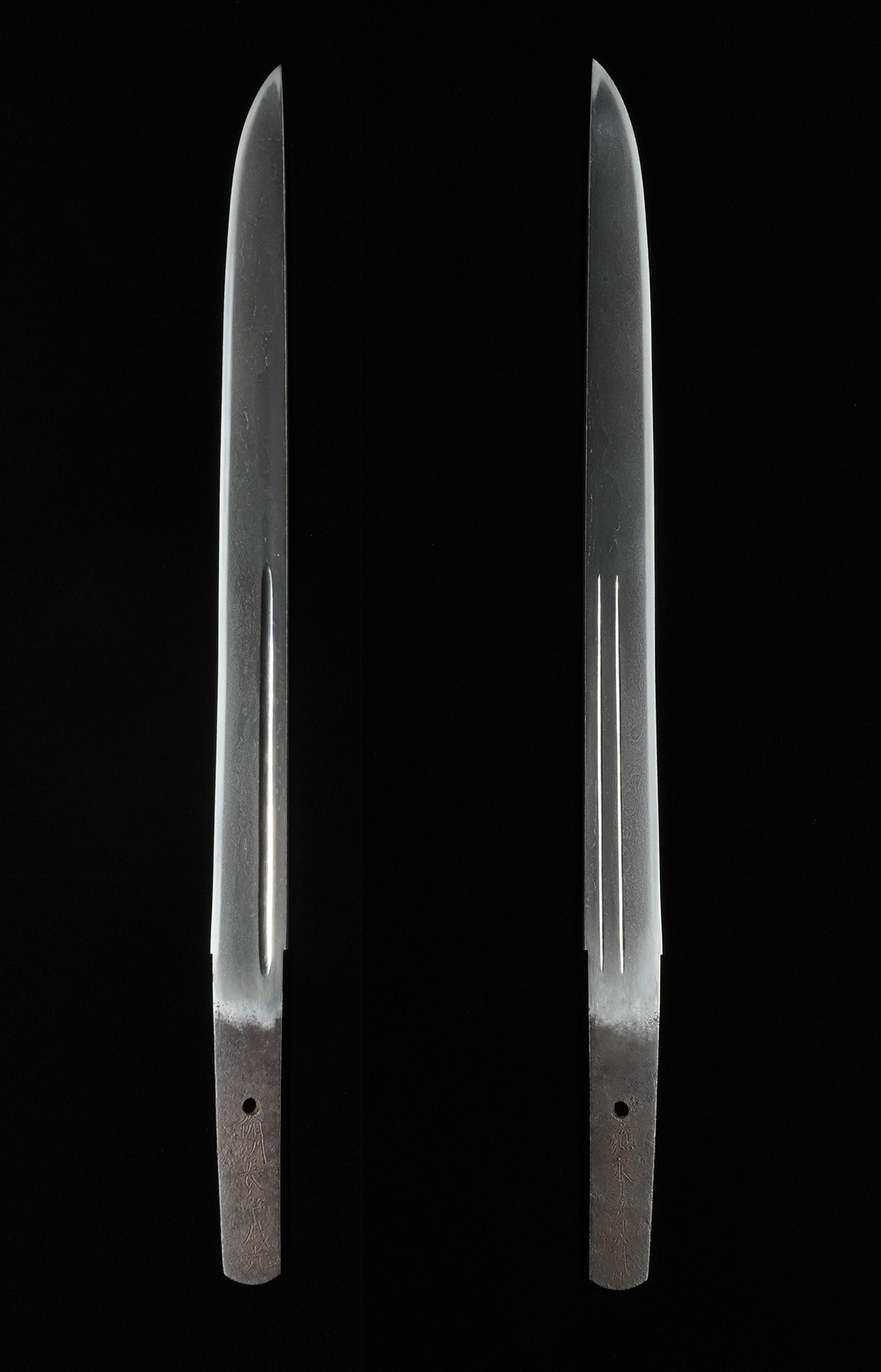
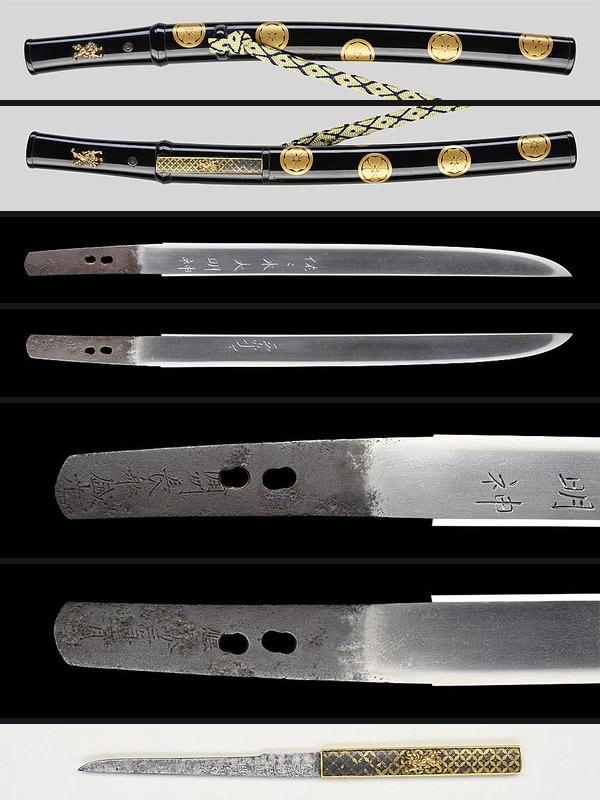
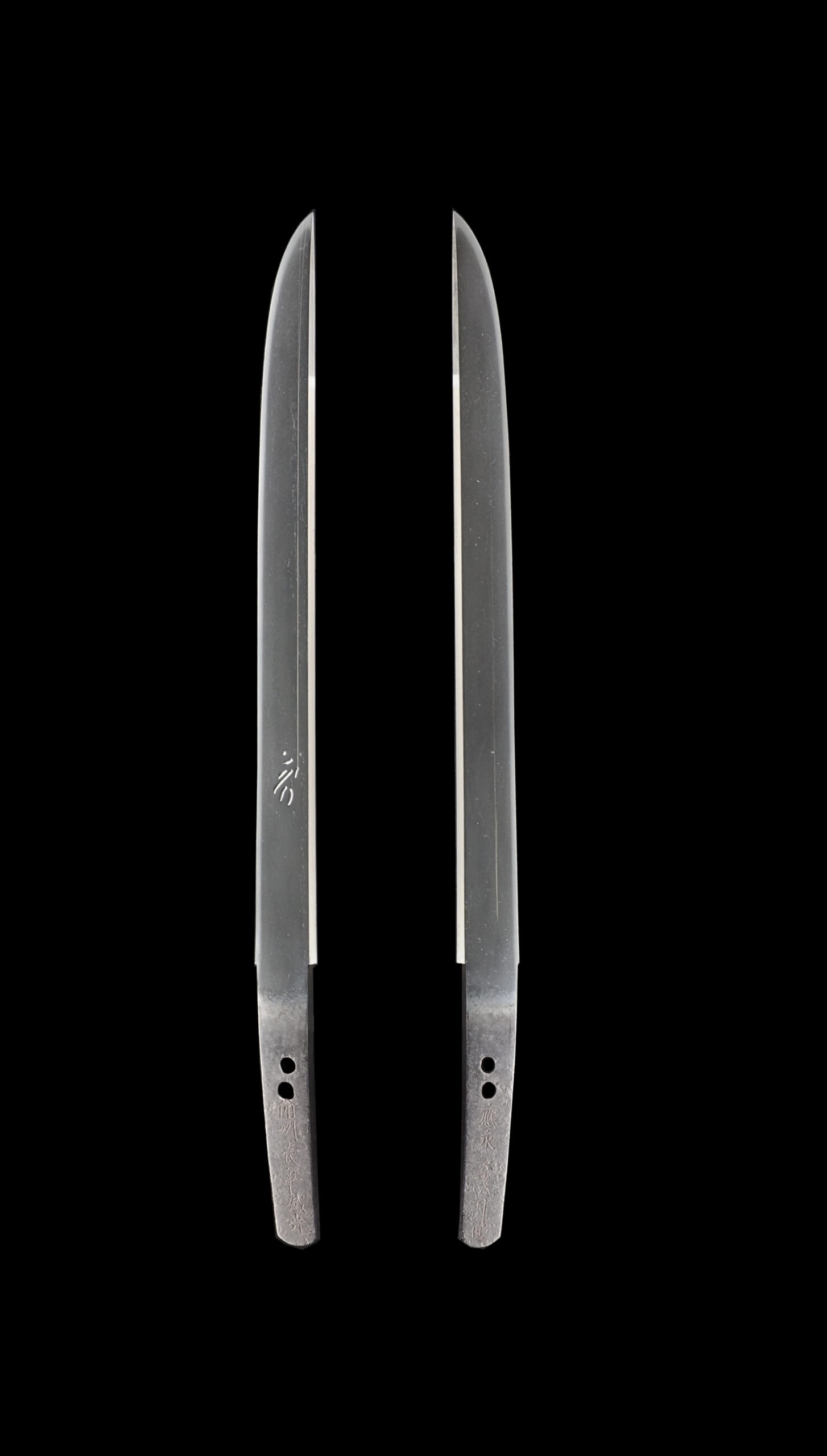
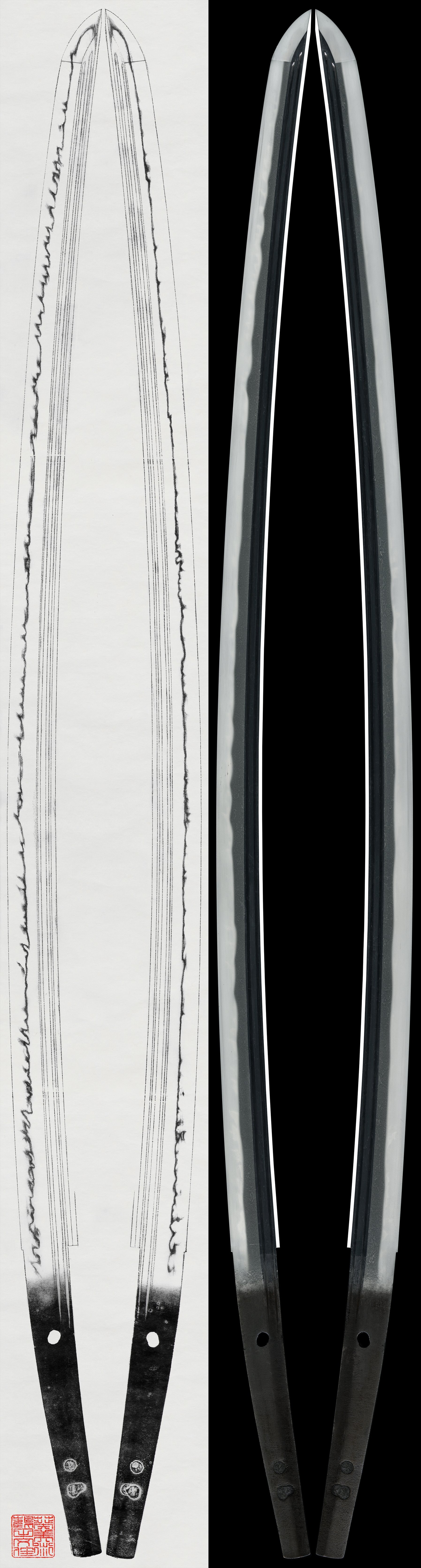
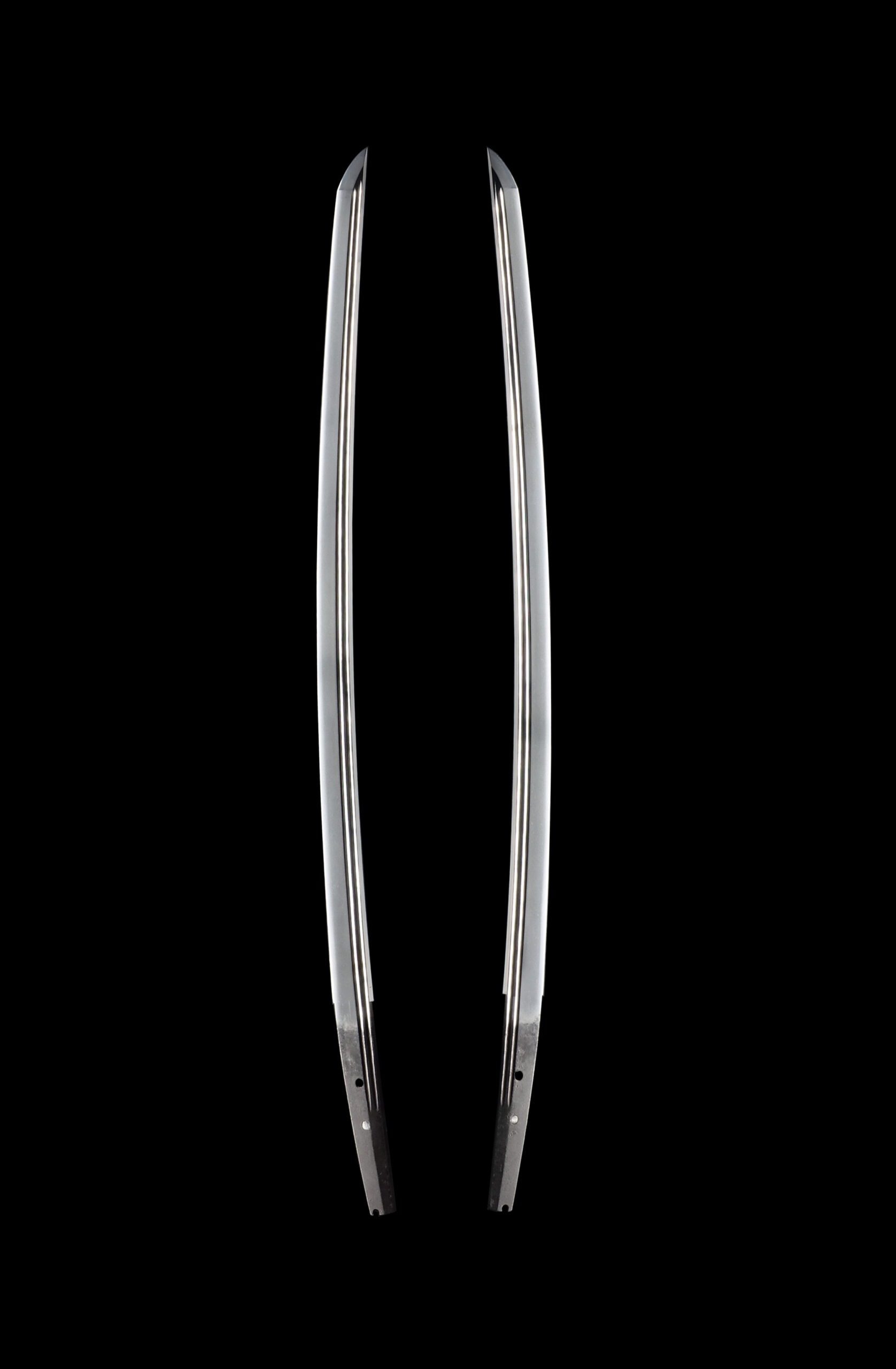
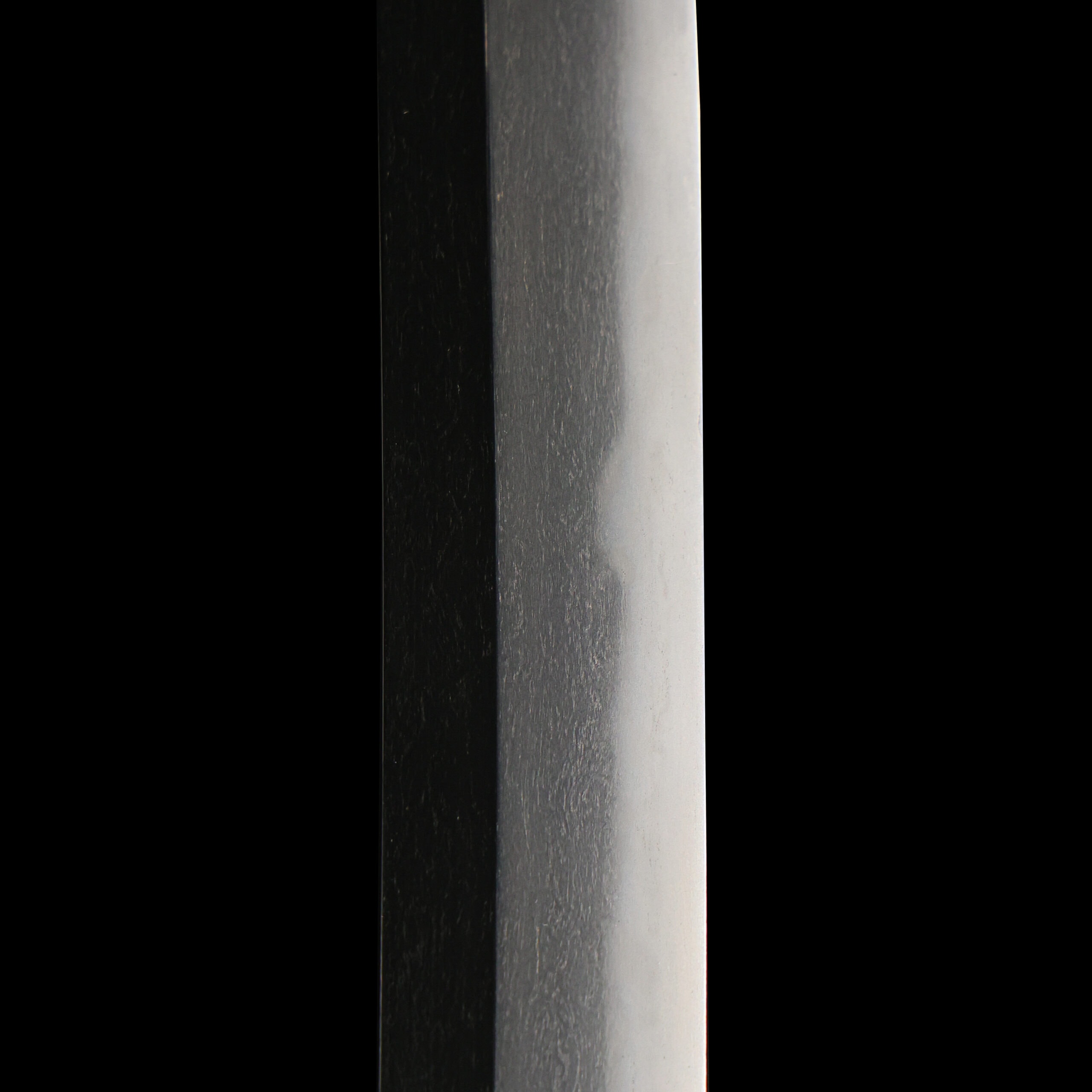
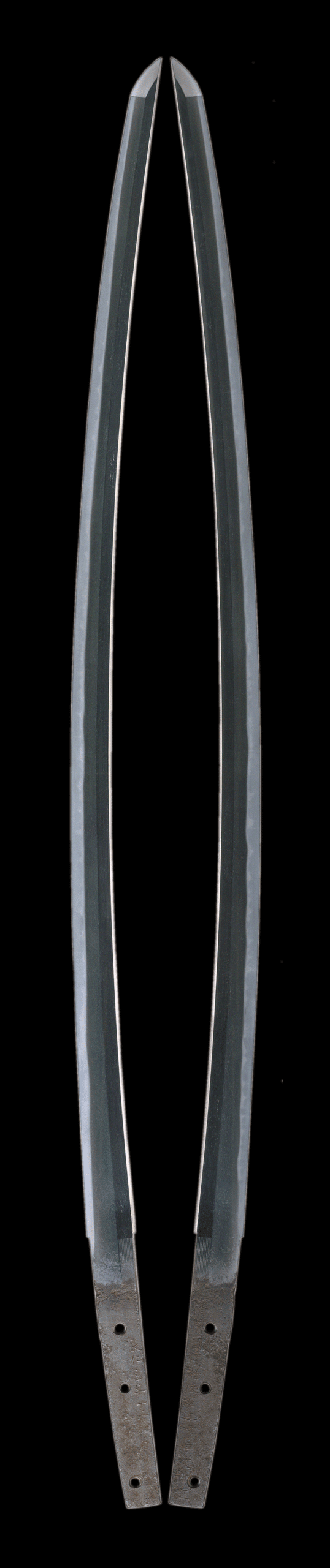
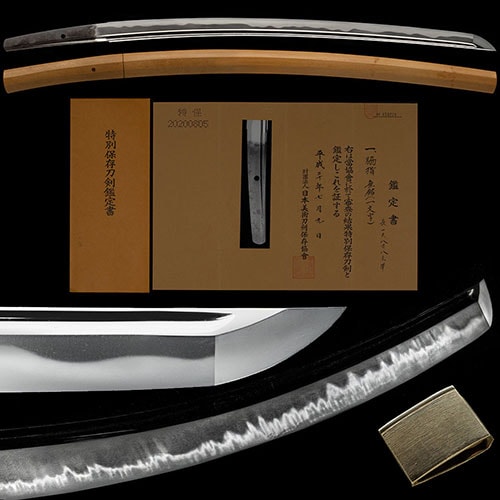
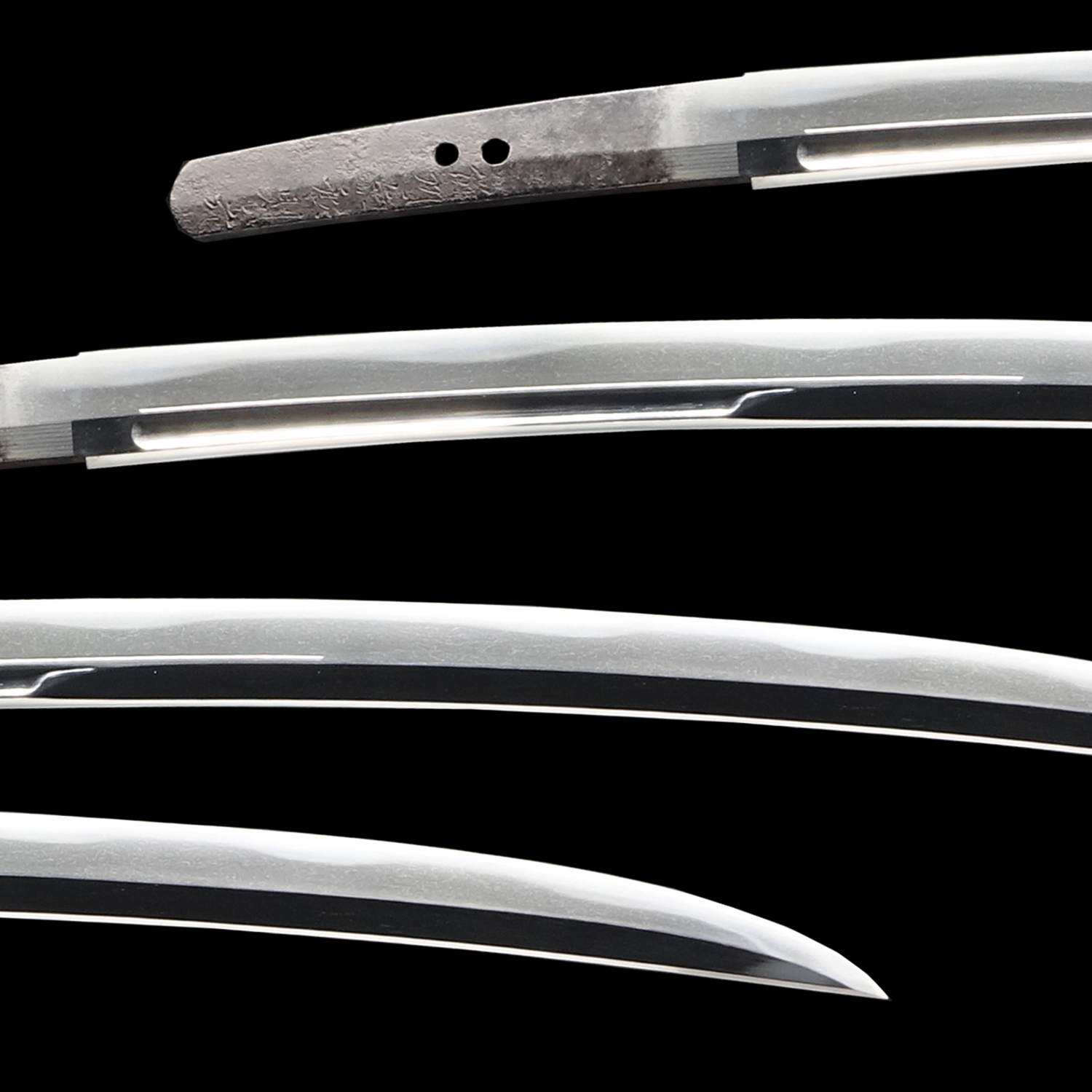
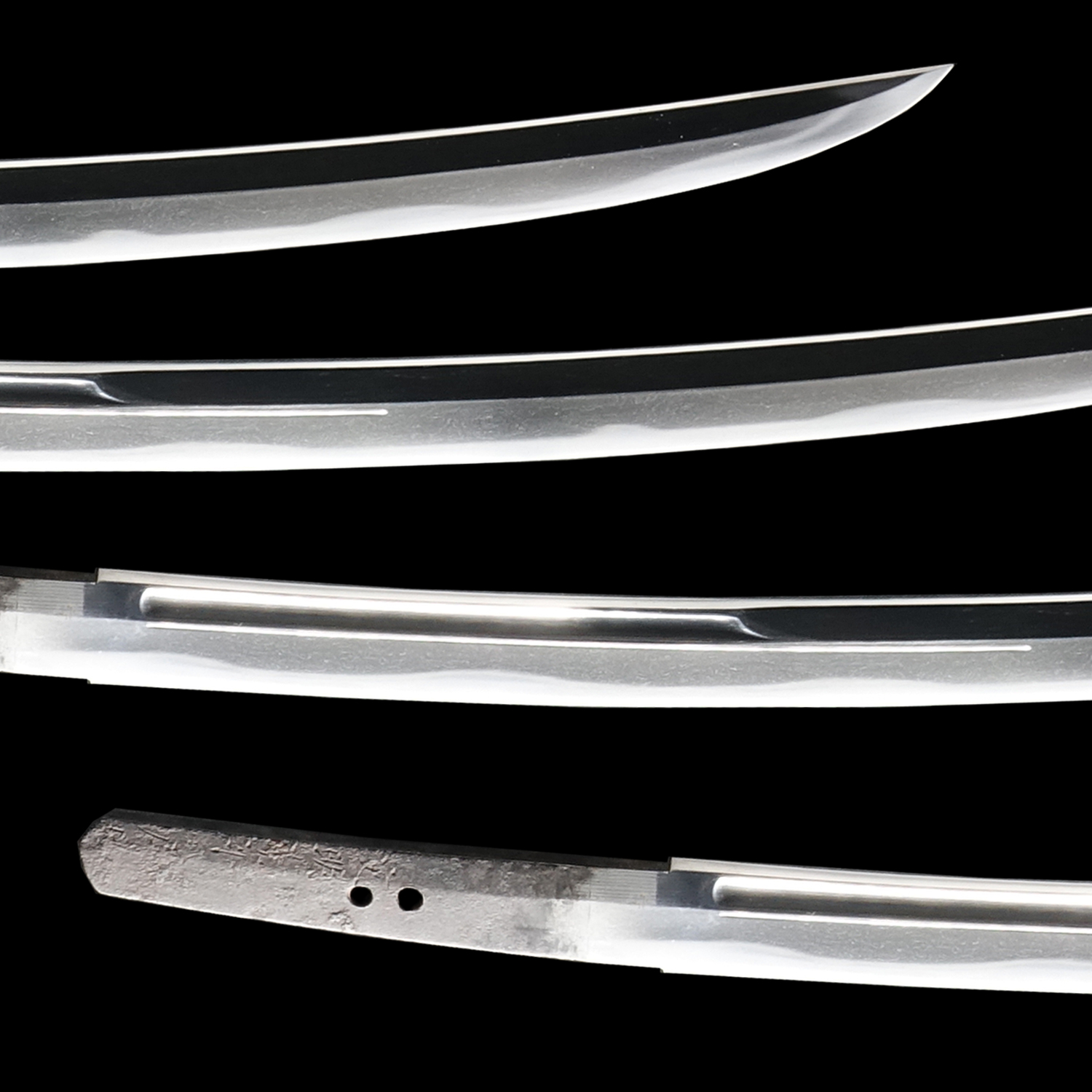
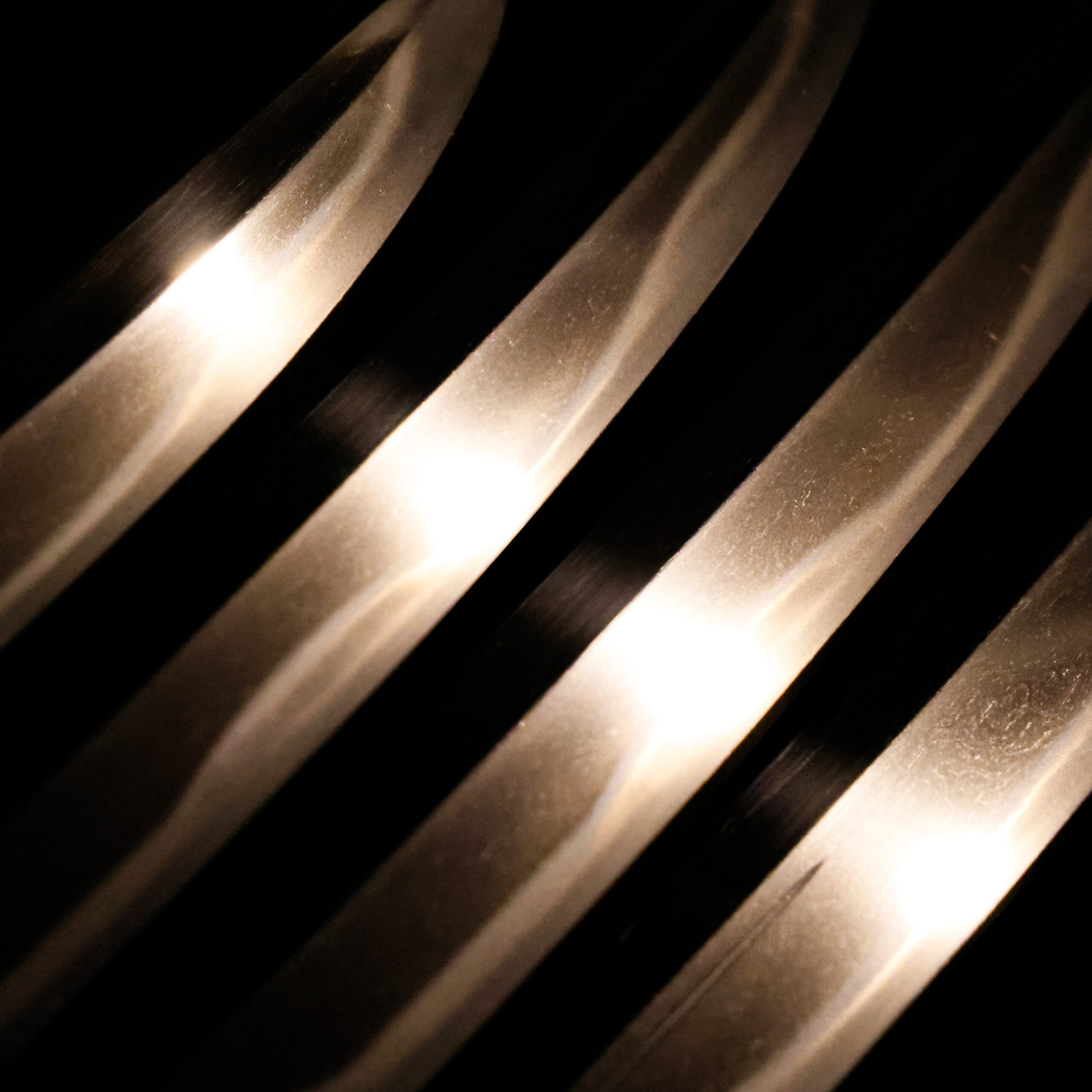
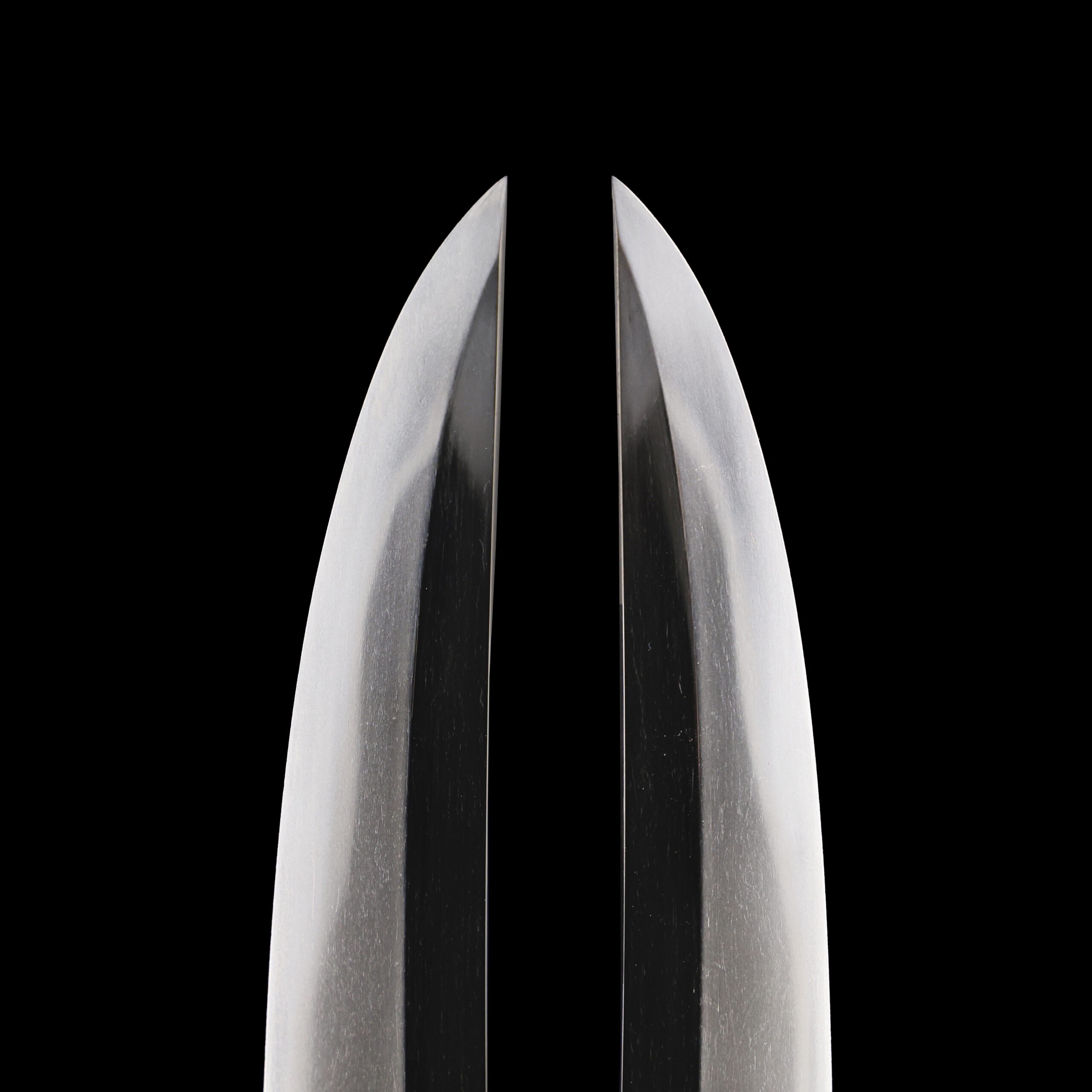
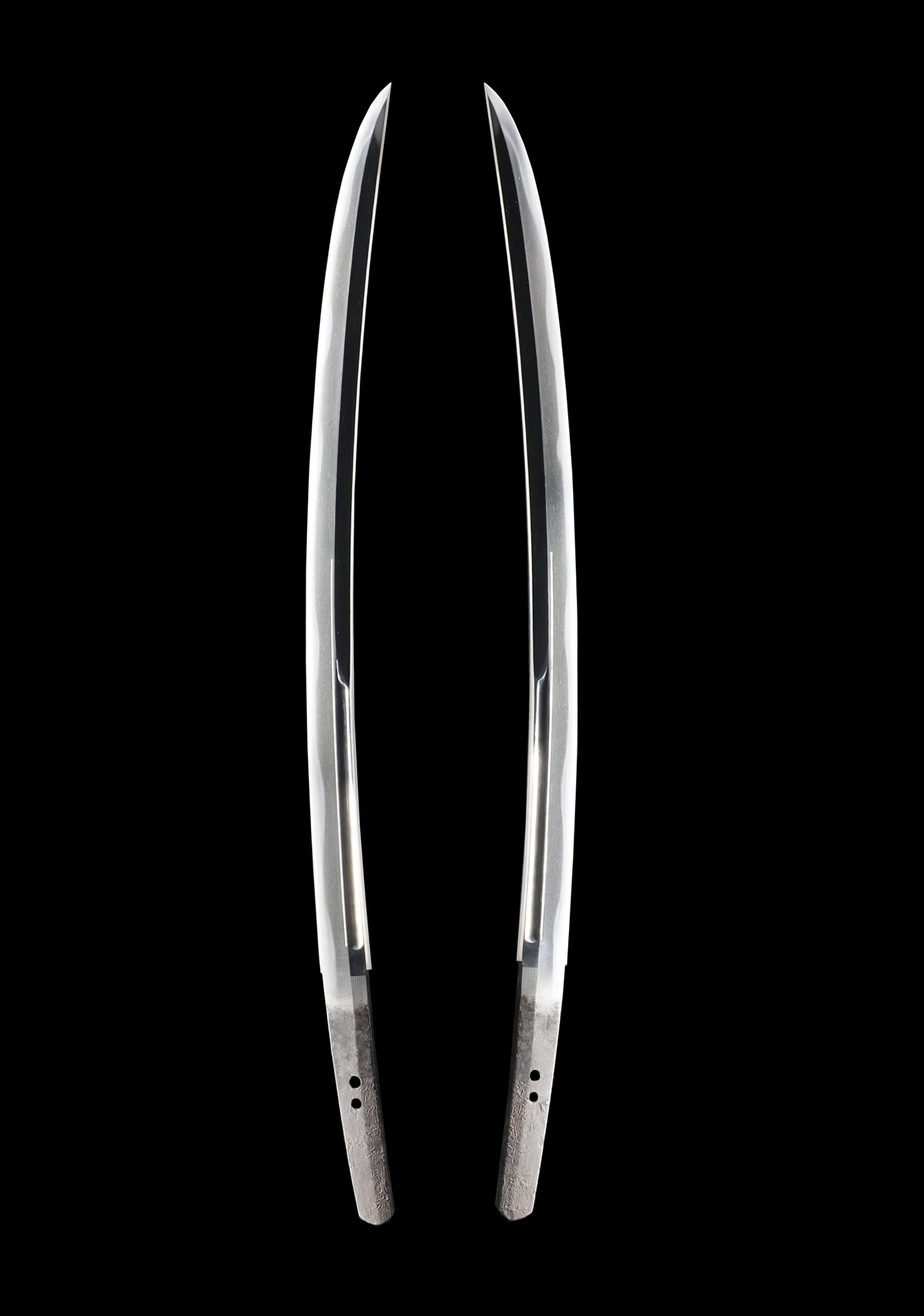
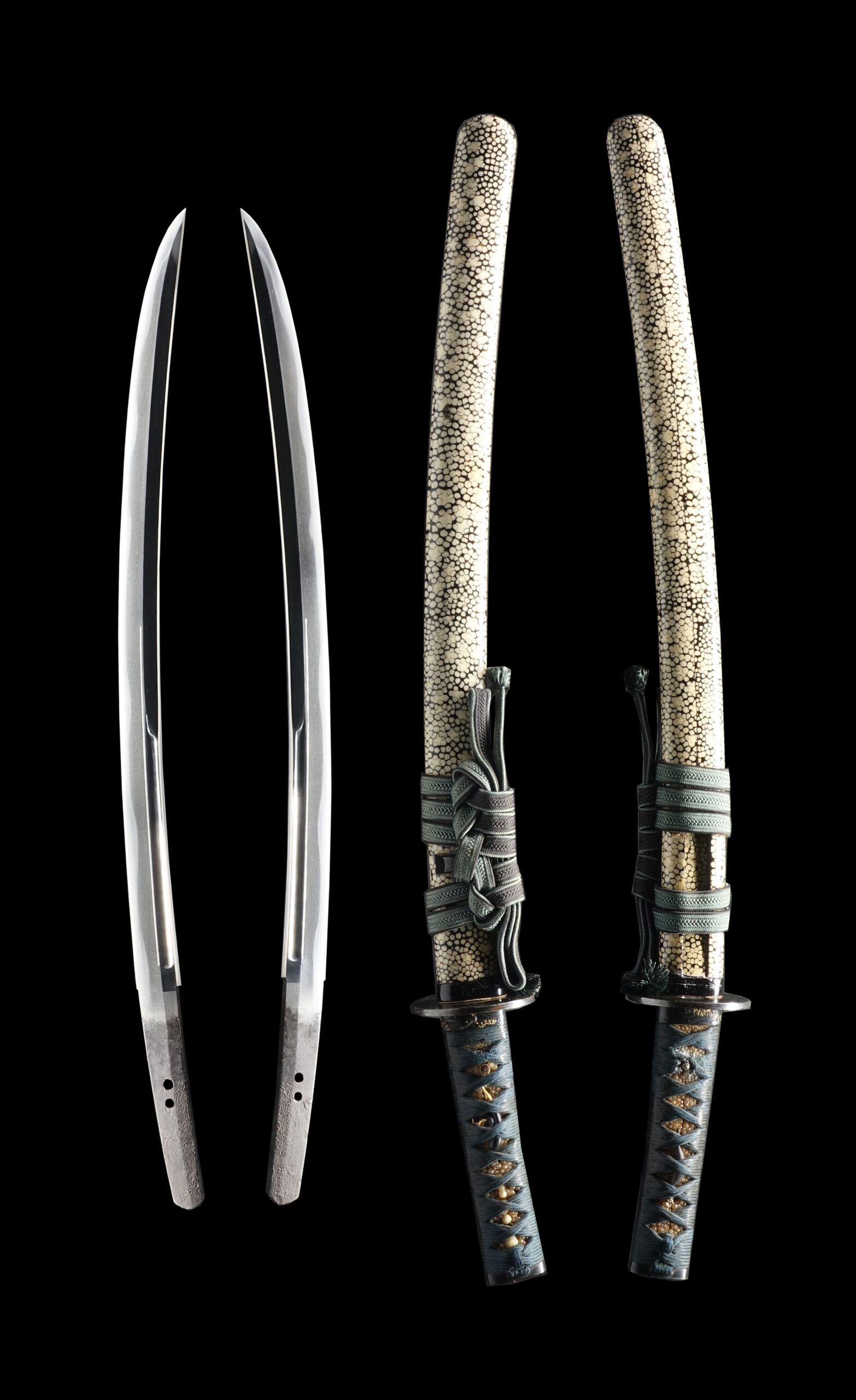
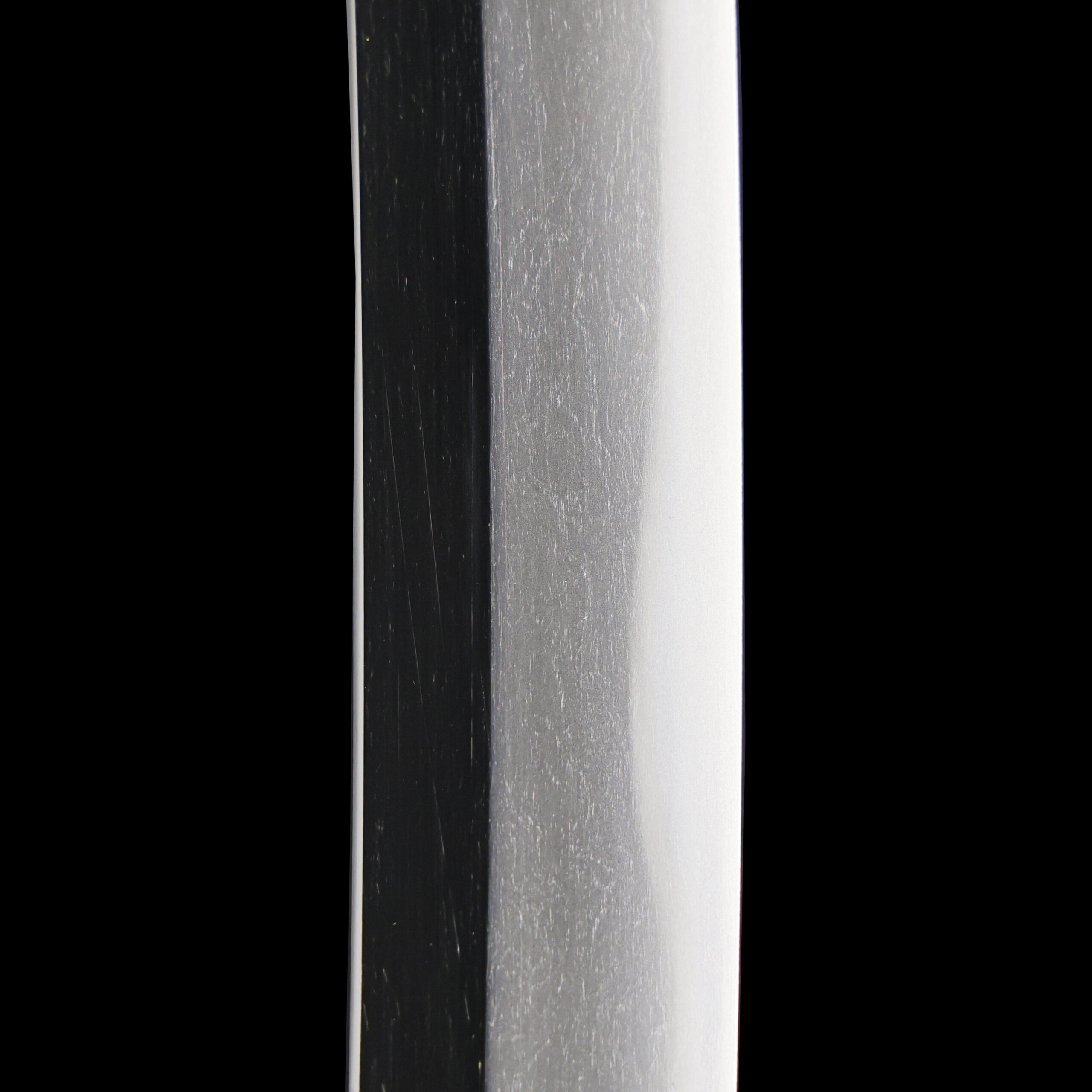
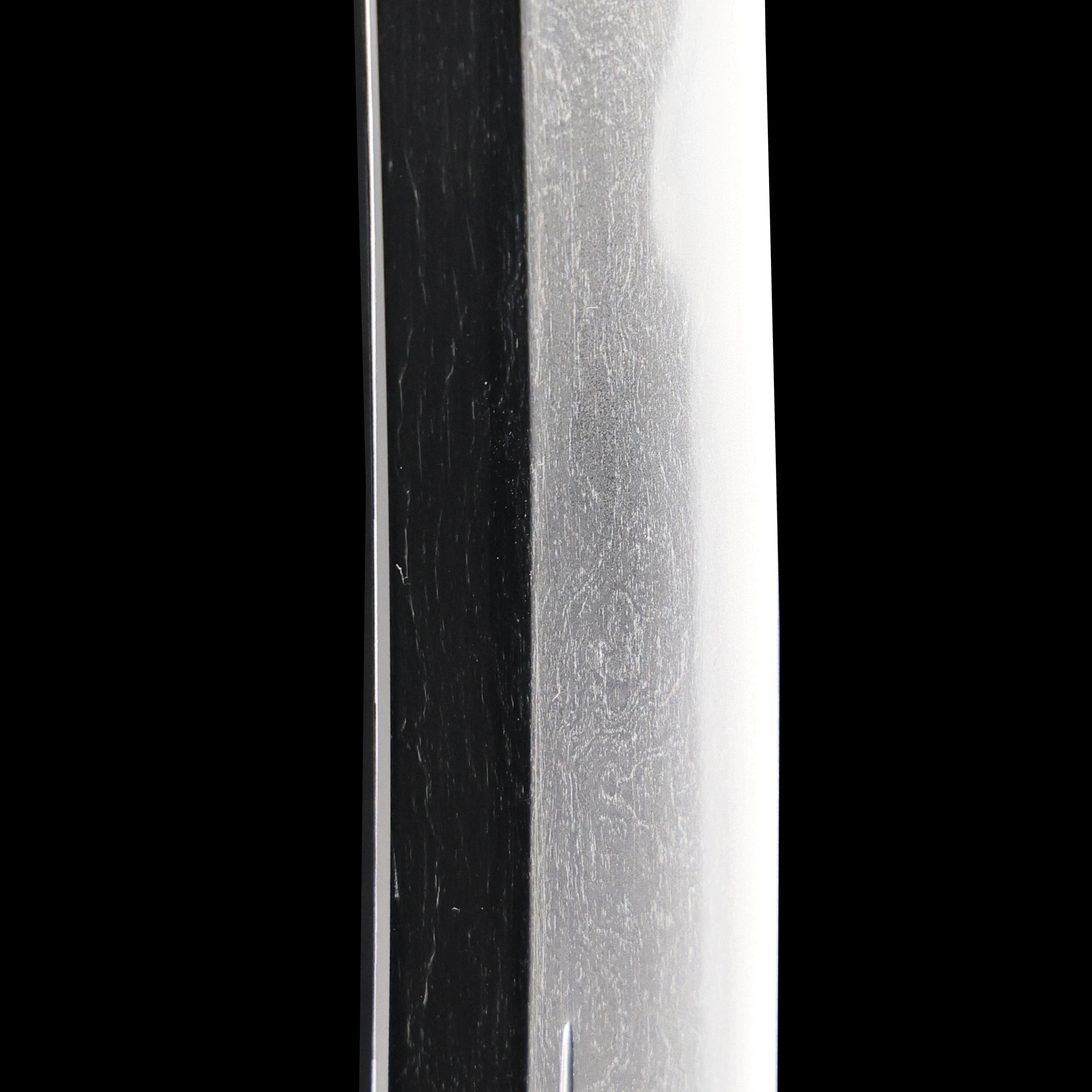
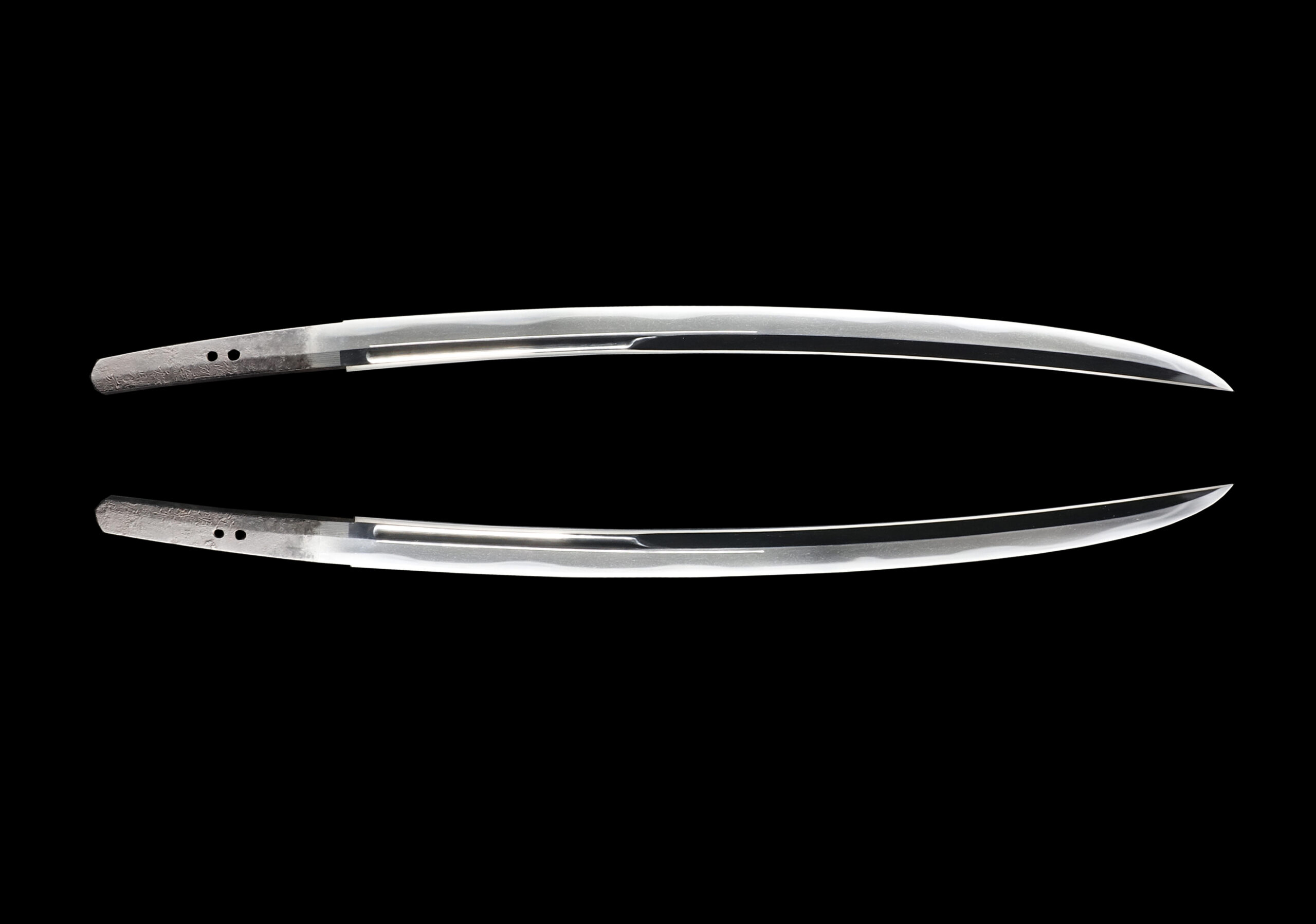
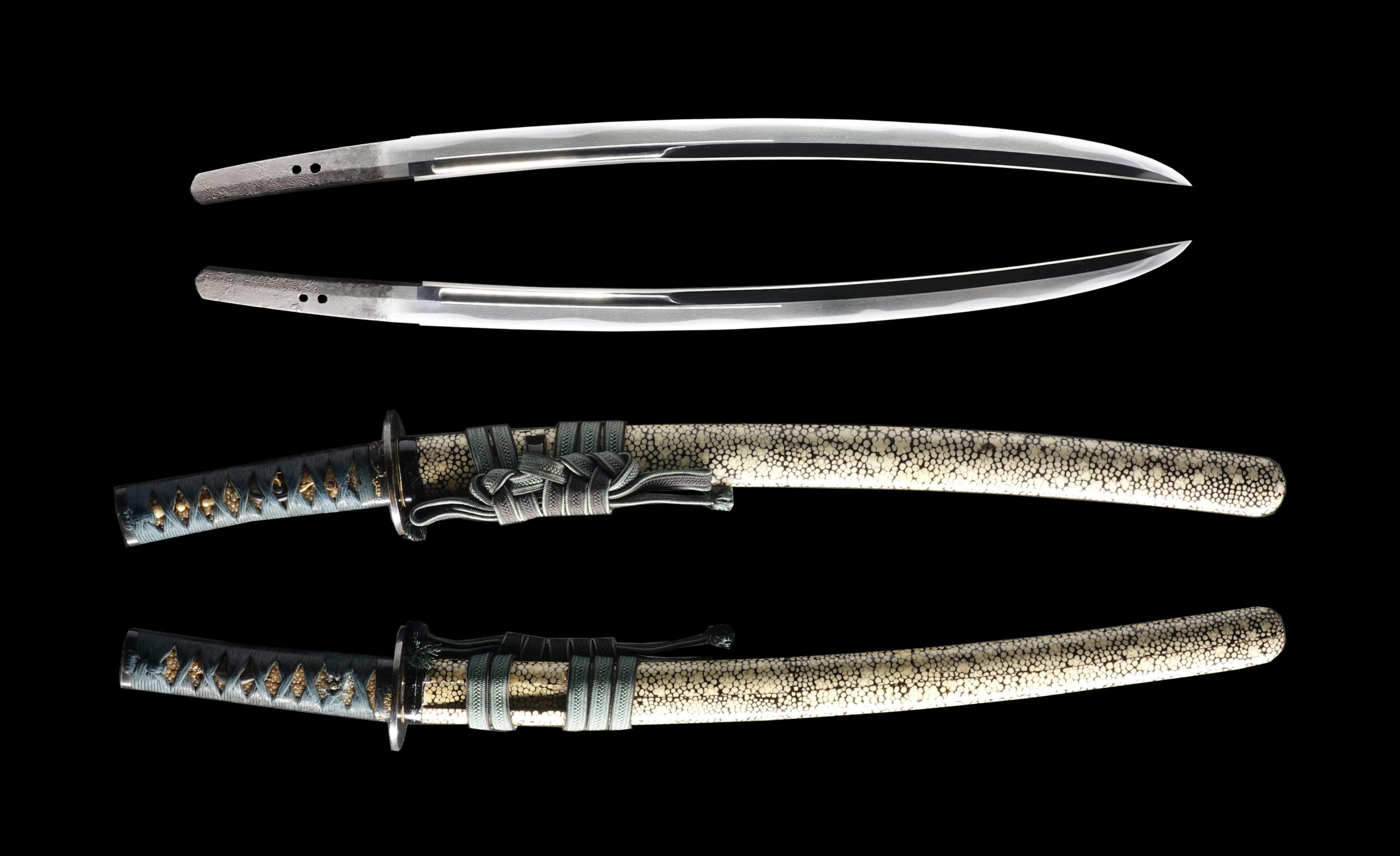
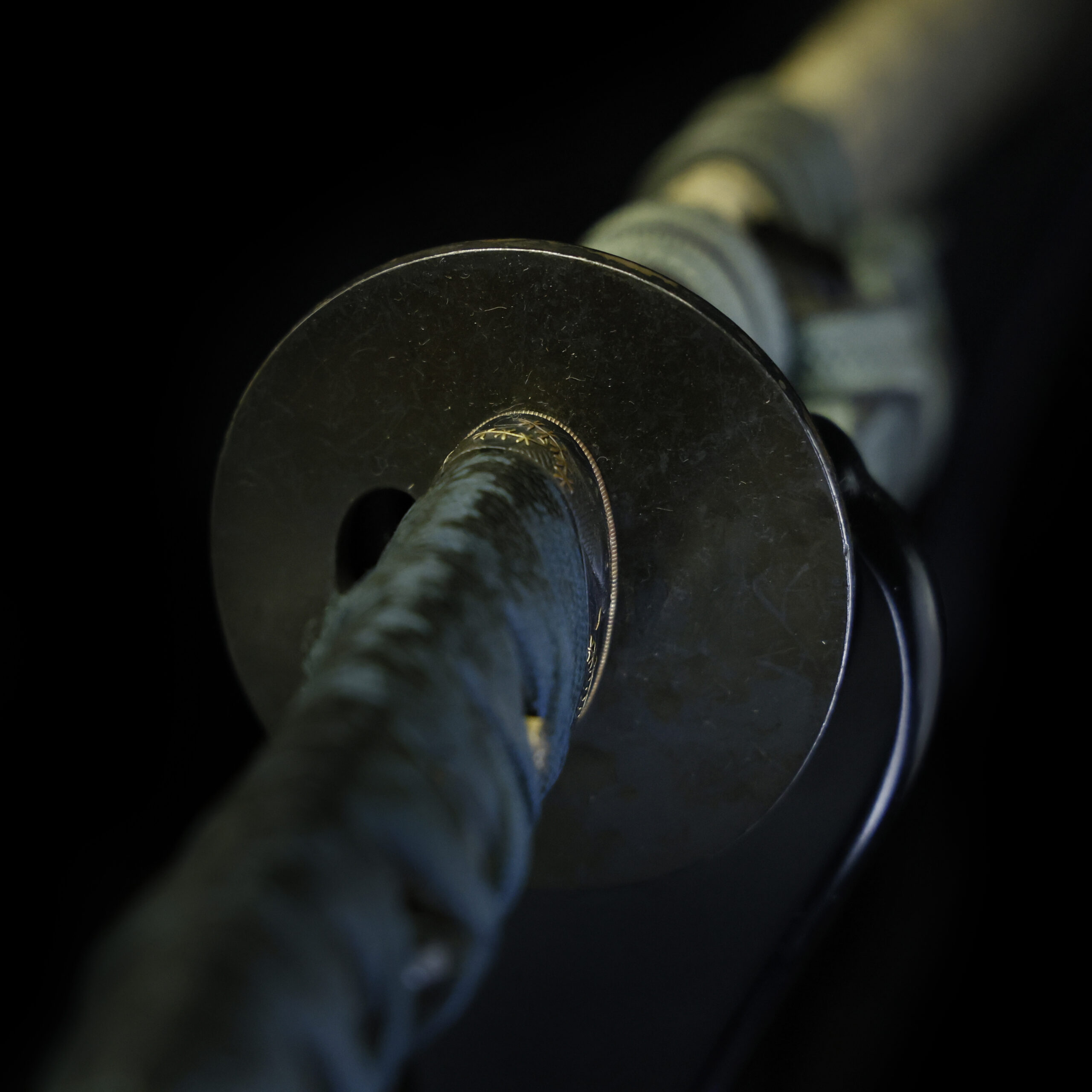
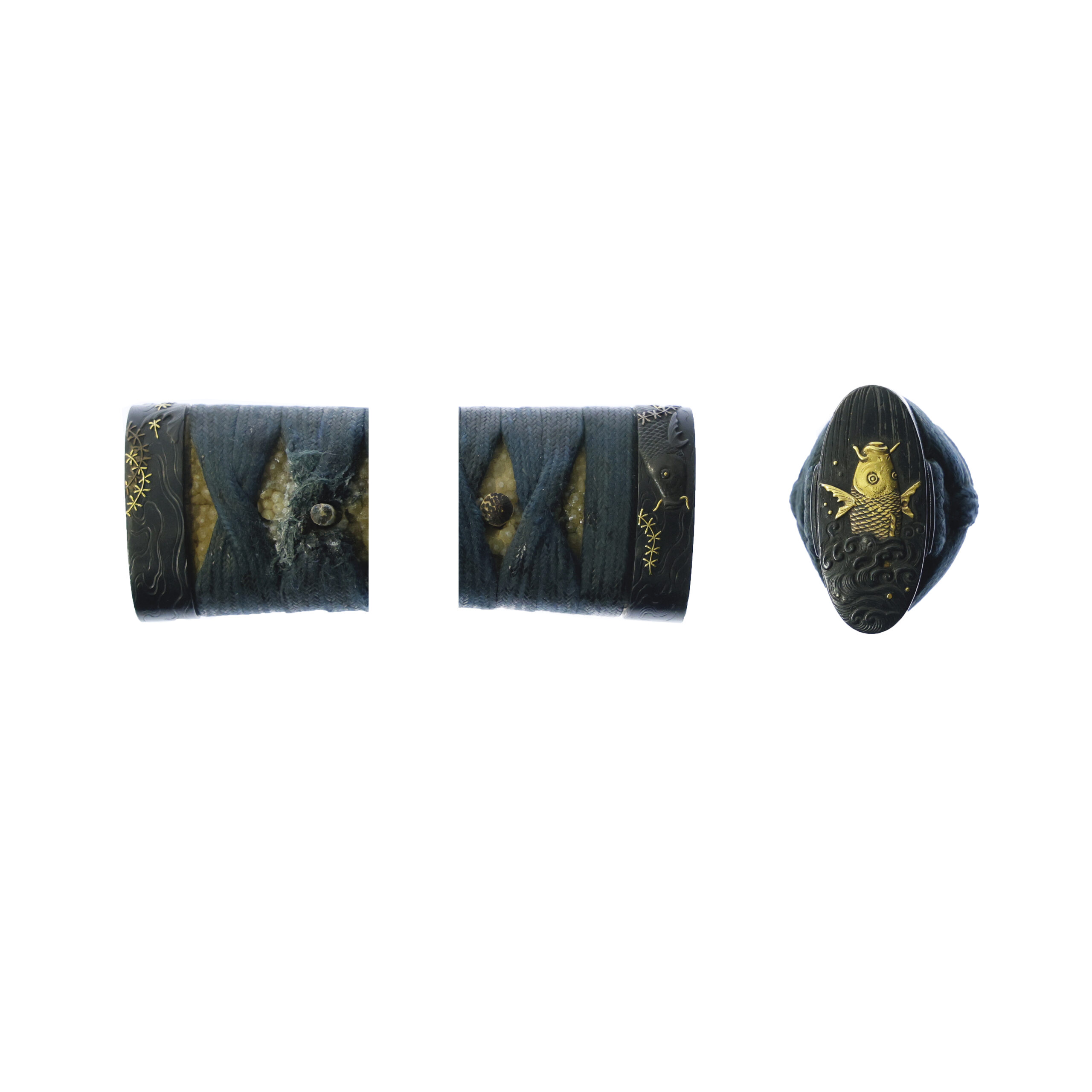
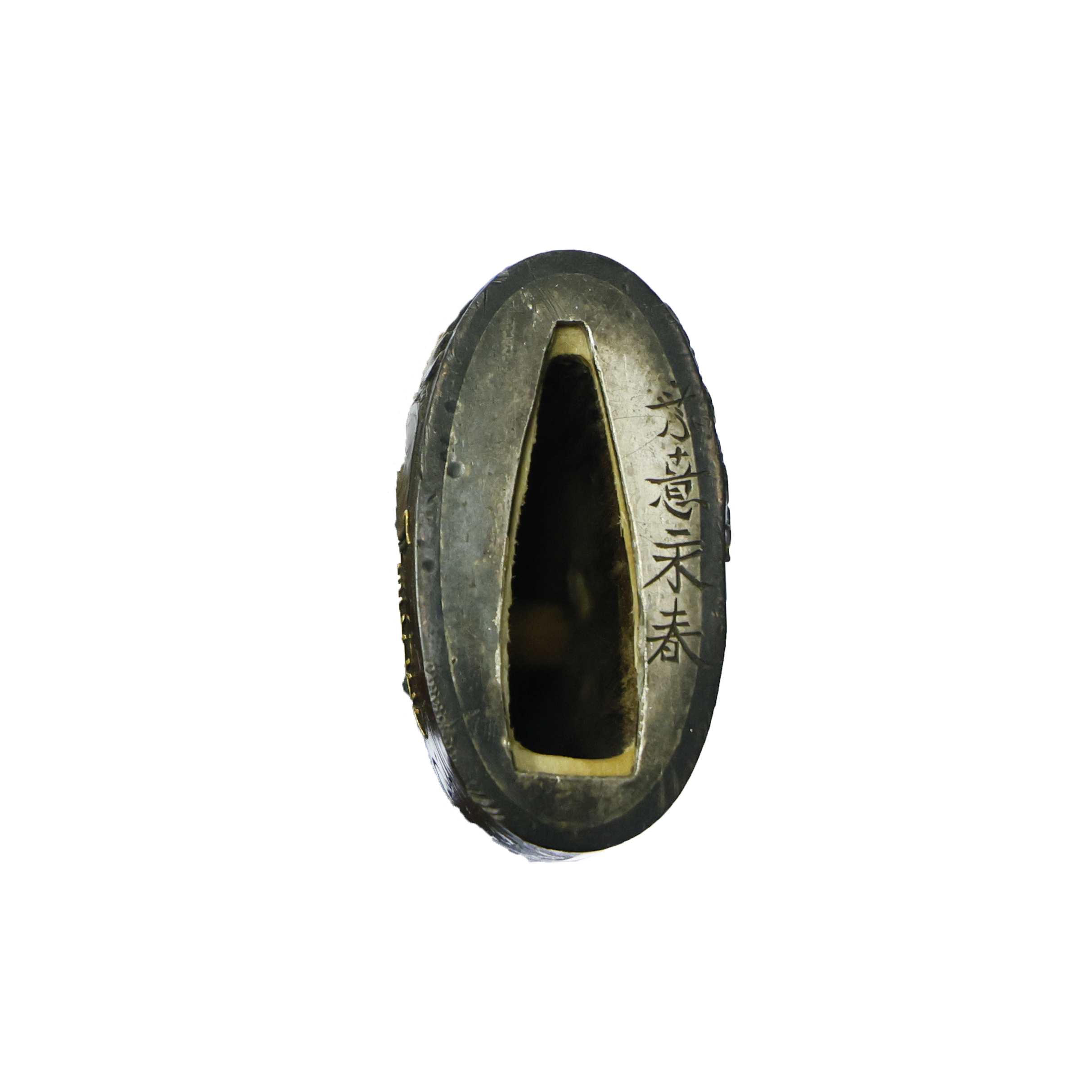
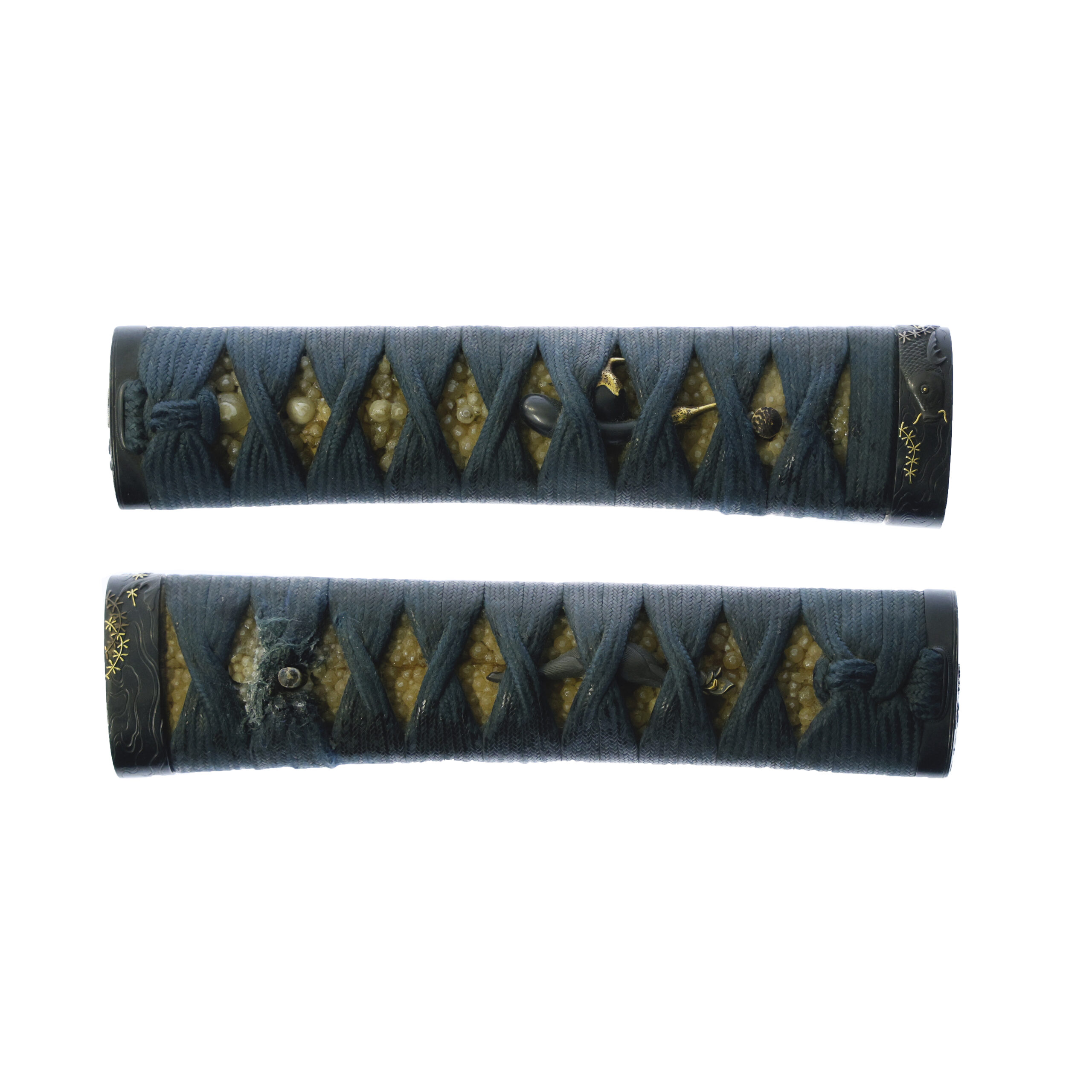
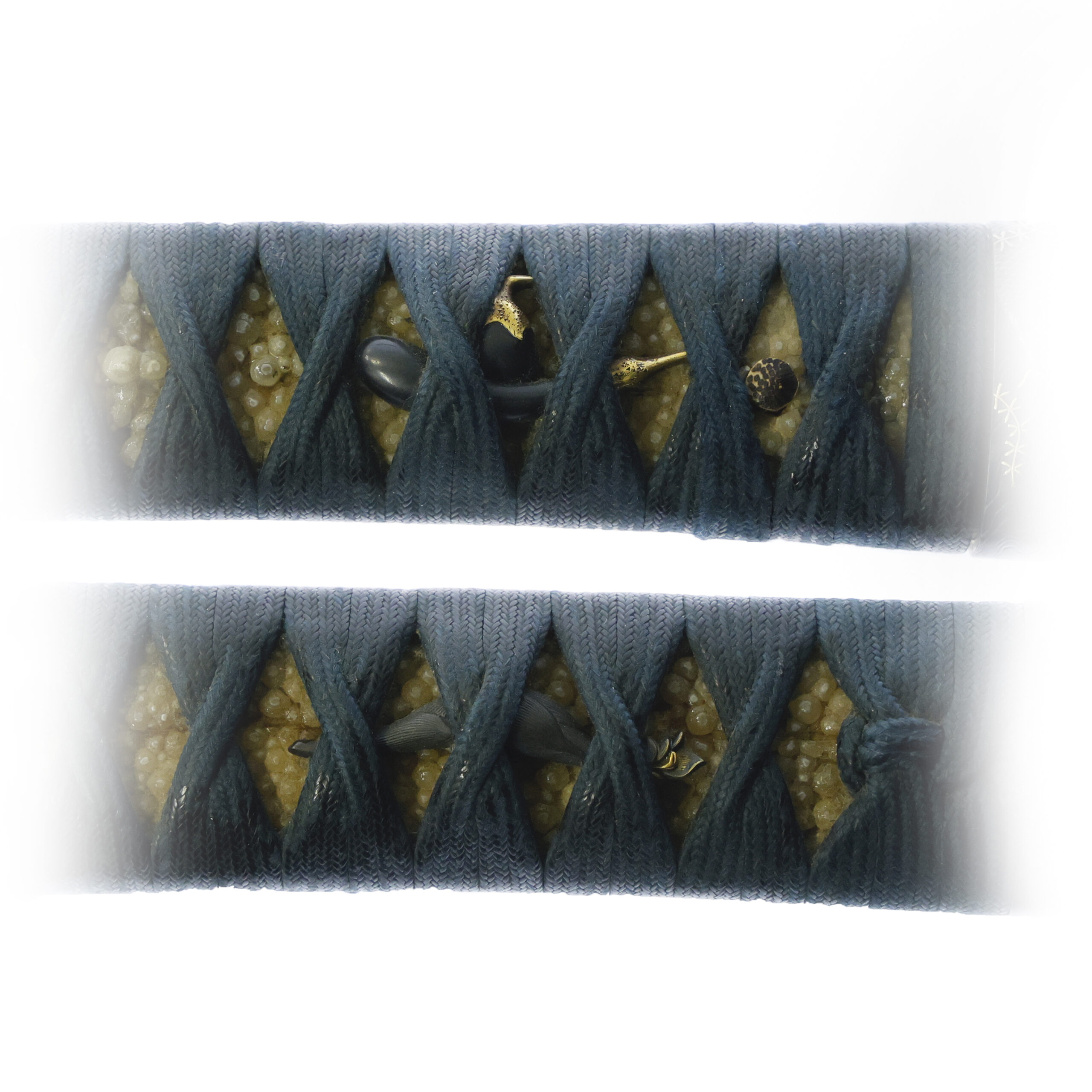
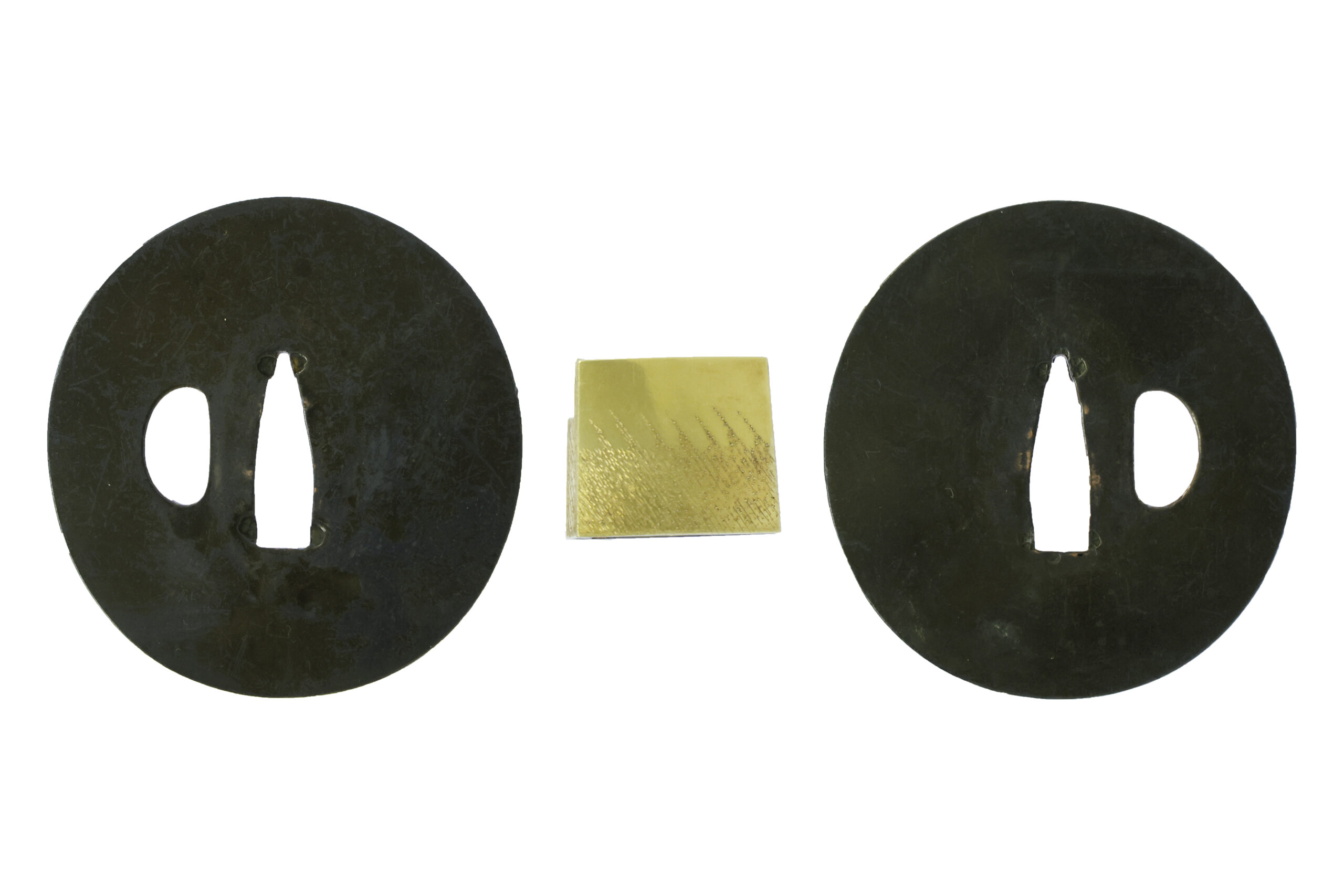
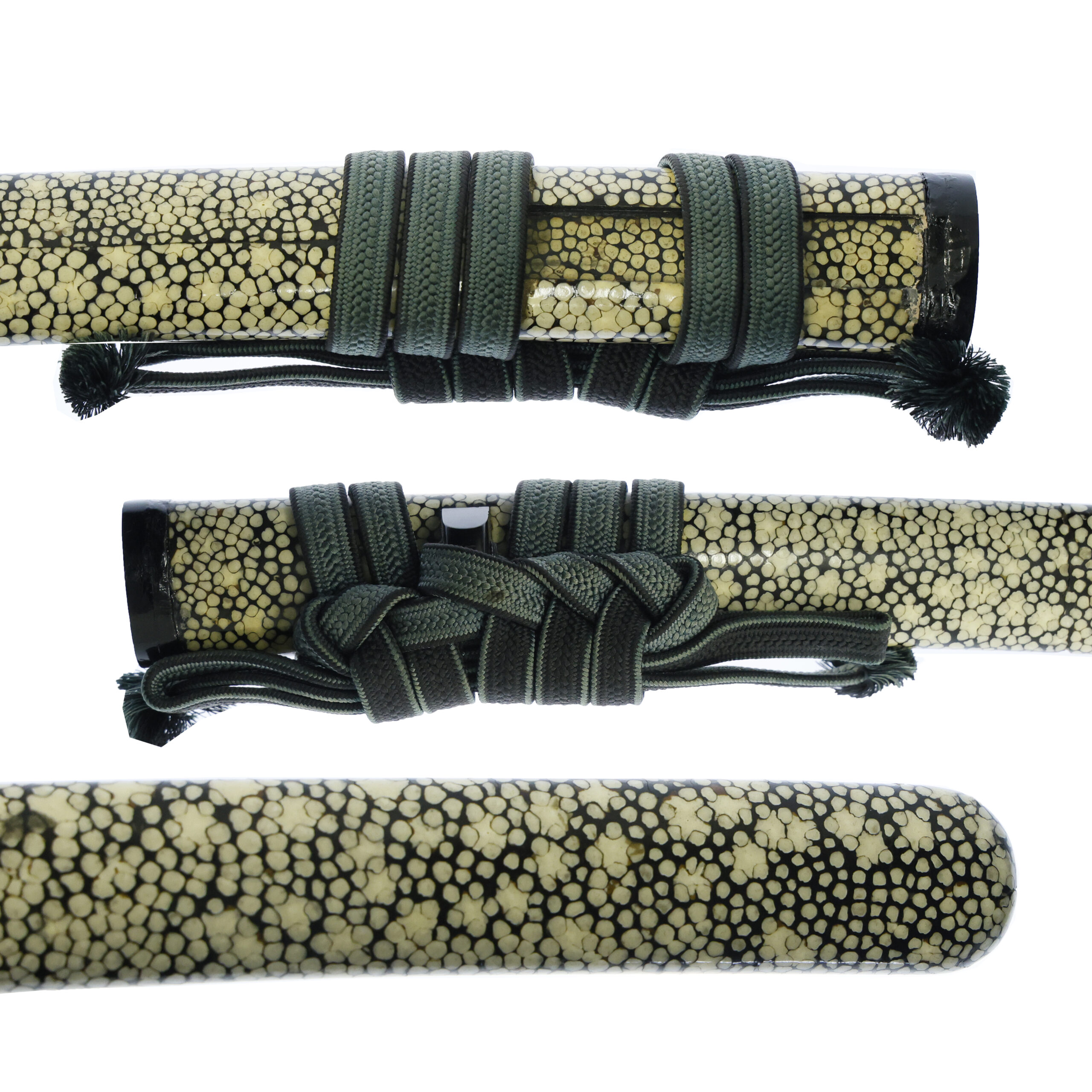
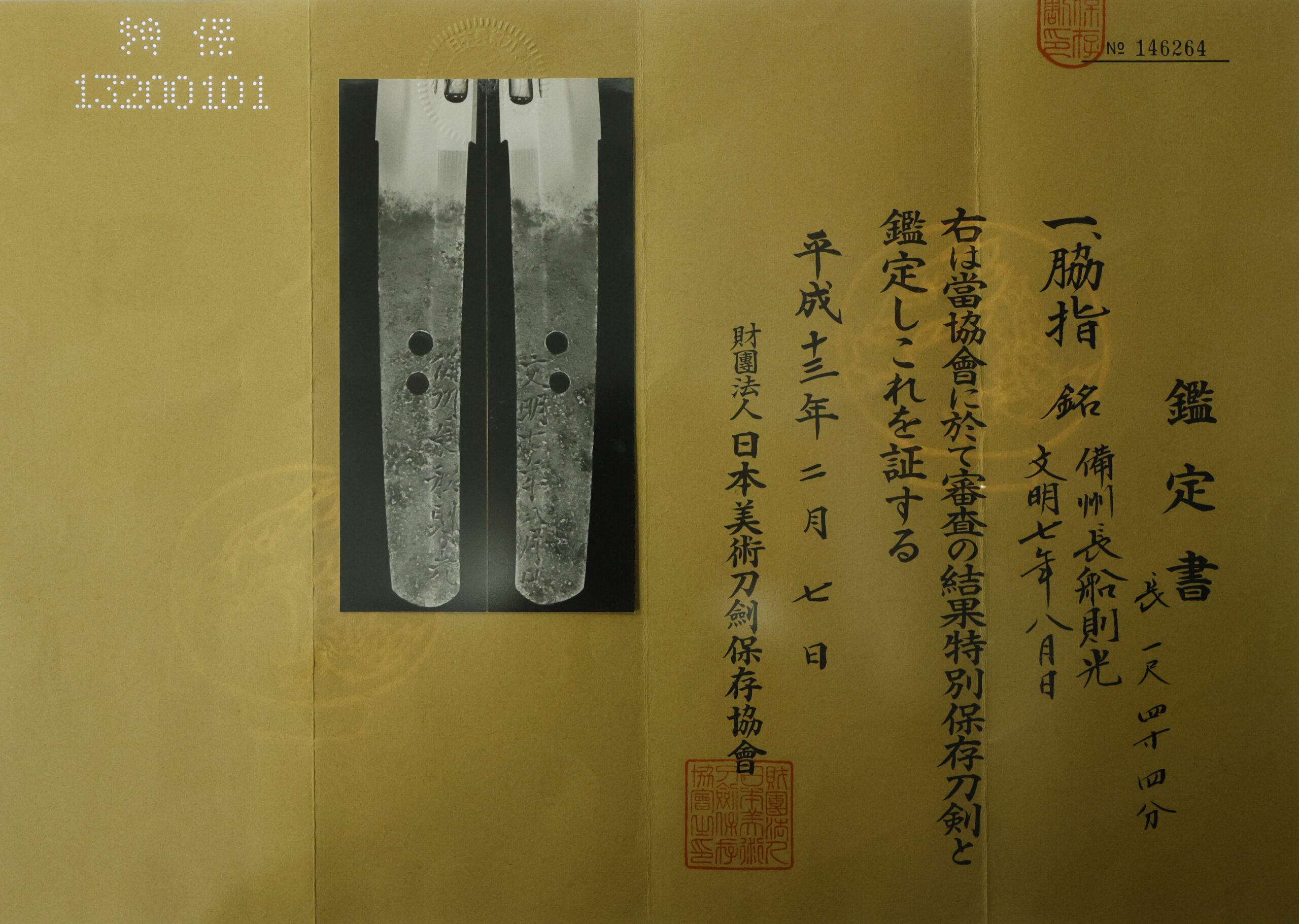
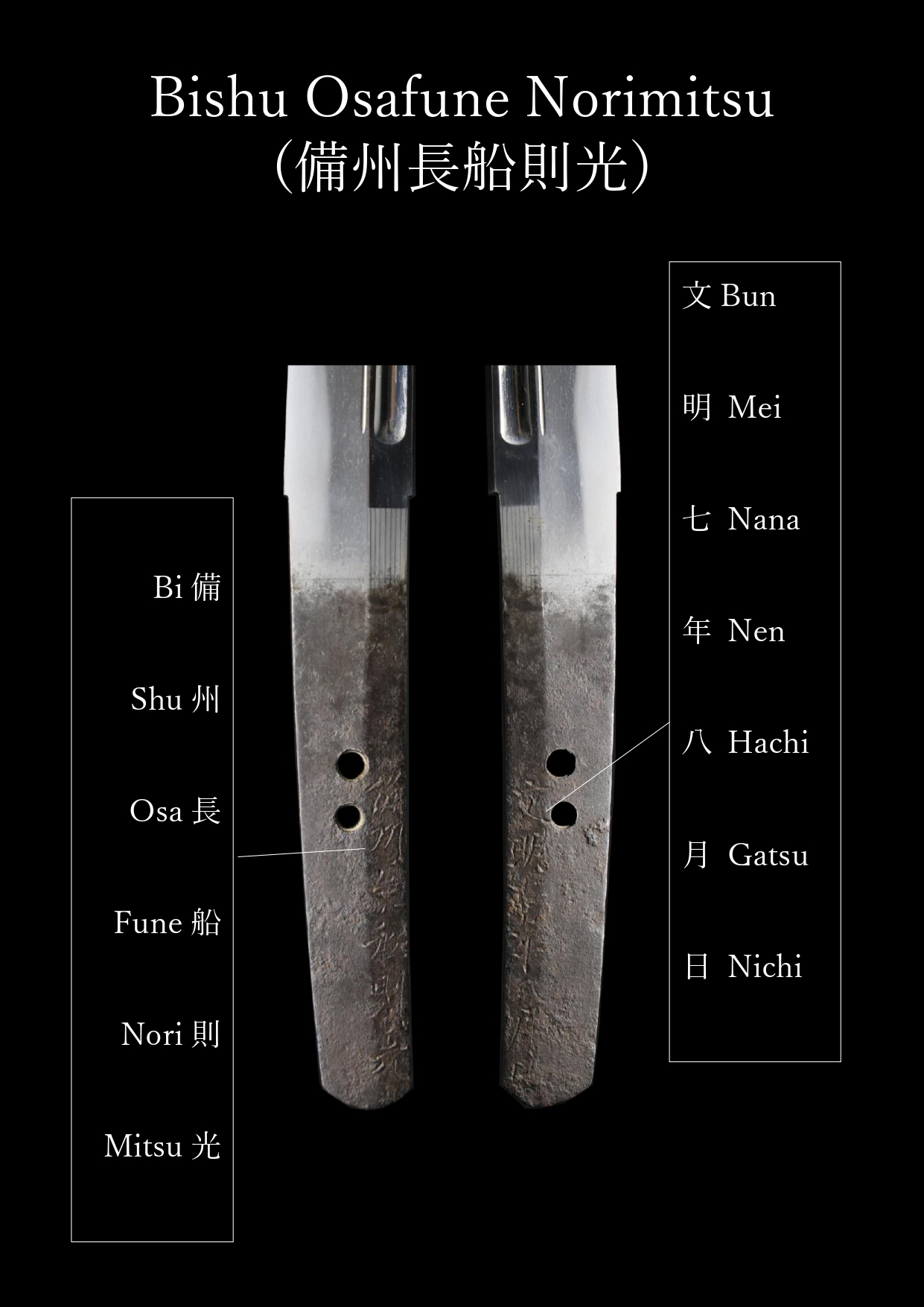
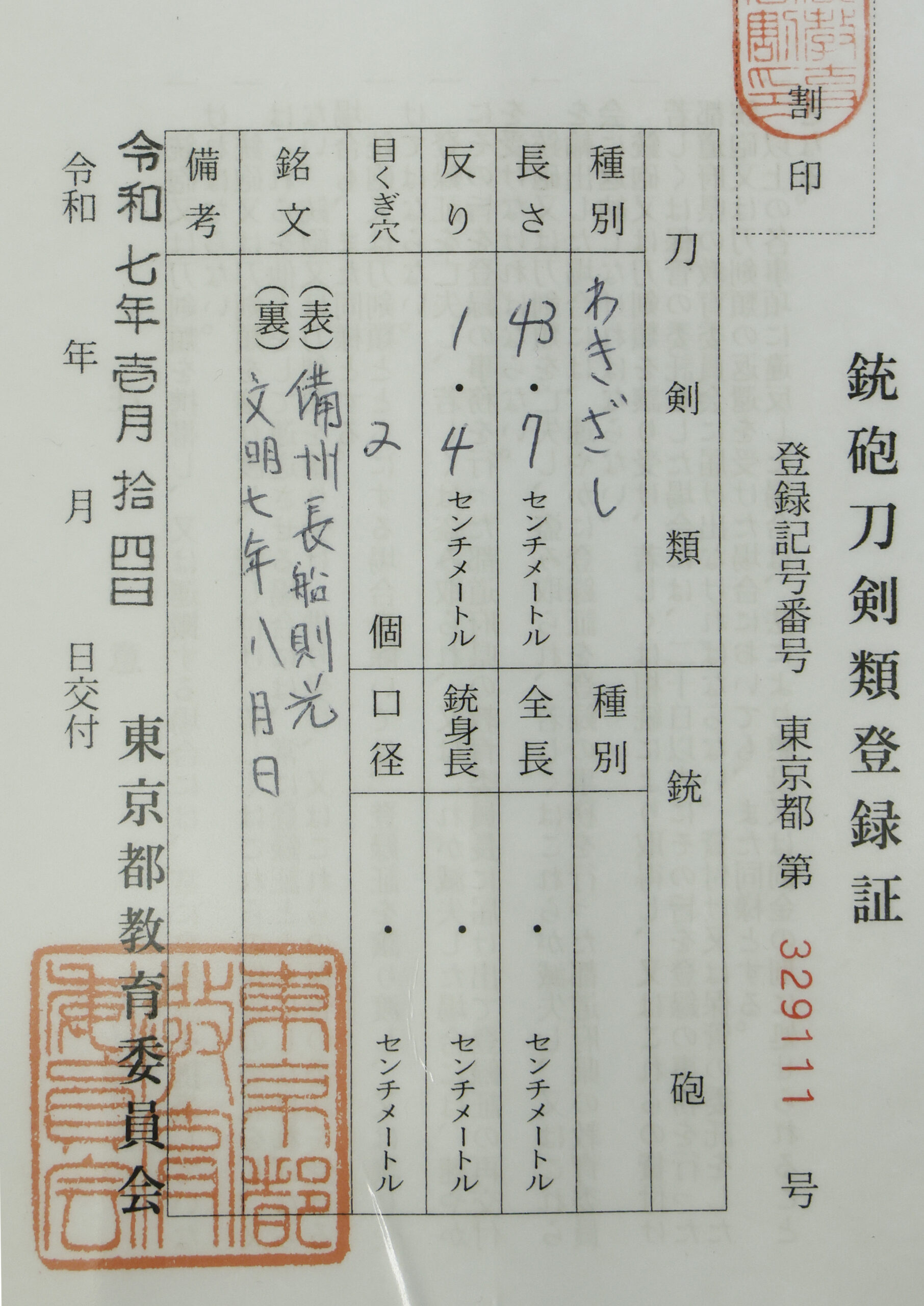
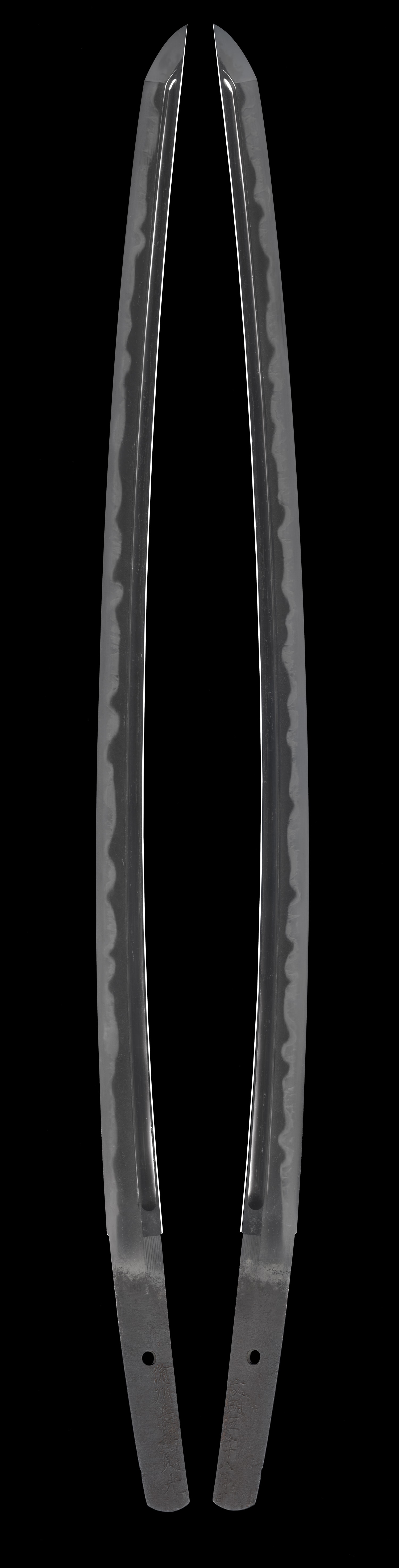
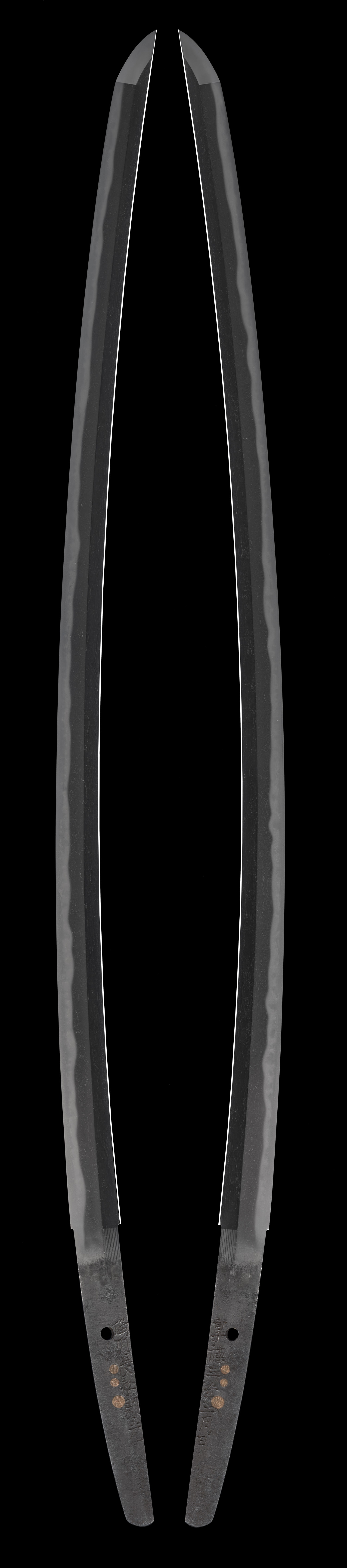
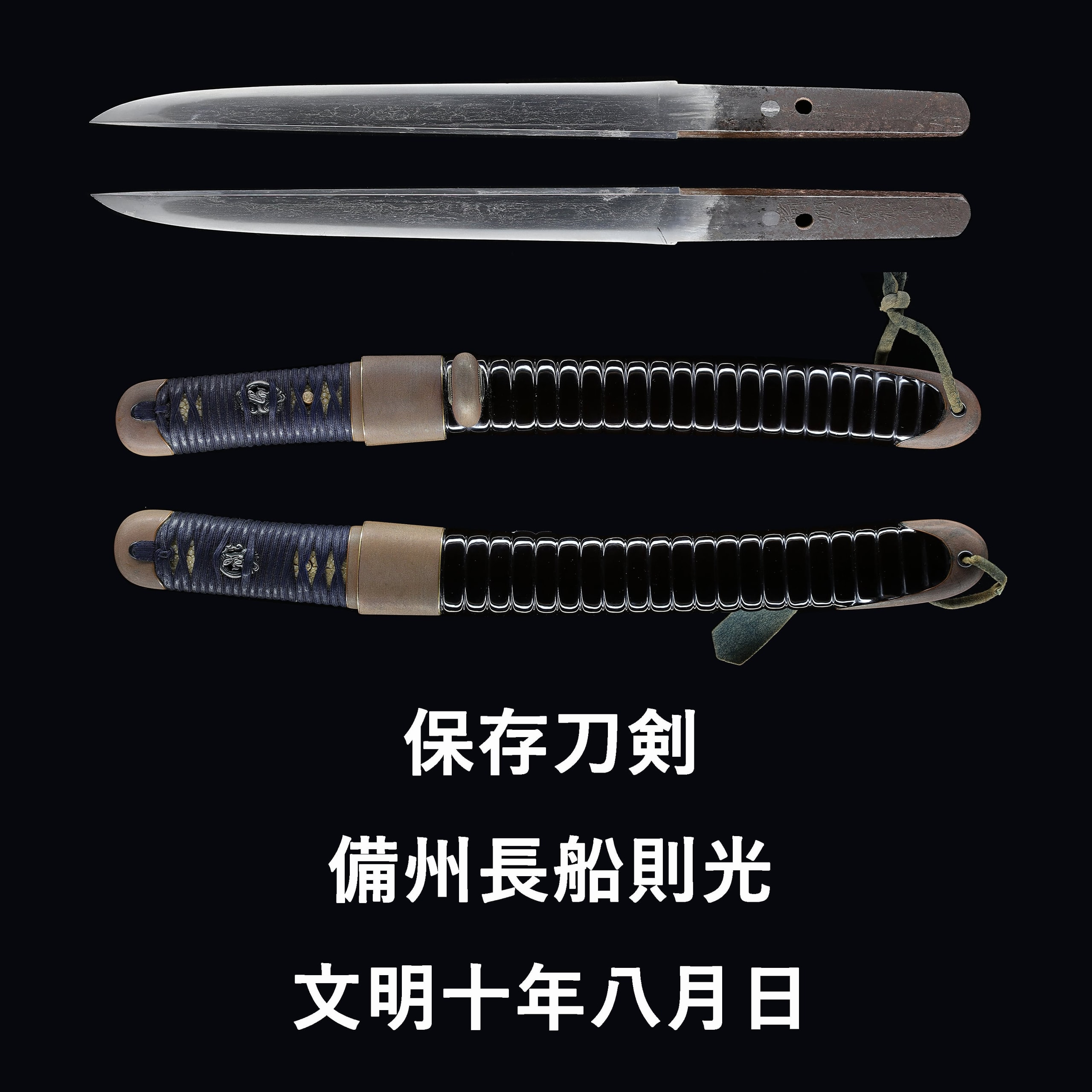
日本刀 脇差:銘 備州長船則光(文明七年) 日本美術刀剣保存協会 特別保存刀剣 【解説】 本作は文明七年(1475年:室町時代後期)に備州長船則光によって制作された一振りです。「備州」とは現在の岡山県から広島県にまたがる備前・備中・備後の三国の総称であり、長船は備前国に拠点を置いた名門流派の名です。 則光の名は鎌倉時代後期から室町時代末期まで十代以上にわたって受け継がれました。本作の制作年と歴代の活動時期から、本作は「五郎左衛門尉則光」として知られる六代目則光の真作と目されます。彼は歴代則光の中でも最も高名な名工の一人です。 室町時代、戦国乱世の真っ只中にあった備前では、有力大名からの需要に応え数多くの刀剣が打たれました。群雄割拠の時代に鍛えられた刀剣を手にすることは、愛刀家にとって格別の喜びと言えるでしょう。本作も当時の侍によって誂えられ、実戦の場を潜り抜けてきた可能性を秘めています。 【備前長船派の歴史】 長船派は鎌倉時代中期の光忠を始祖と仰ぎます。備前国における最大の流派であり、時の権力者や名だたる武将から多くの注文を受けました。彼らの作品は「長船物」と称され、古来より武士たちに深く愛されてきました。 同派には長光、真長、景光の「長船三作」をはじめ、長光、兼光、長義、元重の「長船四天王」など、日本刀の歴史に名を刻む名工が輩出しています。 備前国は中国山地に近く、刀剣の原料となる良質な砂鉄が豊富でした。さらに吉井川の良質な水と炭にも恵まれており、この地理的条件が精良な刀身を焼くことを可能にしました。平安時代末期には「古備前」と呼ばれる職能集団が形成され、その伝統と技術を継承した長船派が鎌倉中期以降に大いに繁栄したのです。 本作は日本美術刀剣保存協会(NBTHK)より「特別保存刀剣」に鑑定されています。これは真作であることはもちろん、保存状態が極めて良く、美術的価値が高い名品であることを証明するものです。 【刀身】 長さ:43.7 cm 反り:1.4 cm 刃文:焼入れによって刃先に現れる結晶構造。 地鉄(肌):鍛錬の過程で現れる鋼の表面模様。 切先:本作は「菖蒲造り(しょうぶづくり)」と呼ばれる独特の形状を呈しています。横手筋(刃先と切先の境界線)を持たないこの造り込みは、非常に優美で洗練された印象を与えます。 茎(なかご):茎には当時のままの黒錆が残されています。この錆は柄内部での赤錆の発生を防ぐ役割があり、その色調や風合いは制作年代を特定する上で極めて重要な指標となります。 【拵】 日本刀の外装(鞘、柄、金具一式)。 目貫:赤銅地に獅子の図。 縁頭:四分一地に波の図。 小柄:赤銅地に龍の図。
 NihontoWatch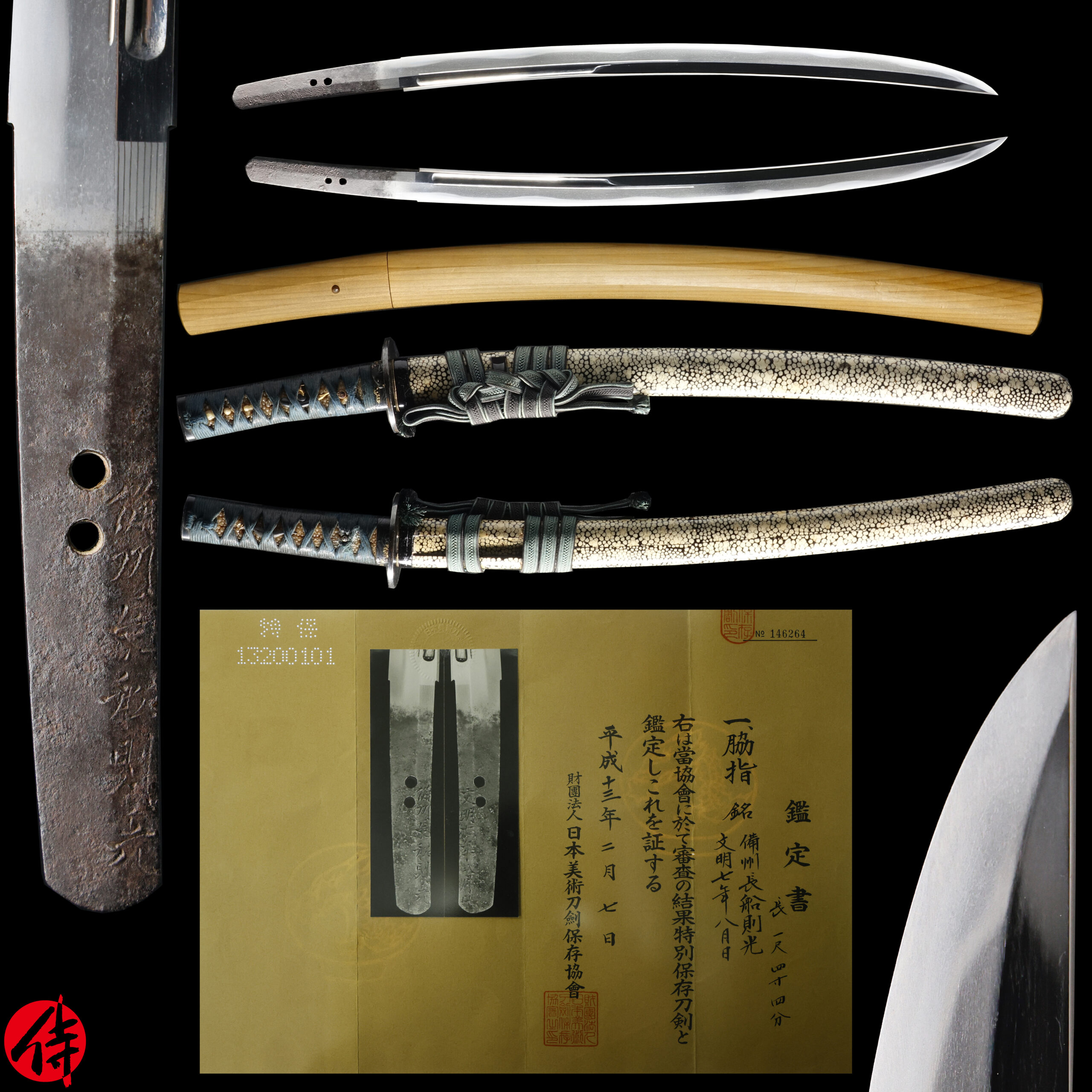

備前伝 · 備前 · 1462-1487頃
藤代 Jo-jo saku
現在5点販売中
則光は、備前長船派の刀工で、その初代は長光の門人とされる。現存する作刀には元亨の年紀を持つ短刀があり、室町時代末期まで十数代にわたり同名を称したと推測される。室町期における則光の作刀は、寛正頃を中心に数代にわたり作刀が確認されており、備前鍛冶研究において重要な位置を占める。
則光の作風は、時代によって変遷が見られる。応永備前に近い作風を示すものがある一方で、寛正頃の作刀は、応永備前の盛光、康光と、末備前の勝光、祐定との中間的な作風を示すとされる。地鉄は、板目肌に肌立ちごころが見られ、地沸つき、乱れ映りが立つものが多い。刃文は、腰開きの互の目乱れを基調とし、総体に小模様に乱れ、足・葉が入り、小沸が付く。帽子は乱れ込み、表は尖り、裏は丸く返る傾向がある。姿は、反りの高いものが多く、中鋒を備える。茎は生ぶのものが多く、先は栗尻、鑢目は勝手下りとなる。
則光の作刀は、生ぶ有銘のものが多く、地刃の出来が良いものが評価される。特に、文明年紀を持つ作刀は、室町期の刀剣研究において貴重な資料となる。槍の作例も存在し、室町時代の槍の典型的な姿を示すものとして評価が高い。ただし、槍の作刀においては、鍛が柾目となることや、刃文が沸ついた直刃ほつれとなることは、古来の槍の慣習的なものであり、長船物としての特色が生かされているとは言い難いとされる。浦上氏一族の為に打たれた短刀には添銘があり、歴史的資料として貴重である。
則光の位置づけを、日本刀全体および伝統・時代・時期ごとに示します。各位(随一・屈指・有数・著名)は、NBTHK および文化庁による指定に加え、三作や名物帳などの歴史的栄誉を加味したものです。
各項目を選ぶと評価方法が表示されます。
在銘年紀作が示す、確実に活動していた年代
備前伝 · 備前
時期区分: 応永備前· 1390–1441
現在20点販売中
概要・位置づけ 応永備前とは、室町時代初期の応永年間を中心に、備前国長船の地に繁栄した刀工群ならびにその作刀を汎称する呼称である。長船派の長い歴史のなかで、南北朝末期の身幅広く鋒の延びた大柄な姿から脱却し、室町中期へと至る一時代区分を形づくる作風期に当たる。この期を代表する刀工としては盛光・康光・家助・経家等が挙げられ、なかでも盛光と康光は「応永備前の双璧」と称される。盛光は一説に師光の子と伝え、その作刀年紀は応永から文明に亘り、初・二代の存在が指摘される。康光もまた応永・正長・永享・嘉吉等の年紀があり、正長以後は二代の作とされる。応永備前の継承は永享期にも及び、則光・祐光は所謂永享備前の双璧として名高く、長船の伝統は室町前期を通じてなお活力を保った。実光・重光等の同派一類に属する工も知られ、これらが応永備前の作域を共有している。 作風 応永備前の刀工達の理想は鎌倉時代の復古にあったとみられ、優美な太刀姿や、南北朝期には廃れていた丁子刃の再現にそれが窺われる。一見、鎌倉期の一文字派や長船物の作域を想わせる格調高い出来があるが、同じ太刀姿でも先反りが加わり、鍛えには板目に杢が目立って交じり、肌立った地鉄に地景風のかねが入る点に一派の個性が表示される。地鉄には乱れ映り、あるいは棒映りが鮮明に立つ。刃文には二様があり、その一は腰の開いた互の目に丁子・小互の目・角がかる刃などを交え、大模様に華やかに乱れて足・葉入り、匂勝ちに小沸つき、匂口明るい乱れ刃である。その二は穏健な直刃調の作で、これも上手とされる。帽子は焼深く乱れ込み、先が小さく尖って返る、いわゆる「ローソクの芯」と称せられる特徴的な態となるところが一派の標識である。彫物では表裏の棒樋を区上で丸止めにする点が見どころとされ、八幡大菩薩・一宮大明神等の神号や梵字の重ね彫を伴う作も少なくない。 評価・伝承 応永備前の諸工は、優美な太刀姿と健全な地刃を兼ね備えた作を多く遺し、その地鉄は潤いある優れた質を有する。盛光の作には乱れの頭がゆったりと丸いところに見処があり、康光の太刀は丁子刃が目立って華やかに乱れ、出来の優れたものがままみられる。生ぶの茎を留め、銘字・鑢目の鮮明な作例は、同工の技倆と作域を知るうえで好資料とされる。所載作には紀州徳川家伝来の太刀や靖國神社所蔵の大太刀があり、伝来の確かな優品も含まれる。腰開きの互の目による華やかな乱れであれ、古雅な直刃であれ、応永備前は鎌倉期への復古を志しつつ独自の個性を確立した一作風期として、備前鍛冶の歴史のなかでも屈指の充実をみた時代と評される。 詳しく見る →
室町時代の備前
国内の戦乱と海外への貿易が、室町の備前を国内随一の刀剣産地にした。応仁の乱以後は戦国の需要が一世紀続き、遣明船は数万振の単位で刀を運んでいる。
保存刀剣のうち、出来が一層優れ、保存状態も良好と認められたものです。再刃や、室町・江戸期の多くの無銘作は対象外となり、保存刀剣より高い基準が課されます。
日本美術刀剣保存協会(NBTHK)は、1948年に設立され、文化庁の監督を受ける公益財団法人で、東京・刀剣博物館に本部を置きます。専門の審査員が出品作を直接審査し、美術的・歴史的価値に応じた鑑定書を発行します。NBTHKの鑑定書は、日本刀および刀装具の真正性を示す最も広く認知された基準です。
NBTHK公式サイトReturns/exchanges limited to defects caused by shipping (except willful misconduct or gross negligence by the company); customers must contact within 72 hours of receiving the product.
日本刀 脇差:銘 備州長船則光(文明七年) 日本美術刀剣保存協会 特別保存刀剣 【解説】 本作は文明七年(1475年:室町時代後期)に備州長船則光によって制作された一振りです。「備州」とは現在の岡山県から広島県にまたがる備前・備中・備後の三国の総称であり、長船は備前国に拠点を置いた名門流派の名です。 則光の名は鎌倉時代後期から室町時代末期まで十代以上にわたって受け継がれました。本作の制作年と歴代の活動時期から、本作は「五郎左衛門尉則光」として知られる六代目則光の真作と目されます。彼は歴代則光の中でも最も高名な名工の一人です。 室町時代、戦国乱世の真っ只中にあった備前では、有力大名からの需要に応え数多くの刀剣が打たれました。群雄割拠の時代に鍛えられた刀剣を手にすることは、愛刀家にとって格別の喜びと言えるでしょう。本作も当時の侍によって誂えられ、実戦の場を潜り抜けてきた可能性を秘めています。 【備前長船派の歴史】 長船派は鎌倉時代中期の光忠を始祖と仰ぎます。備前国における最大の流派であり、時の権力者や名だたる武将から多くの注文を受けました。彼らの作品は「長船物」と称され、古来より武士たちに深く愛されてきました。 同派には長光、真長、景光の「長船三作」をはじめ、長光、兼光、長義、元重の「長船四天王」など、日本刀の歴史に名を刻む名工が輩出しています。 備前国は中国山地に近く、刀剣の原料となる良質な砂鉄が豊富でした。さらに吉井川の良質な水と炭にも恵まれており、この地理的条件が精良な刀身を焼くことを可能にしました。平安時代末期には「古備前」と呼ばれる職能集団が形成され、その伝統と技術を継承した長船派が鎌倉中期以降に大いに繁栄したのです。 本作は日本美術刀剣保存協会(NBTHK)より「特別保存刀剣」に鑑定されています。これは真作であることはもちろん、保存状態が極めて良く、美術的価値が高い名品であることを証明するものです。 【刀身】 長さ:43.7 cm 反り:1.4 cm 刃文:焼入れによって刃先に現れる結晶構造。 地鉄(肌):鍛錬の過程で現れる鋼の表面模様。 切先:本作は「菖蒲造り(しょうぶづくり)」と呼ばれる独特の形状を呈しています。横手筋(刃先と切先の境界線)を持たないこの造り込みは、非常に優美で洗練された印象を与えます。 茎(なかご):茎には当時のままの黒錆が残されています。この錆は柄内部での赤錆の発生を防ぐ役割があり、その色調や風合いは制作年代を特定する上で極めて重要な指標となります。 【拵】 日本刀の外装(鞘、柄、金具一式)。 目貫:赤銅地に獅子の図。 縁頭:四分一地に波の図。 小柄:赤銅地に龍の図。
NihontoWatch備前伝 · 備前 · 1462-1487頃
藤代 Jo-jo saku
現在5点販売中
則光は、備前長船派の刀工で、その初代は長光の門人とされる。現存する作刀には元亨の年紀を持つ短刀があり、室町時代末期まで十数代にわたり同名を称したと推測される。室町期における則光の作刀は、寛正頃を中心に数代にわたり作刀が確認されており、備前鍛冶研究において重要な位置を占める。
則光の作風は、時代によって変遷が見られる。応永備前に近い作風を示すものがある一方で、寛正頃の作刀は、応永備前の盛光、康光と、末備前の勝光、祐定との中間的な作風を示すとされる。地鉄は、板目肌に肌立ちごころが見られ、地沸つき、乱れ映りが立つものが多い。刃文は、腰開きの互の目乱れを基調とし、総体に小模様に乱れ、足・葉が入り、小沸が付く。帽子は乱れ込み、表は尖り、裏は丸く返る傾向がある。姿は、反りの高いものが多く、中鋒を備える。茎は生ぶのものが多く、先は栗尻、鑢目は勝手下りとなる。
則光の作刀は、生ぶ有銘のものが多く、地刃の出来が良いものが評価される。特に、文明年紀を持つ作刀は、室町期の刀剣研究において貴重な資料となる。槍の作例も存在し、室町時代の槍の典型的な姿を示すものとして評価が高い。ただし、槍の作刀においては、鍛が柾目となることや、刃文が沸ついた直刃ほつれとなることは、古来の槍の慣習的なものであり、長船物としての特色が生かされているとは言い難いとされる。浦上氏一族の為に打たれた短刀には添銘があり、歴史的資料として貴重である。
則光の位置づけを、日本刀全体および伝統・時代・時期ごとに示します。各位(随一・屈指・有数・著名)は、NBTHK および文化庁による指定に加え、三作や名物帳などの歴史的栄誉を加味したものです。
各項目を選ぶと評価方法が表示されます。
在銘年紀作が示す、確実に活動していた年代
備前伝 · 備前
時期区分: 応永備前· 1390–1441
現在20点販売中
概要・位置づけ 応永備前とは、室町時代初期の応永年間を中心に、備前国長船の地に繁栄した刀工群ならびにその作刀を汎称する呼称である。長船派の長い歴史のなかで、南北朝末期の身幅広く鋒の延びた大柄な姿から脱却し、室町中期へと至る一時代区分を形づくる作風期に当たる。この期を代表する刀工としては盛光・康光・家助・経家等が挙げられ、なかでも盛光と康光は「応永備前の双璧」と称される。盛光は一説に師光の子と伝え、その作刀年紀は応永から文明に亘り、初・二代の存在が指摘される。康光もまた応永・正長・永享・嘉吉等の年紀があり、正長以後は二代の作とされる。応永備前の継承は永享期にも及び、則光・祐光は所謂永享備前の双璧として名高く、長船の伝統は室町前期を通じてなお活力を保った。実光・重光等の同派一類に属する工も知られ、これらが応永備前の作域を共有している。 作風 応永備前の刀工達の理想は鎌倉時代の復古にあったとみられ、優美な太刀姿や、南北朝期には廃れていた丁子刃の再現にそれが窺われる。一見、鎌倉期の一文字派や長船物の作域を想わせる格調高い出来があるが、同じ太刀姿でも先反りが加わり、鍛えには板目に杢が目立って交じり、肌立った地鉄に地景風のかねが入る点に一派の個性が表示される。地鉄には乱れ映り、あるいは棒映りが鮮明に立つ。刃文には二様があり、その一は腰の開いた互の目に丁子・小互の目・角がかる刃などを交え、大模様に華やかに乱れて足・葉入り、匂勝ちに小沸つき、匂口明るい乱れ刃である。その二は穏健な直刃調の作で、これも上手とされる。帽子は焼深く乱れ込み、先が小さく尖って返る、いわゆる「ローソクの芯」と称せられる特徴的な態となるところが一派の標識である。彫物では表裏の棒樋を区上で丸止めにする点が見どころとされ、八幡大菩薩・一宮大明神等の神号や梵字の重ね彫を伴う作も少なくない。 評価・伝承 応永備前の諸工は、優美な太刀姿と健全な地刃を兼ね備えた作を多く遺し、その地鉄は潤いある優れた質を有する。盛光の作には乱れの頭がゆったりと丸いところに見処があり、康光の太刀は丁子刃が目立って華やかに乱れ、出来の優れたものがままみられる。生ぶの茎を留め、銘字・鑢目の鮮明な作例は、同工の技倆と作域を知るうえで好資料とされる。所載作には紀州徳川家伝来の太刀や靖國神社所蔵の大太刀があり、伝来の確かな優品も含まれる。腰開きの互の目による華やかな乱れであれ、古雅な直刃であれ、応永備前は鎌倉期への復古を志しつつ独自の個性を確立した一作風期として、備前鍛冶の歴史のなかでも屈指の充実をみた時代と評される。 詳しく見る →
室町時代の備前
国内の戦乱と海外への貿易が、室町の備前を国内随一の刀剣産地にした。応仁の乱以後は戦国の需要が一世紀続き、遣明船は数万振の単位で刀を運んでいる。
保存刀剣のうち、出来が一層優れ、保存状態も良好と認められたものです。再刃や、室町・江戸期の多くの無銘作は対象外となり、保存刀剣より高い基準が課されます。
日本美術刀剣保存協会(NBTHK)は、1948年に設立され、文化庁の監督を受ける公益財団法人で、東京・刀剣博物館に本部を置きます。専門の審査員が出品作を直接審査し、美術的・歴史的価値に応じた鑑定書を発行します。NBTHKの鑑定書は、日本刀および刀装具の真正性を示す最も広く認知された基準です。
NBTHK公式サイトReturns/exchanges limited to defects caused by shipping (except willful misconduct or gross negligence by the company); customers must contact within 72 hours of receiving the product.

![Wakizashi - Tokuho - 作 則光 - 脇差[備州長船法光][日本美術刀剣保存協会]特別保存刀剣](/_next/image?url=https%3A%2F%2Fitbhfhyptogxcjbjfzwx.supabase.co%2Fstorage%2Fv1%2Fobject%2Fpublic%2Flisting-images%2Fworld-seiyudo%2FL31492%2F00.jpg&w=2560&q=90)