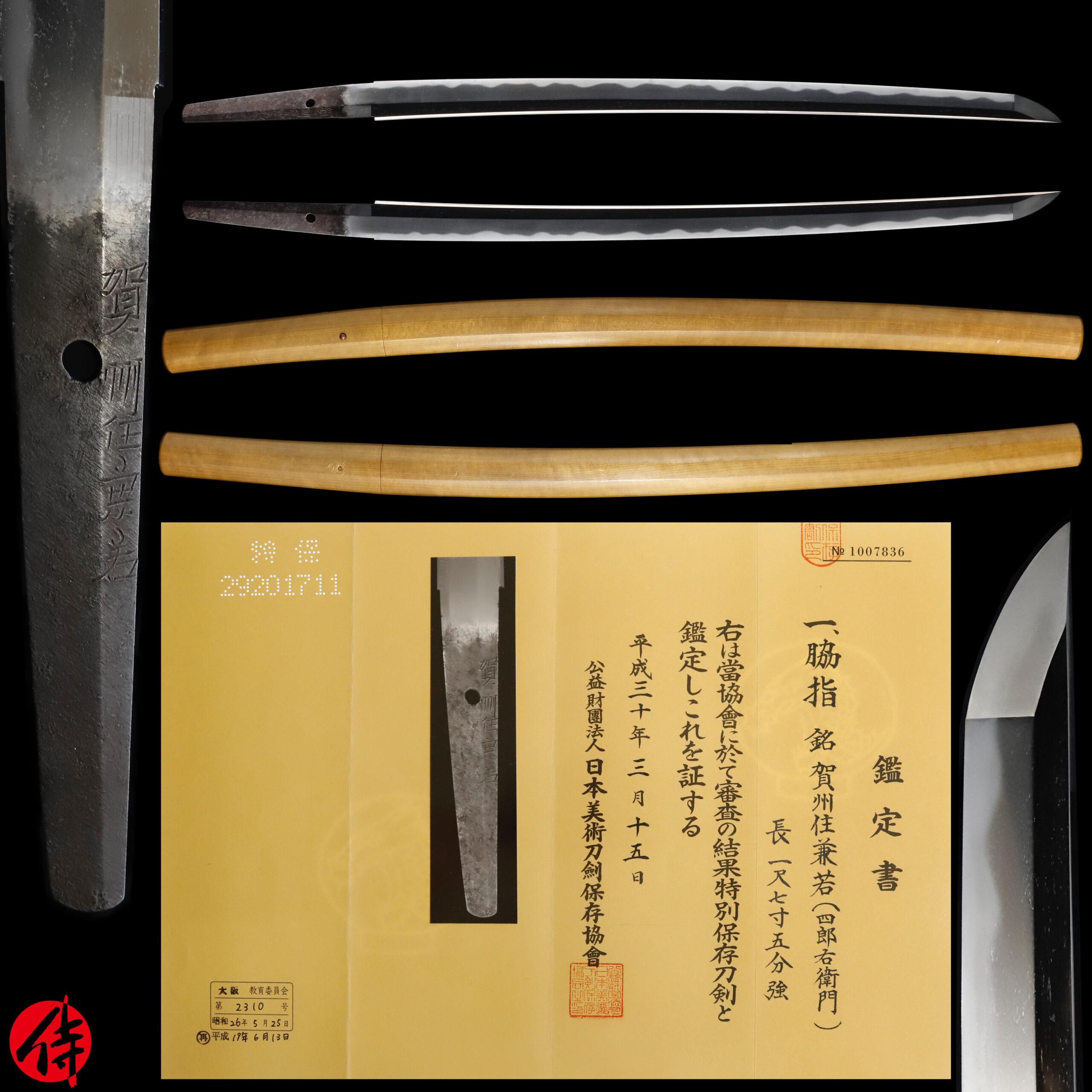
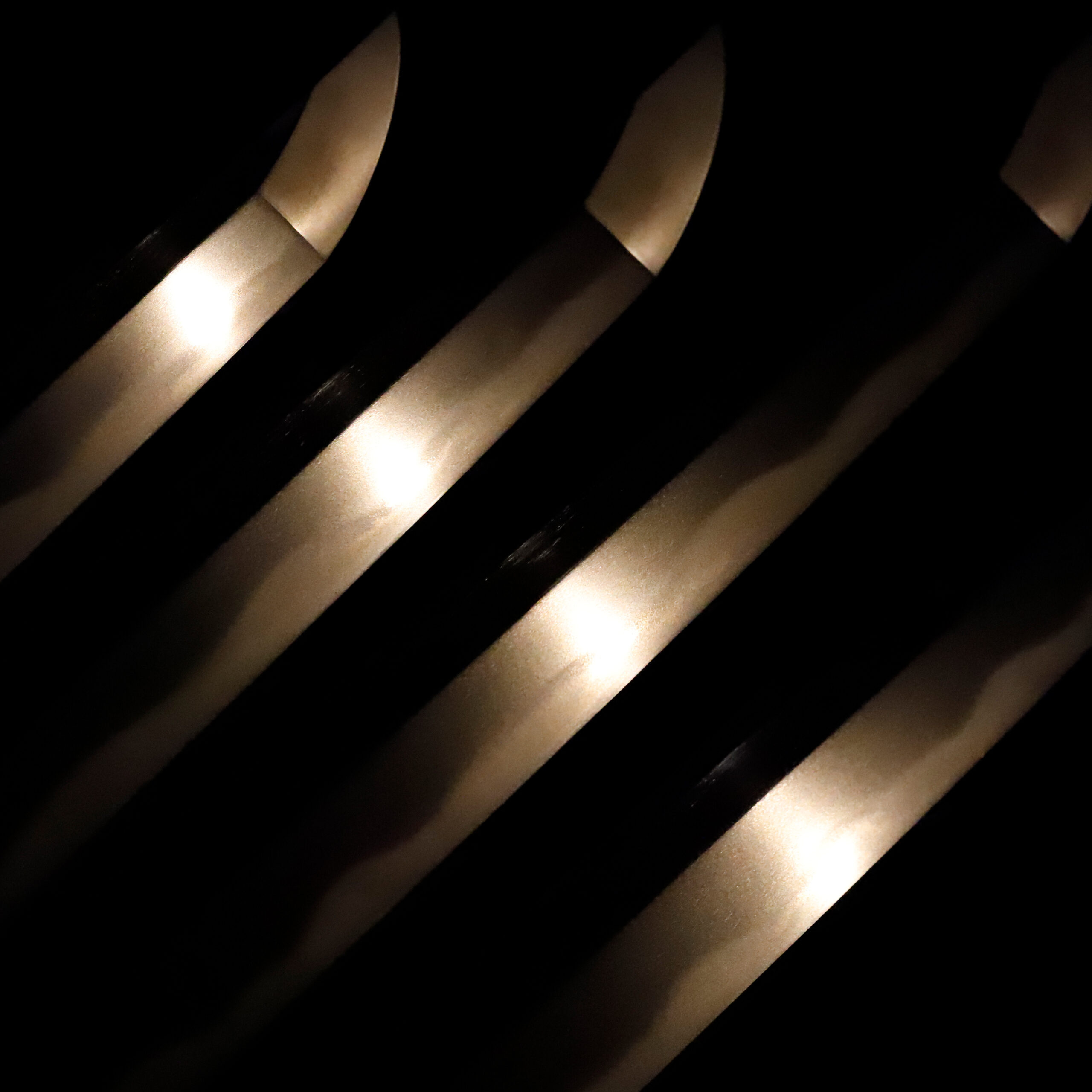
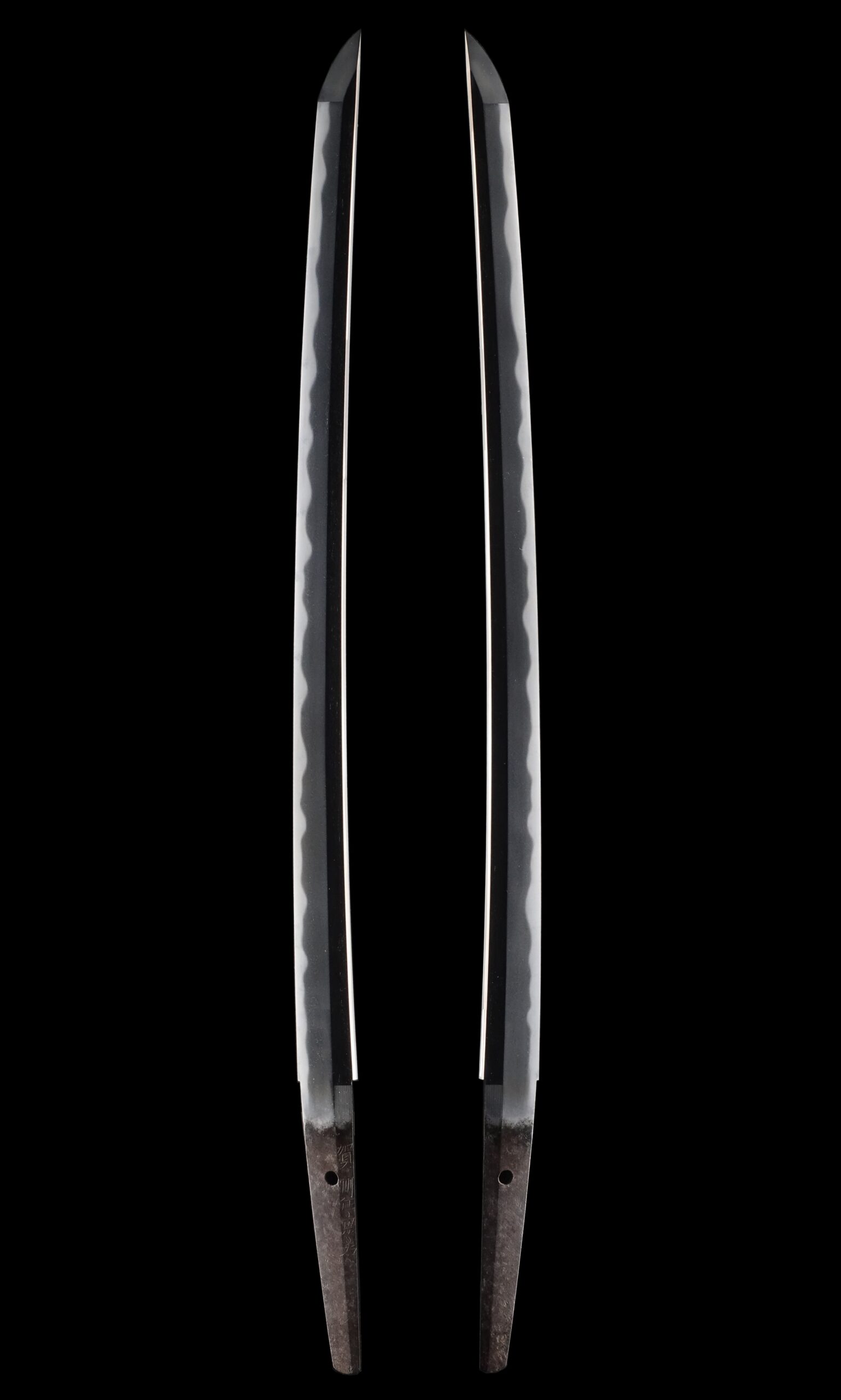
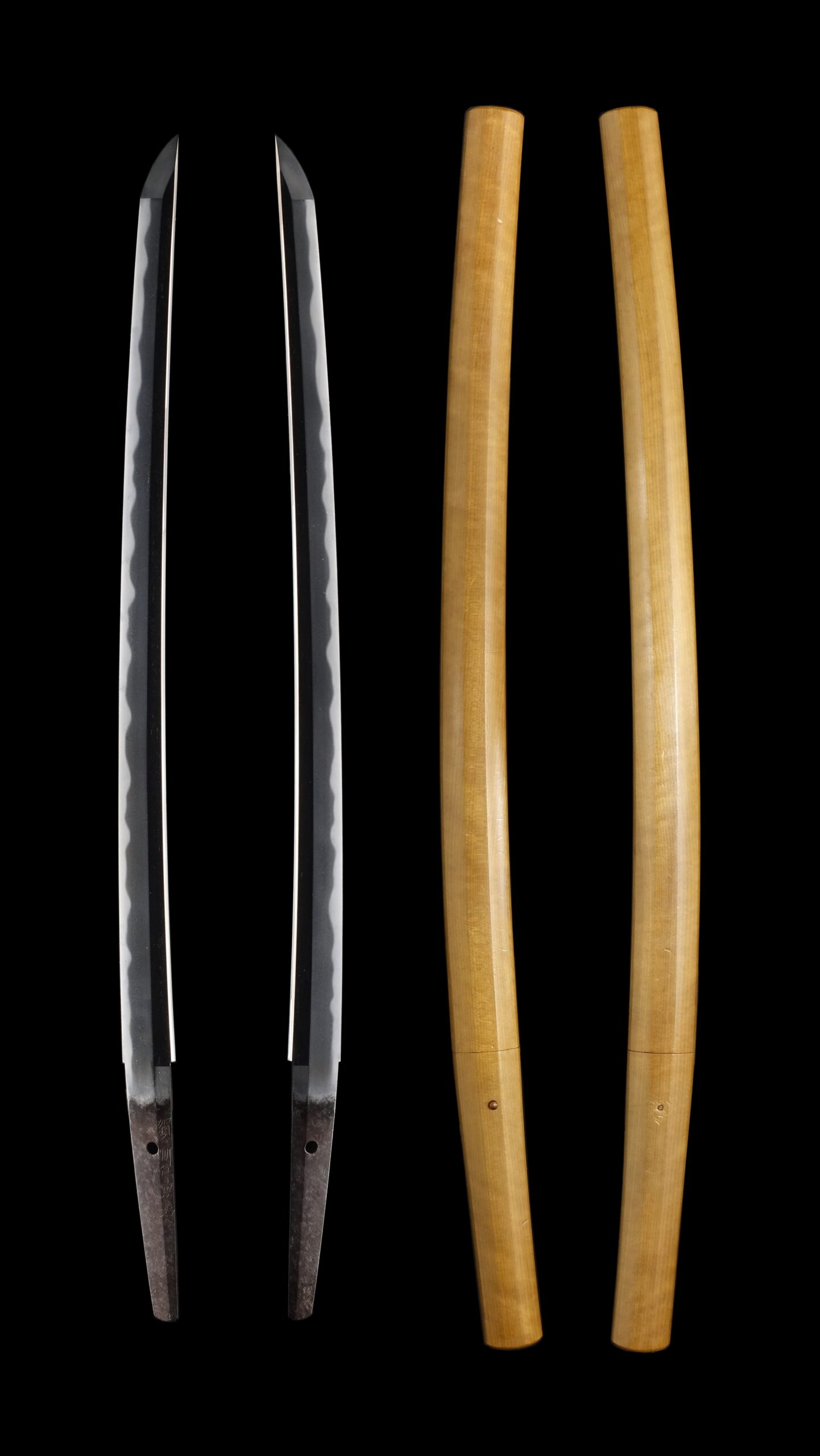
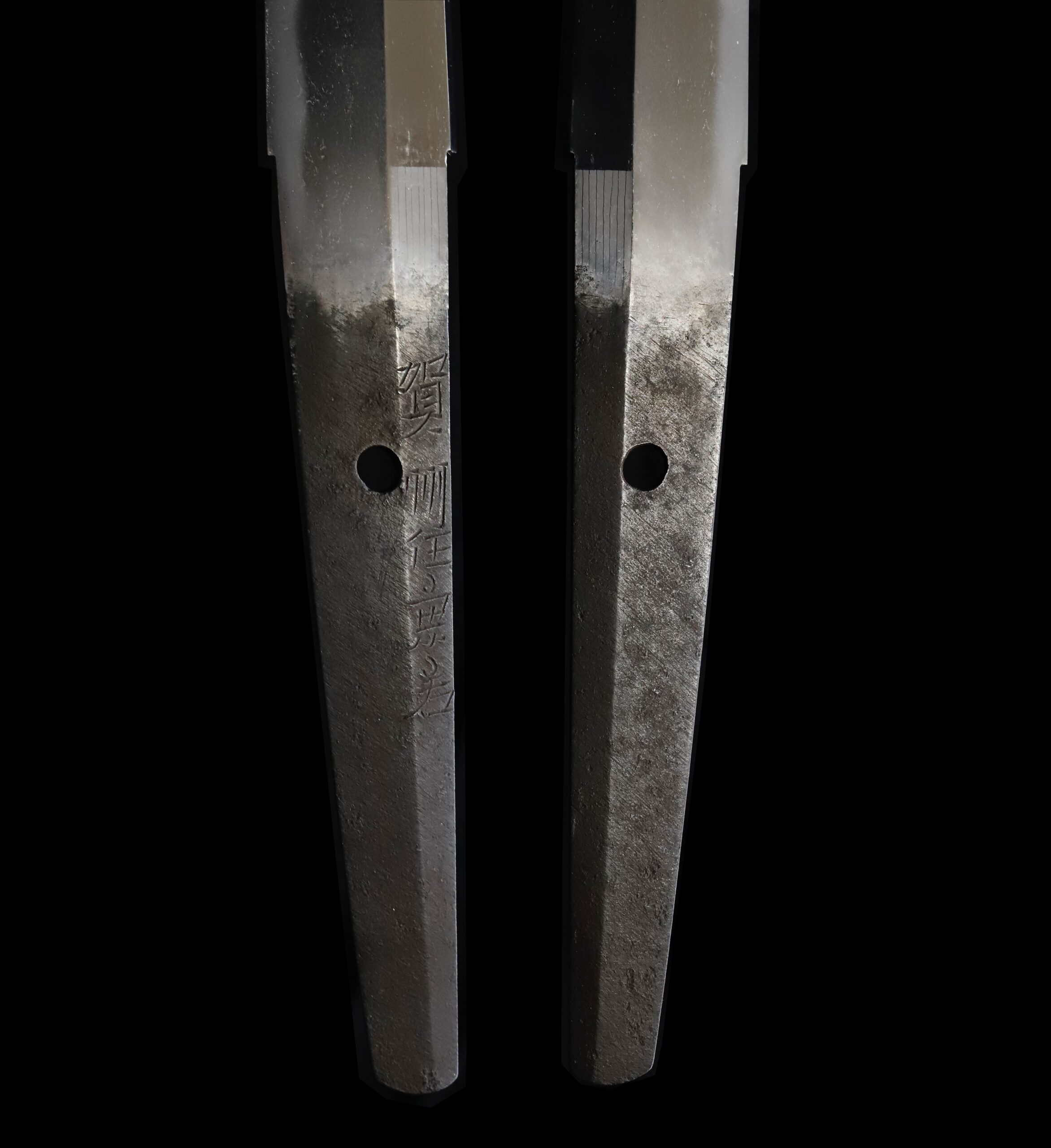
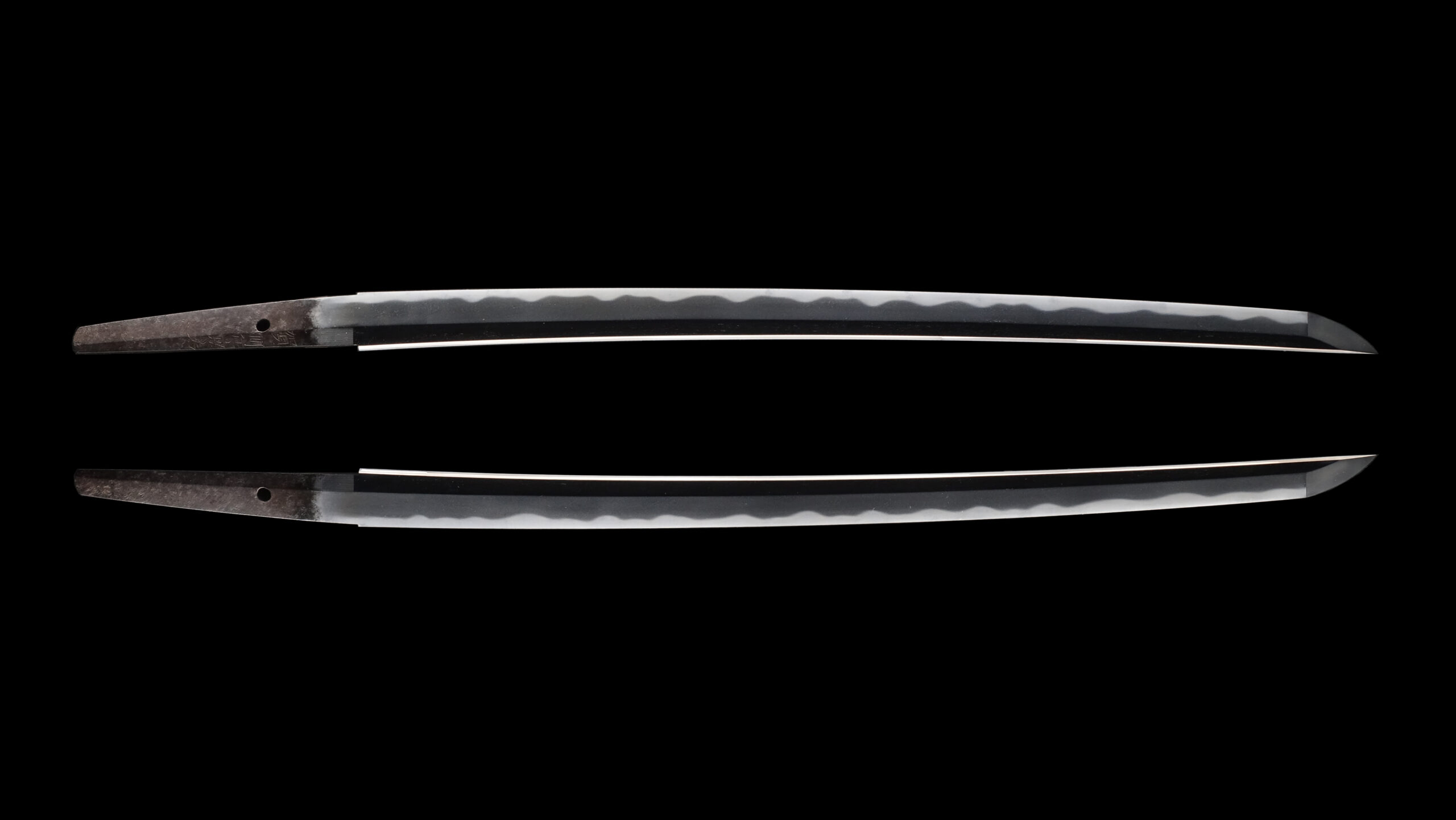
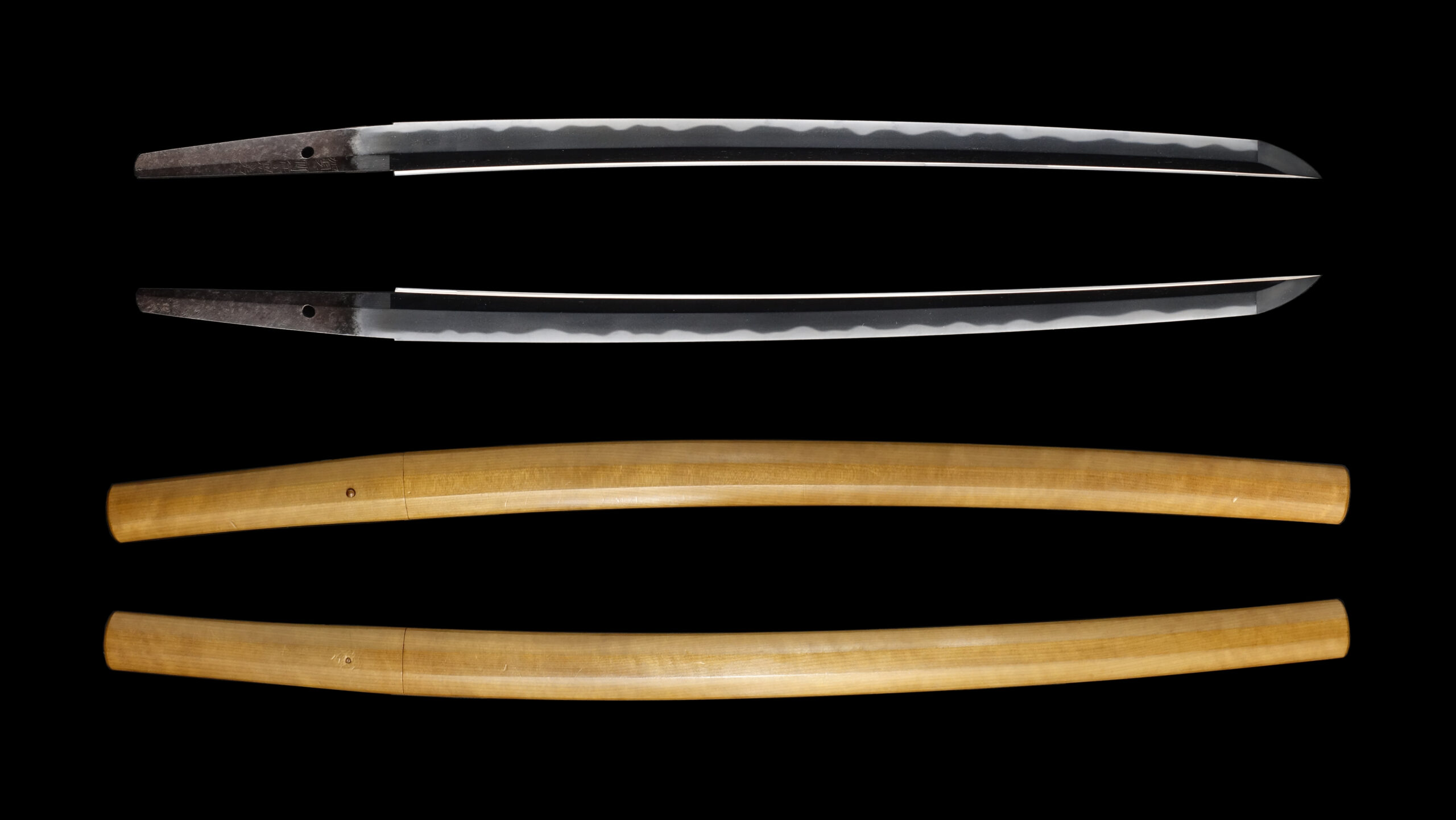
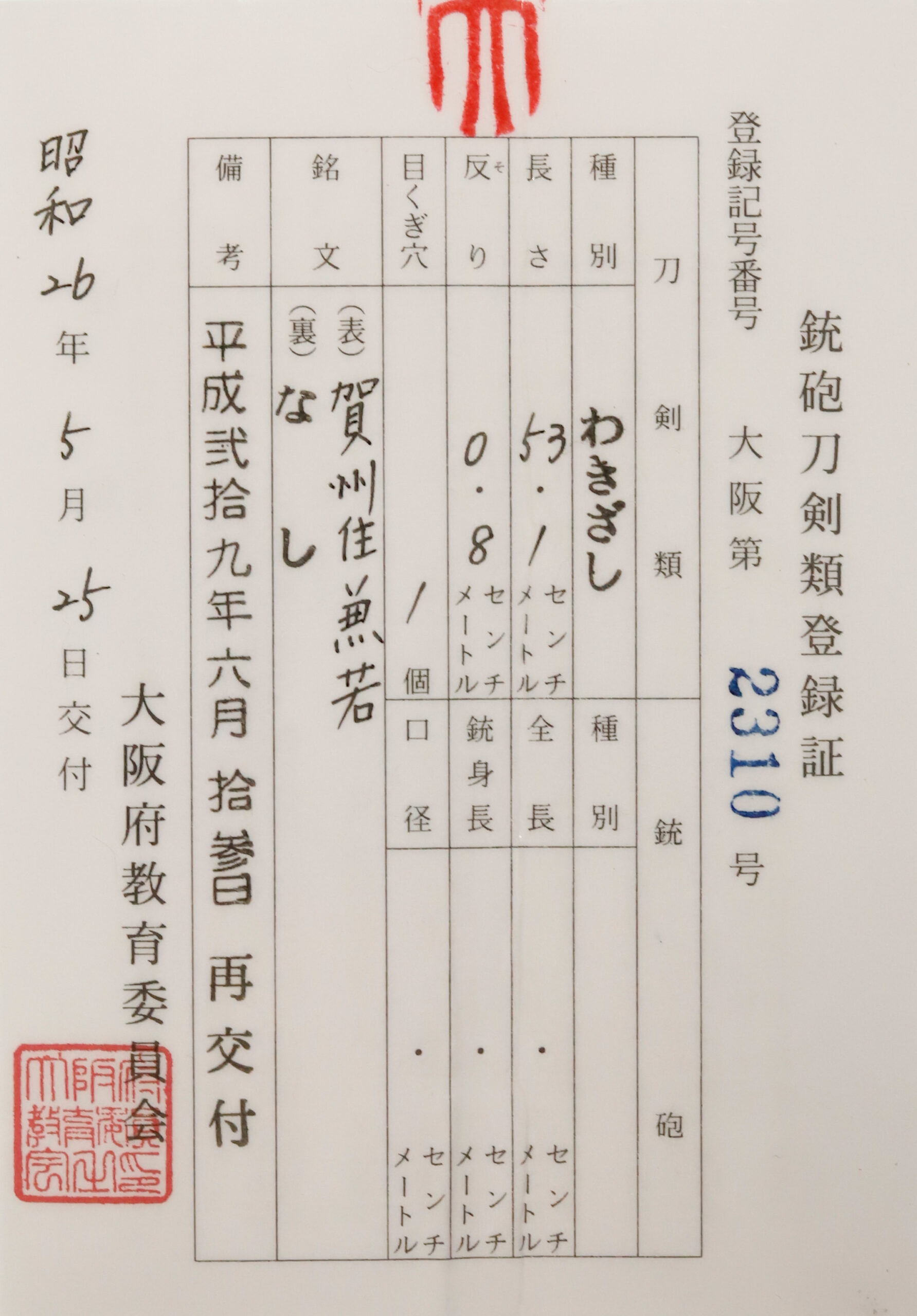
Antique Japanese Sword Wakizashi Signed by Kanewaka NBTHK Tokubetsu Hozon Certificate
売却済
世界81社の刀剣商を横断追跡 · 価格履歴 · 売却アーカイブ
Kanei (1624-1644)
仕様
53.1 cm
0.8 cm
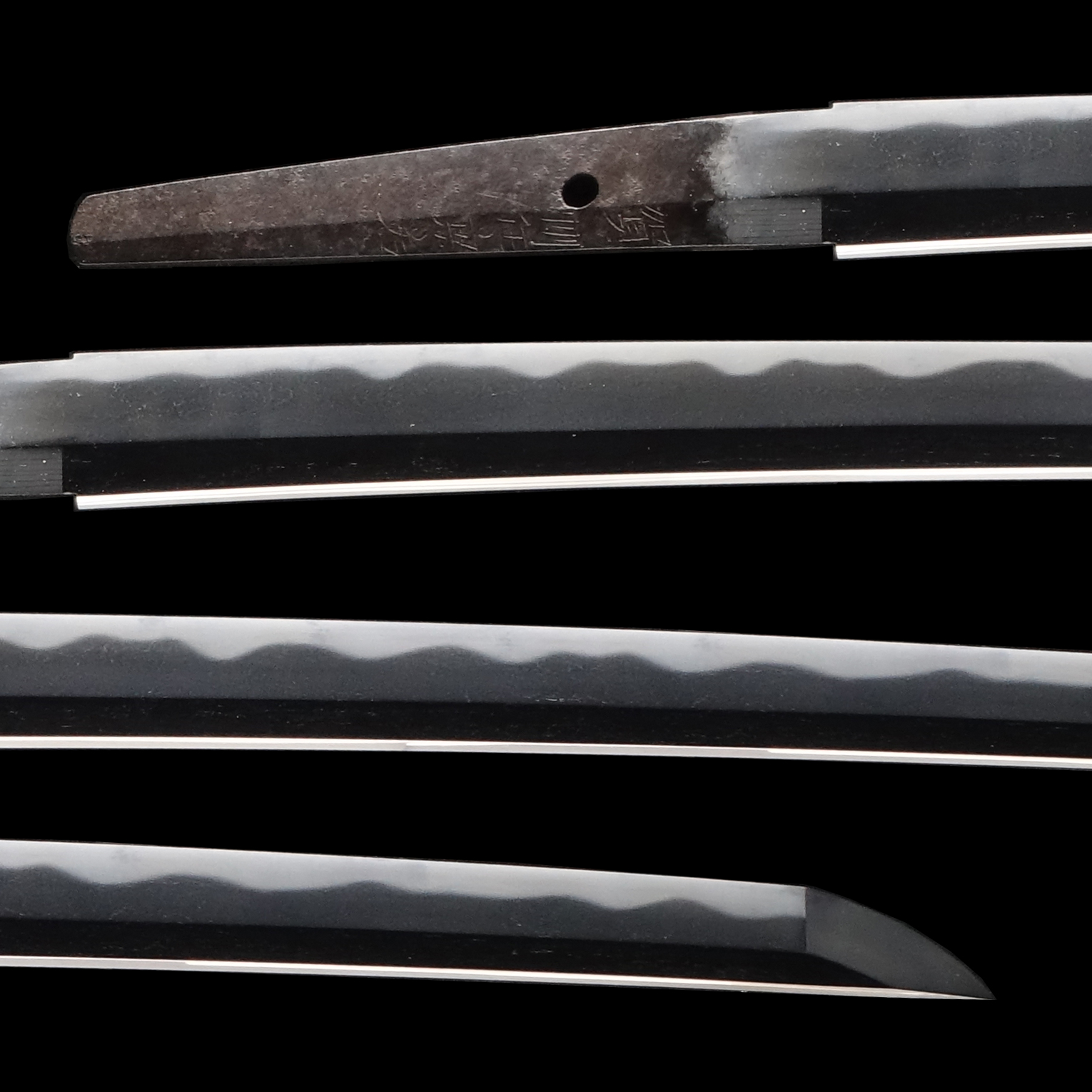
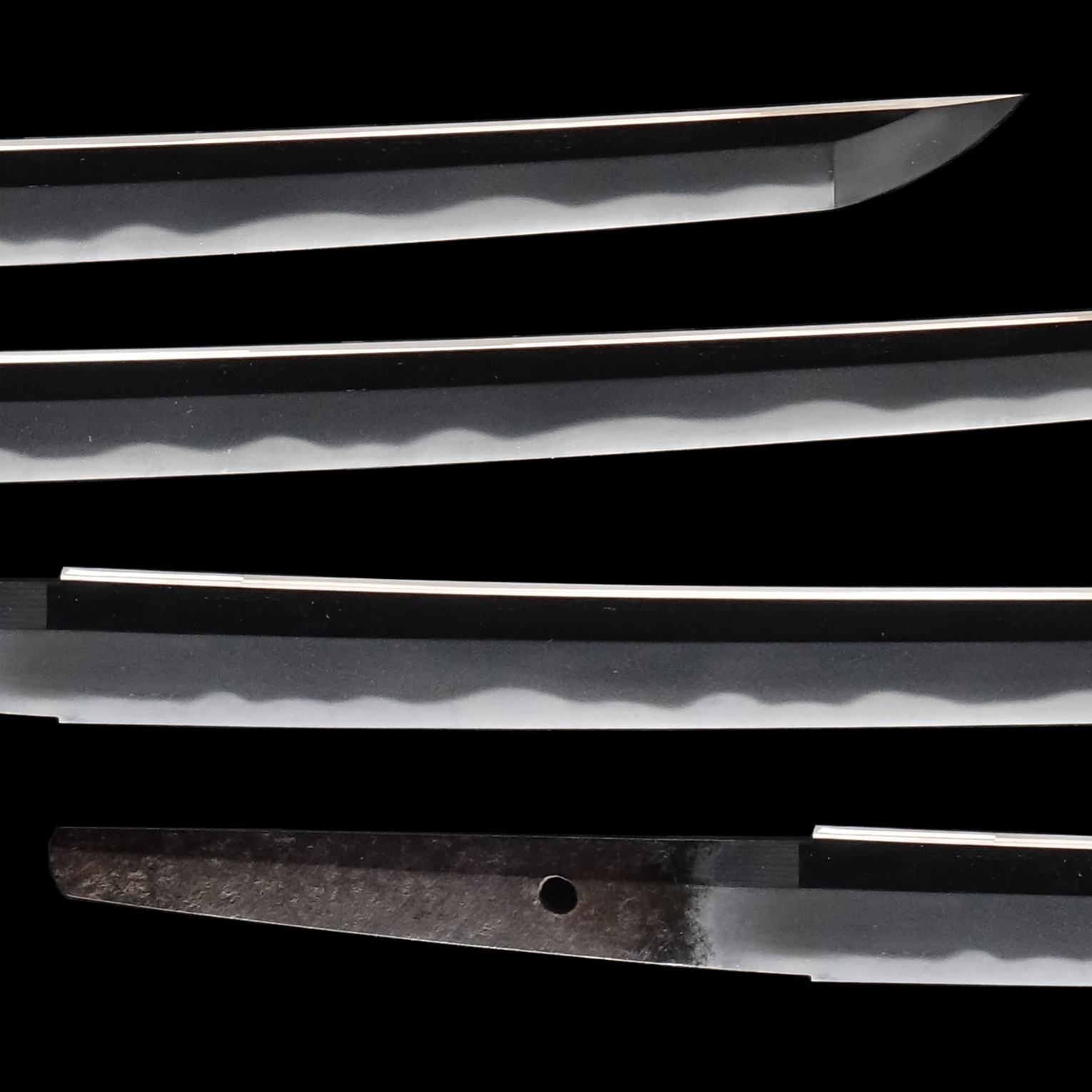
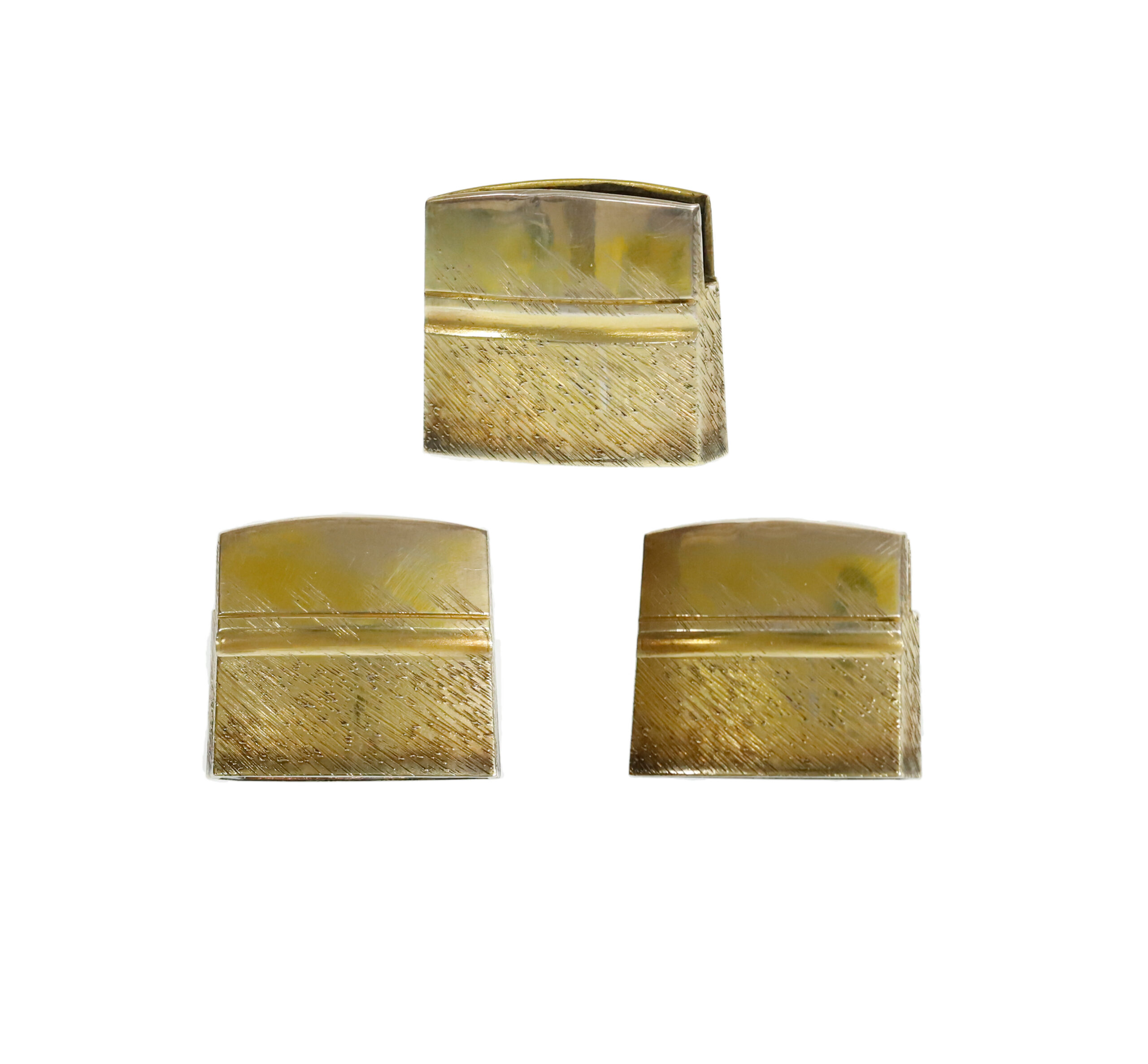
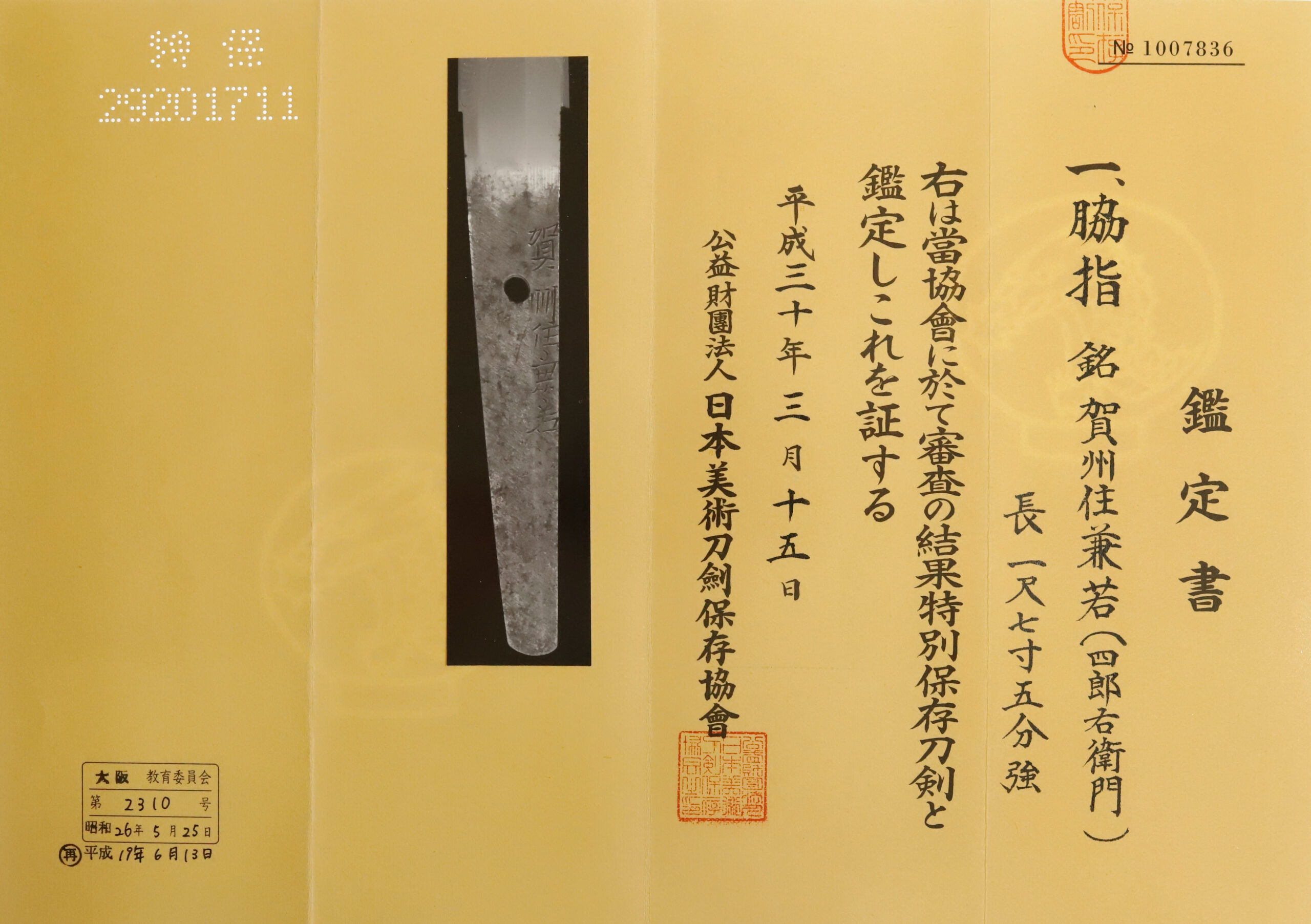
Antique Japanese Sword Wakizashi Signed by Kanewaka with NBTHK Tokubestsu Hozon Certificate 【Description】 Summary This blade was signed by Kashu Ju Kanewaka (賀州住兼若). Kashu is the name of the province located in today’s Ishikawa prefecture. The inscription of Kashu Jyu means that he resided in this area when he forged this blade. According to its NBTHK appraisal, it was created by Shirouemon Kanewaka, also known as the third-gen Kanewaka, who was active during the early-mid Edo period (1673-1704). The maker’s name, Kanewaka, is one of the most prestigious swordsmiths in this province and lasted several generations during the early-late Edo period (approx. 280-400 years ago). The first-gen Kanewaka was originally from Mino province (today’s Gifu prefecture). Later on, he moved to the Kaga domain (today’s Ishikawa prefecture) at the beginning of the Edo period after being summoned by Maeda Toshitsune, the third-gen head of the Kaga domain. It is said that Kanewaka forged swords for those who belonged to the Kaga domain under the Maeda clan’s control. All the swordsmiths who signed Kanewaka in the Kaga domain were under the auspice of the Maeda clan from generation to generation because of their highly skilled craftsmanship. The third-gen Kanewaka was born as the first son of Matasuke Kanwaka, the second-gen Kanewaka. The third-gen Kanewaka’s younger brother was Dewa no Kami Takahira, another famous sword maker. The second-gen Kanewaka was the third son of the first-gen Kanewaka. It is said that the third-gen often did a Daisaku for his father at the end of his father’s career. Daisaku is a regular act where an apprentice or a child of the swordsmith signs his master’s name with his master’s permission or forges a blade on behalf of the master. That means that his father highly acknowledged the third-gen Kanewaka’s craftsmanship. In the 5th year of the Enpo era, when his father died, he took over his father’s school and officially became the third-gen Kanewaka. Maeda Clan Maeda clan was originally a retainer of Oda family, who ruled Owari province (today’s Nagoya area in Aichi prefecture). The first head of the Maeda clan was Toshie Maeda. He climbed the social ladder of Samurai society, and he became the feudal lord of Kaga province (today’s Ishikawa prefecture). It is said that he had a vast rice fief that fed 100 million grown-up adults, which is called Hyakuman Goku. The Maeda clan was one of the most powerful lines in Samurai history. Toshie Maeda had a close tie with Oda Nobunaga and Hideyoshi Toyotomi. It is said that the first-gen Kanewaka forged blades for Maeda Toshiie when Kanewaka was still in Mino province (today’s Gifu prefecture). This blade is appraised as a Tokubetsu Hozon Token (特別保存刀剣) issued by NBTHK(Nihon Bijutsu Touken Hozon Kyokai:日本美術刀剣保存協会). This authentication paper was only given to authentic Japanese swords, especially well preserved and high quality with artistic value. 【Blade】 Cutting Edge Length(Nagasa) : 53.1 cm (20.9 inches) Curvature(Sori) : 0.8 cm (0.31 inches) Hamon : The crystalline structure which forms along the cutting edge of a blade as a result of the hardening process Jimon(Jihada) : visible steel surface pattern created by folding and hammering during forging process Nakago : Nakago is the tang of the Japanese sword. Japanese swordsmiths left the black rust on the tang because it prevents red rust while the tang is in its handle. And the discoloration of the tang was created over time, and it is a great indicator for a Japanese sword specialist to estimate when the sword was forged. Habaki : Habaki is the equipment to make the blade not touch its scabbard inside. It prevents the blade from getting rusty and chipped. Authentication Paper : NBTHK Tokubetsu Hozon Certificate for the blade (No. 1007836) NBTHK , also known as Nihon Bijutsu Touken Hozon Kyokai (the Society for the Preservation of the Japan Art Sword), is one of the oldest Japanese sword appraising organizations in modern-day J

売却済
世界81社の刀剣商を横断追跡 · 価格履歴 · 売却アーカイブ
Kanei (1624-1644)
53.1 cm
0.8 cm

Antique Japanese Sword Wakizashi Attributed to Mihara NBTHK Hozon Certificate
$2,170

Antique Japanese Sword Wakizashi Signed by Kanemori NBTHK Tokubetsu Hozon Certificate
$5,881

Antique Japanese Sword Wakizashi Attributed to Den Nohshu Daido NTHK Kanteisho for the blade
$1,984

Antique Japanese Sword Wakizashi Signed by Kanefusa with NBTHK Kicho Certificate
$2,971
Antique Japanese Sword Wakizashi Signed by Kanewaka with NBTHK Tokubestsu Hozon Certificate 【Description】 Summary This blade was signed by Kashu Ju Kanewaka (賀州住兼若). Kashu is the name of the province located in today’s Ishikawa prefecture. The inscription of Kashu Jyu means that he resided in this area when he forged this blade. According to its NBTHK appraisal, it was created by Shirouemon Kanewaka, also known as the third-gen Kanewaka, who was active during the early-mid Edo period (1673-1704). The maker’s name, Kanewaka, is one of the most prestigious swordsmiths in this province and lasted several generations during the early-late Edo period (approx. 280-400 years ago). The first-gen Kanewaka was originally from Mino province (today’s Gifu prefecture). Later on, he moved to the Kaga domain (today’s Ishikawa prefecture) at the beginning of the Edo period after being summoned by Maeda Toshitsune, the third-gen head of the Kaga domain. It is said that Kanewaka forged swords for those who belonged to the Kaga domain under the Maeda clan’s control. All the swordsmiths who signed Kanewaka in the Kaga domain were under the auspice of the Maeda clan from generation to generation because of their highly skilled craftsmanship. The third-gen Kanewaka was born as the first son of Matasuke Kanwaka, the second-gen Kanewaka. The third-gen Kanewaka’s younger brother was Dewa no Kami Takahira, another famous sword maker. The second-gen Kanewaka was the third son of the first-gen Kanewaka. It is said that the third-gen often did a Daisaku for his father at the end of his father’s career. Daisaku is a regular act where an apprentice or a child of the swordsmith signs his master’s name with his master’s permission or forges a blade on behalf of the master. That means that his father highly acknowledged the third-gen Kanewaka’s craftsmanship. In the 5th year of the Enpo era, when his father died, he took over his father’s school and officially became the third-gen Kanewaka. Maeda Clan Maeda clan was originally a retainer of Oda family, who ruled Owari province (today’s Nagoya area in Aichi prefecture). The first head of the Maeda clan was Toshie Maeda. He climbed the social ladder of Samurai society, and he became the feudal lord of Kaga province (today’s Ishikawa prefecture). It is said that he had a vast rice fief that fed 100 million grown-up adults, which is called Hyakuman Goku. The Maeda clan was one of the most powerful lines in Samurai history. Toshie Maeda had a close tie with Oda Nobunaga and Hideyoshi Toyotomi. It is said that the first-gen Kanewaka forged blades for Maeda Toshiie when Kanewaka was still in Mino province (today’s Gifu prefecture). This blade is appraised as a Tokubetsu Hozon Token (特別保存刀剣) issued by NBTHK(Nihon Bijutsu Touken Hozon Kyokai:日本美術刀剣保存協会). This authentication paper was only given to authentic Japanese swords, especially well preserved and high quality with artistic value. 【Blade】 Cutting Edge Length(Nagasa) : 53.1 cm (20.9 inches) Curvature(Sori) : 0.8 cm (0.31 inches) Hamon : The crystalline structure which forms along the cutting edge of a blade as a result of the hardening process Jimon(Jihada) : visible steel surface pattern created by folding and hammering during forging process Nakago : Nakago is the tang of the Japanese sword. Japanese swordsmiths left the black rust on the tang because it prevents red rust while the tang is in its handle. And the discoloration of the tang was created over time, and it is a great indicator for a Japanese sword specialist to estimate when the sword was forged. Habaki : Habaki is the equipment to make the blade not touch its scabbard inside. It prevents the blade from getting rusty and chipped. Authentication Paper : NBTHK Tokubetsu Hozon Certificate for the blade (No. 1007836) NBTHK , also known as Nihon Bijutsu Touken Hozon Kyokai (the Society for the Preservation of the Japan Art Sword), is one of the oldest Japanese sword appraising organizations in modern-day J

売却済
世界81社の刀剣商を横断追跡 · 価格履歴 · 売却アーカイブ
Kanei (1624-1644)
53.1 cm
0.8 cm

Antique Japanese Sword Wakizashi Attributed to Mihara NBTHK Hozon Certificate
$2,170

Antique Japanese Sword Wakizashi Signed by Kanemori NBTHK Tokubetsu Hozon Certificate
$5,881

Antique Japanese Sword Wakizashi Attributed to Den Nohshu Daido NTHK Kanteisho for the blade
$1,984

Antique Japanese Sword Wakizashi Signed by Kanefusa with NBTHK Kicho Certificate
$2,971