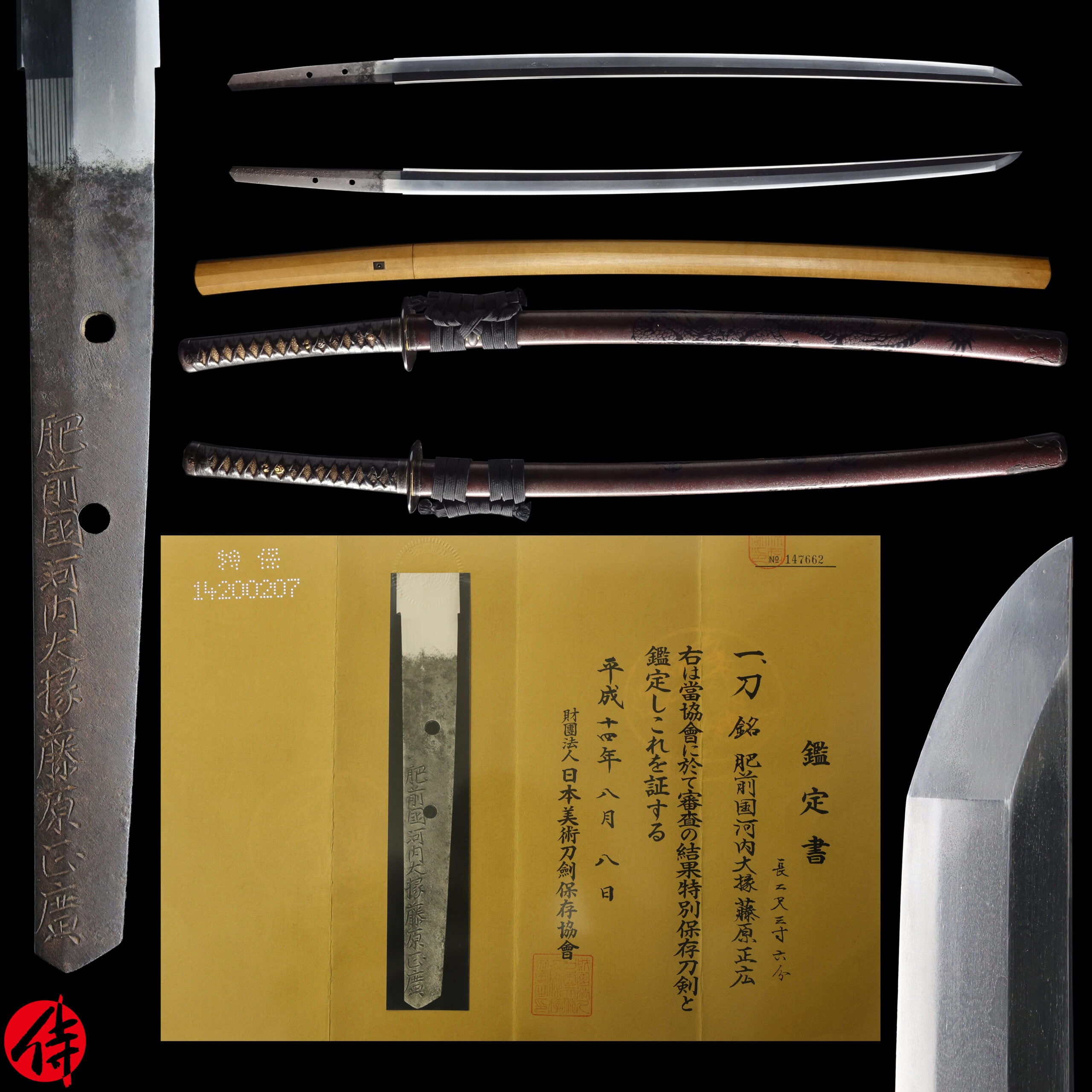
説明
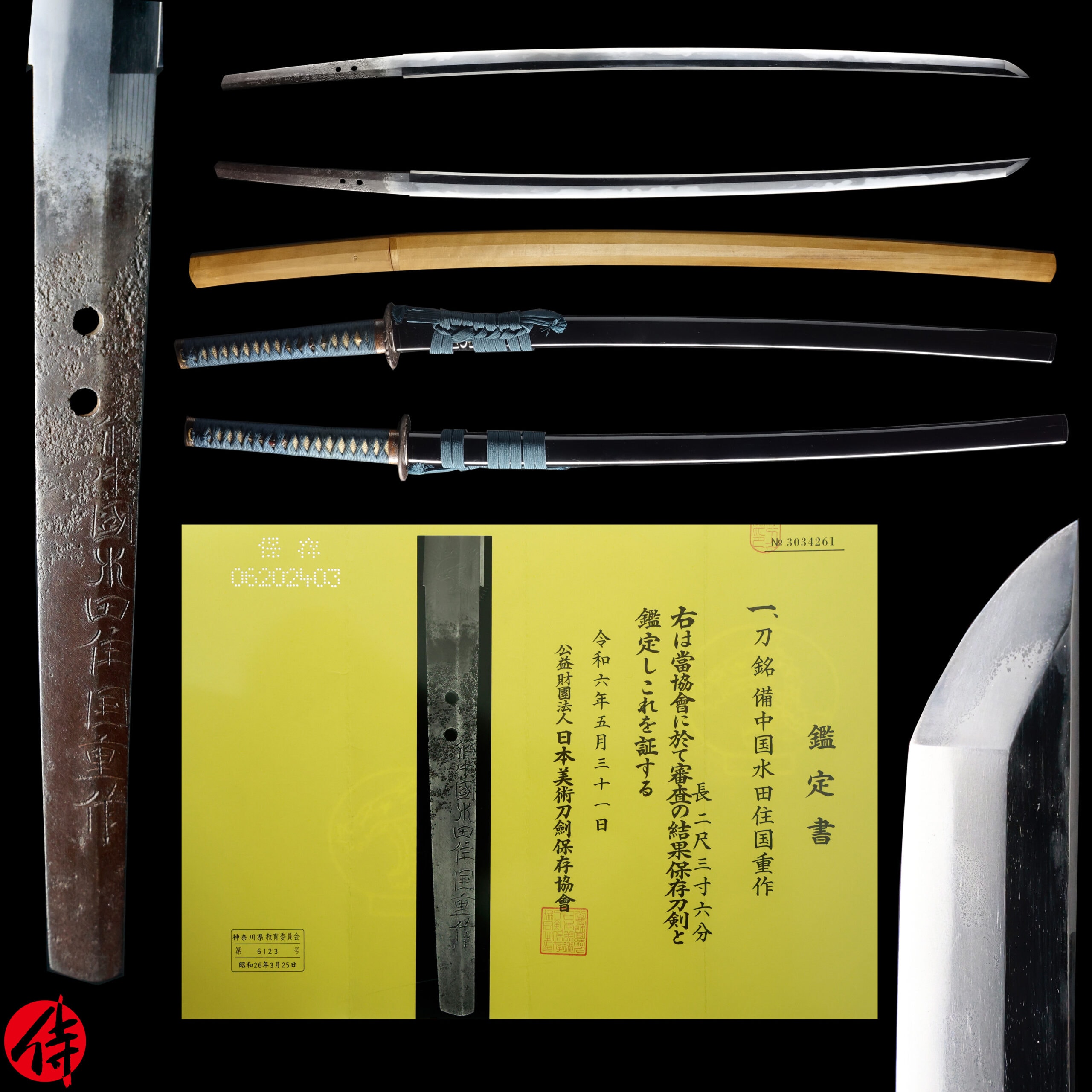
Antique Japanese Sword Katana signed by Kunishige with NBTHK
Hozon
Certificate
【Description】
This blade was signed by Bitchu Koku Mizuta Jyu Kunishige(備中国水田住国重). It is estimated that this swordsmith was active during the early Edo period(
Mid-Late 17th century
).
Kunishige belonged to Bitchu Koku Mizuta school, which had been founded by the descendants of Ko AOE Tametsugu(古青江為次) in the late Muromachi period(1530-). Tametsugu is one of the most famous swordsmiths in the late Heian period-early Kamakura period(Late 12C-Early 13C). One of his works is designated as a national treasure of Japan.
AOE(青江) is the name of the school Tametsugu belonged to. It was located in Kurashiki city, Okayama prefecture today. AOE school was prosperous during the Kamakura-Nanbokucho era(-Late 12C-Late 14C), but it almost disappeared in the Muromachi period. However, because of the descendants of Tametsugu, the Ko AOE-style sword became popular again and revitalized the school by changing its name to Bitchu Koku Mizuta school.
The Bitchu Koku Mizuta school flourished from 1530-1700(The end of the Sengoku period to the mid-Edo period) in today’s Okayama prefecture. There were about 60 swordsmiths who belonged to Mizuta school and Kunishige were the most prestigious smith name only selected sword makers were allowed to use in this school. During the Edo period, many Kunishige swordsmiths moved to other parts of Japan.
There are two major groups in Kunishige swordsmiths during the Edo period. One is called Oyogo Kunishige school(大与五国重派), lead by Master Otsuki(大月)and the other is called Kono school(河野派) lead by Tameie(為家).
Okayama prefecture is located near the Chugoku Mountains, where iron sands, one of the essential materials for making Japanese swords, were abundant. Furthermore, the swordsmiths in Okayama prefecture had close access to Yoshi River, where they could find water and charcoal. This geological location contributed to the swordsmiths to forge high-quality refined blades. We presume Bichu was quite active in sword-forging from ancient times.
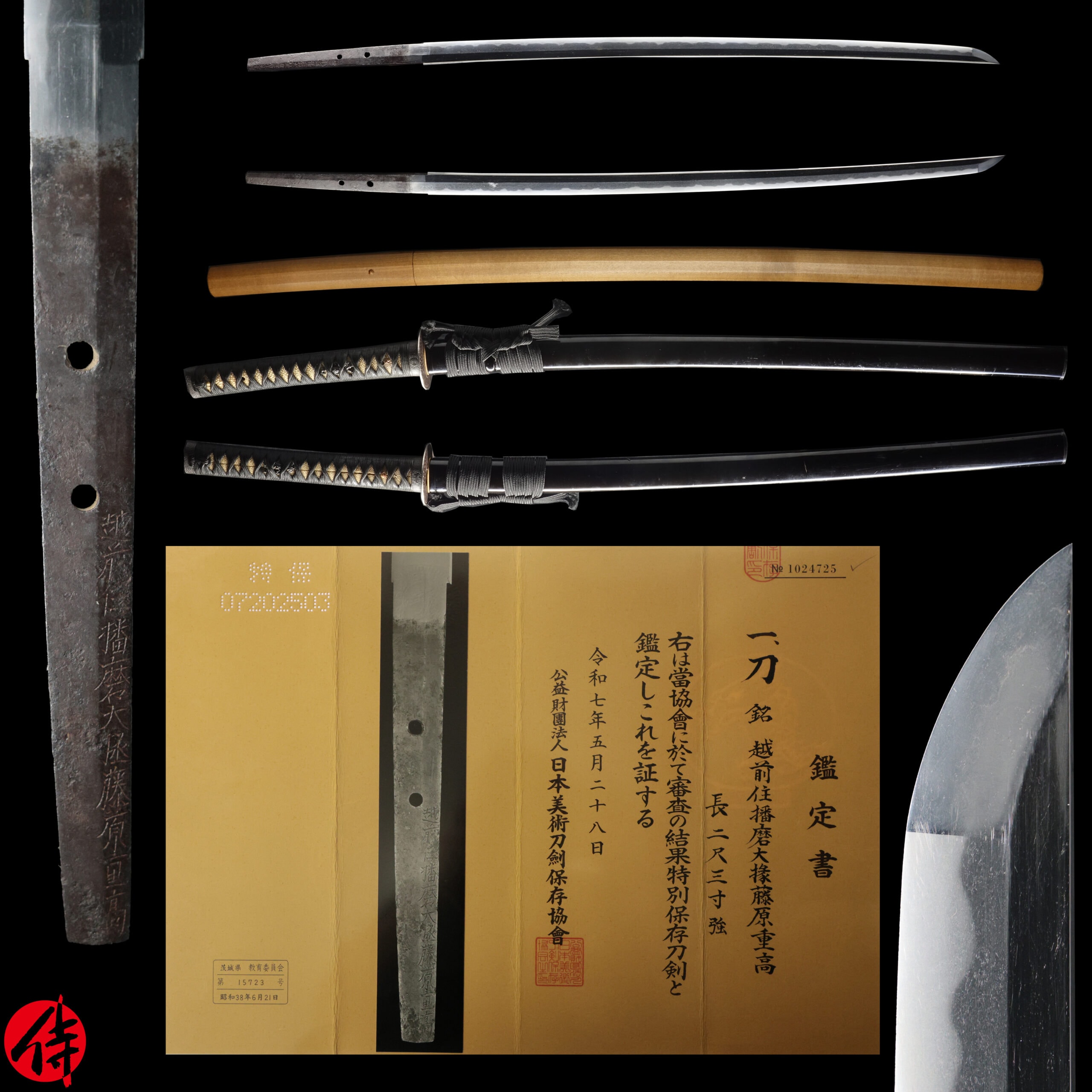
This blade is appraised as a
Hozon Touken
(保存刀剣) issued by NBTHK (Nihon Bijutsu Touken Hozon Kyokai: 日本美術刀剣保存協会). This authentication paper was only given to authentic Japanese swords, well preserved and high quality with artistic value.
*Please keep in mind that there are a couple of Kitae Kizu on the blade. If you like to see the detailed condition, please feel free to contact us.
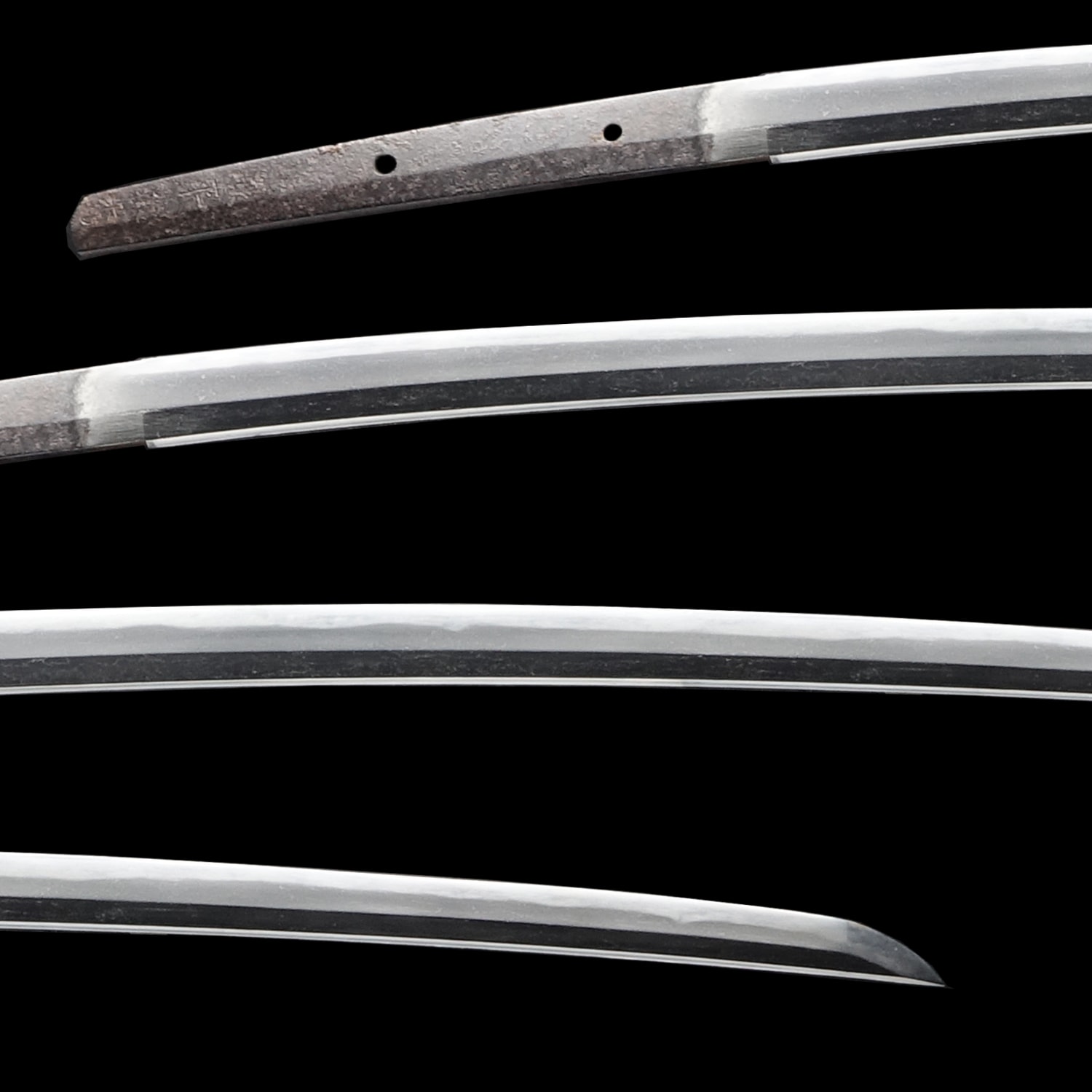
【Blade】
Cutting Edge Length (Nagasa)
:
71.5
cm (28.1 inches)
Curvature (Sori)
:
1.2
cm (0.47 inches)
Hamon
:
The crystalline structure which forms along the cutting edge of a blade as a result of the hardening process.
Jimon (Jihada)
:
Visible steel surface pattern created by folding and hammering during forging process.
Kissaki
:
Kissaki is the tip of the Japanese sword.
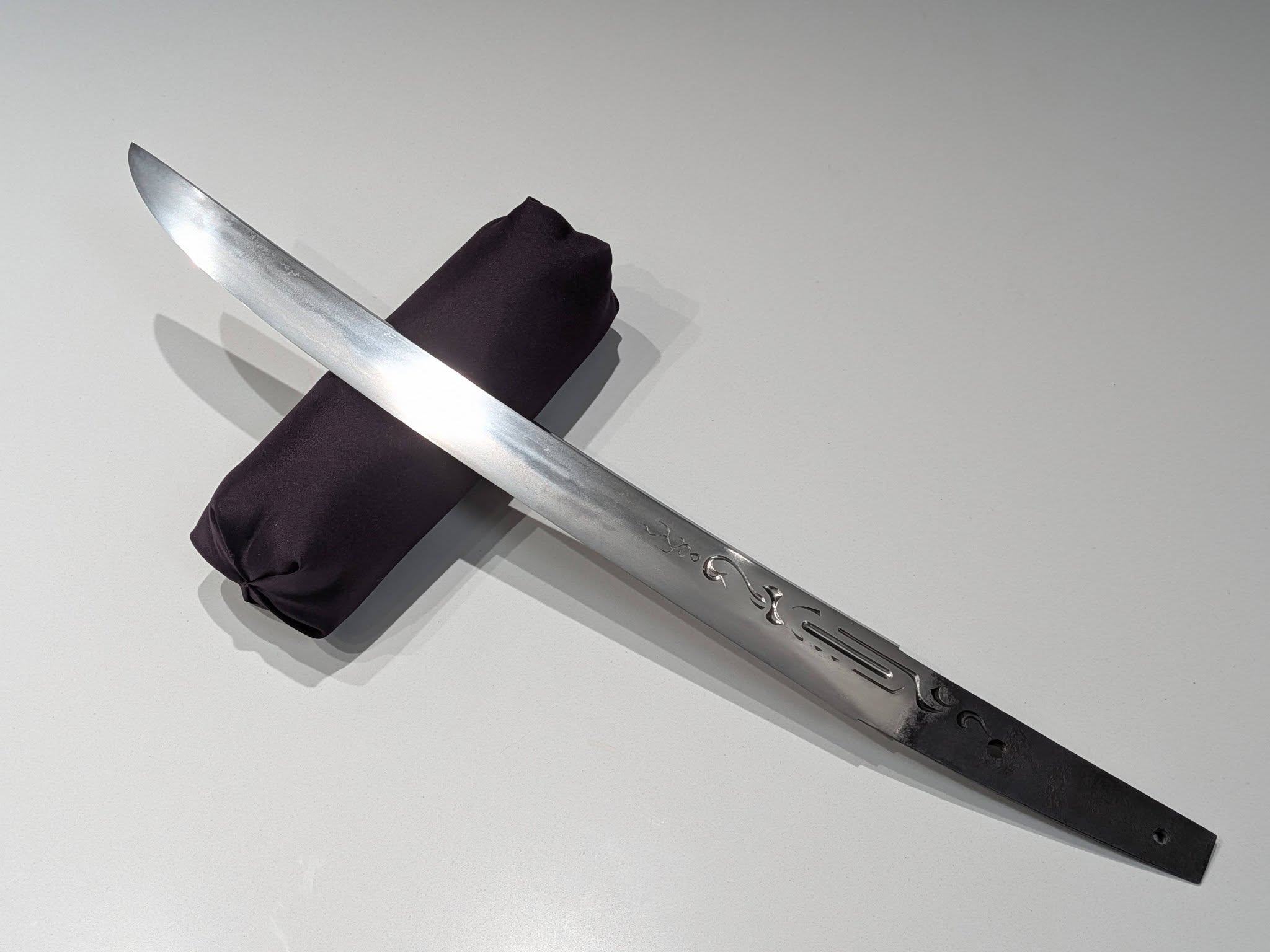
Nakago
:
Nakago is the tang of the Japanese sword.
Japanese swordsmiths left the black rust on the tang because it prevents red rust while the tang is in its handle. And the discoloration of the tang was created over time, and it is a great indicator for a Japanese sword specialist to estimate when the sword was forged.
Koshirae
:
Koshirae is the mounting of the Japanese sword. There are several parts that consist of Koshirae such as Saya (Scabbard), Tsuka (Handle), Tsuba (Handguard).
Fuchi-Kashira
:
A pair of matching sword fittings that cover the upper and bottom parts of its sword hilt.
The fuchi-kashira of this sword features a consistent wave motif. Waves are a powerful symbol in Japanese art and tradition, representing the strength of nature, resilience, and the passage of time. One of the most famous depictions of waves is by Utagawa Hiroshige, whose woodblock prints captured the beauty and power of the sea. In samurai culture, waves also symbolize endurance and adaptability, reflecting the warrior’s ability to face challenges with strength and grace. This design not only enhances the sword’s aesthetic but also carries deep cultural and philosophic

![刀 無銘(水田) 保存刀剣鑑定書 Katana No signature Mizuta [ NBTHK : Hozon ]](/_next/image?url=https%3A%2F%2Fitbhfhyptogxcjbjfzwx.supabase.co%2Fstorage%2Fv1%2Fobject%2Fpublic%2Flisting-images%2Ftoyuukai%2FL398556%2F00.jpg&w=2560&q=90)