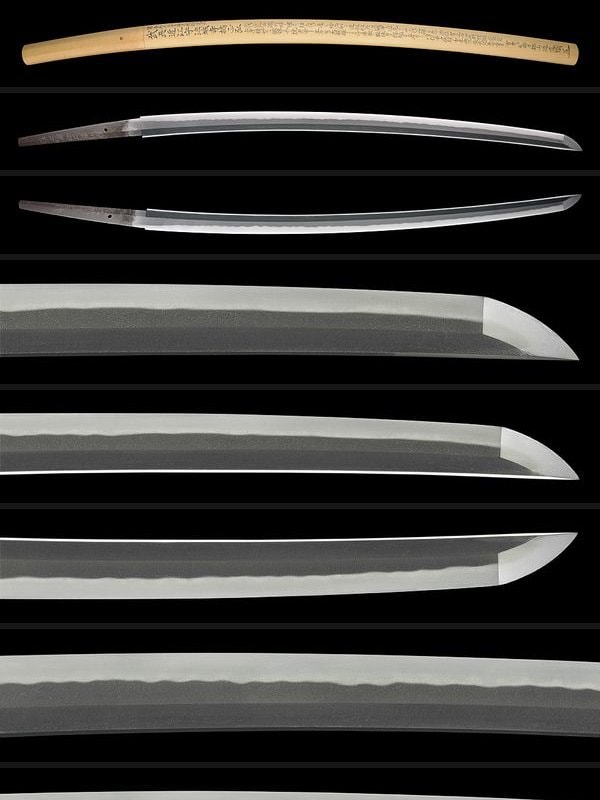
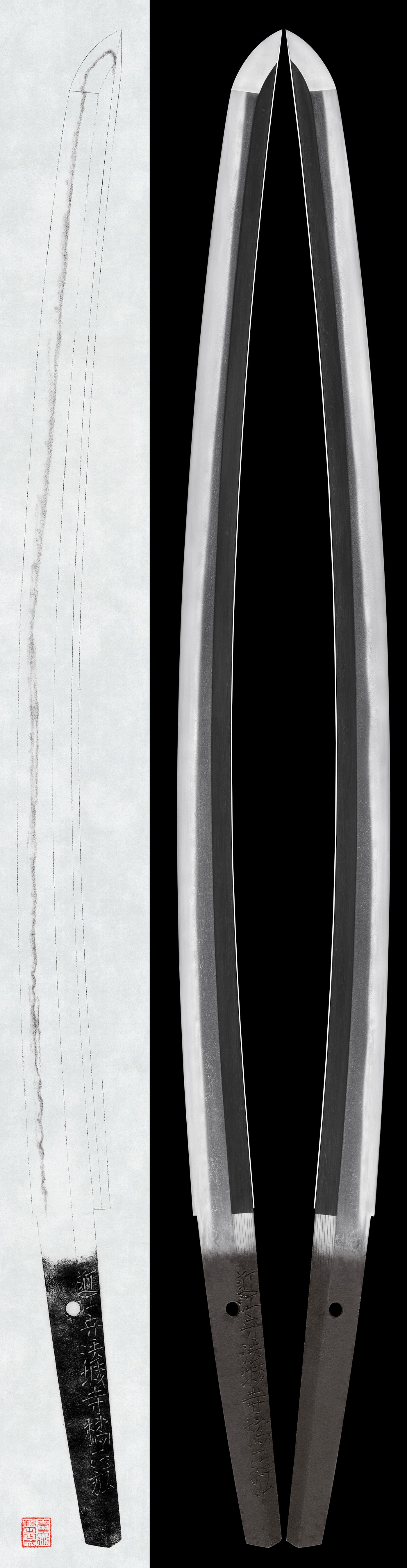
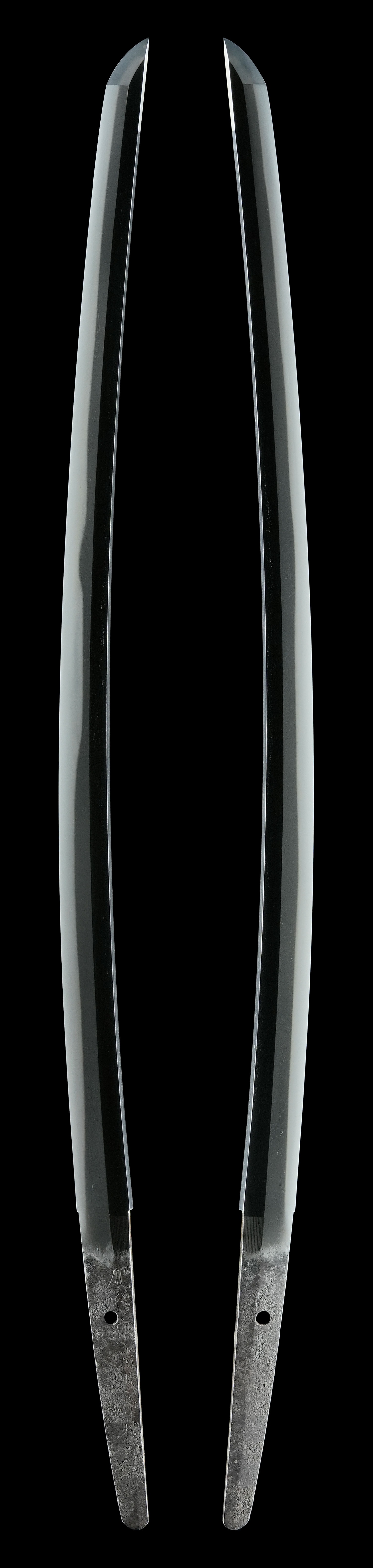
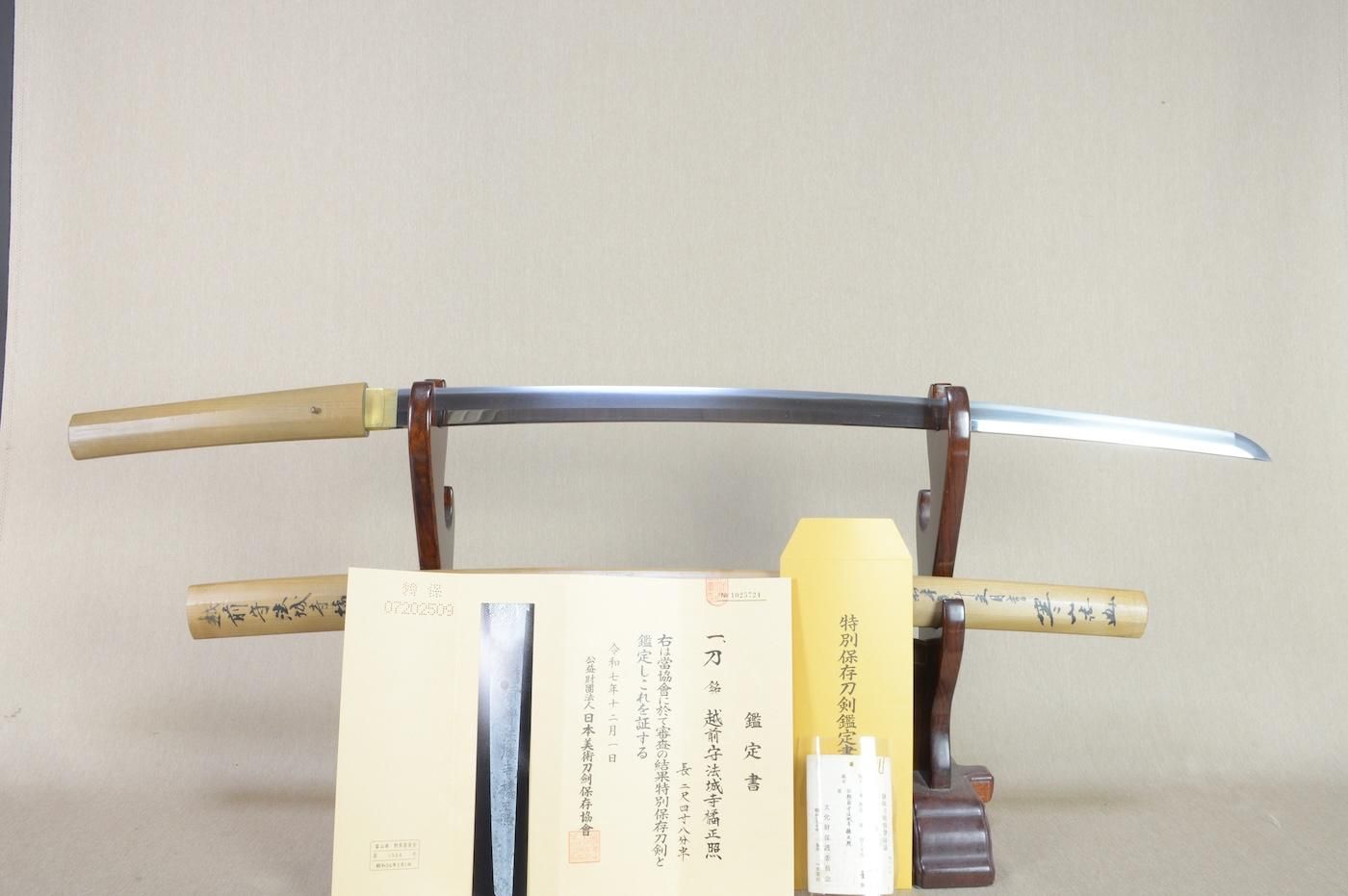
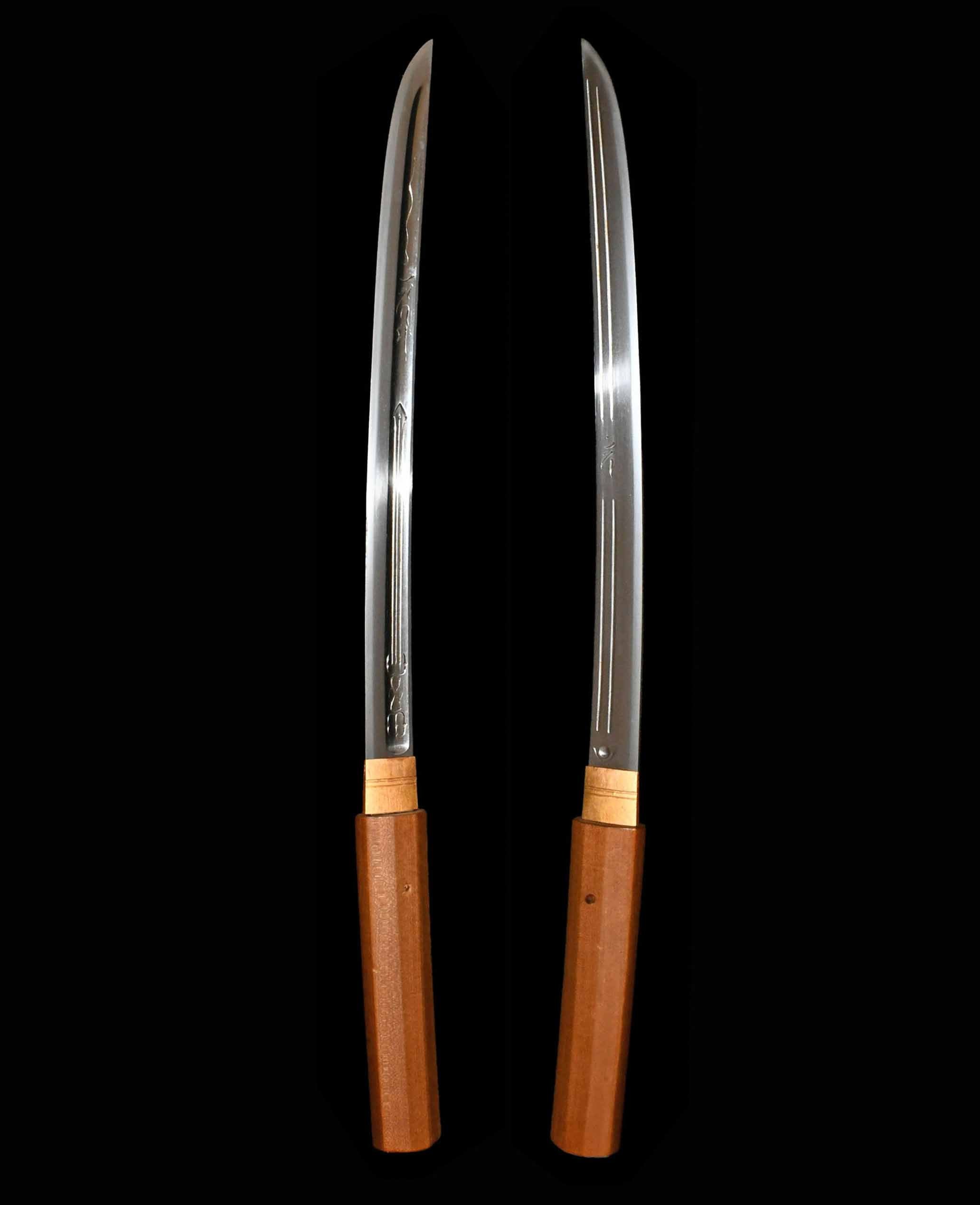
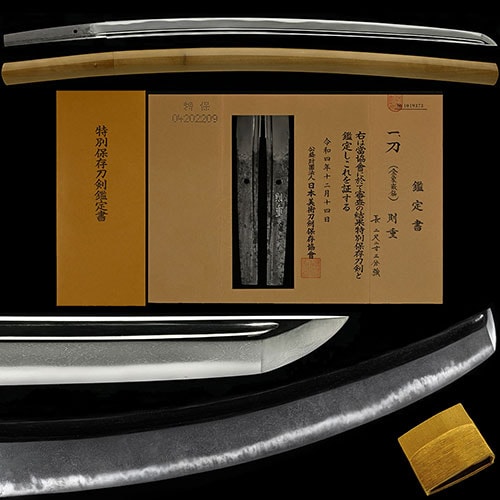
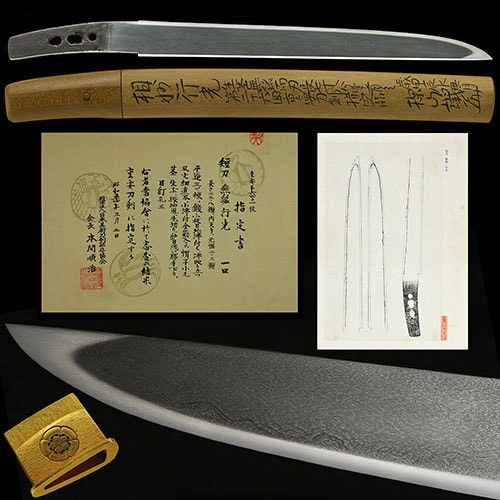
The name Kunimasa appears across several distinct lineages in the Japanese sword tradition. The most celebrated is Rai Kunimasa of the late Kamakura period, variously recorded as a student or son of Rai Kunitoshi and elder brother of Rai Kunitomo. Signed works are exceedingly rare, comprising only a small number of tachi, tanto, and ko-wakizashi. Among the shorter blades, certain examples carry a Soshu flavor that approaches the manner of the Hasebe group, suggesting a smith who absorbed influences beyond the orthodox Rai idiom. A separate Kunimasa, the second generation of the Naomune line in the Ko-Bizen tradition, is documented through an equally scarce body of signed work. In the shinto period, the name resurfaces prominently in the Hojoji group, a collective of smiths centered on the Kanbun and Enpo eras that produced numerous capable makers, with Kunimasa ranking alongside Masahiro and Sadakuni.
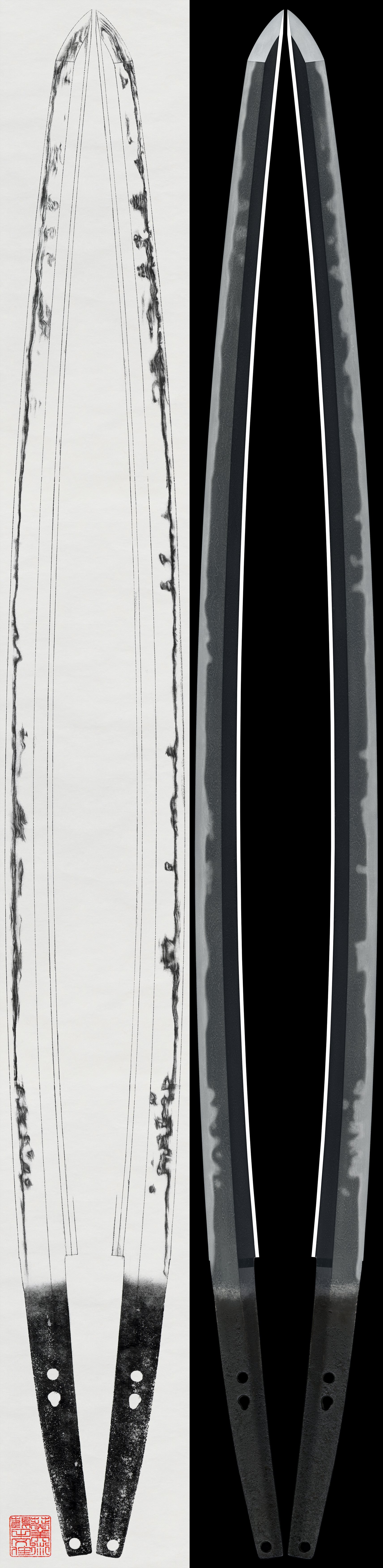
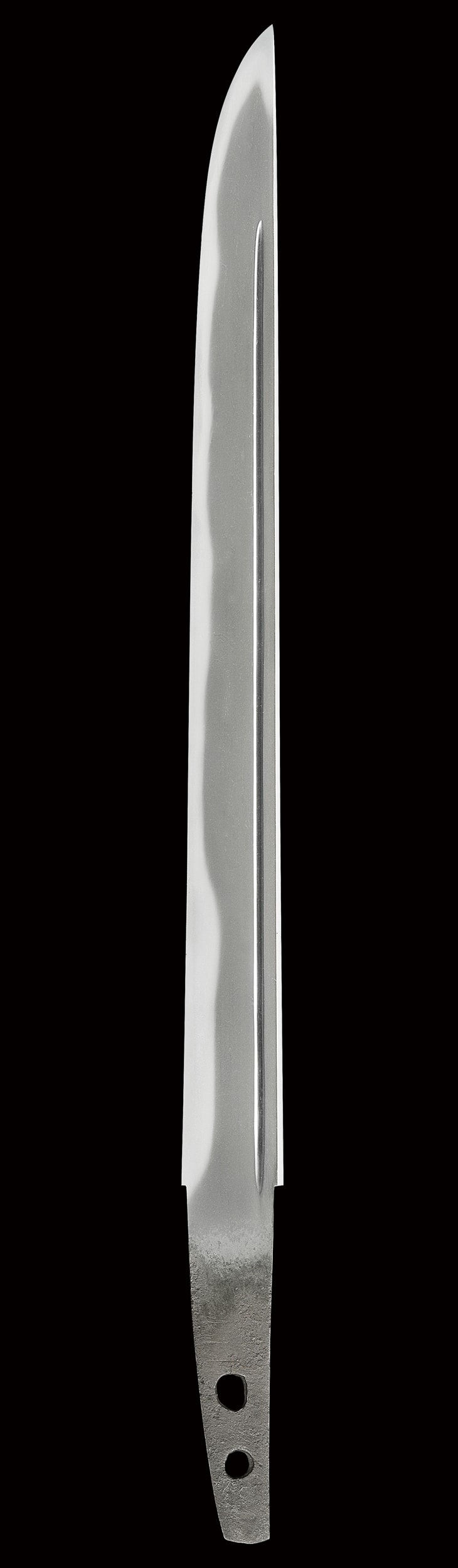
The designated works reveal a consistent technical vocabulary across the Hojoji Kunimasa pieces: tightly forged ko-itame-hada with thick ji-nie, fine chikei, and a luminous steel surface. The hamon typically begins with a suguha-toned yakidashi before developing into intermingled gunome, ko-gunome, and gunome-choji, at times assuming a juzu-ba-like rhythm. Thick ashi enter strongly, and the nie is notably robust, yielding abundant hataraki including nijuba, hotsure, kinsuji, and sunagashi. The Rai Kunimasa attributions favor a suguha-based temper with ko-choji and ko-gunome, bright nioiguchi, and exceptionally fine ji-nie producing a luminous jigane characteristic of the Rai school's highest standard.
The rarity of signed examples across all lineages bearing this name lends each designated work considerable documentary value. The Hojoji pieces demonstrate that even at imposing dimensions the forge work sustains its integrity, while the Rai attributions preserve a refined, nie-rich brilliance that places them among the finest expressions of the Yamashiro tradition.