NihontoWatch MonNihontoWatchBETA
MarketEncyclopedia
NihontoWatch Mon

NihontoWatchBETA

Market
Encyclopedia
Overview·Kantei·Designations·Provenance·Blade Forms·Signatures·School
OverviewKanteiDesignationsProvenanceBlade FormsSignaturesSchool
  1. Schools
  2. Soshu
  3. Sue-Sōshū
  4. Takagi Sadamune

Soshu Takagi Sadamune

高木貞宗

Tokujū
Vol. 22, No. 6 · Katana

Soshu Takagi Sadamune

高木貞宗

40 ranked works

ProvinceOmiErac. 1356–1368PeriodNanbokuchōSchoolSoshuTraditionSoshu-denFujishiroJo-jo sakuTypeSwordsmithCodeSAD539
2Jūyō Bijutsuhin
2Tokubetsu Jūyō36Jūyō Tōken

Overview

At its twenty-second session the designated an whose explanation opens with the smith himself, recording that Takagi Sadamune was a man of Takagi in Goshu and "is traditionally said to be a disciple of Sadamune" (相州貞宗の門人と伝える). He worked in Omi from the very end of the period into early , taking his name from the place he lived. The relationship to his master is the whole of his identity in the published record. An old theory once held that the two Sadamune were one man, but the published sources reject it: judging by workmanship Takagi falls a degree short of Hikoshiro Sadamune, and "seeing him as a disciple is the settled view of recent years" (弟子とみるのが近年の定説である), a pupil who, like Kyo , carried his teacher's manner faithfully. Genuine signed work is almost absent. The texts count only one or two reliable , with no and no certainly dated piece, so his hand is known from a handful of small signed and read into the the attributes to him.

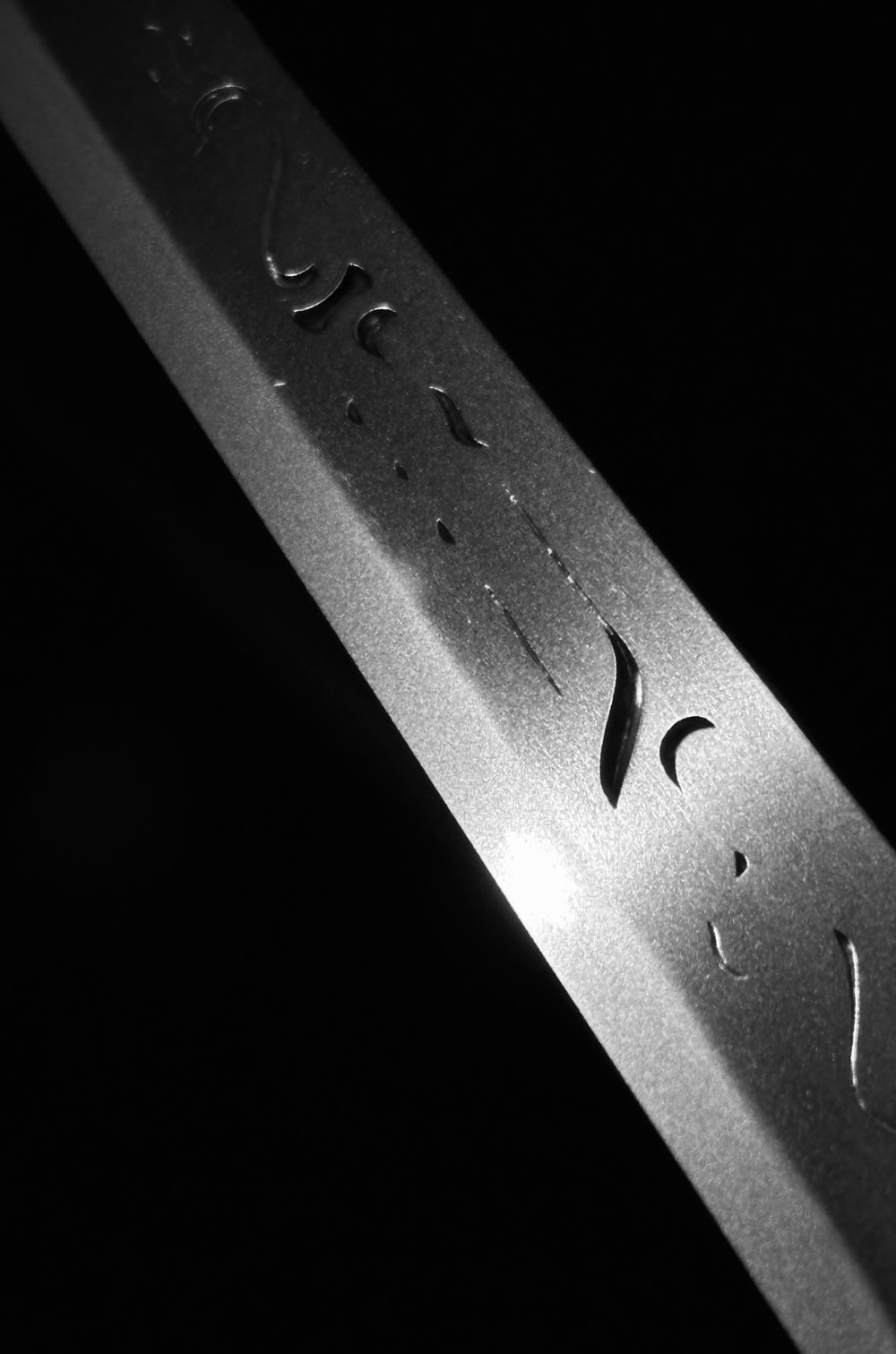
His characteristic hand is a quiet one. The temper the published sources call his specialty is a shallow , often a , mixed with , and entering, the deep and the thickly adhered, and over it runs abundantly with frequent and and along the . The is or runs straight into a with , often tending to a point. Across his blades the chisel is the devotional program his master made famous: , and , with a carried through the longer pieces, and the published sources affirm that these traits in both and express the distinctive features of Takagi Sadamune. The carving is what ties the attribution to the Sadamune circle. On one prewar the connoisseur Honma judged the maker precisely from the accomplished and and the -shaped tang, ranking it "a superior work of the tradition" (相州伝上々の作).

The is where his hand parts from the master's. He forges an , on the better pieces mixing and well-packed with thick and entering , but the grain tends to stand a little, and the steel as a whole is calmer. The standing line states the contrast plainly. Set beside Sadamune, "the forging stands somewhat more, the are fewer in most, the temper takes as its principal tone with abundant , the workings and variation within the are comparatively simple, and the in general tends toward , the subdued quality that marks a Takagi piece" (相州貞宗に比して、鍛がやや肌立ち、地景の少いものが多く、刃文も湾れを主調として、砂流しが多くかかり、刃中の働きや変化が比較的には単純であり、匂口には一般に沈みごころのものが高木である). Another text puts it more shortly: "compared with Sadamune his and have less brilliance, and his are fewer" (相州貞宗程には地刃に冴えがなく、地景も少ない). The few quietest works carry a that turns shallowly to notare with and , calm at first sight yet rich in activity, and his home province surfaces now and then as a coarse, texture in the the texts read as Goshu.

The surviving work divides cleanly into two registers, and the dates each blade by the build it shows. Most of the record is the of the grand shape: wide in body with little taper, a shallow or rather high , a or an extended , almost always with a run through, the period read from the wide construction alone. The other register is the small, format that carries his only signatures, and kata- and , wide and with thin and a three-faceted , the with a -form tip and file marks. Kata- recurs across this group, a construction that saw only a brief vogue at the end of but that the published sources name as a form favored by Sadamune and the followers said to be his, Amaro Toshinaga and Takagi Sadamune among them. Old even reproduce Takagi pieces bearing Kenmu-era dates, though none reliable and dated together survives, and Honma recorded that the genuine signed works known to him came to only two , one of them retempered.

What distinguishes him is exactly his nearness to the master, which makes him the trap in person. The published sources warn that an unsigned Takagi can at first glance be taken for Sadamune himself, and that an old on his line was even appraised as a superior work. The attribution turns not on flamboyance but on the quieter tells the judges name: the standing , the fewer , the simpler internal activity and the subdued . He stands at the - turn beside fellow Sadamune followers, carrying the perfected manner west into Omi rather than founding a manner of his own. His mark is a faithful, slightly quieter hand, distinguished within the school by his standing and where they fall short of the master's brilliance, and by the and carving that anchors the attribution there.

Fujishiro grades him Jo-jo . He has no National Treasures and no Important Cultural Properties; his record runs instead through the prewar Bijutsuhin and the higher modern tiers, forty designated works on record, two at and thirty-six at , thirty-eight in the two upper tiers together. Among the prewar pieces is a signed recorded as a treasured possession of the Taiko, Toyotomi Hideyoshi, and several of his rest on attributions, one bearing "an by Kochu" (本阿弥光忠の折紙がある). Provenance is recorded for only a handful, running through the Date family, the Mori family, the Hosokawa house and a set down as worn by the shogun Tokugawa Ienobu, with examples now held at the Tokugawa Art Museum and the Kurokawa Institute of Ancient Cultures. For the collector almost everything here is held rather than traded. There are no museum-locked National Treasures to set aside, but the prewar designations and the long-held provenances rarely move, and what can realistically be met is the and tier, thirty-eight blades, nearly all or resting on papers. Such a blade comes to light only from time to time, and one carrying his -form , the kata- construction or the carving is the most knowable kind of Takagi Sadamune a collector could hope to encounter.

Kantei

one gentle ko-notare manner, his specialty, carried over an itame that stands a little with thick ji-nie but fewer chikei than the master, split across an o-suriage mumei katana register of the grand Nanbokucho build and an ubu sunnobi hira-zukuri tanto and ko-wakizashi register, with the Soshu carving program throughout and a recurrent kata-kiriha-zukuri construction; almost entirely mumei, the kantei resting on the shizumi nioiguchi and standing hada that mark him off from Soshu Sadamune

Takagi Sadamune was a smith of Takagi in Goshu (Omi), traditionally a pupil of the master Hikoshiro Sadamune, working from the very end of into early . The published sources reject the old theory that the two Sadamune were one man and settle him instead as a disciple, like Kyo faithfully carrying the master's manner. Genuine signed works are almost non-existent, amounting to only one or two and a few small ; the surviving record is otherwise and pieces attributed by the . His forging is an with and over which he tempers a shallow , his specialty, mixing , with abundant and and the carving program of and . The standing line is that against Sadamune his stands more, his are fewer, the workings within the are simpler, and his tends toward , a quietly subdued steel his master's brilliance surpasses.

Diagnostic discriminators

49% of his works · 2.3× vs Soshu Sadamune (the master, tight ko-itame)

unique vs Soshu Sadamune (bright, shining nie)

12% of his works · 6.0× vs the wider sword world (a brief late-Kamakura vogue)

Observation by phase

Prime manner, the shallow notare he specialized in

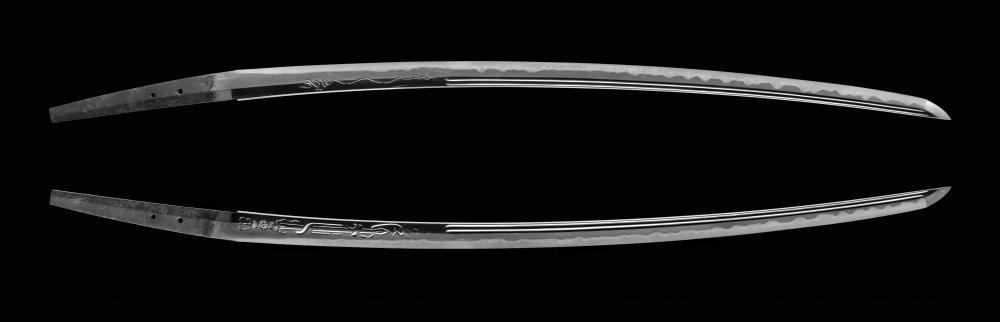
The mainstream of his surviving work. The is an , on the better pieces mixing and well-packed with thick , entering, but the grain tends to stand a little, more so than on the master. Over it he tempers a shallow , his recognized specialty, mixing and , and entering, the deep and thickly adhering, running abundantly with frequent and and at the ; the is or with and , often with a pointed tendency. The carving is the devotional program: , , and a carried through, on and alike. The published sources affirm that these traits in both and express the distinctive characteristics of Takagi Sadamune.

Jigane 地鉄
Hamon 刃文
Bōshi 帽子

The o-suriage mumei katana register

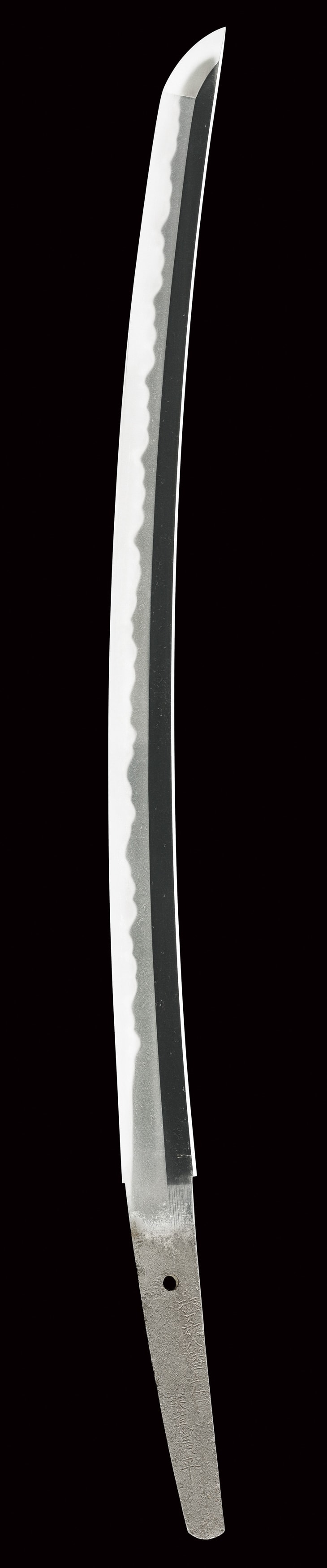
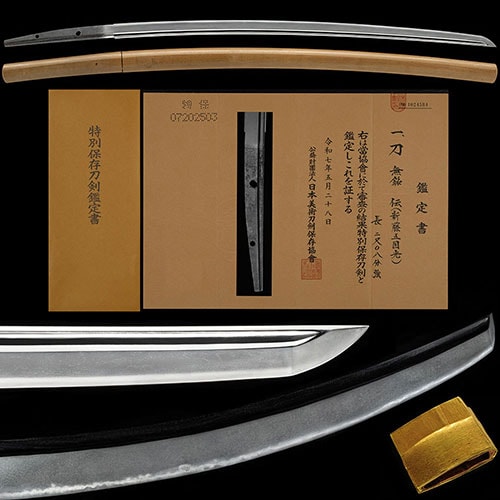
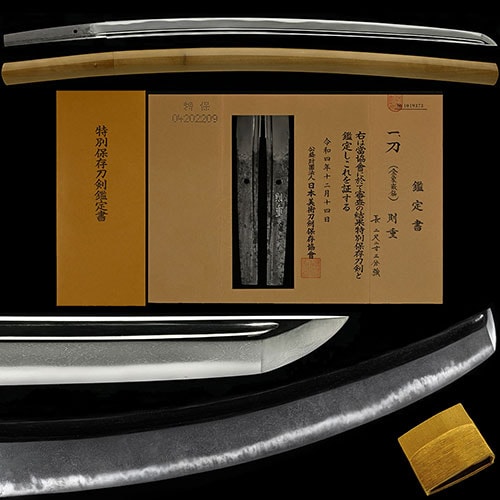
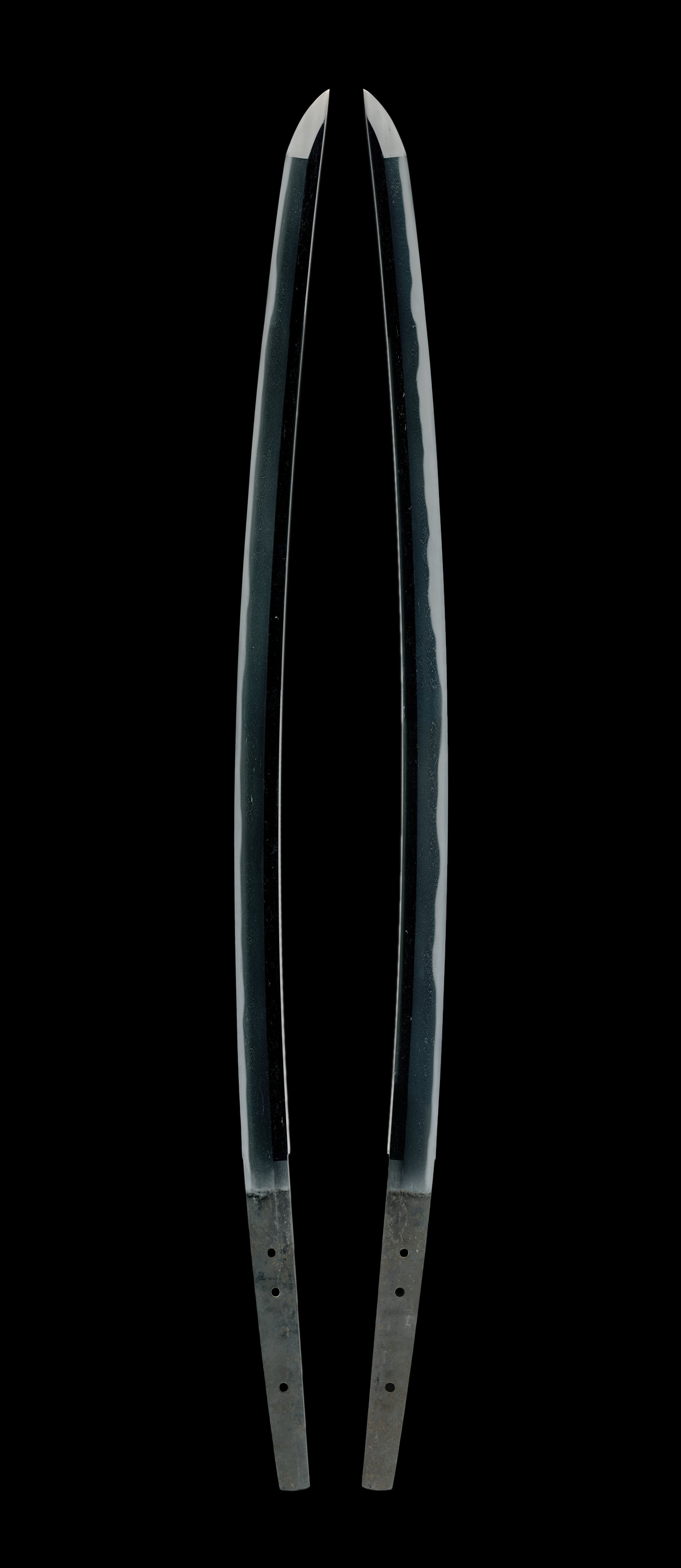
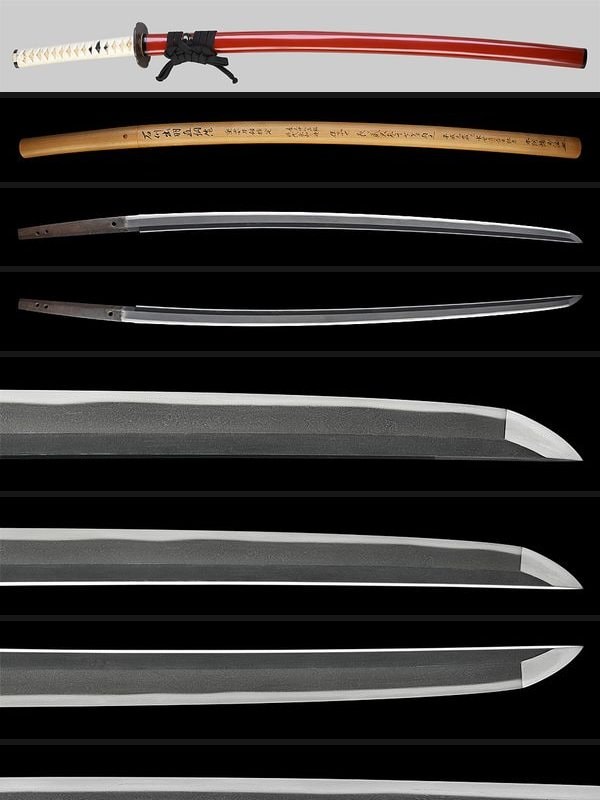
the o-suriage mumei katana of the grand Nanbokucho build: wide mihaba with little taper, shallow or rather high sori, a chu-kissaki or extended o-kissaki, almost always with a bo-hi carried through; the published sources read the date from the wide build alone and call these the work whose ji and ha most closely approach his rare signed tanto

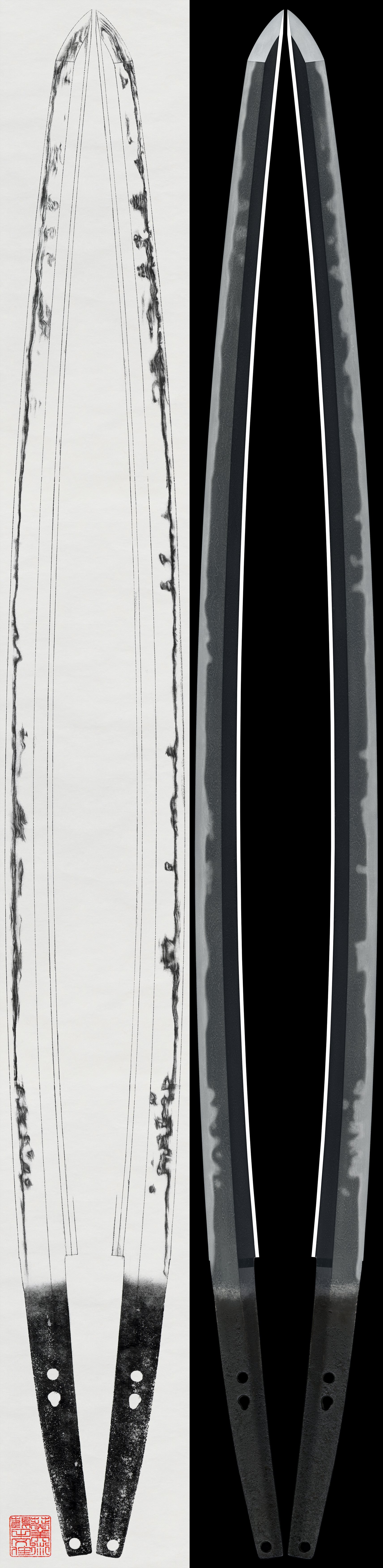
Most of his designated work is the . These are wide in body with little taper and a shallow or, when the is moderate, a rather high , the point a or an extended of the proportion, almost always with a carved through. Over an that flows and stands a little, with and , he tempers the shallow with , and and at the , the into or with . The published sources date these by the wide build and judge their and to come closest of all his work to the few signed .

Sugata 姿
Jigane 地鉄
Hamon 刃文

The ubu sunnobi hira-zukuri tanto and ko-wakizashi register

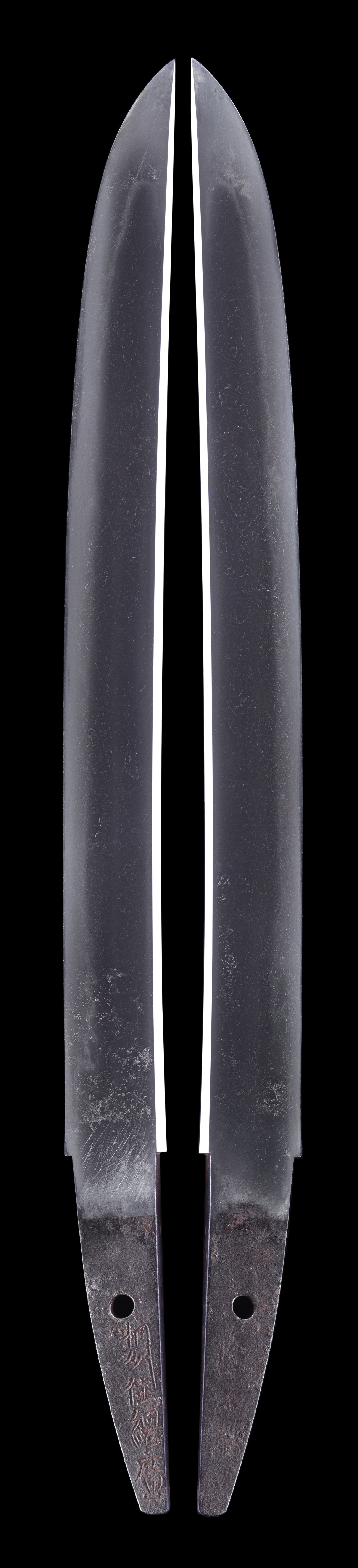
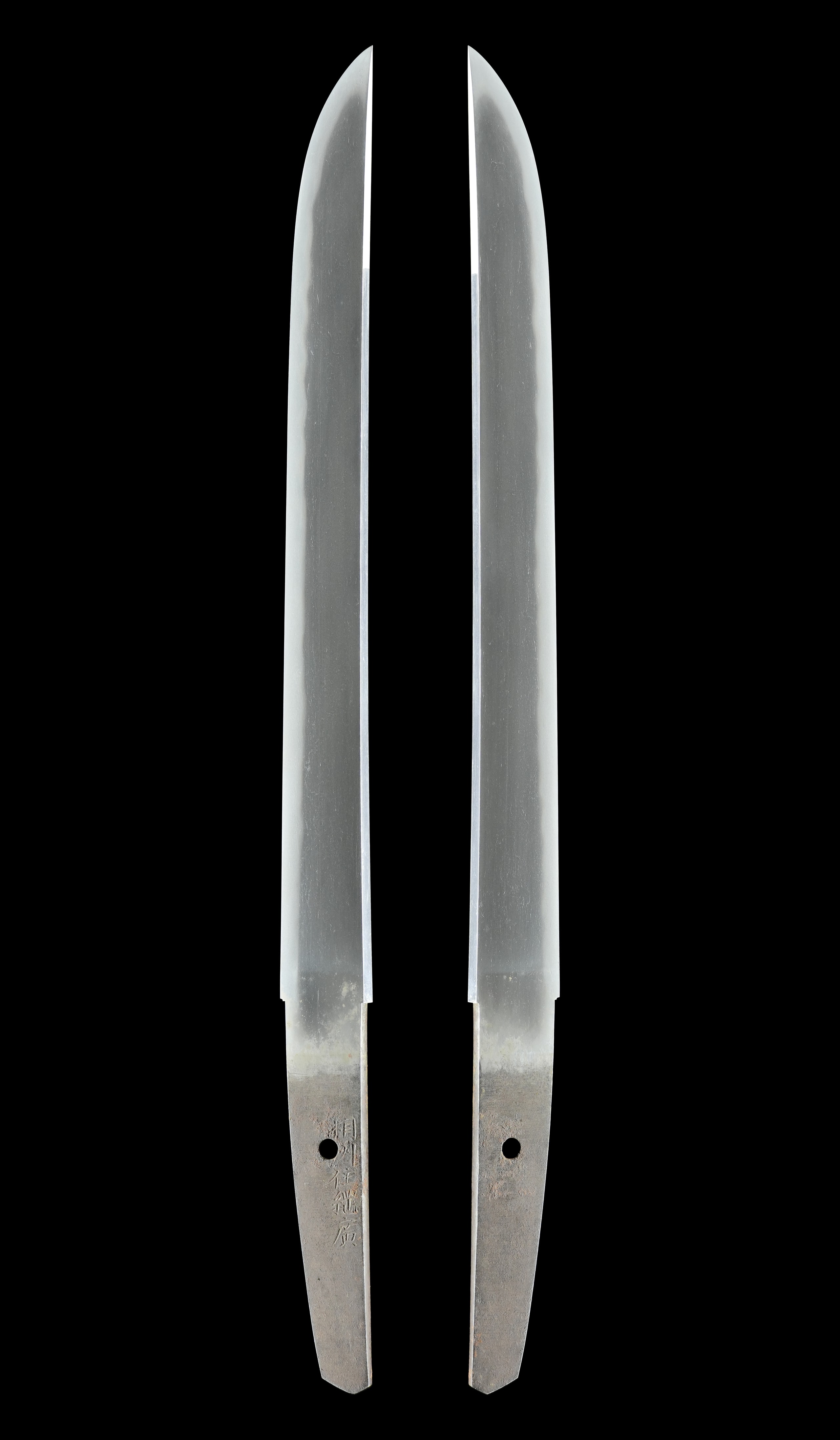
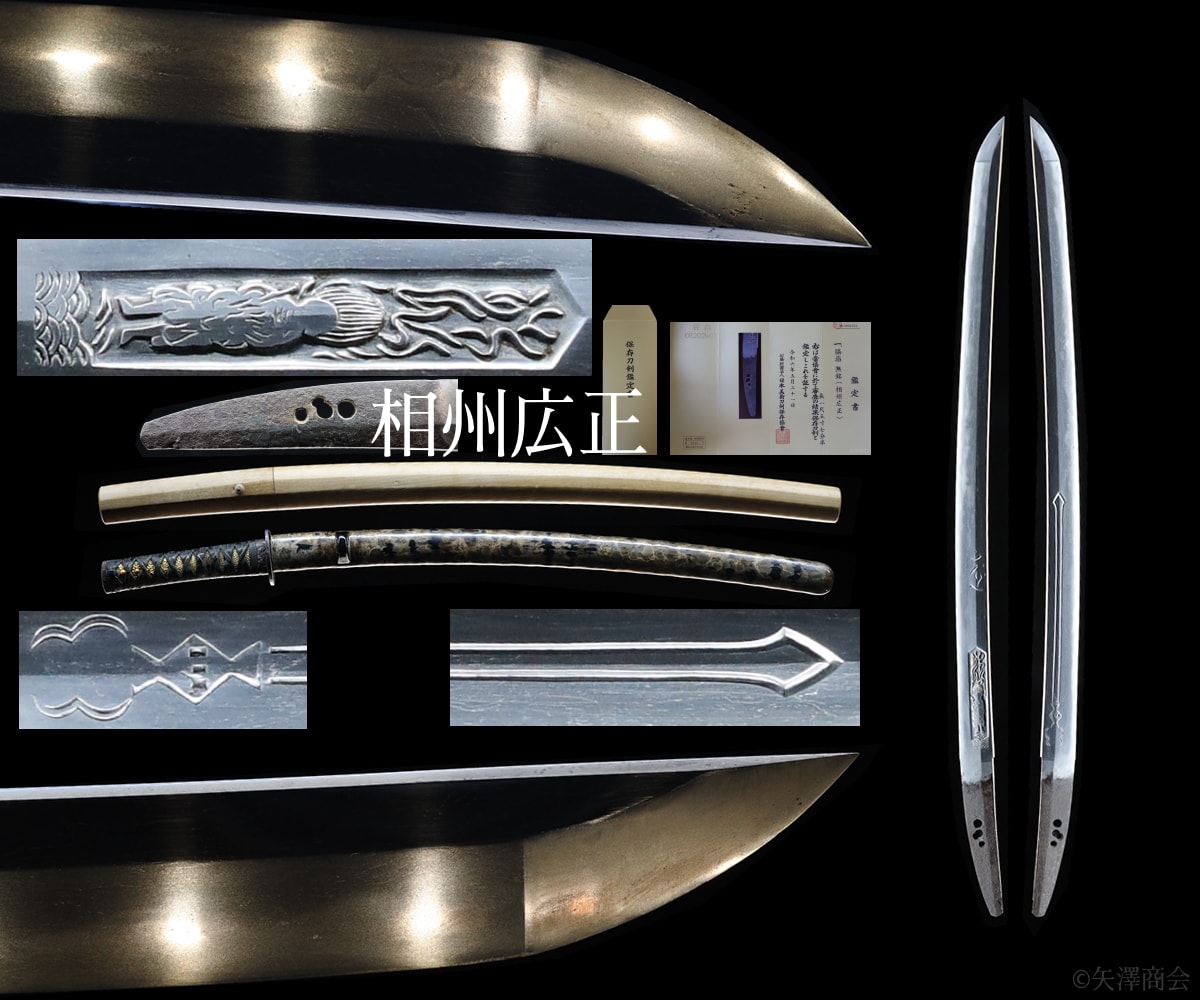
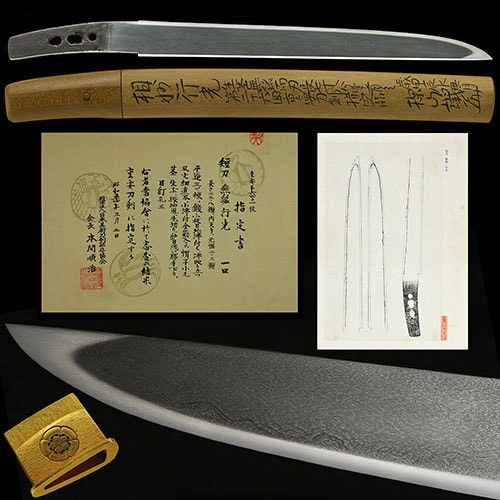
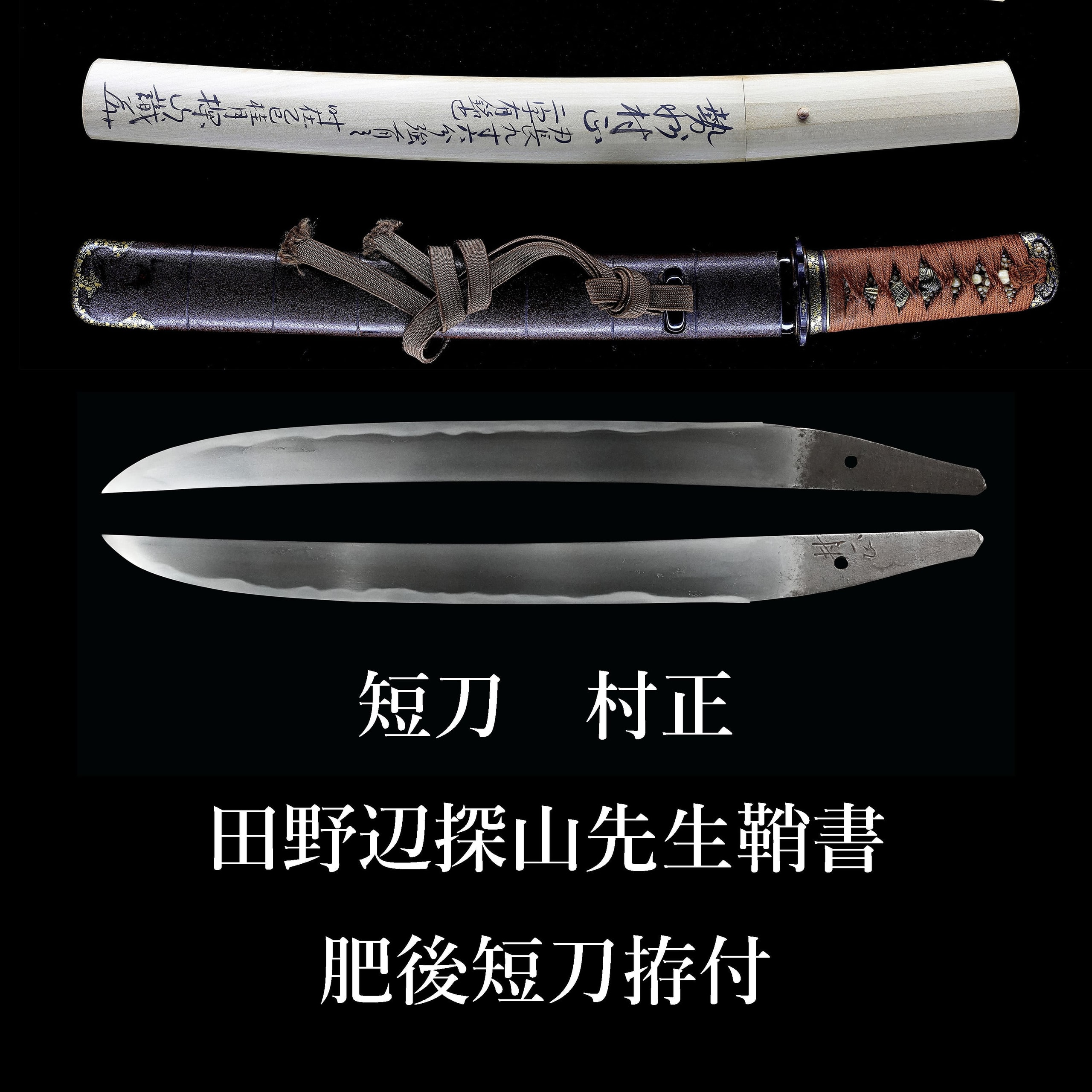
the ubu, mumei hira-zukuri and kata-kiriha-zukuri pieces: wide mihaba, sunnobi, thin kasane, three-faceted mune, very often with a ken-form nakago tip and katte-sagari or sujikai yasurime; the few genuinely signed pieces are all of this small format, and the published sources note kata-kiriha-zukuri as a construction the Sadamune circle, including Takagi, favored

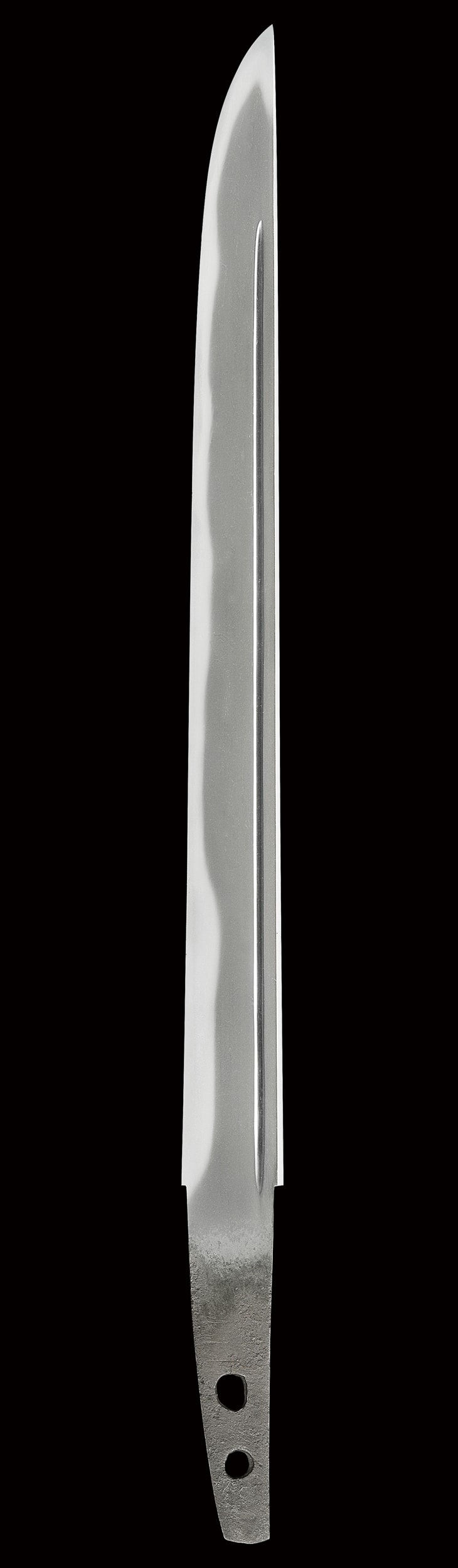
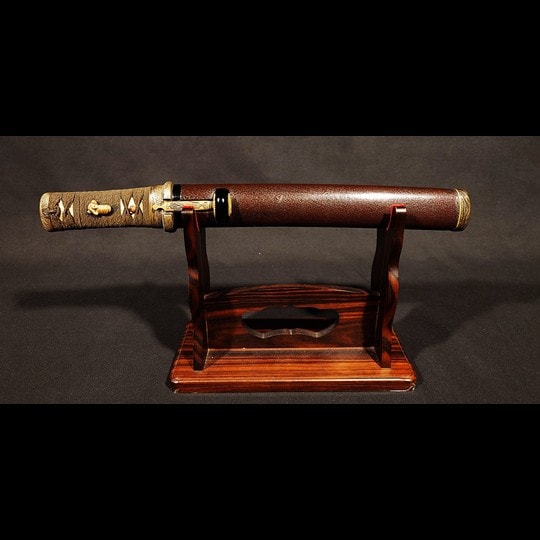
The other register is the small, format that carries his only signed examples. These are or kata-, wide in body, with thin and a three-faceted , the with a -form tip and or file marks. Over an that stands and runs to he tempers the with , and , the sometimes rough, and frequent, the carving running to , and . Kata- recurs here, a construction the published sources tie to the Sadamune circle, and one turns coarse and in the , exactly the home characteristic the texts read as Goshu.

Sugata 姿
Jigane 地鉄
Hamon 刃文

The quiet suguha-cho pole

less firmly establisheda small number of calmer pieces in a suguha-cho that turns to a shallow notare with hotsure and ko-nie; the published sources call one such tanto quiet-looking at first sight yet rich in activity, and an old Jubi suguha tanto attributed to Sadamune himself is judged a superior Soshu work

A small quiet pole stands beside the mainstream: a that turns shallowly to notare in places, along the , well adhered and entering. One the published sources call quiet-looking at first sight yet rich in activity, well showing one of his manners. An old Bijutsuhin attributed to Sadamune, well-packed with and abundant and , is judged from its shape, , and the accomplished and carving to be a superior work.

Hamon 刃文
Scholarship

The published sources reject the old theory that Takagi Sadamune and Soshu Sadamune were the same man: judging by workmanship, Takagi falls somewhat short of Hikoshiro Sadamune in both ji and ha, and the recent settled view is that he was a disciple, transmitting the master's manner faithfully like Kyo Nobukuni.

One text draws the contrast against the master in detail: compared with Soshu Sadamune the forging stands a little more, the chikei are fewer, the notare-based ha carries abundant sunagashi but the workings and variation within it are comparatively simple, and the nioiguchi in general tends toward shizumi, the quietly subdued steel that marks a Takagi piece.

Kata-kiriha-zukuri saw only a slight vogue from the end of Kamakura into early Nanbokucho, but the published sources note it occurs with particular frequency in Soshu Sadamune himself and in followers said to be his, such as Amaro Toshinaga and Takagi Sadamune.

Old oshigata reproduce some Takagi works bearing Kenmu-era dates, yet among his signed pieces none that can be accepted as both reliable and dated is known; the late Edo connoisseur Honma noted that authentic signed works known to him amounted to only two tanto, one of them retempered.

Designations

Kokuhō—
Jūyō Bunkazai—
Jūyō Bijutsuhin2
Gyobutsu—
Tokubetsu Jūyō2
Jūyō Tōken36

Elite Standing

0.22 across 40 designated works

Top 11% among smiths

Provenance

9 documented provenances across certified works by Takagi Sadamune

Provenance Standing

5 works held in elite collections across 9 documented provenances

Top 22% among smiths

Raw score: 2.05 / 10

Blade Forms

Distribution across 40 ranked works

Signatures

Signature types across 40 ranked works

Currently Available

Soshu School

Other artisans of the Soshu school

  1. 1.Masamune正宗1 for sale87designated
  2. 2.Sadamune貞宗87designated
  3. 3.Akihiro秋廣28designated
  4. 4.Go Yoshihiro義弘2 for sale55designated
  5. 5.Kunimitsu國光4 for sale72designated
  6. 6.Hiromitsu廣光1 for sale45designated
  7. 7.Norishige則重8 for sale132designated
  8. 8.Yukimitsu行光4 for sale151designated
  9. 9.Tametsugu爲繼2 for sale76designated
  10. 10.Kunihiro國廣15designated
  11. 11.Daishinbo大進房3designated
  12. 12.Mitsufusa光房1designated