NihontoWatch MonNihontoWatchBETA
MarketEncyclopedia
NihontoWatch Mon

NihontoWatchBETA

Market
Encyclopedia
Overview·Kantei·Designations·Blade Forms·Signatures·Lineage·School
OverviewKanteiDesignationsBlade FormsSignaturesLineageSchool
  1. Schools
  2. Osafune
  3. Sue-Bizen
  4. Harumitsu

Osafune Harumitsu

治光

Jūyō
Vol. 31, No. 137 · Naginata

Osafune Harumitsu

治光

5 ranked works

ProvinceBizenEraKyoroku (1528–1532)PeriodMuromachiSchoolOsafuneTraditionBizen-denGeneration1stFujishiroJo sakuToko Taikan550(top 23%)TypeSwordsmithCodeHAR31
5Jūyō Tōken

Overview

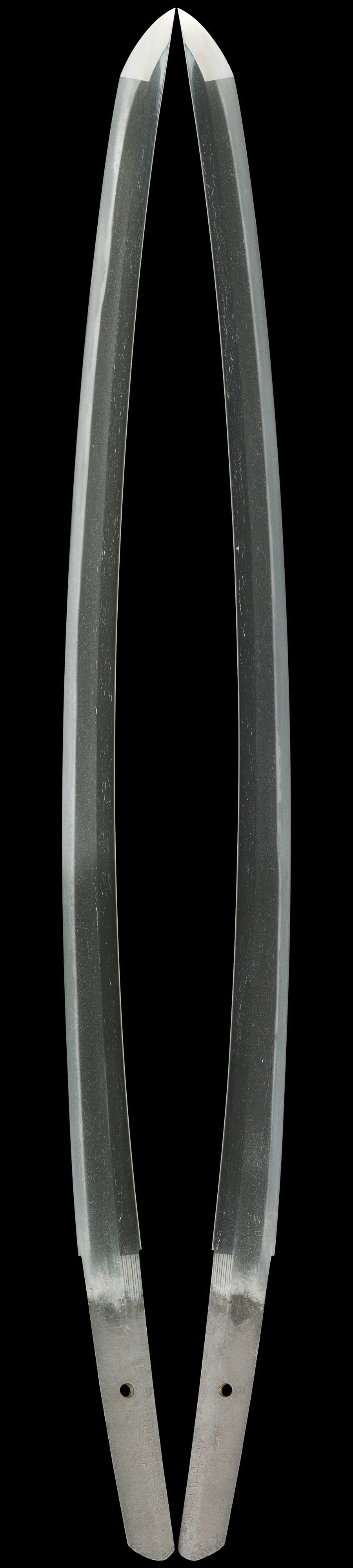
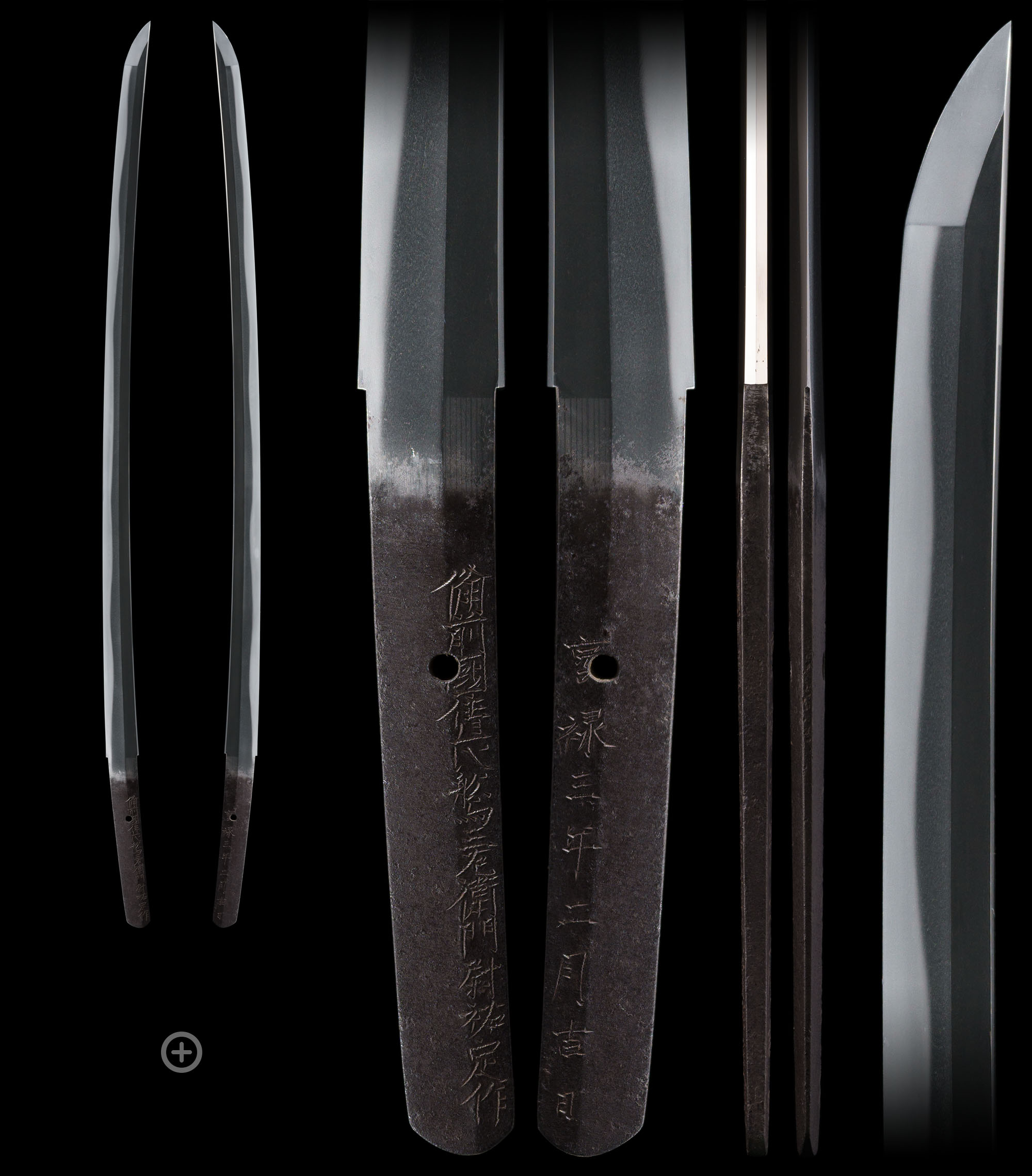
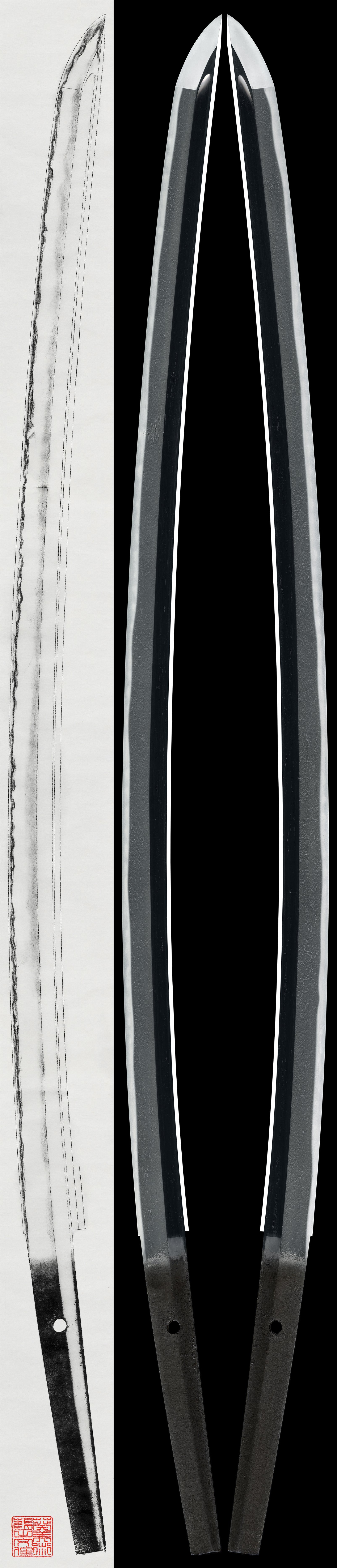
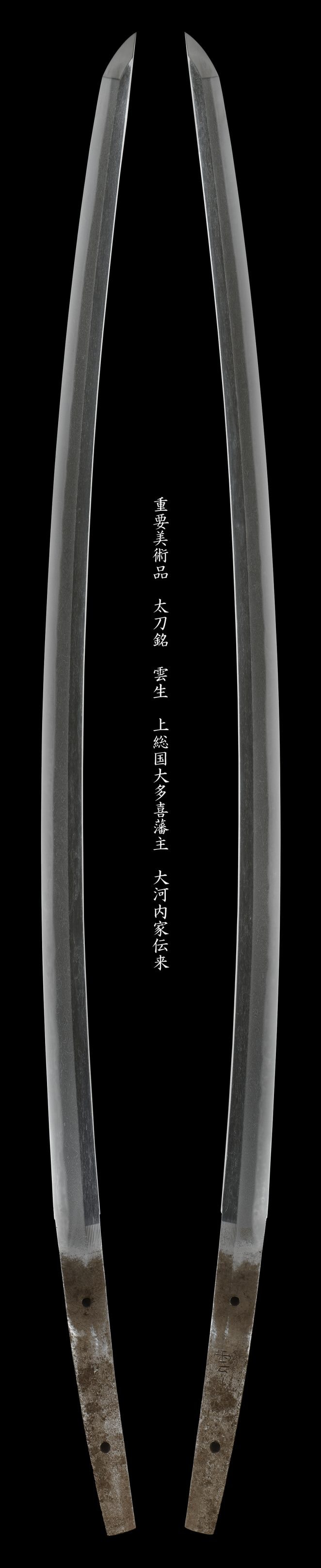
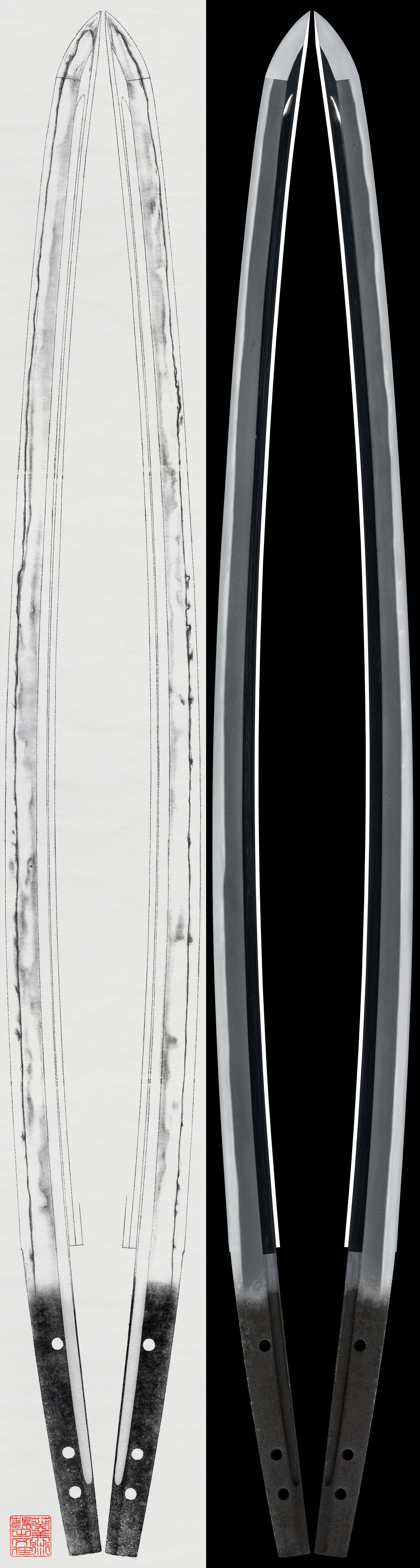
Harumitsu signed his blades 治光 and styled himself Jirobei-no-jo, and the published sources place him by name within a documented line: the son of Jirozaemon-no-jo Katsumitsu and the father of Jurozaemon-no-jo Harumitsu, with dated work surviving across the Eisho, Daiei and Kyoroku eras of the early sixteenth century. He belonged to the workshops in their late- phase, the period the trade calls , when the smiths of the village worked in a shared idiom and signed with the day and month of their making. His own dated pieces are concrete: a of Daiei 5, a slender of Daiei 8, a broad of Daiei 4, a great of Kyoroku 2, and a of Daiei 7 made jointly with his father. Fujishiro rates him at the Jo- level.

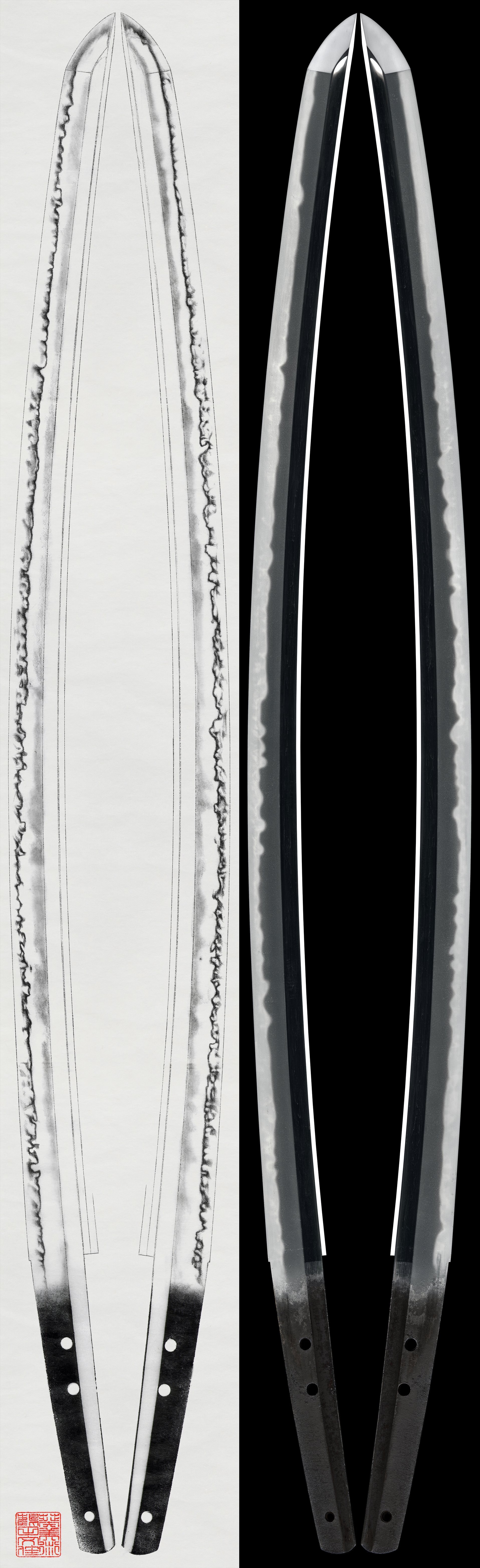
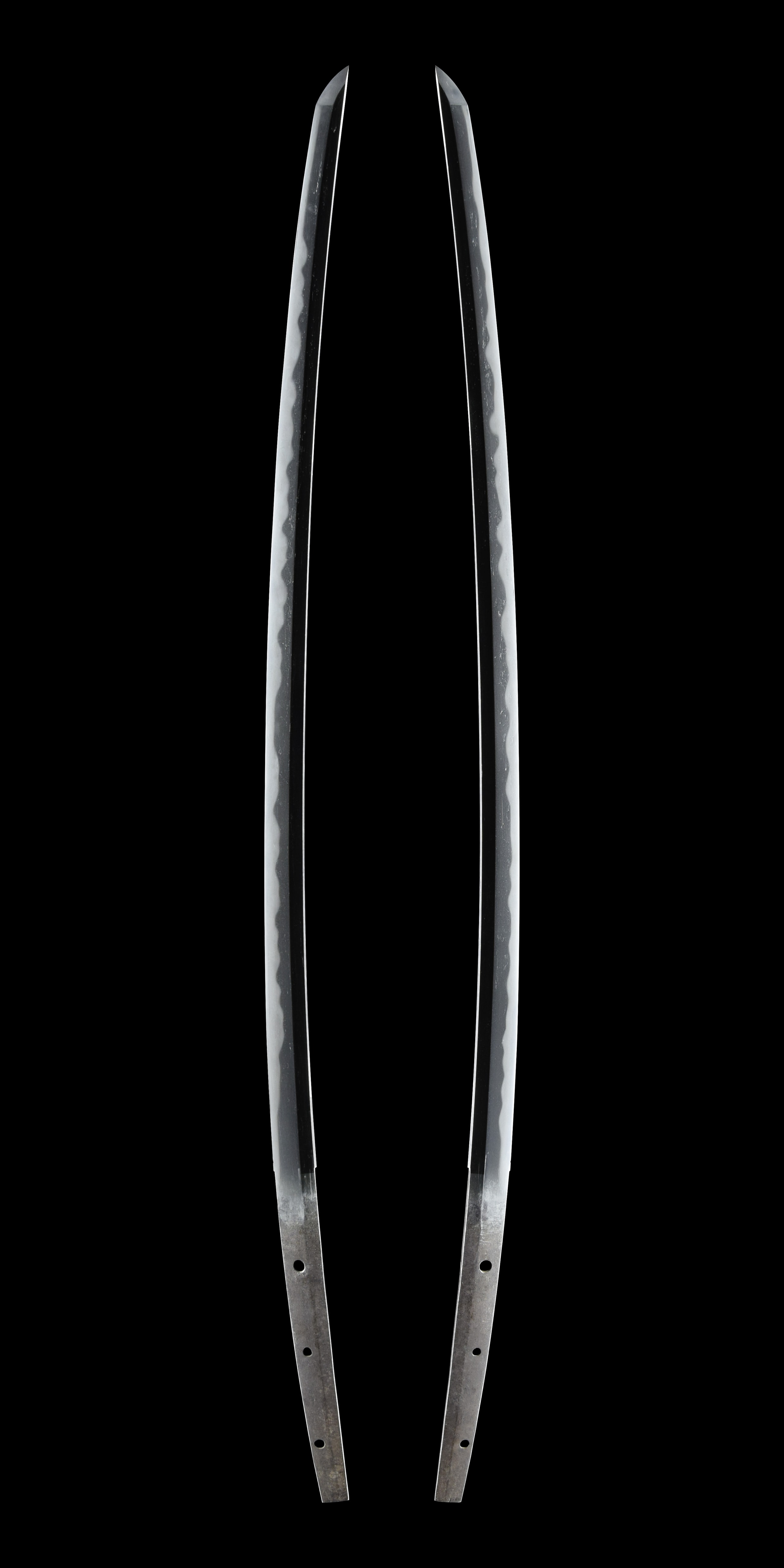
His recognized hand is the waist-opened of the group. Over a wide, strongly -zori the published sources describe a broadly tempered with its bases opened, the pattern that gives the row its rhythm, mixed with slightly pointed elements and with faint appearing within the . On the slender Daiei 4 and on the joint that opened pattern breaks further, the temper heads splitting to form the the sources name as the structure peculiar to the group, with and and running through. It is a quieter, more legible version of the that the Sukesada masters were carrying to a brilliant pitch in the decades, and it is the first thing by which his blades are known.

The forging is an , on the broad and the standing in the grain with adhering, on the finer blades a packed tightly and thoroughly consolidated, mixed at times with . The carries the fullest work of all, its thick and entering, the large richly covered with so that and appear, gathers in places, enters and the is tempered. The follows the temper: a turning back, on the broad deeply with a at the point and an -like return, on the in , on the with a pointed tendency. There is no in his work, and the rests instead on the opened , the tightly forged steel and the that gathers most strongly on his fullest blades.

The published sources draw more than one face within this single hand. On the broad Daiei 5 they read the -opened as abundant in variation and, with the blade's good preservation, call it 「同作中の出色の一口」, an especially outstanding example among the smith's works. On the slender Daiei 4 they find the temper of a smaller pattern than is typical for him and note that it 「応永備前風が遺存」, preserving something of the older Oei- manner, so that the slim, -like reaches back a century into the past. The Daiei 8 shows yet another facet, a broad in which are engaged, its strongly felt, which the sources call 「地刃健全な治光の佳作」, a fine work of Harumitsu sound in both and . The of Kyoroku 2 carries his boldest intention, and the sources observe that he also made of broad width and emphatically flamboyant temper, so that the two together let one glimpse the aim behind his style.

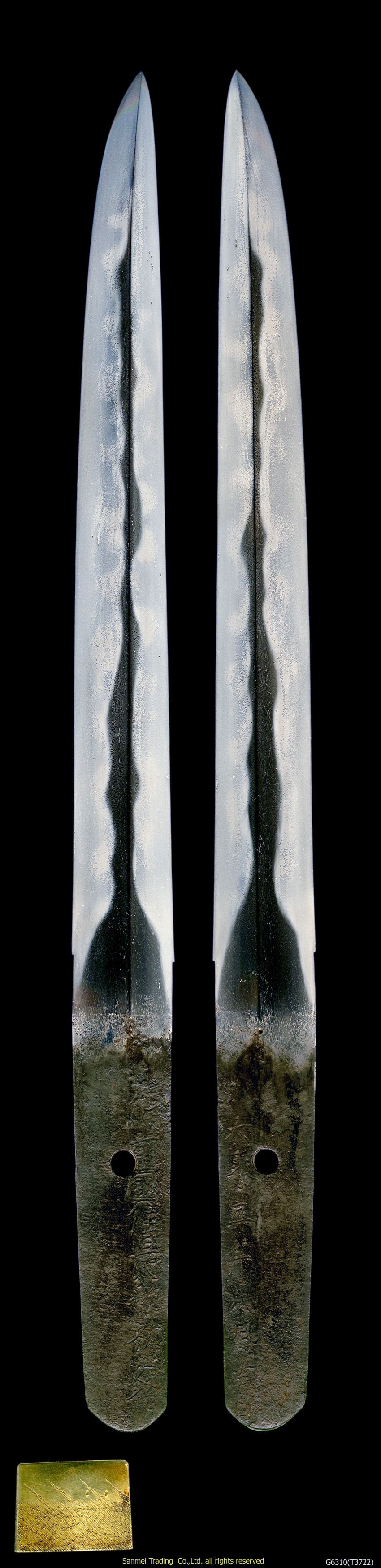
Harumitsu is best understood beside his father. The joint 's commentary counts Katsumitsu among the most skillful masters alongside Munemitsu and Tadamitsu, and singles him out as the smith who 「互の目の中に丁子を交えて一段と華やかな出来口」, mixing into the for a distinctly more florid and brilliant result than the plainer compound general to the group. Harumitsu works within that broader group manner rather than at his father's most ornate pitch, but the published sources judge the great , in and alike, a typical example of the output of the school, and they value the father-and-son joint signature as documentary material of its own. The sources record that large are not infrequently met with in , the famous one being the piece Katsumitsu forged with Yosaburozaemon-no-jo Sukesada for Ukita Noie, the lord of , which sets Harumitsu's own stout within a recognized local type.

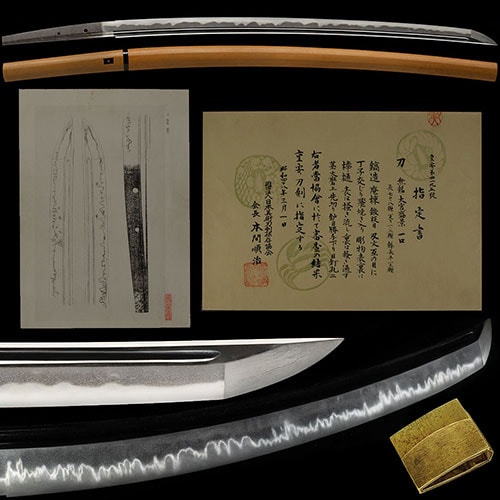
Harumitsu's surviving designated record is small and entirely signed, five blades among the Important Sword sessions from the 27th through the 44th, with no National Treasures among them, and a designation factor that places him in the middle ranks of rather than at its summit. None carries a recorded provenance, and only one has a holder of record, an institutional collection. The blades range across the wide , the slender -zori that reads as a , the stout great and the signed with his father, so that the small body of work shows the full breadth of his forms. He is the kind of named hand a collector encounters from time to time rather than rarely, the joint Katsumitsu-Harumitsu the most documentarily interesting of the group and the great the most striking, the published sources reserving for the best of them the phrase 「末備前中傑出の出来映え」, an outstanding level of workmanship among the works of .

Kantei

one Harumitsu hand read across the registers the published sources themselves draw: the prime koshi-no-hiraita gunome breaking into the Sue-Bizen fukushiki midare; the flamboyant, fully nie-active o-gunome of the wide katana and the great naginata; the quieter hiro-suguha-with-yo facet in which the older Oei-Bizen manner survives; and the joint father-son register signed by Katsumitsu and Harumitsu together

Harumitsu is a smith of the early sixteenth century, styled Jiro-byoe-no-jo, recorded in the published sources as the son of Jiro-zaemon-no-jo Katsumitsu and the father of Juro-zaemon-no-jo Harumitsu, his dated work running across the Eisho, Daiei and Kyoroku eras. His recognized hand is the of the group, the waist-opened breaking into the the sources name as the group's own structure, mixed with pointed elements and slight , with and entering, running and the turning in . The forging is an standing in the grain, at times a tightly forged , with throughout. On the wide-bodied and the great the temper widens into a vigorous, -laden with , , and -, while one Daiei shows instead a mixed with in which a survival of the older Oei- manner remains. The published sources read his work, together with the joint blades signed by Katsumitsu and Harumitsu together, as typical of the school and among the outstanding production of .

Diagnostic discriminators

Observation by phase

The koshi-no-hiraita gunome breaking into fukushiki midare (his typical Sue-Bizen hand)

His recognized work is the face the published sources call his typical manner. The is a with , the wide or at times slender with a difference between base and point, the -zori strong and a thickset , or on the a ryoba-zukuri blade with a slight inner curve. Over an , at times tightly forged into , with throughout, he tempers a , the waist-opened heads breaking into the the sources name as the structure peculiar to , mixed with pointed elements and a slight tendency, with and entering, small on the , the tight to -laden, and running through. The enters in and turns, on the in . The published sources read this waist-opened breaking into as the typical face, and judge the joint outstanding among the group's production.

Sugata 姿
Jigane 地鉄
Hamon 刃文
Bōshi 帽子

The wide, nie-laden o-gunome of the great naginata and the broad katana

On the great and the broadest the published sources read his bolder, more vigorous face. The is the o- of which the sources note examples are sometimes seen, wide at the base and widening further toward the point with a strong -zori and a swelling , a stout figure; or a wide with broadly tempered heads. Over an with thickly gathered and entering, he tempers an with a slight tendency and pointed elements and structure mixed in, well covered with throughout, with and appearing, running here and there, entering and the tempered. The enters in and turns with a pointed tendency at the point. The published sources judge this stout , its and alike, typical of the school, and note that Harumitsu has too with wide bodies and bold, dramatic temper, by which something of the aim of his manner can be glimpsed.

Sugata 姿
Jigane 地鉄
Hamon 刃文
Bōshi 帽子

The hiro-suguha-with-yo facet (the Oei-Bizen survival)

On one Daiei the published sources name a quieter face set against the . The temper is a base shallowly undulating into a faint , with a slight mixed in, adhering, fine entering within the edge and appearing repeatedly, the running deep and straight and turning round with a faint on the . The forging is a well gathered and tightly compacted, giving a strong, healthy steel character overall. The published sources read this with as one of the manners, in which a survival of the older Oei- face remains, and judge it a fine work of Harumitsu with and alike sound.

Sugata 姿
Jigane 地鉄
Hamon 刃文
Bōshi 帽子
Scholarship

The published sources record that Harumitsu styled himself Jiro-byoe-no-jo, was the son of Jiro-zaemon-no-jo Katsumitsu and the father of Juro-zaemon-no-jo Harumitsu, and that his dated work runs across the Eisho, Daiei and Kyoroku eras. On one slender katana they note that the temper is of a smaller pattern than usual and that something of the Oei-Bizen face still survives in it, presenting it as showing one of Harumitsu's manners.

On the joint tanto signed by Katsumitsu and Harumitsu the published sources value the father-son co-signature as precious documentary material, and read the work, its ko-itame tightly forged and its waist-opened gunome breaking into fukushiki with sunagashi running, as outstanding among the production of Sue-Bizen.

Designations

Kokuhō—
Jūyō Bunkazai—
Jūyō Bijutsuhin—
Gyobutsu—
Tokubetsu Jūyō—
Jūyō Tōken5

Elite Standing

0.03 across 5 designated works

Top 25% among smiths

Blade Forms

Distribution across 5 ranked works

Signatures

Signature types across 5 ranked works

Currently Available

Lineage

Harumitsu
Student
  1. 1.Harumitsu治光

Osafune School

Other artisans of the Osafune school

  1. 1.Mitsutada光忠61designated
  2. 2.Nagamitsu長光2 for sale253designated
  3. 3.Kagemitsu景光1 for sale146designated
  4. 4.Kanemitsu兼光4 for sale237designated
  5. 5.Sanenaga眞長64designated
  6. 6.Chikakage近景4 for sale86designated
  7. 7.Tomomitsu倫光1 for sale64designated
  8. 8.Kagemasa景政2 for sale22designated
  9. 9.Masamitsu政光4 for sale84designated
  10. 10.Motomitsu基光3 for sale41designated
  11. 11.Kagehide景秀23designated
  12. 12.Yoshimitsu義光35designated