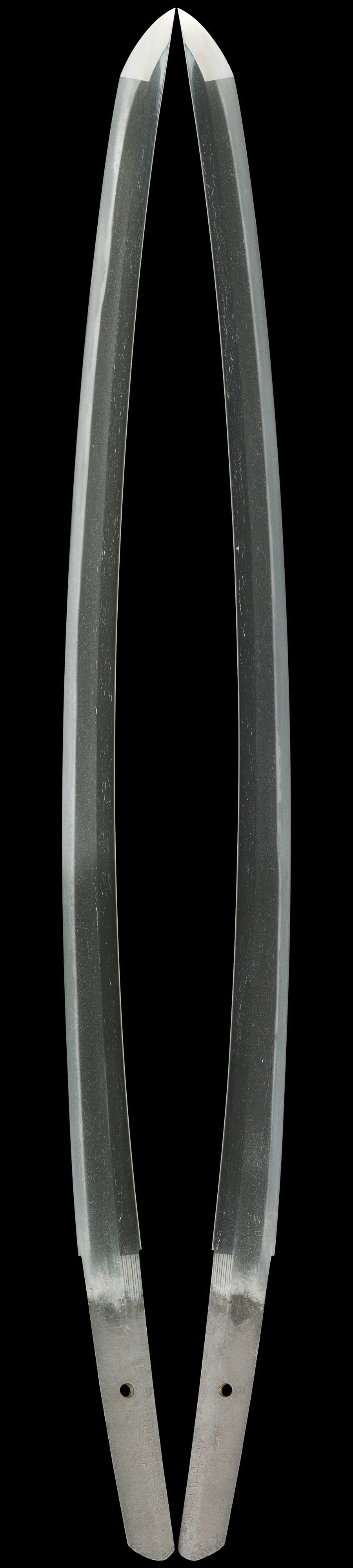
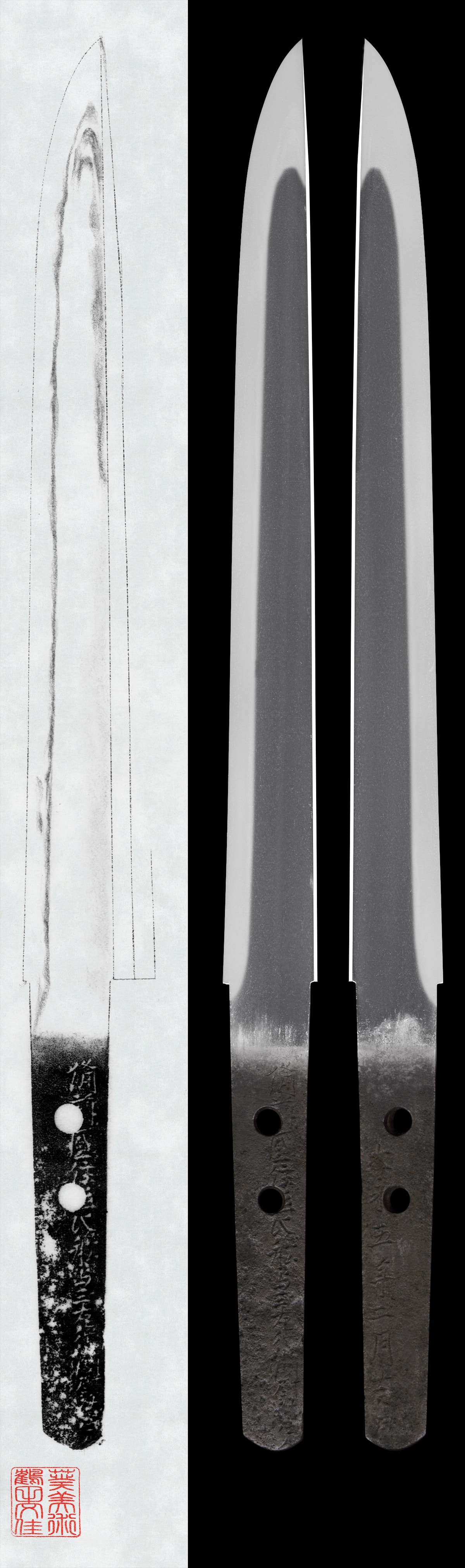
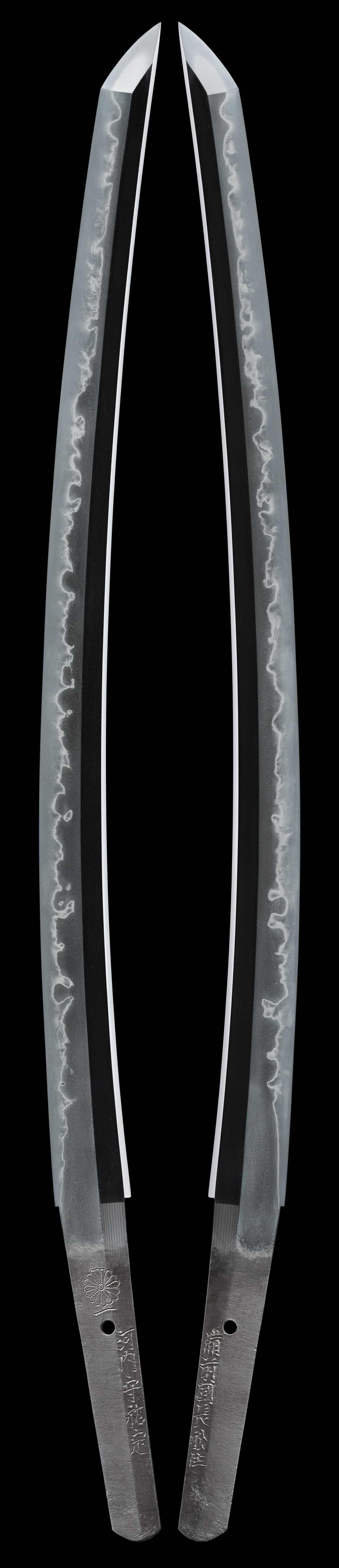
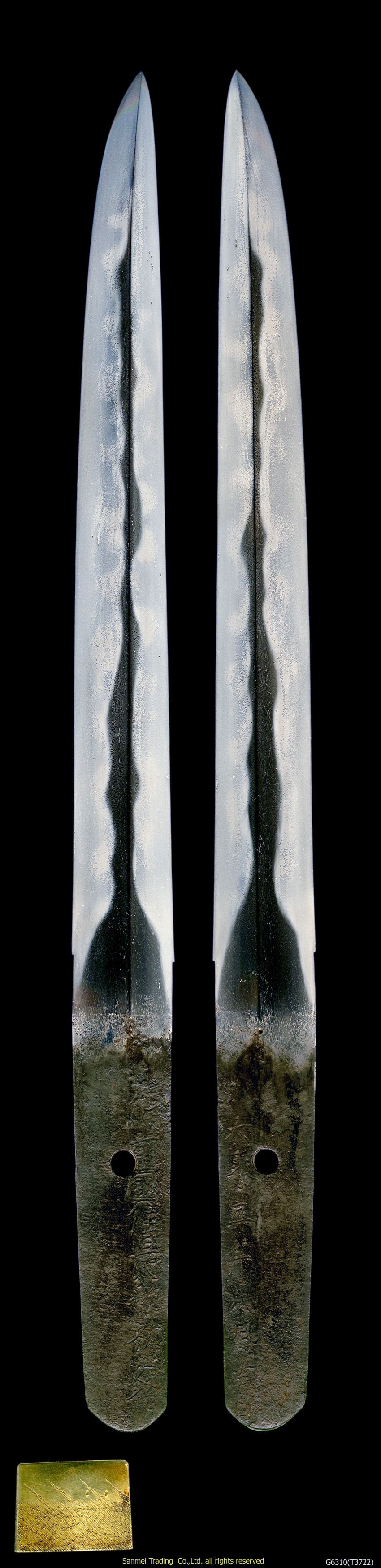
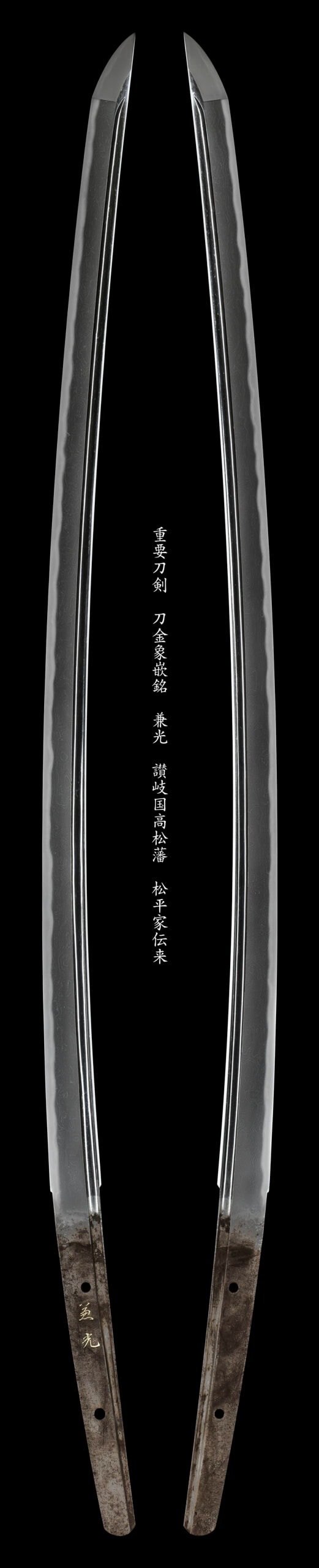
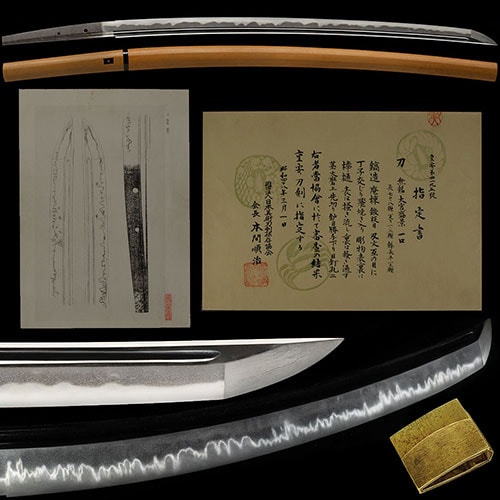
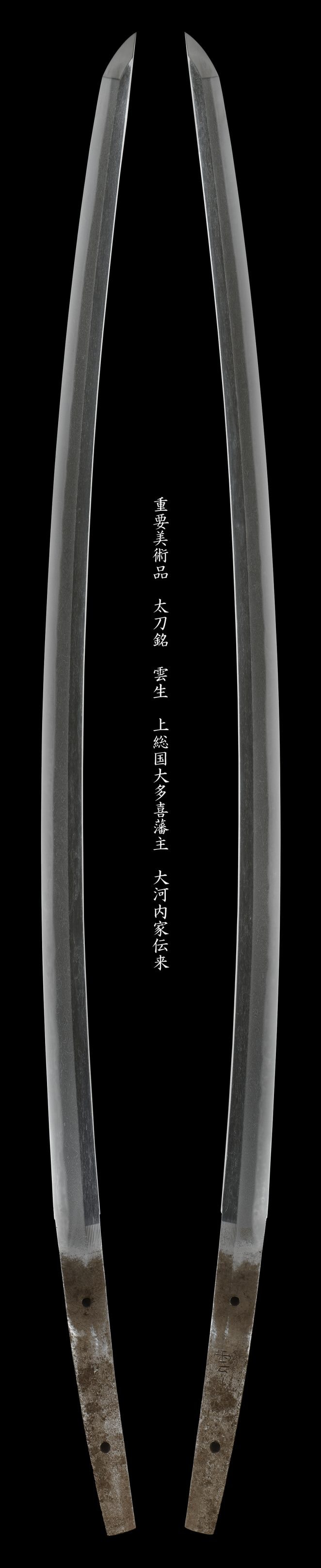
Akamatsu Hyobu Shosuke Masanori was a figure of considerable prominence in the late period, serving as shugo (military governor) of Harima, , and Mimasaka provinces while holding important posts within the bakufu. Although his teacher in swordmaking is not clearly known, the observes that because Katsumitsu and Munemitsu served under his command and were active in that capacity, it may be inferred that he learned forging techniques from them. Masanori produced blades in the intervals of his martial duties, and most of his works bear ownership inscriptions — sue-uchi, or commissioned reward blades bestowed upon retainers and subordinates. According to the study by Oyama Kinpa, only a small number of his works survive today, making each authenticated example a particularly valuable reference piece.
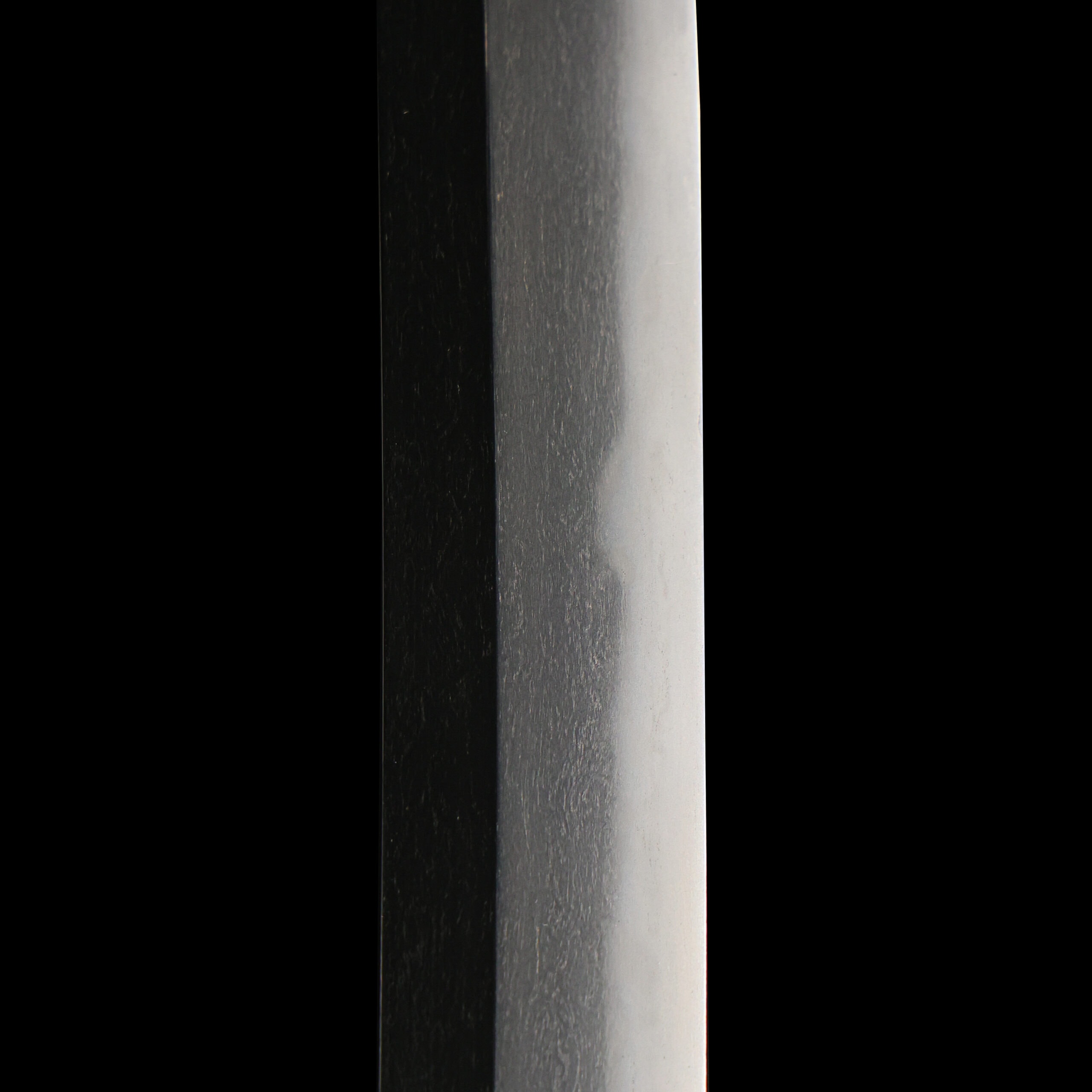
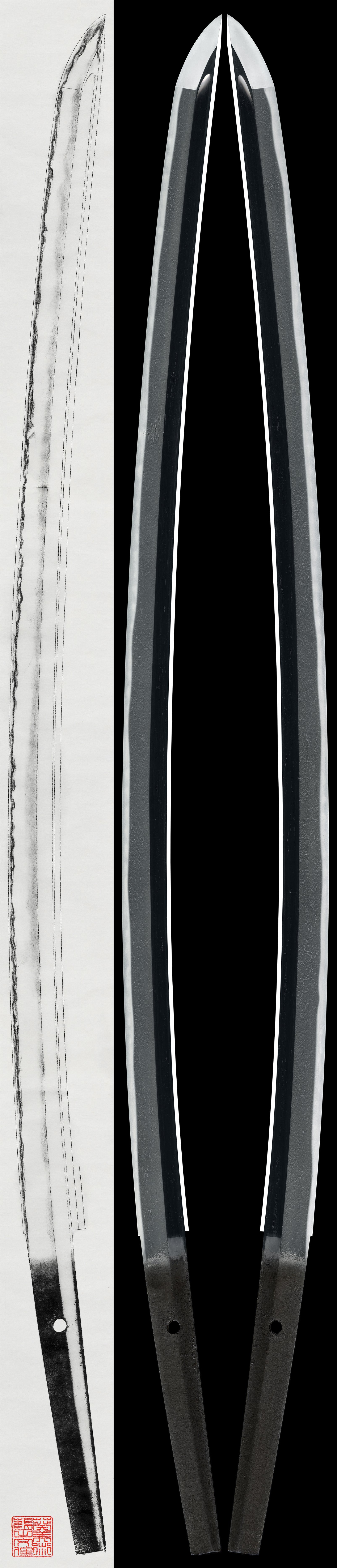
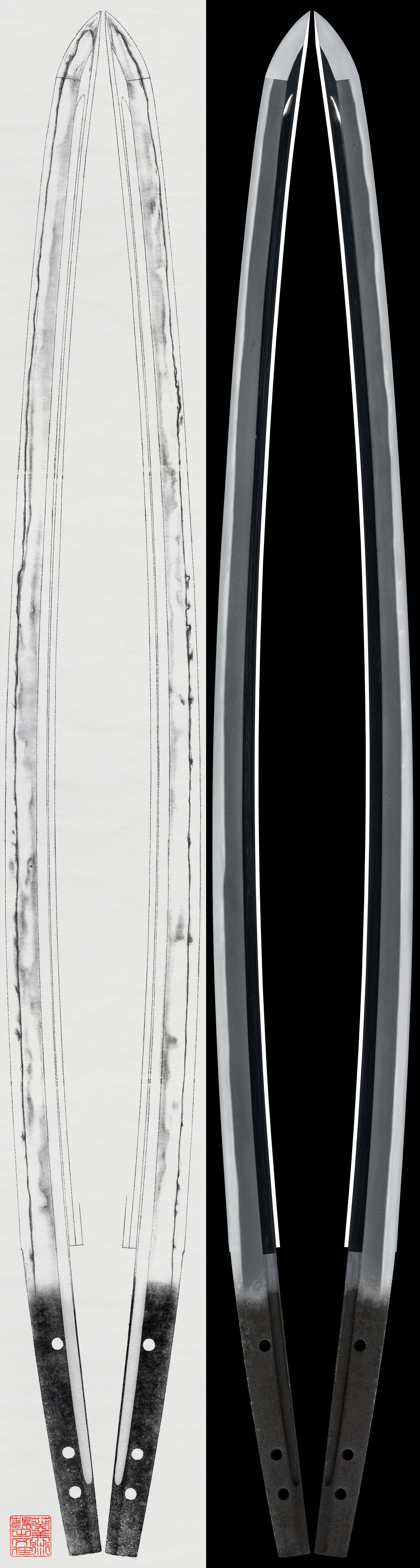
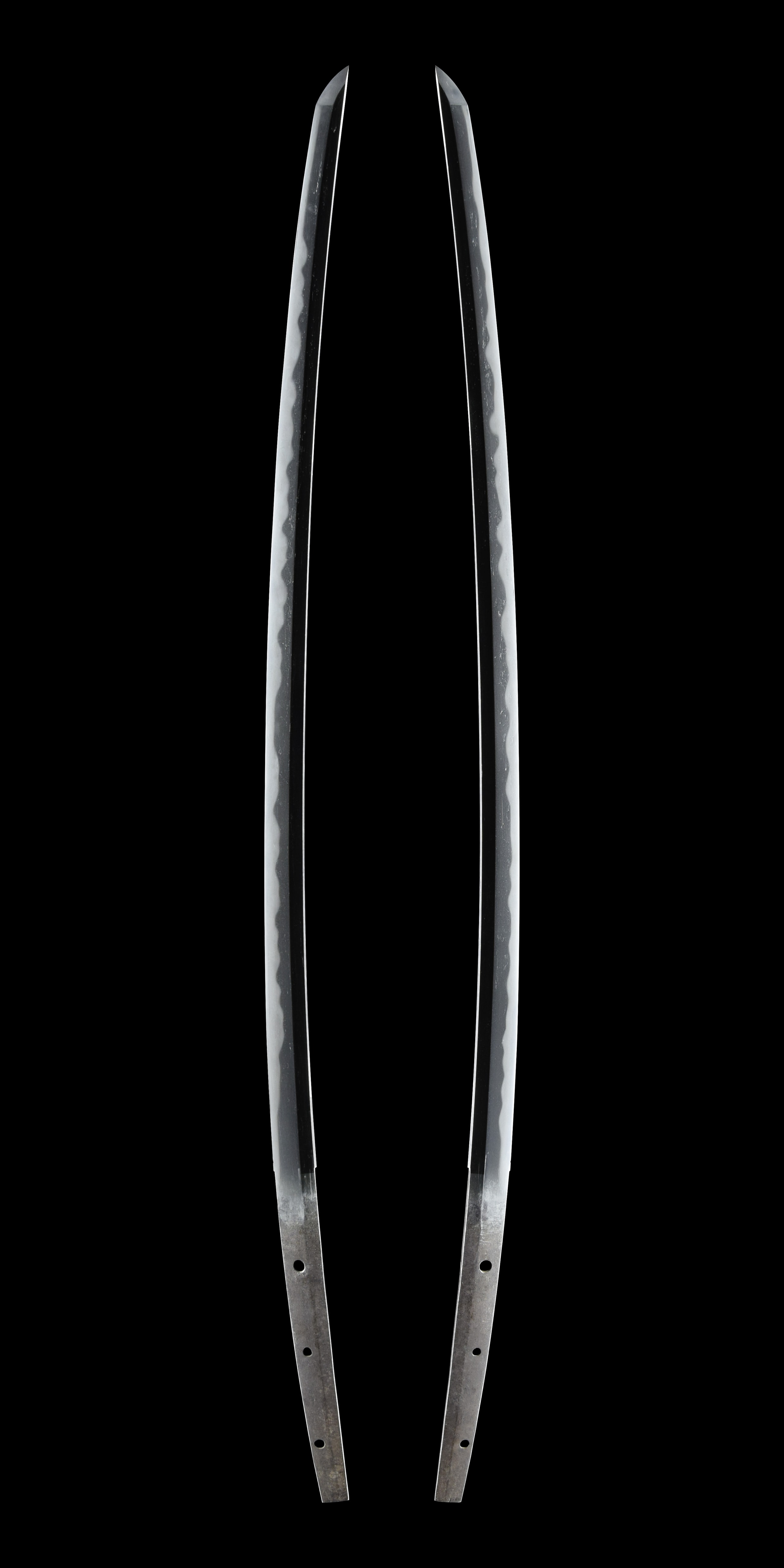
Masanori's forging is characterized by a strongly -laden manner in both and that distinguishes his work from typical production. His ranges from tightly forged to mixed with , with forming thickly and appearing in the finer examples. The is typically mixed with , at times incorporating -gokoro and , with abundant and entering vigorously and appearing throughout. In his best works, the tempering achieves a spirited of wide , while the adheres well and becomes coarse in places — a manner that the notes differs markedly from ordinary late workmanship. One example further demonstrates an intent to pursue an upper level of - skill, with and creating a -like impression. His , when present, bear divine titles rendered in a distinctive calligraphic style that carries the flavor of the age, differing somewhat in taste from the carvings generally seen on works of the period.
Within the tradition of warrior-smiths, Masanori occupies a singular position: a military commander of the first rank whose blades nonetheless display workmanship that the repeatedly characterizes as excellent and superior. His is praised as finer than that generally encountered among pieces, and his representative works are recognized as especially distinguished examples. The further notes that pieces not previously catalogued among his known surviving works constitute reference material of particular value, underscoring the rarity and documentary importance of each authenticated blade.