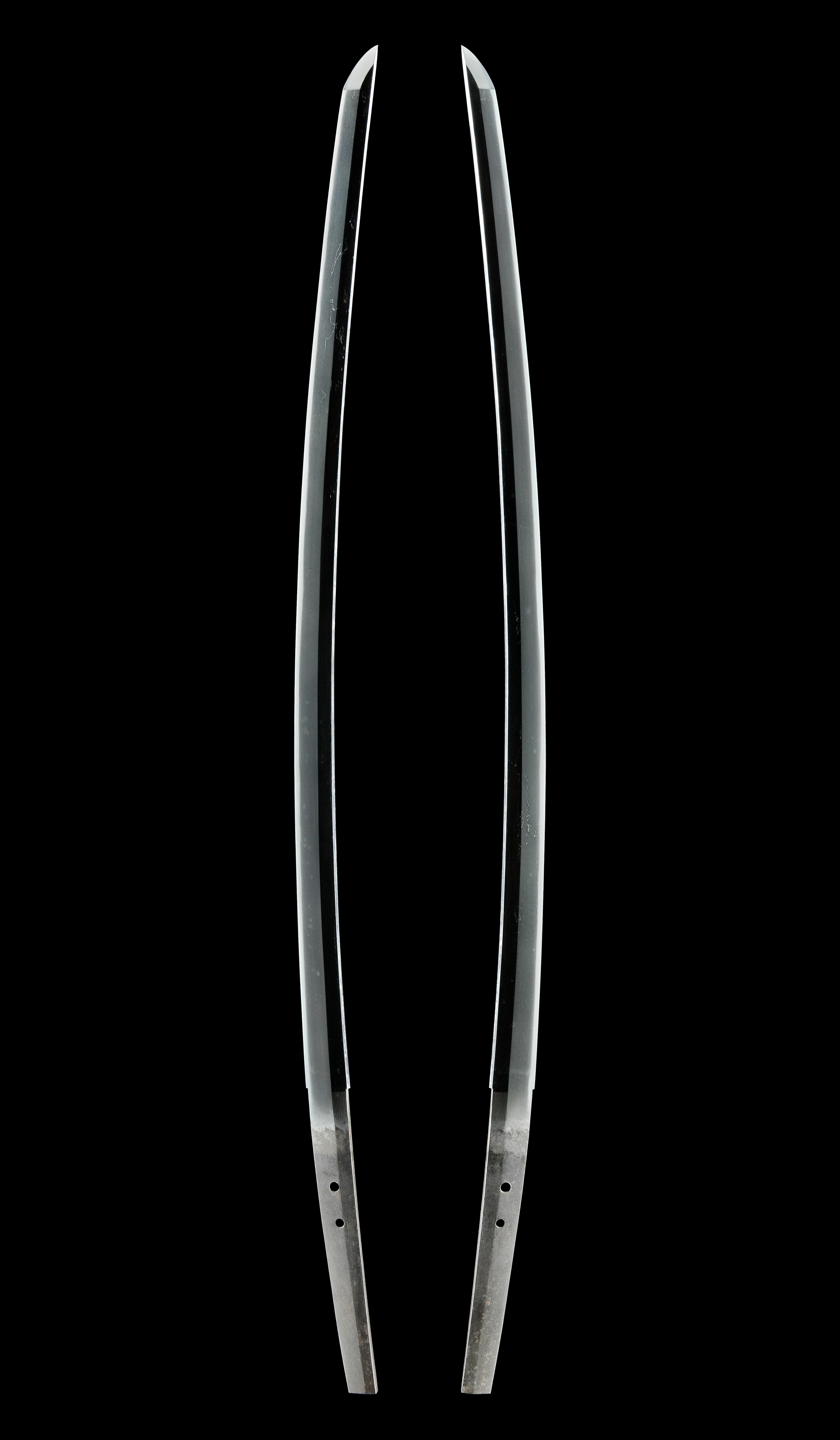
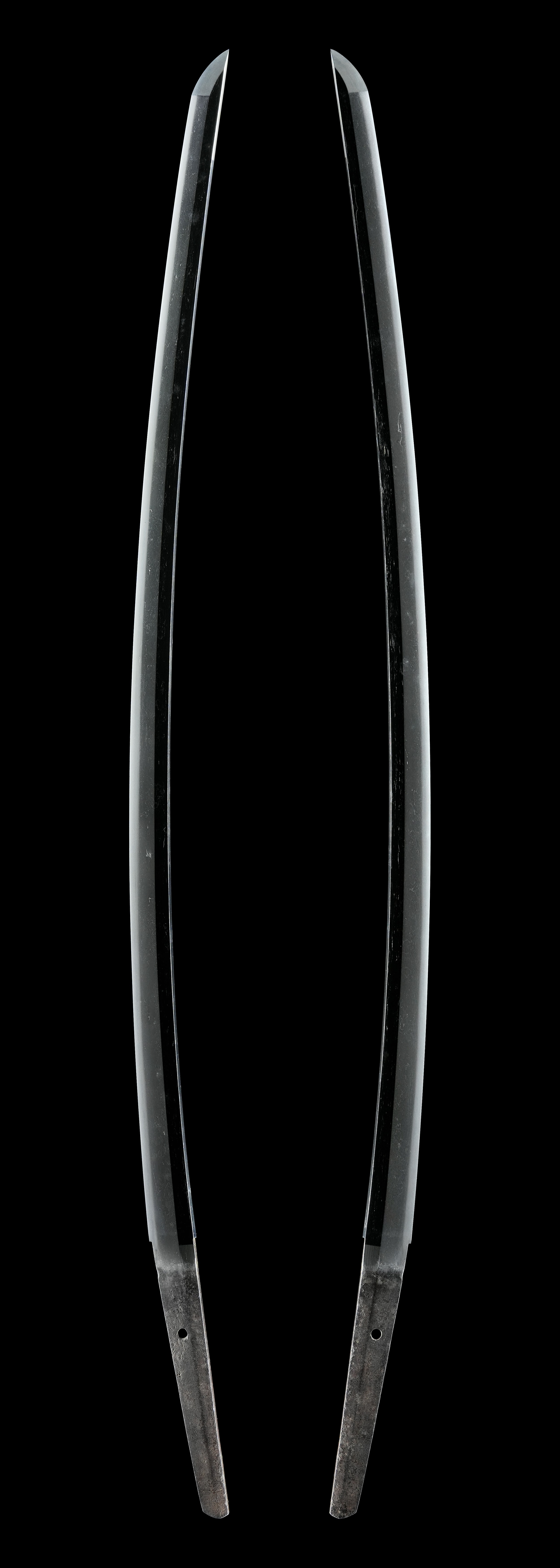
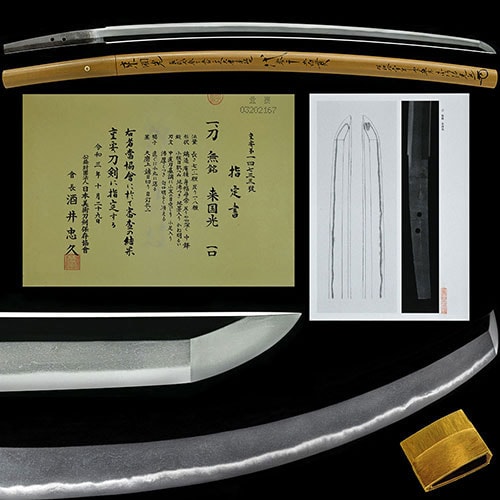
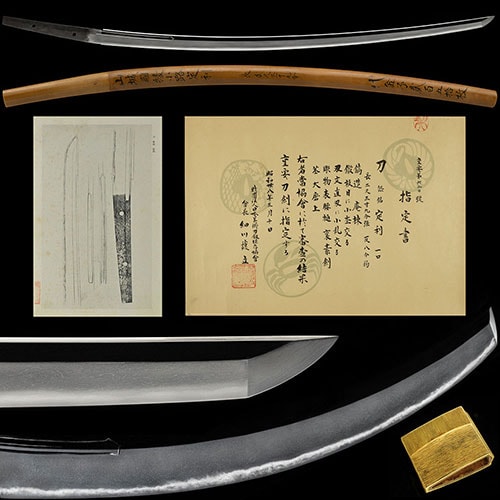
Kuninobu is counted among the leading disciples of Taro Kunimura and a representative smith of the school of , his active period traditionally placed around the Karyaku era at the close of . The published sources are candid that surviving works by his hand are far fewer than those of fellow members of the line such as Kunitoki, Kunisuke, Kuniyasu and Kuniyoshi, so that the smith is known through a small body of signed and a handful of shortened blades attributed to him on appraisal. The line is Yamashiro by descent: its founder Kunimura is transmitted in the prevailing tradition as a grandson in the female line of Kuniyuki, with a fuller version making him the child of Hiromura of the Yamato Senjuin school, who married a daughter of Kuniyuki, while one early text instead places Kunimura in the gate of Kunitoshi. From that root the school's make stands close to , and the published sources name the points by which it nonetheless parts from as the school's chief attractions: a inclination in the forging, a whitish , a that sinks, calmer activity within the edge, and a fuller . Kuninobu carries all of them.
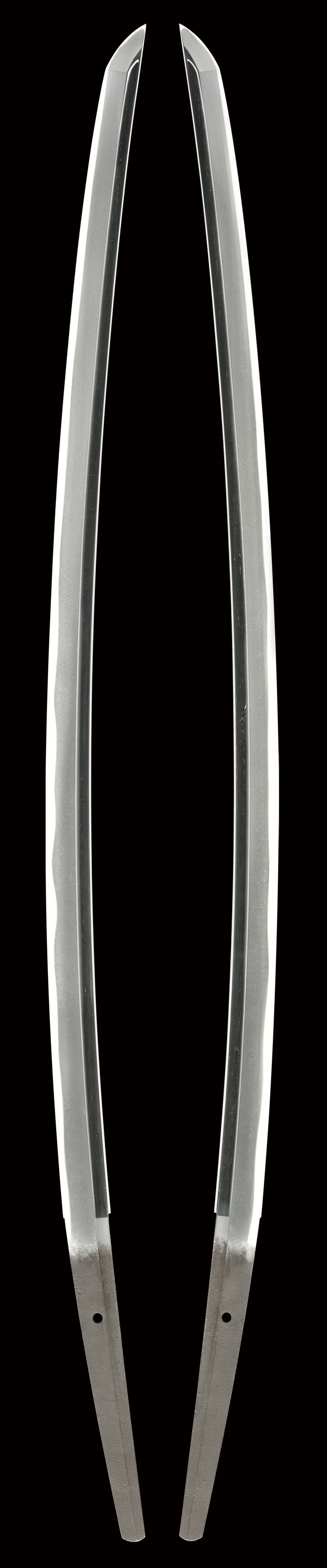
His characteristic hand is . Every blade on record is -based, broad on the shortened and middling or narrow on the slender signed , leaning into a shallow with and a touch of gathering in the lower half, and entering, the tight with and inclined to sink, the internal working gentler than the school it descends from. His major point of appreciation is the that runs along the edge, a double the published sources hold up as a great hallmark of the school and one especially marked in his work. They write of it directly, that the way runs along the edge is a great point of appreciation for this school, 「刃に沿って二重刃がかかる様は同派の大きな見どころ」, and on his blades it is clearer and continues for a longer stretch than is usually seen, at times built up where -like dot the until they form a second line. and appear along the upper half, and the turns by stretches bright and by stretches subdued.
The is the other half of the recognition. Over an mixed with and flowing that stands toward rather than lying flat, fine gathers densely, fine enter, collects in mottled patches, and a whitish rises, the blackish Kyushu steel the school is known for. The published sources record this as the first of the school's distinctions, that in the forging a tendency stands out and a whitish appears, 「鍛えに柾ごころが目立ち白け映りが立ち」, the standing on nearly every blade of the corpus. The answers to the description, turning back in a full with a shallow or finishing in , with at the tip and on occasion a pointed return.
The smith is single in manner, so his work divides by register rather than by any change of style over time. The signed pieces are slender of high with and a compact , or only slightly shortened, the two-character cut large with a slender chisel above the toward the . On them the runs middling or narrow, well covered with and at its best bright, with and entering at intervals, a thing the published sources note is not uncommonly seen among smiths of this group. The signature is itself a tool of attribution: across the right half within the -gamae is cut in an ear-shaped form, but Kuninobu's own habit is to cut the vertical stroke inside the enclosure at a marked diagonal, and on one he sets the character for slightly to the left of . The second register is the shortened, unsigned attributed to him on appraisal, wide of and thick of , with deep curvature and a slightly extended , a dignified late- bearing the published sources call full of presence and liken to the silhouette of Kunimitsu of the homeland tradition.
The distinction of his work is best drawn from his own grounded traits rather than borrowed from his models. His over a standing, blackish , his sinking , his fuller return and above all his pronounced set him within and apart from the brighter, clearer work the school resembles, for the published sources are frank that compared with there is a tendency for the and to be somewhat weaker, 「来に比しては地刃の弱い嫌いがある」. Within his own line he sits beside Kunitoki, Kunisuke, Kuniyasu and Kuniyoshi, smiths whose work the sources say carries no sharply individual mannerism, so that is read as a group rather than by separate hands; against that even level his best blades are singled out for a refinement above the usual, said to share something in common with the signed by Kuninobu that the published sources name as their touchstone, 「重要文化財指定の国信有銘の太刀」, held in the Mitsui Bunko, the one securely signed monument by which the rest of his hand is measured.
The record is small and held close. None of the blades resolved to him here carries the highest national designations; his standing rests on two pieces raised to and five more to , seven designated works on record in all, a modest but high body for a smith whose extant work the sources call extremely few. Provenance gathers around the finest of them: the raised to passed through the Satake house of Akita and was later treasured by Miyoji, a blade the published sources call an outstanding work decisively attributable to Kuninobu in which a high sense of dignity is felt, more refined and polished than the work usually seen, 「常に見る同派の作に比して、より垢抜けた出来口」. An early is recorded to have once carried a Kochu attributing it to Kunimitsu, a measure of how near the school's homeland-recalling make stood to high Yamashiro work. For a collector the practical reality is plain: these are heritage blades held and seldom moved, the signed prized precisely because so few survive, and an example by Kuninobu coming to hand is among the rarer encounters within the field, met with patience rather than sought at will.