NihontoWatch MonNihontoWatchBETA
MarketEncyclopedia
NihontoWatch Mon

NihontoWatchBETA

Market
Encyclopedia
Overview·Kantei·Designations·Provenance·Blade Forms·Signatures·Lineage·School
OverviewKanteiDesignationsProvenanceBlade FormsSignaturesLineageSchool
  1. Schools
  2. Enju
  3. Kuniyoshi

Enju Kuniyoshi

國吉

Tokujū
Vol. 20, No. 30 · Tantō

Enju Kuniyoshi

國吉

22 ranked works

ProvinceHigoEraBunna (1352–1356)PeriodNanbokuchōSchoolEnjuTraditionYamashiro-denGeneration2ndToko Taikan450(top 31%)TypeSwordsmithCodeKUN1773
1Gyobutsu
2Tokubetsu Jūyō19Jūyō Tōken

Overview

Kuniyoshi worked at Kumafu in the Kikuchi district of Province from the very end of the period into the , the leading hand named first among the smiths of the school. The published sources trace the line to Tarō Kunimura, recorded as a son of Senjūin Hiromura of Yamato and as a maternal grandson of Kuniyuki of Kyōto, and they place Kuniyoshi beside Kunitoki, Kuniyasu, Kunitomo, Kunisuke, Kuninobu and Kunitsuna as one of the representative makers of the group, transmitted as either a son or a younger brother of the founder. From that double descent the school took its character, and the judges describe its work as one that generally resembles the school of Yamashiro (概ね山城の来派に類似する), refined in yet carrying a Yamato cast inherited through the Senjūin side. Because the individual differences among smiths are slight, his many shortened and unsigned blades are affirmed from era and school as much as from any personal mannerism.

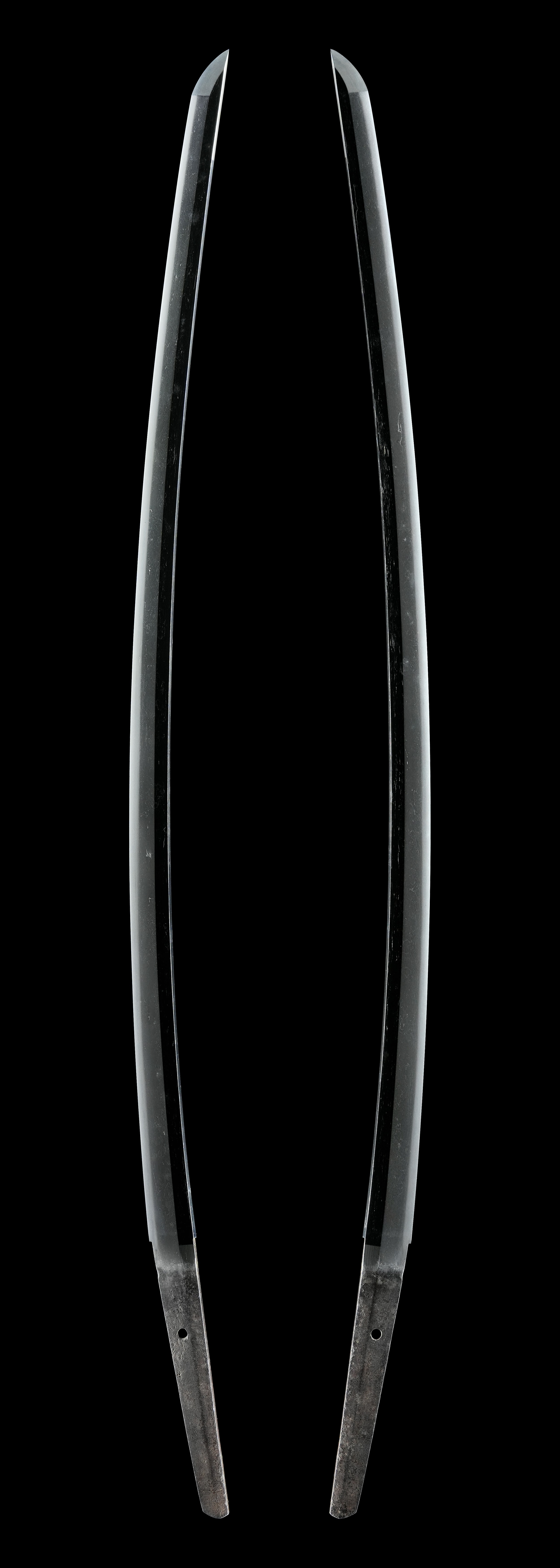
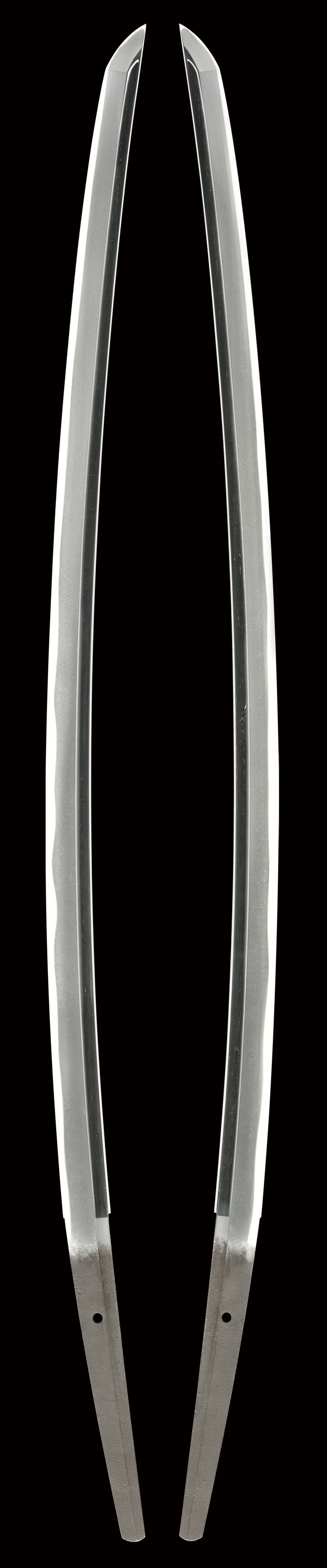
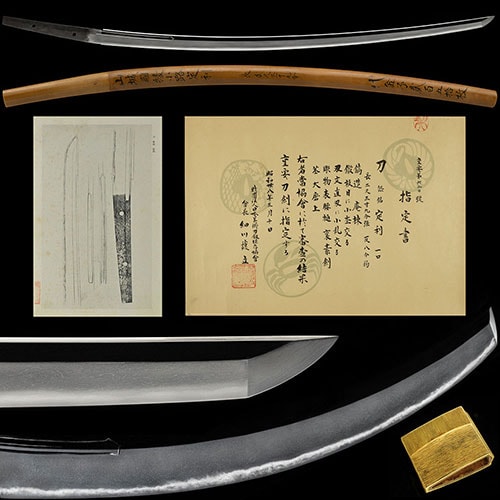
His characteristic hand is a quiet straight temper laid over a flowing steel. The temper is a hoso- or into which small and enter, the fraying into , with fine and and adhering, the most often tight. Within that calm line two activities are the tells the judges return to: , the broken-edge effect, and above all a doubled running along the edge and into the . Of one signed and shortened the published sources write that the way the in particular stands out clearly manifests the school's characteristic traits (殊に二重刃が目立ってかかっている様には、此の派の特色が顕著にあらわれている). The runs straight to a small round, at times to a larger with a shallow turnback, occasionally finishing or with .

The is where the school is read first. Over an , often a closely packed , the grain flows toward the edge into , with , entering, areas of , and a whitish standing clearly across the surface. This cooler, mistier reflection, paired with the conspicuous , is what the published sources name as the principal point separating from the tighter from which it descends. The record is candid about the cost of that descent: compared with true the and run somewhat weaker, the steel can look whitish and thin, the quiet and the subdued. Kuniyoshi is the smith in whom that baseline is most often surpassed rather than merely met.

His record divides cleanly by form. The body of it is the slender , usually shortened and several reduced to , on which the and appear in their representative state. Against these stand the , somewhat wide and thick in the , their mixing and flowing , the here taking on a shallow with a deeper , and carrying the school's Buddhist carving, a above a on the and a -bi with accompanying groove on the reverse. The signatures are bold two-character , and the judges read them by a single calligraphic tell: within the enclosure of the character the right-hand element is cut in an ear-shaped form, so that the cutting of the right half inside the enclosure in an ear shape is the inscriptional point of this school (国構の中の右半分を耳形に鍛るのが此の派の銘振りの見どころ), a manner they say does not become confused with other schools and which separates him from the Kuniyoshi who shares his name.

What distinguishes Kuniyoshi within his own school is brightness. The published sources single out his signed for escaping the weaknesses entirely, lacking the whitish thinness of the and the subdued , and presenting instead a and that are bright and clear in both, the most refined example among works of the school (地刃共に明るく冴えており、同派の中では垢抜けした出来映えのもの). Where the school is read for , and a quiet line, his finest work keeps those marks while raising their clarity, the sharp and the steel well refined. The name continued through several generations into the period, a Hishū Kikuchi-signed read as a later Eitoku-era hand, so the is set apart from his namesakes by date and by the quality of his make.

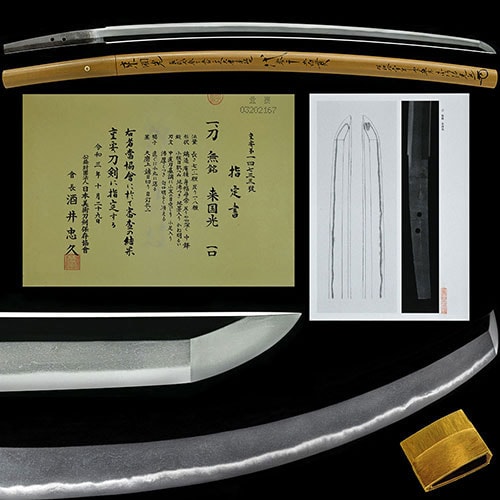
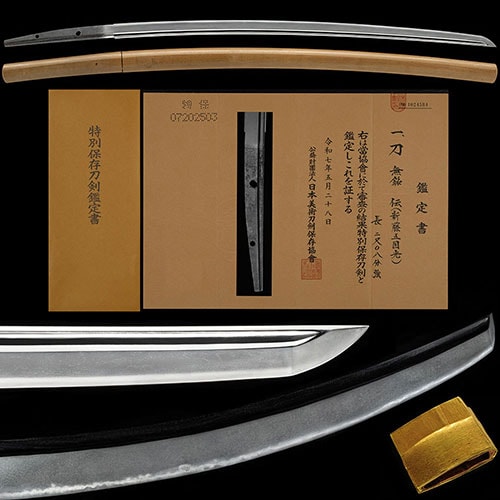
Fujishiro records no grade for him, and the Tōkō Taikan values his work at four hundred and fifty. He has no National Treasures and no Important Cultural Properties; his record runs instead through two blades at and nineteen at , with an Important Art Object and works appraised in gold inlay, gold powder and red lacquer as well as signed and unsigned. The provenance roll is unusually grand for a provincial: two were transmitted in the Owari Tokugawa family with Kōon , one selected into that house's highest "jin" rank; one shortened passed through the Tokugawa shogunal house; a court mounting with its blade descended in the Ichijō regent family; and a blade is recorded at the Shrine. Of one unsigned the published sources say it is a rare piece, sound in both and , firmly attributable to Kuniyoshi (地刃ともに健全な国吉極めの稀な一品). With twenty-one blades across the and tiers and almost none held outside private and institutional collections, a signed Kuniyoshi comes to market only seldom; when one does, it is the rare chance to hold the leading hand of the school, the manner carried south and made bright.

Kantei

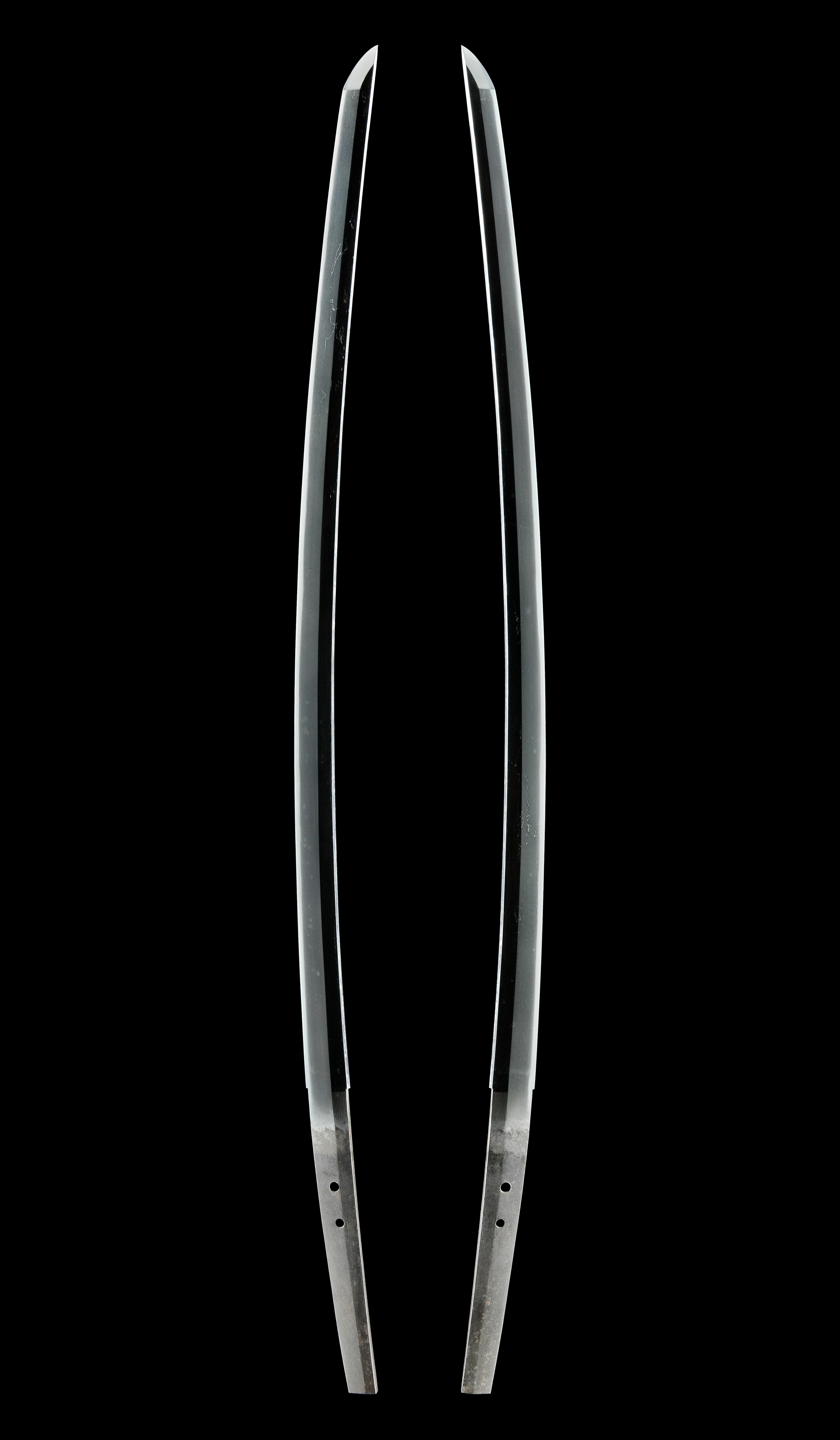
one Enju hand read by register: the slender shortened tachi and o-suriage katana attributed to him as representative Higo Enju, a quiet Rai-derived suguha on a flowing ko-itame with shirake-utsuri and a recurrent nijuba, set against the sun-nobi hira-zukuri tanto with their bonji and suken carving, a deeper notare-toned suguha and the Owari Tokugawa provenance

Kuniyoshi is a smith of the school, working in the Kumafu district of Kikuchi in Province from the very end of the period into the . The line traces to Taro Kunimura, recorded as a son of Senjuin Hiromura of Yamato and a maternal grandson of Kuniyuki of Kyoto, so the school works broadly in the manner, and Kuniyoshi is named first among its representative hands beside Kunitoki, Kuniyasu, Kunitomo, Kunisuke, Kuninobu and Kunitsuna. His recognized work is a slender , usually shortened, or a , on a well-packed that mixes flowing , with fine , and a whitish , over which he tempers a quiet chu- or into which small , , , and a distinct enter, the running straight to a small or rather large round with a shallow turnback. The published sources read the Enju hand as close to but with and somewhat weaker, the conspicuous, the standing and the commonly subdued; against that baseline his signed is singled out for escaping the school's whitish weakness and tempering a bright, clear . Because individual differences among smiths are slight, the judges affirm his works from era and school more than from a personal tell, and they note that the name Kuniyoshi continued through several generations down into the period.

Diagnostic discriminators

unique vs plain Rai chu-suguha (the parent hand, without the doubled line)

Observation by phase

The representative Enju tachi and katana (the school's quiet suguha on a shirake ground)

The body of his record is the slender , usually shortened, and the attributed to him as a representative Enju hand. The shape is with , slender and well-proportioned, several keeping a high and a small even where greatly shortened. The ground is an , often a closely packed , that flows toward the edge into , with , entering, sometimes , and a whitish standing clearly. Over it the temper is a hoso- or into which small and enter, the showing , with fine and , adhering and the commonly tight or subdued; and a conspicuous are the recurring tells. The runs straight to a small round or an with a shallow turnback, at times or with . The published sources read this as -reminiscent of the late , the and somewhat weaker than true and the quiet; against that, the signed is singled out for lacking the school's whitish weakness and subdued , presenting instead a bright, clear and that the judges call an especially refined example among works.

Sugata 姿
Jigane 地鉄
Hamon 刃文
Bōshi 帽子

The sun-nobi hira-zukuri tanto (bonji and suken carving, deeper notare)

The other face of his record is the , several somewhat wide and in proportion with a rather thick and very slight or , the with a bold two-character signature. The ground is a well-packed mixing and flowing , the at times strong on the , with fine thickly laid, and a standing . The temper is a that here takes on a shallow , small entering, the deeper than on the with , the showing , and ; the runs straight to a small round or finishes -like with a slight turnback. These carry the school's Buddhist carving, above a on the and a -bi with on the . Two are the Owari Tokugawa pieces with Koon , where the judges affirm the well-refined and the calm, dignified as an excellent Kuniyoshi attribution, in both and .

Sugata 姿
Jigane 地鉄
Hamon 刃文
Bōshi 帽子
Scholarship

The published sources set the Enju school's origin with Enju Taro Kunimura in Kumafu, Kikuchi, Higo, a son of Senjuin Hiromura of Yamato and traditionally a maternal grandson of Rai Kuniyuki, and record that the school worked broadly in the Rai manner but with ji and ha somewhat weaker than true Rai, the masame conspicuous, the shirake-utsuri standing, the suguha quiet and the nioiguchi subdued, the boshi rounded with a shallow turnback. They note that the name Kuniyoshi recurs through successive generations from the very end of Kamakura into the Muromachi period, so a given blade's generation must be read from its make.

A point of inscriptional interest the judges return to is that, within the enclosure of the character kuni, the right-hand element is cut in an ear-shaped form, a calligraphic manner shared across the older Enju hands and one that, they say, does not become confused with other schools; the signed Kuniyoshi pieces are read in this light, and the workmanship is held to distinguish him from the Awataguchi Kuniyoshi of the same name.

Designations

Kokuhō—
Jūyō Bunkazai—
Jūyō Bijutsuhin—
Gyobutsu1
Tokubetsu Jūyō2
Jūyō Tōken19

Elite Standing

0.17 across 22 designated works

Top 13% among smiths

Provenance

5 documented provenances across certified works by Kuniyoshi

Provenance Standing

3 works held in elite collections across 5 documented provenances

Top 20% among smiths

Raw score: 2.09 / 10

Blade Forms

Distribution across 22 ranked works

Signatures

Signature types across 22 ranked works

Currently Available

Lineage

Kuniyoshi
Student
  1. 1.Kunifusa國房2designated

Enju School

Other artisans of the Enju school

  1. 1.Kunimura國村15designated
  2. 2.Kuniyasu國泰17designated
  3. 3.Kunitoki國時1 for sale32designated
  4. 4.Kunisuke國資3 for sale22designated
  5. 5.Kunitoki國時7designated
  6. 6.Kuninobu國信7designated
  7. 7.Kunishige國重2designated
  8. 8.Kunitomo國友1designated
  9. 9.Koreyoshi是吉1designated
  10. 10.Kunimoto國元1designated
  11. 11.Kuniie國家1designated
  12. 12.Kunitsuna國綱2designated