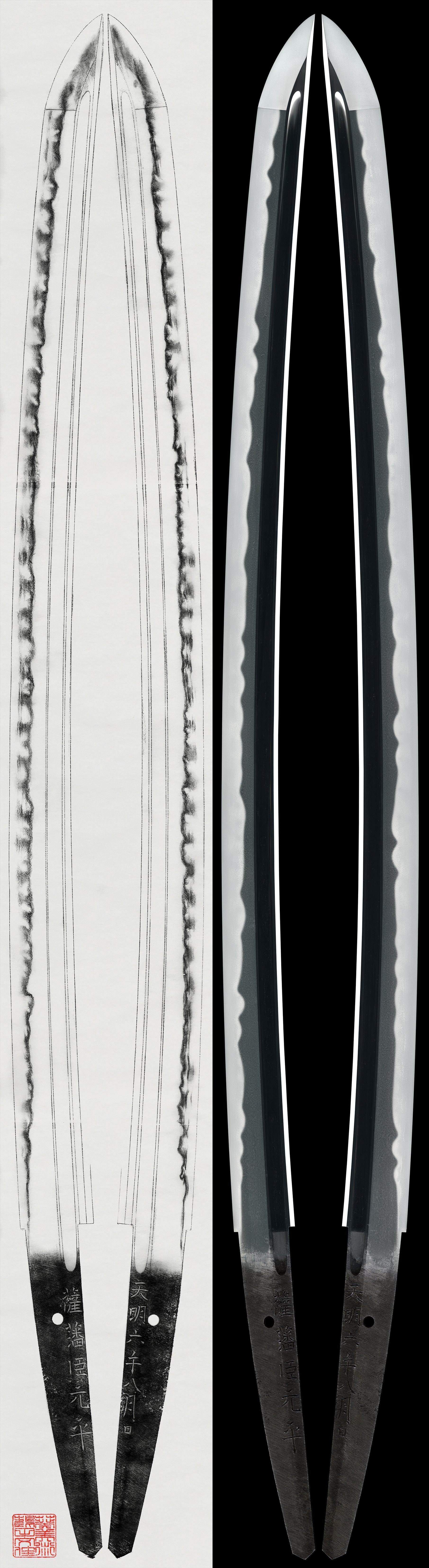
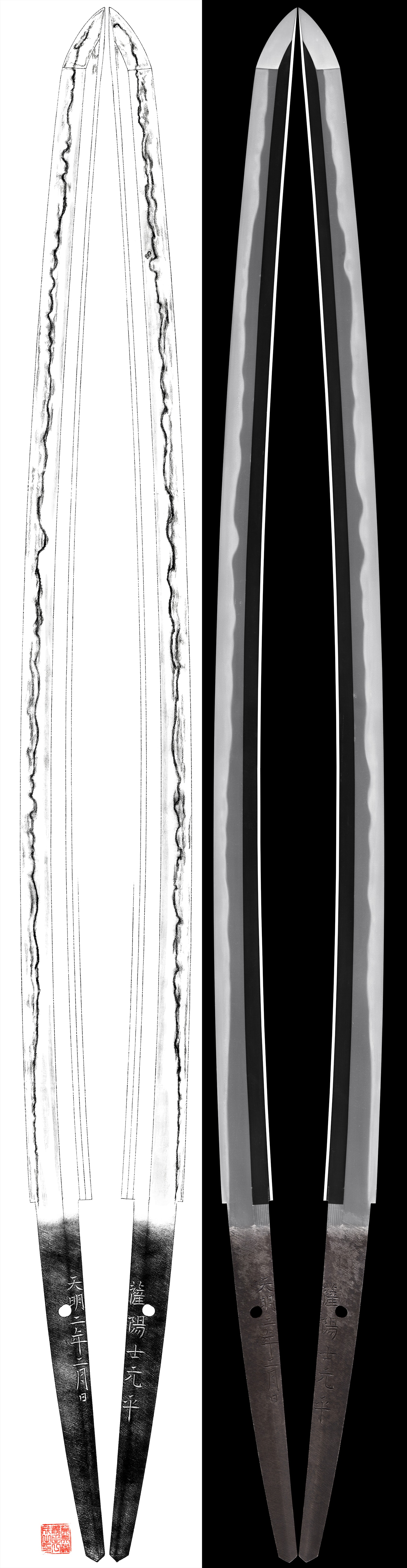
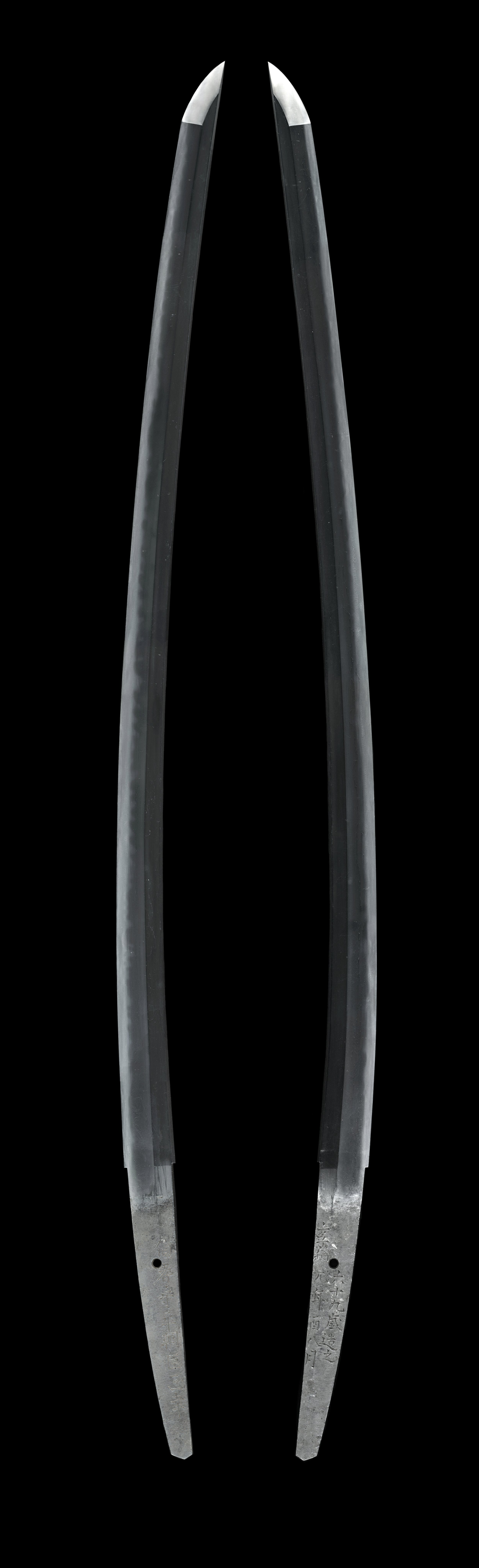
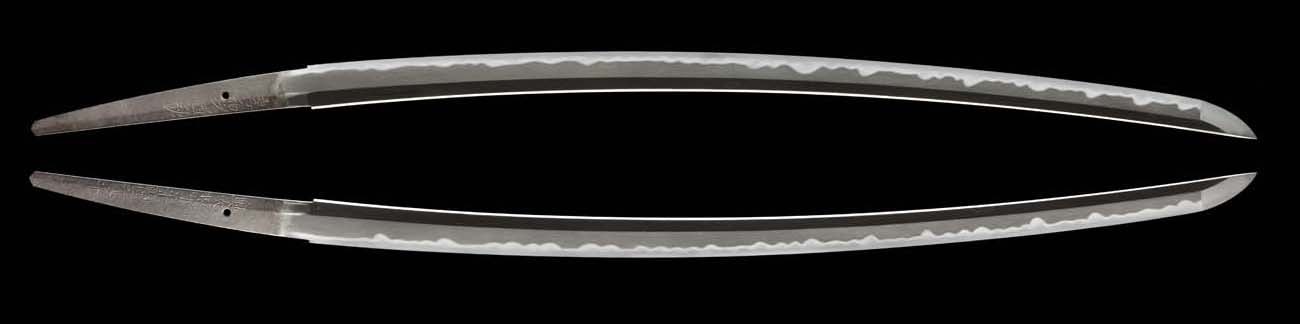
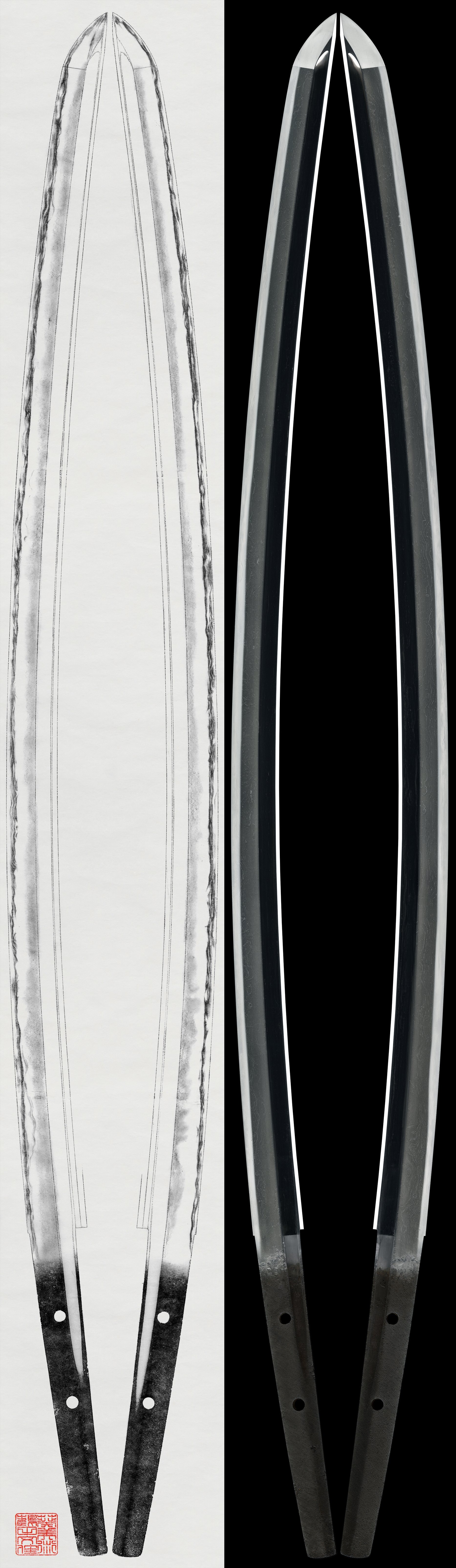
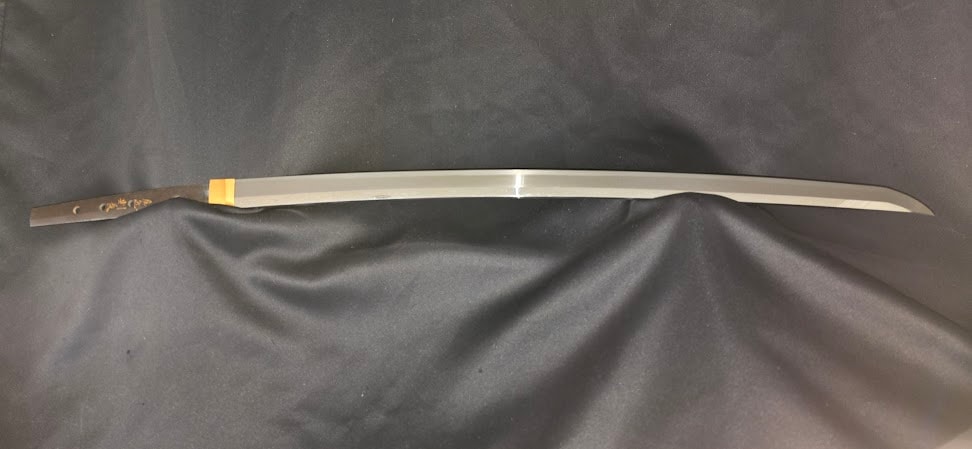
Masakage was the eldest son of Ike Masamitsu (池正光), from whom he first received instruction in swordmaking before later studying under Hōki no Kami Masayuki. The Ike family served the Kajiki-Shimazu, a branch house of the Shimazu clan, and after completing his training Masakage resided at Kajiki (also written Dajō, 柁城) in Sūshū — that is, Ōsumi Province — where he was active as a retained smith (kakae-kō) of the Kajiki-Shimazu. His eldest son, Masamichi (正路), in turn succeeded to the craft. Working in the Bunka–Bunsei era of the late period, Masakage stands as one of the principal pupils of Masayuki within the late Satsuma school of .
His characteristic workmanship is consistently documented across his dated works. The is with , of generous with clear taper toward the point and an extended ; the may range from shallow to deep, on occasion showing . The is a densely forged , at times mixed with and , with adhering thickly and strongly, and dark, -like altered steel (kawarigane) appearing frequently. The is centered on mixed with , round-headed , and peaks of tendency; and enter, the is deep, and the forms thickly and well-adhering with vigorously intermingled . Within the tempered area, , , and are conspicuously applied, the is bright, and may appear in places. The typically shows or a slight with vigorous , taking on a -like aspect and turning back deeply, while Jizō-form and returns are also seen. The is with tip and , bearing a long signature cut in bold, thick chisel strokes on the near the , with a corresponding date inscription on the . These features collectively manifest the -style manner that his teacher Masayuki most excelled in.
The consistently evaluates Masakage's finest blades as work in which he has well inherited his master's style — pieces of confident execution (kaishin) showing workmanship comparable to Masayuki's outstanding works. His representative blades convey something directly reminiscent of Masayuki, and in his most successful efforts the forging is judged conspicuously more refined and meticulous than usual, the outline of the hardened edge calmer, and features such as coarse and held in restraint — bringing the whole to a notably elegant and refined character. Within the late Satsuma school, Masakage thus occupies a position as one of Masayuki's most accomplished successors, and his finest stand as pieces of particularly high dignity among his works.