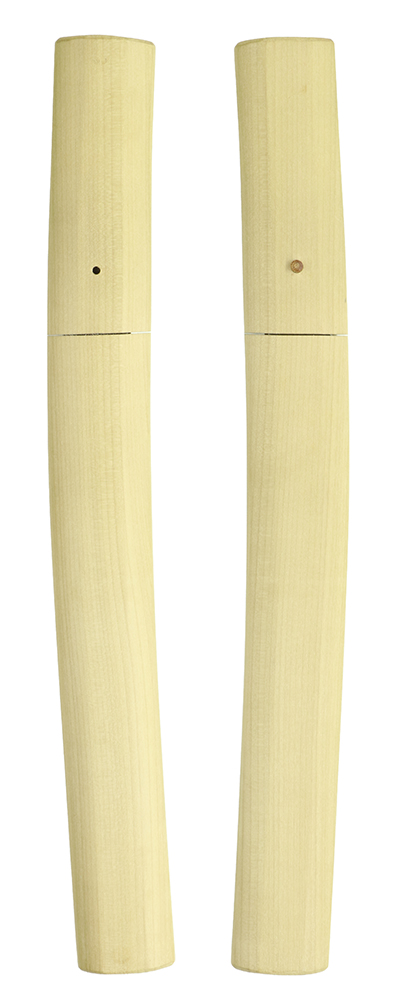
Modern sword Hiroshi tsukuru with Aikuchi-koshirae and Shirosaya.
An omamori tanto by the swordsmith Hiroshi (Keiun Naohiro).
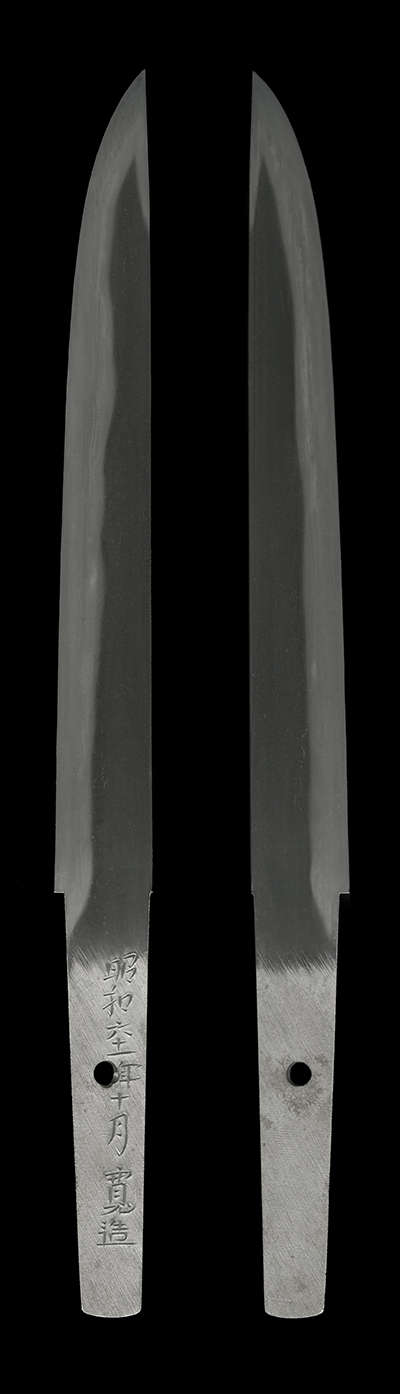
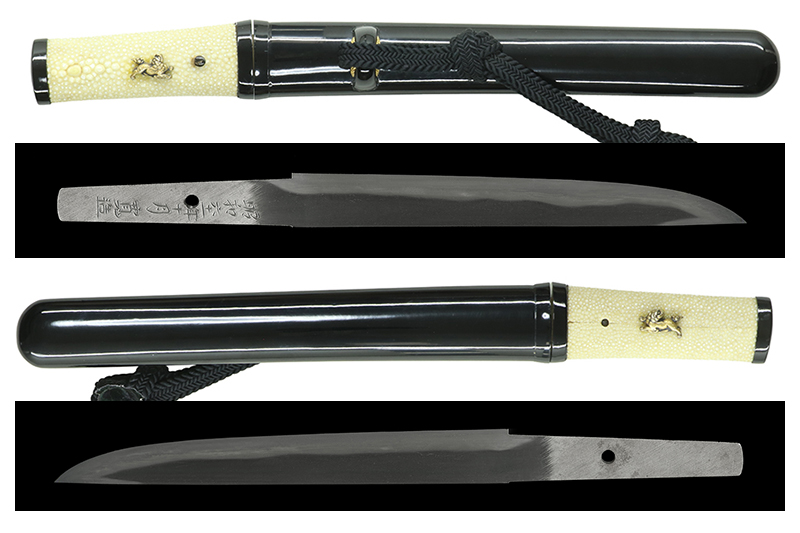
The blade features flowing itame tending toward masame, with a powerful notare-midare hamon.
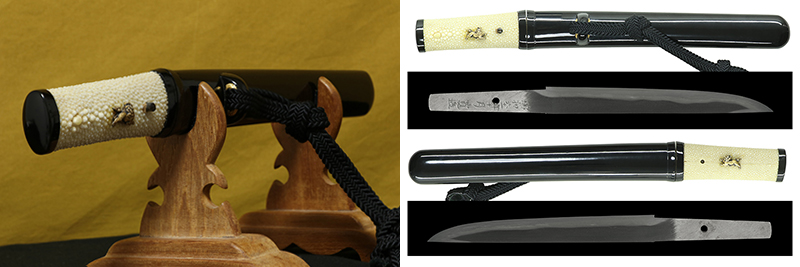
The blade is in good condition and comes with a beautiful dashizame aikuchi koshirae.
An omamori tanto by the swordsmith Hiroshi (Keiun Naohiro).
The blade features flowing itame tending toward masame, with a powerful notare-midare hamon.
The blade is in good condition and comes with a beautiful dashizame aikuchi koshirae.
「刀姿 sword figure」
Hira-zukuri, mitsu-mune, mihaba is slightly wide and kasane is ordinary, mumei, o-kissaki, nakago is ubu with sujikai yasurime, and the nakago-jiri is shallow kurijiri.
「地鉄 jigane」
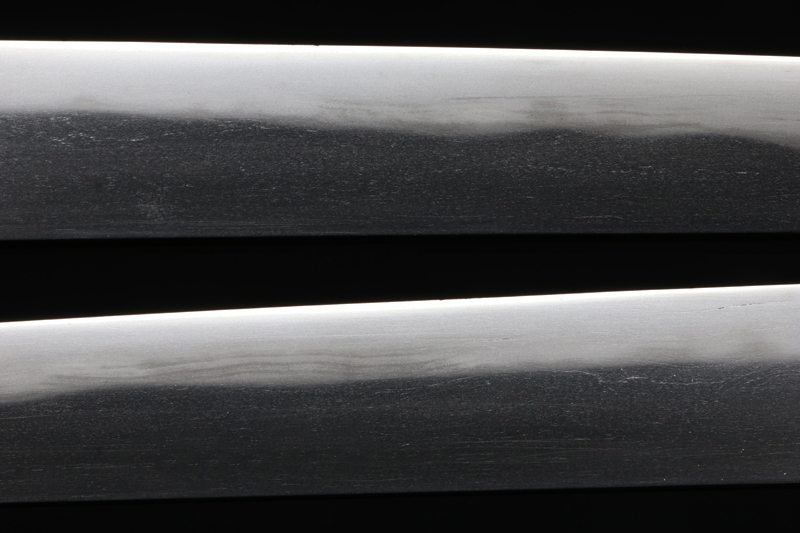
The jigane is itame-hada that flows and becomes masame, with ji-nie.
「刃紋 hamon」
The hamon is notare-midare, the habuchi has ara-nie with active sunagashi, and kinsuji works within the ha. The boshi is midare-komi and returns in ko-maru.
「特徴 detailed」
Hiroshi. Real name Kojima Hiroshi. Born January 22, Showa 32 (1957), from Tokorozawa City, Saitama Prefecture. At age 18, he entered apprenticeship under the swordsmith Naohiro the 3rd, and after 7 years of training, he received approval from the Agency for Cultural Affairs and became independent. Initially, he used his real name "Hiroshi" as his mei, but later succeeded to the name Naohiro the 5th. He continues making swords in Honjo City, Saitama Prefecture, and currently goes by the name "Keiun Naohiro".
This work is a tanto thought to have been produced as an omamori-gatana. It is a well-made piece with a jigane where the itame-hada flows and tends toward masame, and a splendid notare-midare hamon. Slight hike are visible on the blade, but there are no flaws that would be major defects for appreciation, and the condition is generally good.
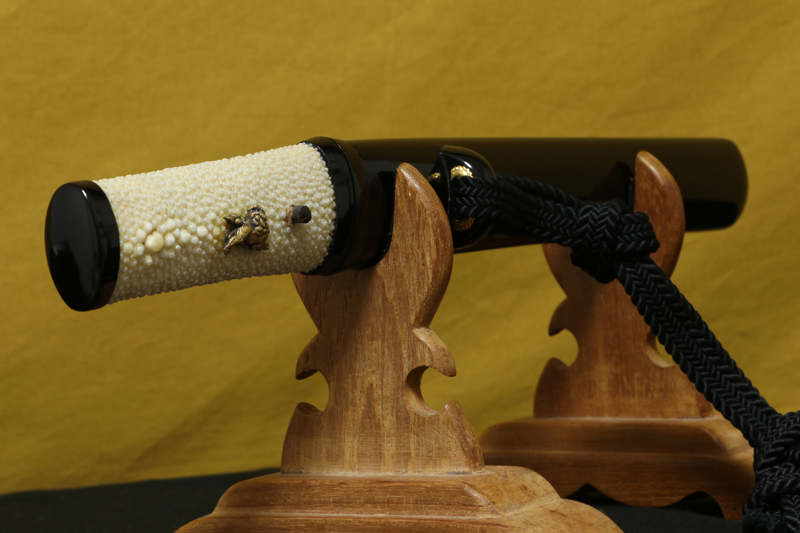
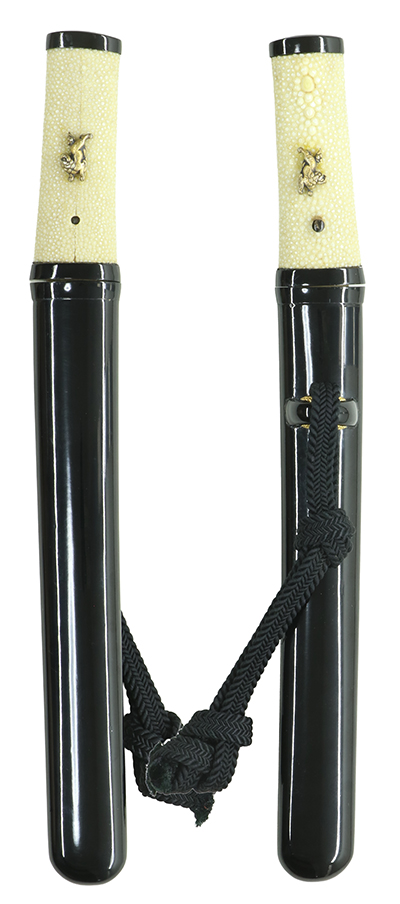
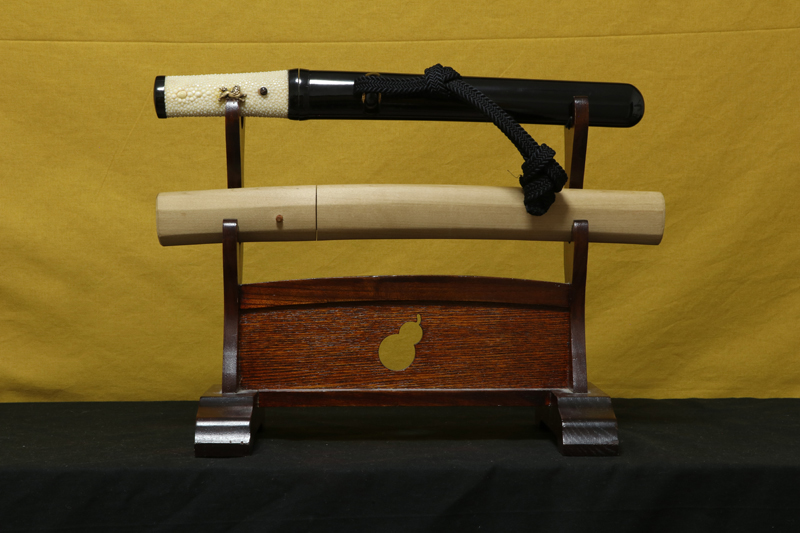
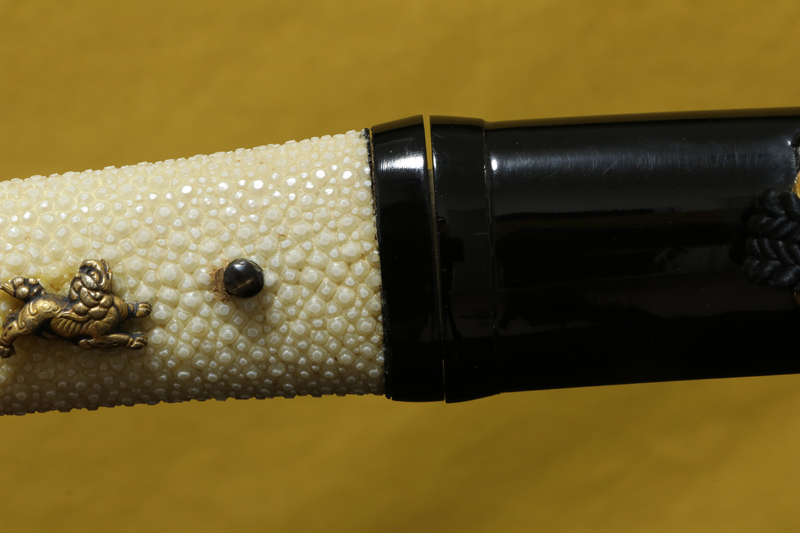
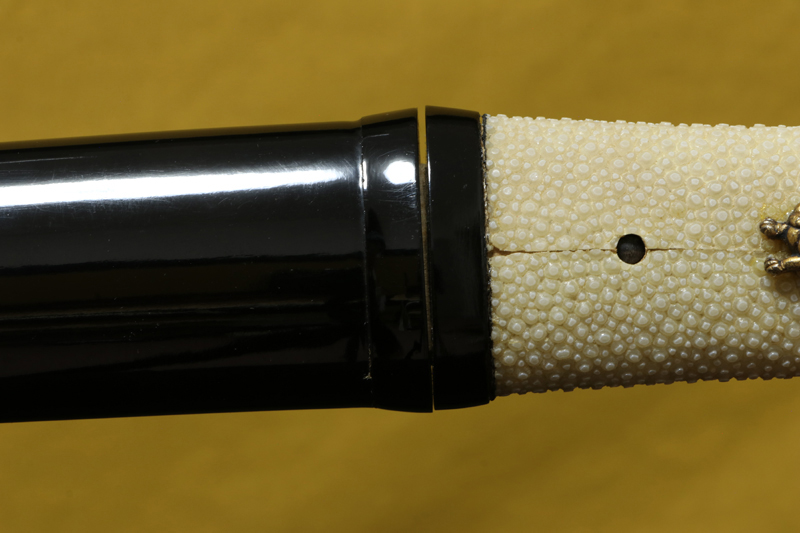
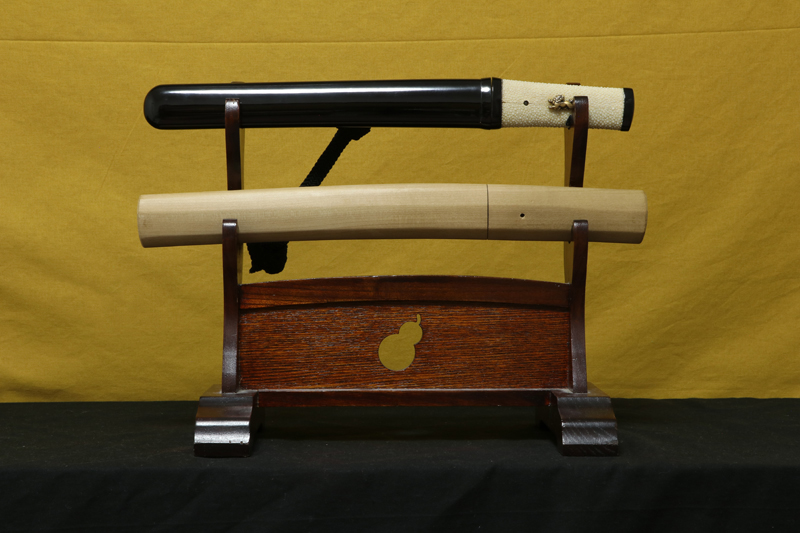
The koshirae is an aikuchi koshirae featuring dashizame, and this is also maintained in good condition.
A beautiful omamori tanto by the swordsmith Hiroshi (Keiun Naohiro). Both the blade and koshirae are an attractive piece.
「拵 koshirae」
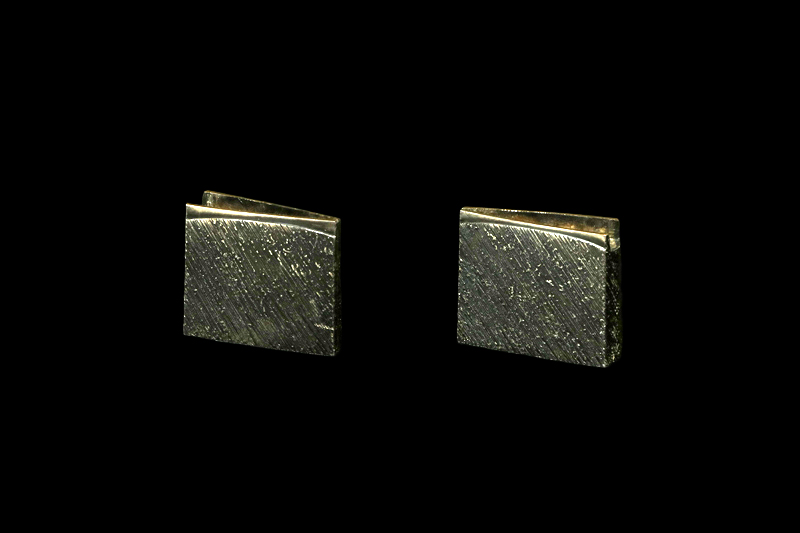
Habaki: Solid silver single-layer Osaka-habaki with yujo-yasuri.
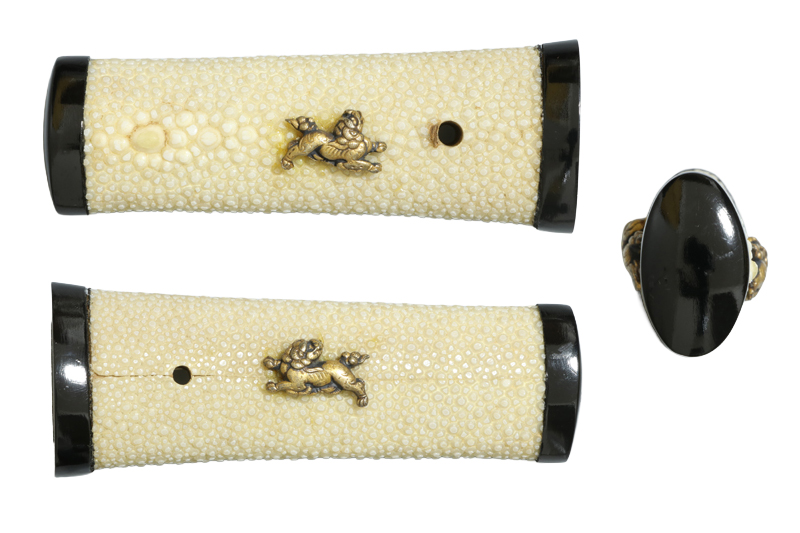
Fuchigashira: Buffalo horn.
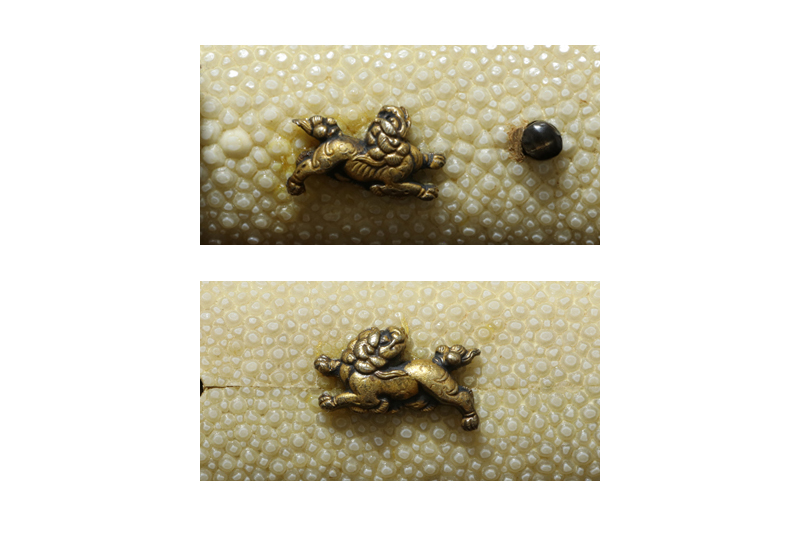
Menuki: Figure of a shishi on gold ground.
Tsuka: Same has an oya-tsubu and is dashizame.
Saya: Kuro-ro.
「刀身の状態 condition of blade」
Togi: Generally good.
Kizu: There are no flaws that would become defects.
Machine translation from the shop's Japanese · may contain errors ·
Modern sword Hiroshi tsukuru with Aikuchi-koshirae and Shirosaya.
An omamori tanto by the swordsmith Hiroshi (Keiun Naohiro).
The blade features flowing itame tending toward masame, with a powerful notare-midare hamon.
The blade is in good condition and comes with a beautiful dashizame aikuchi koshirae.
An omamori tanto by the swordsmith Hiroshi (Keiun Naohiro).
The blade features flowing itame tending toward masame, with a powerful notare-midare hamon.
The blade is in good condition and comes with a beautiful dashizame aikuchi koshirae.
「刀姿 sword figure」
Hira-zukuri, mitsu-mune, mihaba is slightly wide and kasane is ordinary, mumei, o-kissaki, nakago is ubu with sujikai yasurime, and the nakago-jiri is shallow kurijiri.
「地鉄 jigane」
The jigane is itame-hada that flows and becomes masame, with ji-nie.
「刃紋 hamon」
The hamon is notare-midare, the habuchi has ara-nie with active sunagashi, and kinsuji works within the ha. The boshi is midare-komi and returns in ko-maru.
「特徴 detailed」
Hiroshi. Real name Kojima Hiroshi. Born January 22, Showa 32 (1957), from Tokorozawa City, Saitama Prefecture. At age 18, he entered apprenticeship under the swordsmith Naohiro the 3rd, and after 7 years of training, he received approval from the Agency for Cultural Affairs and became independent. Initially, he used his real name "Hiroshi" as his mei, but later succeeded to the name Naohiro the 5th. He continues making swords in Honjo City, Saitama Prefecture, and currently goes by the name "Keiun Naohiro".
This work is a tanto thought to have been produced as an omamori-gatana. It is a well-made piece with a jigane where the itame-hada flows and tends toward masame, and a splendid notare-midare hamon. Slight hike are visible on the blade, but there are no flaws that would be major defects for appreciation, and the condition is generally good.
The koshirae is an aikuchi koshirae featuring dashizame, and this is also maintained in good condition.
A beautiful omamori tanto by the swordsmith Hiroshi (Keiun Naohiro). Both the blade and koshirae are an attractive piece.
「拵 koshirae」
Habaki: Solid silver single-layer Osaka-habaki with yujo-yasuri.
Fuchigashira: Buffalo horn.
Menuki: Figure of a shishi on gold ground.
Tsuka: Same has an oya-tsubu and is dashizame.
Saya: Kuro-ro.
「刀身の状態 condition of blade」
Togi: Generally good.
Kizu: There are no flaws that would become defects.
Historical context
Shōwa to the present: destruction and revival
›
The twentieth century nearly killed the craft twice: wartime distortion, then the occupation ban. The NBTHK’s founding in 1948 and licensed forging from 1953 rebuilt the sword as an art, crowned by Living National Treasures and the mukansa rank.
We could not find an authenticity certificate on the seller’s listing. Japanese swords and fittings are normally papered by the NBTHK (or the NTHK). Without one, the attribution is the seller’s own assessment and has not been independently verified — treat it with caution and ask the dealer about certification before buying.
Within 3 days of the item's arrival, we offer a refund or an exchange. Return shipping and the bank transfer fee for the refund are at the customer's expense.

 NihontoWatch