The Haitōrei edict of 1876 ended sword wearing and nearly ended the craft itself. Military demand and imperial patronage kept a remnant alive, and in 1906 Gassan Sadakazu and Miyamoto Kanenori were named Artists to the Imperial Household.
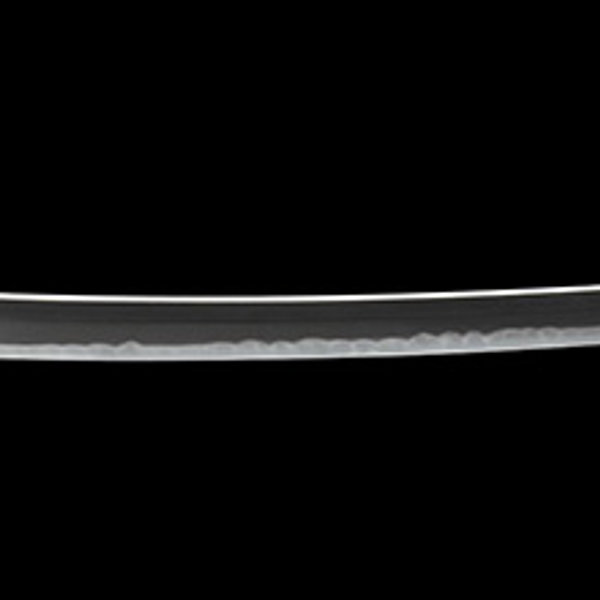
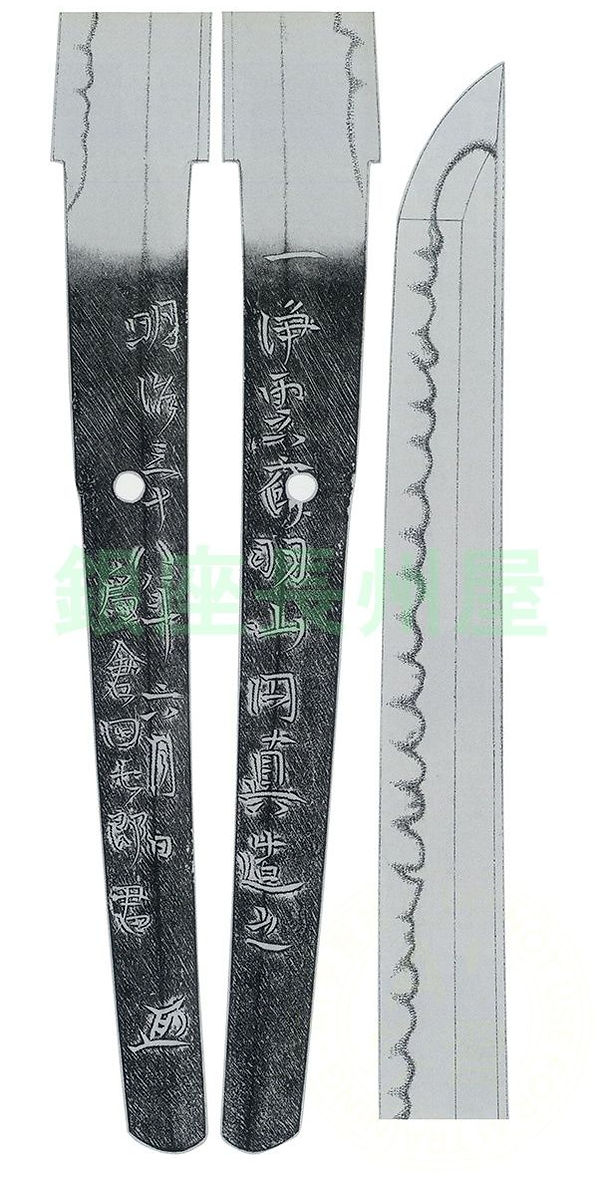
This tachi is signed by Ichijo Unsai Hayama Enshin, dated June, Meiji 38 (1905), and made for Kurata Shichiro-kun. Enshin, born in Koka 2 (1845), was a student of Suzuki Masao, a disciple of Kiyomaro, and was known for his innovative research into steel, successfully forging difficult Western steel and reproducing the nashiji-hada of the Awataguchi school. He crafted swords for high-ranking military officers and prominent figures in the financial world.
 NihontoWatch
mei · Meiji (1868-1912)
Musashi · around 1868-1912
Fujishiro Chu-jo saku · Tōken Taikan top 87%
4 pieces on the market now
Meiji: survival after the edict
The Haitōrei edict of 1876 ended sword wearing and nearly ended the craft itself. Military demand and imperial patronage kept a remnant alive, and in 1906 Gassan Sadakazu and Miyamoto Kanenori were named Artists to the Imperial Household.
We could not find an authenticity certificate on the seller’s listing. Japanese swords and fittings are normally papered by the NBTHK (or the NTHK). Without one, the attribution is the seller’s own assessment and has not been independently verified — treat it with caution and ask the dealer about certification before buying.
If, due to our fault, the item differs significantly from its proper condition, the item may be returned. Cooling-off is within one week of the item's arrival.
This tachi is signed by Ichijo Unsai Hayama Enshin, dated June, Meiji 38 (1905), and made for Kurata Shichiro-kun. Enshin, born in Koka 2 (1845), was a student of Suzuki Masao, a disciple of Kiyomaro, and was known for his innovative research into steel, successfully forging difficult Western steel and reproducing the nashiji-hada of the Awataguchi school. He crafted swords for high-ranking military officers and prominent figures in the financial world.
NihontoWatchmei · Meiji (1868-1912)
Musashi · around 1868-1912
Fujishiro Chu-jo saku · Tōken Taikan top 87%
4 pieces on the market now
Meiji: survival after the edict
The Haitōrei edict of 1876 ended sword wearing and nearly ended the craft itself. Military demand and imperial patronage kept a remnant alive, and in 1906 Gassan Sadakazu and Miyamoto Kanenori were named Artists to the Imperial Household.
We could not find an authenticity certificate on the seller’s listing. Japanese swords and fittings are normally papered by the NBTHK (or the NTHK). Without one, the attribution is the seller’s own assessment and has not been independently verified — treat it with caution and ask the dealer about certification before buying.
If, due to our fault, the item differs significantly from its proper condition, the item may be returned. Cooling-off is within one week of the item's arrival.


