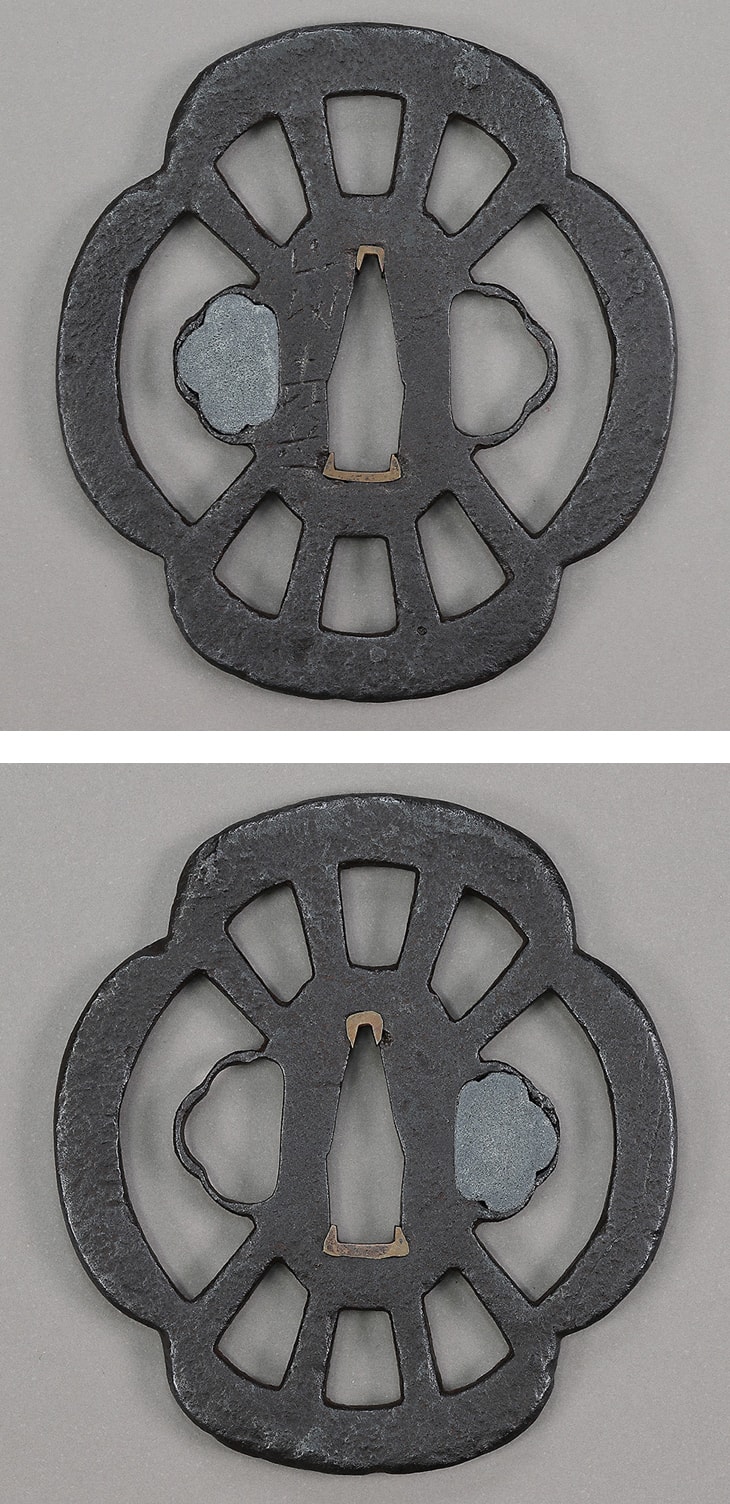
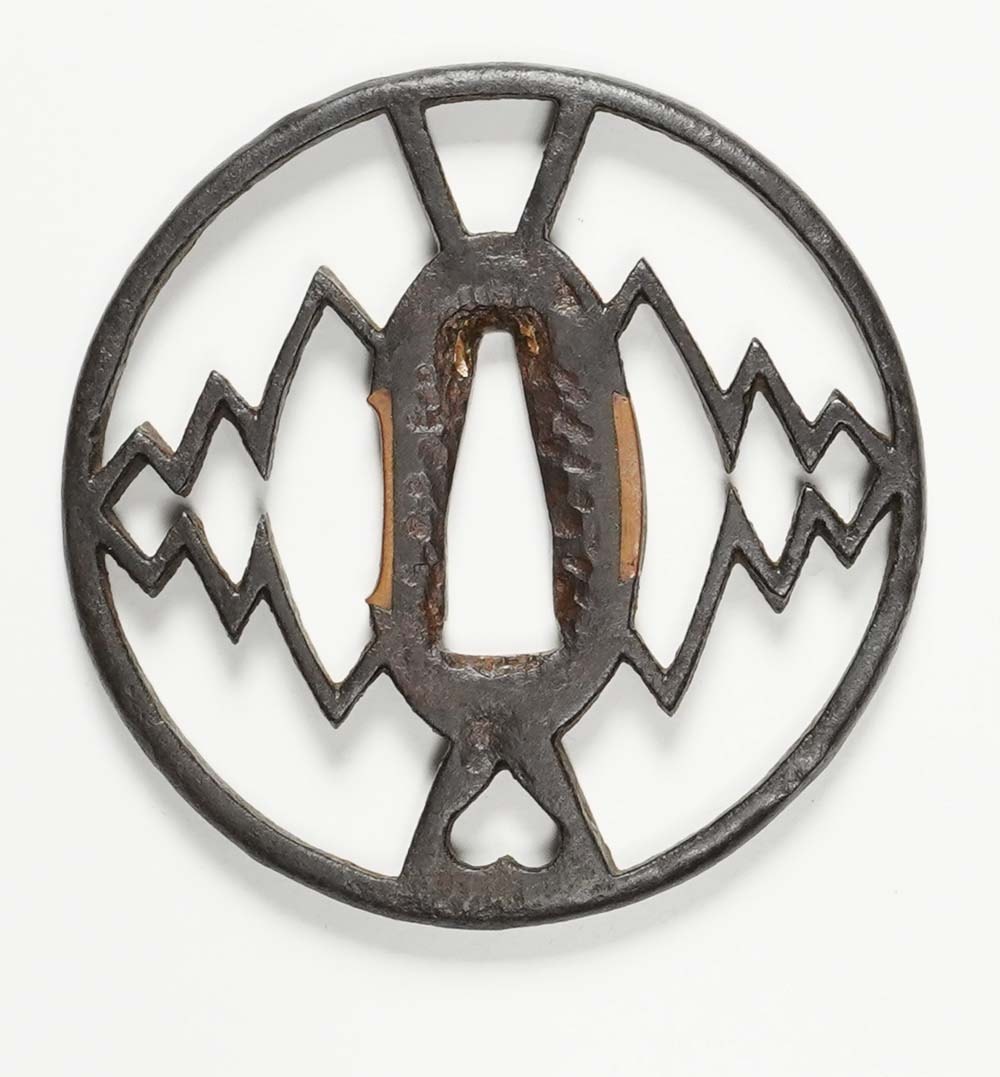
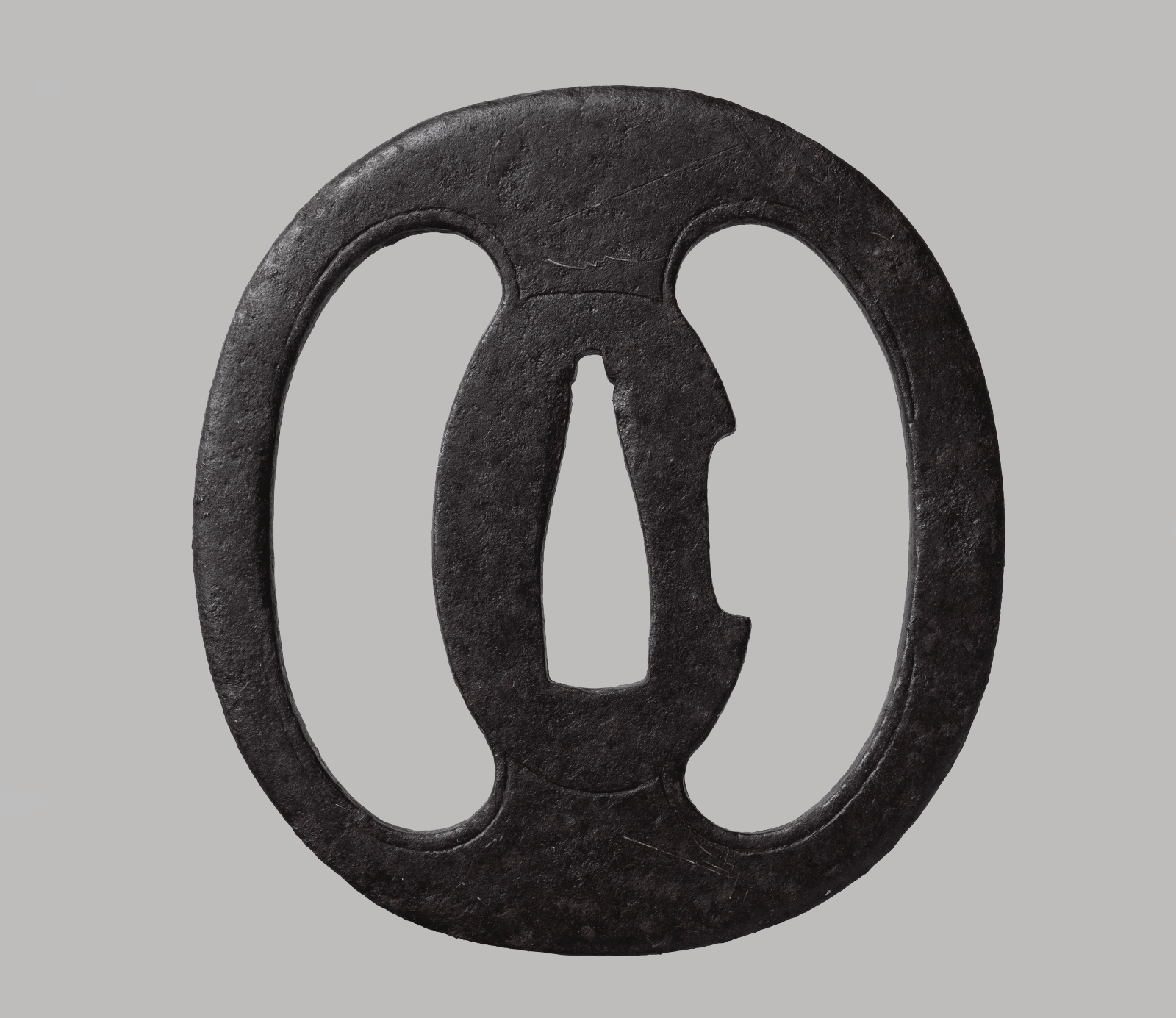
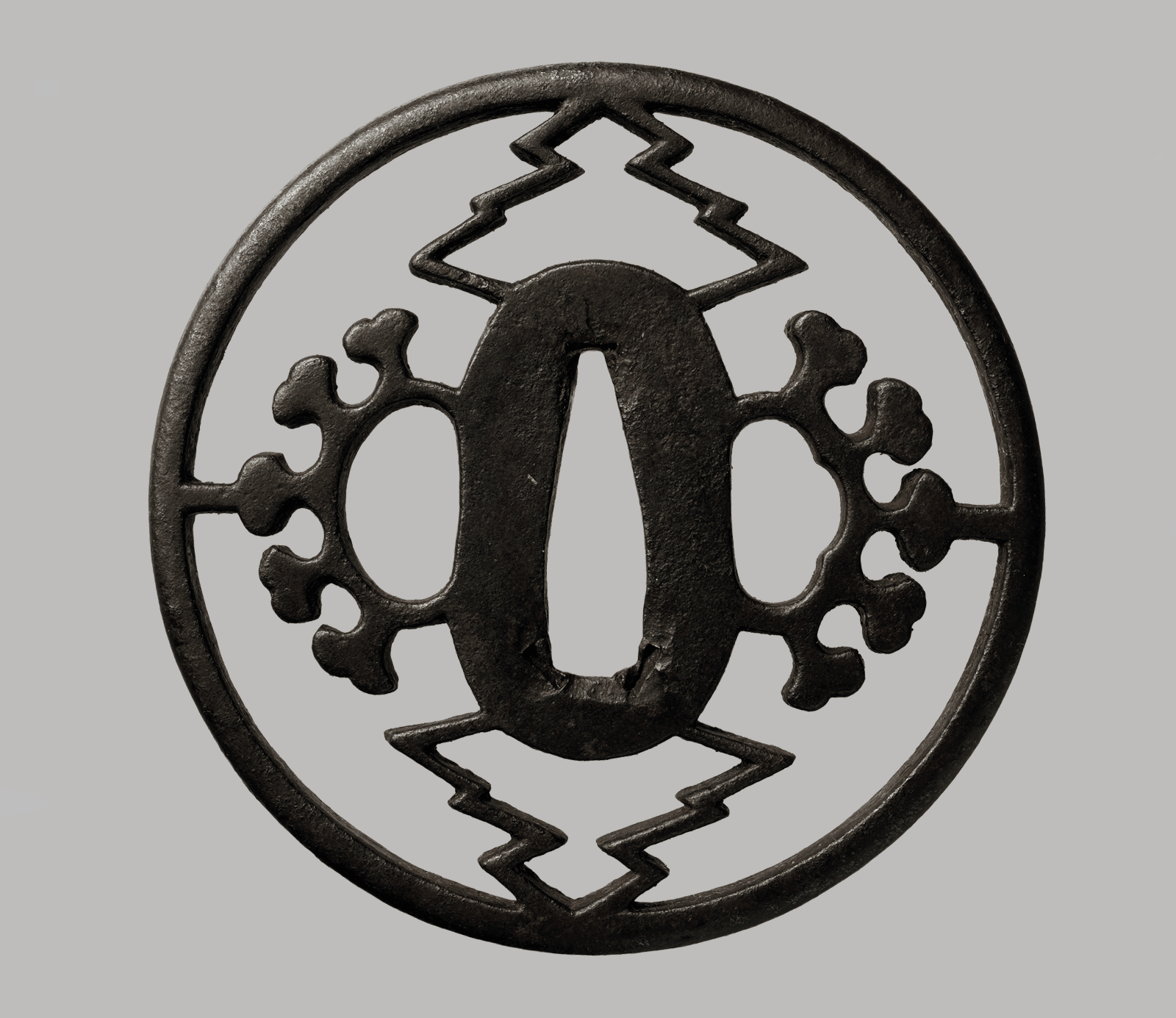
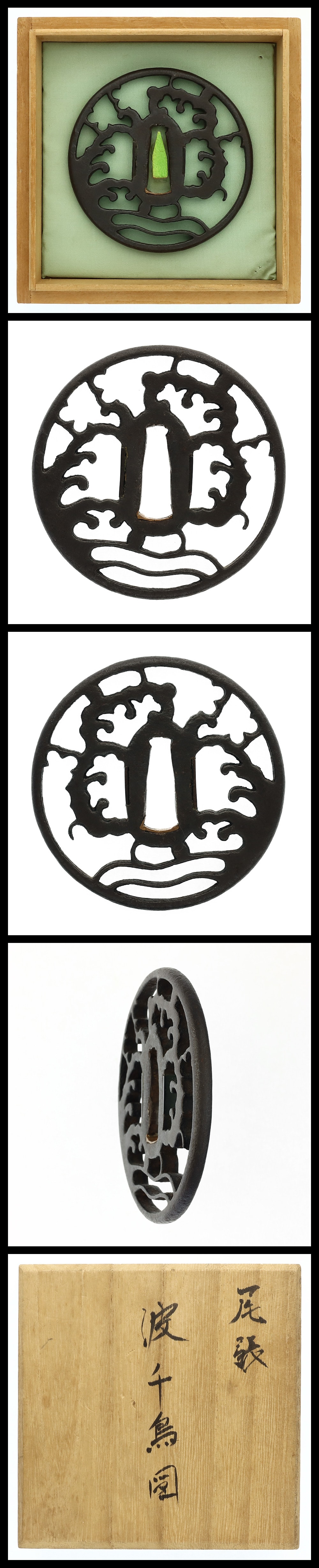
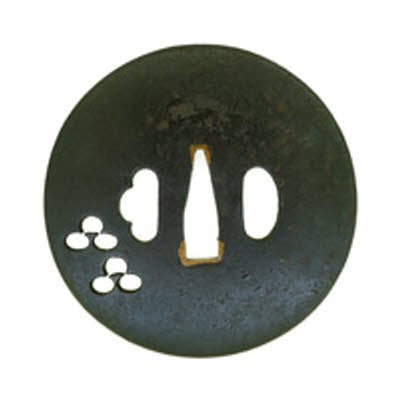
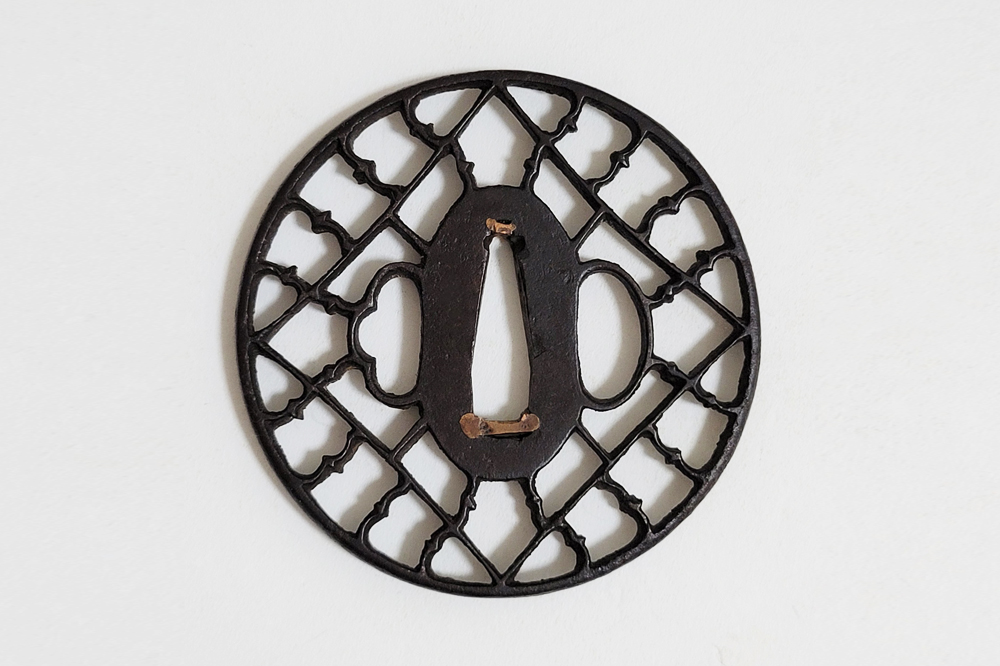
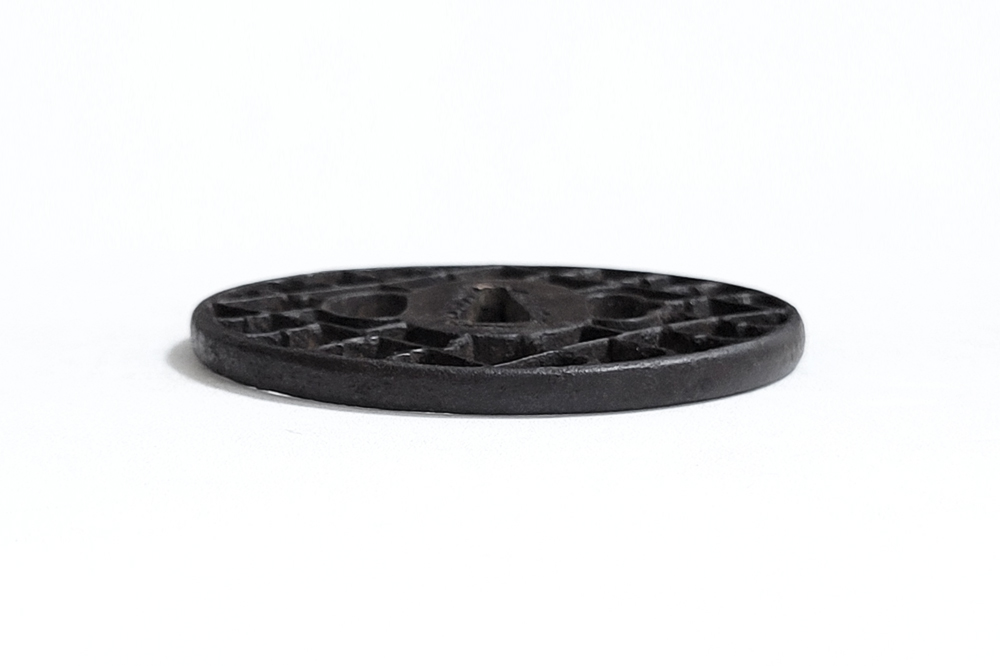
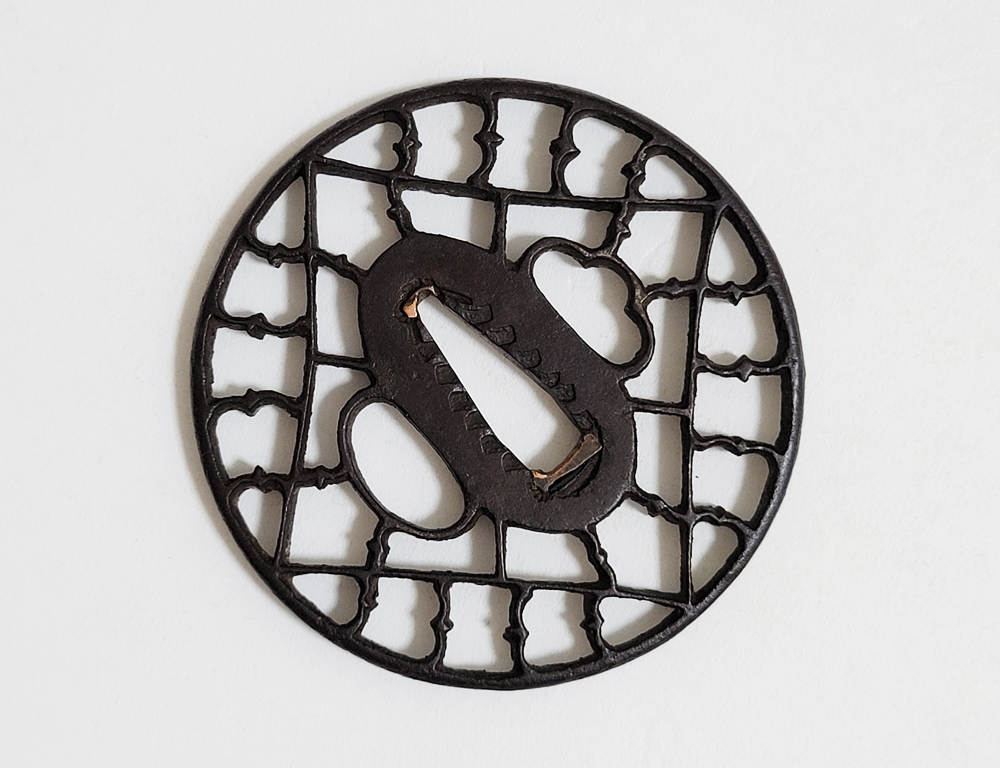
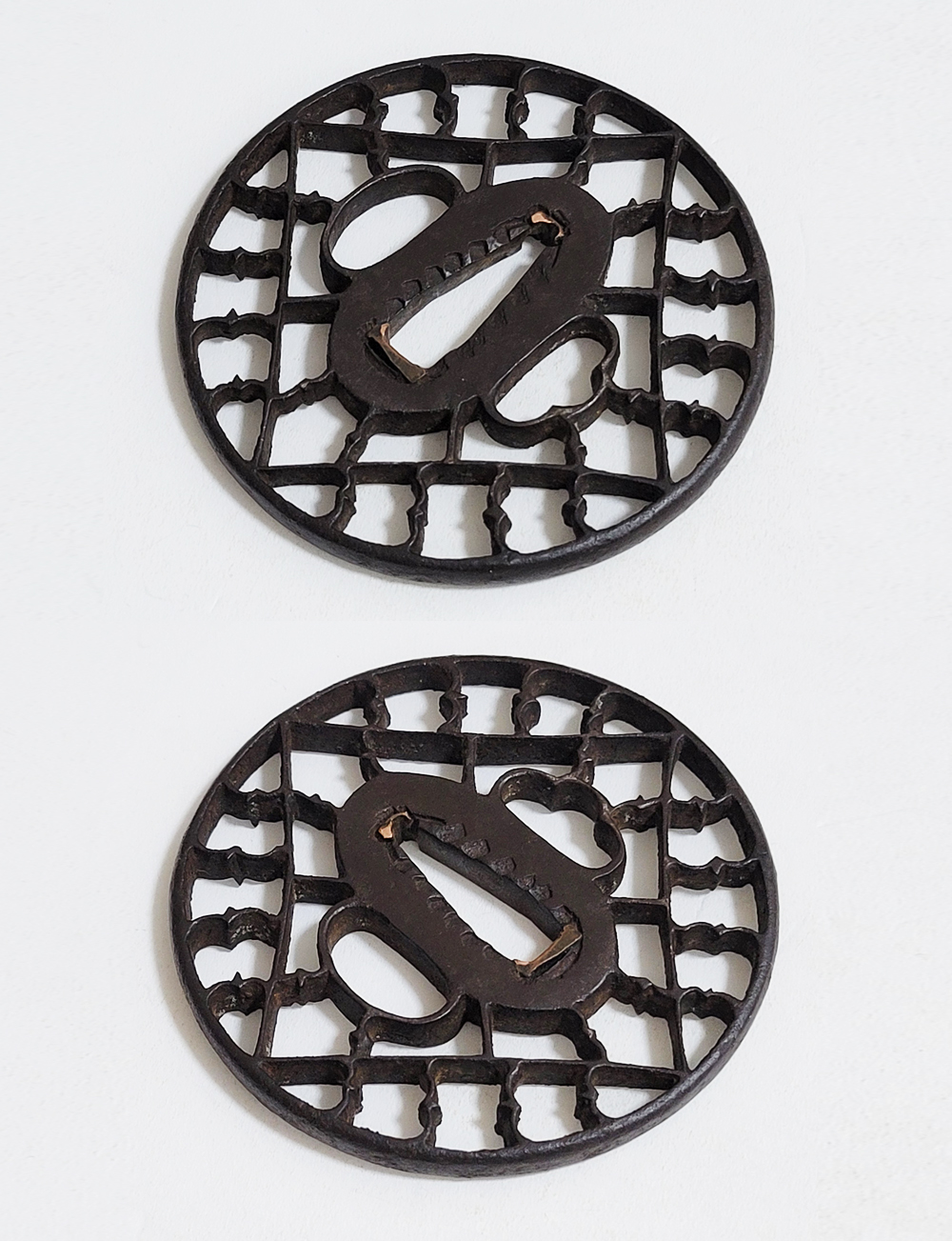
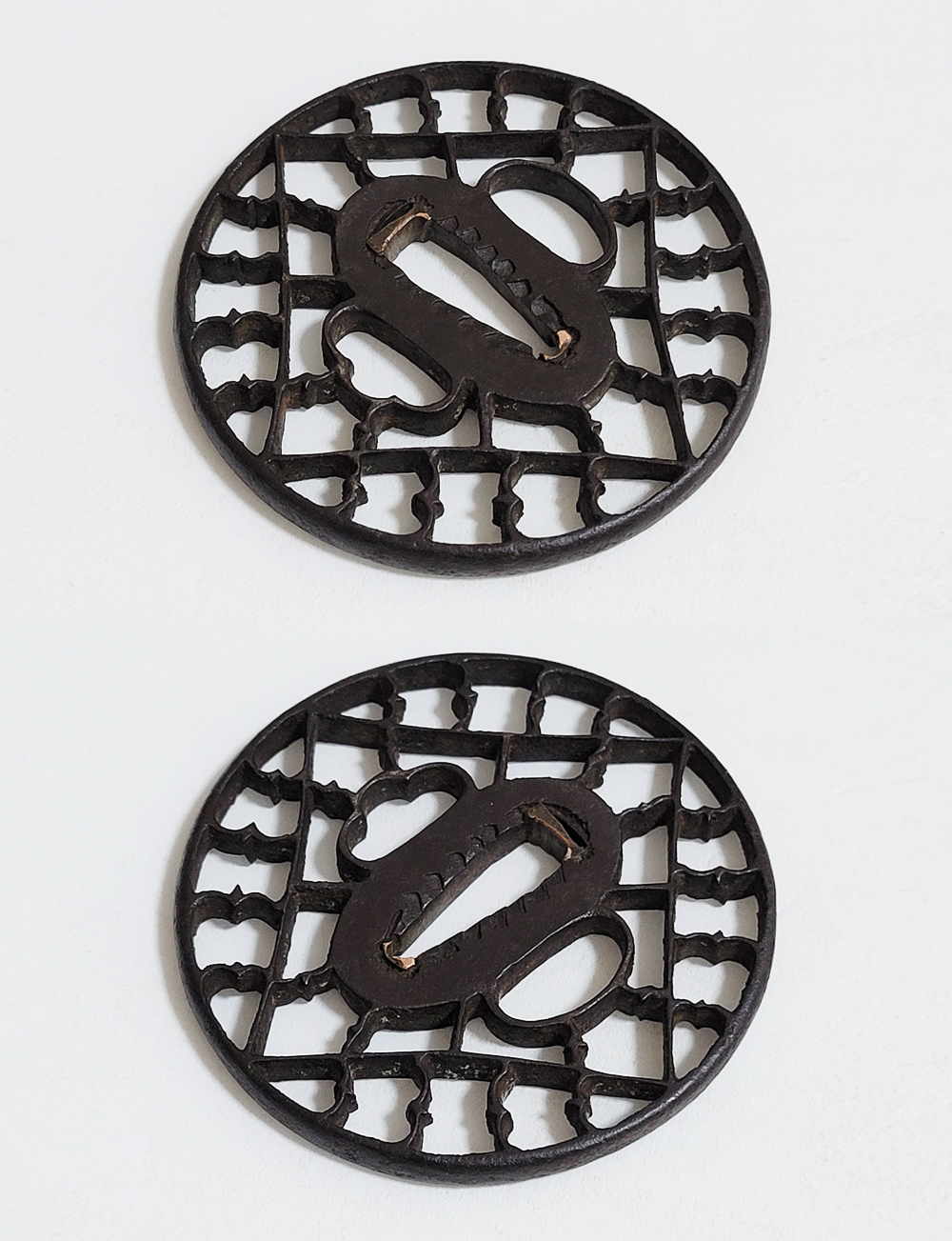
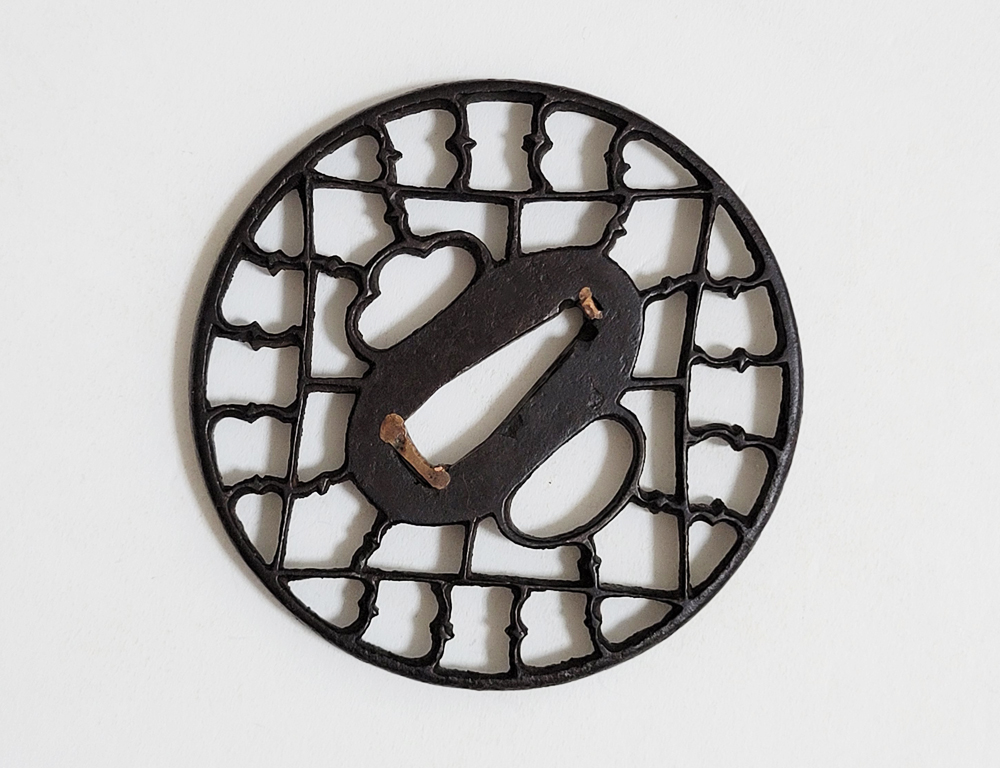
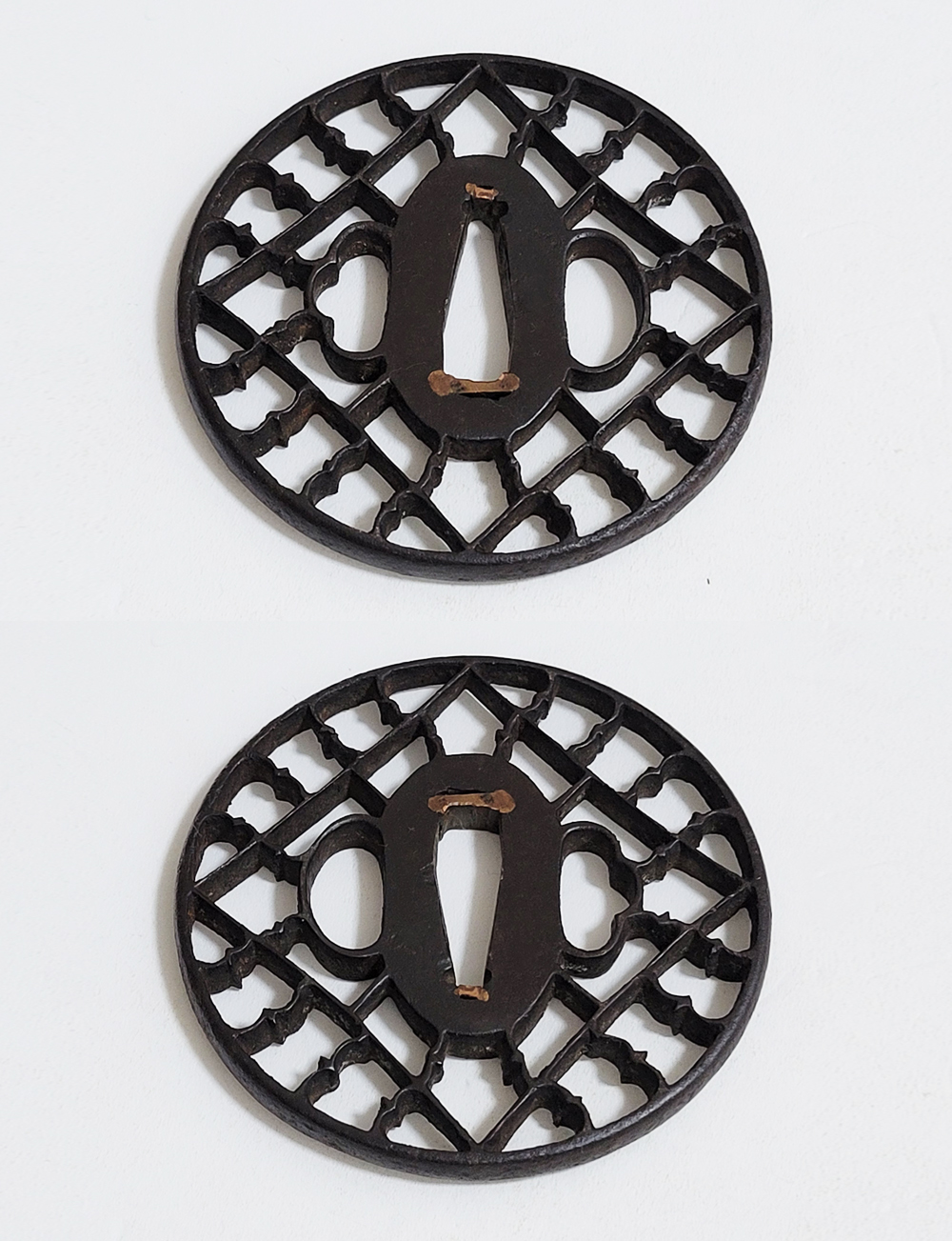
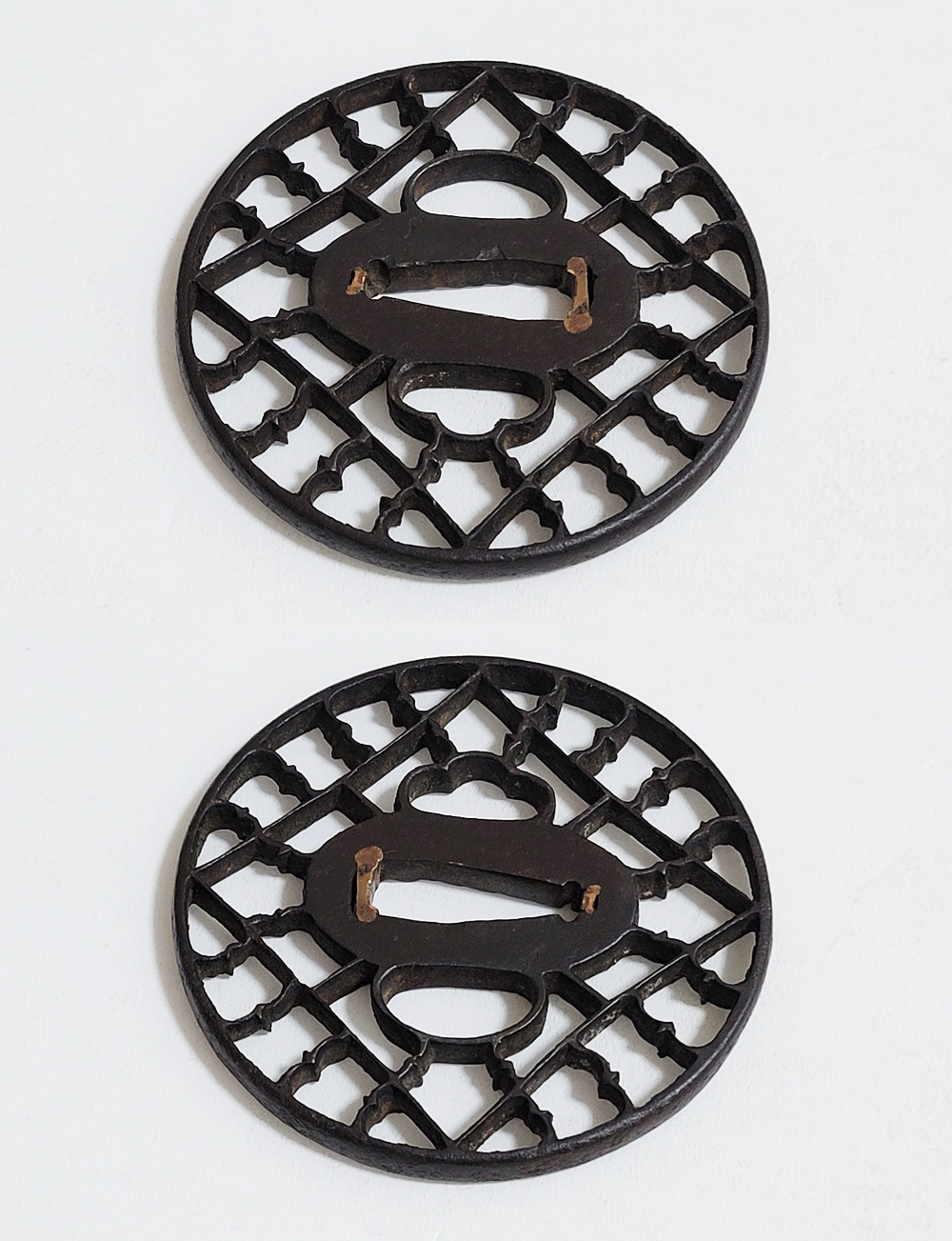
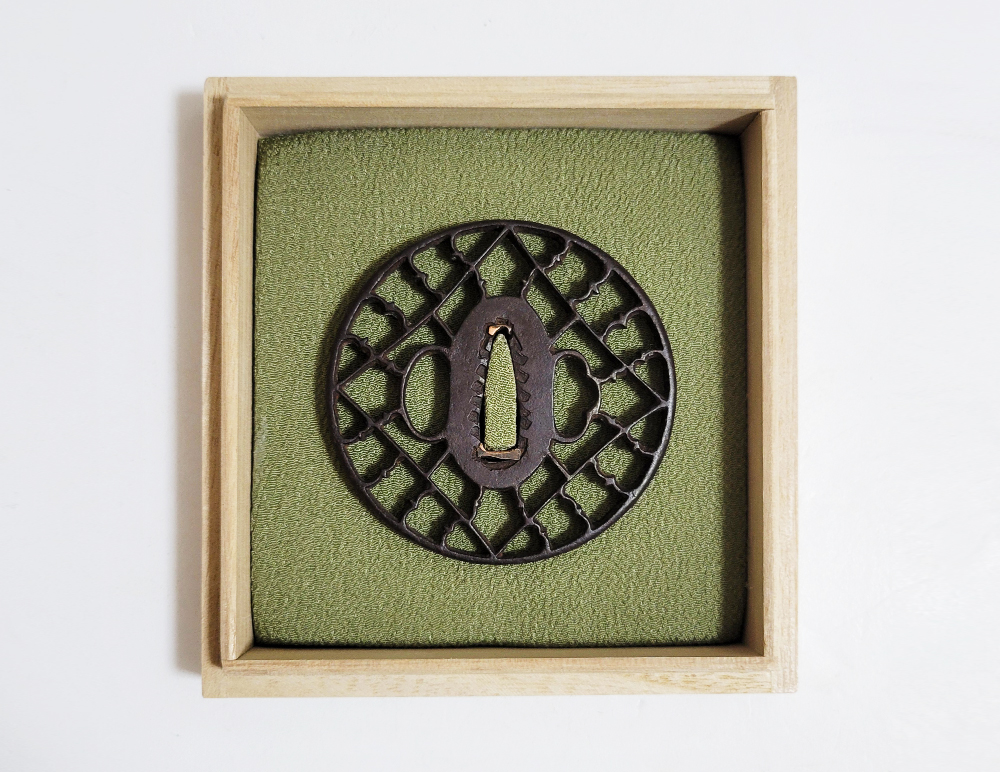
This is a small, round iron tsuba featuring a design of connected菱 (hishi, diamond shapes) and雁 (kari, wild geese) in ji-sukashi (openwork). The composition is geometric and orderly, yet conveys a sense of change and movement. Made of well-forged, dark iron, the mimi (rim) shows tetsu-bone (iron bones), indicating a powerful ji-sukashi and balanced construction. It is believed to be a work from the early Edo period, exhibiting the simple and elegant taste characteristic of Owari sukashi tsuba.
 NihontoWatch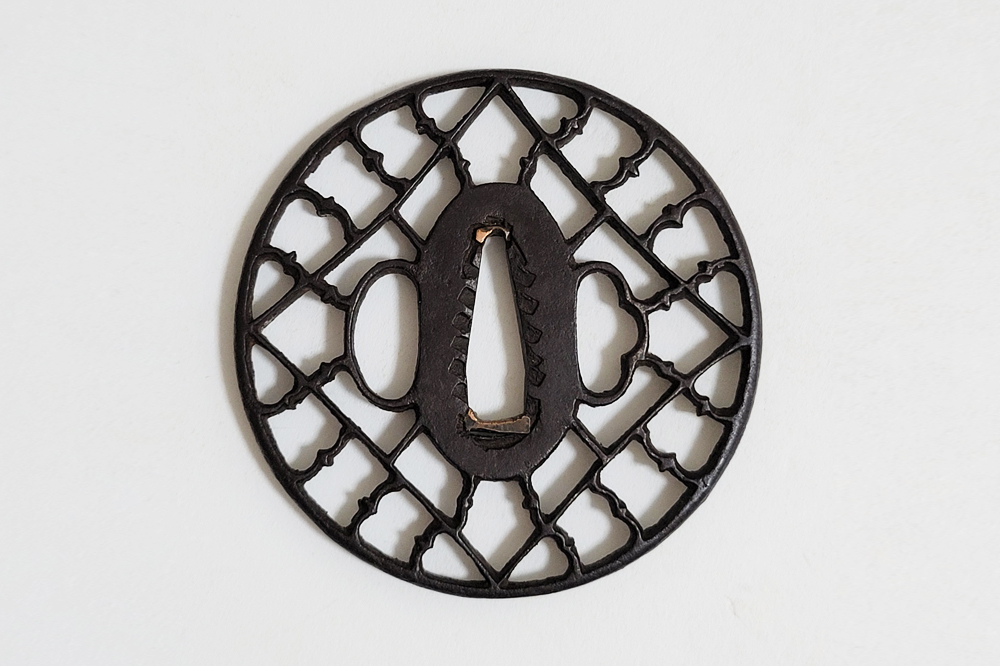
We could not find an authenticity certificate on the seller’s listing. Japanese swords and fittings are normally papered by the NBTHK (or the NTHK). Without one, the attribution is the seller’s own assessment and has not been independently verified — treat it with caution and ask the dealer about certification before buying.
Domestic: items may be returned within 7 days in original condition for a full refund (buyer covers transport). Overseas orders: no-refunds, no-returns.
¥40,000
This is a small, round iron tsuba featuring a design of connected菱 (hishi, diamond shapes) and雁 (kari, wild geese) in ji-sukashi (openwork). The composition is geometric and orderly, yet conveys a sense of change and movement. Made of well-forged, dark iron, the mimi (rim) shows tetsu-bone (iron bones), indicating a powerful ji-sukashi and balanced construction. It is believed to be a work from the early Edo period, exhibiting the simple and elegant taste characteristic of Owari sukashi tsuba.
NihontoWatchWe could not find an authenticity certificate on the seller’s listing. Japanese swords and fittings are normally papered by the NBTHK (or the NTHK). Without one, the attribution is the seller’s own assessment and has not been independently verified — treat it with caution and ask the dealer about certification before buying.
Domestic: items may be returned within 7 days in original condition for a full refund (buyer covers transport). Overseas orders: no-refunds, no-returns.
¥40,000