 NihontoWatchNihontoWatch
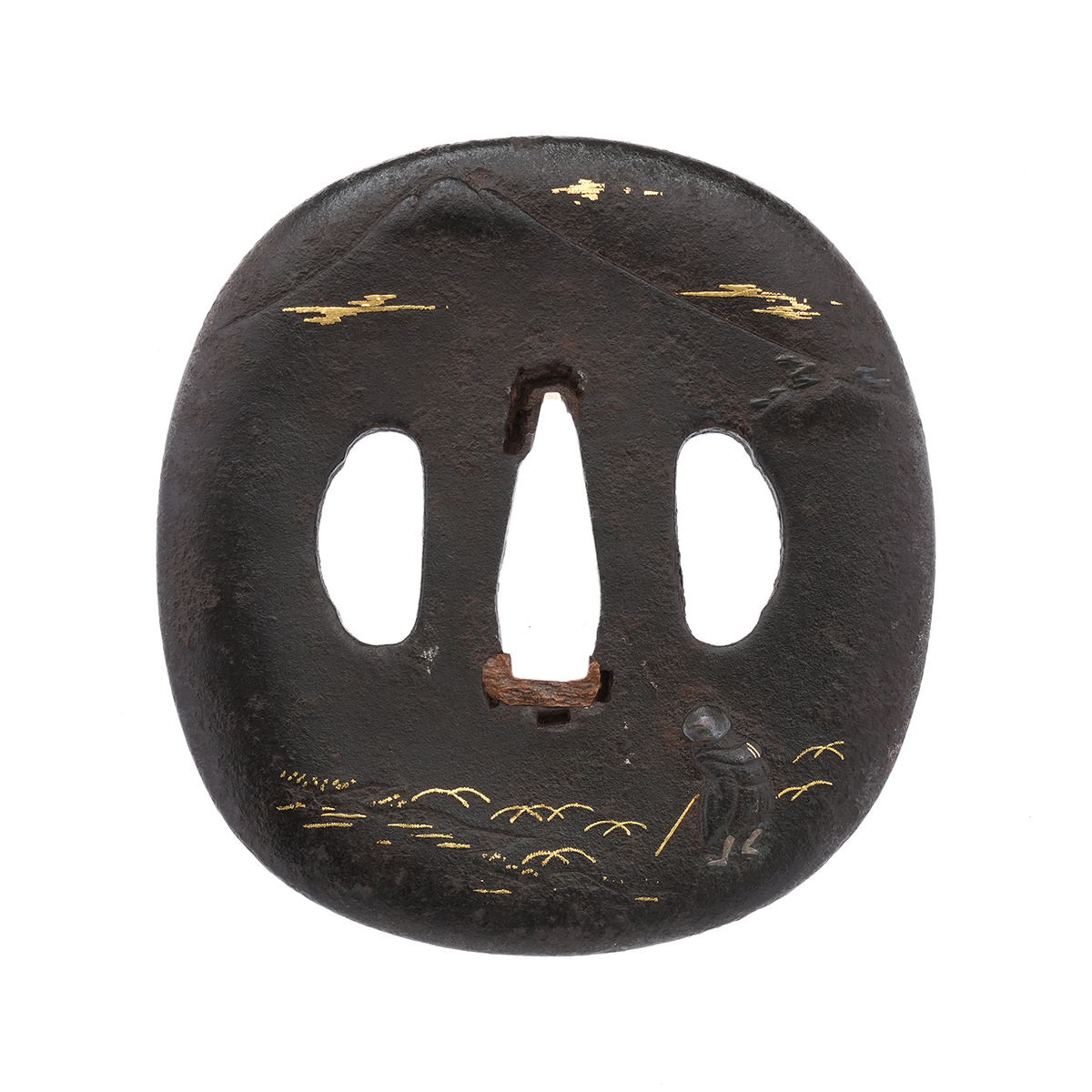
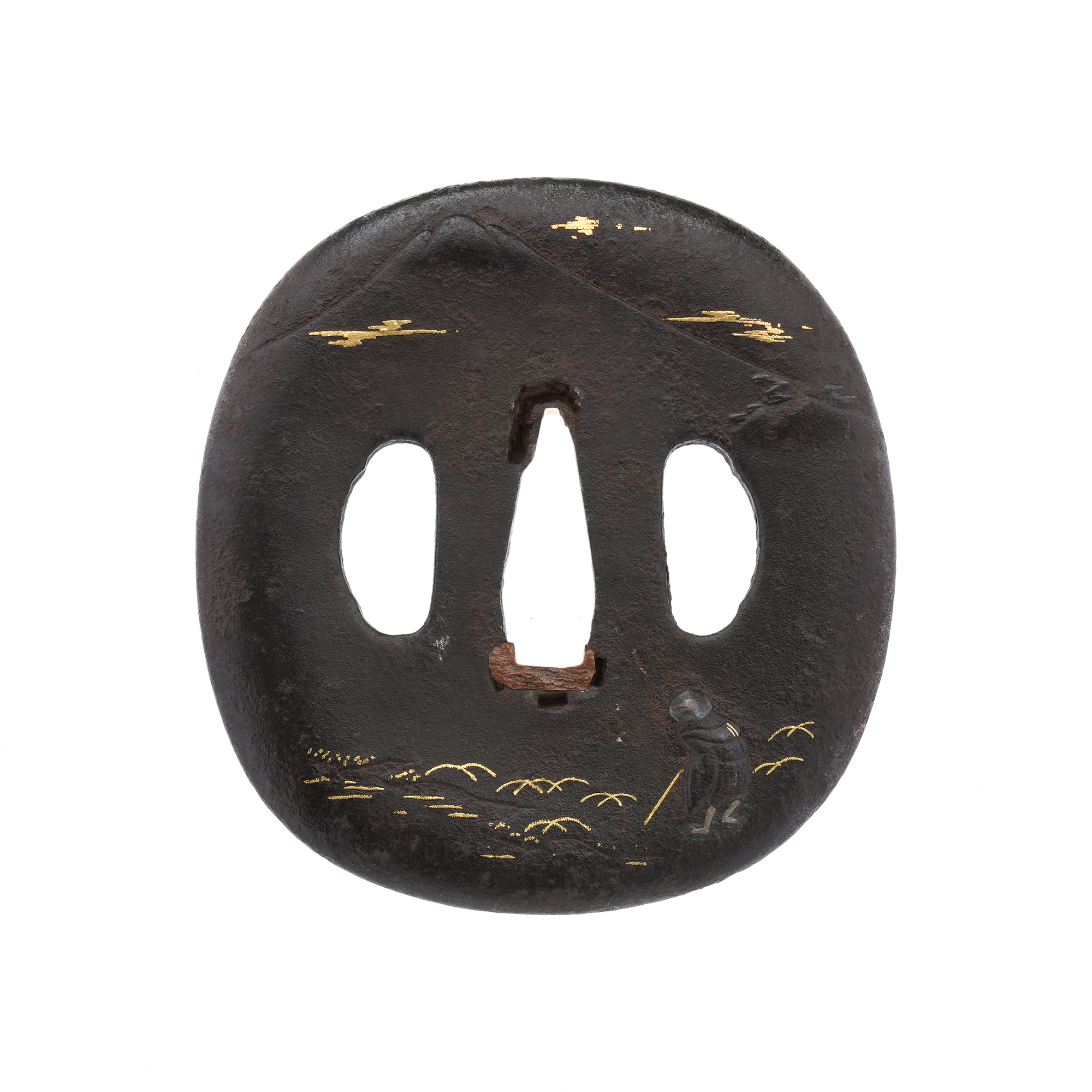
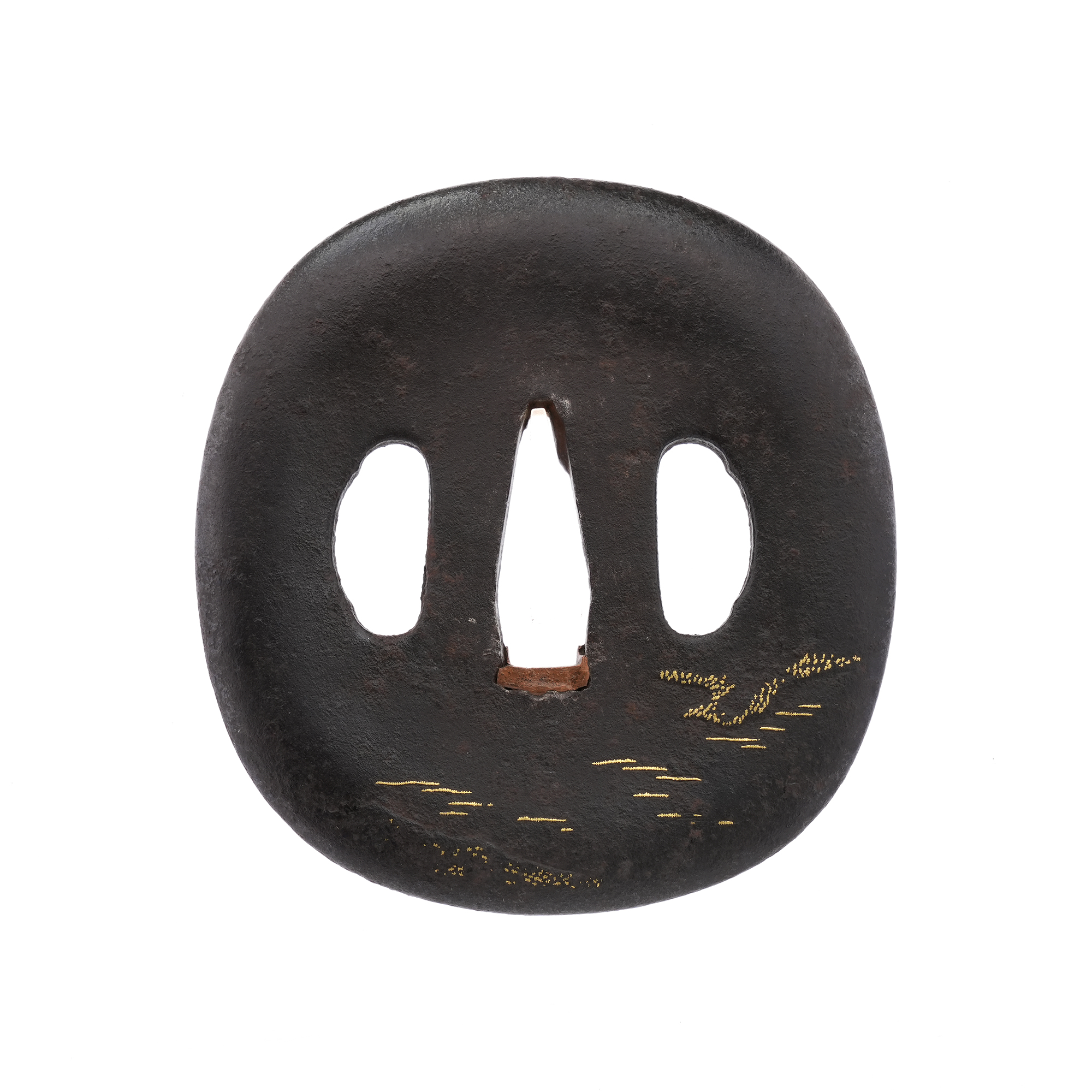
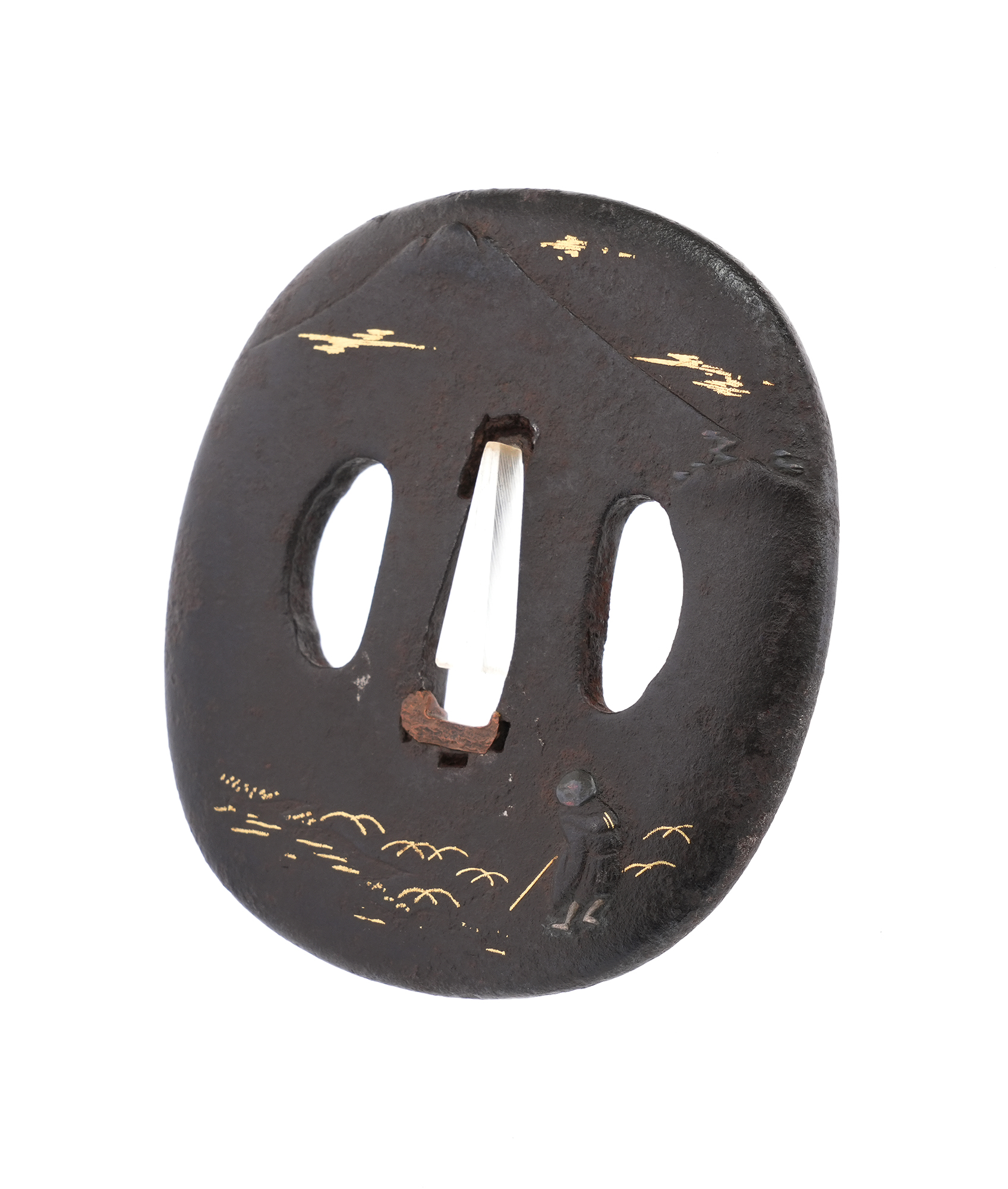
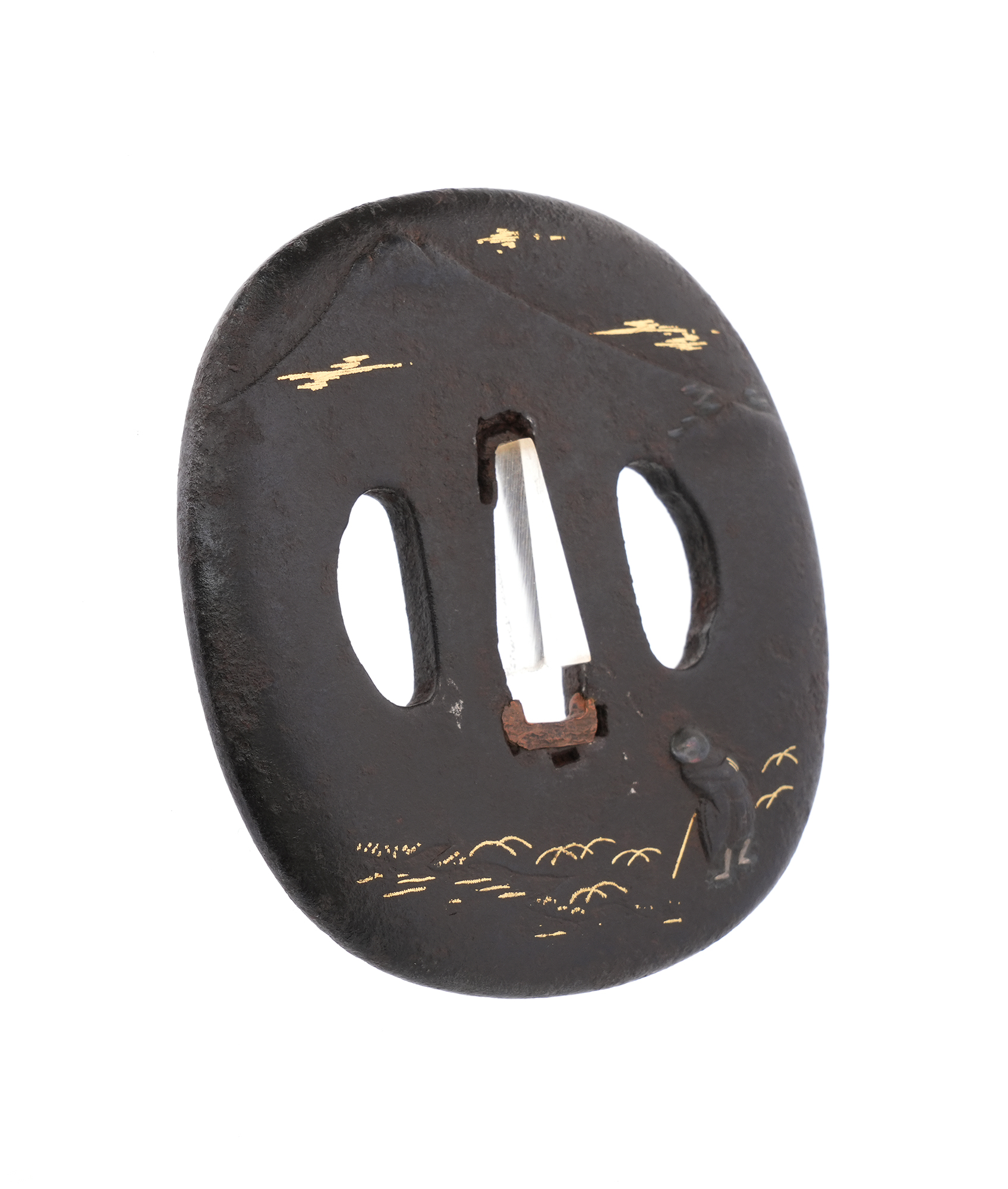
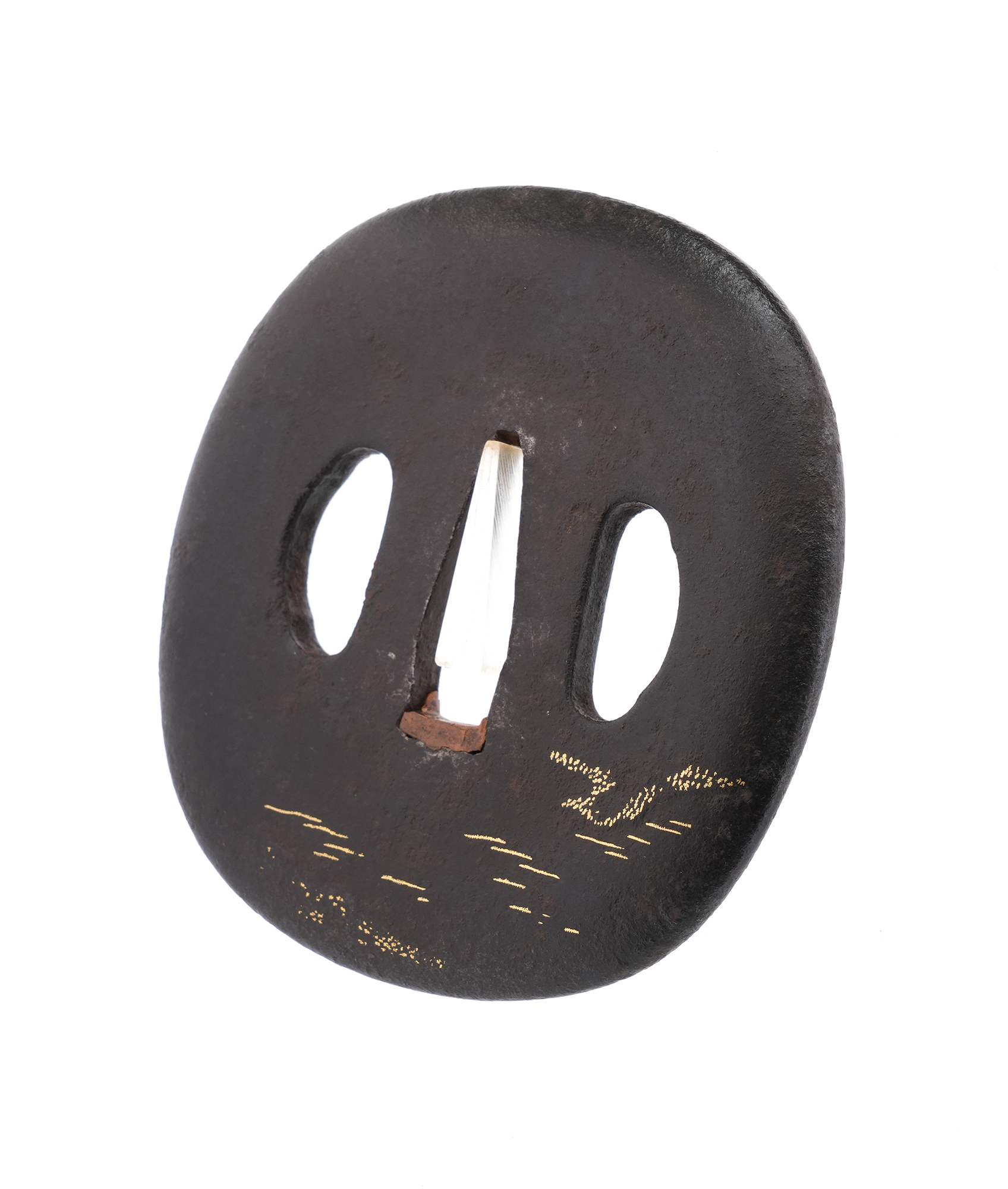
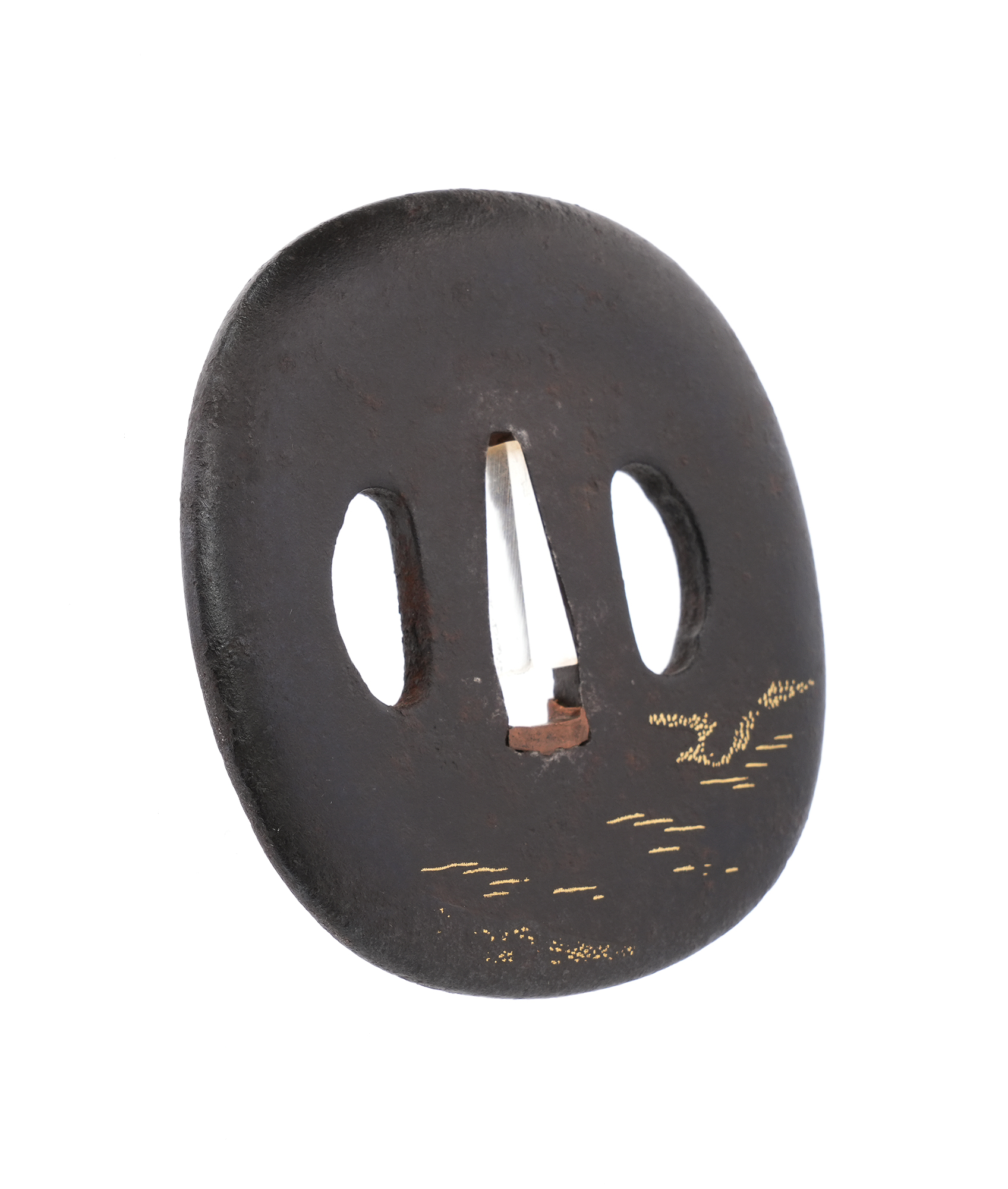
Aizu Shoami is a school of tosogu kinkou of the Shoami lineage that was active in the Aizu region during the Edo period. In Aizu, the Shoami school flourished and left behind a variety of tsuba, primarily in tetsu-ji, utilizing sukashi, chokoku, and zogan. While the Shoami spread their lineages to various regions, they showed a unique development in Aizu as well, becoming a representative school of tosogu kinkou in that area during the Edo period. The Fujimi Saigyo-zu is a motif that has been popular since ancient times, depicting the monk-poet Saigyo Hoshi, known as a traveling priest, gazing up at Mount Fuji during his journey; typically, the composition places a small Saigyo accompanied by a kasa, cane, and travel bundle, with a large Fuji positioned at the end of his gaze, highlighting the contrast between the traveler and the sacred peak. In particular, there are many examples depicting Saigyo from behind or from a diagonal rear angle, creating a sensation as if the viewer themselves is looking at Fuji in the same direction as Saigyo; the great charm of this motif lies in how it is not merely a picture of a famous place, but evokes the quiet time of facing nature during a journey, a sense of mujokan, solitude, and contemplation on life. The combination of Saigyo and Fuji is also linked to the waka poems Saigyo composed while viewing Fuji during his travels to the eastern provinces and Mutsu, overlaying his own emotions onto its smoke and form, and was repeatedly taken up in later generations in various fields such as paintings, crafts, tea utensils, and tosogu. In tosogu as well, by placing a large Fuji and a small traveling monk within the limited surface of a tsuba, the grand nature and the smallness of man, travel sentiment and silence, and the spirit of integrity and wandering symbolized by the figure of Saigyo can be expressed in a condensed manner, allowing it to be appreciated as a high-toned motif combining literary and pictorial qualities. This piece treats the nade-kaku-gata tetsu-ji as a single canvas, placing the grand Fuji in the enkei, adding misty clouds with kin-zogan, and positioning Saigyo in traveling attire with a kasa and cane at the foothills. By raising the mountain form quietly with low relief and adding gold nunome-zogan to the fine lines of the mist and waterside, a light like an evening glow shines upon the blackish-brown ground, and the composition with large yohaku, pushing the figure to a corner, richly conveys the solitude and poetry of travel. The charm of this piece lies in the atmosphere where Fuji and Saigyo slowly emerge from within the sunken iron color without pushing flashiness to the front, and depending on the angle of light, the gold lines shine as if shifting from the enkei to the chikakage. There is no strain in the composition, which utilizes both hitsu-ana as quiet intervals in the scenery, and as a single plate possessing both the pictorial quality characteristic of Aizu Shoami and a wabi travel sentiment, it leaves a long-lasting afterglow whether as a tokokazari or as an item for appreciation in hand.
Offered by Toushin

Machine translation of the shop's Japanese ·
Machine translation from the shop's Japanese · may contain errors ·
We could not find an authenticity certificate on the seller’s listing. Japanese swords and fittings are normally papered by the NBTHK (or the NTHK). Without one, the attribution is the seller’s own assessment and has not been independently verified — treat it with caution and ask the dealer about certification before buying.
As a rule we do not accept returns, except when we have sent a different item from the one ordered or when there is a significant discrepancy between the description and the item. If you wish to return an item, please contact us within 3 days of its arrival and then send it back.
¥60,500