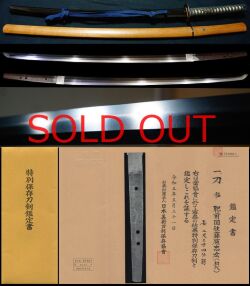
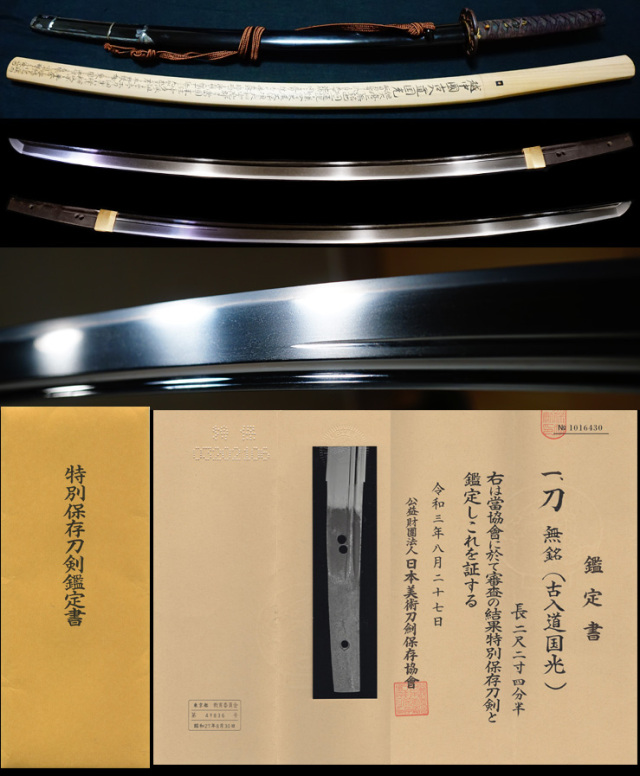
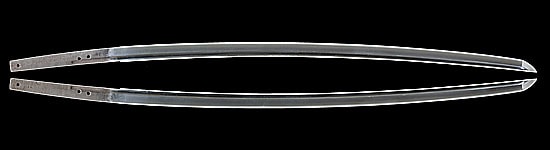
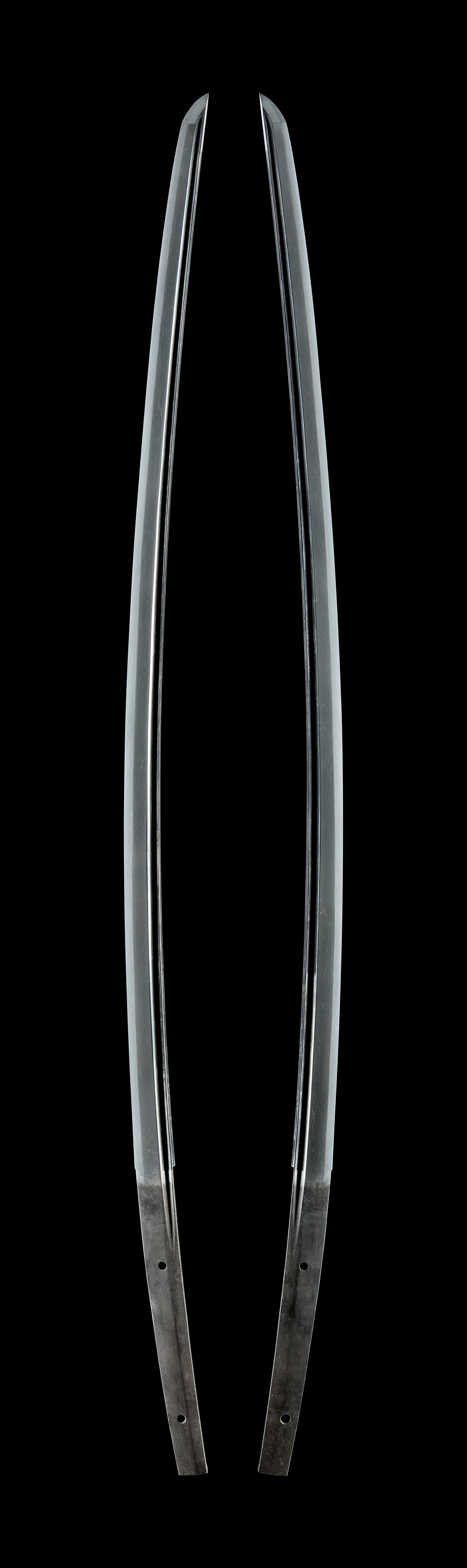
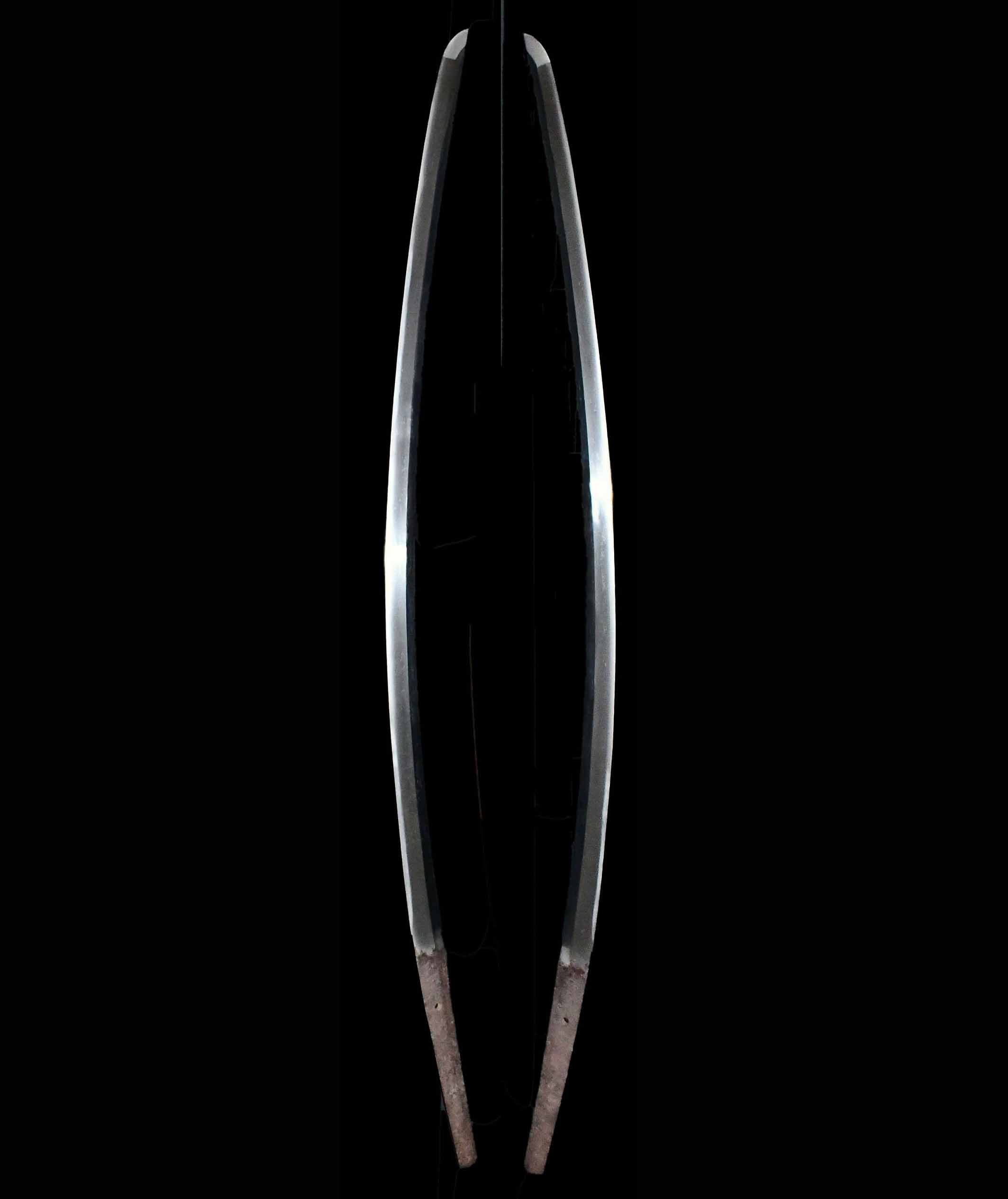
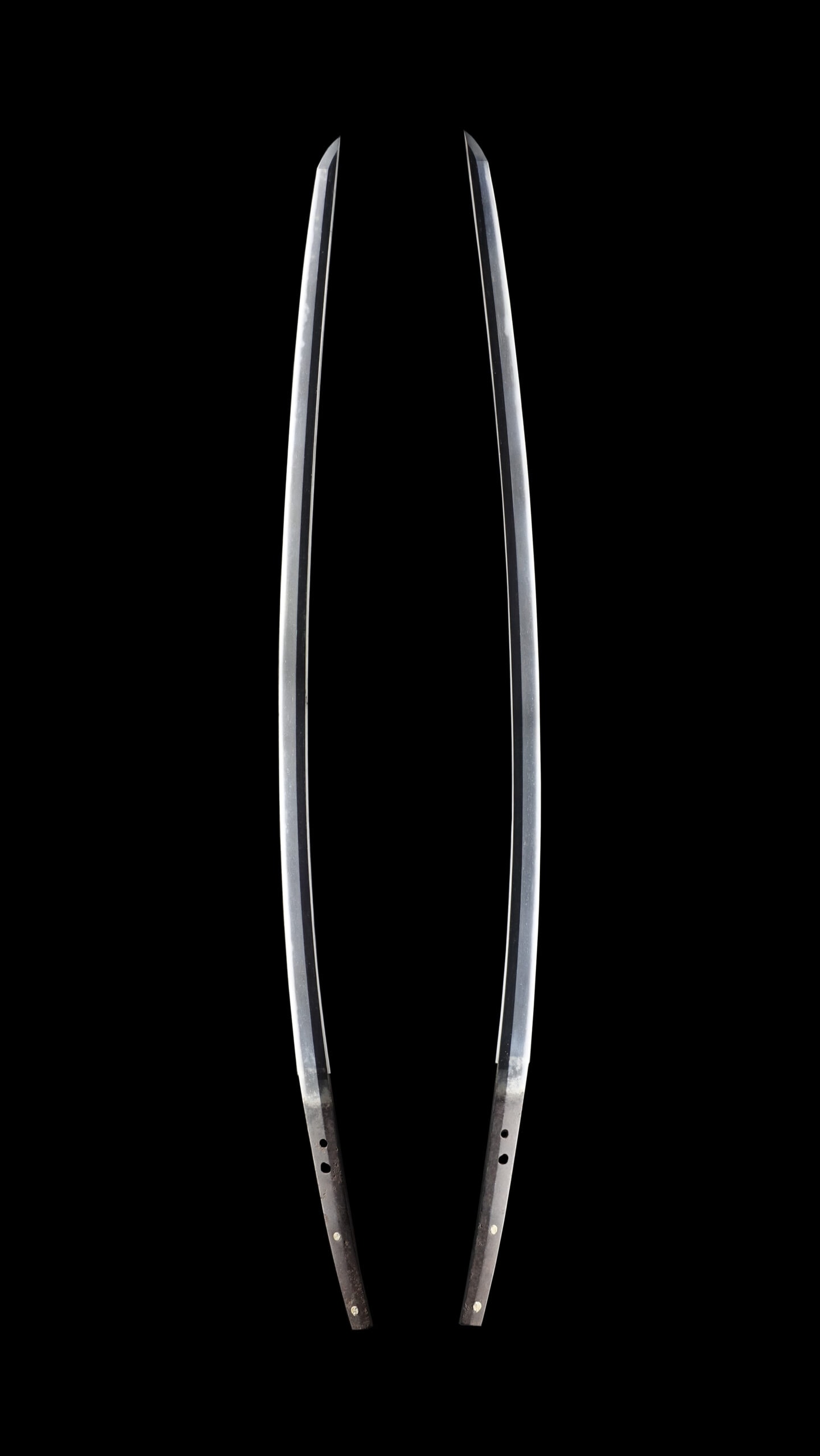
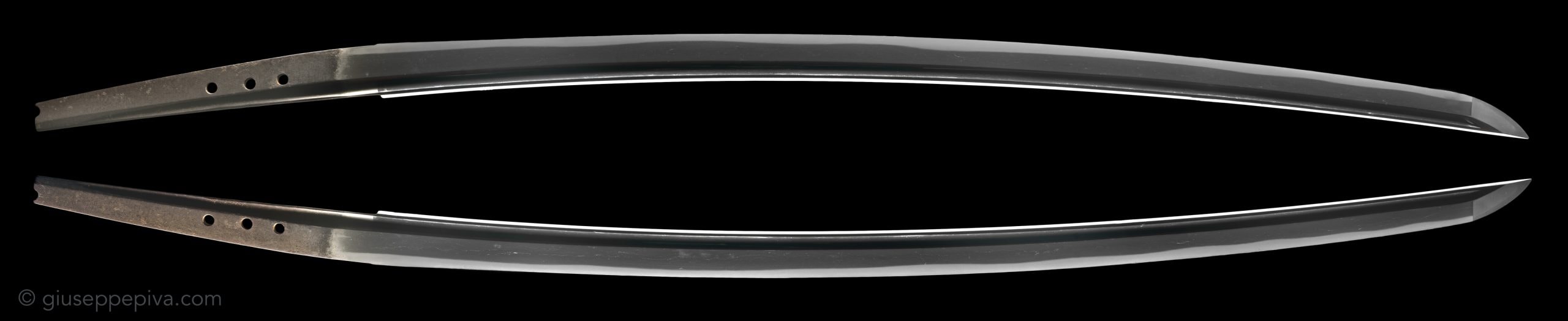
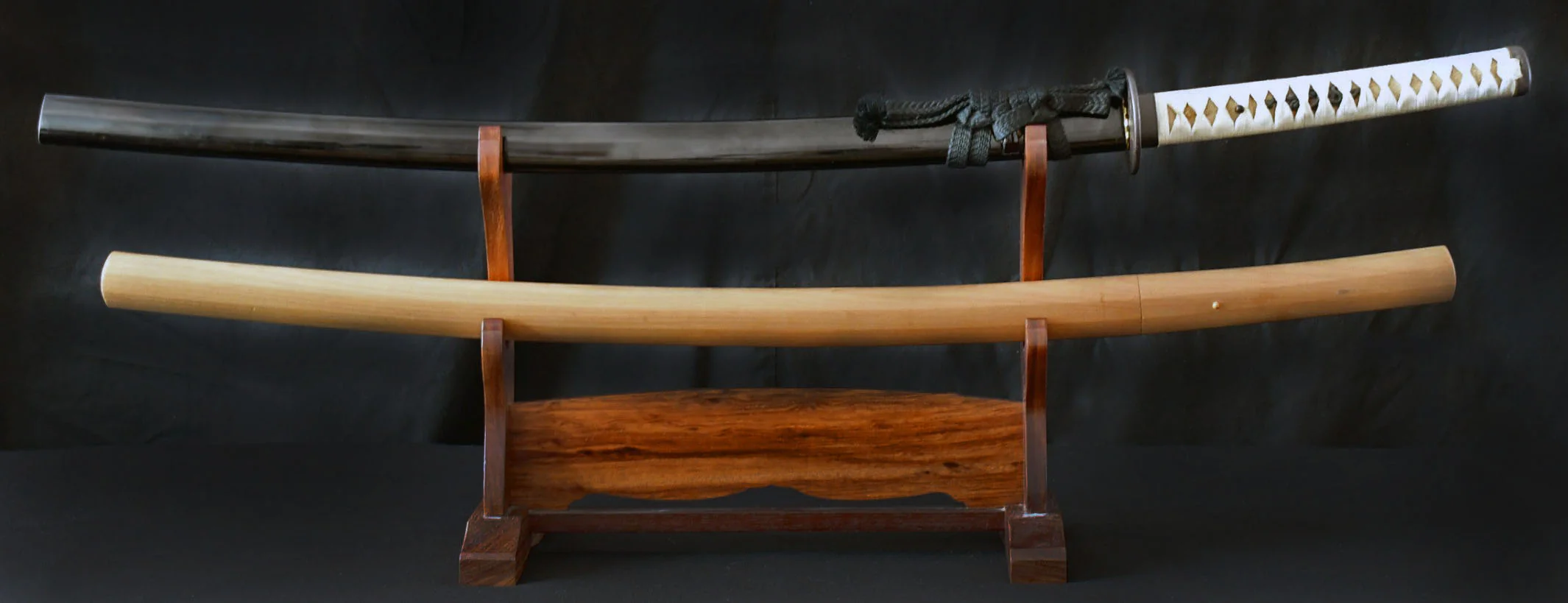
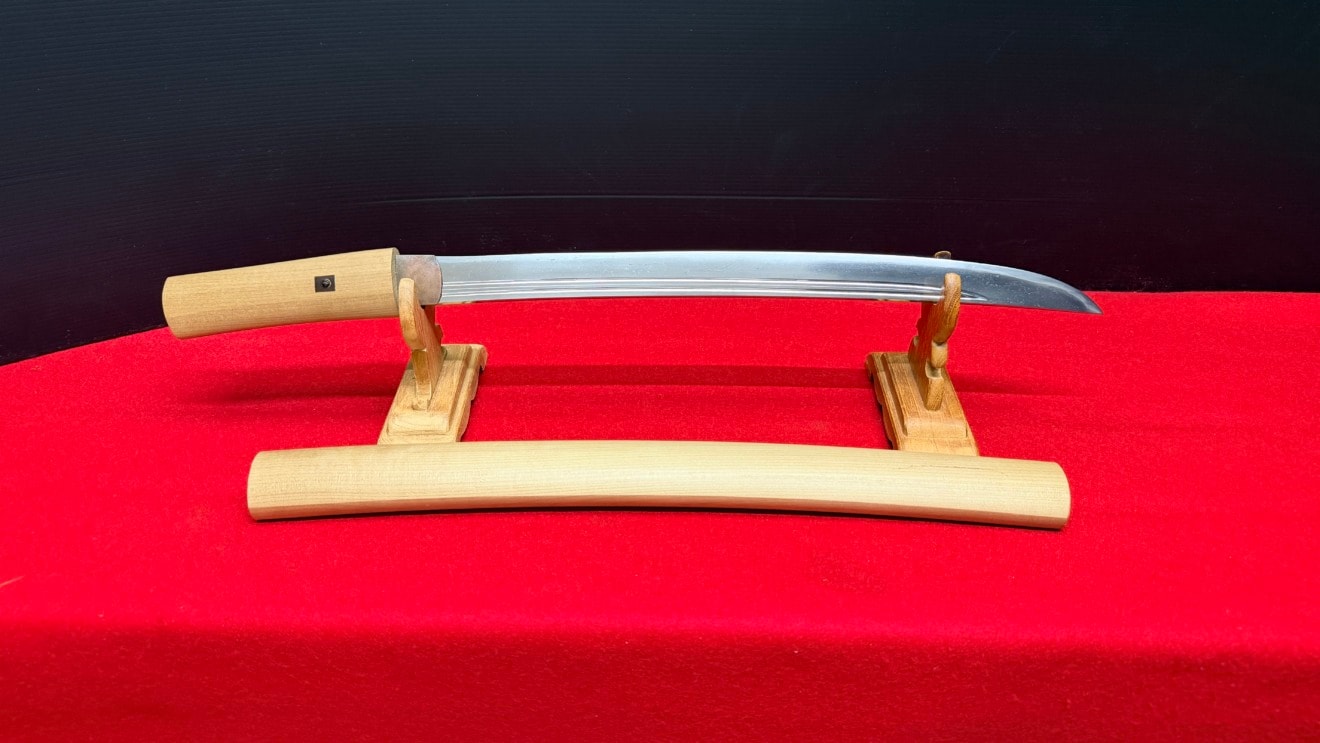
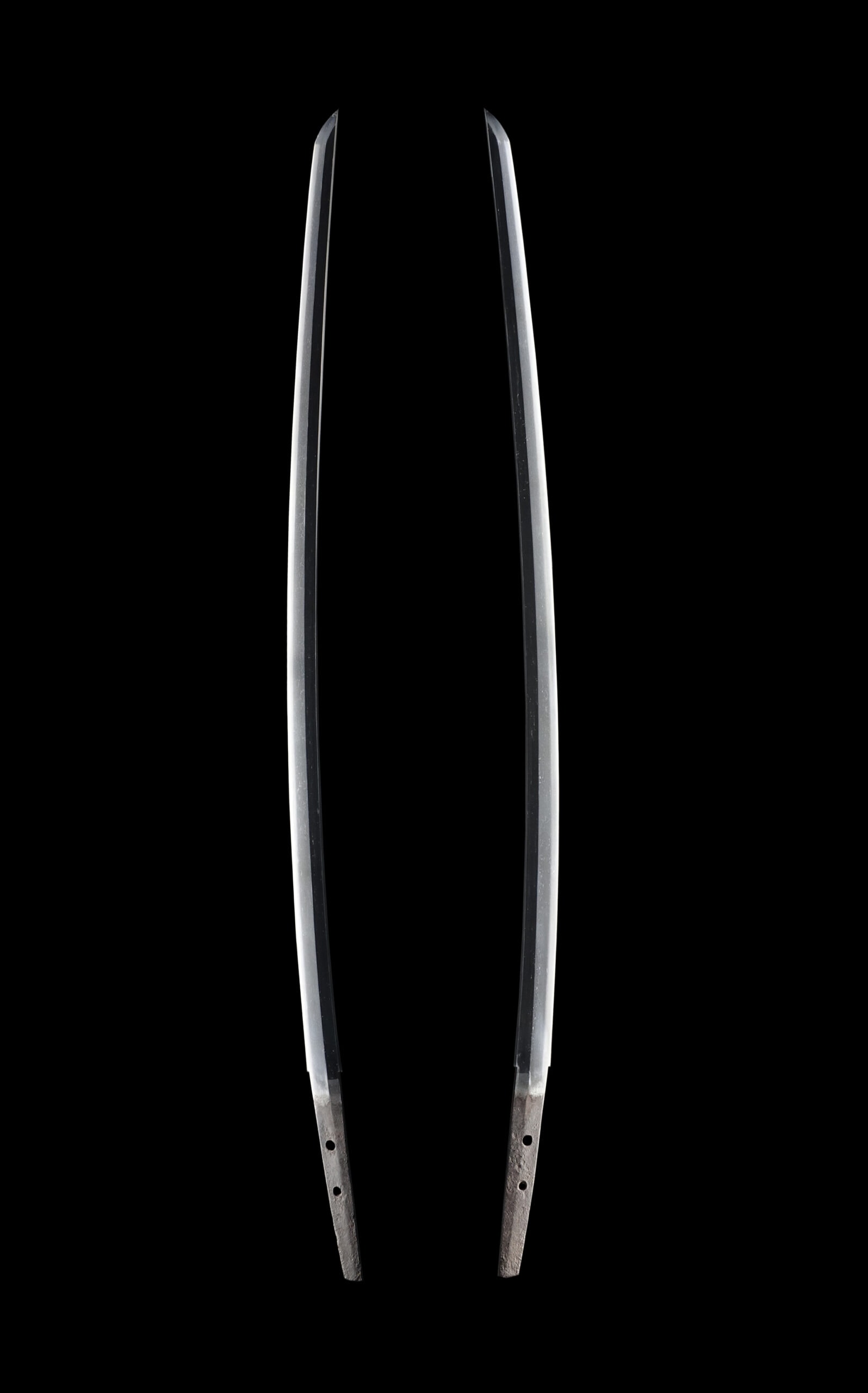
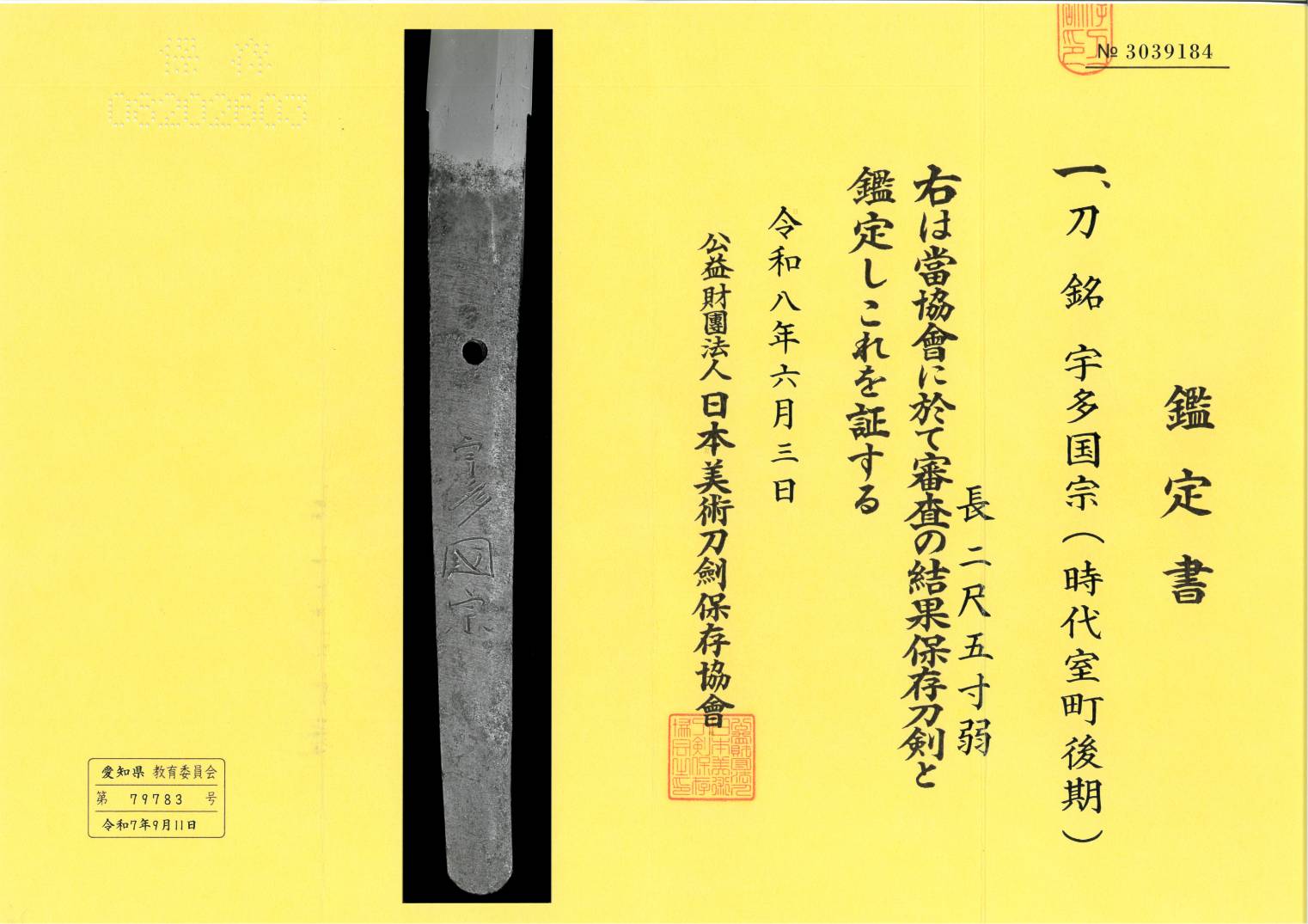
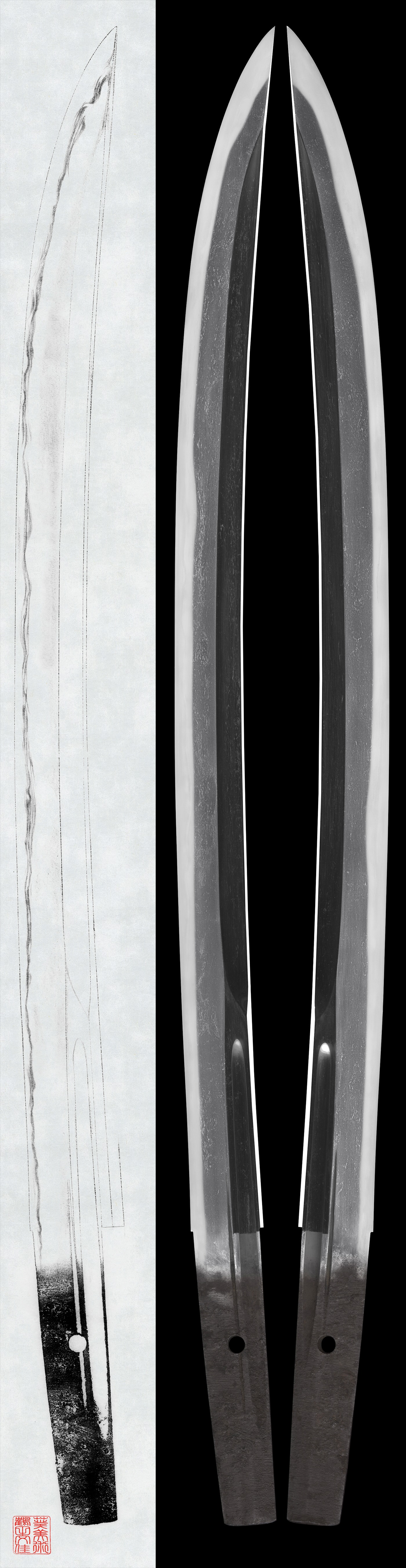
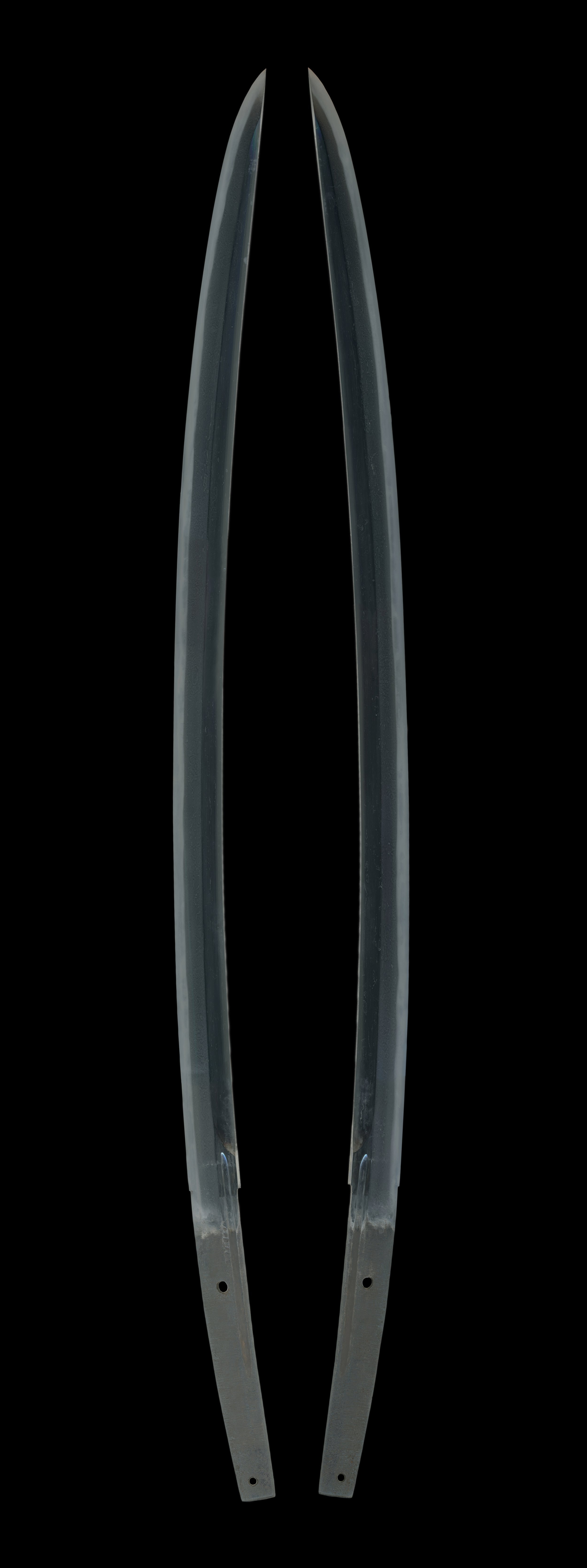
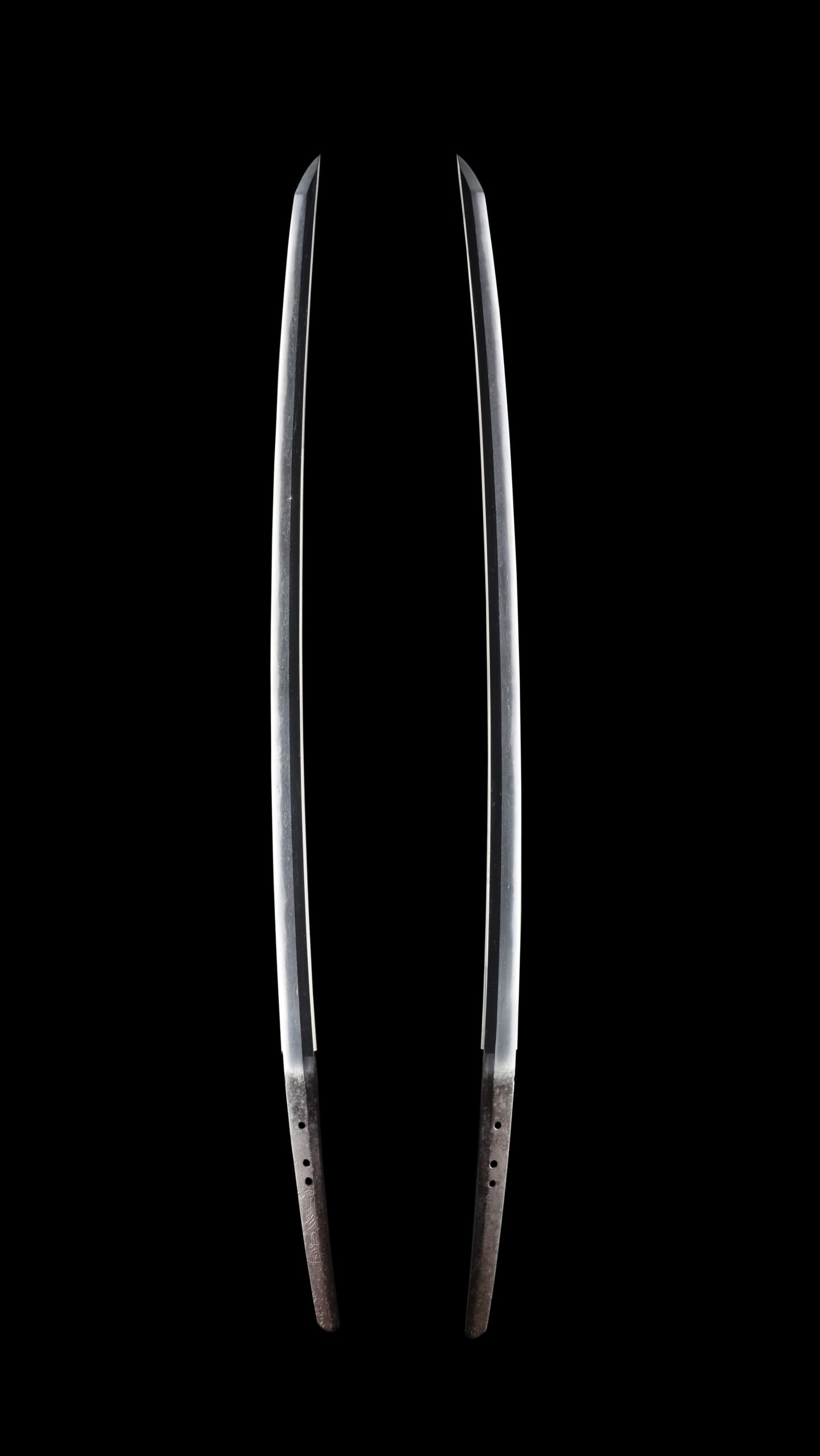
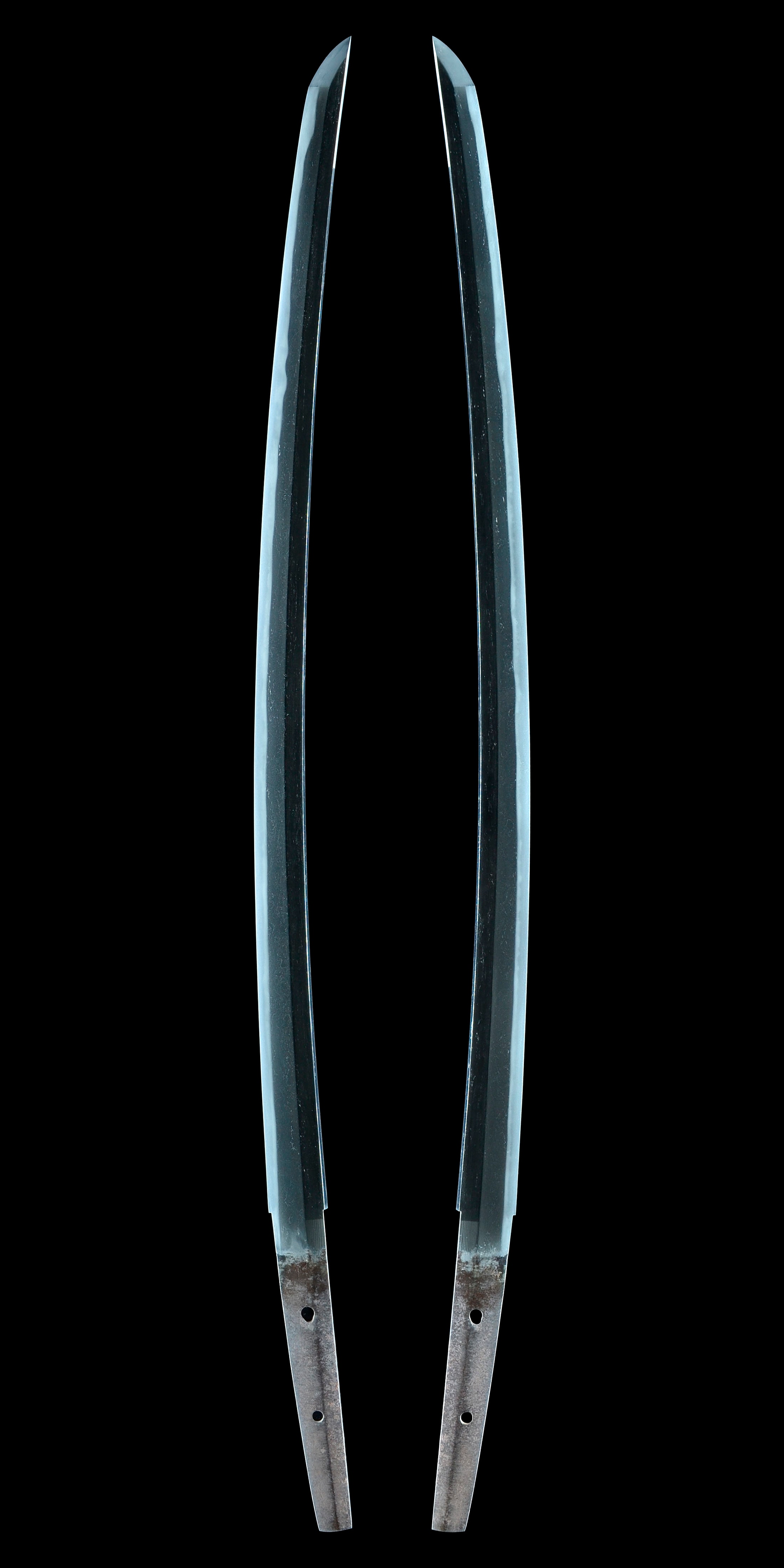
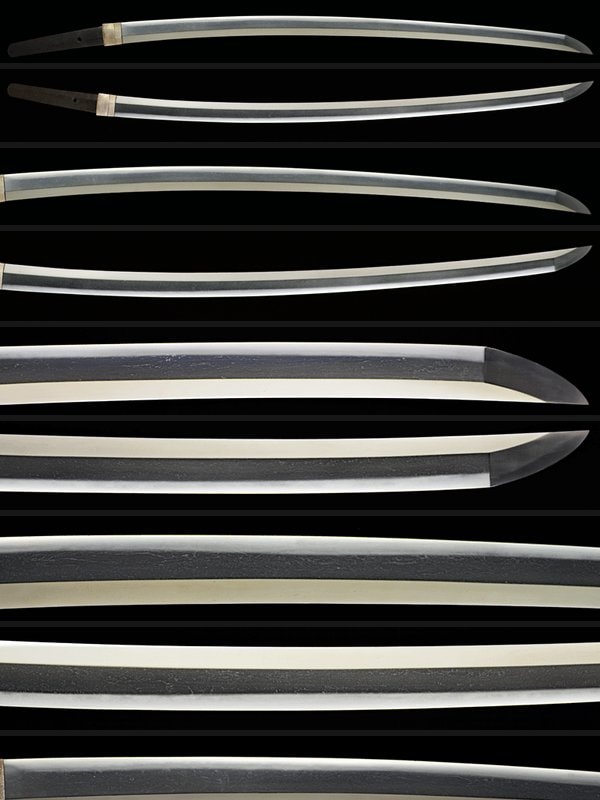
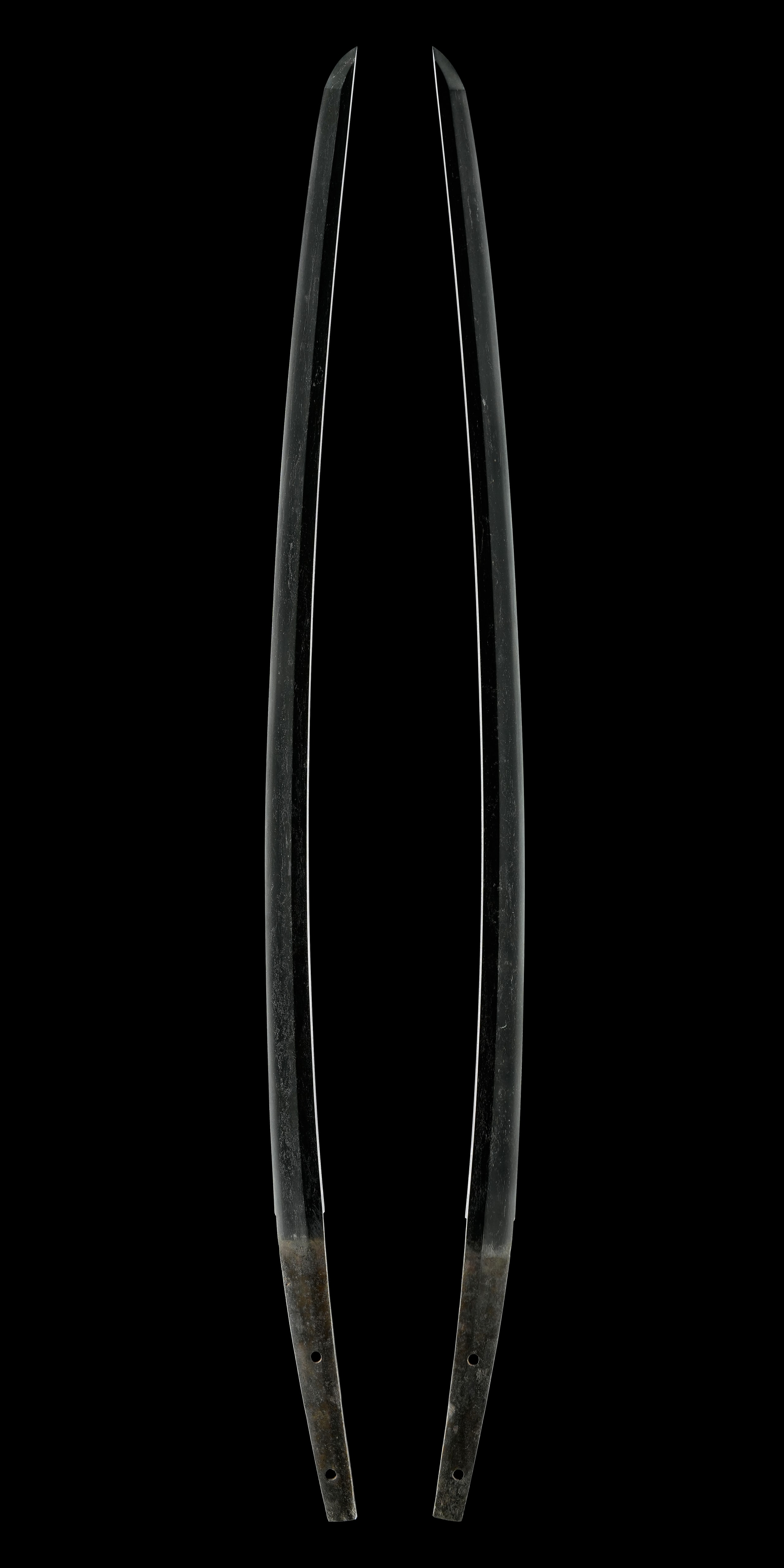
Ko-Uda (古宇多) names the founding stratum of the Uda school, the work that does not descend later than the Nanbokucho period and so stands before the long Muromachi continuation that the same studio names would carry. The setsumei place the origin in Yamato: around the Bunpo era at the close of Kamakura, the monk-smith Ko-nyudo Kunimitsu left Uda District in Yamato and settled at Utsu in Etchu, and from him the lineage took root. His sons Kunifusa and Kunimune are recorded, and across the Juyo and Jubi explanations the active founding hands are listed together as Kunifusa, Kunimune, and Kunitsugu, the generations that worked through the Nanbokucho period before the name-bearing successions ran down into late Muromachi. A signed Ko-nyudo Kunimitsu is hard to fix among several smiths who used the name; the Tokuju tachi is read as the founder precisely because it shows the most archaic character of the surviving examples, earlier even than the Kunifusa pieces taken for Nanbokucho. The early steel is the school read at its source. The forging is itame mixed with mokume and running nagare-hada that tends to stand (hada-dachi), ji-nie adhering with chikei, and over it a whitish shirake-utsuri or, on the founder's own work, a nie-utsuri; the jigane carries a blackish, golden-toned cast that the explanations call a northern-province feeling. The temper sits in narrow to chu-suguha, opening into ko-notare, ko-gunome, ko-midare, and togariba, with ko-ashi and yo and ko-nie well set; along the habuchi the Yamato signature of hotsure and kuichigai-ba appears, while kinsuji and sunagashi run through.
Against the later Uda generations, the Ko-Uda face is the purer one. The Tokuju founder is appraised as workmanship entirely like Yamato; the Hie Shrine and Kurokawa tachi by the shodai Kunifusa hold a tight, clear nioiguchi and a bright forging, and the nie in the best stands strong and rounded where the later hands run coarser and more provincial. A Soshu lean exists, traced to the study of Norishige and Go, yet in this phase the steel and nioiguchi keep returning the blade to Yamato roots rather than dissolving into them. To kantei a Ko-Uda blade is to catch the standing, whitish jigane with its masame tendency and utsuri beneath a suguha that might otherwise recall Yamashiro, and to bring a nie-rich, chikei-laden example home from Soshu by the dark steel and the subdued (shizumi) nioiguchi. The named early hands recur across the corpus: the shodai Kunifusa, fixed against dated pieces no earlier than Koo 1 (1389) and the calligraphy of the lattice-broken 国; the signed Ko-Uda Kunimitsu and Ko-Uda Tomonori of around Meitoku; and the rare Tomoshige and Tomonori, smiths of few survivals through whom the phase's reach is gauged. Because signed early work is uncommon, the phase leans on mumei attributions read off forging and temper, several entered as den Ko-nyudo Kunimitsu. Provenance settles into shrine and institutional holding, the Hie Shrine and Kurokawa Institute tachi serving as the calibrating standards against which other early Kunifusa are judged, and the dated examples valued as documentary footing for the study of how Yamato workmanship took its northern form. Learn more →