 NihontoWatchNihontoWatch
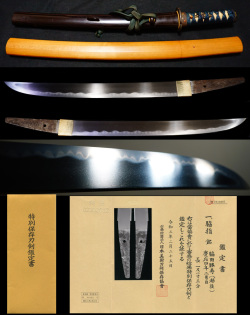
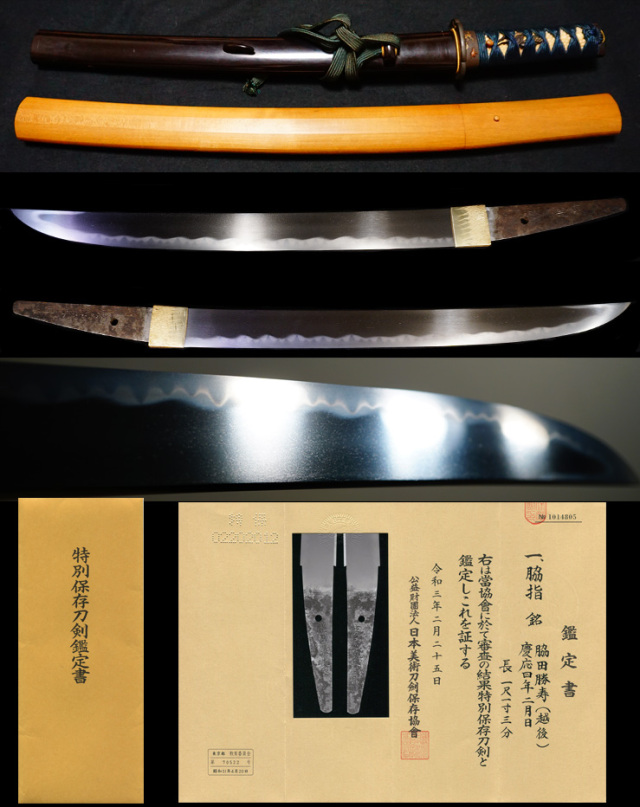
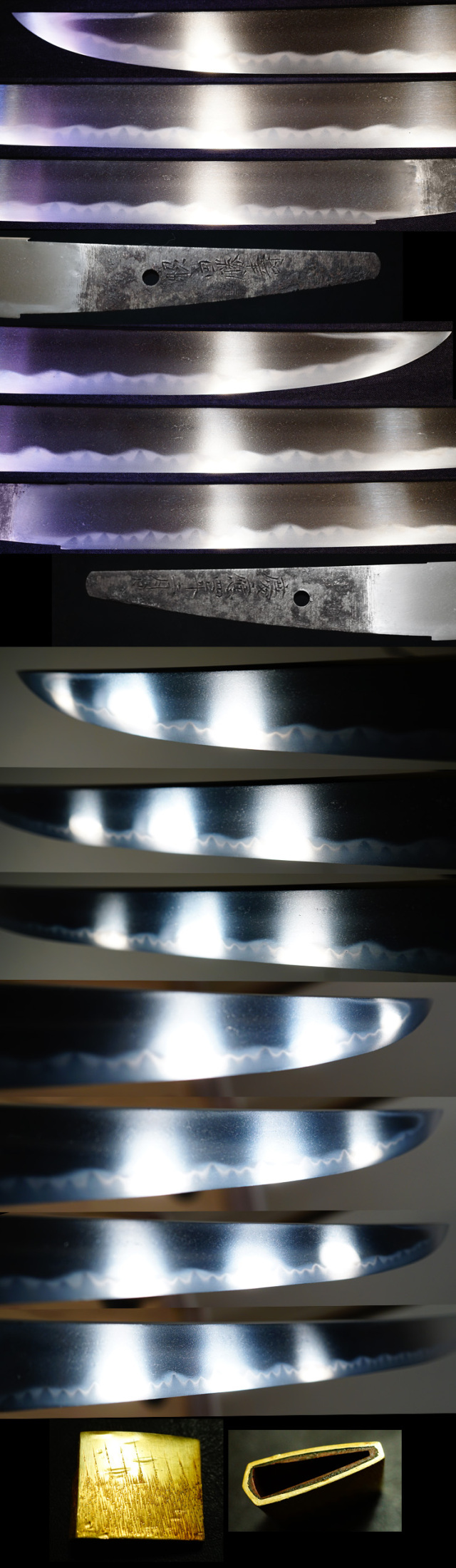
Wakita Katsutoshi was a tosho who lived in Echigo no Kuni Shibata and was active around the Keio era. The workmanship is a characteristic ko-gunome midare imitating Magoroku Kanemoto, with a well-tightened ko-itame, ji-nie, and beautiful sunagashi, making it a magnificent hitofuri that displays rich variations in ko-nie. Katsutoshi used the go Ryunsai, and also inscribed mei such as Ryunsai Wakita Yoshiteru. After later changing his mei, he inscribed mei such as Ryuunsai Katsutoshi and Ryuunsai Wakita Katsutoshi. It is accompanied by a high-quality koshirae of great dignity.
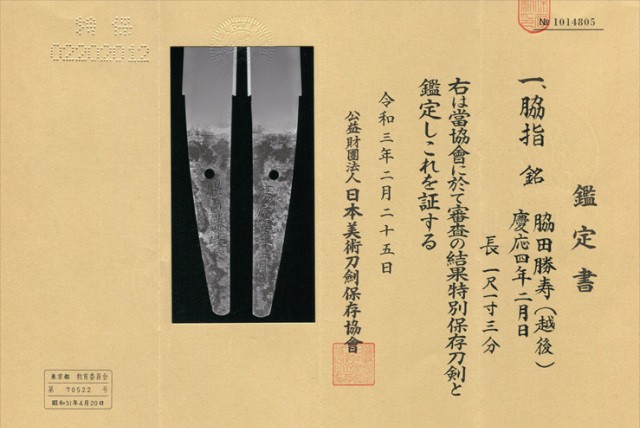
Certificate reading — 銘 脇田勝寿(越後) 慶応四年二月日
NihontoWatchOffered by Kusanagi

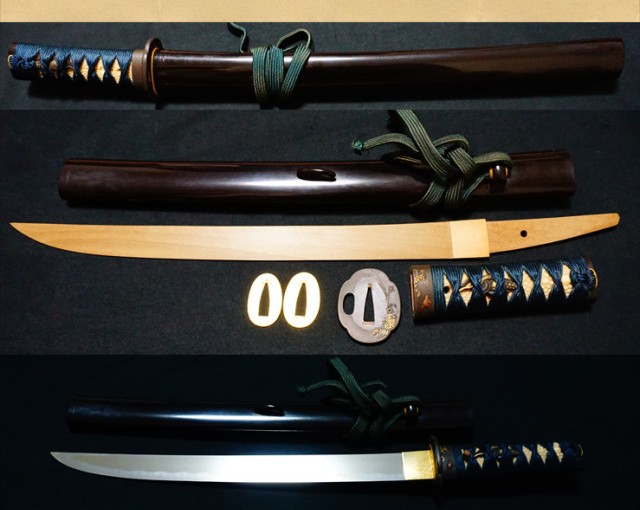
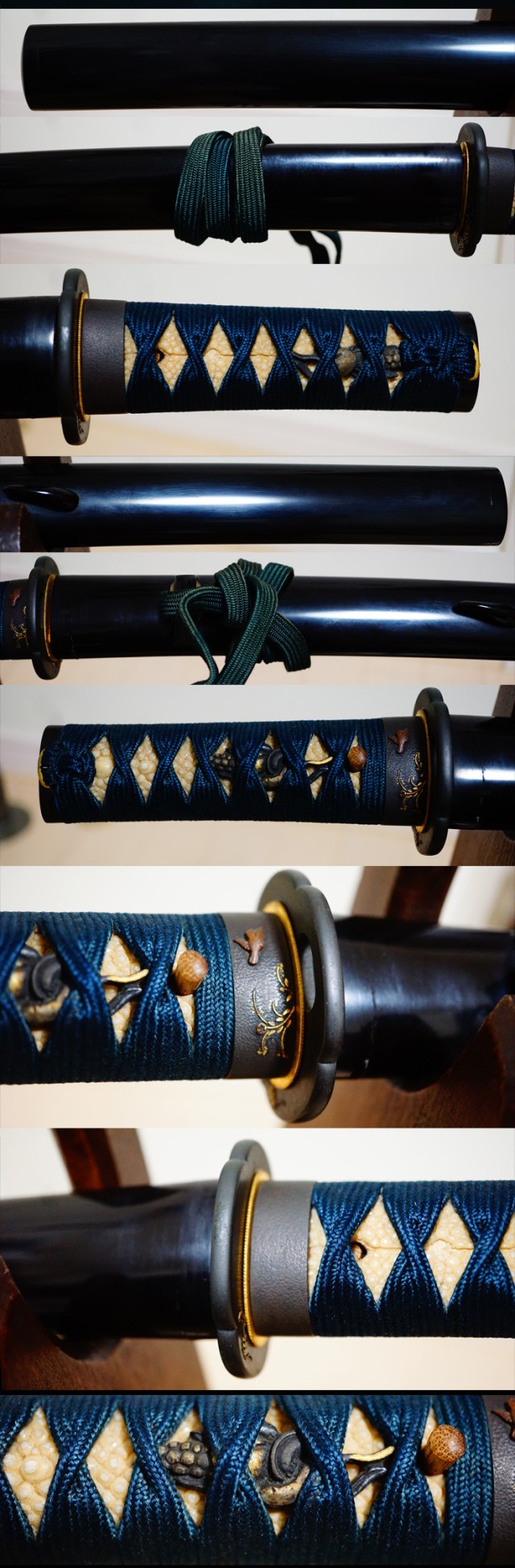
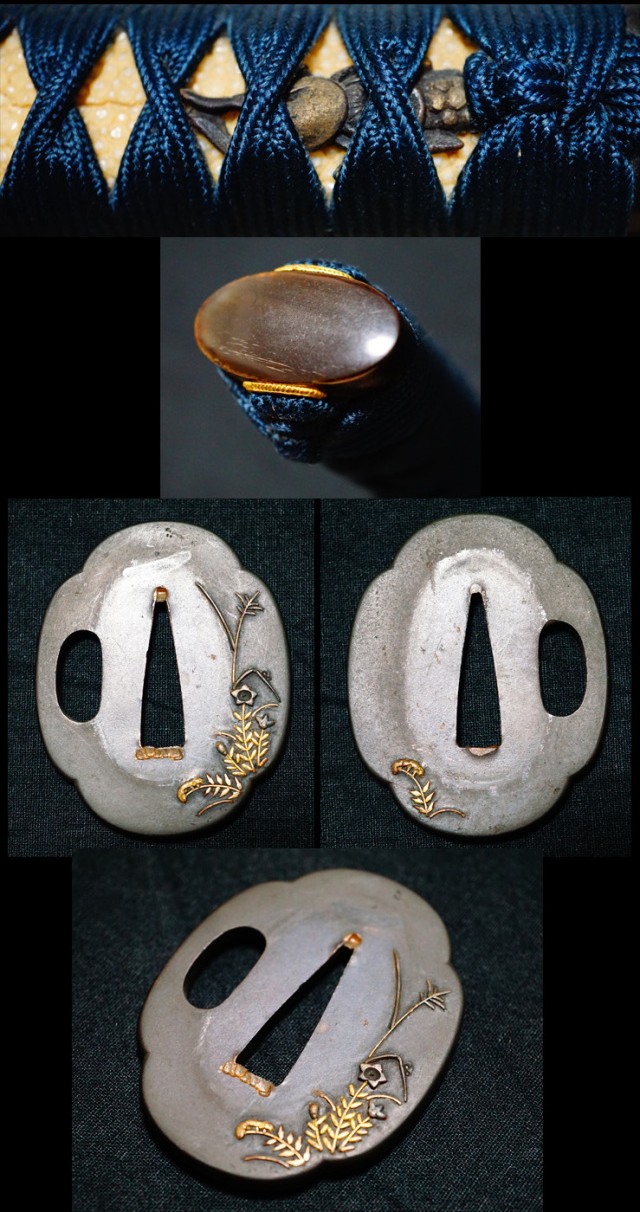
As written by the shop
Machine translation from the shop's Japanese · may contain errors ·
A Hozon-certified blade judged to show notably superior workmanship and a better state of preservation. The bar is higher: re-tempered blades and most unsigned Muromachi/Edo works are excluded.
The NBTHK (Nihon Bijutsu Tōken Hozon Kyōkai, the Society for the Preservation of Japanese Art Swords) is a public-interest incorporated foundation founded in 1948 and supervised by Japan’s Agency for Cultural Affairs (Bunkachō); it is based at the Japanese Sword Museum in Tokyo. Its expert panels physically examine each submitted work (shinsa) and issue a certificate (kanteishō) ranking it by artistic and historical merit. NBTHK papers are the most widely recognized standard of authentication for Japanese swords and fittings.
NBTHK official sitePlease notify us of your intention to return, by email or fax, no later than the day after the item's arrival. Return shipping, insurance, and refund transfer fees are the customer's responsibility.
¥298,000