The twentieth century nearly killed the craft twice: wartime distortion, then the occupation ban. The NBTHK’s founding in 1948 and licensed forging from 1953 rebuilt the sword as an art, crowned by Living National Treasures and the mukansa rank.
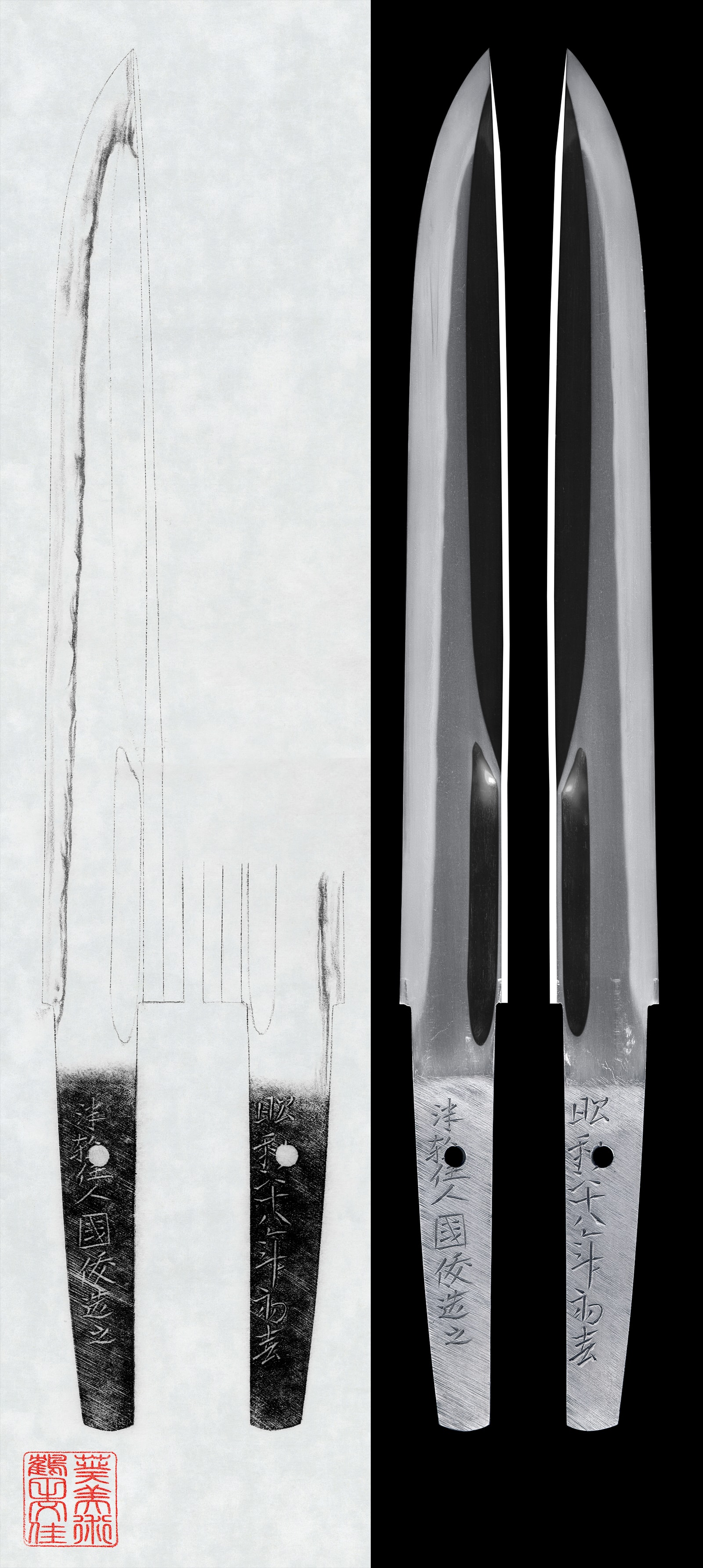
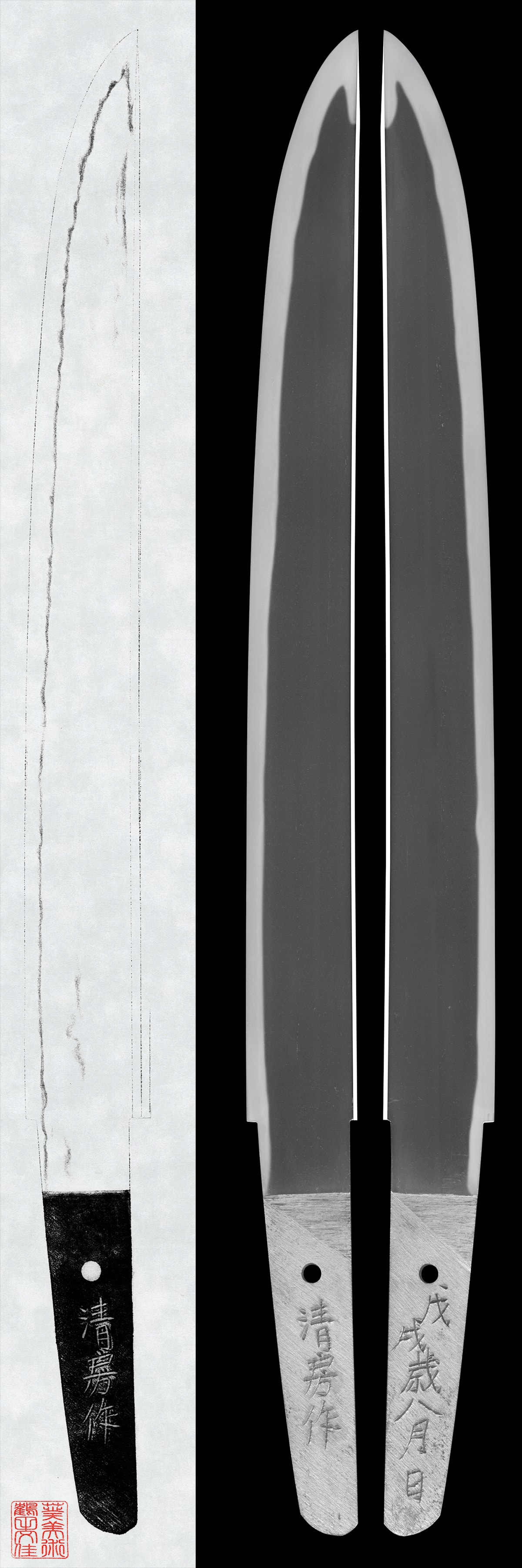
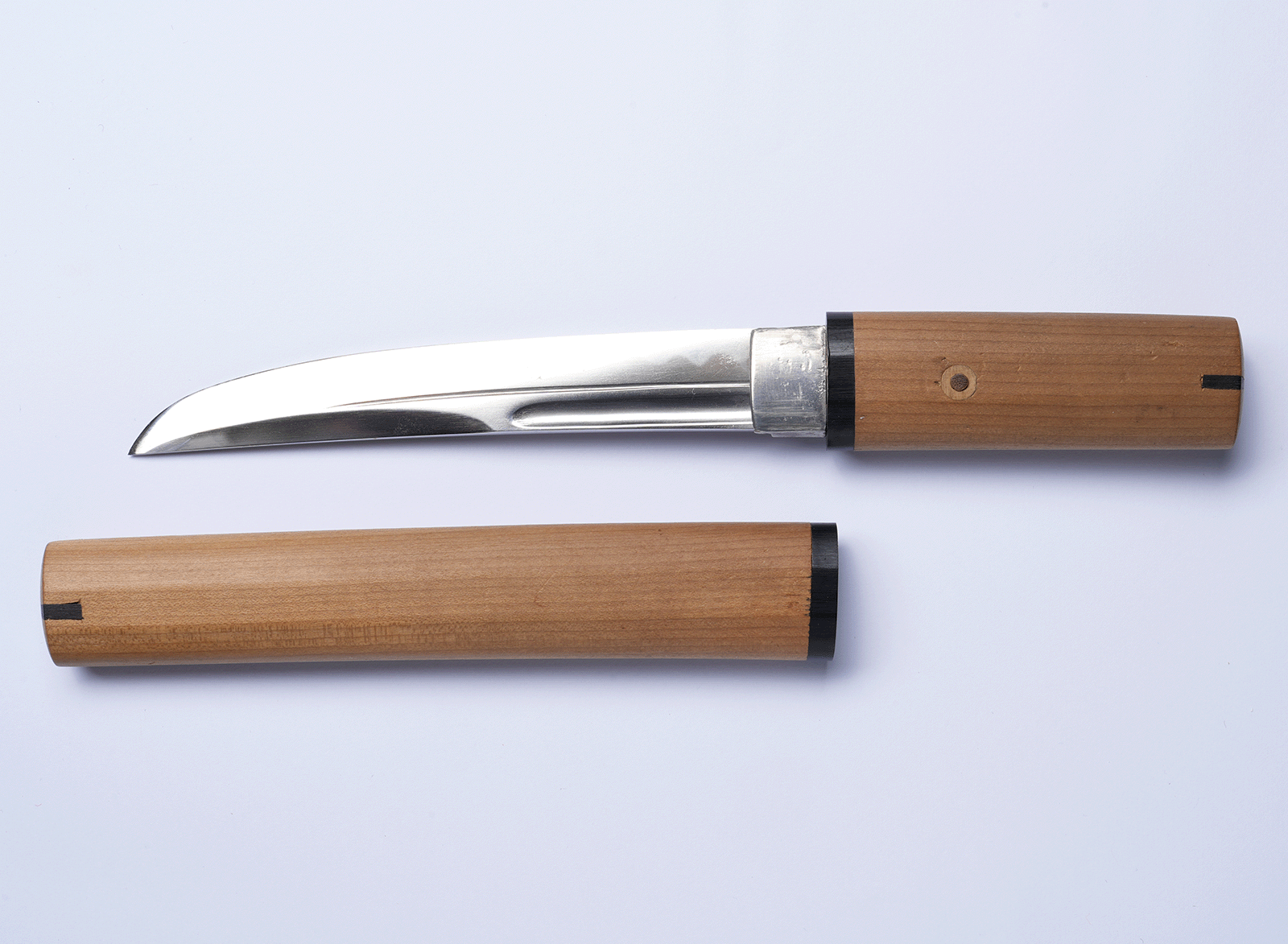
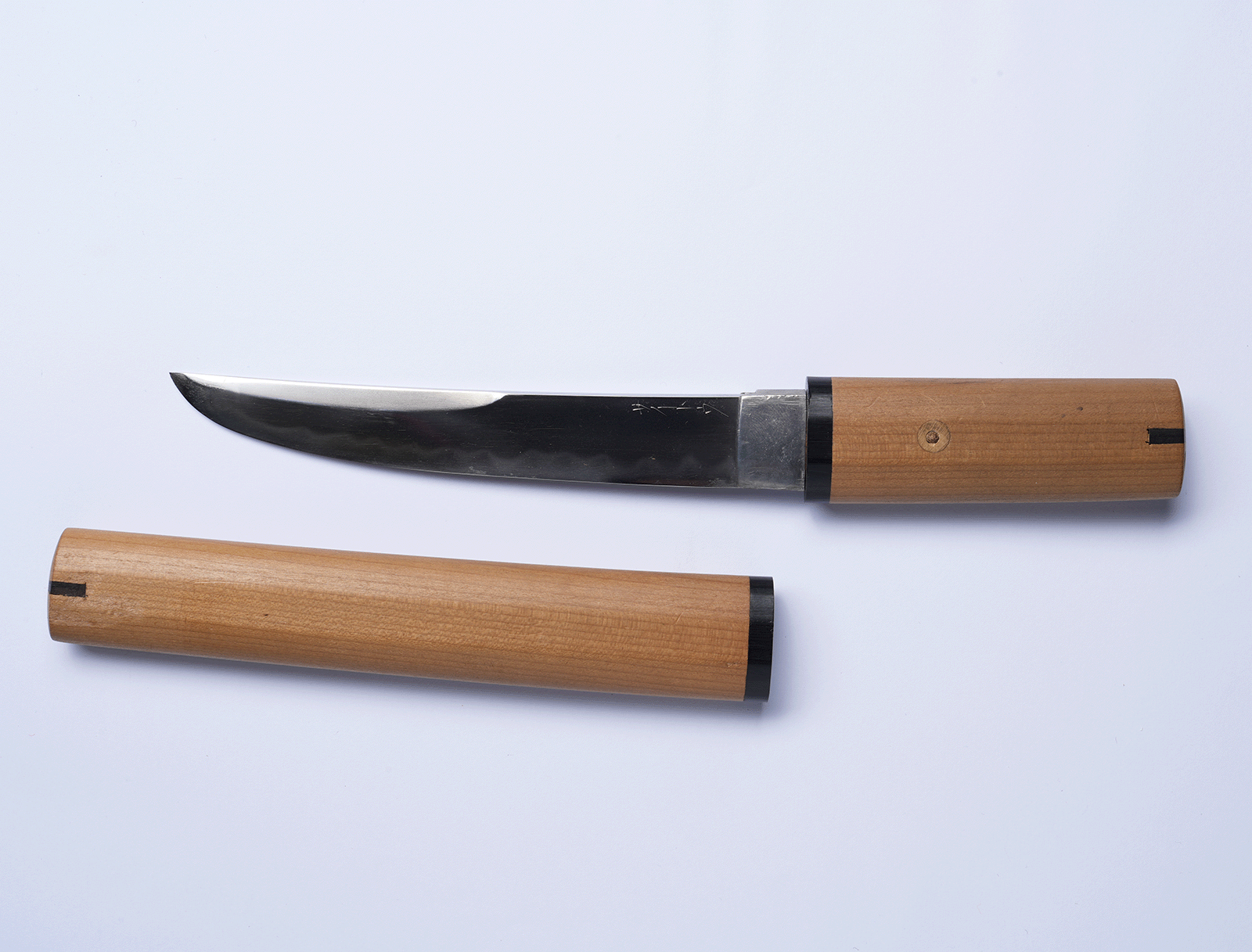
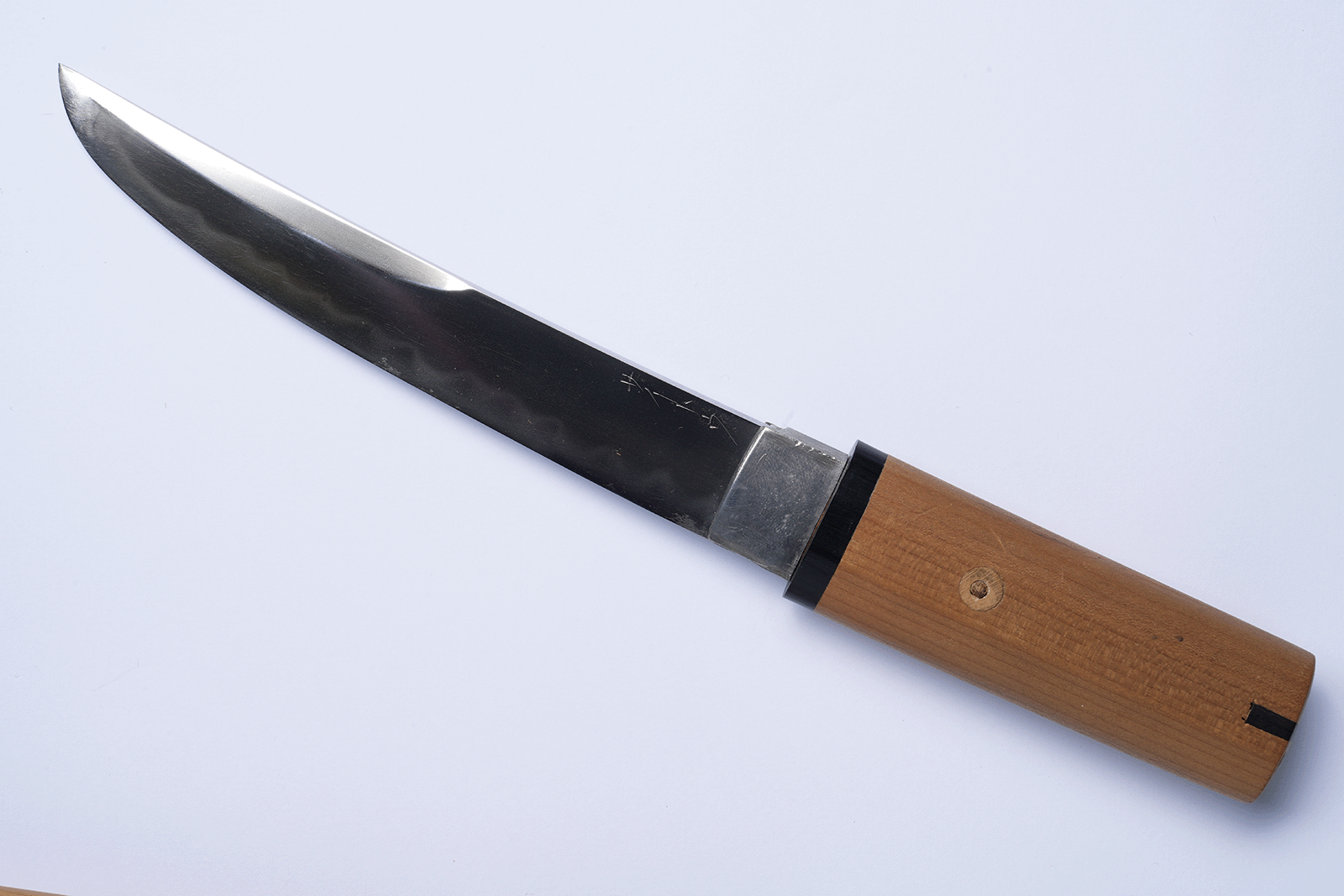
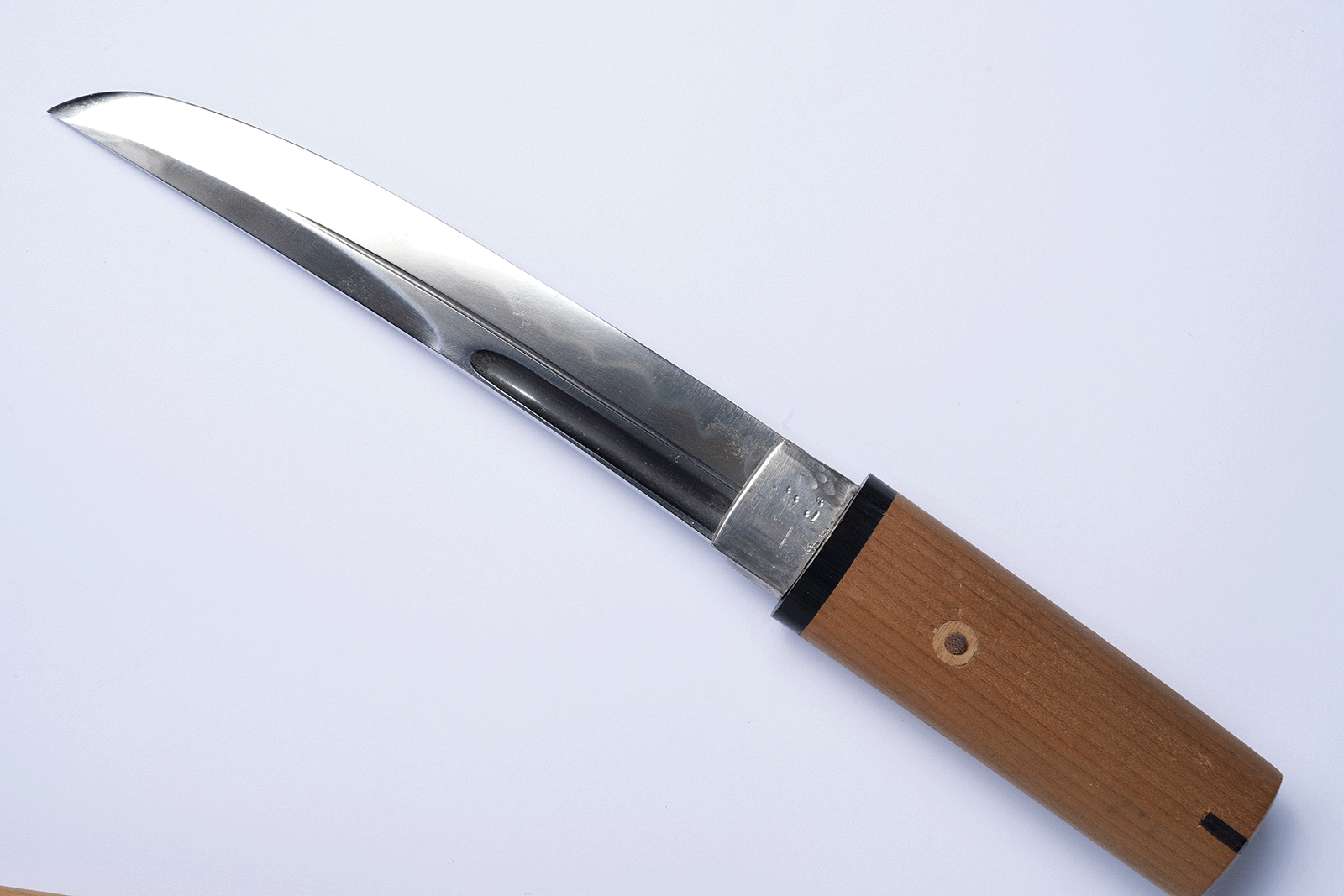
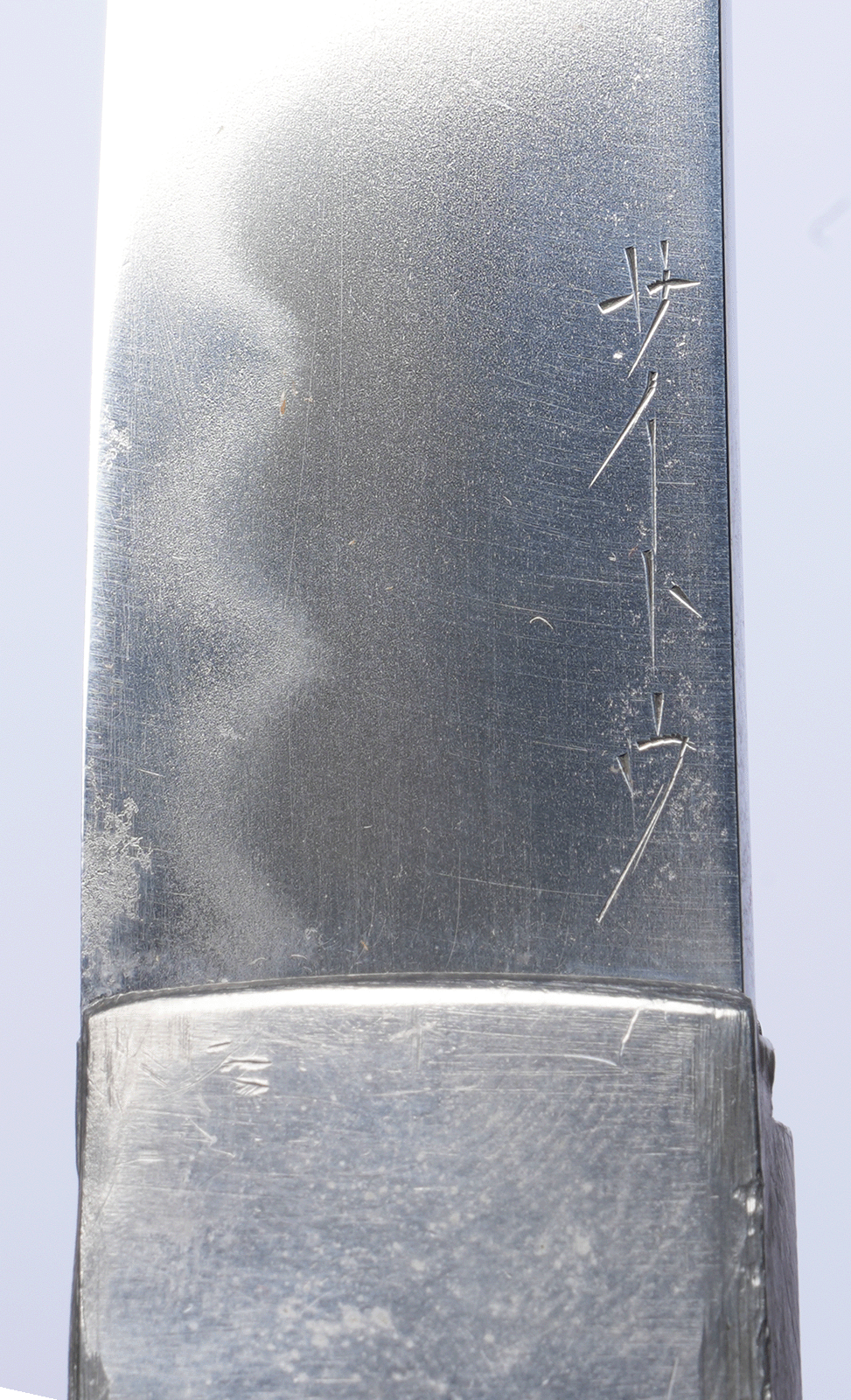
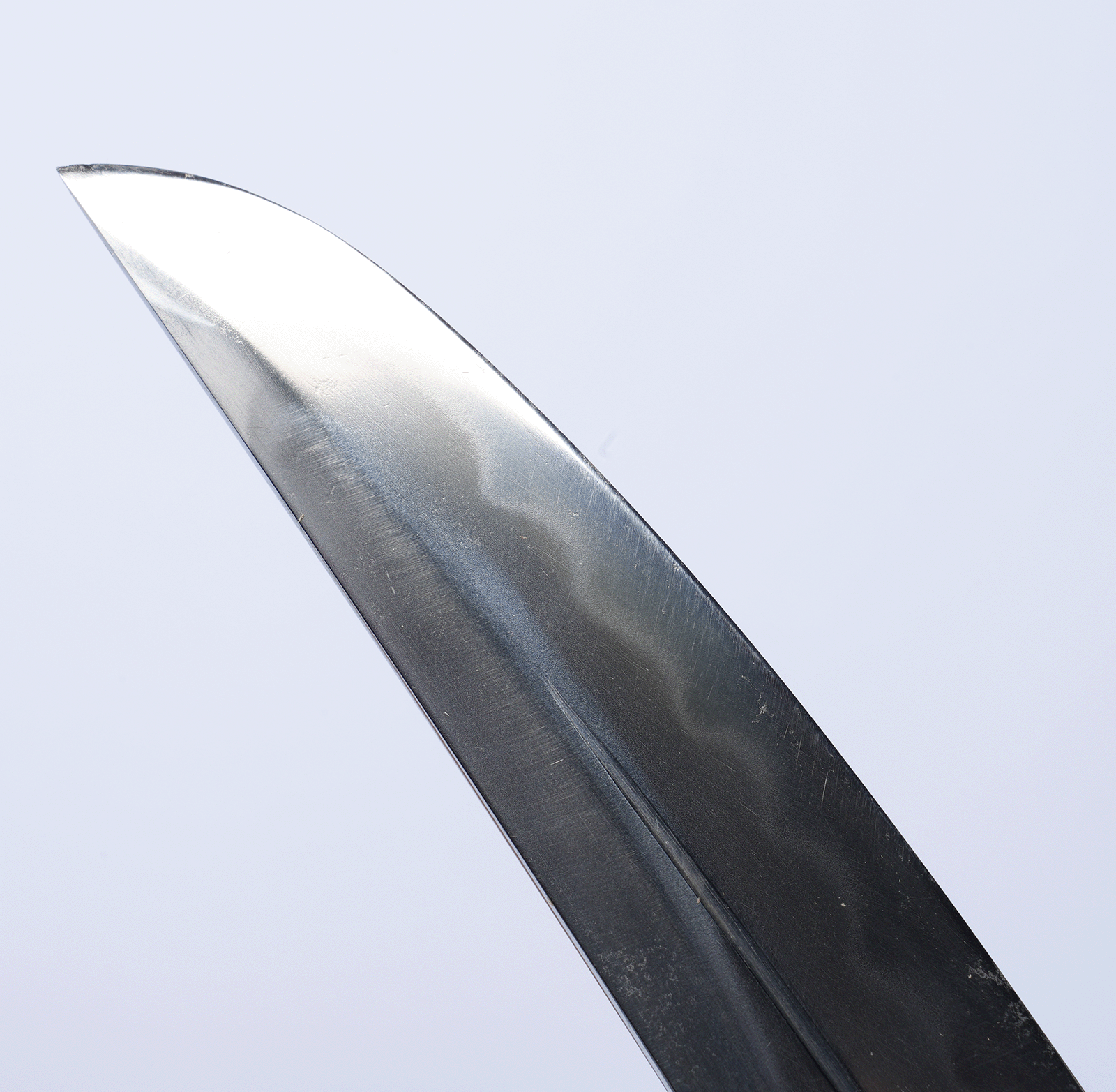
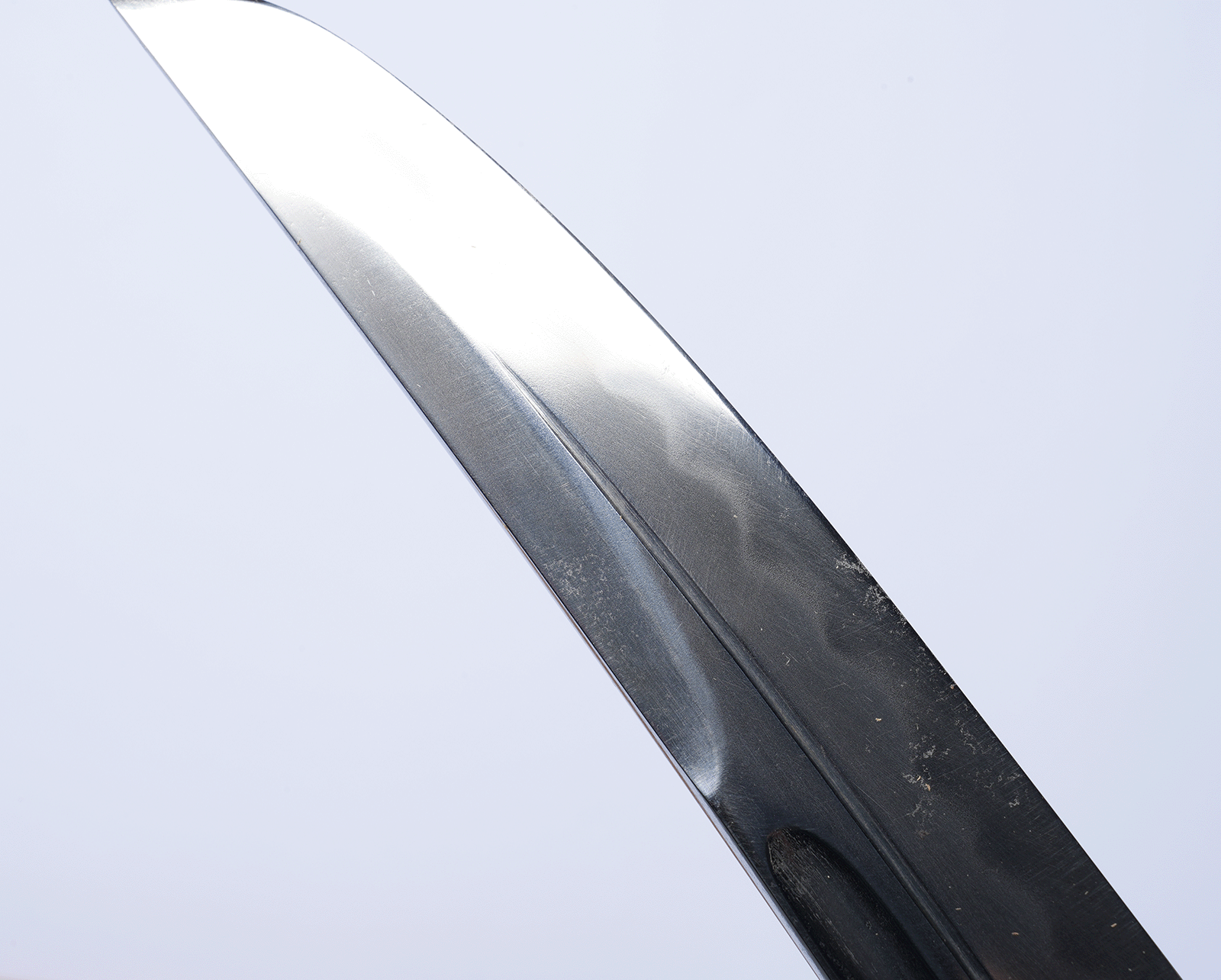
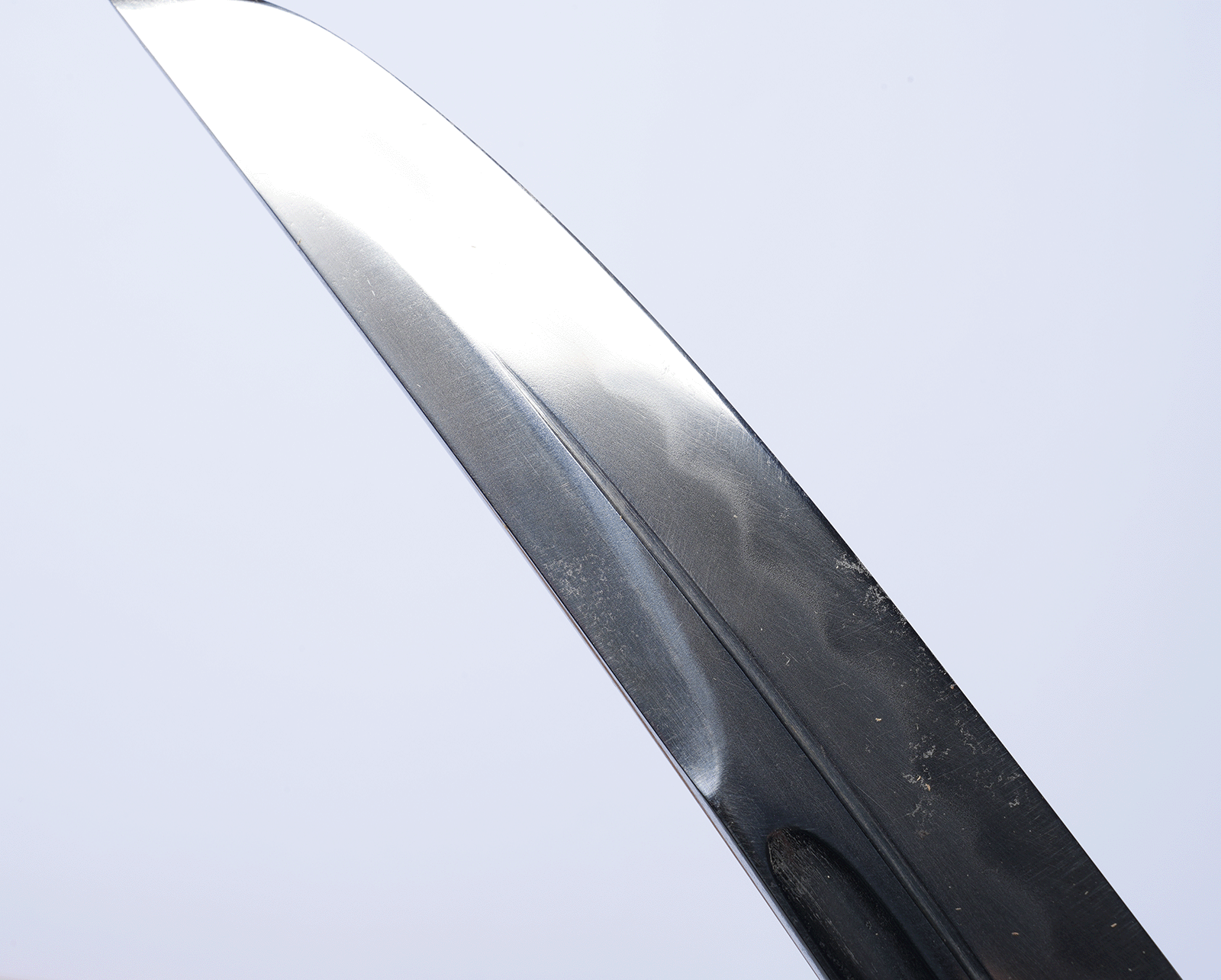
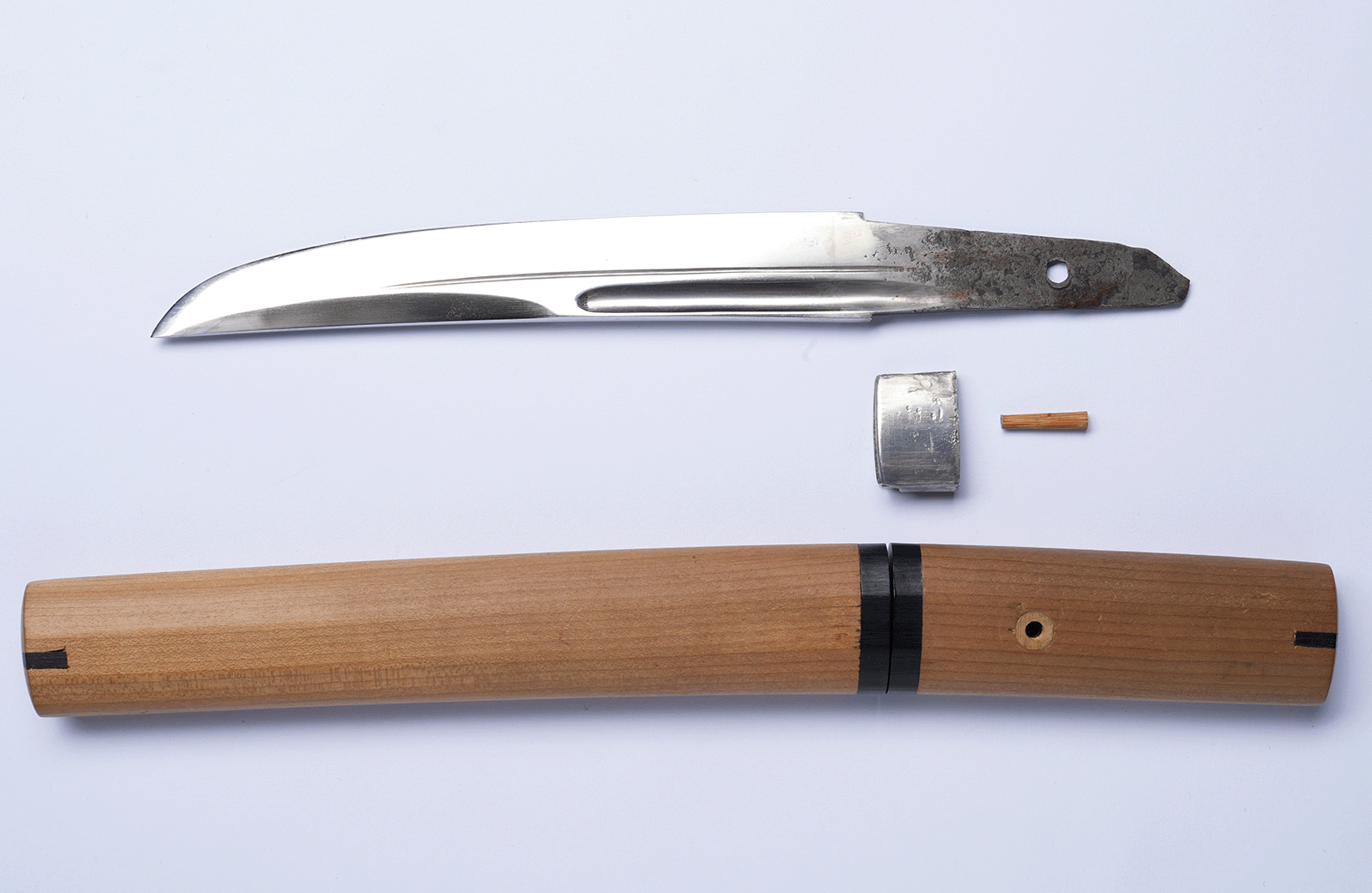
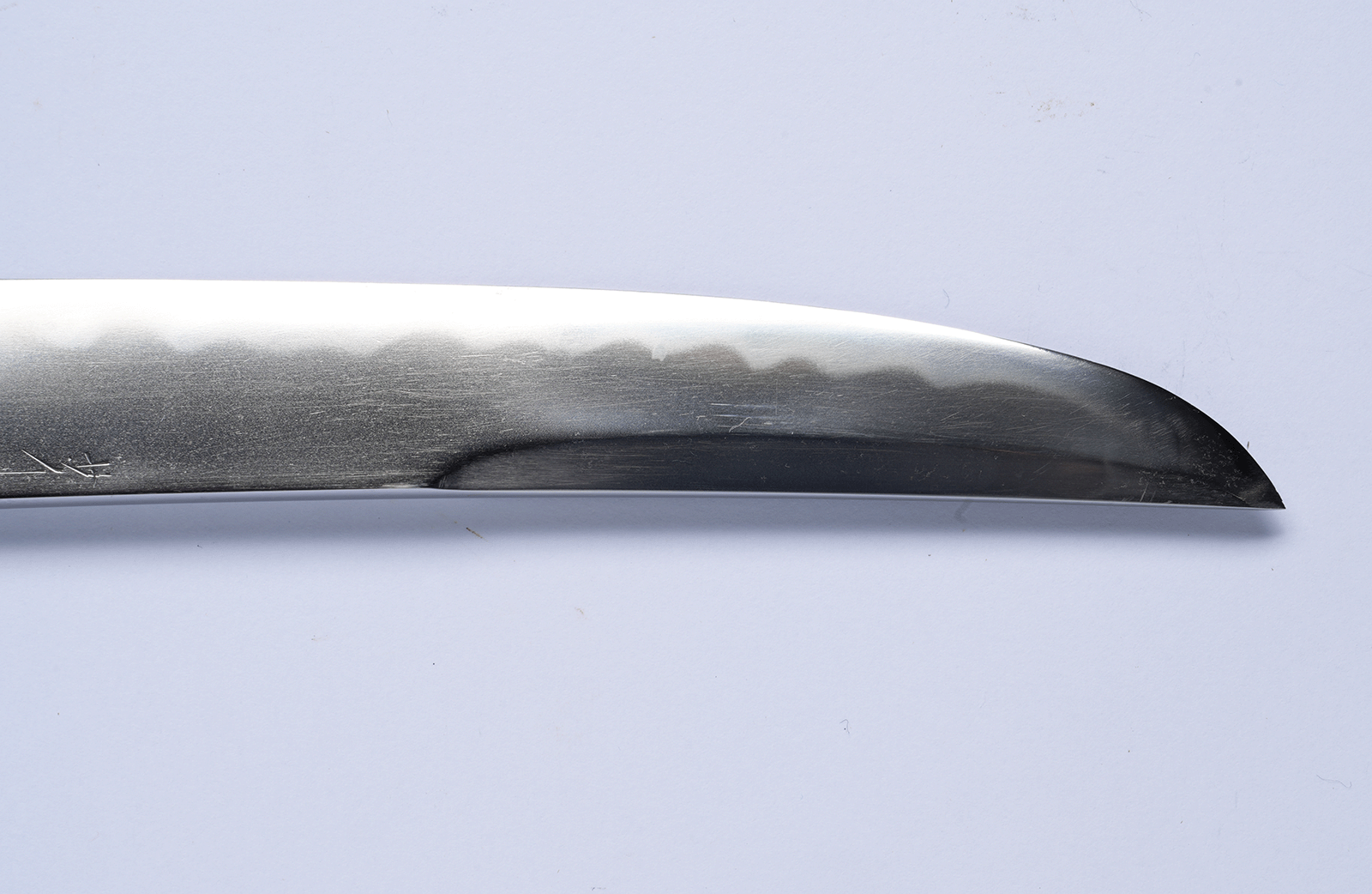
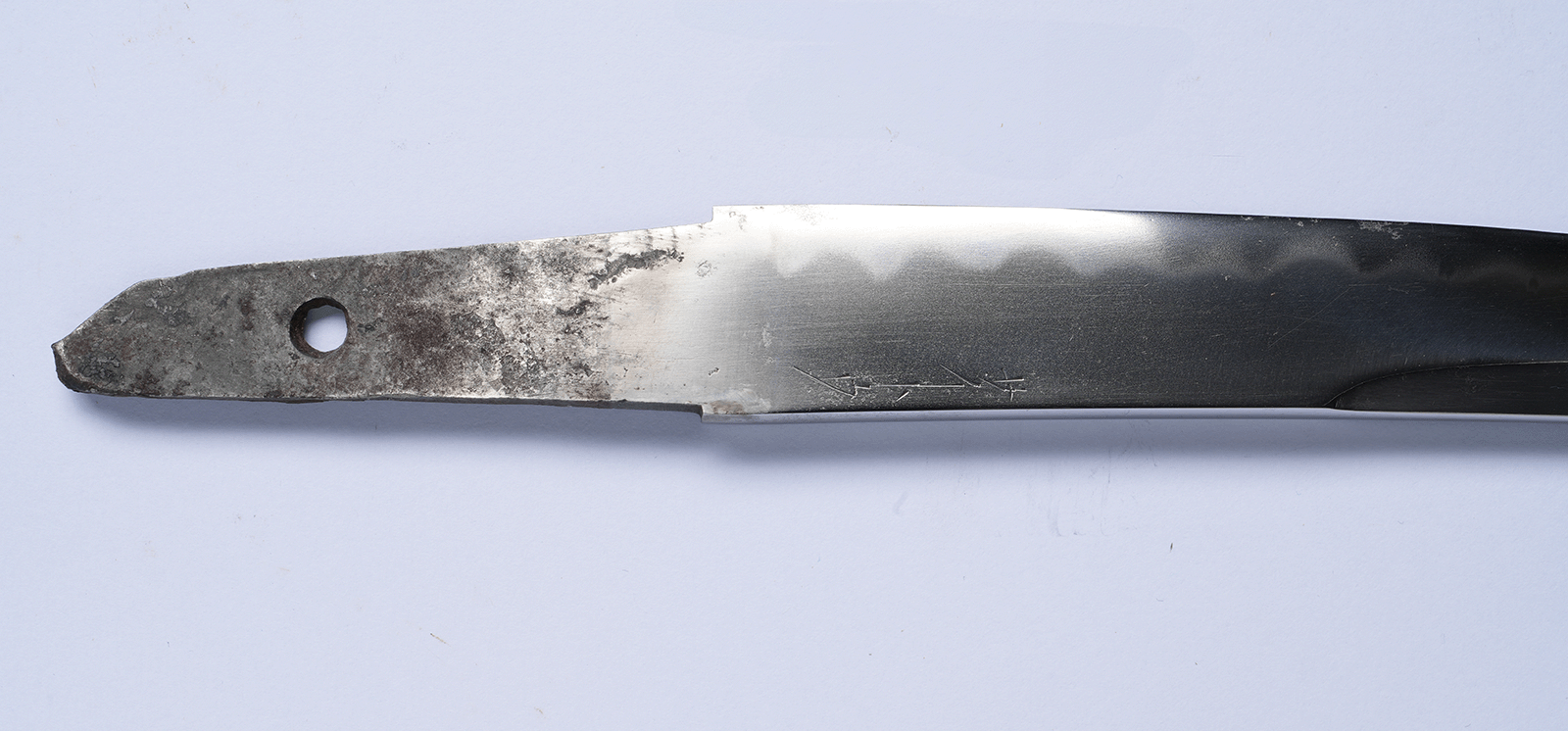
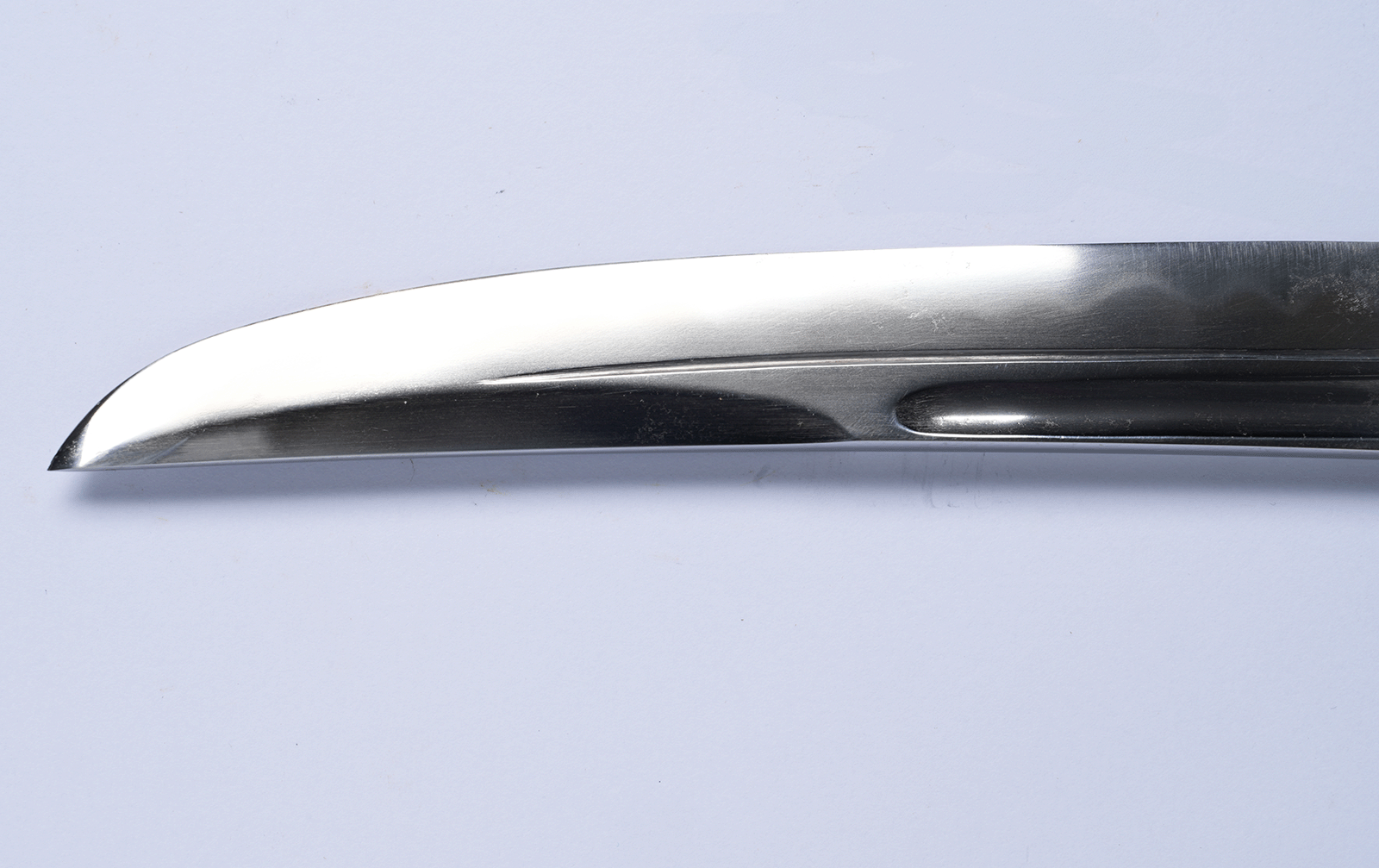
A compact, signed Japanese kaiken or small tantō, likely from the postwar Shōwa period. The blade features a shinogi-zukuri construction with a long bo-hi and a gracefully curved kissaki, mounted in simple wooden koshirae characteristic of a ceremonial dagger. The nakago bears a visible signature reading Saitō, though specific attribution is not possible from available photos.
 NihontoWatch
mei · Showa · nagasa 15.5cm
Shōwa to the present: destruction and revival
The twentieth century nearly killed the craft twice: wartime distortion, then the occupation ban. The NBTHK’s founding in 1948 and licensed forging from 1953 rebuilt the sword as an art, crowned by Living National Treasures and the mukansa rank.
We could not find an authenticity certificate on the seller’s listing. Japanese swords and fittings are normally papered by the NBTHK (or the NTHK). Without one, the attribution is the seller’s own assessment and has not been independently verified — treat it with caution and ask the dealer about certification before buying.
14-day return window in original/unused condition; antique items (swords, menuki, tsuba and similar) are expressly excluded from exchange; EU consumers retain a 14-day cancellation right; refunds within 10 business days of approval.
A compact, signed Japanese kaiken or small tantō, likely from the postwar Shōwa period. The blade features a shinogi-zukuri construction with a long bo-hi and a gracefully curved kissaki, mounted in simple wooden koshirae characteristic of a ceremonial dagger. The nakago bears a visible signature reading Saitō, though specific attribution is not possible from available photos.
NihontoWatchmei · Showa · nagasa 15.5cm
Shōwa to the present: destruction and revival
The twentieth century nearly killed the craft twice: wartime distortion, then the occupation ban. The NBTHK’s founding in 1948 and licensed forging from 1953 rebuilt the sword as an art, crowned by Living National Treasures and the mukansa rank.
We could not find an authenticity certificate on the seller’s listing. Japanese swords and fittings are normally papered by the NBTHK (or the NTHK). Without one, the attribution is the seller’s own assessment and has not been independently verified — treat it with caution and ask the dealer about certification before buying.
14-day return window in original/unused condition; antique items (swords, menuki, tsuba and similar) are expressly excluded from exchange; EU consumers retain a 14-day cancellation right; refunds within 10 business days of approval.