After the Ōnin War broke the Ashikaga order, a century of Sengoku warfare armed nearly every province in Japan. The era rewards a discriminating eye: routine work exists in quantity, and beside it stand custom blades of the first rank.
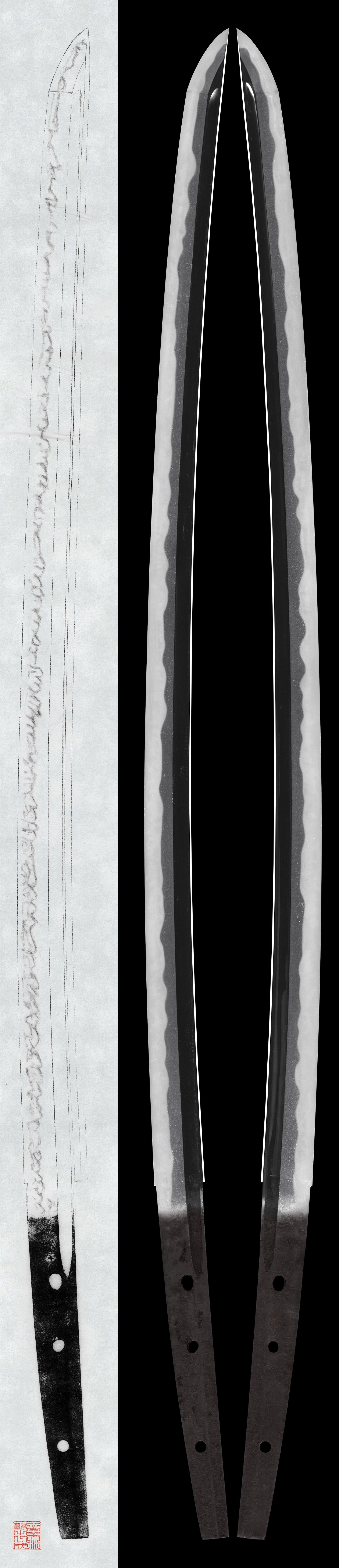
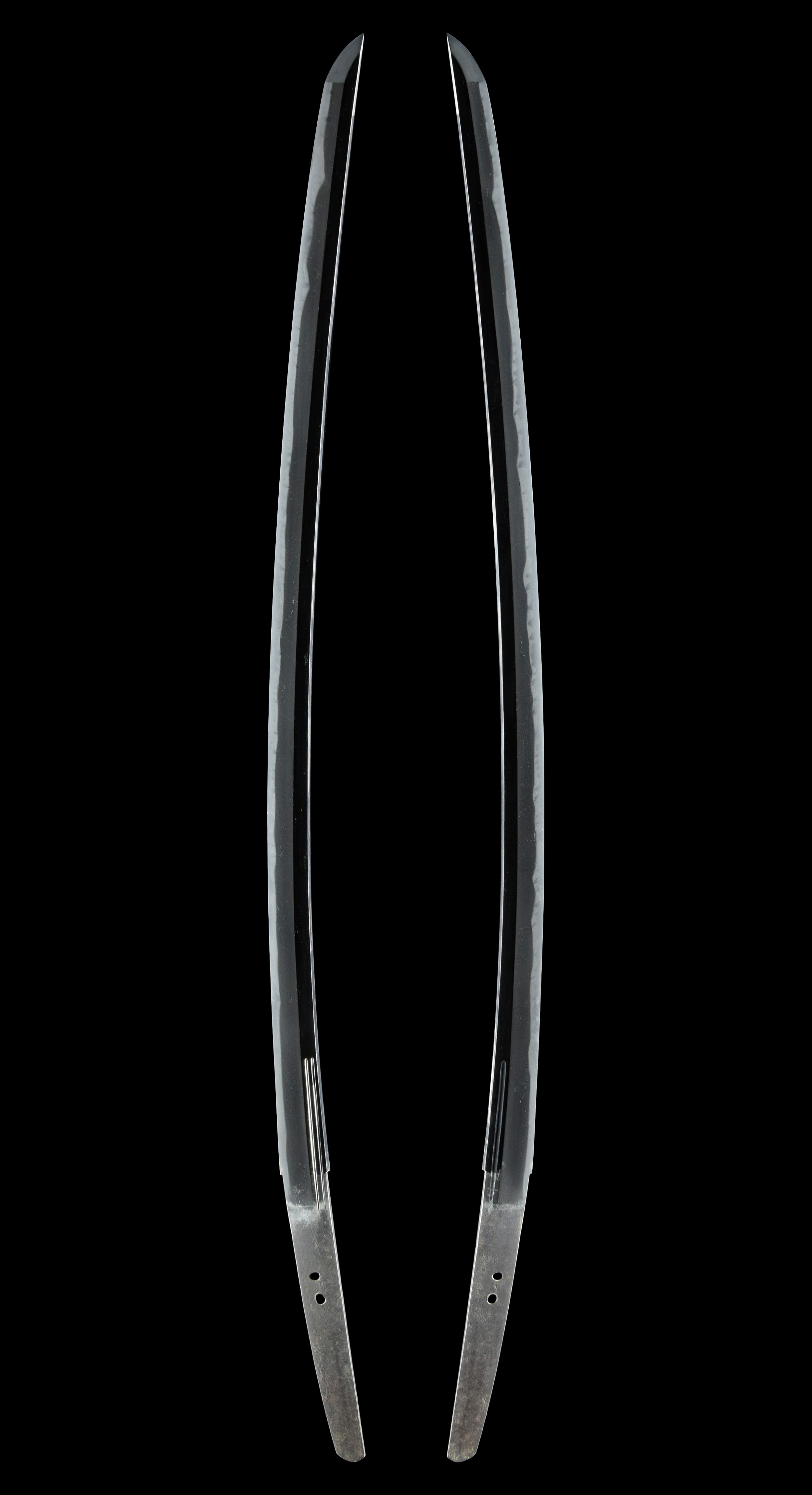
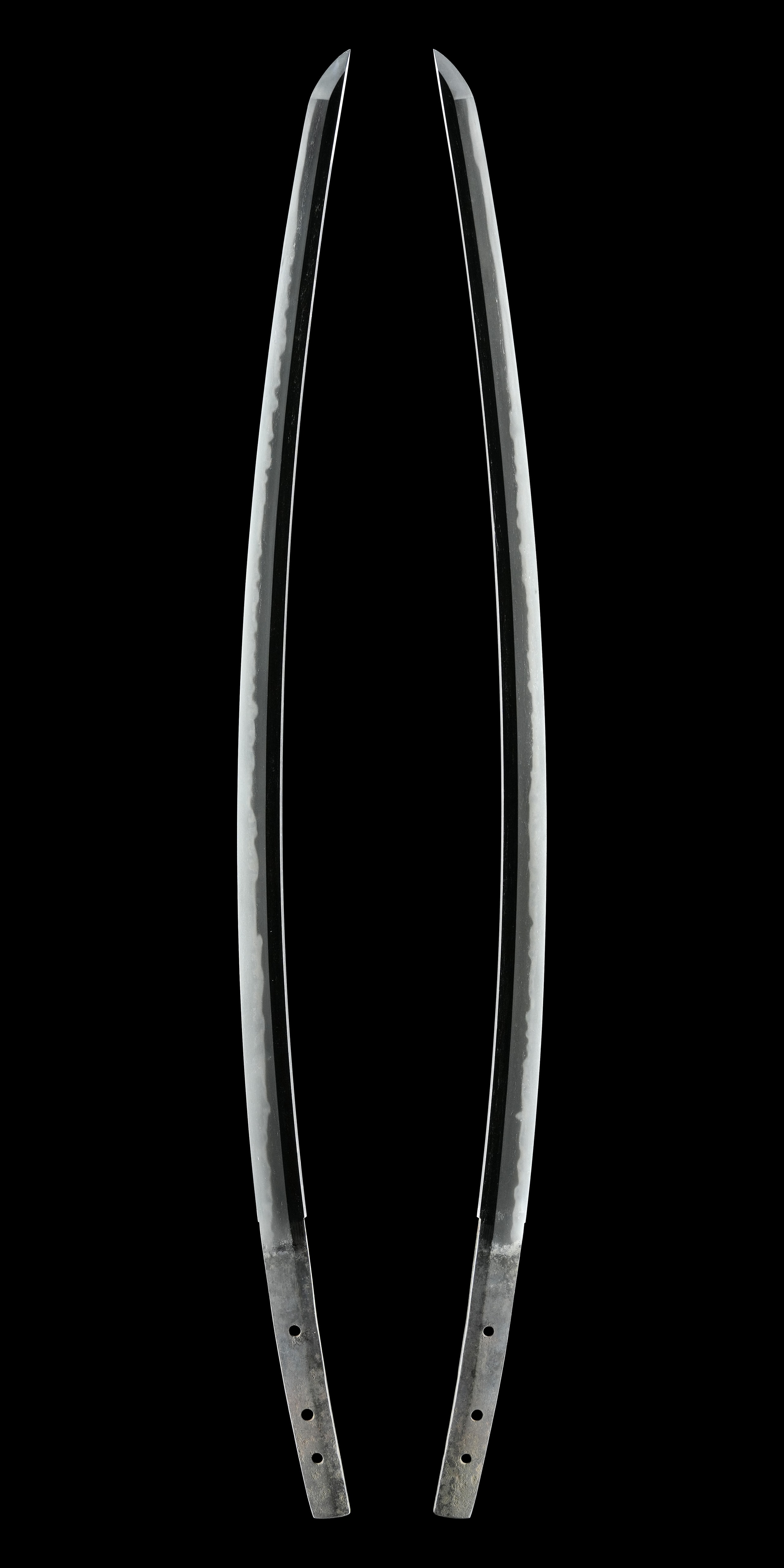
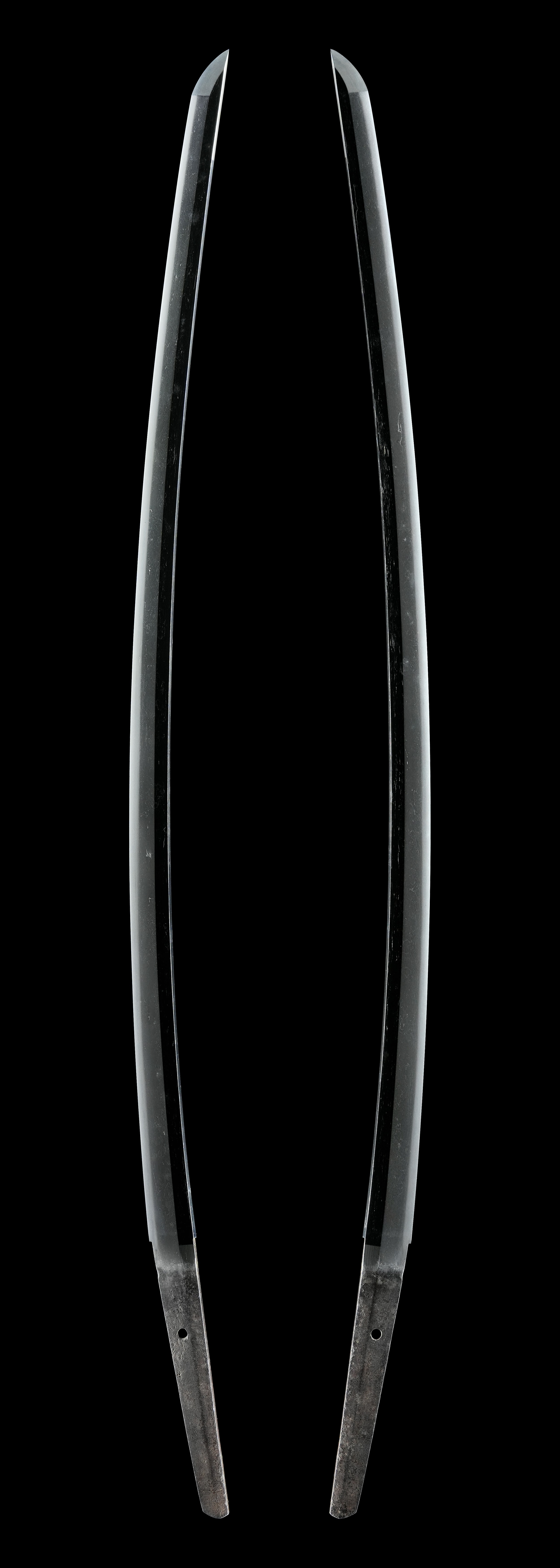
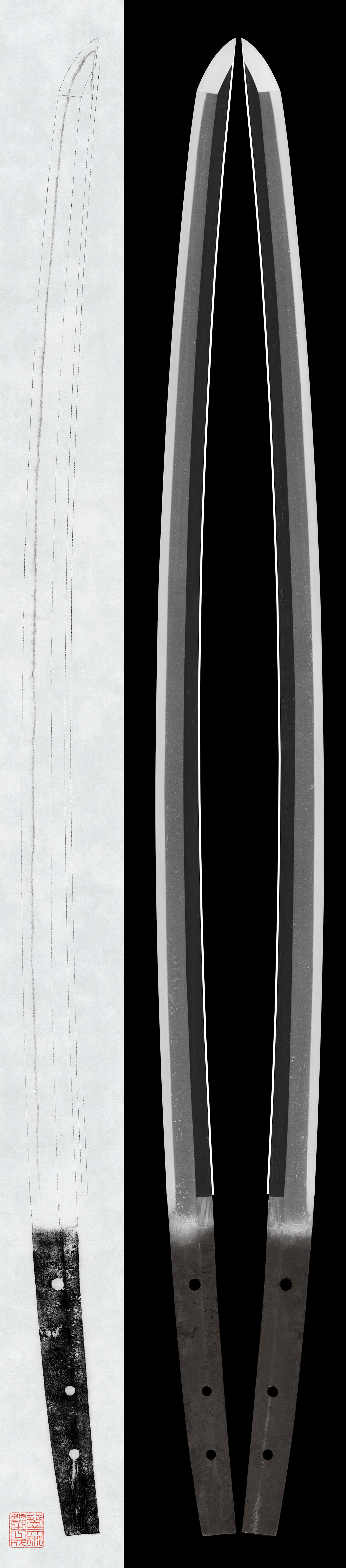
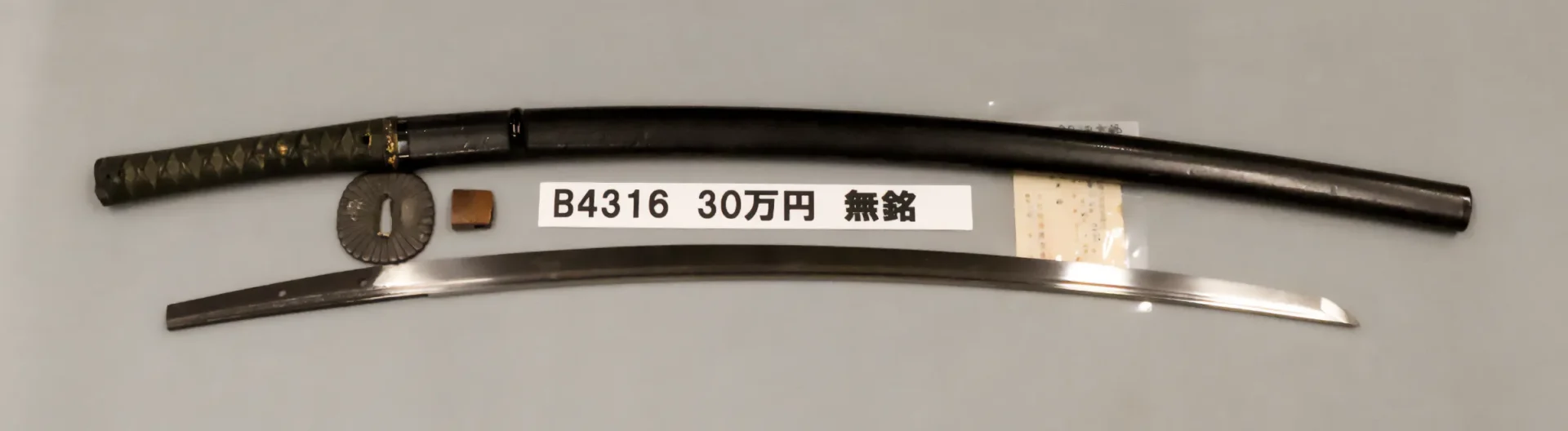
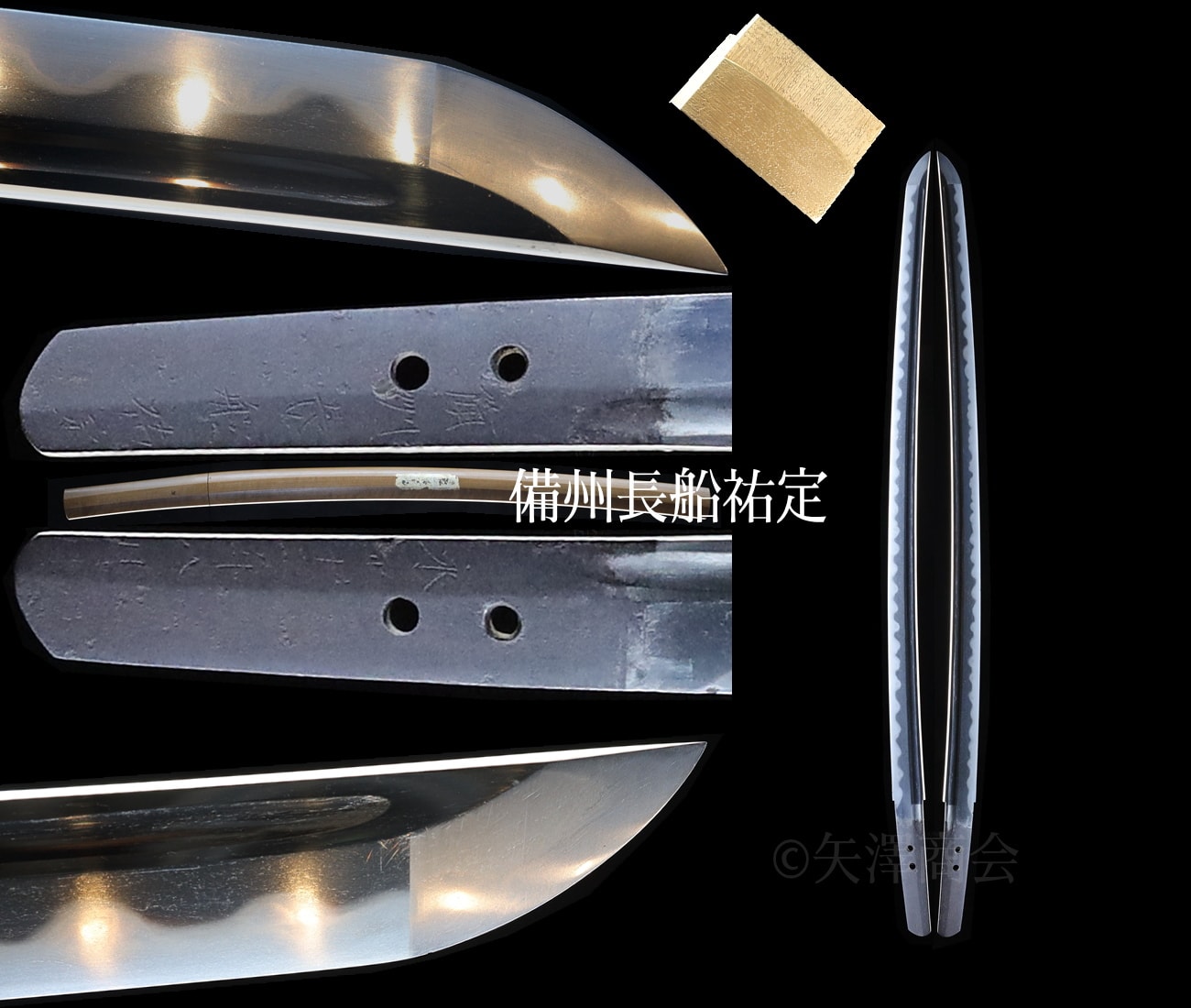
This katana is unsigned (mumei) and attributed to the late Muromachi period. It features an itame hada (wood grain pattern) and suguha hamon (straight temper line). The blade has a small kissaki (point) and a suriage nakago (shortened tang). It comes with a fine black saya (scabbard) and a kiku-gata (chrysanthemum-shaped) iron tsuba with inlay.
 NihontoWatch
suriage-mumei · Muromachi · nagasa 62.5cm · sori 2cm
The Muromachi period (1392 to 1573)
After the Ōnin War broke the Ashikaga order, a century of Sengoku warfare armed nearly every province in Japan. The era rewards a discriminating eye: routine work exists in quantity, and beside it stand custom blades of the first rank.
We could not find an authenticity certificate on the seller’s listing. Japanese swords and fittings are normally papered by the NBTHK (or the NTHK). Without one, the attribution is the seller’s own assessment and has not been independently verified — treat it with caution and ask the dealer about certification before buying.
¥300,000
This katana is unsigned (mumei) and attributed to the late Muromachi period. It features an itame hada (wood grain pattern) and suguha hamon (straight temper line). The blade has a small kissaki (point) and a suriage nakago (shortened tang). It comes with a fine black saya (scabbard) and a kiku-gata (chrysanthemum-shaped) iron tsuba with inlay.
NihontoWatchsuriage-mumei · Muromachi · nagasa 62.5cm · sori 2cm
The Muromachi period (1392 to 1573)
After the Ōnin War broke the Ashikaga order, a century of Sengoku warfare armed nearly every province in Japan. The era rewards a discriminating eye: routine work exists in quantity, and beside it stand custom blades of the first rank.
We could not find an authenticity certificate on the seller’s listing. Japanese swords and fittings are normally papered by the NBTHK (or the NTHK). Without one, the attribution is the seller’s own assessment and has not been independently verified — treat it with caution and ask the dealer about certification before buying.
¥300,000