Muromachi turned sword making into an industry: the uchigatana rose with massed infantry warfare, Osafune and Seki produced bundle swords beside custom orders, and the Ming trade carried Japanese blades abroad by the tens of thousands.
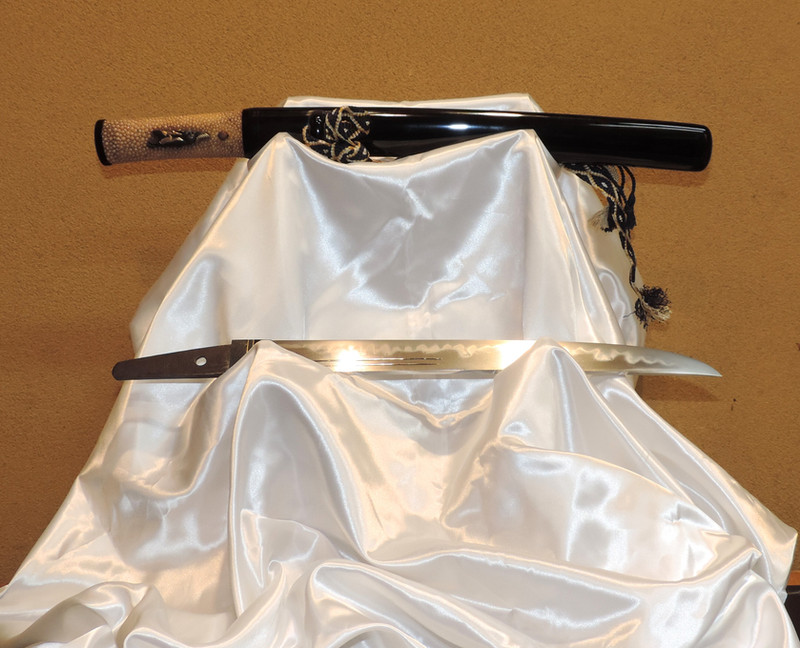
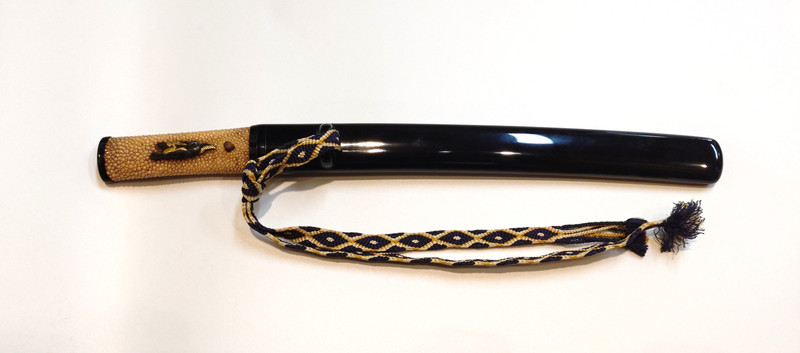
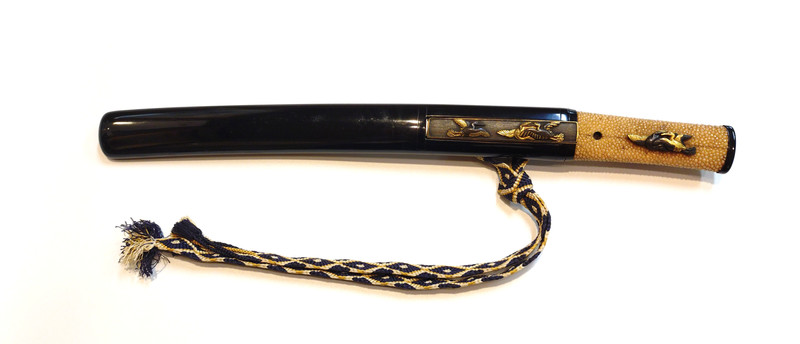
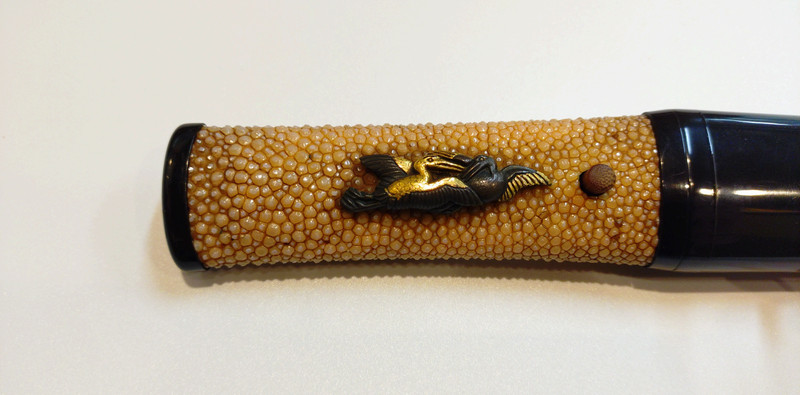
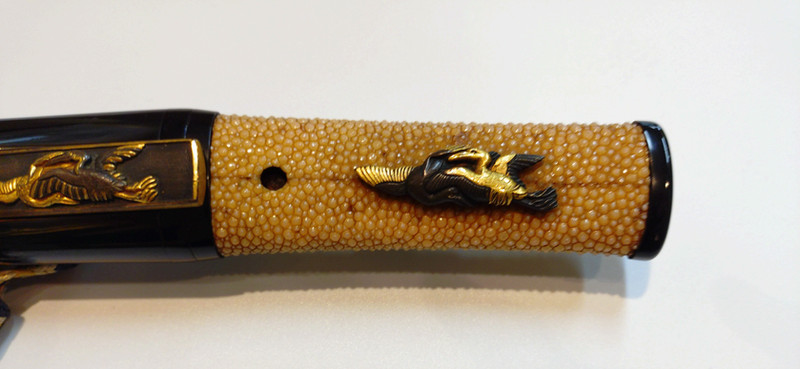
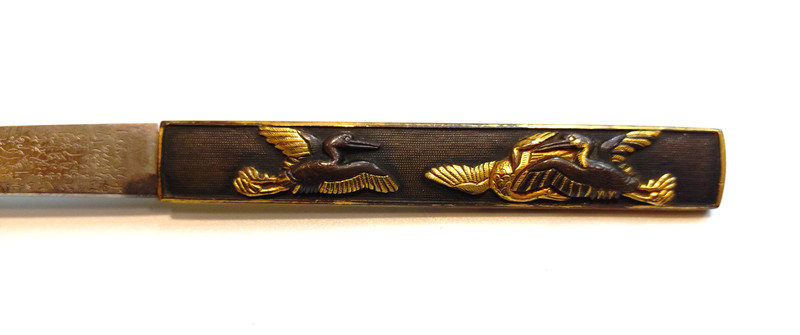
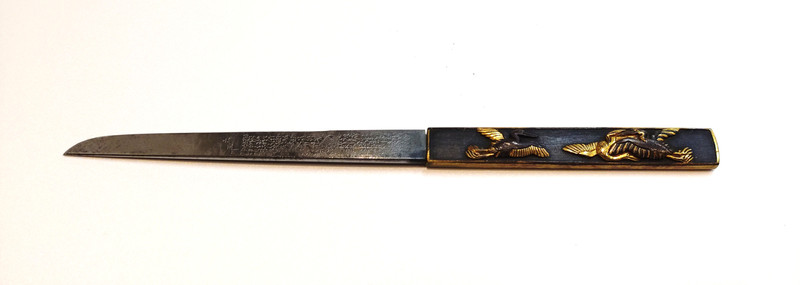
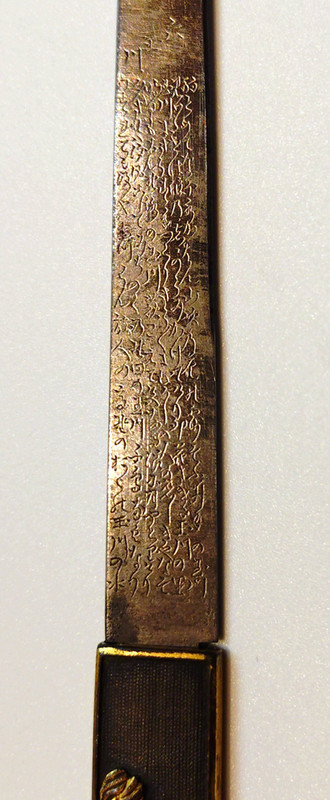
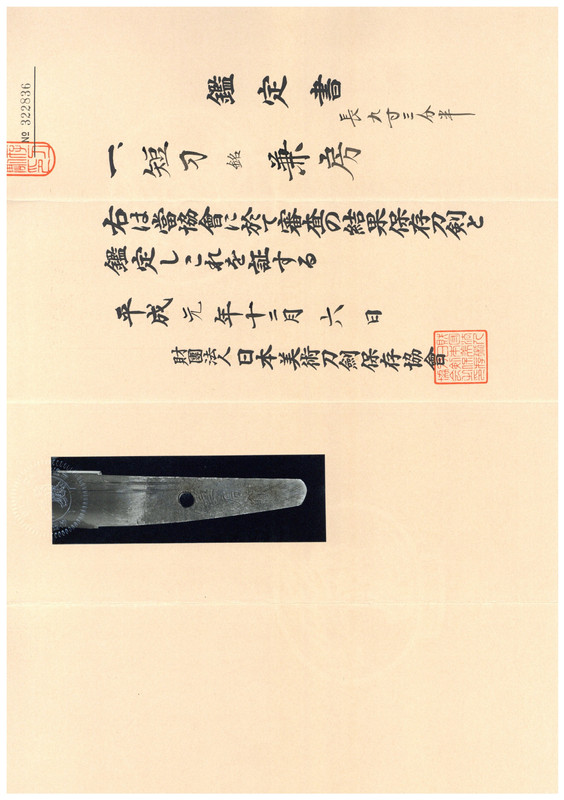
This is a Kanefusa-saku Tanto with Kuronuri-koshirae. This work is accompanied by Hozon Token papers. Kanefusa was a Mino smith; based on the "Kanefusa-saku" mei, this is considered to be from around the Bunmei era. Iori-mune, Hira-zukuri. (Nagasa) 9 sun 3 bu 5 rin. (Motohaba) 2.5 cm. (Jigane) Well-kneaded jigane with Itame-hada that has a flowing feel. (Hamon) Ko-nie deki, consisting of continuous Gunome-choji throughout with a wide yaki-haba. Sunagashi can be seen on the omote side. The nioiguchi is clear, tightening in places. (Boshi) Midare-komi, tsukiage and kaeru. The kaeshi is long. (Horimono) Futasuji-hi on the omote, Bo-hi on the ura. (Nakago) Higaki-yasuri. This swordsmith is famous for the large Gunome-choji known as "Kanefusa-midare." This piece exhibits typical Mino-den characteristics: a wide mihaba with a slight sori, kitae where the itame-hada flows and mixes with masame-gokoro, ji-nie, a hamon of Gunome-choji, a midare Jizo-boshi, and a nakago with higaki-yasuri. The hamon is ko-nie deki with some nioi deki areas where the nioiguchi tightens like Bizen-den, making it an interesting work where a variety of tempering styles can be observed. The koshirae is a representative kuronuri style. The lacquer itself is solid, and the same-hada on the tsuka remains in good condition with a tasteful color. The kozuka and menuki feature a Sokaku (twin cranes) motif, decorated with iro-e fittings on the feathers to give a gorgeous impression. The kogatana attached to the kozuka has the poem of Mutamagawa finely engraved on the surface, making it a deeply atmospheric piece.
 NihontoWatch
signed · 美濃 · Bunki (1501-1504) · nagasa 28.33cm


Mino · around 1501-1504
1 piece on the market now
Muromachi turned sword making into an industry: the uchigatana rose with massed infantry warfare, Osafune and Seki produced bundle swords beside custom orders, and the Ming trade carried Japanese blades abroad by the tens of thousands.
Certifies a genuine blade worth preserving: a signature confirmed correct, or, if unsigned, an era, province, and school that the NBTHK can reliably identify.
The NBTHK (Nihon Bijutsu Tōken Hozon Kyōkai, the Society for the Preservation of Japanese Art Swords) is a public-interest incorporated foundation founded in 1948 and supervised by Japan’s Agency for Cultural Affairs (Bunkachō); it is based at the Japanese Sword Museum in Tokyo. Its expert panels physically examine each submitted work (shinsa) and issue a certificate (kanteishō) ranking it by artistic and historical merit. NBTHK papers are the most widely recognized standard of authentication for Japanese swords and fittings.
NBTHK official siteFor purchases made through the website, we accept returns of the item as a cooling-off period within one week of its arrival.

This is a Kanefusa-saku Tanto with Kuronuri-koshirae. This work is accompanied by Hozon Token papers. Kanefusa was a Mino smith; based on the "Kanefusa-saku" mei, this is considered to be from around the Bunmei era. Iori-mune, Hira-zukuri. (Nagasa) 9 sun 3 bu 5 rin. (Motohaba) 2.5 cm. (Jigane) Well-kneaded jigane with Itame-hada that has a flowing feel. (Hamon) Ko-nie deki, consisting of continuous Gunome-choji throughout with a wide yaki-haba. Sunagashi can be seen on the omote side. The nioiguchi is clear, tightening in places. (Boshi) Midare-komi, tsukiage and kaeru. The kaeshi is long. (Horimono) Futasuji-hi on the omote, Bo-hi on the ura. (Nakago) Higaki-yasuri. This swordsmith is famous for the large Gunome-choji known as "Kanefusa-midare." This piece exhibits typical Mino-den characteristics: a wide mihaba with a slight sori, kitae where the itame-hada flows and mixes with masame-gokoro, ji-nie, a hamon of Gunome-choji, a midare Jizo-boshi, and a nakago with higaki-yasuri. The hamon is ko-nie deki with some nioi deki areas where the nioiguchi tightens like Bizen-den, making it an interesting work where a variety of tempering styles can be observed. The koshirae is a representative kuronuri style. The lacquer itself is solid, and the same-hada on the tsuka remains in good condition with a tasteful color. The kozuka and menuki feature a Sokaku (twin cranes) motif, decorated with iro-e fittings on the feathers to give a gorgeous impression. The kogatana attached to the kozuka has the poem of Mutamagawa finely engraved on the surface, making it a deeply atmospheric piece.
NihontoWatchsigned · 美濃 · Bunki (1501-1504) · nagasa 28.33cm
Mino · around 1501-1504
1 piece on the market now
Muromachi turned sword making into an industry: the uchigatana rose with massed infantry warfare, Osafune and Seki produced bundle swords beside custom orders, and the Ming trade carried Japanese blades abroad by the tens of thousands.
Certifies a genuine blade worth preserving: a signature confirmed correct, or, if unsigned, an era, province, and school that the NBTHK can reliably identify.
The NBTHK (Nihon Bijutsu Tōken Hozon Kyōkai, the Society for the Preservation of Japanese Art Swords) is a public-interest incorporated foundation founded in 1948 and supervised by Japan’s Agency for Cultural Affairs (Bunkachō); it is based at the Japanese Sword Museum in Tokyo. Its expert panels physically examine each submitted work (shinsa) and issue a certificate (kanteishō) ranking it by artistic and historical merit. NBTHK papers are the most widely recognized standard of authentication for Japanese swords and fittings.
NBTHK official siteFor purchases made through the website, we accept returns of the item as a cooling-off period within one week of its arrival.