 NihontoWatchNihontoWatch
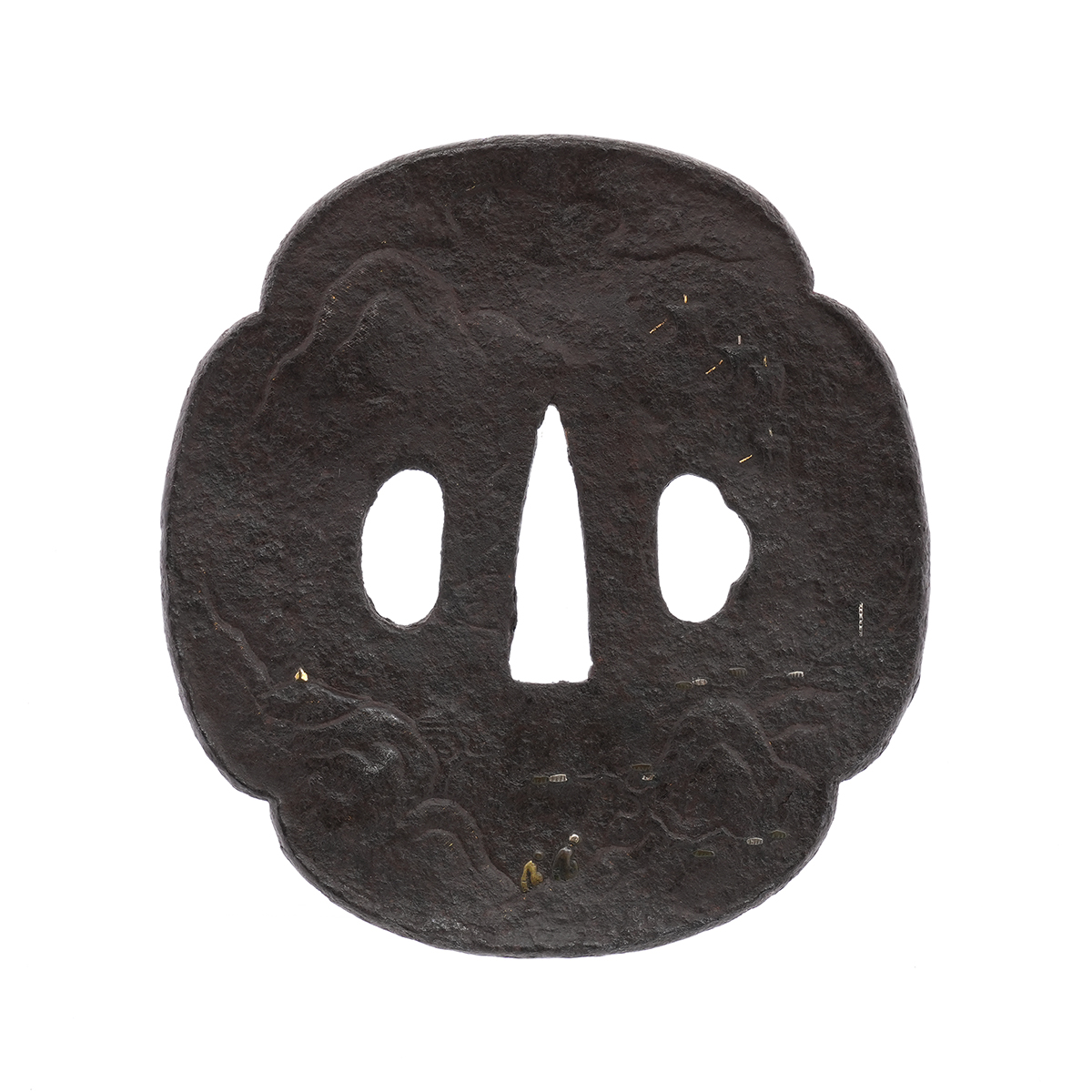
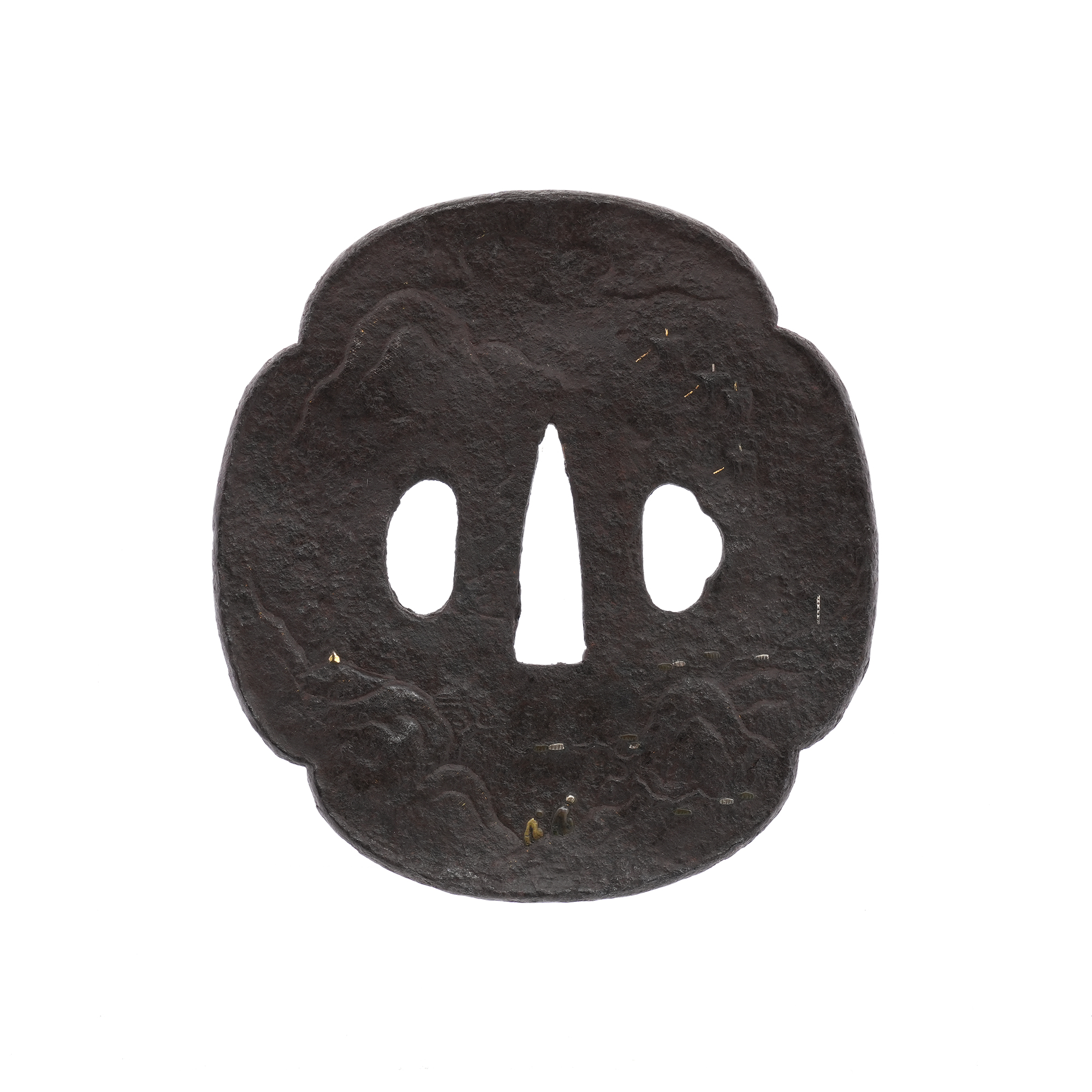
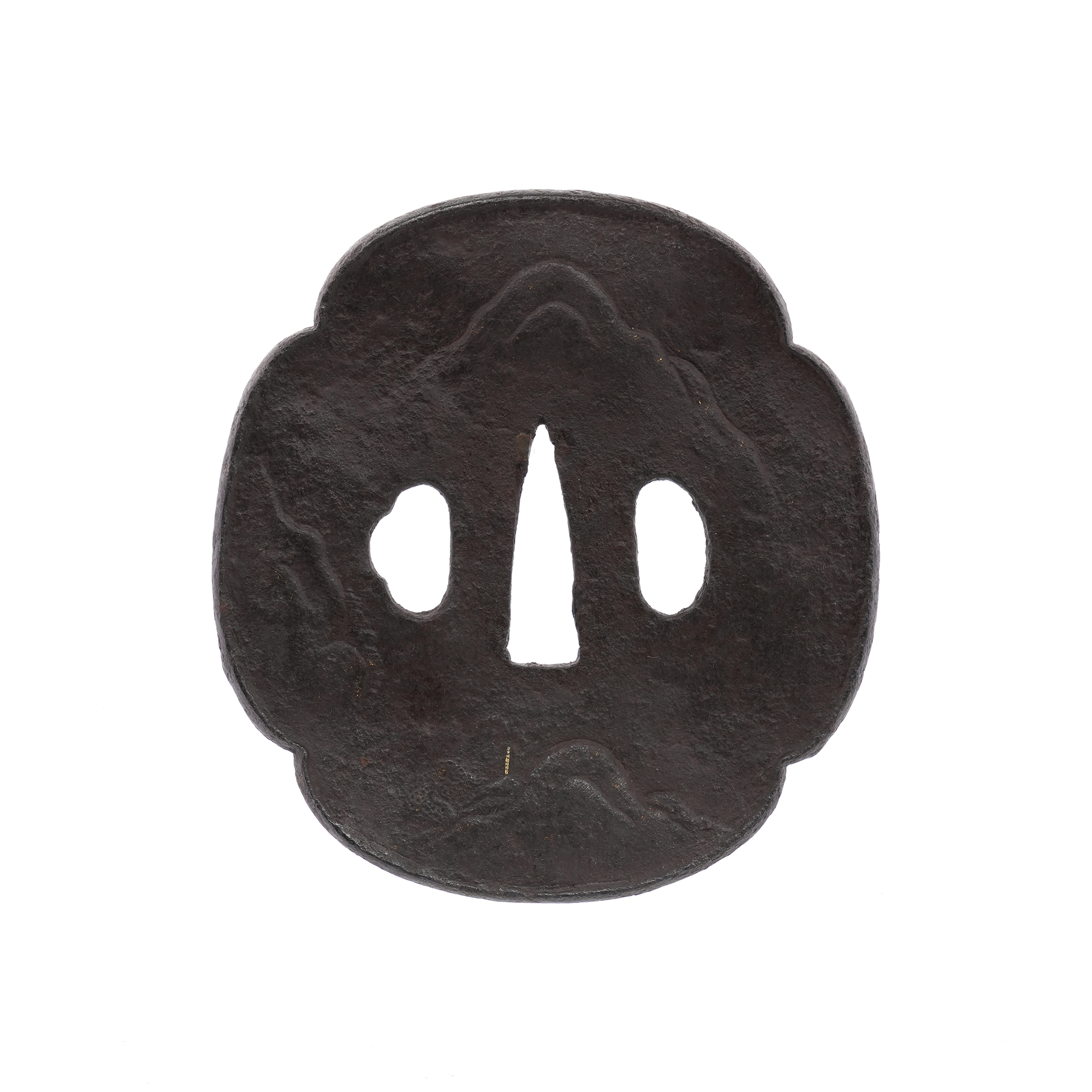
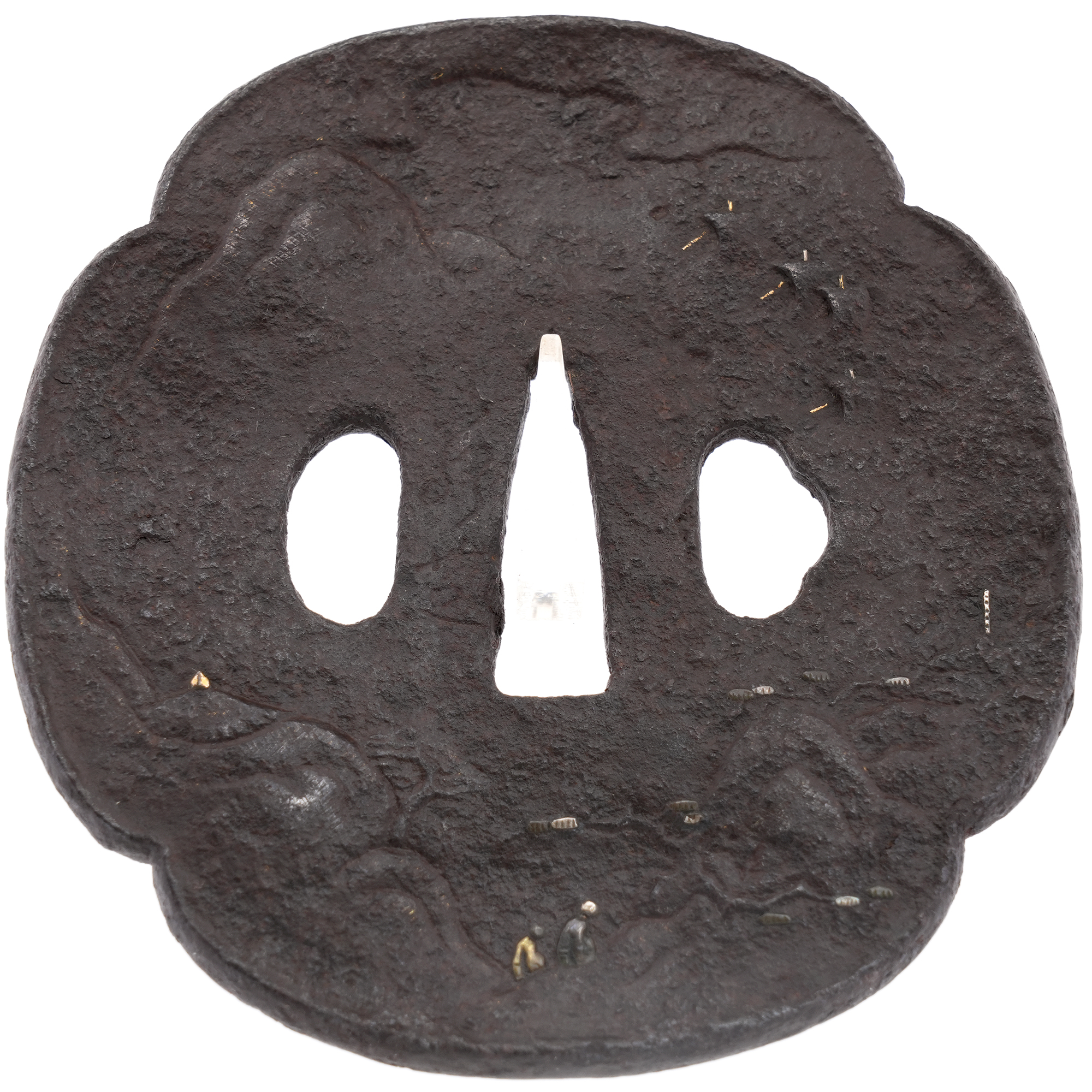
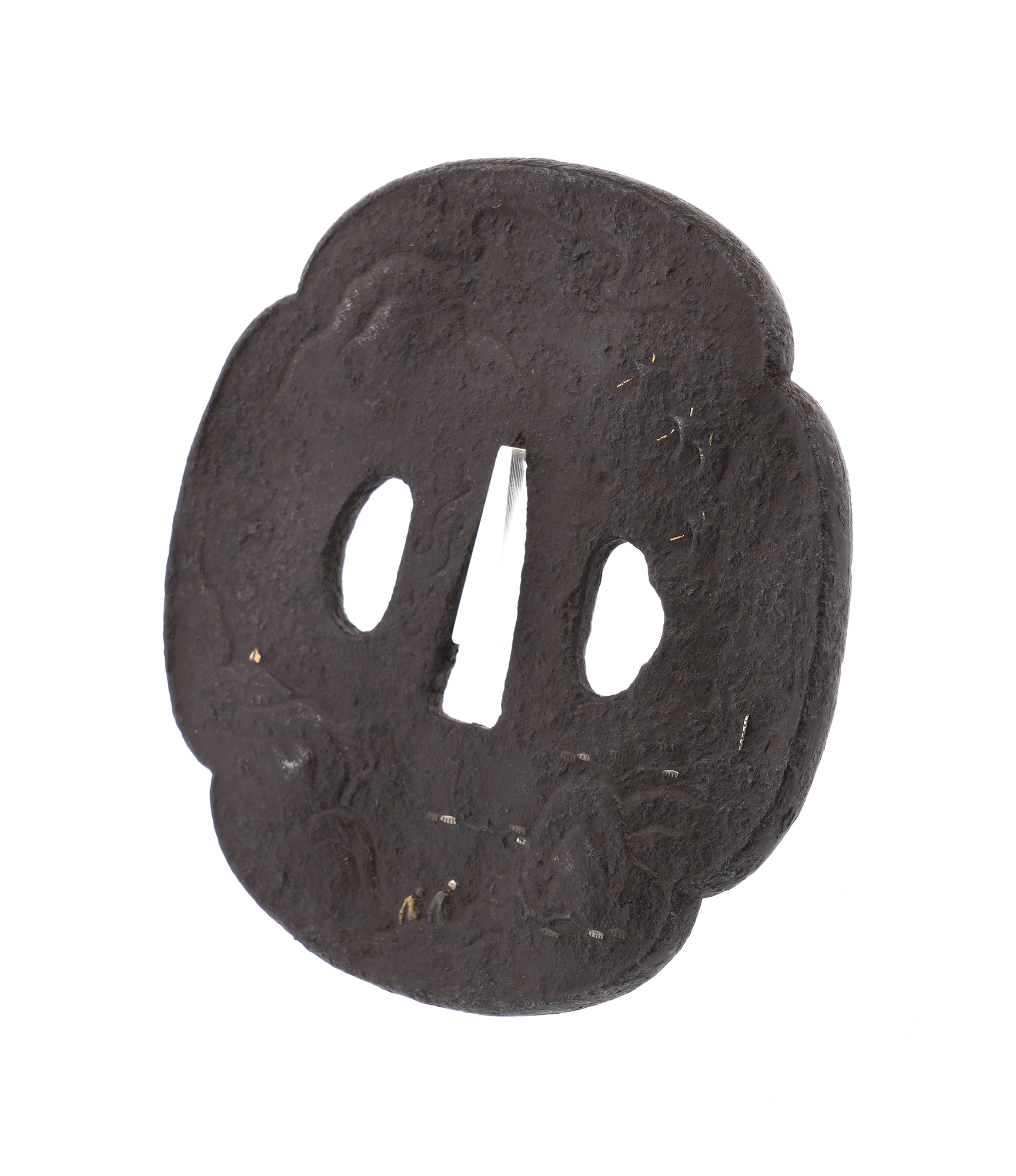
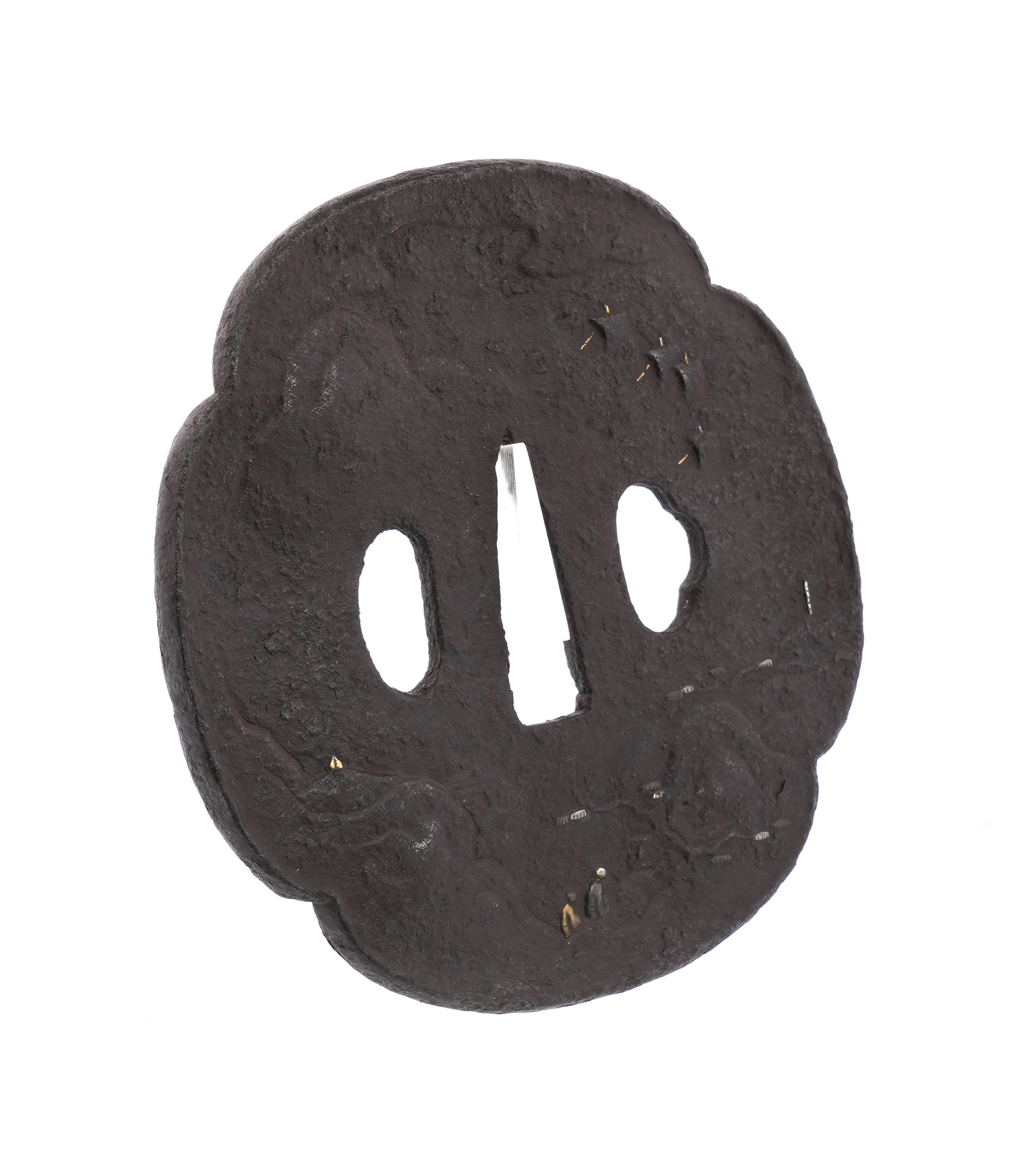
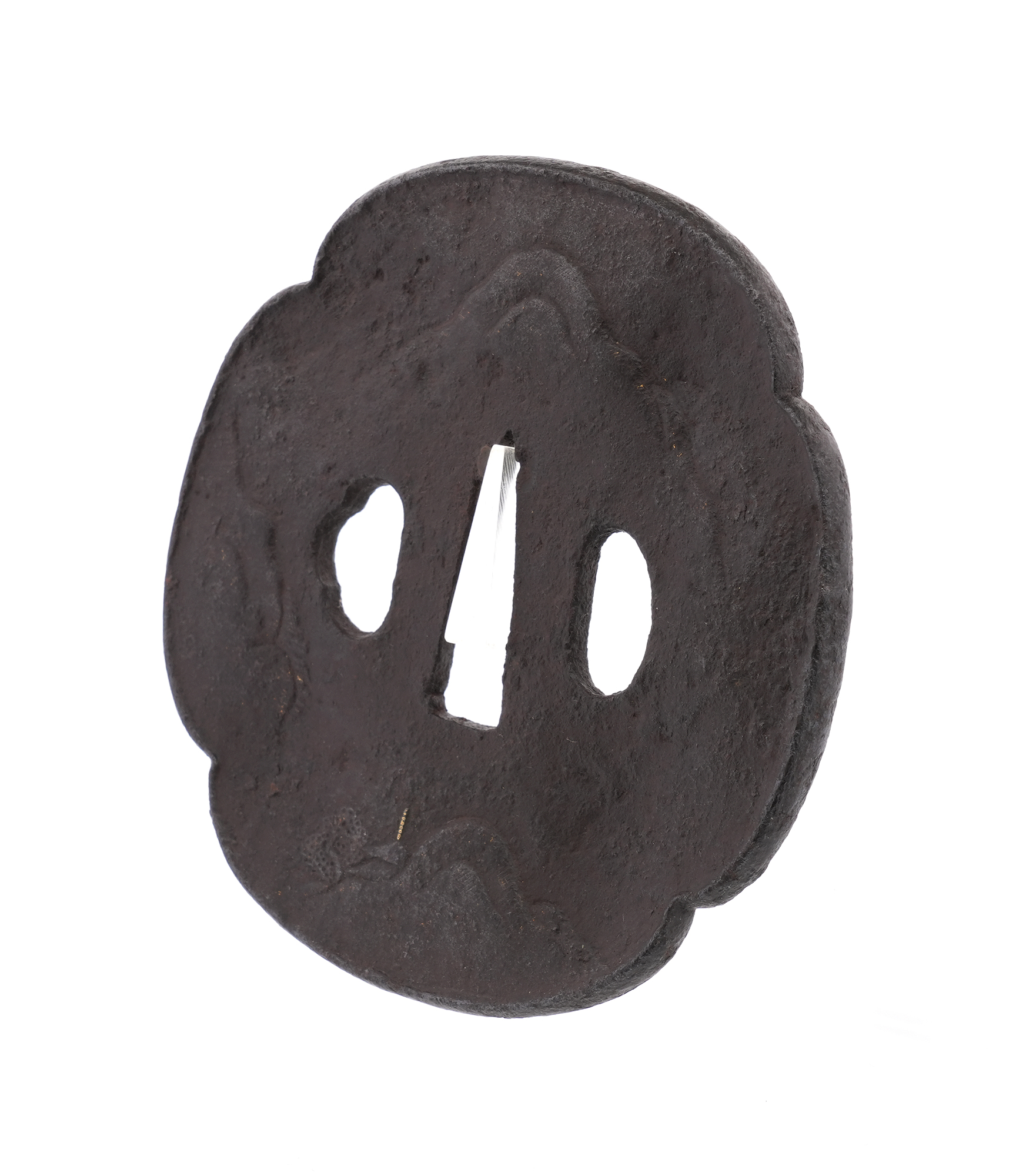
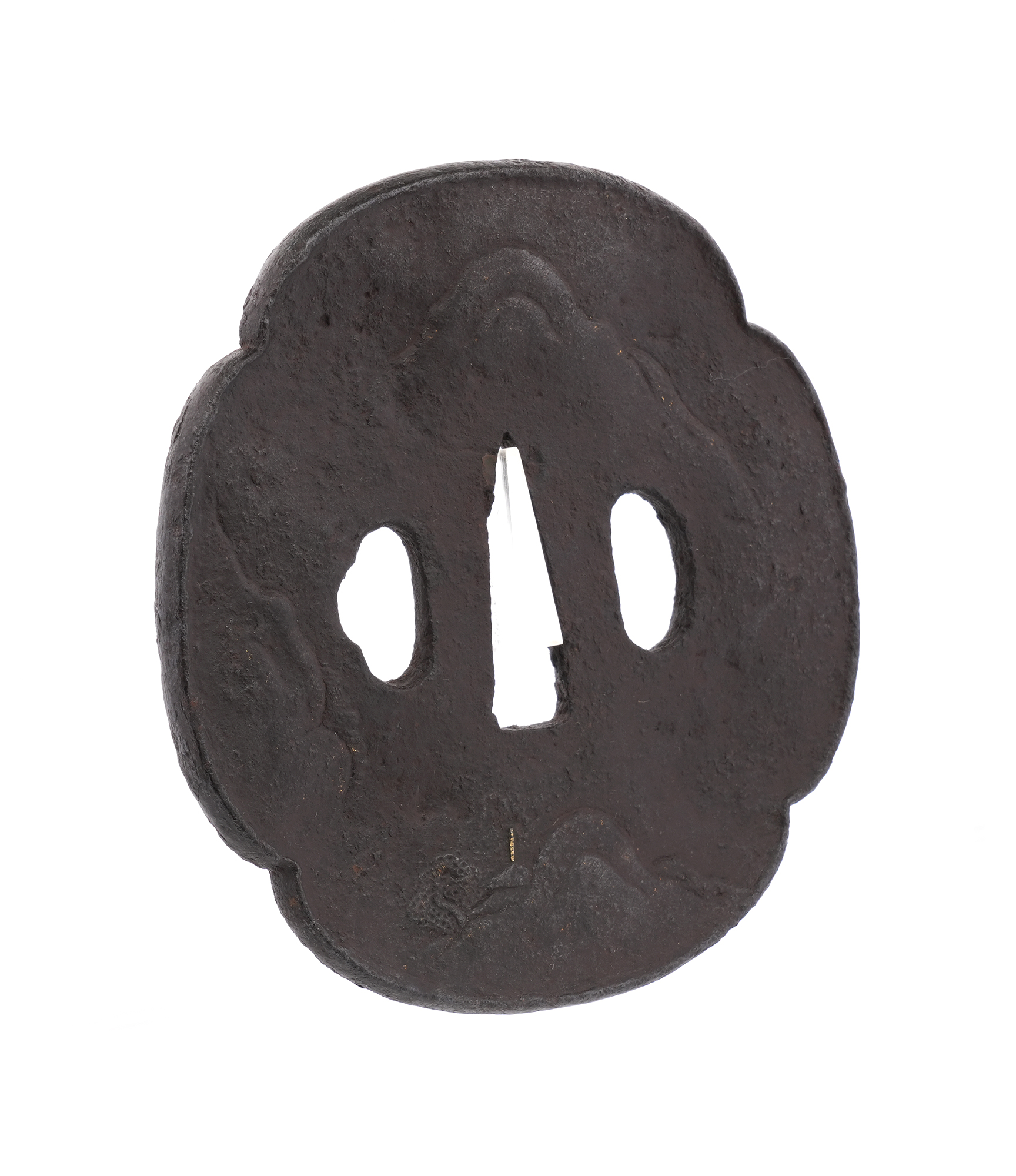
Wakashiba is a lineage of tsubako who look to Kawamura Wakashiba, a painter-monk and painter active in Nagasaki during the early Edo period who was also known as a sword fitting metalworker, as their founder. It is said that Kawamura Wakashiba studied painting under the Obaku monk Itsunen in Nagasaki and excelled at figures and landscapes influenced by Chinese painting, while learning metalworking techniques from the immigrant monk Mokuan Shoto. This style was passed down to later generations, and craftsmen using the name Wakashiba continued for generations. Many Wakashiba tsuba use a corrosion technique called kusarakashi on the tetsu-ji to create undulations like usuniku-bori, combined with sukisage and fine nunome-zogan, and they are known for themes imbued with the flavor of Chinese painting, such as sansui jinbutsu-zu, take-zu, and unryu-zu. This work is a tsuba depicting the scene of "Yabase Kihan," one of the Omi Hakkei, on a slightly vertical and large-sized tetsu-ji mokko-gata. The overall dimensions are a grand 86.0 mm in length and 80.3 mm in width, with a contour gently projecting in four directions and hitsu-ana arranged on the left and right, possessing a moderate sense of volume with a seppa-dai thickness of 4.3 mm and a weight of 140 grams. Overlapping distant mountains are placed at the top of the omote, and four sailing ships float on the water surface below them. It is thought to be based on the scene of ships heading from Yabase to Otsu returning in the evening, with gold and silver zogan interspersed on the sails and hulls, adding small glints of light within the distant view. By placing a large mountain foot as the Chikakage at the bottom and depicting two figures traveling on the path between them, a three-tiered composition of distant mountains, sailing ships on the lake, and travelers in the foreground is created, organizing a landscape with depth within the limited surface of the tsuba. On the ura, distant mountains at the top and nearby mountains at the bottom are concisely arranged, showing a spacious landscape world continuous from the lake scene on the omote; there is no breakdown in the composition which is conscious of perspective, well conveying the atmosphere of the Chinese sansui-ga style in which the Wakashiba lineage excelled.
NihontoWatchOffered by Toushin

We couldn’t find current papers for this piece. Ask the dealer whether it has been, or can be, submitted to shinsa. — Hoshi

Jakushi
As written by the shop
Machine translation from the shop's Japanese · may contain errors ·
We could not find an authenticity certificate on the seller’s listing. Japanese swords and fittings are normally papered by the NBTHK (or the NTHK). Without one, the attribution is the seller’s own assessment and has not been independently verified — treat it with caution and ask the dealer about certification before buying.
As a rule we do not accept returns, except when we have sent a different item from the one ordered or when there is a significant discrepancy between the description and the item. If you wish to return an item, please contact us within 3 days of its arrival and then send it back.
¥38,500