 NihontoWatchNihontoWatch
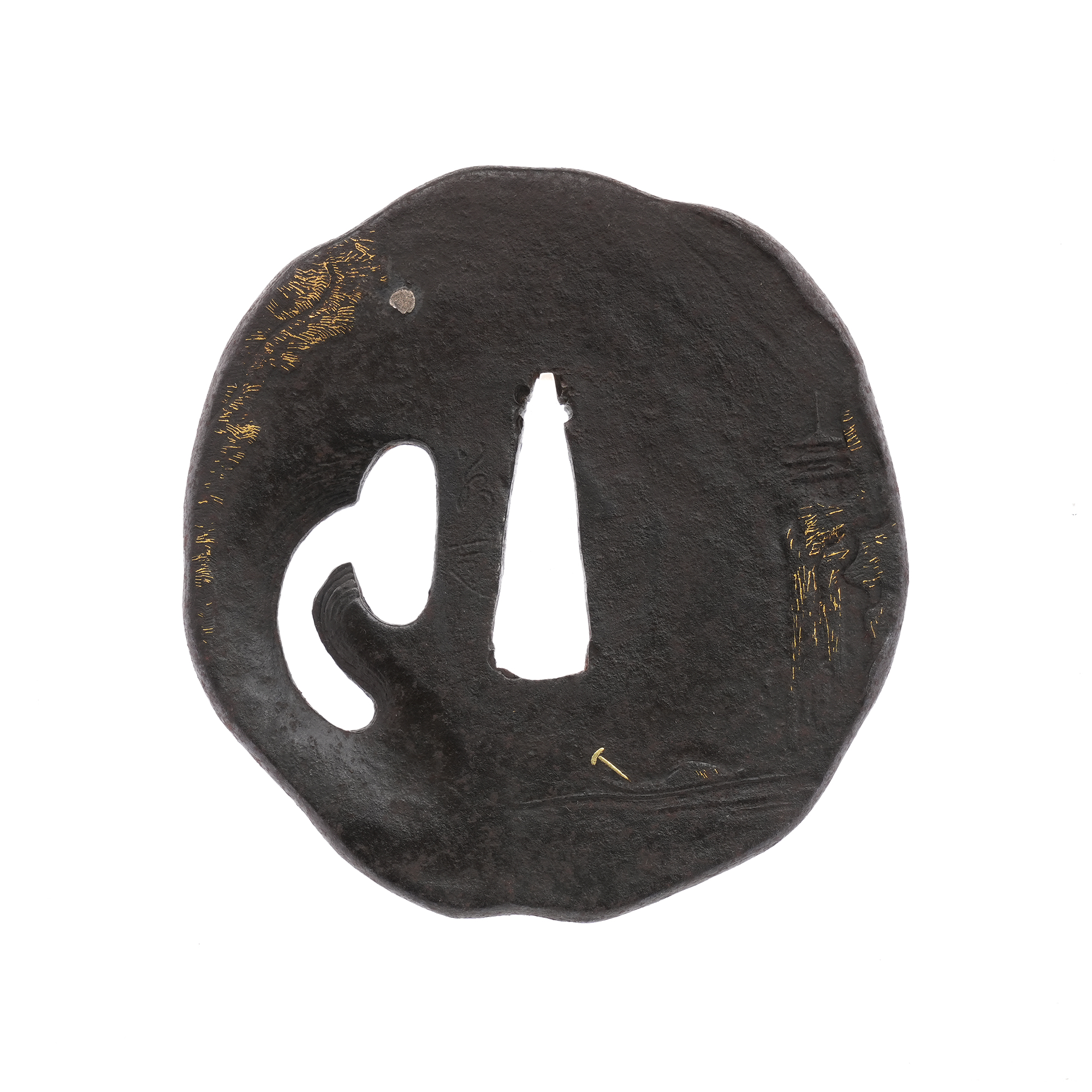
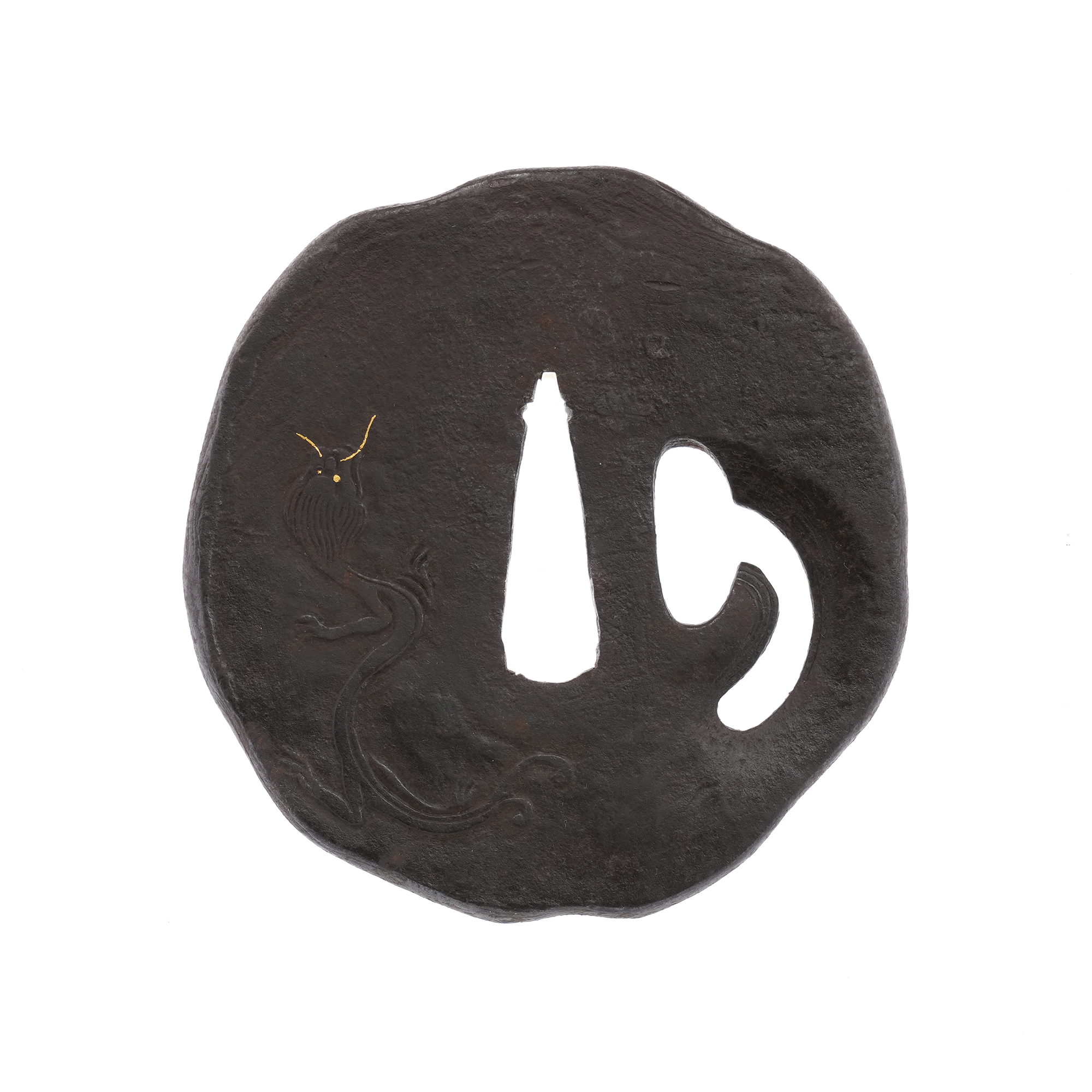
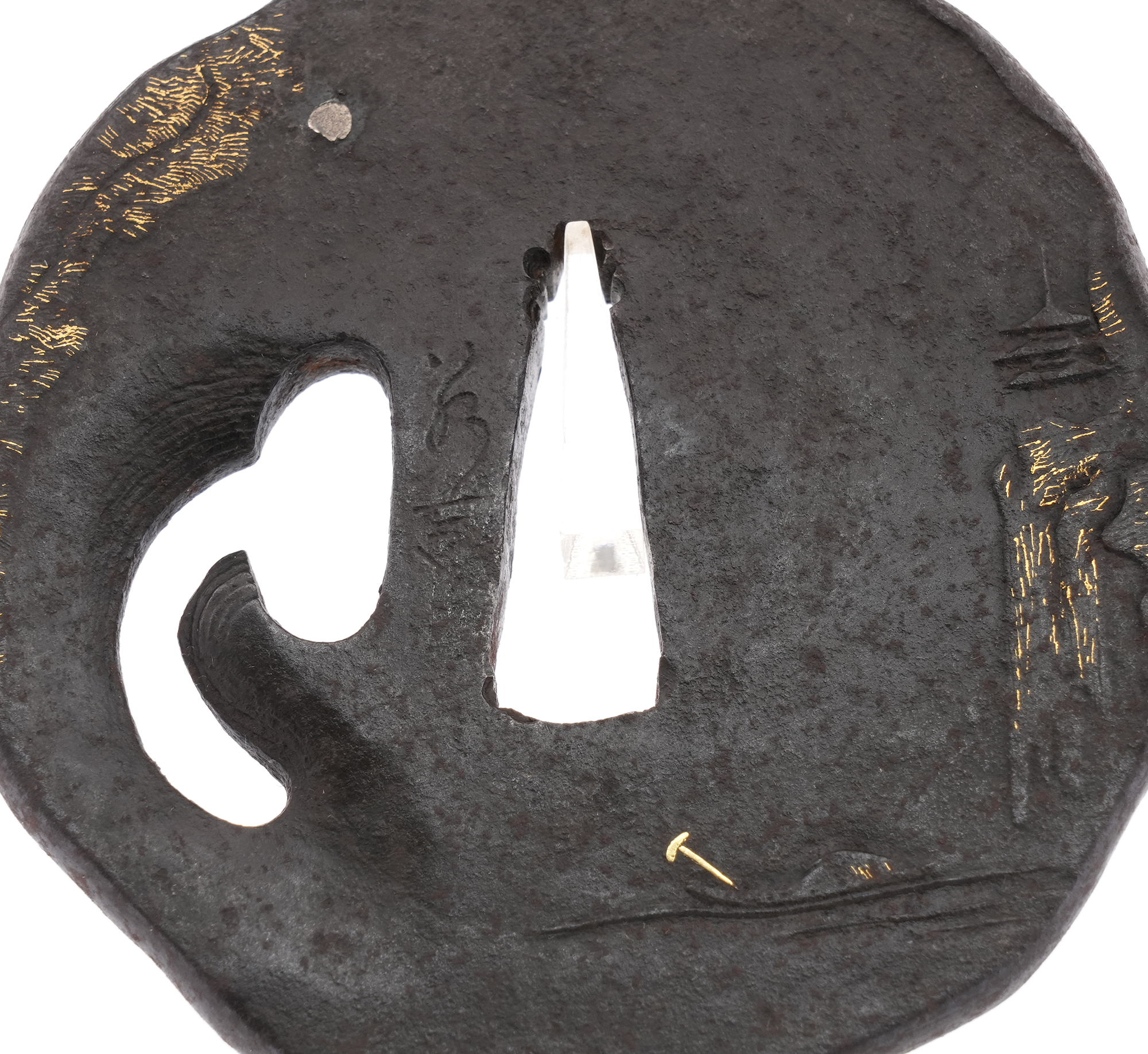
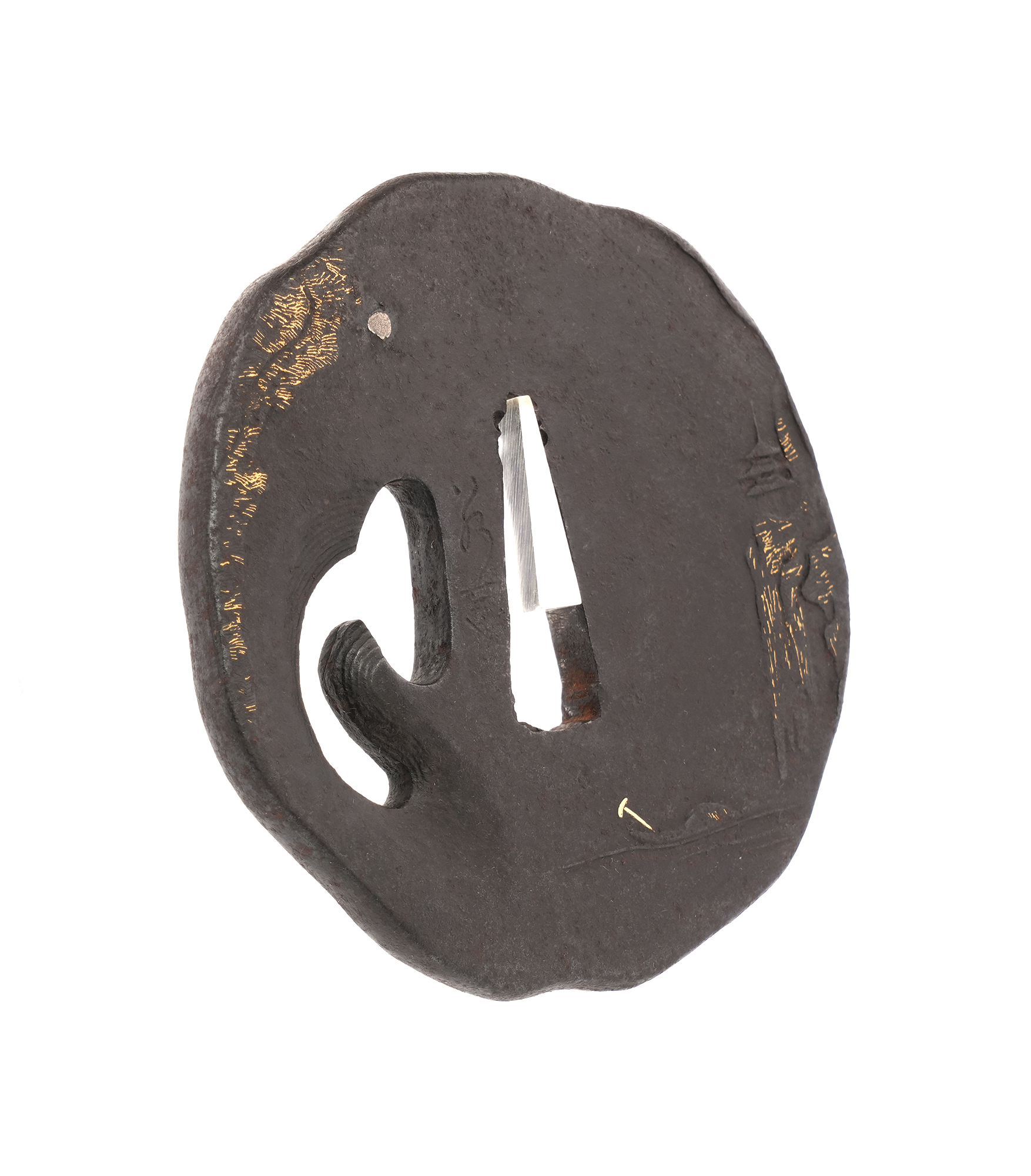
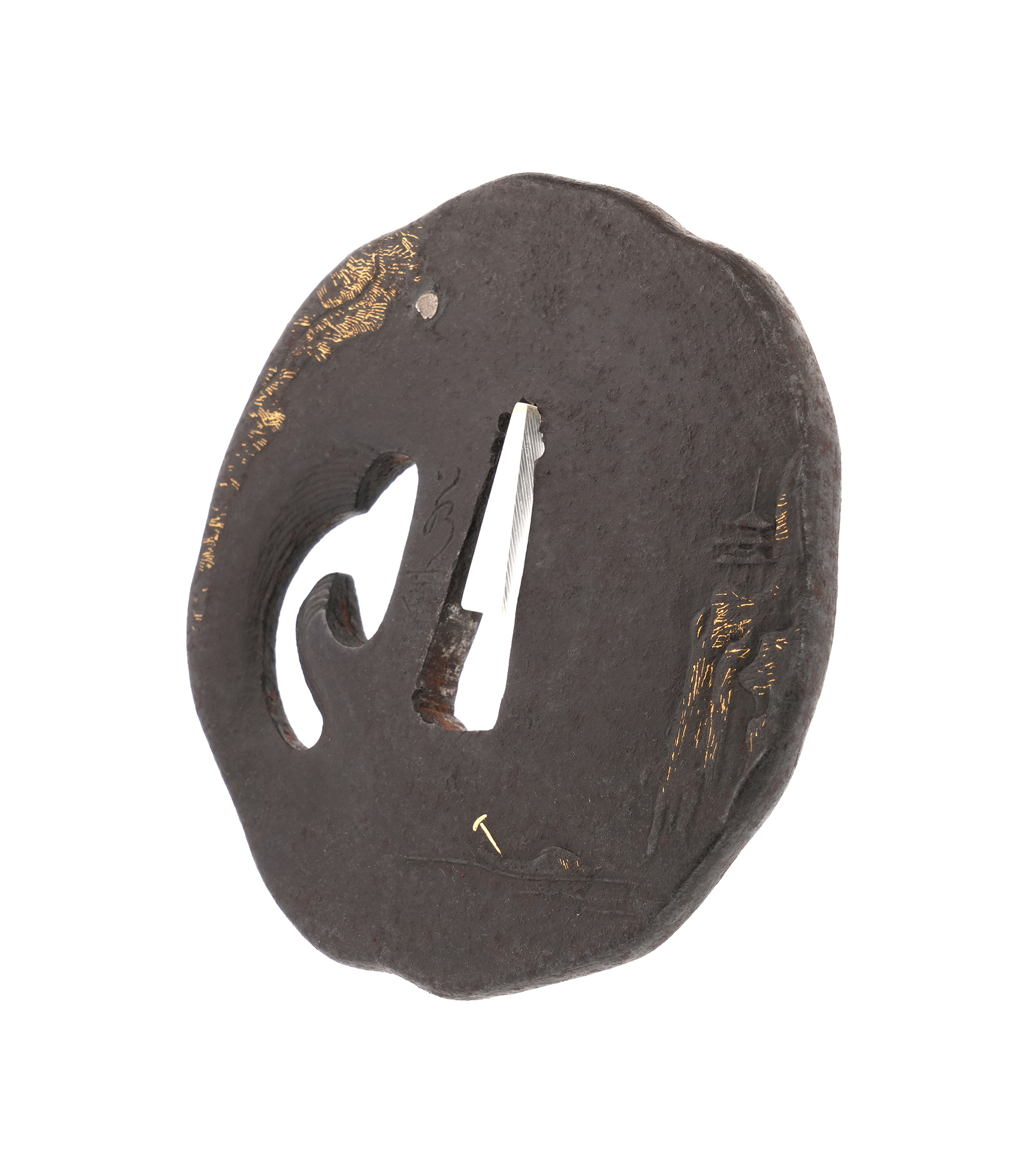
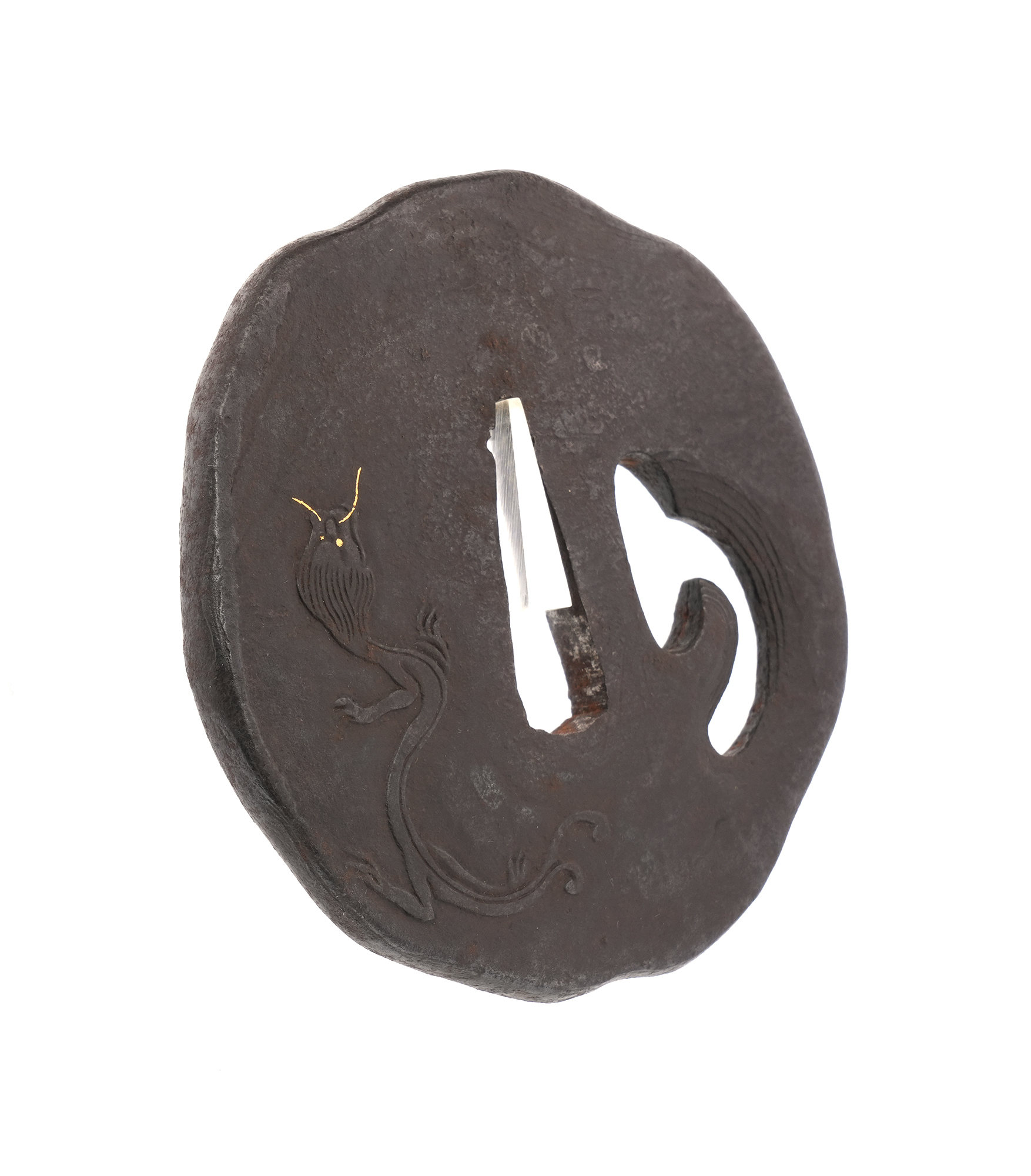
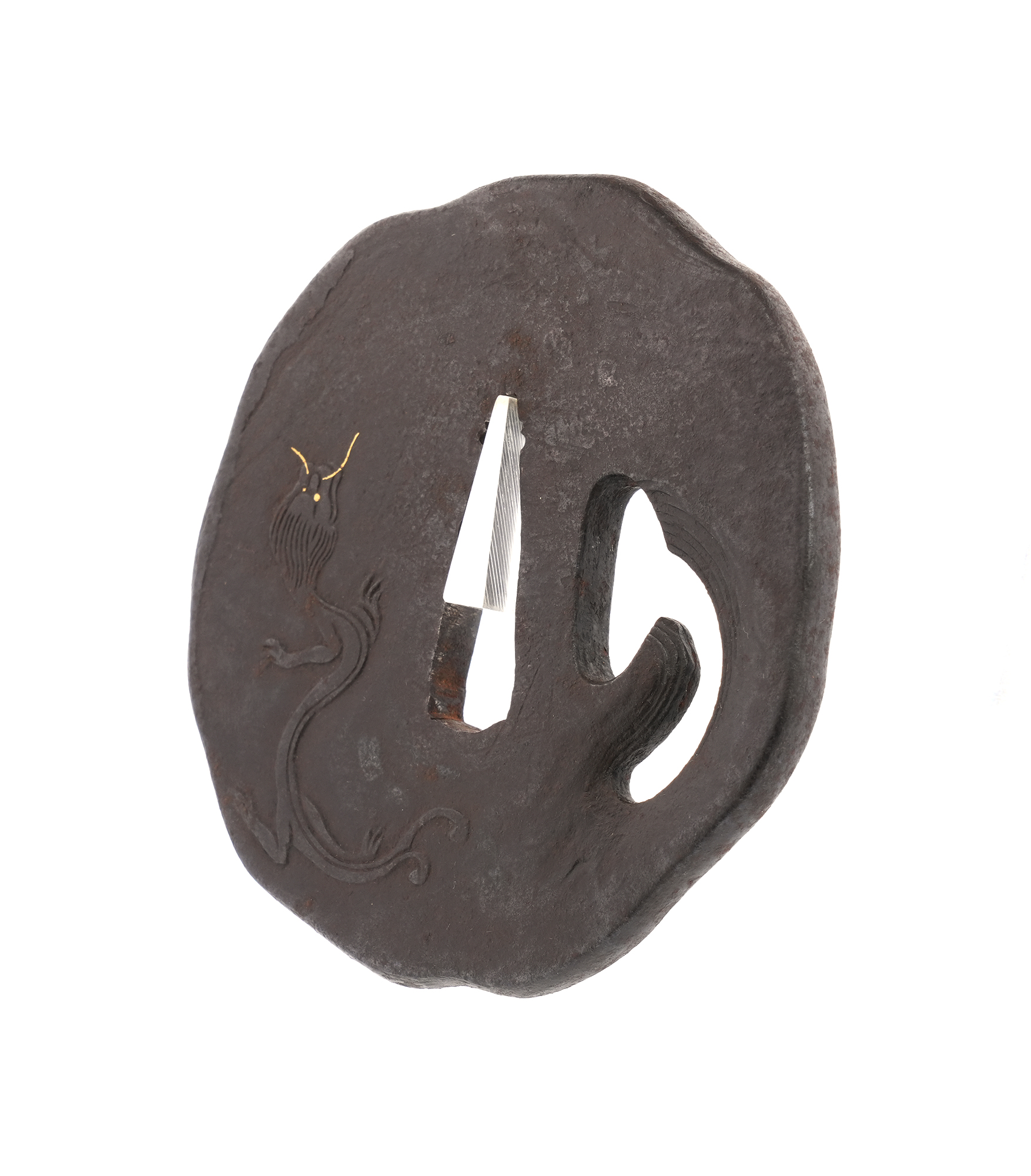
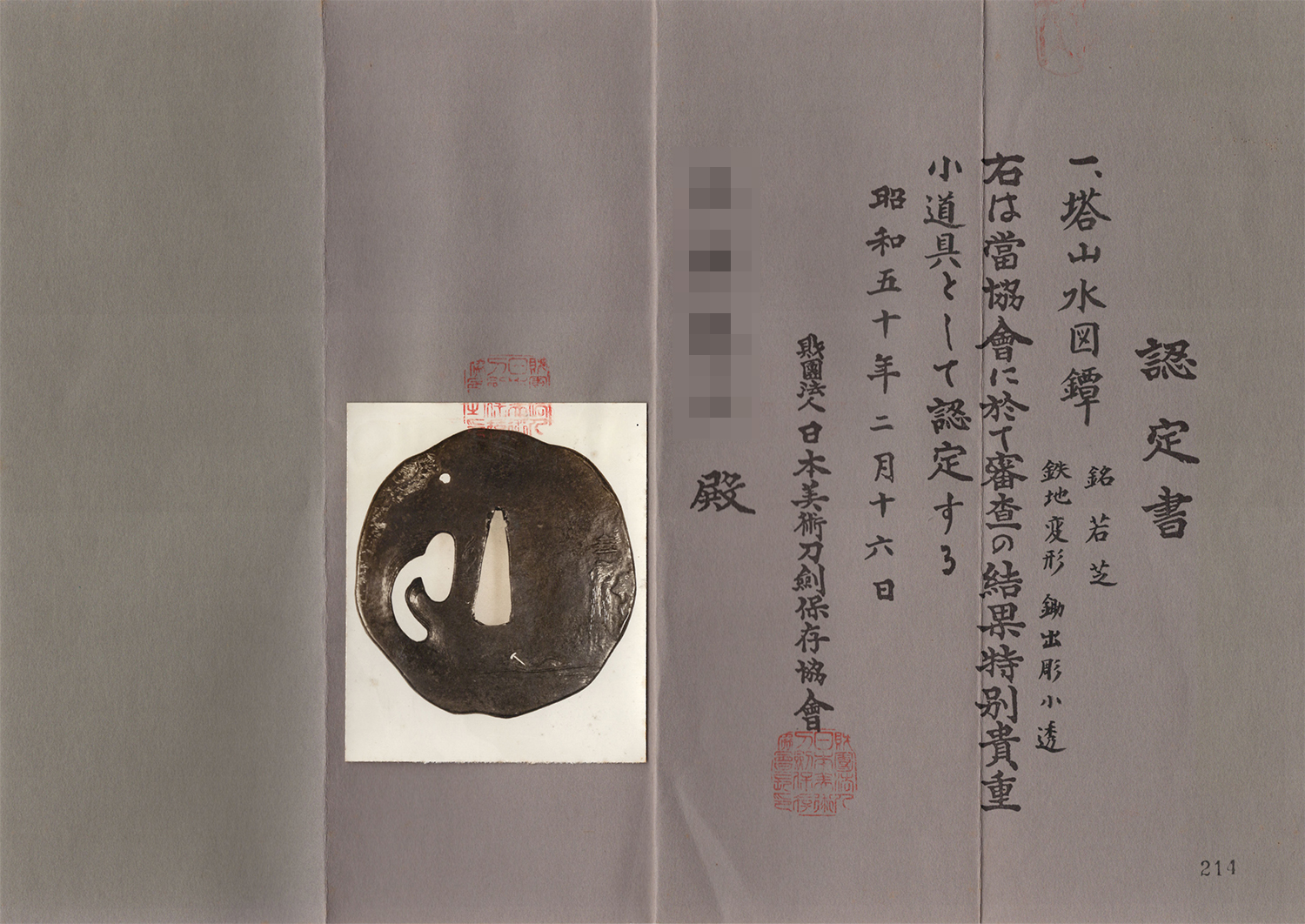
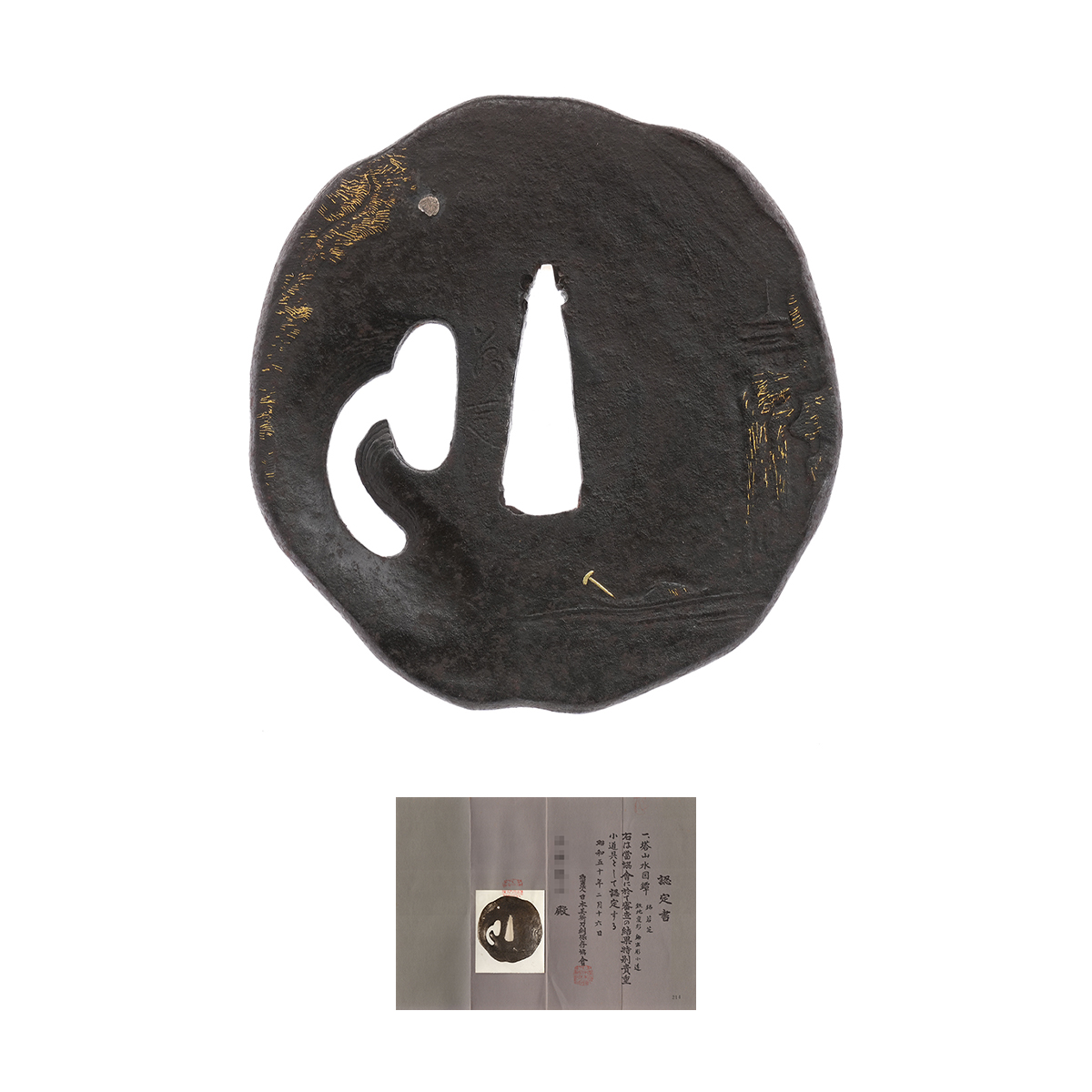
The latter period of Edo era Attached: Tokubetsu Kicho Kodogu Ninteisho, paulownia box There are various theories regarding the Wakashiba school, but it is said that there were two individuals named Wakashiba who originated from the Kawamura clan of Saga. One was Kawamura Wakashiba, whose primary profession was painting; he went to Nagasaki to study under the Chinese monk Itsunen and excelled in Buddhist paintings as well as bird-and-flower and landscape paintings. The other was named Kawamura Kizaemon, who worked as a tsubako while being influenced by the painter Wakashiba in terms of painting methods and design, and this Kizaemon is considered the founder of the Wakashiba school of tsubako. The Wakashiba school continued for several generations thereafter, and is known for a style that depicts literati themes such as bamboo in the wind, landscapes, and dragons in clouds on a round tetsu-ji plate, skillfully employing furashi and nunome zogan. The mei is often cut with the two characters "Wakashiba" in sosho style, and the school is evaluated as a group that possesses a unique poetic charm among Hizen kinko. This work is a piece that expresses a landscape scene simply yet with deep flavor on a thick tetsu-ji plate fashioned into an irregular shape, and a deep koshoku nurtured by many years appears on the jimane, which, combined with the tetsu-aji that retains the kitae-hada, exudes a calm dignity. On the omote, centered around a pagoda towering in the mountains, a boat moored at the shore and waterside scenery are arranged, expressing a profound and remote scene enveloped in silence. A moon in gin zogan shines in the sky, and kin zogan is applied to the oar of the boat, adding an effective accent within the restrained composition. Despite the limited decoration, it skillfully expresses a night scene illuminated by moonlight, leaving a deep lingering impression on the viewer. On the ura, an amaryu drifting between clouds is expressed in usuniku-bori, with eyes and antennae in kin zogan radiating a quiet presence. By combining the serene landscape scenery of the omote with the dragon design of the ura, the mystery of nature and auspiciousness are skillfully contained within a single tsuba, revealing the creator's excellent conceptual power.
NihontoWatchOffered by Toushin
Its only papers are older green Kichō papers, which the NBTHK largely disavows today. Ask the dealer whether it has passed current shinsa. — Hoshi

As written by the shop
Machine translation from the shop's Japanese · may contain errors ·
This work carries older NBTHK “Kichō”-era papers, which the NBTHK no longer issues and largely disavows today. To confirm the attribution, submission to an official Japanese examination body (such as the NBTHK or NTHK) for modern certification could be considered.
As a rule we do not accept returns, except when we have sent a different item from the one ordered or when there is a significant discrepancy between the description and the item. If you wish to return an item, please contact us within 3 days of its arrival and then send it back.
¥99,000