 NihontoWatchNihontoWatch
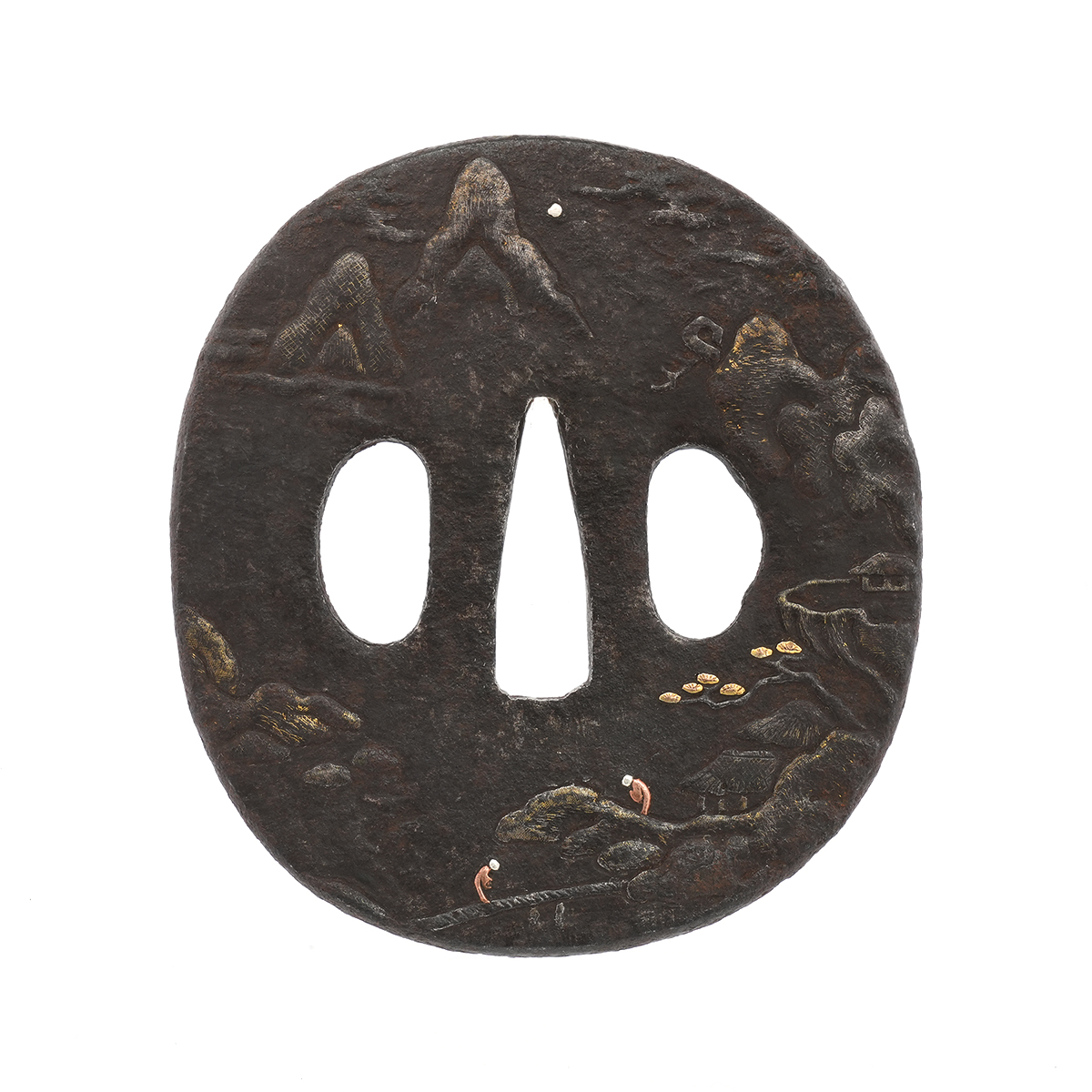
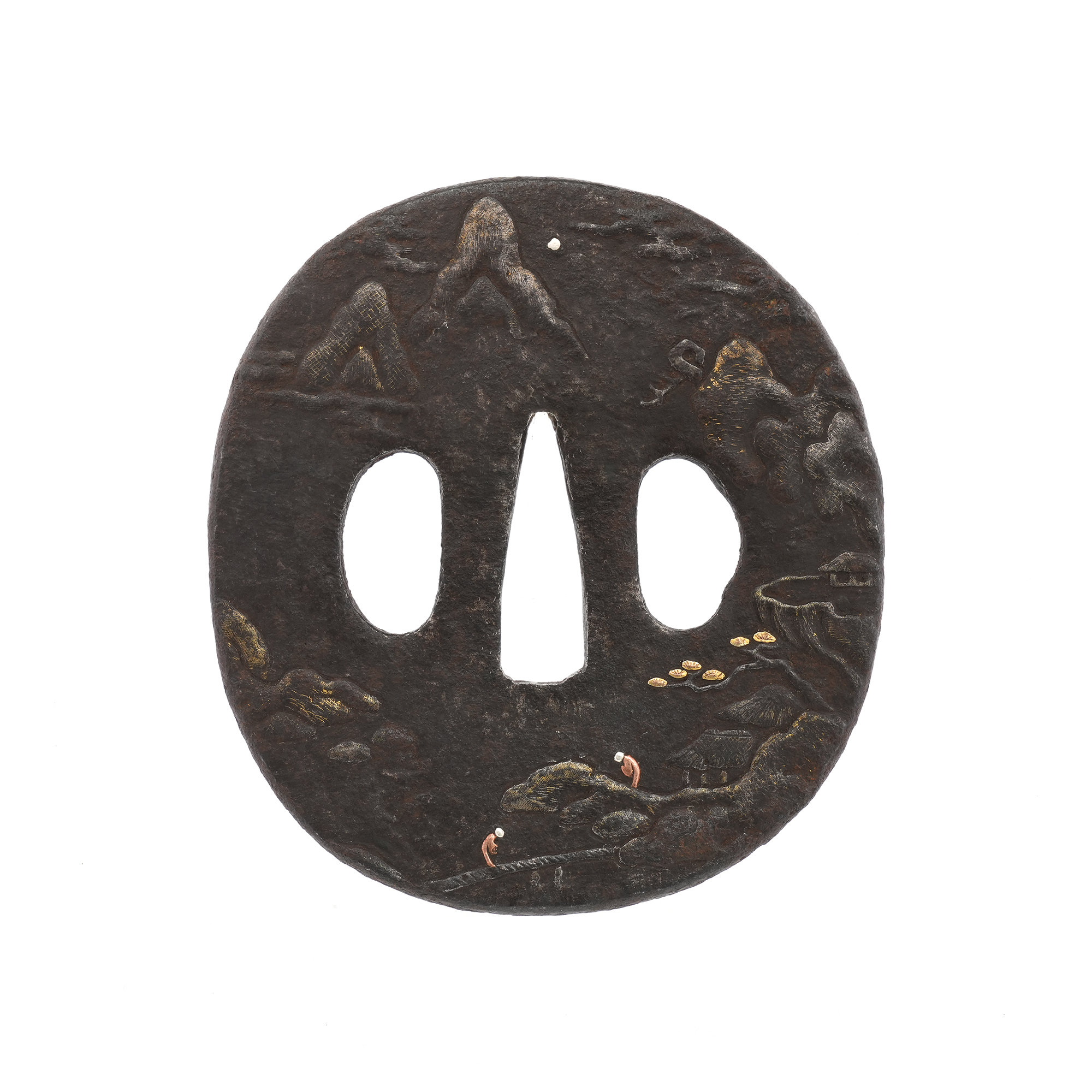
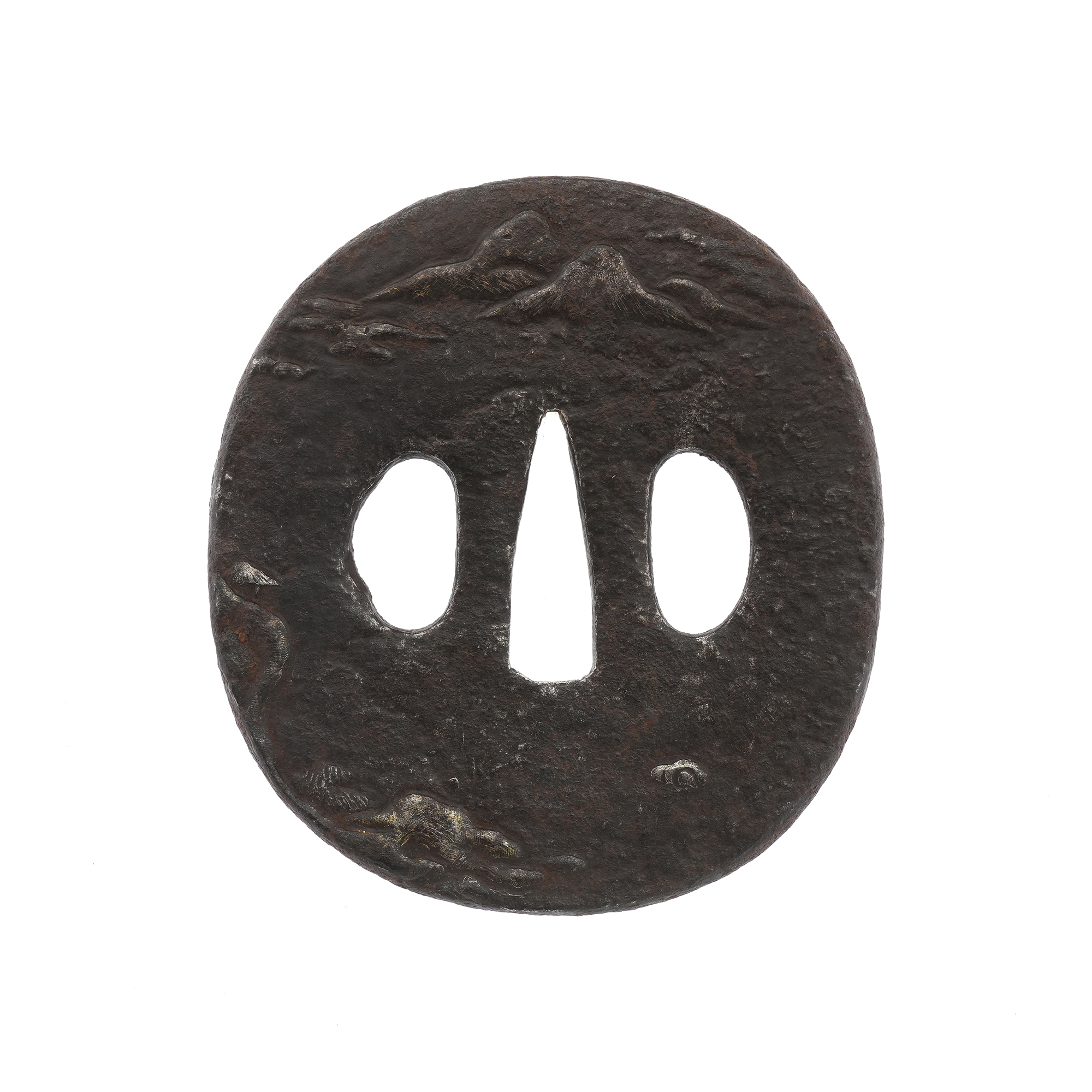
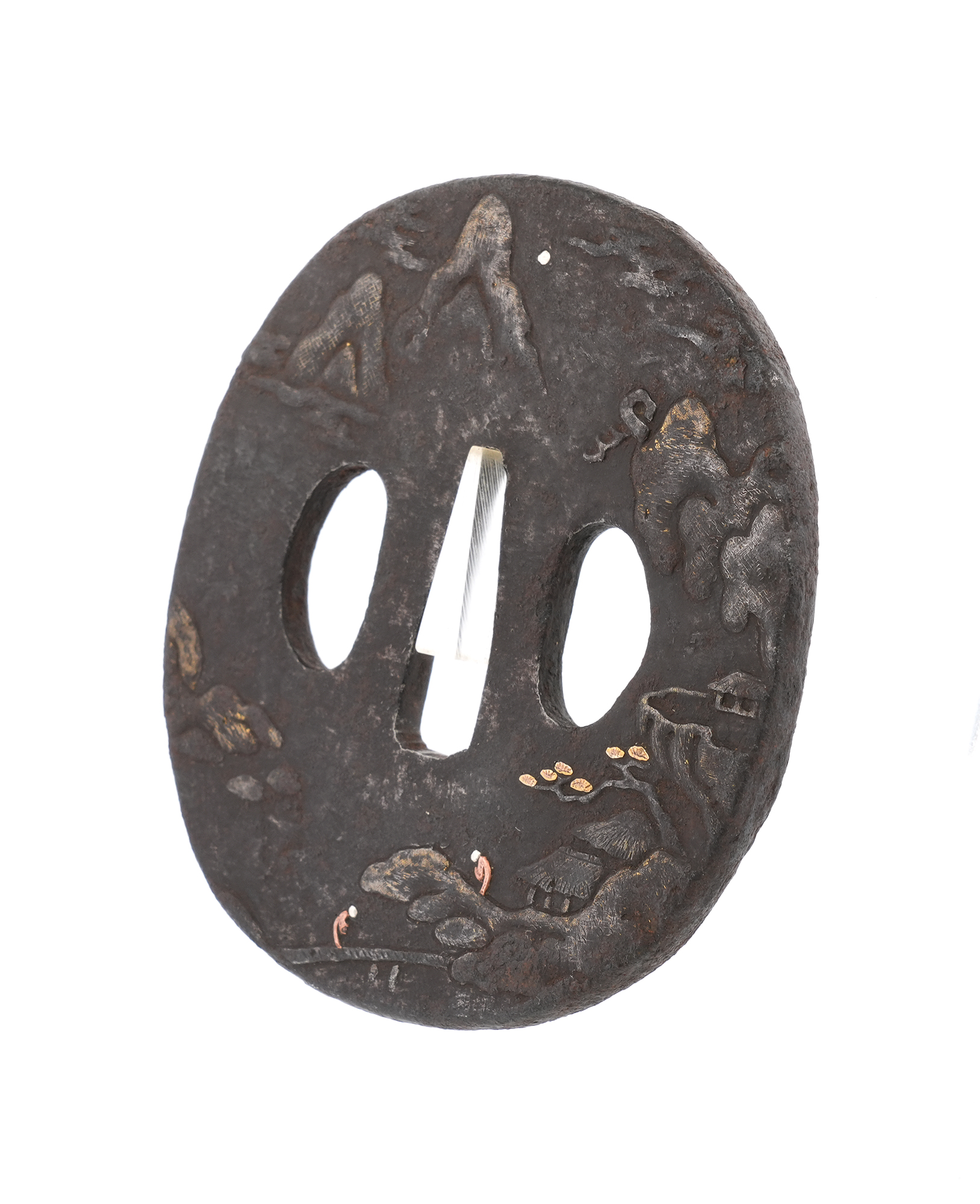
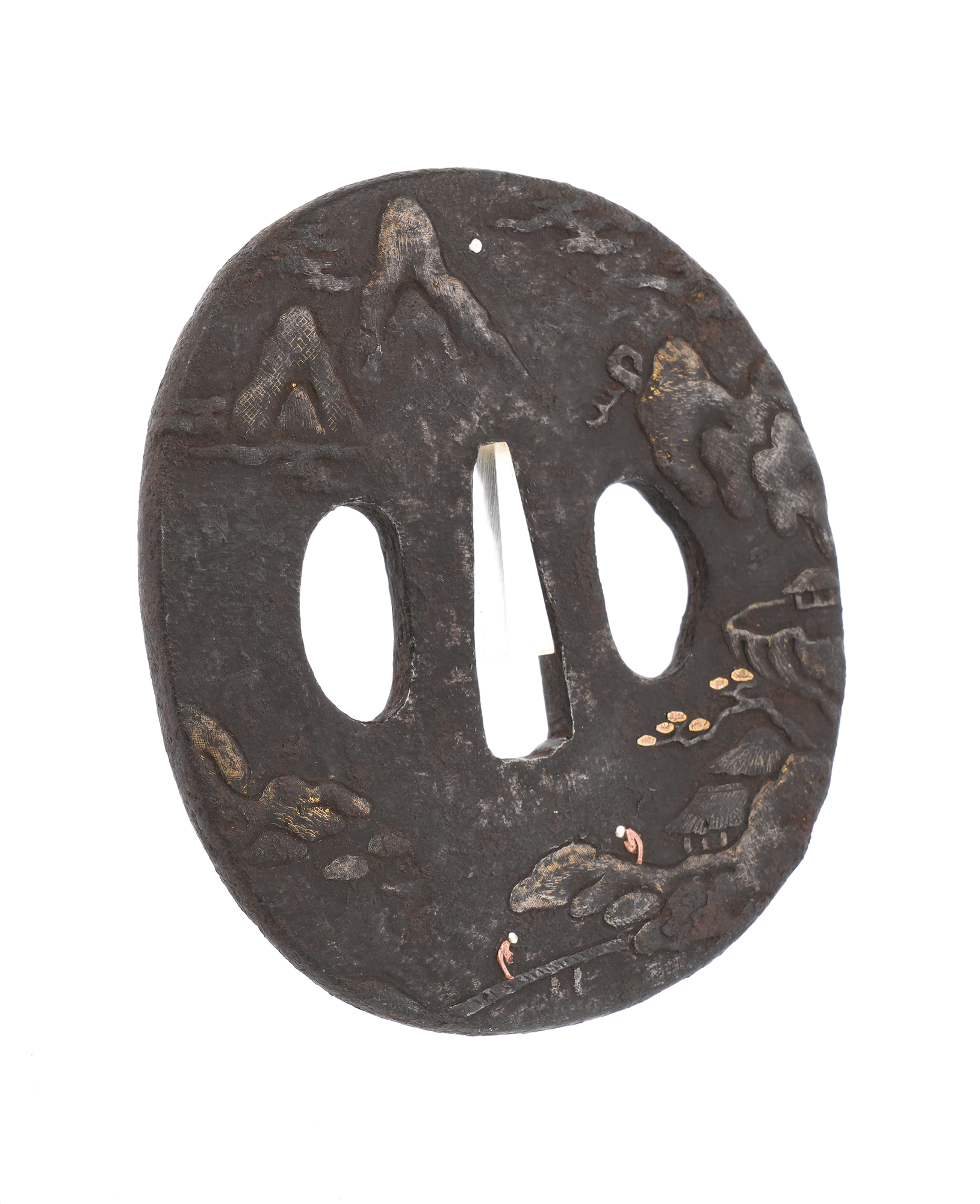
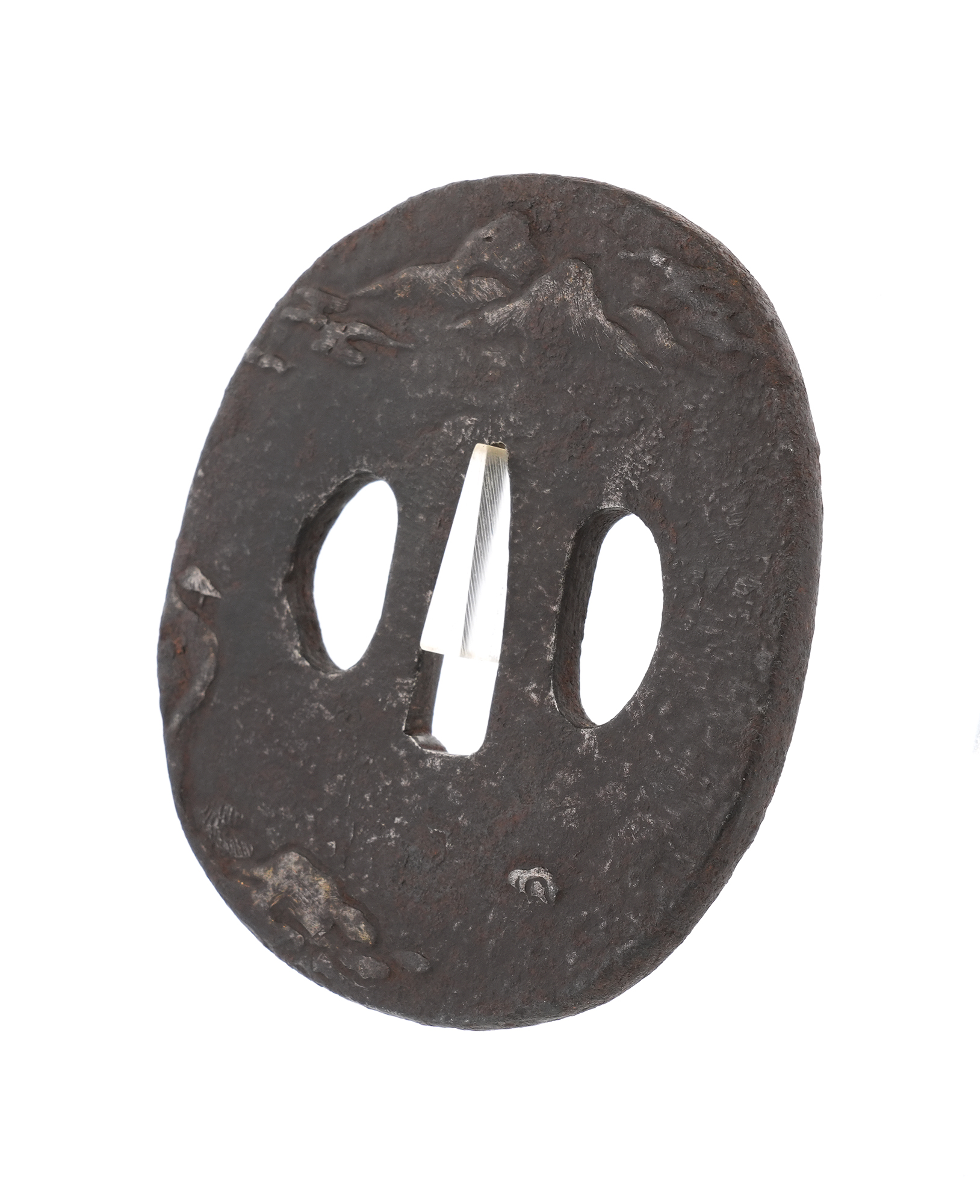
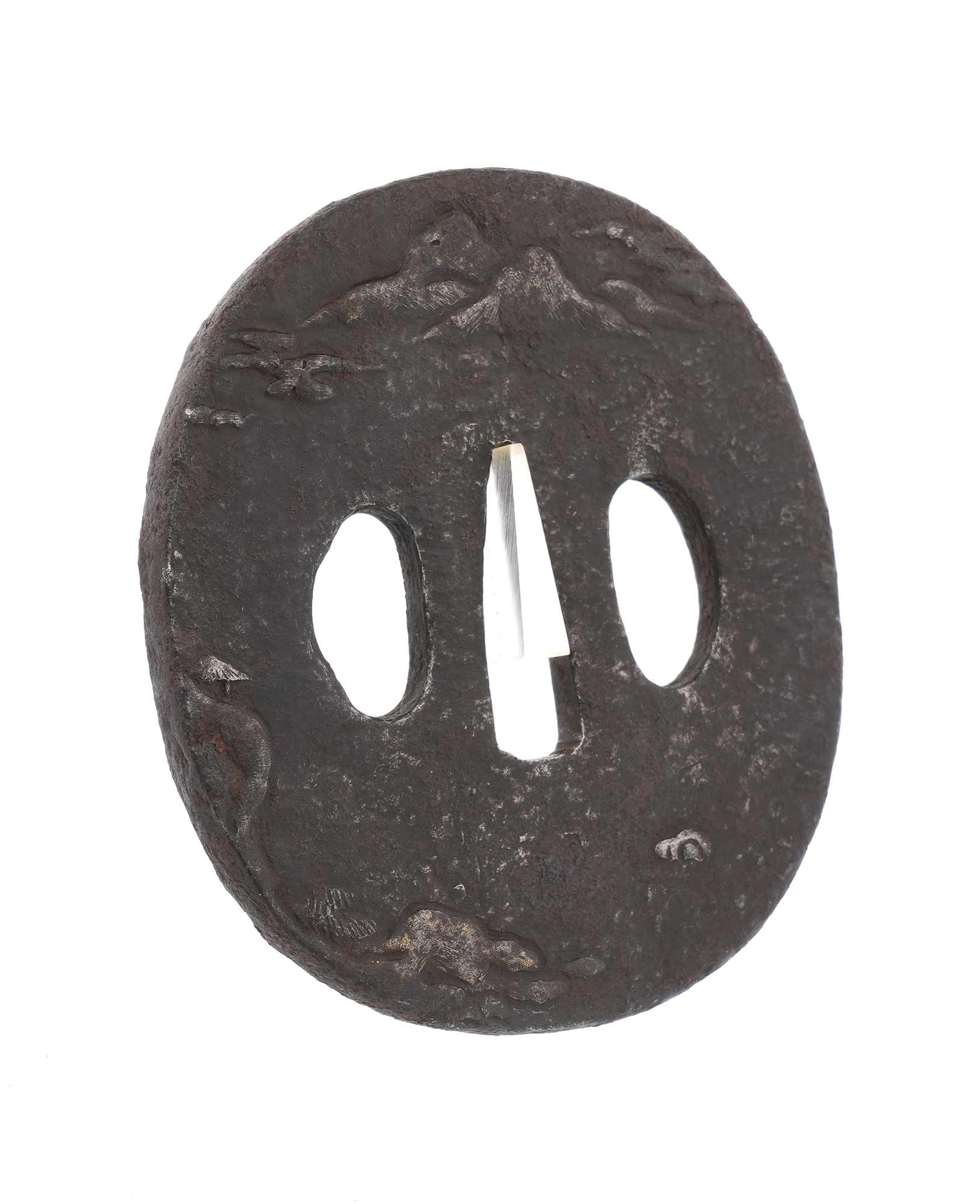
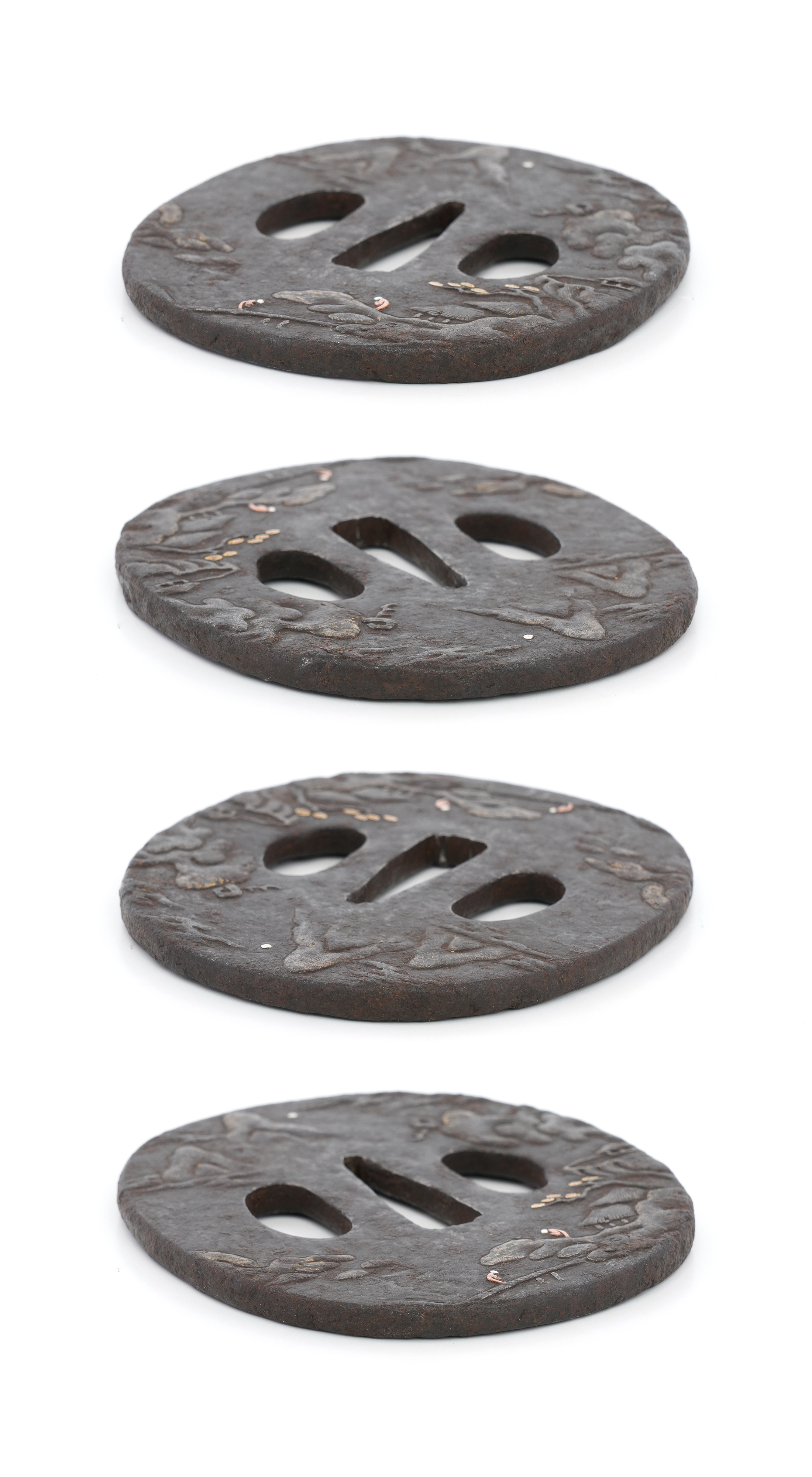
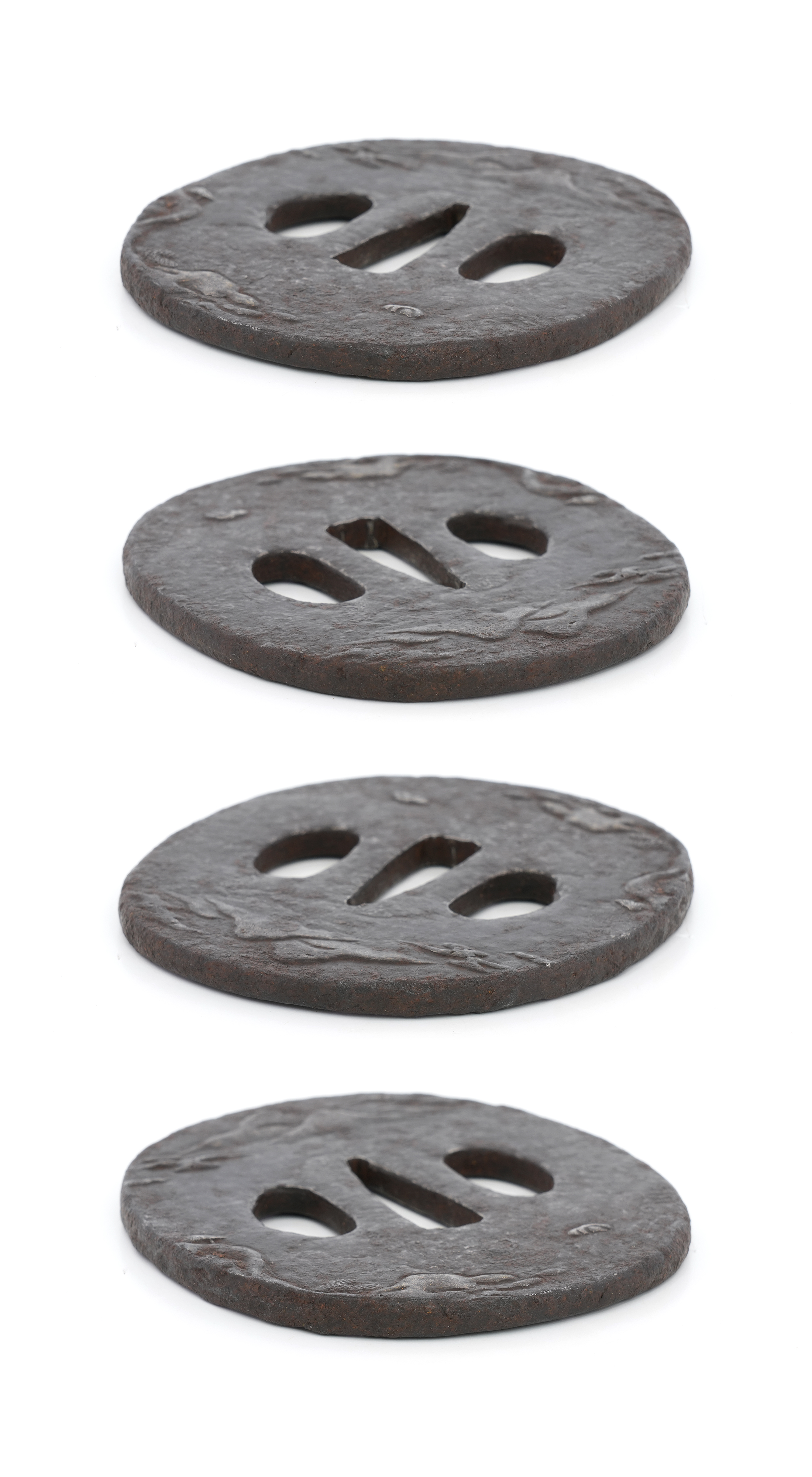
Wakashiba was a school of tsubako that developed in Nagasaki, looking to the Nagasaki painter-monk Kawamura Wakashiba as their founder, and inheriting the name "Wakashiba" for generations. They are characterized by representing designs using kusarakashi techniques on tetsu-ji and applying fine nunome-zogan, and are known to have excelled at sansui jinbutsu-zu along with take-zu and unryu-zu. Regarding Wakashiba tsuba, the Kyushu National Museum also explains that the designs are formed by kusarakashi and sukisage on tetsu-ji, that fine nunome-zogan is applied, and that sansui jinbutsu-zu is one of the representative motifs; the Nagasaki Museum of History and Culture holds a sansui-zu tsuba by the second generation Wakashiba Kizaemon as a reference work. This work is a tsuba that likens a large-sized tetsu-ji to a single sansui painting, depicting scenery and the activities of people continuing from the enkei to the chikakage across the entire front and back. On the upper part of the omote, distant continuous mountains and clouds are placed with the nichirin peeking from between them, a small hokakabune is floated on the water, and a tower and azumaya are arranged on the left side with a boat and kai in the foreground. Moving the gaze downward, a figure carrying luggage and crossing a bridge is carved in the center, a figure drying nets is carved immediately to the right, and further to the lower right, a figure riding a boat is carved small, with the scenery continuing to the trees and houses on the right side. The daily activities of boats coming and going on the waterside overlooking the mountains, people carrying luggage, and drying fishing nets unfold in multiple layers within a tetsu-ji of just over 8 centimeters, and by arranging mountain surfaces, houses, trees, and matsu on the ura and floating two hokakabune on the water surface below, a single vast sansui world is depicted as if traveling around the omote and ura of the tsuba. The tetsu-ji has a deep blackish-brown koshoku, and the kin nunome-zogan applied to key points such as the ridges of the mountains, trees, houses, and boats shines finely like light piercing into the dark ji-tetsu. Rather than showing gold ostentatiously as a surface, by delicately scattering it over the distant mountains and waterside objects, it creates depth and changes in light, and the composition that guides the gaze from the distantly misty mountains to the people living by the water has a pictorial flavor that makes one feel the influence of Chinese sansui paintings at which Wakashiba excelled. While possessing ryohitsu, an imposing size exceeding 84 mm, and a ryokan of 164 grams, it is a piece where one can fully enjoy the exoticism and sansui expression characteristic of Wakashiba, bringing the screen together without collapse from the enkei down to the activities of small figures.
Offered by Toushin

We couldn’t find current papers for this piece. Ask the dealer whether it has been, or can be, submitted to shinsa. — Hoshi

As written by the shop
Machine translation from the shop's Japanese · may contain errors ·
We could not find an authenticity certificate on the seller’s listing. Japanese swords and fittings are normally papered by the NBTHK (or the NTHK). Without one, the attribution is the seller’s own assessment and has not been independently verified — treat it with caution and ask the dealer about certification before buying.
As a rule we do not accept returns, except when we have sent a different item from the one ordered or when there is a significant discrepancy between the description and the item. If you wish to return an item, please contact us within 3 days of its arrival and then send it back.
¥66,000