 NihontoWatchNihontoWatch
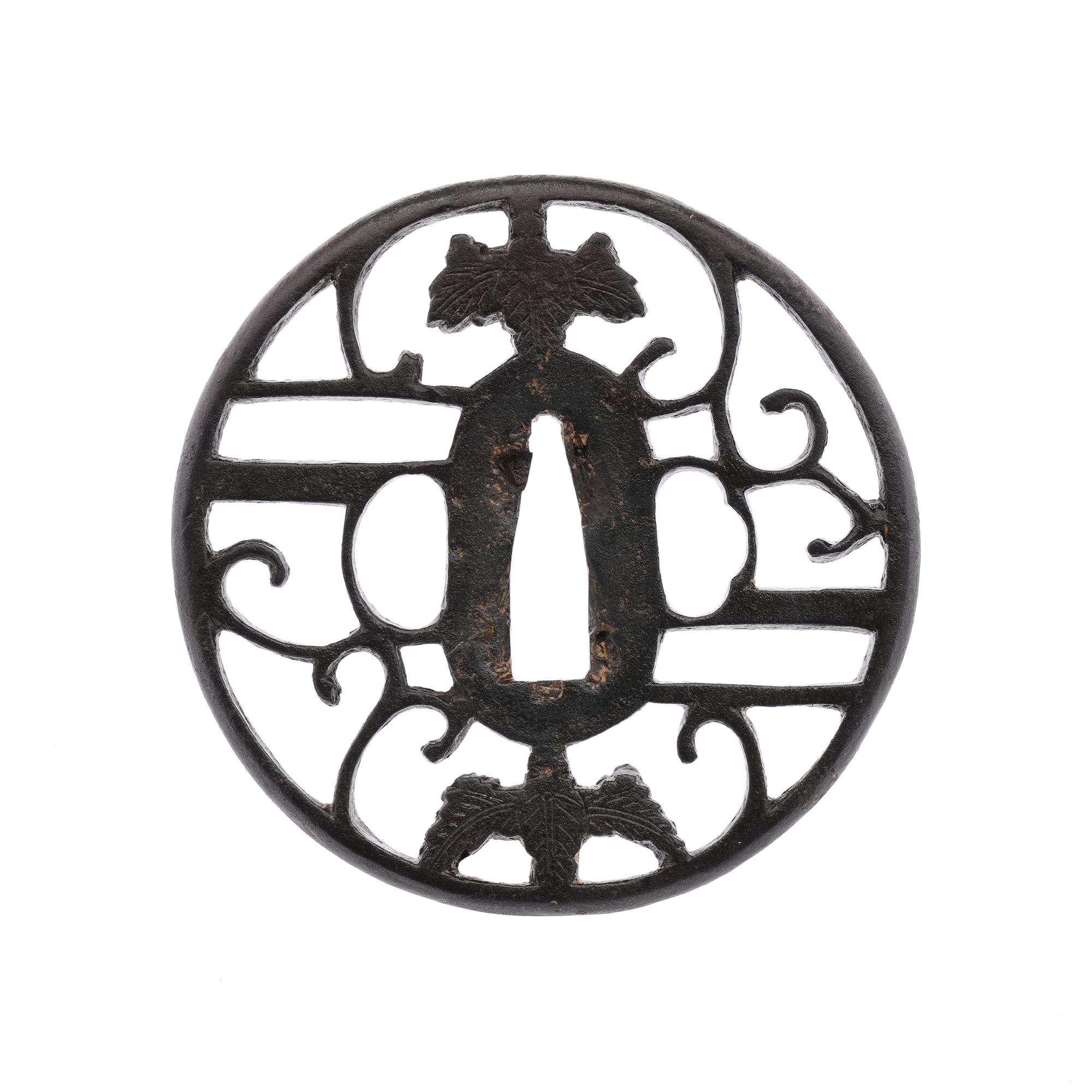
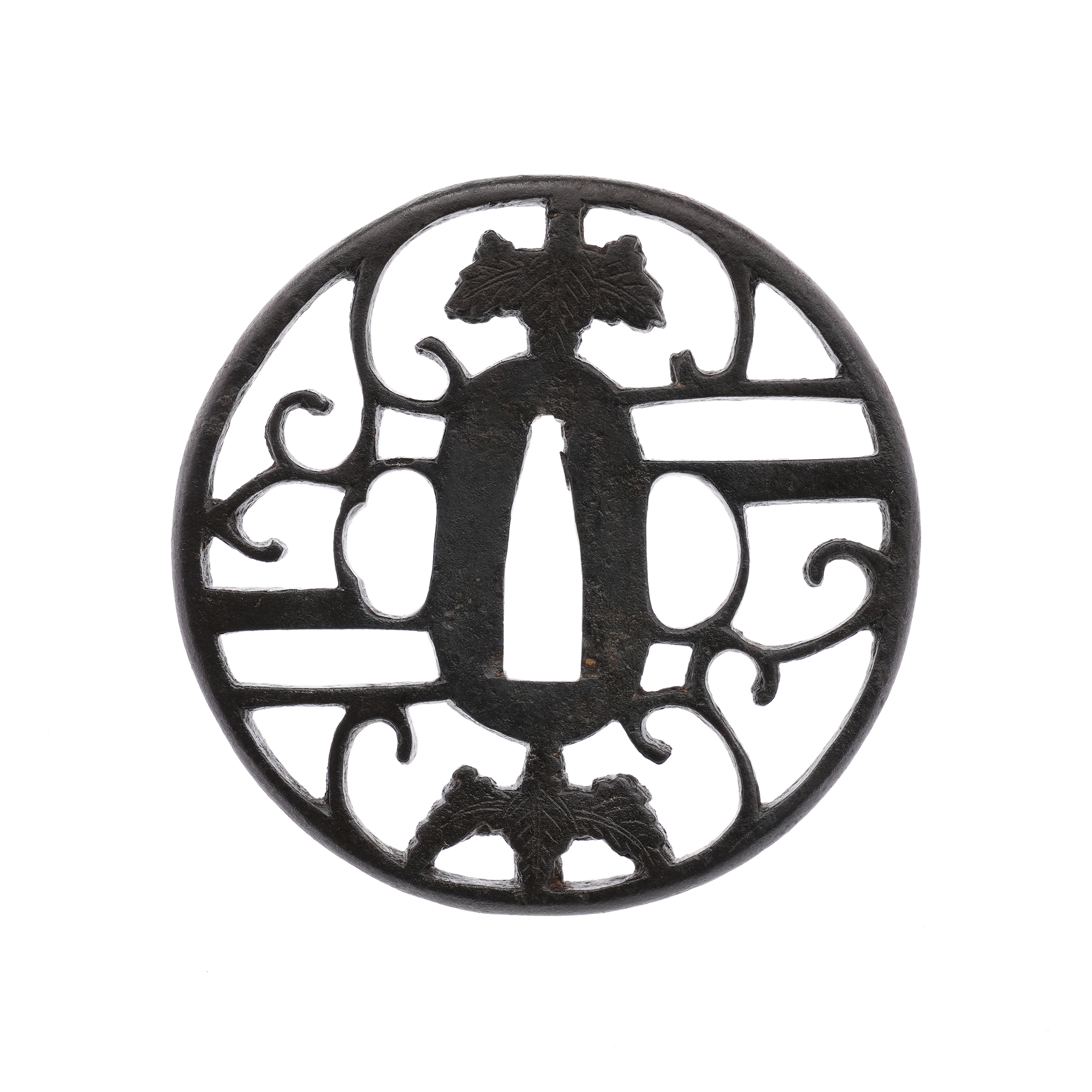
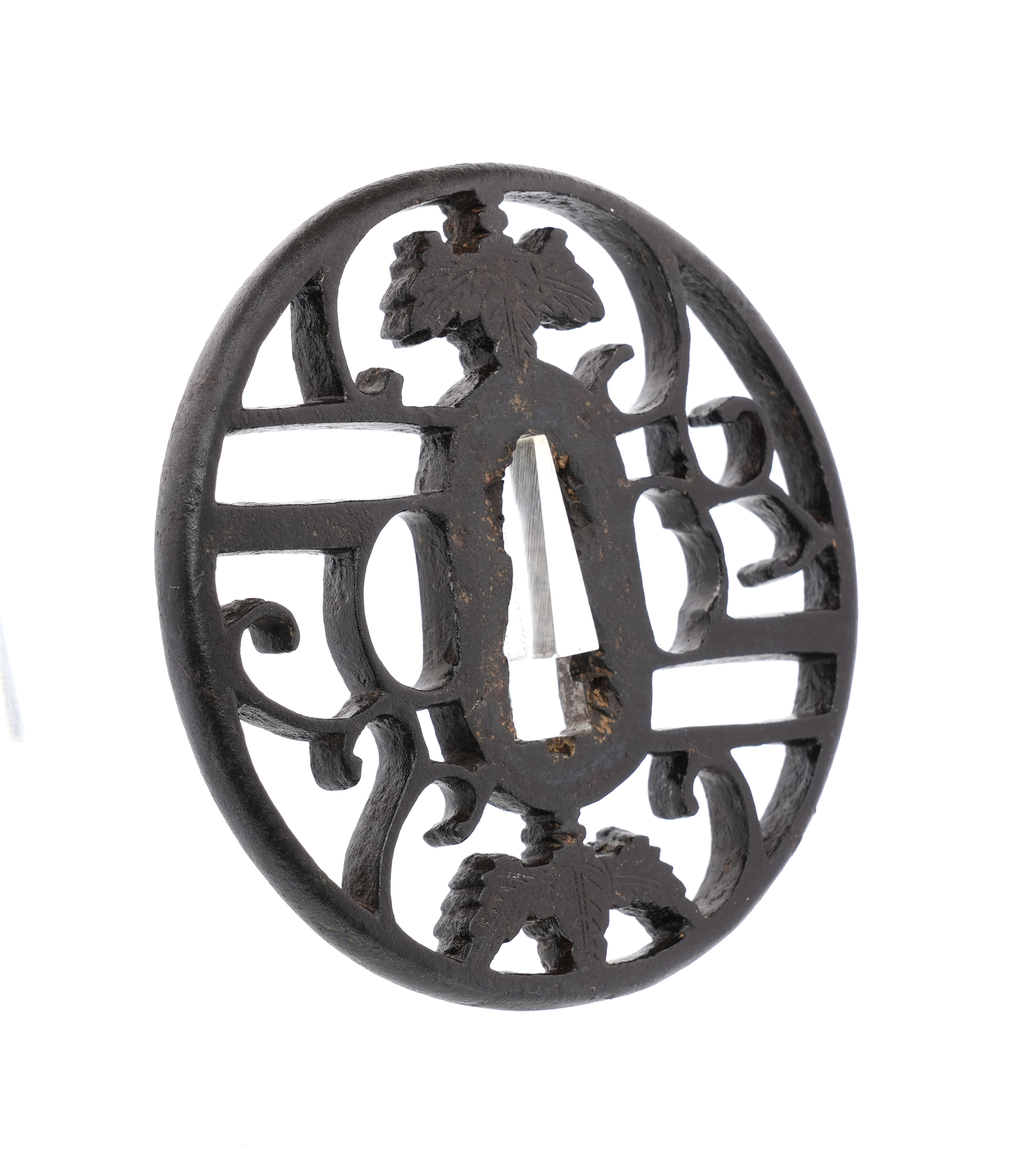
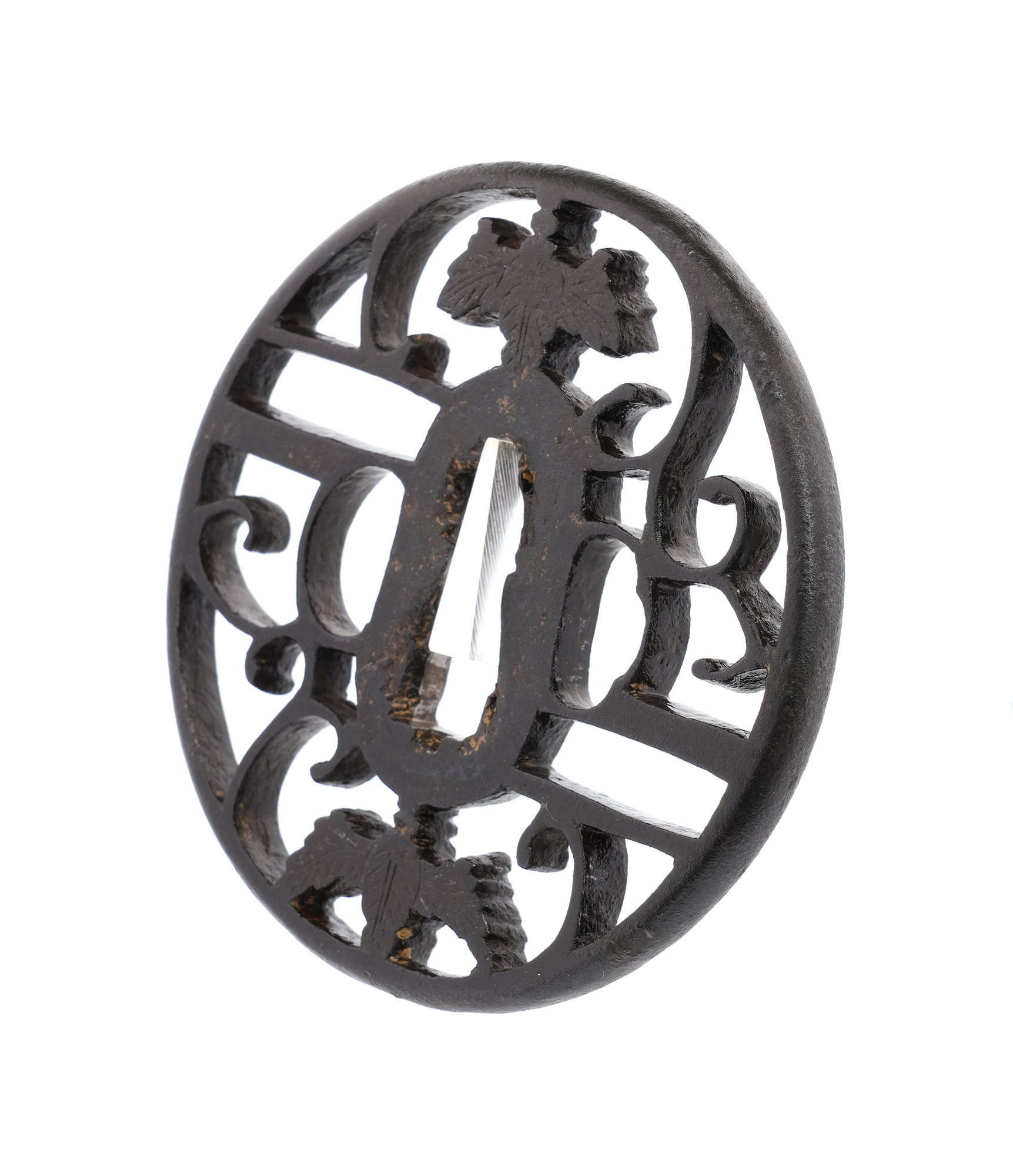
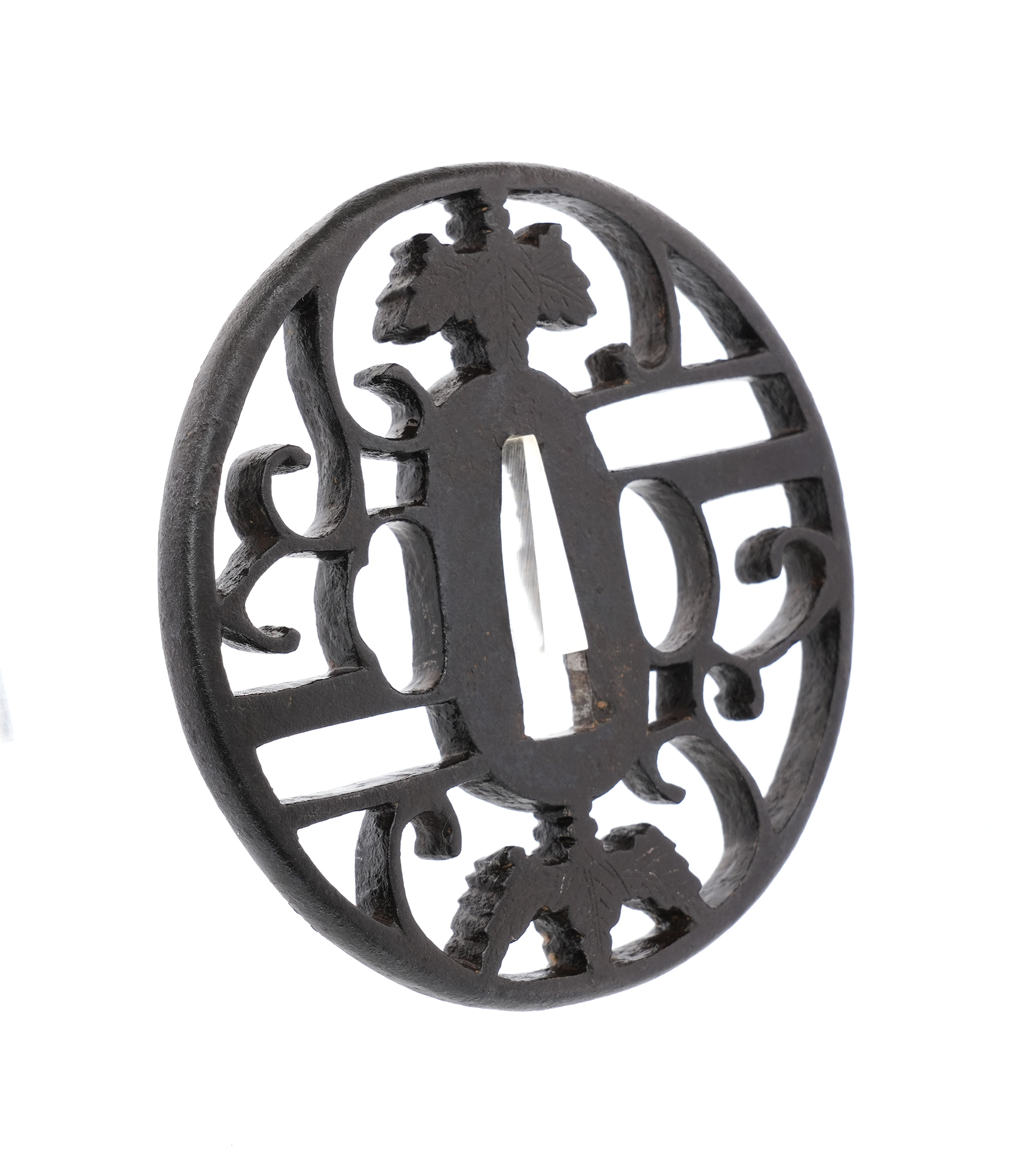
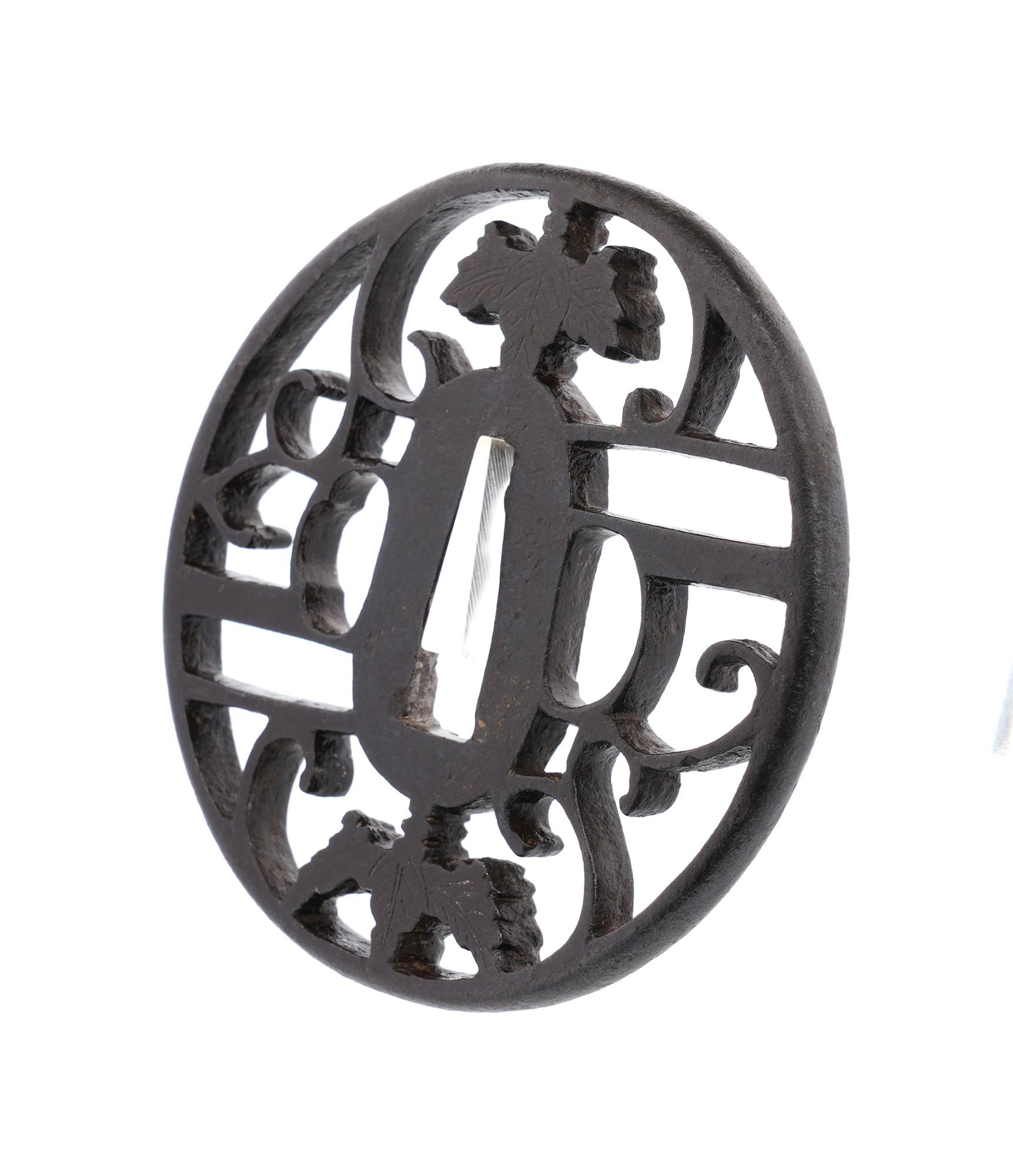
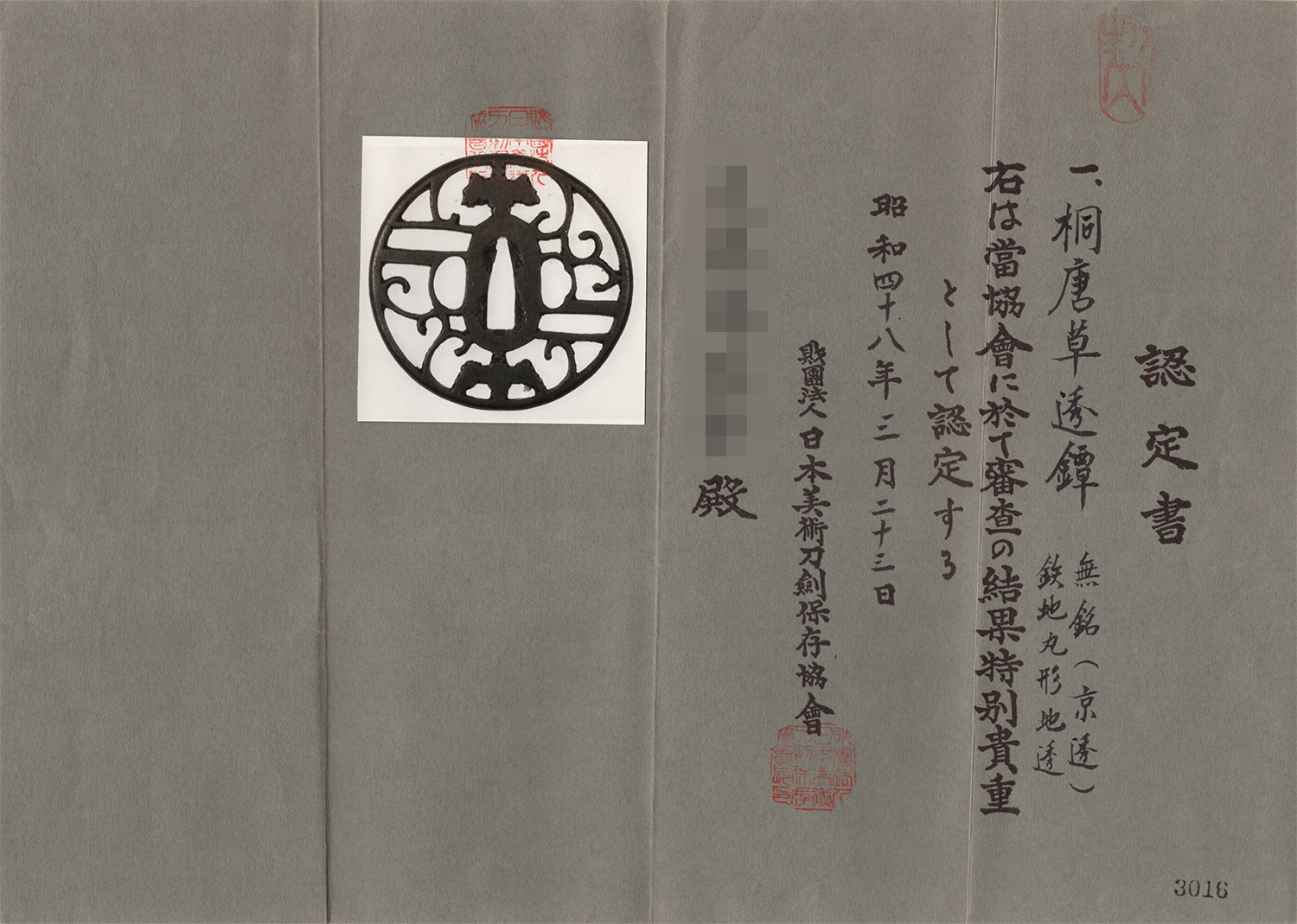
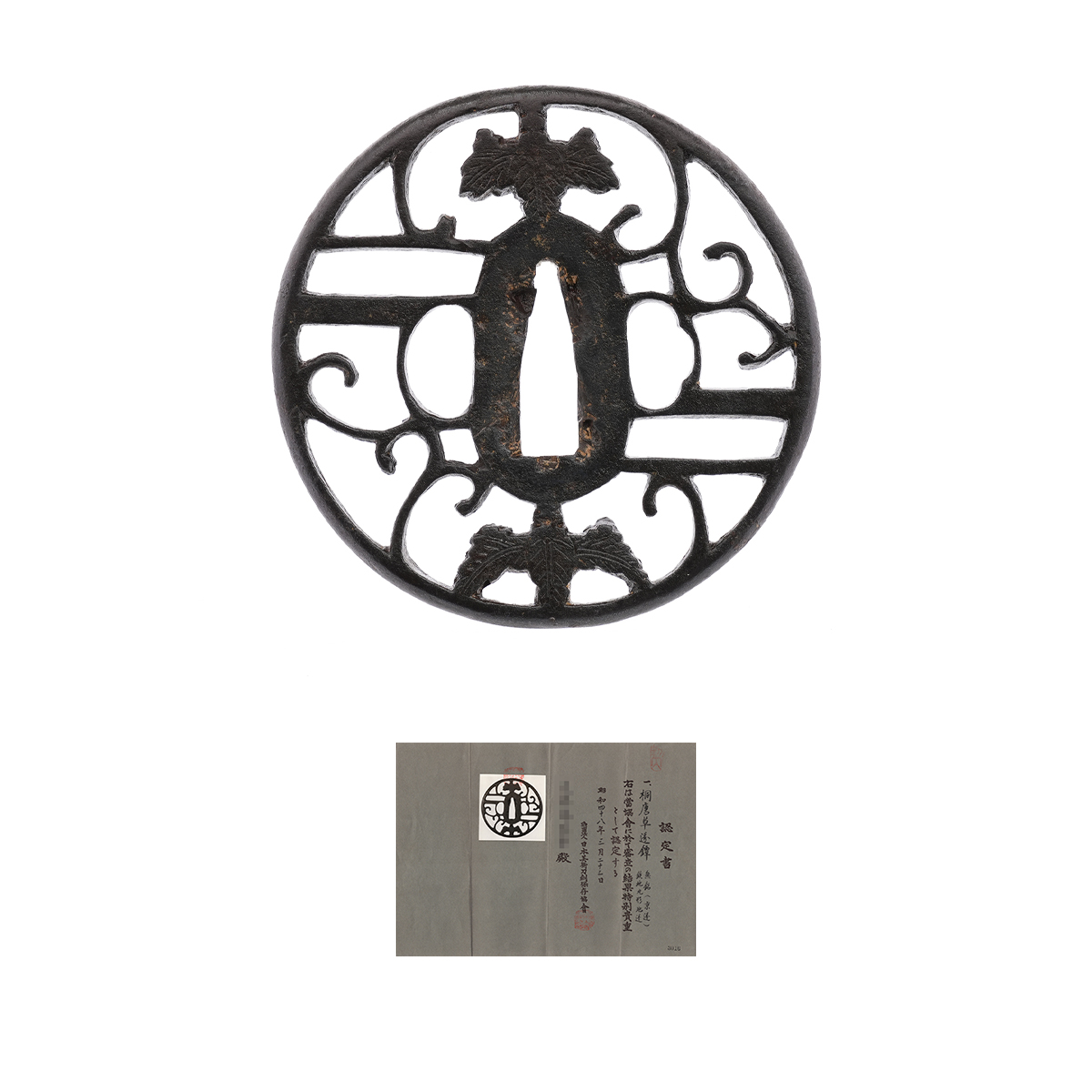
Accompanied by a Tokubetsu Kicho Kodogu Ninteisho, paulownia wood box. Kyo-sukashi tsuba are ji-sukashi tsuba produced primarily in Kyoto, Yamashiro Province, from the Muromachi period to the early Edo period; along with Owari and Akasaka, they are called "Kyo-sukashi" after their place of origin. Their style is characterized by a flatly finished plate made of well-forged iron, with sukashi that is sharply cut yet delicately finished without waste, resulting in elegant and sophisticated forms; the mimi often have a slight koniku, and the thickness is somewhat thin compared to sukashi tsuba from other provinces. The hitsu-ana are vertically elongated, and among older pieces, there are those with excellent schematic designs such as Yatsuhashi, myoga, plum, chrysanthemum, wild geese, and cranes; the appeal lies in the coexistence of elegance and technique, and they are recognized as having high value for both appreciation and collection. This work features a design boldly combining paulownia leaves and karakusa on a large, well-proportioned circular iron plate, and the well-forged ji-tetsu displays a calm koshoku nurtured through years of use. The sukashi consists of paulownia leaves placed at the top and bottom, with horizontal bars and karakusa extending to the left and right between them, showing a concise yet powerful composition. The contours of the sukashi retain the soft tagane-aji characteristic of old works, conveying a warmth unique to handwork rather than mechanical uniformity; the fact that it expresses a high-class beauty through sukashi alone without falling into excessive decoration reveals the refinement typical of Kyo-sukashi. Furthermore, while this work possesses a grand taihai approaching a diameter of approximately 8 cm, it does not lose its lightness due to the sukashi; it is an excellent piece with many highlights that conveys the charm of Kyo-sukashi tsuba from the Momoyama to early Edo period, where the koga iron quality and graceful design are in perfect harmony.
NihontoWatchOffered by Toushin

Its only papers are older green Kichō papers, which the NBTHK largely disavows today. Ask the dealer whether it has passed current shinsa. — Hoshi

As written by the shop
Machine translation from the shop's Japanese · may contain errors ·
This work carries older NBTHK “Kichō”-era papers, which the NBTHK no longer issues and largely disavows today. To confirm the attribution, submission to an official Japanese examination body (such as the NBTHK or NTHK) for modern certification could be considered.
As a rule we do not accept returns, except when we have sent a different item from the one ordered or when there is a significant discrepancy between the description and the item. If you wish to return an item, please contact us within 3 days of its arrival and then send it back.
¥154,000