 NihontoWatchNihontoWatch
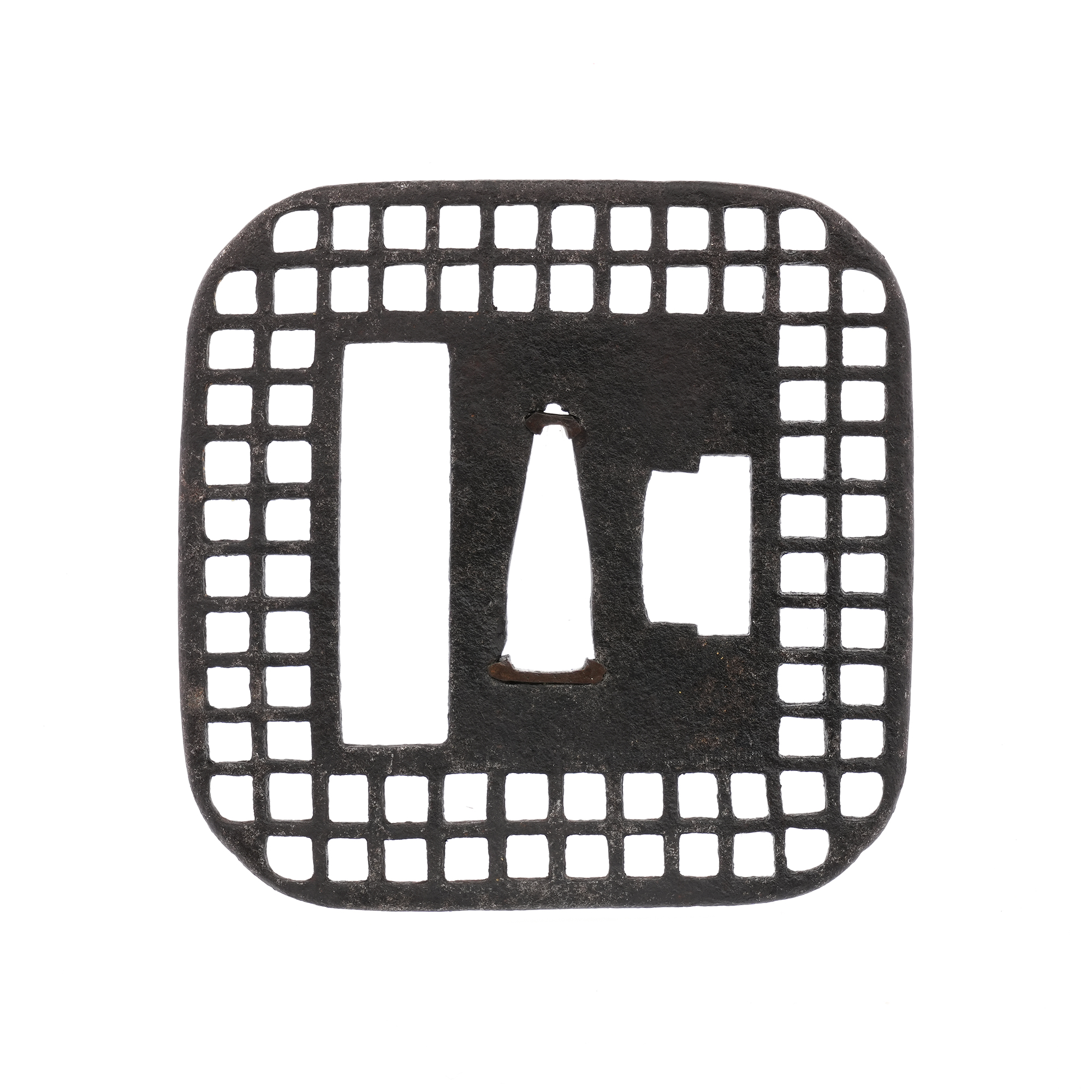
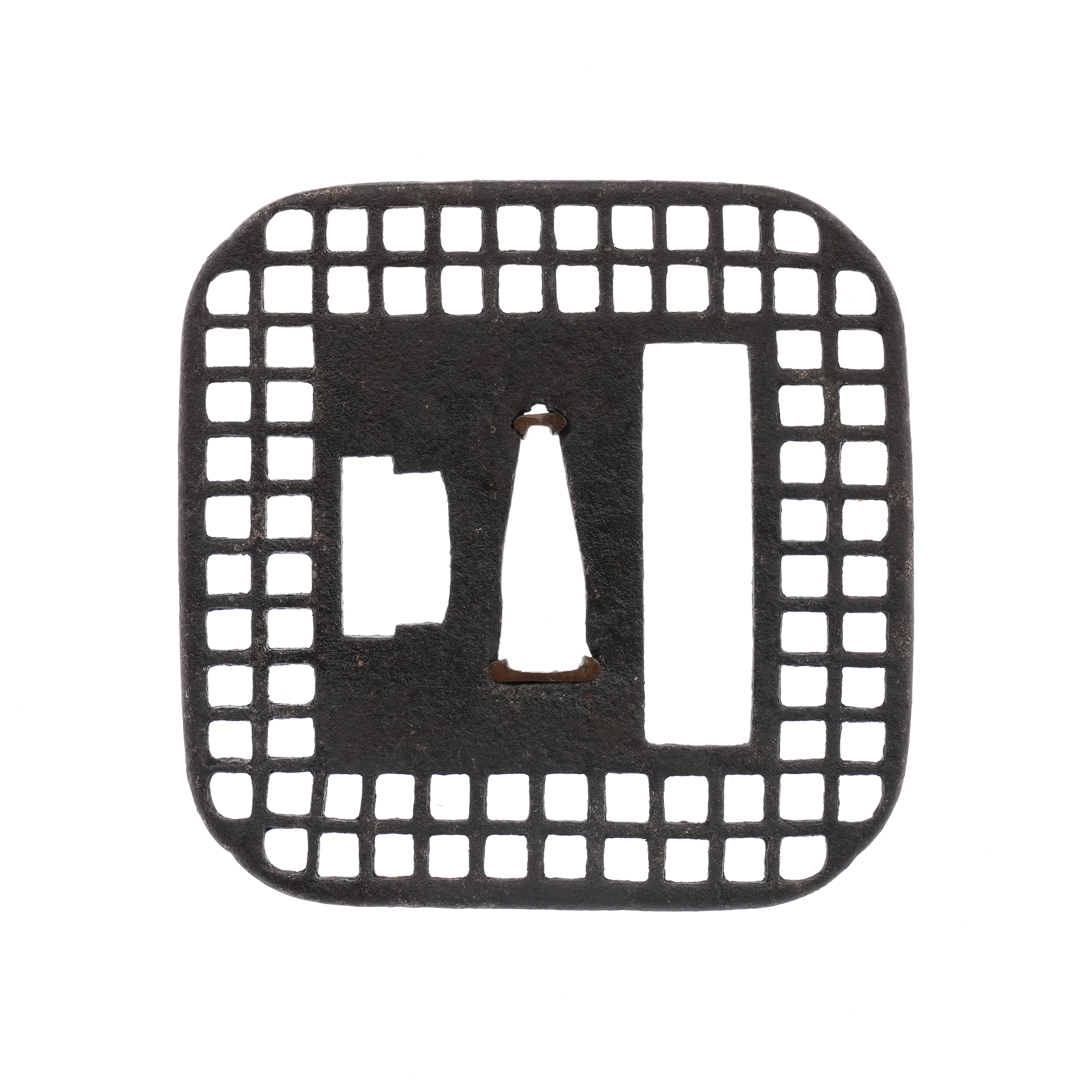
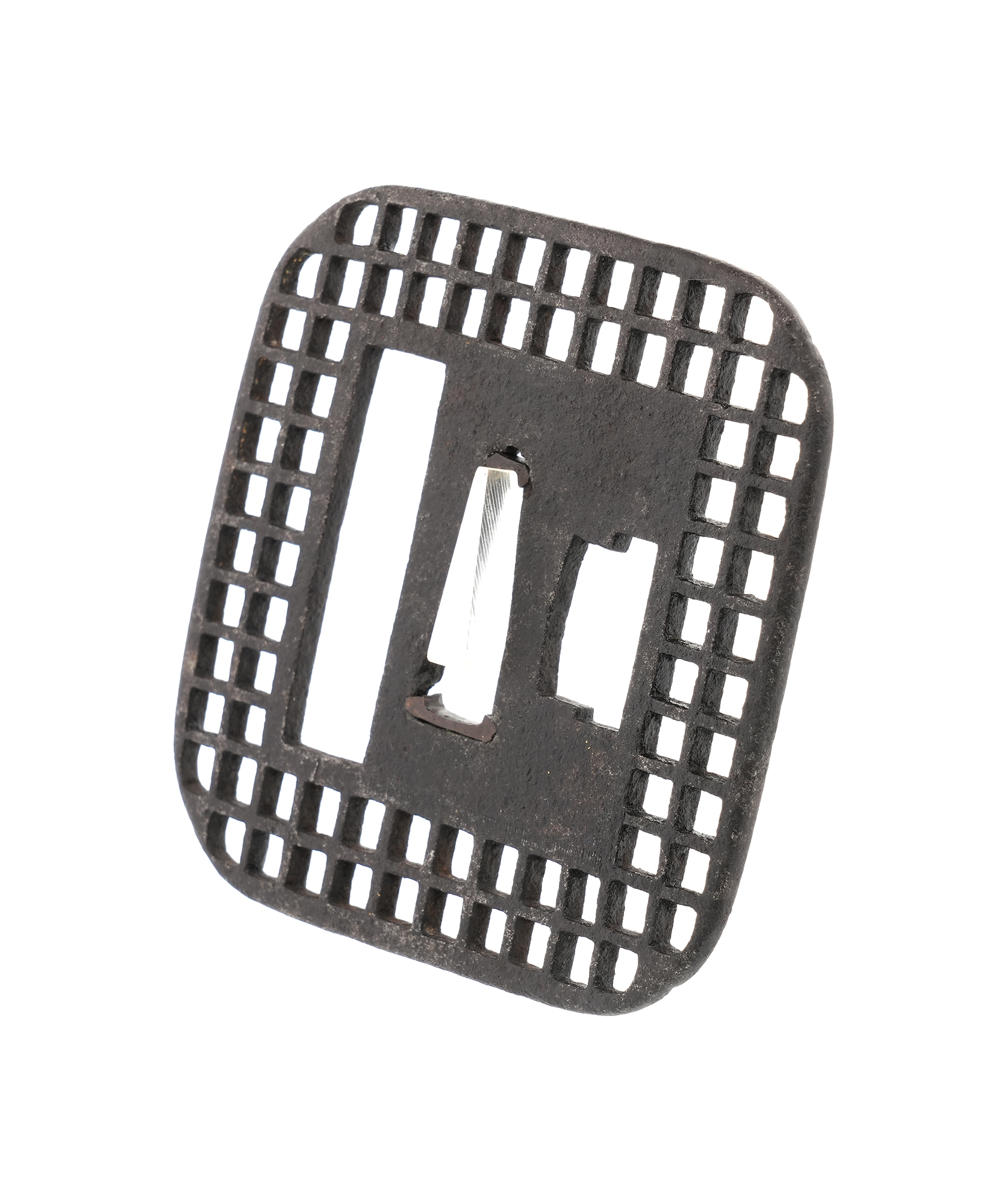
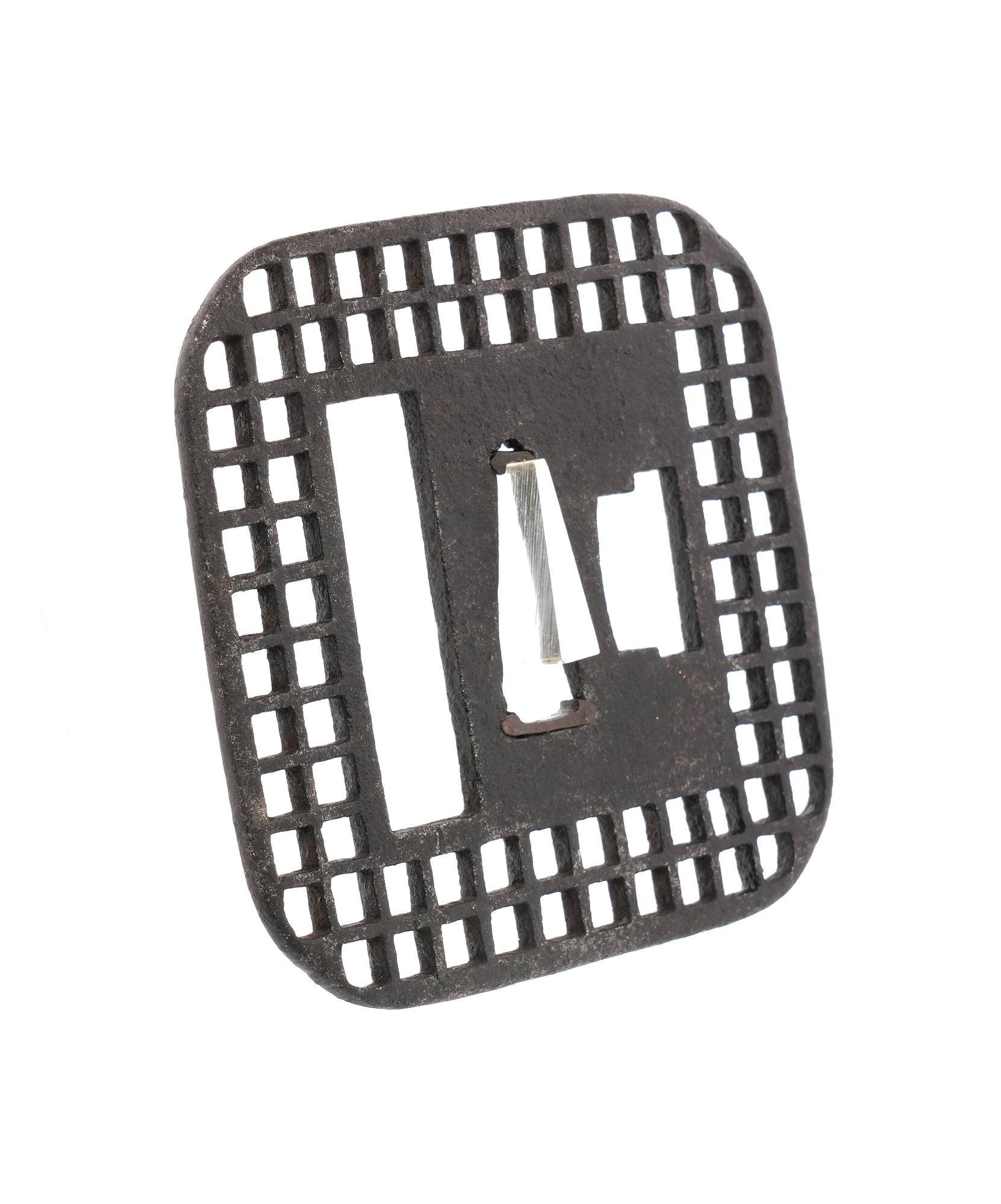
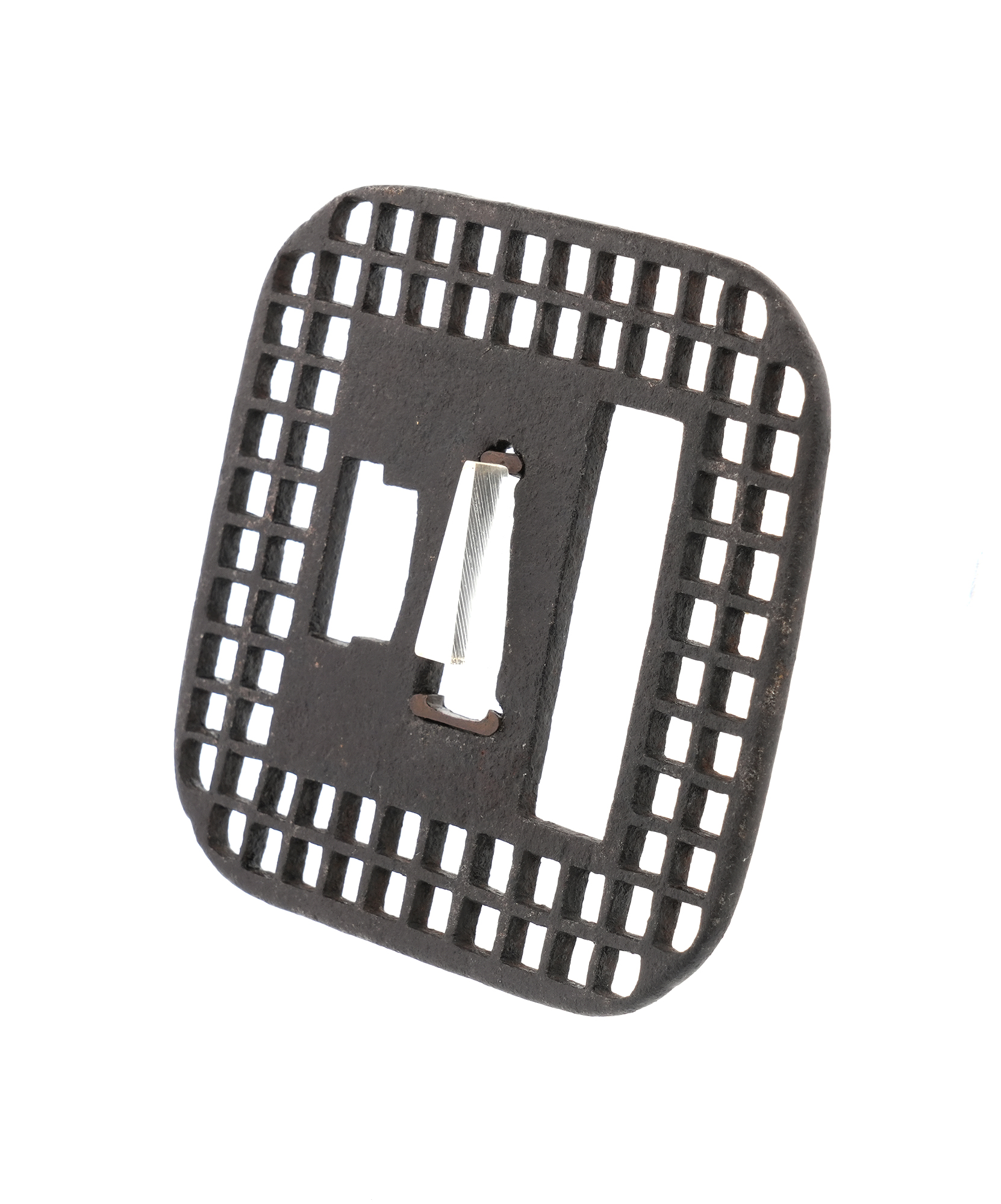
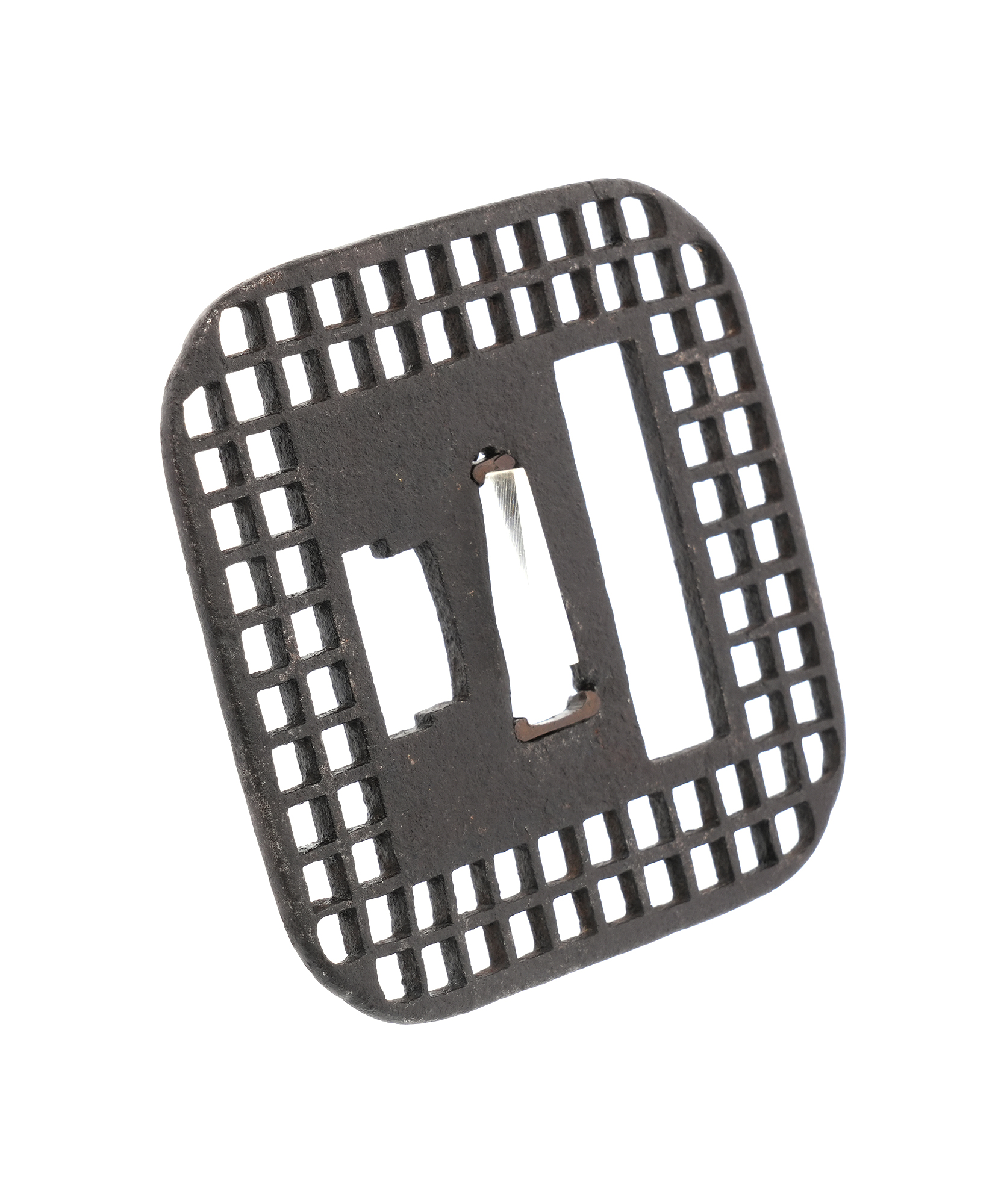
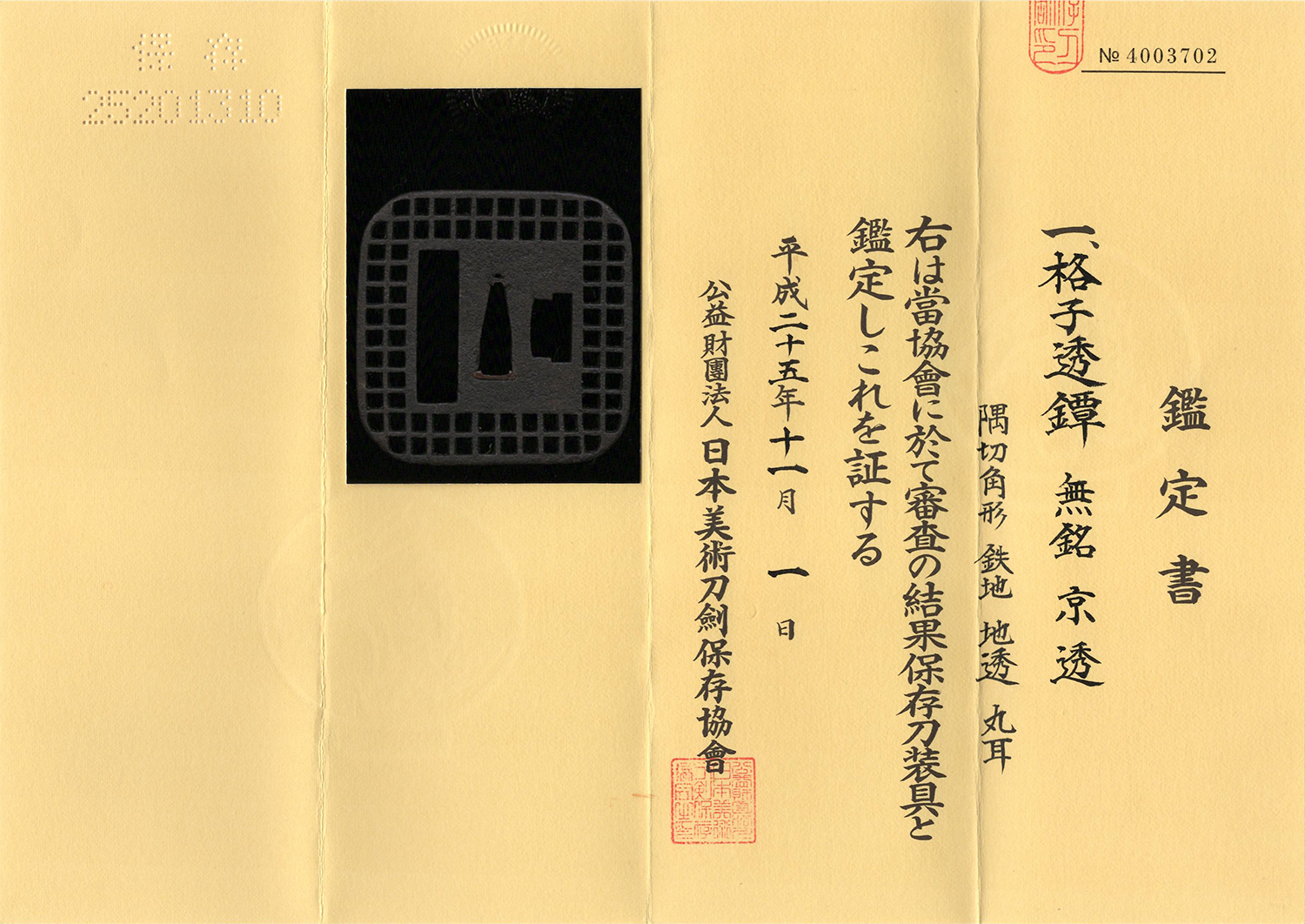
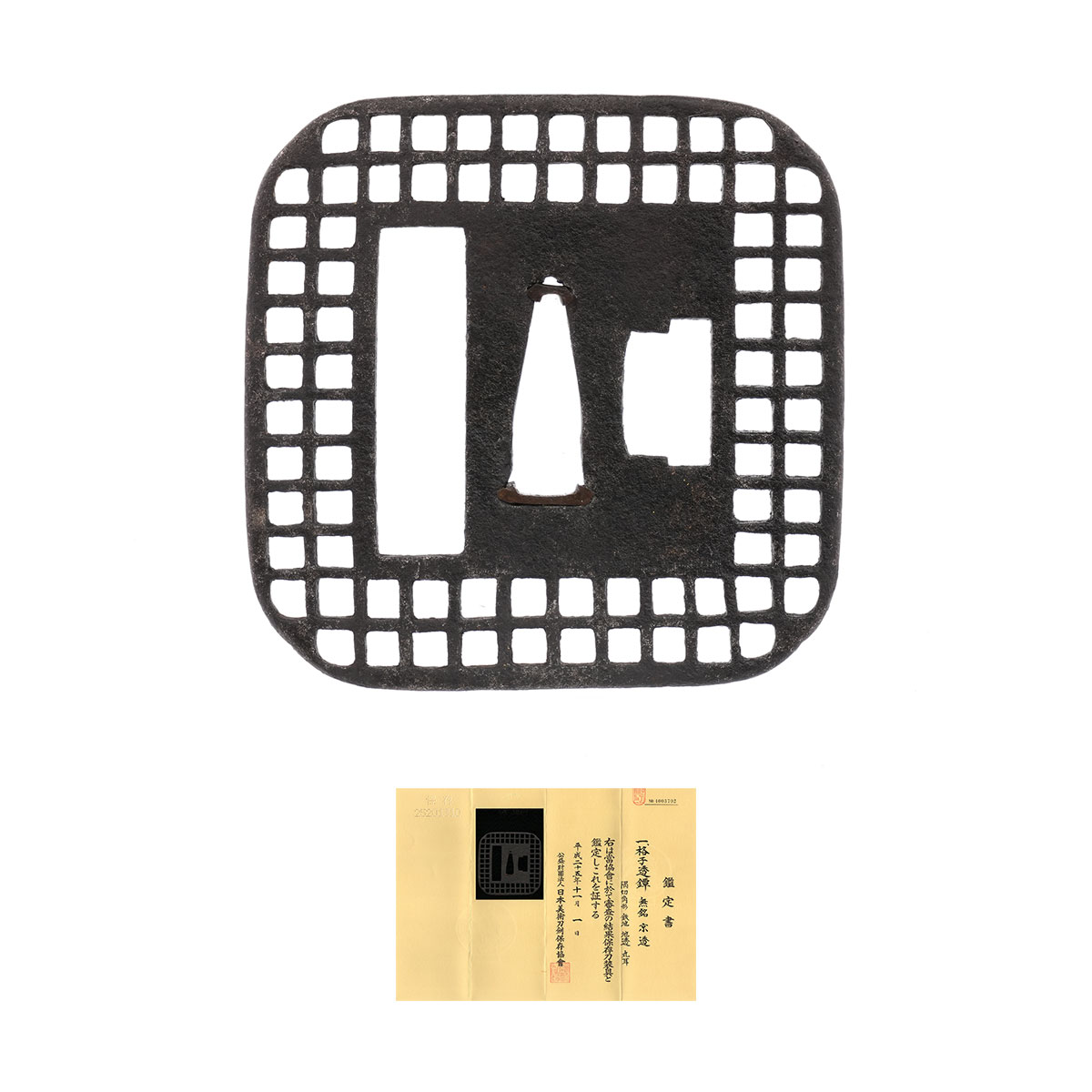
Kyo-sukashi is also called Heianjo-sukashi and refers to a group of tetsu-ji ji-sukashi tsuba produced primarily in Kyoto. There is a tradition that their origin dates back to around the middle of the Muromachi period, created to suit the tastes of the Ashikaga Shogunate family; the style was refined from the late Muromachi to the Momoyama period and passed down into the early Edo period. Rather than a school derived from a single independent founder, it is more appropriate to view it as a style of sukashi tsuba favoring Kyoto tastes nurtured by the tsubako of Kyoto, characterized by relatively thin tetsu-ji finished flatly, with patterns pierced in thin, well-proportioned lines, creating a neat composition through the balance of iron and negative space. The style, which concisely schematizes flowers, plants, kamon, and utensils to evoke elegance and dignity within strength, exerted a great influence on sukashi tsuba of later generations. This piece features a fine koushi pattern arranged inside a rim with gentle roundness at the corners, and through the contrast with the widely set seppa-dai in the center, it creates an orderly scene reminiscent of shoji or misu. The composition, which establishes the frame using only the intersecting vertical and horizontal iron lines and the pierced negative space without relying on flashy irogane or concrete motifs, is concise yet deeply impressive, allowing one to feel the refinement and dignity nurtured in Kyoto within a quiet sense of tension. The koushi is a pattern very familiar to the Japanese people, having been used in architecture and furnishings since ancient times; because order and neatness reside in the sequence of regular lines, this work incorporated into tosou possesses a dignified and intellectual flavor distinct from excessive decoration. The koushi-mon is a difficult design where the maker's skill cannot be hidden the more simple it appears at first glance; if even a slight irregularity occurs in the width of the squares, the thickness of the vertical and horizontal lines, or the positions of the intersections, the balance of the entire frame collapses. In this piece, while keeping the numerous squares almost uniform, the spacing at the periphery is finely adjusted to fit naturally within the rounded outer shape, and the thin iron lines are continued without interruption, so it shows the lightness of the sukashi while not losing its cohesiveness as a tsuba. By leaving the central seppa-dai wide, the center that sits between the tsuka and saya during mounting is powerfully stable, resulting in a composition where the detailed koushi spreading around it appears even more light. When held and viewed, the tetsu-ji, which exhibits a calm blackish-brown color through the passage of years, and the thinly prepared outlines of the sukashi complement each other; it can be appreciated as a neat geometric pattern from the front, and as a delicate depth created by the thin ji-tetsu from an angle. The light passing through the sukashi changes its impression depending on the background: against a white background, the structure of the koushi emerges clearly; above a kuronuri-saya, the pattern sinks into quiet shadows; and when matched with a shunuri or kawari-nuri saya, it tightens the brilliant color tones, thus exerting different charms whether displayed alone or mounted on a koshirae. The fact that the composition does not break down even when flipped over, and that the weight of the iron and negative space shifts depending on the viewing angle and intensity of light, is a pleasure of appreciation unique to ji-sukashi tsuba. Accompanied by a Hozon Tosogu Kanteisho from the Nippon Bijutsu Token Hozon Kyokai, this is a single plate attributed as mumei but with a kiwame to Kyo-sukashi, allowing one to enjoy the well-proportioned modeling that clearly shows the characteristics of the school, the koushi-sukashi requiring precision, and the tetsu-aji that has gained depth over many years. With a clean modeling that utilizes the negative space itself as a design, differing in flavor from tsuba depicting flowers, plants, or figures, it is a design one never tires of across eras; it is a tsuba rich in quiet presence, recommended not only for those who wish to thoroughly enjoy the neat aesthetic sense representing Kyo-sukashi at hand, but also for those who wish to coordinate a dignified old tsuba with a koshirae.
Offered by Toushin

As written by the shop
Machine translation from the shop's Japanese · may contain errors ·
Certifies a genuine fitting worth preserving: a correct signature, or, if unsigned, an identifiable era and school, with recognized artistic and craft value.
The NBTHK (Nihon Bijutsu Tōken Hozon Kyōkai, the Society for the Preservation of Japanese Art Swords) is a public-interest incorporated foundation founded in 1948 and supervised by Japan’s Agency for Cultural Affairs (Bunkachō); it is based at the Japanese Sword Museum in Tokyo. Its expert panels physically examine each submitted work (shinsa) and issue a certificate (kanteishō) ranking it by artistic and historical merit. NBTHK papers are the most widely recognized standard of authentication for Japanese swords and fittings.
NBTHK official siteAs a rule we do not accept returns, except when we have sent a different item from the one ordered or when there is a significant discrepancy between the description and the item. If you wish to return an item, please contact us within 3 days of its arrival and then send it back.
¥165,000