 NihontoWatchNihontoWatch
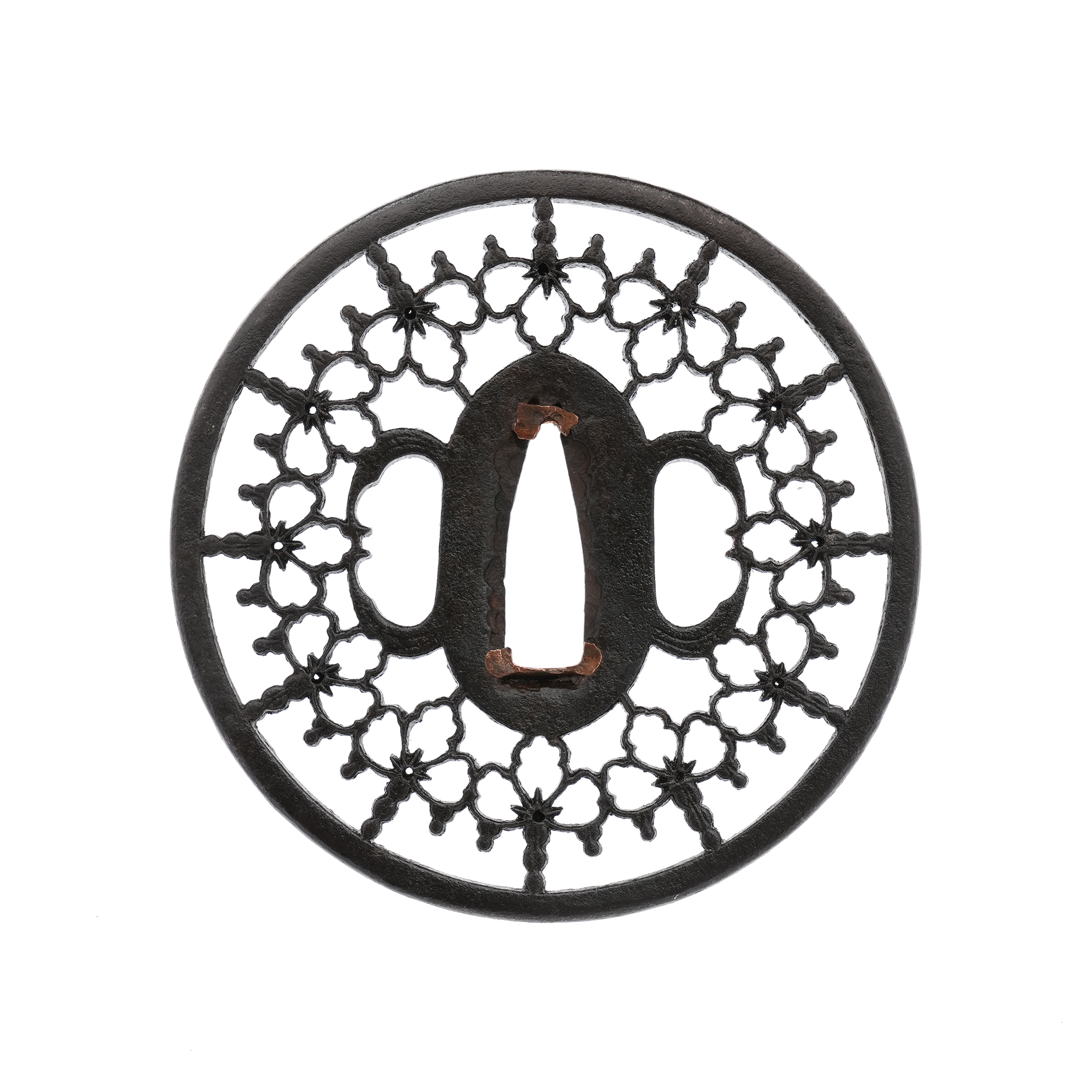
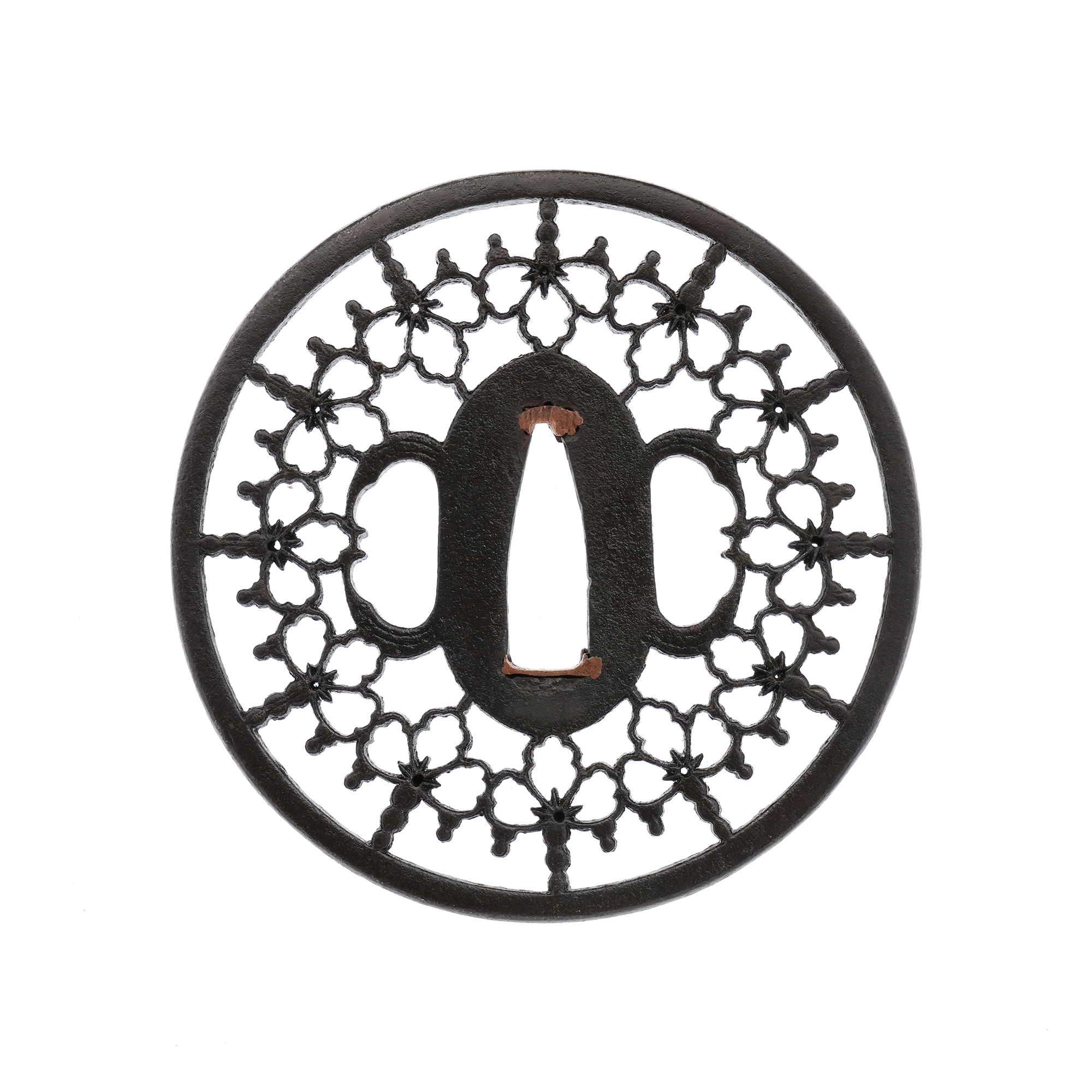
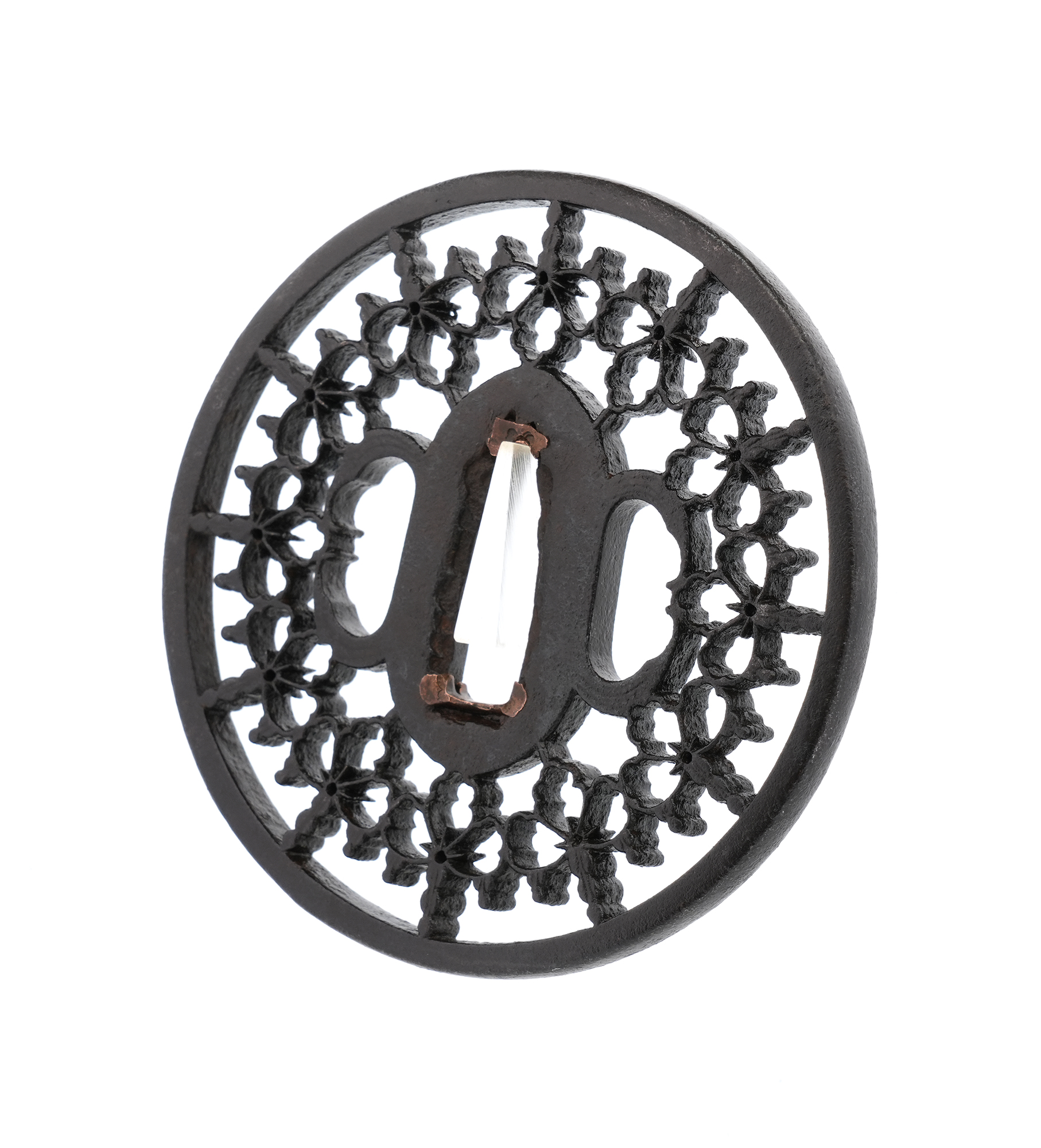
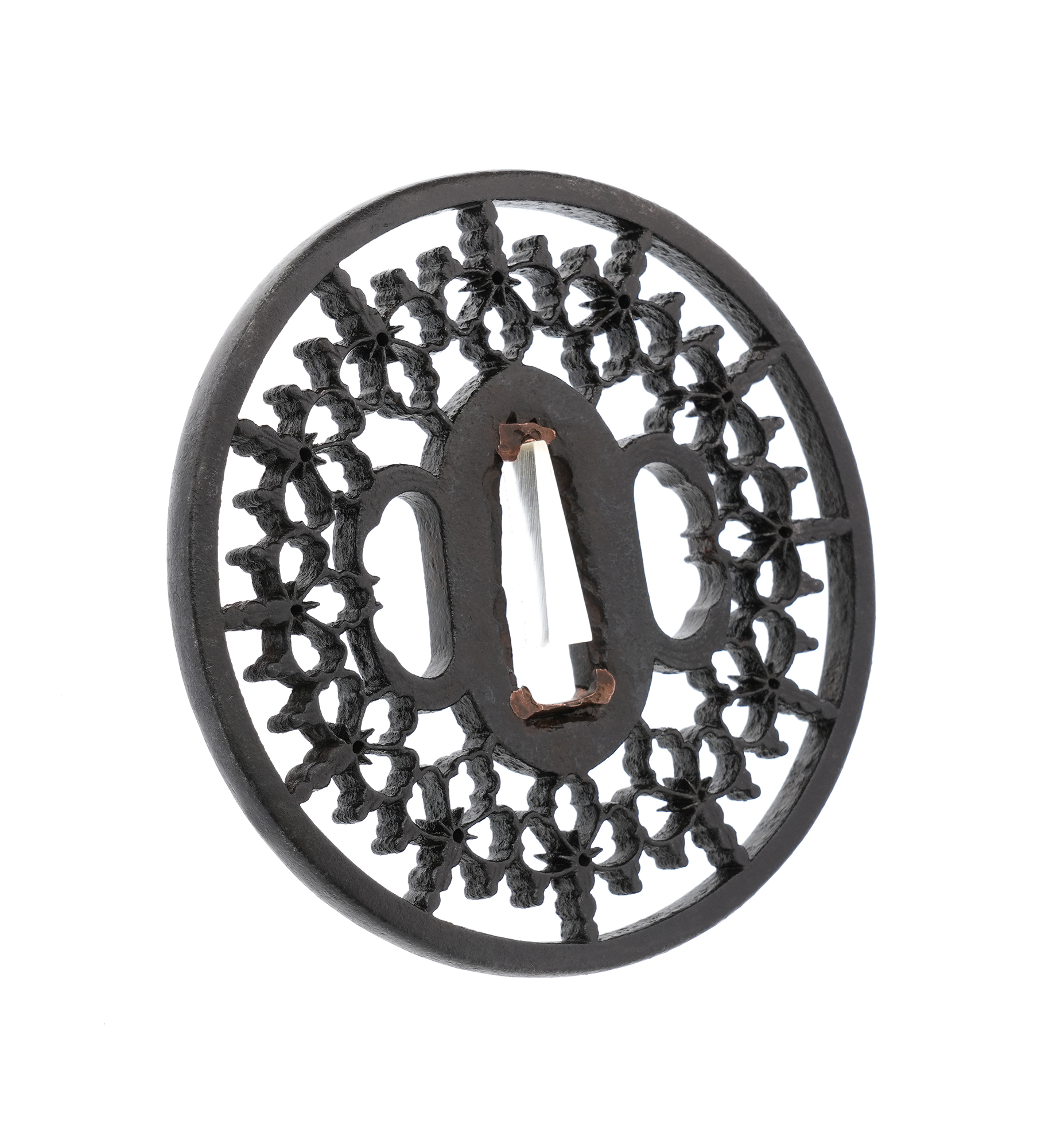
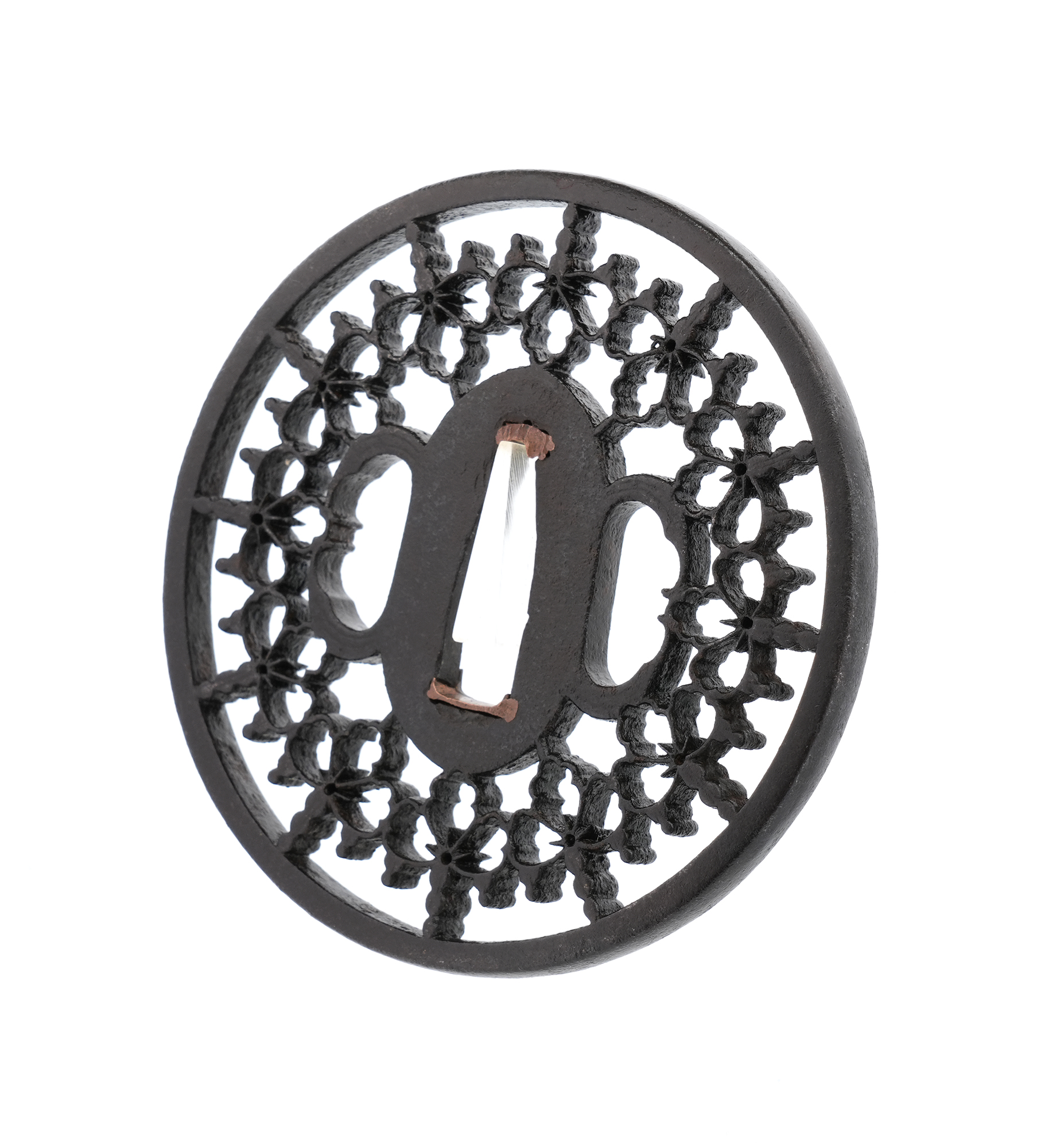
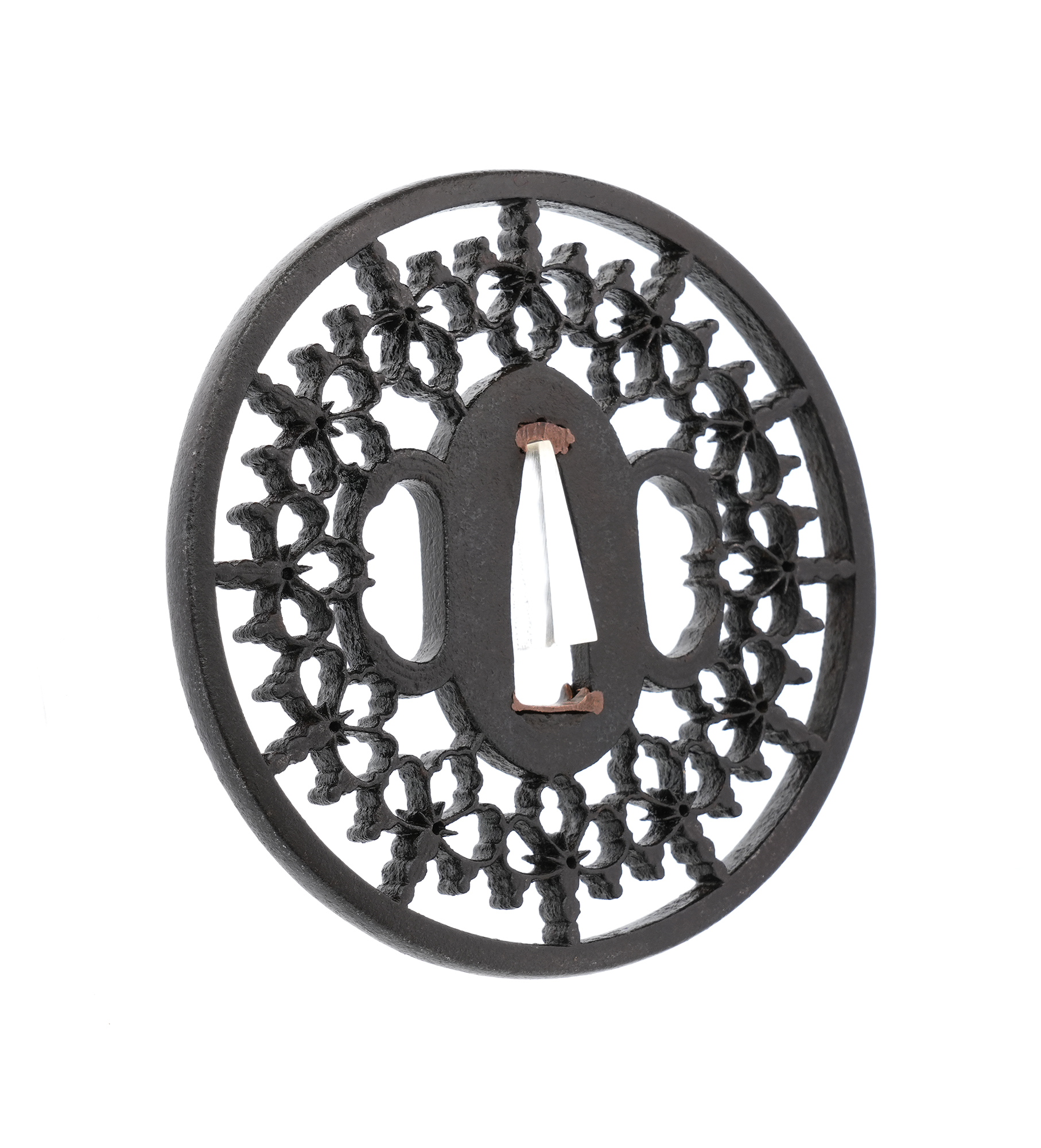
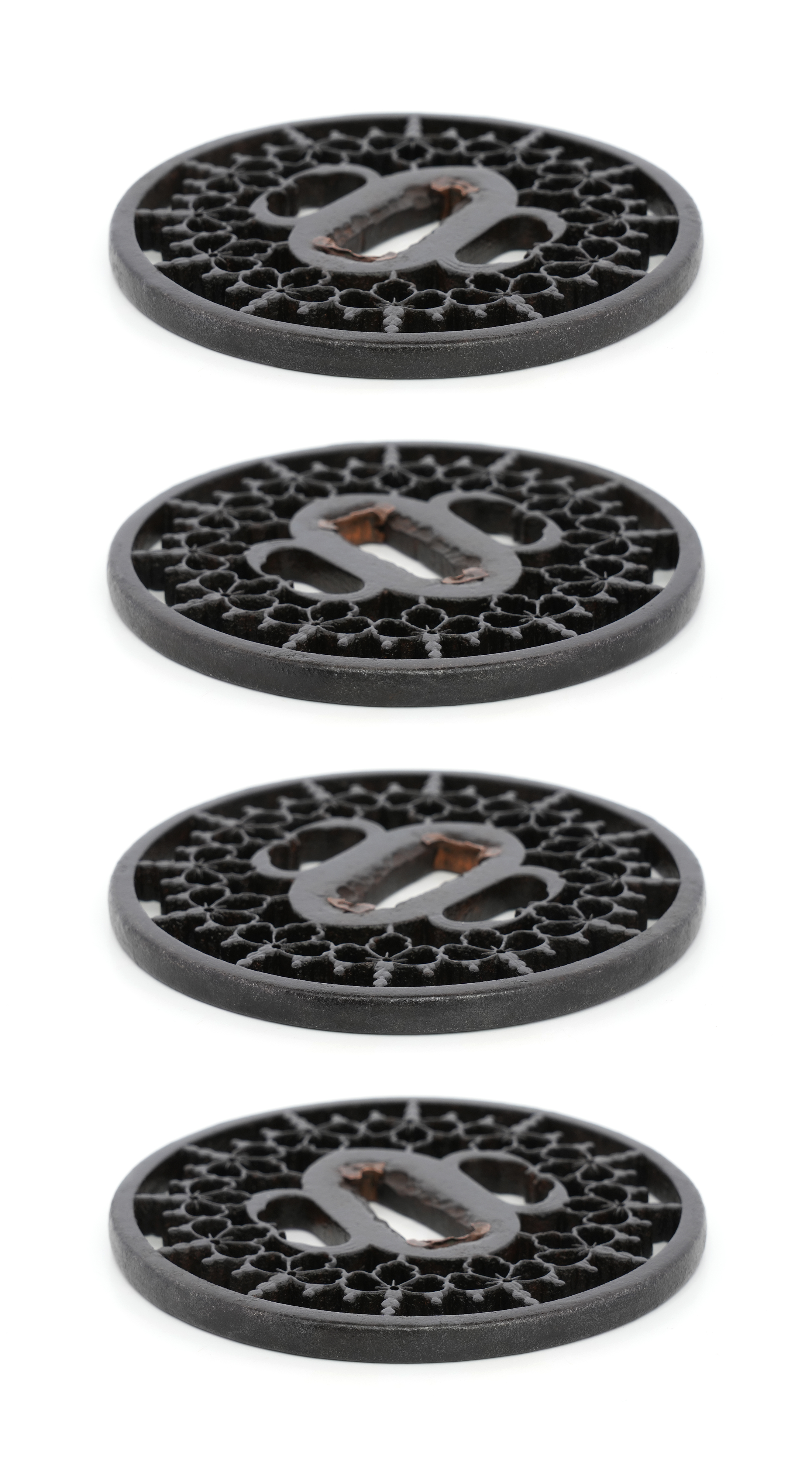
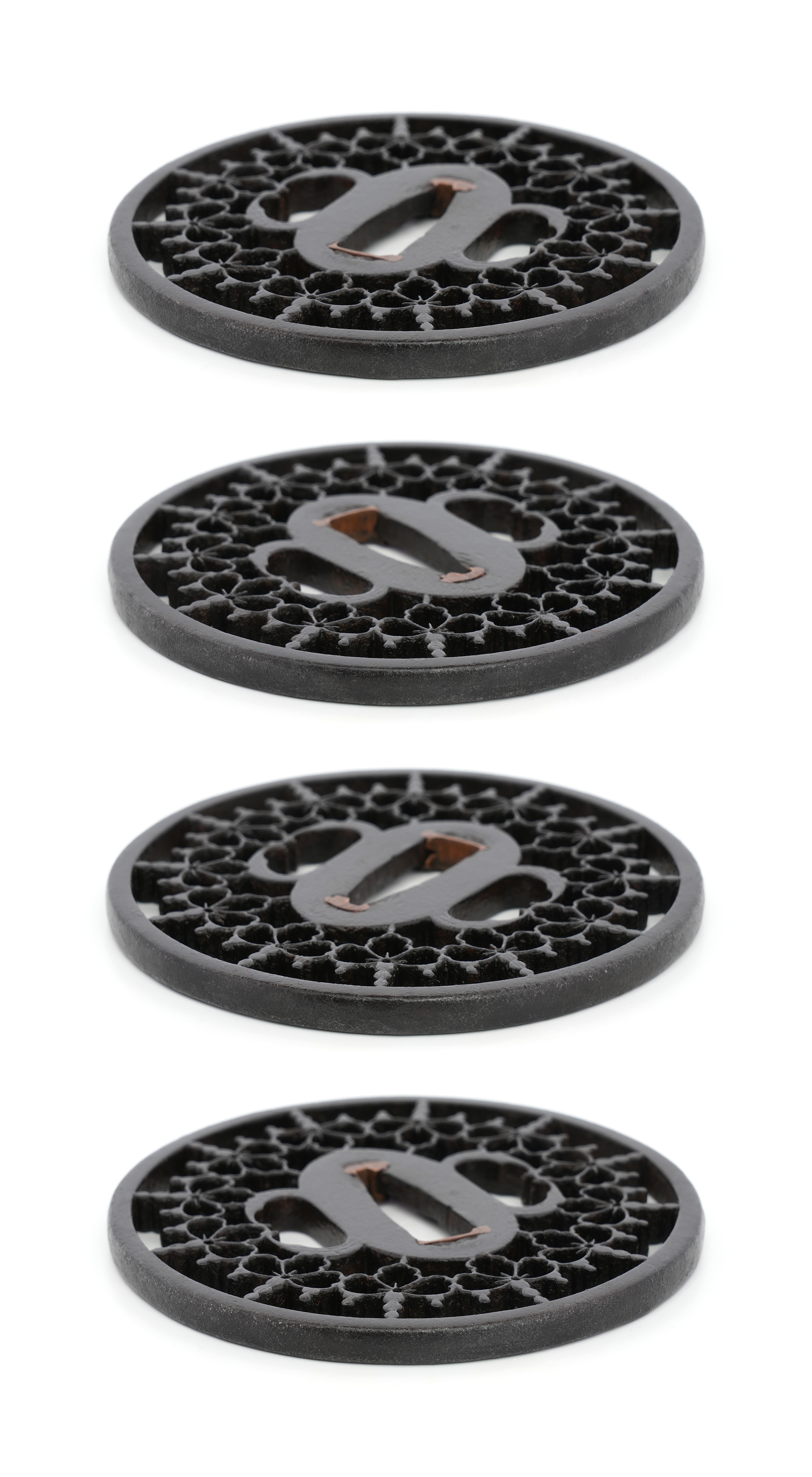
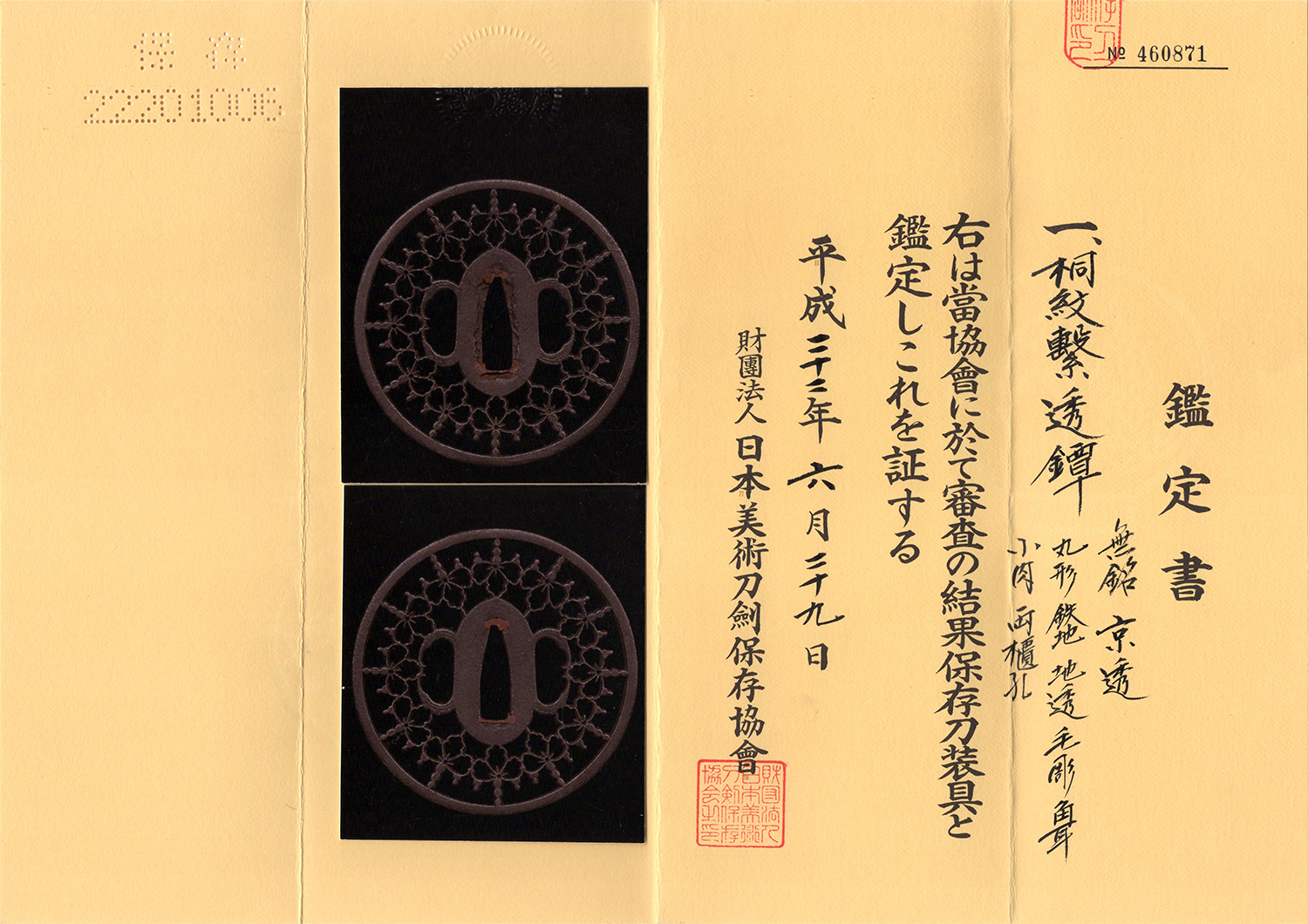
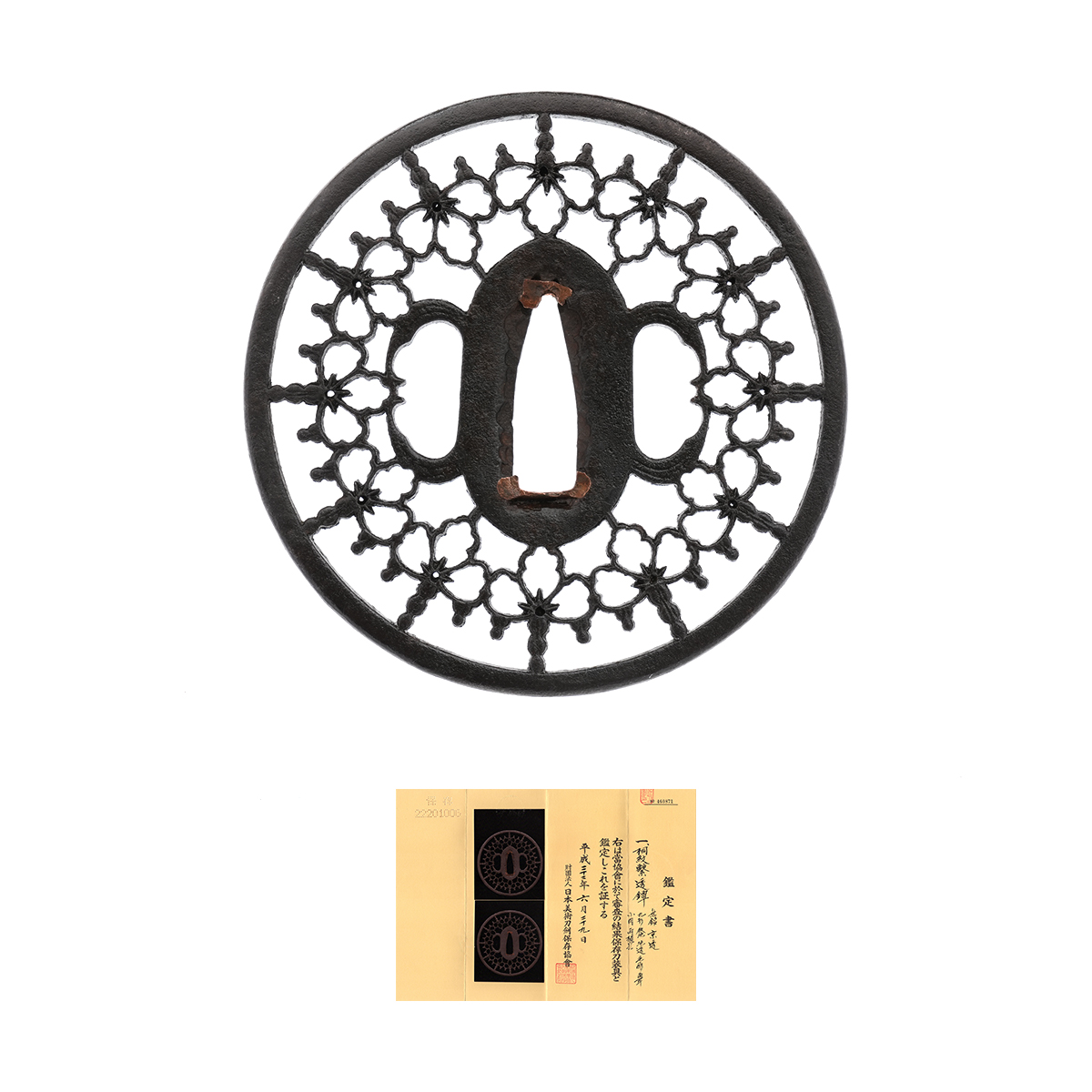
Kyo-sukashi is a type of tetsu-ji sukashi tsuba that developed primarily in Kyoto, Yamashiro Province, characterized by an elegant style where well-forged iron is shaped into a refined outline, and patterns are brought to life through the balance of thin iron lines and open spaces; this piece, though mumei, has been attributed to Kyo-sukashi by a Hozon Tosogu Kanteisho from the Nippon Bijutsu Token Hozon Kyokai, and is a work where one can enjoy the dense design and orderly composition unique to this school. The Kiri-mon motif of the design is a prestigious pattern used by the Imperial Court and samurai families since ancient times, and in this piece, rather than placing a single large crest, the forms of flowers and leaves are repeatedly connected to fill the entire space between the maru-mimi and the seppa-dai, creating a regular scenery reminiscent of a piece of textile from a distance, while upon closer inspection, each small Kiri-mon emerges, changing its impression depending on the viewing distance despite the repetition of the same design. The sukashi work, which connects the inflorescences and leaf tips of the small Kiri-mon to adjacent crests with thin iron lines and joins those contact points in multiple layers to the mimi and seppa-dai, requires certain design skill and labor; while piercing the tetsu-ji, which maintains its thickness, this finely, the overall balance is not disrupted, achieving a harmony between the powerful outline of the maru-mimi and the light patterns of the interior within a single tsuba. When light passes through, the thinness of the iron lines and the continuity of the sukashi become clear, and the more one turns it over or changes the angle, the more one can enjoy the shadows woven by the blackish-brown iron and the negative space. While containing dense Kiri-mon within a large maru-gata, it does not feel cramped, and this piece, which has sublimated a prestigious motif into a refined and refreshing sukashi, is further reassured by its Kyo-sukashi kiwame via the Hozon Tosogu Kanteisho; it is an attractive masterpiece not only for the pleasure of matching it with a koshirae themed around Kiri-mon, but also for appreciating the minute composition against the light.
NihontoWatchOffered by Toushin

As written by the shop
Machine translation from the shop's Japanese · may contain errors ·
Certifies a genuine fitting worth preserving: a correct signature, or, if unsigned, an identifiable era and school, with recognized artistic and craft value.
The NBTHK (Nihon Bijutsu Tōken Hozon Kyōkai, the Society for the Preservation of Japanese Art Swords) is a public-interest incorporated foundation founded in 1948 and supervised by Japan’s Agency for Cultural Affairs (Bunkachō); it is based at the Japanese Sword Museum in Tokyo. Its expert panels physically examine each submitted work (shinsa) and issue a certificate (kanteishō) ranking it by artistic and historical merit. NBTHK papers are the most widely recognized standard of authentication for Japanese swords and fittings.
NBTHK official siteAs a rule we do not accept returns, except when we have sent a different item from the one ordered or when there is a significant discrepancy between the description and the item. If you wish to return an item, please contact us within 3 days of its arrival and then send it back.
¥264,000