 NihontoWatchNihontoWatch
Kyo-kinko is a designation used for sword smithing metalworkers who were active in Kyoto, or for works that exhibit a Kyoto-style aesthetic. Since the Muromachi period, sword metalworkers starting with the Goto family were active in Kyoto, and during the Edo period, many metalworkers such as Ichinomiya Nagatsune and the Otsuki school produced tosogu, each with their own distinctive characteristics. There are many works using shakudo, shibuichi, and suaka, featuring takabori, zogan, and iroe; they are particularly known for a delicate and elegant style that pictorially represents flowers and birds, figures, historical events, and famous places. Chofu Tamagawa is a famous site composed in classical literature such as the Ise Monogatari and Kokin Wakashu, and is a pictorial theme based on the scene of bleaching cloth in the clear waters of the Tama River. The sight of white cloth being bleached in the pure current and fluttering in the wind has been beloved as a utamakura since ancient times, and was also favored as a refined design in Kyo-kinko. This work uses a shakudo ishime-ji; the omote skillfully depicts a woman bleaching cloth by the banks of the Tamagawa where willow branches hang down, and the ura depicts white cloth fluttering in the wind through takabori iroe, completing a single scene across both sides. Delicate kebori is applied to the flowing water, and the iroe effectively using gold, silver, and shakudo, along with the nawame-mimi, adds a refined brilliance to the entire work. The nakago-ana shows a natural form that retains an old style, and the niku-oki of the seppa-dai has a sense of composure; together with the dignified carving technique of the whole, the characteristics typical of Kyo-kinko from around the middle of the Edo period can be seen, making this a superior work of Kyo-kinko that combines a classical pictorial theme with excellent engraving techniques.
NihontoWatchOffered by Toushin

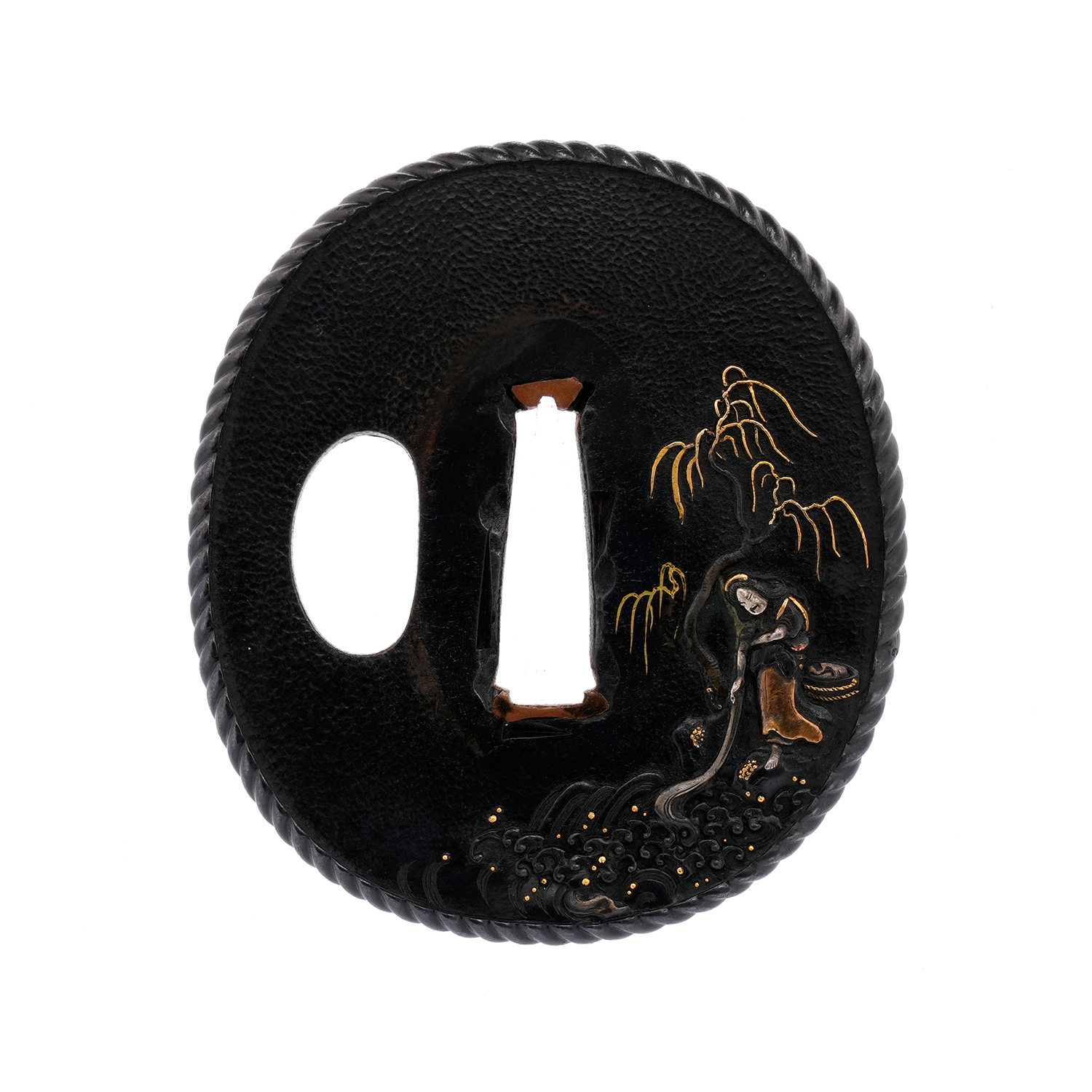
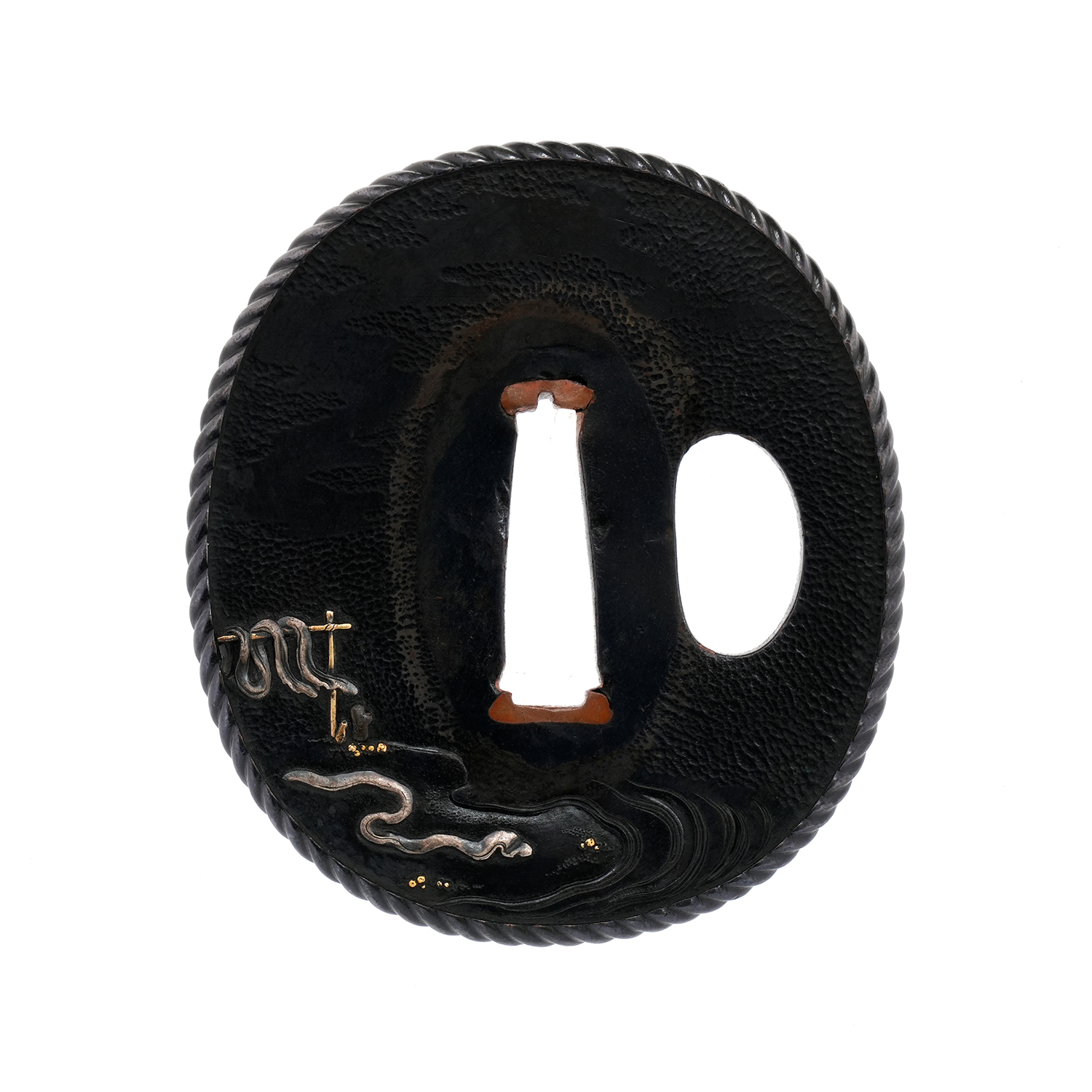
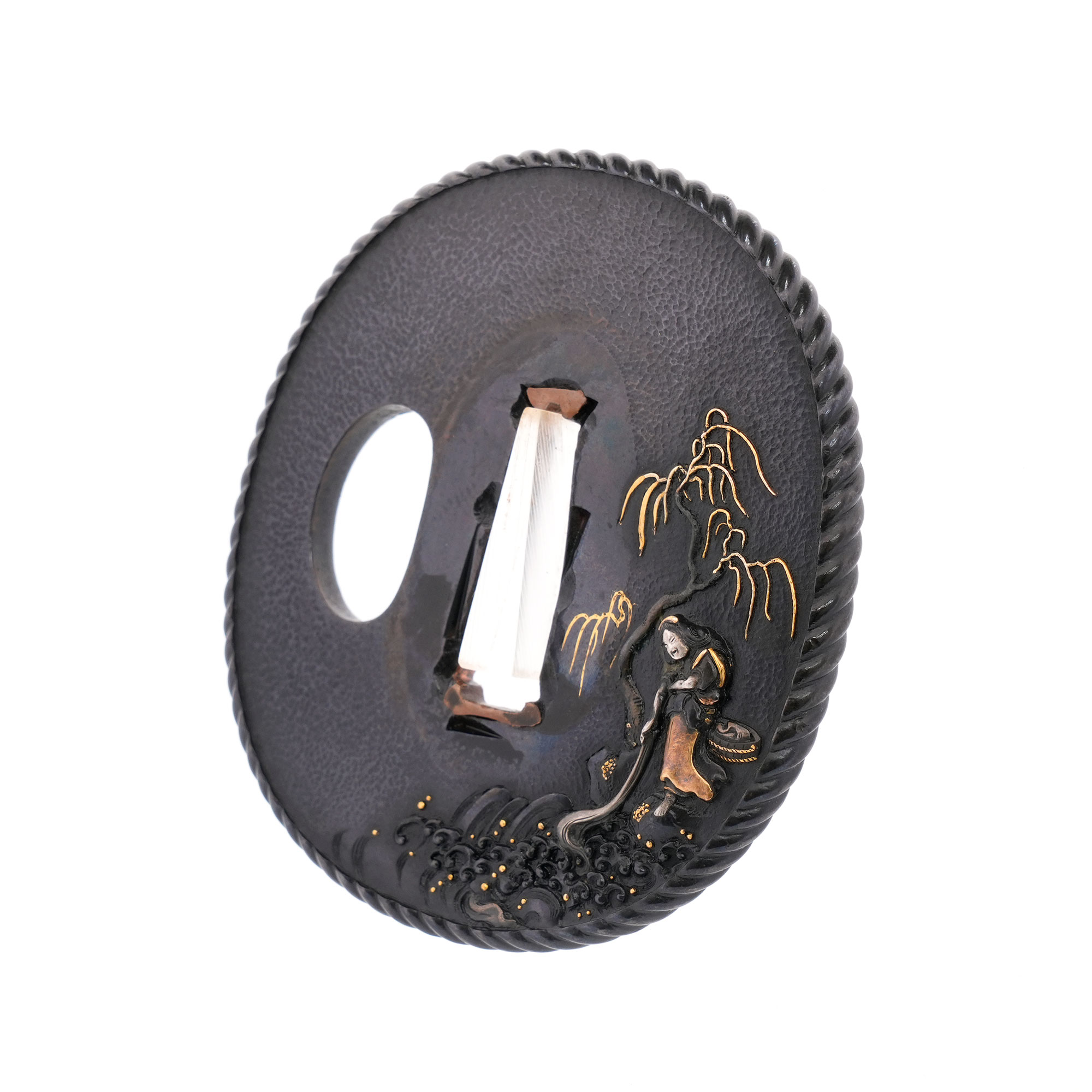
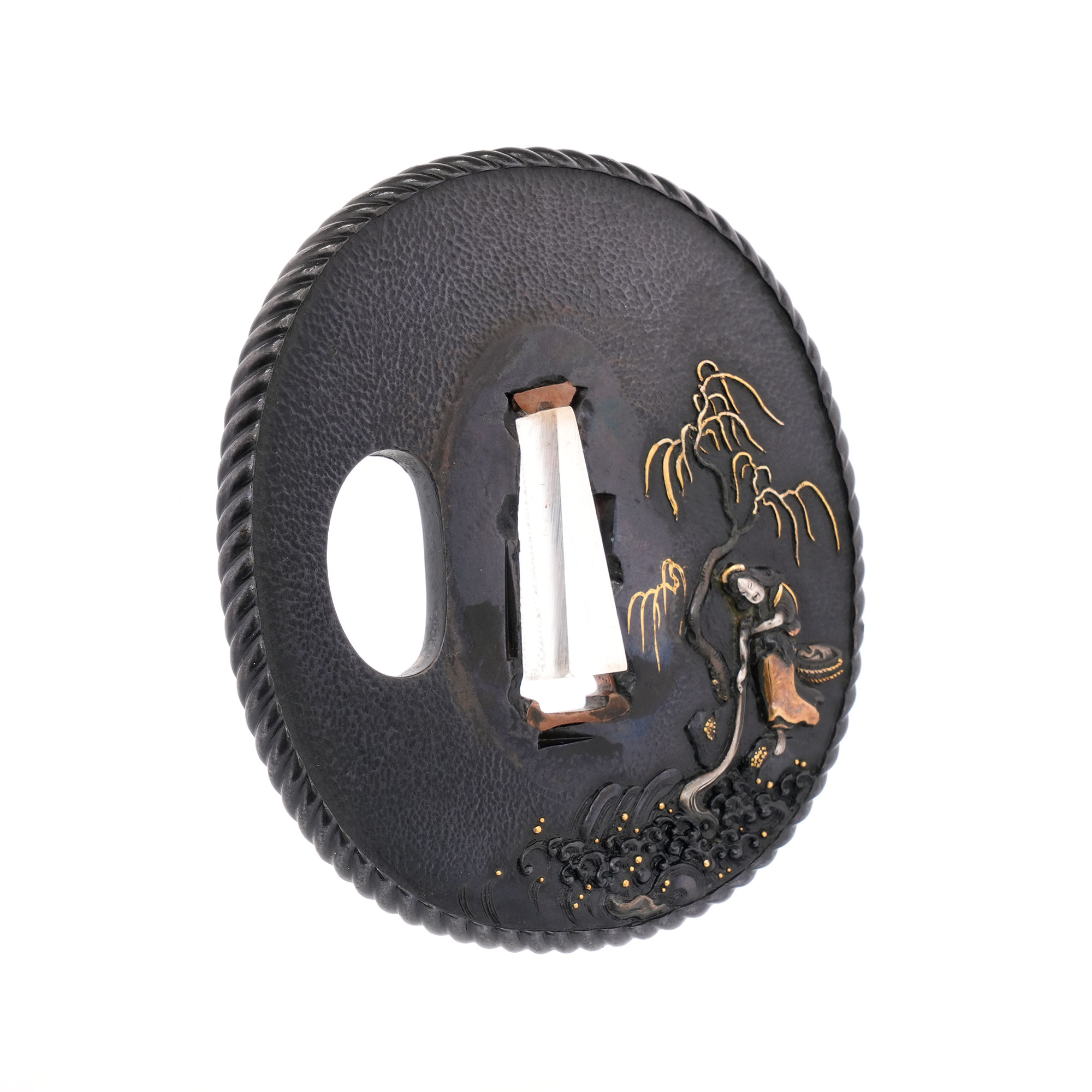
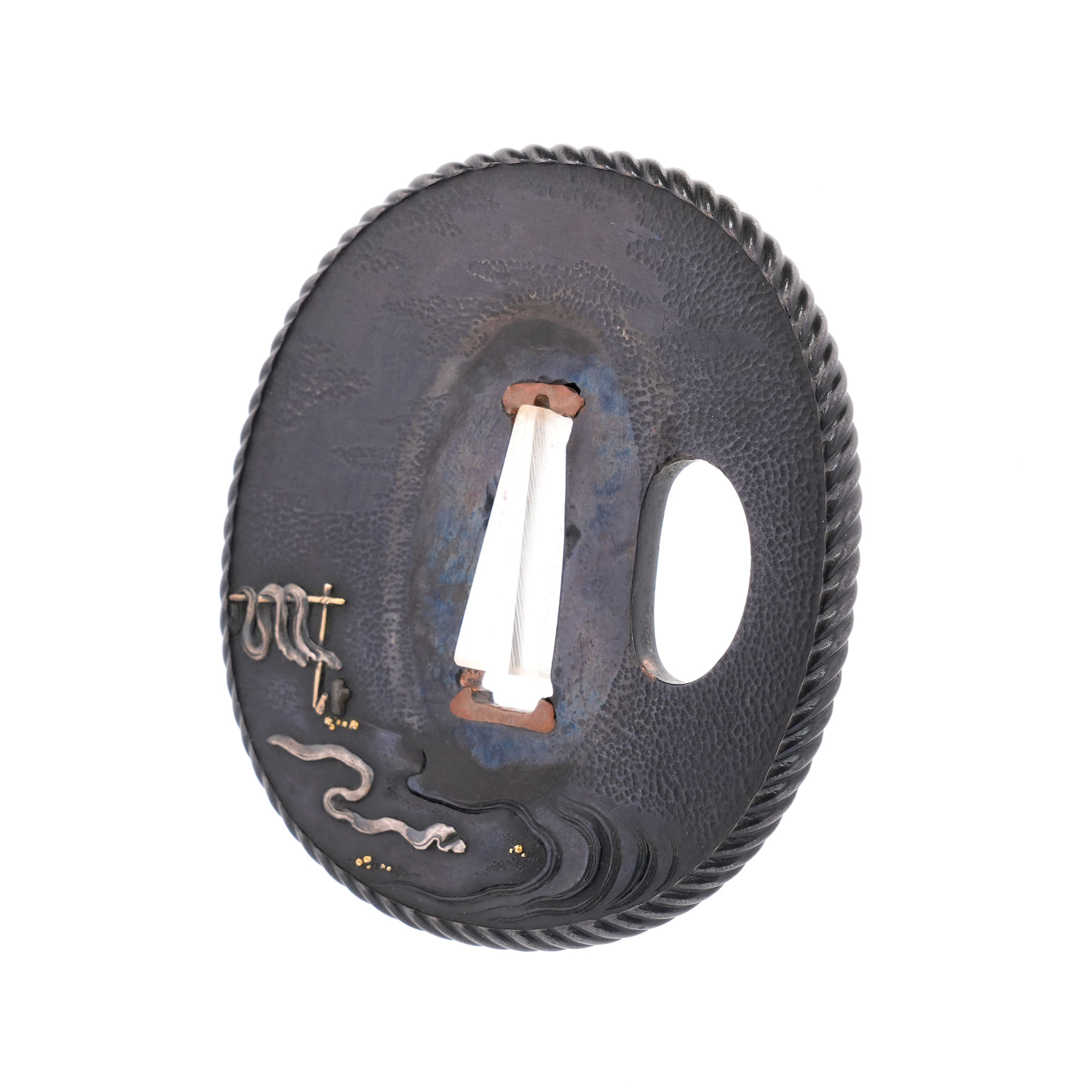
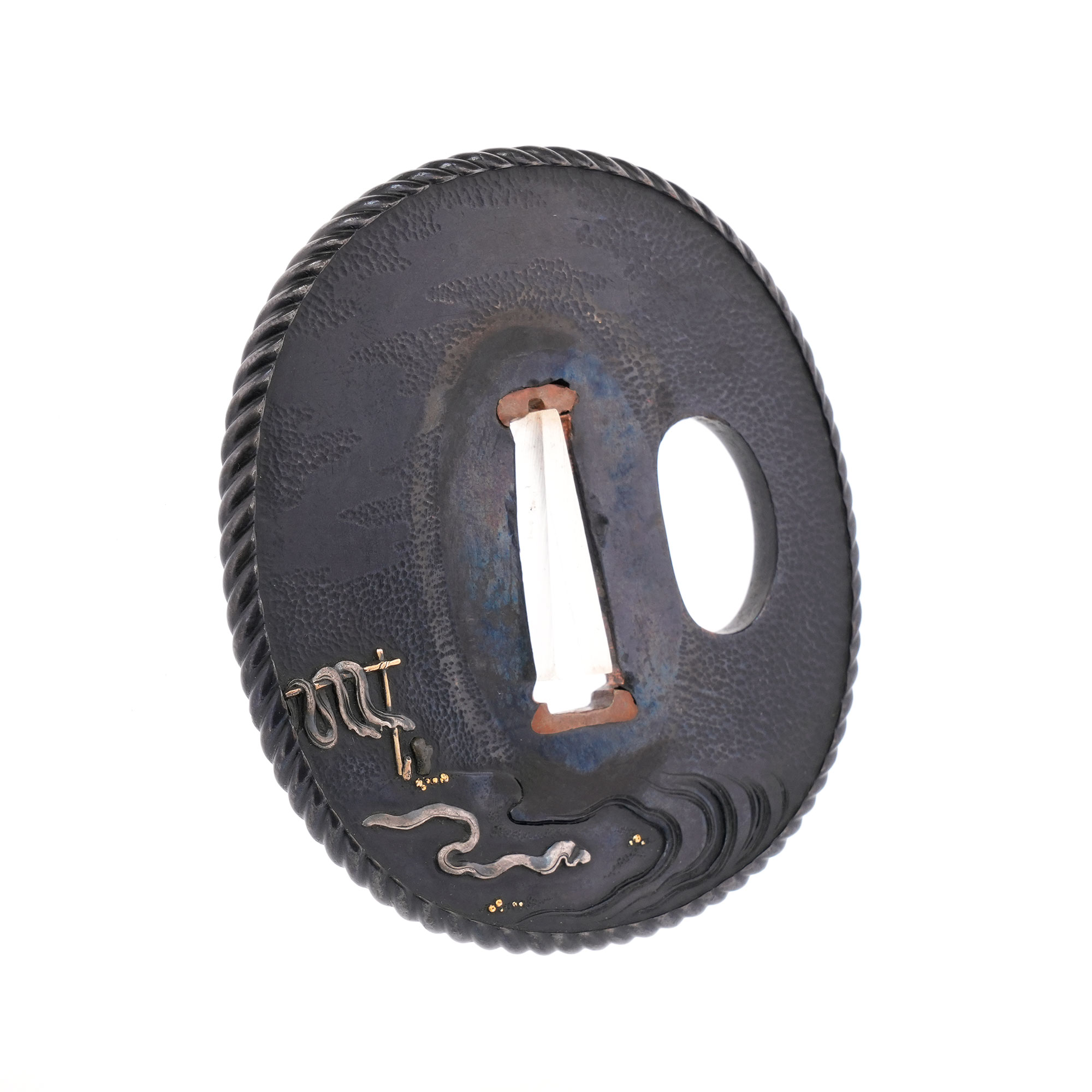
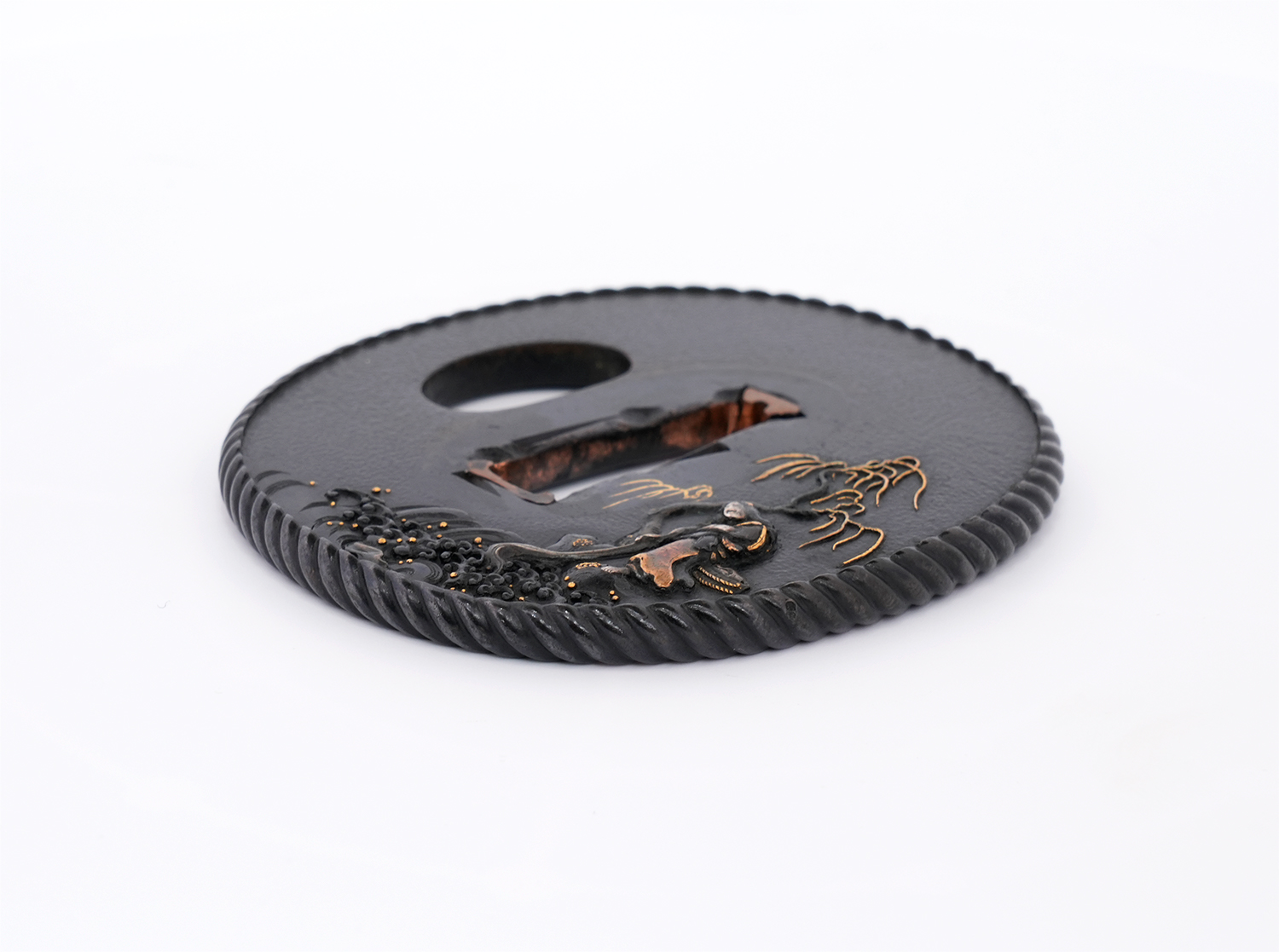
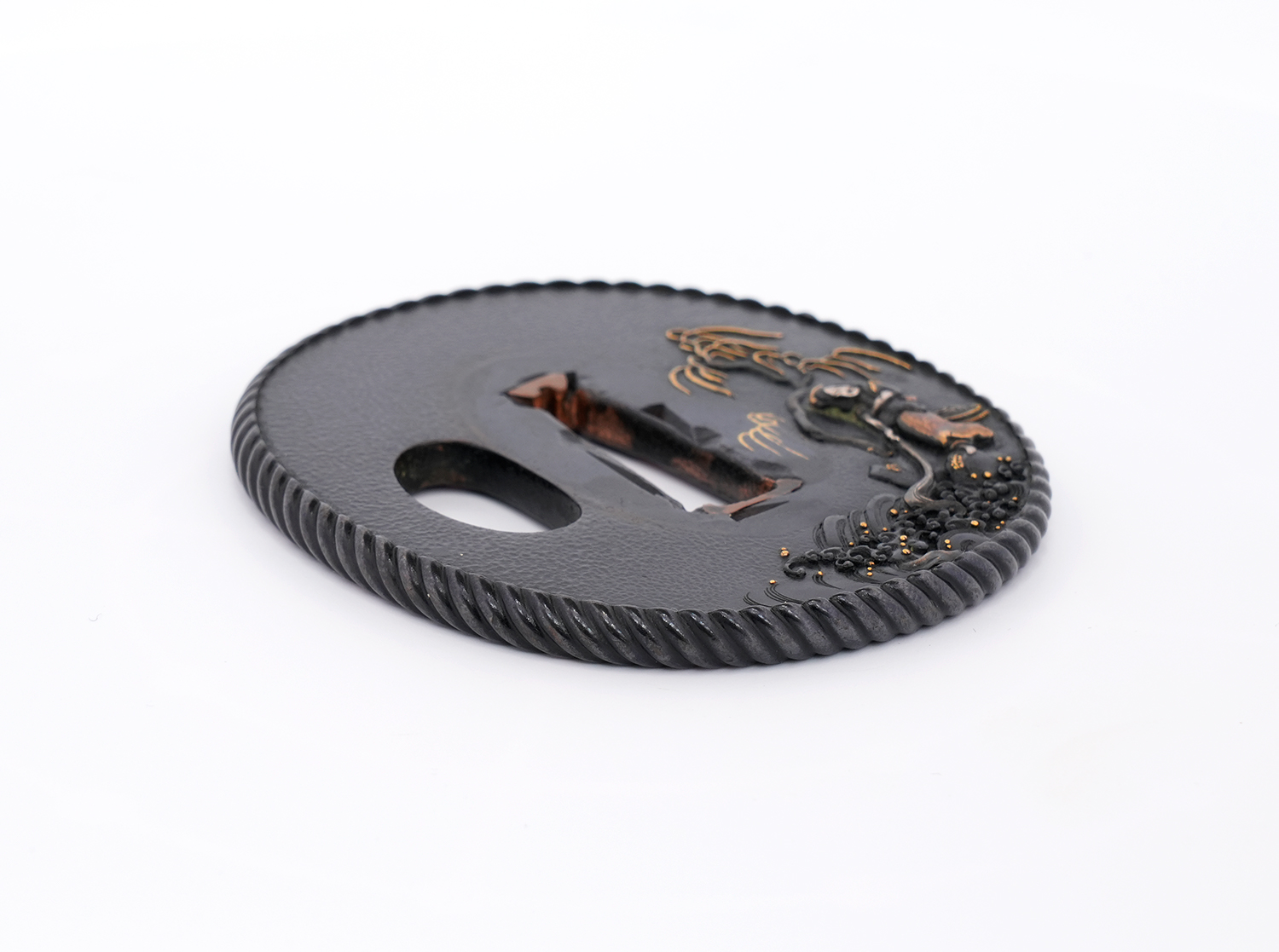
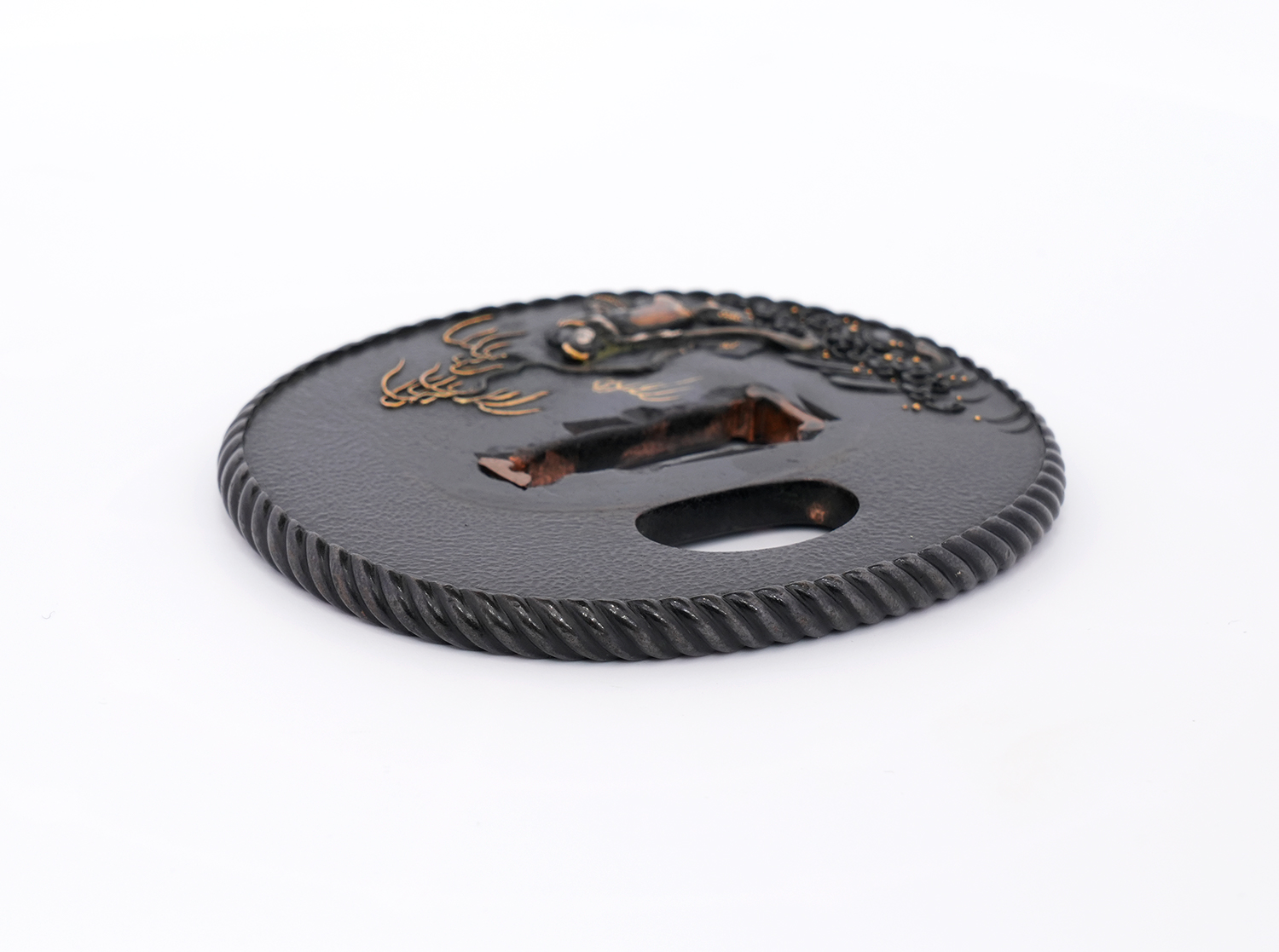
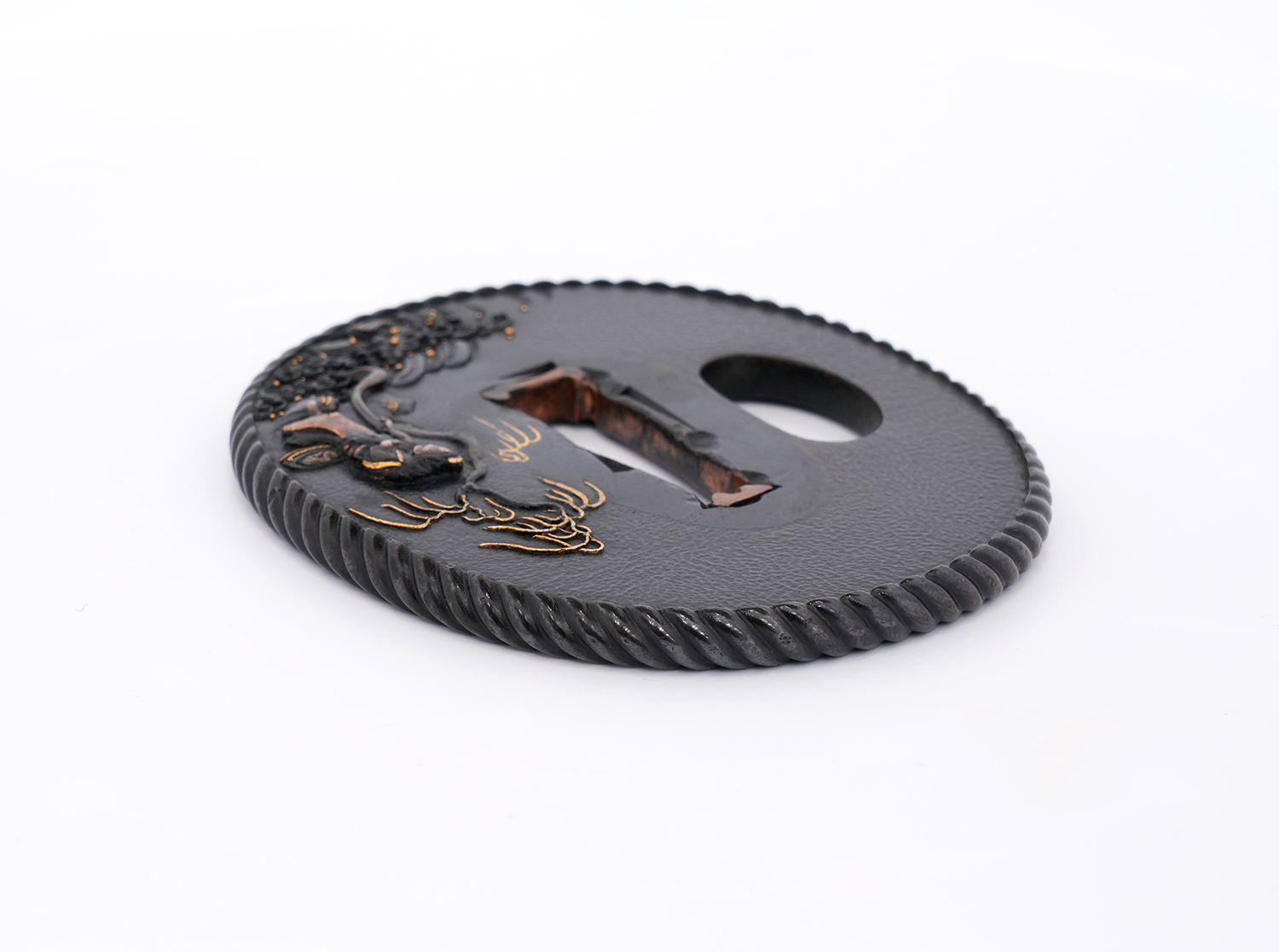
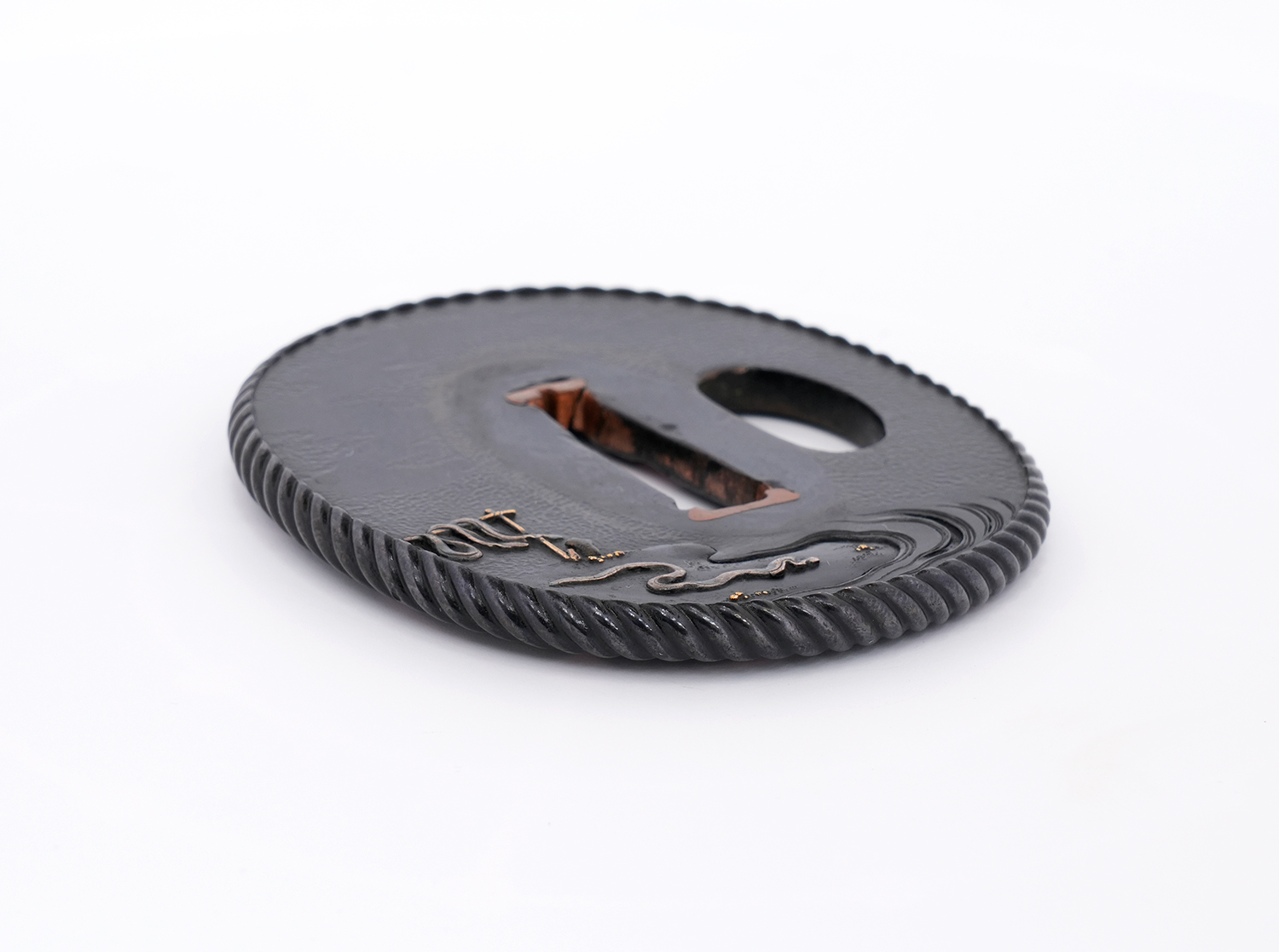
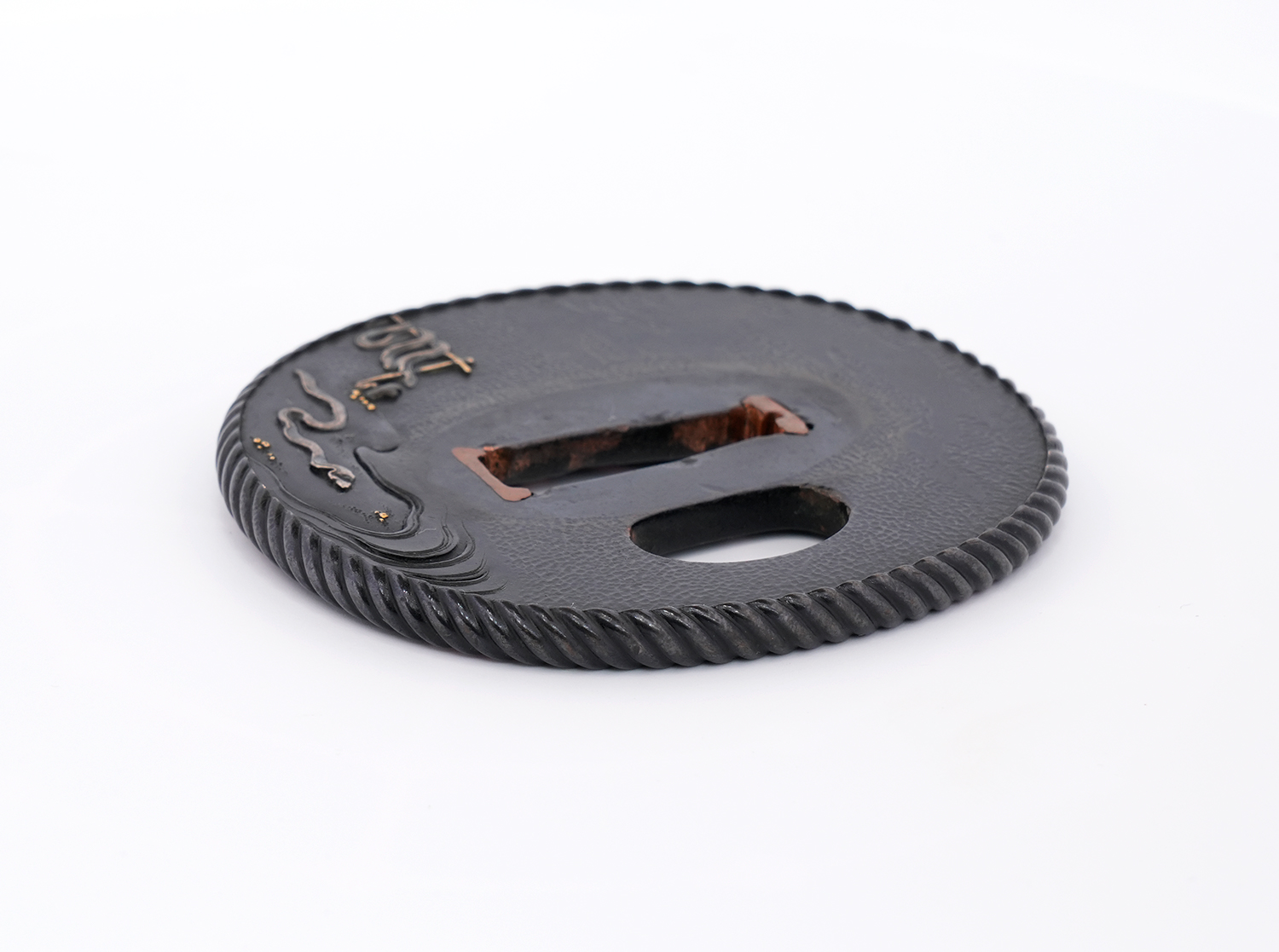
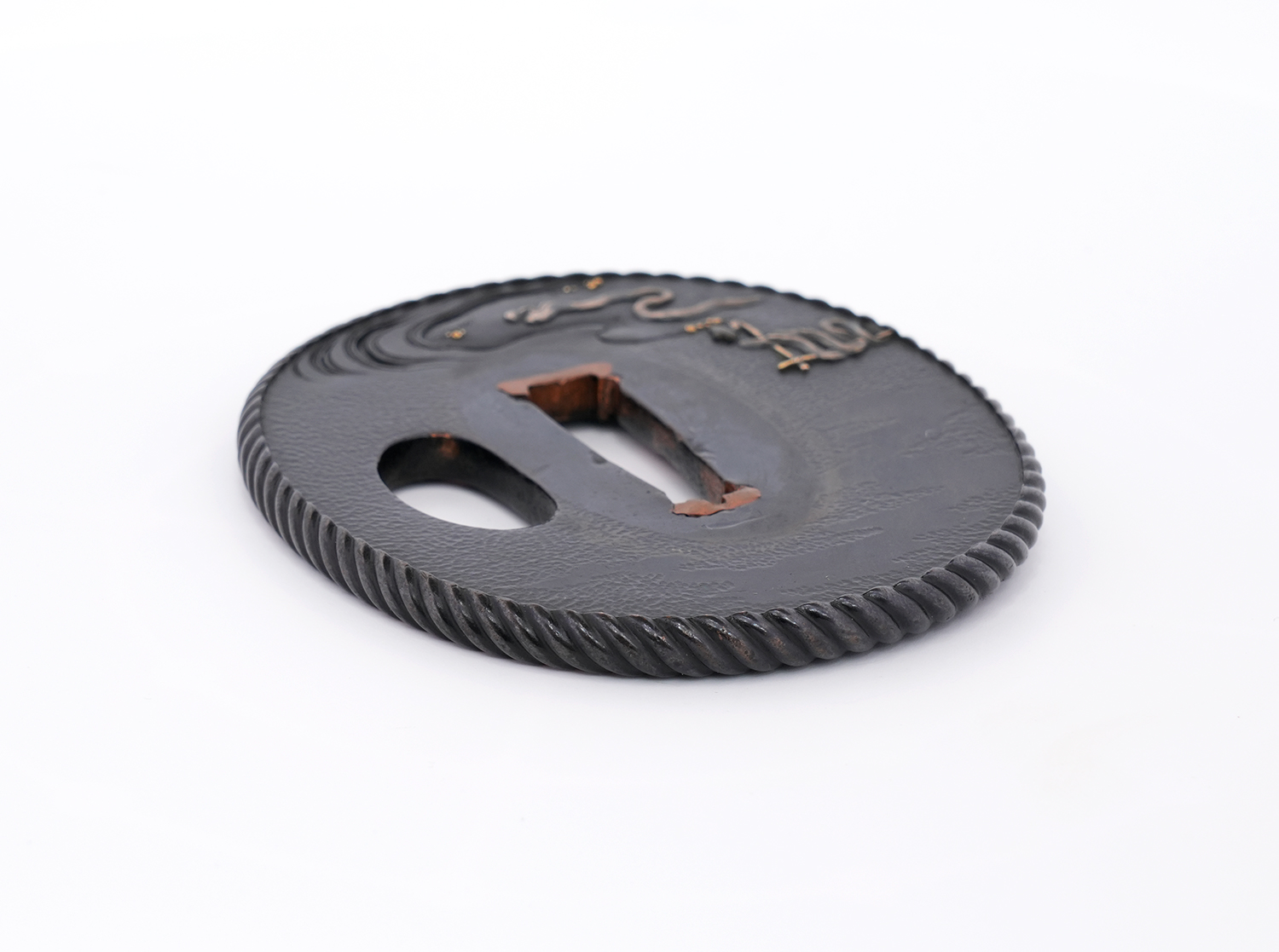
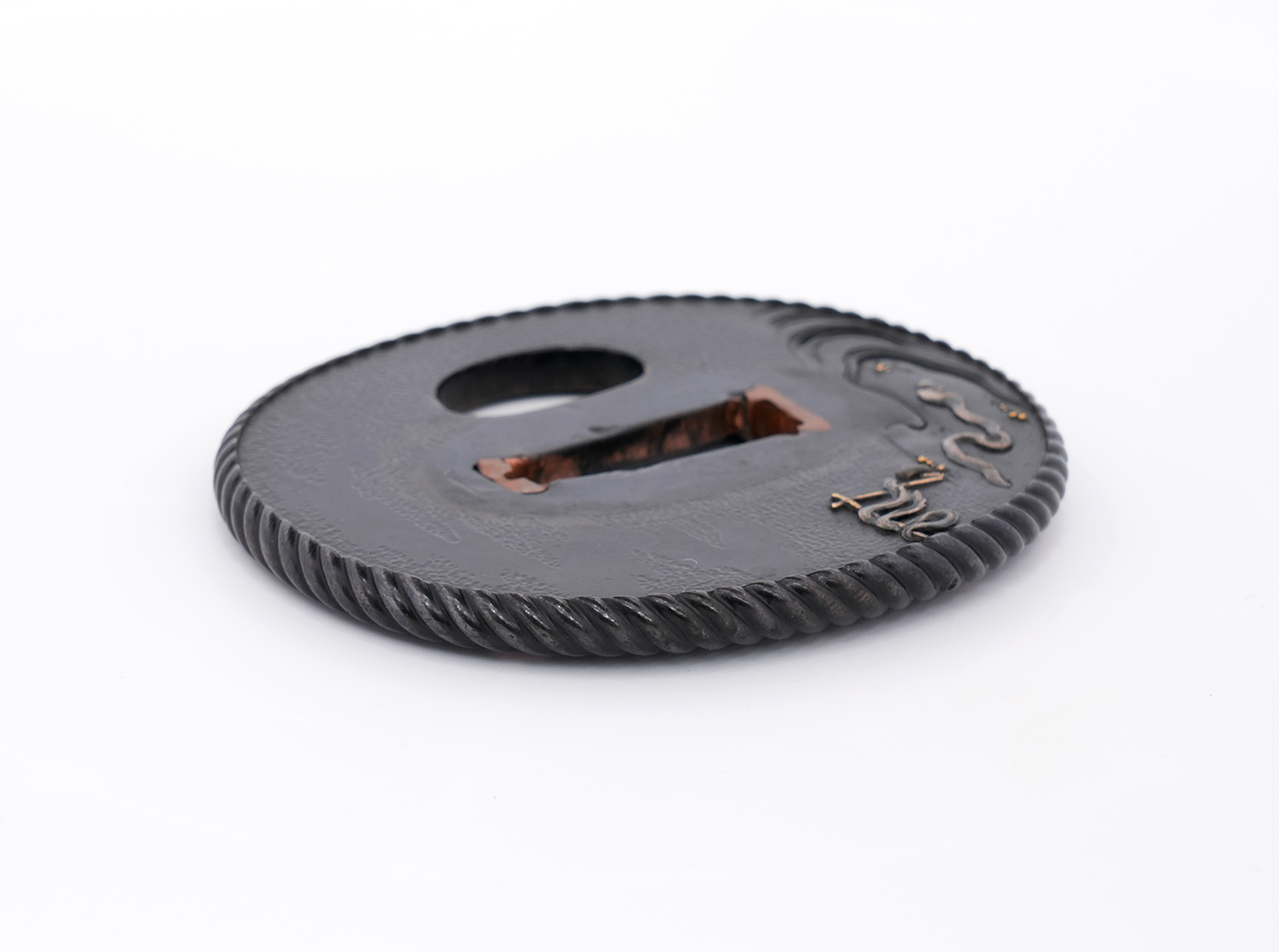
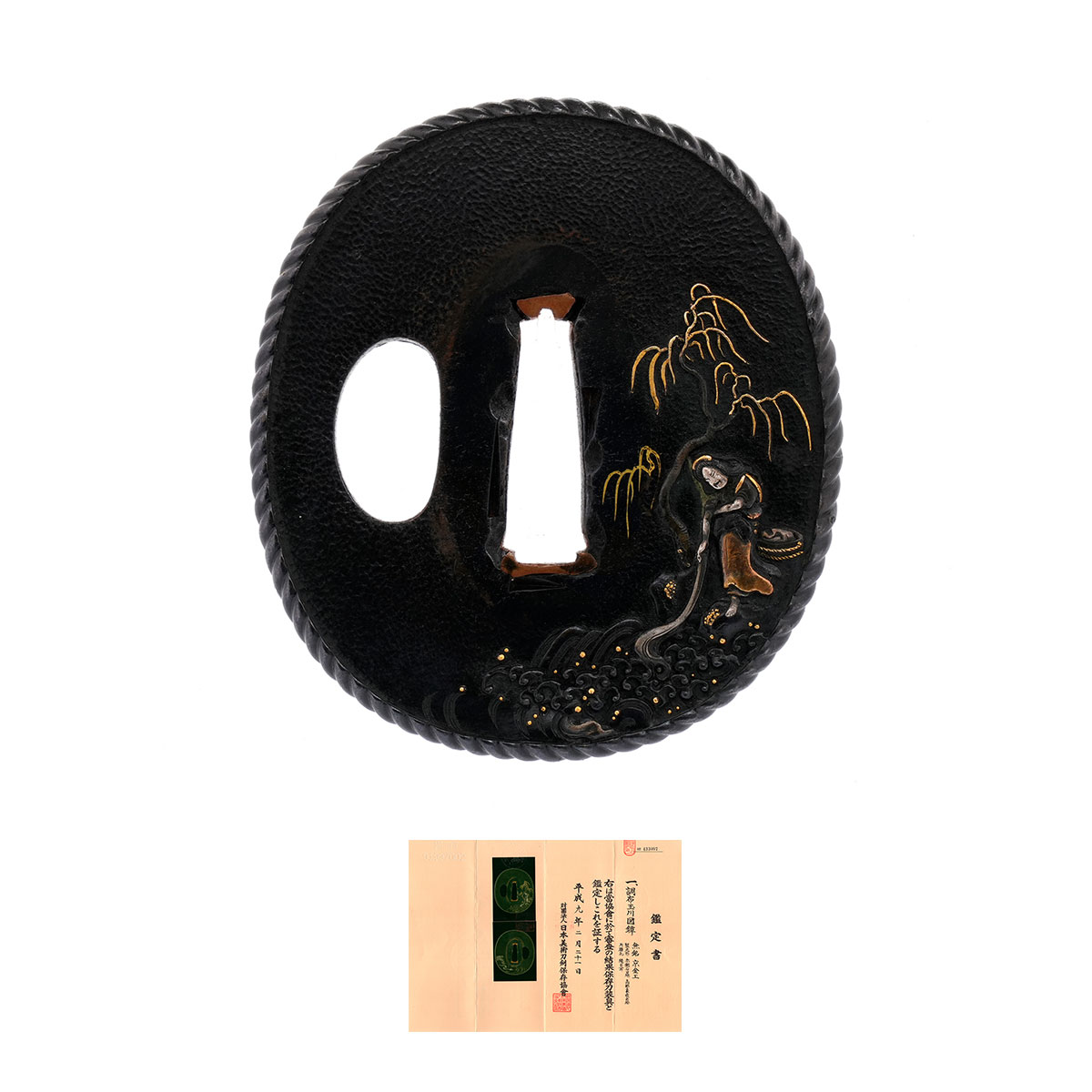
Machine translation of the shop's Japanese ·
Machine translation from the shop's Japanese · may contain errors ·
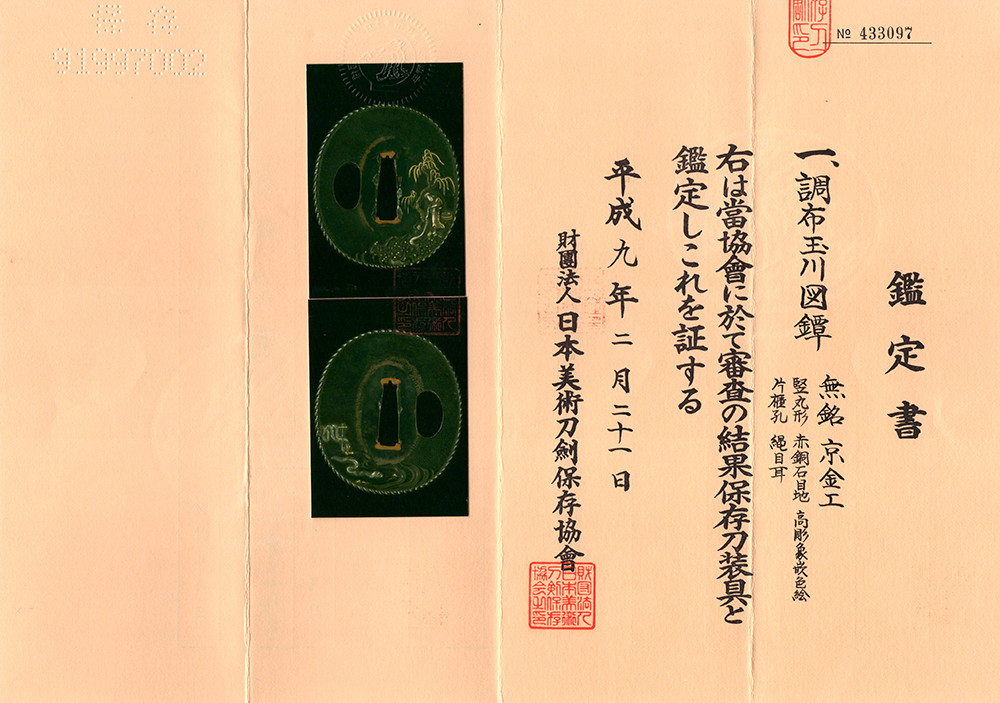
Certifies a genuine fitting worth preserving: a correct signature, or, if unsigned, an identifiable era and school, with recognized artistic and craft value.
The NBTHK (Nihon Bijutsu Tōken Hozon Kyōkai, the Society for the Preservation of Japanese Art Swords) is a public-interest incorporated foundation founded in 1948 and supervised by Japan’s Agency for Cultural Affairs (Bunkachō); it is based at the Japanese Sword Museum in Tokyo. Its expert panels physically examine each submitted work (shinsa) and issue a certificate (kanteishō) ranking it by artistic and historical merit. NBTHK papers are the most widely recognized standard of authentication for Japanese swords and fittings.
NBTHK official siteAs a rule we do not accept returns, except when we have sent a different item from the one ordered or when there is a significant discrepancy between the description and the item. If you wish to return an item, please contact us within 3 days of its arrival and then send it back.
¥165,000