 NihontoWatchNihontoWatch
This is an elegant Edo-period fuchi–kashira by the Sendai artisanKiyosada, depicting the classical scenic themeŌmi Hakkei (Eight Views of Ōmi)in fine gold carving. The shakudō ground has been polished to a smooth finish, providing excellent contrast with the detailed landscape motifs. The workmanship displays sharp line-engraving, controlled design placement, and tasteful gold application. The outdoor landscapes, architecture, water elements, and natural scenery are rendered with balance and clarity, showing the refined style associated with the Kiyosada line.
NihontoWatchOffered by Toukentakarado

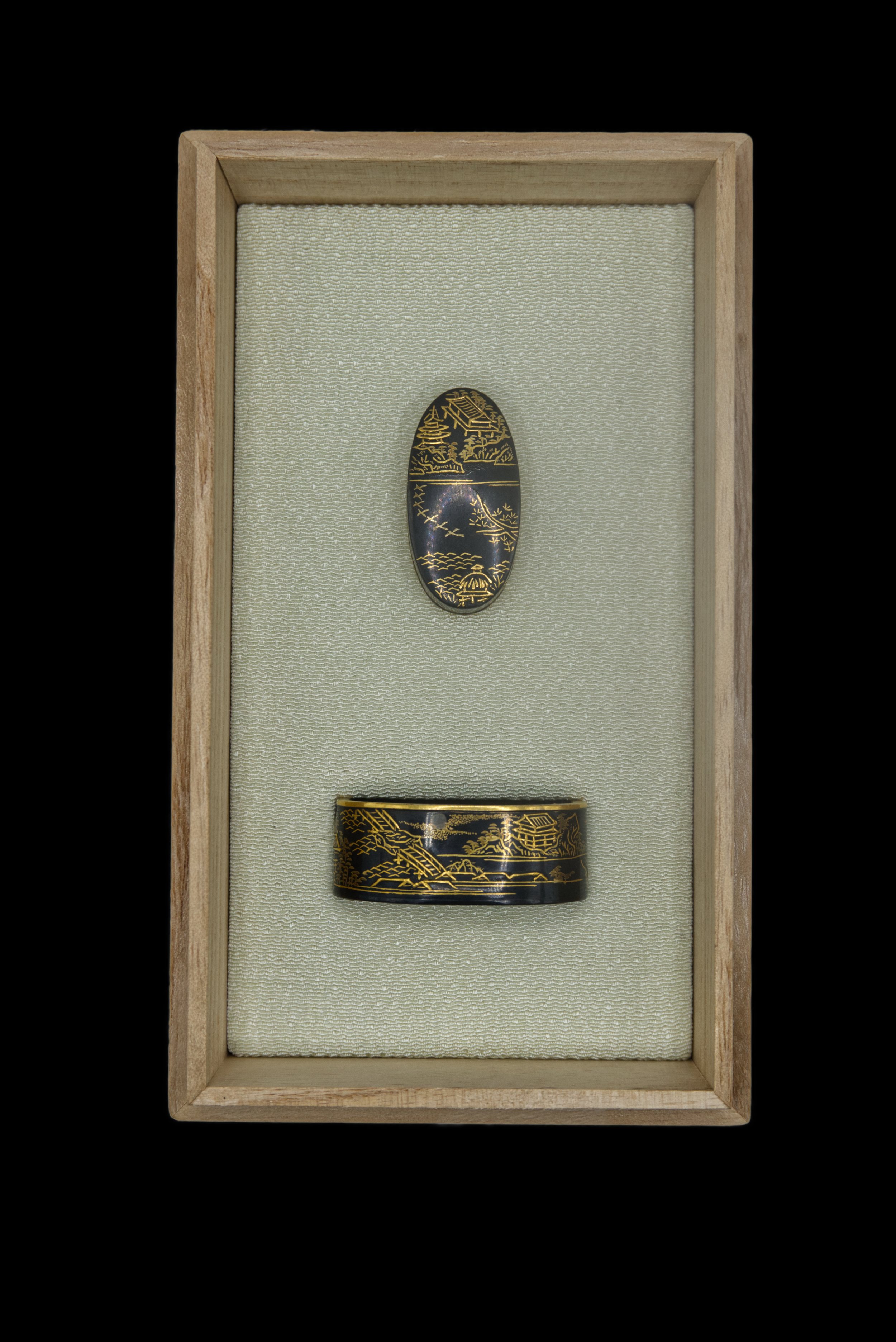
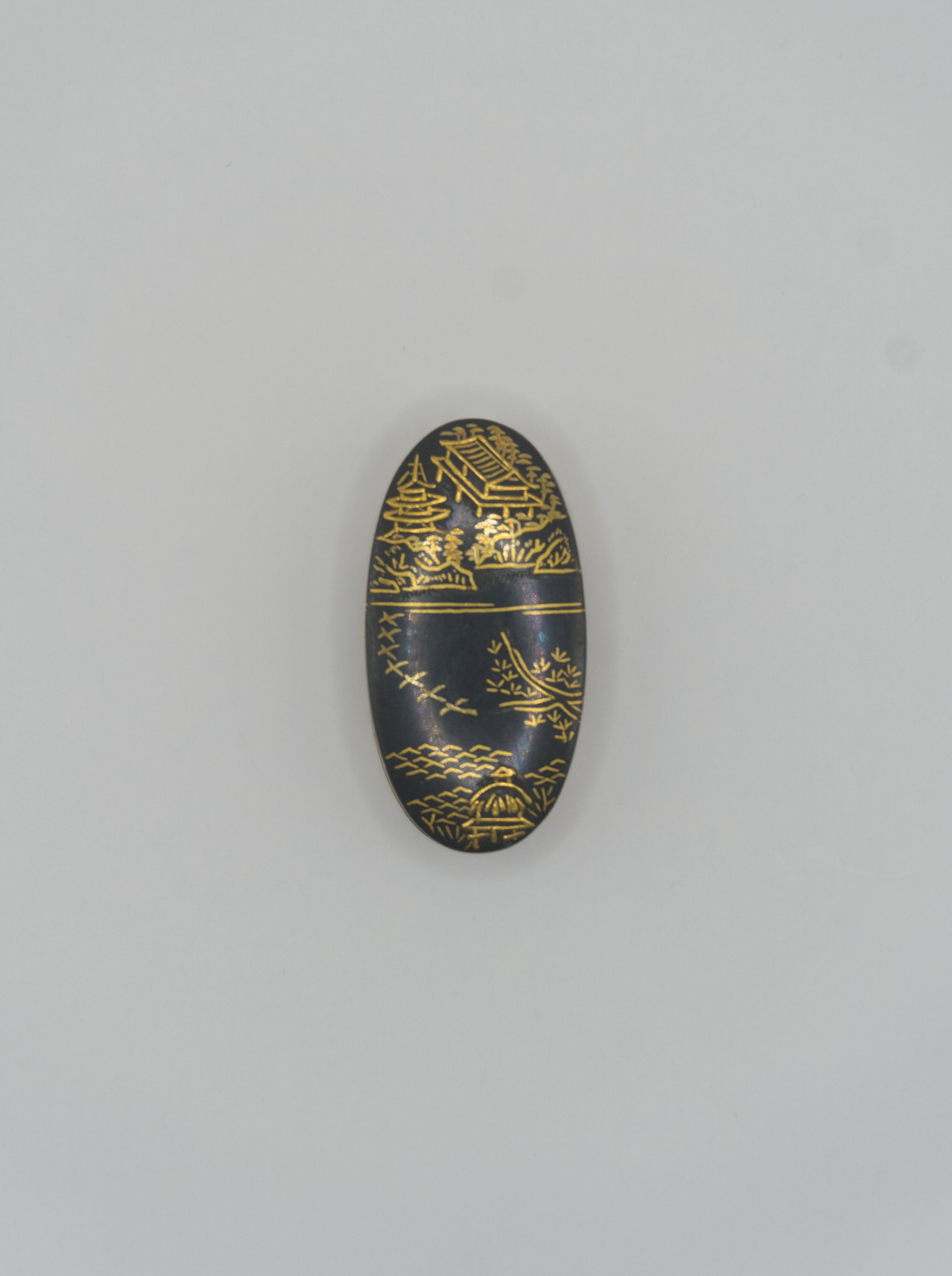
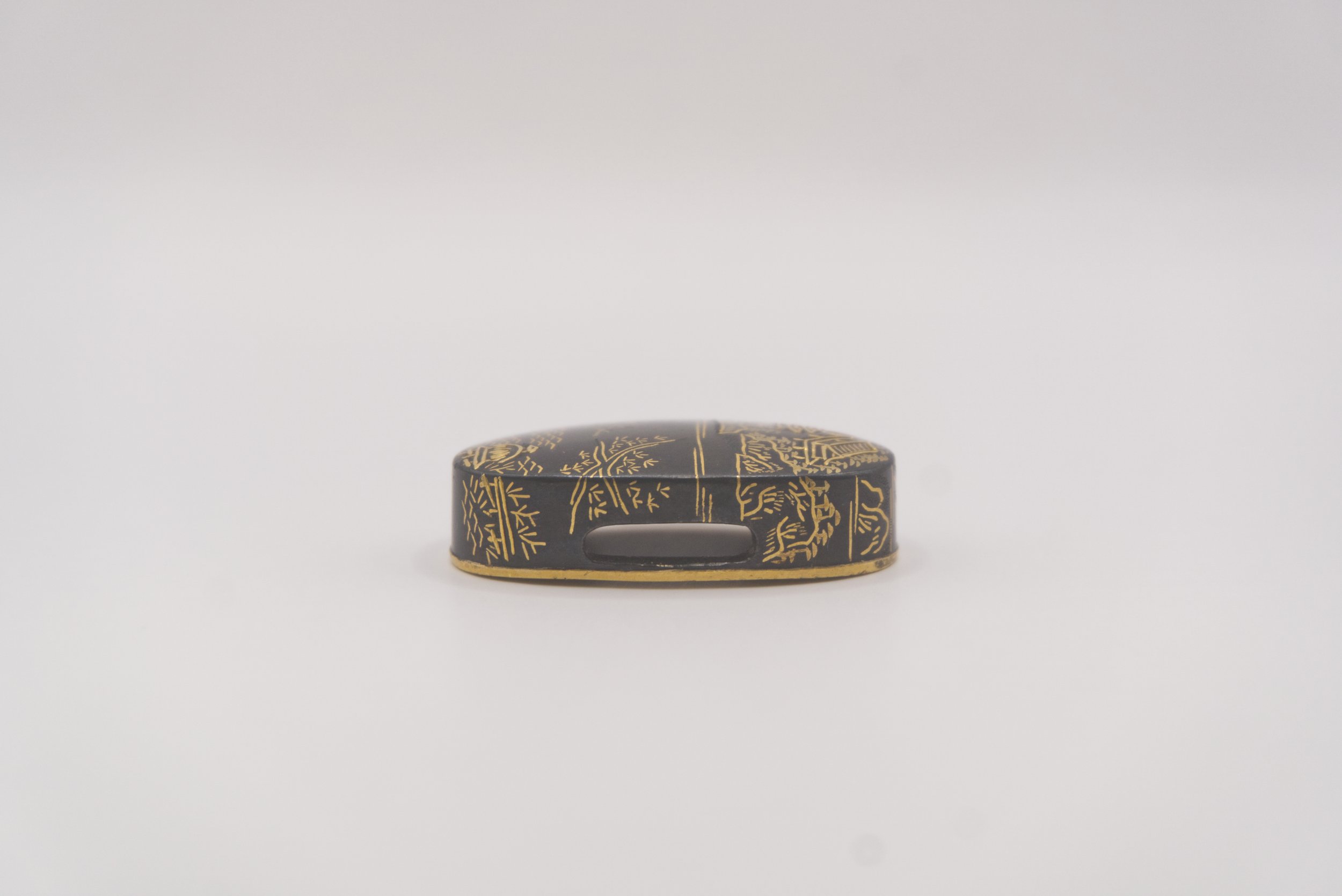
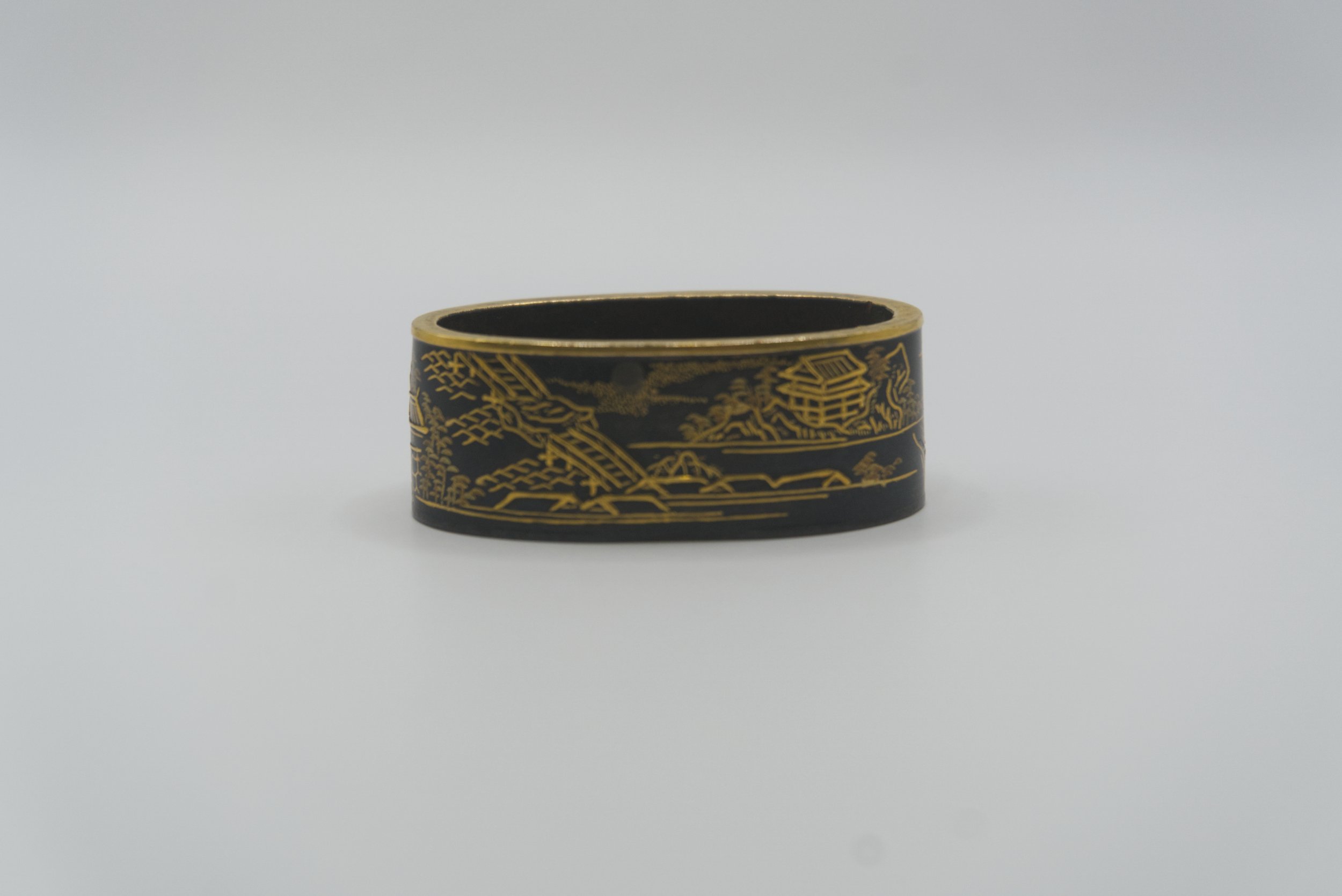
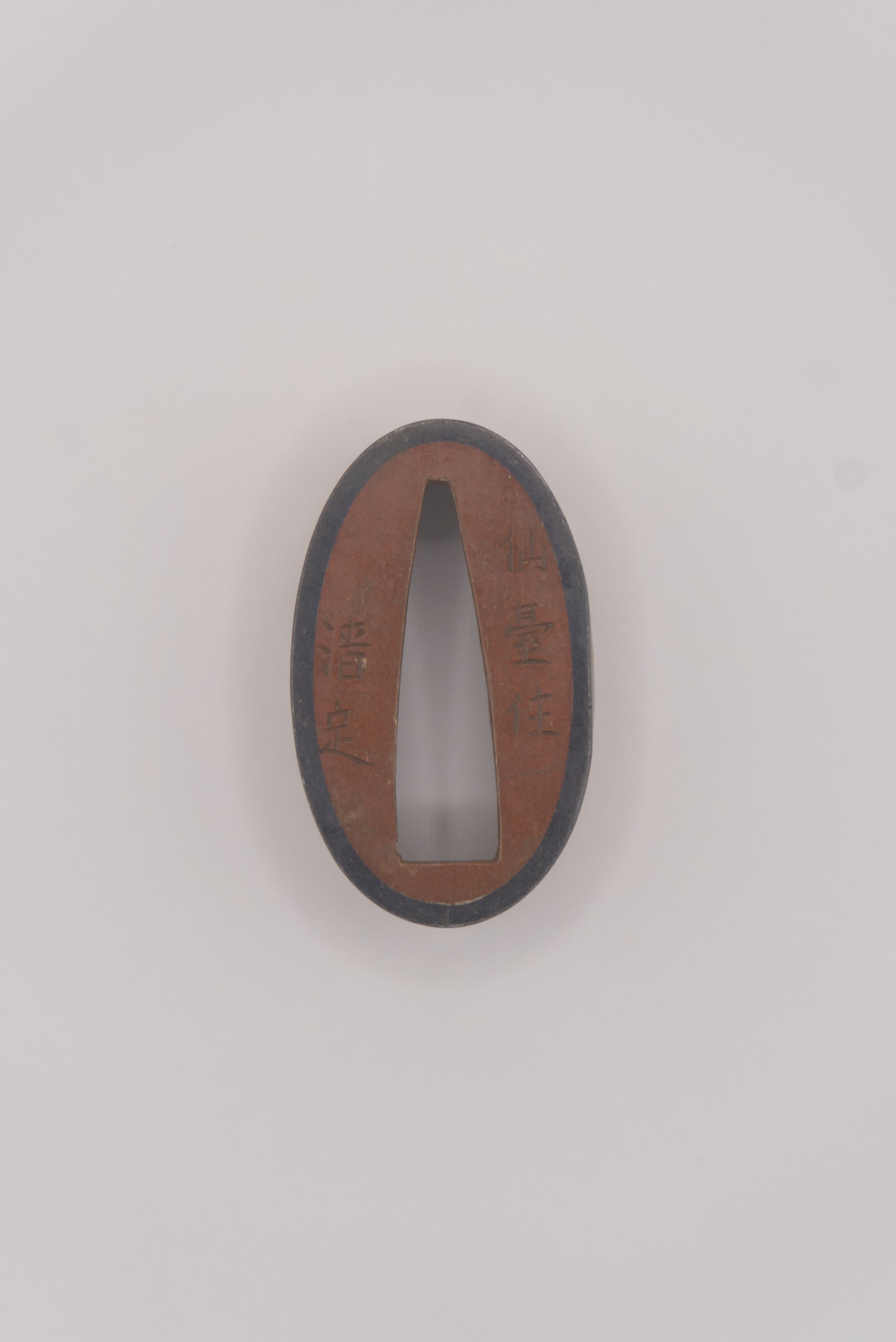
Edo
Signed
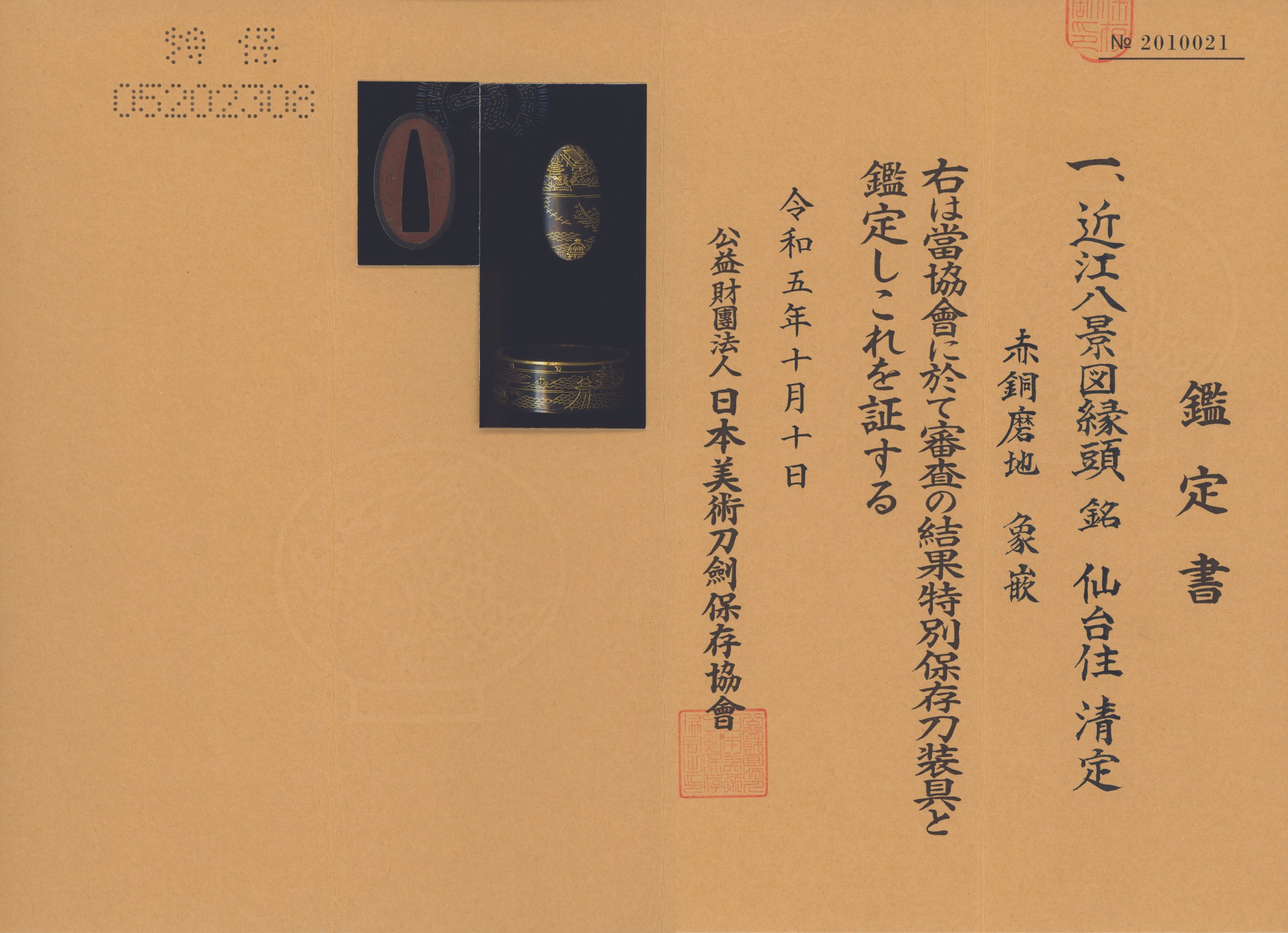
Tokuho (NBTHK)
Kinko · Mutsu (Sendai)
3 pieces on the market now
The Kusakari school (草苅) was one of several distinguished kinko lineages retained as official domain craftsmen (kakae-ko) by the Date family of Sendai, one of the great han of Mutsu Province. Alongside the Shibuya, Oguma, Saito, Masamura, and Sukegawa houses, the Kusakari artisans served as han-ko to the Date throughout the middle and late Edo period. "[[c:1]] The founding master, Kiyosada (清定, first generation), used Kusakariya as his house name. He apprenticed under Masamura Shichiemon, a craftsman in service to the Sendai domain, then travelled to Edo to study under the Omori family before returning to Sendai during the Tenmei era (1781-1789) to assume his position as domain artisan to the Date house. The Kusakari school's collective style is defined by a highly distinctive inlay method practiced on shakudo grounds. The canonical technique, described with near-formulaic consistency across the corpus, proceeds as follows: on an ishime-ji (stone-textured) ground, the outlines of the design are carved in high relief and inlaid with gold wire (kinsen-zogan); the interior is then polished out (togidashi) to lie nearly level with the ground plane, and filled with geometric patterns executed in hira-zogan.
The repertoire of interior patterns is itself a hallmark: kikko (tortoiseshell), sayagata (linked swastika fret), masugata (square diaper), asanoha (hemp leaf), ajiro (woven mat), shippo-tsunagi (linked seven-jewel), nami-chidori (waves with plovers), and soryu (paired dragons) recur across nearly every designated work. "[[c:2]] The standard ground is ishime-ji, though at least one rare example employs nanako-ji, suggesting a specially commissioned piece of exceptional care[[c:3]]. Gold fukurin rims, sometimes bearing flowing-water (ryusui) designs, and gold-lined hitsu-ana complete the refined presentation. The Kusakari school's significance rests in its mastery of a technically demanding inlay method that became synonymous with Sendai kinko craftsmanship. Kiyosada's works are praised across the setsumei for their "splendid command of technique"[[c:5]] and the "strong professional pride" they convey, with designated examples ranging from characteristic gunbai tsuba to rarer departures such as a raptor-and-cypress composition that combines katakiribori and kebori with the school's signature inlay manner[[c:4]]. The consistency of the NBTHK's assessments — describing the works as displaying "the maker's distinctive character together with his accurate and advanced technical skill"[[c:6]] — affirms the Kusakari tradition as a defining expression of domain metalwork in the service of one of Edo-period Japan's most powerful daimyo houses. Learn more →
| Smith | Era | Designated |
|---|---|---|
| Kiyosada清定 | mid Edo | 6 |
A Hozon-certified fitting of notably superior craftsmanship and condition, often with signature or workmanship of high reference value.
The NBTHK (Nihon Bijutsu Tōken Hozon Kyōkai, the Society for the Preservation of Japanese Art Swords) is a public-interest incorporated foundation founded in 1948 and supervised by Japan’s Agency for Cultural Affairs (Bunkachō); it is based at the Japanese Sword Museum in Tokyo. Its expert panels physically examine each submitted work (shinsa) and issue a certificate (kanteishō) ranking it by artistic and historical merit. NBTHK papers are the most widely recognized standard of authentication for Japanese swords and fittings.
NBTHK official siteWe offer a three-day inspection period. To initiate a return, you must notify us within three days of the package being delivered. Once we confirm your request, you have seven days to ship the item back to us. The item must be returned in its original condition, including all accompanying documents, certificates, and packaging materials. The buyer is responsible for covering the shipping costs and insurance for the return shipment.
¥280,000