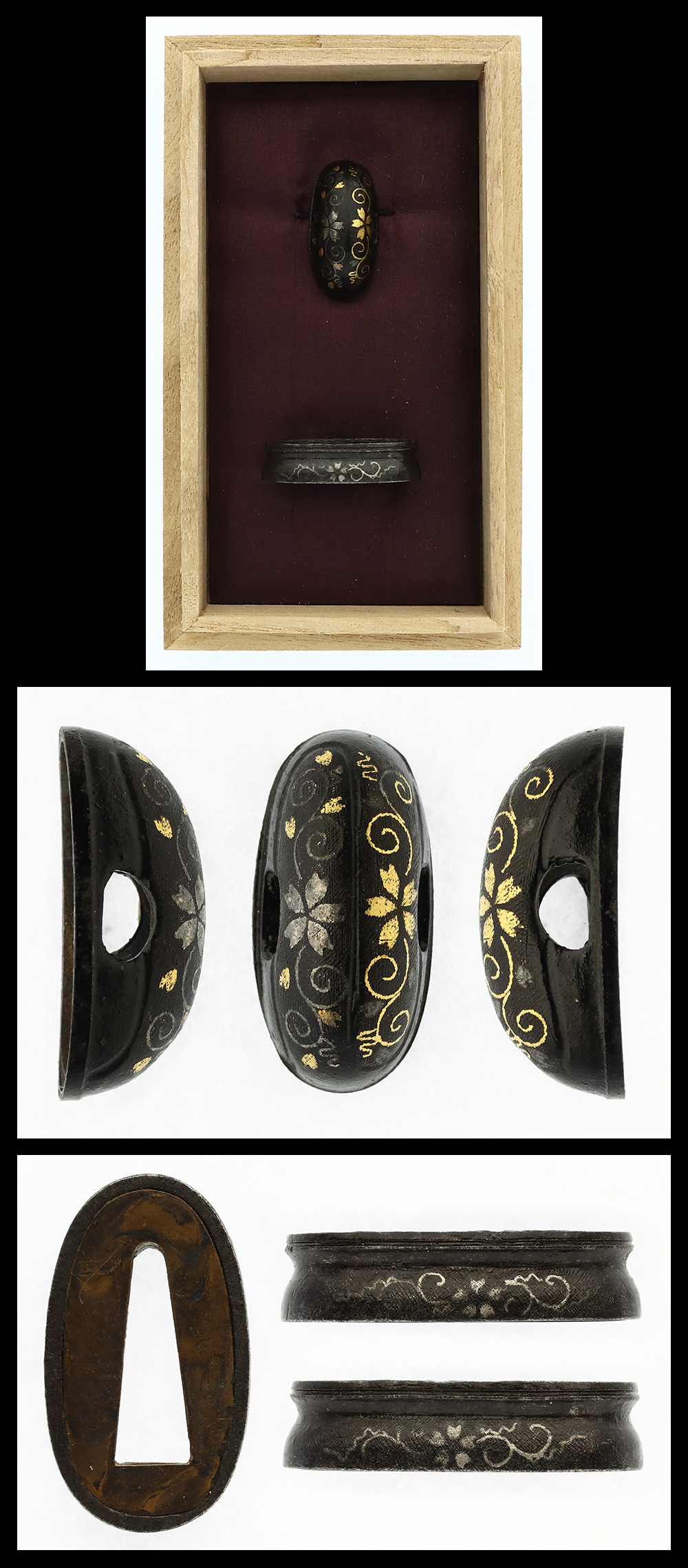
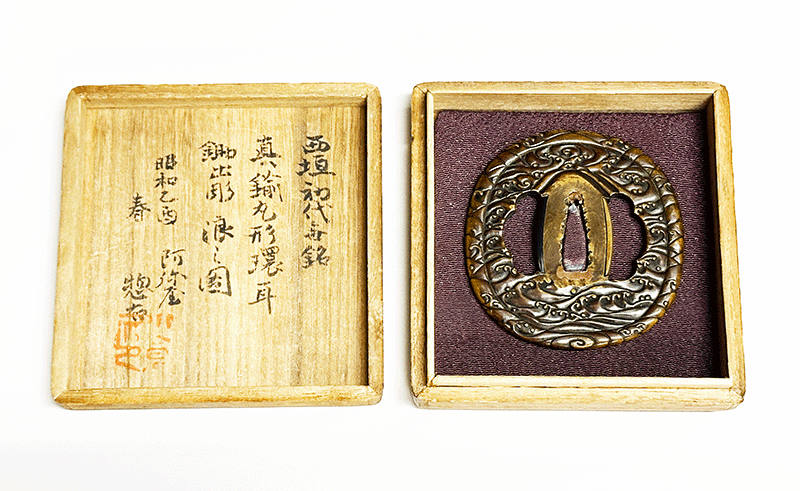
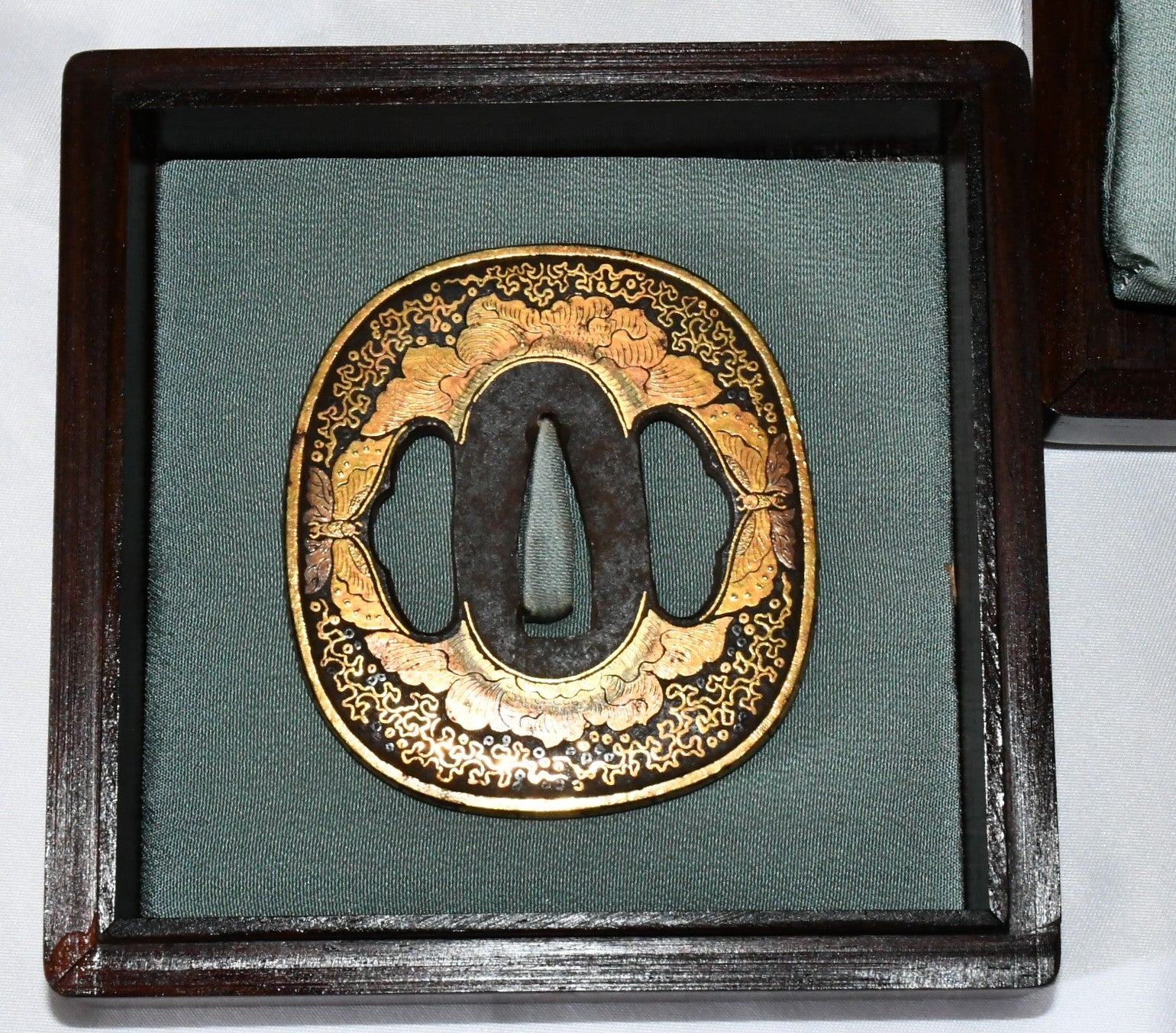
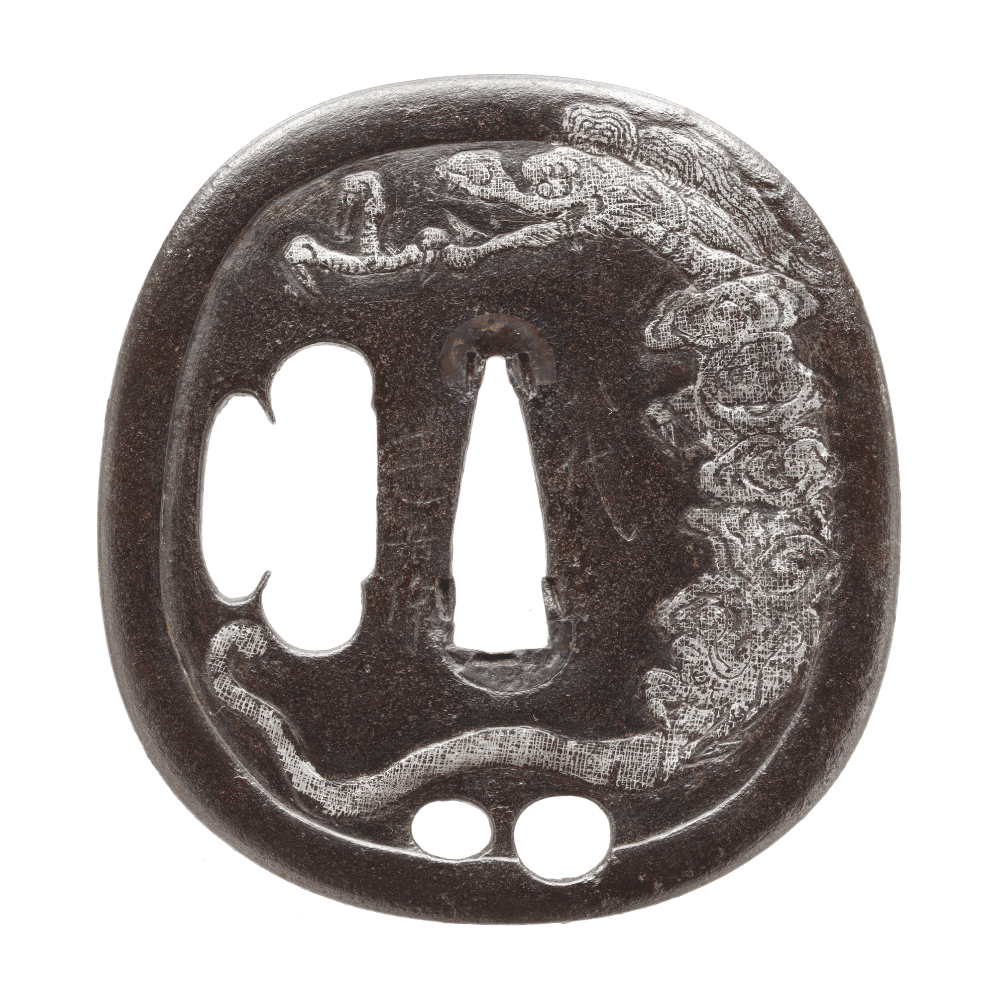
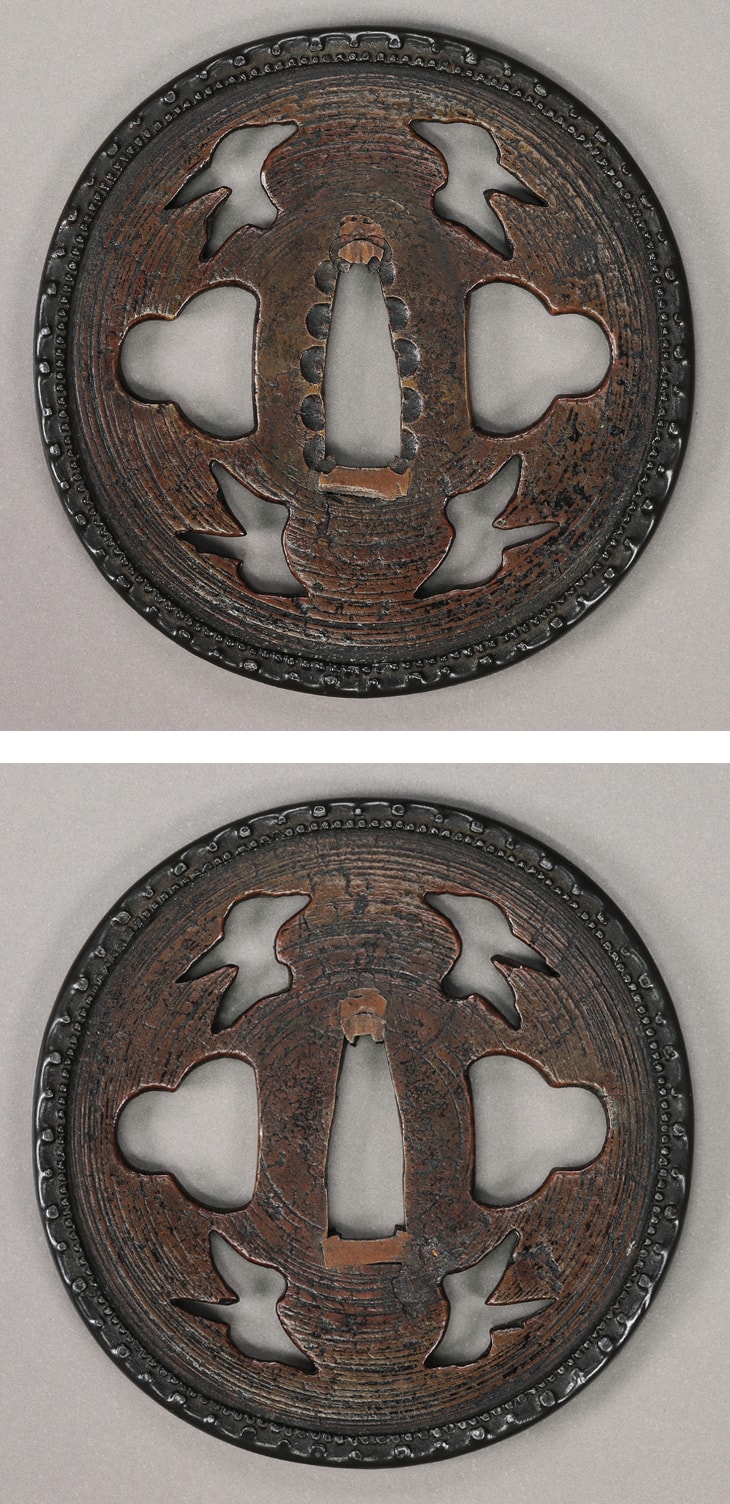
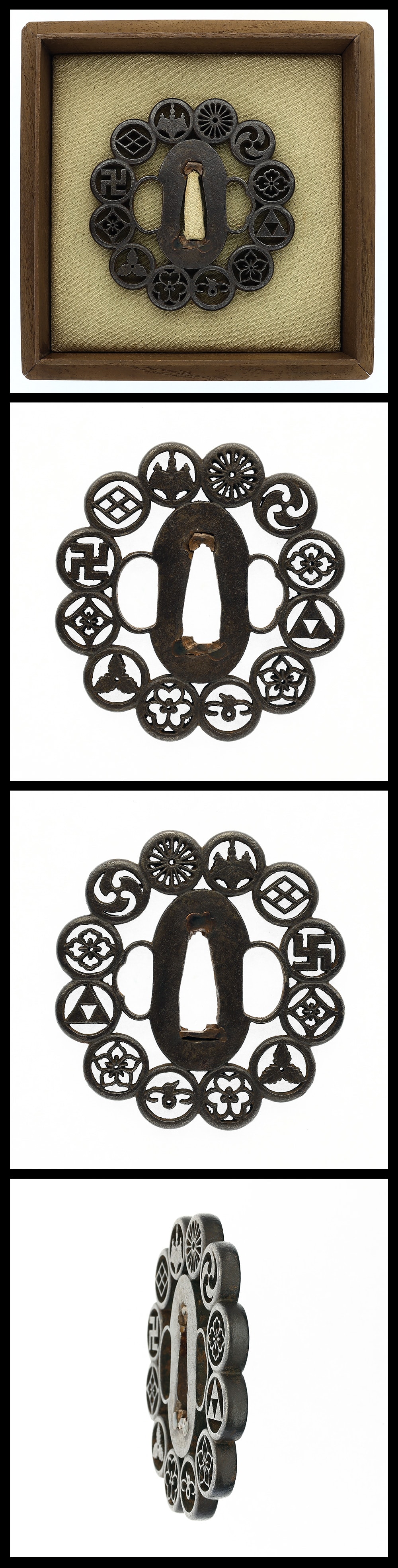
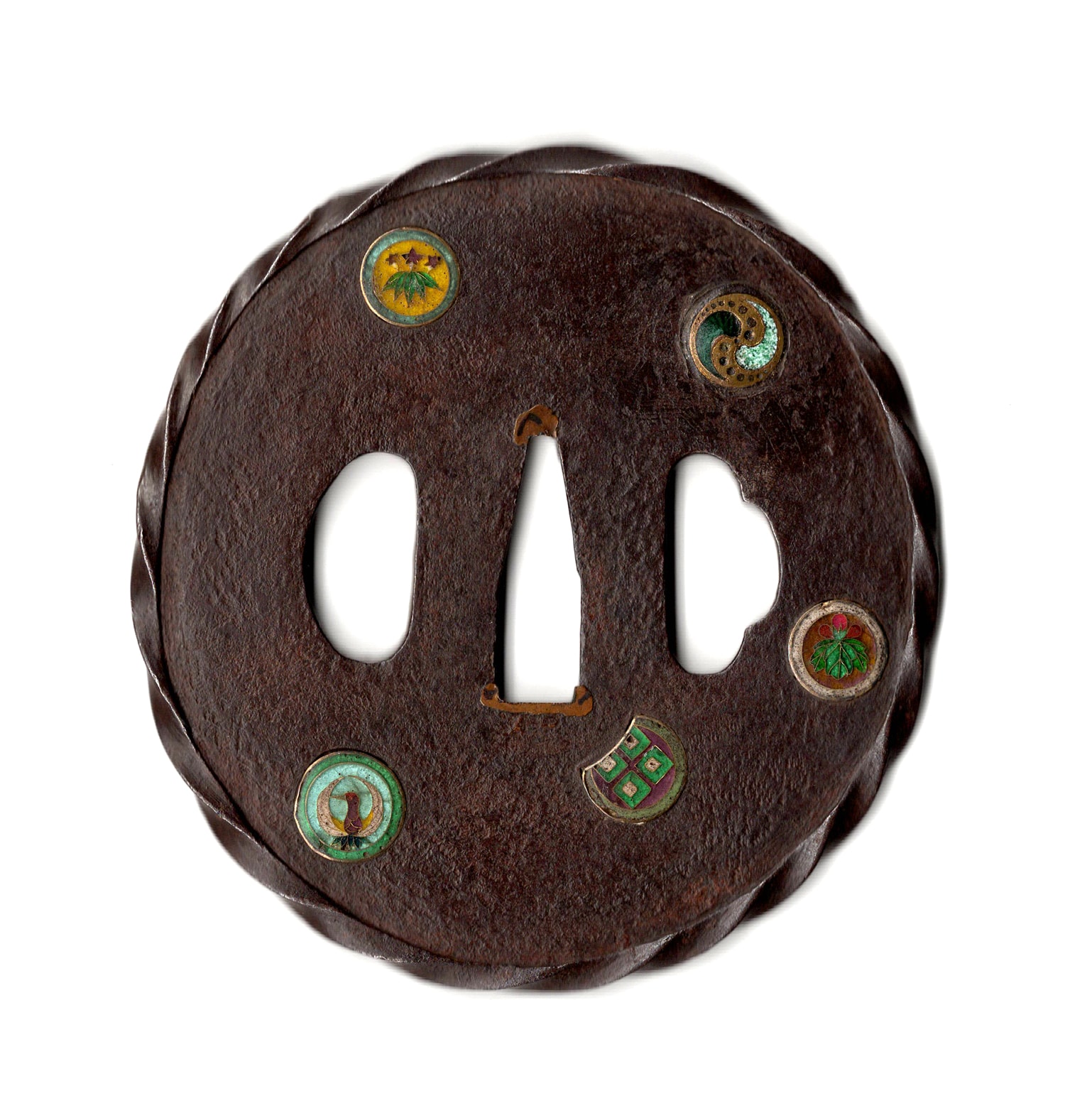
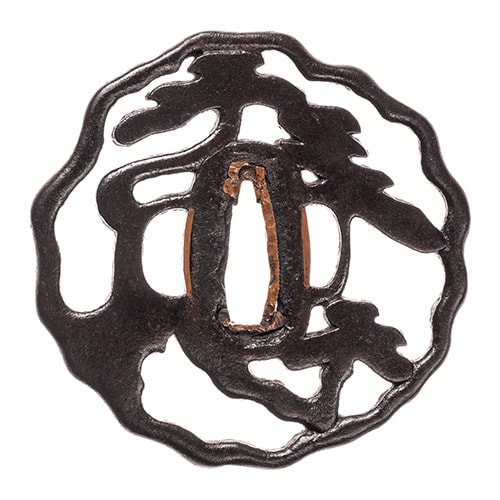
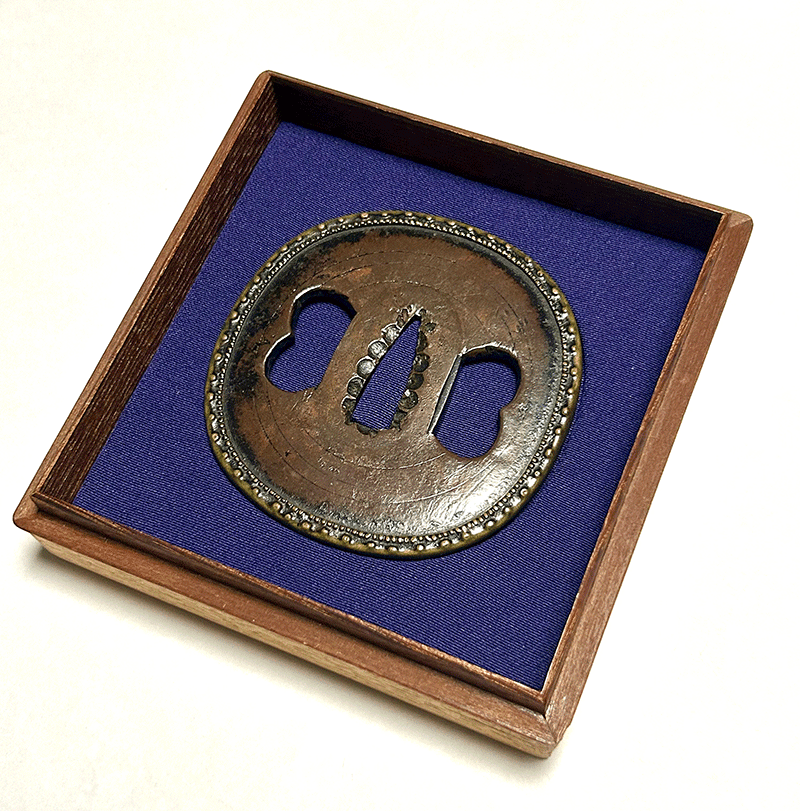
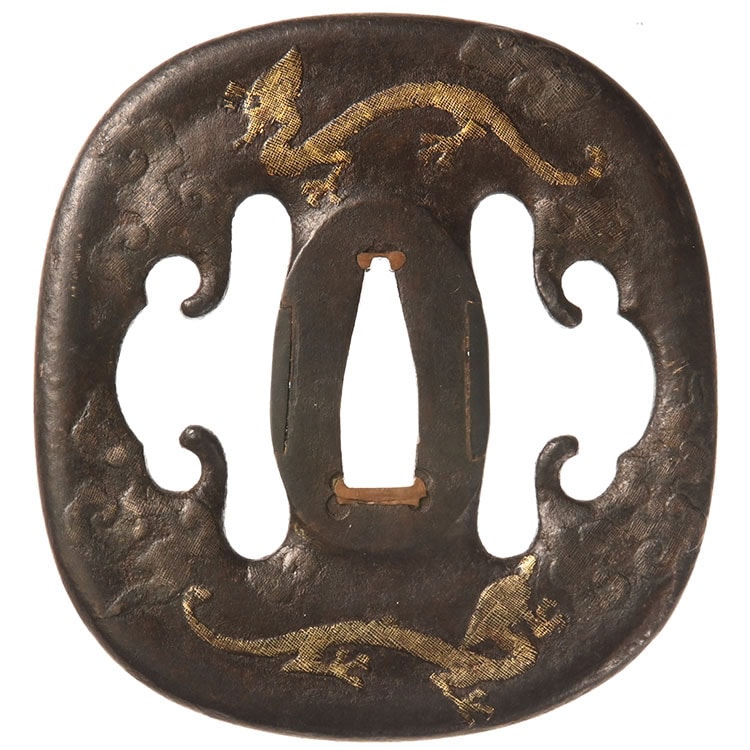
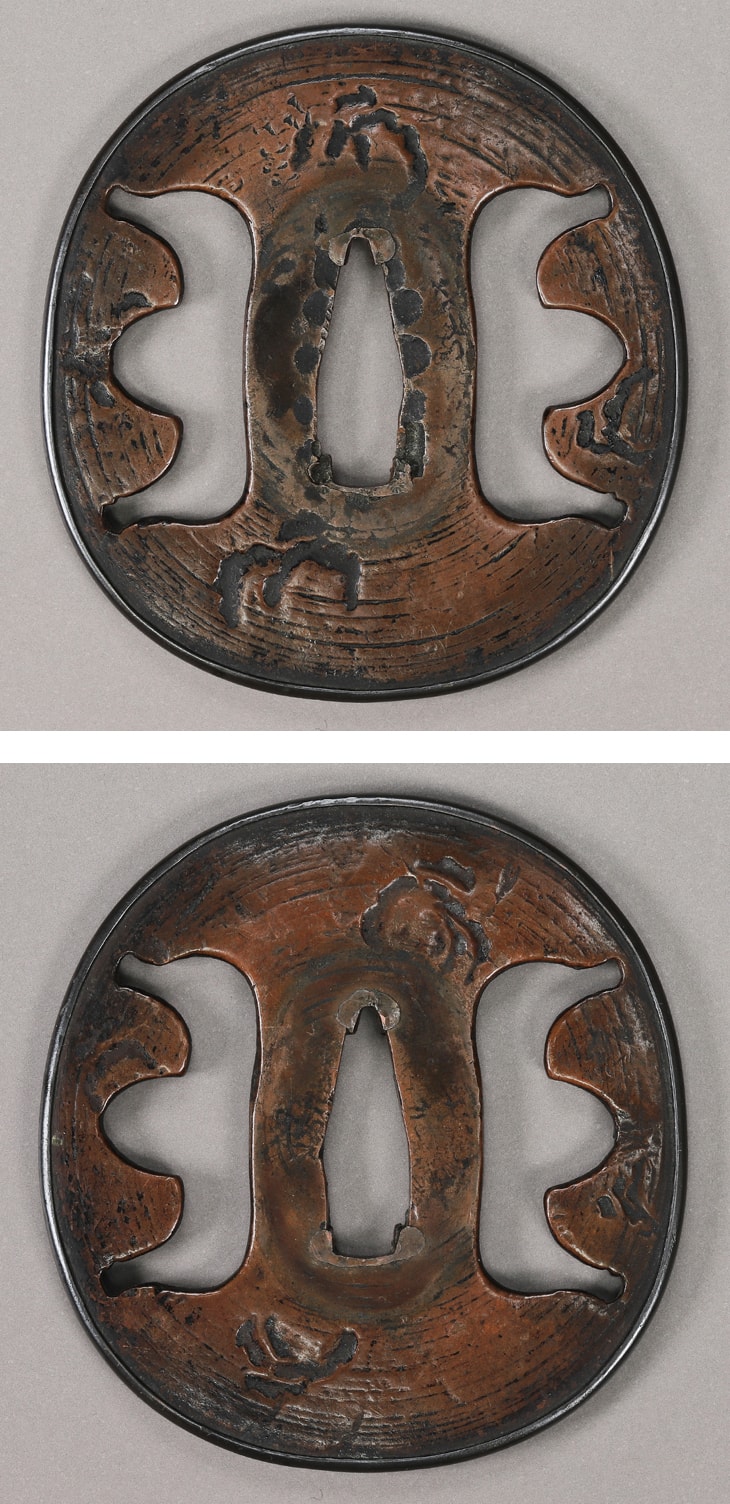
This is a mumei (unsigned) fuchi-kashira set attributed to the Higo school, dating from the Edo period. It features a plant design rendered in iro-e (colored enamel) on an iron ground with lacquer coating. The set comes with a kiribako (paulownia wood box) and an Aoi Art appraisal certificate.
Auction status: live on sword-auction.com.
mumei · Momoyama


Momoyama
Higo
Unsigned
Higo · Higo
151 pieces on the market now
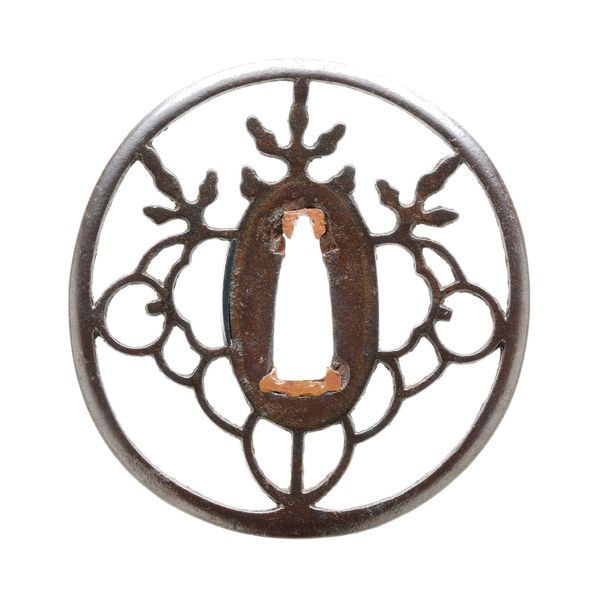
The Higo kinkō (肥後金工) tradition comprises the metalworkers who flourished in Higo province (modern Kumamoto) under the patronage of the Hosokawa daimyō house, from the Momoyama period into the late Edo period. Four families — Hayashi, Hirata, Nishigaki, and Shimizu — are regarded as representing the main line, and the first-generation masters of each were all retained by Hosokawa Sansai (Tadaoki), famed as a great commander and an accomplished master of the tea ceremony, and received his guidance. After the Katō family was dispossessed in Kan'ei 9 (1632) and Sansai's son Tadatoshi was enfeoffed with Kumamoto at 540,000 koku, Sansai entered retirement, choosing Yatsushiro Castle as his place of seclusion. Hirata Hikozō, founder of the Hirata school and descended from the Shōami line, had served Sansai in Kyoto and followed the Hosokawa through Tango and Buzen down to Higo, dying there in Kan'ei 12 (1635); from among his followers emerged Shimizu Jingō (his nephew) and Nishigaki Kanshirō, who together with Hayashi Matashichi of Owari lineage formed the four major schools of Higo metalwork. Matashichi (1613–1699), born in Kumamoto to a family of gunsmiths who had served Katō Kiyomasa before entering Hosokawa service, is regarded as the founder of the Hayashi line. The broader tradition also embraces avocational works by warriors, including tsuba by Sansai himself and by Miyamoto Musashi, who served Hosokawa Tadatoshi from Kan'ei 17 (1640). Shaped by Sansai's direction, the school as a whole is characterized by its combination of outstanding practical function suited to the warrior's taste and a dignified, elevated artistic quality. The Hayashi manner centers on well-forged, lustrous iron — often likened to the deep tone of yōkan — worked in ground openwork (ji-sukashi) with fine kebori engraving and gold nunome-zōgan; Matashichi's tsuba "never give the slightest impression of flatness," conveying an exquisite sense of hiraniku, and his son Shigemitsu's work displays the beautiful purplish patina (murasabi) characteristic of Higo Hayashi-school tsuba.
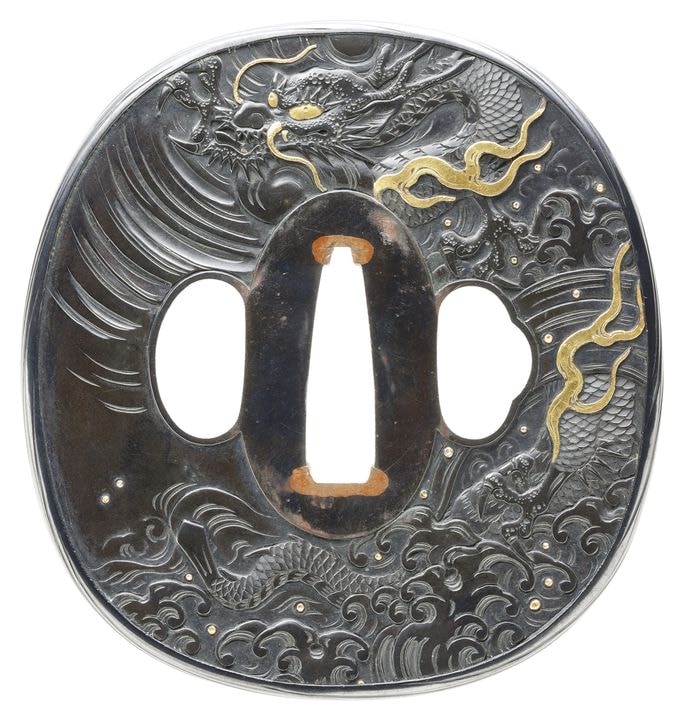
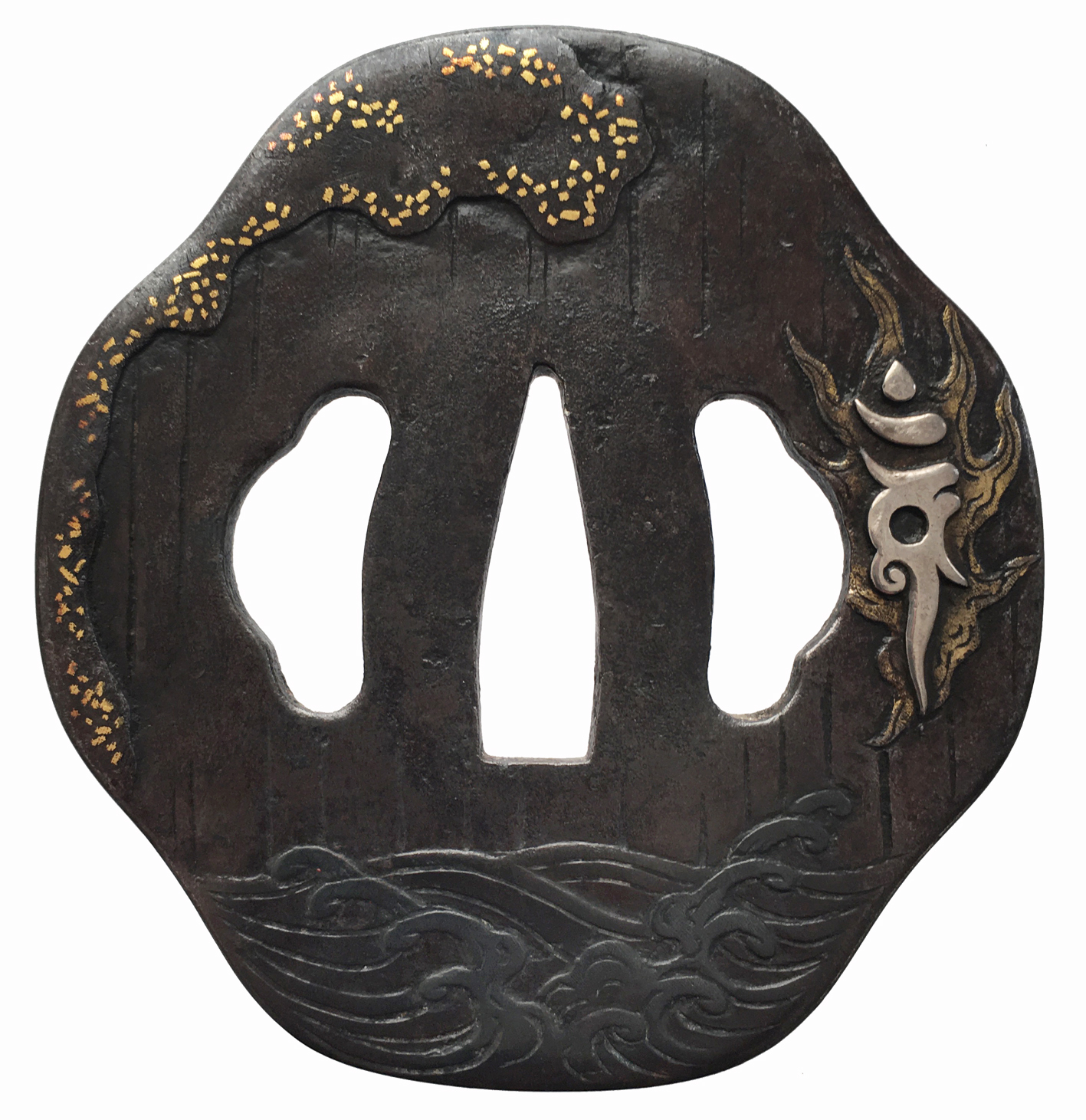
The Hirata artisans inherited much of the Shōami tradition: while iron grounds are known, they favored irogane such as yamagane, suaka, brass, and shakudō — admired as "Hirata-gane" and "Hikozō-gane" — adding elegant decorative effect through file treatments such as Amida-yasuri and okina-yasuri, on rare occasions employing cloisonné inlay (shippō-zōgan); Hikozō also originated the distinctive rim mounting known as the Odawara fukurin. Shimizu Jingō displays the most intense individuality among Higo metalworkers, boldly placing birds of prey, owls, and rain dragons in brass suemon-zōgan upon hammered, fire-finished iron, while intentionally reserving broad open space on the reverse to deepen the feeling of sabi. The Nishigaki line continued under Nagahisa, who trained in the Gotō Kenjō house before serving the Hosokawa as a retained craftsman. Cherry blossoms and warabite are motifs frequently adopted for Higo tsuba, with Matashichi regarded as the pioneer. Grounded in the aesthetic of the Hosokawa school of tea while inheriting the bold, vigorous spirit of Momoyama, Higo metalwork occupies a singular position in the tosogu canon, extending from tsuba to complete daishō mountings furnished with shakudō fittings bearing the Hosokawa kuyō crest. Matashichi's iron has been "praised without cease" since early times, and his authority was such that other craftsmen were said to "keep their distance by three sha"; because most masters worked unsigned, the few extant signed examples are treasured as precious documents of each hand. Many celebrated works remained in the Hosokawa family itself, passing to the Eisei Bunko collection — testimony to a tradition, later continued by the Kamiyoshi line, whose quiet dignity and refined sabi elegance remain the very embodiment of the warrior aesthetic. Learn more →
| Smith | Era | Designated |
|---|---|---|
| Misumi Masaharu三角正治 | — | 0 |
| Suwa Ikuhei諏訪幾平 | 1832-1903 | 0 |
| Miyamoto Musashi宮本武蔵 | 1584-1645 | 5 |
| Tsuge Yoshikatsu柘植吉勝 | — | 1 |
| Tani Denji谷伝次 | — | 1 |
We could not find an authenticity certificate on the seller’s listing. Japanese swords and fittings are normally papered by the NBTHK (or the NTHK). Without one, the attribution is the seller’s own assessment and has not been independently verified — treat it with caution and ask the dealer about certification before buying.
If you wish to return an item, please notify us within 3 days of receipt. After this period we cannot accept cancellations. Please ship the return to us within 5 business days. Cancellation is conditional on the item being kept in the same condition as at the time of sale, so please handle it with care.
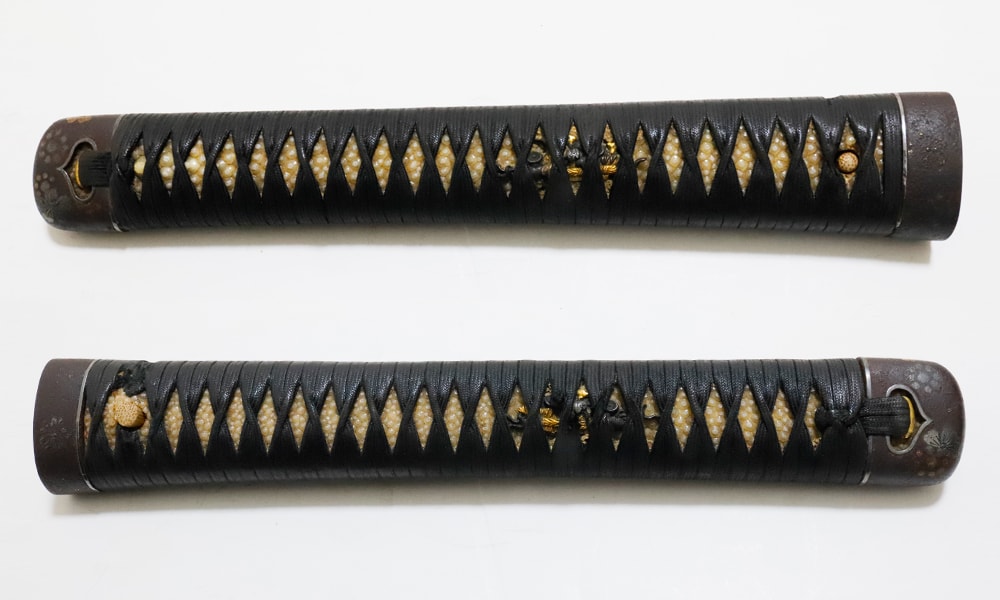
This is a mumei (unsigned) fuchi-kashira set attributed to the Higo school, dating from the Edo period. It features a plant design rendered in iro-e (colored enamel) on an iron ground with lacquer coating. The set comes with a kiribako (paulownia wood box) and an Aoi Art appraisal certificate.
Auction status: live on sword-auction.com.
mumei · Momoyama


Momoyama
Higo
Unsigned
Higo · Higo
151 pieces on the market now
The Higo kinkō (肥後金工) tradition comprises the metalworkers who flourished in Higo province (modern Kumamoto) under the patronage of the Hosokawa daimyō house, from the Momoyama period into the late Edo period. Four families — Hayashi, Hirata, Nishigaki, and Shimizu — are regarded as representing the main line, and the first-generation masters of each were all retained by Hosokawa Sansai (Tadaoki), famed as a great commander and an accomplished master of the tea ceremony, and received his guidance. After the Katō family was dispossessed in Kan'ei 9 (1632) and Sansai's son Tadatoshi was enfeoffed with Kumamoto at 540,000 koku, Sansai entered retirement, choosing Yatsushiro Castle as his place of seclusion. Hirata Hikozō, founder of the Hirata school and descended from the Shōami line, had served Sansai in Kyoto and followed the Hosokawa through Tango and Buzen down to Higo, dying there in Kan'ei 12 (1635); from among his followers emerged Shimizu Jingō (his nephew) and Nishigaki Kanshirō, who together with Hayashi Matashichi of Owari lineage formed the four major schools of Higo metalwork. Matashichi (1613–1699), born in Kumamoto to a family of gunsmiths who had served Katō Kiyomasa before entering Hosokawa service, is regarded as the founder of the Hayashi line. The broader tradition also embraces avocational works by warriors, including tsuba by Sansai himself and by Miyamoto Musashi, who served Hosokawa Tadatoshi from Kan'ei 17 (1640). Shaped by Sansai's direction, the school as a whole is characterized by its combination of outstanding practical function suited to the warrior's taste and a dignified, elevated artistic quality. The Hayashi manner centers on well-forged, lustrous iron — often likened to the deep tone of yōkan — worked in ground openwork (ji-sukashi) with fine kebori engraving and gold nunome-zōgan; Matashichi's tsuba "never give the slightest impression of flatness," conveying an exquisite sense of hiraniku, and his son Shigemitsu's work displays the beautiful purplish patina (murasabi) characteristic of Higo Hayashi-school tsuba.
The Hirata artisans inherited much of the Shōami tradition: while iron grounds are known, they favored irogane such as yamagane, suaka, brass, and shakudō — admired as "Hirata-gane" and "Hikozō-gane" — adding elegant decorative effect through file treatments such as Amida-yasuri and okina-yasuri, on rare occasions employing cloisonné inlay (shippō-zōgan); Hikozō also originated the distinctive rim mounting known as the Odawara fukurin. Shimizu Jingō displays the most intense individuality among Higo metalworkers, boldly placing birds of prey, owls, and rain dragons in brass suemon-zōgan upon hammered, fire-finished iron, while intentionally reserving broad open space on the reverse to deepen the feeling of sabi. The Nishigaki line continued under Nagahisa, who trained in the Gotō Kenjō house before serving the Hosokawa as a retained craftsman. Cherry blossoms and warabite are motifs frequently adopted for Higo tsuba, with Matashichi regarded as the pioneer. Grounded in the aesthetic of the Hosokawa school of tea while inheriting the bold, vigorous spirit of Momoyama, Higo metalwork occupies a singular position in the tosogu canon, extending from tsuba to complete daishō mountings furnished with shakudō fittings bearing the Hosokawa kuyō crest. Matashichi's iron has been "praised without cease" since early times, and his authority was such that other craftsmen were said to "keep their distance by three sha"; because most masters worked unsigned, the few extant signed examples are treasured as precious documents of each hand. Many celebrated works remained in the Hosokawa family itself, passing to the Eisei Bunko collection — testimony to a tradition, later continued by the Kamiyoshi line, whose quiet dignity and refined sabi elegance remain the very embodiment of the warrior aesthetic. Learn more →
| Smith | Era | Designated |
|---|---|---|
| Misumi Masaharu三角正治 | — | 0 |
| Suwa Ikuhei諏訪幾平 | 1832-1903 | 0 |
| Miyamoto Musashi宮本武蔵 | 1584-1645 | 5 |
| Tsuge Yoshikatsu柘植吉勝 | — | 1 |
| Tani Denji谷伝次 | — | 1 |
We could not find an authenticity certificate on the seller’s listing. Japanese swords and fittings are normally papered by the NBTHK (or the NTHK). Without one, the attribution is the seller’s own assessment and has not been independently verified — treat it with caution and ask the dealer about certification before buying.
If you wish to return an item, please notify us within 3 days of receipt. After this period we cannot accept cancellations. Please ship the return to us within 5 business days. Cancellation is conditional on the item being kept in the same condition as at the time of sale, so please handle it with care.