Edo was the sword’s age of connoisseurship: the Hon’ami appraisers, the shogunal register of famous blades of 1719, and a thriving literature turned the sword into an object of study even as it ceased to be drawn in war.
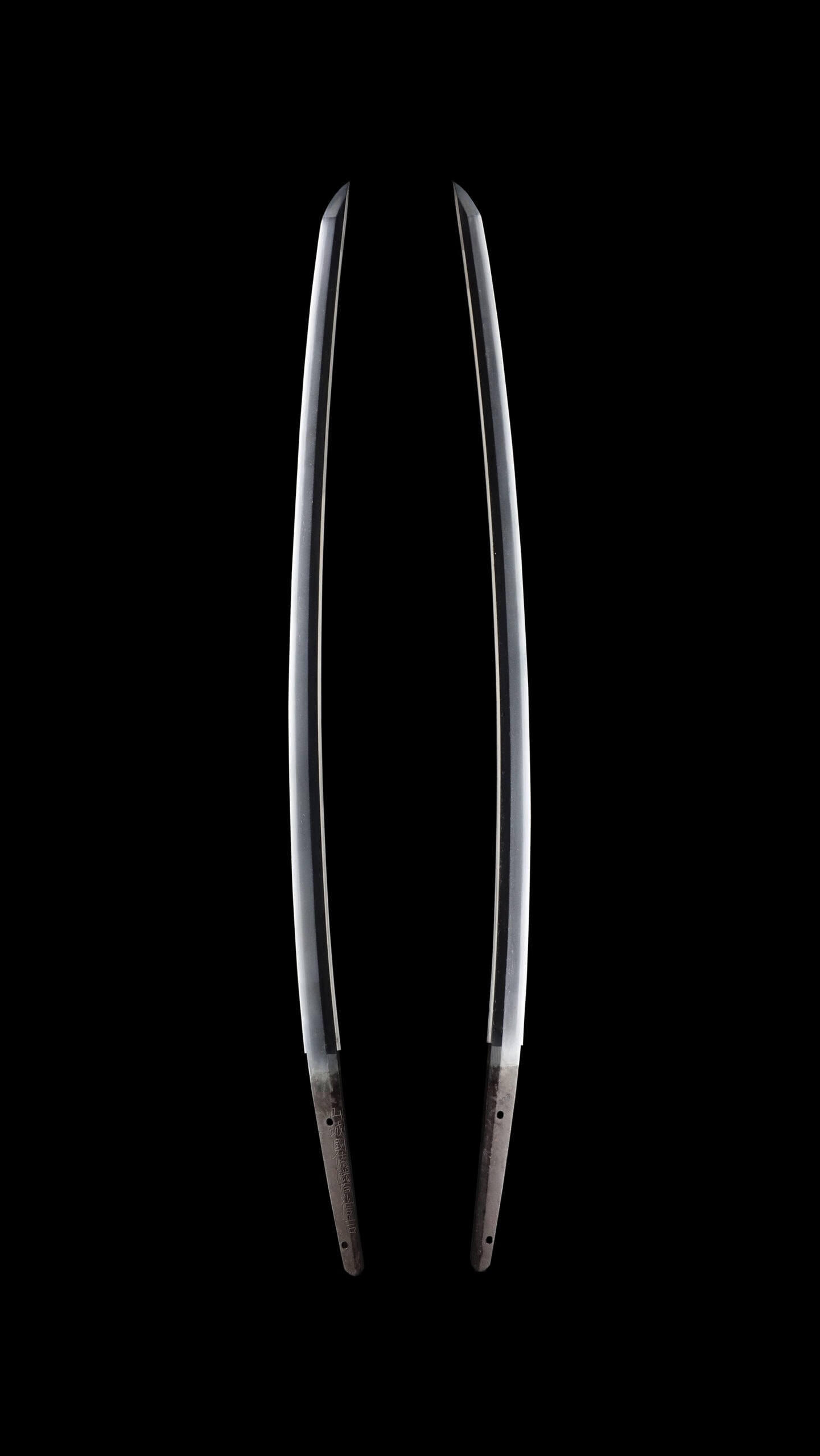
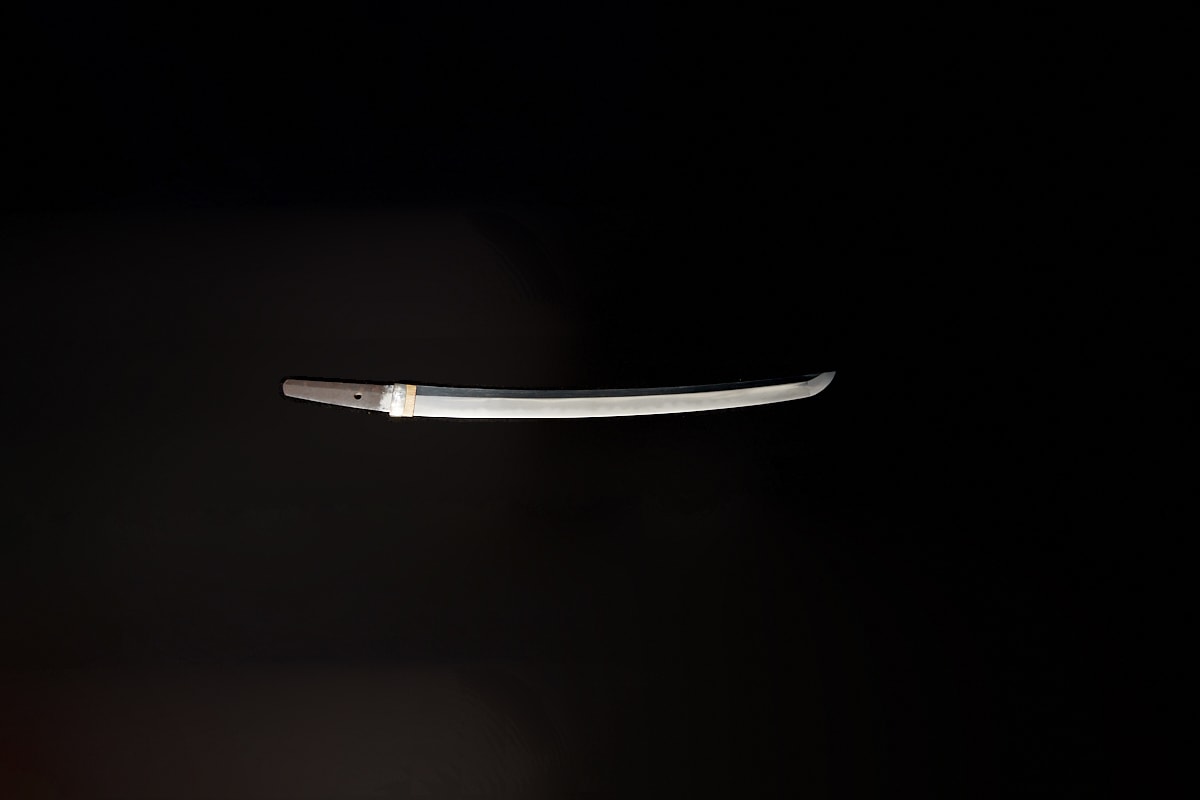
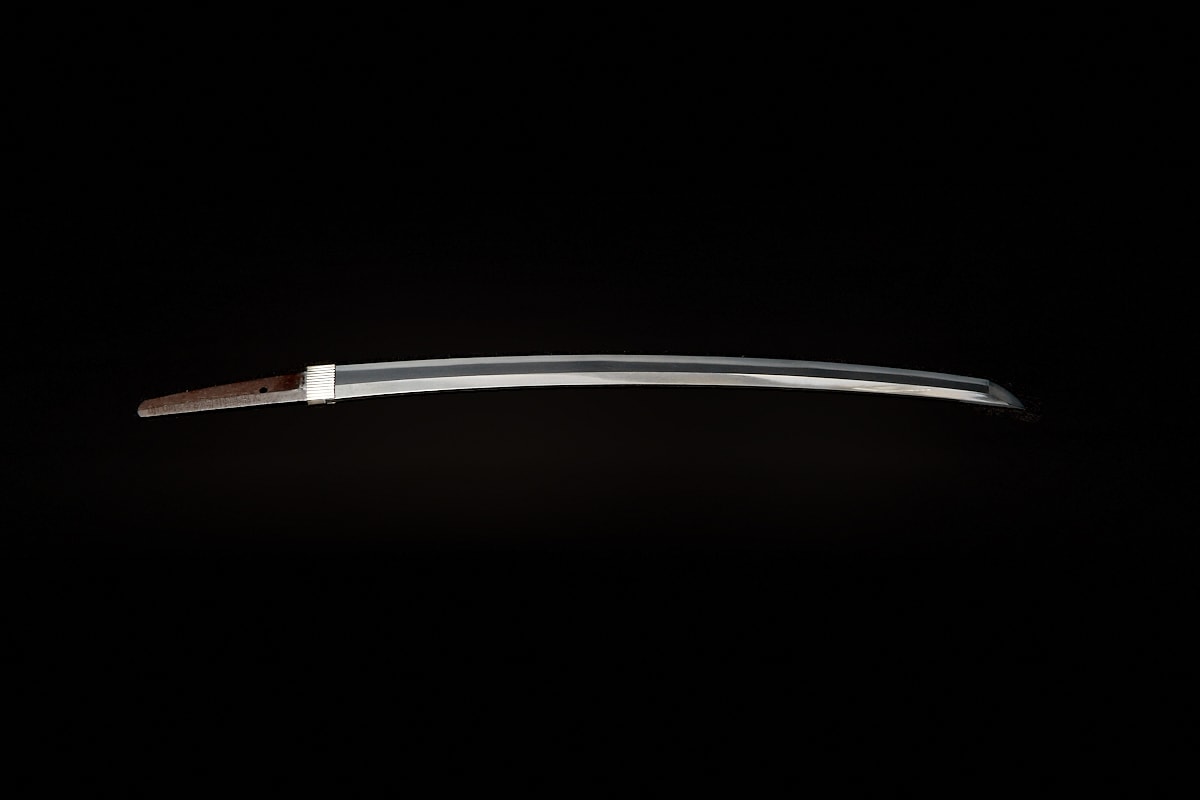
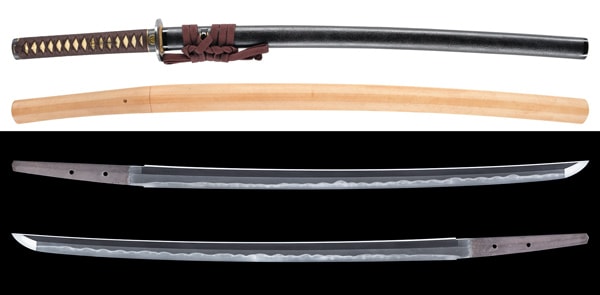
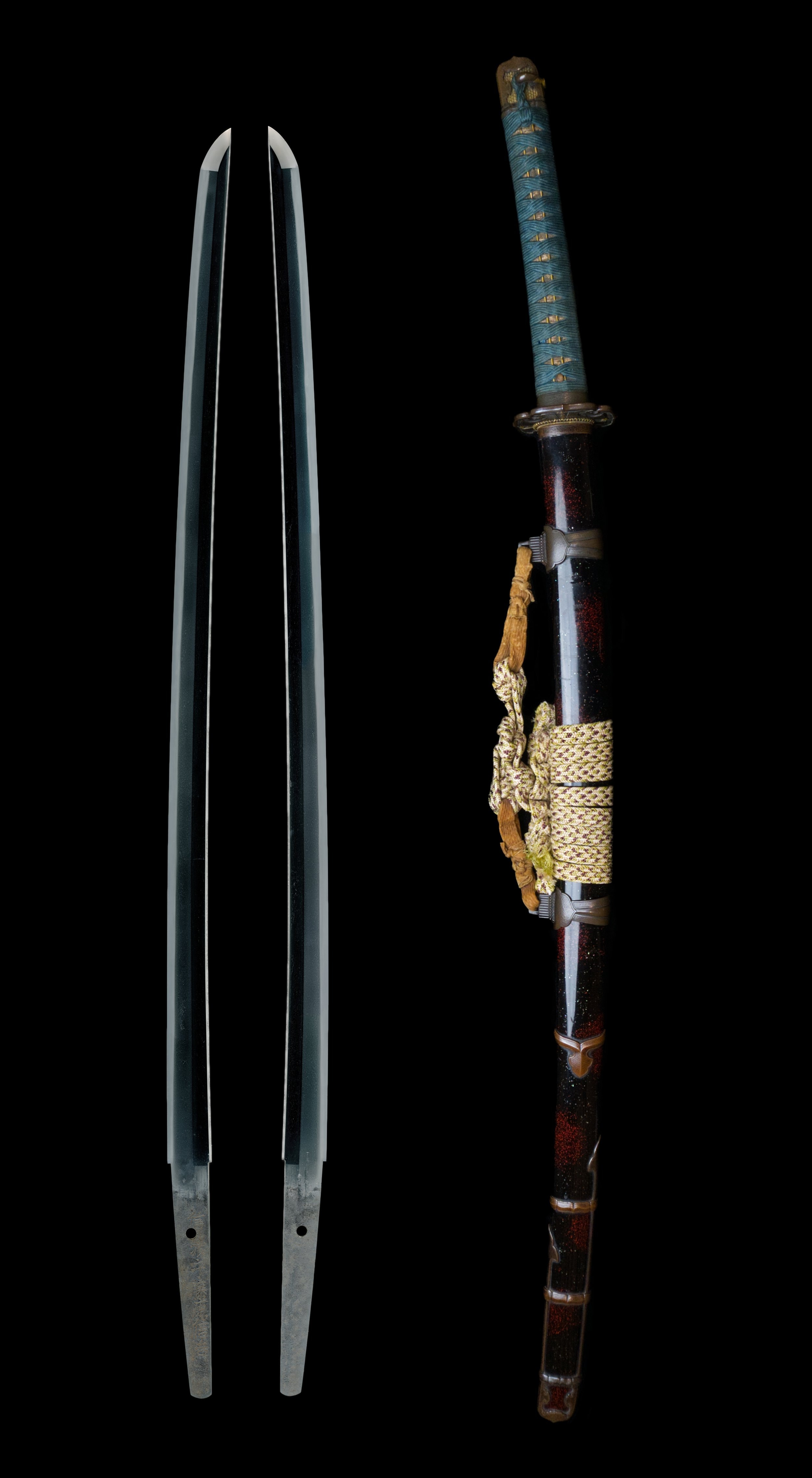
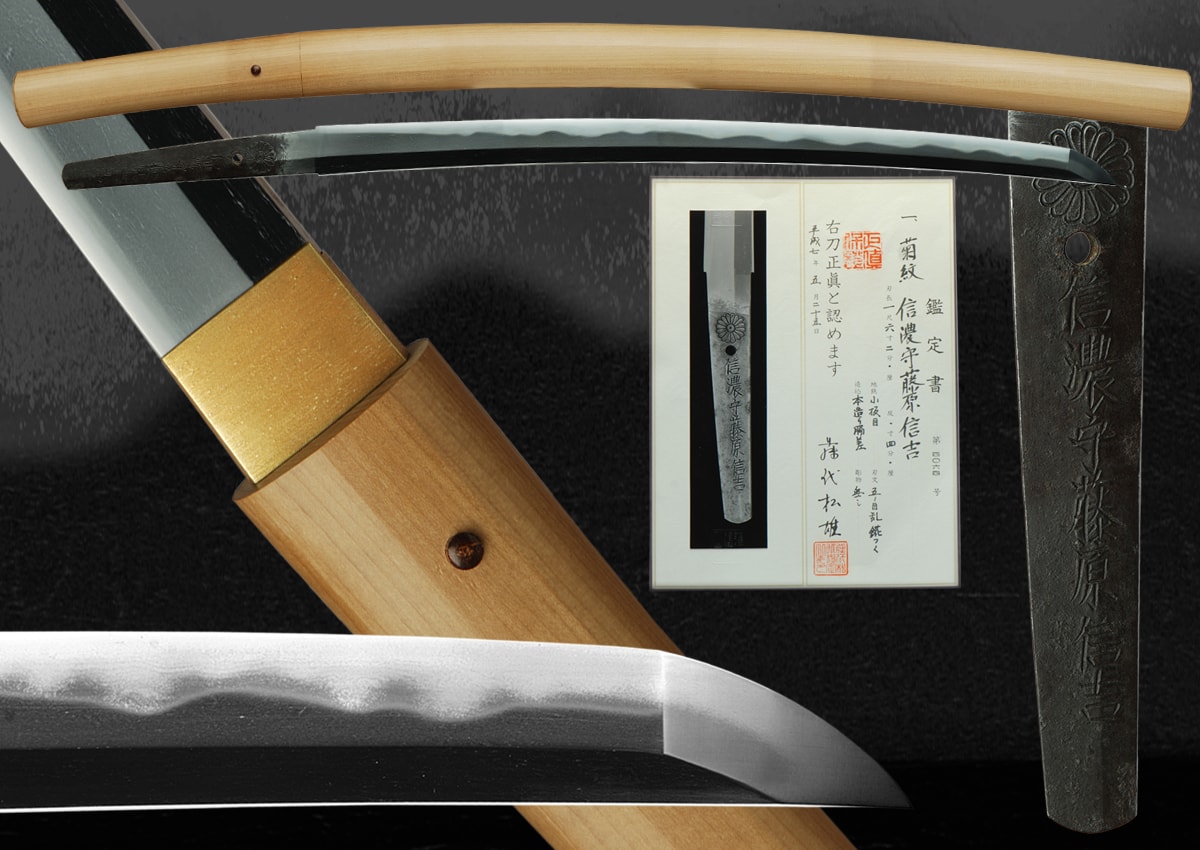
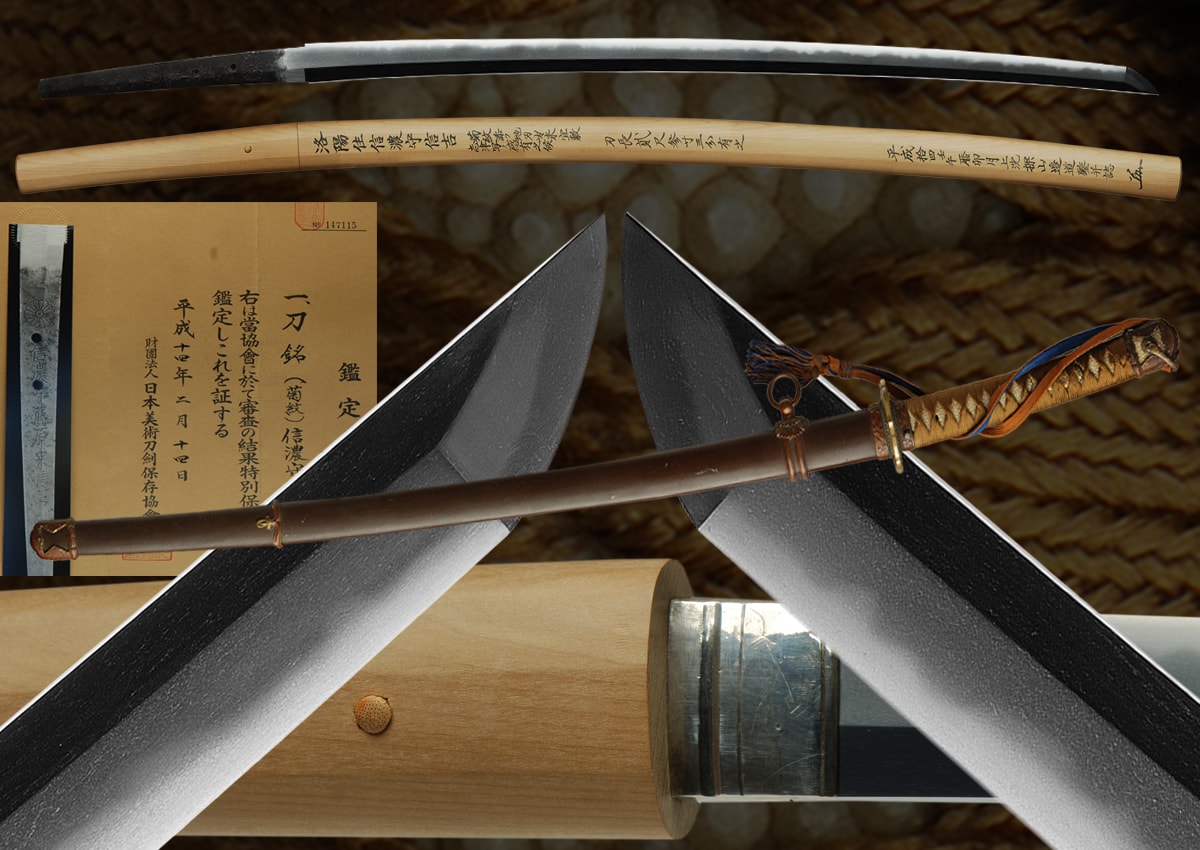
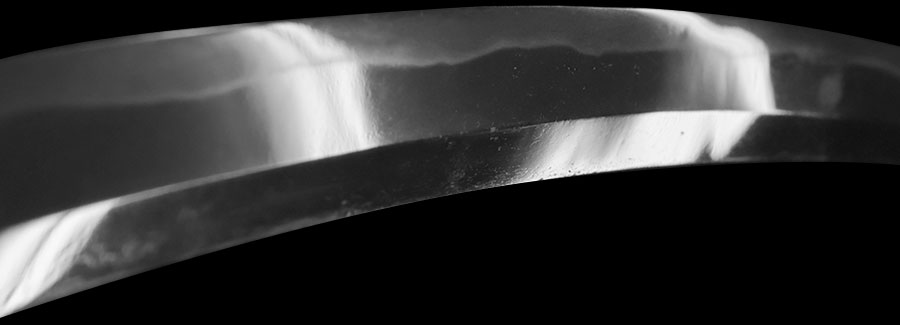
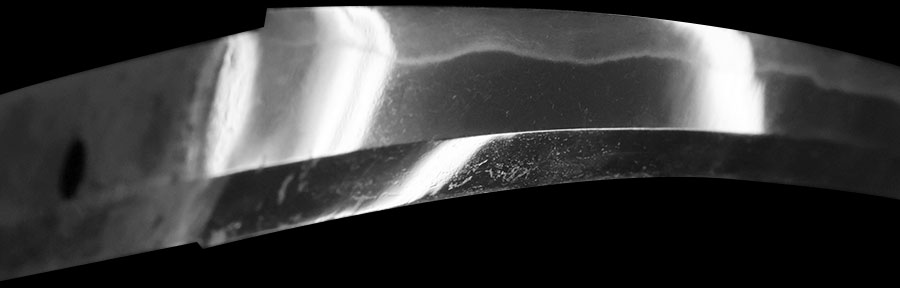
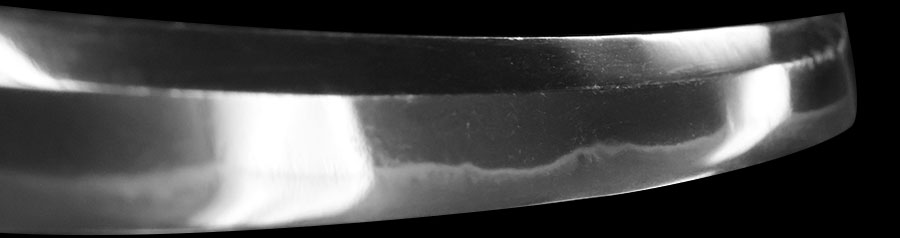
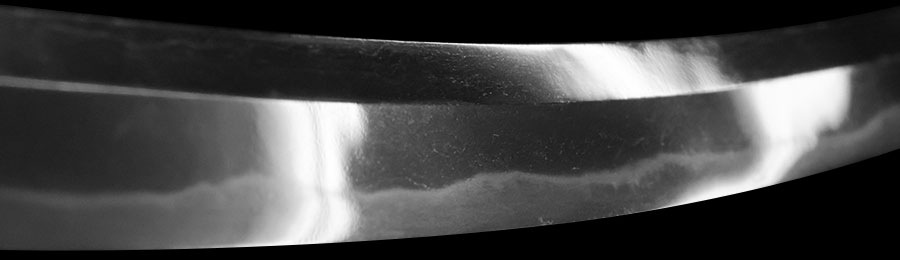
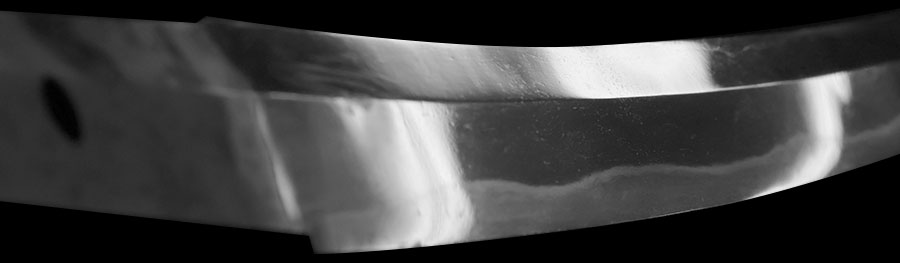
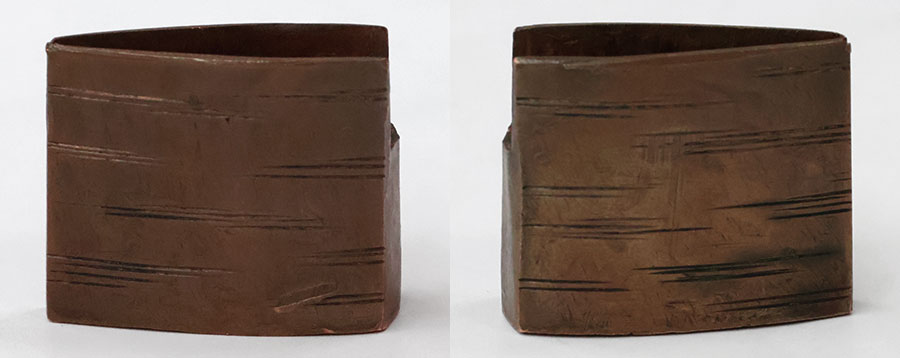
It has arrived, it has arrived—a katana by the master smith of Yamashiro Kyo, Yamashiro no Kuni Ju Fujiwara Nobuyoshi. Nobuyoshi is a master who received the title of Shinano no Kami and signed his mei as Shinano no Kami Fujiwara Nobuyoshi. His real name was Takai Kinzaburo, and he was a swordsmith of the Mishina clan, headed by Kyo Iga no Kami Kinmichi. He is a representative master smith of Kyoto from around the Kanbun era of the Edo period (1661) (364 years ago). His younger brother is Echizen no Kami Minamoto Rai Nobuyoshi, who moved to Osaka and was highly active. This katana is kenzen (healthy), with a slightly thick motokasane and a somewhat high shinogi. The difference between the motomihaba and sakimihaba creates the Kanbun Shinto sugata—the same style as Kotetsu in Edo—which was suitable for thrusting techniques that were popular in kenjutsu dojos at the time. The jigane is a well-tightened itame-hada. The hamon is a magnificent, large notare-ba in nioi-deki with nie attached. He was a skilled smith who tempered blades full of haki (spirit), living up to his reputation as a creator of wazamono (sharp-cutting) swords. The Mishina lineage, consisting of Iga no Kami Kinmichi, Tanba no Kami Yoshimichi, Echigo no Kami Rai Kinmichi, and Etchu no Kami Masatoshi, were known as the Kyo Gokaji (Five Smiths of Kyoto). Due to the merit of delivering 1,000 swords for Tokugawa Ieyasu during the Battle of Sekigahara, Iga no Kami Kinmichi was granted the title of Nihon Kaji Sosho (Grandmaster of Japanese Smiths). Throughout the Edo period, it was a prestigious family through which alone swordsmiths could be appointed official titles such as Kami or Daijo. This sword has been cherished for generations by an old family, but as you can see, it has some sabi (rust) due to a lack of maintenance. We have received it with the request to pass it on at a low price to someone who will treasure it; therefore, we are offering it at a special bargain price. If it were in togimi (polished condition), it would be a masterpiece worth over 2 million yen. Please have it polished and cared for. It is a sword that will surely be resurrected as a masterpiece. Please enjoy it.
 NihontoWatch
Shoho (1644-1648) · nagasa 71.1cm · sori 1.8cm














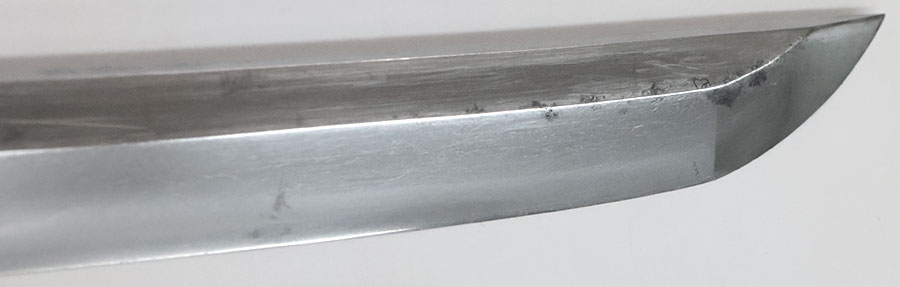
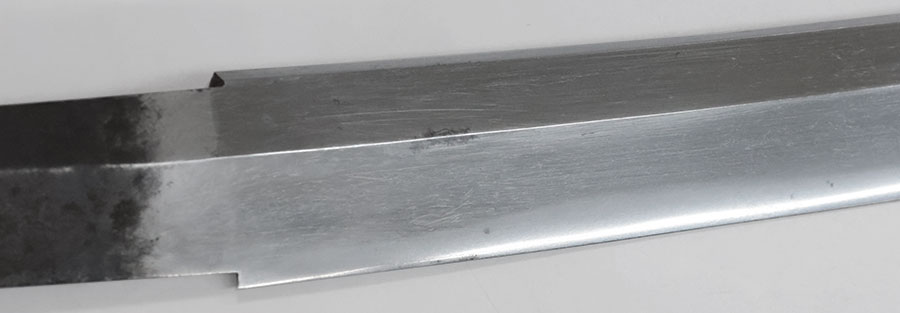
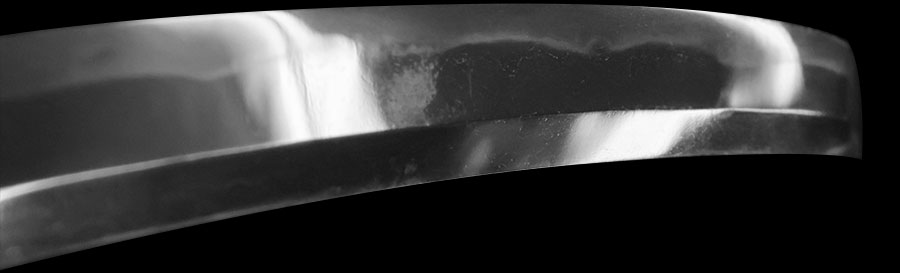
Yamashiro · around 1644-1648
Fujishiro Chu-jo saku · Tōken Taikan top 49%
5 pieces on the market now
The Edo period (1615 to 1868)
Edo was the sword’s age of connoisseurship: the Hon’ami appraisers, the shogunal register of famous blades of 1719, and a thriving literature turned the sword into an object of study even as it ceased to be drawn in war.
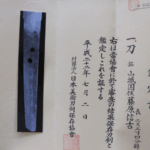
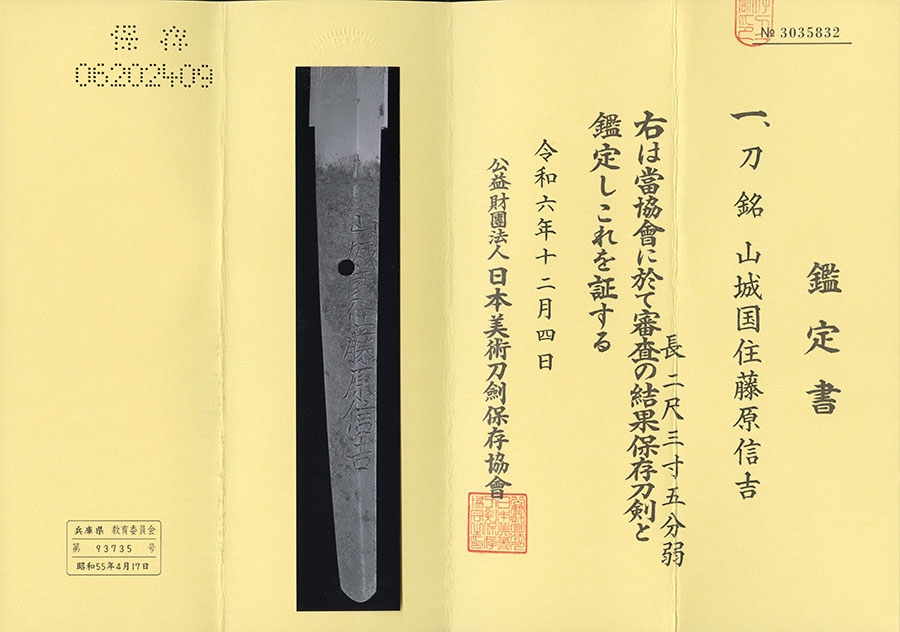
Certifies a genuine blade worth preserving: a signature confirmed correct, or, if unsigned, an era, province, and school that the NBTHK can reliably identify.
The NBTHK (Nihon Bijutsu Tōken Hozon Kyōkai, the Society for the Preservation of Japanese Art Swords) is a public-interest incorporated foundation founded in 1948 and supervised by Japan’s Agency for Cultural Affairs (Bunkachō); it is based at the Japanese Sword Museum in Tokyo. Its expert panels physically examine each submitted work (shinsa) and issue a certificate (kanteishō) ranking it by artistic and historical merit. NBTHK papers are the most widely recognized standard of authentication for Japanese swords and fittings.
NBTHK official siteFor returns due to customer circumstances, the cost is the customer's responsibility. For returns due to our mis-shipment or a defective item, we bear the cost.
¥580,000