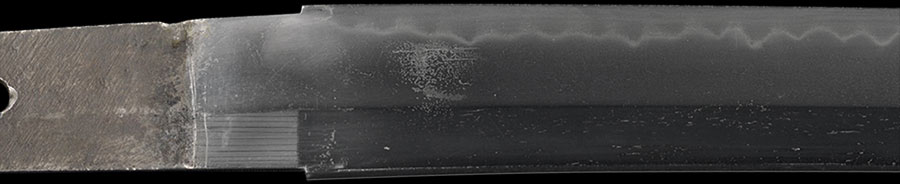
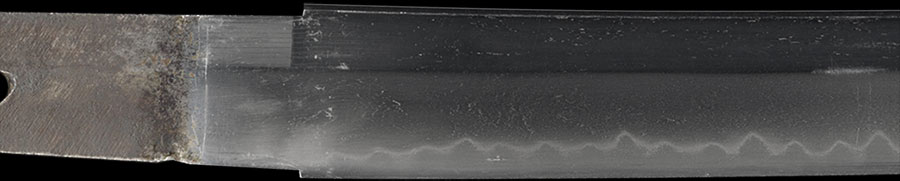
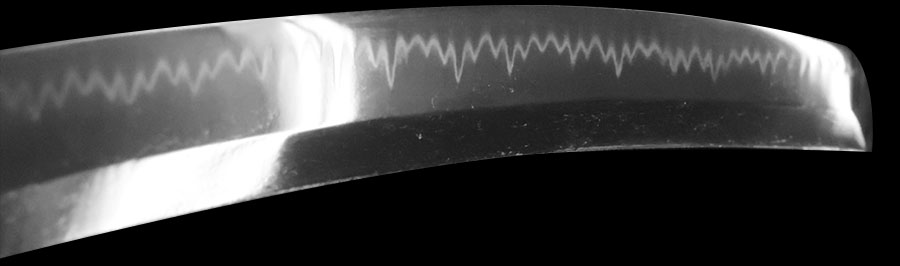
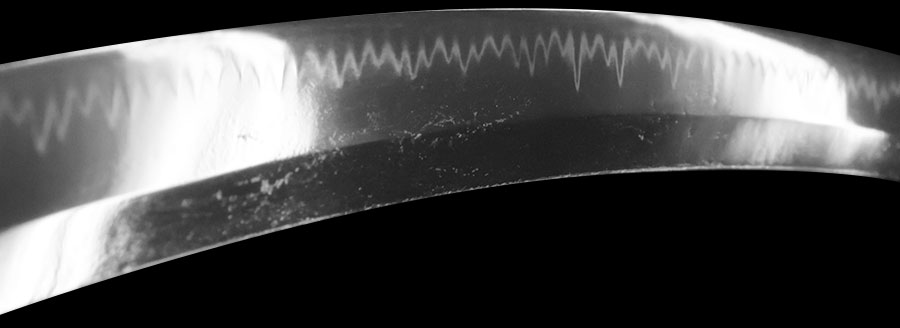
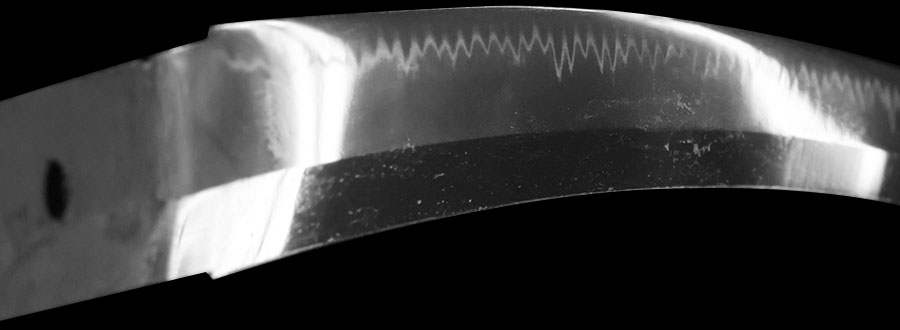
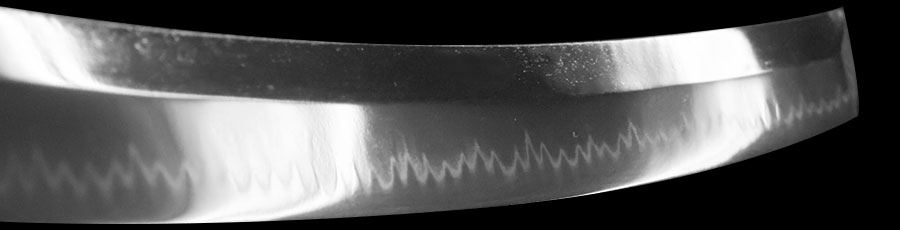
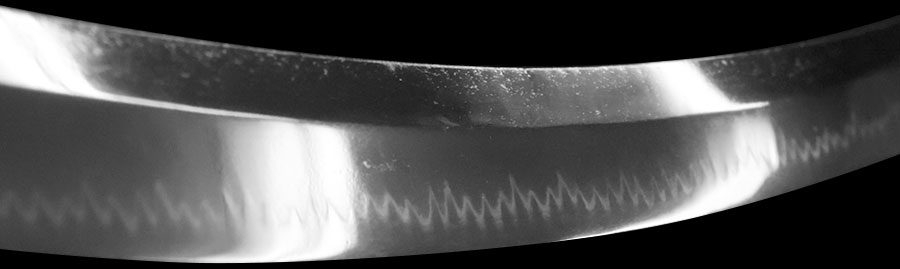
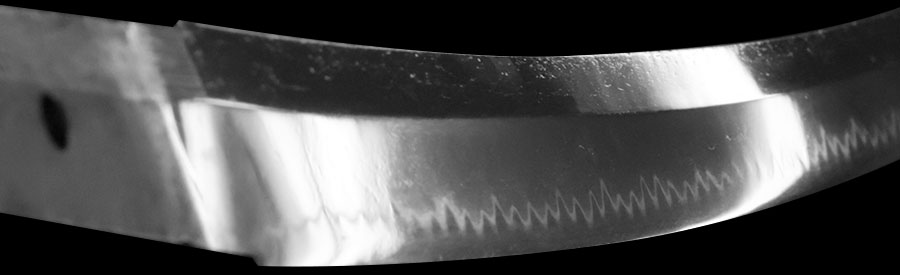
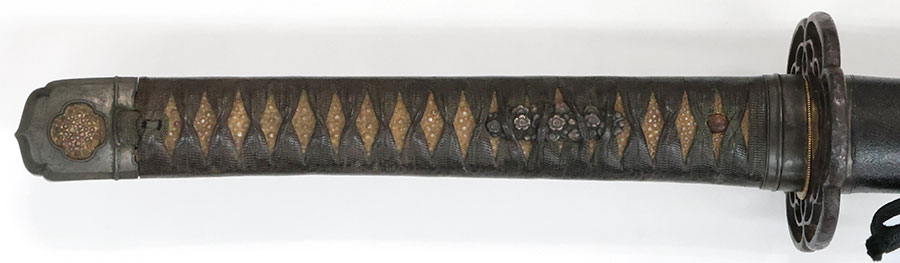
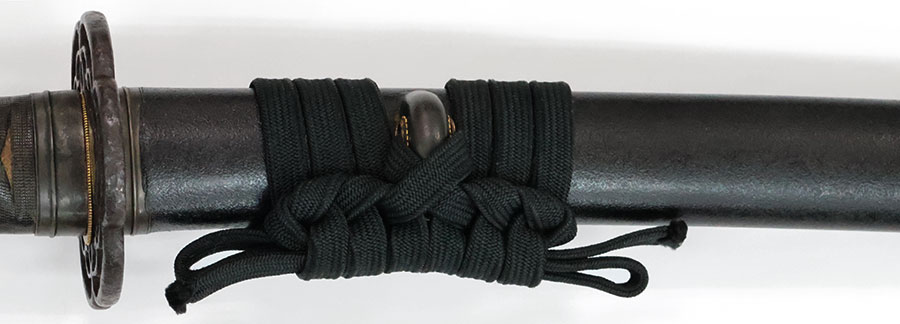
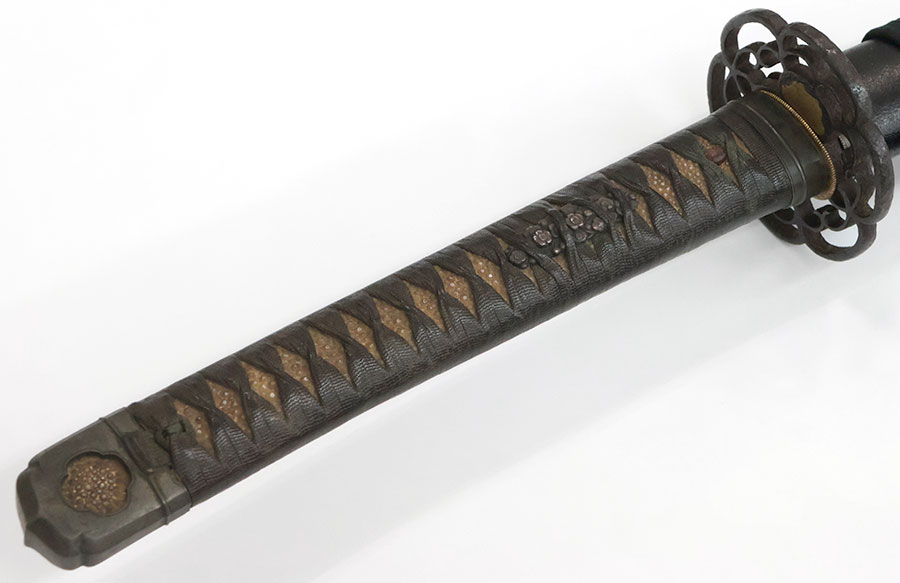
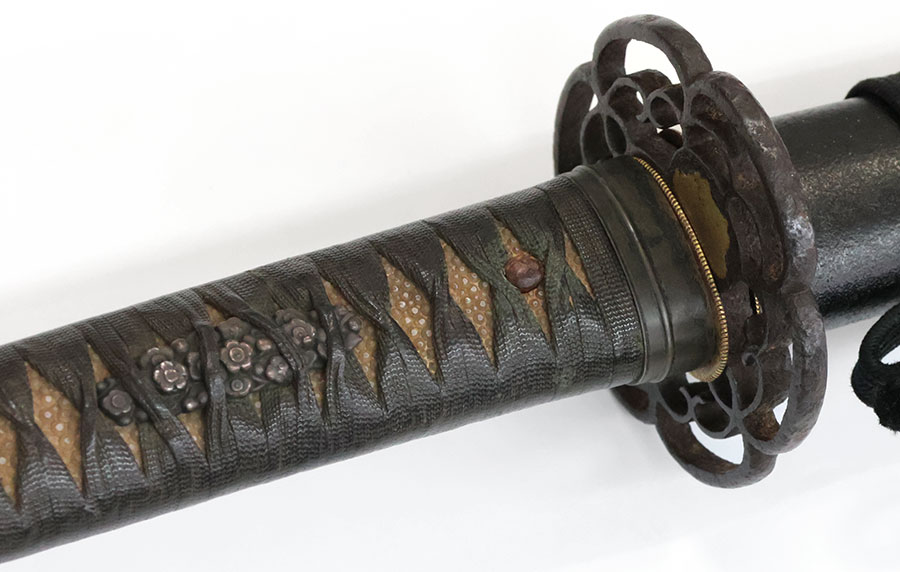
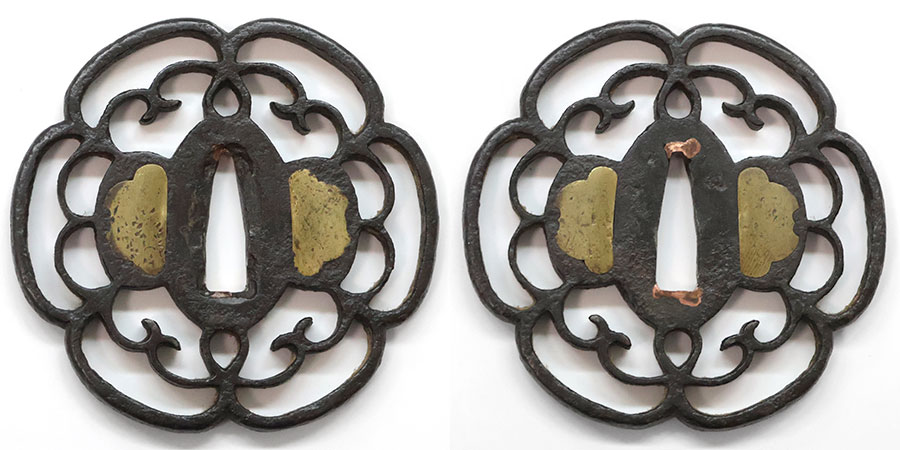
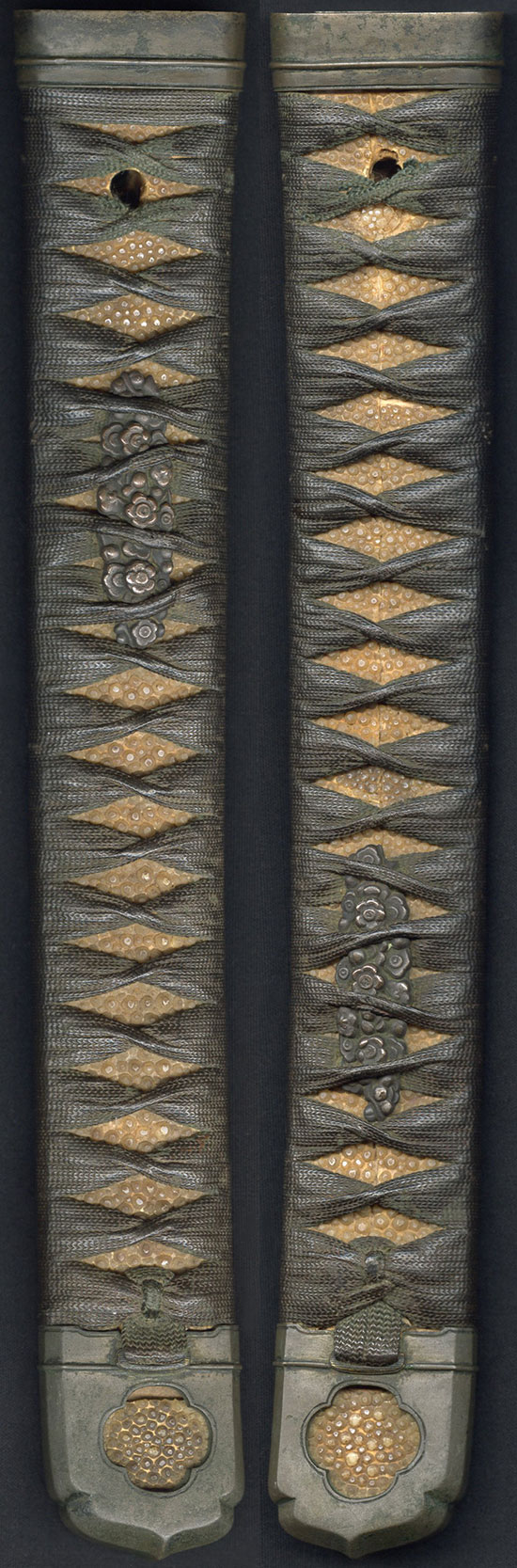
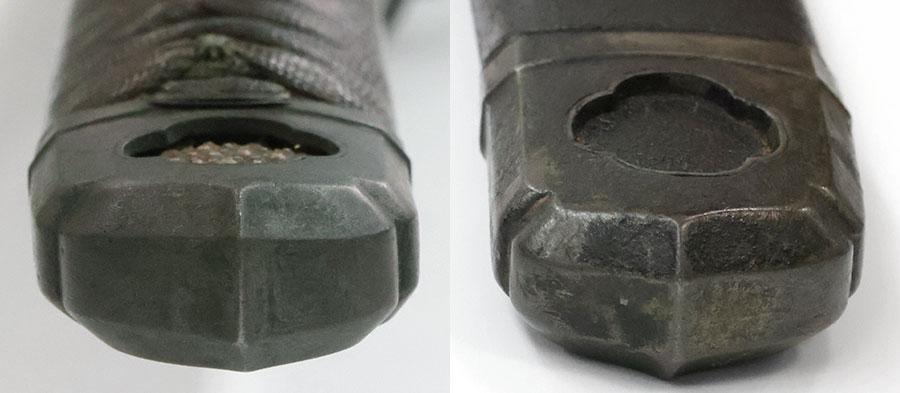
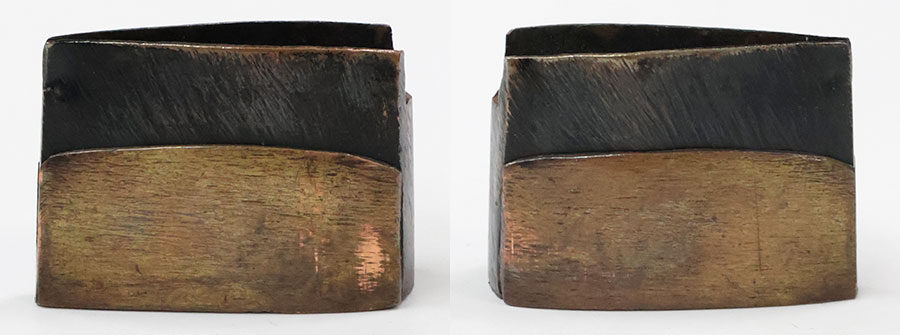
It has appeared, it has appeared; a sword by Musashi no Kami Fujiwara Kanenaka, said to be a descendant of the famous Magoroku Kanemoto and a smith whose work is rarely seen, has appeared. Kanenaka's ancestors were from the home province of Mino, and he is a descendant from approximately 200 years after Magoroku Kanemoto. Even the Asakura clan of Echizen, who boasted 100 years of glory as Shugo Daimyo, were destroyed by Oda Nobunaga after the Battle of Anegawa, and Shibata Katsuie, the famous "Oni Shibata" feared by neighbors who served as Oda Nobunaga's lead elder, moved the populace from the Asakura clan's base at Ichijodani to Ichijo in Echizen, the production site of this sword, to conduct governance. After the Battle of Sekigahara, Yuki Hideyasu—the second son of Tokugawa Ieyasu, elder brother of the second Shogun Hidetada, and adopted son of Toyotomi Hideyoshi—changed his name from Yuki back to Matsudaira Hideyasu and established the 670,000 koku Fukui Domain in Echizen, the cornerstone of the Hokuriku defense line supporting Kyoto and Edo from the flank as a strategic point on the Hokurikudo; the domain flourished for generations until Lord Matsudaira Shungaku, who was known as a wise man of the Bakumatsu period and active as a central figure in the union of the Court and Shogunate and Shogunate reforms, such as the backing of Lord Hitotsubashi Yoshinobu. The Musashi no Kami Fujiwara Kanenaka of this sword lived in that Ichijo in Echizen, and later, like Kotetsu, went to Edo, the center of the Tokugawa Shogunate. He is a master smith from around the Tenna era (1681) of the Edo period (345 years ago). This sword exhibits a good sugata suitable for nukiuchi with a difference between the moto-mihaba and saki-mihaba and a sori; the jigane is a well-tightened ko-itame hada showing a bright metal, and the hamon is a very ambitious and bright blade skillfully tempered with the nioi-deki Sanbonsugi togari-ba devised by Magoroku Kanemoto as a family tradition. As for the koshirae, an old and precious Edo period han-dachi koshirae made 250 years ago—which, in modern terms, is the same period as the founding of the United States—adds further elegance to this sword by Musashi no Kami Fujiwara Kanenaka. This sword has been carefully passed down through an old family for generations, but as they have grown old, we have received it with the request to pass it on at a low price to someone who will cherish it; therefore, we are offering it at a special, ultra-low price cheaper than a gendaito. Please by all means enjoy this famous sword with its precious koshirae by Musashi no Kami Fujiwara Kanenaka, the descendant of the famous Magoroku Kanemoto.
Machine translation from the shop's Japanese · may contain errors ·
It has appeared, it has appeared; a sword by Musashi no Kami Fujiwara Kanenaka, said to be a descendant of the famous Magoroku Kanemoto and a smith whose work is rarely seen, has appeared. Kanenaka's ancestors were from the home province of Mino, and he is a descendant from approximately 200 years after Magoroku Kanemoto. Even the Asakura clan of Echizen, who boasted 100 years of glory as Shugo Daimyo, were destroyed by Oda Nobunaga after the Battle of Anegawa, and Shibata Katsuie, the famous "Oni Shibata" feared by neighbors who served as Oda Nobunaga's lead elder, moved the populace from the Asakura clan's base at Ichijodani to Ichijo in Echizen, the production site of this sword, to conduct governance. After the Battle of Sekigahara, Yuki Hideyasu—the second son of Tokugawa Ieyasu, elder brother of the second Shogun Hidetada, and adopted son of Toyotomi Hideyoshi—changed his name from Yuki back to Matsudaira Hideyasu and established the 670,000 koku Fukui Domain in Echizen, the cornerstone of the Hokuriku defense line supporting Kyoto and Edo from the flank as a strategic point on the Hokurikudo; the domain flourished for generations until Lord Matsudaira Shungaku, who was known as a wise man of the Bakumatsu period and active as a central figure in the union of the Court and Shogunate and Shogunate reforms, such as the backing of Lord Hitotsubashi Yoshinobu. The Musashi no Kami Fujiwara Kanenaka of this sword lived in that Ichijo in Echizen, and later, like Kotetsu, went to Edo, the center of the Tokugawa Shogunate. He is a master smith from around the Tenna era (1681) of the Edo period (345 years ago). This sword exhibits a good sugata suitable for nukiuchi with a difference between the moto-mihaba and saki-mihaba and a sori; the jigane is a well-tightened ko-itame hada showing a bright metal, and the hamon is a very ambitious and bright blade skillfully tempered with the nioi-deki Sanbonsugi togari-ba devised by Magoroku Kanemoto as a family tradition. As for the koshirae, an old and precious Edo period han-dachi koshirae made 250 years ago—which, in modern terms, is the same period as the founding of the United States—adds further elegance to this sword by Musashi no Kami Fujiwara Kanenaka. This sword has been carefully passed down through an old family for generations, but as they have grown old, we have received it with the request to pass it on at a low price to someone who will cherish it; therefore, we are offering it at a special, ultra-low price cheaper than a gendaito. Please by all means enjoy this famous sword with its precious koshirae by Musashi no Kami Fujiwara Kanenaka, the descendant of the famous Magoroku Kanemoto.
For two and a half centuries of peace the sword was the warrior’s legal badge rather than his weapon. Each great city developed its own manner, Edo’s tested strength against Ōsaka’s polished brilliance, until demand thinned in the era’s last decades.
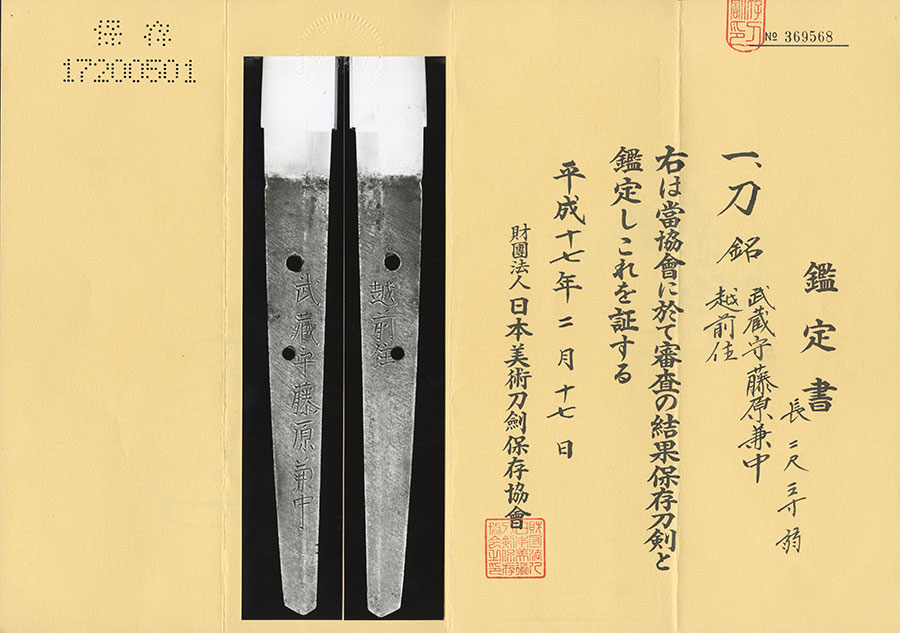
Certifies a genuine blade worth preserving: a signature confirmed correct, or, if unsigned, an era, province, and school that the NBTHK can reliably identify.
Signed: 武蔵守藤原兼中 越前住 (Kanenaka)
As written on the certificate
About the NBTHK›
The NBTHK (Nihon Bijutsu Tōken Hozon Kyōkai, the Society for the Preservation of Japanese Art Swords) is a public-interest incorporated foundation founded in 1948 and supervised by Japan’s Agency for Cultural Affairs (Bunkachō); it is based at the Japanese Sword Museum in Tokyo. Its expert panels physically examine each submitted work (shinsa) and issue a certificate (kanteishō) ranking it by artistic and historical merit. NBTHK papers are the most widely recognized standard of authentication for Japanese swords and fittings.
For returns due to customer circumstances, the cost is the customer's responsibility. For returns due to our mis-shipment or a defective item, we bear the cost.
















 NihontoWatch