Muromachi turned sword making into an industry: the uchigatana rose with massed infantry warfare, Osafune and Seki produced bundle swords beside custom orders, and the Ming trade carried Japanese blades abroad by the tens of thousands.
 NihontoWatchNihontoWatch
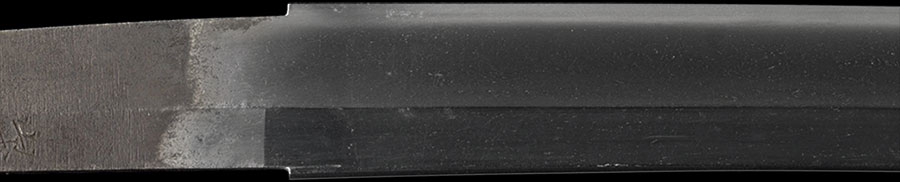
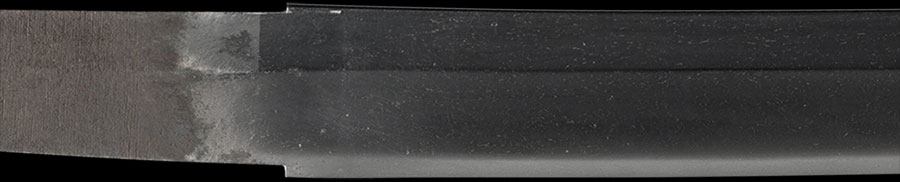
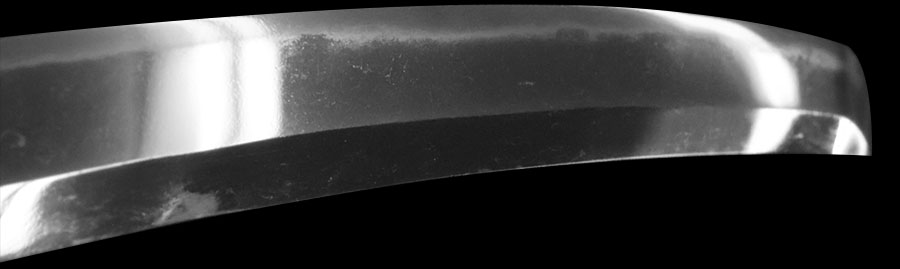
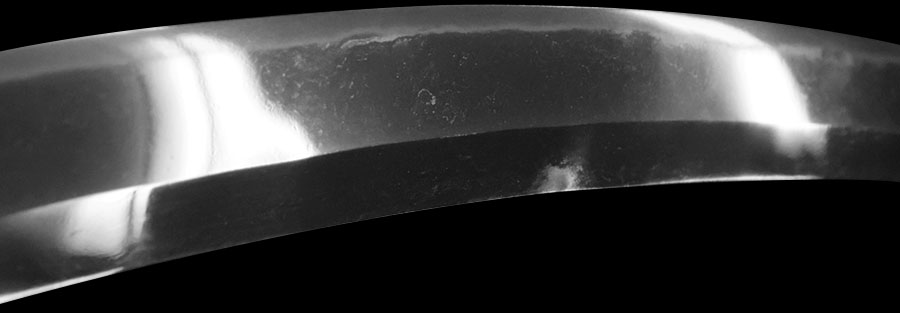
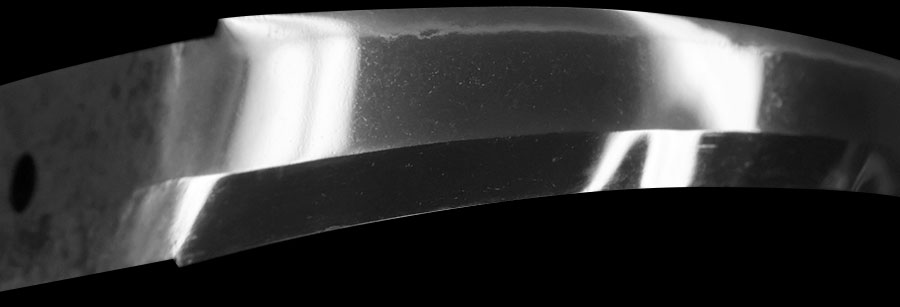
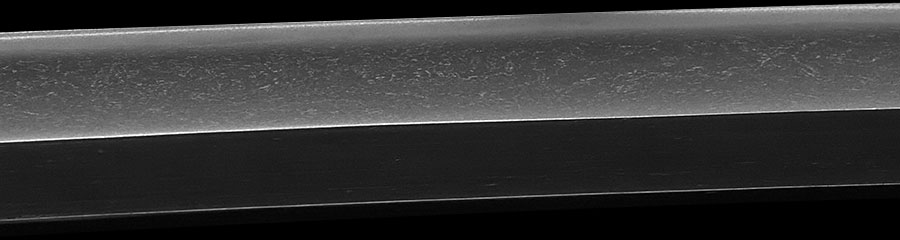
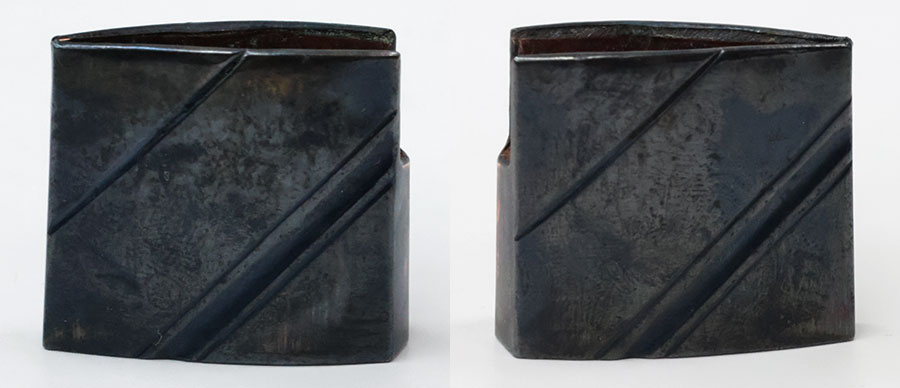
It has appeared, it has appeared, a sword with a kibomei of Umetada Myoju has appeared. Umetada Myoju was born in the Muromachi period in Eiroku 1 (1558) (467 years ago) and claimed to be the 25th generation of Sanjo Munechika. At first he served the Shogun Ashikaga Yoshiaki and lived in Nishijin, and later he served Toyotomi Hideyoshi and was granted a residence in Shijo Muromachi. Since ancient times he has been called the founder of shinto. His main profession was shirogane and chokin, and he was the foremost master of carving in the shinto period. It is thought that his sword making was done in the spare time of his main profession, and he is a tosho with a remarkably small number of made swords. This katana shows a koga sword sugata with a moderate moto-mihaba and a slightly high shinogi, and the jigane is forged in ko-itame hada with active chikei appearing in the ji. The hamon is a well-fired suguha with workings of kinsuji and nijuba appearing in the ha, firing a blade with haki, but it is a kibomei of "it would be nice if it were so". Umetada Myoju of Kyo Yamashiro is also famous as the teacher of Horikawa Kunihiro, Hizen no Kuni Tadayoshi, Munenaga, Yoshinobu, Higo no Kami Teruhiro, and Aizu Masanaga, and he was active as a man of culture of that time who also received orders from the Muromachi Bakufu and the Imperial Court. This time, an old sukisha who had a registration certificate from Aichi registered in Showa 28 for a sword that had been cherished since before the war, asked us to handle it, saying that if there is someone who wants to own a sword with the mei of Umetada Myoju even if it is a kibomei, please let them have it at a special bargain price. Judging from the shakudo ji habaki from the Edo period, it was likely cherished as a sword by Umetada Myoju during the Edo period; the sayagaki by Honma Kunzan Sensei is a playful touch. It is a famous kibomei as the founder of shinto, but please by all means enjoy this sword of Umetada Myoju.
NihontoWatch山城国西陣住人埋忠明寿作 Yamashironokuni Nishijinjunin Umetada Myoju
Offered by Nipponto
The dealer describes this signature as hoped-for (kibō-mei), not guaranteed. Please judge it as an unsigned piece. — Hoshi





















Machine translation of the shop's Japanese ·
Machine translation from the shop's Japanese · may contain errors ·
The Muromachi period (1392 to 1573)
Muromachi turned sword making into an industry: the uchigatana rose with massed infantry warfare, Osafune and Seki produced bundle swords beside custom orders, and the Ming trade carried Japanese blades abroad by the tens of thousands.
We could not find an authenticity certificate on the seller’s listing. Japanese swords and fittings are normally papered by the NBTHK (or the NTHK). Without one, the attribution is the seller’s own assessment and has not been independently verified — treat it with caution and ask the dealer about certification before buying.
For returns due to customer circumstances, the cost is the customer's responsibility. For returns due to our mis-shipment or a defective item, we bear the cost.
¥390,000