The twentieth century nearly killed the craft twice: wartime distortion, then the occupation ban. The NBTHK’s founding in 1948 and licensed forging from 1953 rebuilt the sword as an art, crowned by Living National Treasures and the mukansa rank.
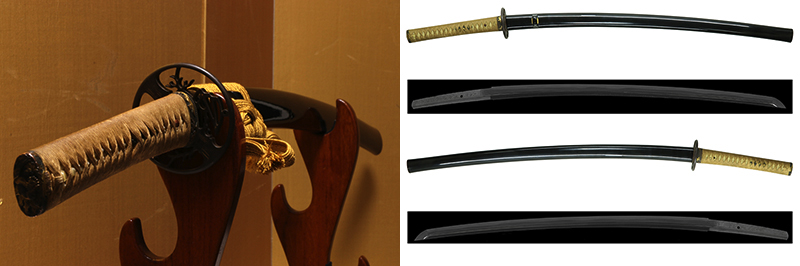
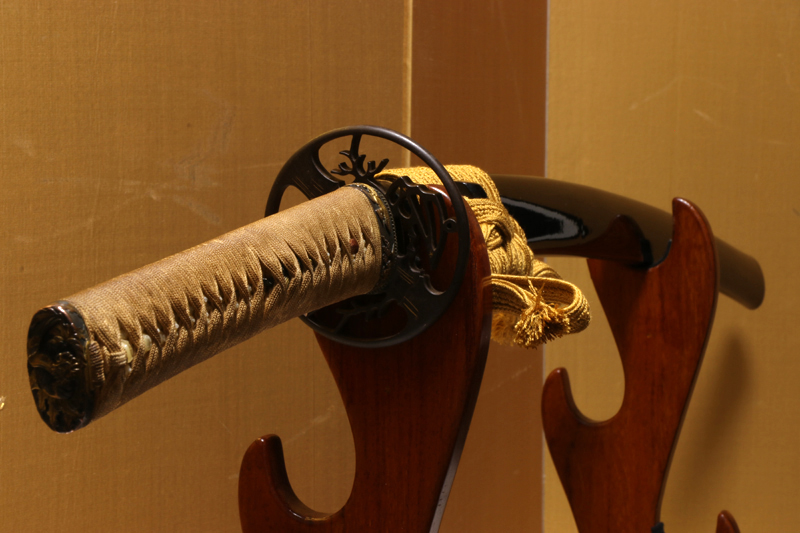
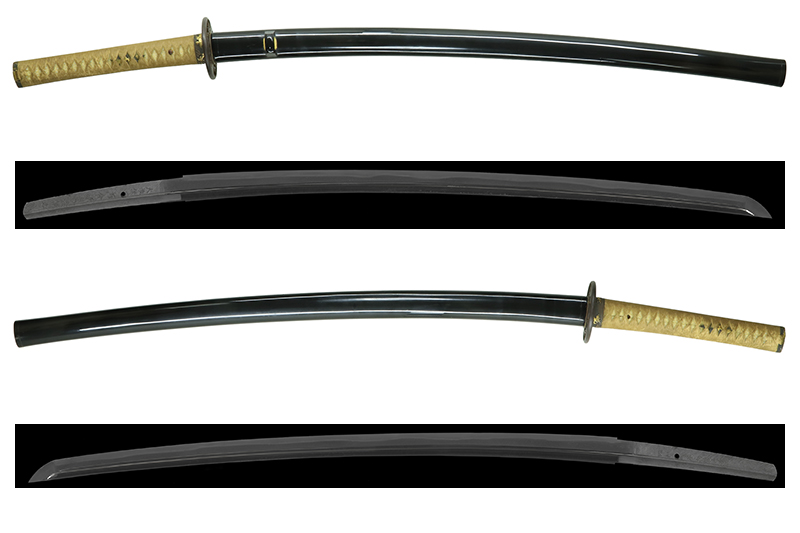
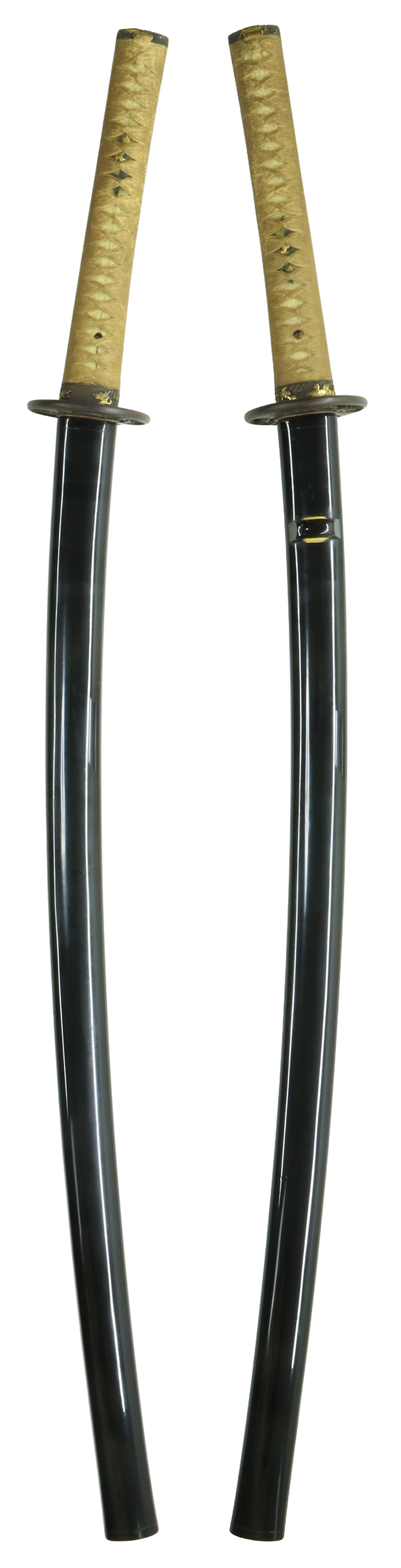
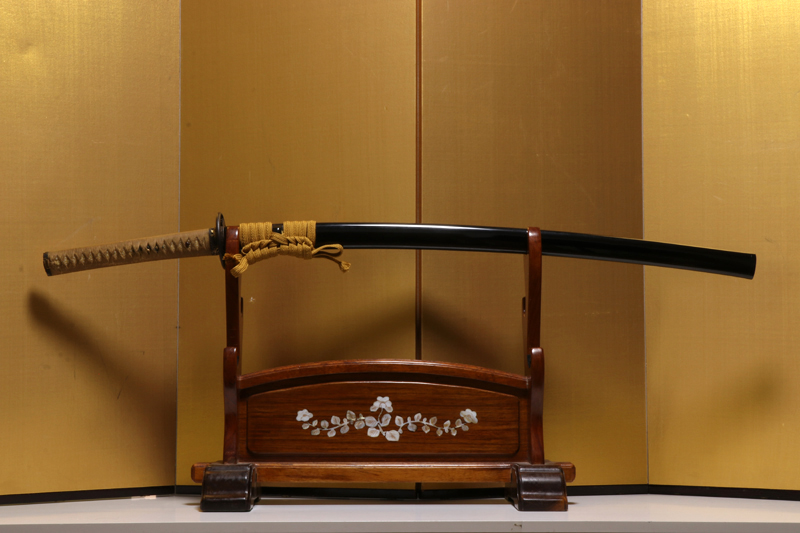
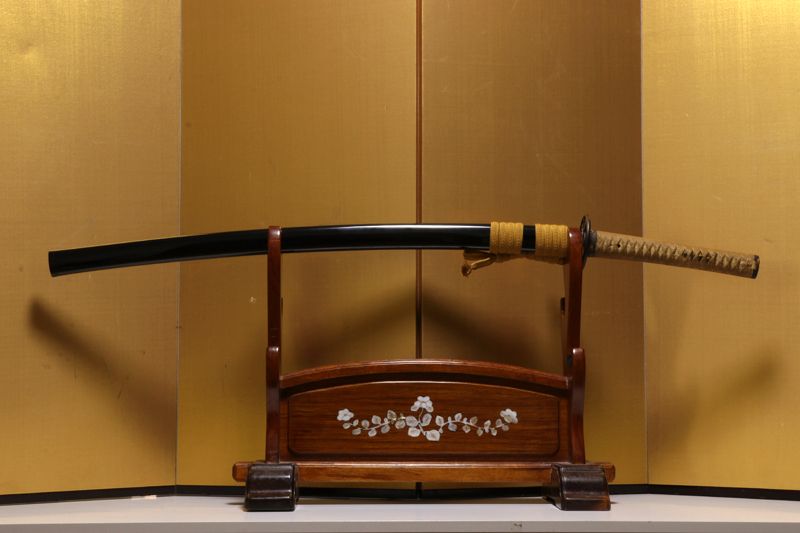
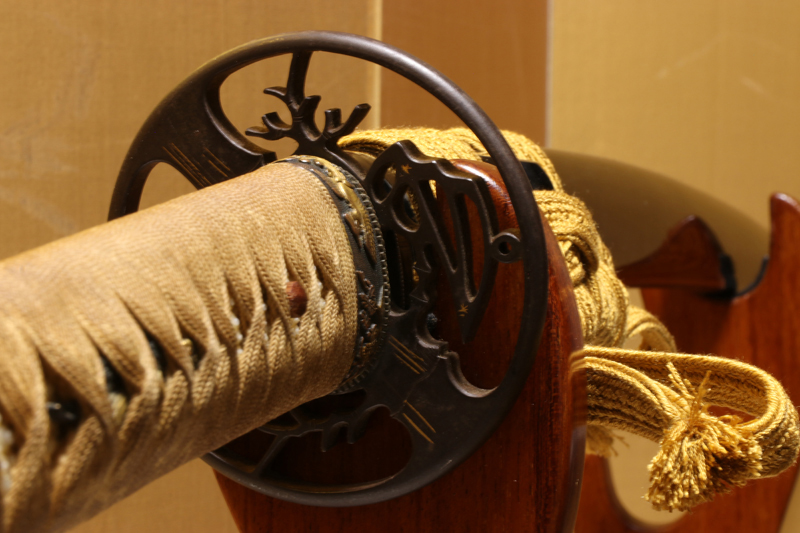
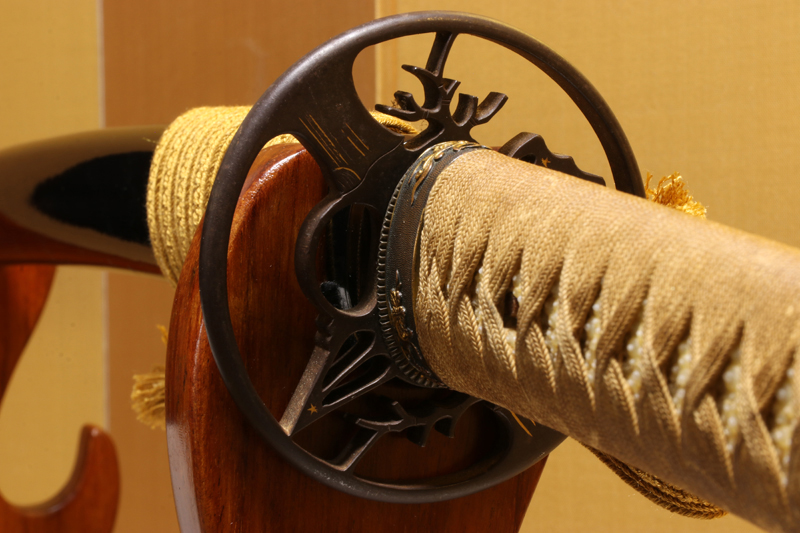
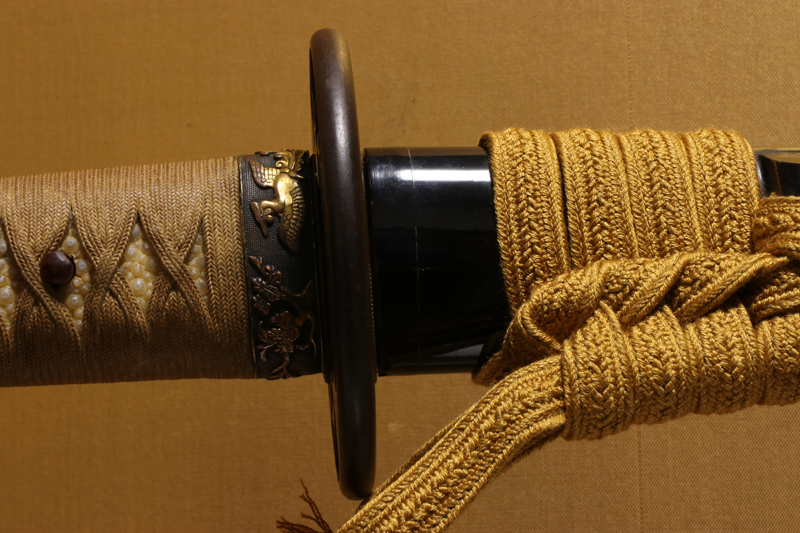
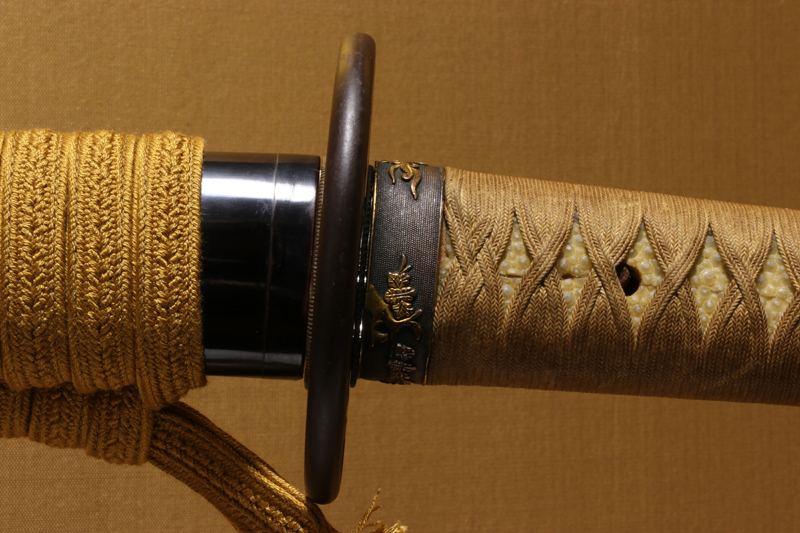
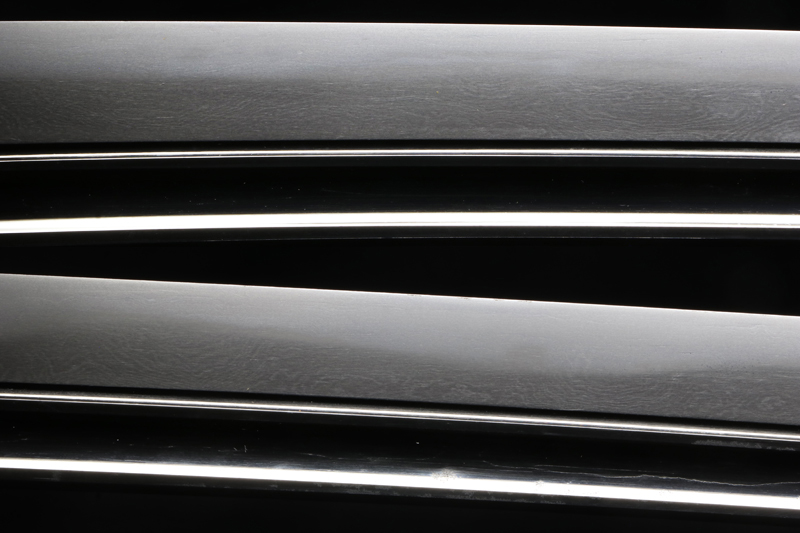
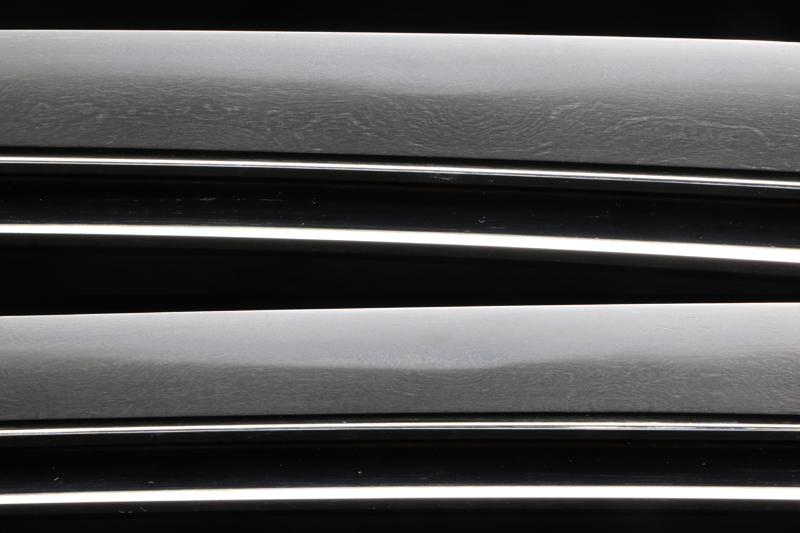
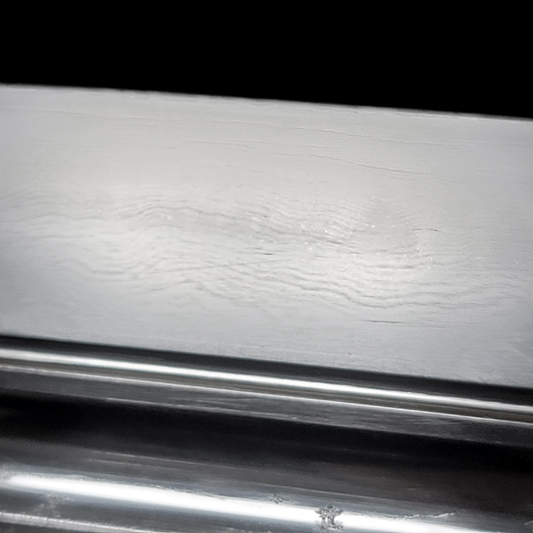
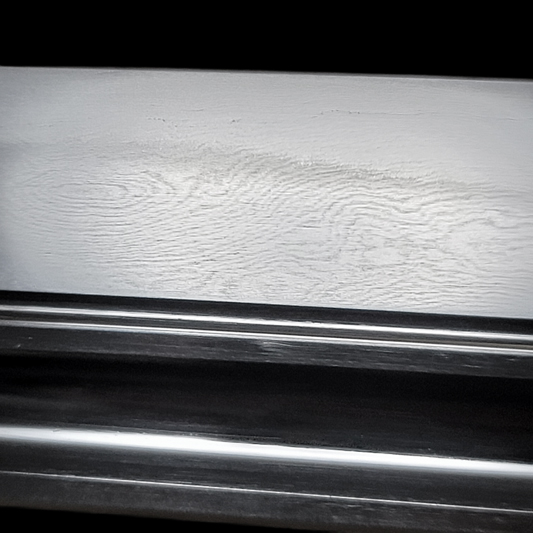
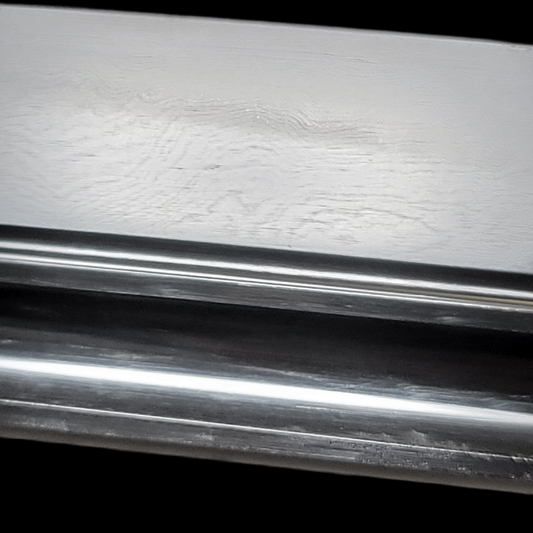
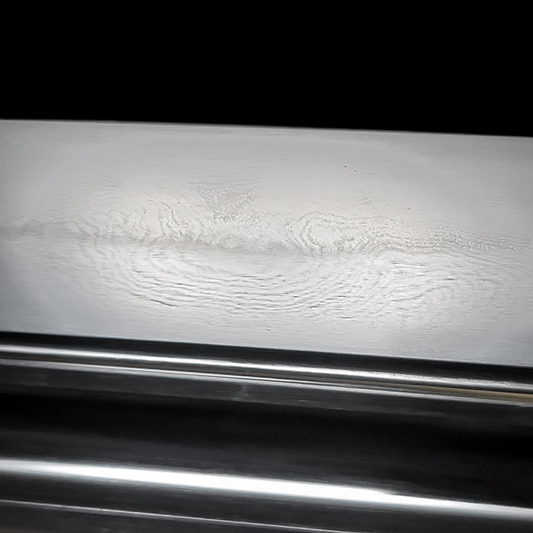
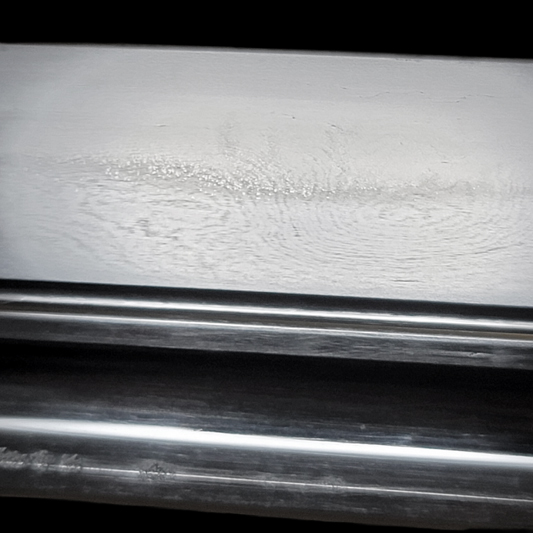
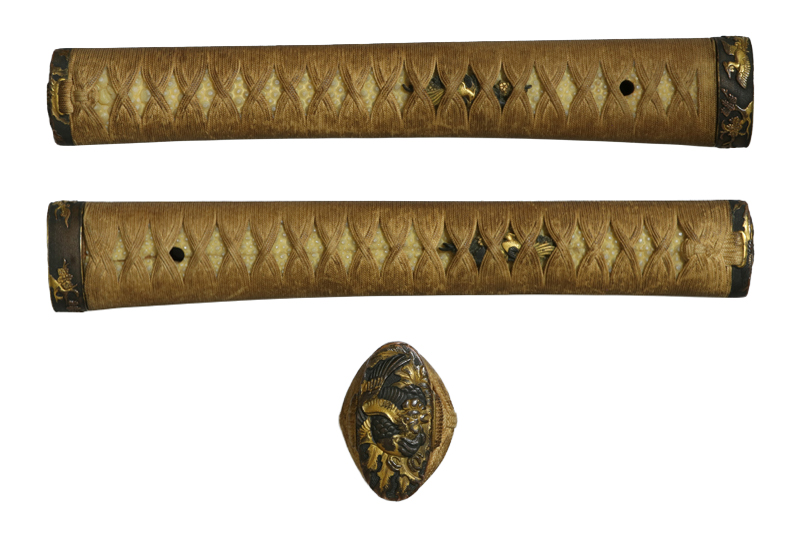
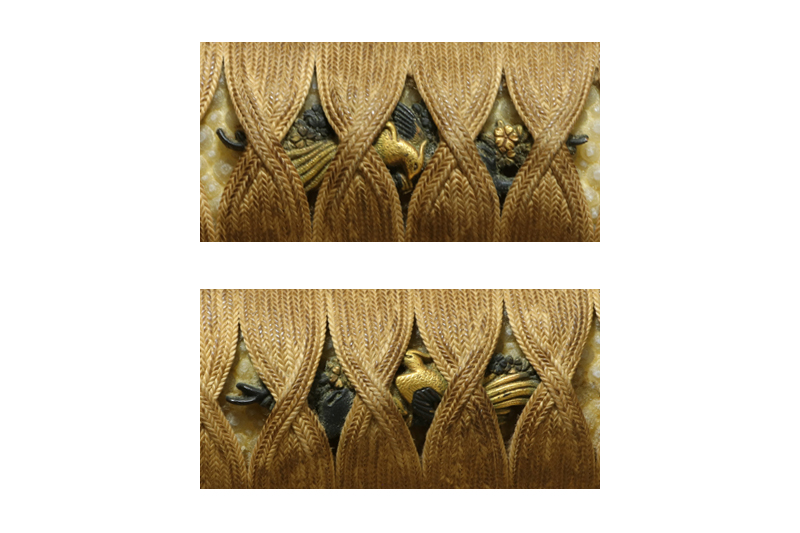
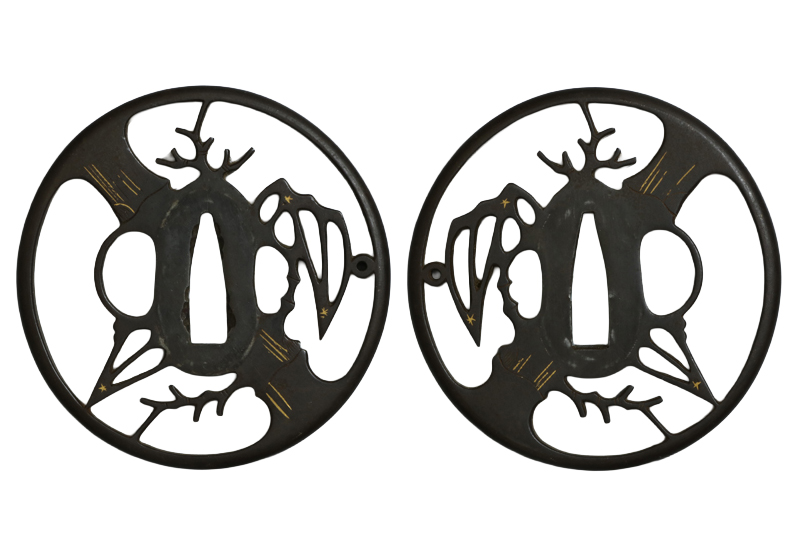
Modern sword Osaka ju Kawai Minamoto Sadatsuku saku with Uchikatana-koshirae. 月山貞勝の弟子、人間国宝月山貞一の良き協力者、河合貞治の作品で 本作、平肉の豊かな、がっしりとした刀姿を呈し、綾杉風の板目肌を鍛え、その上に月山一門の得意とする相州伝を焼いた優れた一振りです。 This is a work by Kawai Sadaharu, a disciple of Gassan Sadakatsu and a close collaborator of Living National Treasure Gassan Sadakazu. This piece presents a solid and robust blade with ample hira-niku (convex surface), forged with an itame-hada resembling ayasugi grain, and tempered in the Sōshū-den style favored by the Gassan school. It is an outstanding sword. 「刀姿 sword figre」 鎬造り庵棟、身幅重尋常、鳥居反り中鋒。茎は生で化粧鑢がかかる、茎尻は栗尻。 Shinogi-zukuri with an iori-mune (peaked back), the blade has standard width and thickness, with torii-style curvature and a medium-sized kissaki. The tang (nakago) is unaltered (ubu) and finished with kesho-yasuri (decorative file marks), and the tang tip is in kuri-jiri (rounded chestnut shape) form. 「彫物 carving」 彫物は、表裏に片チリの棒樋と添樋が茎尻まで搔き通しとなる。 The horimono consists of a katakiri-style bohi with a soe-bi on both sides, carved through to the end of the tang (nakago-jiri). 「地鉄 jigane」 地鉄は、綾杉の様な板目肌が流れ柾心と成り、地沸付く。 The jigane (surface steel) shows a flowing itame-hada resembling ayasugi grain, becoming masame-like toward the center, with ji-nie (fine crystalline particles) present. 「刃紋 hamon」 刃紋は、月山一門が得意な相州伝の互の目乱れ、刃縁沸が付き砂流しかかり、刃中は金筋が多く働き、一部簾刃の様に成り、葉が入る。釯子は乱れ込み小丸に返る。 The hamon is a Sōshū-den style gunome-midare favored by the Gassan school. The habuchi is covered with nie and shows active sunagashi, while numerous kinsuji work within the hamon. In some areas, the pattern resembles sudare-ba (bamboo-blind style), and yo (leaf-like activities) are present. The bōshi is midare-komi (irregular into the tip) and turns back in a ko-maru (small rounded) form. 「特徴 detailed」 河合貞治(本名:河合健治)は、大阪府守口市にて鍛刀していました。師は月山貞勝です。人間国宝・月山貞一の兄弟弟子であり、また貞一の良き協力者でもあったため、彼の作品は比較的少ないとされています。 本作は貞治の晩年作です。平肉の豊かな、がっしりとした刀姿を呈し、綾杉風の板目肌を鍛え、その上に月山一門の得意とする相州伝を焼いた優れた一振りです。 光に透かして眺めると、その美しさに思わず見惚れてしまう、まさに見事な名品です。 Kawai Sadaharu (real name: Kawai Kenji) forged swords in Moriguchi City, Osaka Prefecture. His teacher was Gassan Sadakatsu. He was a fellow disciple (senior student) of Living National Treasure Gassan Sadakazu and also a close supporter of Sadakazu, which is why relatively few works by him are seen. This piece is a late work by Sadaharu. It features a solid and robust blade with ample hira-niku (convex surface), forged with an itame-hada resembling ayasugi grain, and tempered in the Sōshū-den style favored by the Gassan school. It is an outstanding sword. When viewed against the light, one cannot help but be captivated by its beauty—truly a remarkable masterpiece. 「拵 Koshirae」 拵のコンディションは良好です。The koshirae is in good condition. ハバキ(habaki) :銀無垢二重鎺。Solid silver double-layer habaki. 鍔(tsuba) :鉄地笹竹の図透かし鍔。An iron tsuba with an openwork design of bamboo grass. 縁頭(futikasira):素銅魚子地鳳凰の図。A phoenix motif on a solid copper nanako (fish-roe patterned) ground. 目貫(menuki) :赤銅地鳳凰の図。A phoenix design on a shakudō ground. 柄(tsuka) :鮫は親粒が付き巻鮫。柄巻は金茶蛇腹糸の組上巻。 The samegawa (rayskin) features prominent oyatsubu (large central nodes) and is applied in a makizame style.The tsuka-maki is done in a gold-brown jabara-ito in the kumage (raised wrap) style. 鞘(saya) :本漆黒呂鞘(本漆)。Glossy black lacquered saya (genuine urushi lacquer). 「刀剣の状態 condition of blade」 研:古研ぎのため、樋中に少し薄錆が出ていますが、地刃は良く見えます。 傷:欠点に成るような傷は有りません。
Offered by Giheiya


Translated from the shop's Japanese ·
Rows still in Japanese are as written by the shop
Wakimono · Dewa
32 pieces on the market now
Mount Gassan rises among the Dewa Sanzan, the three sacred peaks of northern Japan bound to the mountain asceticism of Shugendō, and the swordsmiths who took the mountain's name worked in its shadow in Ōshū, Dewa Province. The setsumei record that smiths signing "Gassan" are noted in the Kanchiin-bon Meizukushi as early as the Heian period, and the lineage's oldest surviving signed blade is a tachi simply signed Gassan, kept at the Gassan Shrine and judged to date from the late Nanbokuchō to early Muromachi period. Around that same early Nanbokuchō moment the corpus places Gassan Nagamitsu, whose signed tachi answers to the "Ushū Gassan group, around the Ryakuō era" recorded in the Meikan, and Shōgun, a Nanbokuchō hand sometimes identified with Gunshō, dated Genchū 3 (1386). A later branch is carried by Gassan Chikanori, working into the mid and late Muromachi (an ubu wakizashi dated Eishō 9, 1512). The line was revived in Osaka in the closing Tokugawa and Meiji years by Gassan Sadayoshi and his adopted son Gassan Sadakazu, who endured the Haitōrei edict and was appointed Teishitsu Gigei-in (Artist to the Imperial Household) in Meiji 39; his own adopted son Gassan Sadaichi continued the title into Taishō. The forging is the school's signature. " Over the itame base the grain flows (nagare) and tends to stand; ji-nie adheres and chikei enter, and the northern steel takes a dark, metal-like (kana-iro) hue read as Ōshū temperament.
The temper of the old line is a suguha whose nioiguchi is shizumi (subdued), at times mixed with gunome and ko-midare and softened toward urumi, the bōshi turning back in ko-maru. Departures within the corpus mark the lineage's range: Chikanori's late work can drop the ayasugi entirely and absorb Sue-Bizen and Osafune manners, while the Osaka revival smiths command itame with thick ji-nie, flamboyant nie-laden midare, kinsuji, and sunagashi in a full Sōshū idiom, and both Sadakazu and Sadaichi added meticulous horimono, from Bishamonten kurikara to taki kaen Fudō and dragon carvings carved by the same hand that forged the blade. For recognition the setsumei point first to the wave-grain ayasugi and the subdued, often slightly urumi northern nioiguchi, and where these recede, to the dark steel and standing grain that still betray an Ōshū hand. Signed examples of the old line are described as extremely rare, which raises the documentary weight of Nagamitsu's tachi and Shōgun's dated tantō. Provenance threads through the school's own sanctuary: the founding tachi and an Important Art Object tachi both reside at the Dewa Sanzan and Gassan Shrines. The Osaka revival is anchored by Sadaichi tantō signed Teishitsu Gigeiin, recorded in Honma's inventory of the Imperial collection, alongside a Sadakazu wakizashi made on commission for Prince Kuni. Across six centuries the setsumei track a single mountain workshop, from the subdued ayasugi of the Dewa founders through a Muromachi offshoot that turned toward Bizen, to the Imperial-rank carvers of Osaka who reproduced the old wave-grain while mastering the wider traditions. Learn more →
| Smith | Era | Designated |
|---|---|---|
| Tomosada友定 | 1532-1555 | 0 |
| Naonori直則 | 1830-1844 | 0 |
| Toshiyasu俊安 | 1504-1521 | 0 |
| Nagahisa長久 | 1334-1338 | 0 |
| Hisatoshi久利 | 1392-1573 | 0 |
Shōwa to the present: destruction and revival
The twentieth century nearly killed the craft twice: wartime distortion, then the occupation ban. The NBTHK’s founding in 1948 and licensed forging from 1953 rebuilt the sword as an art, crowned by Living National Treasures and the mukansa rank.
Within 3 days of the item's arrival, we offer a refund or an exchange. Return shipping and the bank transfer fee for the refund are at the customer's expense.