NihontoWatch MonNihontoWatch
Market
Encyclopedia
Kantei
NihontoWatch MonNihontoWatch
Market
Encyclopedia
Kantei

Description

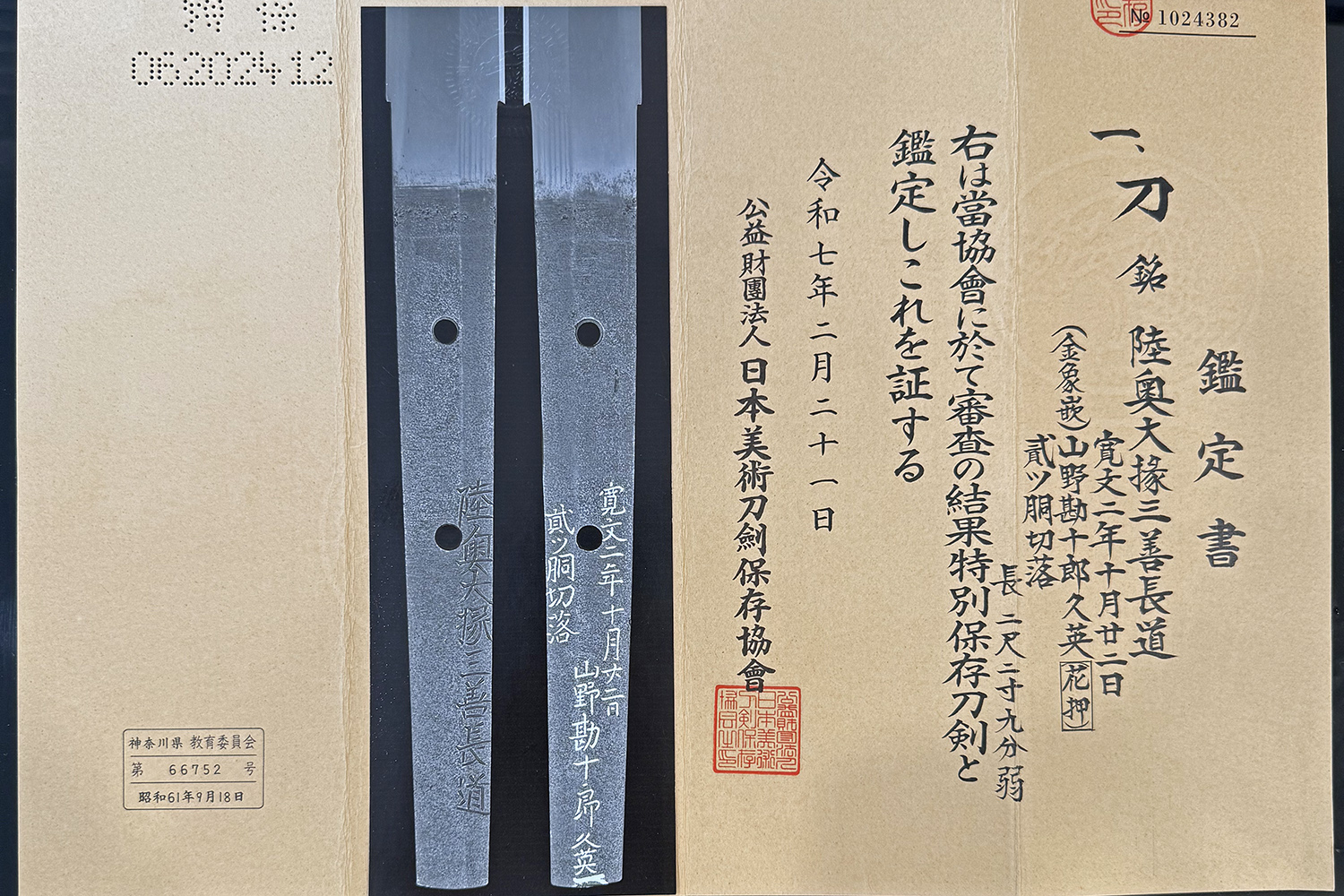
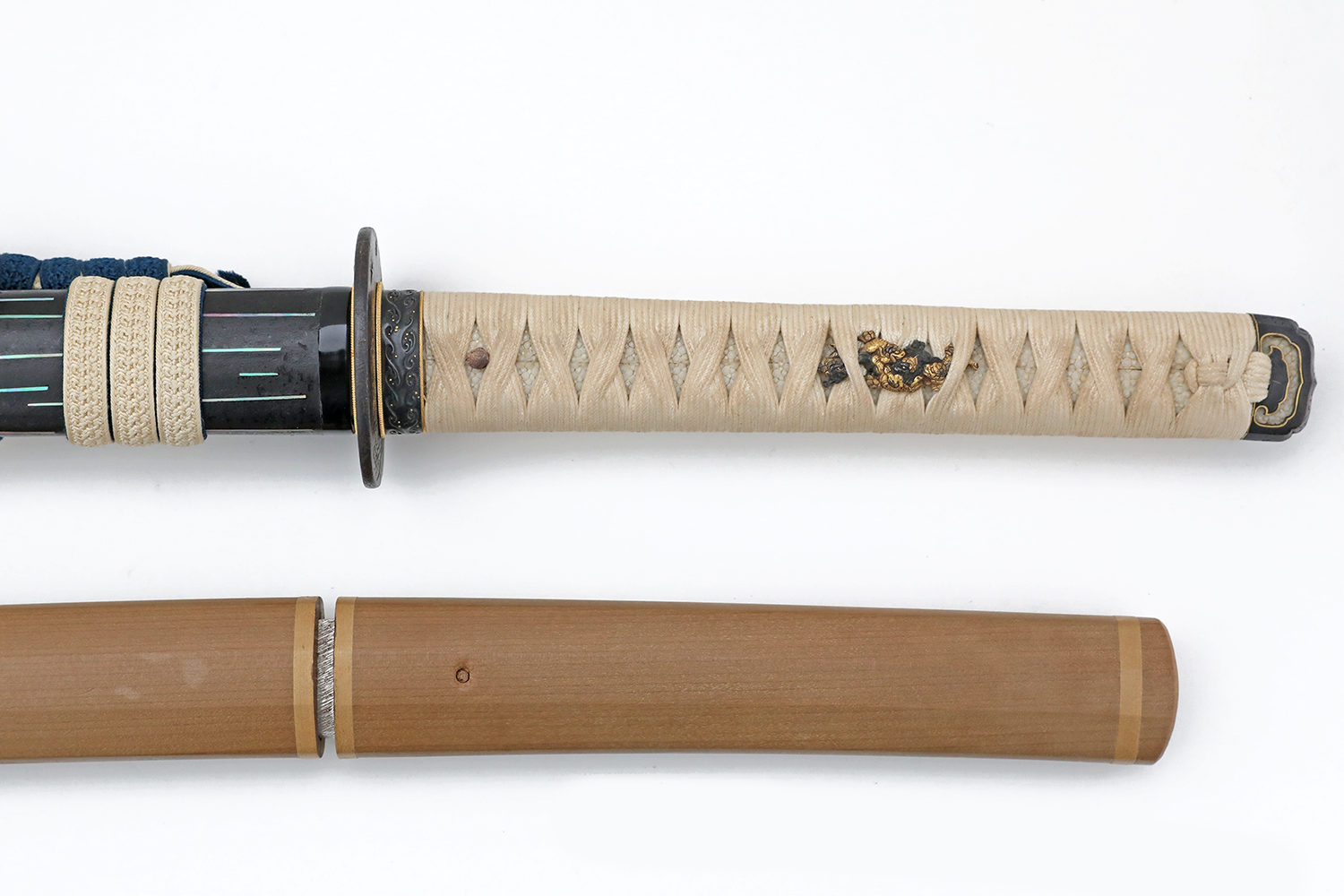
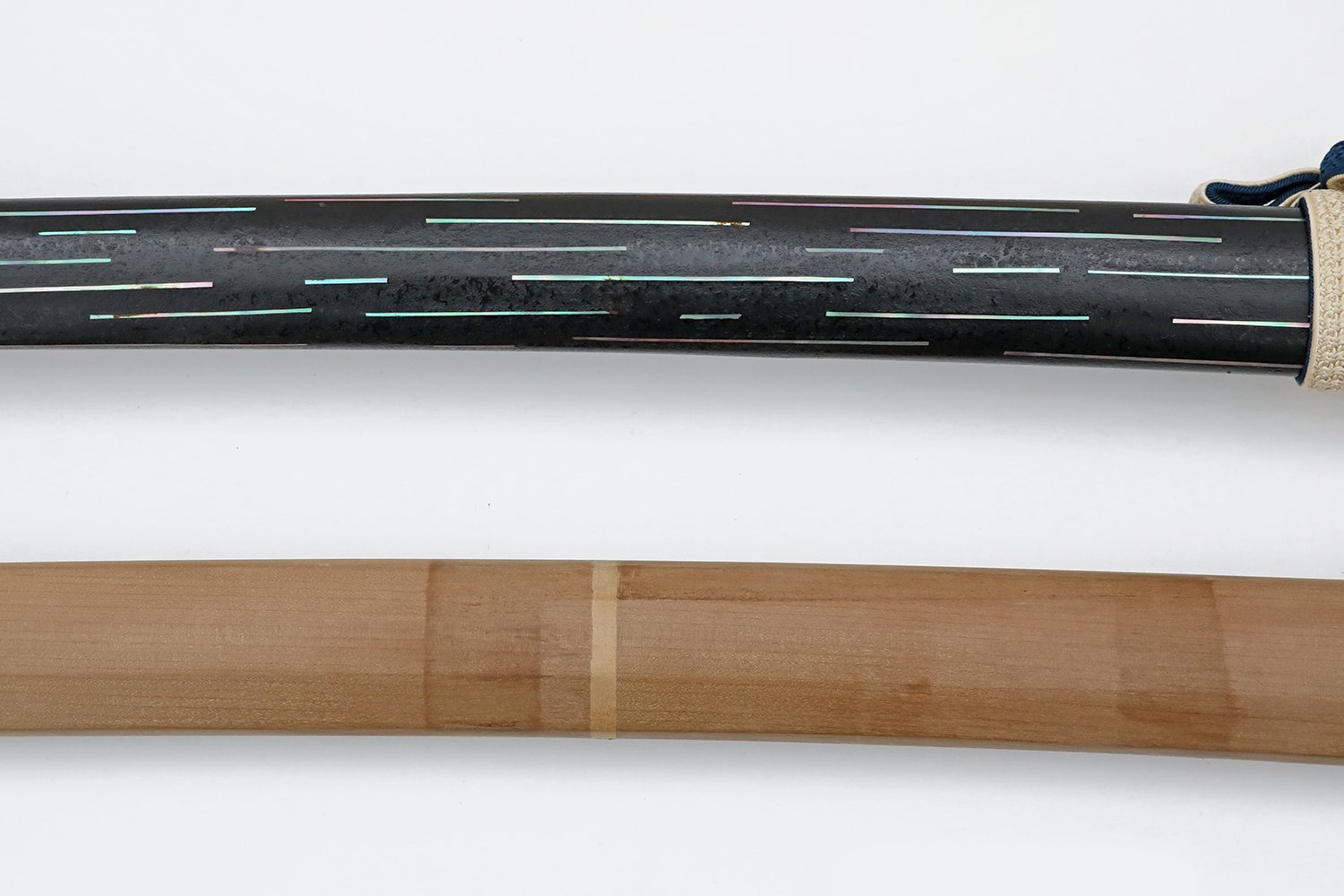
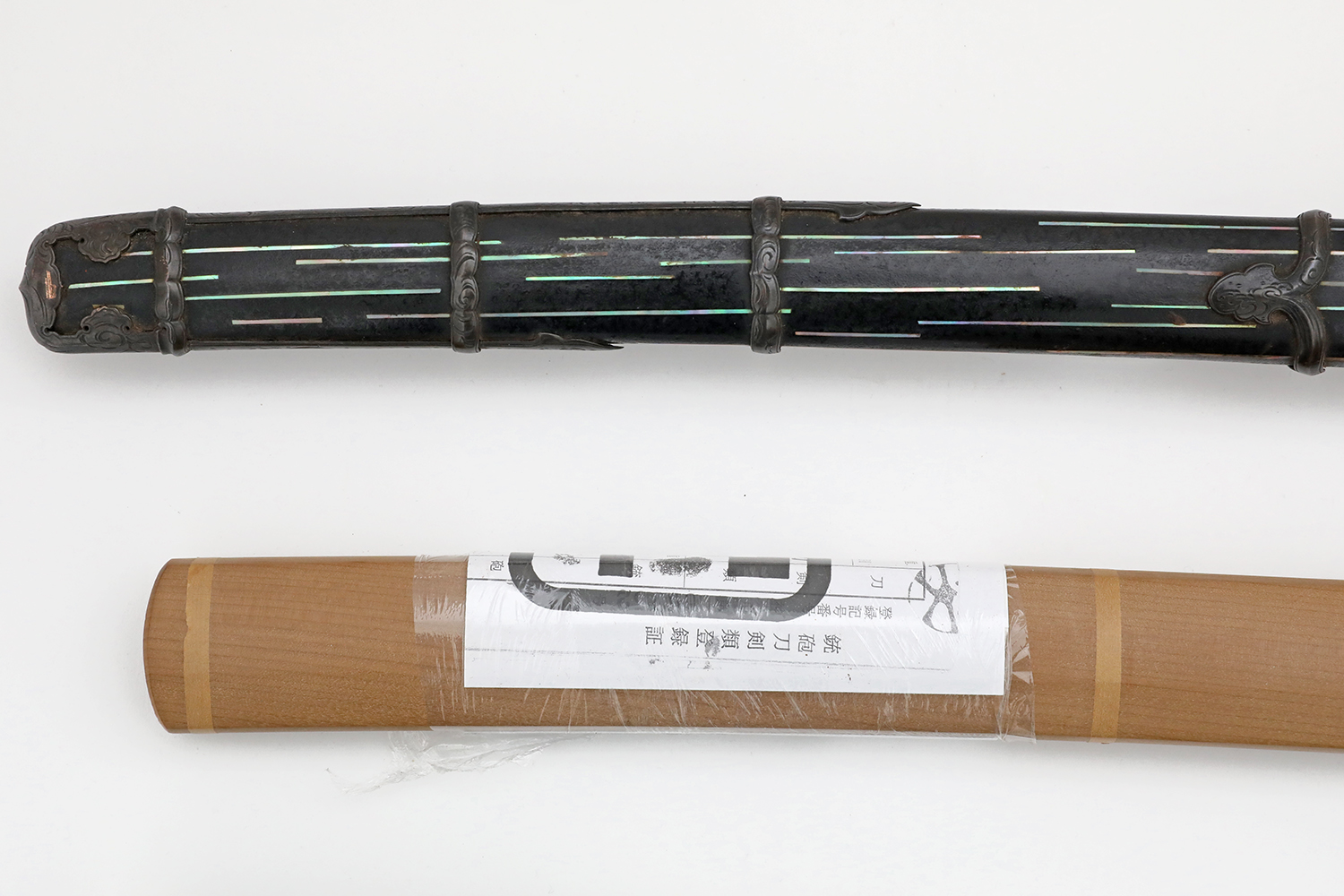
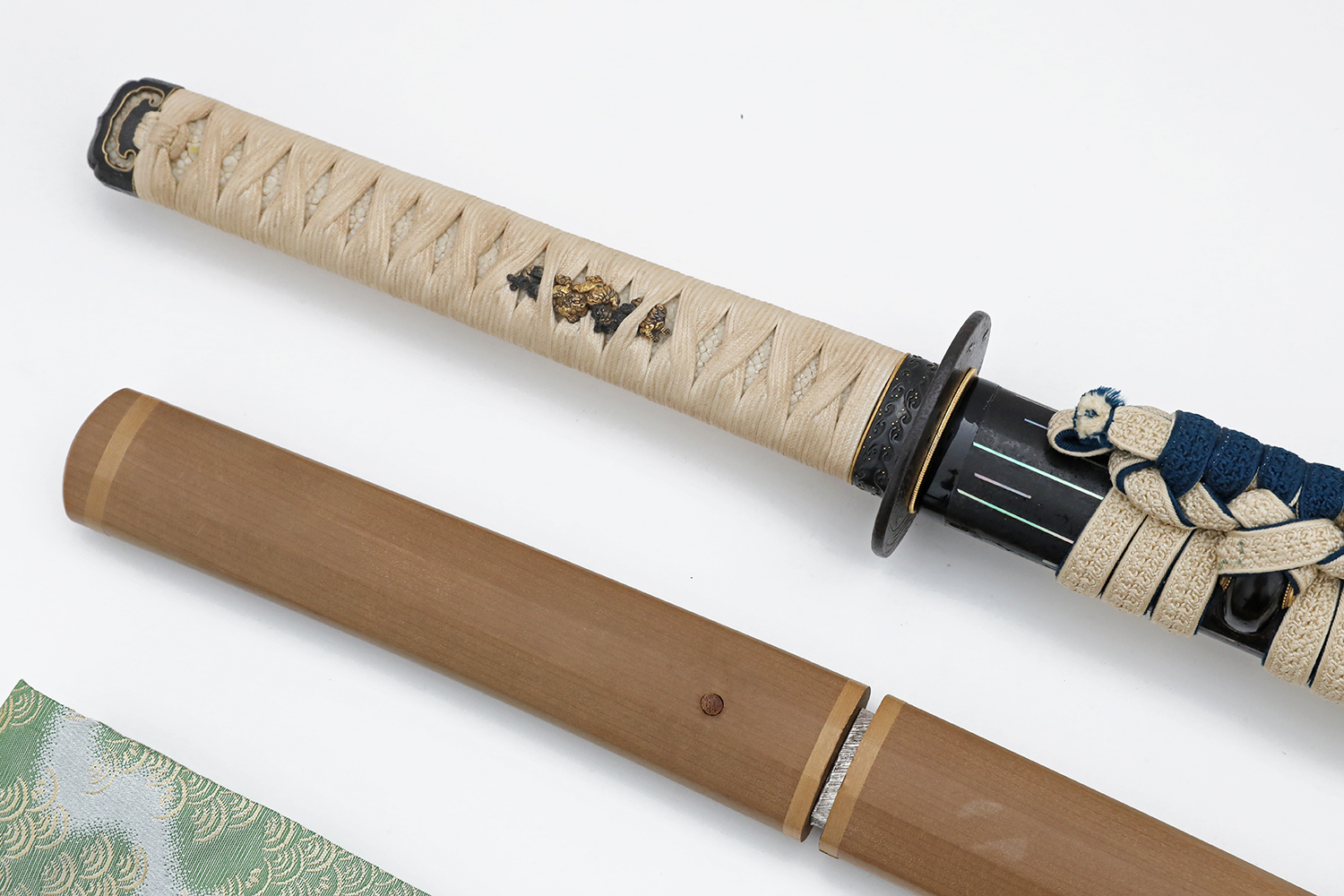
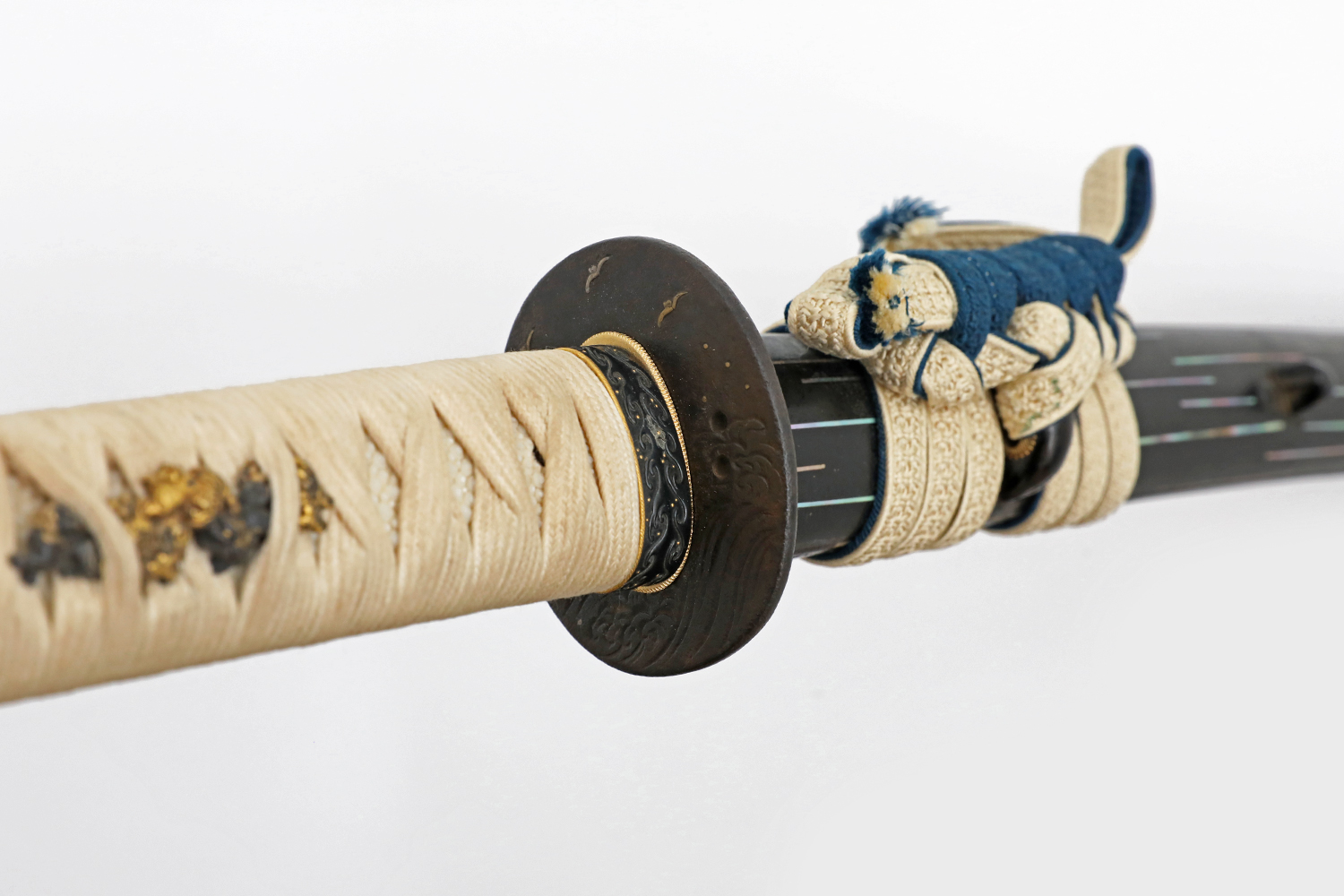
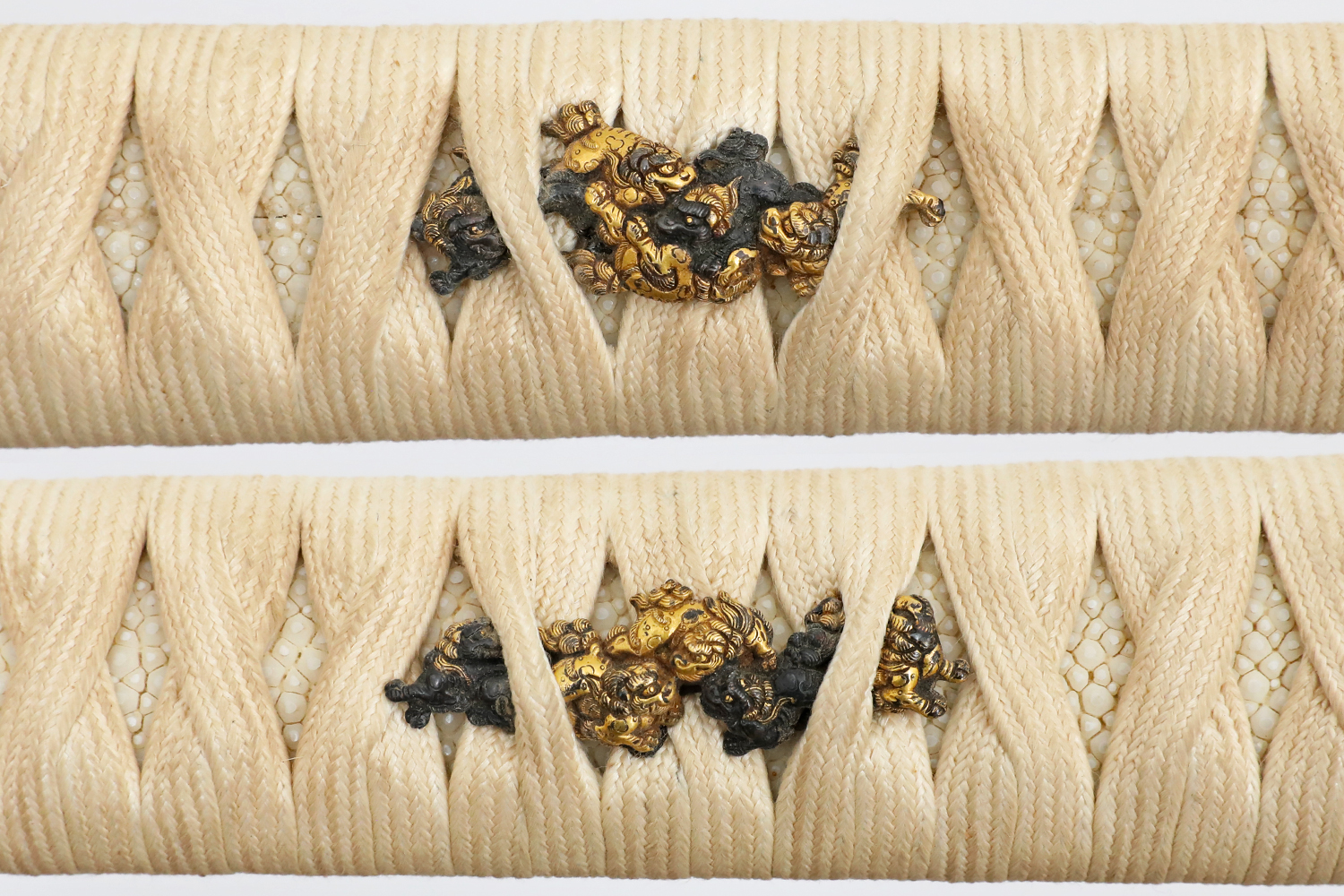
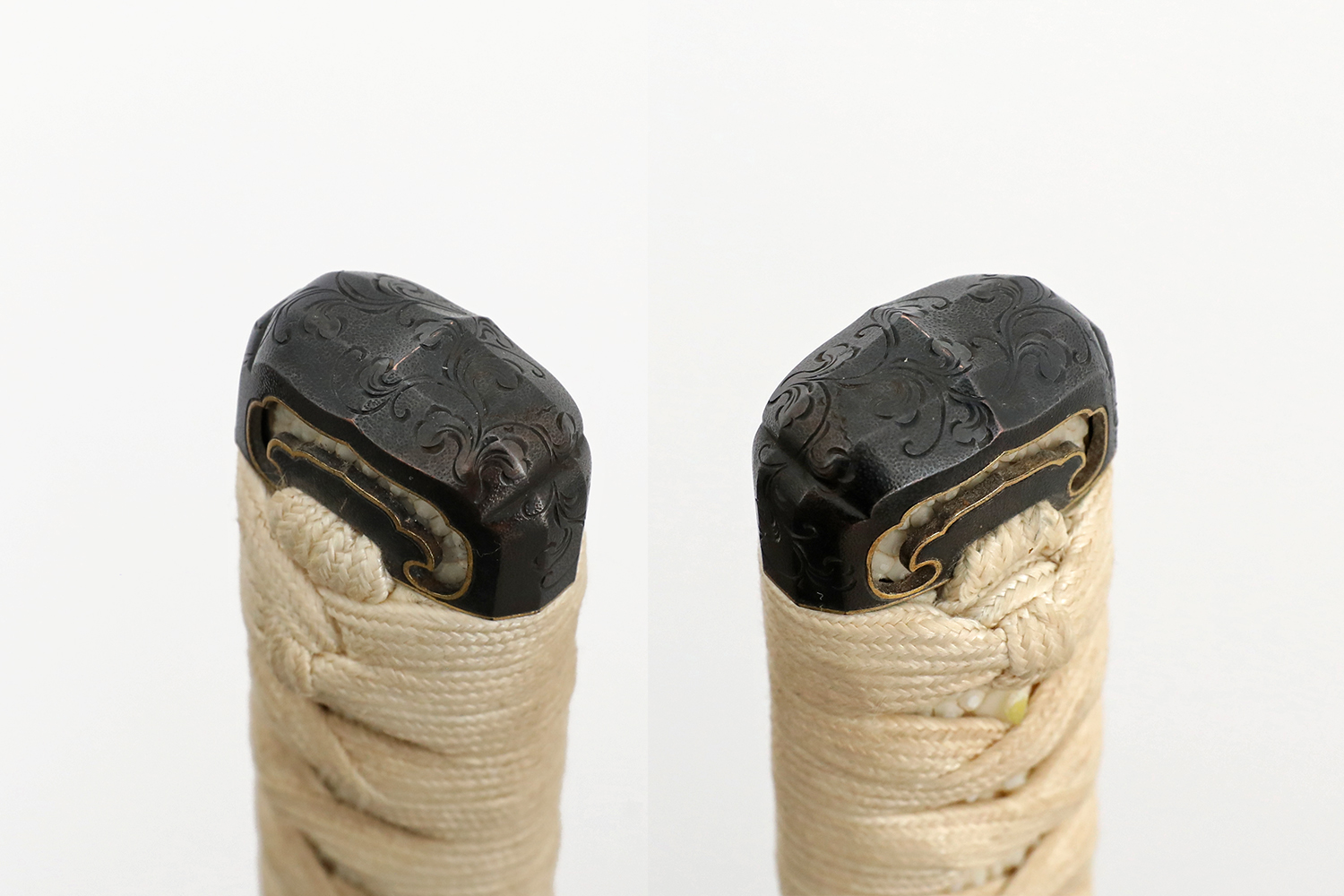
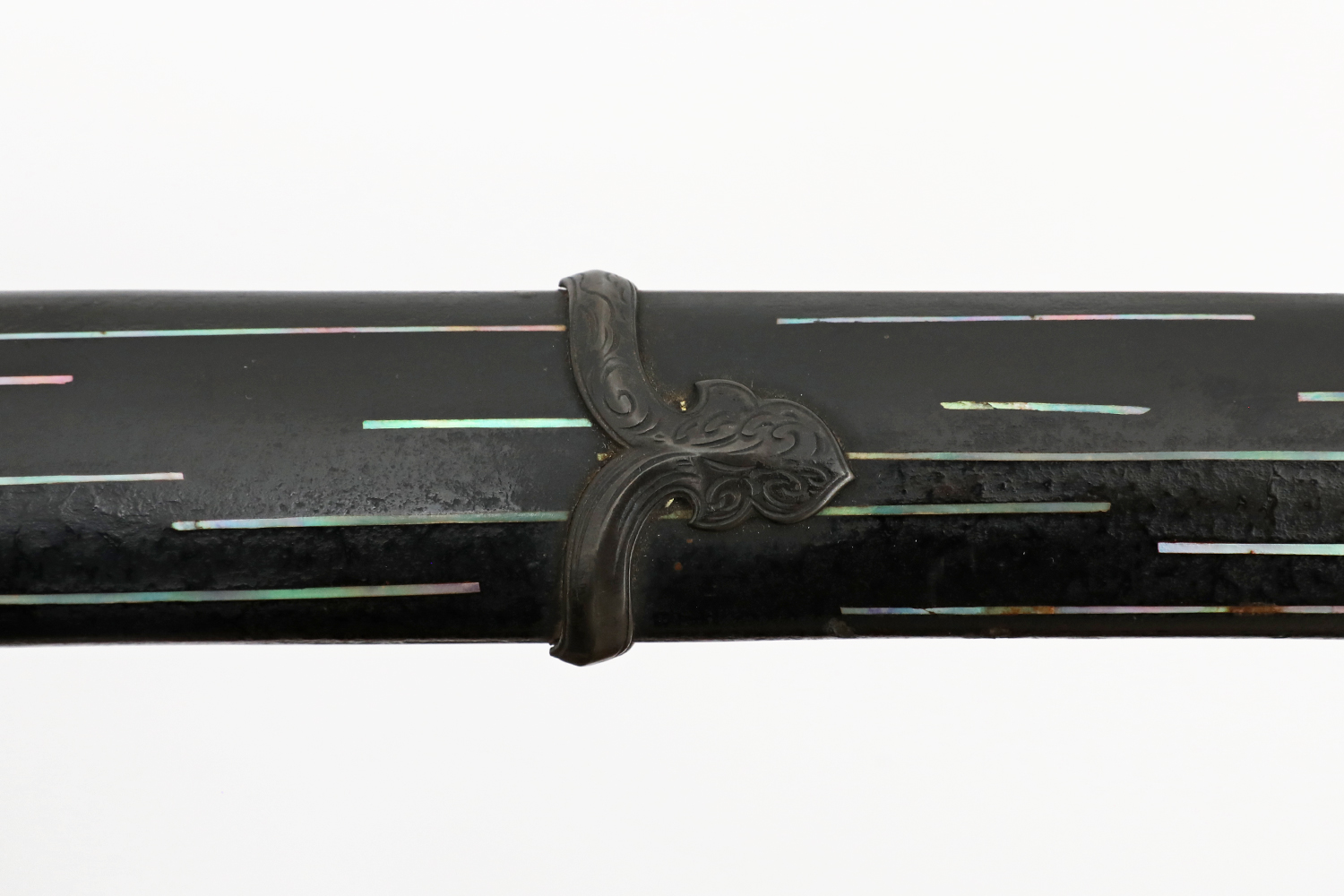
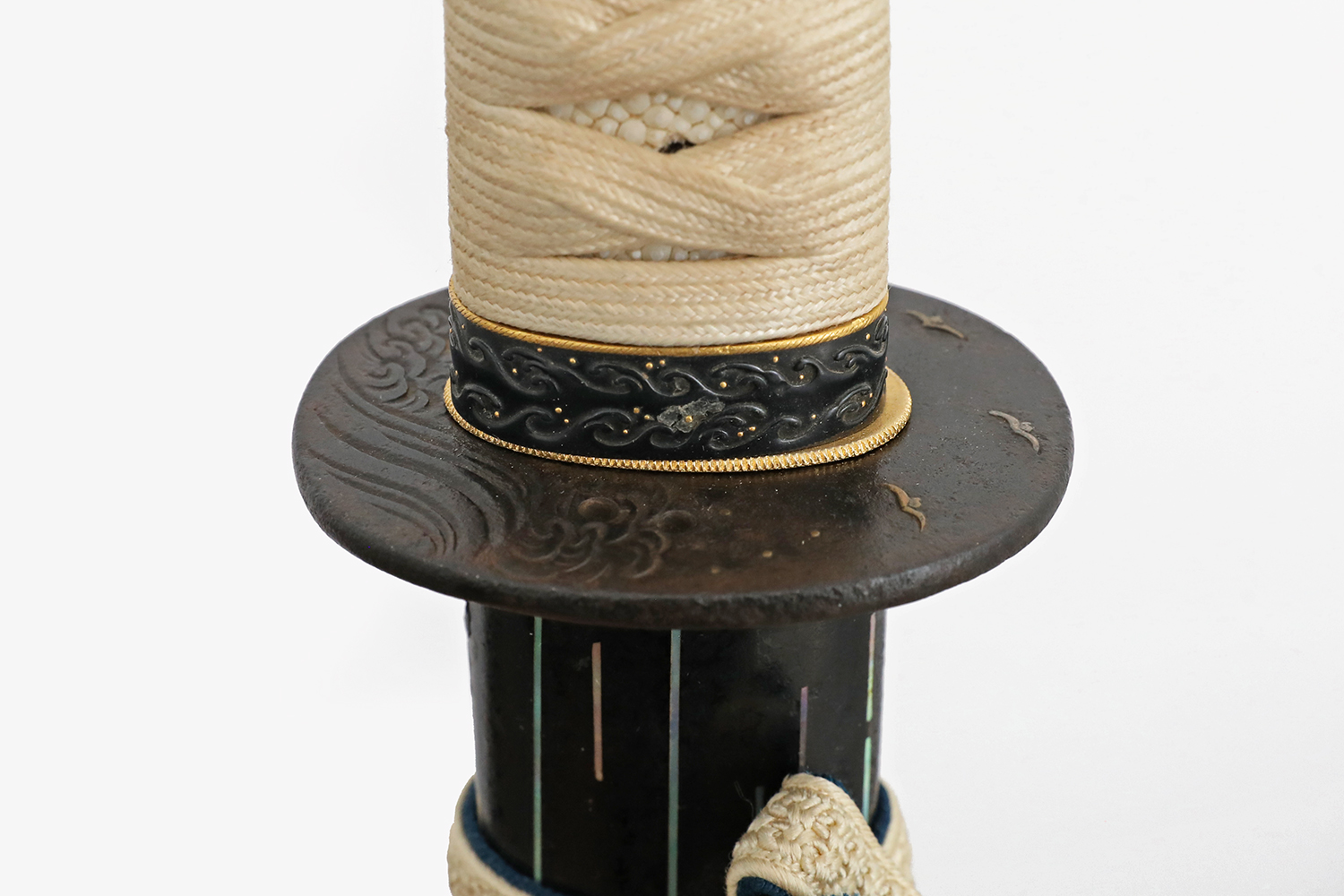
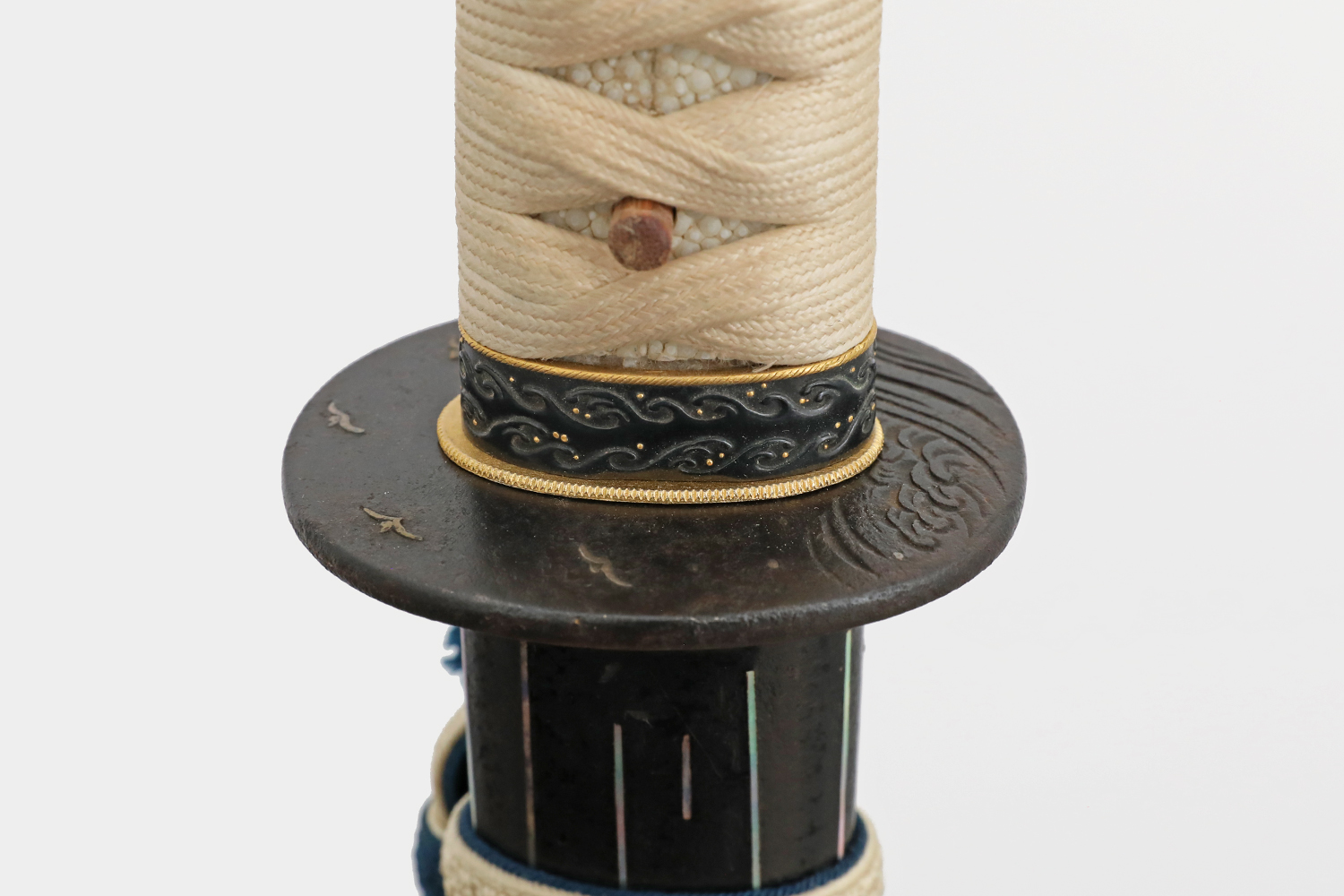
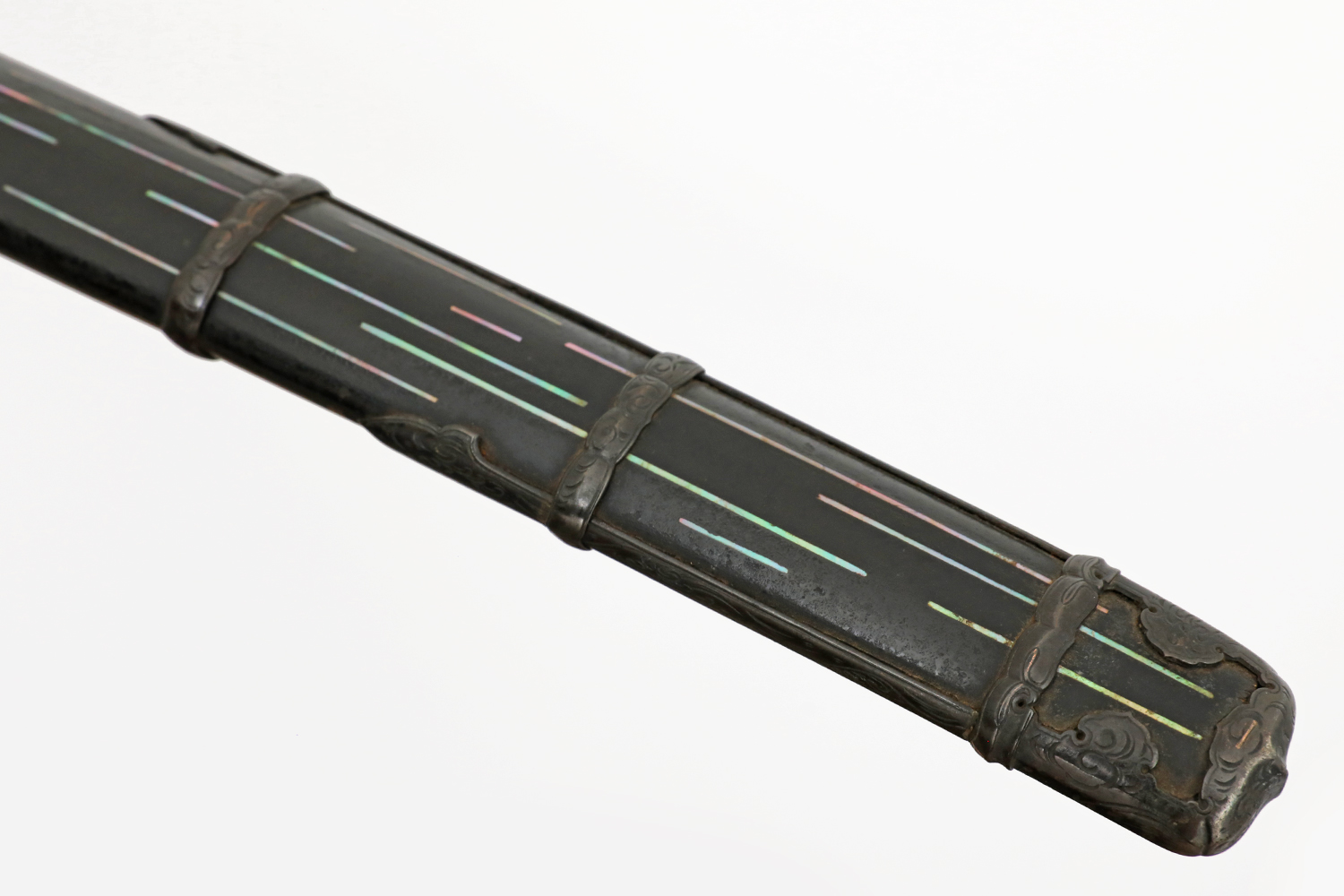
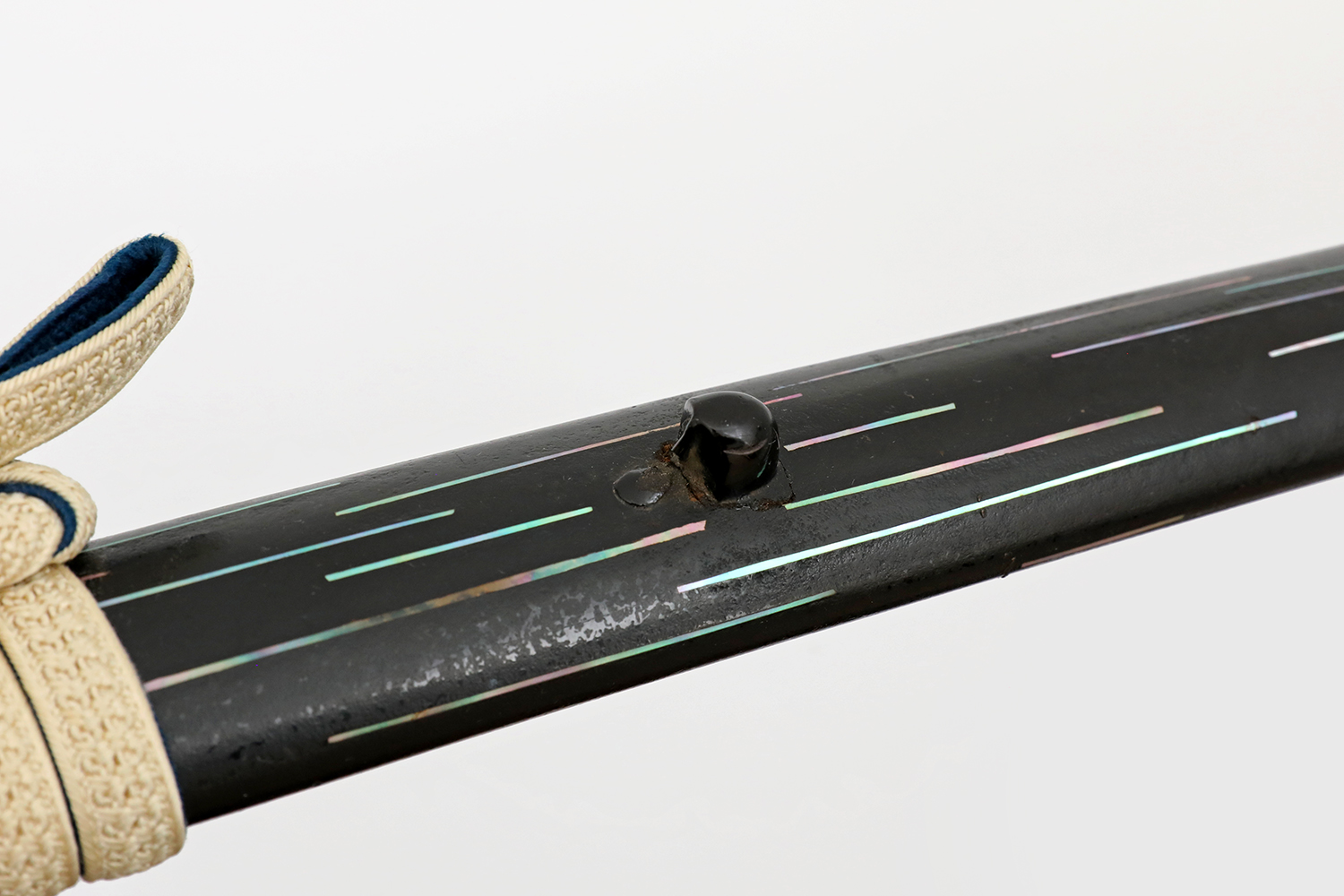
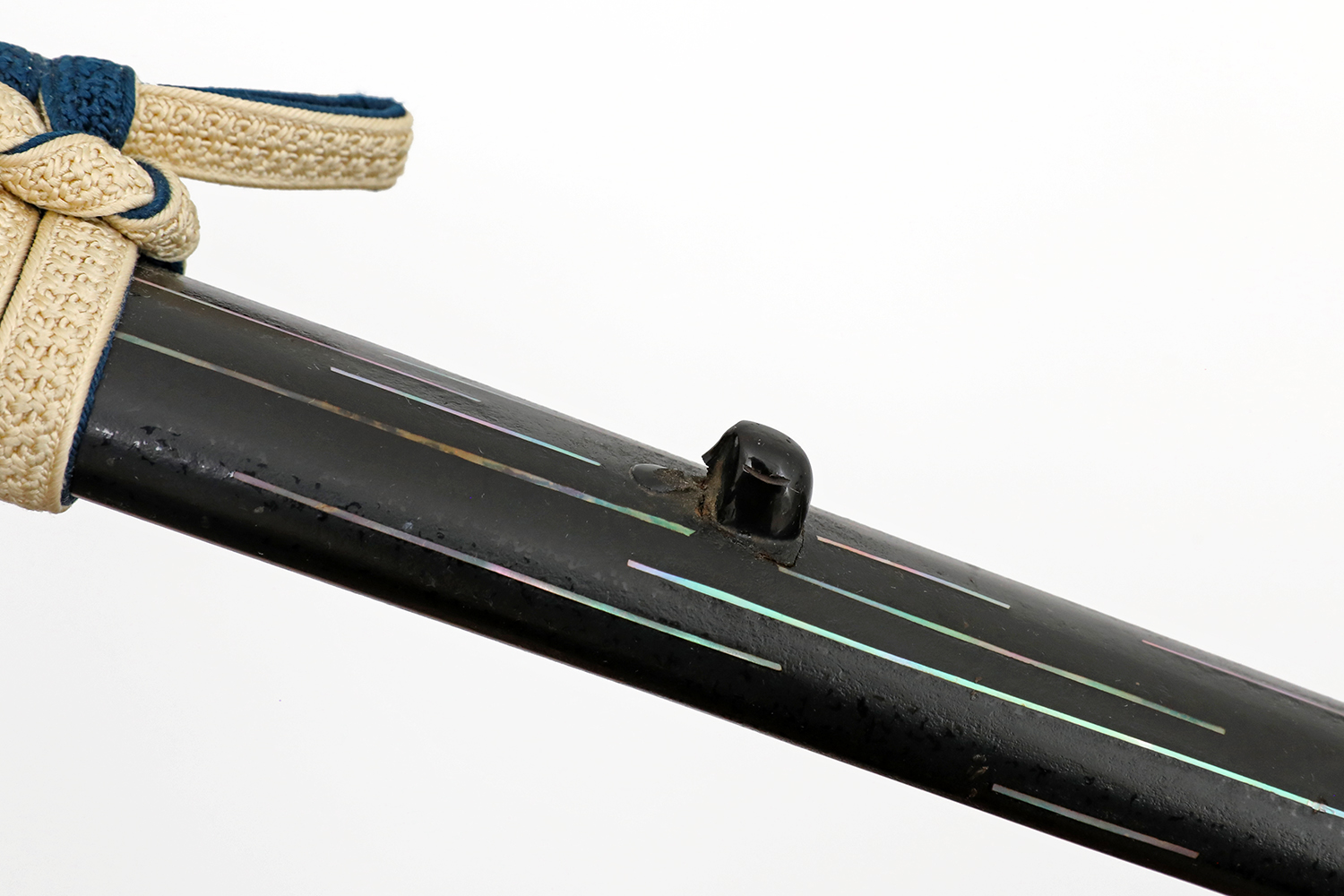
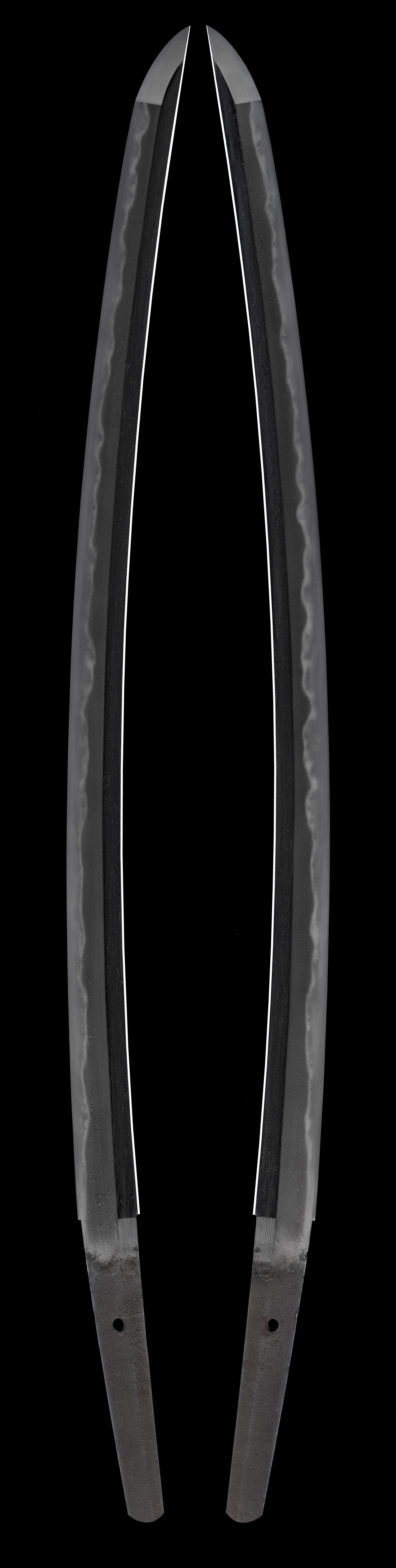
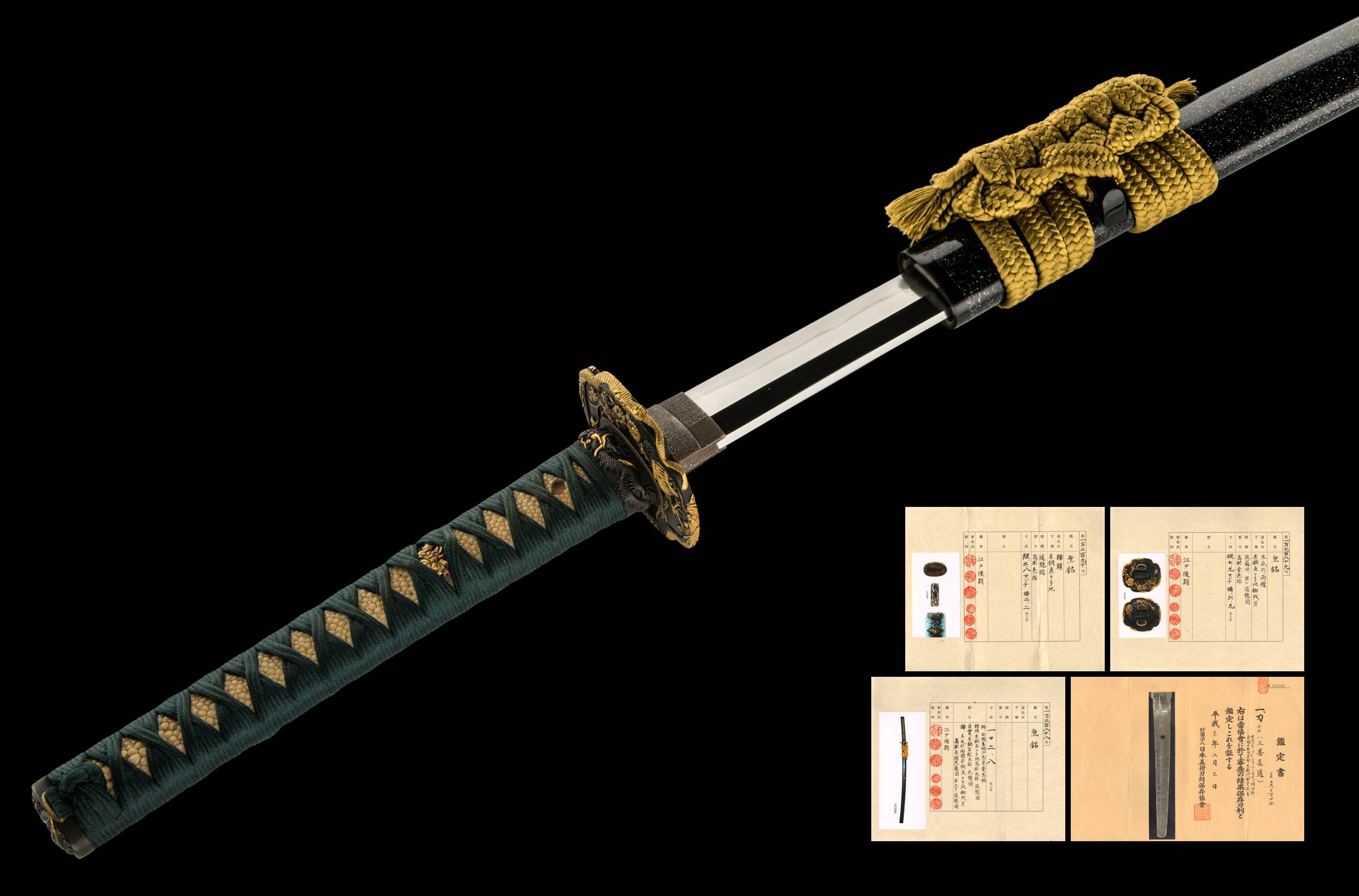
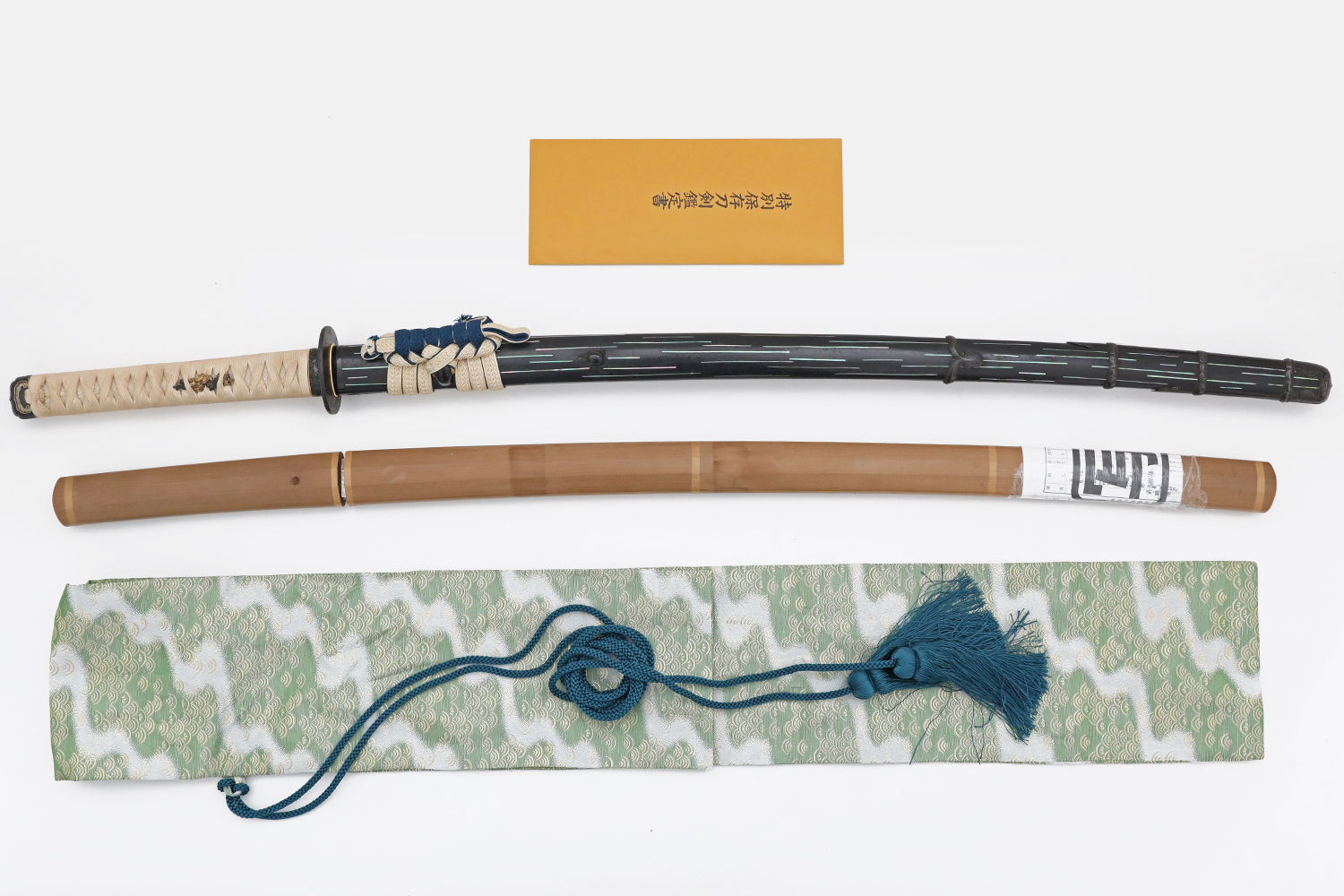
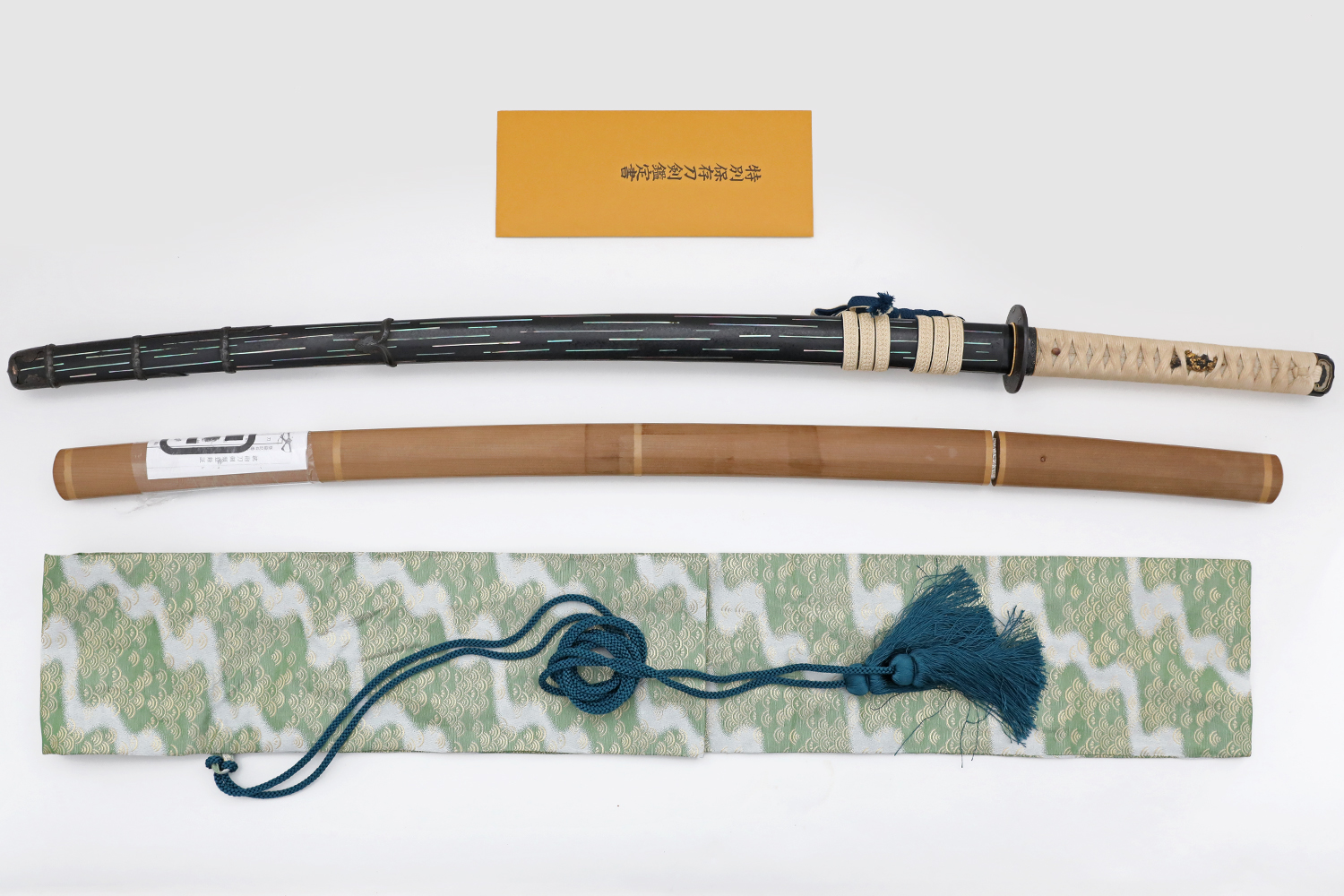
An incredible and precious piece of high quality Japanese history. This katana features a two-body test cut by Yamano Hisahide and is attributed to the smith Miyoshi Nagamichi. It comes with an NBTHK Tokubetsu Hozon certificate.

NihontoWatch MonNihontoWatch
MarketEncyclopediaKantei
Swords›Aizu Miyoshi›Nagamichi›Saijo Owazamono Katana with Test Cut by Miyoshi Nagamichi
katanaTokubetsu Hozon
Aizu Miyoshi Nagamichi

Saijo Owazamono Katana with Test Cut by Miyoshi Nagamichi

Kanei (1624-1644) · nagasa 69.4cm

SOLD
Aizu Miyoshi Nagamichi (長道) · Kanei (1624-1644)2 works for sale →
Katana
Could you name the smith from the blade alone? Today’s kantei →
Aizu Miyoshi Nagamichi — 1 of 16
Aizu Miyoshi Nagamichi — 2 of 16
Aizu Miyoshi Nagamichi — 3 of 16
Aizu Miyoshi Nagamichi — 4 of 16
Aizu Miyoshi Nagamichi — 5 of 16
Aizu Miyoshi Nagamichi — 6 of 16
Aizu Miyoshi Nagamichi — 7 of 16
Aizu Miyoshi Nagamichi — 8 of 16
Aizu Miyoshi Nagamichi — 9 of 16
Aizu Miyoshi Nagamichi — 10 of 16
Aizu Miyoshi Nagamichi — 11 of 16
Aizu Miyoshi Nagamichi — 12 of 16
Aizu Miyoshi Nagamichi — 13 of 16
Aizu Miyoshi Nagamichi — 14 of 16
Aizu Miyoshi Nagamichi — 15 of 16
Aizu Miyoshi Nagamichi — 16 of 16
1 / 16
1 / 16
Aizu Miyoshi Nagamichi — 1 of 16Aizu Miyoshi Nagamichi — 2 of 16Aizu Miyoshi Nagamichi — 3 of 16Aizu Miyoshi Nagamichi — 4 of 16Aizu Miyoshi Nagamichi — 5 of 16Aizu Miyoshi Nagamichi — 6 of 16Aizu Miyoshi Nagamichi — 7 of 16Aizu Miyoshi Nagamichi — 8 of 16Aizu Miyoshi Nagamichi — 9 of 16Aizu Miyoshi Nagamichi — 10 of 16Aizu Miyoshi Nagamichi — 11 of 16Aizu Miyoshi Nagamichi — 12 of 16Aizu Miyoshi Nagamichi — 13 of 16Aizu Miyoshi Nagamichi — 14 of 16Aizu Miyoshi Nagamichi — 15 of 16Aizu Miyoshi Nagamichi — 16 of 16
Aizu Miyoshi Nagamichi (長道) · Kanei (1624-1644)2 works for sale →
Katana
Could you name the smith from the blade alone? Today’s kantei →
Measurements & details
Smith
Aizu Miyoshi Nagamichi
Type
Katana
School
Aizu Miyoshi
Period
Around 1661–1685(Kanei)
Province
Mutsu
Measurements
Nagasa 69.4cm
Description

An incredible and precious piece of high quality Japanese history. This katana features a two-body test cut by Yamano Hisahide and is attributed to the smith Miyoshi Nagamichi. It comes with an NBTHK Tokubetsu Hozon certificate.

About the maker

Nagamichi

長道

Aizu Miyoshi (Mutsu, early Edo shinto) · Iwashiro · around 1661-1685

Fujishiro Jo saku · Tōken Taikan top 21%

2 pieces on the market now

›

Mutsu Daijo Miyoshi Nagamichi is the smith the published sources name as the de facto founder of Aizu shinto, "会津新刀の事実上の祖,"[[c:1]] and one of his katana is dated Jokyo 2 (1685), the very year of his death, so that the blade can be read as a work of his final months. His house came to Aizu from the west: his grandfather Nagakuni resided at Matsuyama in Iyo and served Kato Yoshiaki, and when the Kato were transferred to Aizu in Oshu in Kan'ei 4 (1627), Nagakuni moved north in their retinue and Nagamichi's father Masanaga went with him. Nagamichi was born in Aizu in Kan'ei 10 (1633), studied under Nagakuni, and first signed Michinaga; on receiving the court title Mutsu Daijo in Manji 1 (1658) he changed his name to Nagamichi, and he died in Jokyo 2 at the age of fifty-three. One tradition makes him a pupil of Tsuda Sukehiro, but the published commentary finds his work closer to the Nagasone group, and Fujishiro rates him Jo-saku. The popular name he carries since, the Kotetsu of Aizu, is earned in the steel itself.

His characteristic hand is a notare into which gunome are mixed, forming a midareba of marked rises and falls, and in places two gunome run paired to give a gourd-shaped hyotan-ba, a configuration the published sources name as his forte and return to blade after blade. The ashi enter thick and long and vigorously formed; nie gathers thickly, with coarser nie mixed in; sunagashi runs through the yakiba with kinsuji, and on his most active pieces muneyaki appears near the base. The nioiguchi is bright and clear, the quality the commentary singles out as the constant of his good work. The published record draws the lineage comparison explicitly and repeatedly: this temper, it says, truly calls to mind Nagasone Kotetsu's so-called Hanetora period, "正に虎徹のハネトラ時代の作柄を想わせる,"[[c:2]] and the boshi, gently notare into a ko-maru with hakikake at the tip and turning back somewhat deeply, is likened directly to Kotetsu's boshi of that same phase. Recognition of Nagamichi sits in both halves of that resemblance at once, the gourd-paired gunome of the ha and the swept, deeply turning ko-maru.

The jigane is the steadier half beneath that active edge. The forging is itame, frequently mixed with mokume and o-itame, often carrying a slight nagare around the base and tending to stand, with thick ji-nie adhering and fine chikei entering well; on the most refined late katana the jihada tightens to a ko-itame and the ji-nie lies very fine and dense, the jigane at its clearest. Over it the hamon most often opens with a straight, short suguha-toned yakidashi before broadening into the o-gunome and ko-notare of the body, the nioi deep and the nie thick throughout. Horimono are usually absent, and where they appear it is no more than a bo-hi run through as kaki-nagashi. The activity, not the ornament, carries the blade, and it is the sunagashi and kinsuji above all, working over the bright nioiguchi, that keep his robust gunome from reading heavy.

His work resolves into one manner taken to two pitches. The first is the typical Kotetsu-toned hand, the ko-notare with gunome and ko-gunome, the paired hyotan-ba, and the swept ko-maru that the published sources treat as his representative style. The second is the flamboyant peak of his best katana, in which, as the commentary puts it of one Heisei-designated blade, the yakiba is wider than usual and the midare shows marked height variation rich in change, "華やかな作柄を示しており,"[[c:3]] the ashi thick and long, the nie thickly adhering, the kinsuji and sunagashi fully at work. He is, in the way the documentation runs, an open book rather than a mystery: nearly every designated blade is signed with a long signature, Mutsu Daijo Miyoshi Nagamichi, cut on an ubu nakago, and many are dated through the Enpo years and into Jokyo, so that his hand can be followed almost continuously from his title-taking to the year he died.

What sets him apart is drawn against Kotetsu, the smith he most resembles, rather than against a rival school. The published commentary marks the difference on a single explicit point: his work resembles Kotetsu in showing sunagashi, but the nie tends toward a coarser quality, "沸の荒い点が相違する,"[[c:4]] and it is that coarser, more vigorous nie, together with the standing itame and the gourd-paired gunome, that identifies the Aizu hand within the Hanetora idiom. His own affirmative marks are the ones the record keeps naming: the hyotan-ba in the ha, the long thick ashi, the kinsuji and sunagashi over a deep nioi, and the bright nioiguchi of his finest pieces. The sources are candid about his limits as well, noting that many of his blades suffer from little curvature and a poor overall shape, against which his masterpieces stand out as the exception that also has a fine sugata. As the de facto founder of Aizu shinto he fixed the manner the later Aizu line would carry, a robust katana over an itame jigane thick with ji-nie, and his signed, dated and test-inscribed blades are the documentary spine of the school's beginning.

Nagamichi is rated Jo-saku by Fujishiro, with a Toko Taikan valuation of 600, and his standing among shinto smiths is high for provenance. His designated record is eight blades, every one at the Juyo Token level, with none above it; he has no National Treasure or Important Cultural Property, so a Nagamichi is not held out of reach the way a designated heritage blade is, though it remains uncommon to encounter. Several of his katana carry gold-inlaid cutting-test inscriptions on the reverse by the tester Yamano Kanjuro Hisahide, recording cuts through bodies, and the published sources note that such a tested signature is itself rare and lends an excellent work additional value; of his supreme piece the commentary writes plainly, "この刀は彼の最高傑作で,"[[c:5]] the workmanship in both ji and ha outstanding, and of another that it is a bright and outstanding example, "地刃共に明るい三善長道出色の一口."[[c:6]] The provenance behind one of his finest katana is among the most storied of any shinto blade: it is recorded as bestowed by the Aizu domain lord Matsudaira Katamori upon Kondo Isami of the Shinsengumi for merit at the Ikedaya Incident, passing afterward to the Meiji general and sword connoisseur Tani Tateki and then into the Tosa Yamauchi family. A blade of his is also recorded at Dotsu Jinja. For a collector this is the open-book master of early Edo: a signed, frequently dated and often test-cut katana that comes to market only from time to time, and a well-made example, bright in the nioiguchi and gourd-paired in the ha, rewards patience.

Historical importance

Where Nagamichi stands among comparable artisans: across all of nihontō, and within tradition, era, and period. The tiers (Foremost · Leading · Major · Notable) weigh official designations from the NBTHK and Japan's Agency for Cultural Affairs, together with historical honors of lasting repute such as the Sansaku and Meibutsu-chō.

随一
Foremost
屈指
Leading
有数
Major
著名
Notable

Select a lens to see how it's measured.

Designation record
10 designated works
Gyobutsu (Imperial)
2
Jūyō
8
2 works by Nagamichi on the market→
Nagamichi — full profileAizu Miyoshi (Mutsu, early Edo shinto) school

Dated Works

Years he was demonstrably active, proven by signed-and-dated blades

Active period
1677–1685Editorial estimate: 1661–1685
3 of 7 designated works carry a date
1670
1680
1690

Study this maker →

About the school

Aizu Miyoshi

会津三善

Shinto · Iwashiro

4 pieces on the market now

›

The Aizu Miyoshi line took root in Iwashiro when the Katō house was transferred from Iyo to Aizu in Ōshū in Kan'ei 4 (1627). The setsumei trace the family back to Nagakuni, a smith who had resided at Matsuyama in Iyo Province and entered the service of Katō Yoshiaki; when his patron moved north, Nagakuni followed in the retinue, and his son, the first-generation Masanaga, relocated with him. Masanaga's eldest son, born in Aizu in Kan'ei 10 (1633), became the smith the records overwhelmingly cover: Miyoshi Nagamichi, also called Miyoshi Tōshirō. He first signed Michinaga (the Gyobutsu entries also note early signatures read Dōchō and Dōnaga), studied under his grandfather Nagakuni, and in Manji 1 to 2 (1658 to 1659) travelled to Kyoto, where he received the court title Mutsu Daijō and changed his name to Nagamichi. He died in Jōkyō 2 (1685) at the age of fifty-three. The setsumei repeatedly name him as the de facto founder of Aizu shintō, working under the patronage tied to the Aizu Matsudaira house, several of whose presentation blades entered the Imperial Collection. Across the blades the hand is consistent. The forging is itame-hada, often mixed with mokume, ō-itame, and nagare that runs toward masame, with ji-nie adhering thickly and fine chikei entering; the sugata tends to a shallow sori, called particularly shallow even among shintō work in the Gyobutsu notes.

The temper opens with a short, suguha-based yakidashi, then broadens into ko-notare mixed with gunome; in places two gunome run together as a gourd-shaped hyōtan-ba. Long ashi enter, the nioi is deep, and nie adheres thickly, sometimes coarsely as ara-nie or unevenly as mura-nie, with sunagashi and kinsuji worked into the ha and a bright nioiguchi. " The setsumei tie this manner directly to the "Hanetora" phase of Nagasone Kotetsu in Edo, the recurring point of comparison; one entry also records a tradition that Nagamichi was a disciple of Tsuda Sukehiro, though the writers hold his work closer to the Nagasone group. For kantei, the markers are the shallow sori, the hyōtan-ba pairing of gunome, the sunagashi and kinsuji over deep nioi, and the Kotetsu-type bōshi, balanced against the smith's tendency toward coarser nie. The dated blades range across Enpō 3 through Jōkyō 2 (1675 to 1685), the last corresponding to the year of his death and valued as documentary material on his final years. Cutting-test inscriptions by Yamano Kanjūrō Hisahide appear in gold inlay on several nakago. The provenance recorded is notable: blades presented by the Aizu Matsudaira family entered the Gyobutsu, and one katana is held by tradition to have been bestowed on Kondō Isami of the Shinsengumi by the Aizu lord Matsudaira Katamori in recognition of the Ikedaya Incident, later passing to the Meiji general and connoisseur Tani Tateki and thence into the Tosa Yamauchi family. The register places Nagamichi as the smith who set the Aizu shintō idiom, his line carrying the Miyoshi name in Iwashiro. Learn more →

1 recorded smiths10 designated works
Leading smiths
SmithEraDesignated
Nagamichi長道1661-168510
Nagamichi長道1848-18680
Explore the Aizu Miyoshi school →

Historical context

The Edo period (1615 to 1868)

›

For two and a half centuries of peace the sword was the warrior’s legal badge rather than his weapon. Each great city developed its own manner, Edo’s tested strength against Ōsaka’s polished brilliance, until demand thinned in the era’s last decades.

The Edo period (1615 to 1868) →

NBTHK Certificate
Tokubetsu Hozon Tōken特別保存刀剣
Sword Especially Worthy of Preservation
›

A Hozon-certified blade judged to show notably superior workmanship and a better state of preservation. The bar is higher: re-tempered blades and most unsigned Muromachi/Edo works are excluded.

About the NBTHK›

The NBTHK (Nihon Bijutsu Tōken Hozon Kyōkai, the Society for the Preservation of Japanese Art Swords) is a public-interest incorporated foundation founded in 1948 and supervised by Japan’s Agency for Cultural Affairs (Bunkachō); it is based at the Japanese Sword Museum in Tokyo. Its expert panels physically examine each submitted work (shinsa) and issue a certificate (kanteishō) ranking it by artistic and historical merit. NBTHK papers are the most widely recognized standard of authentication for Japanese swords and fittings.

NBTHK official site→
Seller
N
Nihonto Art
🇨🇦Ships from Canada
›
✓Verified dealernihontoart.com
✓Ships worldwide✓English supportWire transferPayPalCredit card
Return policy

If the item fails to meet the description, it may be eligible for a return (at the seller's discretion). Item(s) must be shipped back only via FedEx or UPS within 48 hours of receipt, in original undamaged state. Costs are the purchaser's responsibility.

View all of Nihonto Art’s listings→View this item on the dealer’s site→

More works by Aizu Miyoshi Nagamichi

View all →
Samurai Museum
Tokuho
Katana - Tokuho - by Aizu Miyoshi Nagamichi - Antique Japanese Sword Katana Signed by Miyoshi NagamichiKatana - Tokuho - by Aizu Miyoshi Nagamichi - Antique Japanese Sword Katana Signed by Miyoshi Nagamichi

Katana

ByAizu Miyoshi Nagamichi
¥15,224
World Seiyudo
Tokuho
Wakizashi - Tokuho - by Aizu Miyoshi Nagamichi - Mutsu-Daijo Miyoshi NagamichiWakizashi - Tokuho - by Aizu Miyoshi Nagamichi - Mutsu-Daijo Miyoshi Nagamichi

Wakizashi

ByAizu Miyoshi Nagamichi
¥1,800,000

Previously sold by Aizu Miyoshi Nagamichi

View all →
World Seiyudo
Hozon
Wakizashi - Hozon - by Aizu Miyoshi Nagamichi - Mutsu Daijo Miyoshi Nagamichi - NBTHK Hozon TokenWakizashi - Hozon - by Aizu Miyoshi Nagamichi - Mutsu Daijo Miyoshi Nagamichi - NBTHK Hozon Token
Sold

Wakizashi

ByAizu Miyoshi Nagamichi
SOLD
World Seiyudo
Tokuho
Wakizashi - Tokuho - by Aizu Miyoshi Nagamichi - Mutsu-Daijo-Miyoshi NagamichiWakizashi - Tokuho - by Aizu Miyoshi Nagamichi - Mutsu-Daijo-Miyoshi Nagamichi
Sold

Wakizashi

ByAizu Miyoshi Nagamichi
SOLD
Aoi Art
Wakizashi - by Aizu Miyoshi Nagamichi - Mutsu Daijyo Miyosi Nagamichi (first generation) - NBTHK Tokubetsu Hozon PaperWakizashi - by Aizu Miyoshi Nagamichi - Mutsu Daijyo Miyosi Nagamichi (first generation) - NBTHK Tokubetsu Hozon Paper
Sold

Wakizashi

ByAizu Miyoshi Nagamichi
SOLD
World Seiyudo
Tokuho
Katana - Tokuho - by Aizu Miyoshi Nagamichi - Mutsu-Daijo Miyoshi NagamichiKatana - Tokuho - by Aizu Miyoshi Nagamichi - Mutsu-Daijo Miyoshi Nagamichi
Sold

Katana

ByAizu Miyoshi Nagamichi
SOLD
World Seiyudo
Tokuho
Wakizashi - Tokuho - by Aizu Miyoshi Nagamichi - Mutsudaijo Miyoshi NagamichiWakizashi - Tokuho - by Aizu Miyoshi Nagamichi - Mutsudaijo Miyoshi Nagamichi
Sold

Wakizashi

ByAizu Miyoshi Nagamichi
SOLD
Kusanagi
Wakizashi - by Aizu Miyoshi Nagamichi - Saijo O-wazamono Aizu Kotetsu/Aizu Masamune Style "Mutsu Daijo Miyoshi Nagamichi" Tokubetsu Hozon TokenWakizashi - by Aizu Miyoshi Nagamichi - Saijo O-wazamono Aizu Kotetsu/Aizu Masamune Style "Mutsu Daijo Miyoshi Nagamichi" Tokubetsu Hozon Token
Sold

Wakizashi

ByAizu Miyoshi Nagamichi
SOLD
Katanahanbai
Tokuho
Katana - Tokuho - by Aizu Miyoshi Nagamichi - Katana by Mutsu Daijo Miyoshinagamichi, Aizu KotetsuKatana - Tokuho - by Aizu Miyoshi Nagamichi - Katana by Mutsu Daijo Miyoshinagamichi, Aizu Kotetsu
Sold

Katana

ByAizu Miyoshi Nagamichi
SOLD
Unique Japan
Hozon
Katana - Hozon - by Aizu Miyoshi Nagamichi - Shodai Nagamichi - Tameshigiri KatanaKatana - Hozon - by Aizu Miyoshi Nagamichi - Shodai Nagamichi - Tameshigiri Katana
Sold

Katana

ByAizu Miyoshi Nagamichi
SOLD

More from the Aizu Miyoshi school

View all →
Mandarin Mansion
Wakizashi - by Aizu Miyoshi School - Wakizashi by Miyoshi NagamichiWakizashi - by Aizu Miyoshi School - Wakizashi by Miyoshi Nagamichi

Wakizashi

ByAizu Miyoshi School
¥12,000
Nipponto
Hozon
Wakizashi - Hozon - by Aizu Miyoshi School - Wakizashi by Miyoshi Nagamichi of Mutsu Aizu, with NBTHK Hozon CertificateWakizashi - Hozon - by Aizu Miyoshi School - Wakizashi by Miyoshi Nagamichi of Mutsu Aizu, with NBTHK Hozon Certificate

Wakizashi

ByAizu Miyoshi School
¥550,000

Swords

  • Katana
  • Wakizashi
  • Tantō
  • Tachi
  • Naginata
  • Yari
  • Japanese Swords
  • Samurai Swords

Fittings

  • Tsuba
  • Fuchi-Kashira
  • Kozuka
  • Menuki
  • Sword Guards (Tsuba)

Armor

  • Kabuto
  • Samurai Armor
  • All Samurai Armor

By Certification

  • Tokujū
  • Jūyō
  • Tokuho
  • Hozon

Resources

  • Dealer Directory
  • Artist Directory
  • The Daily Kantei
  • Glossary
  • Browse All
Nihontowatch© 2026
TermsPrivacyCookiesAbout
Sold

Description

An incredible and precious piece of high quality Japanese history. This katana features a two-body test cut by Yamano Hisahide and is attributed to the smith Miyoshi Nagamichi. It comes with an NBTHK Tokubetsu Hozon certificate.

NihontoWatch MonNihontoWatch
MarketEncyclopediaKantei
Swords›Aizu Miyoshi›Nagamichi›Saijo Owazamono Katana with Test Cut by Miyoshi Nagamichi
katanaTokubetsu Hozon
Aizu Miyoshi Nagamichi

Saijo Owazamono Katana with Test Cut by Miyoshi Nagamichi

Kanei (1624-1644) · nagasa 69.4cm

SOLD
Aizu Miyoshi Nagamichi (長道) · Kanei (1624-1644)2 works for sale →
Katana
Could you name the smith from the blade alone? Today’s kantei →
Aizu Miyoshi Nagamichi — 1 of 16
Aizu Miyoshi Nagamichi — 2 of 16
Aizu Miyoshi Nagamichi — 3 of 16
Aizu Miyoshi Nagamichi — 4 of 16
Aizu Miyoshi Nagamichi — 5 of 16
Aizu Miyoshi Nagamichi — 6 of 16
Aizu Miyoshi Nagamichi — 7 of 16
Aizu Miyoshi Nagamichi — 8 of 16
Aizu Miyoshi Nagamichi — 9 of 16
Aizu Miyoshi Nagamichi — 10 of 16
Aizu Miyoshi Nagamichi — 11 of 16
Aizu Miyoshi Nagamichi — 12 of 16
Aizu Miyoshi Nagamichi — 13 of 16
Aizu Miyoshi Nagamichi — 14 of 16
Aizu Miyoshi Nagamichi — 15 of 16
Aizu Miyoshi Nagamichi — 16 of 16
1 / 16
1 / 16
Aizu Miyoshi Nagamichi — 1 of 16Aizu Miyoshi Nagamichi — 2 of 16Aizu Miyoshi Nagamichi — 3 of 16Aizu Miyoshi Nagamichi — 4 of 16Aizu Miyoshi Nagamichi — 5 of 16Aizu Miyoshi Nagamichi — 6 of 16Aizu Miyoshi Nagamichi — 7 of 16Aizu Miyoshi Nagamichi — 8 of 16Aizu Miyoshi Nagamichi — 9 of 16Aizu Miyoshi Nagamichi — 10 of 16Aizu Miyoshi Nagamichi — 11 of 16Aizu Miyoshi Nagamichi — 12 of 16Aizu Miyoshi Nagamichi — 13 of 16Aizu Miyoshi Nagamichi — 14 of 16Aizu Miyoshi Nagamichi — 15 of 16Aizu Miyoshi Nagamichi — 16 of 16
Aizu Miyoshi Nagamichi (長道) · Kanei (1624-1644)2 works for sale →
Katana
Could you name the smith from the blade alone? Today’s kantei →
Measurements & details
Smith
Aizu Miyoshi Nagamichi
Type
Katana
School
Aizu Miyoshi
Period
Around 1661–1685(Kanei)
Province
Mutsu
Measurements
Nagasa 69.4cm
Description

An incredible and precious piece of high quality Japanese history. This katana features a two-body test cut by Yamano Hisahide and is attributed to the smith Miyoshi Nagamichi. It comes with an NBTHK Tokubetsu Hozon certificate.

About the maker

Nagamichi

長道

Aizu Miyoshi (Mutsu, early Edo shinto) · Iwashiro · around 1661-1685

Fujishiro Jo saku · Tōken Taikan top 21%

2 pieces on the market now

›

Mutsu Daijo Miyoshi Nagamichi is the smith the published sources name as the de facto founder of Aizu shinto, "会津新刀の事実上の祖,"[[c:1]] and one of his katana is dated Jokyo 2 (1685), the very year of his death, so that the blade can be read as a work of his final months. His house came to Aizu from the west: his grandfather Nagakuni resided at Matsuyama in Iyo and served Kato Yoshiaki, and when the Kato were transferred to Aizu in Oshu in Kan'ei 4 (1627), Nagakuni moved north in their retinue and Nagamichi's father Masanaga went with him. Nagamichi was born in Aizu in Kan'ei 10 (1633), studied under Nagakuni, and first signed Michinaga; on receiving the court title Mutsu Daijo in Manji 1 (1658) he changed his name to Nagamichi, and he died in Jokyo 2 at the age of fifty-three. One tradition makes him a pupil of Tsuda Sukehiro, but the published commentary finds his work closer to the Nagasone group, and Fujishiro rates him Jo-saku. The popular name he carries since, the Kotetsu of Aizu, is earned in the steel itself.

His characteristic hand is a notare into which gunome are mixed, forming a midareba of marked rises and falls, and in places two gunome run paired to give a gourd-shaped hyotan-ba, a configuration the published sources name as his forte and return to blade after blade. The ashi enter thick and long and vigorously formed; nie gathers thickly, with coarser nie mixed in; sunagashi runs through the yakiba with kinsuji, and on his most active pieces muneyaki appears near the base. The nioiguchi is bright and clear, the quality the commentary singles out as the constant of his good work. The published record draws the lineage comparison explicitly and repeatedly: this temper, it says, truly calls to mind Nagasone Kotetsu's so-called Hanetora period, "正に虎徹のハネトラ時代の作柄を想わせる,"[[c:2]] and the boshi, gently notare into a ko-maru with hakikake at the tip and turning back somewhat deeply, is likened directly to Kotetsu's boshi of that same phase. Recognition of Nagamichi sits in both halves of that resemblance at once, the gourd-paired gunome of the ha and the swept, deeply turning ko-maru.

The jigane is the steadier half beneath that active edge. The forging is itame, frequently mixed with mokume and o-itame, often carrying a slight nagare around the base and tending to stand, with thick ji-nie adhering and fine chikei entering well; on the most refined late katana the jihada tightens to a ko-itame and the ji-nie lies very fine and dense, the jigane at its clearest. Over it the hamon most often opens with a straight, short suguha-toned yakidashi before broadening into the o-gunome and ko-notare of the body, the nioi deep and the nie thick throughout. Horimono are usually absent, and where they appear it is no more than a bo-hi run through as kaki-nagashi. The activity, not the ornament, carries the blade, and it is the sunagashi and kinsuji above all, working over the bright nioiguchi, that keep his robust gunome from reading heavy.

His work resolves into one manner taken to two pitches. The first is the typical Kotetsu-toned hand, the ko-notare with gunome and ko-gunome, the paired hyotan-ba, and the swept ko-maru that the published sources treat as his representative style. The second is the flamboyant peak of his best katana, in which, as the commentary puts it of one Heisei-designated blade, the yakiba is wider than usual and the midare shows marked height variation rich in change, "華やかな作柄を示しており,"[[c:3]] the ashi thick and long, the nie thickly adhering, the kinsuji and sunagashi fully at work. He is, in the way the documentation runs, an open book rather than a mystery: nearly every designated blade is signed with a long signature, Mutsu Daijo Miyoshi Nagamichi, cut on an ubu nakago, and many are dated through the Enpo years and into Jokyo, so that his hand can be followed almost continuously from his title-taking to the year he died.

What sets him apart is drawn against Kotetsu, the smith he most resembles, rather than against a rival school. The published commentary marks the difference on a single explicit point: his work resembles Kotetsu in showing sunagashi, but the nie tends toward a coarser quality, "沸の荒い点が相違する,"[[c:4]] and it is that coarser, more vigorous nie, together with the standing itame and the gourd-paired gunome, that identifies the Aizu hand within the Hanetora idiom. His own affirmative marks are the ones the record keeps naming: the hyotan-ba in the ha, the long thick ashi, the kinsuji and sunagashi over a deep nioi, and the bright nioiguchi of his finest pieces. The sources are candid about his limits as well, noting that many of his blades suffer from little curvature and a poor overall shape, against which his masterpieces stand out as the exception that also has a fine sugata. As the de facto founder of Aizu shinto he fixed the manner the later Aizu line would carry, a robust katana over an itame jigane thick with ji-nie, and his signed, dated and test-inscribed blades are the documentary spine of the school's beginning.

Nagamichi is rated Jo-saku by Fujishiro, with a Toko Taikan valuation of 600, and his standing among shinto smiths is high for provenance. His designated record is eight blades, every one at the Juyo Token level, with none above it; he has no National Treasure or Important Cultural Property, so a Nagamichi is not held out of reach the way a designated heritage blade is, though it remains uncommon to encounter. Several of his katana carry gold-inlaid cutting-test inscriptions on the reverse by the tester Yamano Kanjuro Hisahide, recording cuts through bodies, and the published sources note that such a tested signature is itself rare and lends an excellent work additional value; of his supreme piece the commentary writes plainly, "この刀は彼の最高傑作で,"[[c:5]] the workmanship in both ji and ha outstanding, and of another that it is a bright and outstanding example, "地刃共に明るい三善長道出色の一口."[[c:6]] The provenance behind one of his finest katana is among the most storied of any shinto blade: it is recorded as bestowed by the Aizu domain lord Matsudaira Katamori upon Kondo Isami of the Shinsengumi for merit at the Ikedaya Incident, passing afterward to the Meiji general and sword connoisseur Tani Tateki and then into the Tosa Yamauchi family. A blade of his is also recorded at Dotsu Jinja. For a collector this is the open-book master of early Edo: a signed, frequently dated and often test-cut katana that comes to market only from time to time, and a well-made example, bright in the nioiguchi and gourd-paired in the ha, rewards patience.
Historical importance

Where Nagamichi stands among comparable artisans: across all of nihontō, and within tradition, era, and period. The tiers (Foremost · Leading · Major · Notable) weigh official designations from the NBTHK and Japan's Agency for Cultural Affairs, together with historical honors of lasting repute such as the Sansaku and Meibutsu-chō.

随一
Foremost
屈指
Leading
有数
Major
著名
Notable

Select a lens to see how it's measured.

Designation record
10 designated works
Gyobutsu (Imperial)
2
Jūyō
8
2 works by Nagamichi on the market→
Nagamichi — full profileAizu Miyoshi (Mutsu, early Edo shinto) school

Dated Works

Years he was demonstrably active, proven by signed-and-dated blades

Active period
1677–1685Editorial estimate: 1661–1685
3 of 7 designated works carry a date
1670
1680
1690

Study this maker →

About the school

Aizu Miyoshi

会津三善

Shinto · Iwashiro

4 pieces on the market now

›

The Aizu Miyoshi line took root in Iwashiro when the Katō house was transferred from Iyo to Aizu in Ōshū in Kan'ei 4 (1627). The setsumei trace the family back to Nagakuni, a smith who had resided at Matsuyama in Iyo Province and entered the service of Katō Yoshiaki; when his patron moved north, Nagakuni followed in the retinue, and his son, the first-generation Masanaga, relocated with him. Masanaga's eldest son, born in Aizu in Kan'ei 10 (1633), became the smith the records overwhelmingly cover: Miyoshi Nagamichi, also called Miyoshi Tōshirō. He first signed Michinaga (the Gyobutsu entries also note early signatures read Dōchō and Dōnaga), studied under his grandfather Nagakuni, and in Manji 1 to 2 (1658 to 1659) travelled to Kyoto, where he received the court title Mutsu Daijō and changed his name to Nagamichi. He died in Jōkyō 2 (1685) at the age of fifty-three. The setsumei repeatedly name him as the de facto founder of Aizu shintō, working under the patronage tied to the Aizu Matsudaira house, several of whose presentation blades entered the Imperial Collection. Across the blades the hand is consistent. The forging is itame-hada, often mixed with mokume, ō-itame, and nagare that runs toward masame, with ji-nie adhering thickly and fine chikei entering; the sugata tends to a shallow sori, called particularly shallow even among shintō work in the Gyobutsu notes.

The temper opens with a short, suguha-based yakidashi, then broadens into ko-notare mixed with gunome; in places two gunome run together as a gourd-shaped hyōtan-ba. Long ashi enter, the nioi is deep, and nie adheres thickly, sometimes coarsely as ara-nie or unevenly as mura-nie, with sunagashi and kinsuji worked into the ha and a bright nioiguchi. " The setsumei tie this manner directly to the "Hanetora" phase of Nagasone Kotetsu in Edo, the recurring point of comparison; one entry also records a tradition that Nagamichi was a disciple of Tsuda Sukehiro, though the writers hold his work closer to the Nagasone group. For kantei, the markers are the shallow sori, the hyōtan-ba pairing of gunome, the sunagashi and kinsuji over deep nioi, and the Kotetsu-type bōshi, balanced against the smith's tendency toward coarser nie. The dated blades range across Enpō 3 through Jōkyō 2 (1675 to 1685), the last corresponding to the year of his death and valued as documentary material on his final years. Cutting-test inscriptions by Yamano Kanjūrō Hisahide appear in gold inlay on several nakago. The provenance recorded is notable: blades presented by the Aizu Matsudaira family entered the Gyobutsu, and one katana is held by tradition to have been bestowed on Kondō Isami of the Shinsengumi by the Aizu lord Matsudaira Katamori in recognition of the Ikedaya Incident, later passing to the Meiji general and connoisseur Tani Tateki and thence into the Tosa Yamauchi family. The register places Nagamichi as the smith who set the Aizu shintō idiom, his line carrying the Miyoshi name in Iwashiro. Learn more →

1 recorded smiths10 designated works
Leading smiths
SmithEraDesignated
Nagamichi長道1661-168510
Nagamichi長道1848-18680
Explore the Aizu Miyoshi school →

Historical context

The Edo period (1615 to 1868)

›

For two and a half centuries of peace the sword was the warrior’s legal badge rather than his weapon. Each great city developed its own manner, Edo’s tested strength against Ōsaka’s polished brilliance, until demand thinned in the era’s last decades.

The Edo period (1615 to 1868) →

NBTHK Certificate
Tokubetsu Hozon Tōken特別保存刀剣
Sword Especially Worthy of Preservation
›

A Hozon-certified blade judged to show notably superior workmanship and a better state of preservation. The bar is higher: re-tempered blades and most unsigned Muromachi/Edo works are excluded.

About the NBTHK›

The NBTHK (Nihon Bijutsu Tōken Hozon Kyōkai, the Society for the Preservation of Japanese Art Swords) is a public-interest incorporated foundation founded in 1948 and supervised by Japan’s Agency for Cultural Affairs (Bunkachō); it is based at the Japanese Sword Museum in Tokyo. Its expert panels physically examine each submitted work (shinsa) and issue a certificate (kanteishō) ranking it by artistic and historical merit. NBTHK papers are the most widely recognized standard of authentication for Japanese swords and fittings.

NBTHK official site→
Seller
N
Nihonto Art
🇨🇦Ships from Canada
›
✓Verified dealernihontoart.com
✓Ships worldwide✓English supportWire transferPayPalCredit card
Return policy

If the item fails to meet the description, it may be eligible for a return (at the seller's discretion). Item(s) must be shipped back only via FedEx or UPS within 48 hours of receipt, in original undamaged state. Costs are the purchaser's responsibility.

View all of Nihonto Art’s listings→View this item on the dealer’s site→

More works by Aizu Miyoshi Nagamichi

View all →
Samurai Museum
Tokuho
Katana - Tokuho - by Aizu Miyoshi Nagamichi - Antique Japanese Sword Katana Signed by Miyoshi NagamichiKatana - Tokuho - by Aizu Miyoshi Nagamichi - Antique Japanese Sword Katana Signed by Miyoshi Nagamichi

Katana

ByAizu Miyoshi Nagamichi
¥15,224
World Seiyudo
Tokuho
Wakizashi - Tokuho - by Aizu Miyoshi Nagamichi - Mutsu-Daijo Miyoshi NagamichiWakizashi - Tokuho - by Aizu Miyoshi Nagamichi - Mutsu-Daijo Miyoshi Nagamichi

Wakizashi

ByAizu Miyoshi Nagamichi
¥1,800,000

Previously sold by Aizu Miyoshi Nagamichi

View all →
World Seiyudo
Hozon
Wakizashi - Hozon - by Aizu Miyoshi Nagamichi - Mutsu Daijo Miyoshi Nagamichi - NBTHK Hozon TokenWakizashi - Hozon - by Aizu Miyoshi Nagamichi - Mutsu Daijo Miyoshi Nagamichi - NBTHK Hozon Token
Sold

Wakizashi

ByAizu Miyoshi Nagamichi
SOLD
World Seiyudo
Tokuho
Wakizashi - Tokuho - by Aizu Miyoshi Nagamichi - Mutsu-Daijo-Miyoshi NagamichiWakizashi - Tokuho - by Aizu Miyoshi Nagamichi - Mutsu-Daijo-Miyoshi Nagamichi
Sold

Wakizashi

ByAizu Miyoshi Nagamichi
SOLD
Aoi Art
Wakizashi - by Aizu Miyoshi Nagamichi - Mutsu Daijyo Miyosi Nagamichi (first generation) - NBTHK Tokubetsu Hozon PaperWakizashi - by Aizu Miyoshi Nagamichi - Mutsu Daijyo Miyosi Nagamichi (first generation) - NBTHK Tokubetsu Hozon Paper
Sold

Wakizashi

ByAizu Miyoshi Nagamichi
SOLD
World Seiyudo
Tokuho
Katana - Tokuho - by Aizu Miyoshi Nagamichi - Mutsu-Daijo Miyoshi NagamichiKatana - Tokuho - by Aizu Miyoshi Nagamichi - Mutsu-Daijo Miyoshi Nagamichi
Sold

Katana

ByAizu Miyoshi Nagamichi
SOLD
World Seiyudo
Tokuho
Wakizashi - Tokuho - by Aizu Miyoshi Nagamichi - Mutsudaijo Miyoshi NagamichiWakizashi - Tokuho - by Aizu Miyoshi Nagamichi - Mutsudaijo Miyoshi Nagamichi
Sold

Wakizashi

ByAizu Miyoshi Nagamichi
SOLD
Kusanagi
Wakizashi - by Aizu Miyoshi Nagamichi - Saijo O-wazamono Aizu Kotetsu/Aizu Masamune Style "Mutsu Daijo Miyoshi Nagamichi" Tokubetsu Hozon TokenWakizashi - by Aizu Miyoshi Nagamichi - Saijo O-wazamono Aizu Kotetsu/Aizu Masamune Style "Mutsu Daijo Miyoshi Nagamichi" Tokubetsu Hozon Token
Sold

Wakizashi

ByAizu Miyoshi Nagamichi
SOLD
Katanahanbai
Tokuho
Katana - Tokuho - by Aizu Miyoshi Nagamichi - Katana by Mutsu Daijo Miyoshinagamichi, Aizu KotetsuKatana - Tokuho - by Aizu Miyoshi Nagamichi - Katana by Mutsu Daijo Miyoshinagamichi, Aizu Kotetsu
Sold

Katana

ByAizu Miyoshi Nagamichi
SOLD
Unique Japan
Hozon
Katana - Hozon - by Aizu Miyoshi Nagamichi - Shodai Nagamichi - Tameshigiri KatanaKatana - Hozon - by Aizu Miyoshi Nagamichi - Shodai Nagamichi - Tameshigiri Katana
Sold

Katana

ByAizu Miyoshi Nagamichi
SOLD

More from the Aizu Miyoshi school

View all →
Mandarin Mansion
Wakizashi - by Aizu Miyoshi School - Wakizashi by Miyoshi NagamichiWakizashi - by Aizu Miyoshi School - Wakizashi by Miyoshi Nagamichi

Wakizashi

ByAizu Miyoshi School
¥12,000
Nipponto
Hozon
Wakizashi - Hozon - by Aizu Miyoshi School - Wakizashi by Miyoshi Nagamichi of Mutsu Aizu, with NBTHK Hozon CertificateWakizashi - Hozon - by Aizu Miyoshi School - Wakizashi by Miyoshi Nagamichi of Mutsu Aizu, with NBTHK Hozon Certificate

Wakizashi

ByAizu Miyoshi School
¥550,000

Swords

  • Katana
  • Wakizashi
  • Tantō
  • Tachi
  • Naginata
  • Yari
  • Japanese Swords
  • Samurai Swords

Fittings

  • Tsuba
  • Fuchi-Kashira
  • Kozuka
  • Menuki
  • Sword Guards (Tsuba)

Armor

  • Kabuto
  • Samurai Armor
  • All Samurai Armor

By Certification

  • Tokujū
  • Jūyō
  • Tokuho
  • Hozon

Resources

  • Dealer Directory
  • Artist Directory
  • The Daily Kantei
  • Glossary
  • Browse All
Nihontowatch© 2026
TermsPrivacyCookiesAbout
Sold
NihontoWatch MonNihontoWatch
Market
Encyclopedia
Kantei
NihontoWatch MonNihontoWatch
Market
Encyclopedia
Kantei