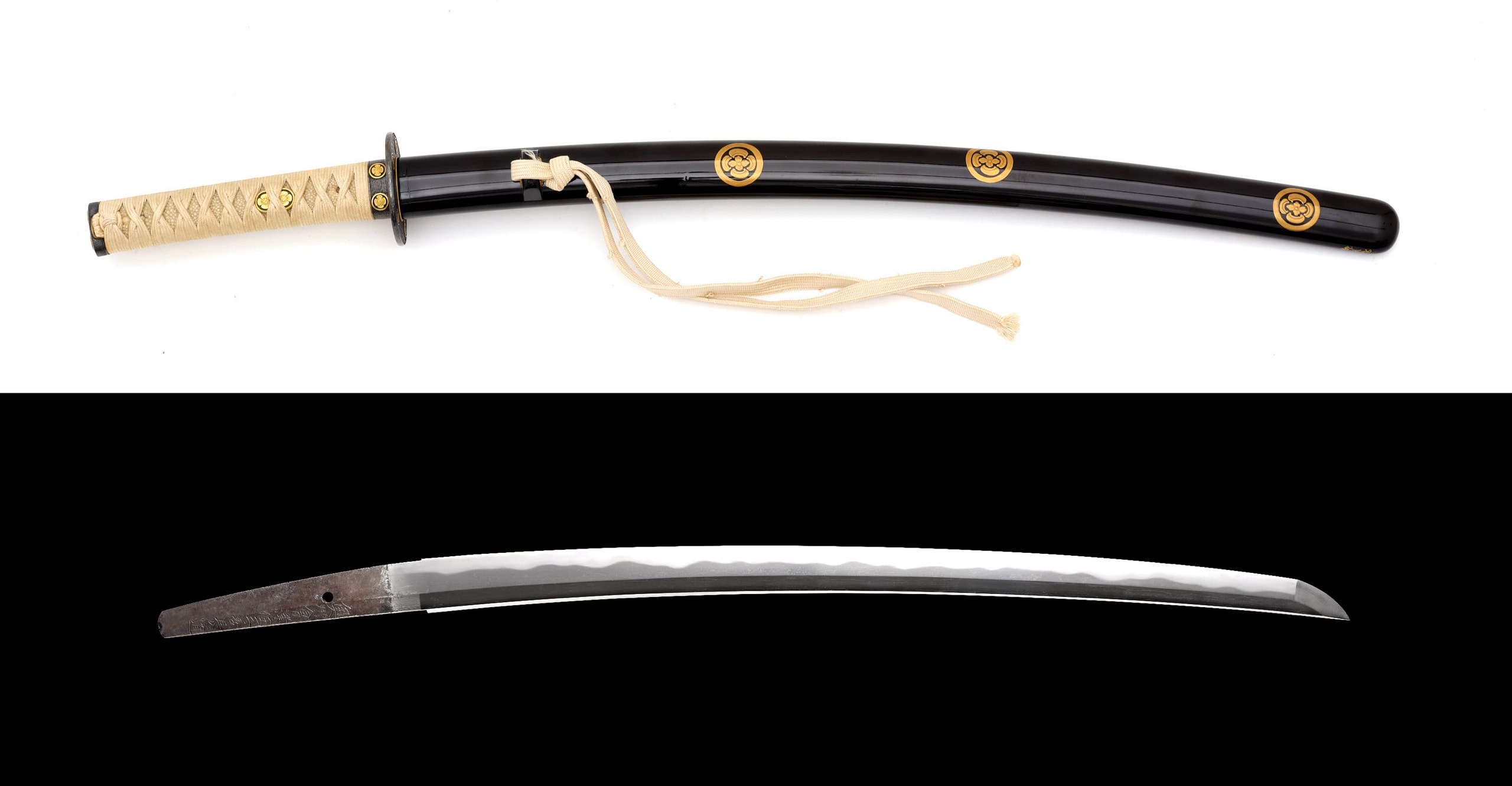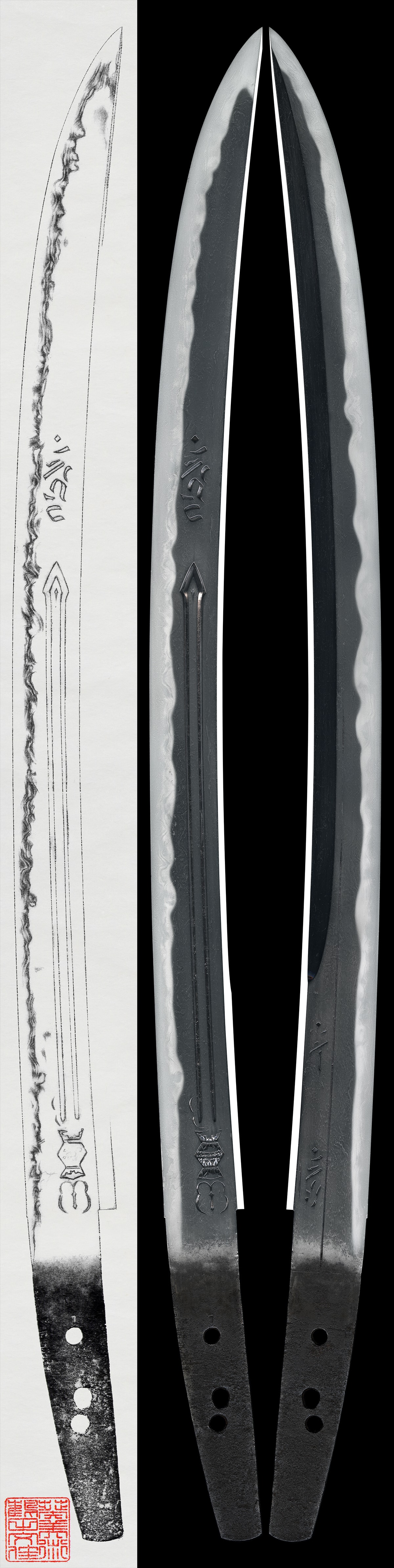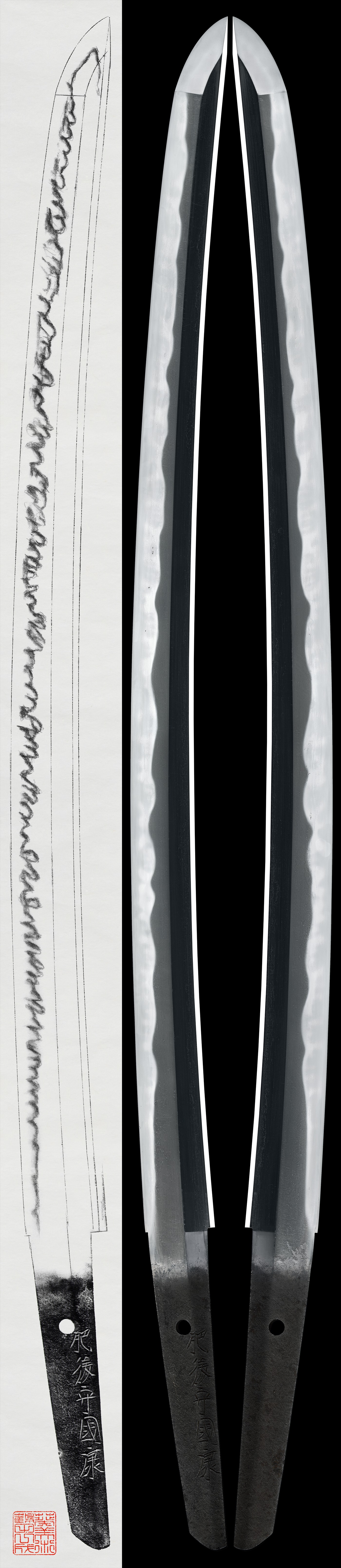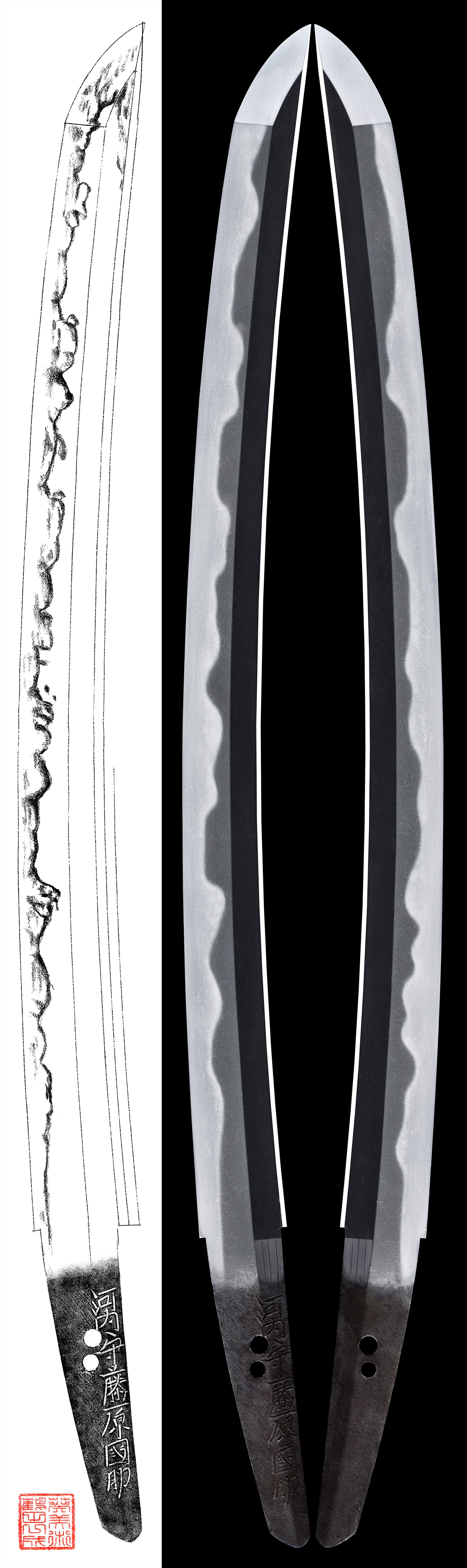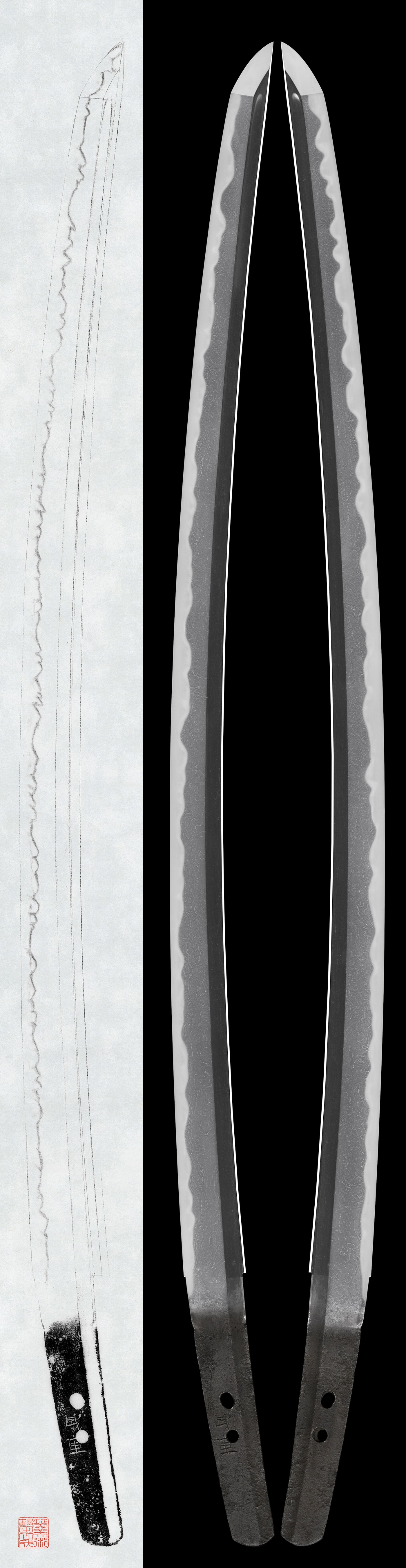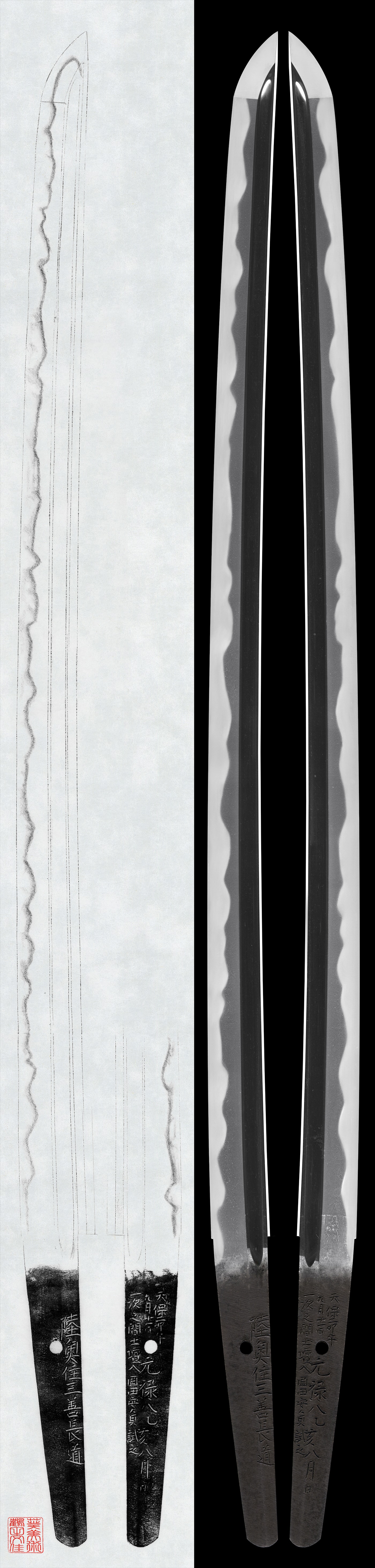
Wakizashi:Mutsu Ju Miyoshi Nagamichi with Saidan-mei (NBTHK Tokubetsu Hozon Token)
¥1,450,000
Tracked across 76 dealers worldwide · price history · sold archive
Kanei (1624-1644)
Specifications
59.5 cm
0.5 cm
3 cm
2.2 cm
About the school
Aizu Miyoshi School会津三善派
The Aizu Miyoshi line took root in Iwashiro when the Katō house was transferred from Iyo to Aizu in Ōshū in Kan'ei 4 (1627). The setsumei trace the family back to Nagakuni, a smith who had resided at Matsuyama in Iyo Province and entered the service of Katō Yoshiaki; when his patron moved north, Nagakuni followed in the retinue, and his son, the first-generation Masanaga, relocated with him. Masanaga's eldest son, born in Aizu in Kan'ei 10 (1633), became the smith the records overwhelmingly cover: Miyoshi Nagamichi, also called Miyoshi Tōshirō. He first signed Michinaga (the Gyobutsu entries also note early signatures read Dōchō and Dōnaga), studied under his grandfather Nagakuni, and in Manji 1 to 2 (1658 to 1659) travelled to Kyoto, where he received the court title Mutsu Daijō and changed his name to Nagamichi. He died in Jōkyō 2 (1685) at the age of fifty-three. The setsumei repeatedly name him as the de facto founder of Aizu *shintō*, working under the patronage tied to the Aizu Matsudaira house, several of whose presentation blades entered the Imperial Collection. Across the blades the hand is consistent. The forging is *itame-hada*, often mixed with *mokume*, *ō-itame*, and *nagare* that runs toward *masame*, with *ji-nie* adhering thickly and fine *chikei* entering; the *sugata* tends to a shallow *sori*, called particularly shallow even among *shintō* work in the Gyobutsu notes. The temper opens with a short, *suguha*-based *yakidashi*, then broadens into *ko-notare* mixed with *gunome*; in places two *gunome* run together as a gourd-shaped *hyōtan-ba*. Long *ashi* enter, the *nioi* is deep, and *nie* adheres thickly, sometimes coarsely as *ara-nie* or unevenly as *mura-nie*, with *sunagashi* and *kinsuji* worked into the *ha* and a bright *nioiguchi*. The *bōshi* runs in *notare-komi* or *sugu* to *ko-maru* with *hakikake* at the tip, the type the records call a "Kotetsu *bōshi*." The setsumei tie this manner directly to the "Hanetora" phase of Nagasone Kotetsu in Edo, the recurring point of comparison; one entry also records a tradition that Nagamichi was a disciple of Tsuda Sukehiro, though the writers hold his work closer to the Nagasone group. For *kantei*, the markers are the shallow *sori*, the *hyōtan-ba* pairing of *gunome*, the *sunagashi* and *kinsuji* over deep *nioi*, and the Kotetsu-type *bōshi*, balanced against the smith's tendency toward coarser *nie*. The dated blades range across Enpō 3 through Jōkyō 2 (1675 to 1685), the last corresponding to the year of his death and valued as documentary material on his final years. Cutting-test inscriptions by Yamano Kanjūrō Hisahide appear in gold inlay on several *nakago*. The provenance recorded is notable: blades presented by the Aizu Matsudaira family entered the Gyobutsu, and one katana is held by tradition to have been bestowed on Kondō Isami of the Shinsengumi by the Aizu lord Matsudaira Katamori in recognition of the Ikedaya Incident, later passing to the Meiji general and connoisseur Tani Tateki and thence into the Tosa Yamauchi family. The register places Nagamichi as the smith who set the Aizu *shintō* idiom, his line carrying the Miyoshi name in Iwashiro.