The twentieth century nearly killed the craft twice: wartime distortion, then the occupation ban. The NBTHK’s founding in 1948 and licensed forging from 1953 rebuilt the sword as an art, crowned by Living National Treasures and the mukansa rank.
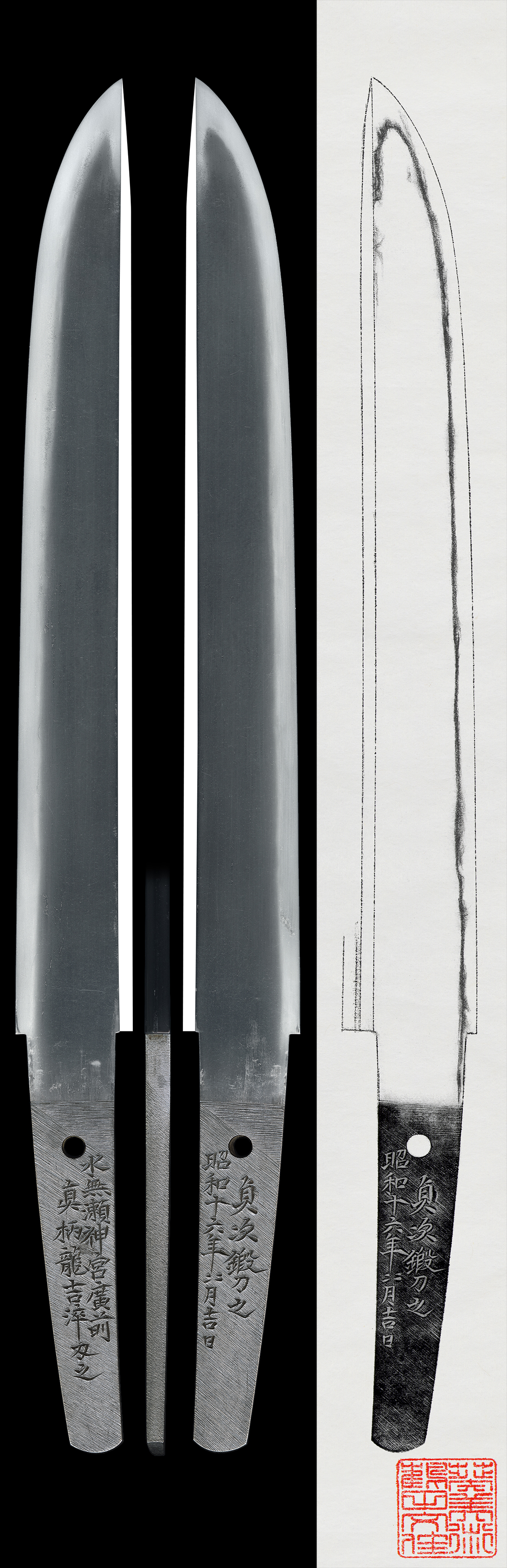
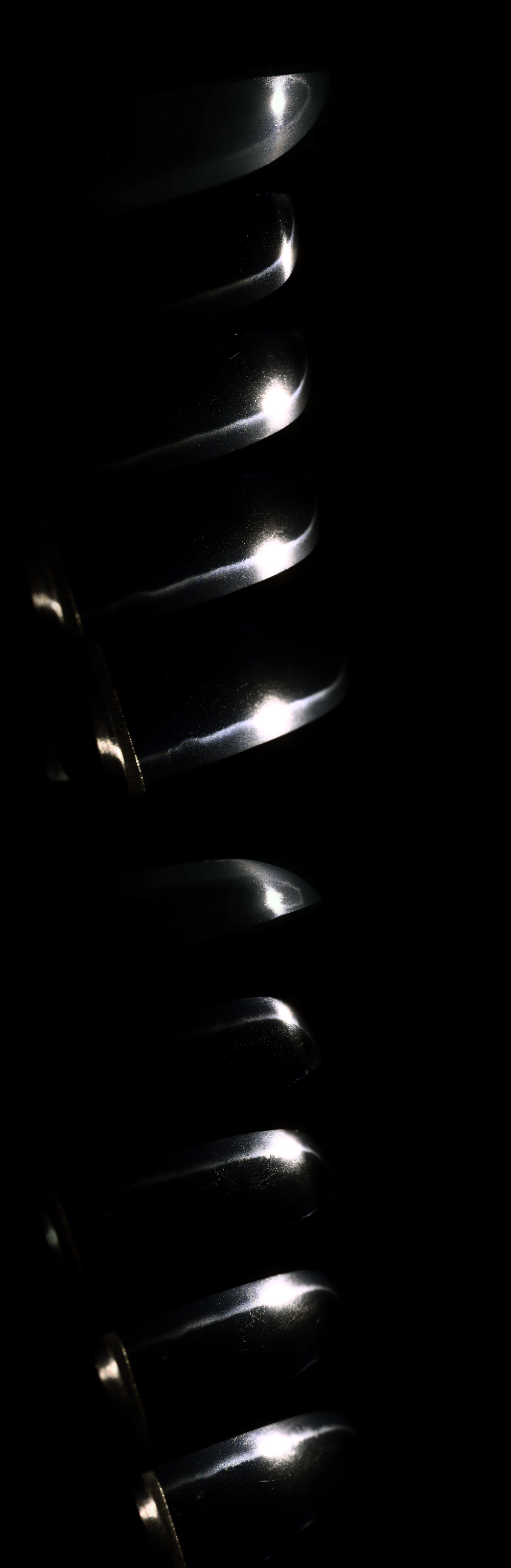
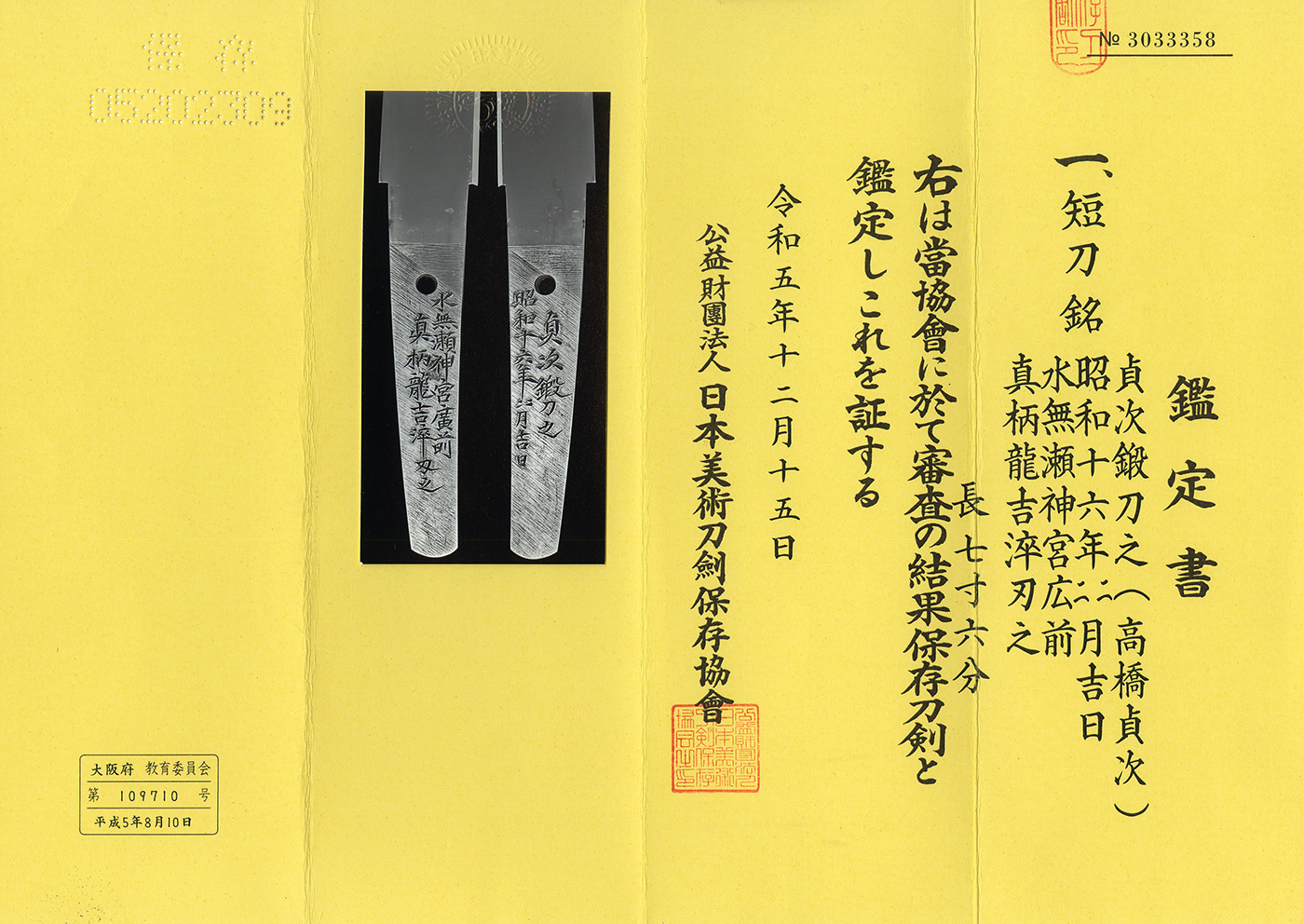
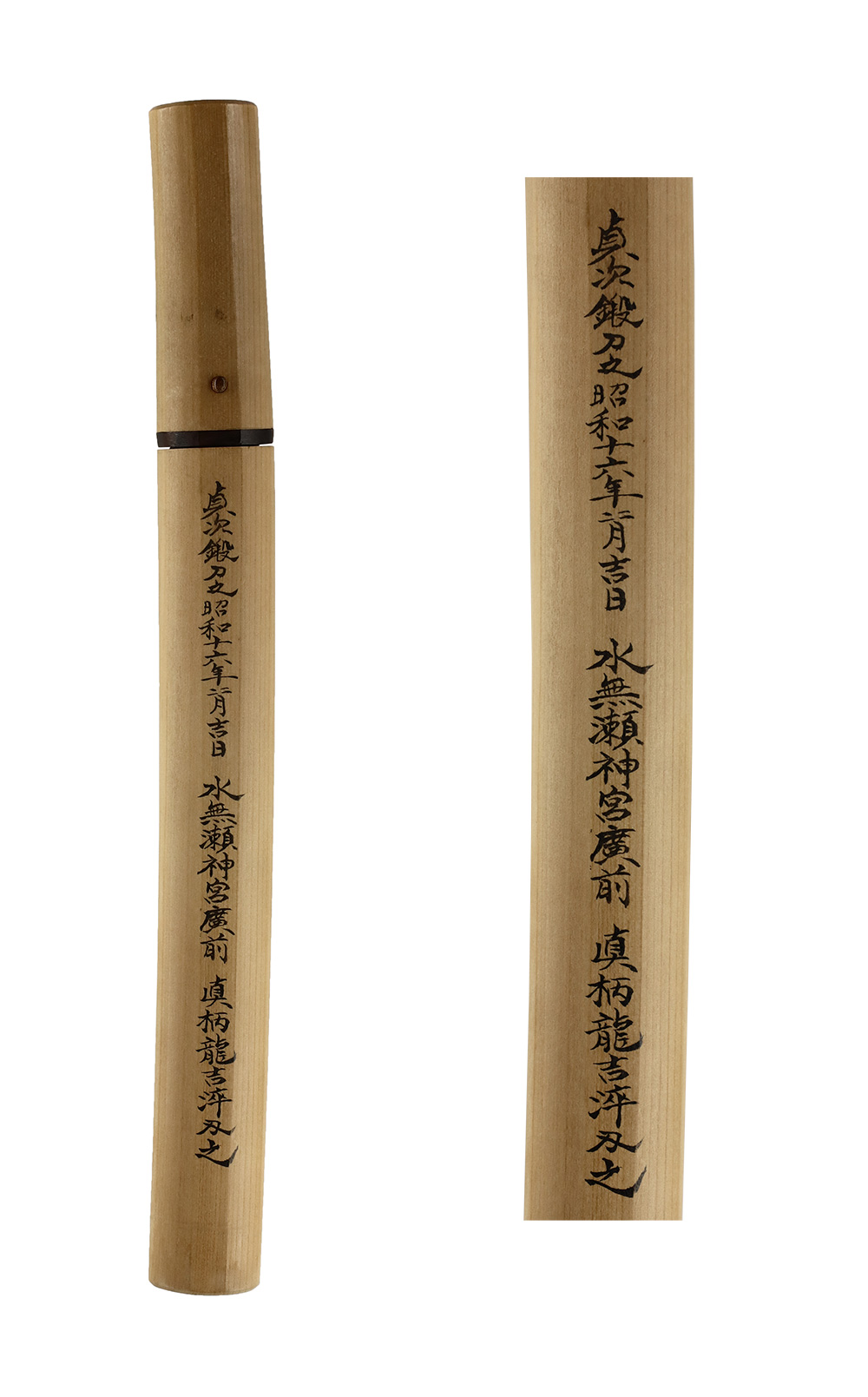
Explatention:This sword was forged by Sadatsugu in April of 1941 (Showa 16), and the quenching was performed by Magara Ryūkichi of Minase Shrine (a Shinto shrine located in Shimamoto Town, Mishima District, Osaka Prefecture). We divide 4 sections for each sword as Saijyo Saku, Jyojyo Saku, Jyo Saku and Regular Saku. This piece is ranked as Jyo Saku among the works of Sadatsugu. Shape: A well-preserved piece with a mitsumune ridge and remaining ha (tempered edge). Jigane: Well-forged ko-itame hada is clearly visible. Hamon: Ko-nie based suguha with a slightly deep nioiguchi, and the boshi turns back in a small rounded style. Features: Sadatsugu learned forging techniques from Gassan Sadakazu and Gassan Sadakatsu, and in 1952, he was designated as an Important Intangible Cultural Property holder. He possessed exceptional skills in sword engraving. Aoi Art’s Comment:Prince Asaka Yasuhiko was born in 1887 (Meiji 20) as the eighth son of Prince Kuni Asahiko. In 1939 (Showa 14), he became a General in the Imperial Army. However, after Japan’s defeat in WWII, he was considered a war criminal. He was later relieved of that status and is said to have been involved in sword production. Takahashi Sadatsugu, who once collaborated with Prince Asaka, was later designated a Living National Treasure. This blade was forged at Minase Jingu Shrine, where Emperor Go-Toba is also enshrined. I once possessed a rare piece. Soon after the war, the Japanese government, wishing to offer a gift to General Walker during the Korean War, gave special permission to Teiji to craft a tanto with sakura motifs. On the reverse side, it was inscribed as a gift to General Walker. Unfortunately, he died in a car accident in Korea. I purchased that item in the U.S. and sold it to a customer. I wonder where it is now. Looking at this piece, such memories come to mind. Box NBTHK Hozon Token Certificate
Offered by Aoi Art


As written by the shop
Ehime · around 1926-1989
3 pieces on the market now
Shōwa to the present: destruction and revival
The twentieth century nearly killed the craft twice: wartime distortion, then the occupation ban. The NBTHK’s founding in 1948 and licensed forging from 1953 rebuilt the sword as an art, crowned by Living National Treasures and the mukansa rank.
Certifies a genuine blade worth preserving: a signature confirmed correct, or, if unsigned, an era, province, and school that the NBTHK can reliably identify.
The NBTHK (Nihon Bijutsu Tōken Hozon Kyōkai, the Society for the Preservation of Japanese Art Swords) is a public-interest incorporated foundation founded in 1948 and supervised by Japan’s Agency for Cultural Affairs (Bunkachō); it is based at the Japanese Sword Museum in Tokyo. Its expert panels physically examine each submitted work (shinsa) and issue a certificate (kanteishō) ranking it by artistic and historical merit. NBTHK papers are the most widely recognized standard of authentication for Japanese swords and fittings.
NBTHK official siteIf you wish to return an item, please notify us within 3 days of receipt. After this period we cannot accept cancellations. Please ship the return to us within 5 business days. Cancellation is conditional on the item being kept in the same condition as at the time of sale, so please handle it with care.
¥1,100,000
Certificate reading — 銘 貞次鍛刀之(高橋貞次) 昭和十六年二月吉日 水無瀬神宮広前 真柄龍吉淬刃之