Edo was the sword’s age of connoisseurship: the Hon’ami appraisers, the shogunal register of famous blades of 1719, and a thriving literature turned the sword into an object of study even as it ceased to be drawn in war.
 NihontoWatchNihontoWatch
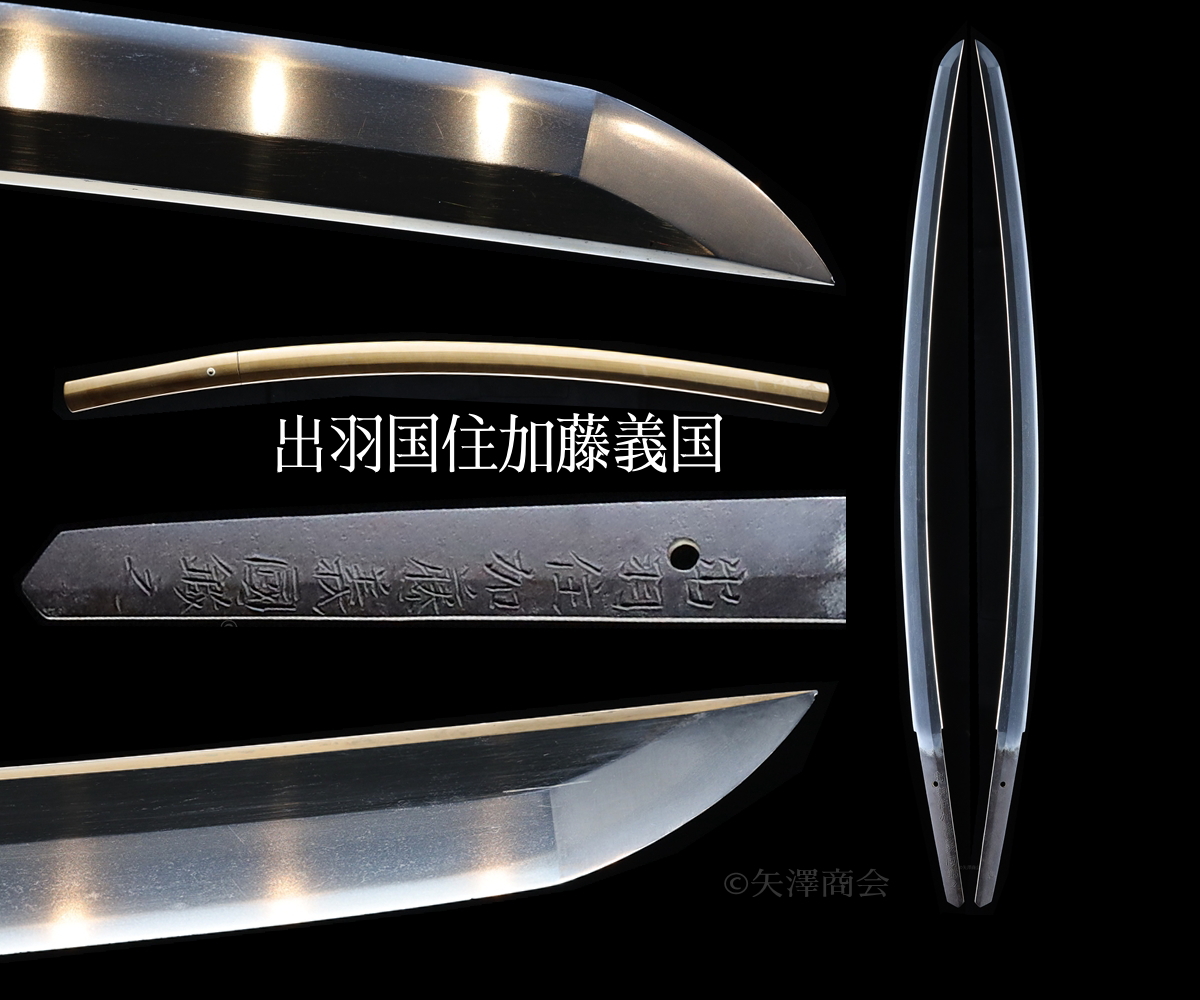
Nagasa of 2 shaku 2 sun, with a deep sori of approximately 8 bu; when the nakago is hidden and the toshin is appreciated, it shows an utsuri-ke and a mijin-working nioguchi that could be mistaken for a koto, with a tight nioguchi, skillful sakuto, and a nioguchi tempered uniformly from the moto to the saki. Dewa Ju Kato Yoshikuni About Dewa Ju Kato Yoshikuni Yoshikuni is a toko of the shinshinto period, ranked as Chu-jo saku in the Nihon Toko Jiten. A mon of Kato Tsunatoshi. Active in Dewa no Kuni Yonezawa from around Bunkyu to Genji. This katana has homare-kizu on the mune, perhaps from battle history. A sword with no points suggesting gimei, allowing for expectations in kantei. (Kantei certificate application proxy) For those who require Hozon or Tokubetsu Hozon kanteisho (Kyokai), Shoshin kanteisho (NPO Hozonkai), etc., we can accept applications for the kantei fee (actual cost) and a proxy fee of 10,000 yen; please note it will take several months until the kanteisho is issued. Condition of the product *There are ha-kobore (repairable with bijutsu kenma). There are no ha-gire, ha-garami, bending, shinae, fukure, nioi-gire, or kakedashi. *Please understand there may be dirt, fine rubbing scratches, degradation, etc., due to age. Please refer to the photos.
NihontoWatchOffered by Yazawa Shokai
The listing mentions papers that aren’t in our records yet. Current NBTHK and NTHK shinsa papers are the independent check we rely on, so it’s worth asking the dealer for a clear photo of the certificate. — Hoshi




Machine translation of the shop's Japanese ·
Machine translation from the shop's Japanese · may contain errors ·
Uzen · around 1864-1865
Fujishiro Chu-jo saku · Tōken Taikan top 95%
The Edo period (1615 to 1868)
Edo was the sword’s age of connoisseurship: the Hon’ami appraisers, the shogunal register of famous blades of 1719, and a thriving literature turned the sword into an object of study even as it ceased to be drawn in war.
We could not find an authenticity certificate on the seller’s listing. Japanese swords and fittings are normally papered by the NBTHK (or the NTHK). Without one, the attribution is the seller’s own assessment and has not been independently verified — treat it with caution and ask the dealer about certification before buying.
¥280,000