Perry’s arrival in 1853 unraveled the Tokugawa peace and created the first mass demand for working swords in two centuries. Kiyomaro, called the Masamune of Yotsuya, died on its eve; Munetsugu and Yukihide carried the boom to the end.
 NihontoWatchNihontoWatch
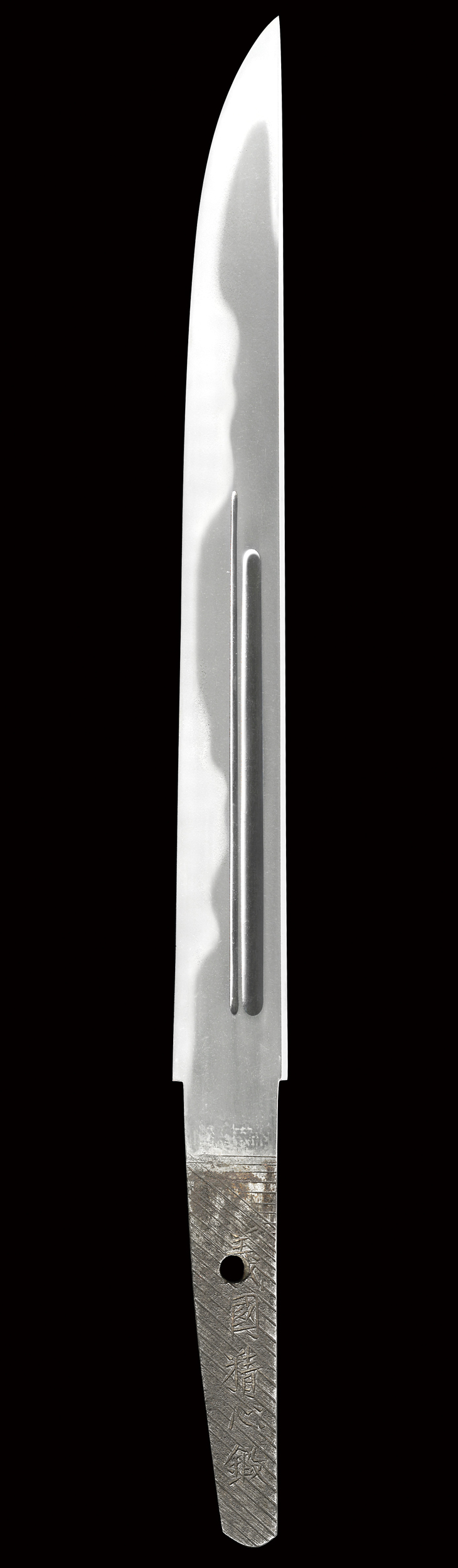
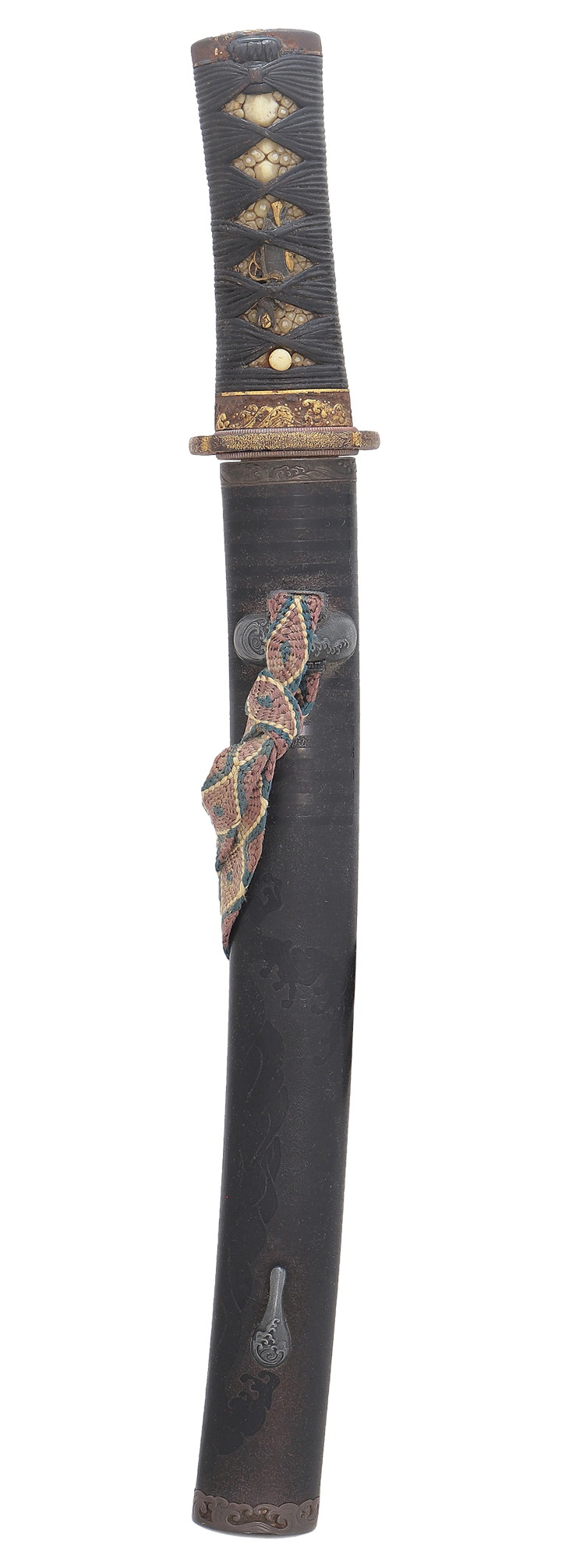
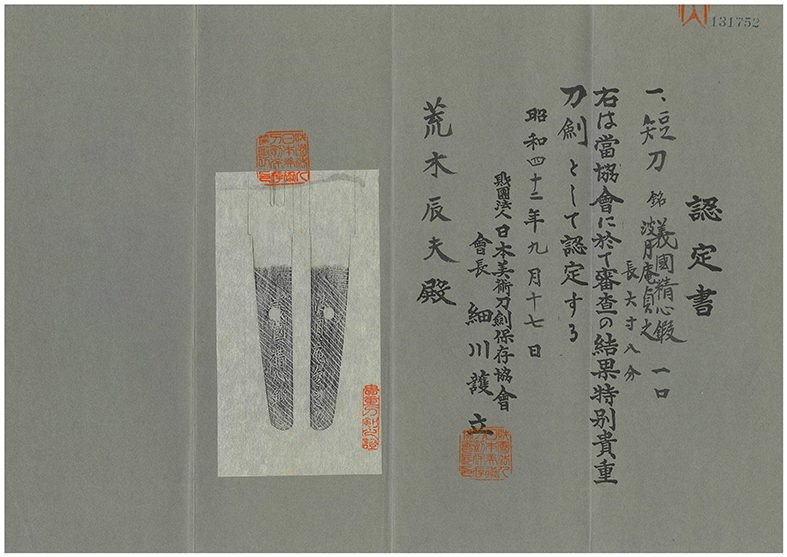
Shinshinto, very end of the Edo period With koshirae (with Tokubetsu Kicho Kodogu Ninteisho) Hira-zukuri, iori-mune is low. The omote has two futasuji-hi of varying widths, the ura has sansuji-hi, all ending in maru-dome above the habaki. Kitae is ko-itame hada, somewhat sunken and tightly packed, the ji color is somewhat blackish, with ji-nie and chikei, the jitetsu is good. Hamon is gunome-midare mixed with suguha with variations in the height of the yakiba, the habuchi has ara-nie and deep nioi which is somewhat sunken, with gunome-ashi within the ha. Boshi is suguha-style with nie, the saki has a slight hakikake and kaeru. Nakago is ubu, saki is kurijiri, yasurime is kesho o-sujikai. Copper habaki (waves and sun). Period polish (thin rust present). In shirasaya. With chiisagatana koshirae (total length 36, Edo period, saya is a dark brown and black ishime-ji chūya-shitate with a rough wave pattern, below the koiguchi is a black fuesaya, kojiri and koiguchi are shibuichi-ji with rough wave designs, kaerizuno and kurigata are shakudo-ji with rough wave designs, kozuka is shakudo katachibori iroe with a small boat in rough waves design, sageo is a three-color karagumi of purple, light brown, and green with takoashi shitodome in shakudo, tsuka has oyamazame with black thin leather tsukamaki, fuchi-kashira are tetsu-ji kin-zogan with rough wave designs, menuki are shakudo katachibori iroe with sugegasa designs, tsuba is tetsu-ji mokko-gata sukidashi-bori zogan iroe with a moon and rough waves design). This work is a serious tanto judged to be from the Bakumatsu period; however, regarding the smith Yoshikuni, there were several at this time, such as Shindo Yoshikuni of Oshū Morioka, Kato Yoshikuni of Dewa Yonezawa who was a pupil of Chounsai Tsunatoshi, Shimada-ju Yoshikuni, Nagato-ju Yoshikuni, and so on. It is probably one of them. Currently, both the interior and exterior have Ninteisho from Showa 42, and while there are no specific notes regarding which Yoshikuni it is, I think the mei is good. It is nie-deki with a spirited blade, and since the nakago reads "Yoshikuni Seishin Kitae Hazukian Nozomu Kore," there is no doubt it is a carefully made work produced by some kind of special order. Also, perhaps because of the person who ordered it, the habaki and koshirae fittings are unified with designs of waves and the moon. There are no major flaws, and it is quite a rare item.
NihontoWatchOffered by Samurai Nippon
Its only papers are older green Kichō papers, which the NBTHK largely disavows today. Ask the dealer whether it has passed current shinsa. — Hoshi

Machine translation of the shop's Japanese ·
Machine translation from the shop's Japanese · may contain errors ·
Uzen · around 1864-1865
Fujishiro Chu-jo saku · Tōken Taikan top 95%
Bakumatsu: the last war market
Perry’s arrival in 1853 unraveled the Tokugawa peace and created the first mass demand for working swords in two centuries. Kiyomaro, called the Masamune of Yotsuya, died on its eve; Munetsugu and Yukihide carried the boom to the end.
This work carries older NBTHK “Kichō”-era papers, which the NBTHK no longer issues and largely disavows today. To confirm the attribution, submission to an official Japanese examination body (such as the NBTHK or NTHK) for modern certification could be considered.
For one-of-a-kind items such as swords, sword fittings and antiques, other customers may be waiting for the item, so please contact us about a return within 3 days of its arrival and ship it back within 8 days. Refunds are made on the day the returned item arrives.
¥350,000