Perry’s arrival in 1853 unraveled the Tokugawa peace and created the first mass demand for working swords in two centuries. Kiyomaro, called the Masamune of Yotsuya, died on its eve; Munetsugu and Yukihide carried the boom to the end.
 NihontoWatchNihontoWatch
Yonezawa-ju Yoshikuni is a student of Kato Tsunatoshi. He is a skilled swordsmith who was active in Dewa-no-kuni Yonezawa from around Bunkyu to Genji. He signs his works as Yonezawa-ju Yoshikuni, Dewa-no-kuni-ju Kato Yoshikuni kitae kore, Yoshikuni, and others. Regarding his style, he has left behind many works with ko-nie-deki suguha or gunome-midare hamon. Shinshinto chu-jo-saku. This work has a nagasa of 2 shaku 2 sun 9 bu. The mihaba and kasane are standard. It is a sword with a well-balanced sugata featuring a koshi-zori that is slightly deep. The jitetsu is itame-hada that is well-kneaded and becomes mokume-hada-fu, with a bright and moist hada-iro and ji-nie attached. The hamon begins with a notare-no-yakidashi in ko-nie-deki, continues in a sugu-choshi, and then the width of the yakiba widens from near the monouchi to become notare. The nioiguchi is bright, and in places along the ha-buchi, ko-nie gathers in clusters and shines like fine sand. The boshi turns back into a komaru. The nakago has careful kesho-yasuri applied, and the kokumei is carved firmly. There is no kuchikomi, and the preservation is good. This sword is an excellent blade that fully demonstrates the true value of the skilled Yonezawa-ju Yoshikuni. Shirasaya, Hozon Token, gold-plated single-layer habaki.
NihontoWatchOffered by World Seiyudo

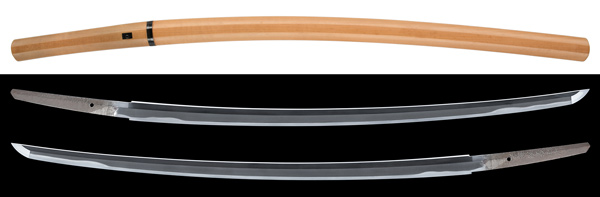

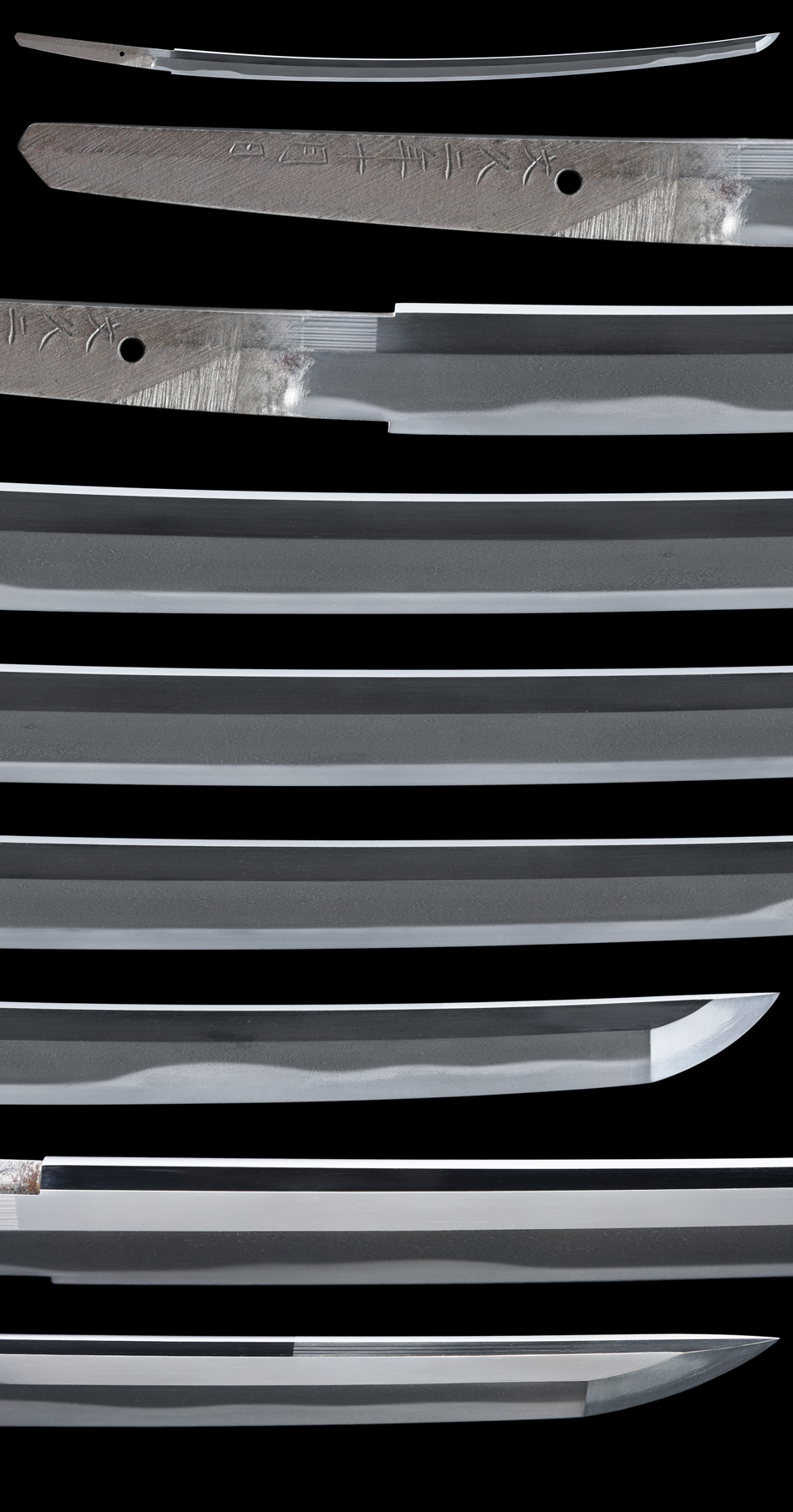
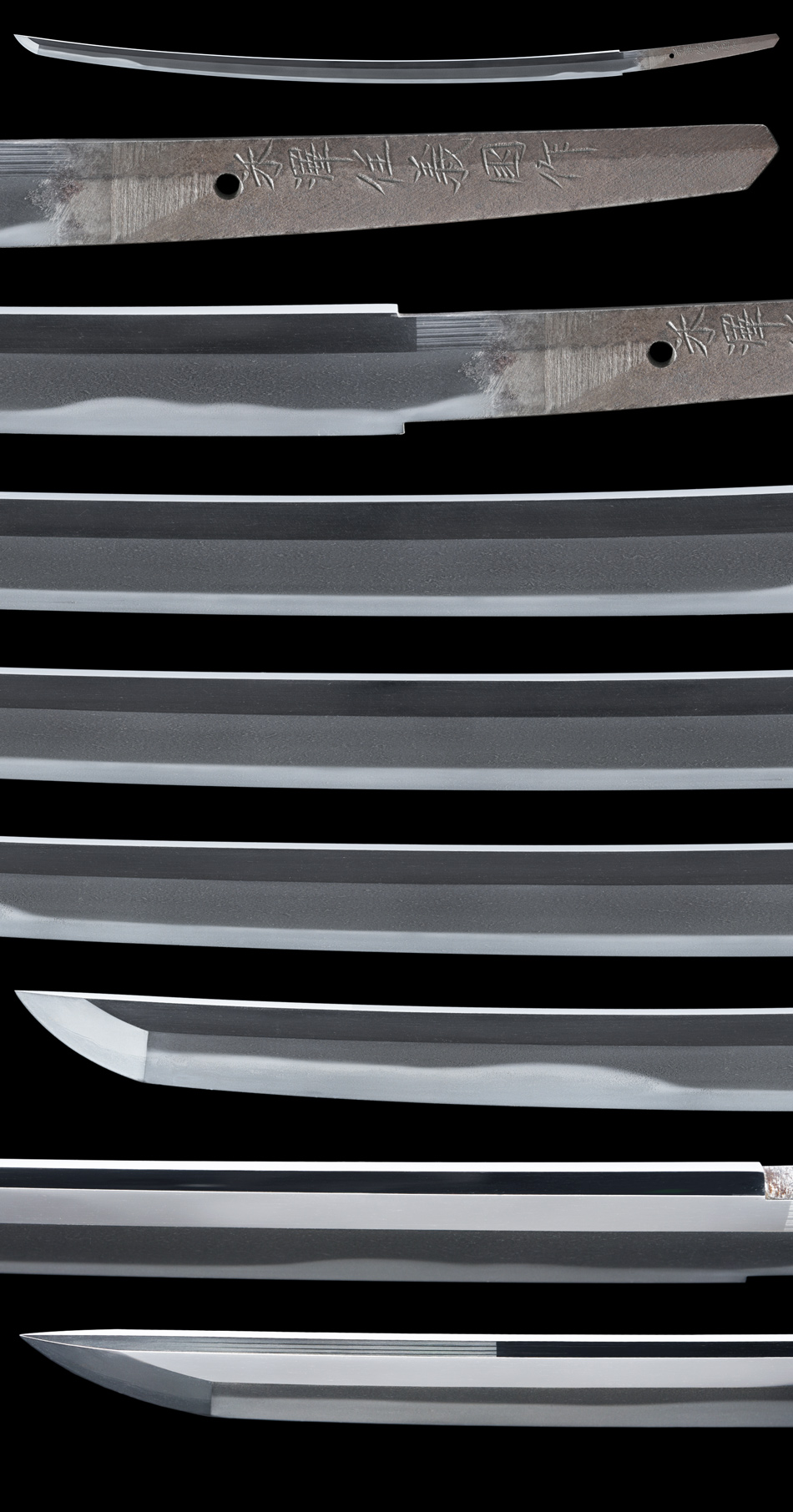
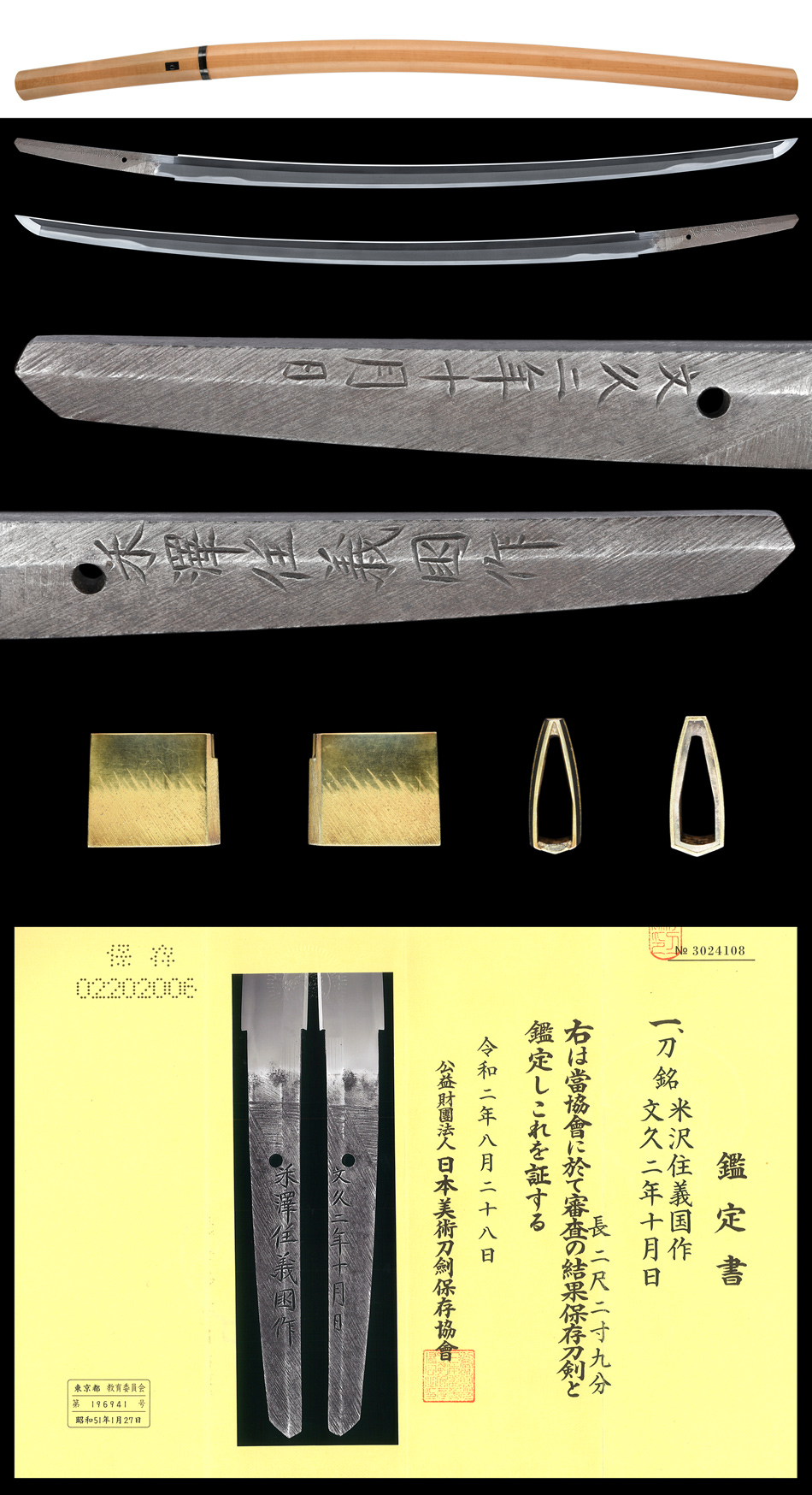
Machine translation from the shop's Japanese · may contain errors ·
Uzen · around 1864-1865
Fujishiro Chu-jo saku · Tōken Taikan top 95%
Bakumatsu: the last war market
Perry’s arrival in 1853 unraveled the Tokugawa peace and created the first mass demand for working swords in two centuries. Kiyomaro, called the Masamune of Yotsuya, died on its eve; Munetsugu and Yukihide carried the boom to the end.
Certifies a genuine blade worth preserving: a signature confirmed correct, or, if unsigned, an era, province, and school that the NBTHK can reliably identify.
The NBTHK (Nihon Bijutsu Tōken Hozon Kyōkai, the Society for the Preservation of Japanese Art Swords) is a public-interest incorporated foundation founded in 1948 and supervised by Japan’s Agency for Cultural Affairs (Bunkachō); it is based at the Japanese Sword Museum in Tokyo. Its expert panels physically examine each submitted work (shinsa) and issue a certificate (kanteishō) ranking it by artistic and historical merit. NBTHK papers are the most widely recognized standard of authentication for Japanese swords and fittings.
NBTHK official siteNo cooling-off period or returns; refund only if the purchased sword is proven fake, capped at purchase price (excludes commission sales, accessories, auction items).