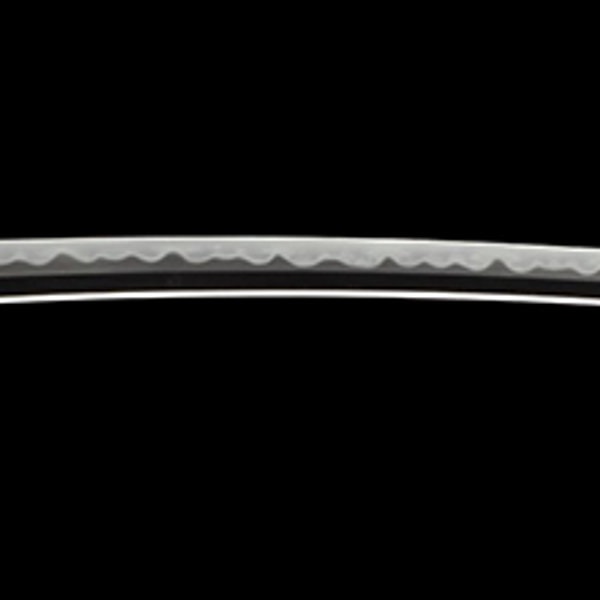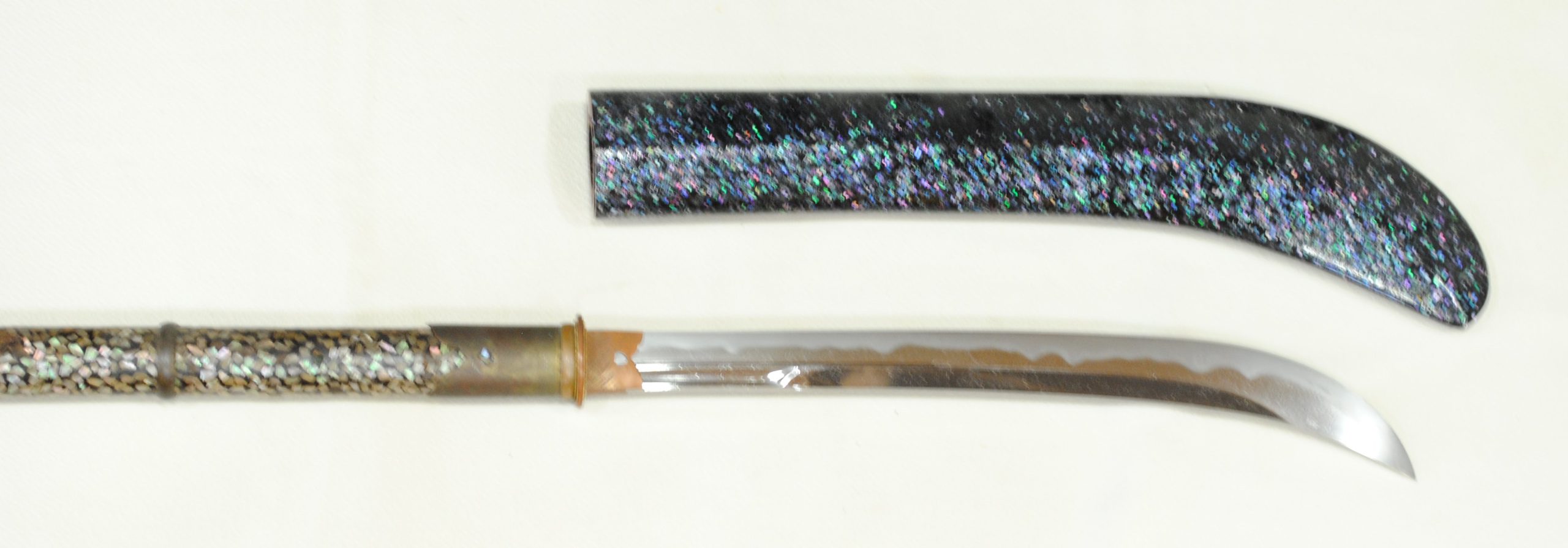


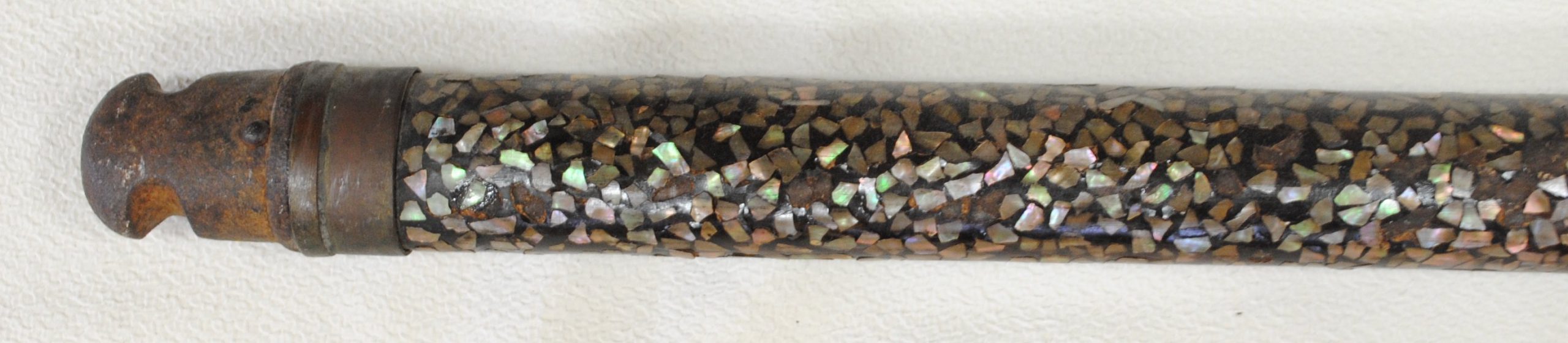
This is a standard naginata for women from the mid-Edo period, featuring a slightly textured itame hada and gunome hamon with nie. The accompanying koshirae, also from the Edo period, is a rare and well-made total aogai (mother-of-pearl inlay) mounting, despite some age-related wear. The smith, Suruga no Kami Kunimasa, forged swords in Iyo (present-day Ehime Prefecture) during the mid-Edo period.
mei · Edo · nagasa 35.5cm · sori 2.1cm


Iyo · around 1624-1644
1 piece on the market now
We could not find an authenticity certificate on the seller’s listing. Japanese swords and fittings are normally papered by the NBTHK (or the NTHK). Without one, the attribution is the seller’s own assessment and has not been independently verified — treat it with caution and ask the dealer about certification before buying.
This is a standard naginata for women from the mid-Edo period, featuring a slightly textured itame hada and gunome hamon with nie. The accompanying koshirae, also from the Edo period, is a rare and well-made total aogai (mother-of-pearl inlay) mounting, despite some age-related wear. The smith, Suruga no Kami Kunimasa, forged swords in Iyo (present-day Ehime Prefecture) during the mid-Edo period.
mei · Edo · nagasa 35.5cm · sori 2.1cm


Iyo · around 1624-1644
1 piece on the market now
We could not find an authenticity certificate on the seller’s listing. Japanese swords and fittings are normally papered by the NBTHK (or the NTHK). Without one, the attribution is the seller’s own assessment and has not been independently verified — treat it with caution and ask the dealer about certification before buying.